

A knight in shining armour sailed through Perivale today with authority and poetic mastery. Whatever Nikita does it is imbued with burning conviction and communication. Veni, vidi, vici Bravo Nikita. Some remarkable playing in a varied programme from Bach to Babadjanian.

Bach’s C sharp minor Prelude with its five part fugue of such imposing majesty. A gently flowing Prelude that was played with poignant meaning and aristocratic poise.From the profound depths of the piano the five part fugue unfolded with mathematical precision combined with deep spiritual meaning as the voices were played with utmost clarity. The final clashing harmonies at the end that like Messiaen two centuries later were to signify the unbearable suffering of a fervent believer.
Two of Tchaikowsky’s seasons were played with languid beauty and fleeting flights of emotional intensity.There was a melancholic yearning to the melodic line of June of tender nostalgia leading to an imposing outpouring of joyous liberation that Nikita played with ravishing colour and style.
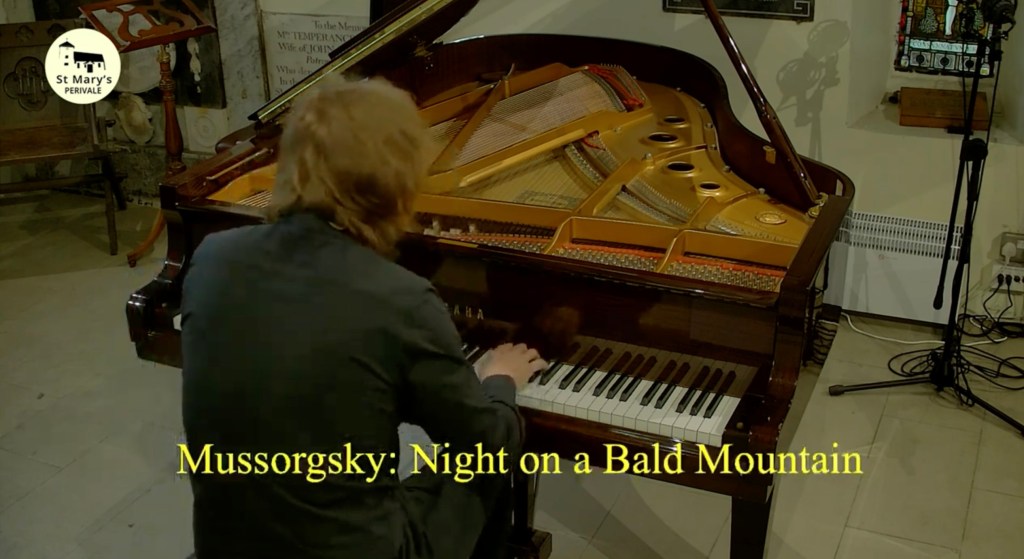
Mussorgsky has long been a favourite of our young prince of the keyboard and he gave a dynamic drive of total conviction to ‘A night on a bare mountain’ .A transcendental command of the keyboard with searing blasts of sound high on the keyboard that were the blasts of wind whilst the deep bass melody was allowed to dominate the landscape.Passion and frenzy were played with remarkable control and a sense of line no matter the technical difficulty.There was beauty too after the storm, with streams of notes accompanying the melodic line of thanksgiving after such a monstrous night.

Two pieces by Debussy, both depicting water. ‘Ondine’ the water nymph was played with glowing beauty gradually growing in pace until she was revealed in all her beauty only to disappear in a wash of luxuriant sounds. A miniature tone poem played with poetic fantasy and beauty but also with a sense of architectural line that gave such strength to Debussy’s characterisation. Less virtuosistic than Ravel’s Ondine but just as evocative and fleetingly beautiful. ‘Reflets dans l’eau’ was played with great delicacy with Debussy’s etherial clouds of sound spread over the entire keyboard as the melodic line appeared from its midst. A transcendental control of the pedal allowed Nikita to play with such clarity without loosing the glowing fluidity of one of Debussy’s most evocative creations.
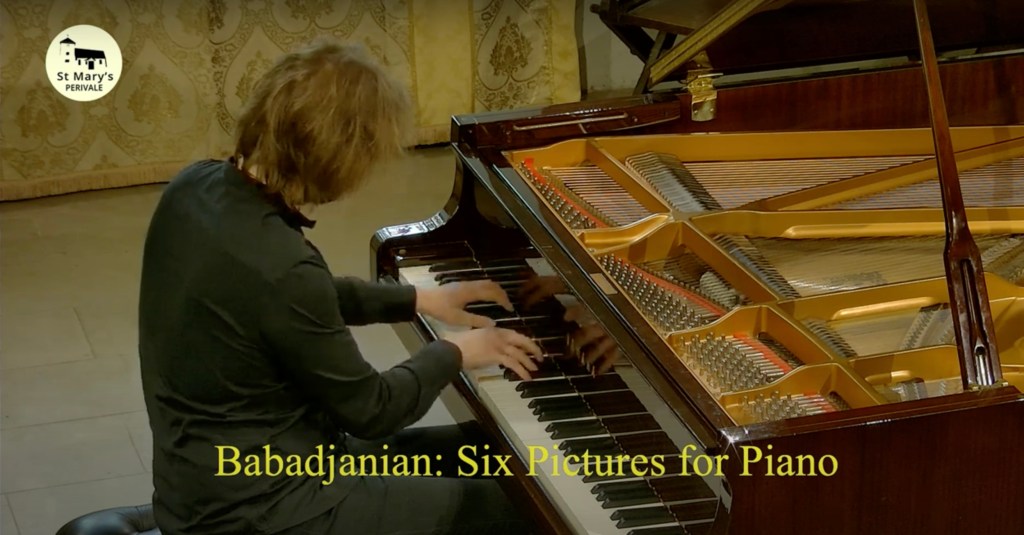
Nikita’s charming introductions were indeed very enticing and his presentation of Babadjanian had me intrigued. Armenian born in 1920 completing his studies in Moscow, the six pictures were vividly played with very busy and engaging drive. A kaleidoscope of sounds and moods but mainly of rhythmic toccata type precision played with extraordinary conviction and masterly control.There was a beautiful slow picture with a melodic line of chiselled beauty and a tumultuous final toccata.

An encore of Mussorgsky’s unhatched chicks from Pictures was played with mastery and style and brought this quite exceptional recital to a brilliant conclusion .
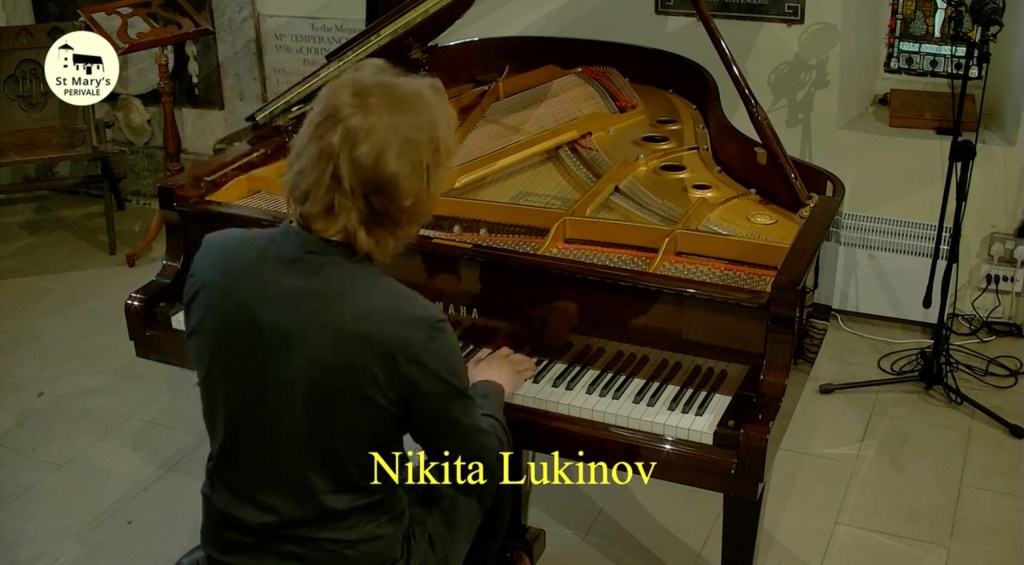
Nikita Lukinov is known for his “extraordinary breadth and freedom of imagination” (Gramophone), praised as an “Exceptional talent” (The Scotsman), and named the “Rising Star” by the BBC Music Magazine, Nikita Lukinov stands out as one of the most exciting pianists based in Scotland. In his impressive international presence, he performed as a soloist in prestigious venues across the United Kingdom, Italy, Spain, Switzerland, France, Poland, Croatia, Germany and Russia. Most notable appearances include renowned venues such as the Wigmore Hall, Usher Hall, Southbank Centre, Palau de la Musica, Fazioli Hall, Verbier Festival and Tchaikovsky Conservatoire in Moscow. Additionally, both his live and studio performances have been broadcast by BBC Radio Scotland, BBC Radio 3 and Scala Radio. Highlights of the 2024/25 season include recitals at the Bechstein Hall in London, Perth Concert Hall, Armourers’ Hall in London, Royal Conservatoire of Scotland, Inverness Town Hall, St Martin-in-the-Fields in London and St Giles’ Cathedral in Edinburgh.

A disciple of the Russian Piano School Nikita Lukinov started his musical education with Svetlana Semenkova, an alumna of Dmitry Bashkirov, at the age of six in Voronezh, Russia. Nikita’s first significant success was a Grand Prix at the 2010 International Shostakovich Piano Competition for Youth in Moscow. This led to a debut with a symphonic orchestra at the age of 11. Other achievements include 1st place in the Inter-Russian piano competition for young pianists, Finalist in an International television competition for young musicians “Nutcracker”, 1st place in the Inter-Russian Concerto competition, where he performed a Chopin piano Concerto 1 op.11 with the Voronezh Philharmonic Orchestra at the age of 14.

In 2013 Nikita won a full scholarship to continue his education at The Purcell School, a specialist music school in London, with Prof. Tatiana Sarkissova, an alumna of Dmitry Bashkirov. In 2017 Nikita was awarded a full scholarship to study at the Royal Conservatoire of Scotland with Prof. Petras Geniušas, an alumnus of V. Gornostaeva. In 2021 Nikita was awarded a First-Class with Honours Bachelor of Music Degree and a full scholarship from ABRSM to pursue a Master of Music degree at the Royal Conservatoire of Scotland. Since October 2022 Nikita has also started teaching at the Royal Conservatoire of Scotland, being the youngest senior teaching staff in all of the UK’s Royal Schools of Music at that moment. In June 2023 Nikita was awarded The Governors Recital Prize for the most outstanding end-of-year performance at the Royal Conservatoire of Scotland, culminating in the completion of his Master’s Degree. The same month Nikita’s debut CD was released with the KNS Classical label. Nikita was awarded his Artist Diploma degree from the Royal Conservatoire of Scotland in September 2024.
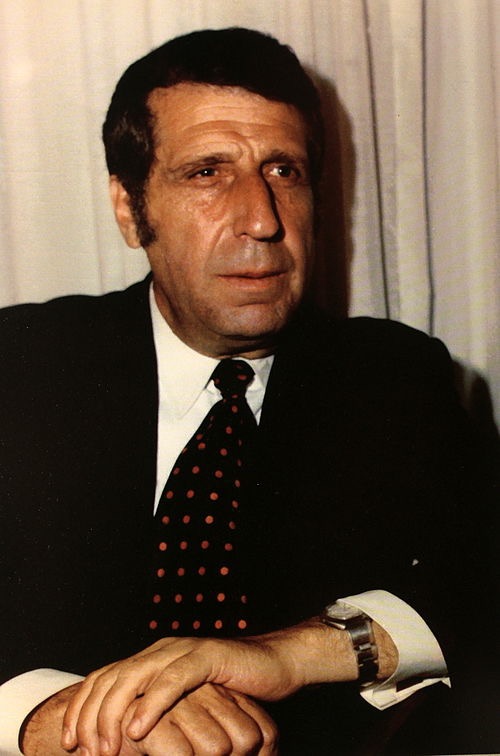
January 22, 1921 Yerevan,Armenian SSR Soviet Union November 11, 1983 (aged 62)
Yerevan, Armenian SSR, Soviet Union
Babajanian wrote in various musical genres, including many popular songs in collaboration with leading poets such as Yevgeny Yevtushenko and Robert Rozhdesdtvensky. Much of his music is rooted in Armenian folk music and folklore, which he generally uses in the virtuosic style of Rachmaninov and Khachaturian. His later works were influenced by Prokofiev and Bartók. Praised by Dmitri Shostakovich as a “brilliant piano teacher”, Babajanian was also a noted pianist and often performed his own works in concerts.
 ChristopherAxworthy-MusicCommentary