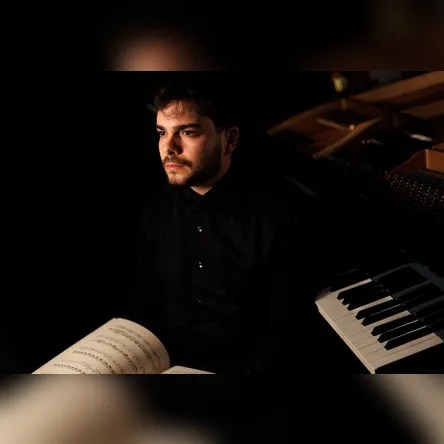
Arise Nicoló Giuliano Tuccia with ‘La Bénédiction de Leslie Howard dans La Solitude!’
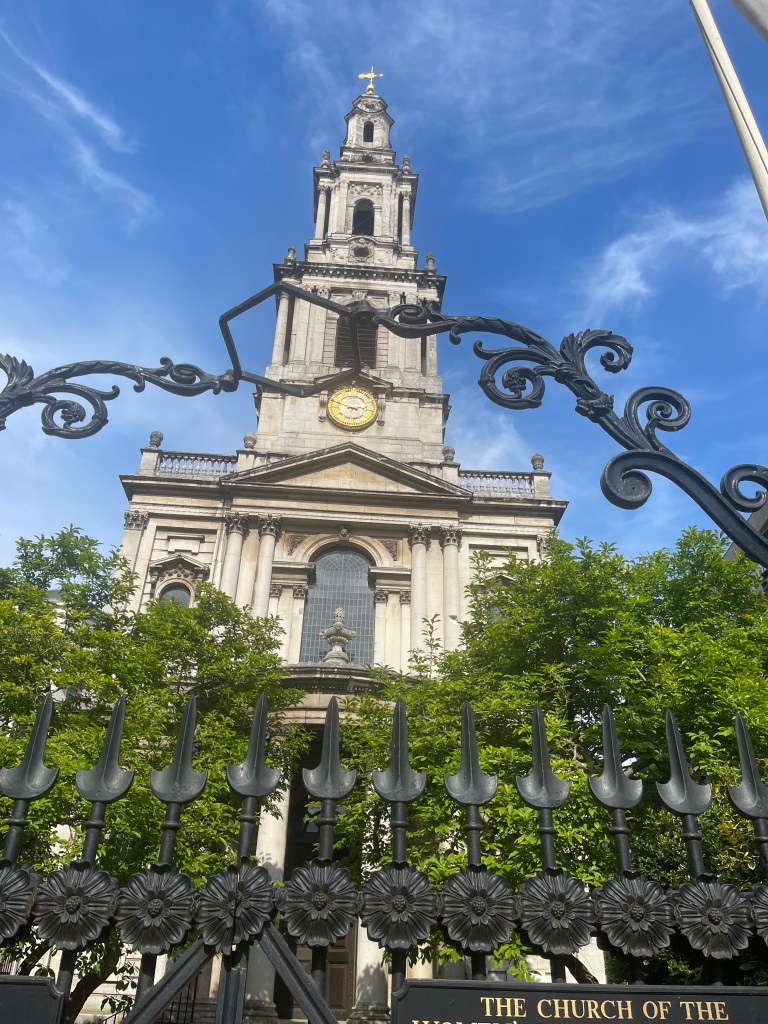
Beauty everywhere in St Mary Le Strand, embraced by a tropical warmth outside but even more intense inside this imposing Church.
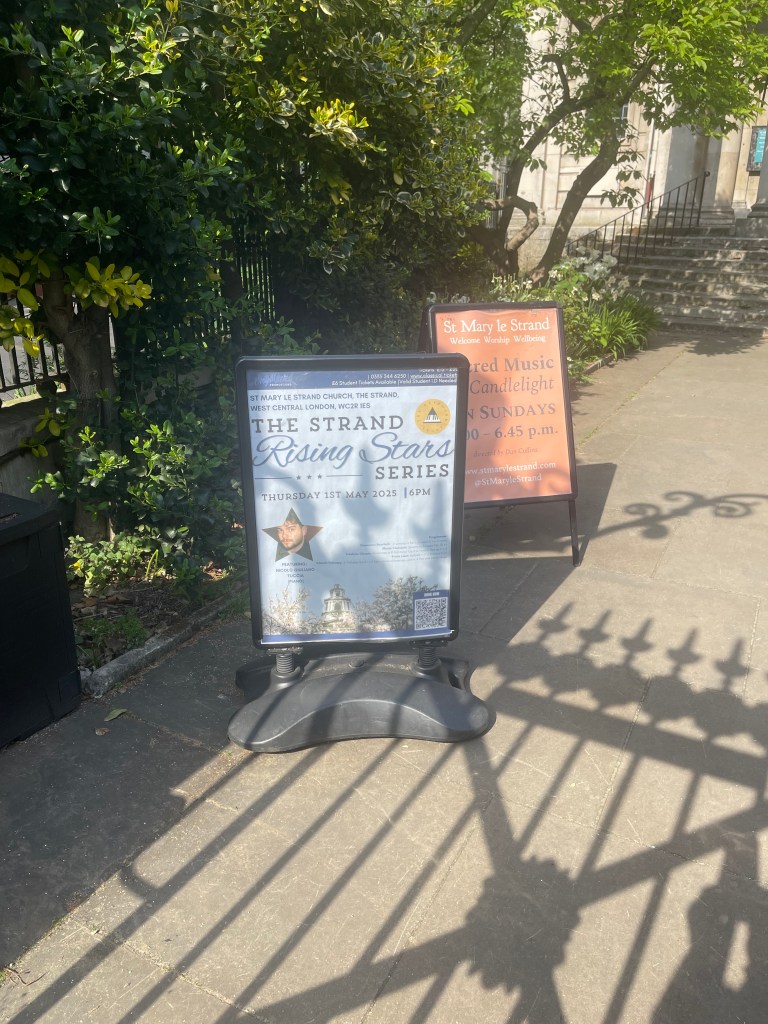
Now sitting so proudly in the Strand with cars having been directed elsewhere after years of being just the centre of a Neapolitan traffic scheme.
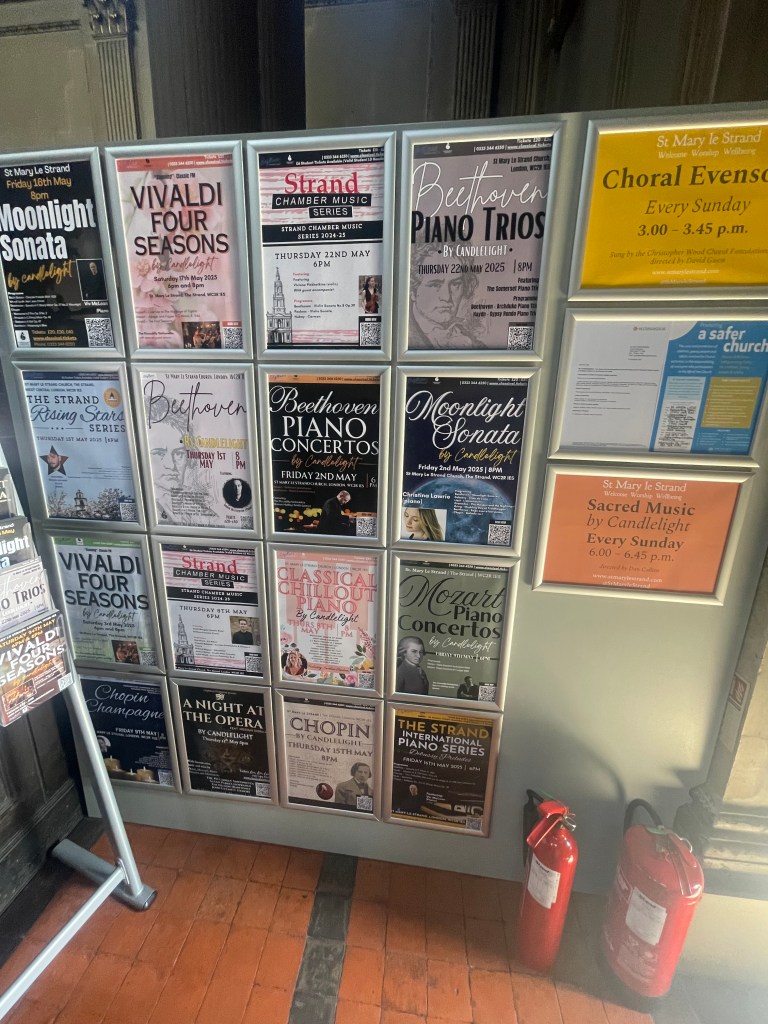
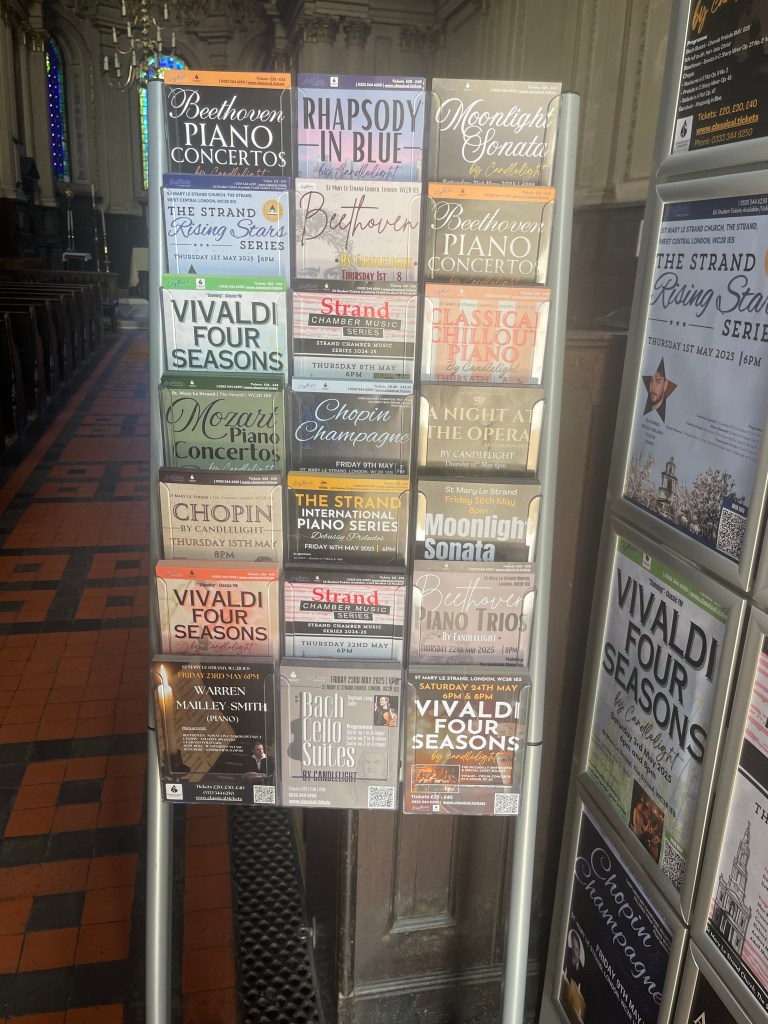
Peace reigns as caos has been averted and inside this grandiose edifice Warren Mailley -Smith has thoughtfully provided a superb Steinway, and a series one hour concerts for his City Music Productions, that fill the radiant air with sublime music as ‘Le sons e les perfums tournent dans l’air du soir’
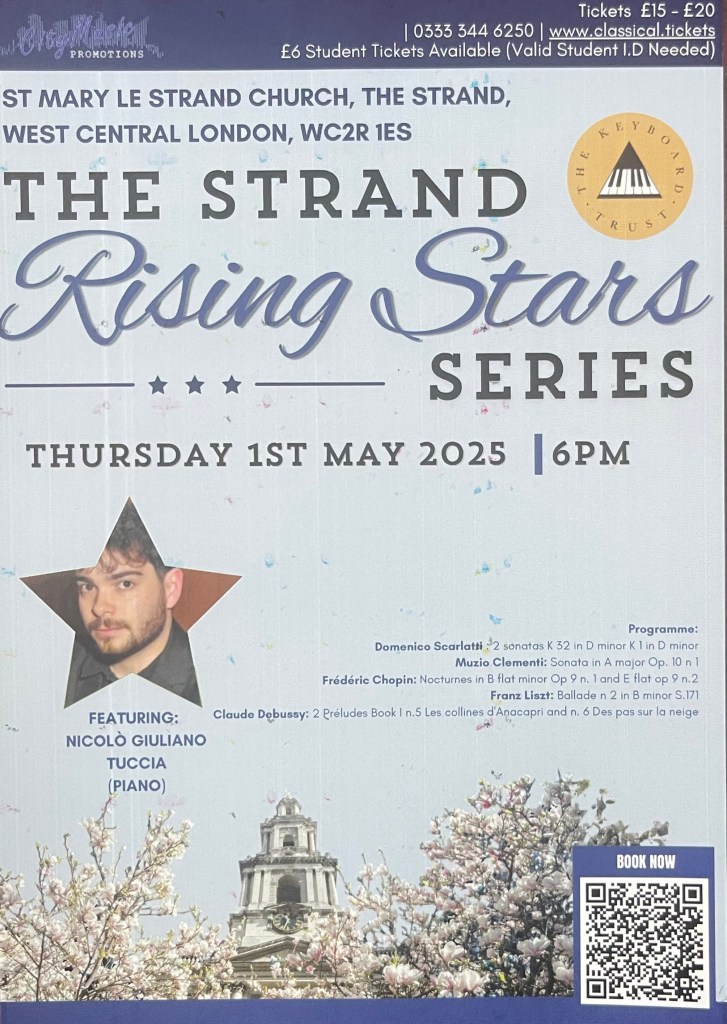
A young man from Forlì has appeared, thoughtfully provided by the Keyboard Trust who have been asked to provide some of their Rising Stars to stand side by side with the ever generous City Music. https://christopheraxworthymusiccommentary.com/2024/09/21/warren-mailley-smith-a-man-for-all-seasons-a-love-of-music-illuminated-by-candlelight/
Empoli in Italy has been put on the map because it can claim the privilege to have given birth to Ferruccio Busoni. His family soon left for Bologna and Berlin where the child prodigy was taken under the wing of Franz Liszt and in turn continued the futuristic vision of music with which his master had pointed the way with genial inspiration in his later years in Weimar.
Forlì was unaware until recently that they too had given birth to a great musical figure and protégé of Busoni, Guido Agosti. He like Busoni soon left his birth place to seek guidance in the great musical centres of nearby Bologna and later in Berlin.
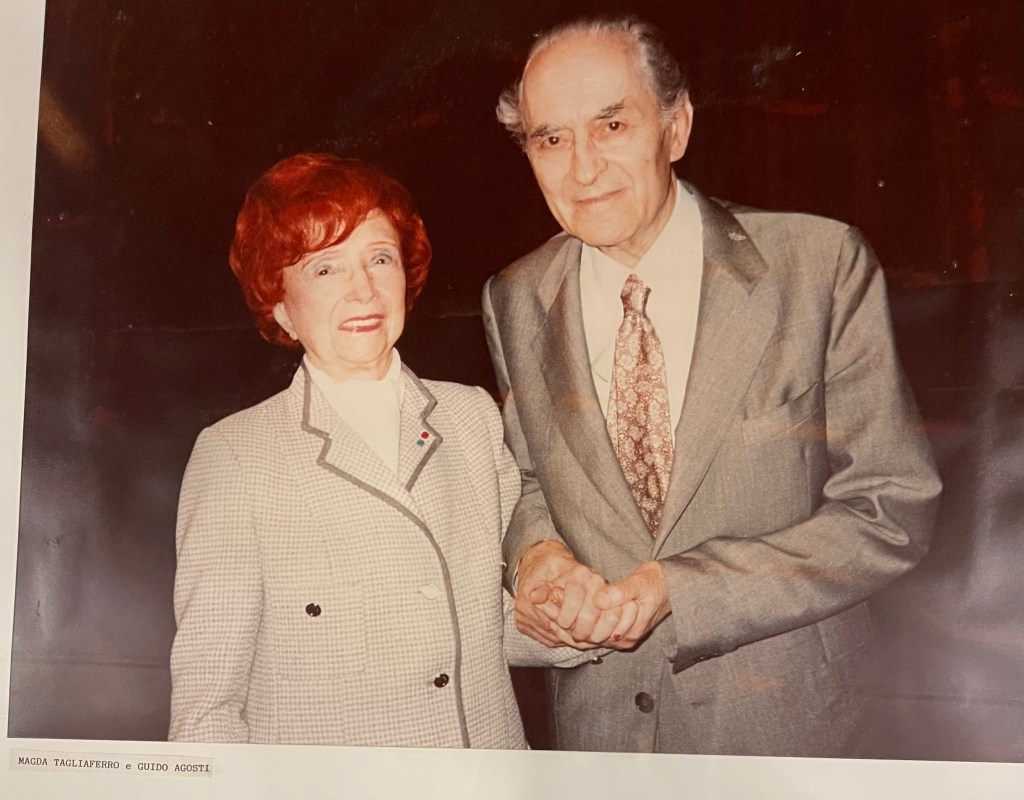
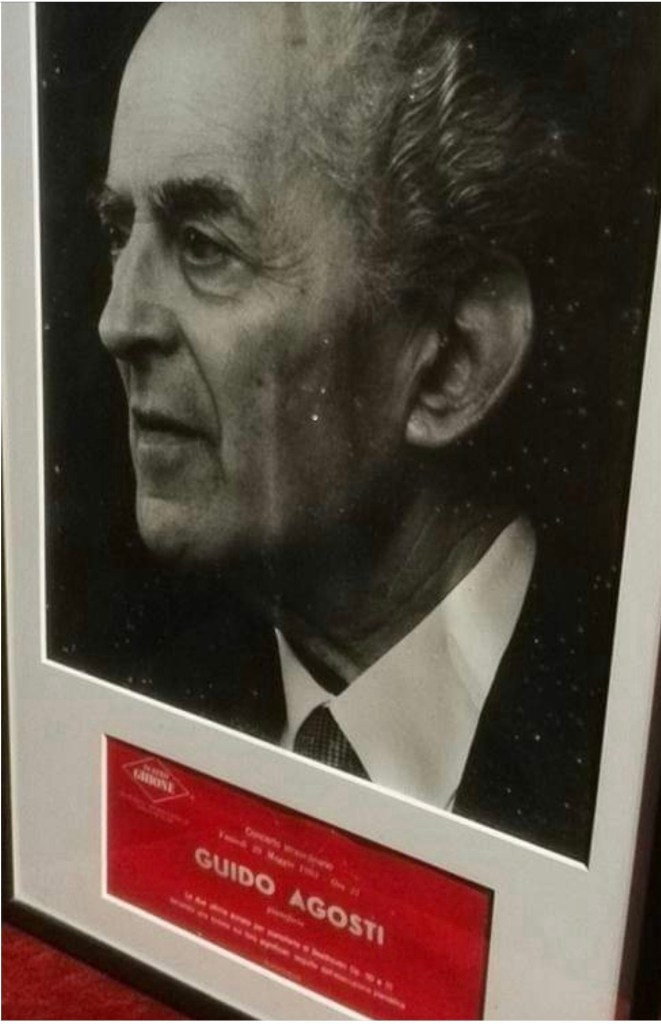
Musicians used to flock to the Chigiana Academy in Siena to be inspired by sounds they would never forget, as Agosti was a very private man and showmanship was substituted for mastery with the humility and dedication to the composers he was serving.
Nicoló Giuliano Tuccia has sought to reinstate Agosti in his home town and has for the past three years been at the helm of a series of concerts in the great master’s name https://christopheraxworthymusiccommentary.com/2025/04/14/homage-to-guido-agosti-gala-piano-series-in-forli-2025/
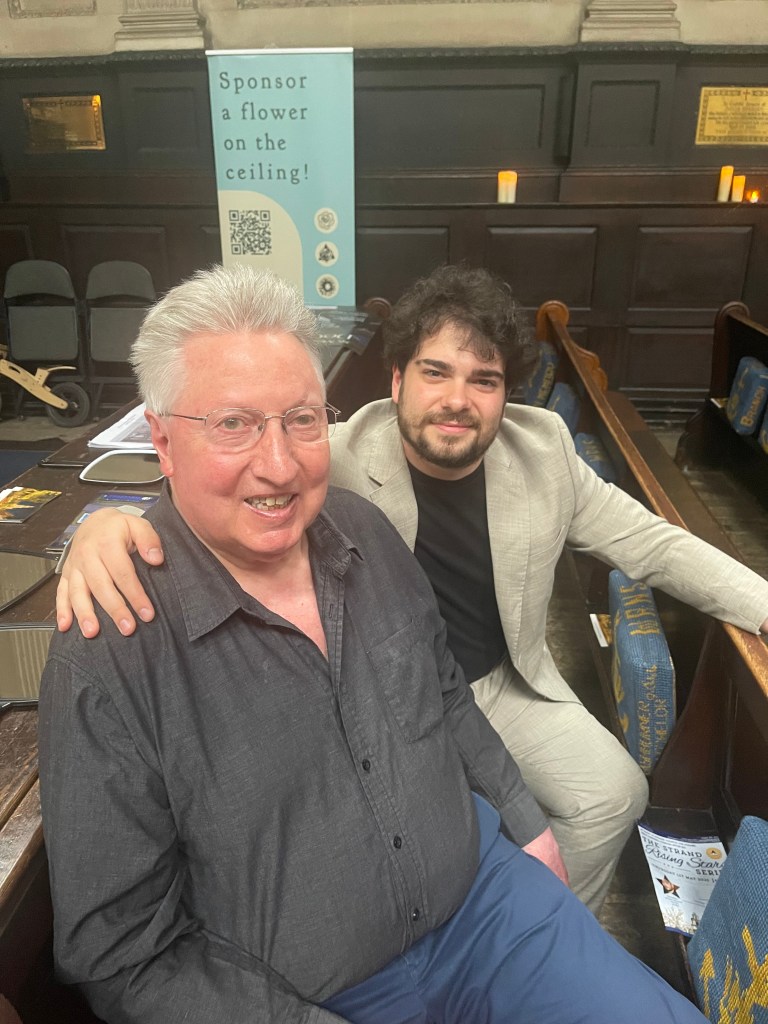
It was no coincidence that the renowned Liszt scholar, Leslie Howard should wish to be present today, as he had been the star student of Agosti. Leslie has gone on since to an illustrious career which includes recording all of Liszt’s piano works on over 100 cd’s. Today was also Leslie’s birthday and we should salute a man who has given so selflessly to helping and informing young musicians trying like his master Agosti to point them in the right direction – that of absolute faithfulness to the composers of whom they are but intermediaries .His recording feat for Liszt has earned him a place in the Guinness Book of Records. https://christopheraxworthymusiccommentary.com/2025/04/12/leslie-howard-bringing-the-concealed-mastery-of-pianistic-genius-to-trapani/
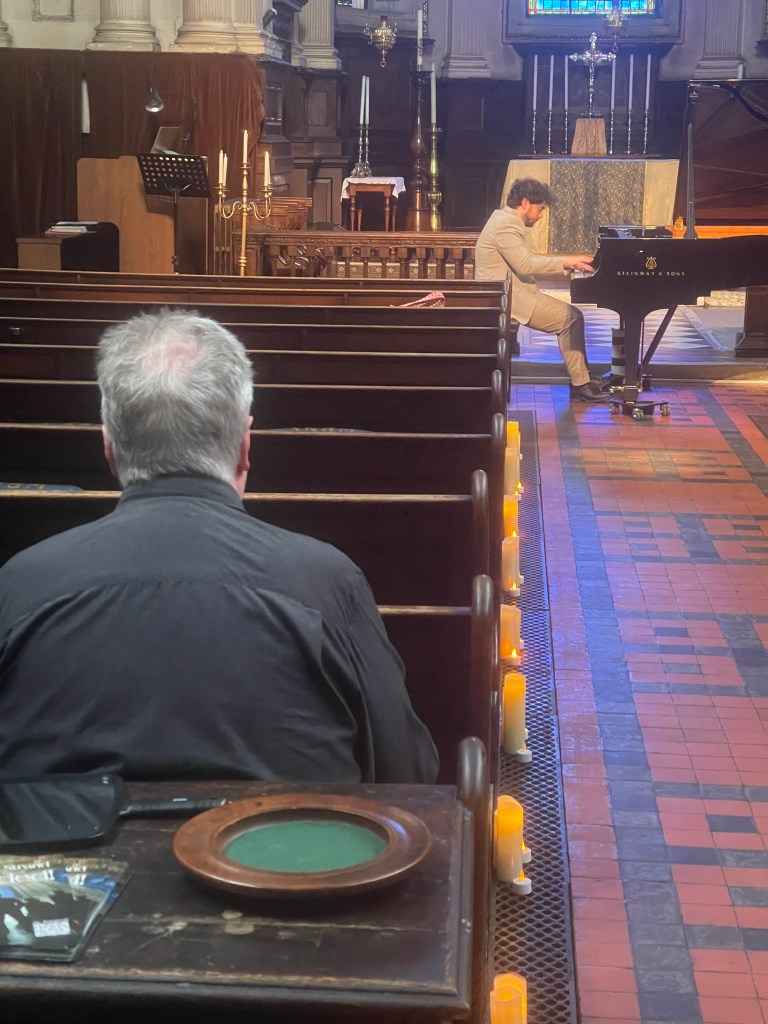
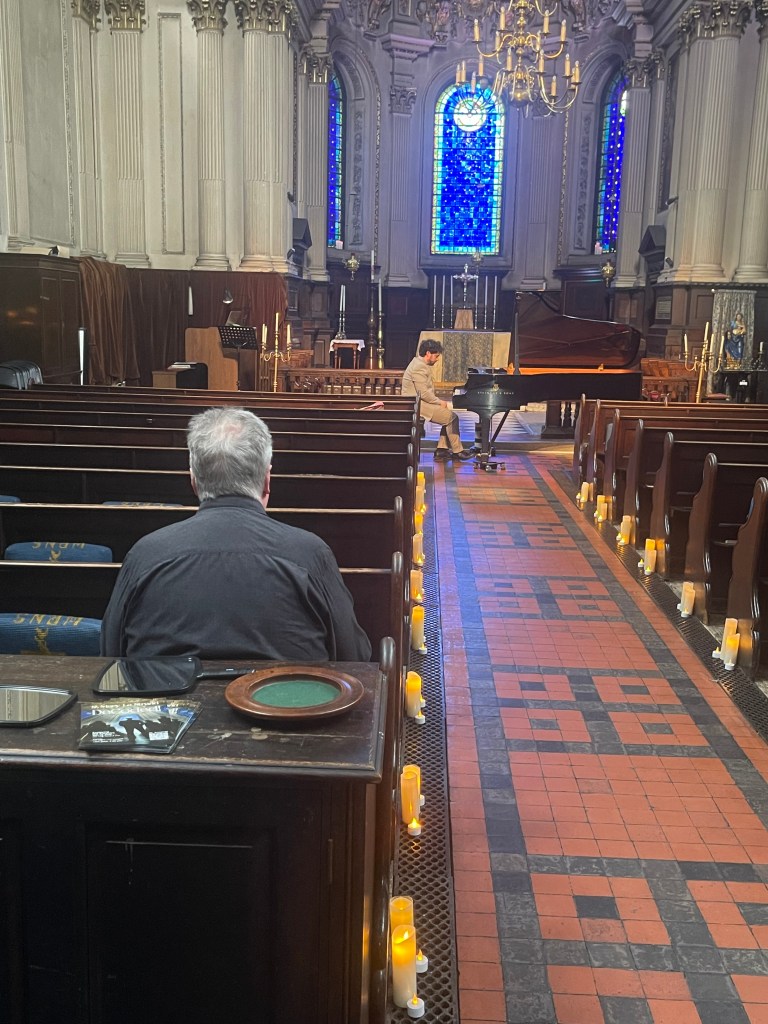
Tuccia is a very modest young man who works ceaselessly at creating musical opportunities for himself and his colleagues and like Warren Mailley- Smith offers many important occasions to musicians who can get lost in a profession where quantity often takes precedence over quality.
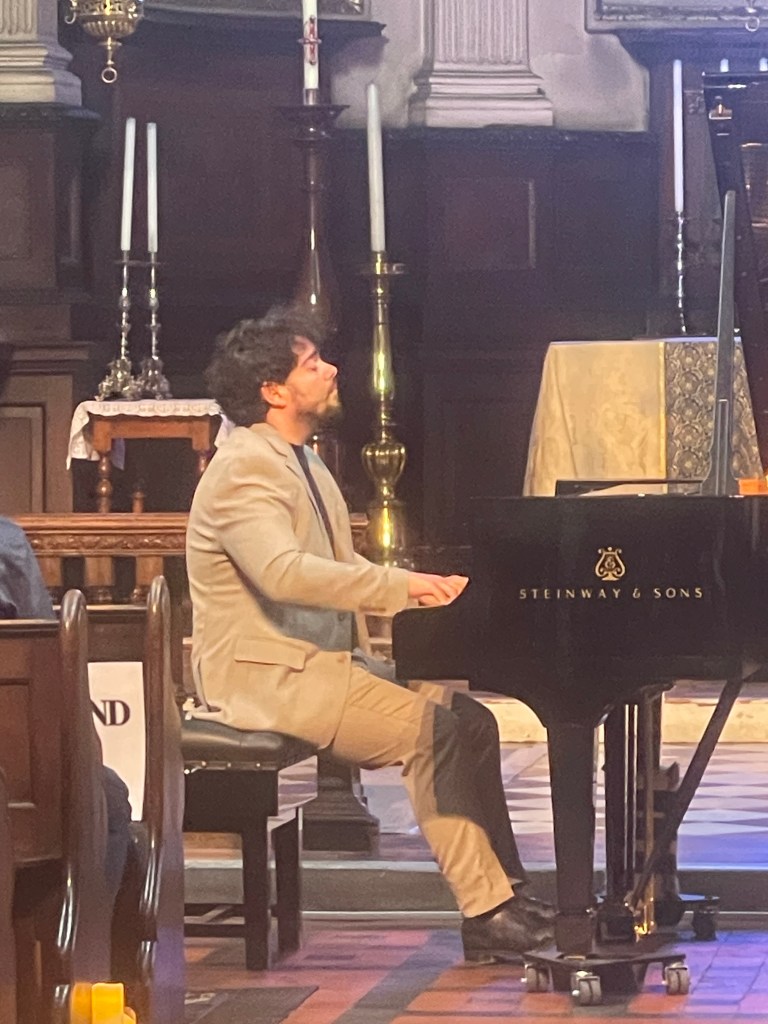
Giuliano Tuccia is not aware of his own talent, but as Leslie and I and the public present,including the ticket attendants, can attest we have rarely heard a piano sound so radiant with a sumptuous glowing beauty of pure natural musicianship.
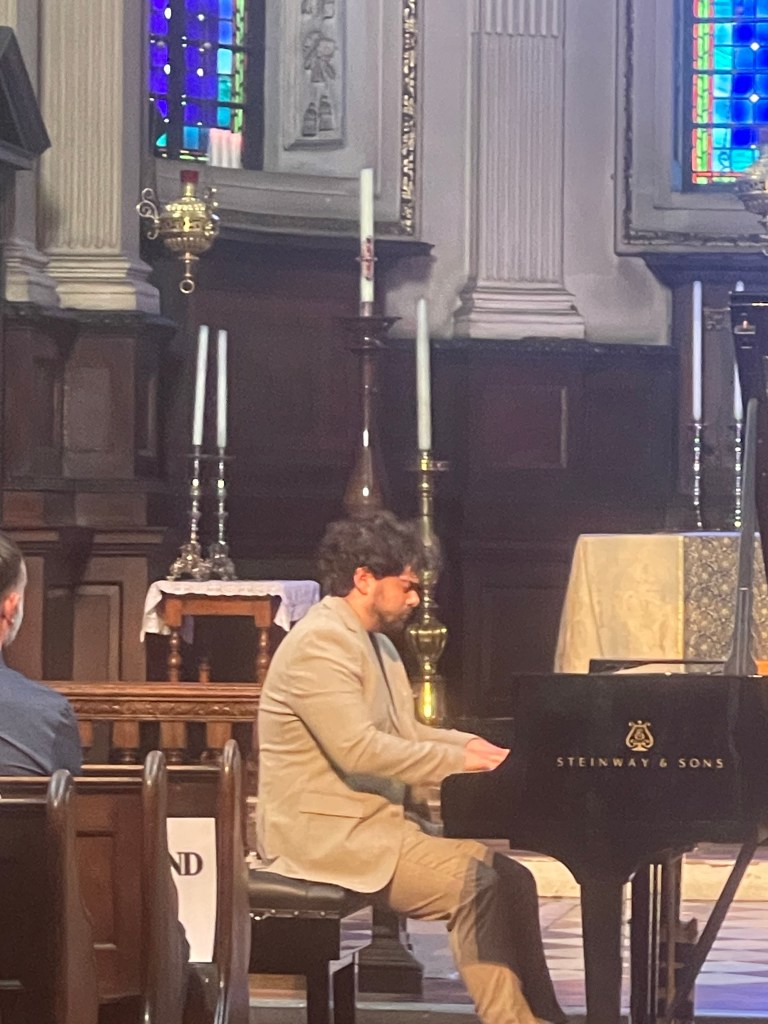
Two sonatas by Scarlatti opened the programme. Both in D minor with K.32, an outpouring of leisurely beauty with ornaments part of a musical line of improvised flowing grace.K.1 on the other hand was of scintillating brilliance with ornaments like tightly wound springs adding a gleaming sparkle to gems that were played with the nonchalant ease of a master craftsman.
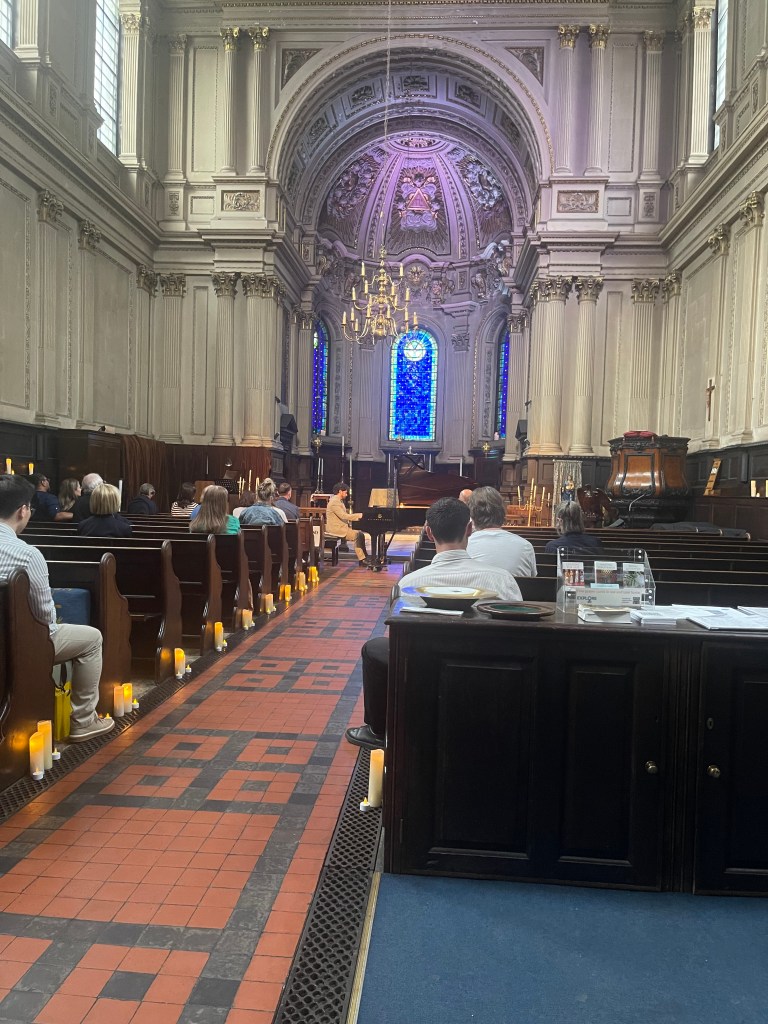
There was charm and brilliance to Clementi’s Sonata in A op 10 n.1, one of over a hundred from a much neglected master known to be the ‘Father of the Piano’. The Allegro con spirito first movement was played with brilliance ,delicacy and charm with a kaleidoscopic palette of colour which contrasted so well with the radiance of the Menuetto – Allegretto con moto.There was a jeux perlé of scintillating brilliance and dynamic drive to the prestissimo finale.
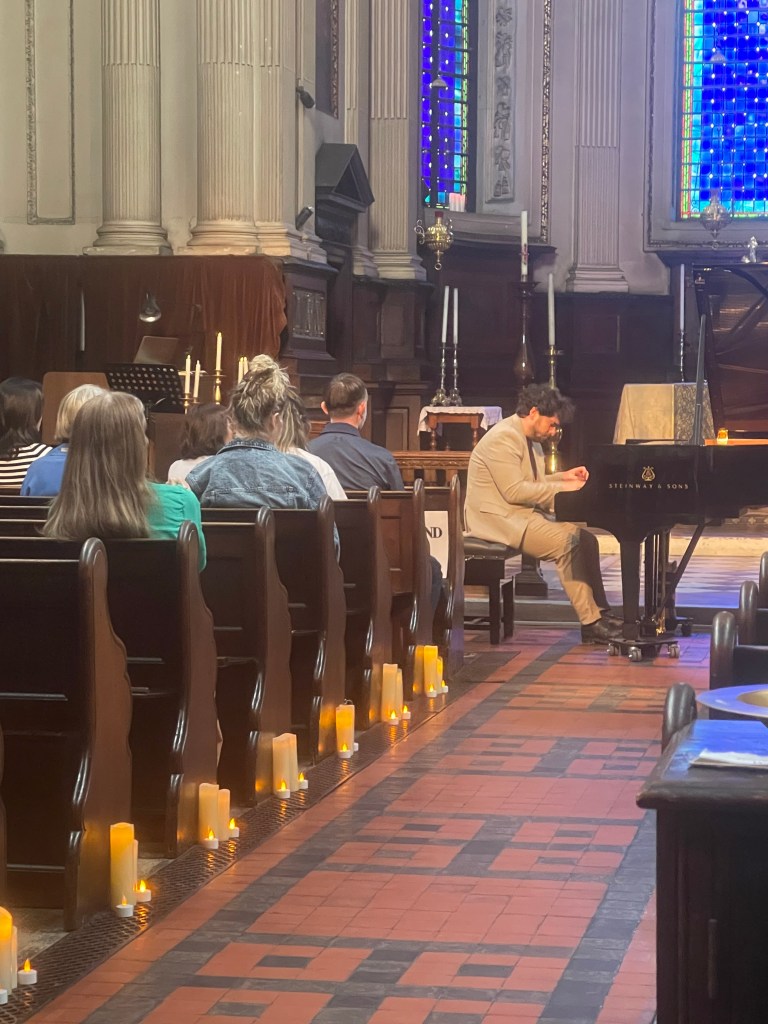
Two Nocturnes by Chopin were played with a beguiling sense of style and a knowing sense of balance that allowed Chopin’s Bel Canto to rise so naturally over the sumptuous accompaniment.There was nostalgia and subtle beauty but above all a natural flexibility that cannot be taught but is in born to all really dedicated artists. GiulianoTuccia obviously loves the piano and this shone through every note that flowed from his sensitive hands.
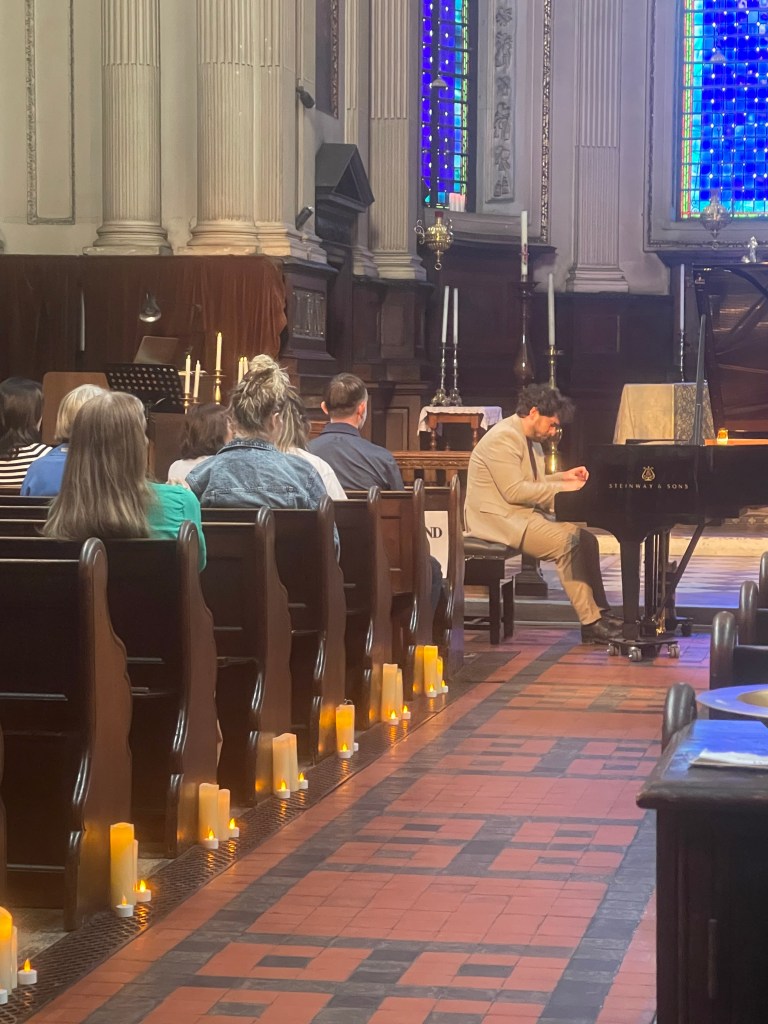
Preparing the way for Liszt’s great tone poem, that recounts the story of the Greek myth of ‘Hero and Leander’ ,as the Second Ballade unfolds with the chromatic ostinati representing the sea: “You really can perceive how the journey turns more and more difficult each time. In the fourth night he drowns. Next, the last pages are a transfiguration”. A melodic line that just emerged from the depths with a mastery of control and balance blossoming into questioning phrases of ravishing beauty. A military outcry of dynamic drive and nobility opening up a scene of poetic improvisations of radiant beauty, Exhilarating climax of washes of sound over the entire keyboard played with knowing poetic meaning as the music died away to the whispered final confessions.
Followed by the same whispered sounds that Debussy describes in ‘Des pas sur la neige’ , played with a glowing fluidity and delicate phrasing. A sudden ray of sunlight announces the radiance and bustling, busy meanderings of ‘Les collines d’Anacapri’.Played with controlled brilliance as the final ray of sunshine was allowed to ring out around this vast space with piercing insistence.
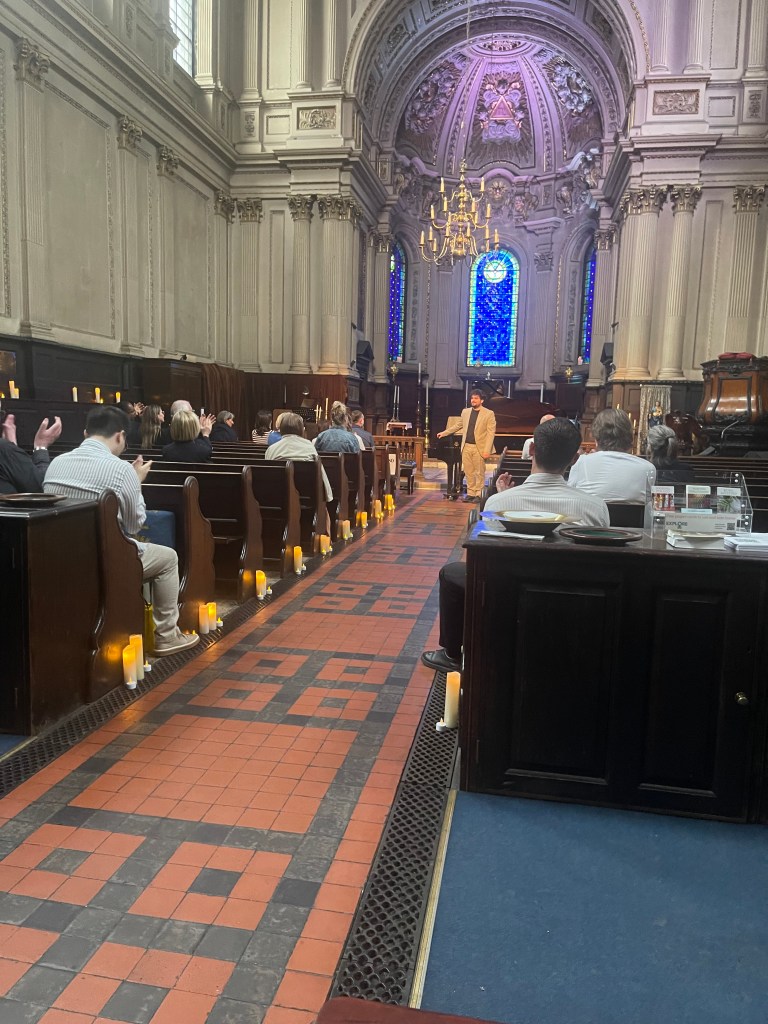
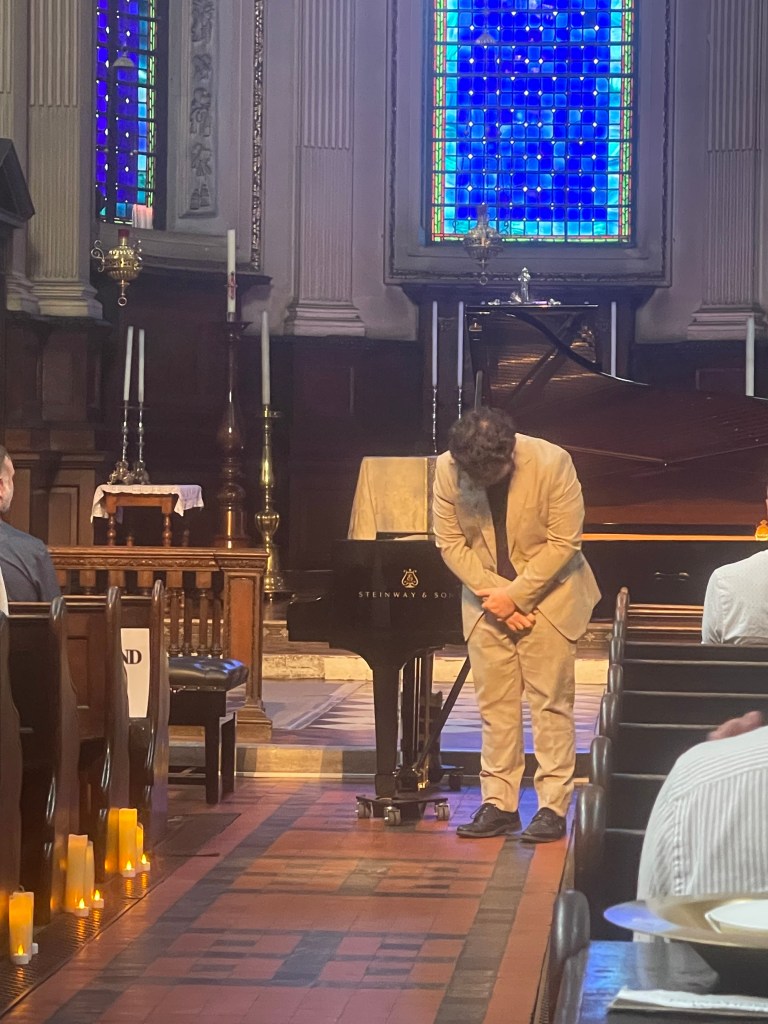
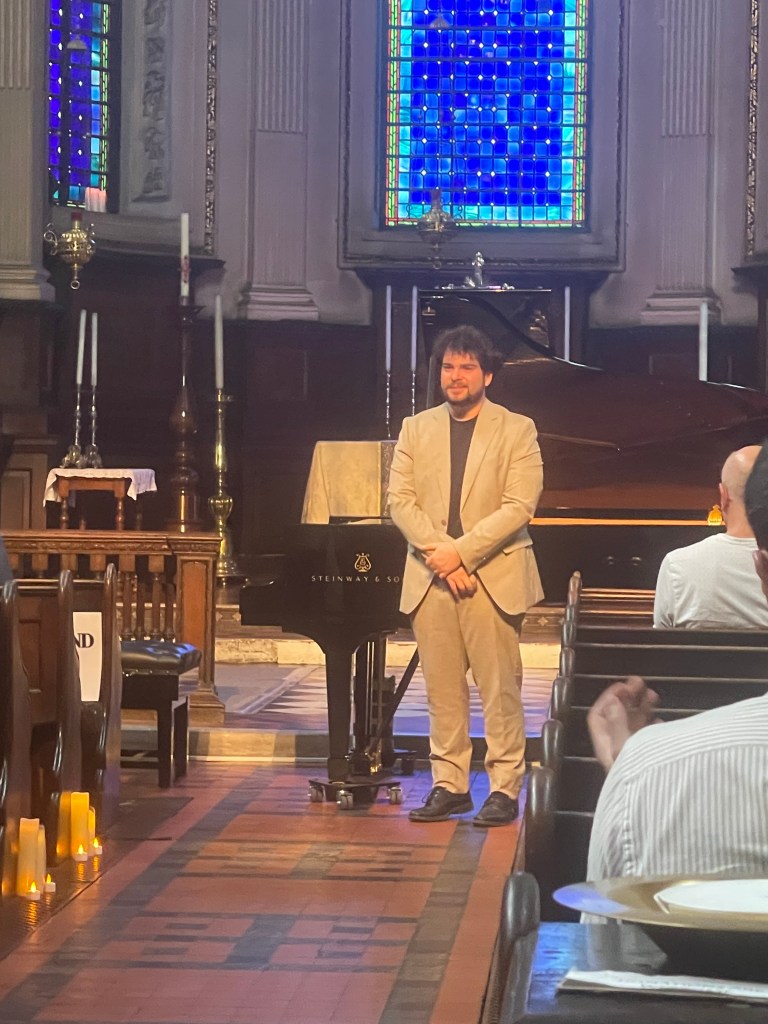
Rachmaninov’s Moment Musicaux op. 16 n. 4 was a monumental way to thank an audience who had not expected such radiance from within as well as without on what must be the hottest day of the year.Played with passion, control and with the sumptuous sounds that we had been treated to throughout the recital by this young man from Forlì.
A well earned drink at the Wellington Arms just across the square that houses St Mary’s and also the Courtauld Gallery in the midst of London’s theatre land.

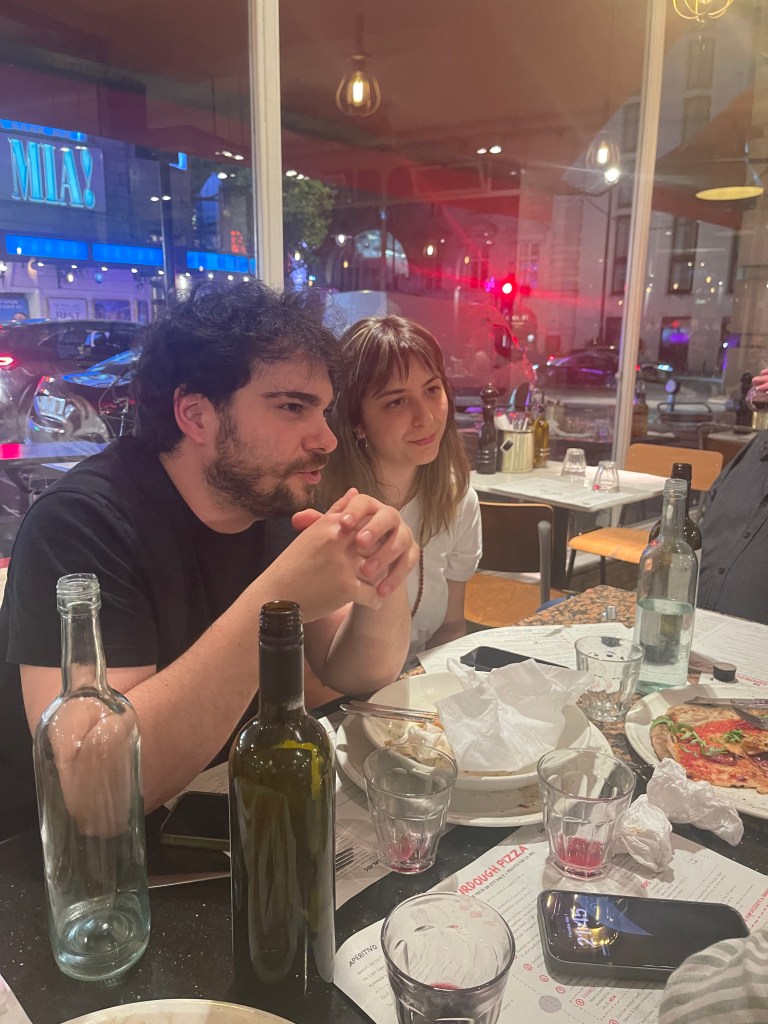
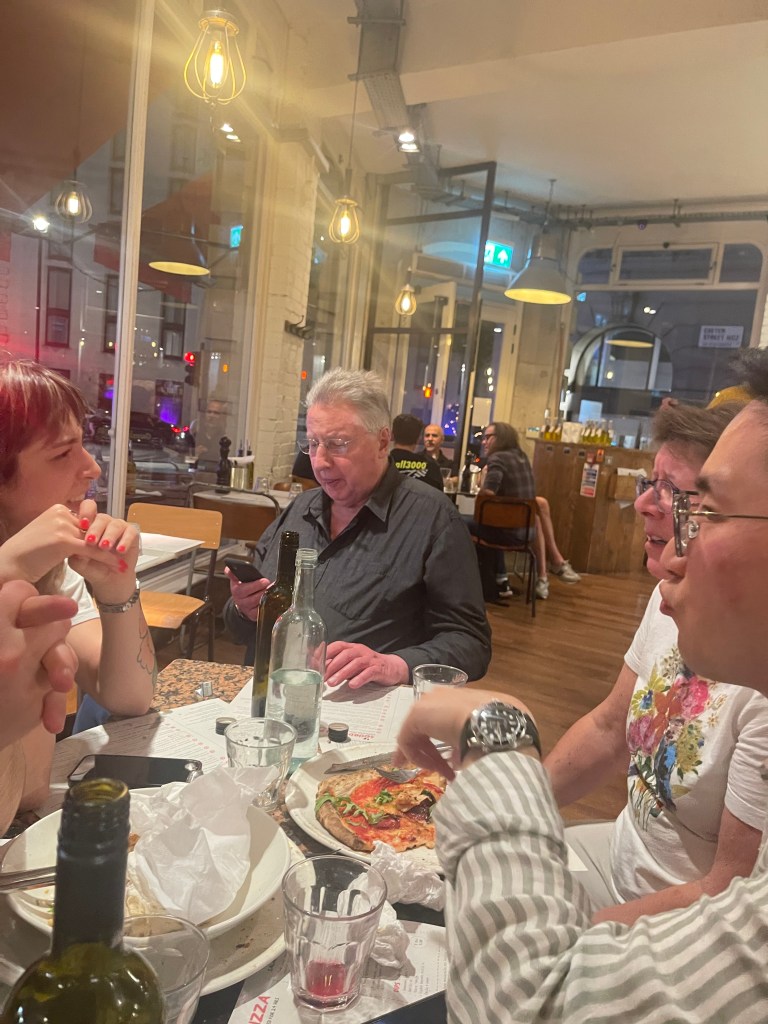
And of course the pizza could not ‘Manca’ either.
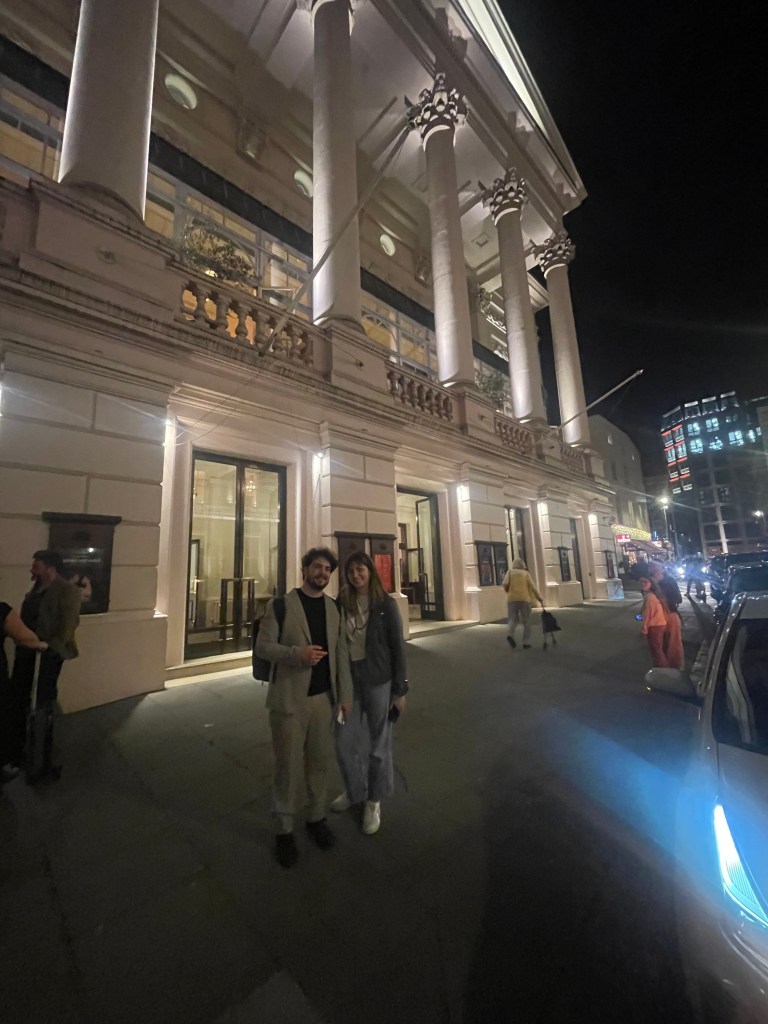
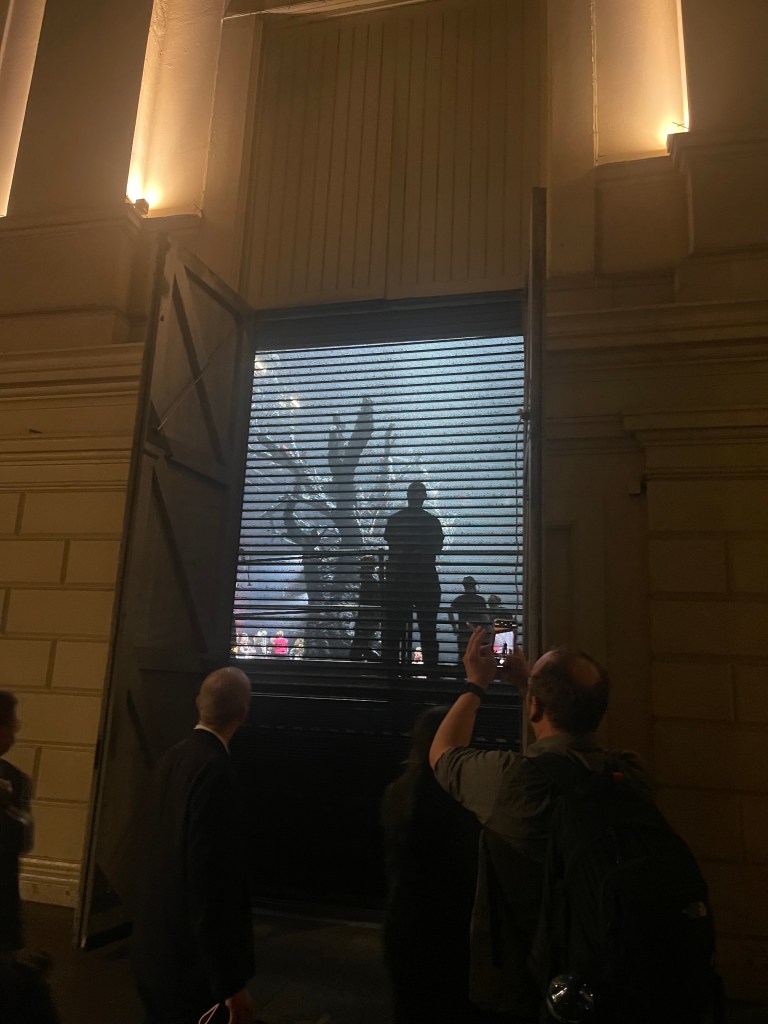
Passing by the opera house as the public left ecstatic from Wagner’s ‘Die Walküre’. Barry Millington extolling the musicianship of Sir Antonio Pappano who just happens to be Honorary Patron of the Keyboard Trust.
Small world !
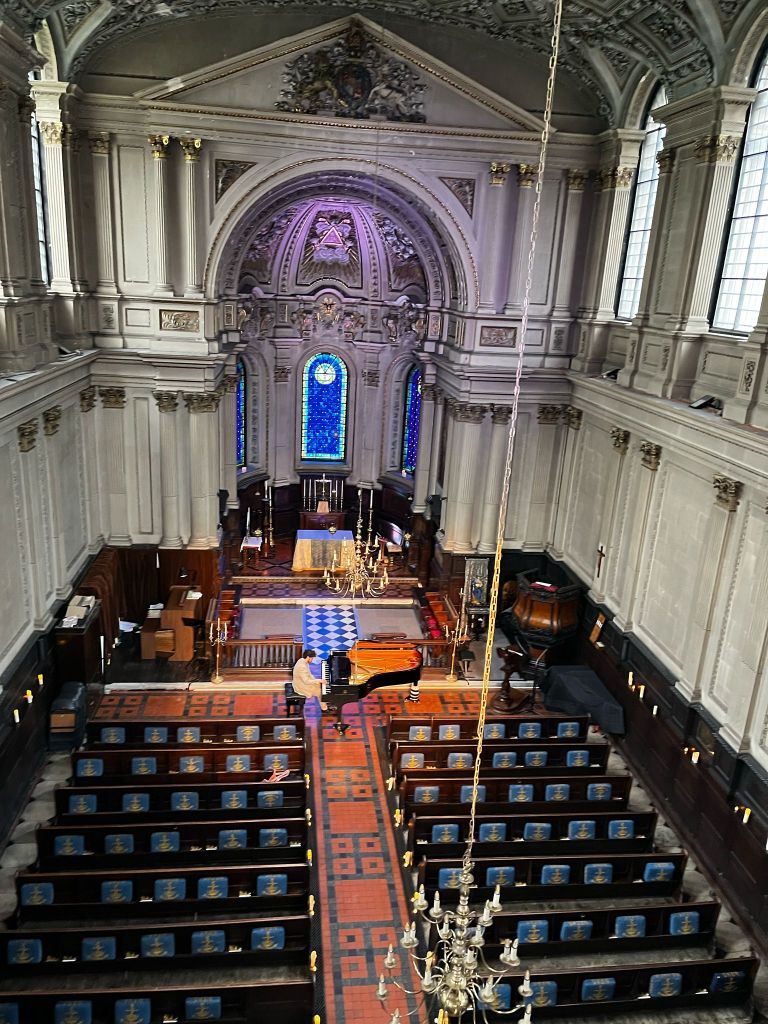
St Mary Le Strand Church, The Strand, West Central London WC2R 1ES
Programme
Domenico Scarlatti : 2 sonatas K 32 in D minor K 1 in D minor
Muzio Clementi: Sonata in A major Op. 10 n 1
Frédéric .Chopin: Nocturnes in B flat minor Op 9 n.1 and E flat op 9 n 2
Franz Liszt: Ballade n 2 in B minor S.171
Claude .Debussy: 2 Préludes Book I n.5 Les collines d’Anacapri and n. 6 Des pas sur la neige
Nicolò Giuliano Tuccia is considered by Leslie Howard as one of the most sensitive and interesting musicians of his generation. Born in 1999, he began studying piano at a young age under the guidance of Maestro Giancarlo Peroni. He graduated with honors from the “B. Maderna” Conservatory in Cesena in 2022, winning a scholarship offered by the Rotary Club. He is currently attending the “Incontri col Maestro” Piano Academy in Imola, studying with maestros André Gallo, Alessandro Taverna, and Igor Roma, and pursuing a second-level Master’s at the “Francesco Venezze” Conservatory in Rovigo with maestros Federico Nicoletta and Roberto Prosseda.
He has also refined his studies at summer festivals, masterclasses, seminars, and conferences with internationally renowned maestros such as Edith Fischer, Avedis Kouyoumdjian, Riccardo Risaliti, and Sergio Tiempo.

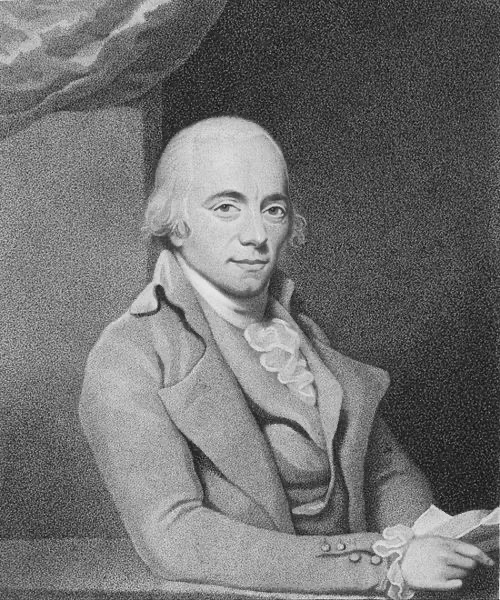
Muzio Clementi 23 January 1752 Rome.- 10 March 1832 (aged 80) Evesham , United Kingdom
Muzio Filippo Vincenzo Francesco Saverio Clementi (23 January 1752 – 10 March 1832) was an Italian-British composer , virtuoso pianist,pedagogue,conductor , music publisher, editor, and piano manufacturer, who was mostly active in England.
Encouraged to study music by his father, he was sponsored as a young composer by Sir Peter Beckford who took him to England to advance his studies. Later, he toured Europe numerous times from his long-standing base in London. It was on one of these occasions, in 1781, that he engaged in a piano competition with Mozart.
Influenced by Domenico Scarlatti’s harpsichord school and Joseph Haydn’s classical school and by the stile Galante of J.C. Bach and Ignazio Cirri , Clementi developed a fluent and technical legato style, which he passed on to a generation of pianists, including John Field ,Johann Baptist Cramer, Ignaz Moscheles ,Giacomo Meyebeer,Friedrich Kalkbrenner,Johann Nepomuk Hummel and Carl Czerny. He was a notable influence on Beethoven and Chopin.
Clementi also produced and promoted his own brand of pianos and was a notable music publisher . Because of this activity, many compositions by Clementi’s contemporaries and earlier artists have stayed in the repertoire. Though the reputation of Clementi was exceeded only by Haydn, Mozart, Beethoven, and Rossini in his day, his popularity languished for much of the 19th and 20th centuries.In 1798, Clementi took over the firm Longman and Broderip at 26 Cheapside (then the most prestigious shopping street in London), initially with James Longman, who left in 1801.Clementi also had offices at 195 Tottenham Court Road from 1806. The publication line, “Clementi & Co, & Clementi, Cheapside” appears on a lithograph, “Music” by William Sharp after John Wood (1801–1870), circa 1830s.[8]
Clementi also began manufacturing pianos, but on 20 March 1807, a fire destroyed the firm’s warehouses in Rotten Road, resulting in a loss of about £40,000. That same year, Clementi made an agreement with Beethoven (one of his greatest admirers), which gave him full publishing rights to all of Beethoven’s music in England. He edited and interpreted Beethoven’s music but has received criticism for editorial work such as making harmonic “corrections” to some of Beethoven’s scores.
In 1810, Clementi stopped performing in order to devote his time to composition and to piano making. On 24 January 1813, together with a group of prominent professional musicians in England, he founded the “Philharmonic Society of London”, which became the Royal Philharmonic Society in 1912. In 1813 Clementi was appointed a member of the Royal Swedish Academy of Music.
Meanwhile, his piano business had flourished, affording him an increasingly elegant lifestyle. As an inventor and skilled mechanic, he made important improvements in the construction of the piano, some of which have become standard.
 ChristopherAxworthy-MusicCommentary