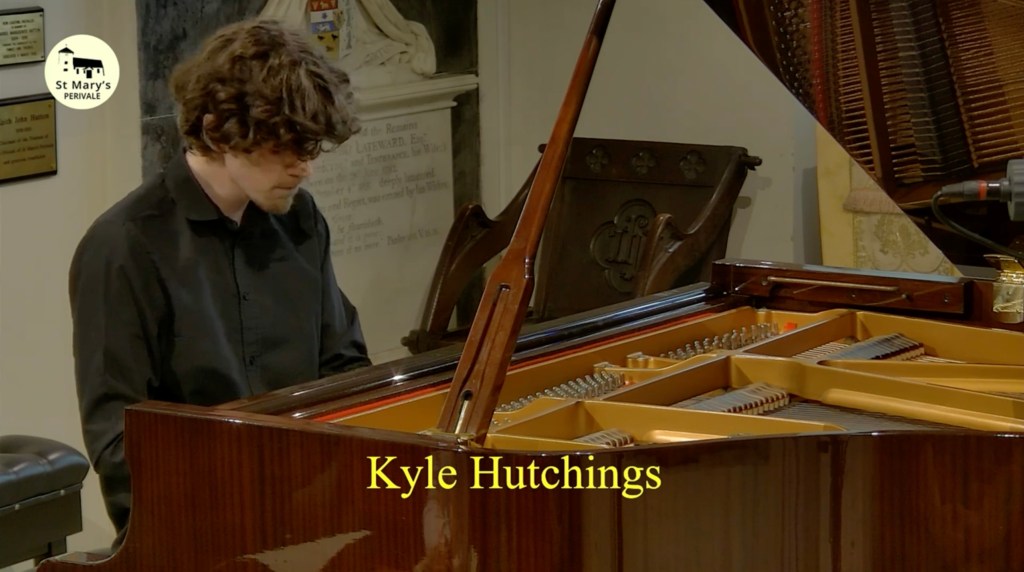
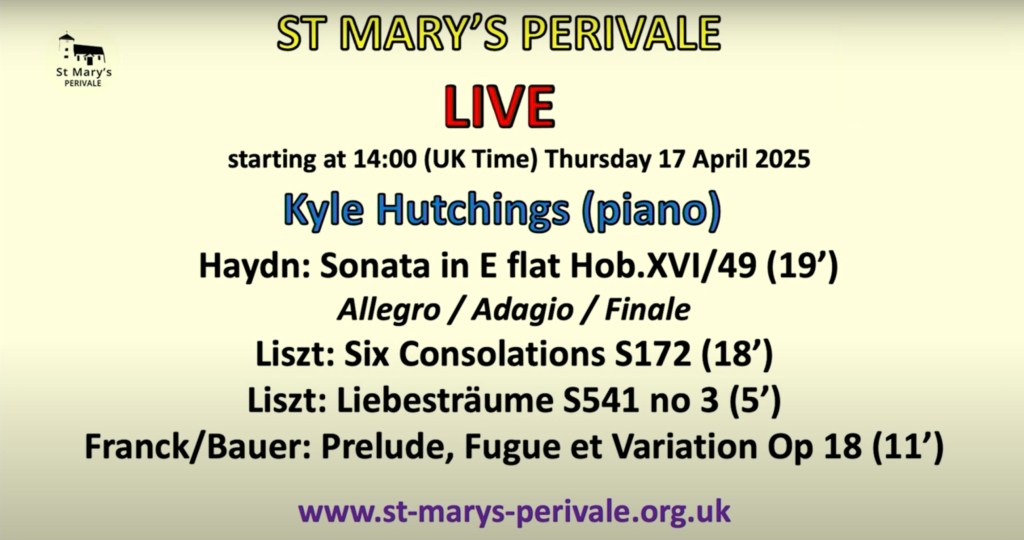
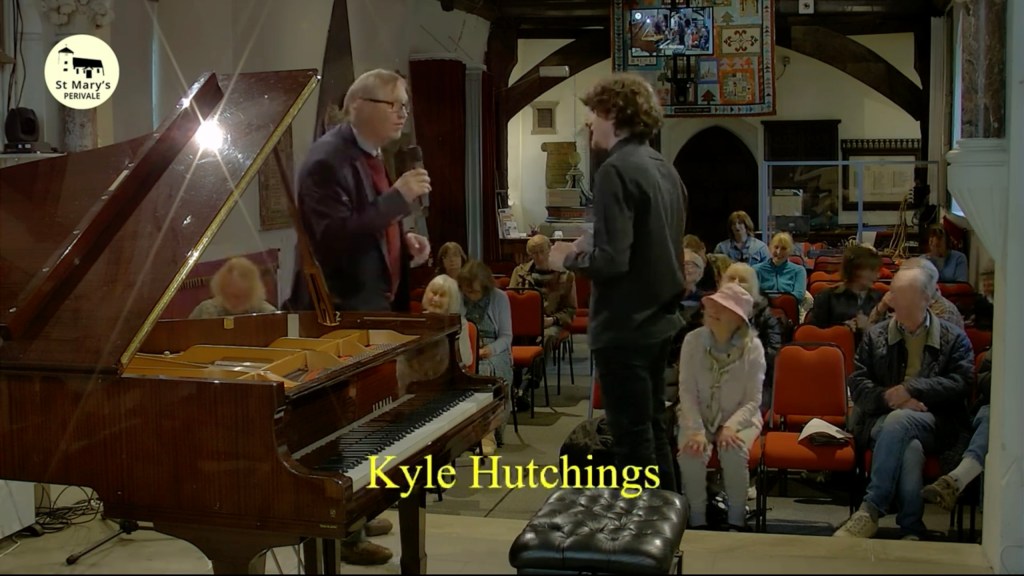
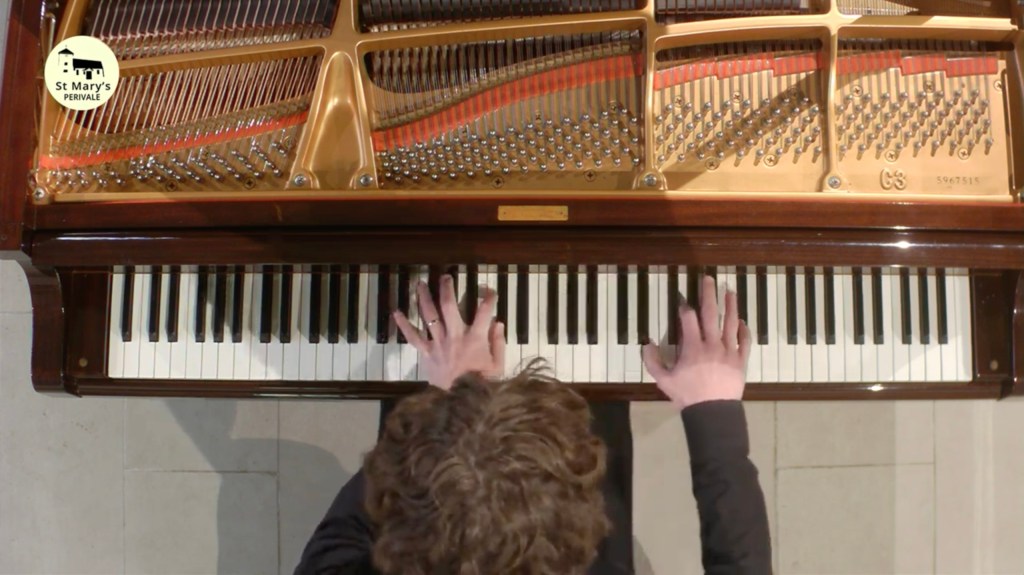
I have heard Kyle play quite a few times and each time I remain struck by his selfless humility and total concentration as music just pours from his almost stationary fingers without any showmanship or physical exertion. More Eusebius than Florestan, that is for sure, but there is a hypnotic sense of communication to the secret world of sounds that he chooses to share with all those that allow themselves to come under the same spell as him. The Pied Piper of the piano indeed or as I have so often said before the poetic troubadour of the piano.
A choice of programme that immediately shows that we are to hear pure poetry, not rhetorical declamations. I have rarely heard the six consolations by Liszt in the concert hall and was quite surprised to hear the famous D flat in their midst today, as I am so used to hearing it as an encore! Liebestraum and Mendelssohn’s Spring Song used to sit on every piano stand when the piano not the television took pride of place in the living room, but in the concert hall these days is a rarity. I can still remember the first time I heard the hauntingly beautiful César Franck Prelude, Fugue and Variation and not being able to rid it from my head for days afterwards!
Kyle opened too with the E flat Sonata of Haydn but not the flamboyant imperious E flat n. 52 but the little, charmingly simple one, that virtuosi never bother with! An eclectic choice of programme that describes so well the artist before he even steps into the limelight. Entering and leaving the stage like the later Richter who was merely the medium between the music and the listener and not the star of a show. Kyle’s talent is really quite unique in it’s self effacing simplicity and radiant beauty where the music really speaks but never shouts and often whispers but carries a quite compelling message.
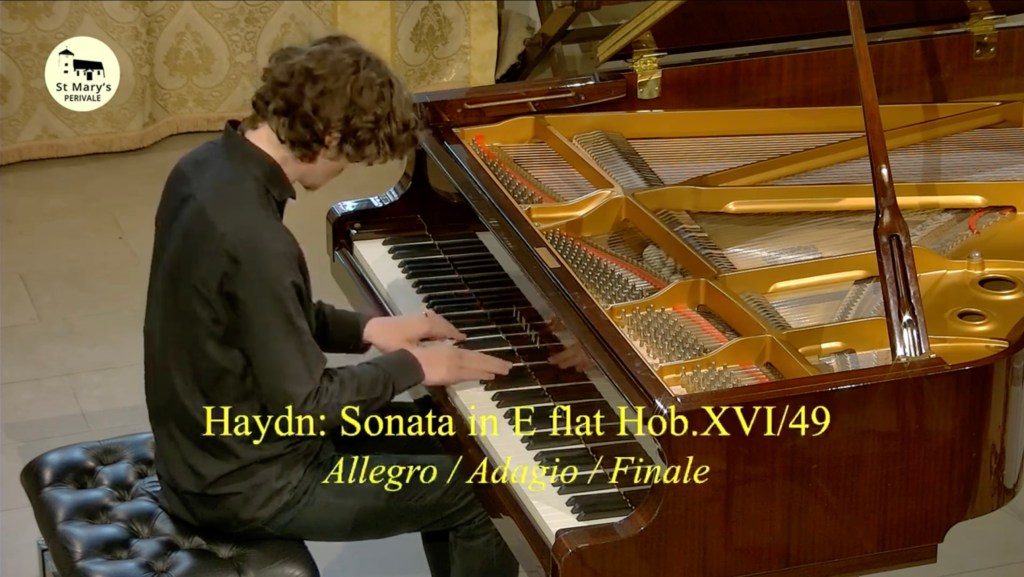
There was a beauty and measure to the opening Allegro of the Haydn with a refined sense of style.The Adagio played with poignant and exquisite simplicity where the music just evolved with radiance and beauty. A finale of purity and fluidity, what it lacked in dynamic drive and ebullient ‘joie de vivre’ it gained with it’s compelling simplicity.
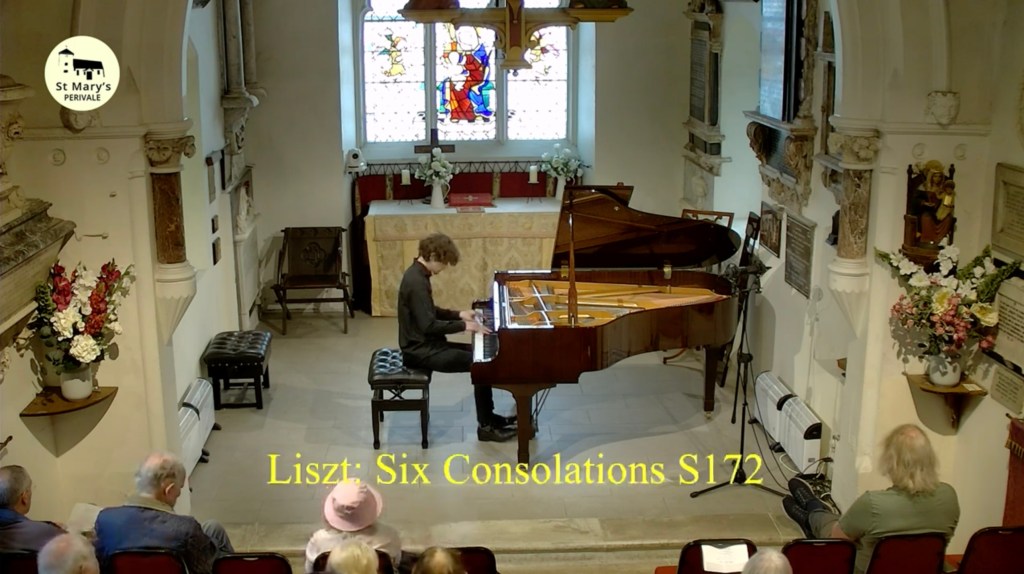
Liszt ‘s six consolations were played with a yearning and beauty of simple fluidity. Only in the last one did Kyle play over mezzo forte such was the refined elegance of a dream world of consolation.
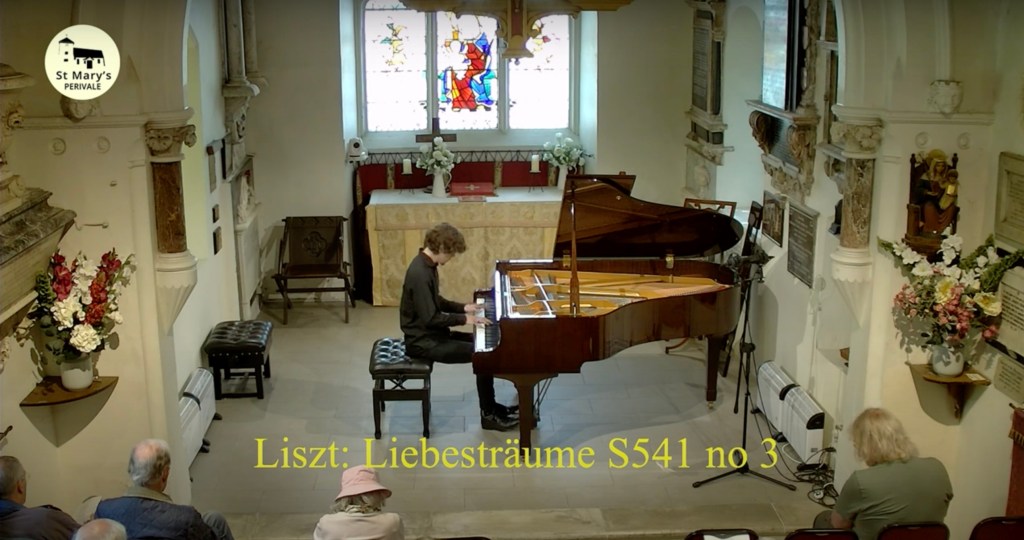
A great preparation for Liebestraum n. 3 that seemed rather restrained but was perfectly shaped and even the ornaments were those of a coloratura singer rather than a virtuoso pianist .It was all part of Kyle’s extreme introverted sound world that he inhabits with almost religious restraint and sensitive gentleness.
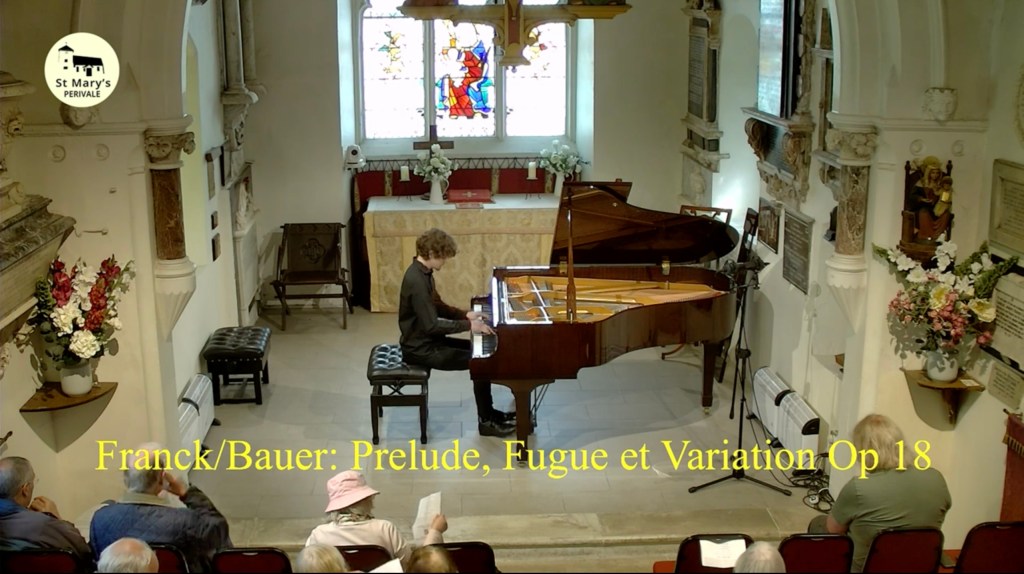
The Franck Bauer I have heard Kyle play before and the haunting beauty he brings to the opening theme as it reappears at crucial moments is one of wondrous things of this often neglected work. There was some quite considerable playing too but passed without any showmanship as Kyle was only concerned to show us so clearly the architectural line in a work of sometimes knotty respectfulness.
After a moments thought Kyle decided to pull out all the stops and play as an encore a Rachmaninov song of quite considerable robust sounds and passion which came as a surprise after an afternoon of such intimate music making.
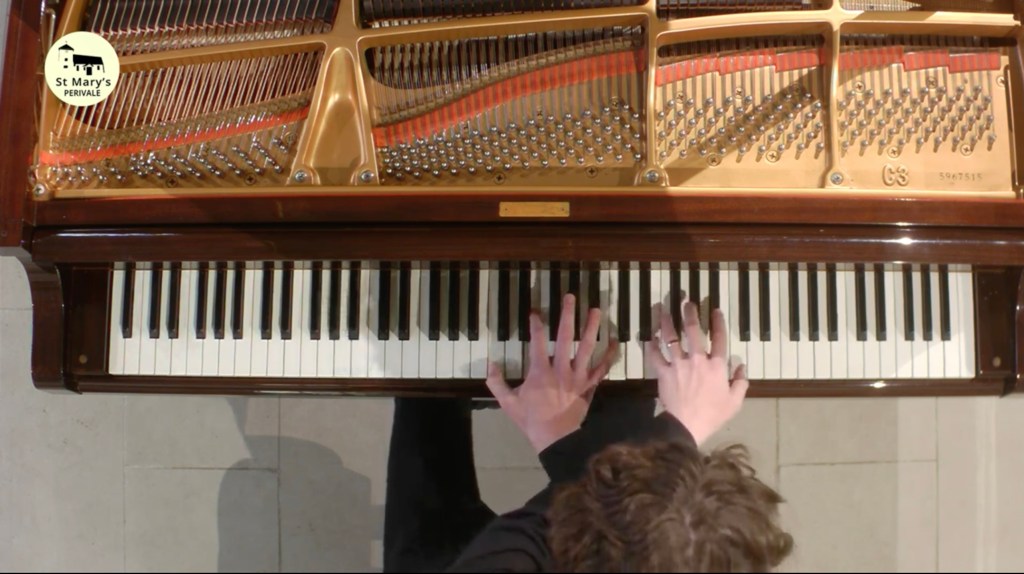
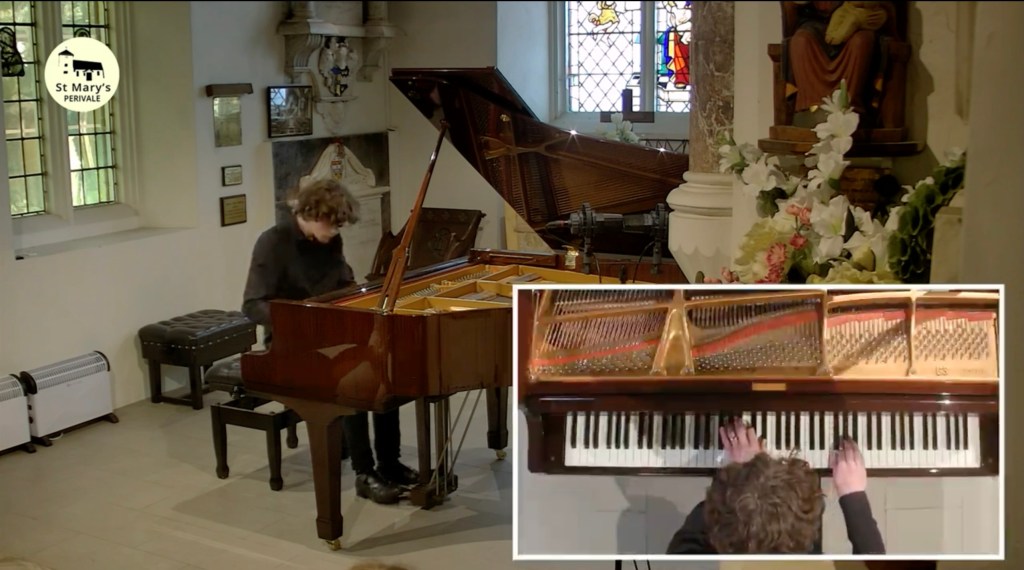
Kyle Hutchings is a British pianist who, after just twelve months of self-taught playing, won a scholarship to study in London with internationally acclaimed pianist Richard Meyrick on the Pianoman Scholarships Scheme, supported by Sir and Lady Harvey McGrath. Subsequently, he made his London debut with the Arch Sinfonia, playing Beethoven’s Second Piano Concerto. Critically acclaimed by International Piano Magazine as “a poet of the piano”, he has performed in venues such as London’s prestigious St. John’s Smith Square, Kings Place, St. James’s Piccadilly, St. Mary’s Perivale, London’s BT Tower, The Lansdowne Club in Mayfair, as part of the Blüthner Recital Series, and many others up and down the country. In addition to this, he is in high demand internationally, having received accolades throughout Europe. During his studies at Trinity Laban, supported by a scholarship from Trinity College London, he was a recipient of the Conservatoire’s most important prizes, including the Nancy Thomas Prize for Piano as well as the Director’s Prize for Excellence; he was also nominated for the Conservatoire’s coveted Gold Medal. Kyle is supported by The Keyboard Charitable Trust and has received support from the Robert Turnbull Piano Foundation as well as the Zetland Foundation. He looks forward to giving performances throughout Europe and making his American debut in the 2024–2025 season.
 ChristopherAxworthy-MusicCommentary