
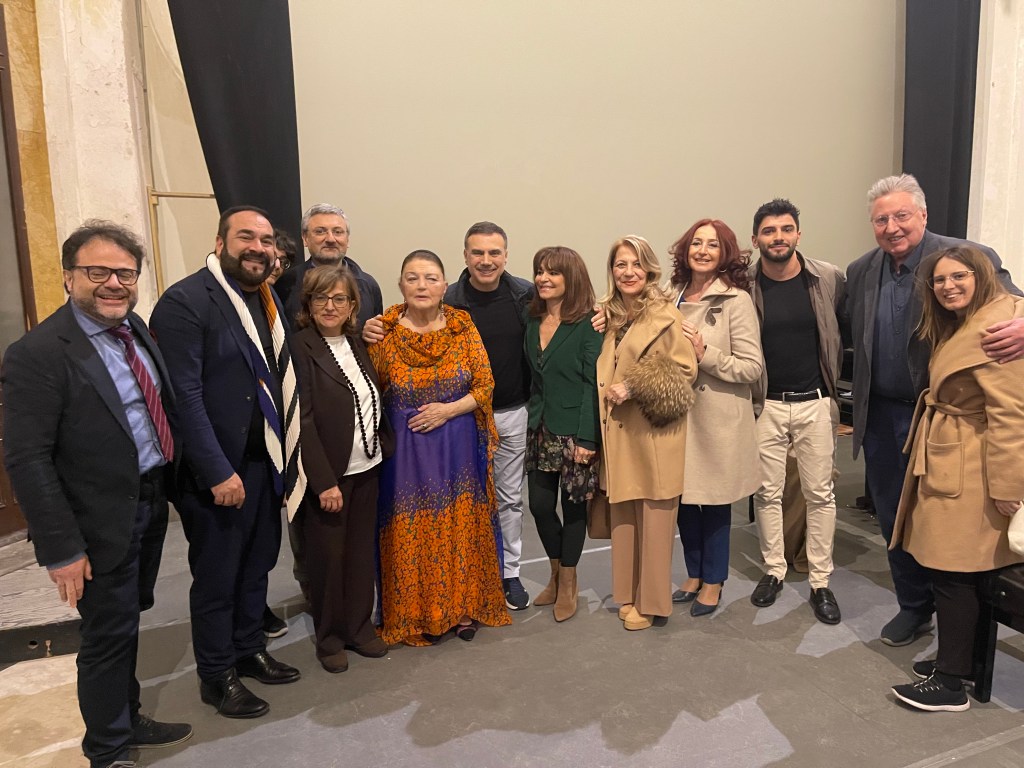
Another miracle in Trapani with the reappearance of the undisputed queen of the keyboard,Oxana Yablonskaya.
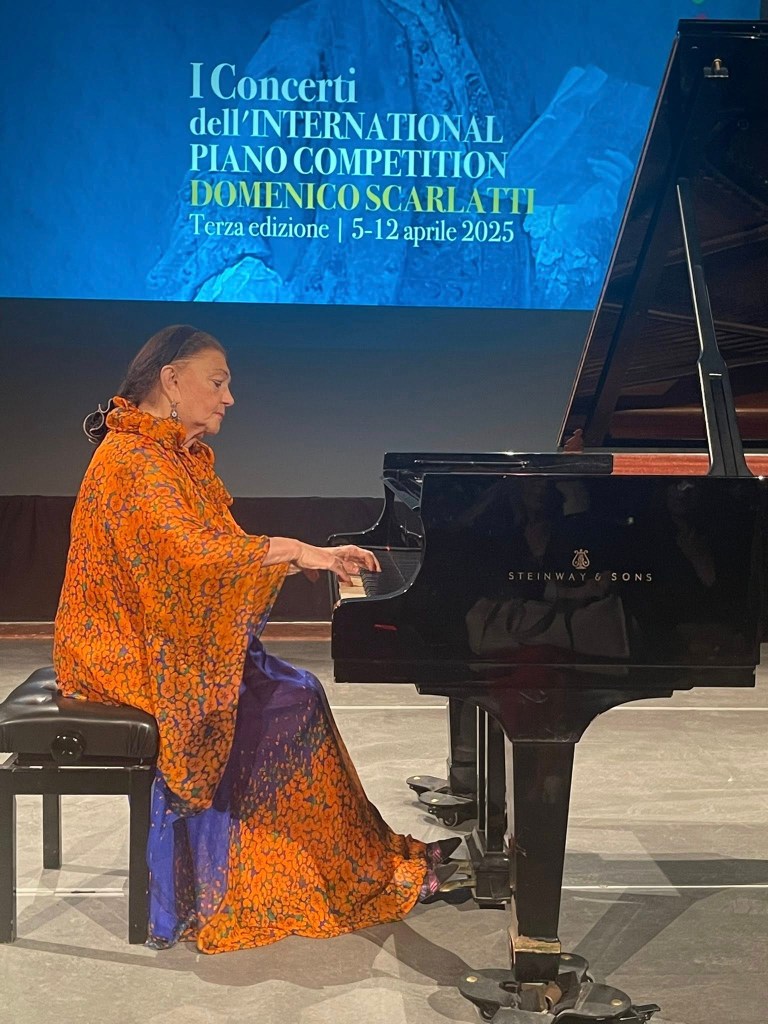
A year has passed since her last concert and now at 86, well into her Indian Summer, her playing is even more profoundly radiant and her technical prowess proves once again she is still the ‘kitten on the keys’. https://www.youtube.com/watch?v=ZYpZt7iQFcY
A programme of Scarlatti ,Mozart , Beethoven, Rachmaninov and Liszt reminding us once again what it means to play with weight. Seemingly endless amounts of energy, she like her octuagenerian colleague Martha Argerich continue to astonish a public who are starved of real artistry with the selfless dedication to the composers they are serving.
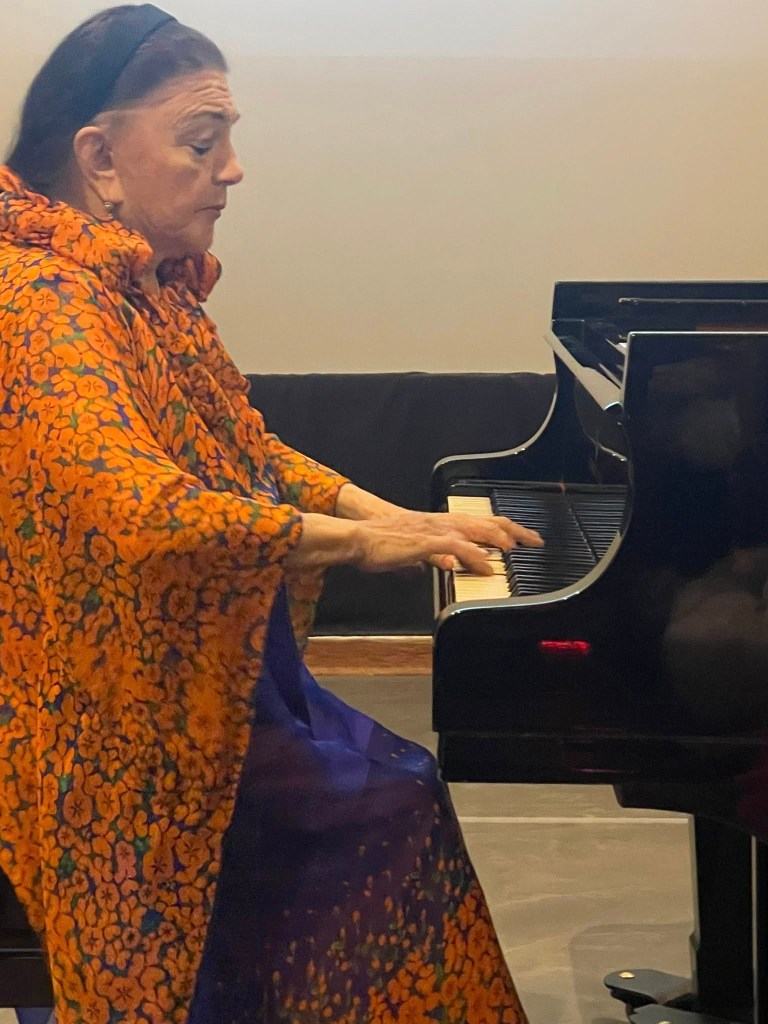
Like ballet dancers they are born with the ‘physique de rôle’ with hands that are made to serve. A technical preparation in childhood when the shape of the hand is formed with fingers of steel,like limpets sucking the sounds out of the keys, but then a wrist of rubber that allows them to play with the seeming ease of someone seated in their favourite chair.
Of course the great example to my generation was Artur Rubinstein who could hold us effortlessly in his hands until his ninetieth year producing golden sounds that will never be forgotten.
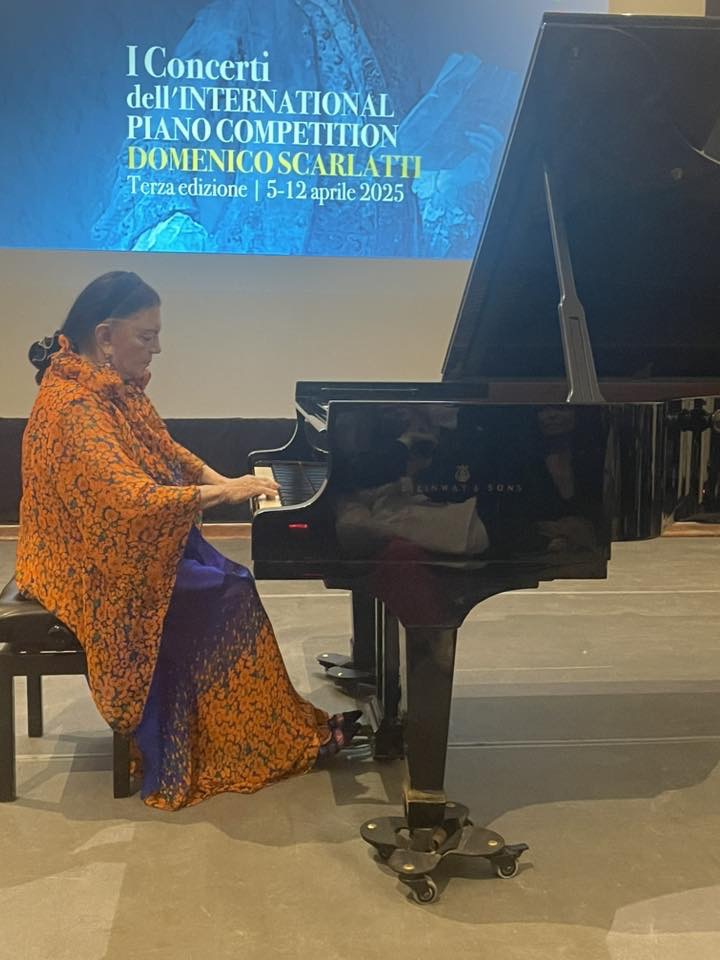
Three Scarlatti Sonatas opened the concert and were obviously a homage to the competition of which she is an illustrious jury member. It was enough to show us that she has lost none of her ‘fingerfertigkeit’ as the crystalline clarity and rhythmic drive held us spell bound. But there was much more than that, as the sounds she produced were of a kaleidoscope of colour of operatic performances with the characters parading before us with such individuality, turning these three well known sonatas into miniature tone poems of vibrant beauty.
The first played with a timelessness where the ornaments just sparkled like jewels, with rays of light that illuminated the melodic line without ever disturbing the musical message that was being recounted. In fact an art that conceals art and never draws attention to itself, as a story is being told by a sage of the keyboard .
The second sonata was played with a whispered veiled tone bursting into an ebullient jeux perlé of astonishing vigour and brilliance in the third. Numbers have no meaning in art as Longo numbers have no importance when communication of radiance and beauty are the ‘non plus ultra’ of a true artist.
I remember another High Priestess of the keyboard,Rosalyn Tureck, telling me, after a performance of the Goldberg Variations when she too had reached her Indian summer, that she looked at the numbers of her anagrafical age and they had absolutely no significance where her art was concerned !
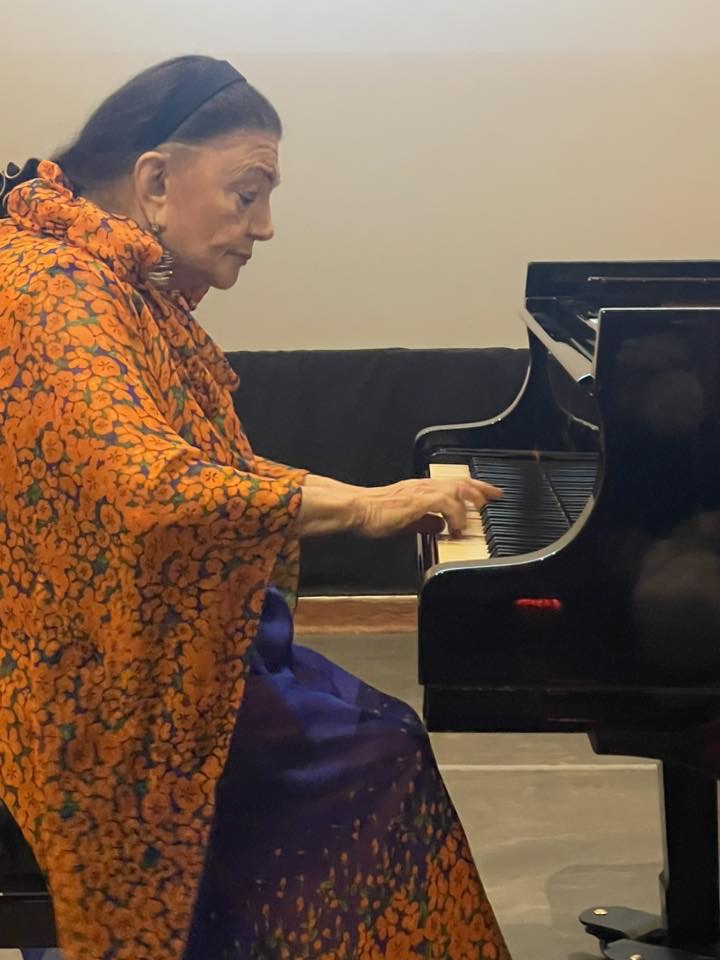
A masterly performance of Mozart’s A minor rondo where Schnabel’s dictum springs to mind of Mozart being too easy for children but too difficult for adults!
He obviously had not contemplated Oxana’s Indian summer where a lifetimes struggle has eliminated all superfluous things, as real meaning and significance are distilled into a simple acceptance of the beauty that surround all those that have the soul to appreciate it.
It was just such simplicity that Oxana brought to Mozart with a beauty and crystalline etched beauty of absolute purity. There was a story to tell and Oxana is one of the greatest story tellers of our age, who can bring the notes to life with a meaning and significance where words are just not enough. We were not even aware that she played all the repeats, as the musical discourse was of searing intensity and importance as she returned this monument to the pinnacle of miraculous significance that it truly is .
It was this, too, that was so apparent with Oxana’s masterly performance of Beethoven’s sonata op 109, the first of his trilogy and a farewell to the sonata that had followed his life in thirty two remarkable steps.
A simplicity and fantasy that only the deepest knowledge of the score could contemplate, arriving at the same improvised freedom that was the font of the composers inspiration. The radiance and beauty of the opening will long resound in this hall as an example of a simple mellifluous outpouring . It was as though the sonata like a mountain stream was already flowing as a door was opened by our genial interpreter who could share such beauty with us. The improvised interruptions never allowing this pastoral scene to be brusquely interrupted by Beethoven’s irascible and unpredictable temperament.
The second movement took wing with a dynamic drive and an undercurrent of menace that was to be diffused by the sublime vision of the ‘Gesangvoll, mit innigster Empfindung. Andante molto cantabile ed espressivo’. Words that have no significance where music can express so much more with so little . Beethoven was totally deaf when he wrote these final works that only he could hear with his inner ear but was miraculously still able to share his vision of the world with future generations with simple dots, dashes and words.
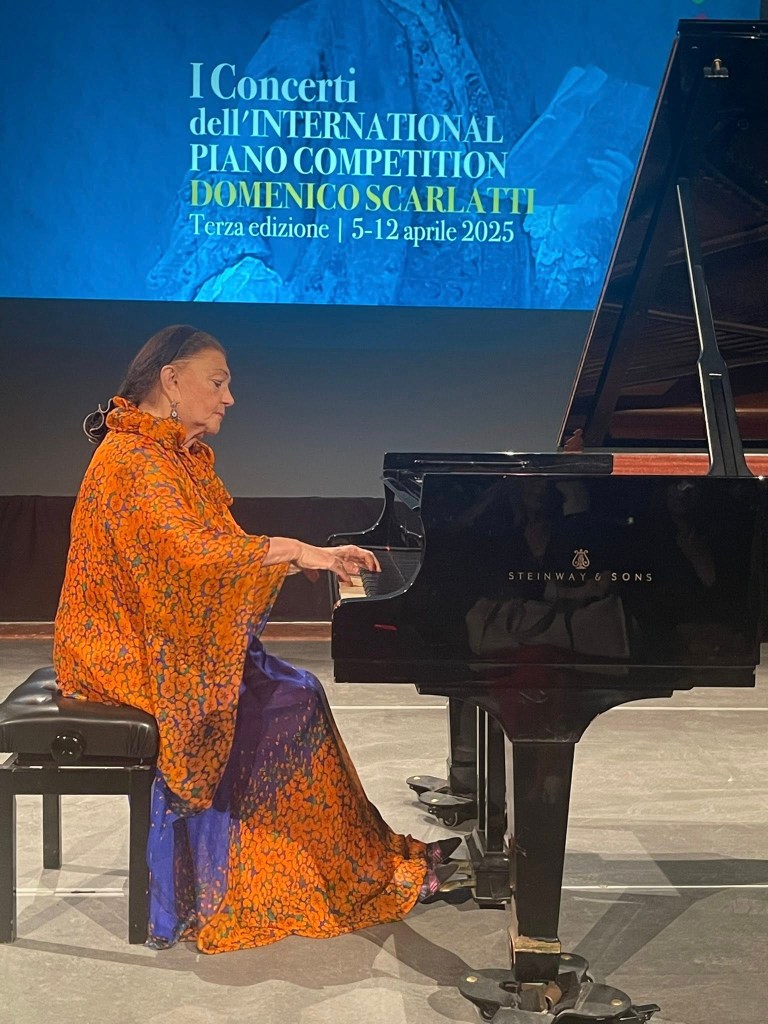
Oxana with a lifetime of living with this music could distill the very essence of Beethoven’s message of peace and goodwill after his turbulent and disturbing life . The radiance and beauty of the theme was played with nobility and aristocratic poise but with an inner tenderness, where to watch her hands caress the notes was like watching a great artist with a brush filling a canvas with beauty and significance .
The variations were allowed to evolve so naturally, and even when they burst into dynamic energy it was with the same energy that had lain hidden within the bare notes of the theme .
The fourth variation is where Beethoven, too, gives up on numbers and the significance of this variation becomes evident as the contrapuntal nobility is transformed into a vision of the world that Beethoven could already envisage in the not too distant future. Trills that become streams of sound, as the theme is allowed to float on a sumptuous cloud, as Beethoven ( like Scriabin in the next century ) reaches for the star that shines so brightly and was unfolded by Oxana with knowing brilliance of poignant significance. A cloud dying away with timeless wonder as the theme returns miraculously untouched by the visions we had experienced together, but enriched by delicacy and knowing understanding . Oxana’s hands barely touching the keys as the moments of aching silence that we shared together, after the last whispered confession, was evidence of how Oxana had opened a Pandora’s box of emotions in us all.
After a short break we were treated to works by two of the greatest virtuosi of all time, Franz Liszt and Sergei Rachmaninov .
The Corelli variations op 42, one of the last works that Rachmaninov wrote, but playing in public he would decide on the spur of the moment ,depending on the public’s reaction, if he would play them all or not.
There was no doubt in Oxana’s mind that she should play them all, as she had envisaged the work as a whole with an architectural shape finding momentary refuge in the major key before the final journey back to the original theme. A journey that she shared with us with a constant undercurrent of energy that was always present,whether in the ravishingly beautiful slow variations, the capricious jeux perlé virtuosity or the more monumentally dramatic.
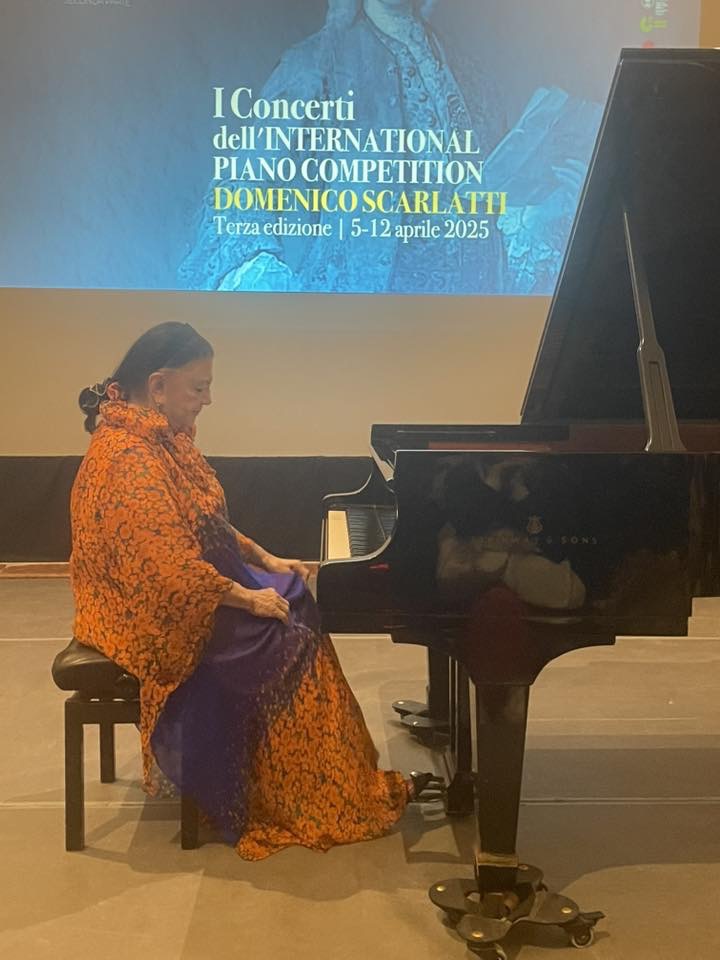
After the dynamic drive of the last three variations the final mighty ‘D’ in the bass was allowed to die away as a ravishingly beautiful coda was played with searing nostalgia and sumptuous chiselled beauty of masterly playing of a weight. Oxana’s fingers dug deep into the keys to find the most extraordinarily poignant sounds, preparing us for the simple vision of ‘La folia’ that had been the inspiration for this magnificent work that Rachmaninov dedicated to his duo partner Fritz Kreisler. Rachmaninov had written to his friend and colleague Nikolai Medtner : “I’ve played the Variations about fifteen times, but of these fifteen performances only one was good. The others were sloppy. I can’t play my own compositions! And it’s so boring! Not once have I played these all in continuity. I was guided by the coughing of the audience. Whenever the coughing would increase, I would skip the next variation. Whenever there was no coughing, I would play them in proper order. In one concert, I don’t remember where – some small town – the coughing was so violent that I played only ten variations (out of 20). My best record was set in New York, where I played 18 variations. However, I hope that you will play all of them, and won’t “cough”.
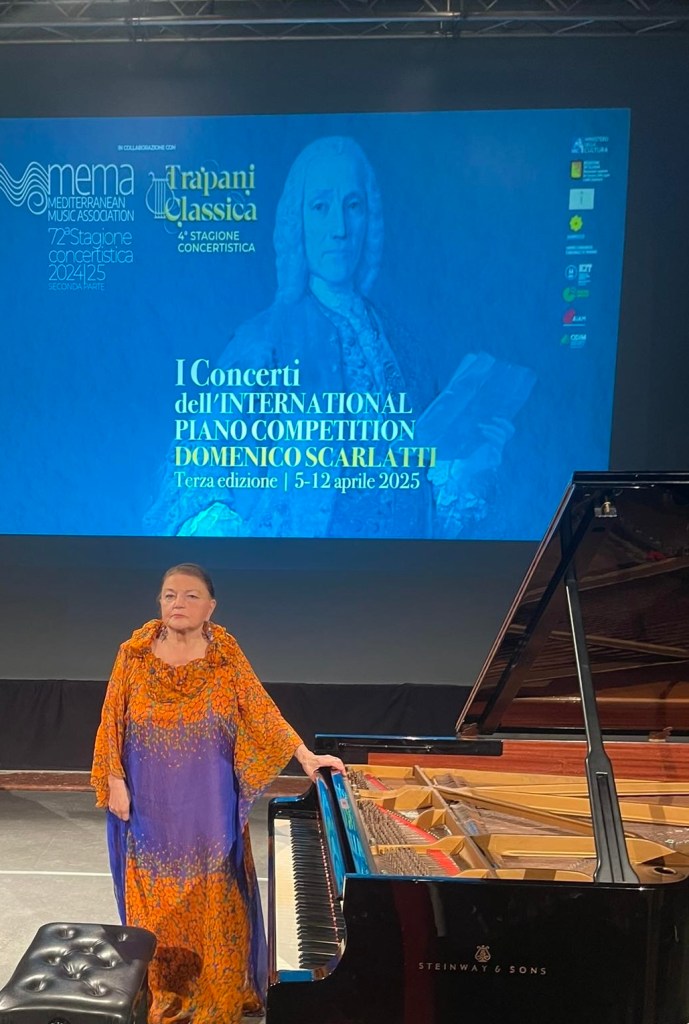
Today there was no coughing ,and a silence that was truly golden, as this great lady unravelled Rachmaninov’s knotty twine with passion and fearless transcendental mastery.
It was the same mastery that she brought to Liszt’s recreation of three of Schubert’s most sublime Lieder. ‘Standchen’ ,a work that Rachmaninov too had famously recorded, and that Oxana ,inspired by his Corelli variations , played with sublime beauty, where the duets between the voices showed a control of sound that only the very greatest artists can find in this black box of hammers and strings!
The subtlety of her playing of ‘Auf dem Wasser’ and ‘Gretchen ‘ was of another age – a Golden one when pianists were magicians and could find infinite gradations of tone in every key.
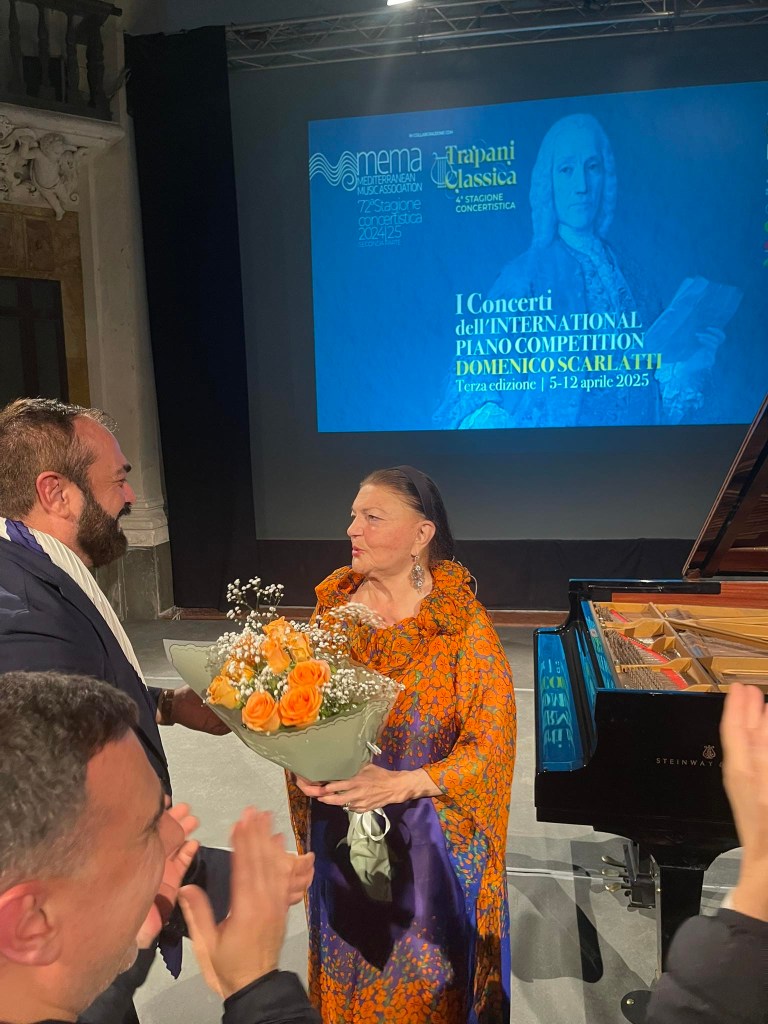
A standing ovation was greeted by Chopin’s last Mazurka op 78 n 4 ‘canons covered in flowers ‘ was Schumann’s description of Chopin’s 52 miniature tone poems.
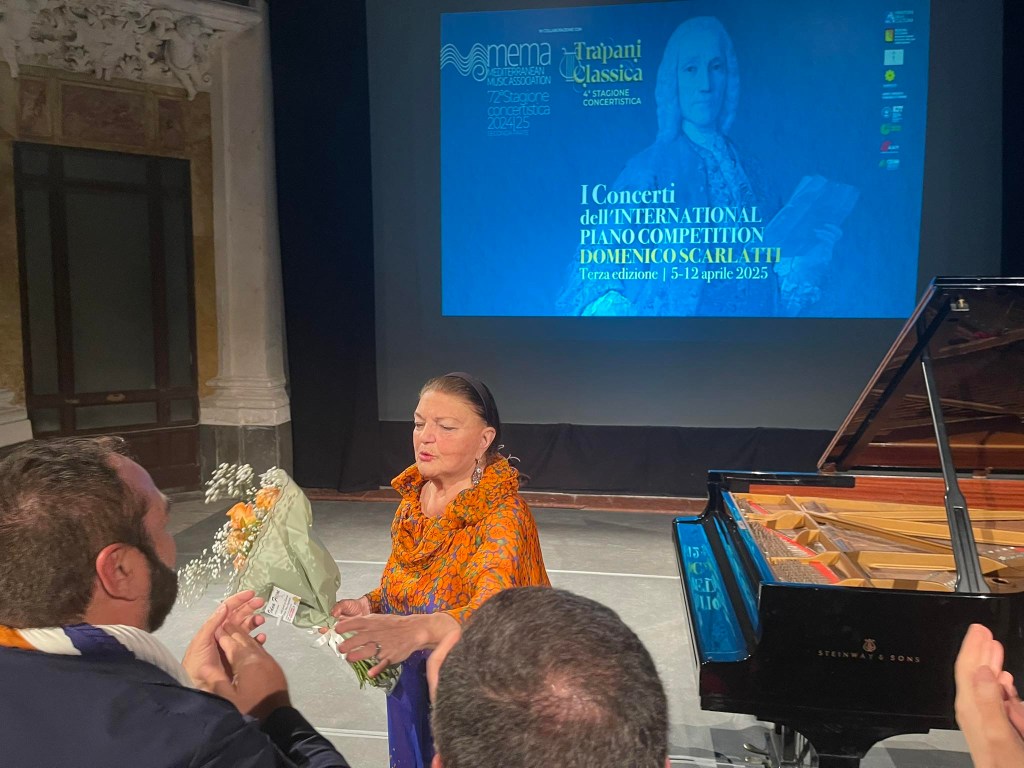
Closing the piano lid to show us that the music making was over for another year.
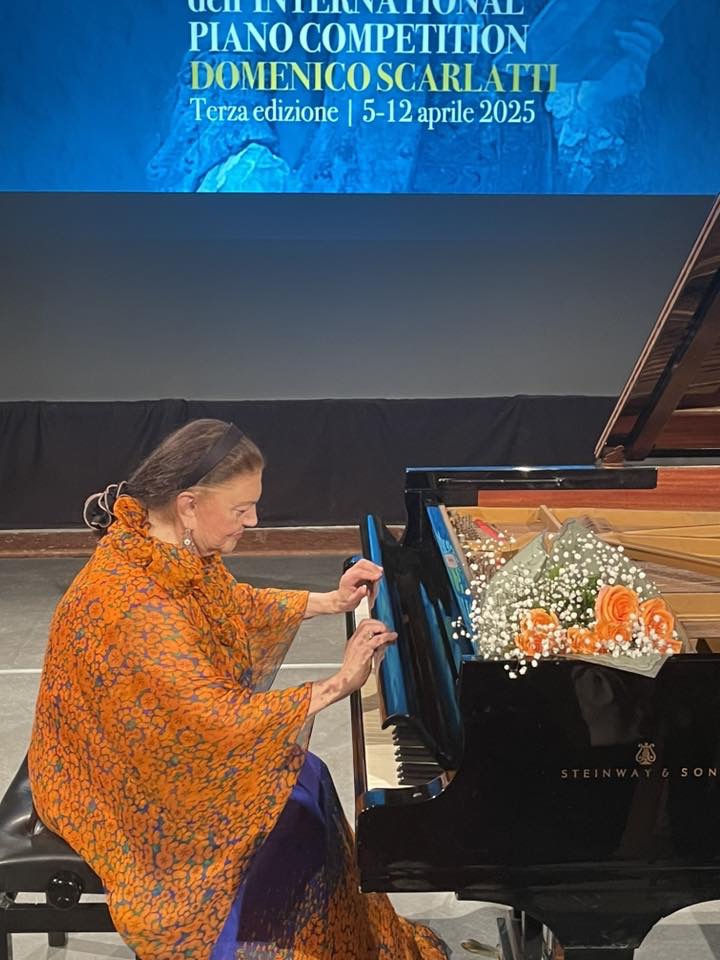
But indeed covered in flowers from the ever grateful Vincenzo Marrone d’Alberti for her constant presence for his brain child now in it’s third year and bringing such illustrious importance to his much loved jewel of a city.
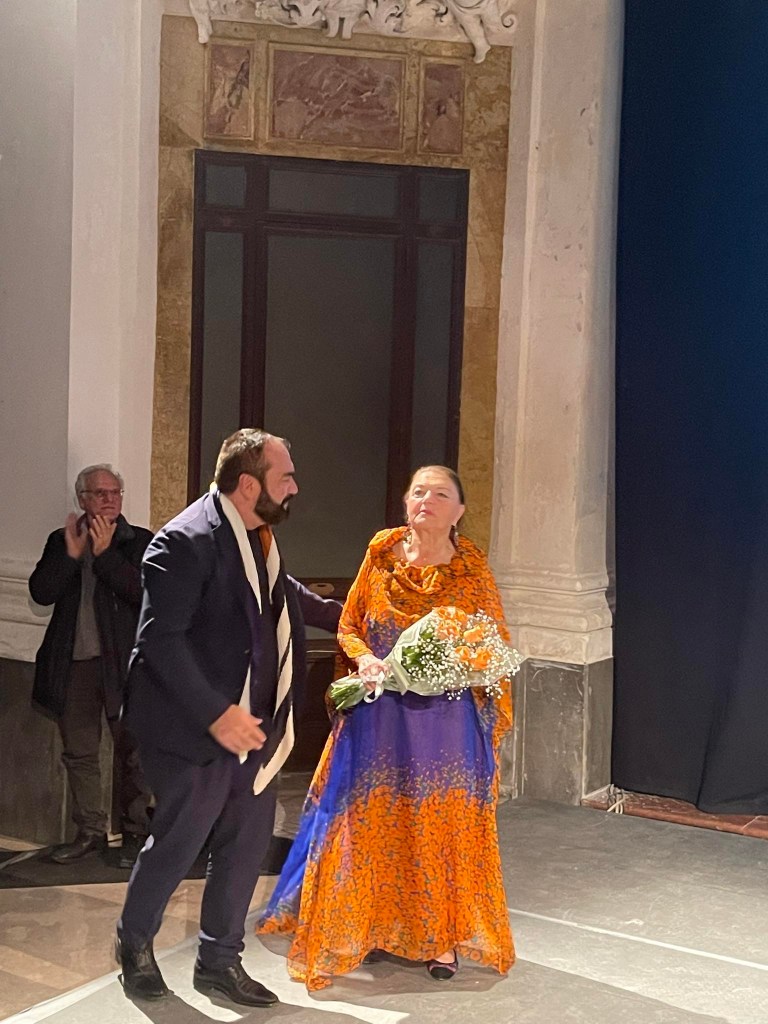
Oxana touched by such warmth and affection from ‘her’ public reopened the piano lid for just one last thank you in music.
C.P.E Bach’s ‘Rondo espressivo’ was played with one last glimpse of the beauty and mastery that she had offered to us all evening.
 ChristopherAxworthy-MusicCommentary