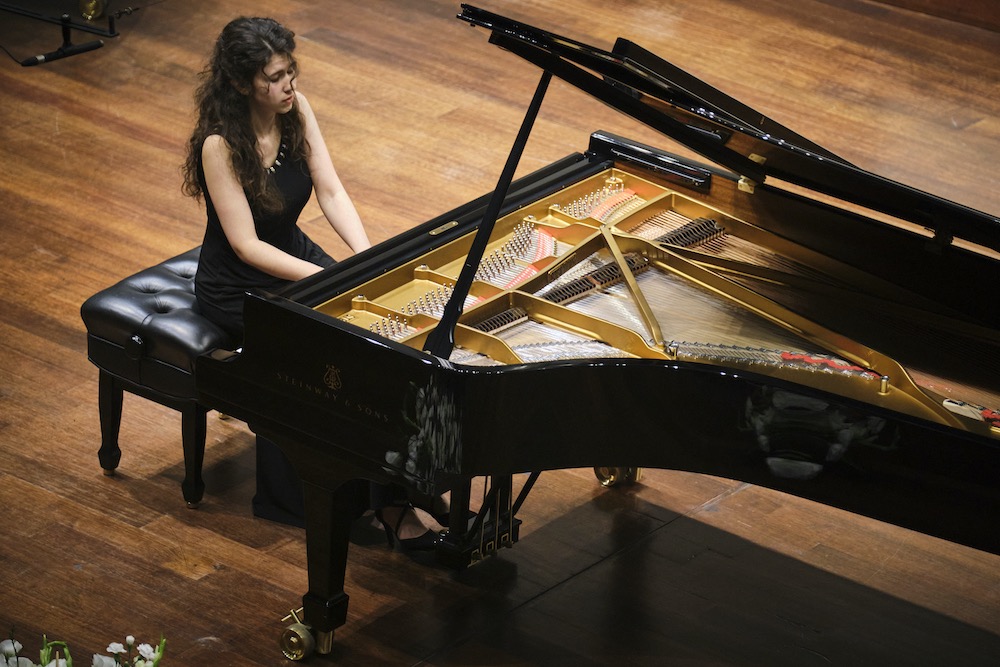
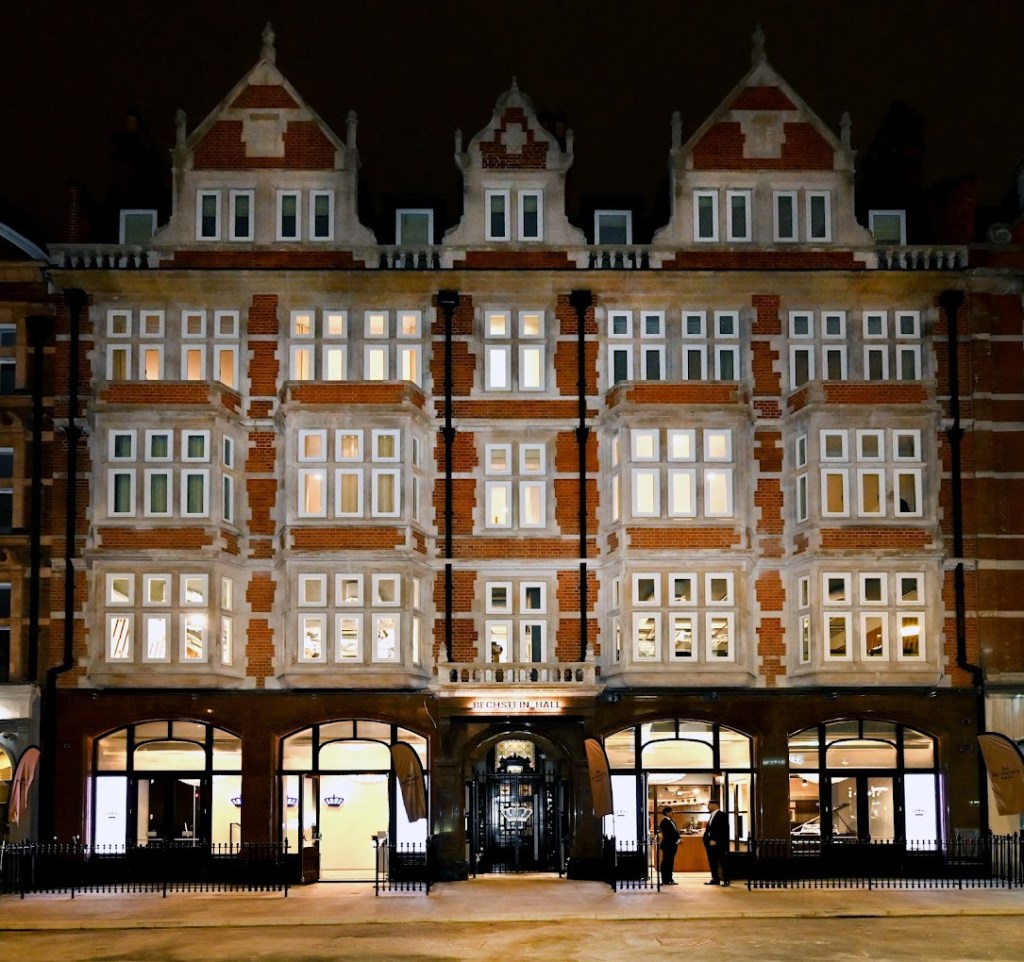
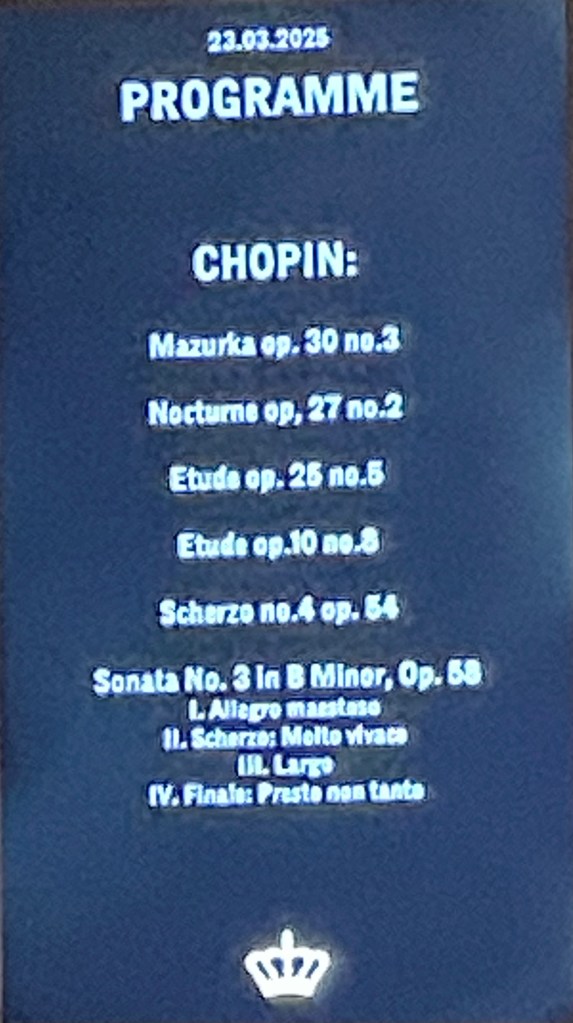
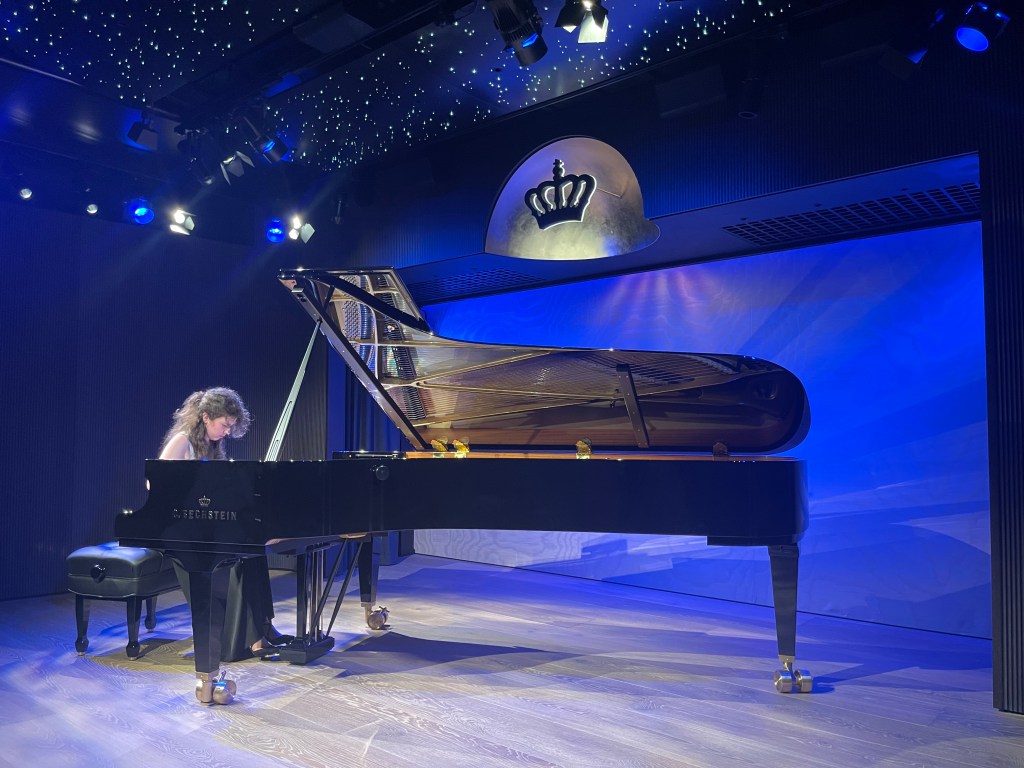
Diana Cooper at Bechstein Hall – ‘freedom and flexibility of rare artistry’ – ‘ravishing sounds of refined delicacy mingled with robust declamations’. This is what I jotted down as she recreated the Mazurka op 30 n. 3 that opened this extraordinary Chopin Recital.She shared with us in just a few minutes a tone poem with a kaleidoscope of colours and emotions.
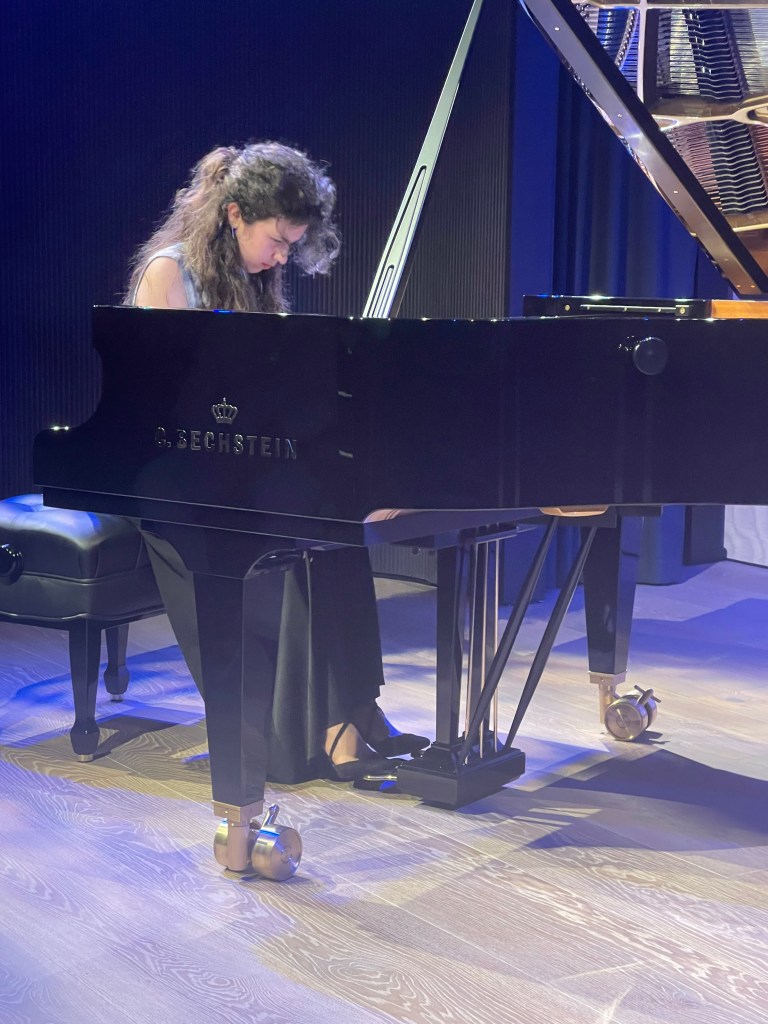
‘Canons covered in flowers’, never have Schumann’s words come so vividly to life. A piano that I have heard played by many very fine artists, but today the sounds she found with a miraculous sense of balance and sensitivity , a subtle palette of colours, I would never have thought possible. A bass that resounded with the deep velvety resonance reminiscent of a Bosendorfer or Shegeru Kwai – a middle register of Bluthner or Fazioli richness – an upper register that of the Hamburg Steinway of yore . No this was a Bechstein ,the preferred piano of so many legendary artists and here was an artist who could allow this instrument to glow and seduce as it used to do for so many of the greatest pianists of their day.
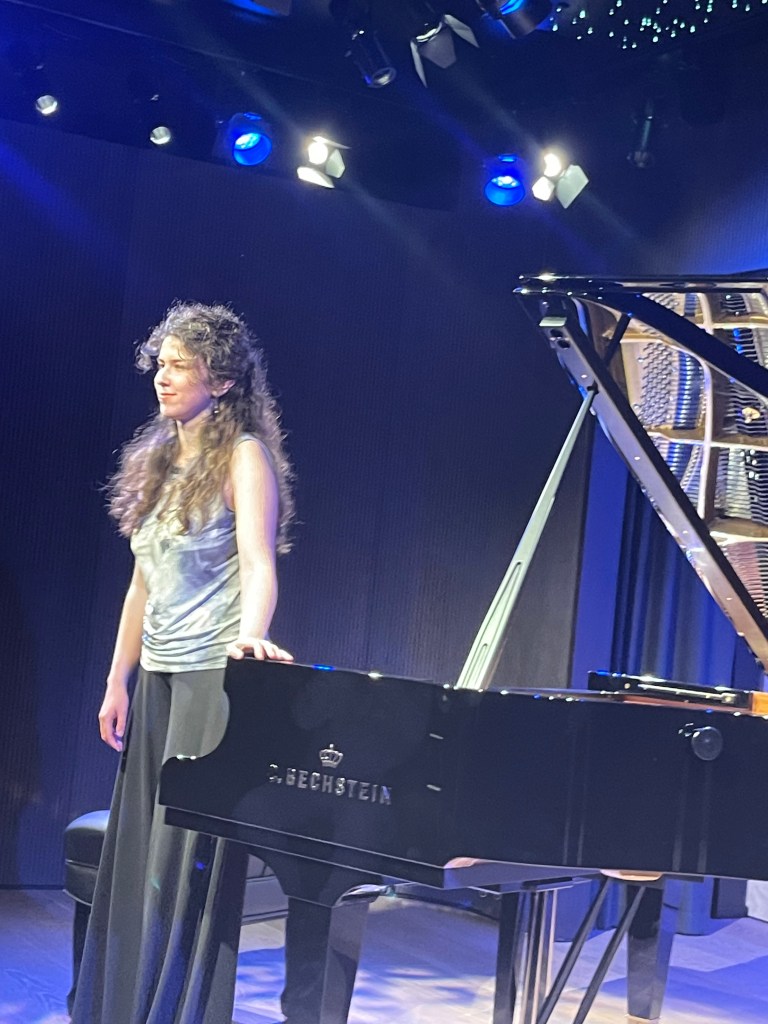
I was completely seduced today, in the same way that I was every time I heard Rubinstein. A sound that this young lady found today, even more in the Nocturne op 27 n. 2, that was truly Rubinstein’s. Today there was that same magic in the air as she allowed the music to unfold with timeless beauty and aristocratic poise. There was drama too as this was not the physically feeble Chopin but the Prince of the Keyboard with his native land always in his soul but tempered by the refined elegance of the Parisian high society. Diana has a quite extraordinary sense of balance that allows the melodic line to sing like Caballé, with that same velvety rich sound that she would modulate with deep rich notes. Just as Diana would touch a golden bass note with her magic wand that would illuminate the ravishingly expressive bel canto that was flowering and floating on high.
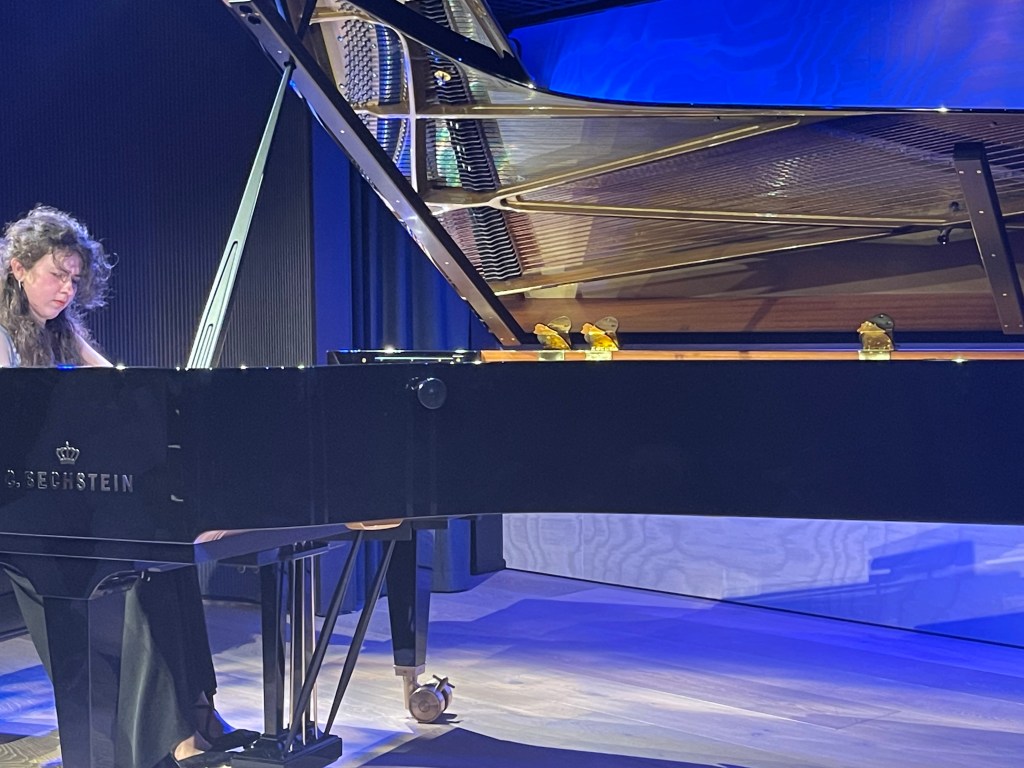
A miracle of beauty and even at times an intensity, as the searing passion would allow her to wallow in the ecstatic world that she was recreating before our incredulous eyes. Bechstein too played its part ,not only with a magnificent instrument but also the intimacy that the lighting in this rather unique space could afford. The study op 10 n. 8 just flew from her hands with washes of colour as the bass melody was shaped as only a true artist could do. It was Agosti, who I and many others have never forgotten, as he intoned the bass melody of this study with a refined intensity that has remained with me all these years ( and with many others too including Christopher Elton ).An ending as Chopin had indicated and not falling into the trap of ‘milking’ the final chords to rouse the public into delirium.( Only Horowitz could do that because he was a unique genius who was also a showman of the Golden age who could weald his power over an audience).Op 25 n. 5 was a little fast but when she made a long pause before the ravishing central mellifluous outpouring everything fell into place and she convinced me that this was the only way to ever play it. Chopin does after all mark it ‘vivace’ and ‘scherzando’ and asks specifically for a silence ( even the pedal mark confirms that ) before the ‘più lento’ central episode. In fact all through the recital it was not only her kaleidoscopic range of colours and sounds ( could one ever forget the deadened sound of the timpani before the return of the ‘risoluto’,in the opening Mazurka), but it was the silences ,that are all marked by Chopin in the score, but rarely ‘played’ with such artistic poignancy! If ever at all !
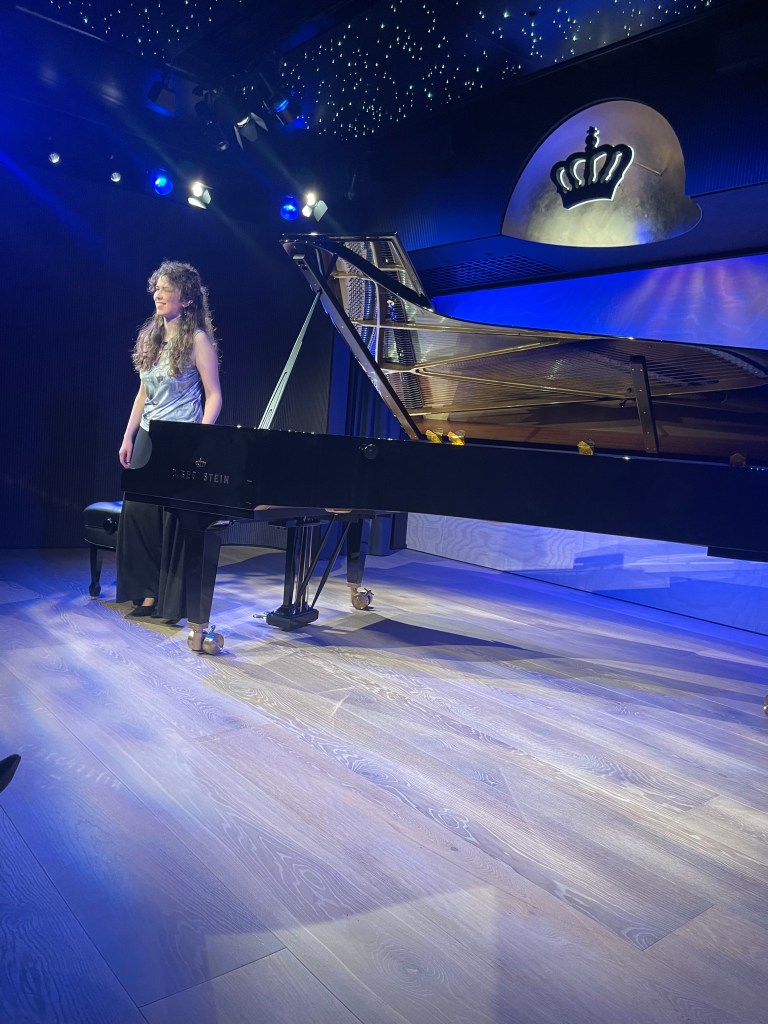
The Fourth Scherzo, an elusive work of extraordinary fantasy and chameleonic changes of character that have made it less accessible to all but the greatest of interpreters. Diana played it today with a kaleidoscope of sounds as she took us into a fantasy world of fleeting quixotic fancy and ravishing washes of sumptuous melody. In Diana’s masterly hands even the glistening jeux perlé that abounds was played with a clarity starting with the pedal but then continuing without, that was quite breathtaking in it’s audacity.The bare notes of the introduction to the ‘più lento’ central episode I have rarely heard played with such poignancy, where one could feel the collegiate atmosphere created and of her leading us by the hand into a wondrous land of beauty .The radiance and sumptuous beauty of the imperious final few bars gave us that rich sound of a truly ‘Grand Piano’ with a depth and richness of magisterial authority.
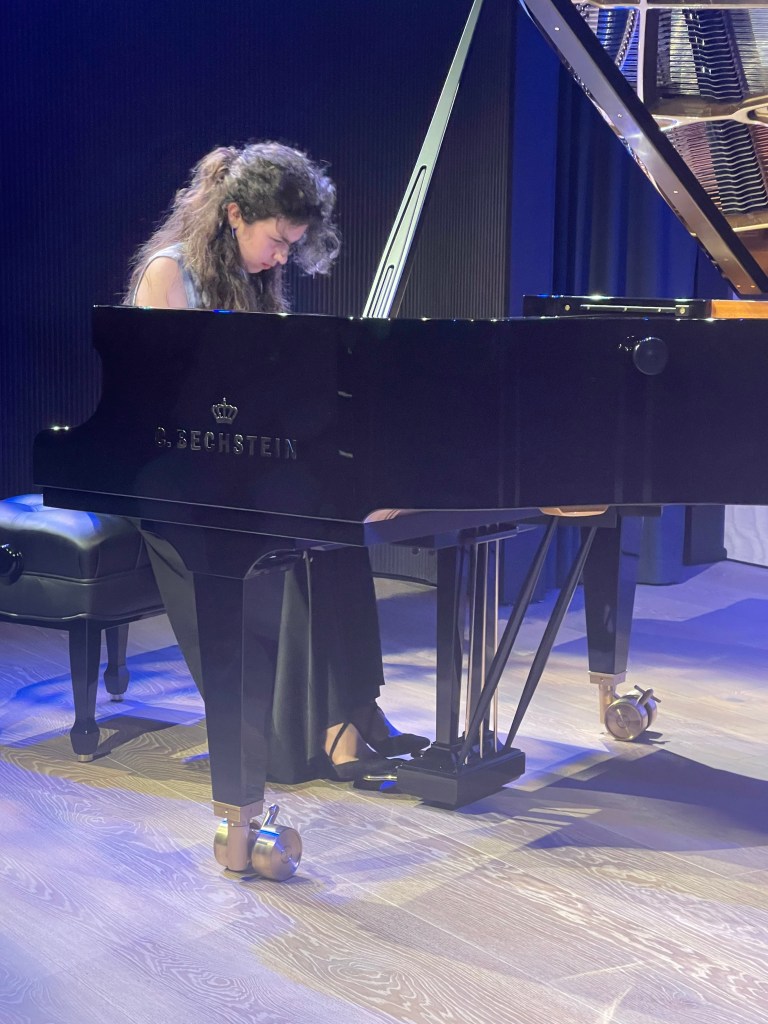
It was this same authority that opened the B minor Sonata,with the power of a drama that was about to unfold. Searing passion and breathless declamations gave way to a bel canto with an inner energy, as Diana had conceived the whole movement in one glorious architectural whole. Moments of extraordinary beauty as counterpoints just shone like jewels catching the light.There was no repeat but straight into the development with overwhelming drive and authority. The Trio of the Scherzo was given unusual importance with contrapuntal strands that all made such sense and were the guiding light for this movement that can sound, in lesser hands, so disjointed. An imperious opening to the Largo played with extraordinary intelligence and sensitive musicality as she gave a monumental shape to passages that can seem like senseless beautiful meanderings. She brought a breathtaking climax played with her extraordinary ability to feel and search for a balance that would allow beauty, passion and delicacy to live under the same roof. The ‘Presto non tanto’ was played with beguiling menace as it became ever more excited and exhilarating, all leading to the final tumultuous explosion and the triumphant left hand fanfare taking us to the final chords of breathless inevitability.
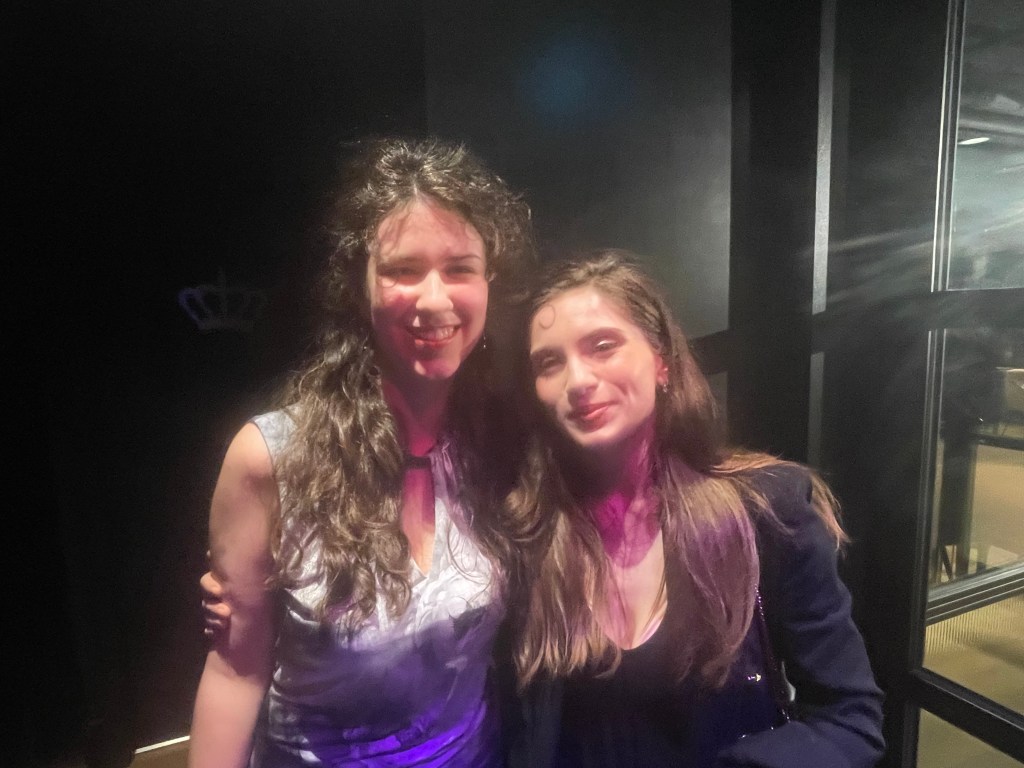
Sonya Pigot a magic wonderland of sounds at St James’s Piccadilly
https://christopheraxworthymusiccommentary.com/2024/01/02/sonya-pigot-a-magic-wonderland-of-sounds-at-st-jamess-piccadilly/
Diana was sorry not to play an encore ,but why would she have wanted to ,when she had just served a dish fit for a King?!
What to do to unwind after such an unexpected miracle – the Roast Sunday Lunch and a glass of Nero Davola was the answer and was served downstairs with the same refined good taste and exquisite delicacy that we had just experienced in this true oasis of culture.
Outside, the worldly confusion of protesters surrounded us and Oxford Circus station closed for fear of being taken by siege!
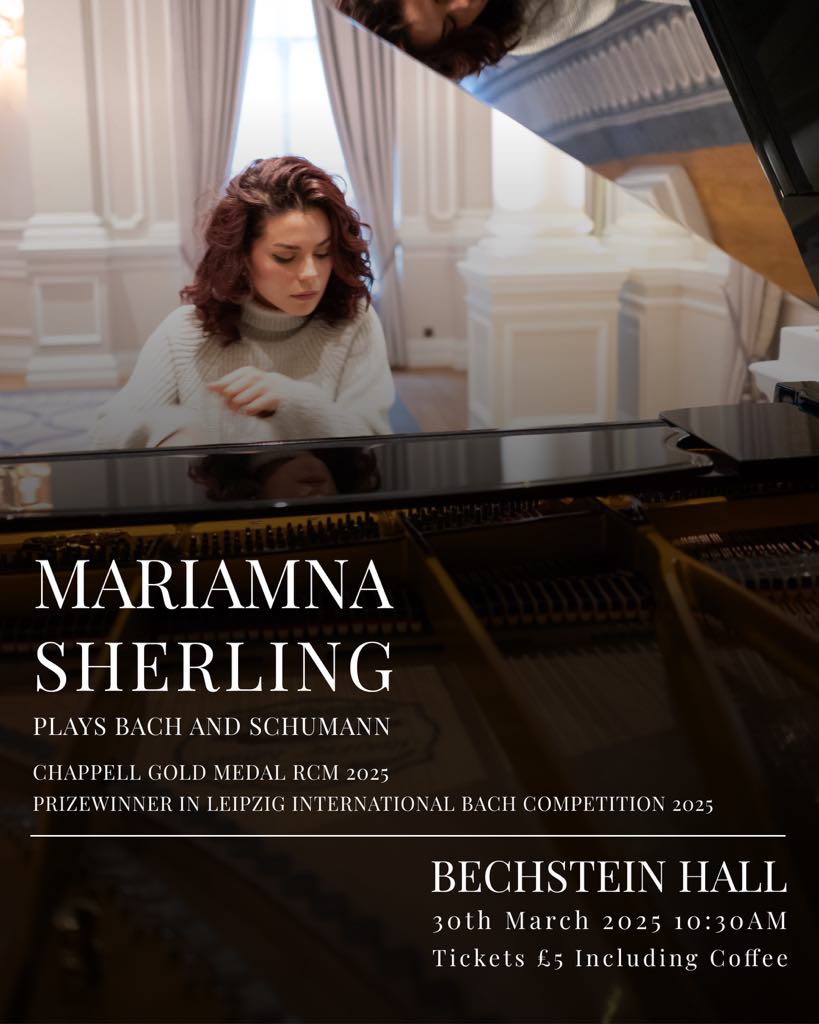
Nocturne op, 27 no.2
Etude op. 25 no.5
Etude op.10 no.8
Mazurka op. 30 no.3
Scherzo no.4 op. 54
Sonata no. 3 op. 58
I. Allegro maestoso
II. Scherzo: Molto vivace
III. Largo
IV. Finale: Presto non tanto
One to watch, you may have seen Diana in the BBC’s Arts in Motion Series, partaking in a masterclass with Yuja Wang.
Admitted at the age of 16 to the Paris Conservatoire Diana graduated with a master’s degree five years later.
Diana is currently settled in London and has just graduated from the Royal College of Music. To add weight to that, Diana has been taken on by the Talent Unlimited charity as well as the Kirckman Concert Society.
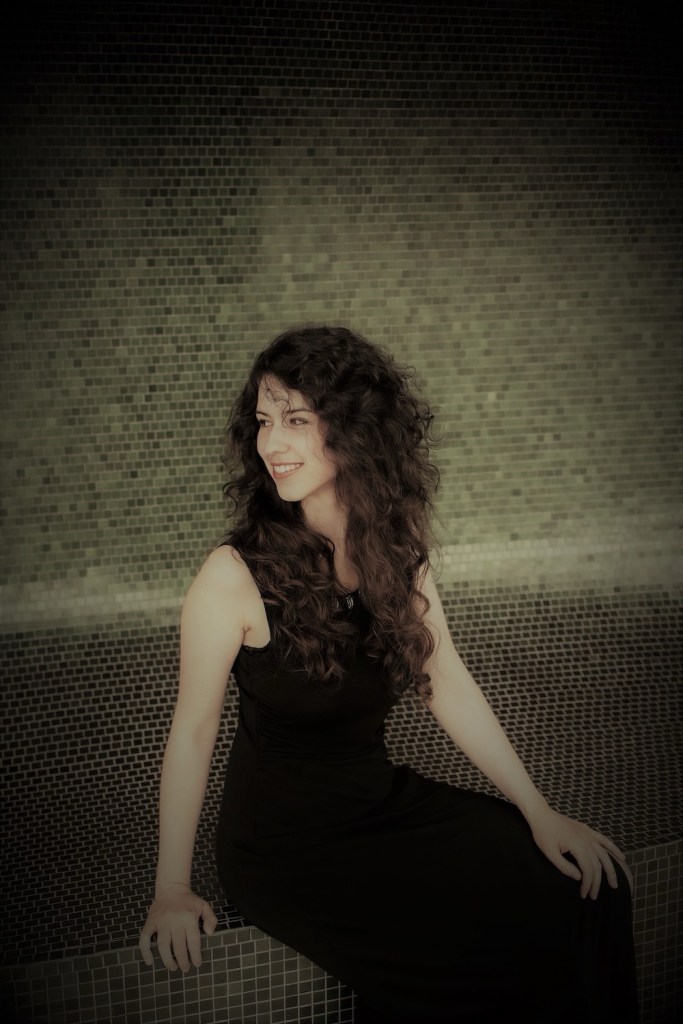
Passionate about classical music from her earliest age, it is on stage that Diana Cooper attains artistic fulfilment.
Winner of numerous awards including 1st Prize at the Brest Chopin Competition, 1st Prize at the Halina Czerny-Stefanská International Competition in Poznan (Poland), 1st Prize at the Concurso Internacional de Piano de Vigo (Spain), and laureate of the Fondation de la Banque Populaire, Diana Cooper has been invited to perform in various venues and festivals in France and abroad, including the Nohant Chopin Festival, the Festival Chopin à Paris, the Salle Cortot, the Polish Embassy in Paris, the Ysaye Festival in Belgium, the Palacio de Congresos in Huesca, Spain, the Hrvatski dom Split in Croatia, the Kielce Filharmonia in Poland…
In 2023, she was selected to take part in the project Un été en France avec Gautier Capuçon, for which she perfomed as a soloist and in chamber music.
She was invited in 2018 to take part in the radio program Générations Jeunes Interprètes on France Musique and, in 2023, performed as a trio in the television programme Fauteuils d’orchestre, broadcast on France 5.
Her activity has been enriched by solo appearances with the Orchestre Symphonique du Sud Ouest in Chopin’s 1st Concerto, the Orchestre Appassionatoin Mozart’s 20th concerto, and the Orchestre des Lauréats du Conservatoire de Paris in Schumann’s concerto, performed in 2023 at the Cité de la Musique in Paris.
Born in France, she began studying piano at the Tarbes Conservatoire with Jean-Paul Cristille, gave her first solo recital at 9 and performed at 14 with orchestra Mozart’s Concerto n°21 in France and Spain. She was unanimously admitted at the age of 16 to the Paris Conservatoire to study with Jean-François Heisser and Marie-Josèphe Jude and graduated with a master’s degree five years later. She continued her studies at the Ecole Normale de Musique where she was taught by the renowned professor Rena Schereshevskaya for three years. In 2022, she was selected to join the new season of the Académie Musicale Philippe Jaroussky, and perfected her skills there with Cédric Thiberghien. In parralel, she was admitted the same year to the Paris Conservatoire in an Artist Diploma course. She is currently studying at the Royal College of Music in London where she has been admitted to pursue a second Artist Diploma course, in Norma Fisher’s class. She is a laureate of the Kathleen Trust and has recently joined the Talent Unlimited charity offering concerts in London for young talented musicians.
Following her pre-selection in 2021 for the prestigious Chopin Competition in Warsaw, she was invited the following summers by Philippe Giusiano to take part in masterclasses in Katowice as well as concerts at the Chopin Manor in Duszniki, organized by the Chopin Foundation.
Diana has recently recorded her first CD, featuring works by Haydn, Chopin and Ravel, after winning in 2022 the 1st Prize in the Concours d’aide aux Jeunes Artistes organized by the Festival du Vexin.
 ChristopherAxworthy-MusicCommentary