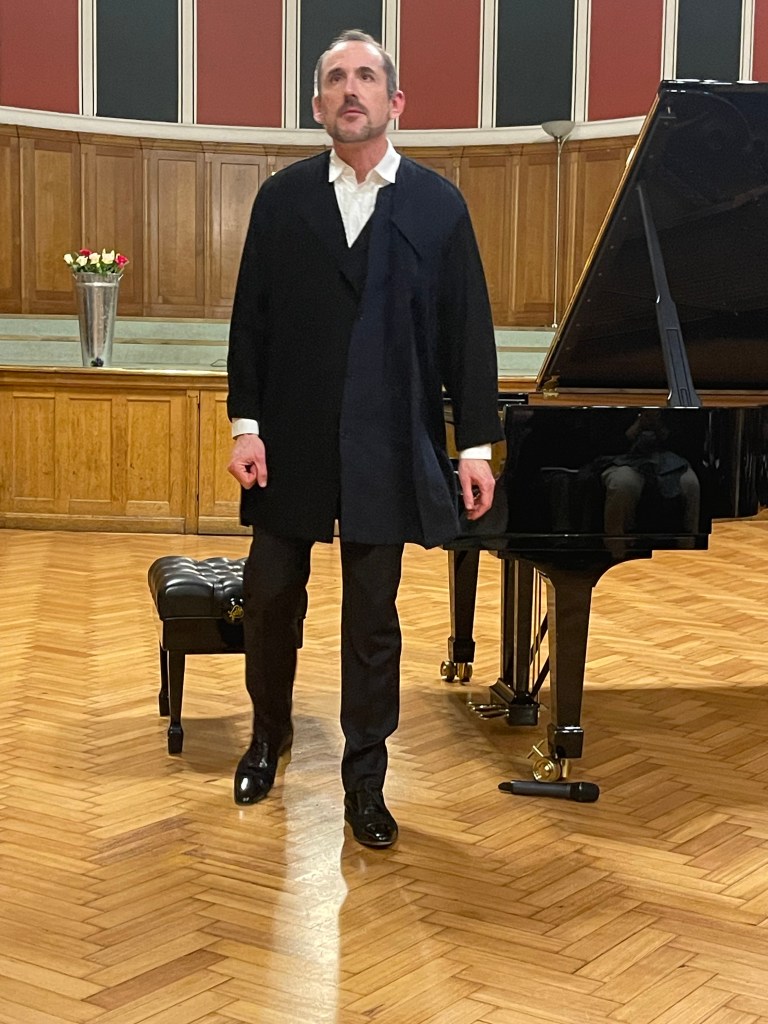
Danny Driver with the Midas touch of a great artist bewitches and bewilders the Chopin Society with wondrous Chopin and monumental Beethoven mixed with superhuman feats of transcendental pianistic control in Adès, Ligeti and Frank
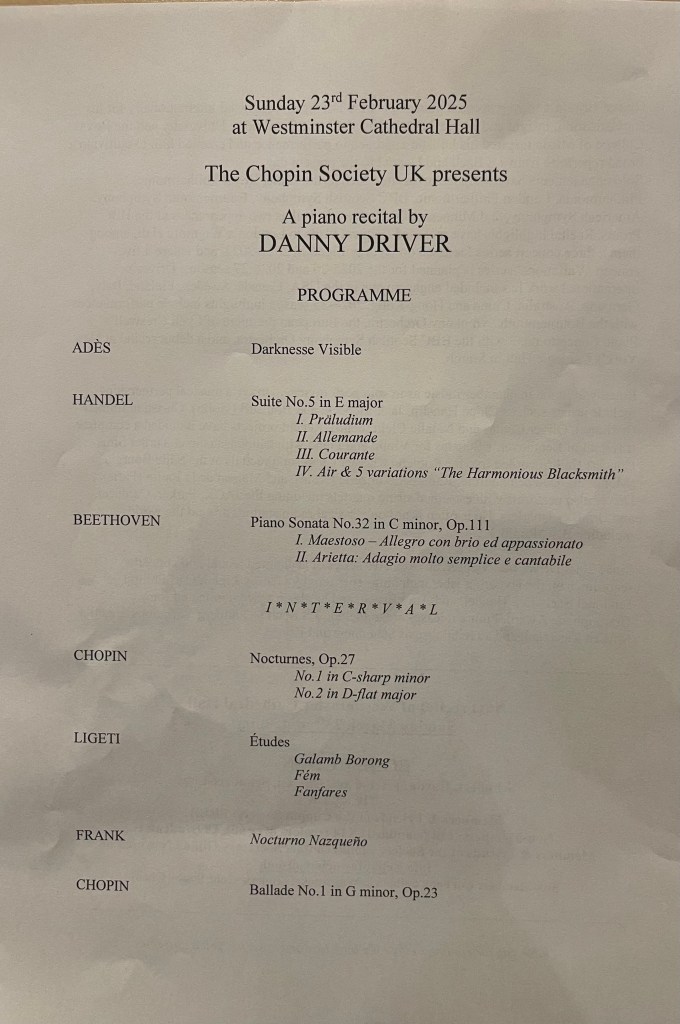
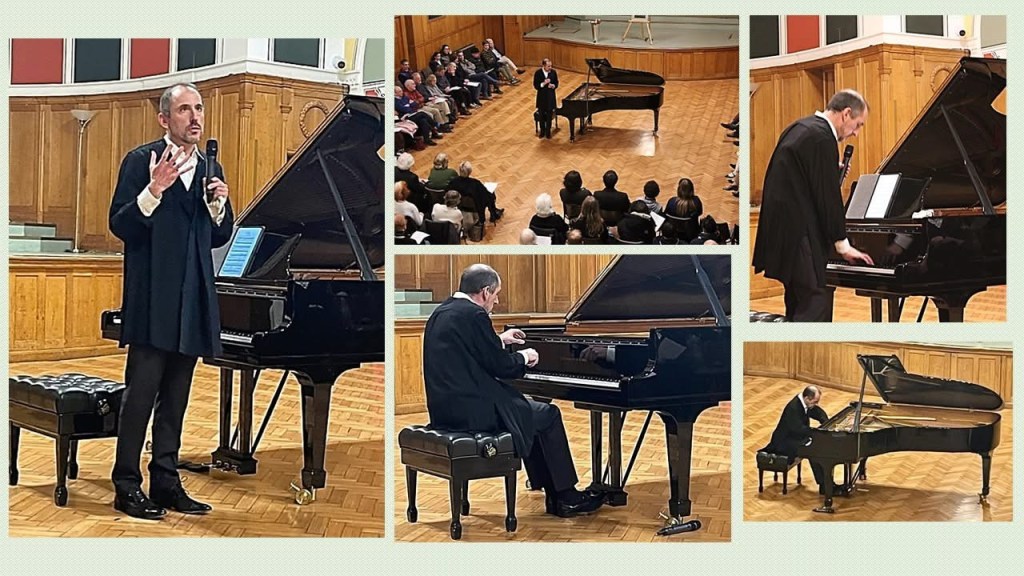
Adès’s ‘Darknesse Visible’ immediately demonstrated the mastery of the pianist before us today .Reverberations of barely audible notes of Scarbo like intensity. Visionary atmospheres resounded around the hall with subtle delicacy and radiant glowing beauty. A ‘tour de force’ of control and musical imagination and above all a magic sound world of beauty and passionate persuasion that was to be experienced throughout this very varied programme. It is an explosion of John Dowland’s lute song ‘In Darknesse Let Mee Dwell’ (1610). “No notes have been added; indeed, some have been removed,” Adès writes. “Patterns latent in the original have been isolated and regrouped, with the aim of illuminating the song from within, as if during the course of a performance”.
‘In darknesse let mee dwell,
the ground shall sorrow be,
The roofe Dispaire to barre
all cheerful light from mee,
The wals of marble blacke
that moistned still shall weepe,
My musicke hellish jarring sounds
to banish friendly sleepe.
Thus wedded to my woes,
and bedded to my Tombe,
O let me living die till death doe come.’ Dowland ends the song with a restatement of the opening line.
And Danny Driver played the ending like a Bach Chorale with whispered intensity that created a magic spell that only Handel could break . Adès transforming the piano into an instrument that’s alchemically capable of sustaining a continuous line of melody; the technique of ceaseless tremolo that he demands of the player conjures a ghostly shimmer from the instrument.
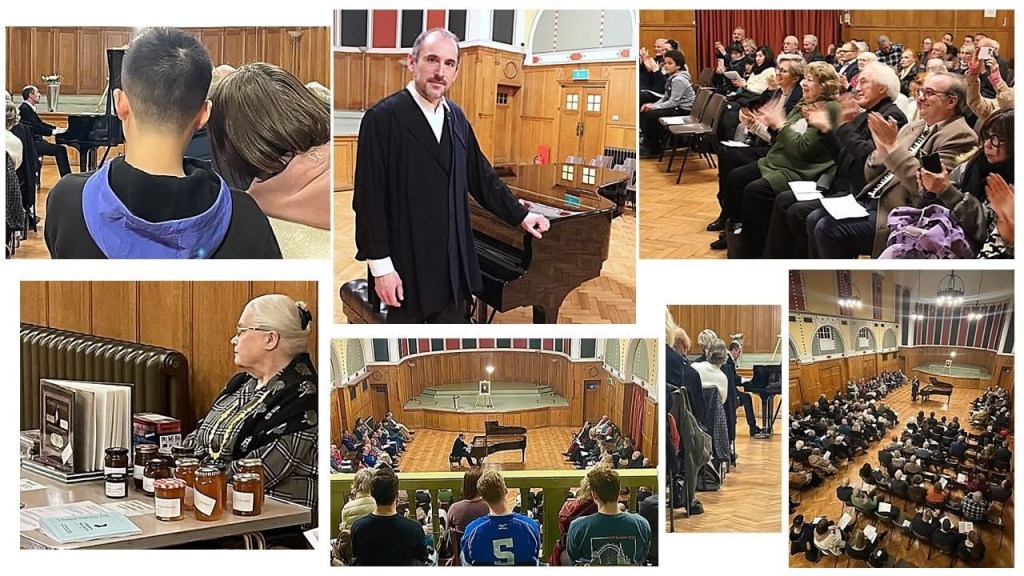
Handel’s Suite n. 5 is best known for its ‘Harmonious Blacksmith’ Air and Variations final movement.The magic sounds of Adès gradually became clearer as the mellifluous meanderings of this suite were played with a beautiful fluidity. No jagged edges but a pure simple outpouring of ingenious counterpoints. The ‘Allemande’ had the same fluidity and it was not until the ‘Courante’ that we began to experience a busy weaving of joyous outpourings with some subtle ornaments just glistening like jewels. A great cadenza like flourish announced the well known last movement often given to valiant learner pianists together with simplified versions of the ‘Moonlight’ or ‘Liebestraum’. Little could they have imagined where the variations would take them. A gradual build up of more and more notes that Danny D played with a disarming mastery, where the streams of notes seemed to pour from his fingers with such ease. Among the eight suites published for harpsichord in 1720, Handel published his Suite no. 5 in E major, HWV 430 it was promulgated a year after Handel became Master of the Orchestra at the Royal Academy of Music, also known as the first Italian opera company in London. Handel lived the remainder of his life in London after leaving Germany to work as resident composer for Earl of Carnarvon .
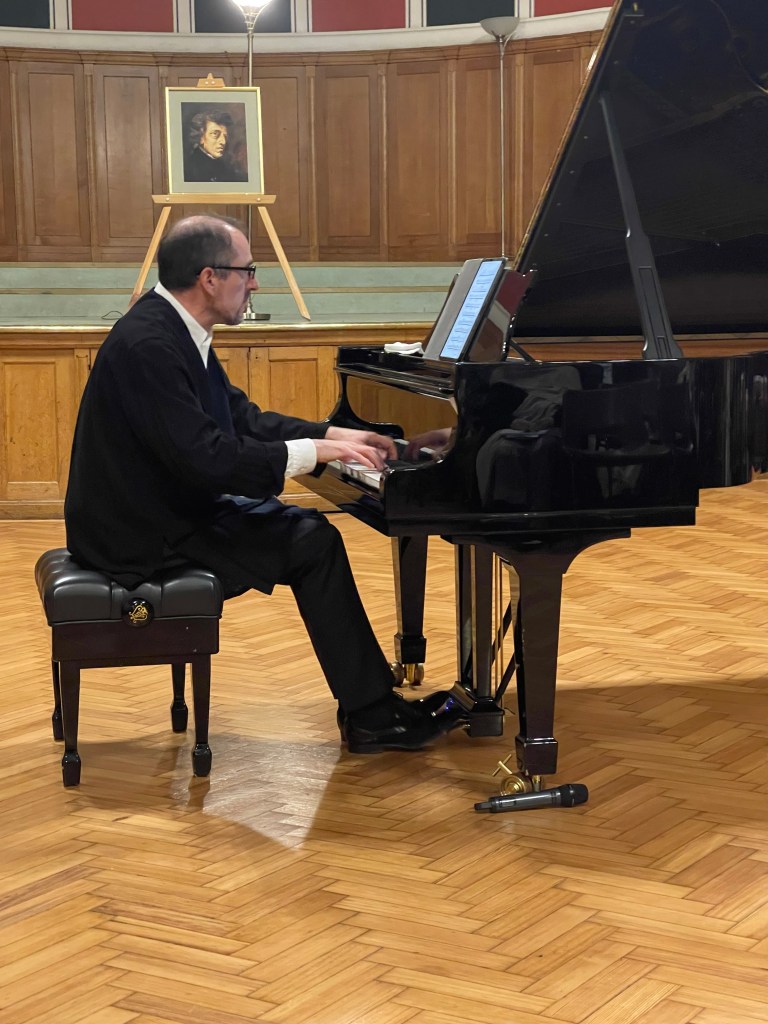
These two works were a gradual build up to Beethoven’s last Sonata op 111. A truly masterly interpretation of intelligence and integrity as Beethoven’s meticulous indications were not just followed but interpreted with intelligence and poetic understanding. An architectural shape and dramatic tension from the first to the last note. Not only the first movement that is an introduction to the theme and variations that follows but with the Arietta rarely heard so beautifully played with such inner strength. A strength that unwound as one variation lead into the other floating on a great wave that was to explode in the third variation and the pieces magically reassembled as it reached it’s passionate climax before the celestial vision of the paradise that awaited Beethoven. This was the conclusion of thirty two steps that he had made over a turbulent troubled life. Danny D realising that the leaps at the beginning are the same struggle as at the beginning of the Hammerklavier and that this is no play safe music. A first movement like water bubbling over at 100 degrees, as Perlemuter described it to me, and that even as it draws to a close there is no rallentando as the Arietta appears as a miraculous vision after such turbulence.The beauty that Danny D brought to the final pages was quite memorable with an audience in total silence as they waited for the final silence to be savoured with poignant emotion after such a voyage of discovery.
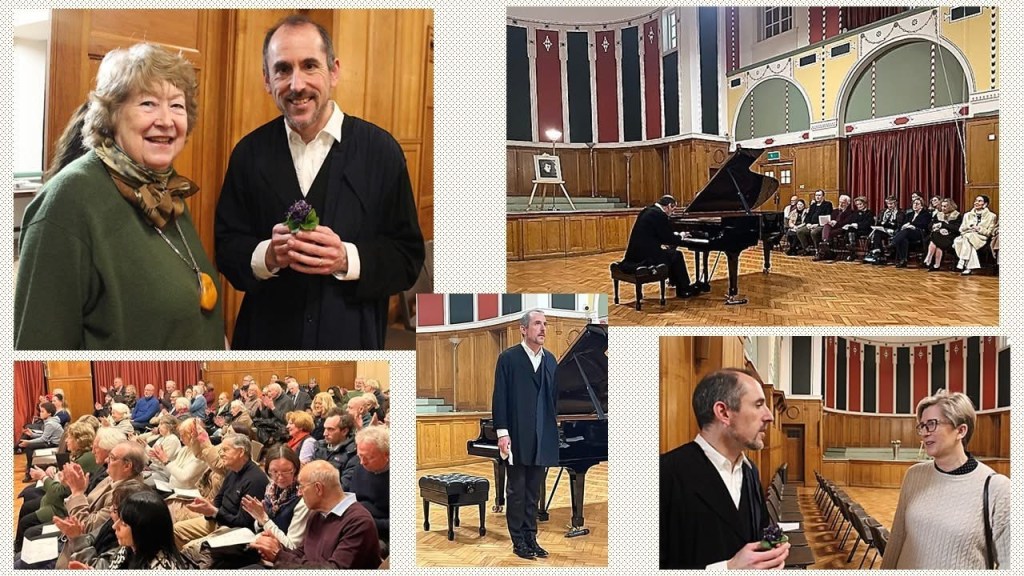
The second half opened and closed with Chopin.The two nocturnes op 27 were played with great beauty as there was a sense of balance that allowed Chopin’s bel canto to ring out with glowing luminosity. Op 27 n.1 was played with passion and poetry with a brooding whispered opening gradually building in turbulence, played with unexpected passion.It gradually took on a mazurka feel of improvisatory freedom and a cadenza as Chopin writes ‘con forza’ of quite breathtaking vehemence before the magic that Danny D could draw from the piano with bell like sounds of exquisite beauty.The D flat Nocturne opened with a whispered glowing luminosity of timeless beauty. A breathtaking arrival on C flat out of which grew streams of sounds of fluidity and extraordinary delicacy.
Three studies by Ligeti were played with quite extraordinary rhythmic precision and clarity but played by a musician who could bring this extraordinarily complex music to life with a vital vibrant musical line.
The ‘Nocturno nazqueňo’ by Gabriella (?) Frank was given an equally committed performance by a composer that I can find no trace of, but it completed the shape of a programme that this extraordinary thinking musician had pieced together to make one architectural whole. Chopin’s First Ballade was seen in a fresh light where the composer’s indications were interpreted with poetic mastery. Gone was the rhetoric of the so called Chopin tradition and now there was revealed an astonishing masterpiece where even the return of the main theme before the coda took us by surprise for its whispered beauty and kaleidoscope of colour.
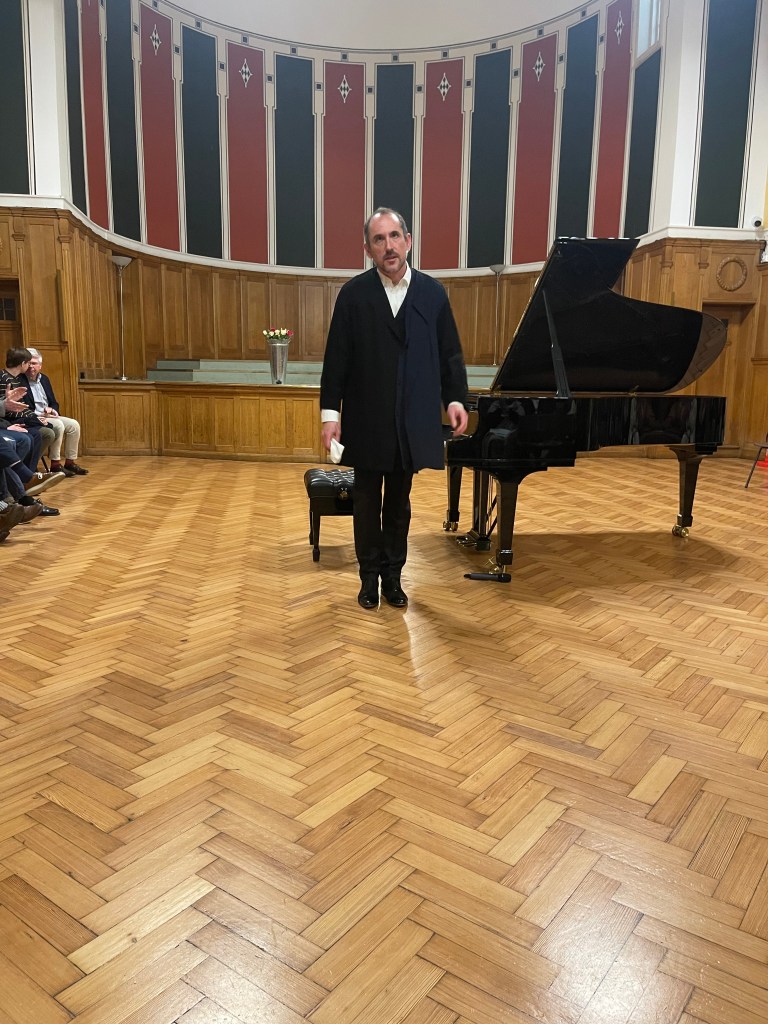
A recital of quite extraordinary mastery from a musician who is above all at the service of the composer. Nowhere more than in the encore of Chopin’s ‘Aeolian Harp’ study op 25 n. 1 that was played as Chopin’s own playing himself had been described by Sir Charles Hallé. A melody of glowing beauty that was floated on top of changing harmonies with sounds that just vibrated as in the Adès work that had opened this quite extraordinary revelatory recital.
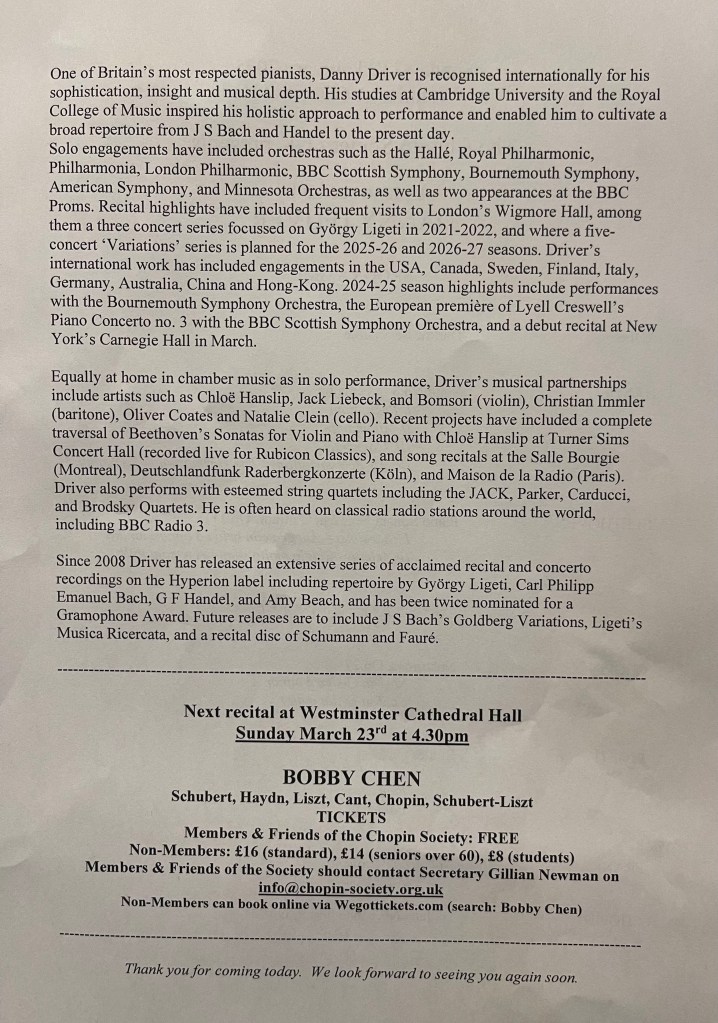
 ChristopherAxworthy-MusicCommentary