FRANCK/BAUER: Prelude, fugue and variations op. 18
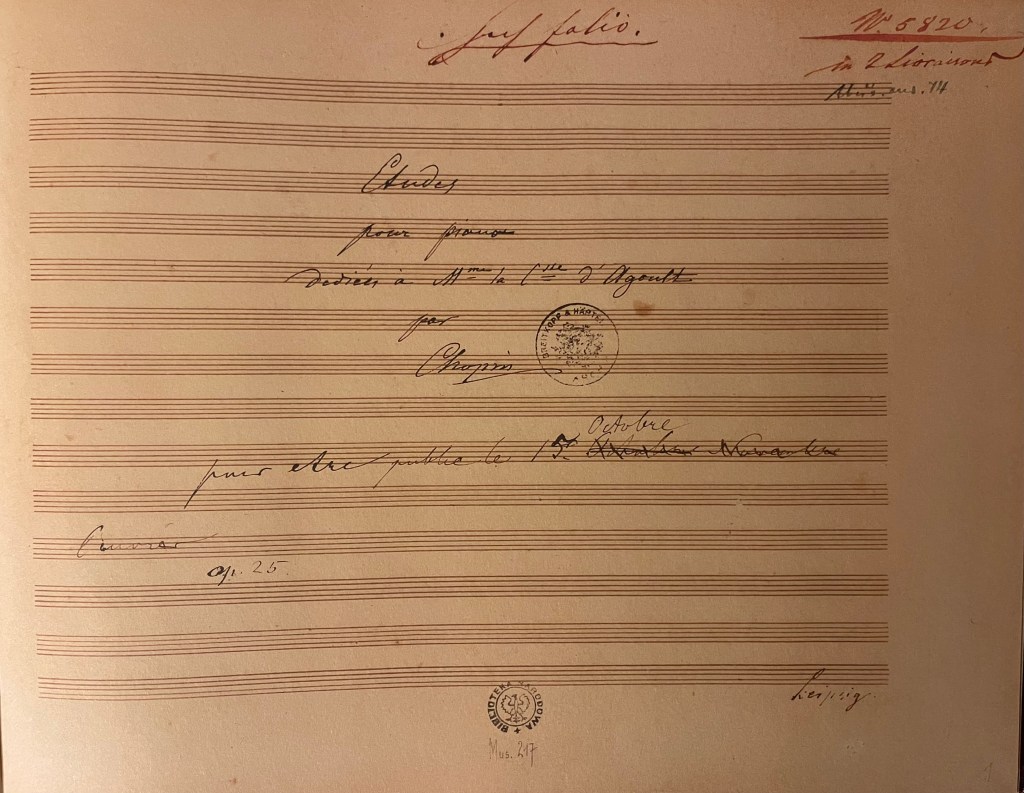
CHOPIN: 12 etudes op. 25
SCRIABIN: Fantasy in B minor Op.28.
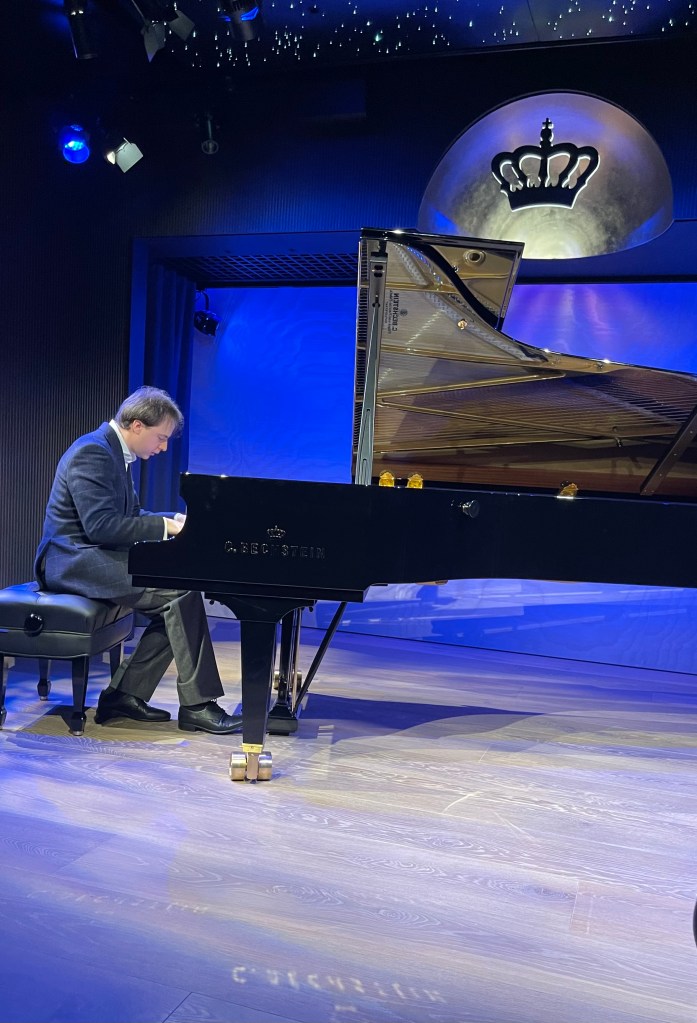
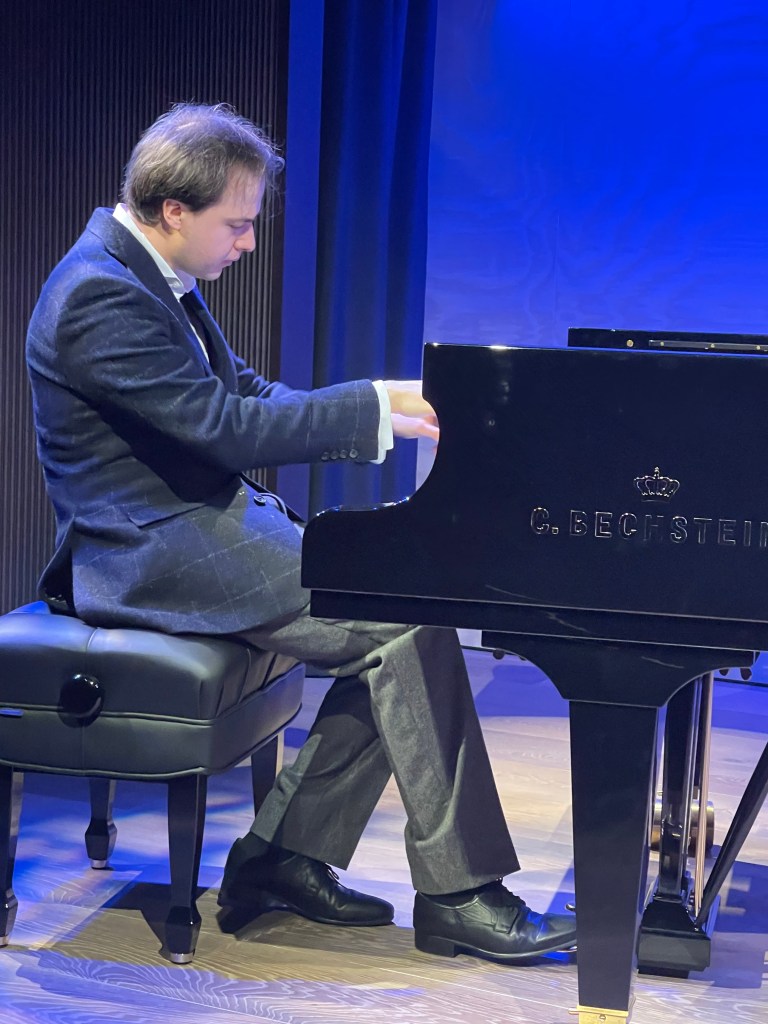
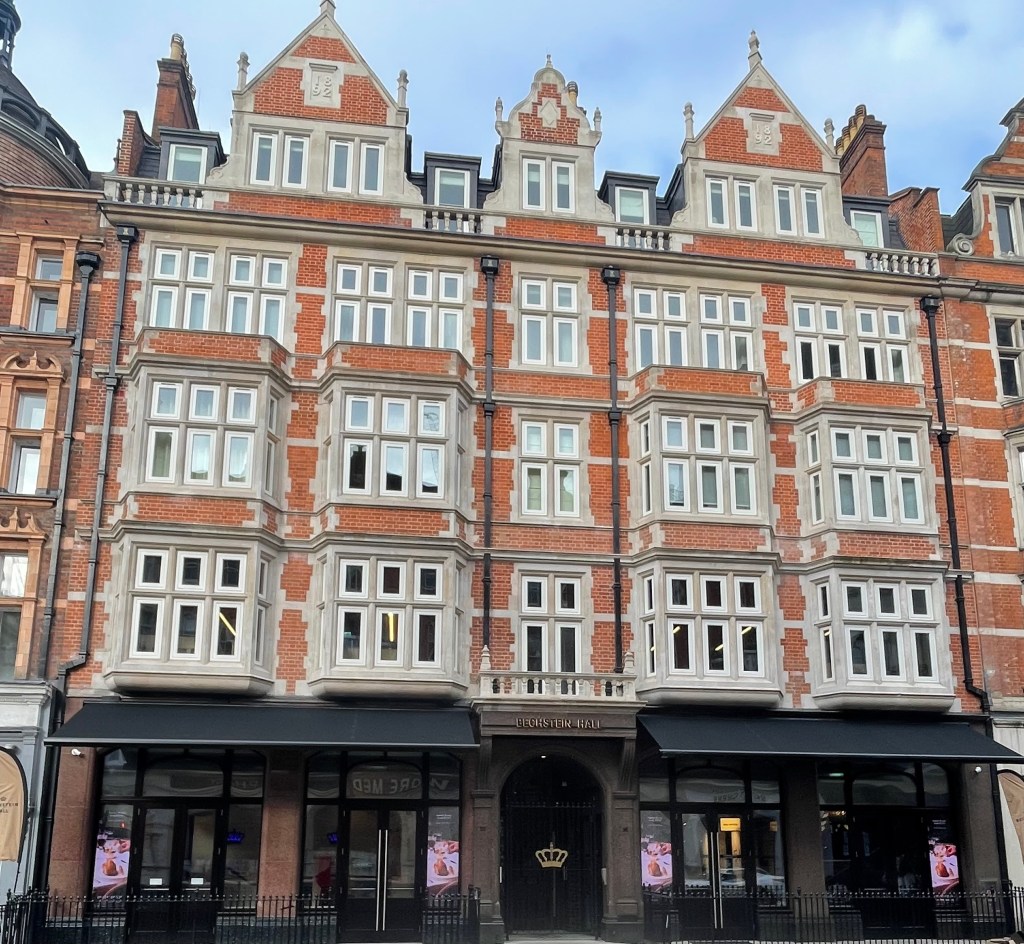
Guns full blast today for the Bechstein ‘Roast’ Concerts.
Dmitri Kalashnikov playing Chopin Studies op 25 that were truly miniature tone poems of ‘canons covered in flowers’ as this young artist imbued each one with a life of its own of beauty and passion.
Of course he has a transcendental mastery where technical obstacles were not a consideration but where the poetic content was his true goal.
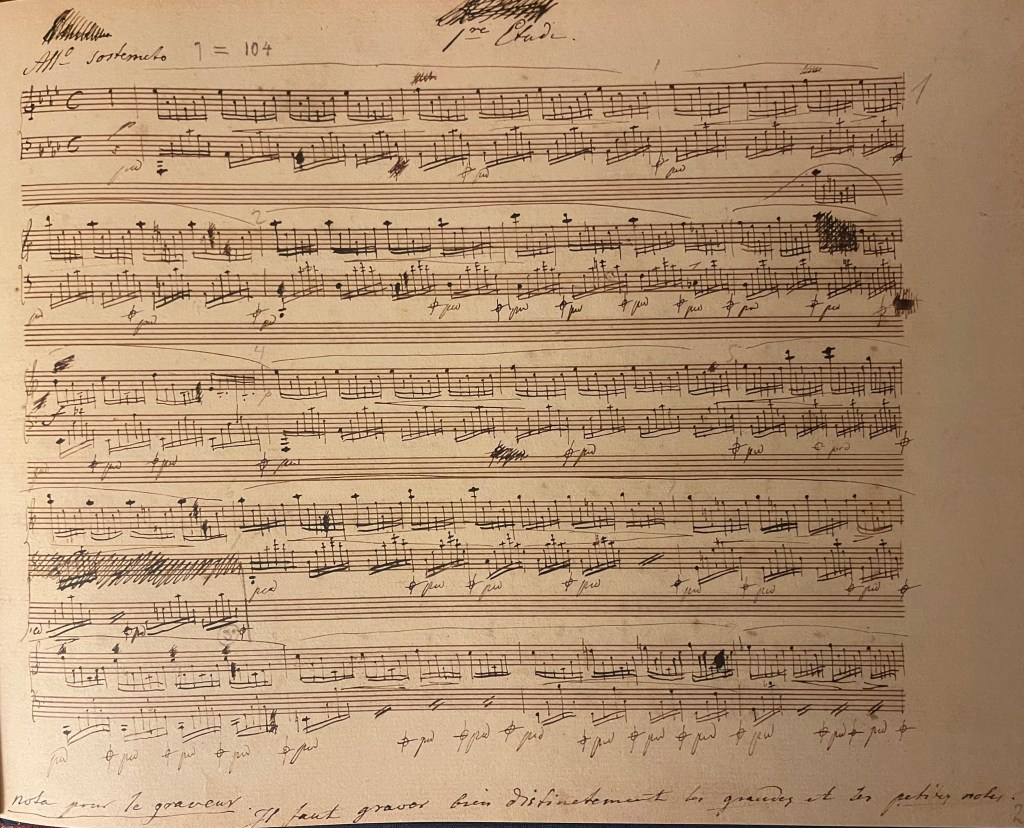
There was immediately a mastery and architectural shape to the ‘Aeolian Harp’ study. It was Sir Charles Hallé who had written about Chopin’s own performance in Manchester that resembled a bel canto melody just floating on etherial changing harmonies. It was exactly this that Dmitri shared with us today not only with delicacy but also with passion and a wonderful flexibility. As Chopin himself had described the elusive word ‘rubato’ as being like a tree with roots firmly planted in the ground that the branches above were free to move in the wind. A masterly use of the pedal even in the final bass trill with a ‘flutter’ pedal that would put Fred Astaire to shame! The teasing brilliance and undulating beauty of the second was followed by an unusually ‘giocoso’ third.The fourth was rather too fast for comfort but was played with a dynamic rhythmic energy.
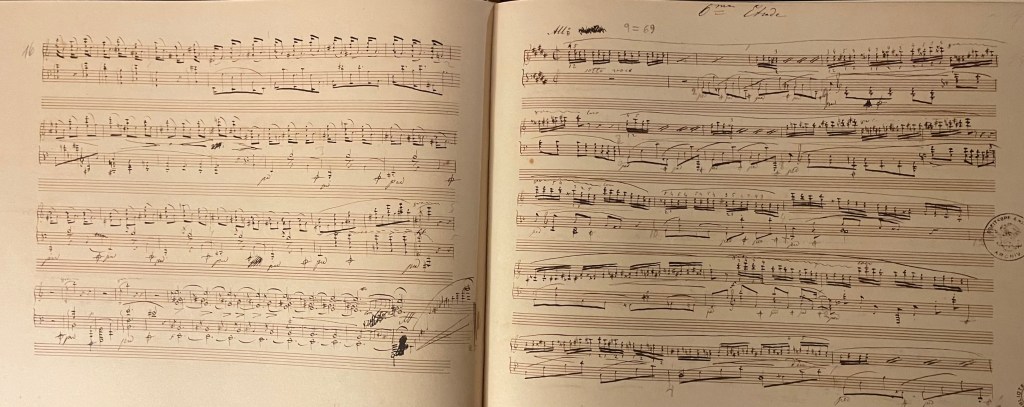
But it was the fifth study that will remain in my memory for its beguiling style of charm and grace and the sweeping beauty of the almost Schumannesque central episode.The ending rarely understood was masterly in Dmitri’s poetic hands. It lead into the double third study that was played with remarkable control but slightly lost the feux follets lightness that just accompanies the left hand melody.There was a poignant beauty to the seventh which cost Dmitri much more emotionally with the playing of a tone poem of grief and compassion.
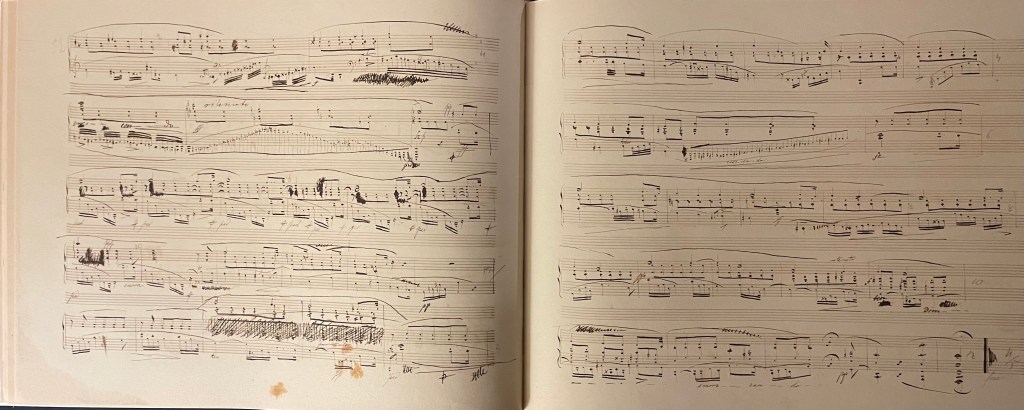
It was the same effort as Chopin that one can see from the printed page almost Beethovenian in its tortured birth.There was brilliance and dynamic drive to the eighth – the study in sixths and the ‘Butterfly’ study number nine just jumped off the page with lightness and ebullience.There was massive power and energy to the octave study maybe a little too much but it was breathtaking and overwhelming in its impact as it contrasted with the flowing beauty of the central episode.The concentration that Dmitri gave to the innocent opening of the ‘Winter Wind’ made the opening of the window on this wave of notes even more exciting with the majestic nobility of the left hand played with masterly control.
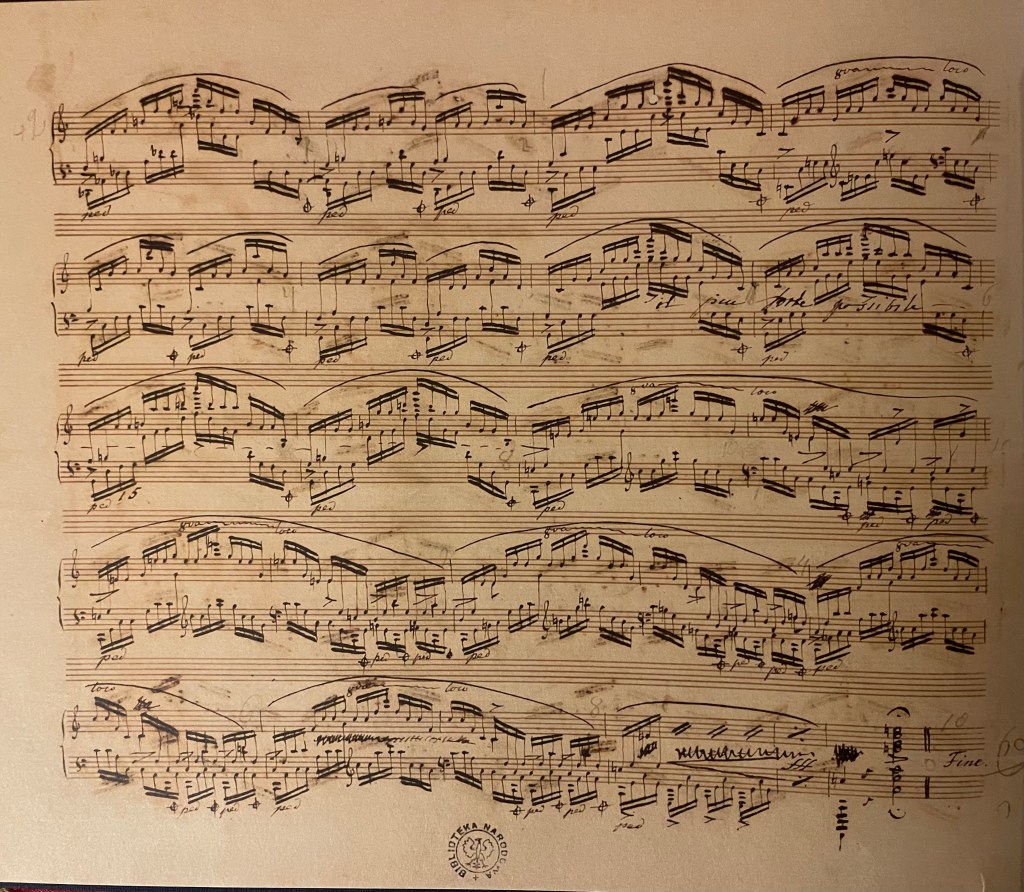
The final ‘Ocean’ study was quite breathtaking in the sweep and passion that Dmitri gave with fearless abandon as he brought these studies to a magnificent end.
His playing too of Franck/ Bauer showed a master musician who could build up sonorities from the bass from which Franck’s magical melodic invention could take flight in so many wondrous ways. An imperious preparation for the Fugue with enormous sonorities that one could just imagine echoing around the great edifice of Sainte- Clotilde in Paris where Franck was organist. The barely whispered entry of the fugue was played with absolute simplicity and clarity as it gradually grew to enormous heights only to dissolve into streams of golden sounds out of which could be heard in the distance the haunting opening melody that was to pervade the whole of this magical transcription for piano by the Scottish pianist Harold Bauer.Floating on sounds sustained by the great bass notes that were placed by Dmitri with knowing mastery.
Scriabin’s early Fantasy showed off the passion and sumptuous sounds of a composer who later was to see his star shining brightly, emerging from this early cauldron of ravishment. Luminosity and sumptuous beauty combined with an architectural understanding that could guide us through this densely inhabited work of passion and youthful energy.
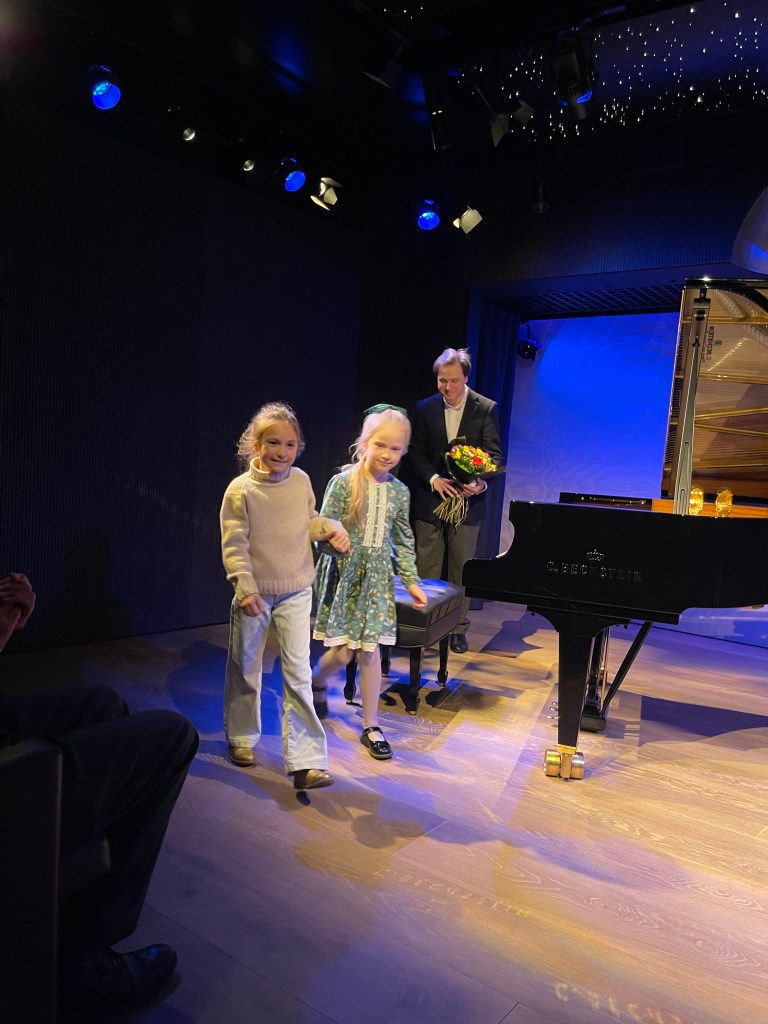
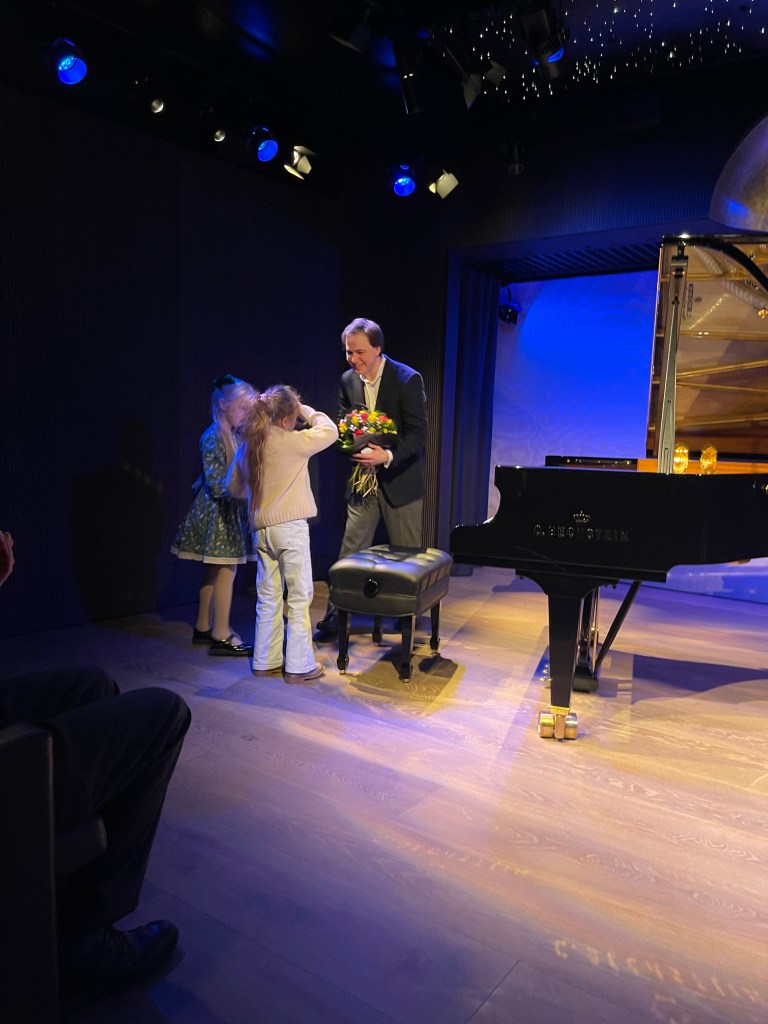
But after all these notes and the wondrous voyage we had been treated to by this Russian master it took two of his charming little students with a bouquet of flowers, almost as big as they, to persuade him to play just one more piece.
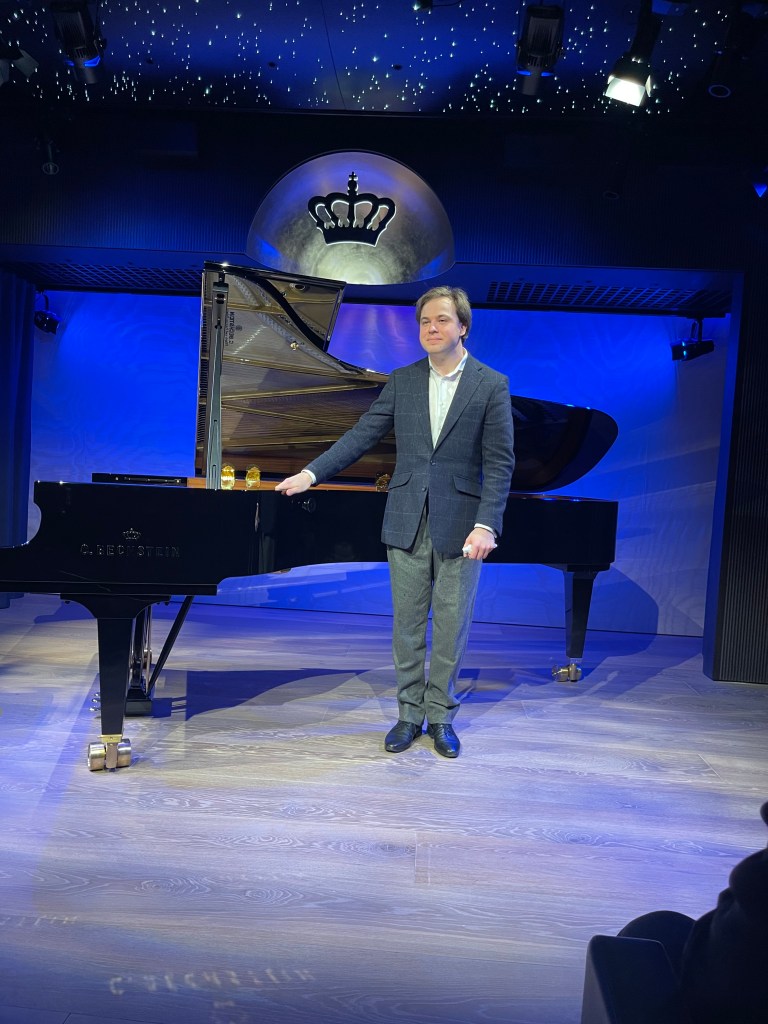
It was the wondrous sounds of Bach / Siloti : Prelude in B minor that cleared the air of his magnificent performances as we were treated to the refined simple beauty of this true poet of the piano.
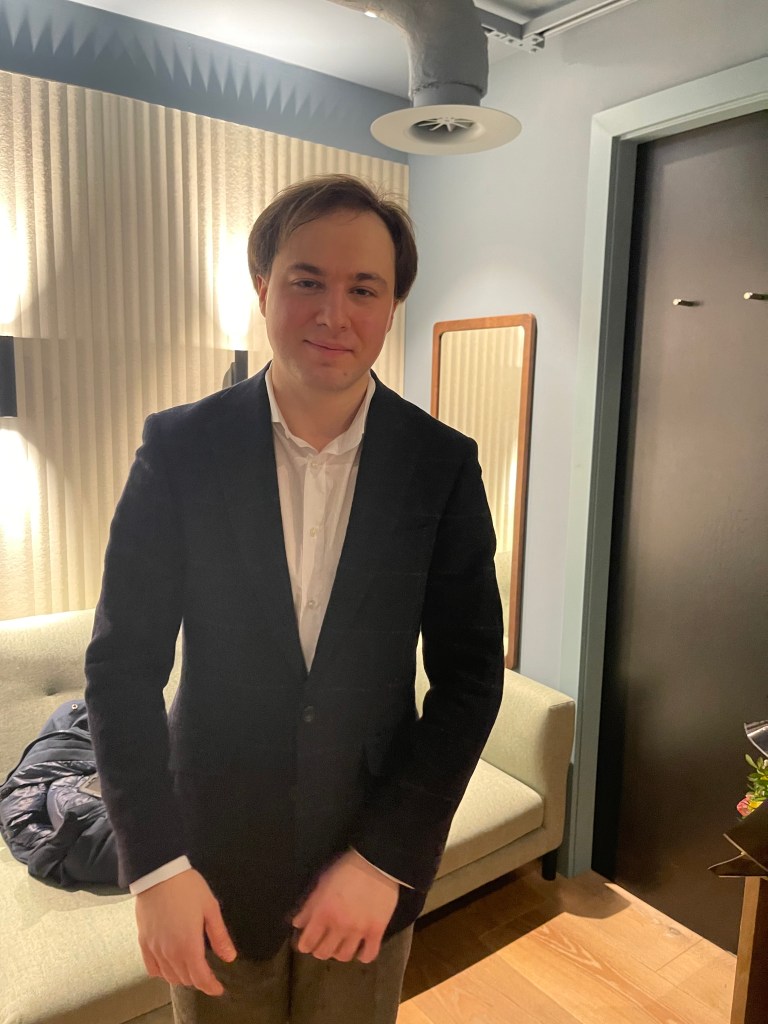
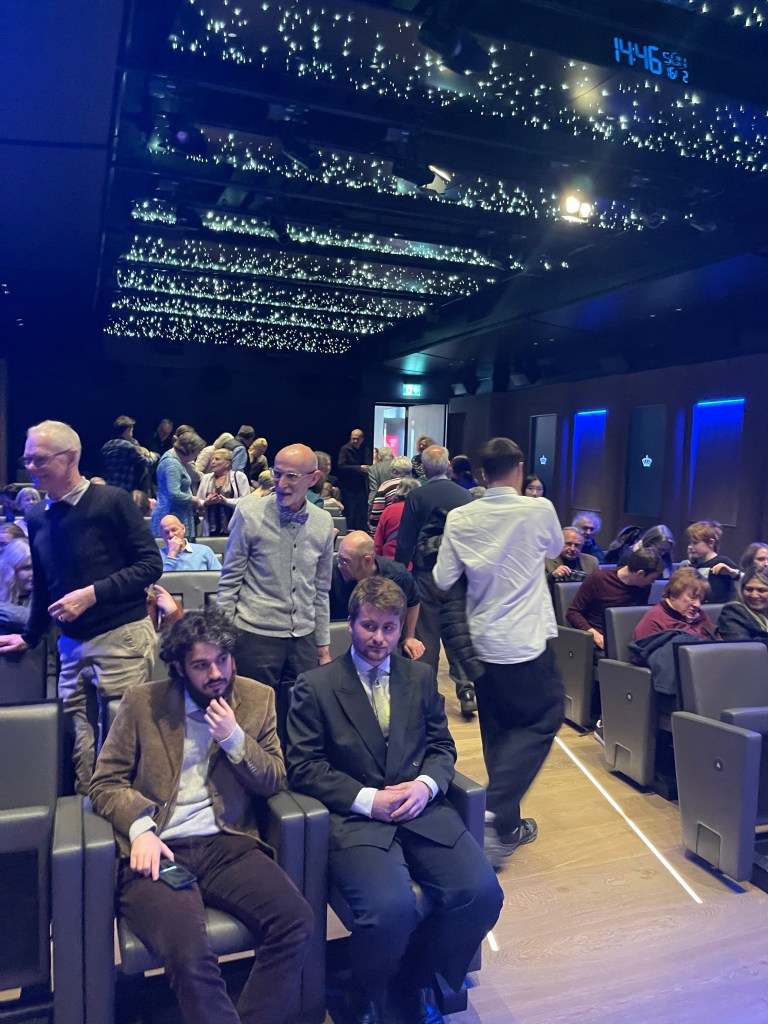
Wonderful to see this new intimate space finally taking its place as a major venue for many artists denied an adequate place in which to play, in what is the undisputed capital of the music world.
Thomas Masciaga opened the Bechstein Young Artists Series with canons covered in flowers
https://christopheraxworthymusiccommentary.com/2025/02/02/thomas-masciaga-opens-the-bechstein-young-artists-series-with-canons-covered-in-flowers/
Evening concerts starting from 18 pounds and a sumptuous restaurant that is also opening for luncheon.
A beautiful new hall that is just complimenting the magnificence of the Wigmore Hall and the sumptuous salon of Bob Boas.Providing a much need space for the enormous amount of talent that London,the undisputed capital of classical music,must surely try to accommodate
Next week’s roast will be Nikita Lukinov (13.45). Nikita Lukinov at the National Liberal Club ‘A supreme stylist astonishes and seduces’
https://christopheraxworthymusiccommentary.com/2023/11/07/nikita-lukinov-at-the-national-liberal-club-a-supreme-stylist-astonishes-and-seduces/
With hors d’oeuvres Jeremy Chan ( 10.30). Jeremy Chan at Steinway Hall for the Keyboard Trust
https://christopheraxworthymusiccommentary.com/2024/11/14/jeremy-chan-at-steinway-hall-for-the-keyboard-trust/
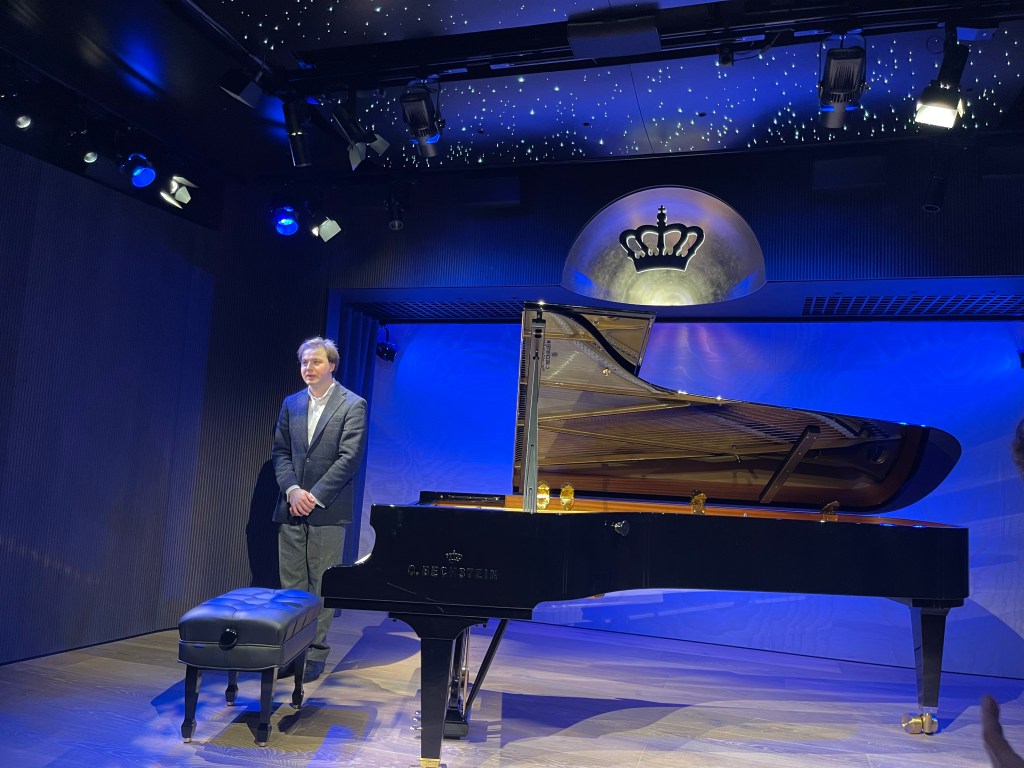
The new Bechstein Hall resounding to the sound of music …..and what music !
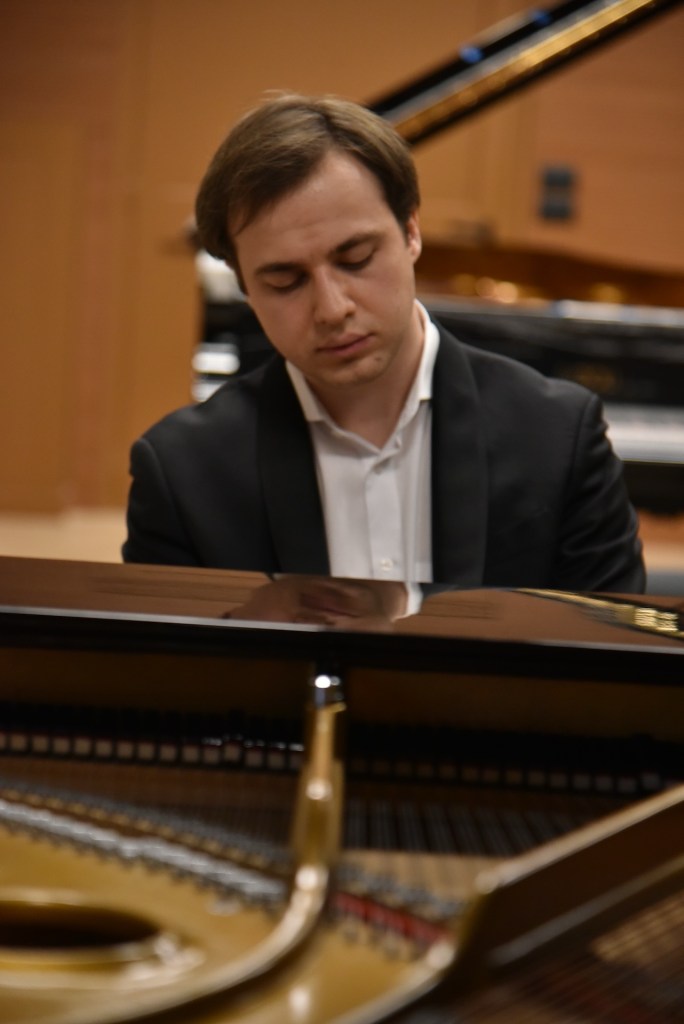
Dmitrii Kalashnikov was born in Russia, Moscow. He has been a postgraduate student at the Royal College of Music, London, since 2018 in the class of Professor Vanessa Latarche as a Ruth West Scholar supported by the Neville Wathen Scholarship, and more recently as a Blüthner Pianos scholar. His earlier studies began at the age of five at the Moscow secondary special music school named after Gnessin in the classes of Ada Traub and Tatyana Vorobieva. In 2017 he graduated with honours from the Moscow State Conservatory P.I. Tchaikovsky, where he was taught by Professor Elena Kuznetsova and Mira Yevtich. His prizes have included the Queen Elizabeth the Queen Mother Rosebowl at the RCM, awarded to a student of distinction, the winner of the 2019 final of the Jacques Samuel Intercollegiate Piano Competition (London) and, in the same year, the first prize at Les Etoiles Du Piano International Piano Competition (France). In 2021 he won first price on the Junior Intercollegiate Piano Competition (Beethoven Piano Society of Europe). Dmitrii performs regularly with the Russian National Orchestra under the direction of Mikhail Pletnev. In December 2014, Mikhail Pletnev and Dmitrii Kalashnikov gave a two -piano recital in the Great Hall of the Moscow State Conservatory. Other performances have included those at the House of Music in Moscow, Concert Hall of Mariinsky theatre in St. Petersburg, and major halls in UK, France, Austria, Estonia, Italy, Poland, Belgium. He has performed Hummel Piano Concerto in. A minor no 2 with the RCM Symphony Orchestra as winner of the RCM Concerto competition. In 2019 Imogen Cooper chose Dmitrii for her master-classes after audition in the Royal Academy of Music who sponsored Imogen Music Trust fund. Helping others plays a big role in Dmitrii’s life. For several years, together with a young talented artist – Gavriil Kochevrin, Dmitrii Kalashnikov organized evenings for the benefit of orphans in the House-Museum of Marina Tsvetaeva. Recent major concerts have included those at the State Tretyakov gallery in Moscow where he played at the opening of the largest projects of the Museum (Valentin Serov, Vasily Kandinsky and others), and at the opening of the season at the Theater Opera and Ballet of Nizhniy Novgorod in the presence of HE the Ambassador of Japan to Russia. In may 2021 Dmitrii Kalashnikov played for Sir Andras Schiff in Royal College of Music and after this master-class Sir Andras Schiff invited him to play on the Oxford Piano Festival Masterclass in 2021. Director of the London Philharmonic Orchestra invited Dmitrii to play Concerto by Tchaikovsky №1 in 2023 with LPO. Dmitrii Graduated the Royal College of Music in 2021 with distinction and now he is a student in University of Music and Performing Arts (Vienna), prof. Anna Malikova. In July he participated on the Lille’s piano festival in Louvre 2 (France) the concert in the Wigmore Hall, and in November 2021 he played on the Lang Lang’s master class (konzerthause, Vienna). Also, he had performances in the USA (2022).
Dmitri Kalashnikov refined virtuoso of ravishing beauty at St Mary’s
https://christopheraxworthymusiccommentary.com/2021/06/16/dmitri-kalashnikov-refined-virtuoso-of-ravishing-beauty-at-st-marys/
Dmitry Kalashnikov at St Marys The poetic mastery and genius of a great pianist
https://christopheraxworthymusiccommentary.com/2023/11/09/dmitry-kalashnikov-at-st-marys-the-poetic-mastery-and-genius-of-a-great-pianist/
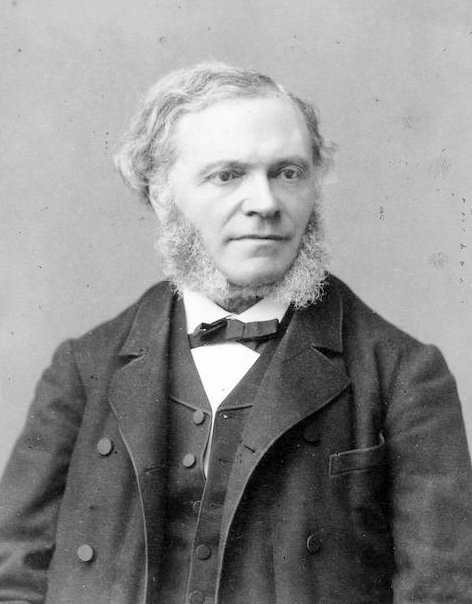
10 December 1822 – 8 November 1890
Franck was inspired to write this organ piece for the instrument at the church of Sainte-Clotilde. While it sounds majestic on the organ, it is also frequently heard in Harold Bauer’s transcription for the piano.The Prelude, Fugue and Variation, Op. 18 is one of Franck’s Six Pieces for organ, premiered by the composer at Sainte-Clotilde on 17 November 1864. They mark a decisive stage in his creative development, revealing how he was building on the post-Beethoven Germanic tradition in terms of the importance given to musical construction.
The Prelude, Fugue and Variation is dedicated to Saint-Saëns. Years earlier, when Franck published his Op. 1 trios, Liszt was among their admirers but had advised his younger colleague to write a new finale for the third of the trios and create a separate work from the original finale – this became Franck’s Fourth Piano Trio, Op. 2, dedicated to Liszt. In spring 1866, the Hungarian composer was in Paris for the French premiere of his Missa solennis for the consecration of the Basilica in Gran (Esztergom) at the Église Saint-Eustache on 15 March, a work about which Franck was enthusiastic. At the beginning of his stay, Liszt had come to listen to Franck improvising at Sainte-Clotilde and, apparently at Duparc’s instigation, a second private performance took place on 3 April. Franck wanted to play Liszt’s Prelude and Fugue on the Name BACH but the latter asked instead to hear Franck’s own Prelude, Fugue and Variation.
The piano transcription of this organ work was made by Harold Bauer (1873-1951), the British pianist who gave the world premiere of Debussy’s Children’s Corner and was the dedicatee of Ondine, the first piece in Ravel’s Gaspard de la nuit.Harold Bauer made his debut as a violinist in London in 1883, and for nine years toured England. In 1892, however, he went to Paris and studied with Paderewski for a year.In 1900, Harold Bauer made his debut in America with the Boston Symphony Orchestra, performing the U.S. premiere of Brahms’Piano Concerto No.1 in D minor. On 18 December 1908, he gave the world premiere performance of Debussy’s Children’s Corner Suite in Paris.After that he settled in the United States.He was also an influential teacher and editor, heading the Piano Department at the Manhattan School of Music . Starting in 1941, Bauer taught winter master classes at the University of Miami and served as a Visiting Professor at the University of Hartford Hartt .Students of Harold Bauer include notably Abbey Simon and Dora Zaslavsky.
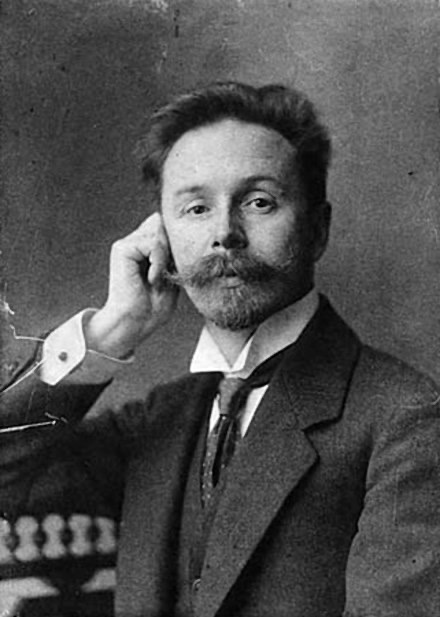
Alexander Nikolayevich Scriabin. 6 January 1872 Moscow 27 April 1915 (aged 43) Moscow
Alexander Scriabin’s Fantasie in B minor, op. 28, was written in 1900 and is a single sonata form movement which bridges the gap between Scriabin’s third and his fourth sonata . Scriabin wrote this piece during an otherwise compositionally unproductive period during his tenure at the Moscow Conservatory in fact its existence was forgotten by the composer. When Sabaneiev started to play one of its themes on the piano in Scriabin’s Moscow flat (now a museum), Scriabin called out from the next room, ‘Who wrote that? It sounds familiar.’ ‘Your Fantasy’, was the response. ‘What Fantasy?’ The first edition was published by Belaieff. The Fantasy contains some of Scriabin’s most difficult writing before his late period. The dense and contrapuntal textures are extremely difficult to voice, the collisions between the hands require careful working out, and the left-hand accompaniment is in places more or less impossible (requiring redistribution)
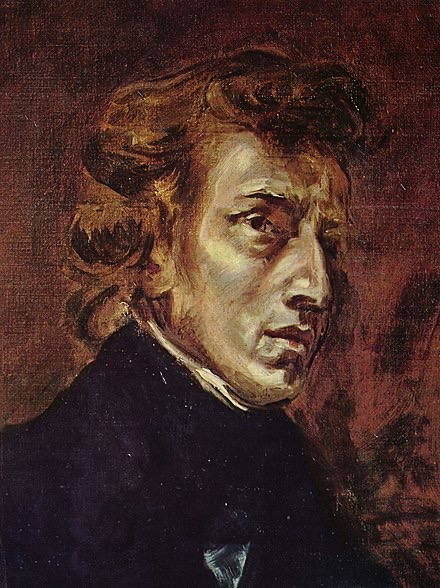
Fryderyk Franciszek Chopin 1 March 1810 Żelazowa Wola. 17 October 1849 (aged 39) Paris
The Études by Frédéric Chopin and are in three sets published during the 1830s. There are twenty-seven compositions overall, comprising two separate collections of twelve, numbered op. 10 and op. 25, and a set of three without opus number.
Chopin’s Études formed the foundation for what was then a revolutionary playing style for the piano. They are some of the most challenging and evocative pieces of all the works in concert piano repertoire.Chopin’s Études not only presented an entirely new set of technical challenges, but were the first to become a regular part of the concert repertoire. His études combine musical substance and technical challenge to form a complete artistic form. They are often held in high regard as the product of mastery of combining the two.His effect on contemporaries such as Franz Liszt was apparent, based on the revision Liszt made to his series of concert études after meeting Chopin.The first set of Études was published in 1833 (although some had been written as early as 1829). Chopin was twenty-three years old and already famous as a composer and pianist in the salons of Paris, where he made the acquaintance of Liszt . Subsequently, Chopin dedicated the entire opus to him – “à mon ami Franz Liszt” (to my friend, Franz Liszt).Chopin’s second set of Études was published in 1837, and dedicated to Franz Liszt’s mistress, Marie d’Agoult, the reasons for which are a matter of speculation.
 ChristopherAxworthy-MusicCommentary