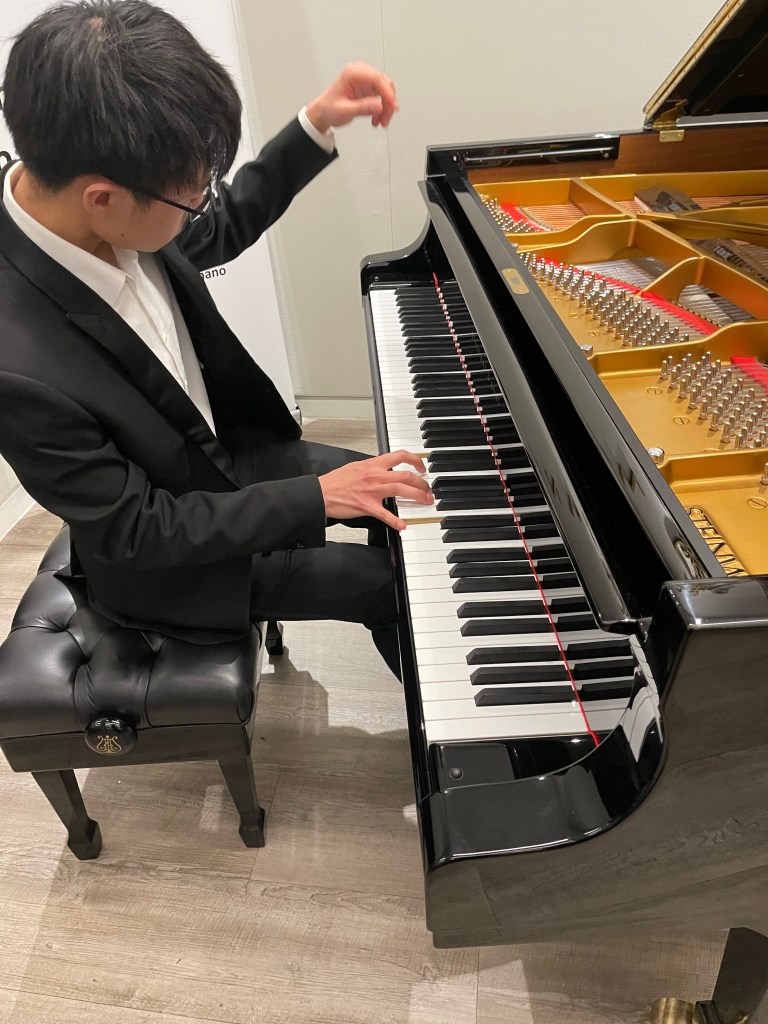
Some extraordinary playing from Julian Chan, a young Malaysian graduate from the class of Ian Fountain at the Royal Academy.

Arriving from Kuala Lumpur at the age of 10 to study with John Bird at Wells Cathedral School followed by six years under Ian Fountain at the RAM ( the only British pianist to have won the Rubinstein Gold medal together with Benjamin Frith much to Dame Fanny’s annoyance).Ian had been trained by Sulamita Aronowsky when at 19 he took the piano world by storm .
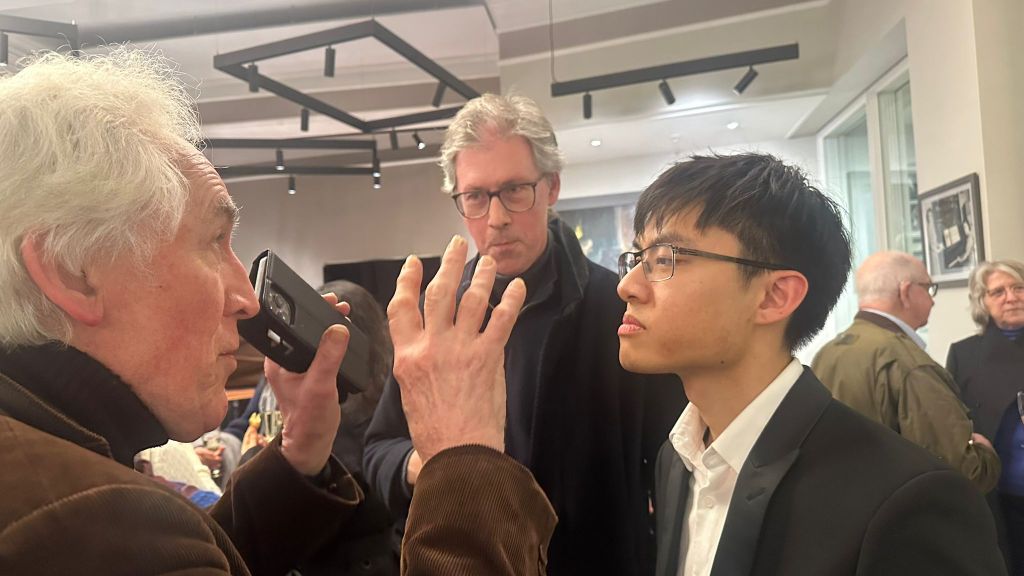
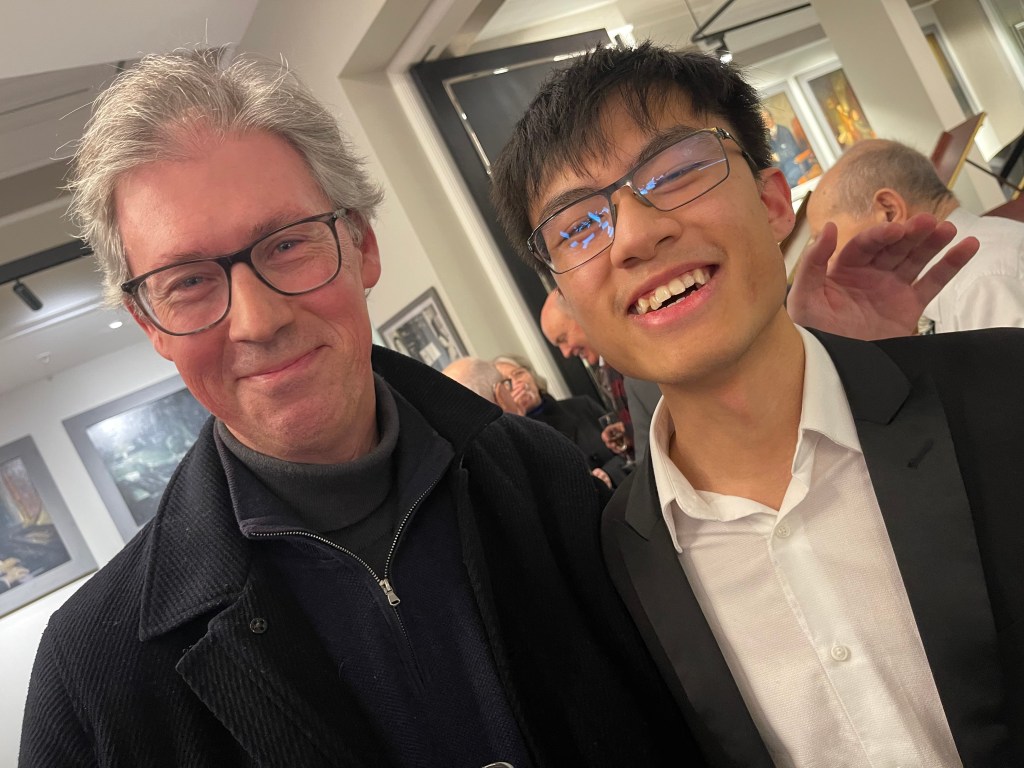
So it was hardly surprising to hear Julian Chan astonish and amaze us last night for his Keyboard Trust showcase recital .
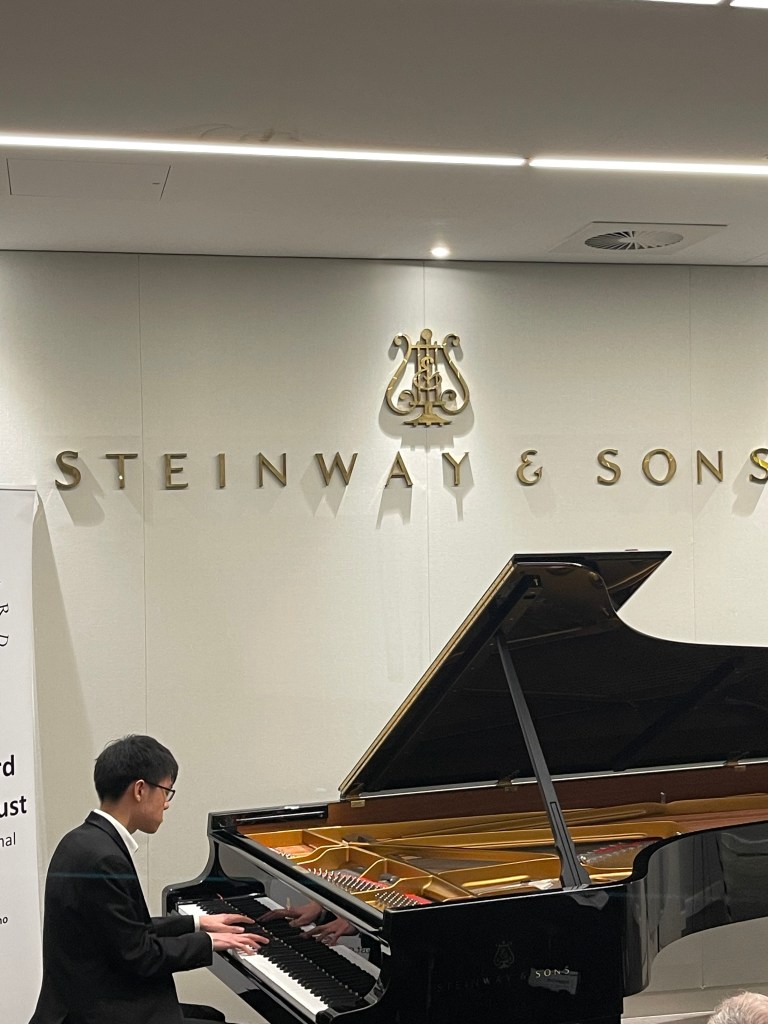
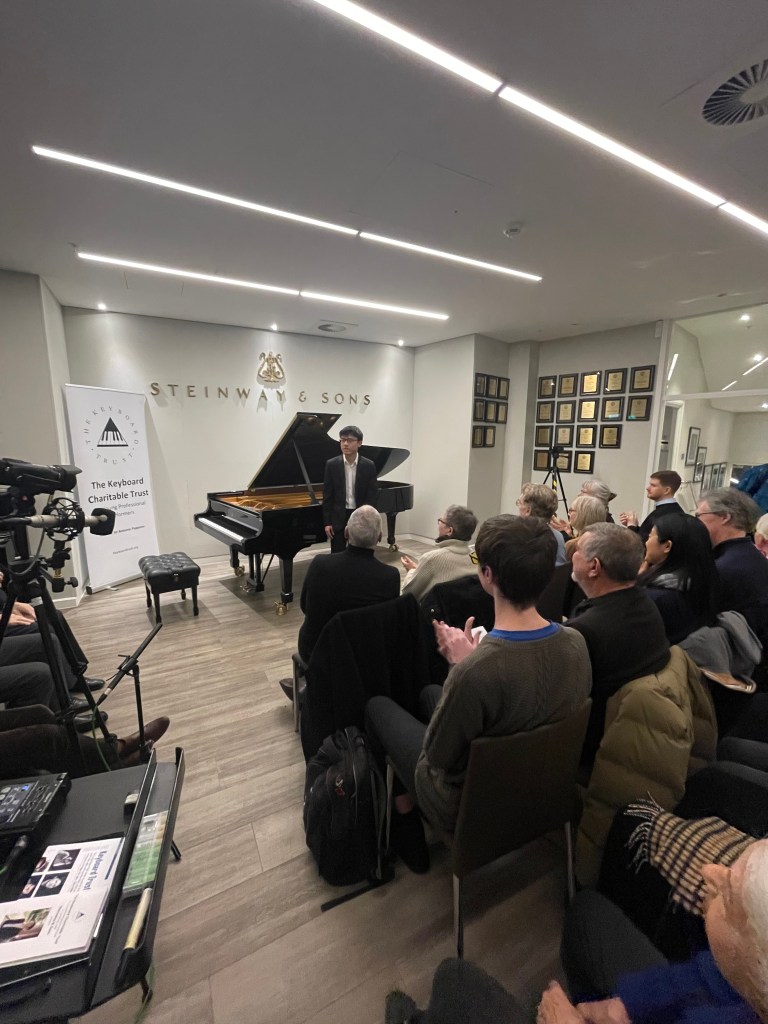
Sounds that have never been heard in this hall before on a magnificent Steinway D often criticised for being too big for this small space .
As Julian explained in his brief interview with Elena Vorotoko after his recital, the sounds he makes are those that come from what he hears .

A search for sounds by an intelligent questioning musician who has a transcendental command of the instrument .
When Richter first appeared in the West it was not the fire and passionate abandon that astonished as much as a pianist who could control sound and play more quietly than we had heard before .Not projecting the sound out but drawing the audience in.
Julian taught us today that it is not the size of the piano that counts but the measure of the pianist at the helm of such a powerful instrument .

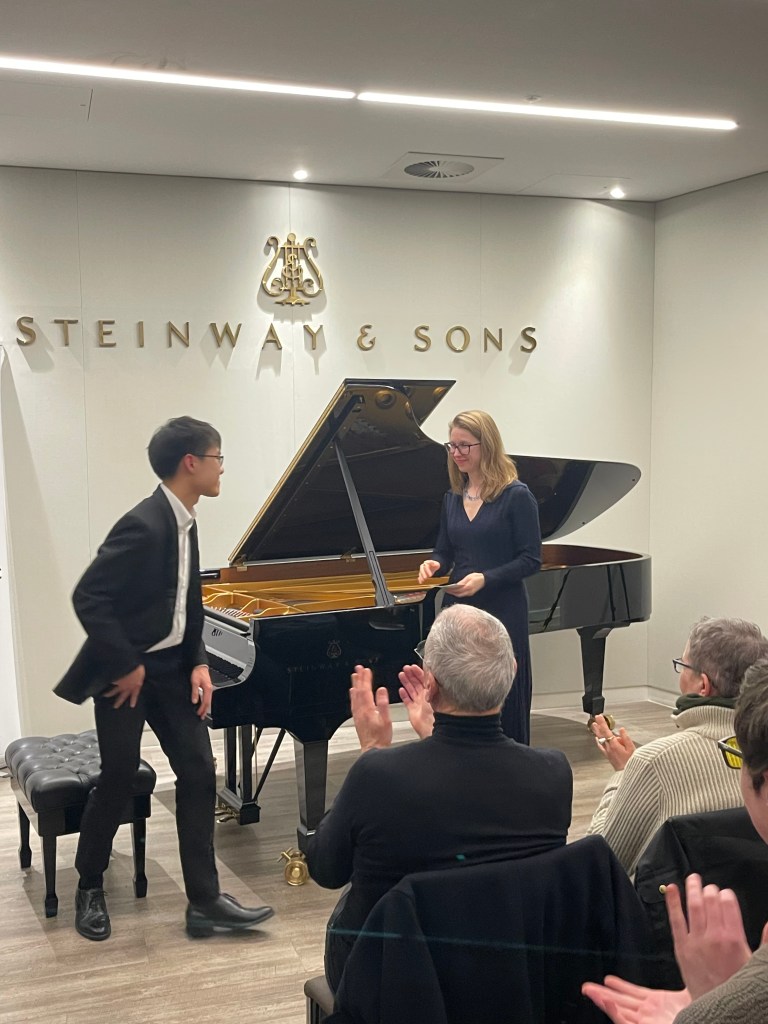
An all French programme but that chosen by an eclectic master musician.
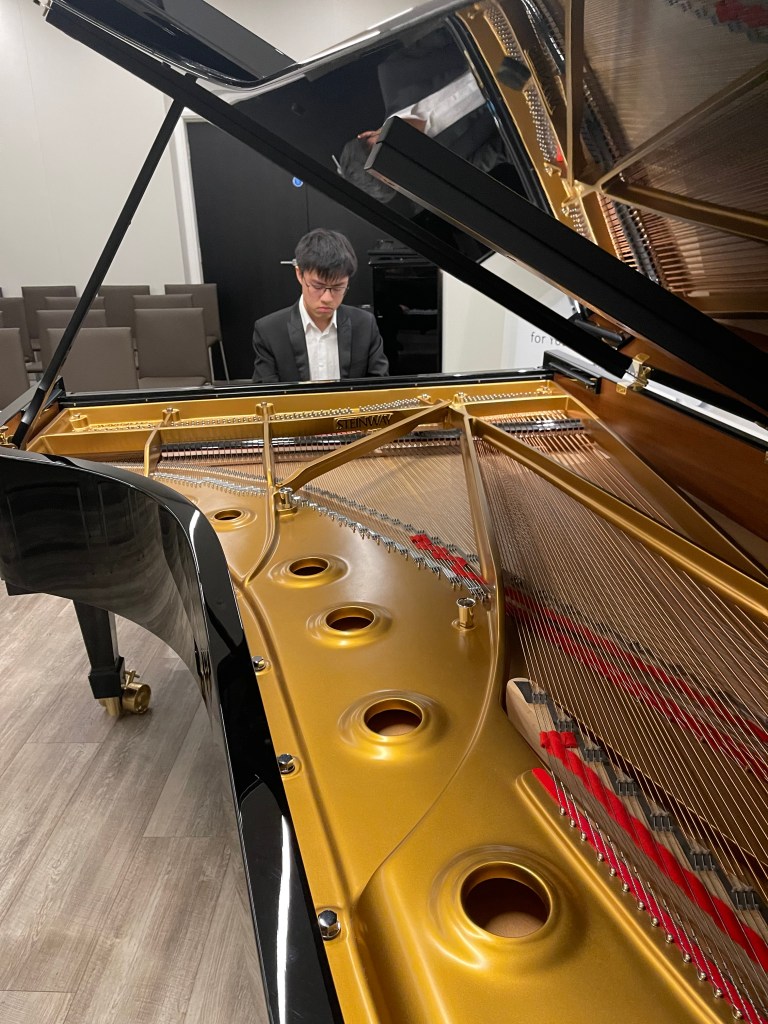
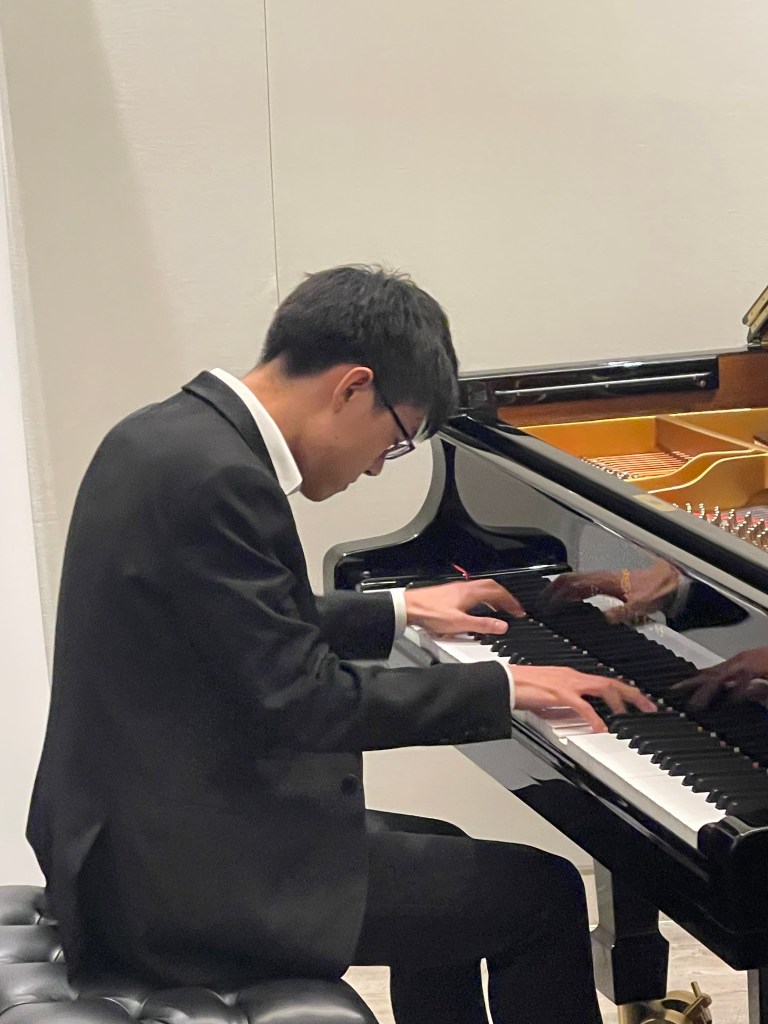
Julian having chosen Poulenc Novelettes and the Alkan Symphony for piano had also made a research for a French ‘classical’ composer. Having played through various scores of mostly unknown composers, as that period in French music is amazingly scarse, he came across the work of Hyacinthe Jadin and was happy to present his Sonata op 4 n 2. A work of elegance and beauty somewhat in the style of Weber but at the age of twenty showed a composer who alas was to survive only to the age of 24 and such early promise was not to be allowed to flower.
Alkan on the other hand was something of a recluse and much admired by Chopin and Liszt . He created, on the newly transformed keyboard instruments, innovative sounds but with music that was considered too difficult for mortals to play. He died a lonely misunderstood broken man but one that Chopin esteemed so highly that on his death bed he gave him his half started treatis on piano for Fetis to finish .
Poulenc too, whose piano music is of such Parisian elegance and style. Rubinstein in Paris in that golden period played him well, but since then it has been unjustly neglected or played with Sancon like cold precision or sugary sweet sounds that just do not suit it or do justice to the music of a refined debonair ‘bon viveur.’
Julian’s playing put all three on the map tonight in an astonishing display of mastery and style
Ravishing beauty of Poulenc, not sentimental but with sentiment. Full of ravishing insinuating colours where Poulenc’s irresistible melodies were allowed to appear and disappear like glimpsing colours gleaming in a prism.The second novelette was treated to the naughty impish sounds that only Poulenc could portray with his improvised mastery of the keyboard. Julian played it like a man possessed and if he slightly missed its wickedly ebullient character he certainly did not miss the bubbling energy.
He brought a refined tone palette of elegance and beauty to the Jadin sonata.There was rare beauty to the inner harmonic structure ( that Elena touched on in her interesting conversation with Julian ). Passion mixed with style and an extraordinary sense of refined colour. A Menuet of unexpected vehemence which contrasted with the simple almost Waldteufelian Trio! The Finale was pure Weber with its insistence and dramatic drive with playing of jeux perlé brilliance mixed with not a little Beethovenian weighty contrasts .
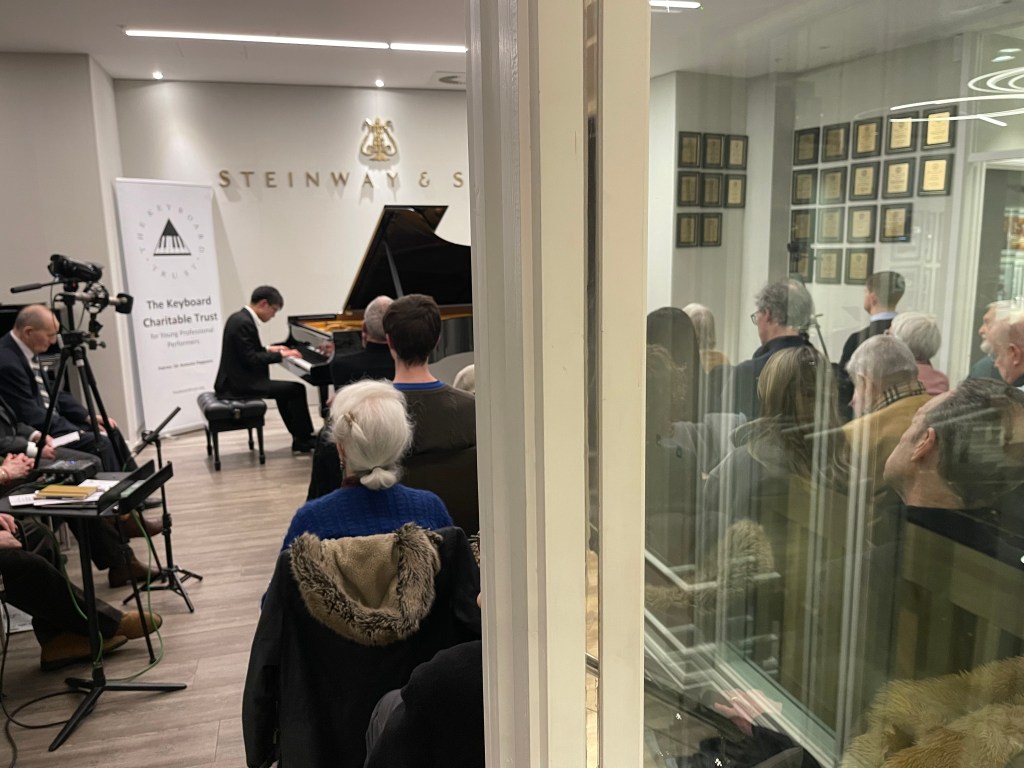

The Alkan Symphony I have heard some brilliant performances recently but nothing like the mastery and architectural understanding of today.Extraordinary orchestral colours played with both power and beauty. There was a richness to his chordal playing that I have not heard since Cherkassky . A sense of balance and measure that at the climax reached an overwhelming peak of sound that was never hard, ungrateful or even overpowering. Here was a master musician listening to the sounds that he was conducting from his agile players with above all a masterly control and true understanding of the pedals. It was this mastery that allowed the genial ‘Marche Funèbre’ to be played with a remarkable sense of control as the tenor melody was allowed to sing with all the subtle colouring of the human voice accompanied by dry dead whispered chords. When suddenly Alkan asks for the pedal to be added, it is like the sun coming out and a glimpse of ravishing, breathtaking beauty with an ending that was far more extraordinary that that of his colleague Chopin!
A ‘Menuet’ that was like the ‘witches sabbath’ but contrasting with a barely whispered trio .The return of the ‘Menuet’ and a triumphant ending was not for the genius of Alkan who interrupts the ‘baccanale’ with a magic glimpse back of the trio which he allows to breathe its last whispered dying sounds to conclude this extraordinary movement .
The finale was played with breathtaking pyrotechnics but above all a musical shape and architectural whole that was quite remarkable for its breadth and power.
An ovation as rarely experienced in a hall full of distinguished guests wanting more.


Julian was just happy to share a beguiling whispered prelude by Alkan showing us the other more introvert side of a misunderstood genius who this young man is fast putting on the map

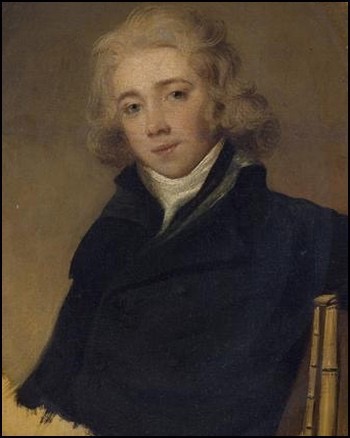
Jadin was born in Versailles . At the age of 9, Jadin’s first composition, a Rondo for piano, was published in the Journal de Clavecin. By the age of thirteen, Jadin had premiered his first work with the Concertt Spirituel.Jadin took a job in 1792 as assistant rehearsal pianist (Rezizativbegleiter) at the Theatre Feydeau. In this year he composed the Marche du siège de Lille (“March of the Siege of Lille”), commemorating the successful resistance of the citizens of Lille when besieged by Austrian forces..
In 1794, Jadin published an overture for 13 wind instruments entitled Hymn to 21 January. The piece commemorated the one-year anniversary of the execution of Citizen Capet (the name given to Louis XVI during his trial for treason). In 1795, he began teaching a female piano class at the Paris Conservatoire.From 1795 until his death Jadin suffered from tuberculosis. At the time of his death, he was impoverished.
While chamber music formed a large part of Jadin’s creative career, he is most well known for his progressive style of piano composition. Jadin’s works anticipated the music of Franz Schubert; his piano sonatas in particular display a proto-Romanticism, which in parts both rejected and extended the heritage of his Classicall predecessors.
Orchestra
- Piano Concerto No. 1 (1796–97)
- Allegro brillante
- Adagio
- Rondeau – Allegretto
- Piano Concerto No. 2 in D minor (1796), accompanied by 2 violins,viola,double bass ,flutes,oboes,bassoons and horns
- Allegro moderato
- Adagio
- Rondo – Allegro
- Piano Concerto No. 3 in A (1798), accompanied by 2 violins, viola, double bass, 2 flutes, 2 bassoons, and 2 horns
- Allegro moderato
- Rondo – Allegro
- Ouverture pour instruments à vent (c. 1795)
- Wind band with chorus
- Hymne du vingt-un janvier (1794), based on text by Charles Le Brun
- Chanson pour la fête de l’agriculture (1796), based on text by Ange Etienne Xavier Poisson de Lachabeaussière
- Hymne du dix germinal, based on text by Théodore Désorgues
- Stage
- Le testament mal-entendu (1793),comédie mêlée d’ariettes in 2 acts, libretto by François Guillaume Ducray-Duminil
- Cange ou Le commissionnaire de Lazare (1794), fait historique in 1 act, libretto by André-Pépin Bellement.
- Piano
- Rondo (1785)
- Piano ( or Harpsichord ) No. 1 in D (1794), accompanied by violin
- Allegro
- Andantino un poco allegretto
- Menuet: Allegro
- Final: Presto
- Piano (or Harpsichord) Sonata No. 2 in B-flat (1794), accompanied by violin
- Allegro fieramente
- Rondo: Allegretto non tropo
- Piano (or Harpsichord) Sonata No. 3 in F minor (1794), accompanied by violin
- Allegretto poco agitato
- Adagio
- Menuet: Allegro
- Rondo: Allegro non tropo
- Piano Sonatas, op. 3 nos. 1-3 (1795)
- Piano Sonata in B-flat, op. 4 no. 1 (1795)
- Allegro
- Andante
- Finale: Presto
- Piano Sonata in F-sharp minor, op. 4 no. 2 (1795)
- Allegro motto
- Menuet – Trio
- Finale: Allegro
- Piano Sonata in C-sharp minor, op. 4 no. 3 (1795)
- Allegro moderato
- Adagio
- Rondeau: Allegretto
- Piano Sonata in F minor, op. 5 no. 1 (1795)
- Allegro moderato
- Adagio
- Final: Allegro
- Piano Sonata in D, op. 5 no. 2 (1795)
- Allegro
- Andante
- Final: Presto
- Piano Sonata in C minor, op. 5 no. 3 (1795)
- Allegro maestoso
- Andante
- Allegro
- Duo in F (1796), for four hands
- Allegro brillante
- Andante
- Rondo: Allegro
- Piano Sonata in C minor, op. 6 no. 1 (1800)
- Allegro moderato
- Andante sostenuto
- Final: Allegro
- Piano Sonata in A, op. 6 no. 2 (1800)
- Andante
- Rondeau: Allegretto
- Piano Sonata in F, op. 6 no. 3 (1800)
- Allegro moderato
- Adagio
- Allegro assai
- Chamber
- String Quartets for 2 violins, viola, and violoncello
- B-flat, op. 1 no. 1 (1795)
- Largo – Allegro non troppo
- Adagio
- Menuet – Trio
- Finale – Allegro
- A, op. 1 no. 2 (1795)
- Allegro
- Menuet – Trio
- Pastoral Andante
- Finale
- F minor, op. 1 no. 3 (1795)
- Allegro moderato
- Menuet
- Adagio
- Polonaise
- E-flat, op. 2 no. 1 (1796)
- Largo – allegro moderato
- Adagio
- Menuetto
- Allegro Finale
- B minor, op. 2 no. 2 (1796)
- Allegro
- Menuetto
- Adagio non troppo
- Allegro Finale
- C, op. 2 no. 3 (1796)
- Allegro
- Andante
- Menuetto
- Presto Finale
- C, op. 3 no. 1 (1797)
- Allegro moderato
- Adagio
- Menuette – Andante
- Presto Finale
- E, op. 3 no. 2 (1797)
- Allegro moderato
- Menuet
- Adagio
- Allegro
- A minor, op. 3 no. 3 (1797)
- Allegro moderato
- Adagio
- Menuet
- Finale
- G, op. 4 no. 1 (1798)
- Allegro moderato
- Rondo Allegro
- F, op. 4 no. 2 (1798)
- Allegro non troppo
- Minuetto Trio
- Adagio molto
- Allegro assai
- D, op. 4 no. 3 (1798)
- Largo – Allegro moderato
- Minuetto
- Andante
- Finale Allegro
- B-flat, op. 1 no. 1 (1795)
- String Trios books 1 & 2 for violin, viola, and violoncello.
- Opus 2, 1797 dedicated ‘a son ami Kreutzer’ for ‘Violon, Alto et Basse’:
- E flat major, op. 2 no. 1
- Allegro moderato
- Menuet
- Siciliane
- Finale: Allegro
- G major, op. 2 no. 2
- Allegro
- Menuet
- Finale: Allegro
- F major, op. 2 no. 3
- Allegro
- Menuet: Andante/ Trio: Allegro
- Adagio
- Rondeau: Allegro
- E flat major, op. 2 no. 1
- Opus 2, 1797 dedicated ‘a son ami Kreutzer’ for ‘Violon, Alto et Basse’:
- IMSLP also lists a set of three string trios, Opus 1a -First Published 1790, dedicated to ‘Son ami Montbeillard’ for the combination of 2 violins & bass.
- Vocal
- Marche du siège de Lille (1792) for voice and piano (or harp)
- Romance à la lune (1796) for voice and piano (or harp)
- Le tombeau de Sophie (1796) for voice and harpsichord (or harp)
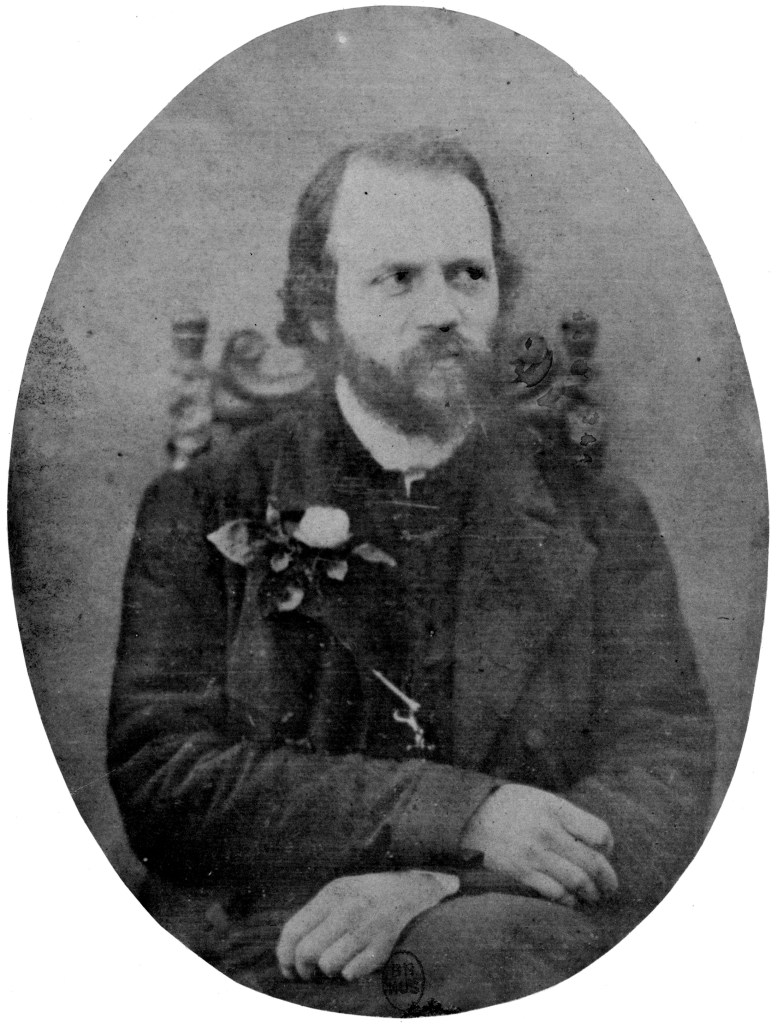
The Symphony for Solo Piano op 39 4-7,is a large-scale romantic work for piano composed by Charles – Valentin Alkan and published in 1857.
Although it is generally performed as a self-contained work, it comprises études Nos. 4–7 from the Douze études dans tour les tons mineurs (Twelve Studies in All the Minor Keys), Op. 39, each title containing the word Symphonie . The four movements are titled Allegro moderato, Marche funèbre,Menuet and Finale ( described by Raymond Lewenthal as a ride in hell). Much like the Concerto for Solo Piano (Nos. 8–10), the Symphony is written so as to evoke the broad palette of timbres and harmonic textures available to an orchestra. It does not contain the excesses of the Concerto or the Grande Sonate (Op. 33). But, rather like the Sonatine Op. 61, it proves that Alkan was also capable of writing perfectly balanced and almost ‘Classical’ works.”Unlike a standard classical symphony, each movement is in a different key, rising in progressive tonality by a perfect fourth.

https://christopheraxworthymusiccommentary.com/2024/12/25/point-and-counterpoint-2024-a-personal-view-by-christopher-axworthy/
 ChristopherAxworthy-MusicCommentary