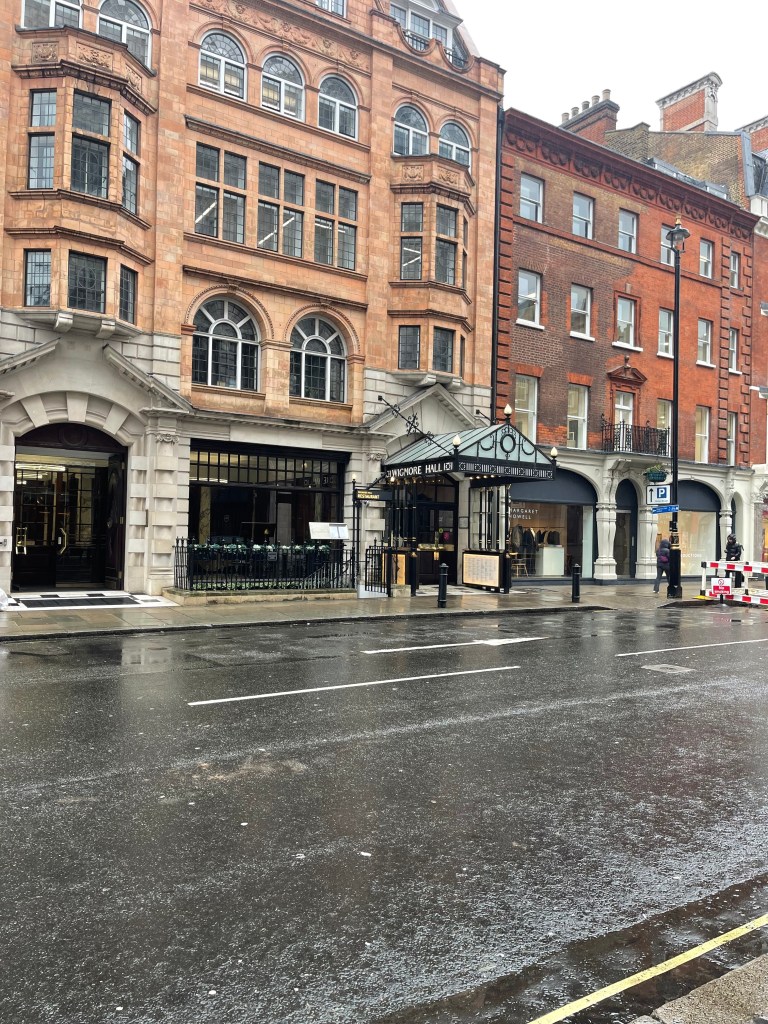
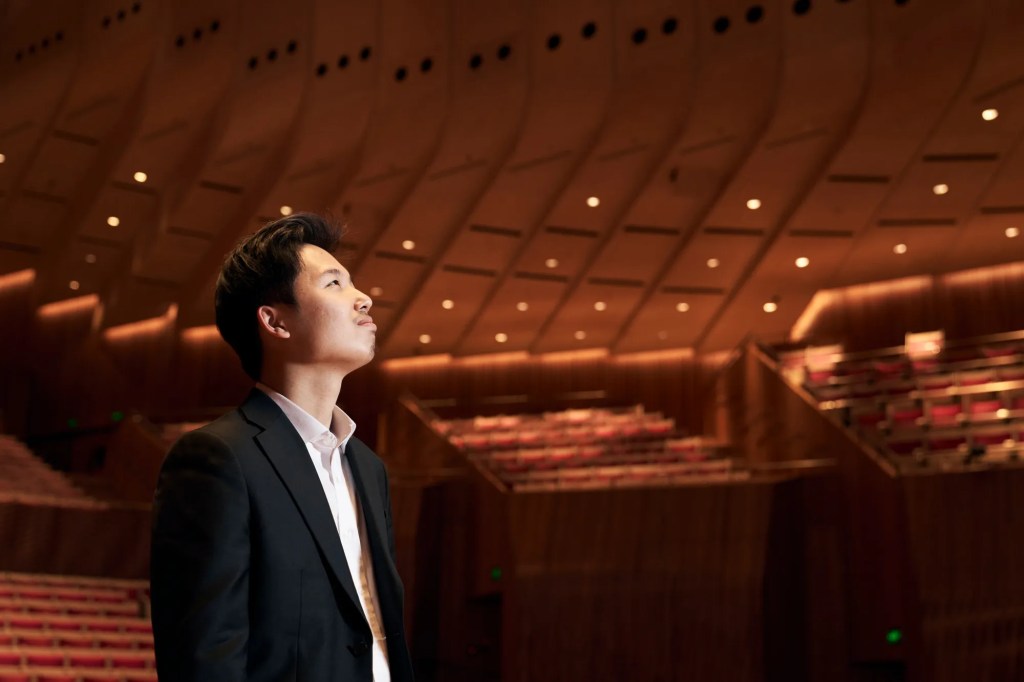
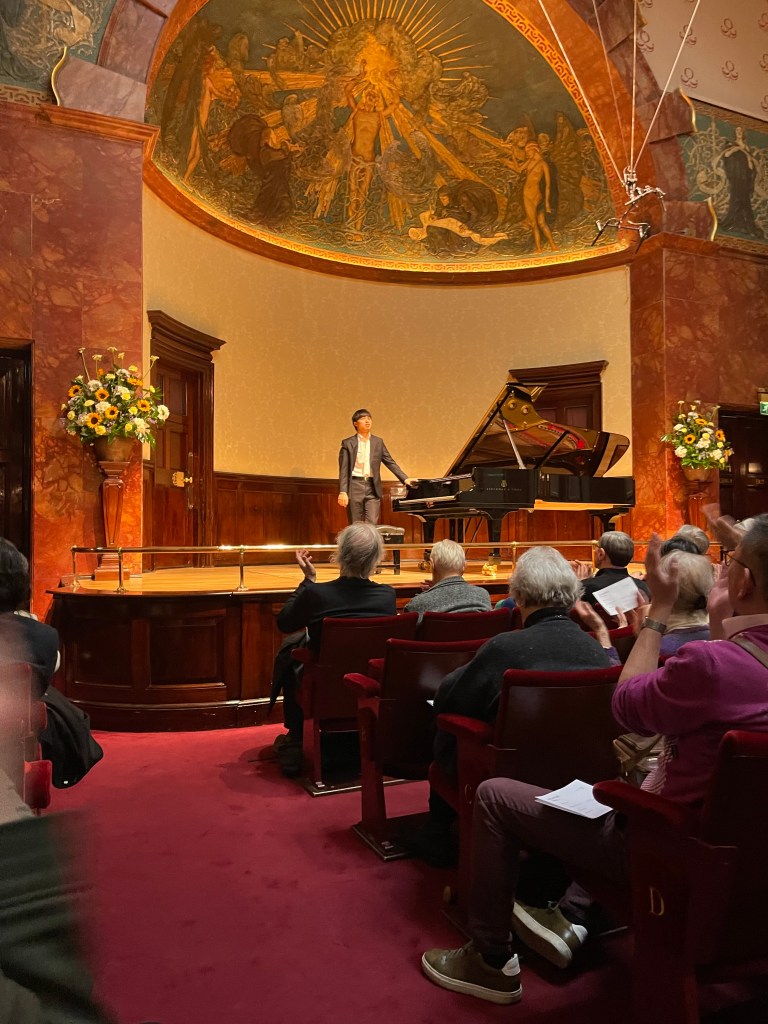
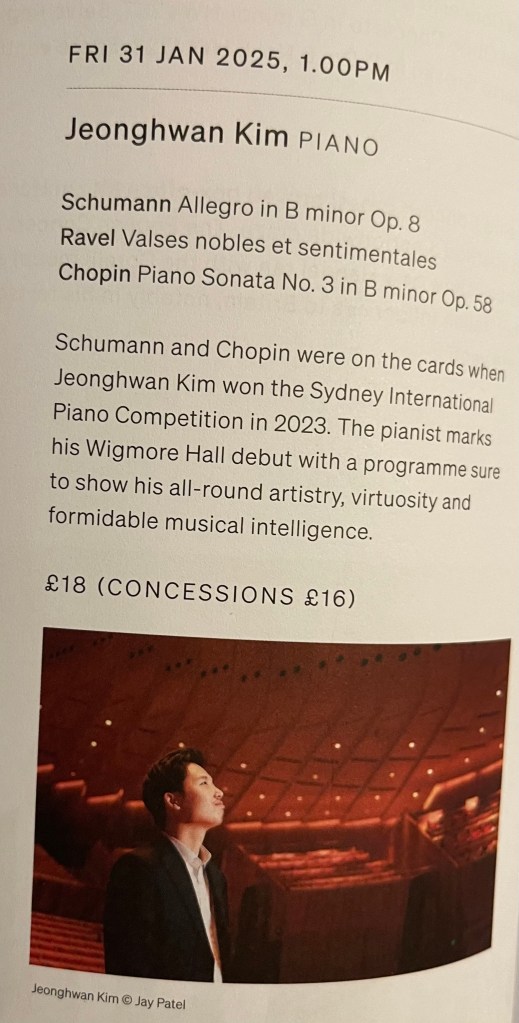
Jeonghwan Kim , winner of the 2023 Sydney International Piano Competition, making his debut at the Wigmore Hall with extraordinary finesse and mastery, more alla Godowsky than Rachmaninov .
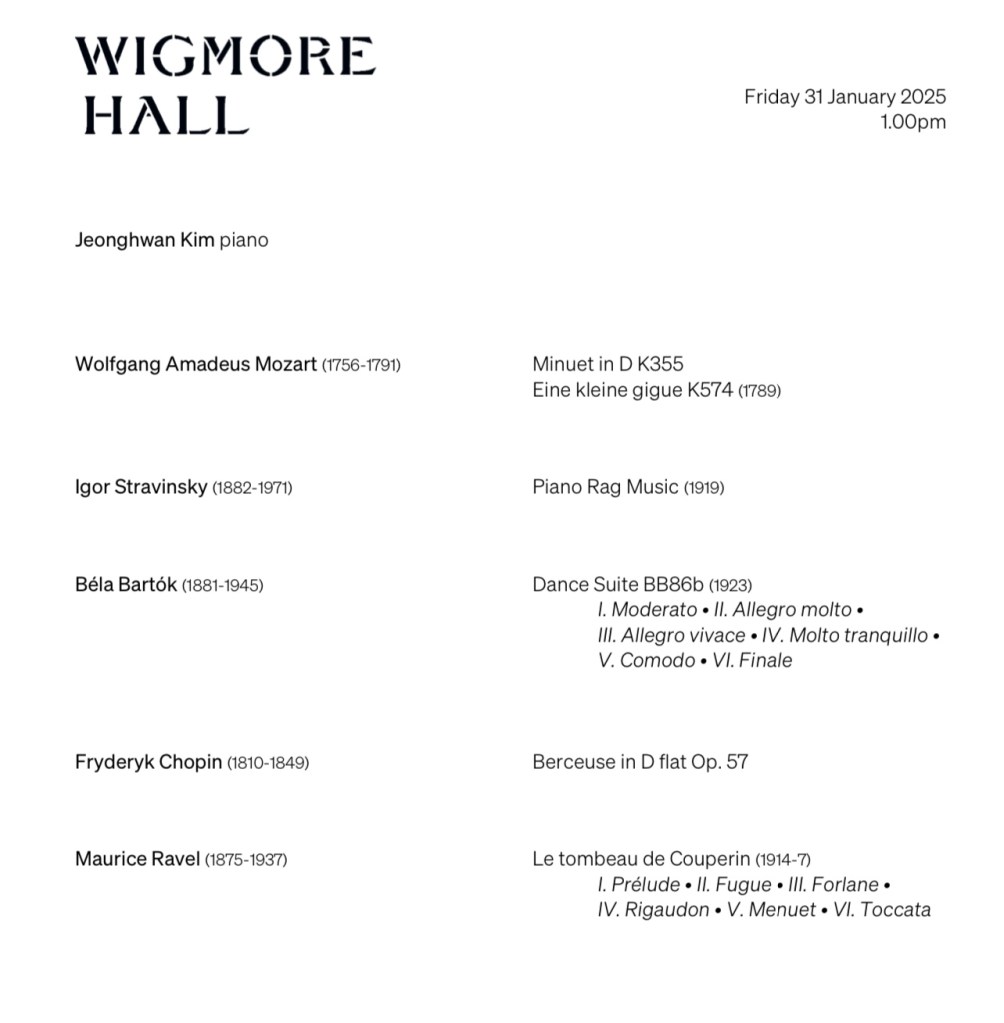
Expecting Schumann op 8, Chopin op 58 and Valses Nobles which would have shown us a different side from the exquisite whispered sounds of clockwork precision of Ravel ‘Le Tombeau’ .The barely audible Chopin Berceuse was exquisite but Chopin’s filigree bel canto was thrown off with a lightweight beauty that was completely at odds with the gentle lapping rhythm where Chopin, as in his Barcarolle, sets the scene. Roots firmly embedded in the ground but here with Kim’s beautiful branches left to flounder on their own.
Mozart Minuet in D K 355 where Kim accentuated the pungent dissonances that seemed to reappear in Stravinsky’s Rag, that followed after Mozart’s Little Gigue K 574. Even the little gigue was played at Stravinskian tempos that denied the charm and grace of its age but allowed Kim to point us to the future, which was obviously his intellectual scope.
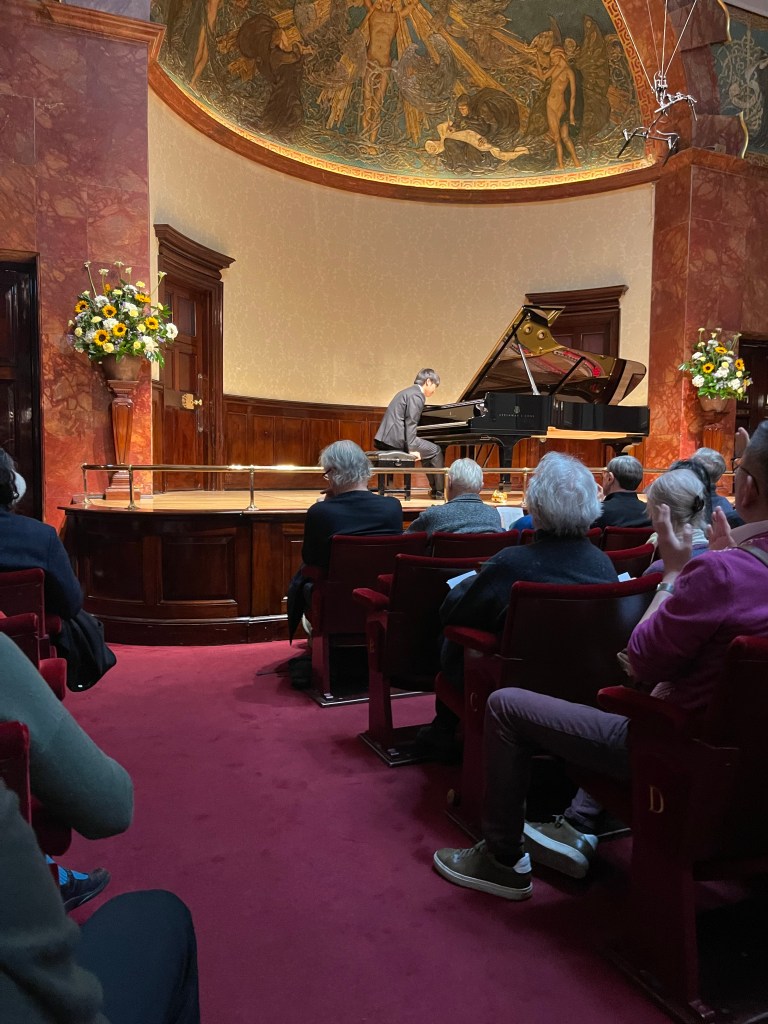
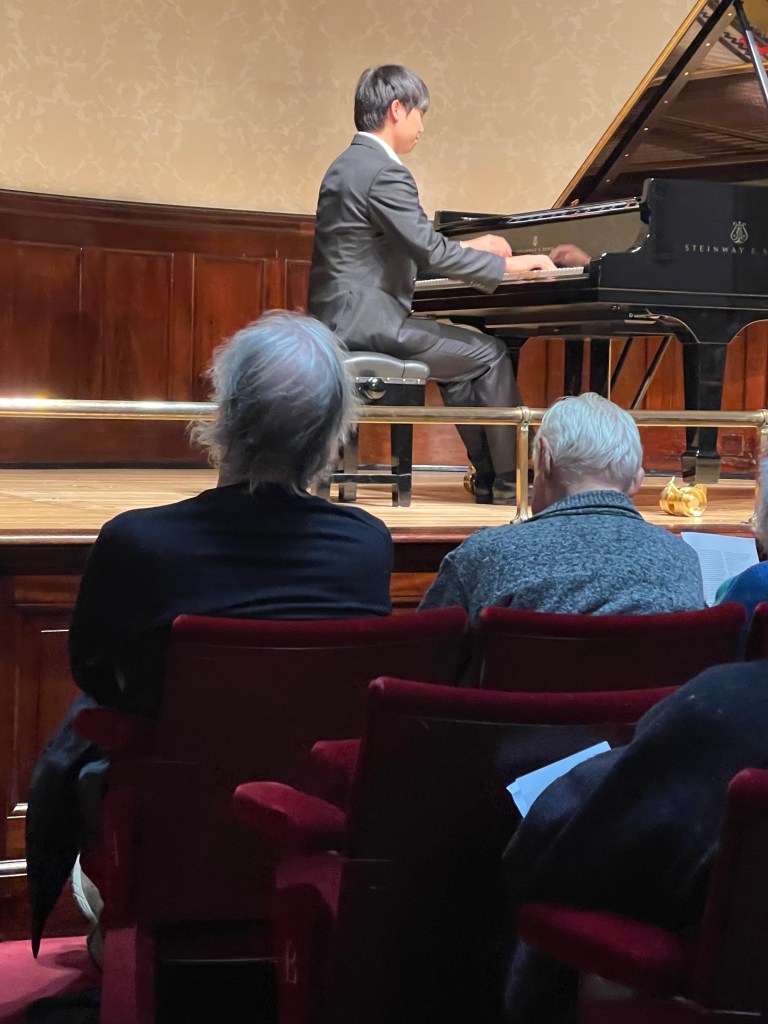
Stravinsky’s Piano Rag Music was commissioned by his friend Rubinstein who refused to play it in public!
Kim gave a superb performance where his clarity and kaleidoscope of sounds brought to life, with infinite charm and even grace, a piece that Rubinstein declared too ungrateful to inflict on his audiences. Stravinsky made amends by dedicating his own piano transcription of Petrushka to him, a few years later, allowing him to make a simplified version of a work of quite transcendental difficulty, for public performances, knowing full well that it would have kept the ‘Prince of Pianists’ locked in the practice studio for far too long!
After this Kim played Bartok’s 1923 Dance Suite full of ravishing sounds and dynamic contrasts. A rhythmic drive that was never overpowering in volume but more of a compelling inner rhythmic energy. A quite unique, masterly performance of a work that indeed needs the mastery of Kim to bring it into the concert hall.
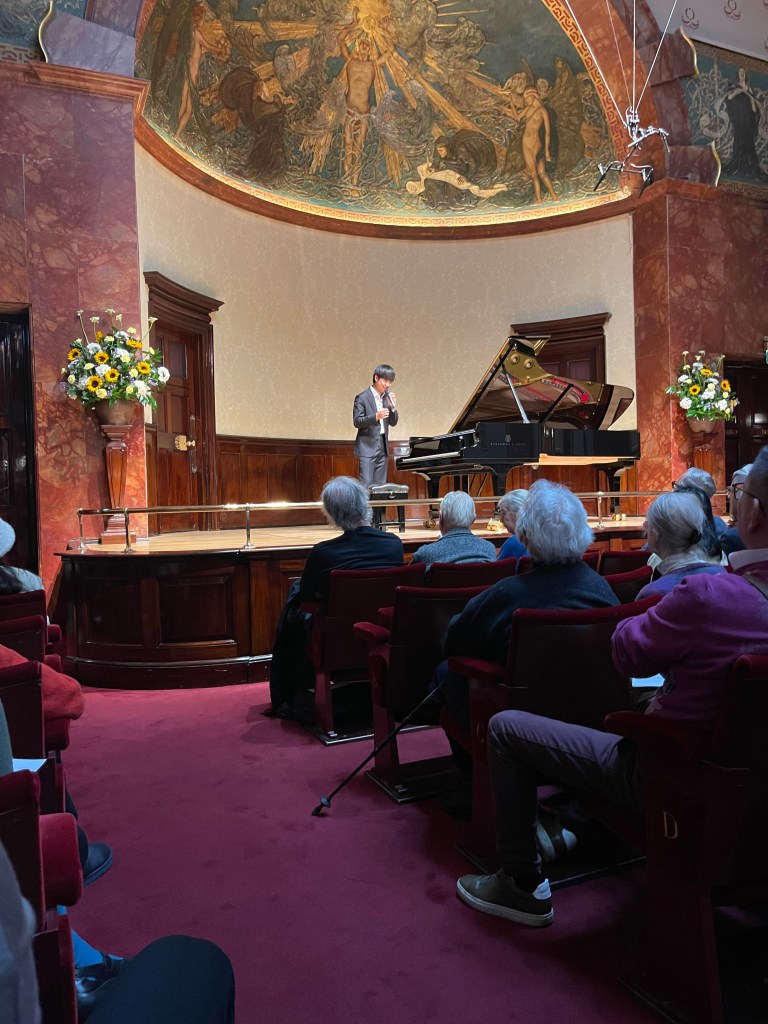
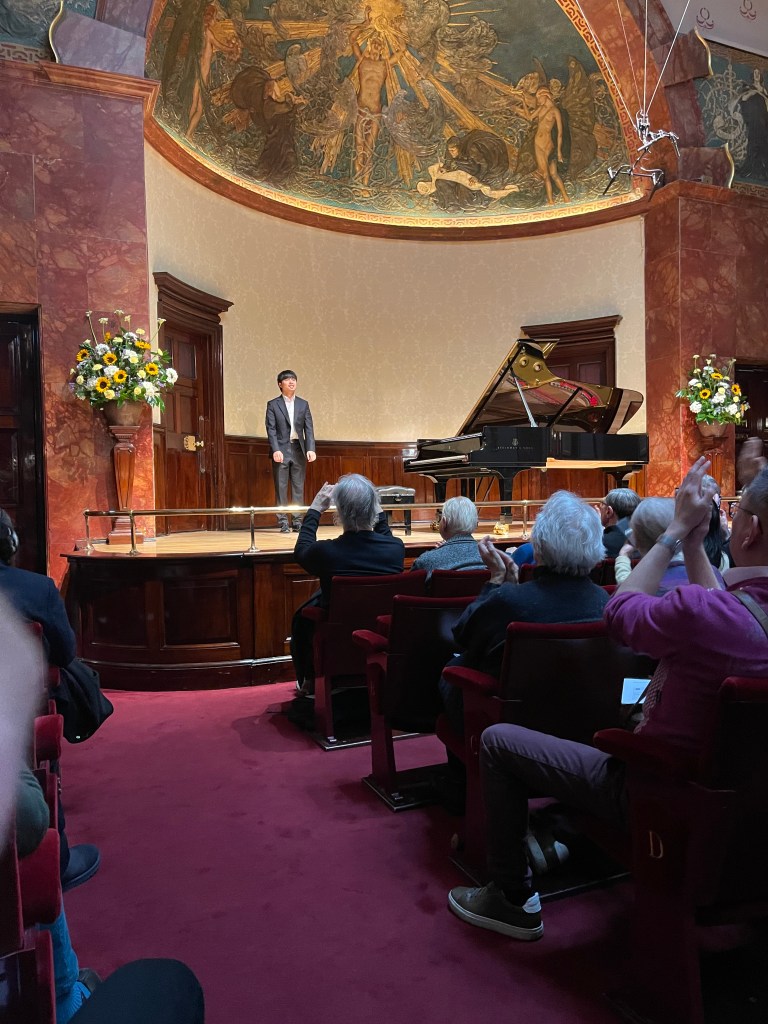
Ravel’s ‘Tombeau’ was exactly the measure of Kim’s remarkable mastery, with the clockwork precision with which Ravel depicts and remembers friends who gave up their youthful lives in the conflict of the First World War. A conflict that was agreed in the comfort of Parliament by aristocratic politicians who never put foot in the trenches! Ravel was an ambulance driver and saw the tragic and useless end of so many of his generation. Absolute clarity and precision where all Kim’s great gifts came together for the beauty of Ravel’s recreation of baroque perfection. Streams of notes that rose and fell with infinite subtlety and beguiling atmosphere. An exquisite tonal palette to the ‘Fugue’ out of which the ‘Forlane’ sprang to life with a distant vision of paradise in its midst, and with the grace and charm of its magical ending. The ‘Rigaudon’ was played with a playful sense of colour and rhythmic energy with a central episode of haunting beauty, where the left hand’s detached notes accompanied the luminous glowing melody in the right. A ‘Minuet’ of beauty, radiance and delicacy flowing simply with exquisite unnoticeable rubato. Of course the ‘Toccata’ was played with absolute perfection where sudden rays of light would illuminate the most exquisite outpouring of melody (so similar to Mozart or Schubert with their sudden genial melodic invention ) Coming almost to a halt before the breathtaking final bars of quite extraordinary mastery, brilliance and above all of musical imagination.
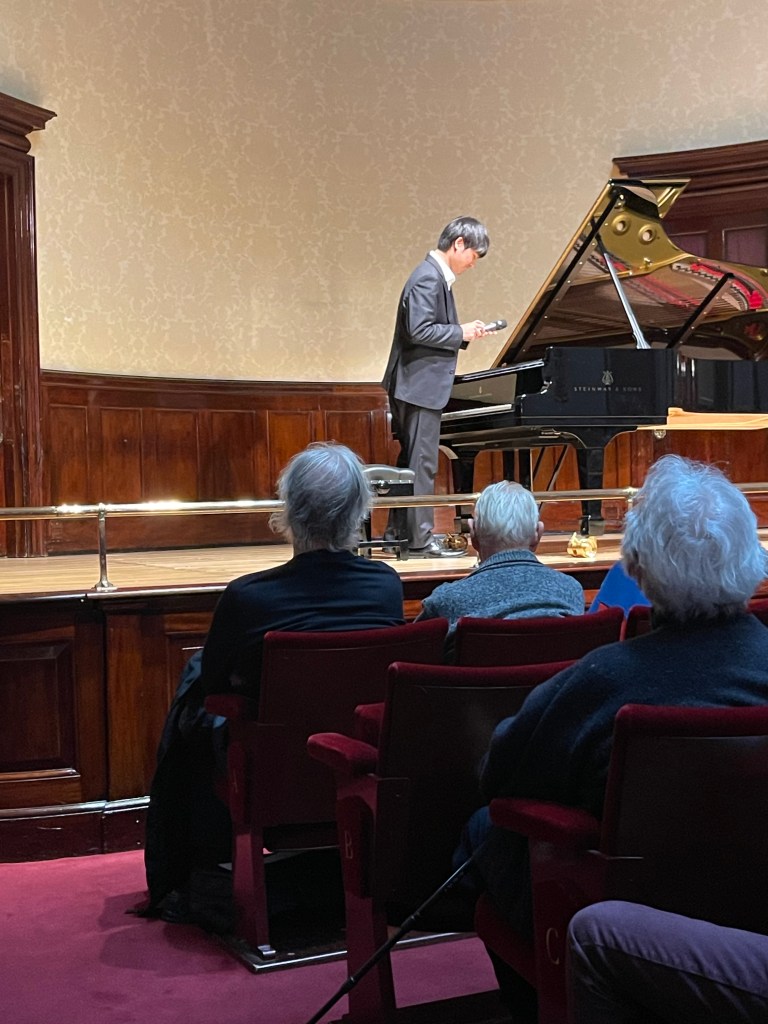
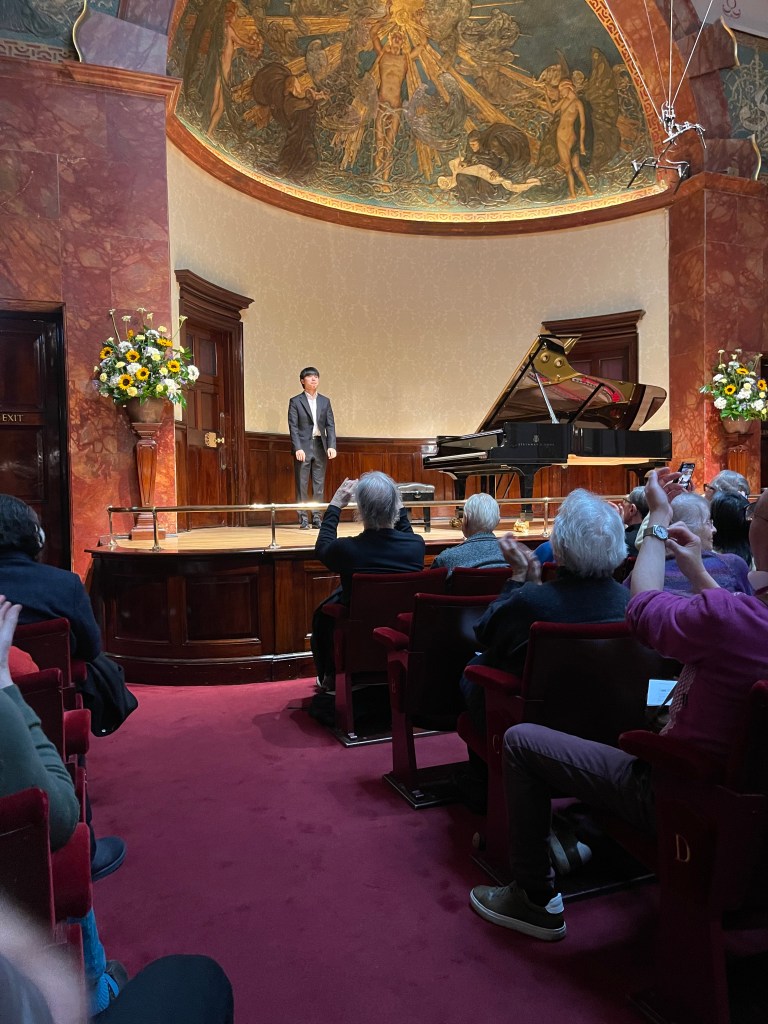
Kim, a very serious musician and master pianist, announced that he does not play encores, but that he would improvise on notes given to him by us, the audience. Four notes shouted with glee, by audience members, that Kim proceeded to elaborate into a waltz with all the finesse and grace of a Levitski or Rosenthal. An extraordinary thinking musician and master pianist.
“A very complete pianist and artist
His virtuosity is astounding, his accuracy in the most complex passages breathtaking…
[…] brought tears to my eyes”
-Piers Lane
Born in Seoul in 2000, Jeonghwan Kim first began playing the piano at the age of six. In the following years, his numerous first prizes in national competitions led to his admittance to the “Seoul Arts Center Academy for Young Talented Musicians” at just nine years old. Since moving to Berlin in 2011, he has continued to earn extensive recognition in prestigious national and international piano competitions. At the 2017 International Liszt Competition for Young Pianists in Weimar, he received the third prize along with two special prizes.
In 2019, he was awarded the 1st prize at the Aarhus International Piano Competition in Denmark, prompting immediate Invitations to perform with the Aarhus and Odense Symphony Orchestras. He has since given concerts in major halls in Berlin, Weimar, Hamburg, and Aarhus, among others.
In 2022, he was awarded three prizes: in January, he won the 1st prize at the Felix Mendelssohn-Bartholdy competition in Berlin. Five months later, in June, he won the fourth
prize and the audience prize at the Sendai International Piano Competition.
In July 2023 he won the 1st prize along with two special prizes for his performance for the Bartok’s second piano concerto and the Best Overall Concerto Prize at the renowned Sydney International Piano Competition.
Since 2017, Jeonghwan has been studying at the University of Music Hanns Eisler in the class of Prof. Konrad Maria Engel. His former professors include So Yong Choi, Leda Kim, and Thomas Just. He has also participated in masterclasses with Jakob Leuschner, Bob Versteegh, and Robert Levin. Other crucial influences on his artistic development include Stephan Imorde, Konstantin Heidrich, Antje Weithaas and Jonathan Aner.
 ChristopherAxworthy-MusicCommentary