
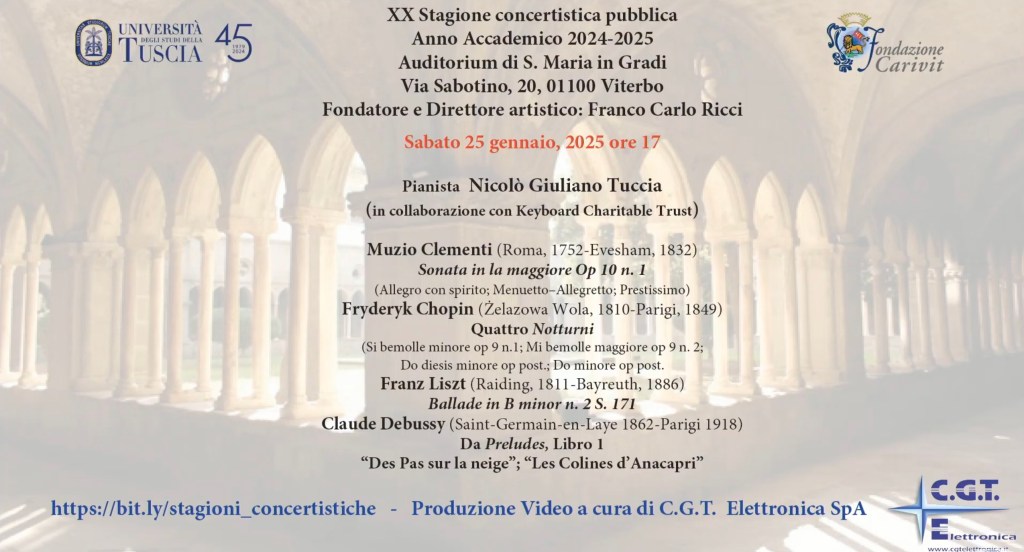
A very varied programme for the annual recital of a Keyboard Trust Artist, Giuliano Tuccia. A native of Forlì where he has created his own concert series celebrating the cities most famous citizen, the legendary pianist Guido Agosti.
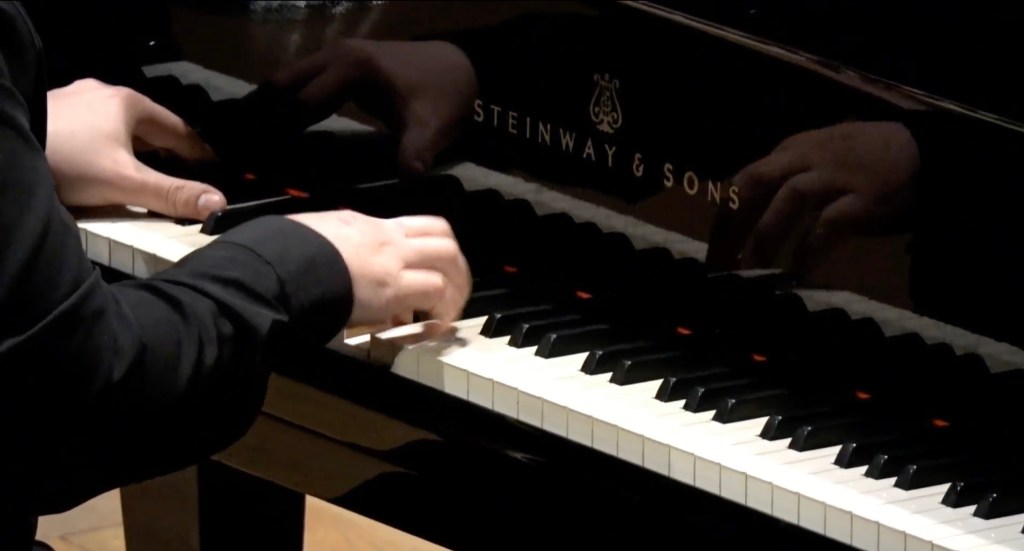
Giuliano has music in his blood and looks like a born pianist at the keyboard with fingers that are like limpets that cling to the keys sucking the life blood from each one without ever producing a hard or percussive sound.
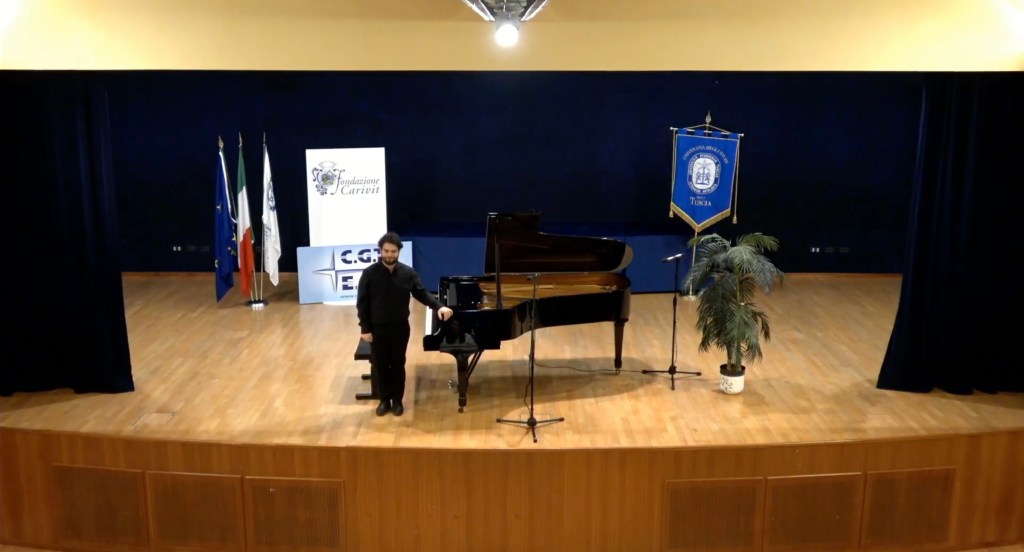
The early Clementi sonata he played with brilliance and clarity bringing a subtle beauty to the ‘Menuetto’ where the melodic line was allowed to sing with simplicity and ease.The sumptuous tenor voice answered by an ever more poignant melodic outpouring. A ‘Prestissimo’ of meanderings of brilliance. This early sonata was played with the grace and charm of its age and just needed that clockwork precision of which Michelangeli was such a master.
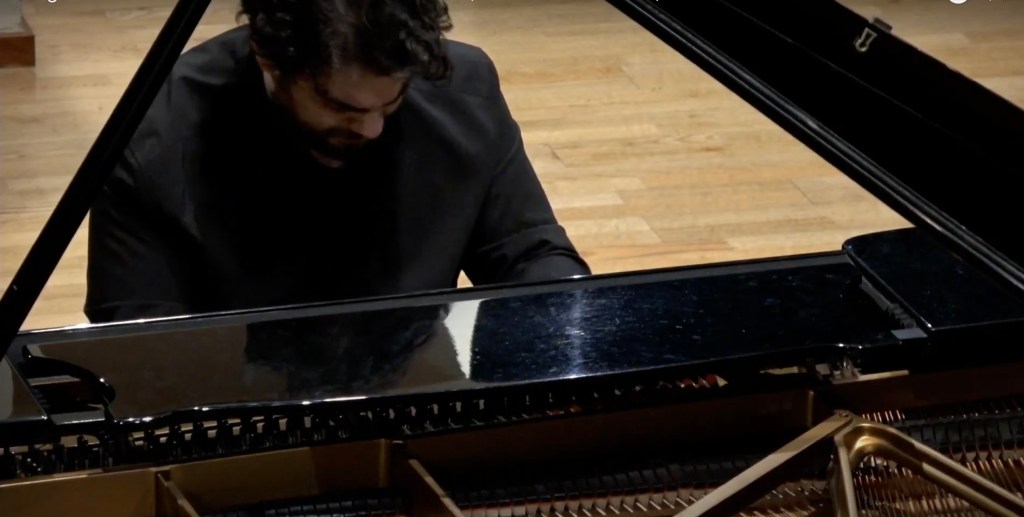
Four Nocturnes by Chopin were played with a freedom and beautiful Bel Canto from a different age.The Golden Age of playing of Lhevine,Rosenthal ,Godowsky, who were real magicians, who with a subtle use of balance and the pedals and sometimes unsynchronised hands, could give the effect that the piano could sing as mellifluously as any singer. It is an allusion because the piano is simply a box of hammers and strings but with subtle artistry it can appear to produce the same legato as the human voice. Giuliano obviously loves the piano and it was this same love that allowed him to make the piano sing with subtle heartfelt rubatos and a kaleidoscope of sounds. But it was Chopin who used to explain to his students that rubato could be likened to a tree with its roots so firmly planted in the ground that the branches were free to move and sway freely in the wind.
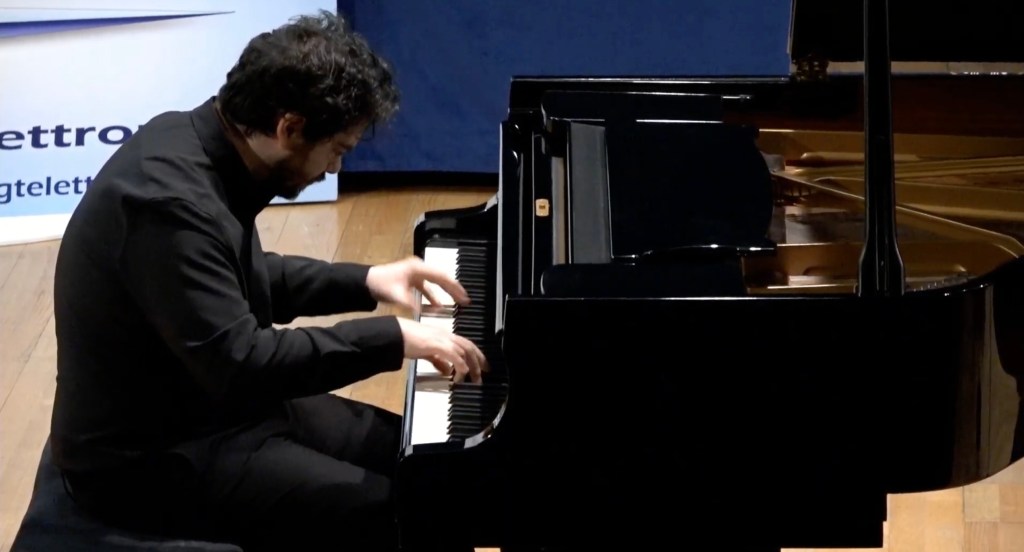
The first of Chopin’s twenty one nocturnes ,op 9 n. 1, was played with great beauty and the central episode with subtle whispered sounds, but the left hand was rather too agitated and did not quite created the base of simplicity that Chopin described to his students. Whilst being very beautiful with a ravishing cantabile sound it could have been played with more simplicity and the left hand allowed to unfold more naturally.The famous nocturne in E flat op 9 n. 2, that followed was of beguiling beauty and luminosity. A freedom sometimes at the limit of good taste but was played with such genuine and touching sentiment that we could overlook Giuliano’s youthful love for something so beautiful. There was a beautiful sense of balance in the C sharp minor Nocturne op posth where Giuliano allowed the music to sing with simplicity and subtle beauty. Chopin’s cross rhythms were played with aristocratic weight and the ending was of haunting beauty. The C minor Nocturne op posth was again played with old style rubato that rather held up the natural flow of this deeply bitter sweet outpouring of nostalgia. Hats off to Giuliano for presenting just nocturnes in his recital to show us what miniature masterpieces they really are, usually only played with other of Chopin’s works and rarely allowed to stand on their own as Chopin’s homage to the magic world inspired by Bellini.
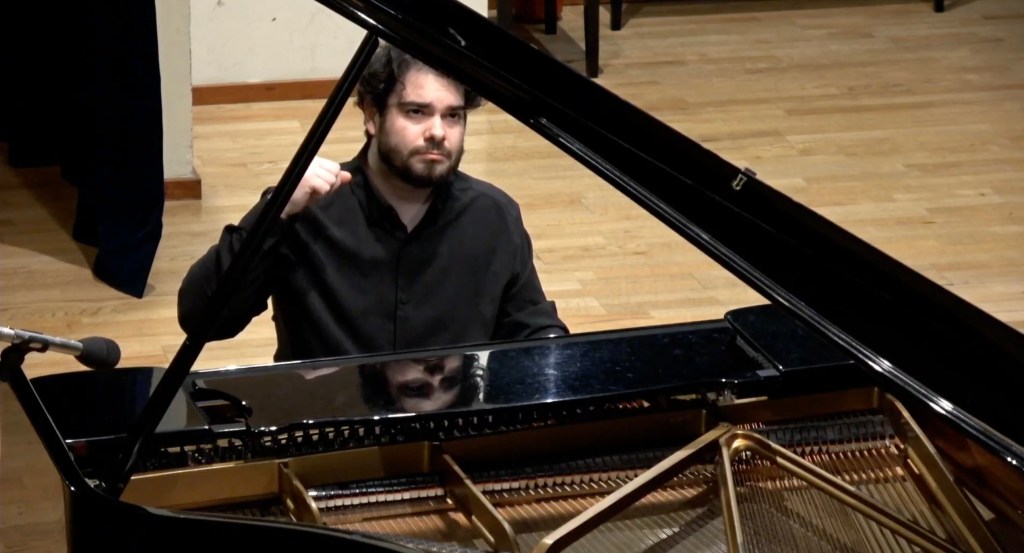
It was in Liszt’s Second Ballade that all Giuliano’s gifts came together. It was played with great fantasy and a freedom with a real sense of the drama that was being enacted.There was the luminosity and almost prayer like comments of the Angels contrasting with the sumptuous tenor melody that is then transformed in so many different transcendental ways. Giuliano’s youthful passion transforming Liszt’s notes into a vivid tone poem of great emotional impact.
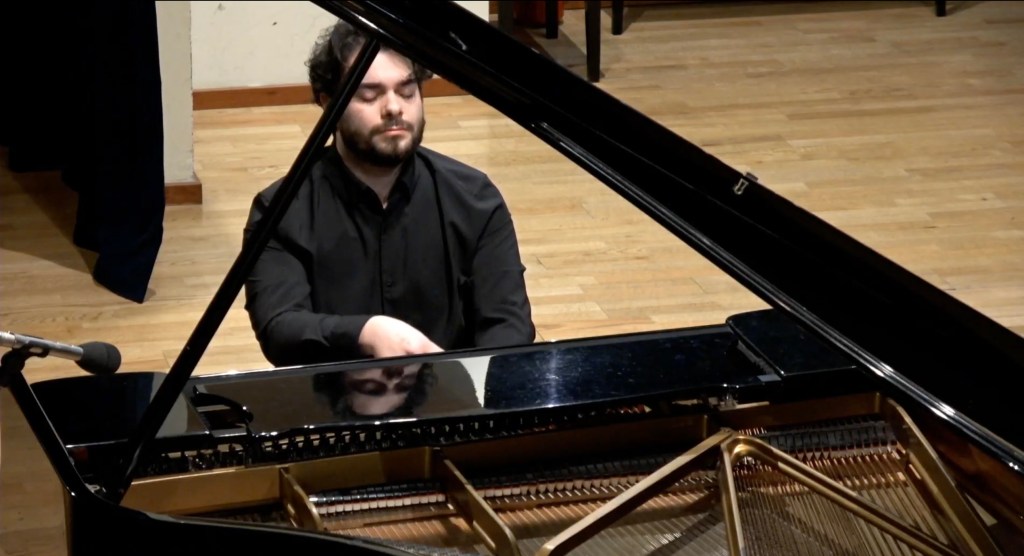
This was followed by Debussy’s hauntingly beautiful ‘footsteps in the snow.’ Whispered sounds of great fluidity and now the simplicity that his romantic soul had denied him before. There was also a burning intensity behind the seemingly sparse sounds that Giuliano was playing with extreme delicacy. The last work on the programme was ‘Le Collines d’Anacapri’ that brought us all the radiance and joyous Neapolitan confusion, with playing of subtle colours and dynamic drive, and the final brilliant notes played with chiselled ice cold perfection.
An encore of Rachmaninov’s torrent of romantic sounds with the Moment Musicaux op 16 n. 4. Giuliano threw himself fearlessly into the fray as Rachmaninov’s romantic soul was laid bare with red hot passion and considerable technical prowess.
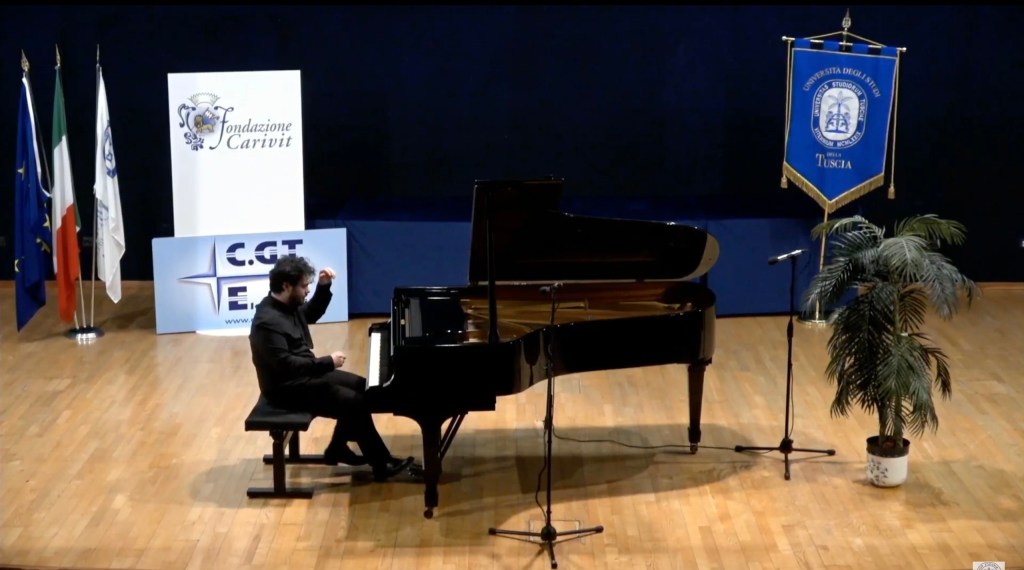
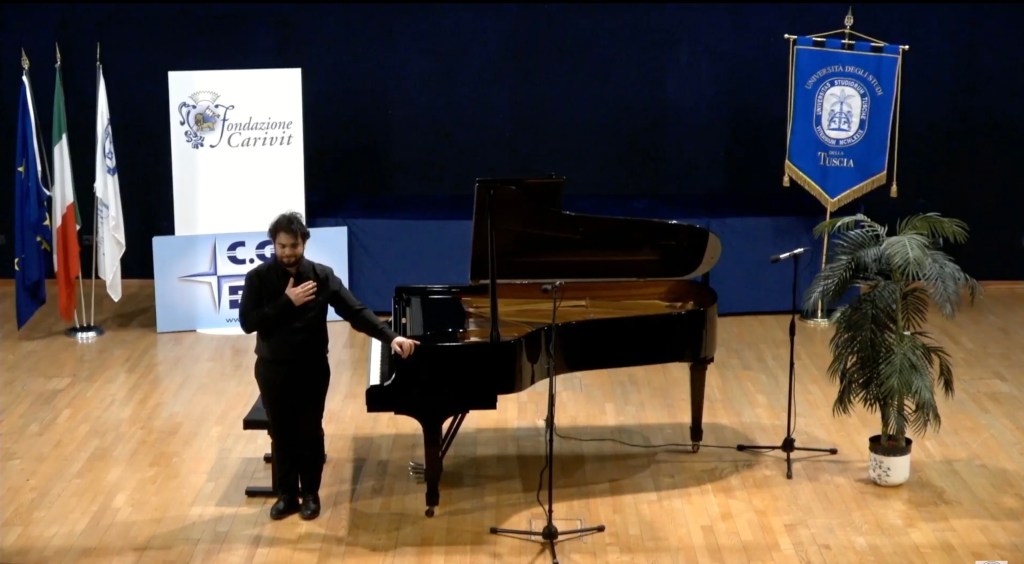
Nicolò Giuliano Tuccia è considerato da Leslie Howard uno dei musicisti più sensibili e interessanti della sua generazione.
Nato nel 1999, comincia giovanissimo lo studio del pianoforte sotto la guida del Maestro Giancarlo Peroni. Si laurea brillantemente al Conservatorio “B. Maderna” di Cesena nel 2022 risultando vincitore di una borsa studio offerta dal Rotary Club. Attualmente frequenta l’Accademia Pianistica “Incontri col maestro” di Imola, sotto la guida dei maestri André Gallo, Alessandro Taverna e Igor Roma e il Master di secondo livello al Conservatorio “Francesco Venezze” di Rovigo con i maestri Federico Nicoletta e Roberto Prosseda.
Ha inoltre perfezionato i suoi studi in summer festival e masterclass, seminari e convegni con maestri di chiara fama internazionale quali: Edith, Fischer, Avedis Kouyoumdjian, Riccardo
Risaliti e Sergio Tiempo. Nicolò Giuliano Tuccia vanta oltre 50 premi in importanti concorsi pianistici nazionali ed internazionali quali “Concorso pianistico internazionale Sergio Fiorentino” (Menzione d’Onore), “Concorso pianistico Elevato” (Menzione d’onore), “Concorso pianistico internazionale di Vigo” (Semifinalista), Map concorso musicale internazionale a Los Angeles (primo premio), “Kings Peak International Music Competition” (secondo premio e premio speciale), concorso musicale internazionale di Londra (menzione speciale), Nota Music (duo cameristico) premio finalista e
molti altri. Nicolò Giuliano Tuccia ha suonato in sale prestigiose in tutta Europa e in Italia.
Tra i più importanti ricordiamo il “Teatro Galli” di Rimini”, il, il “Teatro Alighieri” di Ravenna, il “Teatro Atti” di Rimini, il “Foyer Respighi” del Teatro Comunale di Bologna, la Sala Corelli del “Teatro Alighieri di Ravenna”, “L’Oratorio San Rocco” di Bologna, il “Teatro Masini di
Faenza, la “Sala della Prefettura” di Forlì, il “Teatro Talia” di Gualdo Tadino, il “Cinema Teatro Don Bosco” di Perugia, il “Circolo Ufficiali” di Bologna, il “Palazzo Raffaello” di Urbino, la “Villa Carcano” di Lecco, il “Convitto Vittorio Locchi” di Roma, la “Main concert Hall” del
Conservatorio di Musica di Porto, l’Auditorium “Martin Codax” di Vigo, la “Salon Bank” di Vienna, la “Remonstrantse Kerk” di Alkmaar, la “St. Marie Perivale Church” di Londra, la “Main Concert Hall” dell’ Università di Semiotica Musicale di Helsinki, la “Main Concert Hall” della Galleria d’Arte del M.K. ciurlionis di Kaunas, la “Sala Concerti” dell’Auditorium Telki, la “Sala Eutherpe” di León, la “Cattedrale di Sant’Agata” della Badia di Catania, l’Auditorium” di Villa Rina di Padova”, la “Steinway Hall” di Londra, la “Casa della Musica” di Trieste, “Museo di Casa Martelli” di Firenze, il Teatro Fabbrica delle Candele di Forlì, Casa Menotti di Spoleto ,la “Beethoven Chamber Music Hall” di Bonn, La Grossersaal Scholss di Bergisch Gladbach, Colonia, la Gartensaal Schloss di Wolfsburg e la Concert Hall dell’IIC di Berlino, la Stanza della Musica a Roma per Rai Radio 3 e la Galleria Nazionale di Palazzo Spinola a Genova.
Sono diversi i festival a cui Nicolò ha preso parte. Tra i tanti ricordiamo Festival “Conoscere la Musica” a Bologna, “Misano Piano Festival” a Misano Adriatico, “Ravenna Festival”, Festival di ErConcerti “Le soirees Musicaux” in Emilia-Romagna, Festival “Le Note Tra i Calanchi” a Bagnoregio, Festival “Clivis Umbria”, “Kaunas Piano Festival” in Lituania, “Altalena Music Fest” in Ungheria, Festival della “Società Musicale” a Helsinki, Finlandia, Festival “HIMF in Olanda,
Festival “Roma Tre orchestra”, Festival autunnale della Chiesa di St. ’Perivale “ per il Keyboard Trust di Londra, il Festival della “Salon de la musique”, il “Festival Bellini” di Catania, il Larius
International Piano Fest di Lecco, il Festival del “Concorso Pianistico Elevato” a Bonn, Vienna e Oporto, il festival degli “Amici della musica di Casa Martelli” per l’associazione il Suono Giovane di Firenze, festival dell’Associazione Mozart Italia sede di Trieste festival dell’ Associazione Mozart Italia sede di Lecce, “Scriabin Concert Series” di Grosseto e per gli “Amici del Teatro Carlo Felice e del Conservatorio Niccolò Paganini di Genova”. Nicolò Giuliano ha suonato con l’Orchestra da Camera del Conservatorio Bruno Maderna di
Cesena, “Circle Simphony Orchestra” di Padova, l’Orchestra Sinfonica “Rimini Classica”

https://christopheraxworthymusiccommentary.com/2024/12/25/point-and-counterpoint-2024-a-personal-view-by-christopher-axworthy/
Nicolò Giuliano Tuccia ‘sensibility and mastery ignite the Harold Acton Library’ including a long distance review.
https://christopheraxworthymusiccommentary.com/2024/10/12/nicolo-giuliano-tuccia-sensibility-and-mastery-ignite-the-harold-acton-library/
Diamonds are forever at Steinways – Giuliano Tuccia for the Keyboard Trust
https://christopheraxworthymusiccommentary.com/2024/02/08/diamonds-are-forever-at-steinways-giuliano-tuccia-for-the-keyboard-trust/
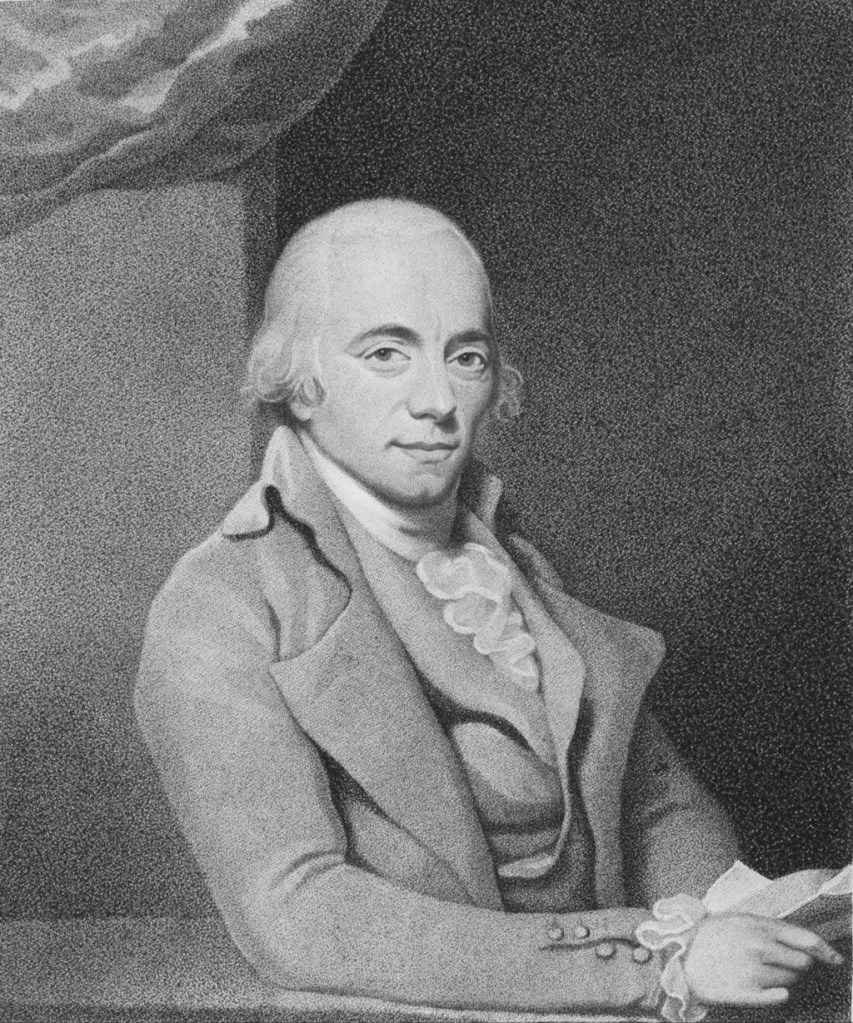
Encouraged to study music by his father, he was sponsored as a young composer by Sir Peter Beckford who took him to England to advance his studies. Later, he toured Europe numerous times from his long-standing base in London. It was on one of these occasions, in 1781, that he engaged in a piano competition with Wolfgang Amadeus Mozart. As a composer of classical piano sonatas, Clementi was among the first to create keyboard works expressly for the capabilities of the piano. He has been called “Father of the Piano”
Of Clementi’s playing in his youth, Moscheles wrote that it was “marked by a most beautiful legato, a supple touch in lively passages, and a most unfailing technique.” Mozart may be said to have closed the old—and Clementi to have founded the newer—school of technique on the piano.
Clementi composed almost 110 piano sonatas. Some of the earlier and easier ones were later classified as sonatinasafter the success of his Sonatinas Op. 36.
Muzio Clementi was born four years before Mozart and outlived Beethoven by five. Thus this Italian pianist and composer helped fashion the entire Classical era in music. However, his pedagogical tour de force, the “Gradus ad parnassum”, has tended to negatively influence the esteem he enjoyed as an artist. His predilection for the finer points of part-writing and contrapuntal art blend here with a formal and dignified classicism. “Decisive and manly,” “most profound sentiment and delicacy,” and “imaginative humour” – thus does Beethoven’s contemporary Carl Czerny accurately describe the three movements of this expressive sonata. No autograph manuscript has survived and the first edition of the three sonatas op. 10, published in Vienna in 1798, forms the sole basis for the Urtext edition
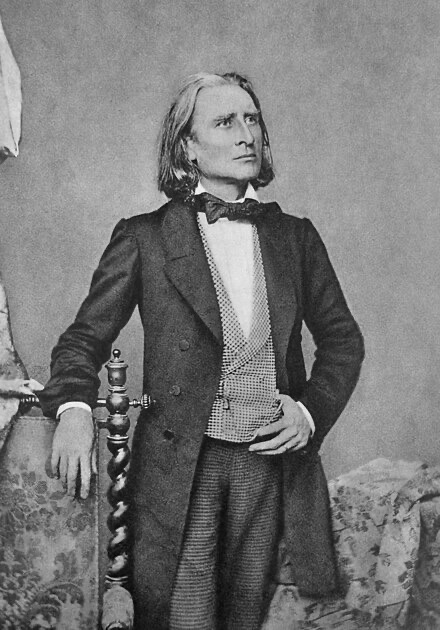
22 October 1811,Doborján,Hungary 31 July 1886 (aged 74) Bayreuth,Bavaria
The Ballade No. 2 in B minor, S. 171, was written in 1853.
Claudio Arrau , who studied under Liszt’s disciple Martin Krause, maintained that the Ballade was based on the Greek myth of Hero and Leander, with the chromatic ostinati representing the sea: “You really can perceive how the journey turns more and more difficult each time. In the fourth night he drowns. Next, the last pages are a transfiguration”.
The ballade is based largely on two themes: a broad opening melody underpinned by menacing chromatic rumbles in the lower register of the keyboard, and a luminous ensuing chordal meditation. These themes are repeated a half-step lower; then march-like triplet-rhythms unleash a flood of virtuosity. Eventually, Liszt transforms the opening melody into a rocking major-key cantabile and reiterates this with ever-more grandiose exultation. The luminous chords provide a contemplative close.Liszt wrote his two Ballades in 1845–49 and 1853 during a time of personal turmoil. The successful virtuoso increasingly saw himself as a composer who strove after formal clarity, as shown by the B minor sonata that was also composed in 1853. When Liszt began work on the first Ballade, he had just separated from his mistress of many years, Marie Comtesse d’Agoult. He called the first sketches for the work Dernières Illusions. A better-known work is the second Ballade in B minor, with whose ending he struggled (the two fortissimo endings in Liszt’s autograph have been published for the first time in the appendix to the Henle edition). It has been linked with the story of Hero and Leander, but it is more generally accepted to have been inspired by Gottfried Bürger’s ballad Lenore. Sacheverell Sitwell found in the work ‘great happenings on an epic scale, barbarian invasions, cities in flames—tragedies of public, rather than private, import’. Composed in the spring of 1853, shortly after the completion of the Sonata, the Second Ballade is a continuation of Liszt’s thoughts in the key of B minor, and similarly explores subtle methods of thematic transformation to achieve a range of evocative moods, bonded by their motivic coherence.
 ChristopherAxworthy-MusicCommentary