January 21, 2025 6:30 PM
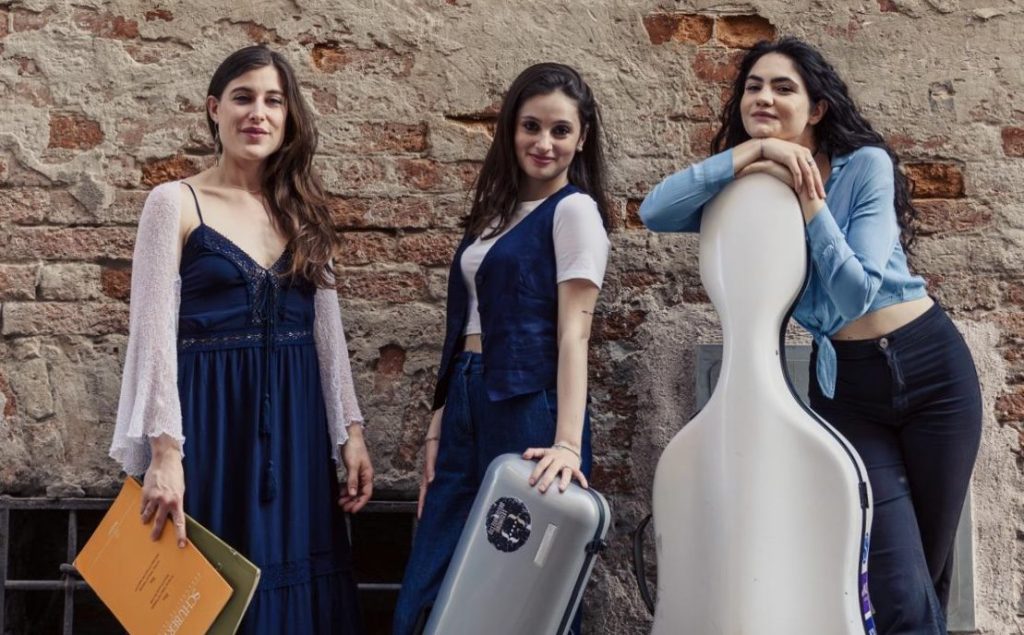
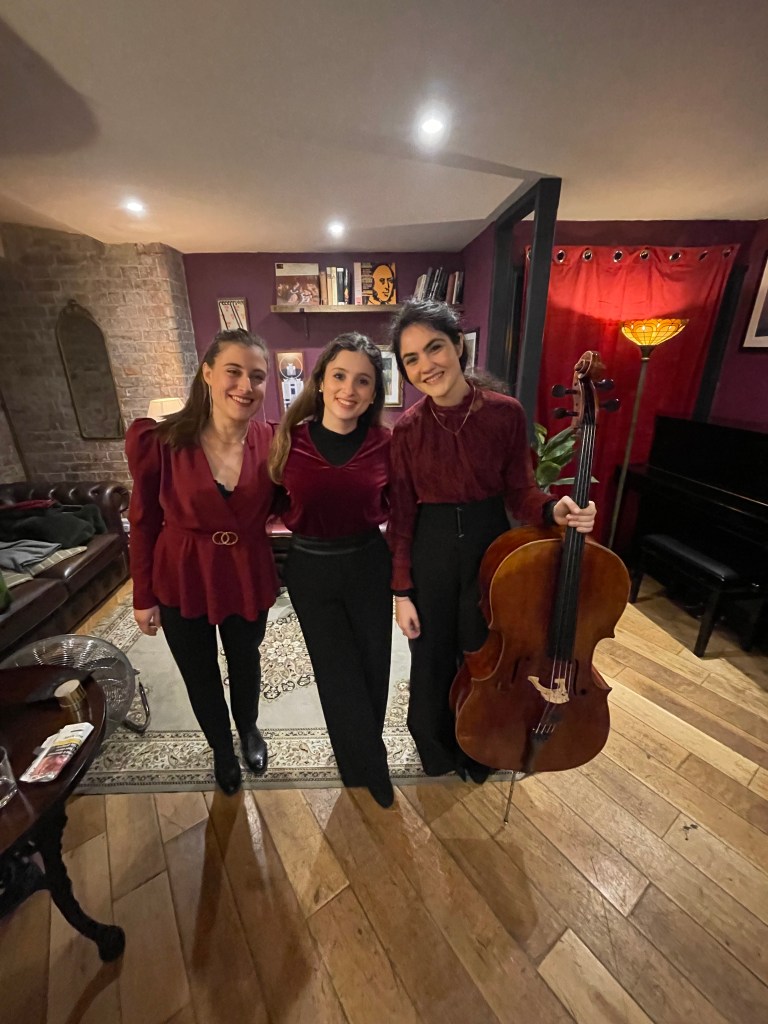
The London debut of the award-winning Italian trio featured Schumann’s stormy first piano trio and Fanny Mendelssohn’s, rarely heard, only work for the ensemble.
The Trio Hérmes was selected by the Fondazione Accademia Musicale Chigiana di Siena to be part in the Giovani Talenti Musicali Italiani nel Mondo project, an initiative established in collaboration with Ministero degli Affari Esteri e della Cooperazione Internazionale and CIDIM – Comitato Nazionale Italiano Musica.
Also within the Chigiana Musical Academy, the Trio received the Giovanna Maniezzo Award 2024, granted to them for their outstanding artistic qualities, promotion, and initiative within the contemporary musical scene.The ensemble has received the prestigious recognition of “Ensemble of the Year 2023” instituted by Le Dimore del Quartetto, being selected from over 92 ensembles from the best chamber music academies in Europe, and awarded for their rapid and consistent artistic and professional rise, thus receiving a scholarship and engagements at significant seasons and festivals.
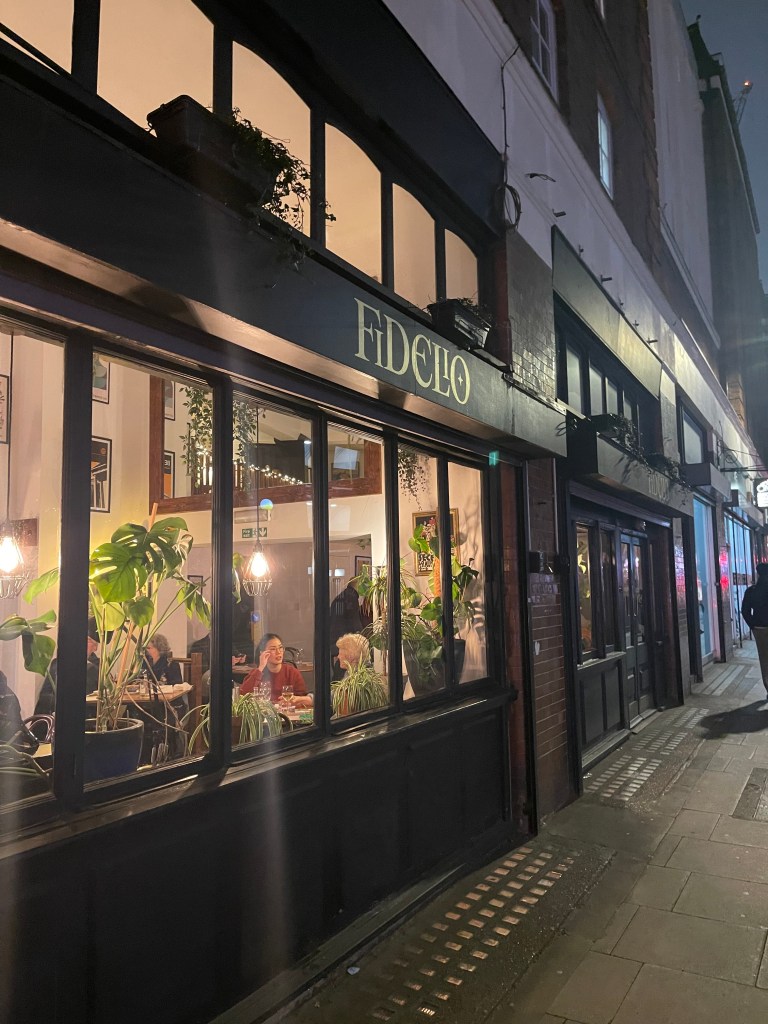
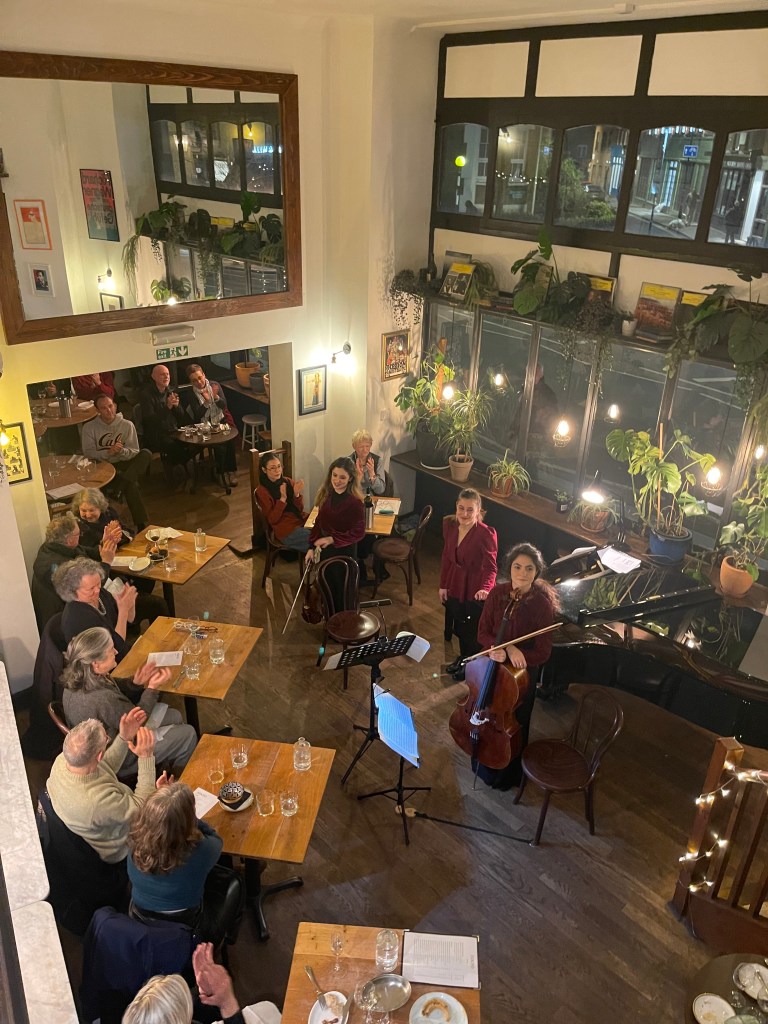
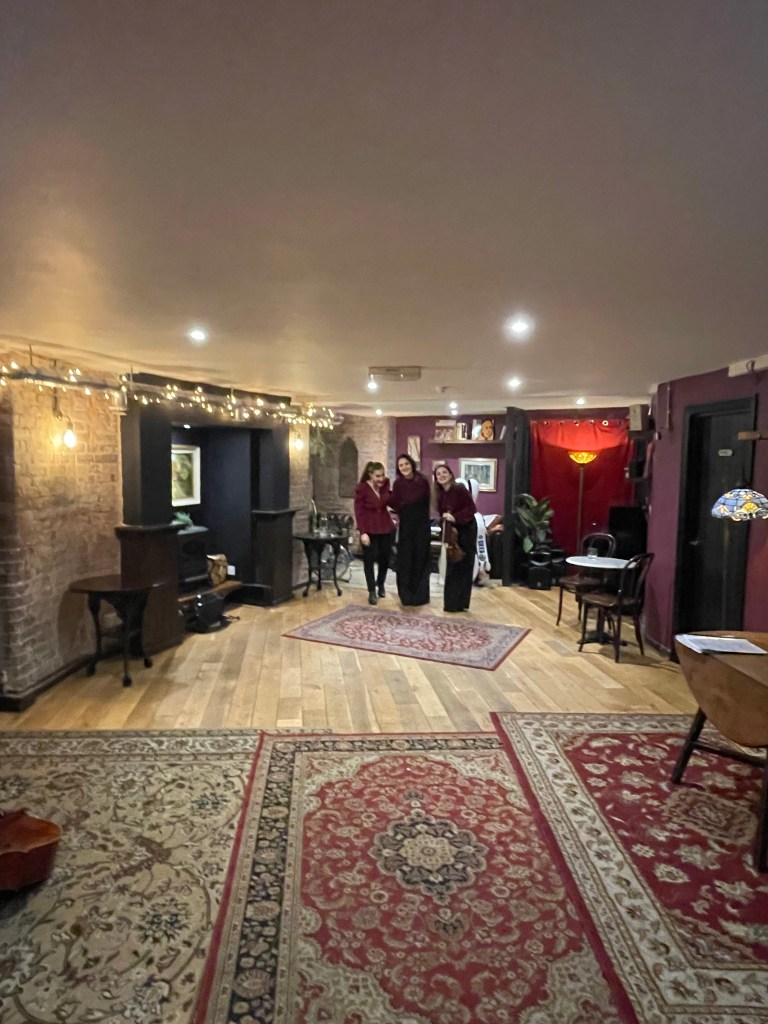
The superb Hermes Trio were making their London debut in the refined atmosphere of Fidelio.
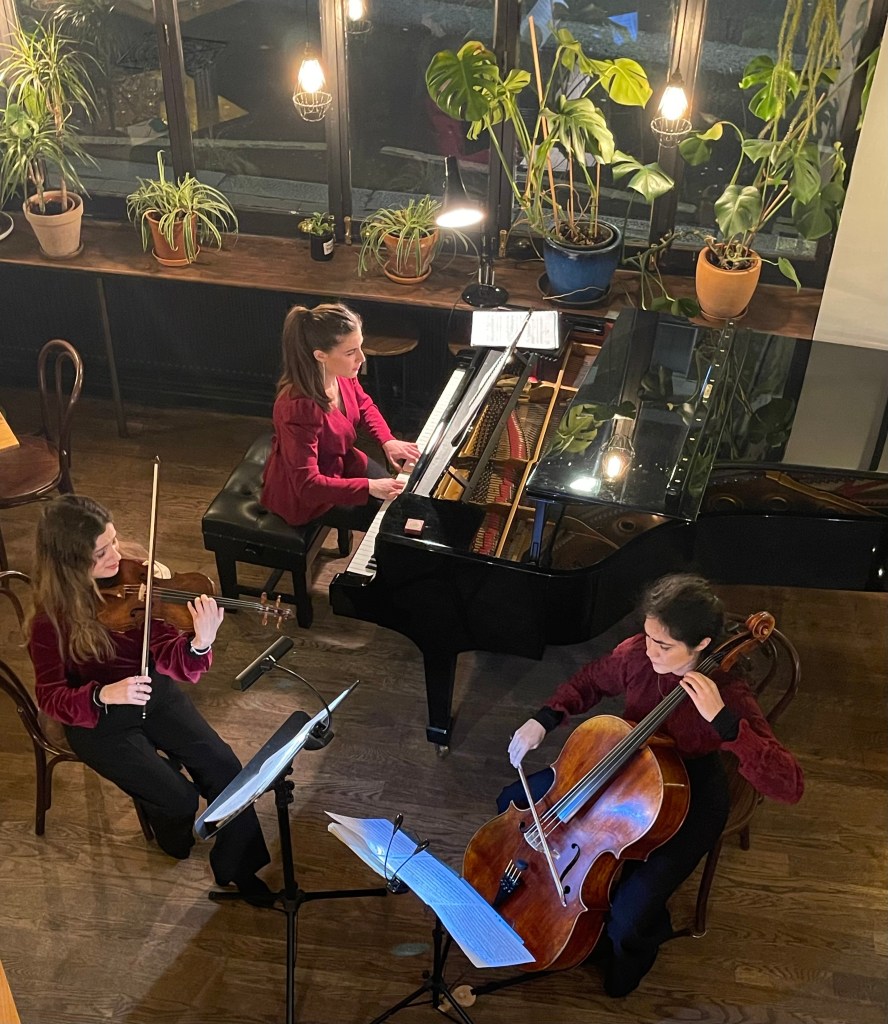
Having heard them last in the vast space of the President’s Palace in Rome, with a concert recorded live for the radio, it was refreshing to see these three young ladies in a more intimate space where their searing passion and musicianship could be savoured to the full.
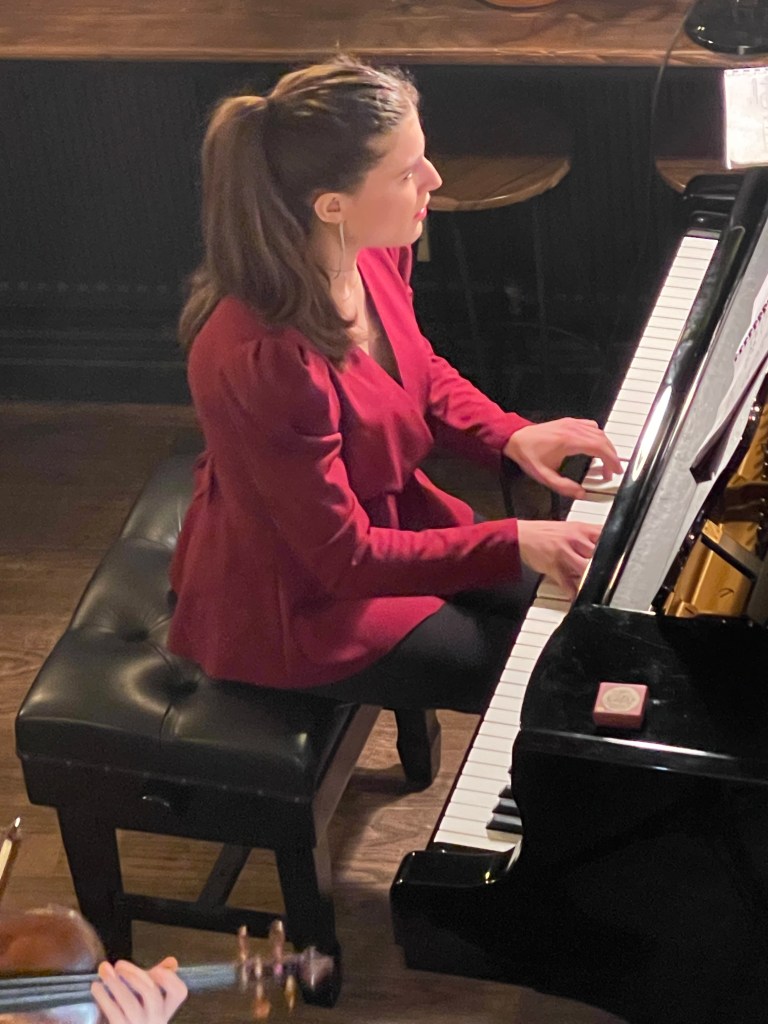
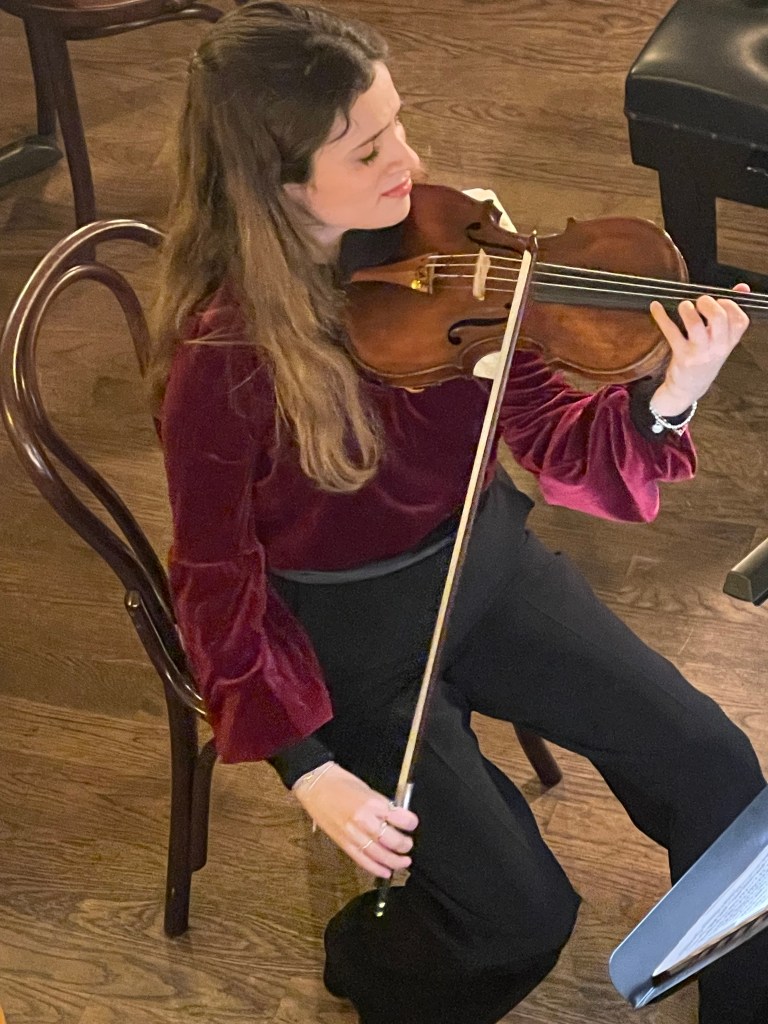
The only trio by Fanny Mendelssohn, the sister of Queen Victorias’ favourite composer ,Felix, was played with superb ensemble and dynamic conviction showing that both the Mendelssohn’s were tarred with the genius of their epoque. A passionate outpouring of searing intensity with the cello answered by the violin and consoled by the piano.Washes of notes from the piano where Fanny was obviously a master pianist like her brother and where then technical demands were superbly played by Marianna Pulsoni.The mellifluous Andante espressivo did not quite have the same memorable beauty as from her brothers pen. Leading into the ”Lied’ , that was a real ‘song without words’ with the beauty and eloquence of its time. Bitter sweet beauty, played with superb ensemble as the instruments were allowed to commune so eloquently together.A solo piano cadenza opened the ‘Allegretto moderato’ gradually joined by the sumptuous sounds of the cello and violin in a romantic outpouring of passion and drive.
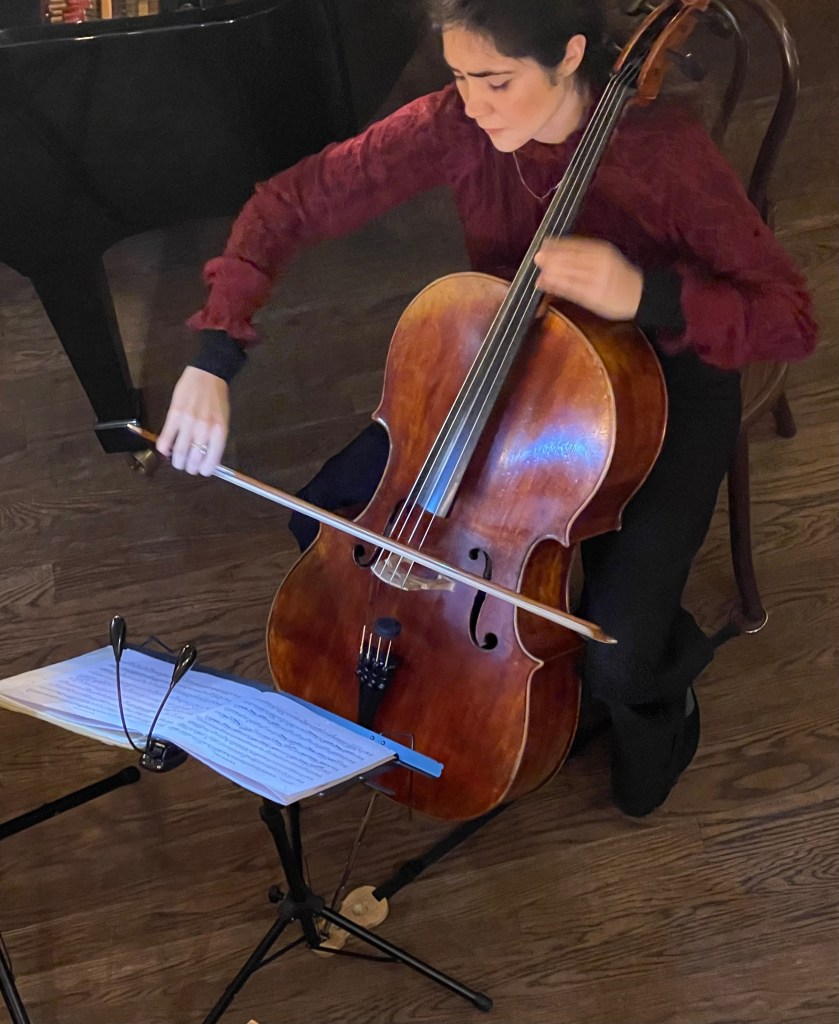
Paired with the Trio by Schumann in the same key of D minor that was played with the superb ensemble and technical mastery bringing this luxurious hors d’oeuvres to a sumptuous end. A first movement of romantic sweep and searing mellifluous intensity was followed by the excitement and exhilaration of the ‘Lebhaft’.It was played with superb ensemble and an hypnotic rhythmic drive. A beautiful solo for piano and violin opened the ‘Langsam’ with long languid lines where the cello and violin entwined their soulful playing with ravishing intensity.The dynamic drive and total conviction of the ‘Mit Feuer’ brought this well known masterpiece to an exciting end with our three young ladies playing with ever more passion and drive.
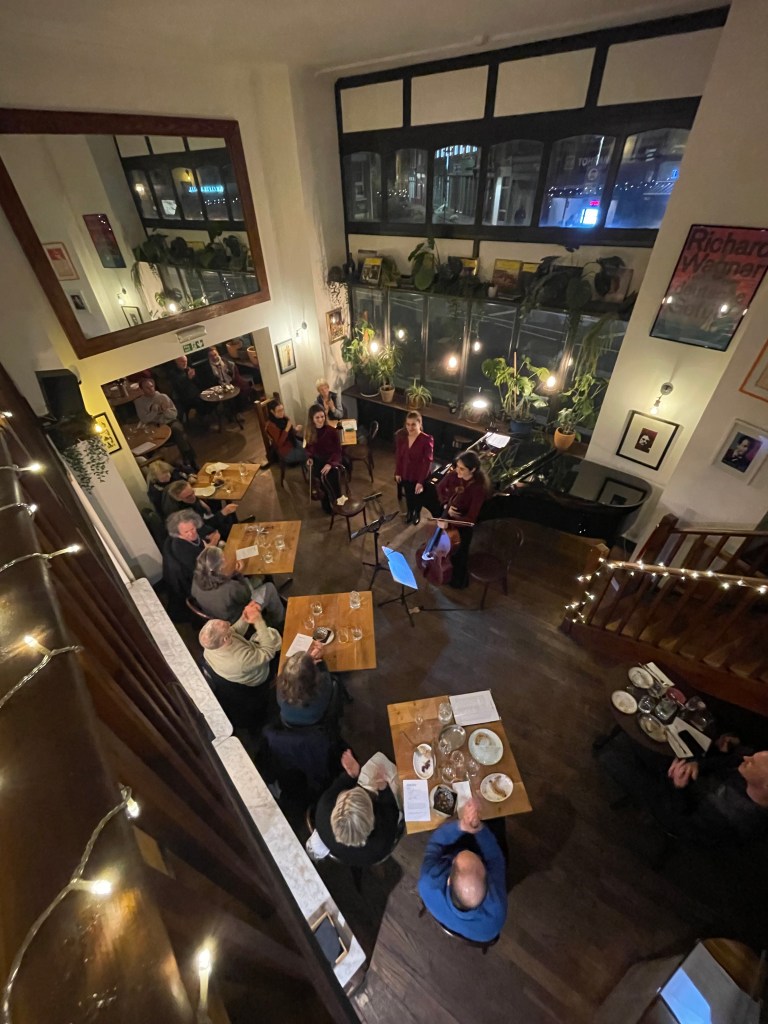
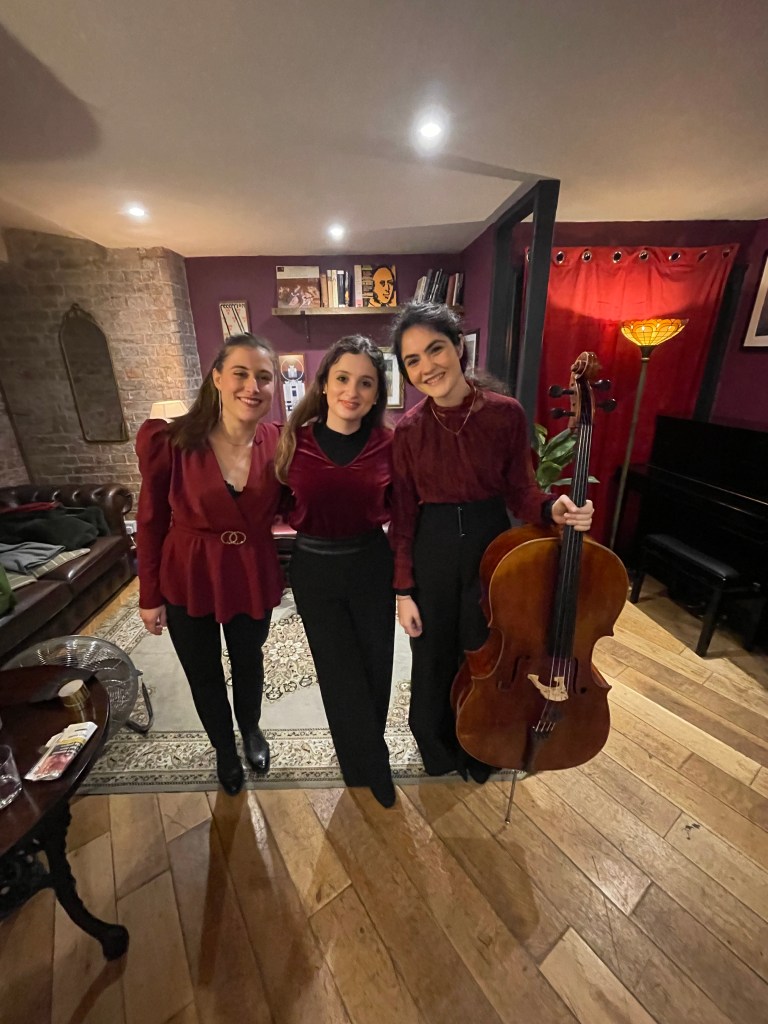
Just one short morsel added by great demand as an encore :‘Sguardi’ by Domenico Turi, as the air filled with the perfume of the cordon bleu menu that followed .
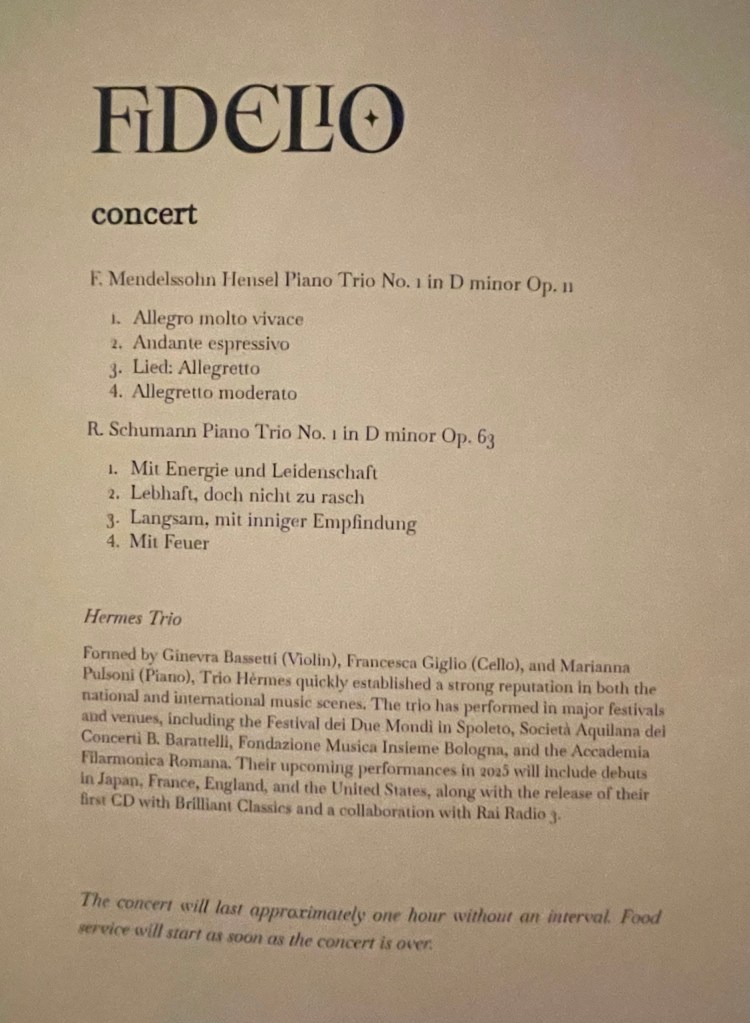
Programme:
F. Mendelssohn Hensel Piano Trio in D minor Op. 11
R. Schumann Piano Trio in D minor No. 1 Op. 63
Another beautiful space, curated with the same love and refined good taste as Raffaello in London, was with Maura Romano in Milan.It was where I first had the opportunity to listen live to the trio in a short cameo appearance at the annual Christmas festivities in the flagship of Steinway & Sons Milan ‘we could have danced all night’ Christmas is a comin’
https://christopheraxworthymusiccommentary.com/2024/12/13/steinway-sons-milan-we-could-have-danced-all-night-christmas-is-a-comin/
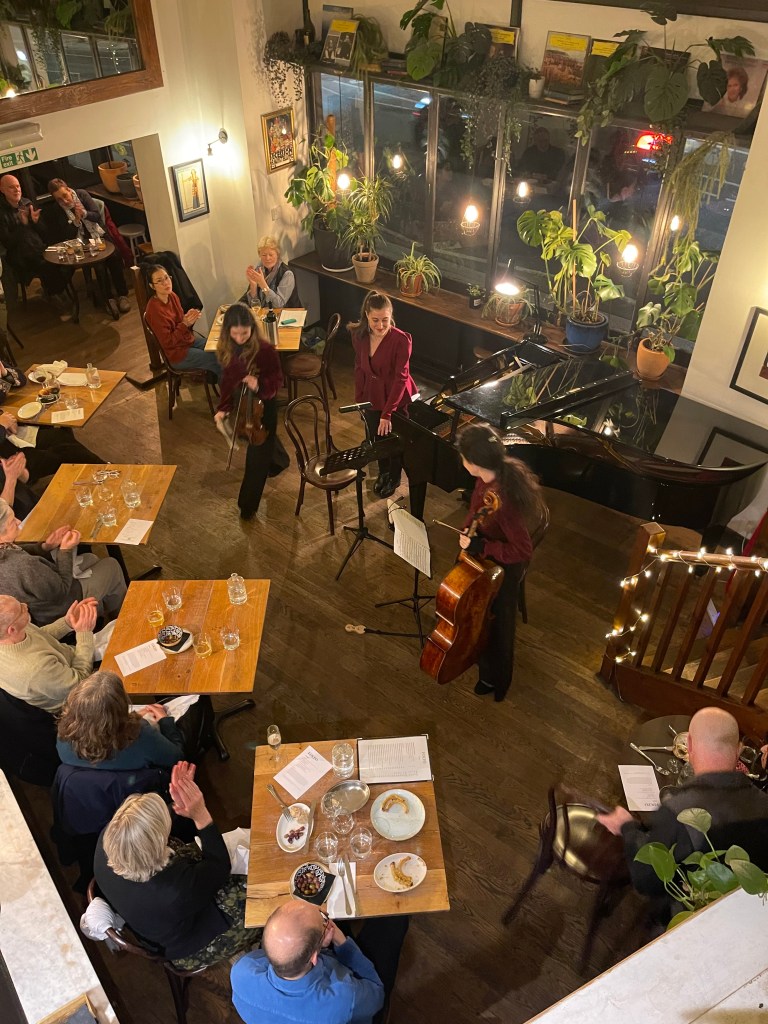
The debut of this superb prizewinning trio in London was in the warm atmosphere of Fidelio. Created by the conductor Raffaello Morales where his love of music is evident in every corner of this refined space opposite the Italian church in the centre of London. Here are a few articles that I have written recently about this new important space in London for intimate music making :
Diabelli is box office at Fidelio where Genius meets Genius -Filippo Gorini and Raffaello Morales breaking barriers
https://christopheraxworthymusiccommentary.com/2024/10/30/diabelli-is-box-office-at-fidelio-where-genius-meets-genius-filippo-gorini-and-raffaello-morales-breaking-barriers/
Angela Hewitt plays Bach and Brahms with the Fidelio Orchestra of Raffaello Morales
https://christopheraxworthymusiccommentary.com/2024/03/10/angela-hewitt-plays-bach-and-brahms-with-the-fidelio-orchestra-of-raffaello-morales/
Jonathan Ferrucci Touching Toccatas and much more besides
https://christopheraxworthymusiccommentary.com/2025/01/17/jonathan-ferrucci-touching-toccatas-and-much-more-besides/
Samson Tsoy: Mastery and restless conviction reaching for the skies with Fidelian courage
https://christopheraxworthymusiccommentary.com/2024/07/18/31232/
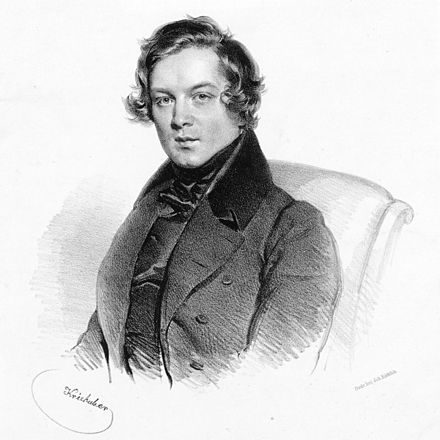
The Piano Trio No. 1 in D minor op 63, by Robert Schumann was written in 1847. It has four movements :
- Mit Energie und Leidenschaft
- Lebhaft, doch nicht zu rasch
- Langsam, mit inniger Empfindung
- Mit Feuer
The first piano trio (first of three works with this title plus the Fantasiestücke Op. 88 for the same forces) is in an intensely romantic style, and is the most celebrated of Schumann’s trios in the modern repertoire. The opening movement begins with a surging theme that is heard in counterpoint initially between the piano’s bass and the violin; the scherzo’s driving dotted rhythm shares its smoothly ascending contour with the flowing trio section. The third movement features a duet between violin and cello, and moves without pause to the heroic tonic-major finale.
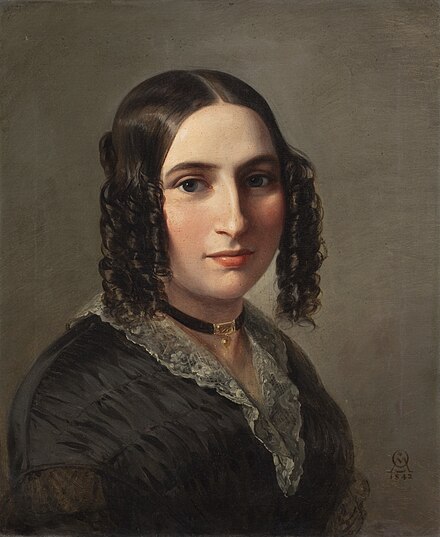
The Piano Trio in D minor op 11 by Fanny Mendelssohn was conceived between 1846 and 1847 as a birthday present for her sister, and posthumously published in 1850, three years after the composer’s death.
The trio is in four movements:
- Allegro molto vivace
- Andante espressivo
- Lied: Allegretto
- Allegretto moderato
In 1847, an anonymous critic in the Neue Berliner Musik Zeitung found in the trio “…broad, sweeping foundations that build themselves up through stormy waves into a marvelous edifice. In this respect the first movement is a masterpiece, and the trio most highly original.” Fanny Mendelssohn shared many of the same advantages of education and travel as her younger brother Felix, and was every bit as obviously talented and precocious a musician as he. But while some highly gifted women did forge public careers as performers, composing – or rather, publishing compositions – was almost exclusively a male domain at the time. Felix’s own attitude seems characteristic: “From my knowledge of Fanny,” he wrote in 1837,“I would say that she has neither inclination nor vocation for authorship. She is too much all that a woman ought to be for this. She regulates her house, and neither thinks of the public nor of the music world, nor even of music at all, until her first duties are fulfilled. Publishing would only disturb her in these, and I cannot say that I approve of it.”
Nonetheless, brother and sister consulted each other regularly about their music, and Felix allowed several of Fanny’s songs to be published under his name (an open secret). Fanny’s husband, the painter Wilhelm Hensel, was even more supportive and Fanny eventually took over the long-running Sunday musicales at the Mendelssohn home in Berlin, where her works were often performed. (Over 460 works survive, mostly songs and solo piano works.)
That was the scene for the premiere of her last major work, the Piano Trio in D minor, written for her younger sister Rebecka’s birthday in 1847 amid great political unrest and food riots. Fanny died a month later after suffering a stroke while rehearsing Felix’ oratorio Die erste Walpurgisnacht for a musicale; Felix followed her six months later from the same cause, which had also claimed both of their parents and their grandfather Moses Mendelssohn.
 ChristopherAxworthy-MusicCommentary