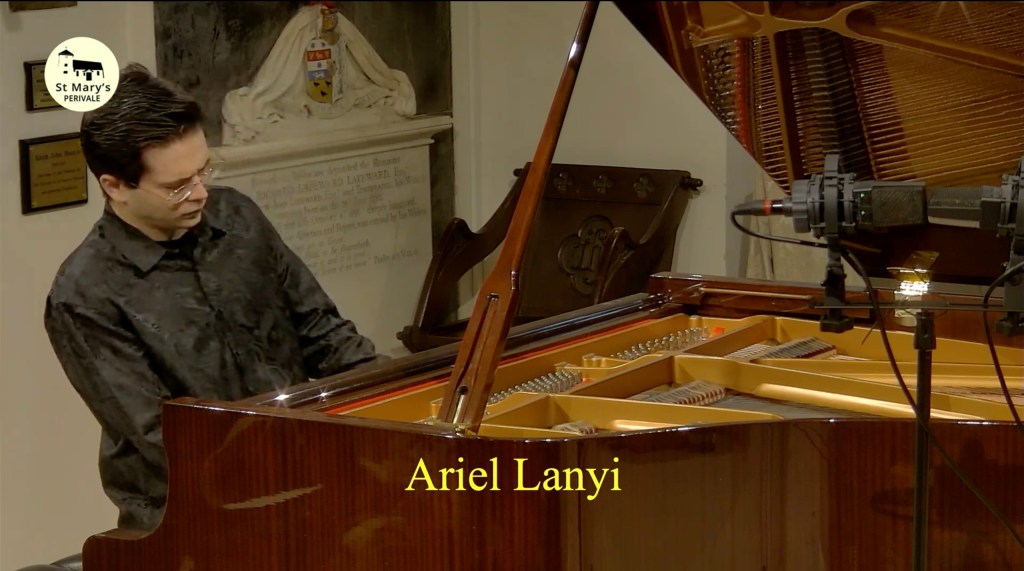
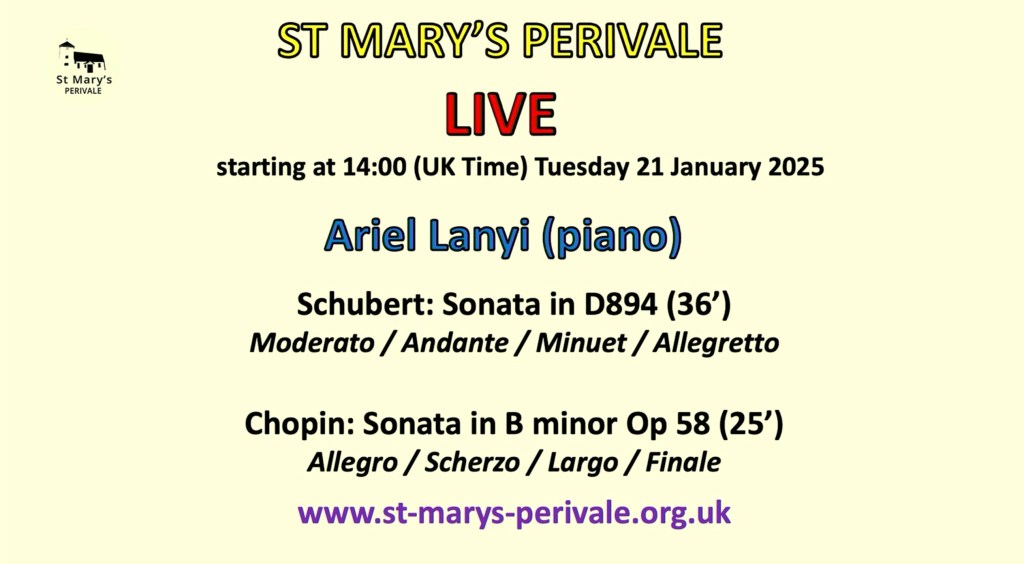
Some extraordinary playing at St Mary’s with a programme of two of the most perfect masterpieces from the piano repertoire.They were played one after the other in an effusion of beauty that was truly miraculous. I have heard Ariel many times during his period of study in London at the Royal Academy with Hamish Milne and Ian Fountain, and have always been impressed by his scrupulous musicianship and selfless dedication to the composers he is serving. On many occasions though I have found this intensity and seriousness compelling but also overpowering.
I have heard him play Schubert on numerous occasions,solo and in piano duet, and have found his playing always masterly but often rather Beethovenian. Beethoven was more driven by the orchestra whereas Schubert by the song which on occasion did come across.
Lanyi-Berecz at the Matthiesen Gallery ‘Notre amitié est invariable’
https://christopheraxworthymusiccommentary.com/2024/11/28/lanyi-berecz-at-the-matthiesen-gallery-notre-amitie-est-invariable/
Today Ariel with this Fantasy Sonata was touched by the Gods and driven by the mellifluous outpouring of song that in Schubert was seemingly endless.
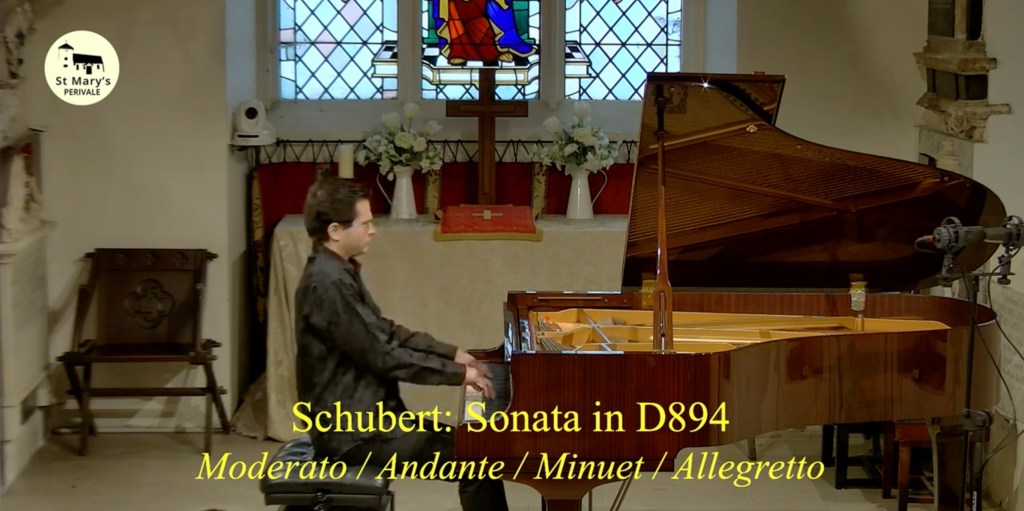
The Schubert G major Sonata opened with Ariel caressing the keys producing etherial sounds of radiance and beauty.There was a wondrous sense of balance within the chords that allowed the melody to sing as never before. Barely touching the keys and after the delicate intricacy of dance that Schubert magically conjures out of the opening heartfelt palpitations, Ariel threw his hands in the air allowing them to return to the keys only to create even more beauty. This time sustained by a gently underlined bass and allowing us to indulge once again in the magic that had filled the air at the opening. Suddenly the minor key and an intense passionate commitment from chords of questioning insistence, where they had been of passive acceptance. Finding paradise again as these demanding chords were allowed to cool down almost to a stand still as the miraculous vision of beauty was once more on the horizon.There is no rallentando in the score but Ariel’s poetic imagination knew instinctively what was in Schubert’s soul at this point. Everything Ariel played in this sonata sang as rarely before, as he even approached the coda on tip toe hardly daring to disturb such a heavenly place.
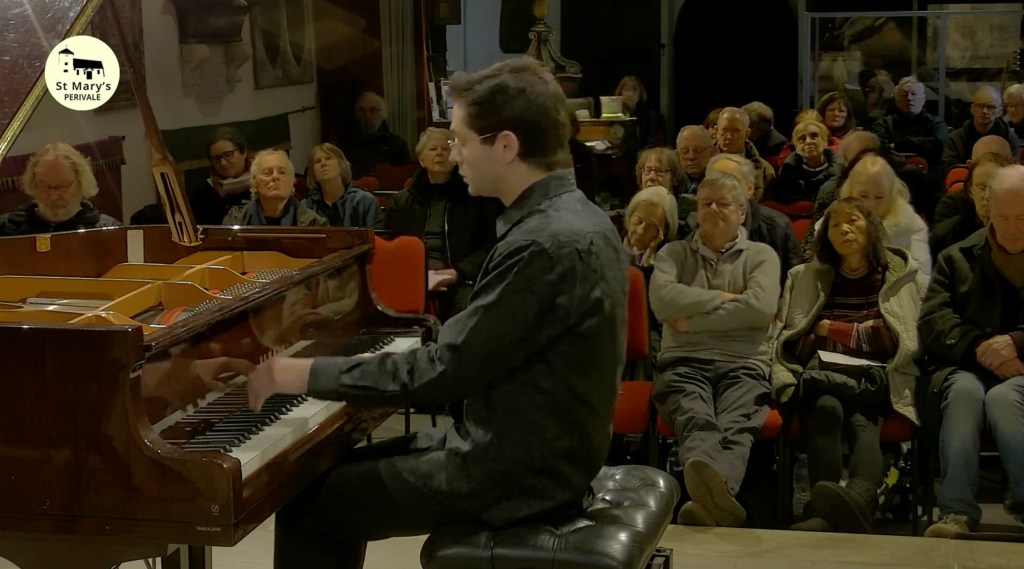
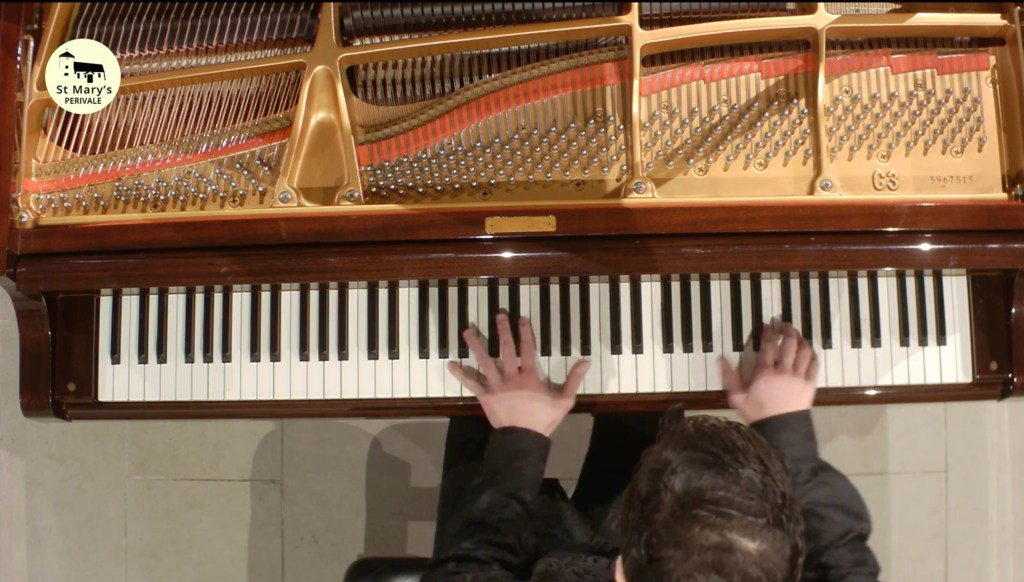
The ‘Andante’ was played with aristocratic beauty even if the opening up beat seemed a little too important. He allowed the music to flow with simplicity and beauty, but there was also great intensity, not of orchestral colour but of the song that was in his heart today. Some beautiful tenor counterpoints gently underlined in the chordal transitions made the etherial balance of the melodic line even more ravishingly beautiful.
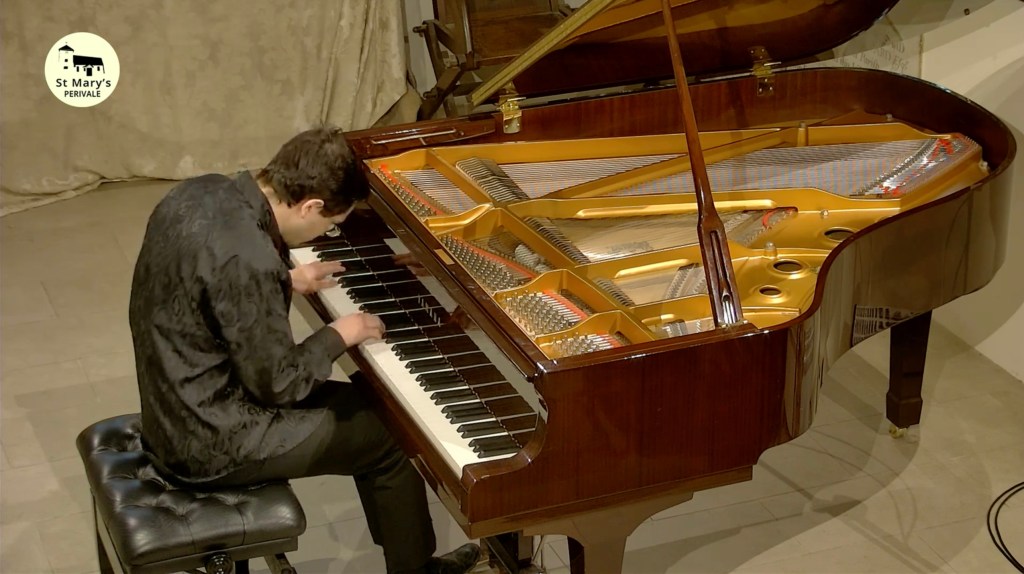
The ‘Menuetto’ opened with Beethovenian vehemence but was here calmed with a beseeching reply and became part of its Forestan and Eusebius character. The ‘Trio’ was of restrained and whispered beauty with a glowing sound of delicacy and desolation.The ‘Allegretto’ was of true pastoral elegance where Ariel seemed to be enjoying the teasing eloquence of Schubert’s mischievous meanderings. Suddenly they were interrupted by one of those melodies that Schubert ,like Mozart, can illuminate a work, out of thin air, with genial magic and wondrous beauty. There was a slight hesitation that Ariel brought each time to the reappearance of the rondo theme, that was like a call to attention in anticipation of what would come next .The final few bars were of pastoral beauty and peace as this miracle was brought to an end with chords that were but reverberations of sound. A performance where the piano was allowed to sing its heart out, almost without bar lines, such was the mastery of Ariel today.
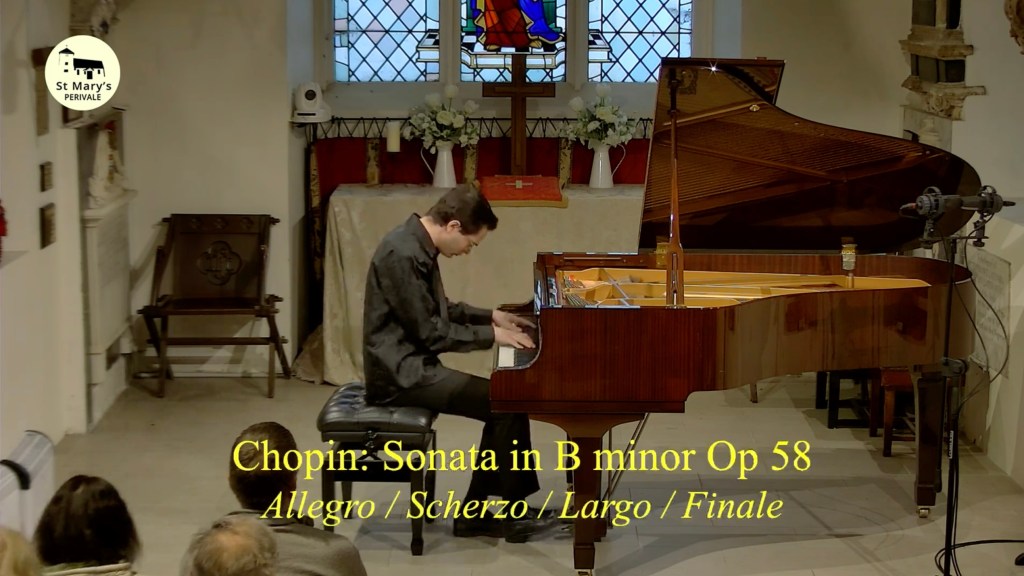
The Chopin B minor Sonata would seem an impossible task after such a monumental performance of Schubert. In Ariel’s hands all is possible as the opening Allegro Maestoso rang out with imperious authority. Ariel gave a sense of architectural shape to a movement that can often seem fragmented, but the slight freedom he gave himself in the Schubert was here in Chopin rather misplaced. Why add a rallentando before the sostenuto of the second subject or slightly delay the last chords of the opening phrases or draw out the embellishment a fraction too long? These are just minute details in what was without doubt a masterly performance where the scrupulous attention to detail and Chopin’s very precise phrasing and dynamic markings were a refreshing reminder of a work that has been so manhandled by so many so called Chopin specialists! Ariel played like the great musician he is, and if he turned corners occasionally with style it was the style of someone who loves the music deeply. Playing the repeat in the first movement ,as he did in the Schubert, as would a Serkin ,Arrau or other great thinking musicians. In Ariel’s hands it all made such musical sense and made the passionate outpouring of the development even more gripping. Chopin in Ariel’s hands today sang with a timelessness and the recapitulation was played with even more beauty with the second subject played as Chopin implies, with more intensity the second time around ( there is no diminuendo as in the exposition ).
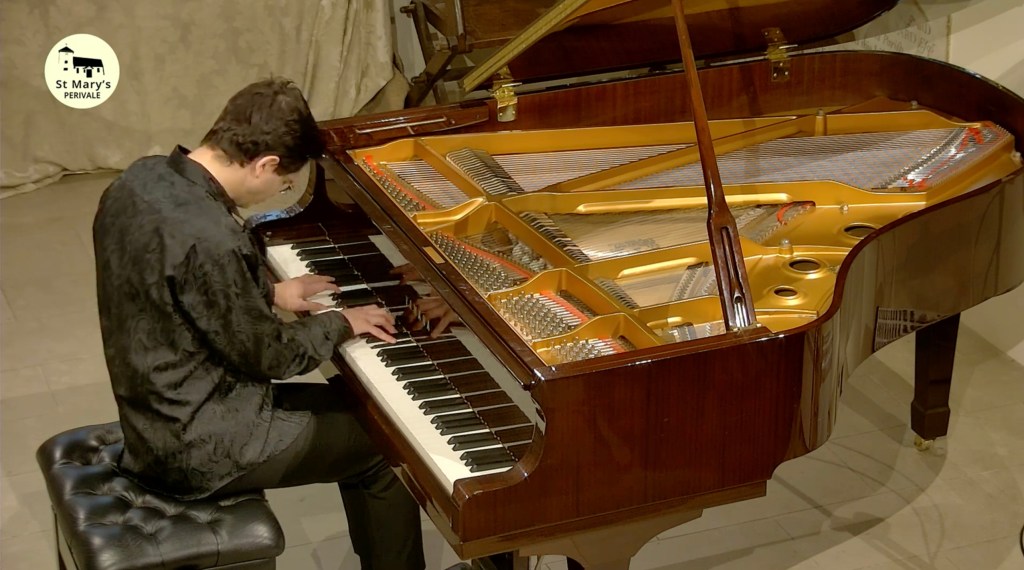
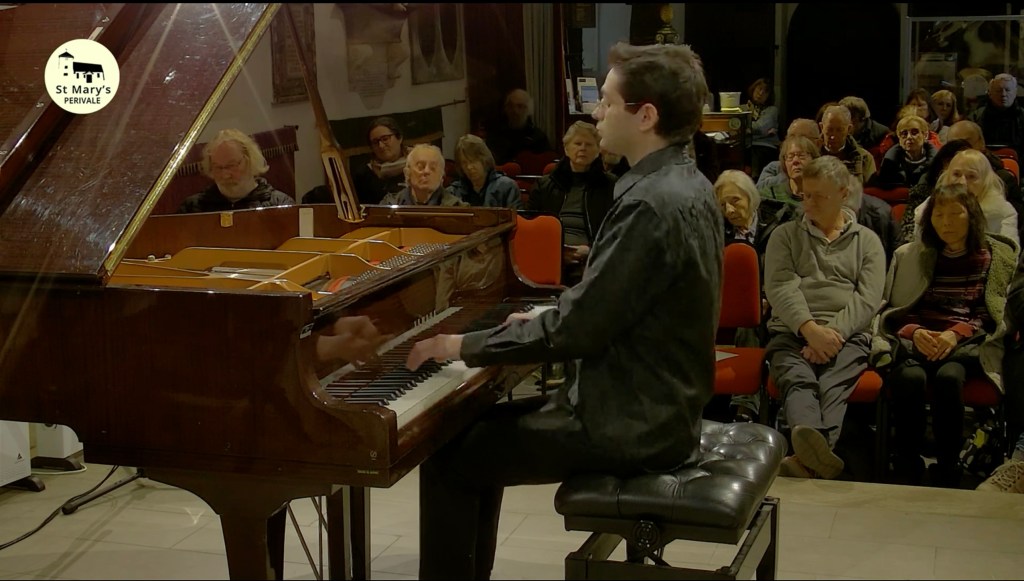
The ‘Scherzo’ was played with a melodic jeux perlé and not just thrown off with easy brilliance. It linked so perfectly with the ‘Trio’ which had a shape and sense of direction with an energy of its own, before the return of the mellifluous ‘Scherzo’.The Imperious opening chords of the Largo were played almost without a break and Chopin even marks a crescendo and no rallentando on the last chords before it is allowed to melt into the ravishing cantabile and the gentle lapping of the barcarolle that accompanies Chopin’s simple bel canto.The ‘sostenuto’ was played with poignant meaning with gentle undulations shaped with masterly understanding and there was magic in the air as the last arpeggiated chord heralded the return of the theme with an even more pronounced rocking accompaniment. There was the beauty and clarity of the left hand in the coda, like a cello gently meandering towards the final farewell which was of two chords placed with the timing of a true master.The Finale :’Presto non tanto’ was given an aristocratic performance of extraordinary control as each time the ‘Rondo’ theme returned there was a slight pause as Ariel dug deeper and deeper sometimes even adding an extra bass note.The final time using Chopin’s own pointed fingering to give even more animal exhilaration and excitement. Igniting the atmosphere until the final explosions of technical bravura and even adding final octaves to give more emphasis to the burning energy generated in this masterly performance.
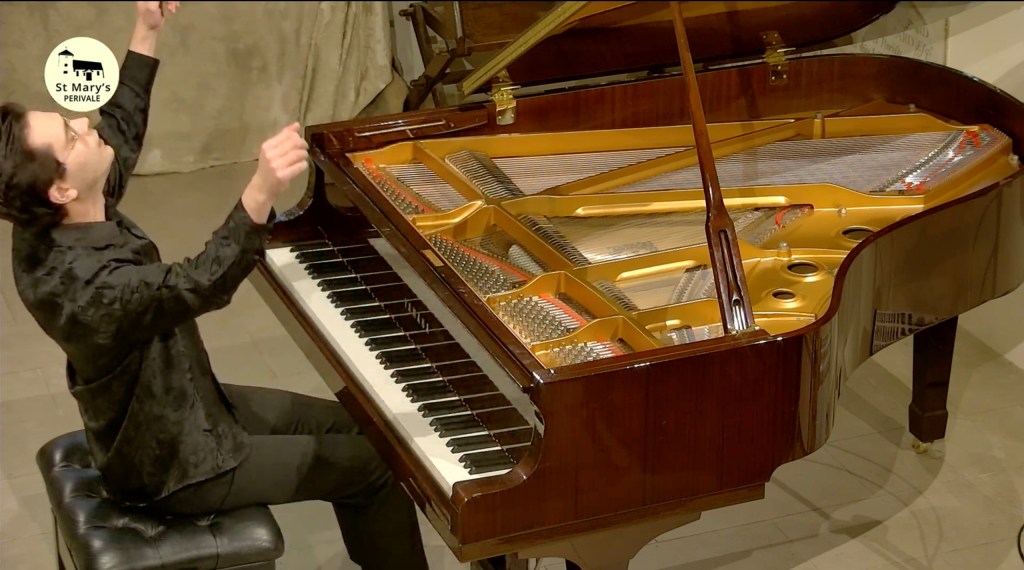
Born in Jerusalem in 1997, Ariel studied with Lea Agmon and Yuval Cohen. Based in London, he recently completed his studies at the Royal Academy of Music with Hamish Milne and Ian Fountain. He has received extensive tuition from eminent artists such as Robert Levin, Murray Perahia, Imogen Cooper, Leif Ove Andsnes, Steven Osborne, and the late Leon Fleisher and Ivan Moravec. Awards include 1st Prize at the 2018 Grand Prix Animato Competition in Paris and 1st Prize in the Dudley International Piano Competition, as well as a finalist award at the Rubinstein Competition.In March 2023, Ariel Lanyi was honoured to receive the Prix Serdang, a Swiss prize awarded by the distinguished Austrian pianist Rudolf Buchbinder. The prize is endowed with CHF 50,000 and is not a competition, but a recognition of a young pianist’s achievements and an investment in their future. Prior to this Ariel won 3rd Prize at the 2021 Leeds International Piano Competition. In the same year he was a prize winner in the inaugural Young Classical Artists Trust (London) and Concert Artists Guild (New York) International Auditions. Highlights this season include a recording with the Mozarteumorchester Salzburg under the auspices of the Orpheum Stifftung as part of their Next Generation Mozart Soloist series. Further afield Ariel takes part in the Bendigo Chamber Music Festival in Australia, gives concerts in the USA, and undertakes a tour of Colombia. In 2023 he was nominated as a Rising Star Artist by Classic FM. Over the last year Ariel returned to Wigmore Hall (as soloist and chamber musician), the Miami International Piano Festival, and Marlboro Music Festival in Vermont. He undertook a tour of Argentina and gave recitals in the Homburg MeisterKonzert series in Germany, the Menton Festival in France, Perth Concert Hall (broadcast by BBC Radio 3), and across the UK including the Brighton and Bath Festivals. In 2021 Linn Records released his recording of music by Schubert to critical acclaim.
Ariel Lanyi illuminates Richmond Concert Society with the integrity and humility of a great artist
https://christopheraxworthymusiccommentary.com/2024/05/22/ariel-lanyi-illuminates-richmond-concert-society-with-the-integrity-and-humility-of-a-great-artist/
Ariel Lanyi – Imogen Cooper Music Trust The trials and tribulations of a great artist
https://christopheraxworthymusiccommentary.com/2021/10/14/ariel-lanyi-imogen-cooper-music-trust-the-trials-and-tribulations-of-a-great-artist/
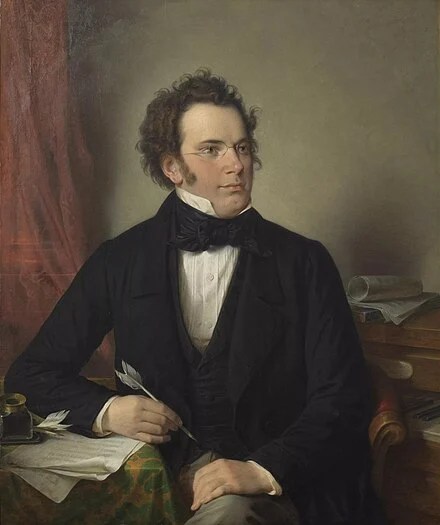
Franz Schubert 1875 portrait, after an 1825 original
31 January 1797 – 19 November 1828 (aged 31). Vienna
The Piano Sonata in G major D. 894, op. 78 by Franz Schubert was completed in October 1826 The work is sometimes called the “Fantasie”, a title which the publisher Tobias Haslinger, rather than Schubert, gave to the first movement of the work. It was the last of Schubert’s sonatas published during his lifetime, and was later described by Robert Schumann as the “most perfect in form and conception” of any of Schubert’s sonatas.
The sonata is in four movements
Molto moderato e cantabile
Andante with two trios.
Menuetto :Allegro moderato – Trio
Allegretto
The original concept for the second movement was quite different from the version known today. Evidence of this can be seen in the score that Schubert sent to his publisher.
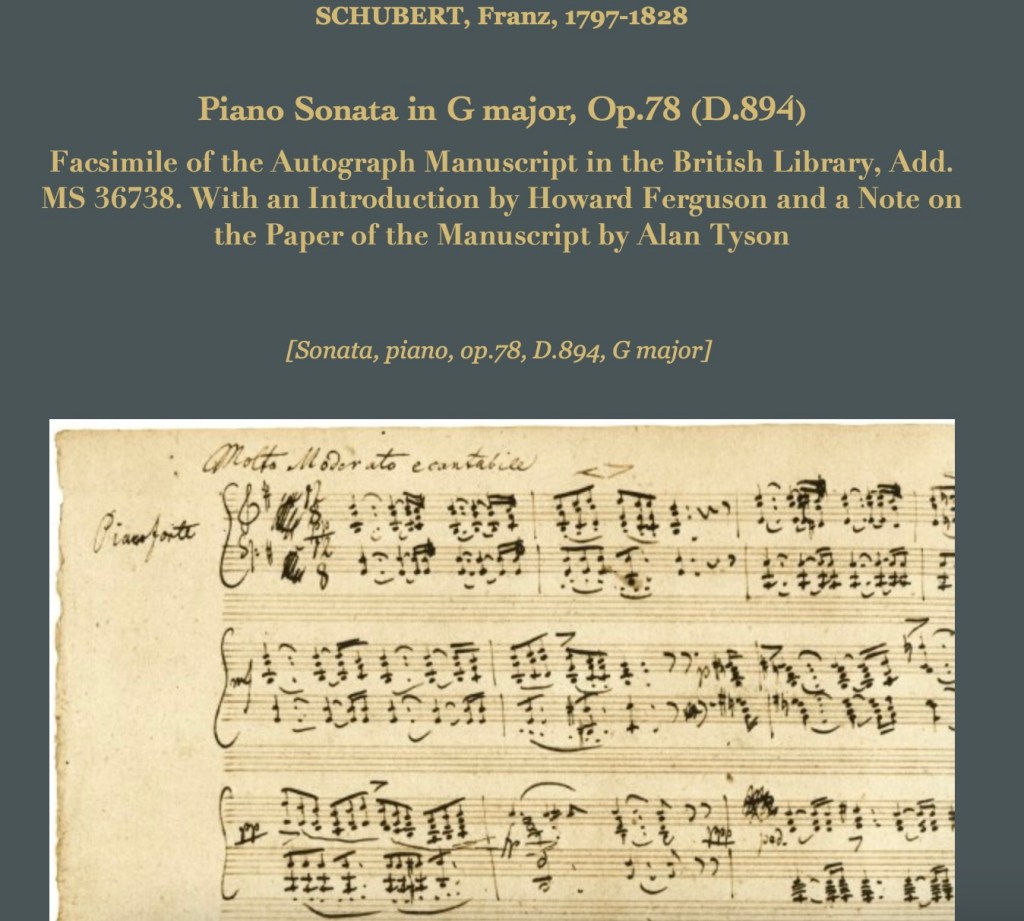
The original manuscript, which has survived and is currently digitized in the archive of the British Library, reveals that after completing the minuet, Schubert decided to rewrite the second movement. He tore out the original version from the manuscript and replaced it with the version we know today. The first and last pages of the original movement remain, containing the end of the first movement and the beginning of the third movement, respectively.
This peculiar aspect of the manuscript offers valuable insight into how the second movement might have originally sounded. The preserved fragment reveals a theme that is rhythmically characteristic of Schubert’s music, though it was ultimately replaced by a more dynamic orchestral episode in the final version. This change allowed for a greater contrast between the first two themes, which was crucial for the movement’s structure and overall impact.
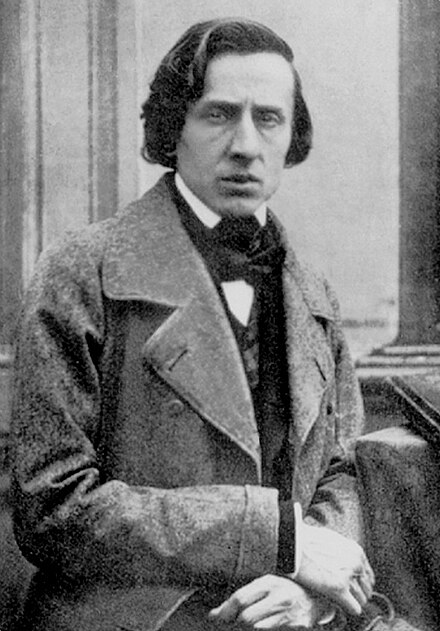
1 March 1810,Zelazowa Wola,Poland. – 17 October 1849 (aged 39)Paris
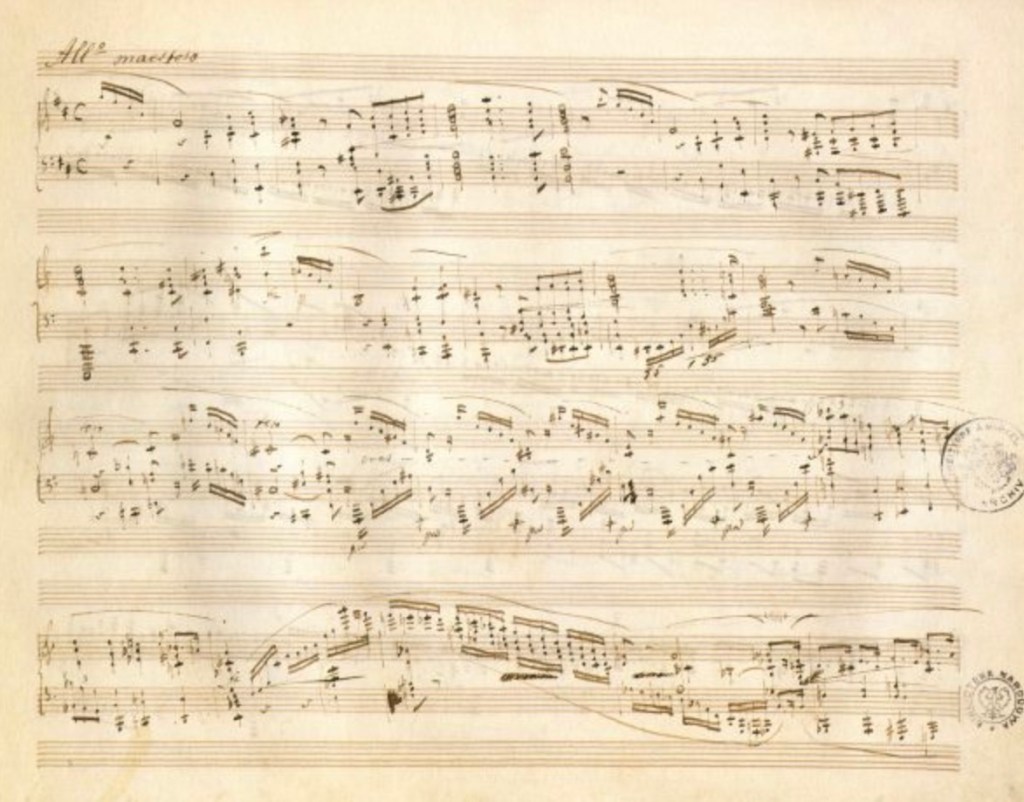
The Piano Sonata No. 3 in B minor op 58, was completed in 1844 and published in 1845, dedicated to Countess Élise de Perthuis.
Allegro maestoso
Scherzo: Molto vivace
Largo
Finale: Presto non tanto
 ChristopherAxworthy-MusicCommentary