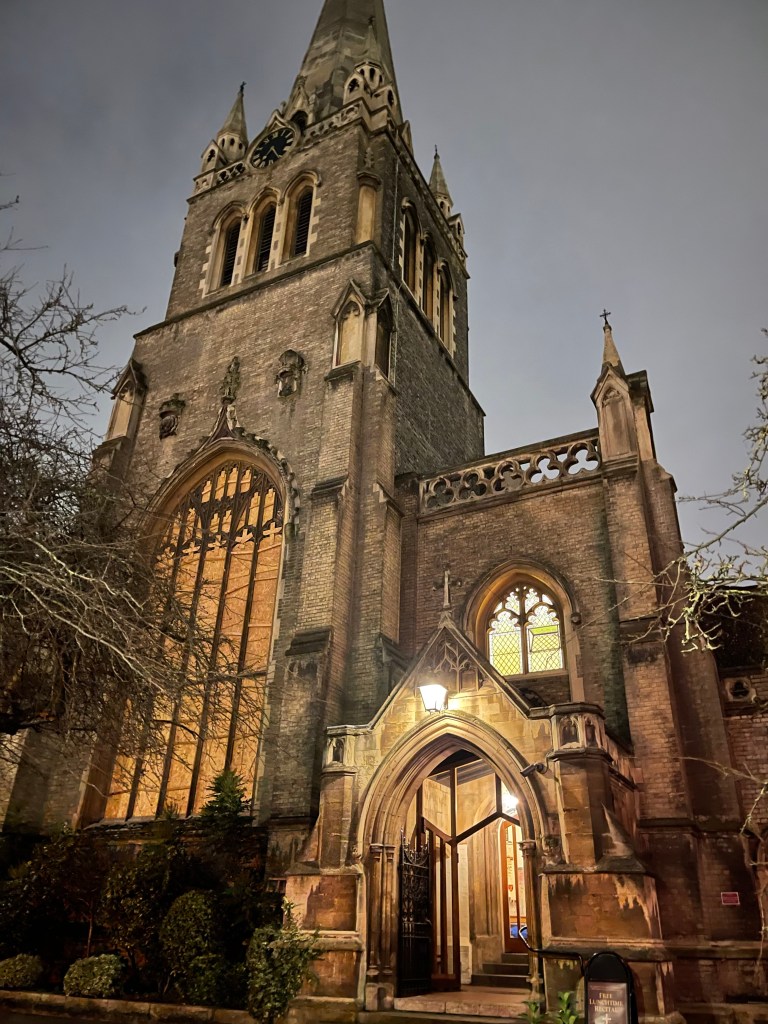
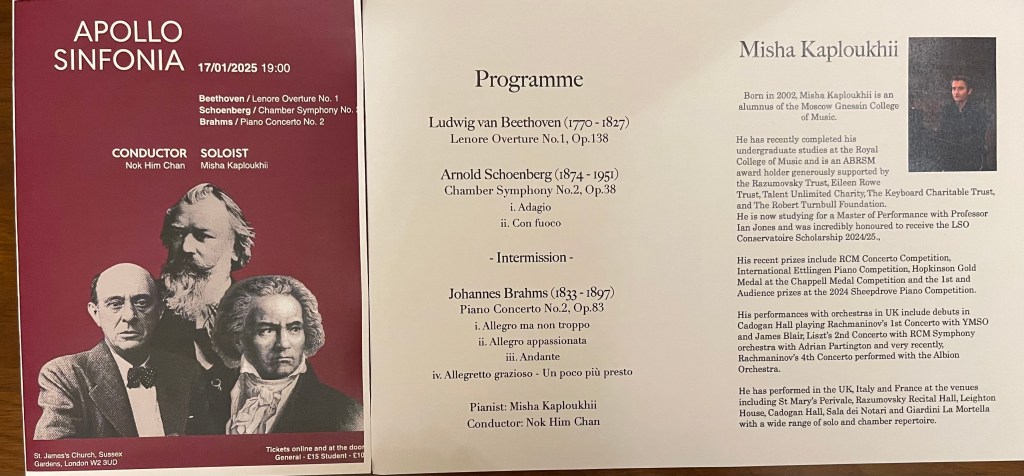
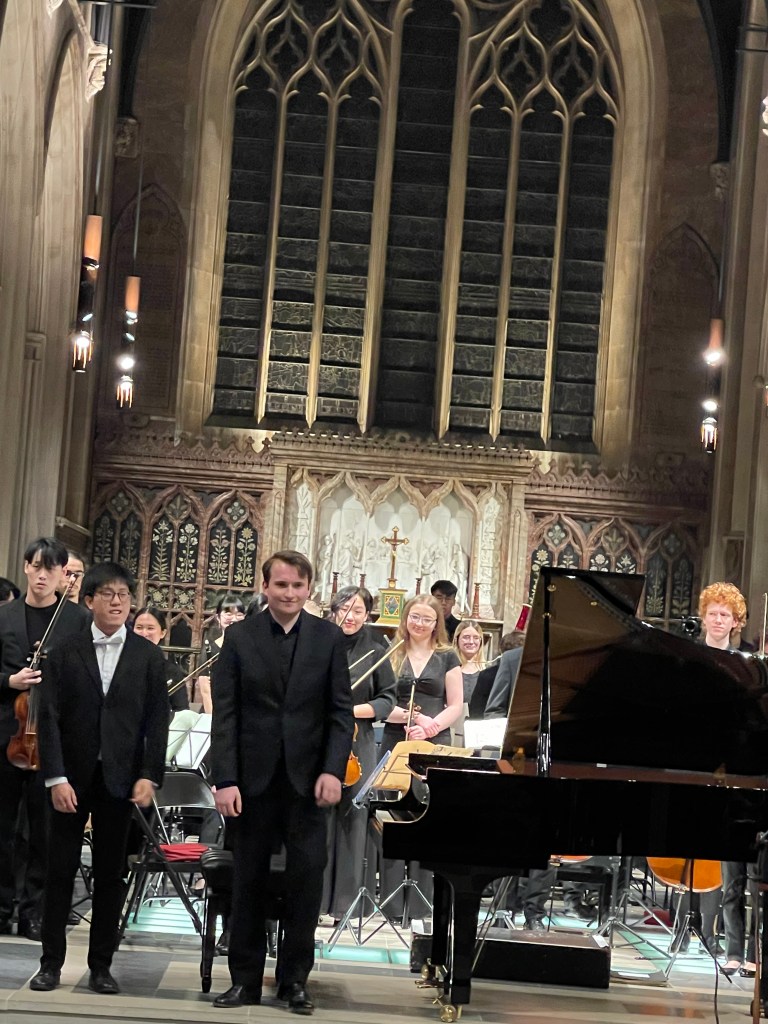
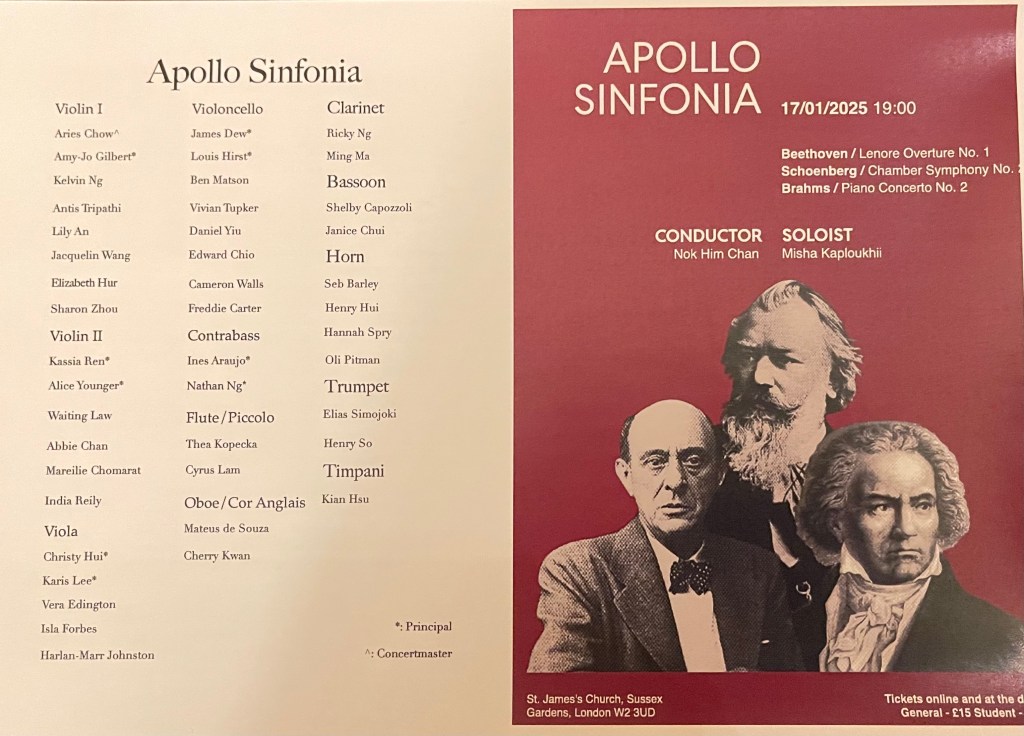
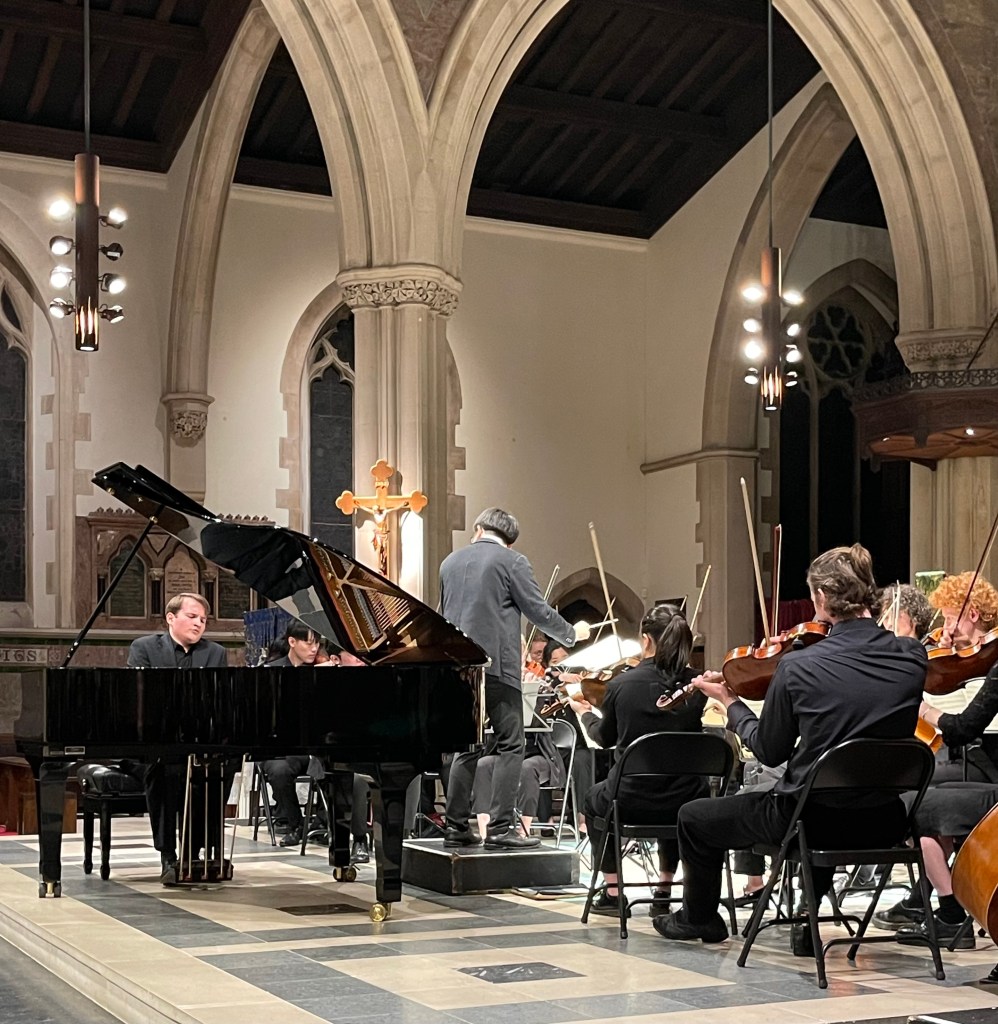
Misha Kaploukhii with the Apollo Sinfonia play Brahms Second Piano Concerto with a little ‘wisp’ of a scherzo. After performances of Rachmaninov 1 at 18, Liszt 2 at 19 and Rachmaninov 3 at 20.
Misha has taken the plunge with the biggest challenge that any pianist can face with Brahms’s ‘little’ piano concerto, with a little ‘wisp’ of a scherzo, as he described it to Clara Schumann on completion of one of the longest and most complex concertos certainly of its’s time.
Misha Kaploukhii plays Rachmaninov Beauty and youthfulness triumph
https://christopheraxworthymusiccommentary.com/2022/10/13/misha-kaploukhii-plays-rachmaninov-beauty-and-youthfulness-triumph/
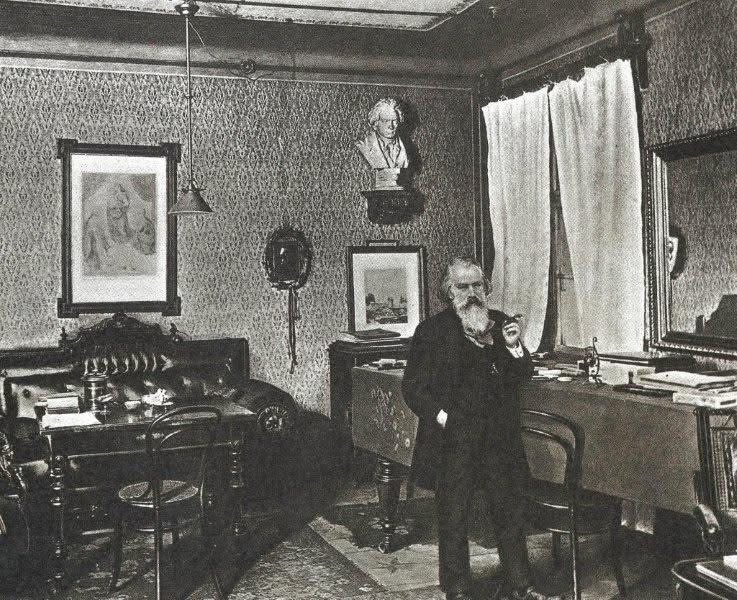
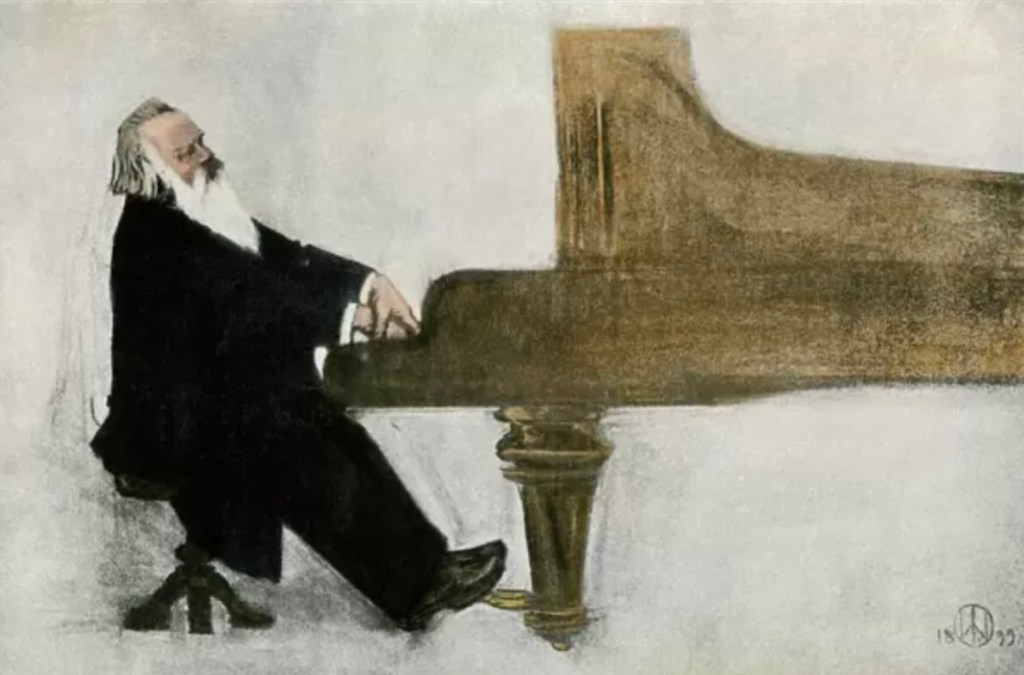
Since the appearance of the Brahms Second concerto there have been concertos with many more notes by Busoni, Rachmaninov and Prokofiev, but the complexity of the mixture of chamber music ensemble together with the noble grandeur of Brahms 2 is only for the greatest interpreters of our age. Arrau, of course, was the example to us all of the weight and poetic intelligence, plus playing the notes exactly as Brahms had indicated in the score. No mean feat as every pianist asks how do you manage to scramble through certain passages that are played more with a wave of the arm than note picking precision as indeed one can perceive from the photos of Brahms at the piano?
I remember in the sixties when anyone who could even attempt Rach 3 or Prok 2 was considered a hero. This was of course before the Russian invasion of virtuosi who were allowed to come to the west.
I remember the arrival of Ashkenazy with two presentation recitals of all the Chopin Studies and the Beethoven Sonatas op 31. Astonishing enough for the mastery and beauty of sound. But what really created a furor amongst so called pianists was his orchestral debut with both Rachmaninov and Prokofiev in the same programme !
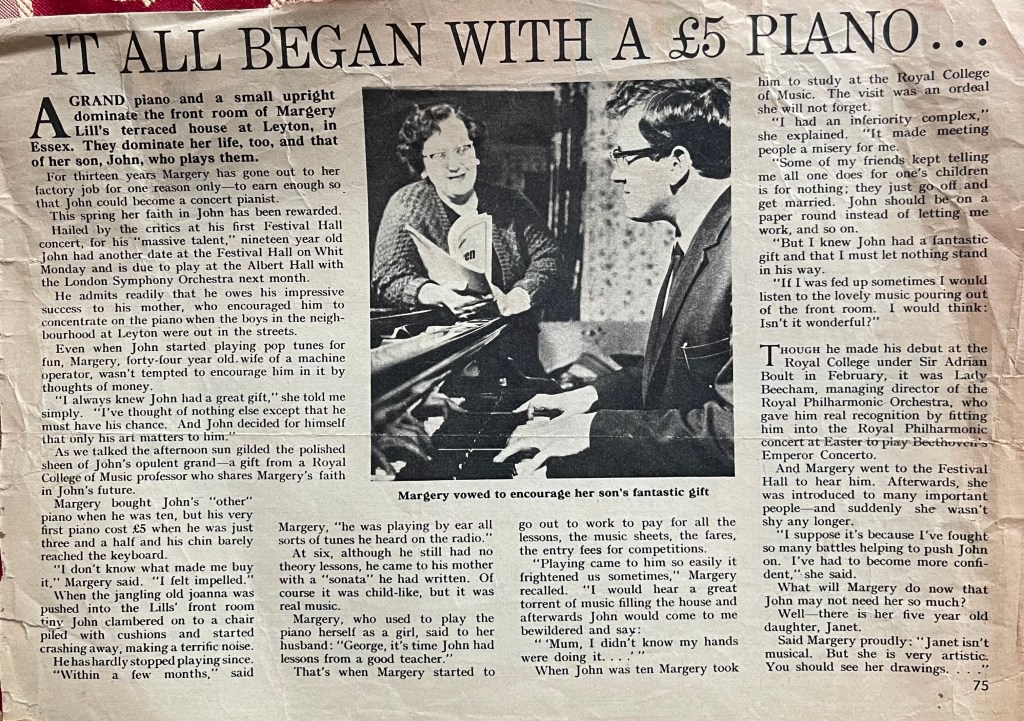
I remember all the articles in the press about a young pianist of the RCM who came from a poor east end of London family, not only playing Rach 3 at 18 but playing the largest of the two cadenzas that the composer had written .
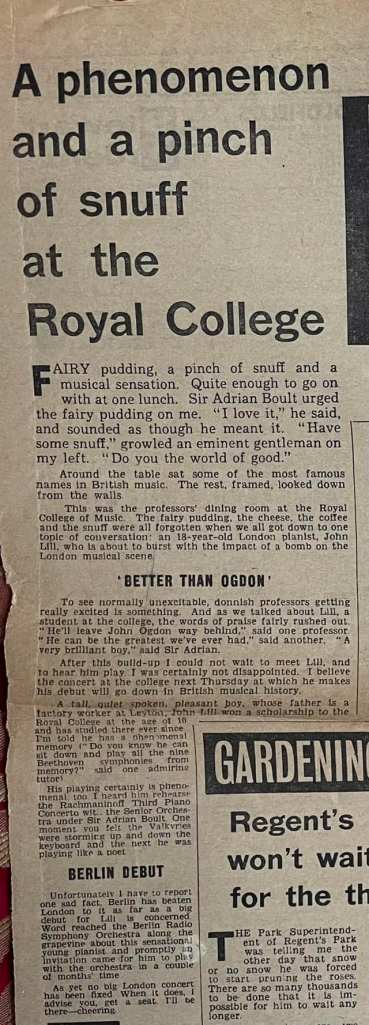
‘Greater than Ogdon’ cried the Evening Standard. John Lill went on to take first prize in Moscow as Ogdon had done (tying with Ashkenazy). He won first prize not with the obligatory Tchaikowsky, but with the Second Concerto of Brahms.
It is a concerto that many great pianists have attempted, but then left, as the combination of chamber music and hidden virtuosity did not convince. Finding the first concerto, with the piano against the orchestra, far more congenial than a concerto with a piano that is very much part of the orchestra. Memorable performances that I have heard were by Rubinstein, Arrau, Ashkenazy and above all Geza Anda. Arrau had the weight that could emerge with a sound larger that the greatest of orchestras, as it could dissolve into a chamber ensemble of poetic intelligence. Rubinstein, the grandest and noblest was ‘The Prince of Pianists’ to quote Joan Chissell. I remember the performance he gave in the Brighton Festival with Barenboim conducting together for the first time. There had been a luncheon party before this afternoon performance in the Brighton Dome. Well, even Barenboim looked down at his mentor and idol as he struck any notes he could find in the opening cadenza! The long orchestral tutti gave the master time to recover and from then on it was the magnificent performance that the world had appreciated for decades. Ashkenazy, I remember for the poetic perfection and of course it was this that gave the game away when Joyce Hatto stuck her name on his CD!
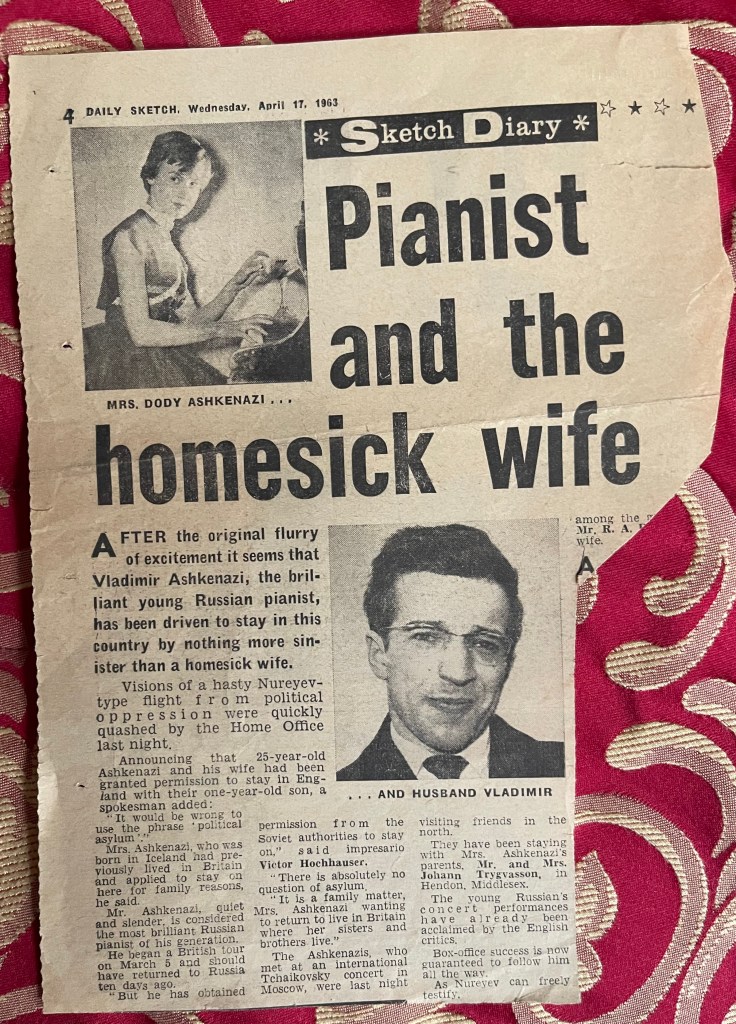
I remember,too, Ashkenazy conducted by Klemperer in what must be the slowest performance on record. Geza Anda, looking like a prim English gentleman, gave unforgettable performances of luminosity and poetry with Sir Adrian Boult ( the same conductor as for John Lill at the RCM) although his recording is with Karajan. Of course, for all those present at the Festival Hall, it was Gilels who gave the most beautiful account of poetic and aristocratic nobility. He preceded it with the one movement Tchaikowsky 3rd concerto. At the rehearsal this had lead to quite considerable tension between the conductor and pianist. It was during the Cold War and Boult, very much of the English Institution, got very irritated when Gilels was not happy with the opening horn solo of the Tchaikowsky. ‘Would you please explain what you mean Mr Gilels’ and then they never uttered another word throughout the whole rehearsal. How could one forget Serkin opening the refurbished RFH with the two Brahms Concert, and with his impatient excitement entering too early with the grandest of declarations of the second subject. Probably the most poetically beautiful and noble was Curzon with the Concertgebouw at the Proms. I was standing next to him as he sweated blood over his loving performance, playing without the score that brought an animal excitement to his playing in those days. I remember my mentor Sidney Harrison, who had heard it on the radio, exclaiming wondrous appreciation of such a great performance. Strangely the recording of Horowitz and Toscanini is rather crisp,clean and technically perfect, but it was not the Brahms of his Rach 3!
All this preamble to say what a remarkable performance Misha Kaploukhii gave today. Still in his early twenties he played with a mastery and musicality that bodes well for his 3rd performance that will be on the 19th February in Cadogan Hall.
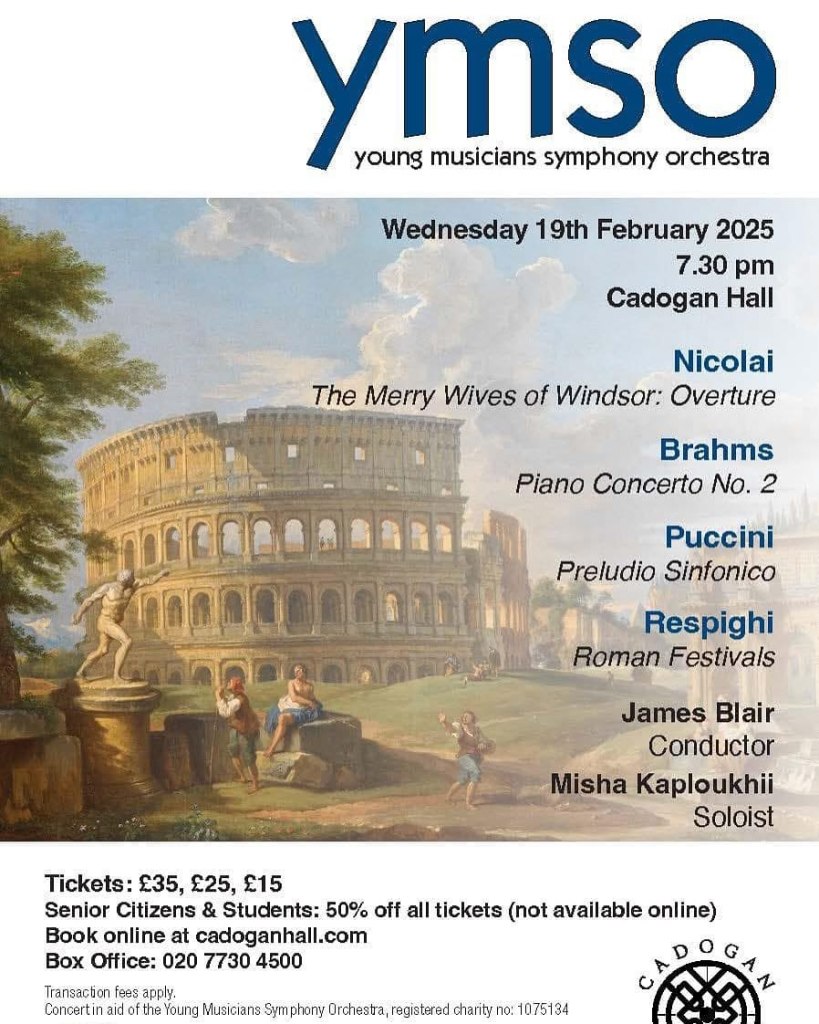
He needs now to sweat blood and tears over every note, (something that the mastery of Volodos did not allow him to do ) .
Remarkable mastery of the ‘wisp ‘of a Scherzo lead into the sumptuous simple beauty of the Andante
Youthful energy and romantic sweep with an orchestra made up of very fine colleagues at the RCM. Of course a performance that could now be played slower and given time to breathe and expand as Brahms’s sumptuous sound envelope us in a reassuring cocoon of passionate abandon.
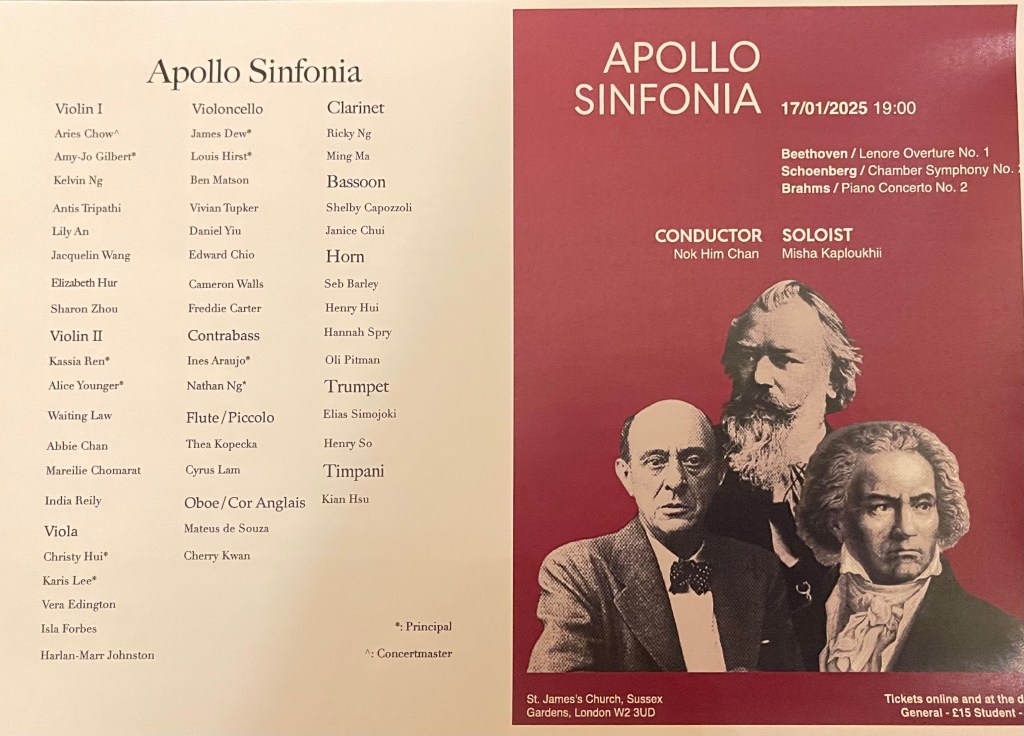
Beautiful playing from the cellist, James Dew,of simplicity and beauty answered by the ravishing beauty and measure of the piano .This is the heart of the concerto, and it was the most successful movement in a performance that will expand and glow with the maturity of performances to come.
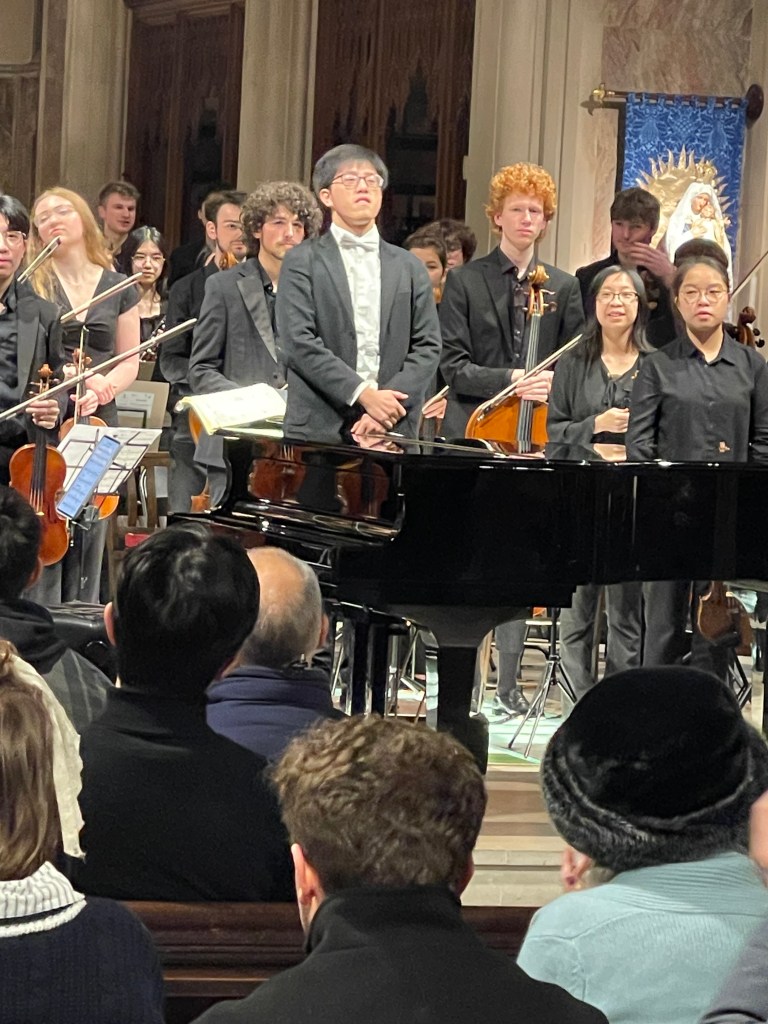
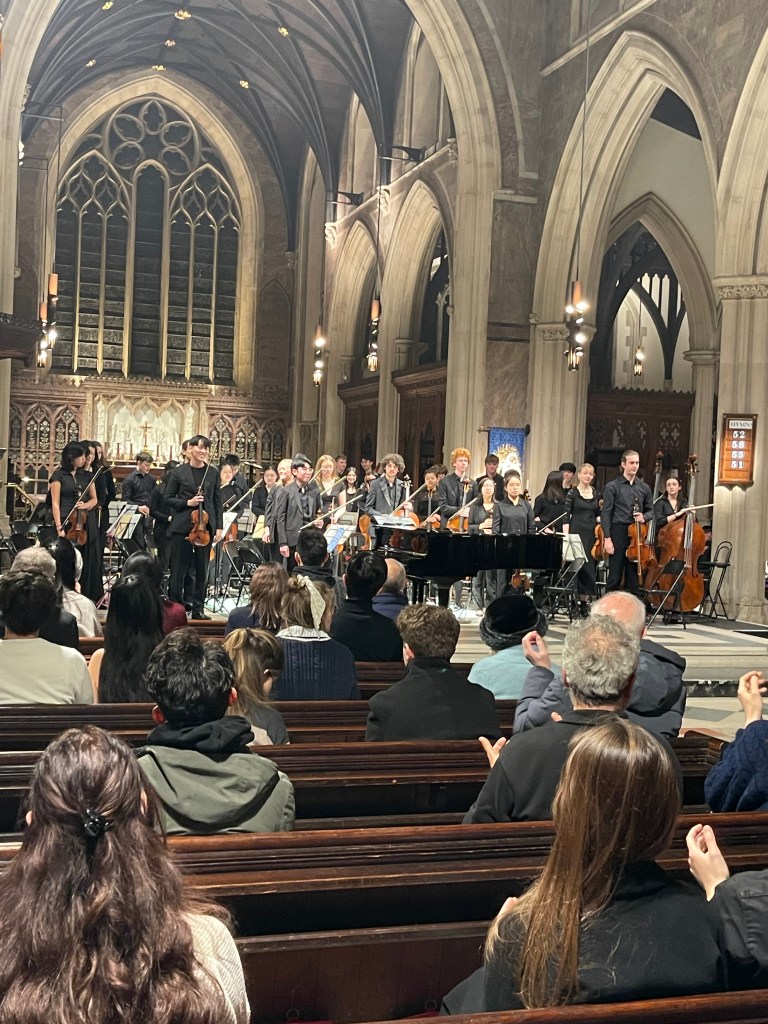
Nok Him Chan was the fine conductor holding his ensemble together with expert ease, but sometimes choosing tempi that were a fraction too fast for this most difficult of all concertos. I was sorry to miss the Schoenberg, but judging from the ovation he received it was a just partner to the succulent opulence of the Brahms B flat.
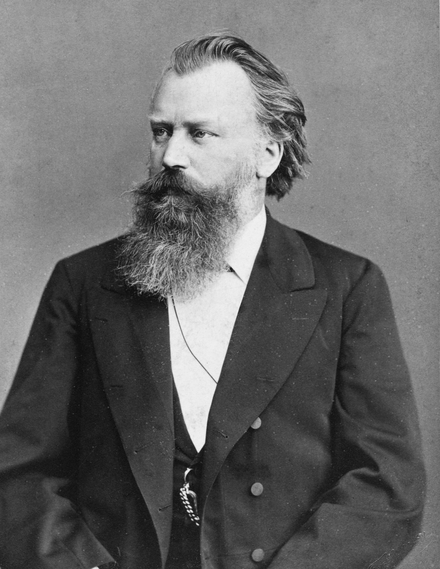
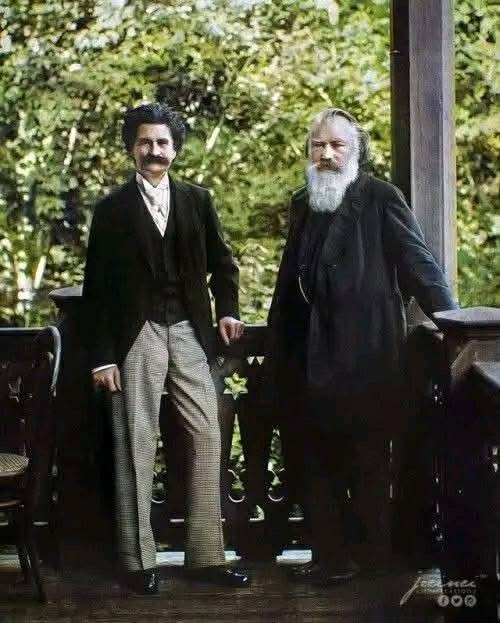
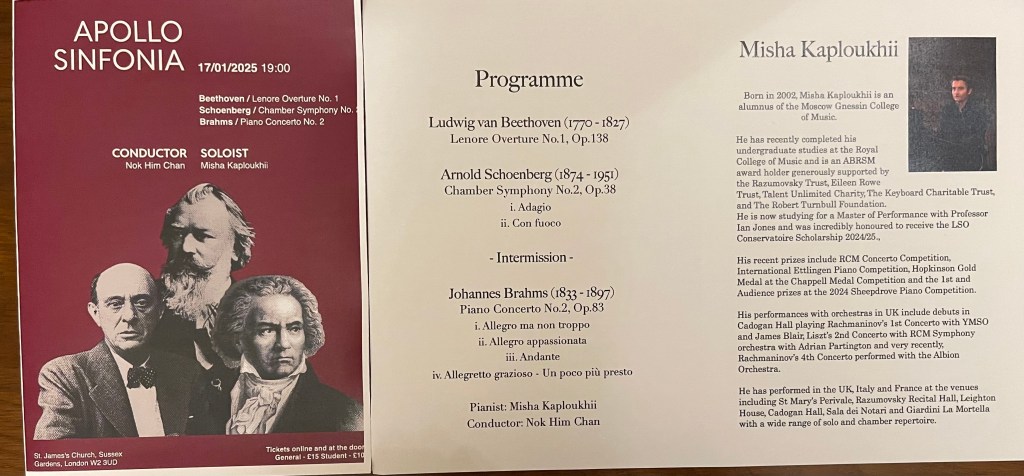
The Piano Concerto No. 2 in B flat op 83 was written 22 years after his first concert. Brahms began work on the piece in 1878 and completed it in 1881 while in Pressbaum near Vienna. It took him three years to work on this concerto, and he wrote to Clara Schumann: “I want to tell you that I have written a very small piano concerto with a very small and pretty scherzo!” It is dedicated to his teacher, Eduard Marxsen and the public première was in Budapest on 9 November 1881, with Brahms as soloist and the Budapest Philharmonic Orchestra. It was an immediate success and he proceeded to perform the piece in many cities across Europe.The concerto is in four movements:
- Allegro non troppo
- Allegro appassionato
- Andante
- Allegretto grazioso—Un poco più presto
The additional movement of a Scherzo second movement results in a concerto considerably longer than most other concertos written up to that time, with typical performances lasting around 50 minutes. Upon its completion, Brahms sent its score to his friend, the surgeon and violinist Theordor Billroth, to whom Brahms had dedicated his first two string quartets, describing the work as “some little piano pieces.” Brahms even described the stormy scherzo as a “little wisp of a scherzo.”
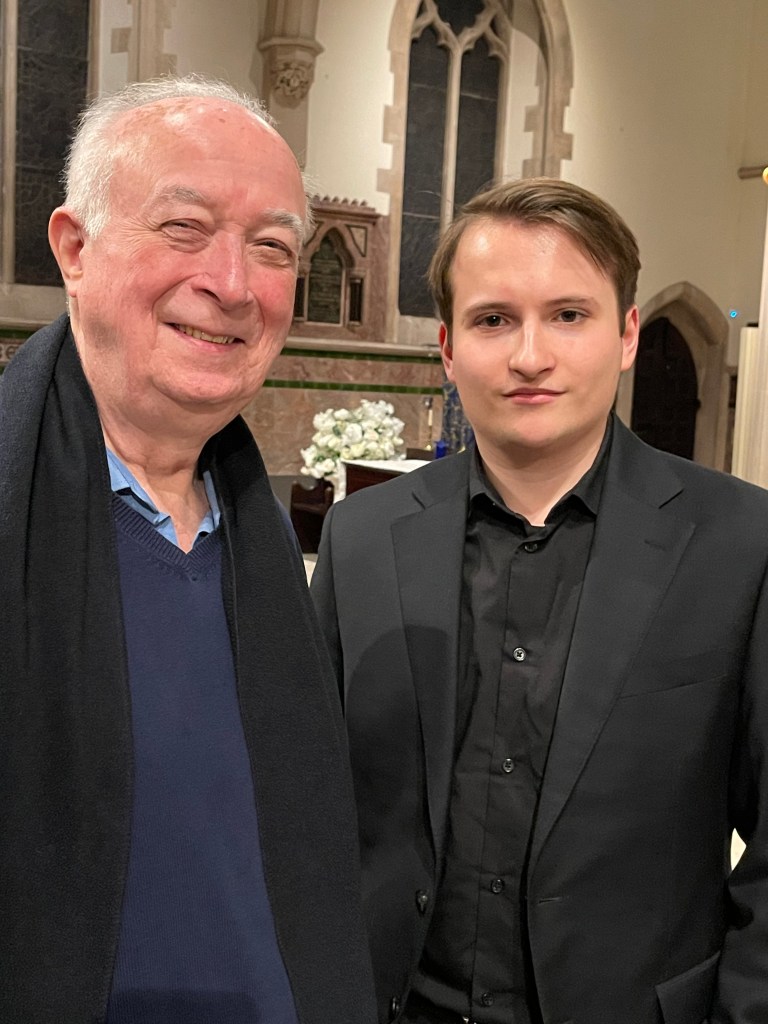
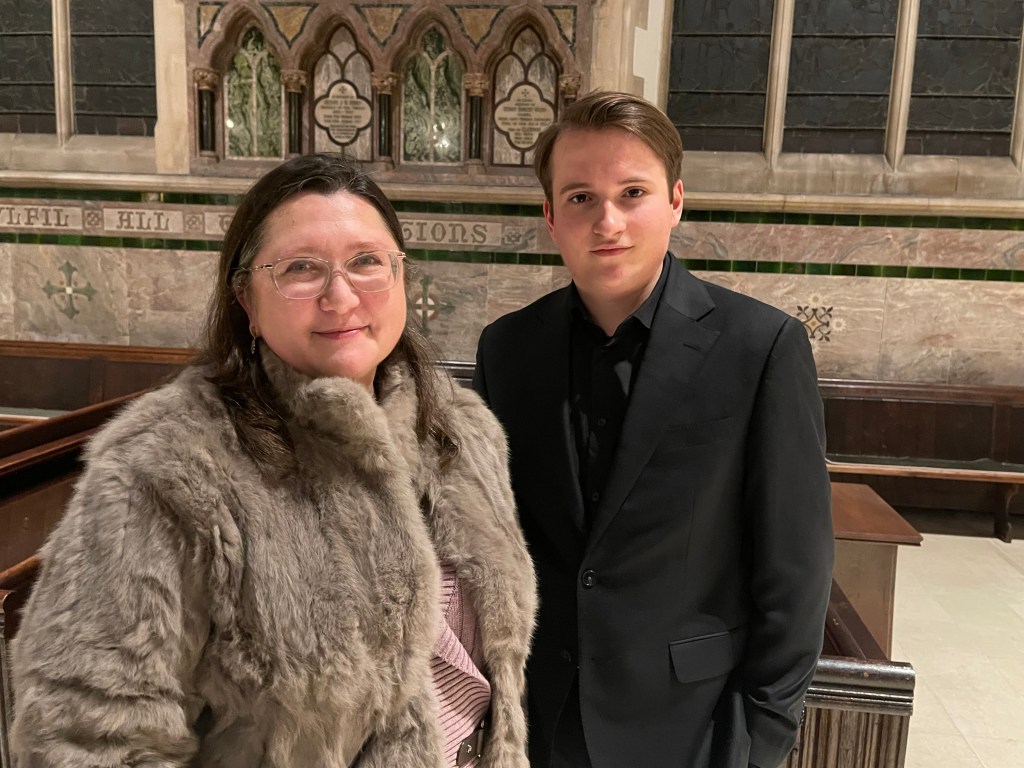
https://christopheraxworthymusiccommentary.com/2024/10/22/misha-kaploukhii-at-the-razumovsky-academy-with-technical-mastery-and-poetic-sensitivity/
 ChristopherAxworthy-MusicCommentary