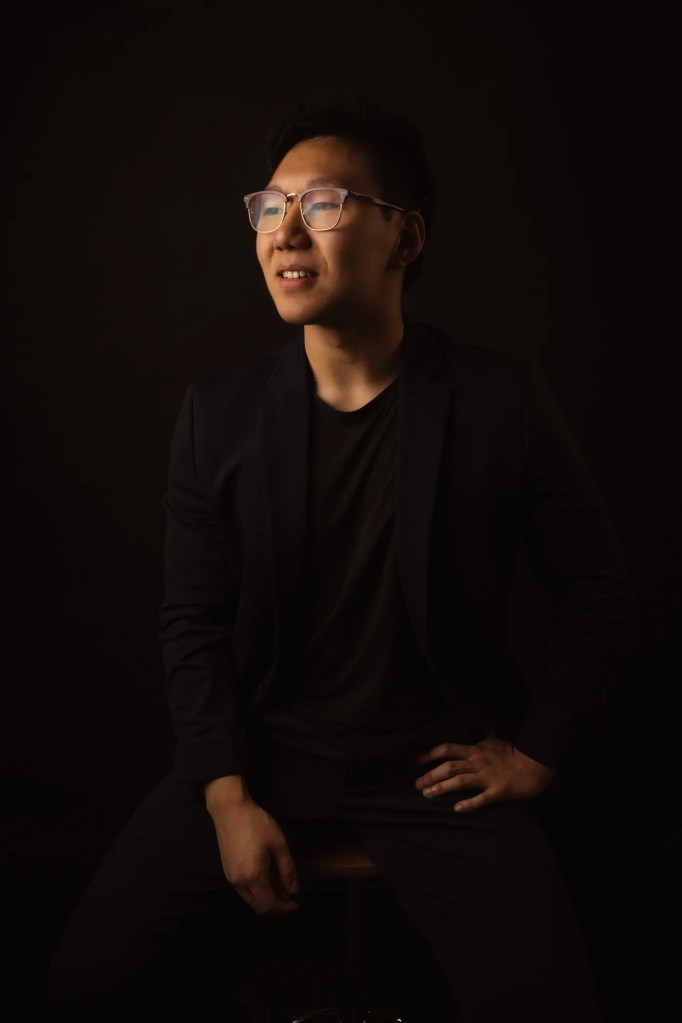
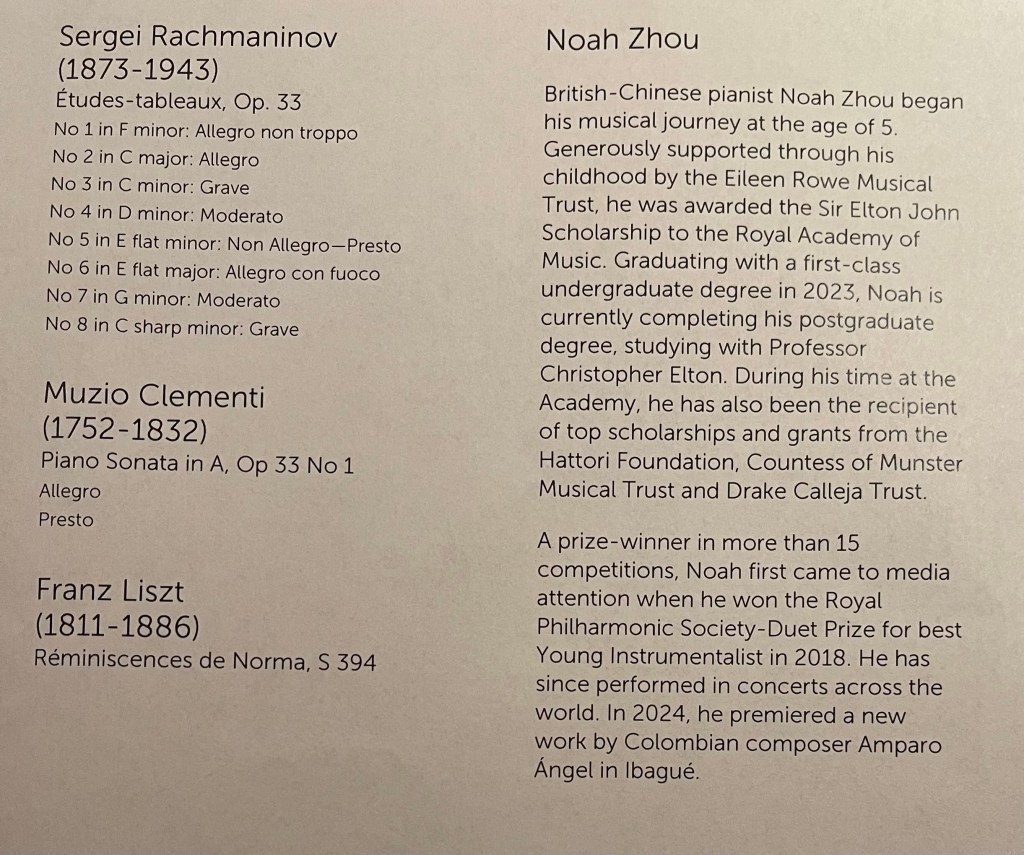
The young British-Chinese pianist Noah Zhou, currently a Master’s student at the Royal Academy of Music, is the recipient of many awards including the Young Pianist Foundation European Grand Prix, Horowitz International Competition, Drake Calleja Trust and the Hattori Foundation. A first prize winner at competitions in Rio and Valsesia in Italy, recent concerto performances include appearances in the Netherlands, Ukraine and Brazil. Noah’s virtuosic lunchtime recital ranges from Rachmaninov’s magnificent Etudes-tableaux to the elegance of Clementi and Liszt’s stormy imagination – a literature of dark and turbulent ecstasy.
Noah Zhou at St Mary’s A tiger on the rampage with artistry and total mastery
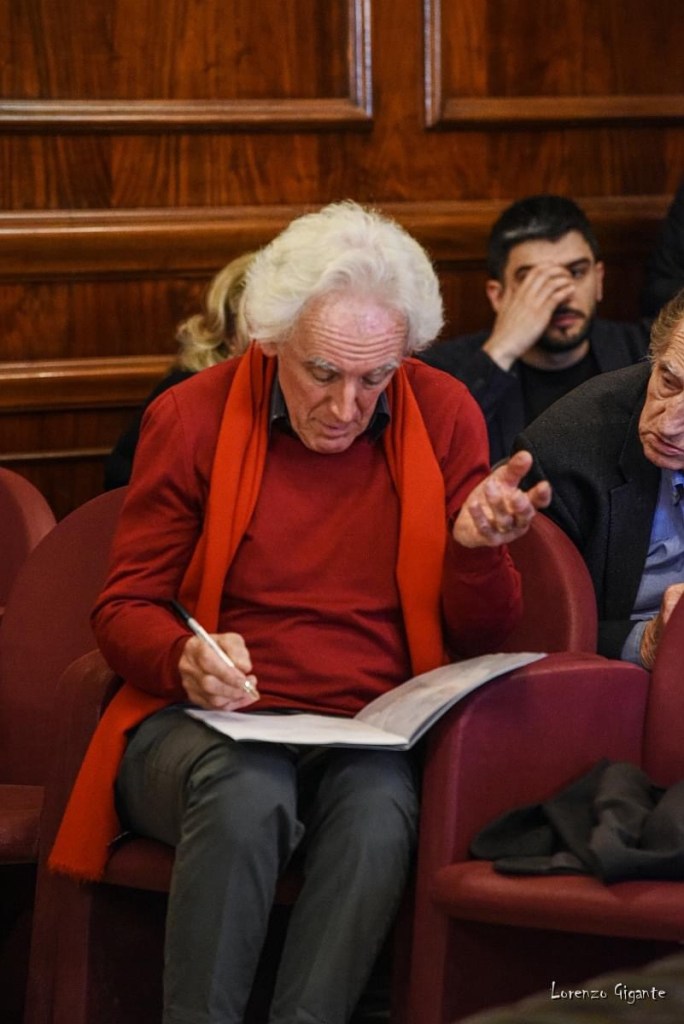
Christopher Axworthy writes
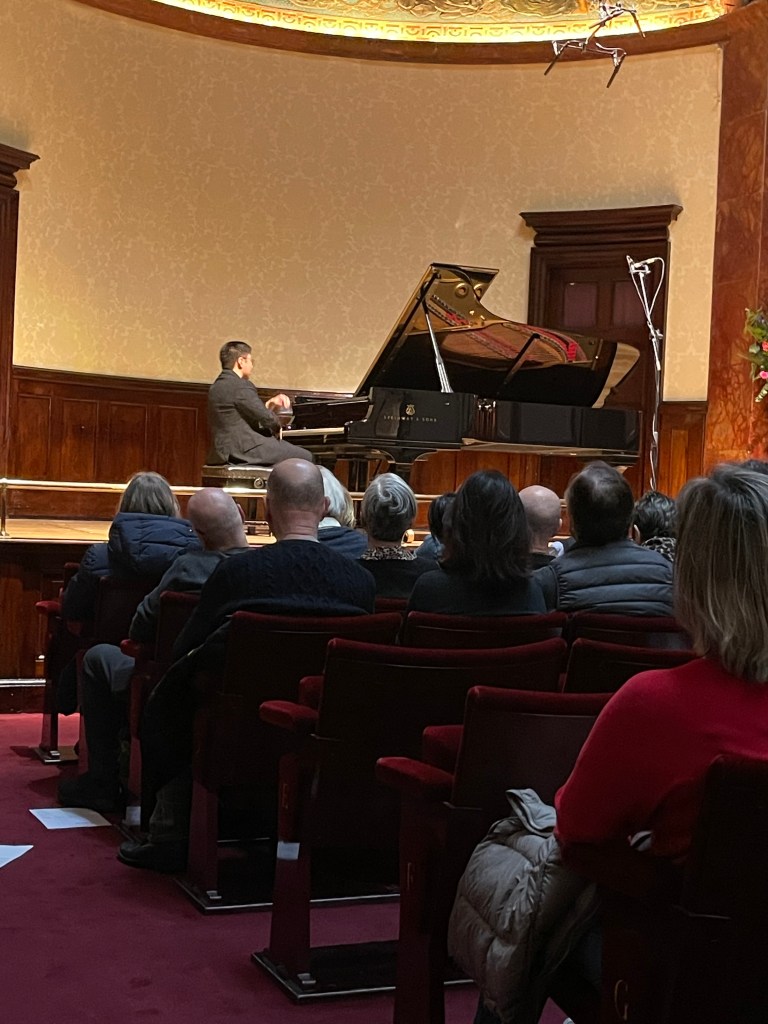
Noah Zhou, another star pianist from the studio of Christopher Elton at the Royal Academy, giving a recital in their piano series at the Wigmore Hall. Nice to see that other Elton supporting this remarkable young musician with a scholarship .
The RAM is surprisingly Sir Elton John’s own Alma Mater.
It was even nicer to see the indomitable Eileen Rowe mentioned as supporting this young man’s childhood studies. In death, as in life, Eileen Rowe has meant so much to so many aspiring young musicians.
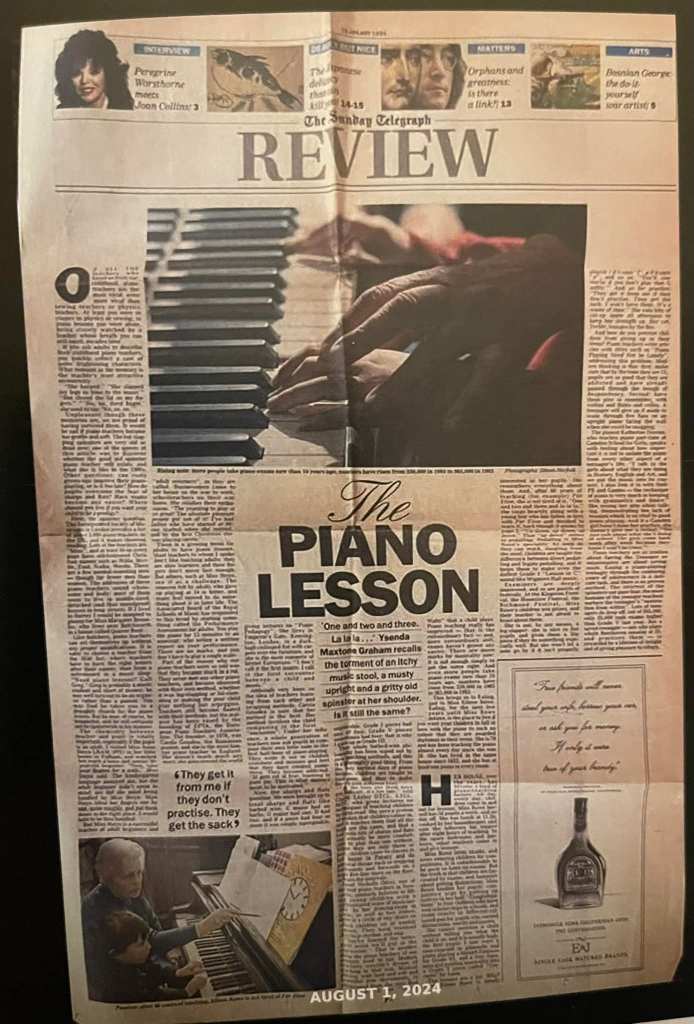
A house full of pianos in Ealing and generously giving a days teaching to starving future stars like Katherine Stott,Tessa Nicholson, Danielle Salamon and myself. Not only a days teaching, but a full roast dinner cooked by her lovable housekeeper with vegetables grown in her own garden. Miss Rowe would listen outside my room in any pauses between students, when I would work at the Norma Fantasy or Danielle would play through a Mozart Concerto. Her star pupil was Vanessa Latarche who indeed shines brightly in the piano world.
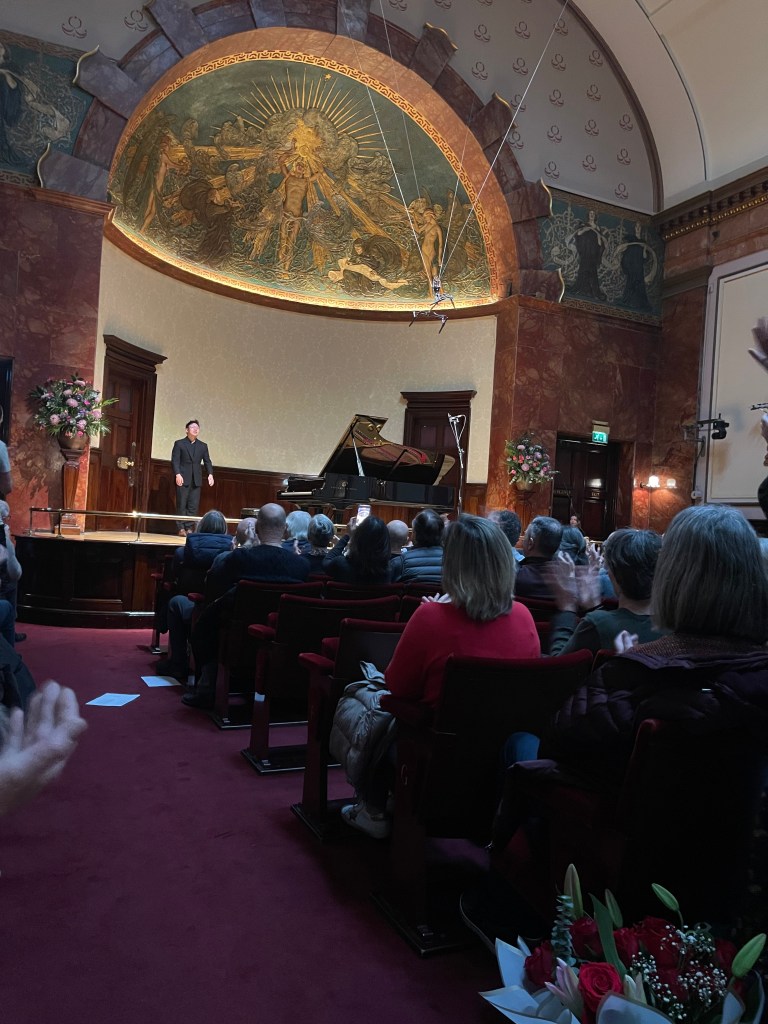
Piano and tennis were Miss Rowe’s passions, and sometimes went hand in hand with a TV perched on the piano so she could not miss a match, but also not miss a note of her pupils. She would be so proud to witness the standing ovation that awaited Noah after his breathtaking last encore.
As if Liszt’s Norma Fantasy was not enough! Noah was persuaded to play an encore, which was a mind boggling transcription of Mozart’s Marriage of Figaro. No idea who concocted such a cocktail of pianistic gymnastics, but at a guess Volodos ,Horowitz.Cziffra and I suspect Noah were all in there somewhere. Noah writes : ‘The encore is the Ginzburg transcription on Figaro’s aria.’
But this was not just mindless note spinning, because whatever Noah played was of overwhelming beauty and musicianship
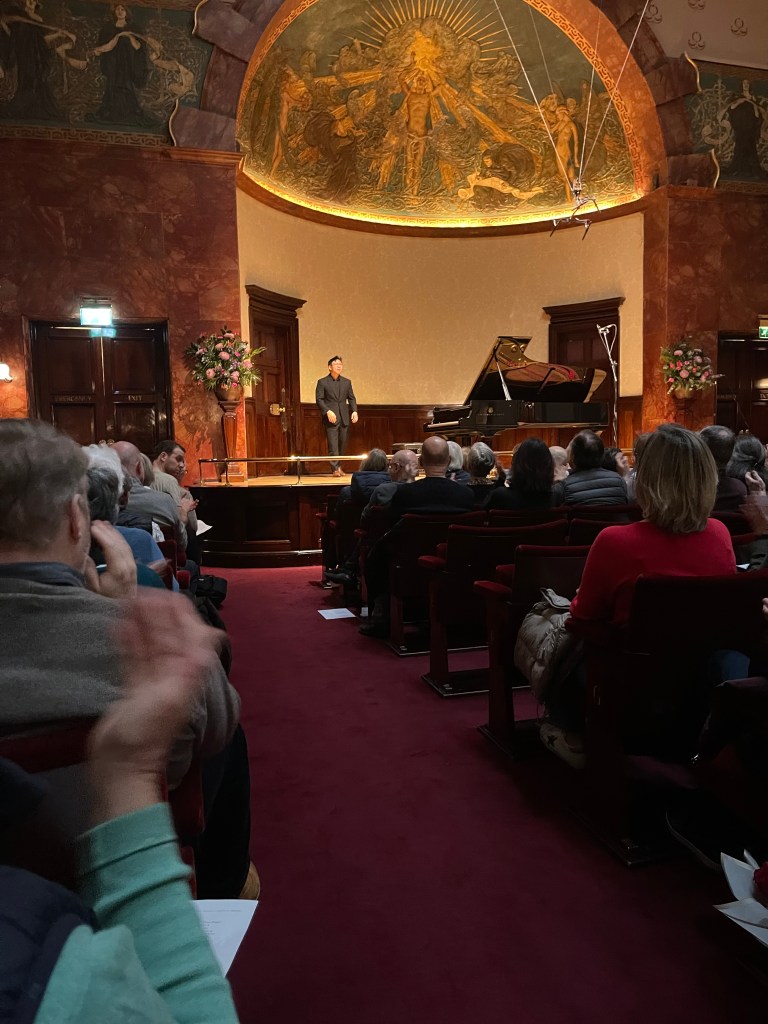
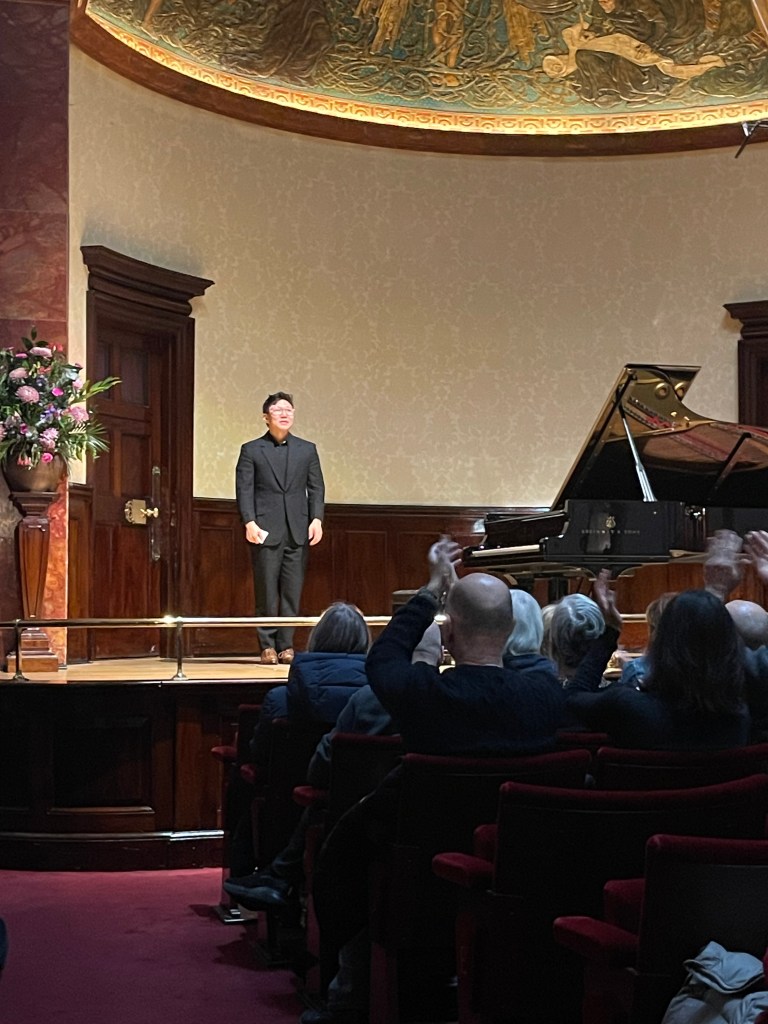
Eight Etudes Tableaux op 33 that were miniature tone poems, where Noah turned these seeming baubles into the gems that Rachmaninov had bequeathed to the world. Noah showed us Rachmaninov’s world of scintillating streams of gold and silver sounds. Moments of overwhelming Russian nostalgia and finally a cauldron of Scriabinesque sounds that were quite breathtaking in their demonic dynamism.
Clementi’s Sonata in A was a breath of fresh air after such devilish sounds . Streams of notes as Clementi played with his new found toy. Sometimes almost Mendelssohnian in the way they just flew from Noah’s fingers with such mellifluous ease. But there was also a great sense of character that brought a smile for the insolent charm of the first movement .
The great Norma Fantasy opened with the just operatic gestures, but then the left hand octaves that I have never heard played with such mastery, was where he sacrificed the nobility and grandeur of the grandest of grand operas for the incredible speedy Gonzales!
It was in the subtle beauty of the lyrical central episode that Noah allowed the music to breathe again with sumptuous beauty. The deep sound of the bass, like a heartbeat, on which floated the magic of Bellini’s Bel Canto .
Liszt on the warpath found Noah now completely in charge with a sumptuous transcendental display of three handed pianism, played with burning temperament and fearless abandon.
After Emanuil Ivanov, Kasparas Mikuzis this combination of the RAM at the Wigmore is fast becoming a collectors item.
Kasparas Mikuzis at the Wigmore Hall Masterly playing of fluidity and ravishing beauty
Franz Liszt
Réminiscences de Norma S 394
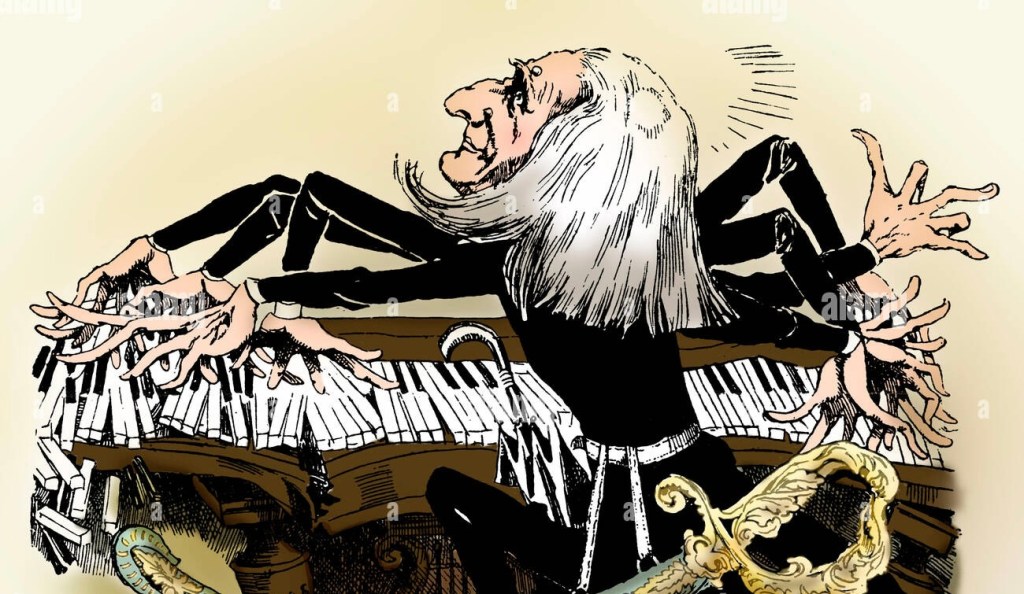
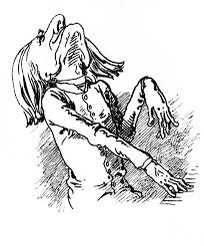
During the 1800s opera had a lot of appeal to audiences. From big dramatic storylines to emotional arias, opera was in its prime during this century. Although opera was perceived to have a glamorous aura, it was actually quite inaccessible for a large part of the public due to price and cultural differences. Therefore it is not surprising that many pianists sought to gain more audiences by composing, arranging and performing their own operatic fantasies. Liszt undertook the challenge of diluting Bellini’s opera Norma into a 15 minute solo piano work in 1841. The work easily equals the dramatic impact of the original opera through Liszt’s dynamic and highly virtuosic writing. No less than seven arias dominate Liszt’s transcription of Norma which are threaded together to create a nearly continuous stream of music.The title role of Norma is often said to be one of the hardest roles for a soprano to sing, and this adds to the drama and intensity of the music. ‘Norma, a priestess facing battle against the Romans, secretly falls in love with a Roman commander, and together they have two illegitimate children. When he falls for another woman, she reveals the children to her people and accepts the penalty of death. The closing scenes and much of the concert fantasy reveal Norma begging her father to take care of the children and her lover admitting he was wrong.”Liszt, arguably the most charismatic virtuoso of all time, was challenged for supremacy by Sigismond Thalberg, a pianist who could apparently not only counter Liszt’s legendary fire and thunder with subtlety but who played as if with three hands. Three hands were heard, two were visible! A confrontation took place in the Salon of Princess Belgioso and although it was diplomatically concluded that ”Liszt was the greatest pianist; Thalberg the only one”, the outcome was inevitable. Liszt continued on his protean and trail-blazing course while Thalberg was consigned to virtual oblivion.
Liszt offers a concentrated summary of the dramatic core of the opera by selecting melodies from Act I to evoke Norma’s leading role in opposing the Roman occupiers, and from the finale of Act II to represent her selfless renunciation of love, and of life itself, to further the cause of her warlike people.
The work opens with a series of stern chords and martial drumbeats, echoed high above by sparkling arpeggiations, to set the stage for a tale of war on earth and reward in heaven. These musical motifs recur midway through the piece as well to transition between opera’s Act I mood of heroic resolve and its tragic outcome in Act II.
Liszt’s treatment of the lyrical Qual cor tradisti, with its three simultaneous layers—melody, pulsing chordal accompaniment, and martial triplet drumbeat—has been described by musicologist Charles Suttoni as “one of the most ingenious and sublime pages ever written for the piano.”
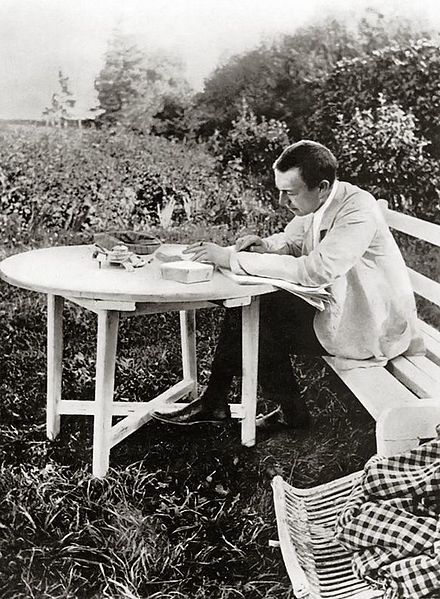
The Études-Tableaux (“study pictures”), Op. 33, is the first of two sets of piano études composed by Rachmaninov . They were intended to be “picture pieces”, essentially “musical evocations of external visual stimuli”. But Rachmaninov did not disclose what inspired each one, stating: “I do not believe in the artist that discloses too much of his images. Let [the listener] paint for themselves what it most suggests.”However, he willingly shared sources for a few of these études with the Italian composer Ottorino Respighi when he orchestrated them in 1930.
Max Harrison calls the Études-Tableaux “studies in [musical] composition”; while they explore a variety of themes, they “investigate the transformation of rather specific climates of feeling via piano textures and sonorities. They are thus less predictable than the preludes and compositionally mark an advance” in technique.
Rachmaninov initially wrote nine pieces for Op. 33 but published only six in 1914. One étude, in A minor, was subsequently revised and used in the op 39 sett; the other two appeared posthumously and are now usually played with the other six. Performing these eight études together could be considered to run against the composer’s intent, as the six originally published are unified through “melodic-cellular connections” in much the same way as in Schumann’s Symphonic Studies
Differing from the simplicity of the first four études, Nos. 5–8 are more virtuosic in their approach to keyboard writing, calling for unconventional hand positions, wide leaps for the fingers and considerable technical strength from the performer. Also, “the individual mood and passionate character of each piece” pose musical problems that preclude performance by those lacking strong physical technique.Rachmaninov wrote nine études-tableaux at his Ivanovka estate in 1911. Six of them, the original Nos. 1–2 and 6–9, were published that year. The original No. 4 is lost; the piece was revised and published as op 39 n. 6. The original Nos. 3 and 5 were published posthumously within Op. 33.
 ChristopherAxworthy-MusicCommentary