
Kensington and Chelsea Music Society
A piano recital in association with The Keyboard Charitable Trust, supported by the Robert Turnbull Piano Foundation.

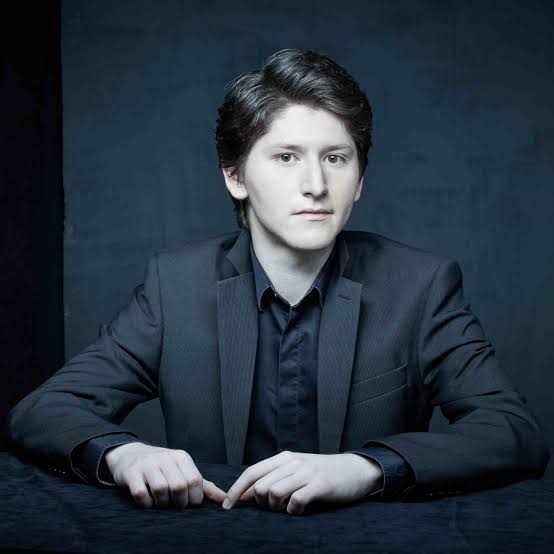
Beyond his remarkable talent, Emanuil is a genuinely wonderful person – humble, grounded, and impressively mature for his age. We’re already looking forward to inviting him for another recital in the future.’ Yvonne Georgiadou, Artistic Director, Pharos Arts Foundation, Cyprus December 2024
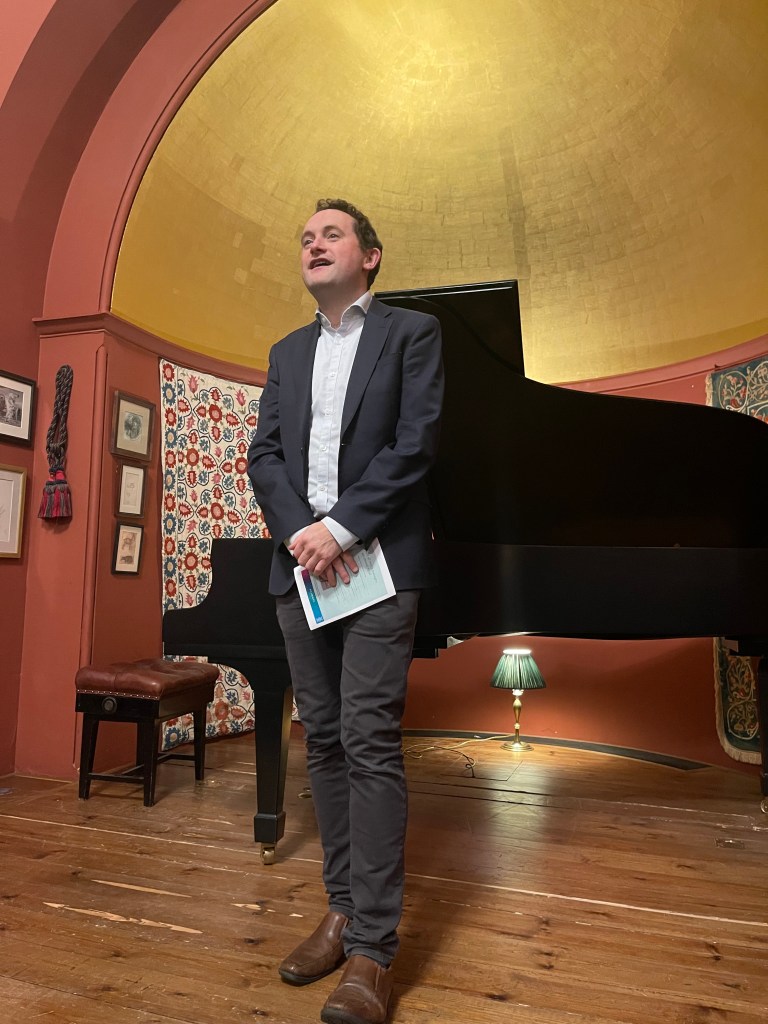
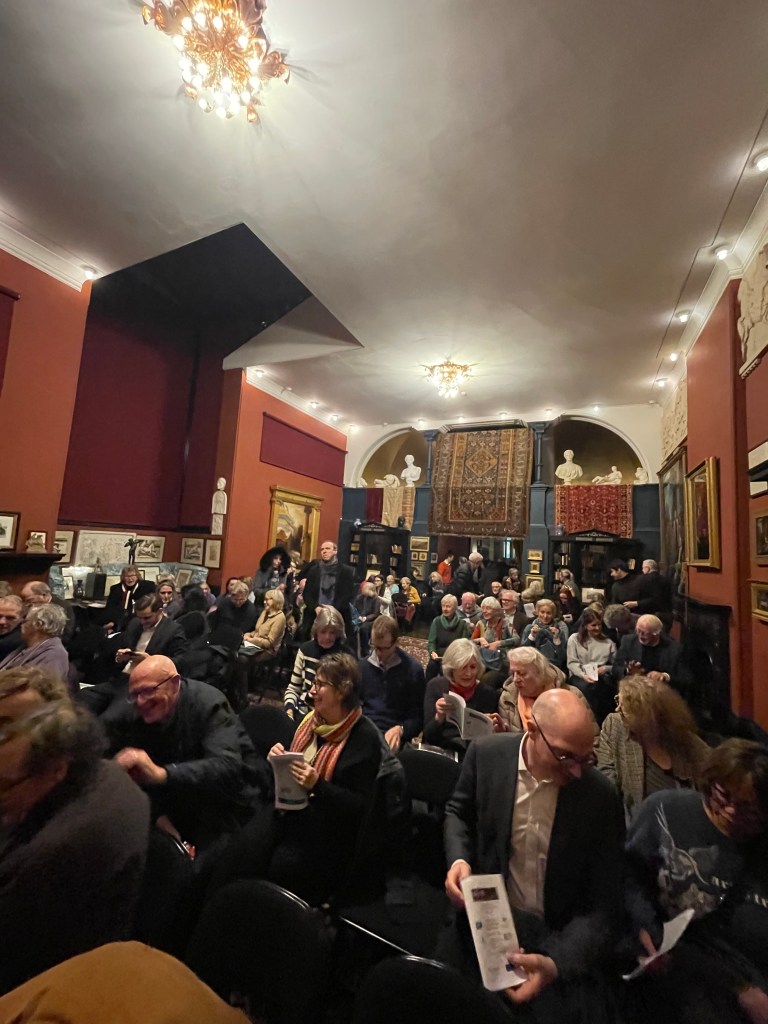
Ferruccio Busoni (after J. S. Bach) Durch Adams Fall ist ganz verderbt
Ludwig van Beethoven Piano Sonata No. 17 in D minor, “The Tempest”
— interval —
Felix Mendelssohn Songs without Words, Op. 30
Charles-Valentin Alkan Symphony for solo piano
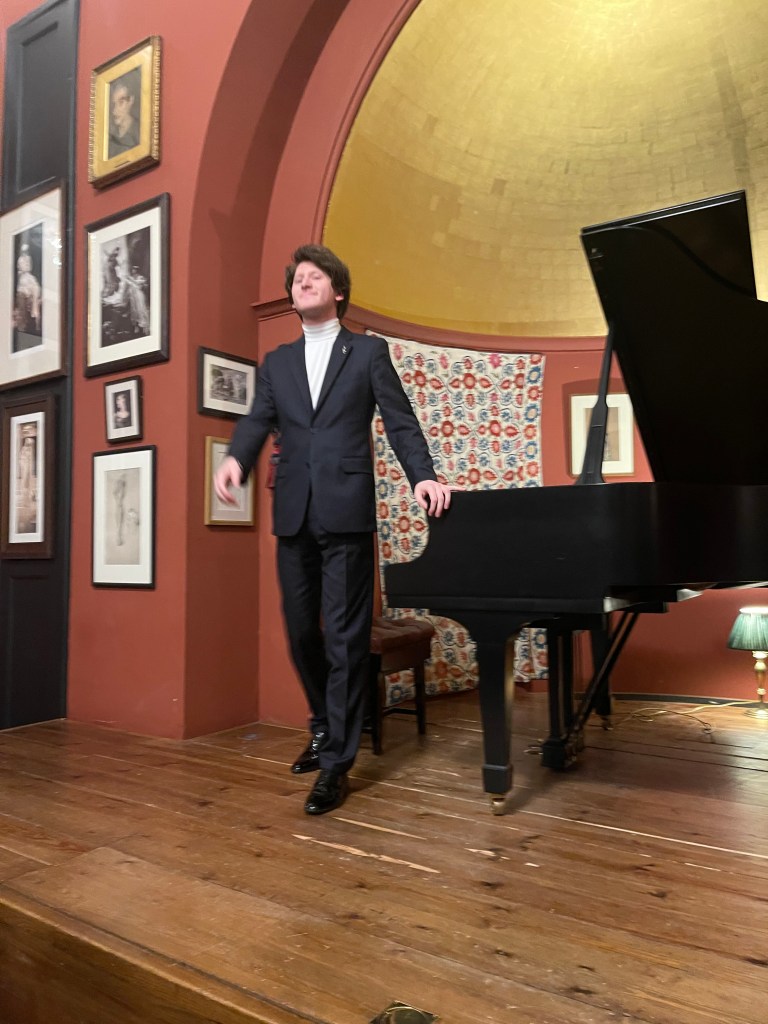
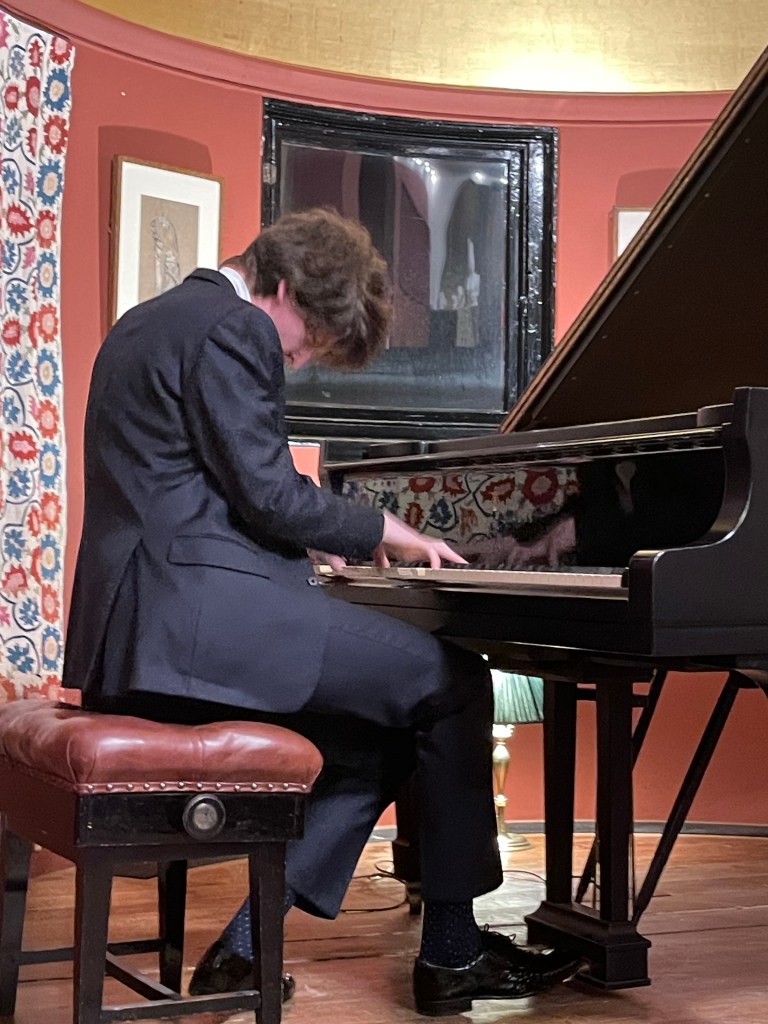
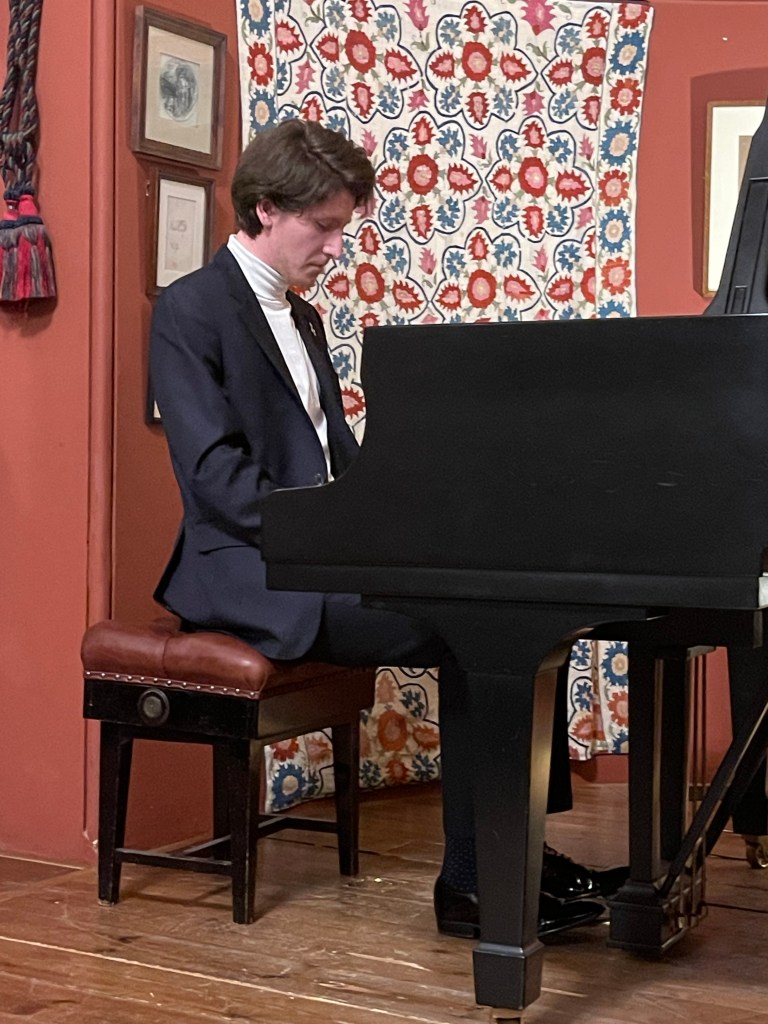
Emanuil Ivanov attracted international attention after receiving the First prize at the 2019 Ferruccio Busoni Piano Competition in Italy. This achievement was followed by concert engagements in some of the world’s most prestigious halls including Teatro alla Scala in Milan and Herculessaal in Munich. He recently completed his studies on a full scholarship at the Royal Birmingham Conservatoire under the tutelage of Pascal Nemirovski and Anthony Hewitt, and from September studies under Joanna MacGregor and Christopher Elton at London’s Royal Academy of Music as a recipient of the prestigious Bicentenary Scholarship. His programme for KCMS brings together some of the finest piano writing of the 19th century, with a respectful nod to the Baroque era via Busoni’s famous transcription of Bach.:
Emanuil Ivanov writes
‘A “prelude” is indeed an appropriate opening for a recital programme – yet the notions of mere introductory brevity the term might bring forth cannot undermine the profundity and splendour of J.S. Bach’s Chorale Preludes. Originally for organ, ten of these works were given new shape by Ferruccio Busoni,the transcriptions written around 1898. Under number seven stands “Durch Adams Fall ist ganz verderbt” (“Through Adam’s fall all is lost”) and indeed this title appears twice – as 7a and 7b. Busoni adapts two Bach works based on the same text and gives us the option to either present them separately, or as a unified pair – a prelude and fugue combination, and that is how I’ve chosen to perform them. A work of quiet, yet powerful impact. A stern, sombre sermon; a moving prayer of penitence.
Beethoven’s so-called “Tempest” sonata is one of those workswhere the “subtitle question” can be a source of endless debate. Unlike other, more arbitrarily chosen and not coming from the composer subtitles, the one associated with the op.31 no.2 Sonata could actually be traced to Beethoven himself. It has been said that in a conversation with his associate Anton Schindler, the Master suggested reading Shakespeare’s “The Tempest” as a possible key to unlocking the sonata’s secrets.Whether true or not, the work does share a certain enigmatic quality with the play and it is rather fun trying to link together episodes in the music and in the Bard’s masterpiece. And yet, an even more plausible explanation for its frequent plunges into darkness might be the time it was written in – 1801-1802, the time of increasing despair for Beethoven, on account of his worsening deafness.
The ”song without words” genre is a curious contradiction – song lyrics usually have a vital role in bringing concrete meaning and image – yet the absence of the latter makes the works in this genre even more poignant. Mendelssohn published eight collections of six songs each over his lifetime and the op.30 was written in 1833-34. These are six gems, masterful in form, delicately balanced in texture, and showcasing the composer’s melodic genius. Ranging from sumptuous arias and hushed confessions to vivacious dance and dramatic outpourings, the cycle is concluded with a famous “gondolier’s song”. I shall insert a quote from Mendelssohn himself regarding the non-verbal aspect of his “Lieder ohne Worte”: “What the music I love expresses to me, is not thought too indefinite to put into words, but on the contrary, too definite”
Boldly defying convention and calling upon the instrument’s ability to evoke a full orchestral sonority, Charles-Valentin Alkan titles this work “Symphony for solo piano”. Even more unusually, its four movements are also numbers 4 to 7 in a collection of 12 etudes in all the minor keys (1857). While it might seem superficial, the spirit of duality seems to have a prominent role in the music, navigating between searing drama and lyricism. Starting from a weighty sonata-form movement, at times quite Mendelssohnian (but Mendelssohn “on steroids”!), the work then journeys through a funeral march with a central section of great beauty, and a biting, unstable minuet with a gentle, song-like trio. This all leads to the finale, described by Raymond Lewenthal as “a ride in Hell”. And aptly so, especially for the pianist! Driving forward with extreme ferocity and throat-grabbing relentlessness, this movement is the climax of the work and, demanding every ounce of energy from the performer, it provides a remarkable conclusion to the Symphony.’
Christopher Axworthy writes
A quite remarkable recital by the 2019 Busoni winner,Emanuil Ivanov.
After his sensational recital a month ago of the Rzewski variations:https://christopheraxworthymusiccommentary.com/2024/10/09/emanuil-ivanov-sensational-performance-at-the-wigmore-hall-of-rzewski-the-people-united-will-never-be-defeated-a-staggering-performance-of-total-mastery-and-musical-communication/
And with recent performances of the Busoni Concerto in England and Bulgaria under his belt he is now turning his attention to Alkan. Even he exclaimed what a monster the Symphony op 39 4/7 is.
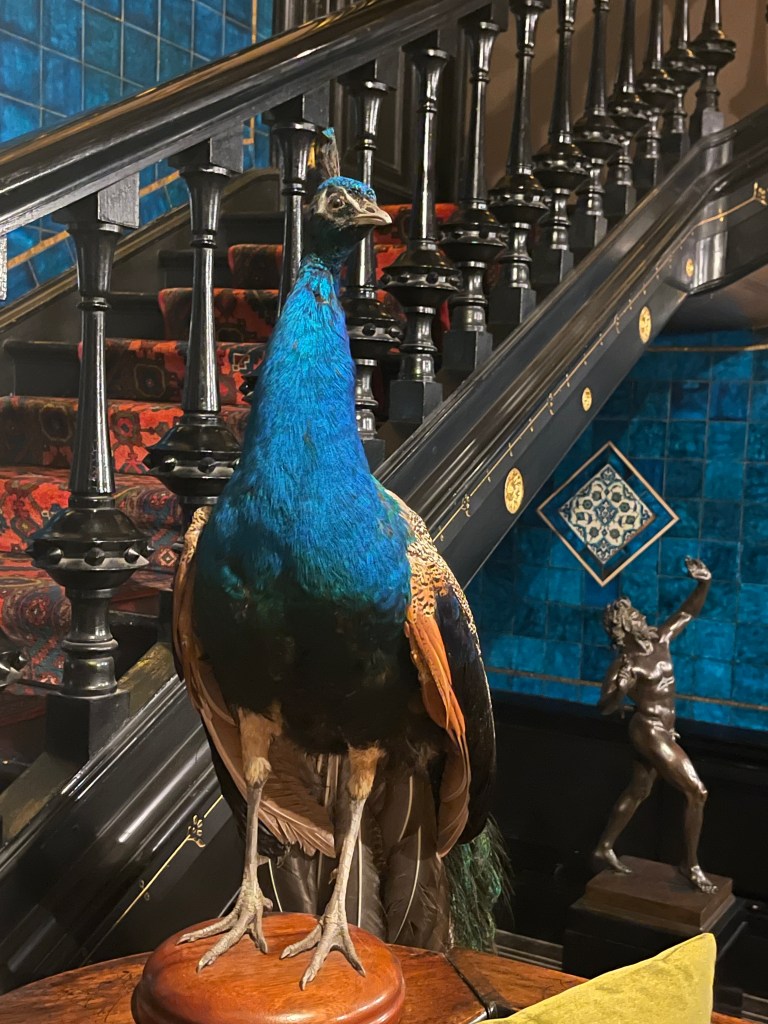
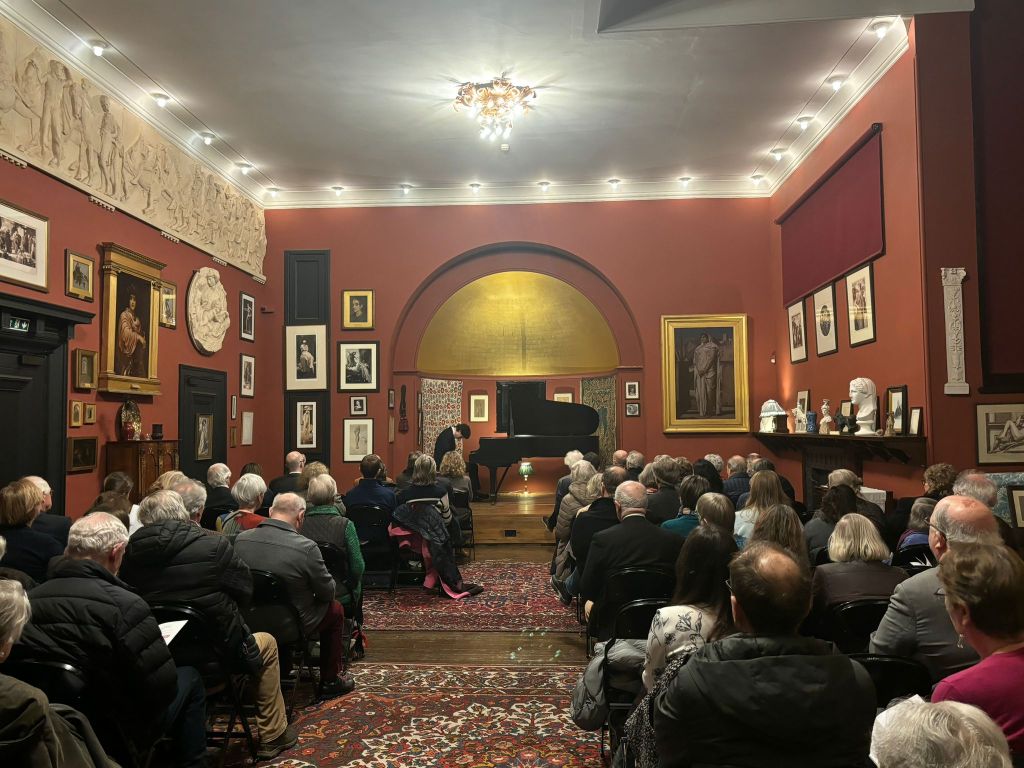
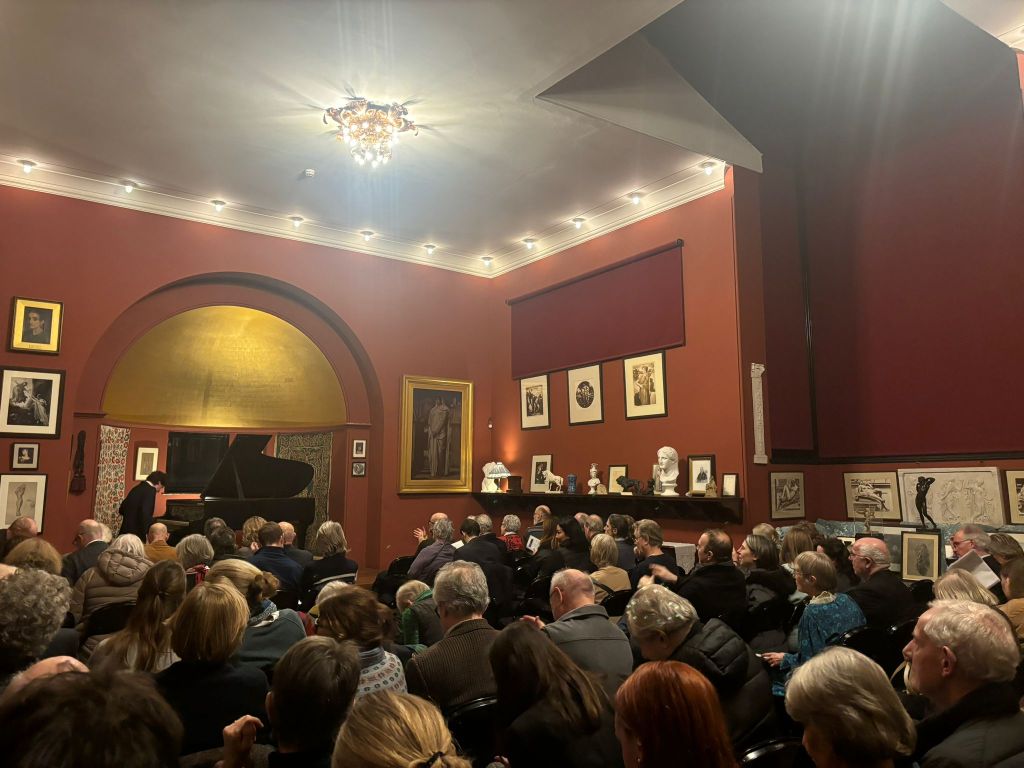
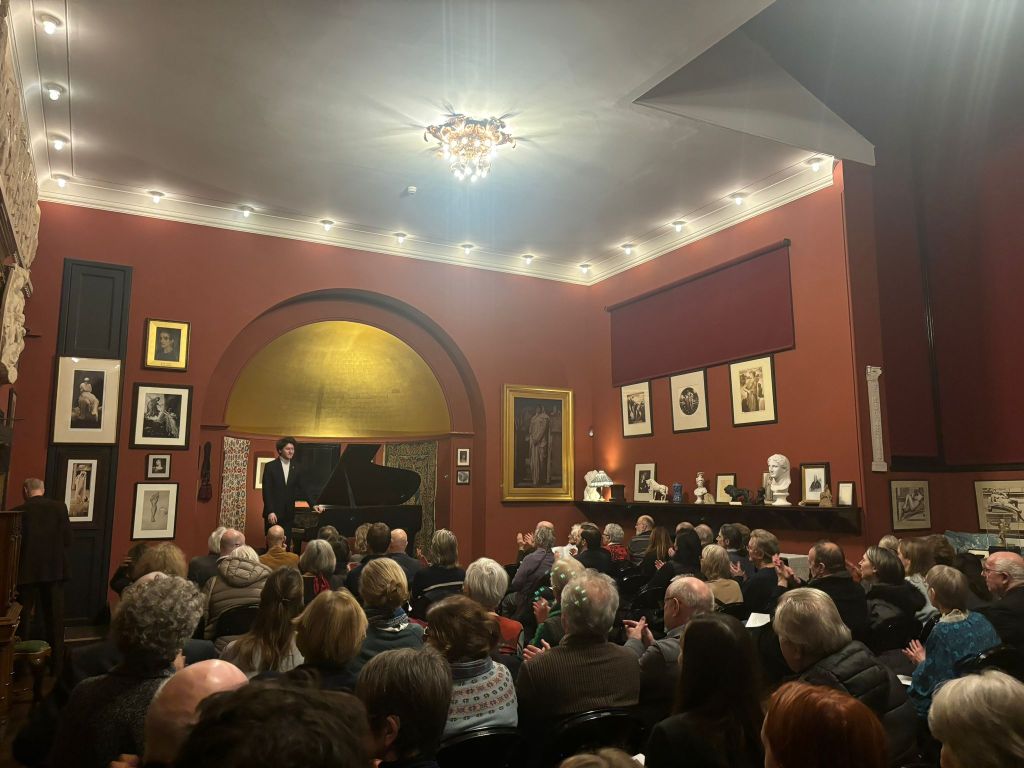
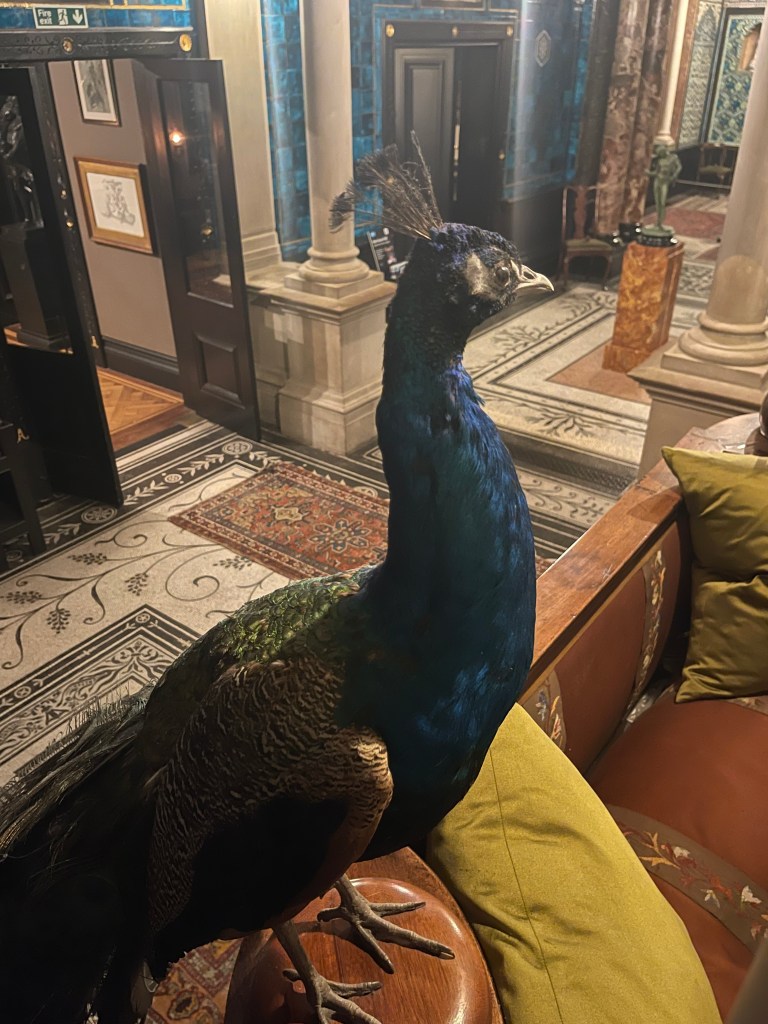
Well it almost made the peacock blush and certainly overwhelmed all those lucky enough to be present in Leighton House last night .A finale that does not give you time to breathe, exclaimed our valiant hero.
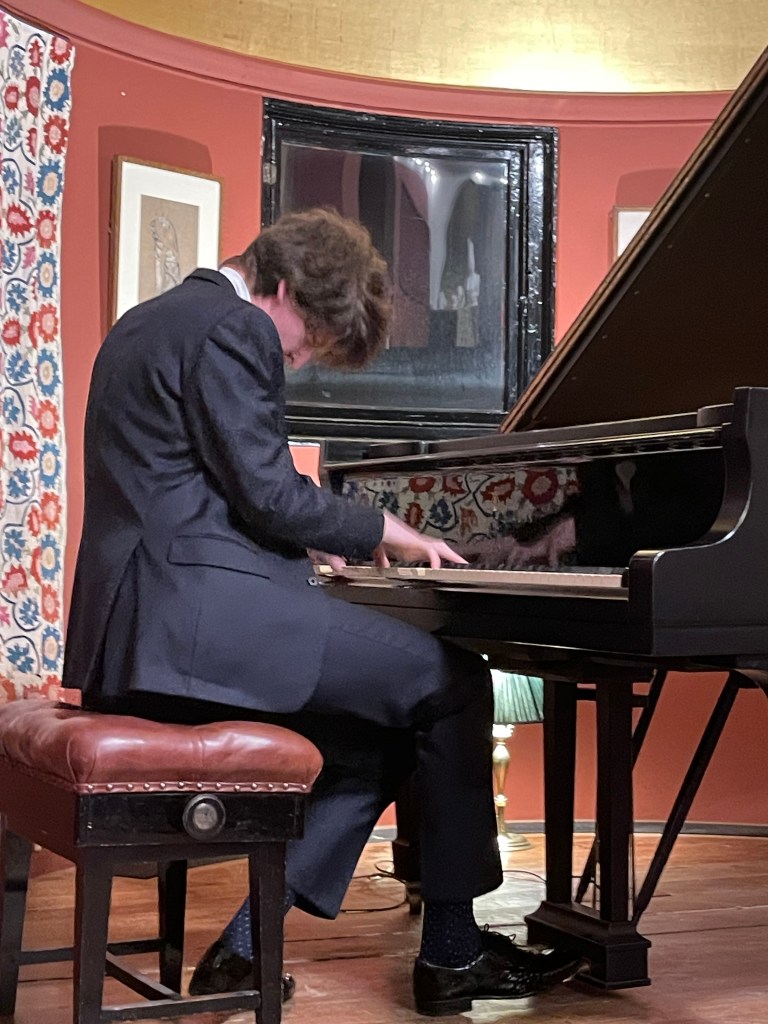
We were all totally aware of that as the transcendental demands of this mysterious colleague of Chopin and Liszt were not only met but also shaped with intelligence and mastery that was quite breathtakingly exhilarating. Alkan’s Menuet where all the devils were unleashed with a Mendelssohnian fleetness that would have put to shame his elegant Victorian refinement .An amazing Funeral March with Emanuil’s mastery of balance allowing the haunting tenor melody to sing out accompanied by devilish spiky chords.
But it was the first movement that was so remarkable .Opening like the Eroica with no nonsensical preamble but straight down to business with a palpitating agitated melodic germ that was to be varied and repeated in a million different ways in a first movement that Emanuil shaped with architectural courage and with a kaleidoscope of colour that had us on the edge of our seats .
This had been after Mendelssohn’s songs without words op 30. What ravishing beauty he unravelled with aristocratic good taste and beguiling poetry.The second of this book of six little gems was played with that quixotic fleeting lightness that Allkan was to transform into something much more sinister.The simple beauty and elegance of the Venetian Boat Song underlined the shock as the ghostly mysterious presence of Alkan was lain before us.
An encore after the Alkan would be inconceivable for any but the greatest masters and Emanuil took a few minutes to sift through his vast repertoire before calming the infernal atmosphere with Busoni’s Elegie on the most pastoral of all traditional melodies: Greensleeves. Refined jeux perlé and magical glissandi of another era accompanied the melody as never before .
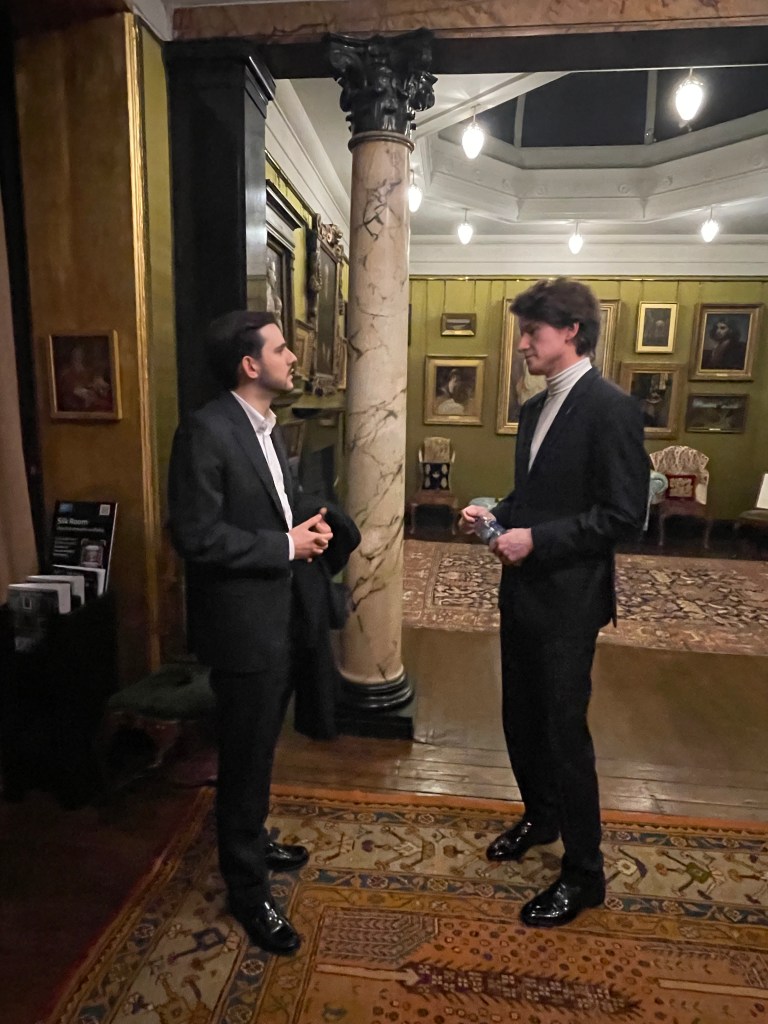
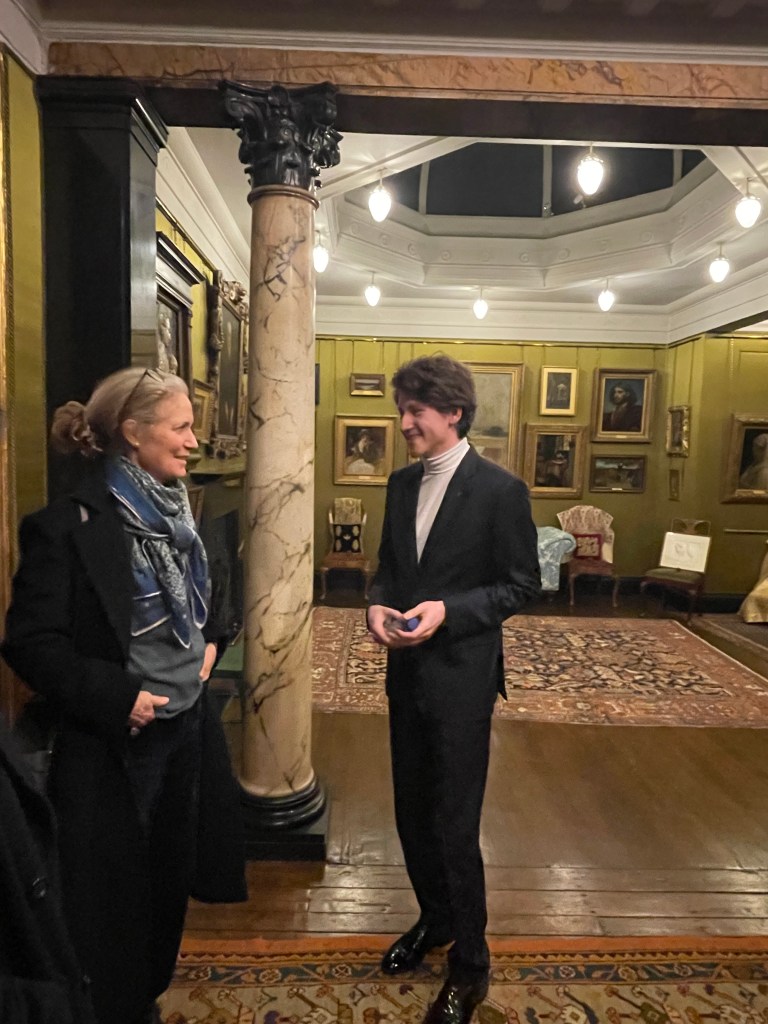
If we had insisted ,Emanuil told be afterwards, we would have been rewarded with his own Gulda inspired Theme and Variations written as an engagement present for Irina. He had played them a year ago in Florence and when I met him again in London a few months ago he introduced me to his wife! How could anyone resist such an extraordinary declaration !
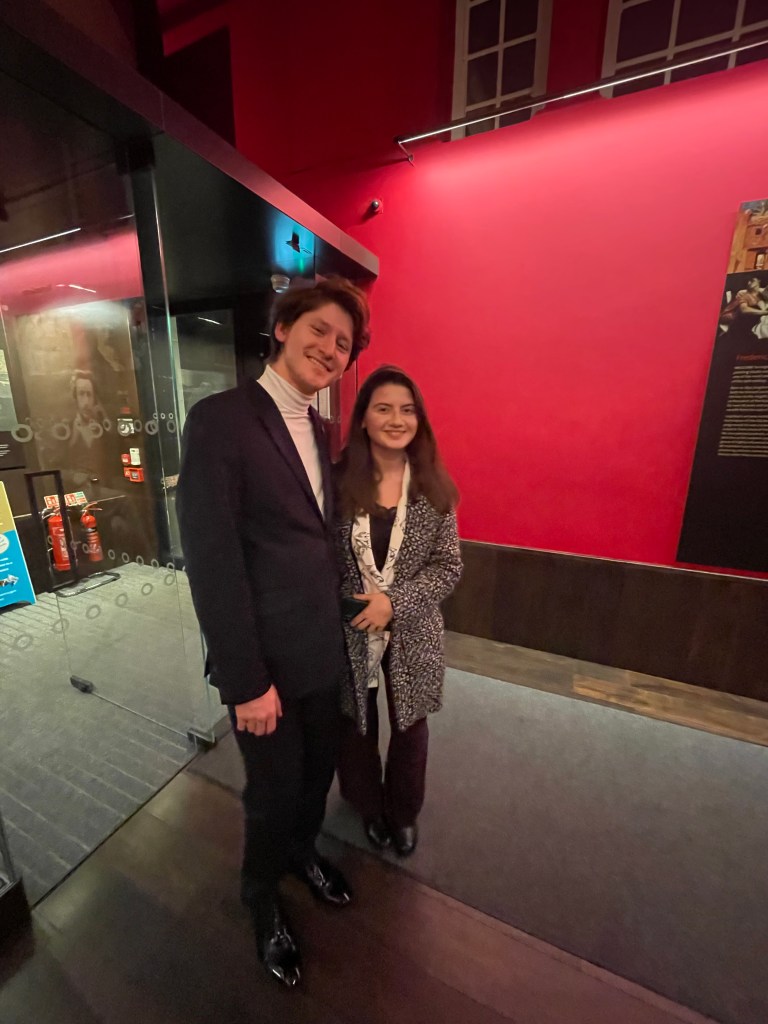
A first half opening with the deep meditative Chorale prelude ‘Through Adam’s fall’ by Bach in a double transcription by Busoni. Emanuil’s eclectic inquisitive mind played the two transcription 7a and 7 b as a unified pair .
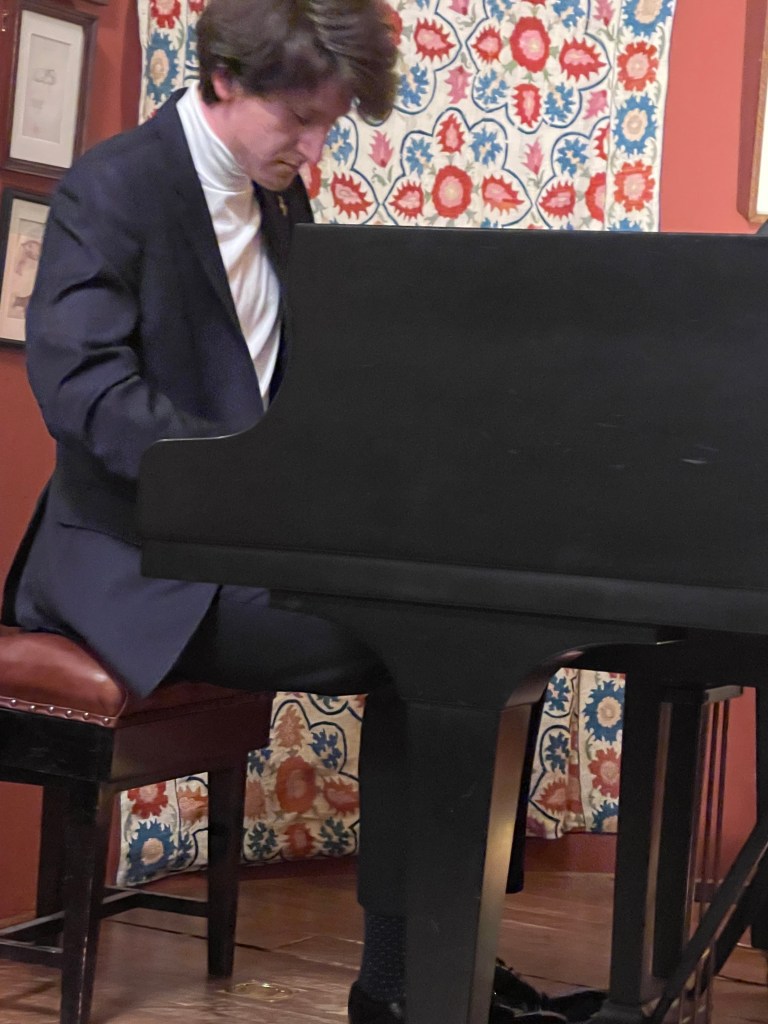
Beethoven’s ‘Tempest’ Sonata crept in on the wave of such profound utterings with an opening of truly ghostly proportions .The whispered recitativi barely audible as he followed the composer’s precise instructions with the microscopic intelligence of a true ‘interpreter’ at he service of the composer. It was this selfless mastery that was noted by one of the audience members sure that the Kensington and Chelsea Music Society had been honoured to have such an artist obviously headed for the stars.
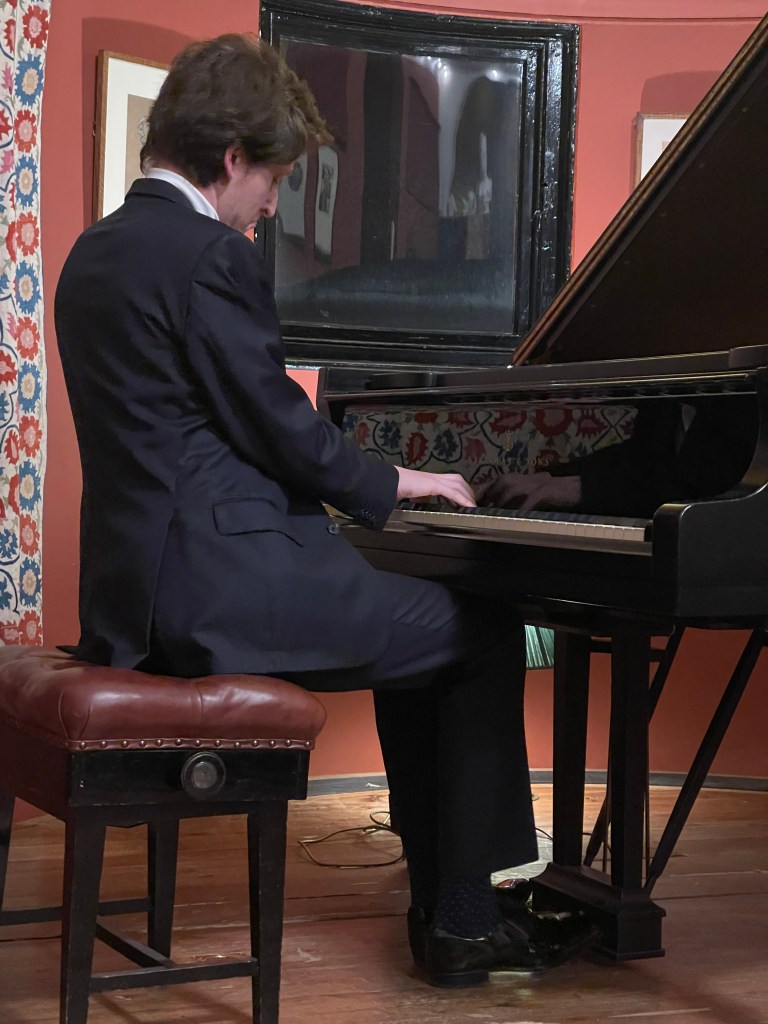
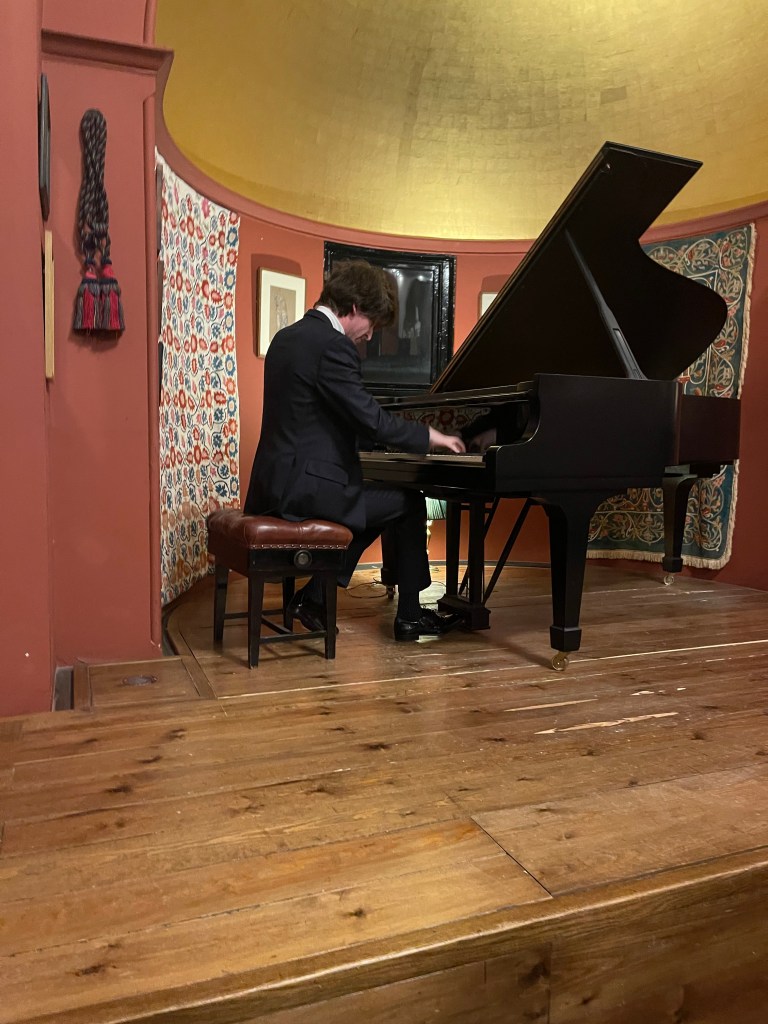
The contrast in dynamics in the Beethoven took us all by surprise as the composers irascible temperament was even more schizoid than Schumann’s dual personalities of Florestan and Eusebius. An adagio that was a wash of beautiful sounds spread over the keyboard and the bed for one of Beethoven’s most noble and aristocratic melodic creations.
The final Allegretto was played with a dry lilting simplicity that was quite irresistible.Dramatic outbursts made this beguiling Rondo melody ever more hypnotic until it disappeared completely deep into the depths of the keyboard.
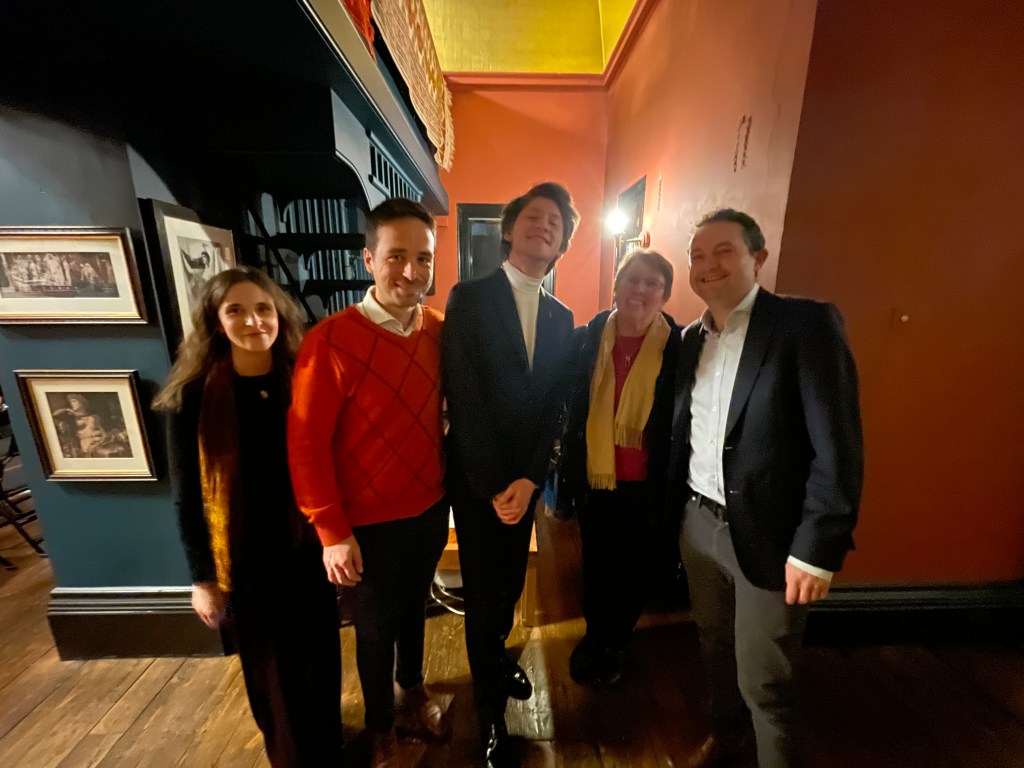
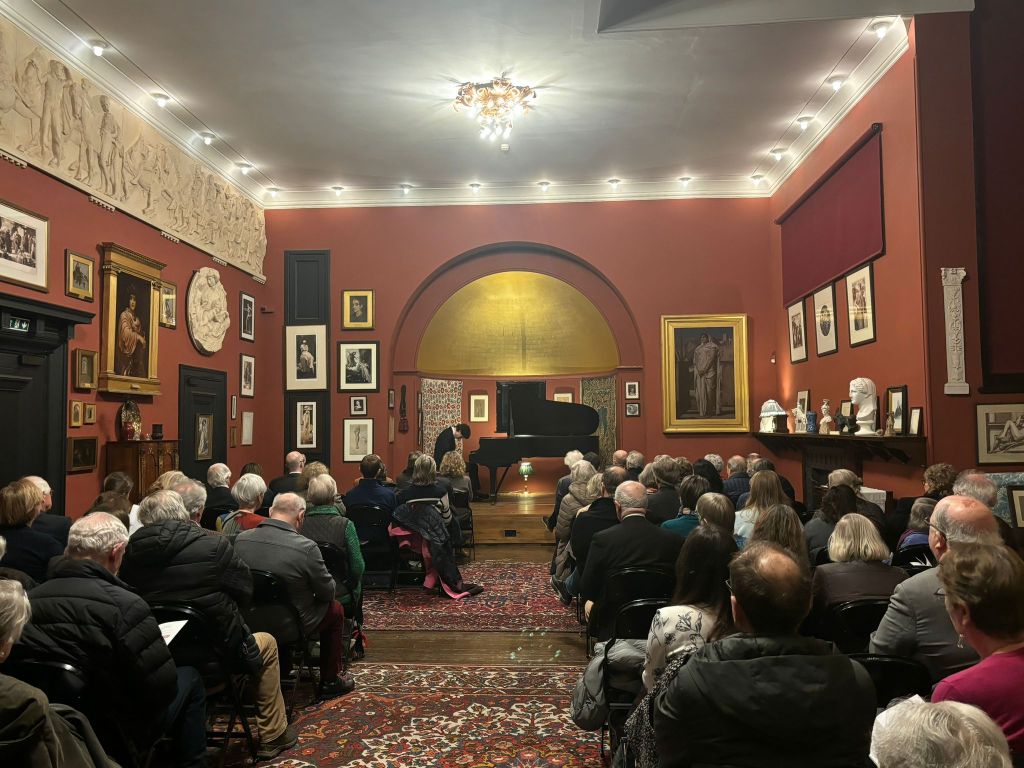
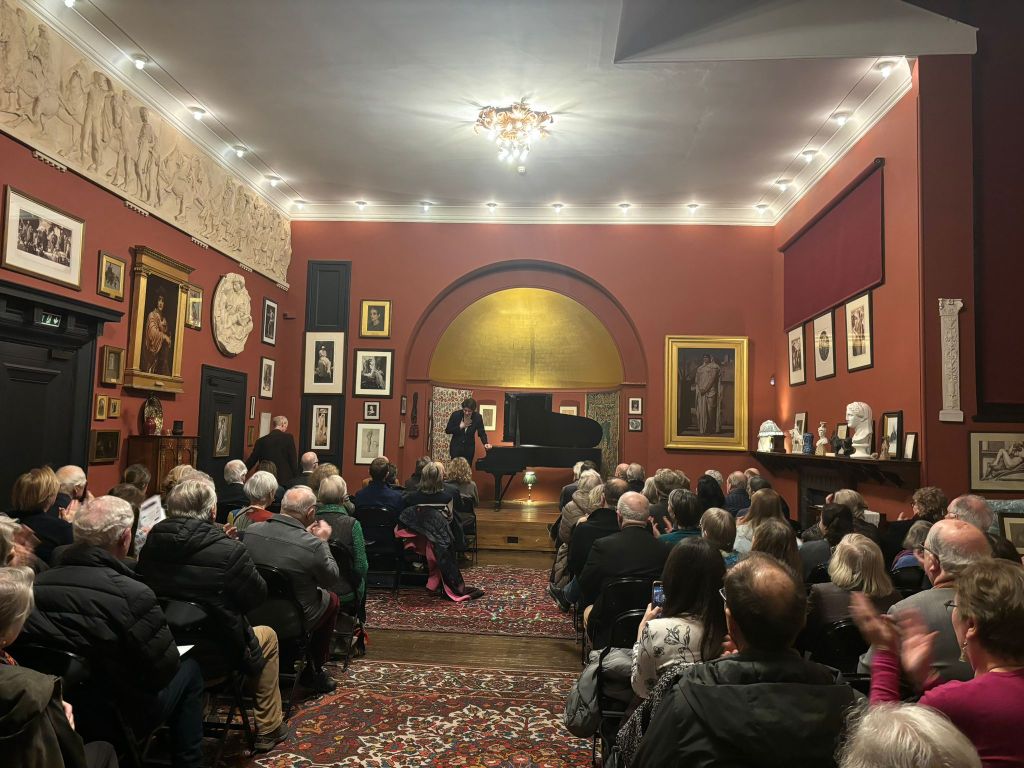
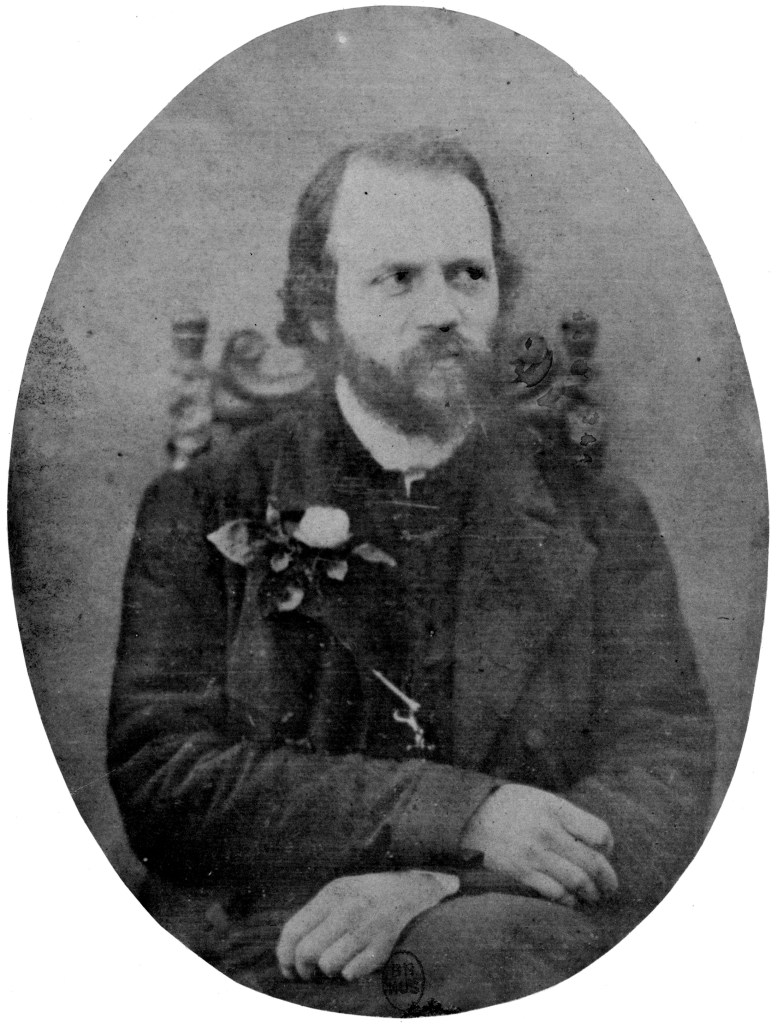
The Symphony for Solo Piano op 39 4-7,is a large-scale romantic work for piano composed by Charles – Valentin Alkan and published in 1857.
Although it is generally performed as a self-contained work, it comprises études Nos. 4–7 from the Douze études dans tour les tons mineurs (Twelve Studies in All the Minor Keys), Op. 39, each title containing the word Symphonie . The four movements are titled Allegro moderato, Marche funèbre,Menuet and Finale ( described by Raymond Lewenthal as a ride in hell). Much like the Concerto for Solo Piano (Nos. 8–10), the Symphony is written so as to evoke the broad palette of timbres and harmonic textures available to an orchestra. It does not contain the excesses of the Concerto or the Grande Sonate (Op. 33). But, rather like the Sonatine Op. 61, it proves that Alkan was also capable of writing perfectly balanced and almost ‘Classical’ works.”Unlike a standard classical symphony, each movement is in a different key, rising in progressive tonality by a perfect fourth.
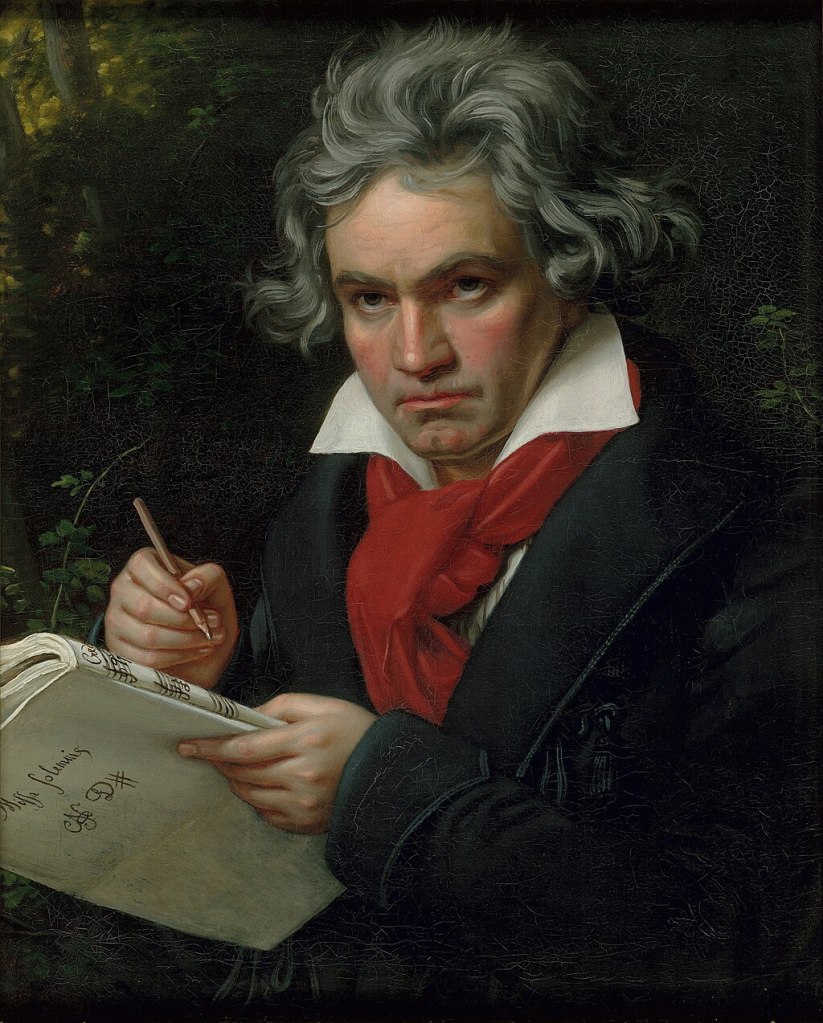
Born Bonn and baptised 17th December 1770 Died Vienna 26th March 1827
The Piano Sonata No. 17 in D minor, op. 31, n. 2, was composed in 1801–02 . ‘With all the tragic power of its first movement the D minor Sonata is, like Prospero , almost as far beyond tragedy as it is beyond mere foul weather. It will do you no harm to think of Miranda at bars 31–38 of the slow movement… but people who want to identify Ariel and Caliban and the castaways, good and villainous, may as well confine their attention to the exploits of Scarlet Pimpernel when the Eroica or the C minor Symphony is being played.’ Donald Tovey .
The sonata is in three movements:
- Largo – Allegro
- Adagio
- Allegretto
Each of the movements is in sonata form , although the second lacks a substantial development section
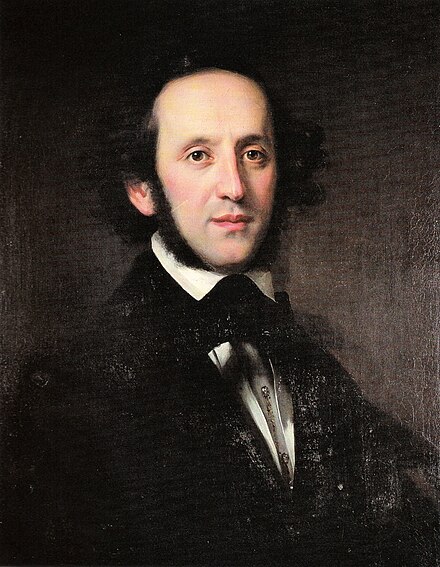
Born 3 February 1809 Hamburg Died 4 November 1847 (aged 38)Leipzig
Songs Without Words (Lieder ohne Worte) is a series of short lyrical works by Felix Mendelssohn written between 1829 and 1845. His sister, Fanny, and other composers also wrote pieces in the same genre.The eight volumes of Songs Without Words, each consisting of six songs , were written at various points throughout Mendelssohn’s life and published separately. Number 2 was written for his sister Fanny to celebrate the birth of her son in 1830.
Book 2, Op. 30 (1833–34)
- Andante espressivo (E♭ major), MWV U 103
- Allegro di molto (B♭ minor), MWV U 77
- Adagio non troppo (E major), MWV U 104
- Agitato e con fuoco (B minor), MWV U 98
- Andante grazioso (D major), MWV U 97
- Allegretto tranquillo: Venetianisches Gondellied(“Venetian Boat Song No. 2”) (F♯ minor), MWV U 110
Book 2 was dedicated to Elisa von Woringen.

Alongside the Chaconne for violin, the ten Chorale Preludes for organ are Busoni’s best-known piano transcriptions of works by J. S. Bach. Unlike the Chaconne, which Busoni envisaged for concert performance, he transcribed the Chorale Preludes in “chamber-music style”.
Emanuil Ivanov sensational performance at the Wigmore Hall of Rzewski ‘ The People United will never be defeated ’ A staggering performance of total mastery and musical communication – a happening as never before!
Emanuil Ivanov a great pianist of humility and intelligence takes St.Mary’s by storm

Emanuil Ivanov attracted international attention after receiving the First prize at the 2019 Ferruccio Busoni Piano Competition in Italy. This achievement was followed by concert engagements in some of the world’s most prestigious halls including Teatro alla Scala in Milan and Herculessaal in Munich.
Emanuil Ivanov was born in 1998 in the town of Pazardzhik, Bulgaria. From an early age he demonstrated a keen interest and love for music. He regards the presence of symphonic music, especially that of Gustav Mahler, as tremendously influential in his musical upbringing during his childhood.
He started piano lessons with Galina Daskalova in his hometown around the age of seven. Ivanov studied with renowned bulgarian pianist Atanas Kurtev from 2013 to 2018. Subsequently he studied on a full scholarship at the Royal Birmingham Conservatoire under the tutelage of Pascal Nemirovski and Anthony Hewitt, and currently an Advanced Diploma student at London’s Royal Academy of Music as a recipient of the prestigious Bicentenary Scholarship. He has received artistic guidance from Dmitri Bashkirov, Dmitri Alexeev, Sir Stephen Hough, Vladimir Ovchinnikov, Peter Donohoe, etc.
In February 2021, at the height of the Covid-19 pandemic, Ivanov performed a solo recital in Milan’s famous Teatro alla Scala. The concert was live-streamed online and is a major highlight in the artist’s career.
In 2022, he received the honorary silver medal of the Musician’s Company, London and later in the same year became a recipient of the generous Carnwath Piano Scholarship.
Emanuil Ivanov has given critically acclaimed recitals, concerto performances and tours in japan, France, Italy, Germany, Austria, Bulgaria, Cyprus, South Africa, the United Kingdom and Poland. In the summer of 2023, he recorded an album of Scarlatti sonatas for the renowned Naxos label. Ivanov’s performances have been featured on BBC Radio 3, Italy’s Rai Radio 3 and Japan’s NHK Radio.
Emanuil has continually shown affinity towards some of the more rarely performed works in the repertoire and in 2024 he performed Busoni’s mammoth piano concerto. Apart from playing the piano, he also displays great interest in composition and has composed regularly since childhood.

Point and Counterpoint 2024 A personal view by Christopher Axworthy
 ChristopherAxworthy-MusicCommentary