

A fascinating survey of some music that I did not know but including also a substantial group of Chopin with two Ballades,two studies, a nocturne and six preludes all played with simplicity and mastery.
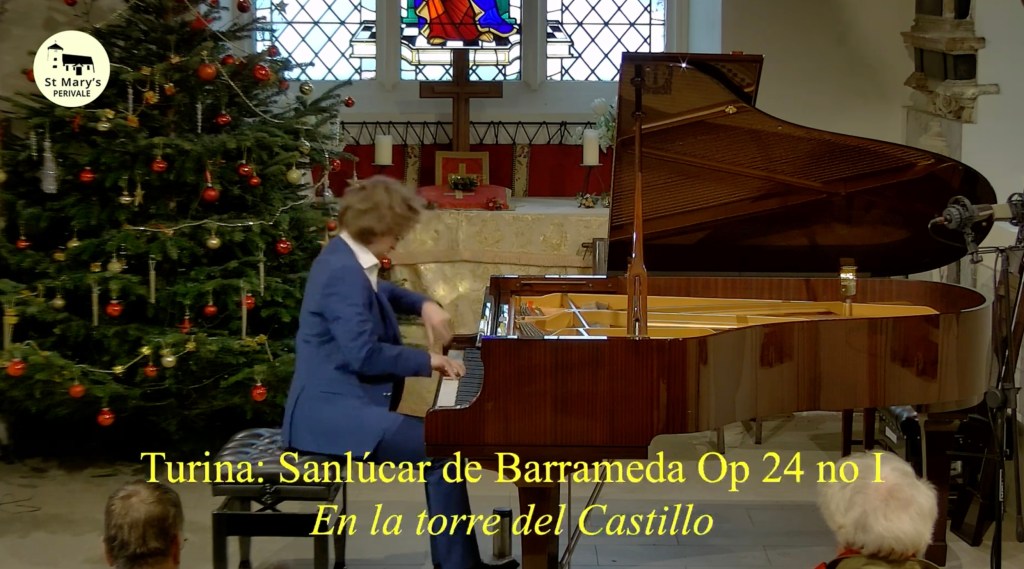
But it was the Turina and Severac that astonished for it’s flamboyance, colour and technical mastery.Playing of great authority brought these two almost unknown works vividly to life with the scintillating brilliance and exhilarating streams of notes of Turina played with burning conviction.
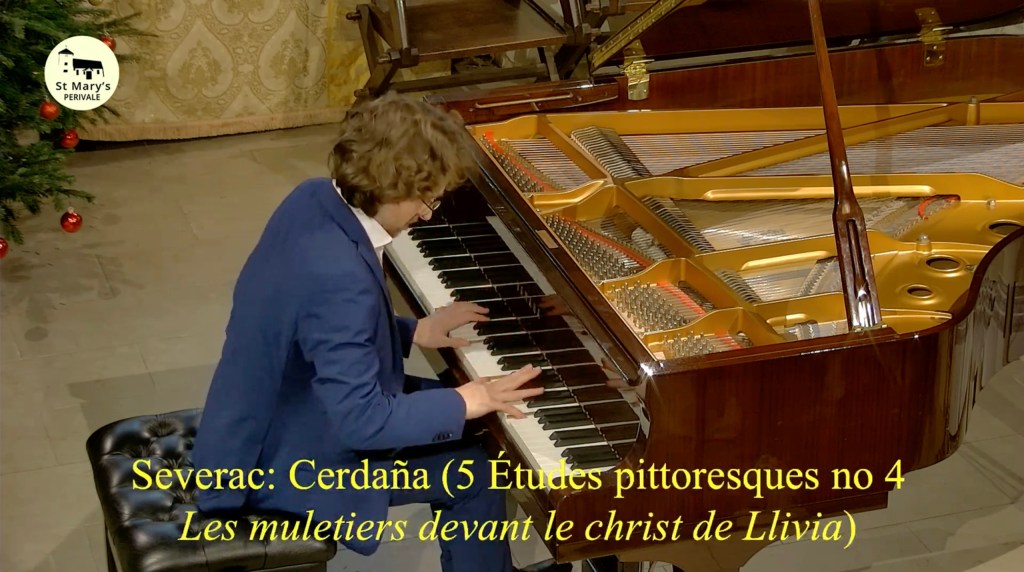
It was followed by the glowing purity of mellifluous outpourings of Severac.A sumptuous tenor melody accompanied by arabesques played with etherial lightness over the whole keyboard as it grew in grandeur.Music of great atmosphere and nostalgia brought magically to life with virtuosistic flamboyance.
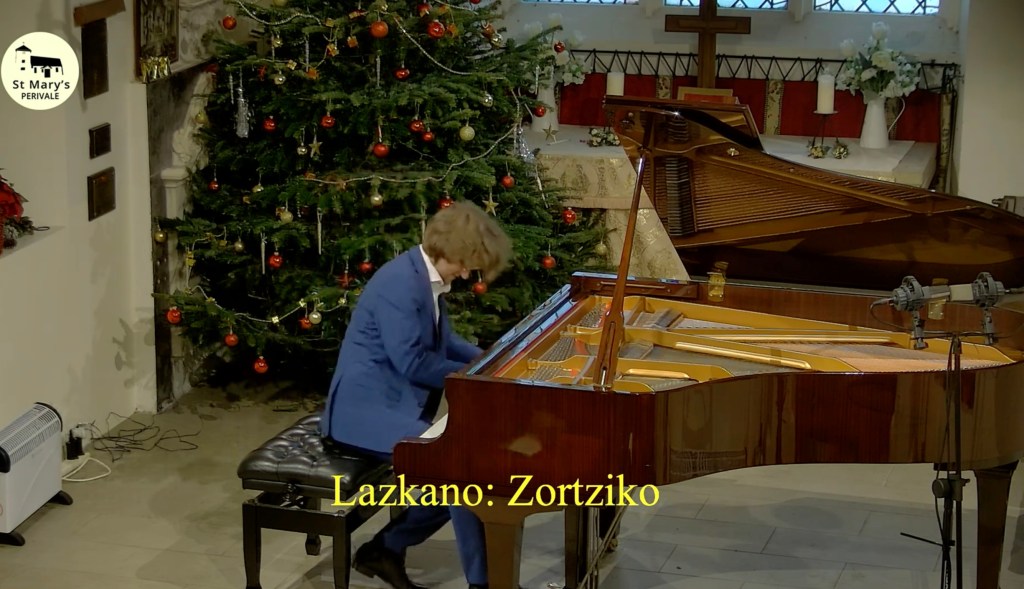
The little ‘greeting’ ‘Zortziko’ by Lazkano was remarkable for it’s use of the reverberations of sound that Julian could create with such imagination and beauty.
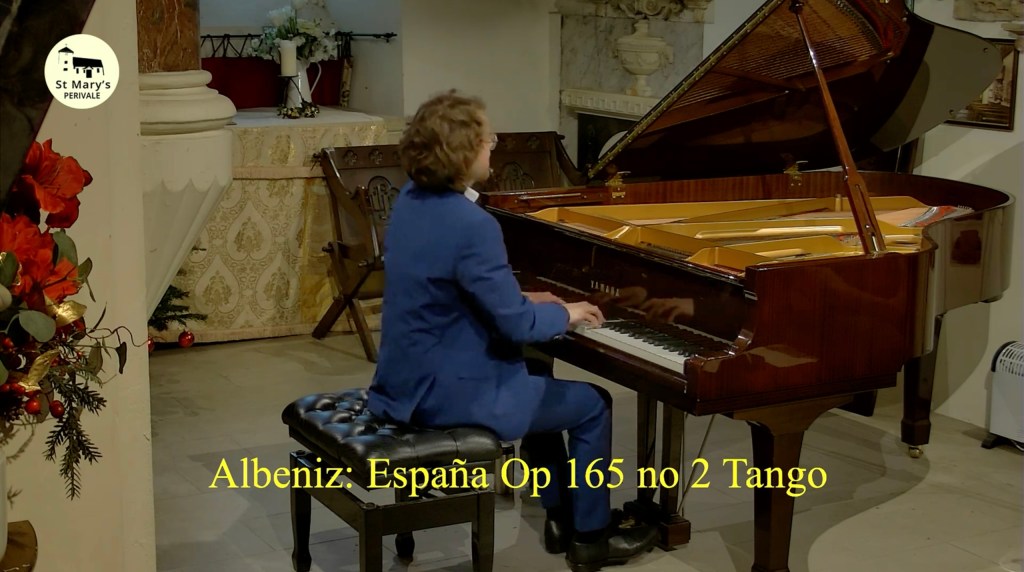
The Albeniz Tango I have heard many times from the hands of Cherkassky but in the Godowsky arrangement.Julian played the original Albeniz that was much simpler but he played it with the same beguiling rubato, glowing luminosity and magic that was the world that Shura could conjure up out of thin air.


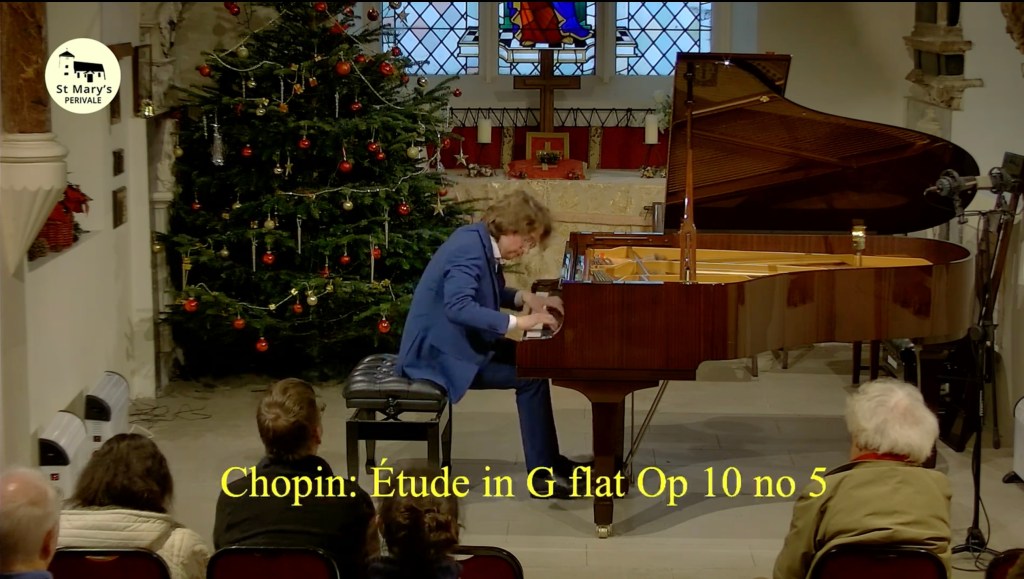
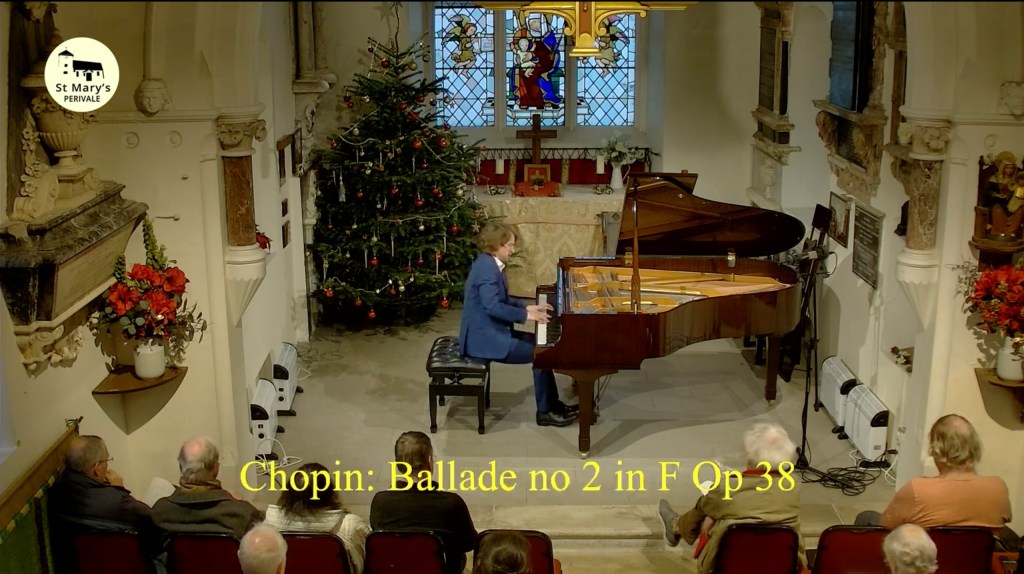
The Chopin Ballades that he chose are the two most pastoral with the beautiful flowing lines of the third that he played with lilting beauty and charm.He was able to incorporate all the ravishing embellishments and Chopin’s genial mellifluous outpouring of delicacy and refined beauty into an architectural whole.The final climax a consequence of all that had come before where Julian found beautiful sumptuous sounds of aristocratic nobility before the stream of notes that takes us to the final cadence that was played with simplicity and not the more usually heard rhetorical slamming of the door!.The second Ballade too was played with disarming simplicity which made the tempestuous interruptions so much more breathtaking. Julian playing with remarkable conviction and real weight ,where he dug deep into the notes without any hardening of sound but with a richness that made the dynamic drive of the coda ever more exhilarating and exciting.The two studies he played showed off Julian’s breathtaking mastery but also his musicianship.A black key study that I have rarely heard played with such assurance and ‘joie de vivre’ where the notes just seemed to pour from his fingers with natural ease to which was added charm and style.The octave study was remarkable for the power without hardness that he could bring to the outer episodes.But it was the central episode where Julian’s intelligent musicianship could show us so clearly the architectural shape of refined beauty where his slight weight on the thumb notes gave a depth and richness to the sudden outpouring of melodious octaves that the genius of Chopin could portray even in a simple study.The nocturne in B was played with great weight and no sentimentality.This was deeply felt aristocratic playing where the ‘bel canto’ embellishments were incorporated into the long melodic lines that Chopin chisels with such poignancy .It was the same disarming simplicity that Julian brought to the first of a group of six preludes.The simple charm of the A major was followed by the passionate outpouring of the glorious F sharp minor .It was here that amongst the streams of notes Julian could show us the melodic line so clearly and beautifully.He brought great nobility to the E major Largo before the scintillating jeux perlé brilliance of the tenth.Simple beauty of the eleventh was followed by the dynamic drive of the impetuous Presto of the thirteenth.Chopin never intended for his Preludes to be played as a set of twenty four in one sitting and Julian showed us just how right he was!
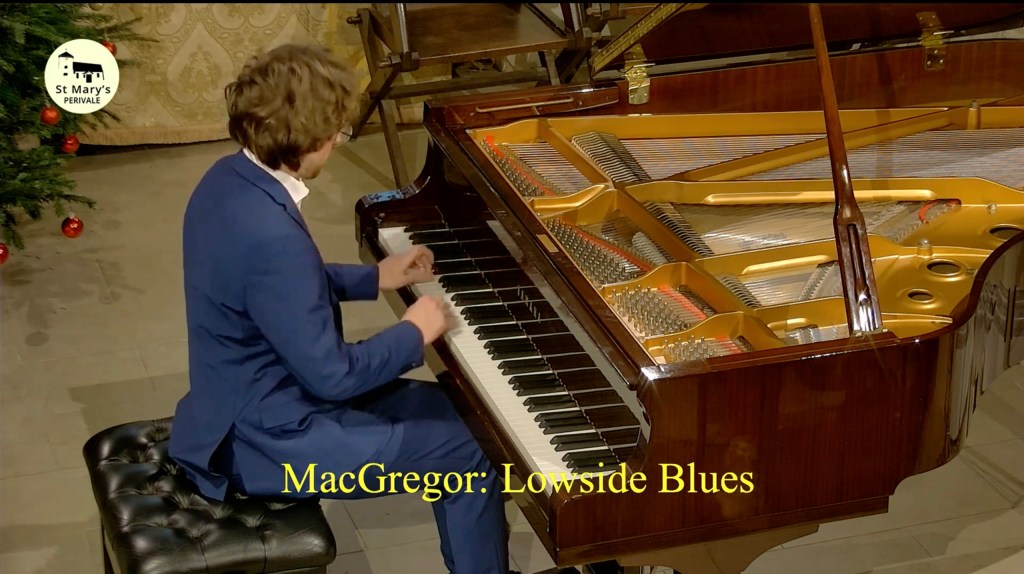
Four short pieces by virtually unknown ( to me at least) women composers. Julian brought a purity of luminous sounds to Tanaka’s ‘Lavender Field’ but it was Joanna Mc Gregor’s ‘Lowside Blues’ that ignited the atmosphere with the enticing jazz rhythms and joyous, riotous fun of the genial head of keyboard at the Royal Academy and that she often adds to a sometimes over serious institution (she was also the only one of four whose name I recognised! )

A single encore although Julian could have gone on much longer.
‘Warum’ by Schumann was played with ravishing subtle beauty and had us all asking ourselves : ‘Why’ is Julian the only pianist who can discover and present ( all from memory) so many still unknown composers in such varied programmes of ‘something old and something new?’
Hats off dear Julian the teenager that we have followed and admired for so many years has become a great pianist with something important to say and ready to take the world by storm.
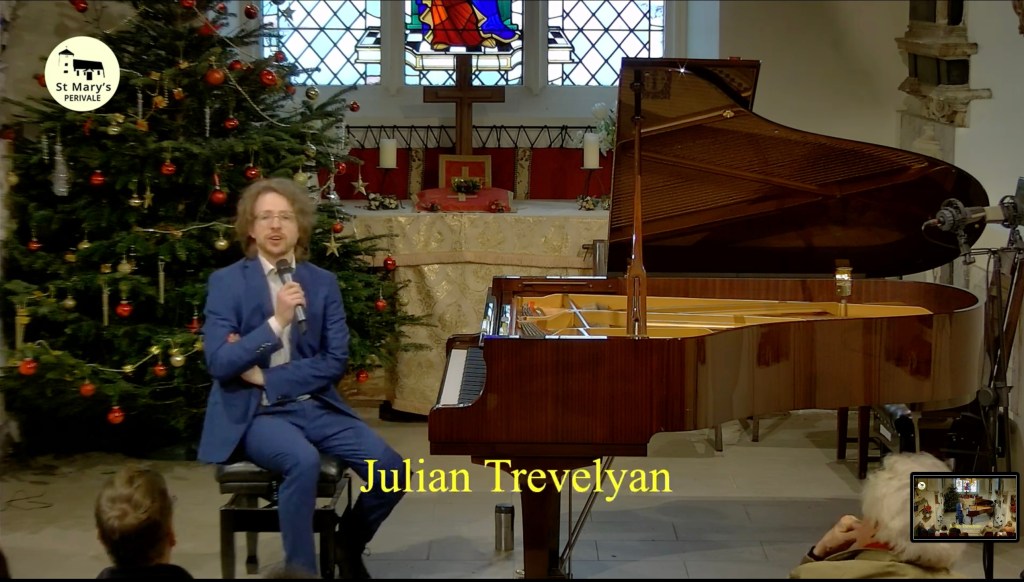
Julian Trevelyan is a concert pianist who performs regularly throughout Europe and in the UK. He came to international attention when, at the age of sixteen, he came top in the 2015 Long-Thibaud-Crespin international competition in Paris. He has since gained further laureates and prizes in Belgium, England, Germany and Switzerland. . Recent competition successes in Europe include the Silver Medal in the 2023 Horowitz competition Kyiv-Geneva, and the second prize, the Mozart concerto prize and the audience prize in the 2021 Géza Anda international piano competition in Zürich. In September 2024 he gained 5th prize in the Leeds International Piano Competition. In 2023, Julian returned to the Ecole Normale de Musique de Paris Alfred Cortot to take part in the Elite program, to develop various musical projects and prepare for competitions
Julian Trevelyan at St Mary’s A voyage of discovery to astonish and uplift

 ChristopherAxworthy-MusicCommentary