
Axel Trolese comes to us via a glowing review from Louis Lortie. Very high praise indeed! Making his London debut in the sumptuous new Bechstein Hall.

Already well known and much admired in Italy he came to this new hall with a programme from Bach to Ravel including shorter pieces by Liszt, Rachmaninov and Albeniz .

It was enough to hear the opening of Bach’s Italian concerto to realise we were in the presence of a real musician with a technical command of the keyboard that could allow him to add ornaments that were like tightly wound springs.But these were subtle ornaments that just highlighted his architectural understanding as the opening movement was played with dynamic rhythmic energy and astonishing clarity. Contrasts of dynamics in layers that were hardly noticeable but illuminated the score with refreshing spontaneity.A slow movement seemingly without pedal as the left hand was a pulsating heartbeat over which expanded the ravishingly simple beauty of Bach’s cantilena.Playing of style and understanding that allowed him to round corners and breathe as a great bel canto singer creating a magical atmosphere of wonder and purity between the two dynamically driven outer movements.The last movement was played with an infectious ‘joie de vivre’ and rhythmic drive with colouring of orchestral proportions.
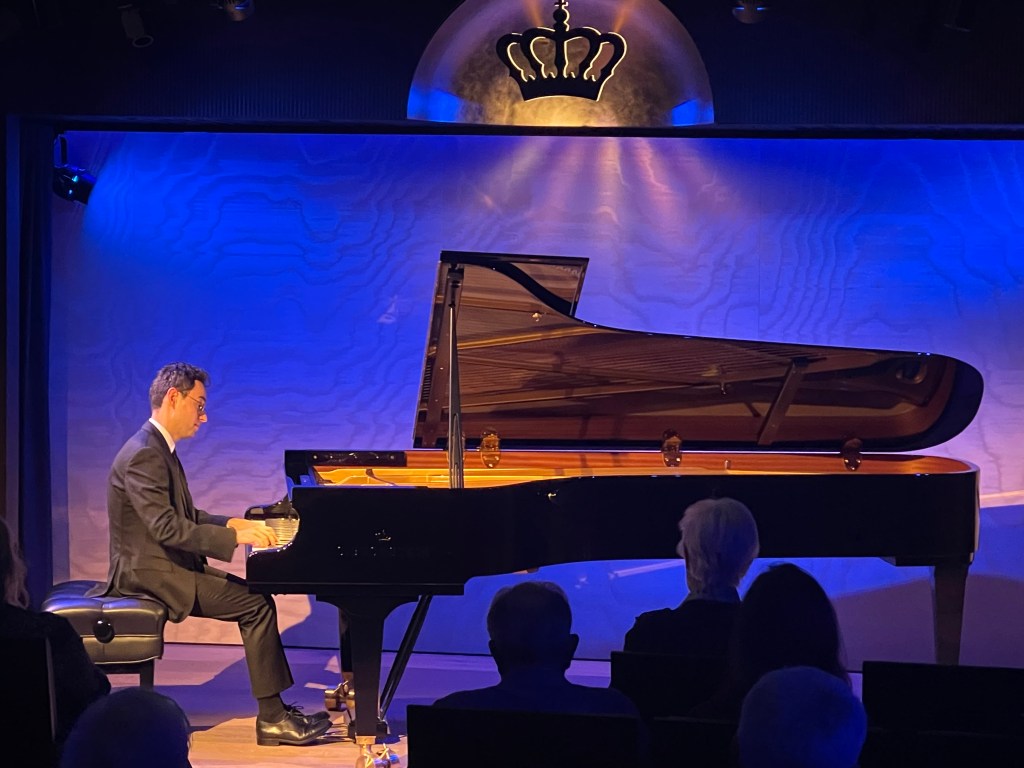
A performance of exultation and exhilaration and a wake up call after the sumptuous Sunday lunch that was part of the concert package of this beautiful new venue.
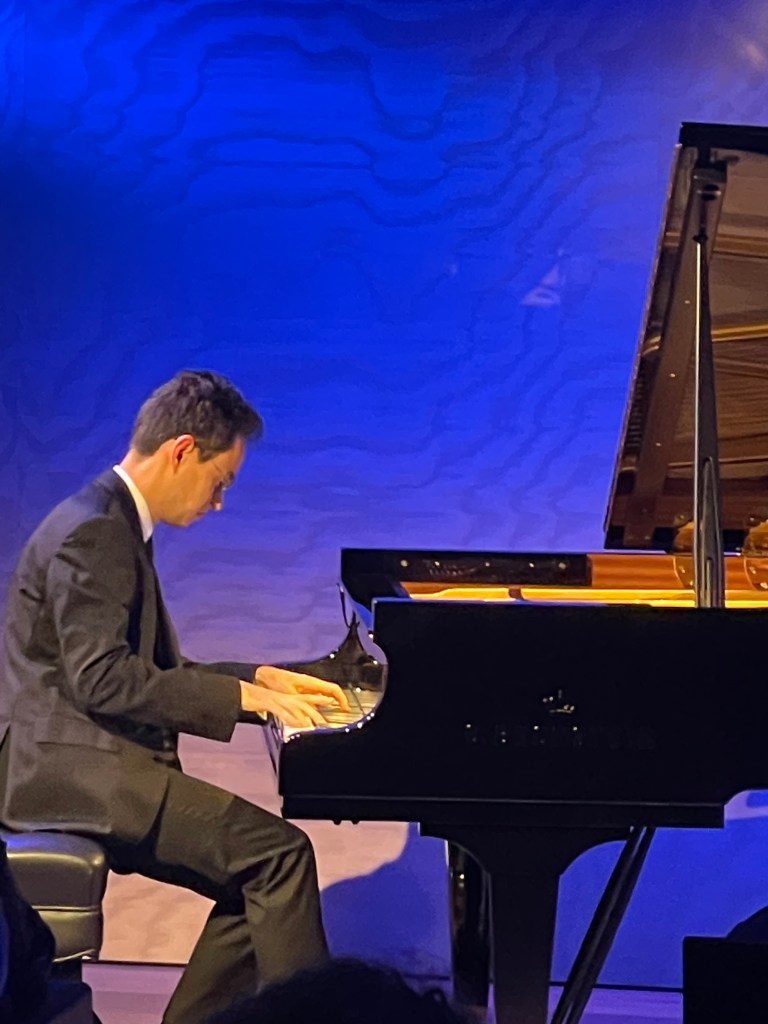
An audience caught in an electric shock of piano playing of extraordinary clarity and precision but also of passion and transcendental command as are testimony the gasps that greeted his phenomenal performance of Liszt’s transcendental study in F minor. A performance where the rests and dynamic markings were observed with mastery and the same intelligent musicianship that he had brought to all he played. A use of the pedals not to smudge or hide but to illuminate and astonish.It was the same crystalline clarity that he had brought to the cascades of water of the fountains at the Villa d’Este .Gently cascading drops of water that gradually built to a torrent of turbulance that anyone who has visited Tivoli can testify to. A whole avenue of small fountains that once used to play music as well and at the end of these vast majestic avenues suddenly an enormous fountain reaching high up into the sky. Liszt was able to portray this scene so vividly as he was too in many of the pieces that he wrote on his travels.

Axel brought his fantasy and artistry to weigh, creating a scintillating after lunch stroll in this magic garden.The Rachmaninov Étude -Tableaux op 33 n. 6 was indeed a call to arms with sumptuous full sound and driving rhythmic energy leading to the triumphant final declamations. After these pianistic pyrotechnics it was refreshing to open the window on a world of sunshine and the simple traditional dance of Spain. Axel has recently recorded Albeniz’s complete Iberia and he feels in his veins the Spanish idiom of dance,colour and animal passion.A curious paradox that the best Spanish music ever written was by French men who had never set foot in Spain! Axel played ‘El Puerto’, the second piece from book one of four.His understanding of the colours and passions was clear from the very first notes as we listened enchanted by this sudden ray of sunlight that had entered this rather darkened atmosphere.
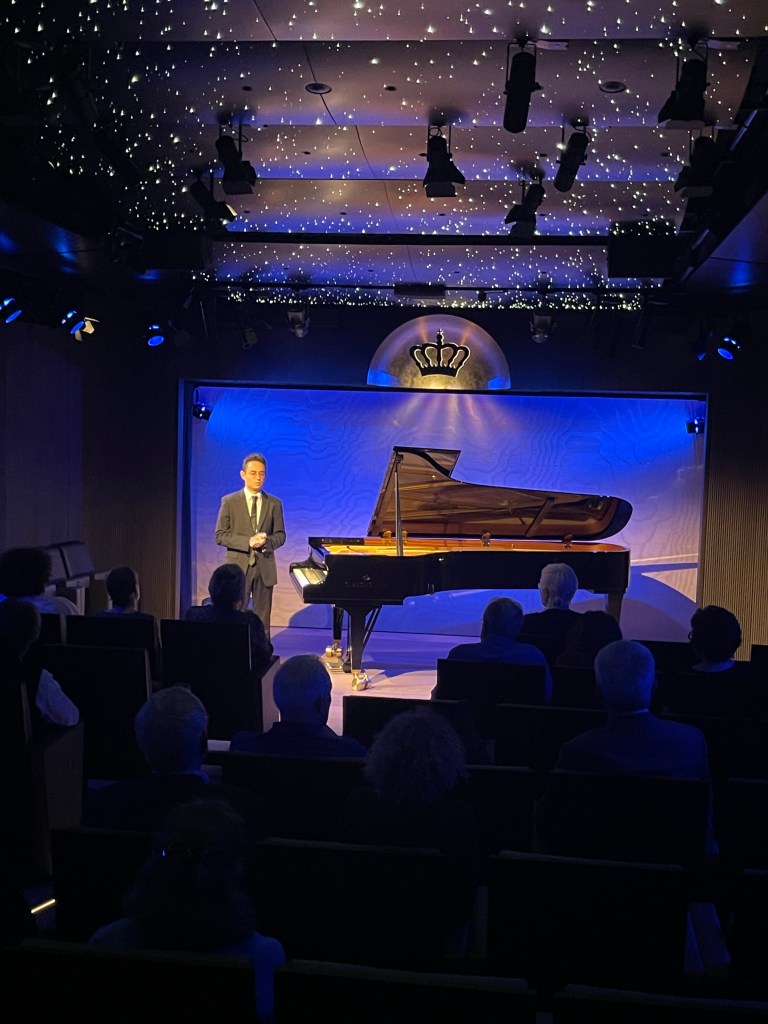
Clicking our heels and stamping our feet we were now ready for the main work on the programme that was the suite ‘Gaspard de la Nuit’ by Ravel inspired by the poem of Aloysius Bertrand .Axel gave a spectacular performance ,one of the finest I have ever heard for it’s impeccable perfection but also poetic understanding and at times breathtaking fearless mastery. He has just recorded it and it is obviously destined to be top of the charts for long to come.
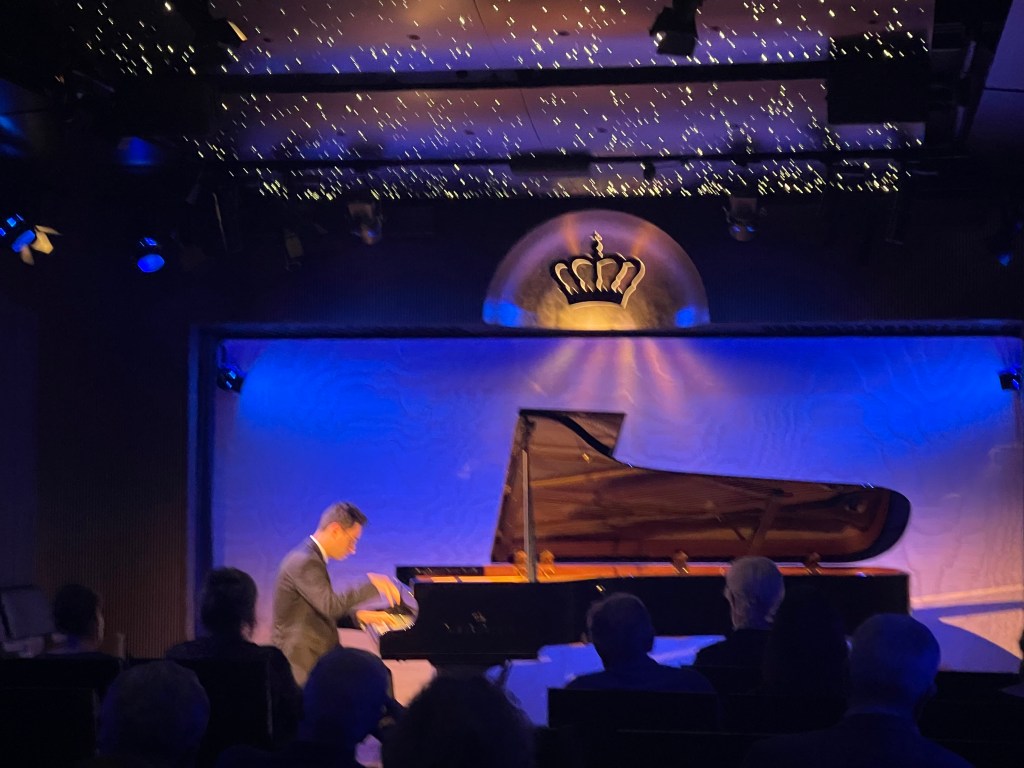
‘Ondine’ was played with a sense of line above a continuous outpouring of glistening sounds of quite extraordinary difficulty. Axel always keeping a sense of balance no matter how quietly he played. Loudly too of course as the streams of thirds and sixths were played with remarkable horizontal sounds as they built up to a tumultuous climax where both hands were required to exult the melodic line hidden within it’s midst. ‘Ondine’ exhausted was left adrift with barely enough breath to murmur goodbye and was played with miraculously whispered tones by Axel with a featherlight fluidity of quite extraordinary sensitivity.A gentle rippling wave took our water nymph from us into the distance with a knowing smile on her face which Ravel depicts with such genius.The tolling bell in ‘Le Gibet’ struck terror into our hearts for the desolate landscape that Ravel depicts and which Axel played with visionary beauty.Sumptuous rich harmonies were allowed to ring out with the tolling bell in the distance and a plaintive voice chiselled into the midst of this desolate atmosphere that seemed to have no beginning and no end.

‘Scarbo’ opened deep in the bass of the piano with three notes with an extraordinary diminuendo followed by chords with very fast reverberations of repeated notes.The notes are notoriously difficult but Axel resolved the problem by playing them with the left hand not the right! Bursts of radiant light erupted over the entire keyboard as the music moved inexorably forward with demonic insistence.Axel’s crystal clear precision and scrupulous attention to detail illuminated so many things as this little goblin flitted around the keyboard with demonic transcendental mastery.The final great climax created an overwhelming impact as Axel drew us unto the fray with astonishing mastery with the little goblin after all that rhetoric fitting off with nonchalant ease.
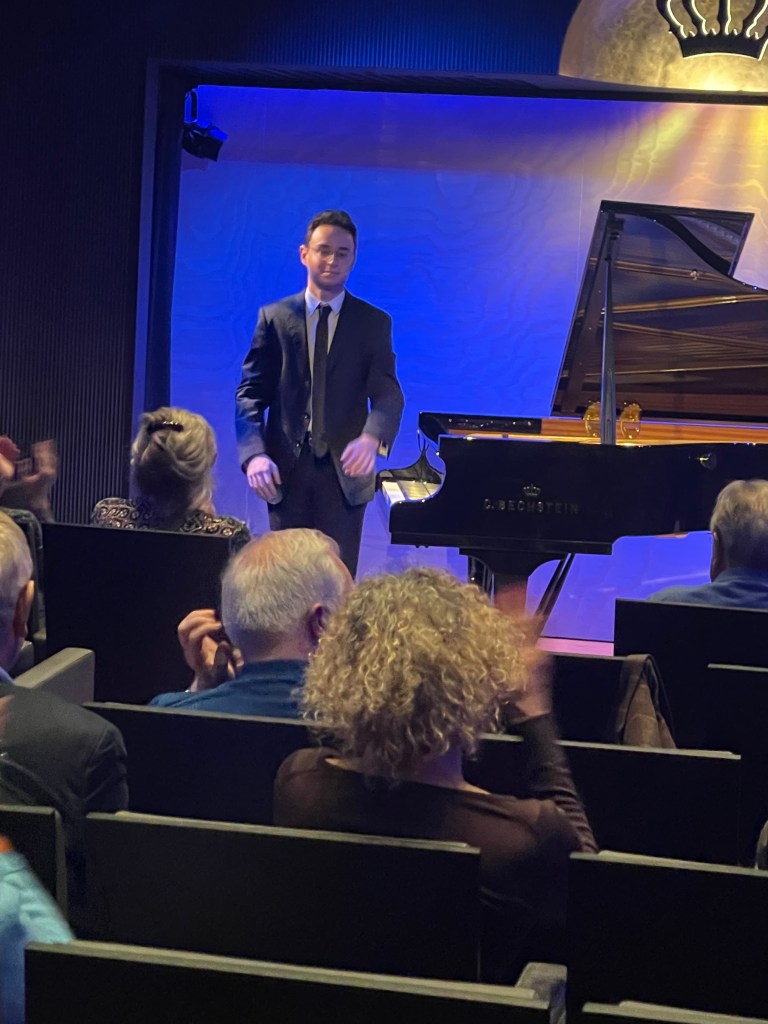
De Falla’s Ritual Fire Dance was the final piece on the programme and was played with true orchestra sounds with blasts of pedal and sudden changes of gear as Axel arrived at the final desperate insistence of repeated chords before the nose dive into the bottom of the keyboard.

An encore from a very enthusiastic audience queuing up at the end to acquire Axel’s latest CD’s of Iberia but not before a little thank you from our guest pianist with the delicately languid song and dance n. 3 by Mompou.

Axel with the distinguished concert manager Lisa Peacock
https://christopheraxworthymusiccommentary.com/…/axel…/
https://christopheraxworthymusiccommentary.com/…/axel…/
https://christopheraxworthymusiccommentary.com/…/axel…


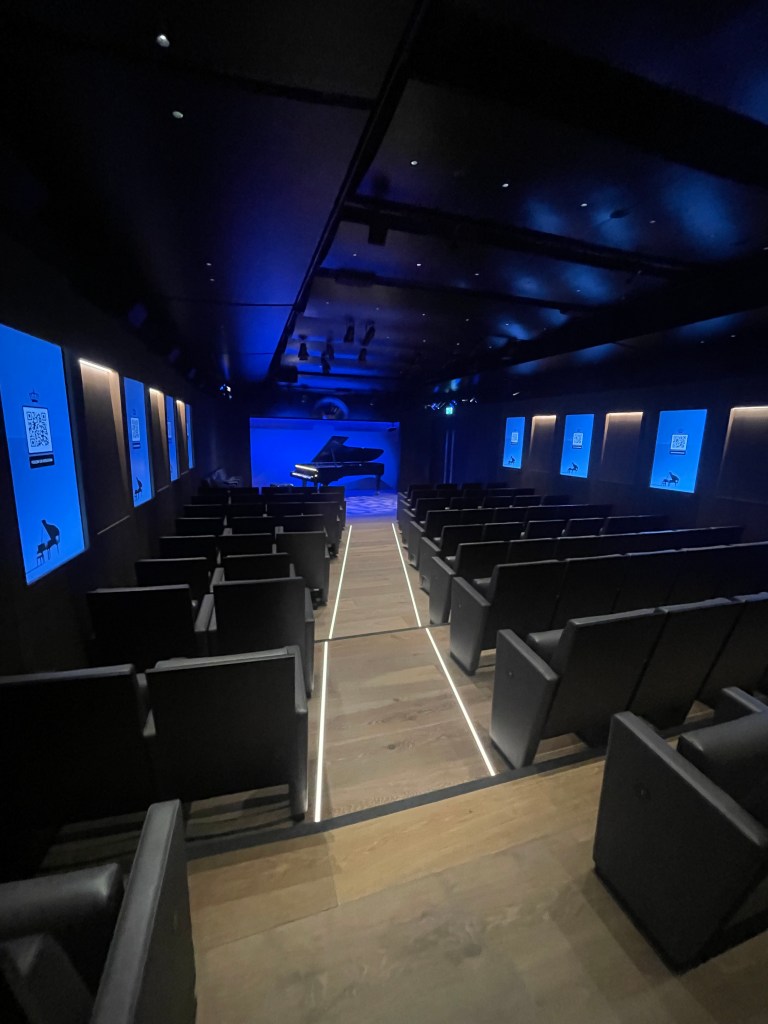

magnificent pianos and sumptuous hospitality are to be found in the newly opened Bechstein Hall in Wigmore Street


To all who this may concern at the Keyboard Charitable Trust:
The concert organisers at St Alkmund’s Church, Shrewsbury are delighted to be able to report that
today’s concert, sponsored by the KCT, was a success in every way. More than one hundred
people attended the event at the church to hear Axel Trolese perform an exceptional programme
of music (see below for details) and receive a standing ovation. He seemed to enjoy his visit too –
what a personable chap – sending us a prompt and fulsome thank you on his way back to London.
Dear Caroline, Jeremy and Peter,
It was a real pleasure meeting you and playing for your warm audience this afternoon.
Thank you also for a delicious lunch and, most importantly, a fantastic company and welcome in your
beautiful town.
Many thanks and have a good evening,
Axel
We were pleased to acknowledge the support of
the Keyboard Charitable Trust before and after the concert and on our website:
ST ALKMUND’S CHURCH, SHREWSBURY TUESDAY 26 TH NOVEMBER
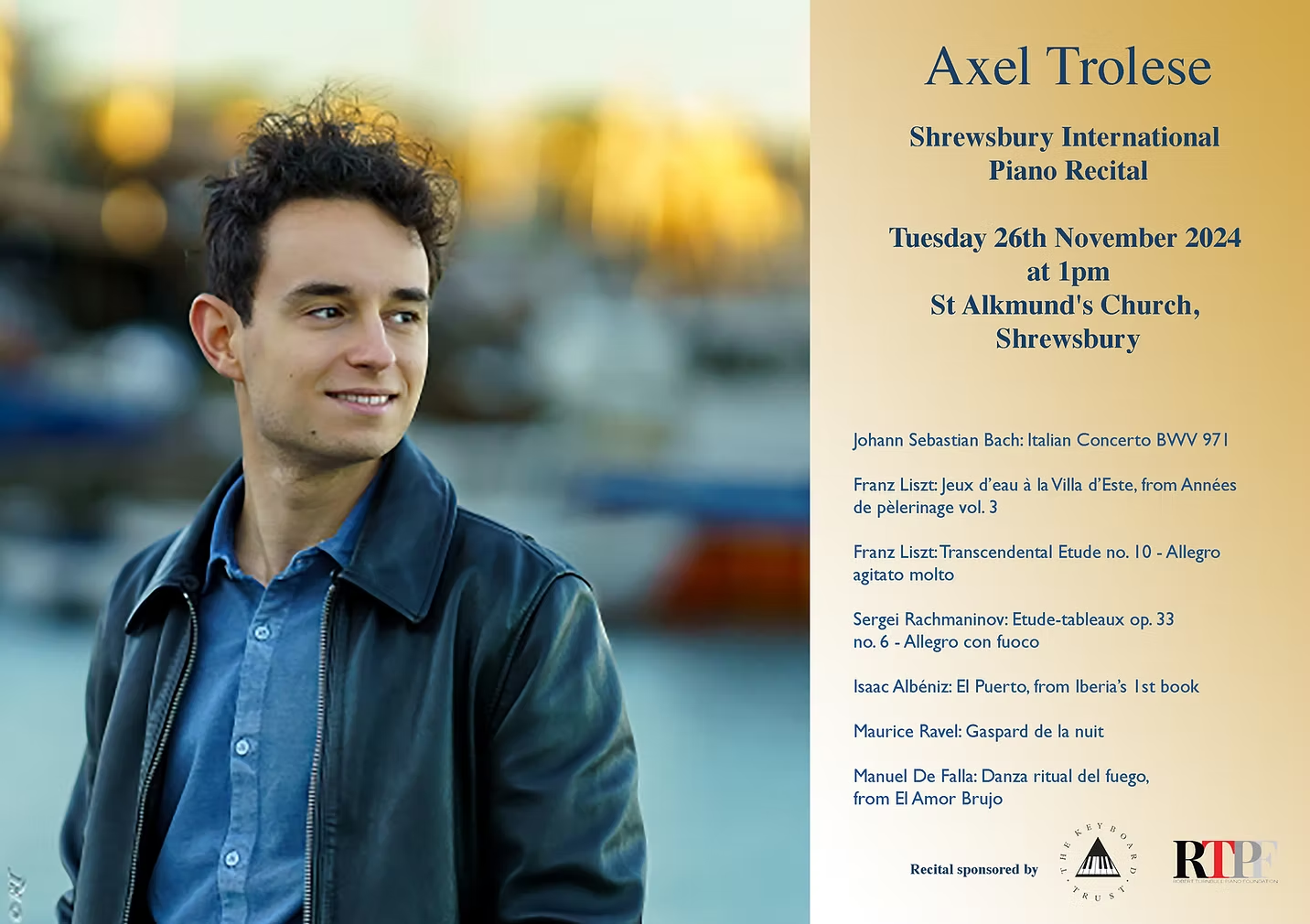
The Italian pianist Axel Trolese visited Shrewsbury on Tuesday 26th November 2024 to perform for the first time in Shropshire, arriving hot-foot from playing his debut recital in London at the new Bechstein Hall. This recital in the Tuesday lunchtime St Alkmund series was the first recital sponsored by The Keyboard Trust and the Robert Turnbull Piano Foundation, who plan to support two Shrewsbury International Piano Recitals per year, in recognition of the welcome given to young international pianists by the town. Axel comes highly recommended from his homeland, where he is a regular recitalist and esteemed teacher. His programme was influenced by his recent achievement of reaching the second round of the Ferruccio Busoni International Piano Competition. Axel explained to the audience that his programme demonstrated how the piano has been used to illustrate different genres of music. He started with J.S. Bach’s Italian Concerto, with the piano acting in orchestral fashion. As the first movement got underway, it was obvious that we were listening to a master of his craft, with immaculate technique, light pedalling and melodies singing from both hands. Repeats were adorned with intricate and subtle ornaments and variations in dynamics that seemed effortless and added to the freshness of his interpretation. The slow movement was achingly beautiful, played in a manner faithful to the period yet full of colour and interest. No surprise, then, to learn that Axel is a keen student of period instruments such as the fortepiano and harpsicord. The final movement was played with infectious enthusiasm, full of joy. What future pleasures await us as Axel delves into the vast treasure trove of Bach’s music for keyboard!Next up, from the baroque we moved to the watery depths of romantic repertoire of Franz Lizst, exploring the beautiful fountains and gardens of the 16th Century Villa D’Este in Tivoli near Rome. There were handfuls of notes pouring out of the piano in cascades of sound, soaking the audience in torrents of notes. Those of us lucky enough to have visited the Villa were reminded of the sculptural beauty of the gardens and fountains, which Liszt visited on three occasions. Axel then switched from the heavenly to the demonic Transcendental study in F minor which he played with seemingly effortless bravado.In my limited experience, it is rare to find a young pianist equally at home with Bach and Rachmaninov but it was the breadth and complexity of Axel’s repertoire that was so impressive in his recital. With technical challenges seemingly brushed aside, he could concentrate on the essence of the music, taking the audience with him on an exhilarating adventure. Rachmaninov Etude-Tableau? No problem.Axel has a deep love of French and Spanish music. He has recorded the complete Iberia by Albeniz and he played a composition based on the life of a busy fishing port, busy with sounds of a fish market and a young girl singing. Why an Italian feels so grounded in the dance and passion of Spanish music is a mystery, but Axel relishes their music and passion.St Alkmunds was not only full of an enthusiastic audience but characteristically bathed in winter sunshine. It was something of a jump of faith to get into the mood of the gothic world of sinking mermaids, hangmen and the night terrors of Ravel’s Gaspard de la Nuit. Ravel is Axel’s favourite composer and he relished disappearing into this spooky sound world, full of foreboding. Finally the recital ended with the flourish of De Falla’s Ritual Fire Dance, played with customary panache and passion. The Shrewsbury audience was on its feet, having enjoyed a world-class performer at the top of his game. The audience has no intention of letting Axel go without an encore and we heard the hauntingly beautifulCanción y danza no 6 by Federico Mompou. The simple beauty of the piece was a perfect end to an outstanding performance from a musician bound for greatness. Thank you Keyboard Trust and Robert Turnbull Piano Foundation for sending such a treasure for Shrewsbury to enjoy.

The Gift of Music – The Keyboard Trust at 30
 ChristopherAxworthy-MusicCommentary
2 risposte a "Axel Trolese at Bechstein Hall ‘Mastery and intelligence of a remarkable artist’"