
https://christopheraxworthymusiccommentary.com/2024/09/11/kyle-hutchings-a-poetic-troubadour-of-the-piano-reveals-the-heart-of-mozartschubert-and-franck-the-keyboard-trust-concert-tour-of-adbaston-ischiaflorence-and-milan/
https://christopheraxworthymusiccommentary.com/2024/10/12/nicolo-giuliano-tuccia-sensibility-and-mastery-ignite-the-harold-acton-library/


Born in 2002, Misha Kaploukhii is an alumnus of the Moscow Gnessin College of Music where he studied with Mikhail Egiazaryan. He has recently completed his undergraduate studies at the Royal College of Music where he studies with Ian Jones and he has now been chosen as one of the recipients of the prestigious LSO Conservatoire Scholarships, 2024/5 which will include support and professional development along with coaching and performance opportunities.
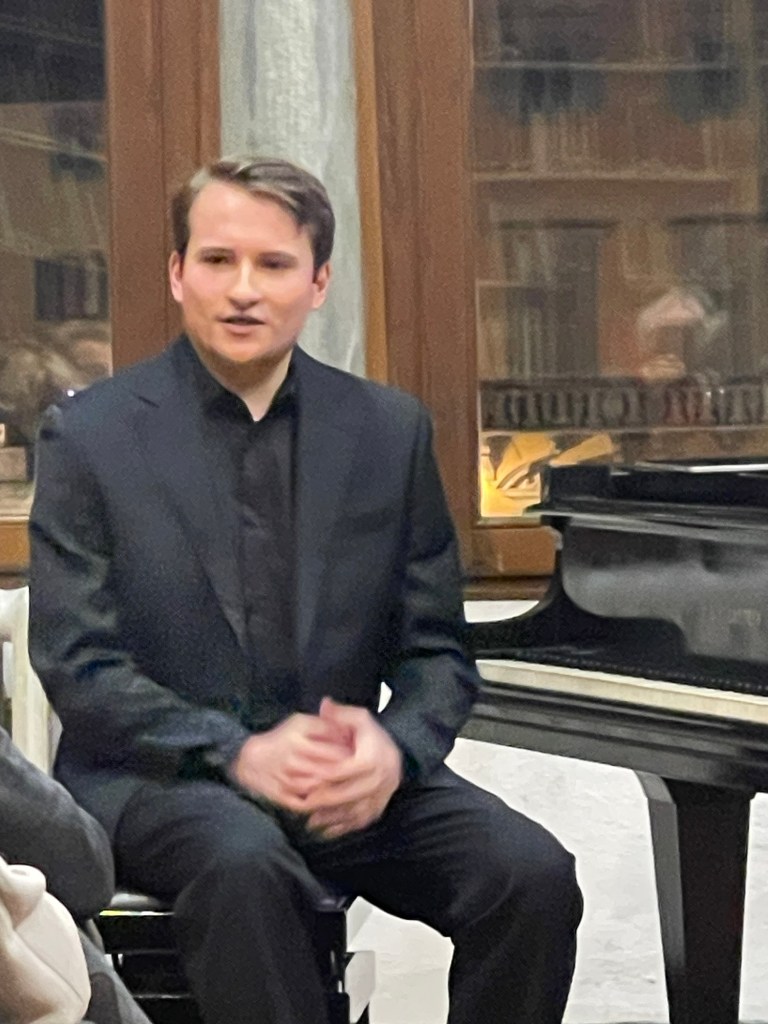
He has performed in the UK, Italy and France at the venues including the Cadogan Hall, and St James’ Piccadilly as well as recitals for William Walton Foundation in Ischia and at the Perugia Music Festival.
Misha Kaploukhii mastery and clarity in Walton’s paradise where dreams become reality – updated to include the Sheepdrove Competition and graduation recital

Misha Kaploukhii at St James’s Piccadilly.The intelligence and maturity of a young master
‘An ovation as rarely heard at St James’s greeted this young artist headed for the heights.’
Programme:
Beethoven: Eleven Bagatelles Op. 119
Giacinto Scelsi: Suite No. 11, Cinquiême mouvement
Prokofiev: Piano Sonata No.4 Op. 29
Messiaen: Regards sur l’Enfant-Jésus No.15: Le Baiser de l’Enfant-Jésus
Godowsky-Strauss: Symphonic Metamorphosis on “Die Fledermaus”
This concert is promoted by the Keyboard Trust with special funding from the Robert Turnbull Piano Foundation.
The Robert Turnbull Piano Foundation annually awards grants to young classical pianists of all nationalities at the start of their professional careers. It has a global reach, reflecting not only Robert’s devotion to music but also his lifelong passion for travel.
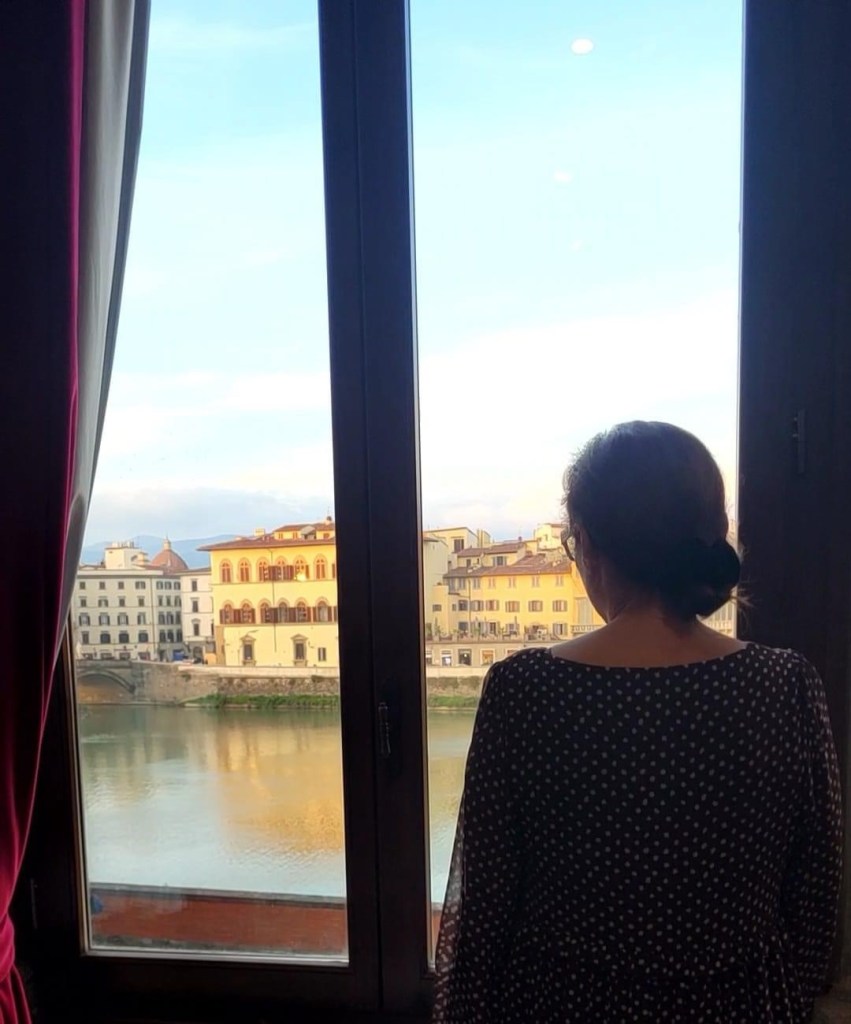
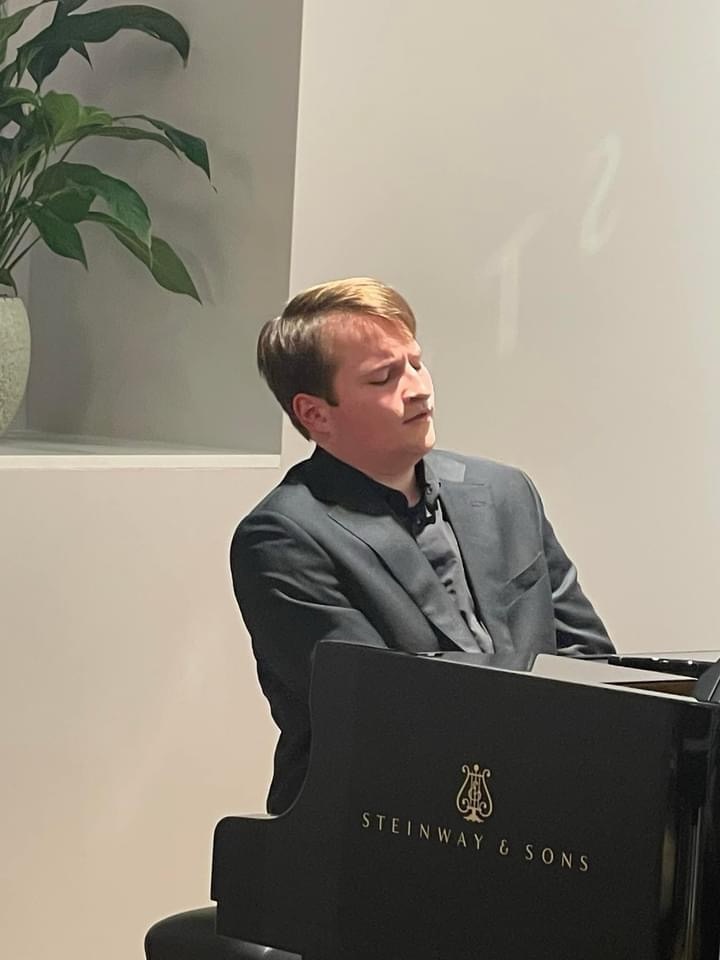
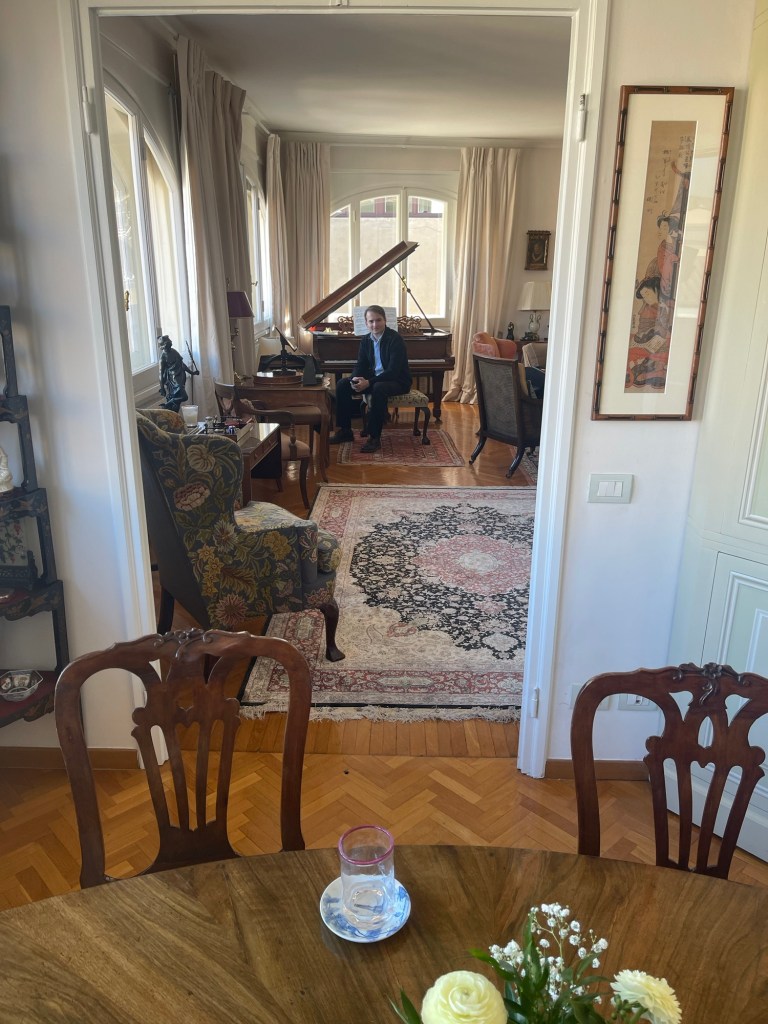
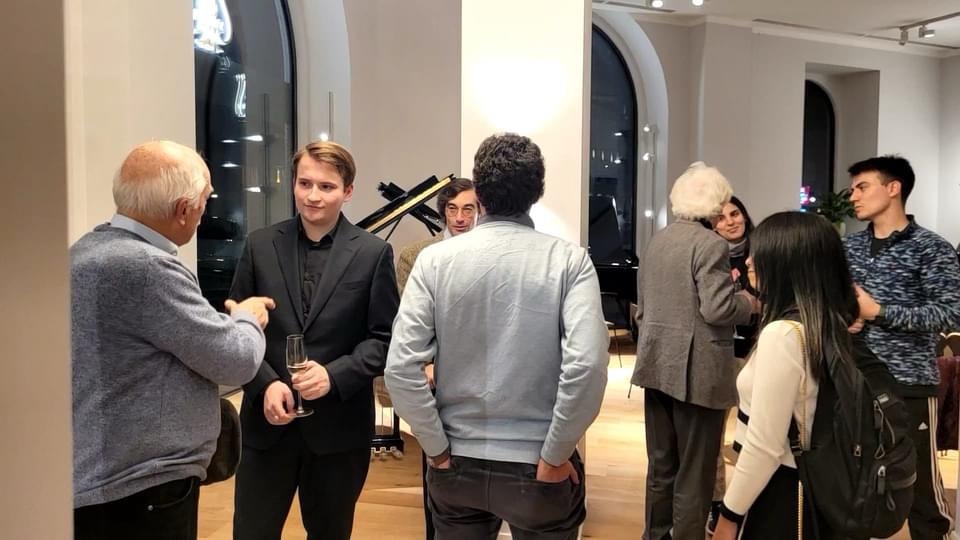
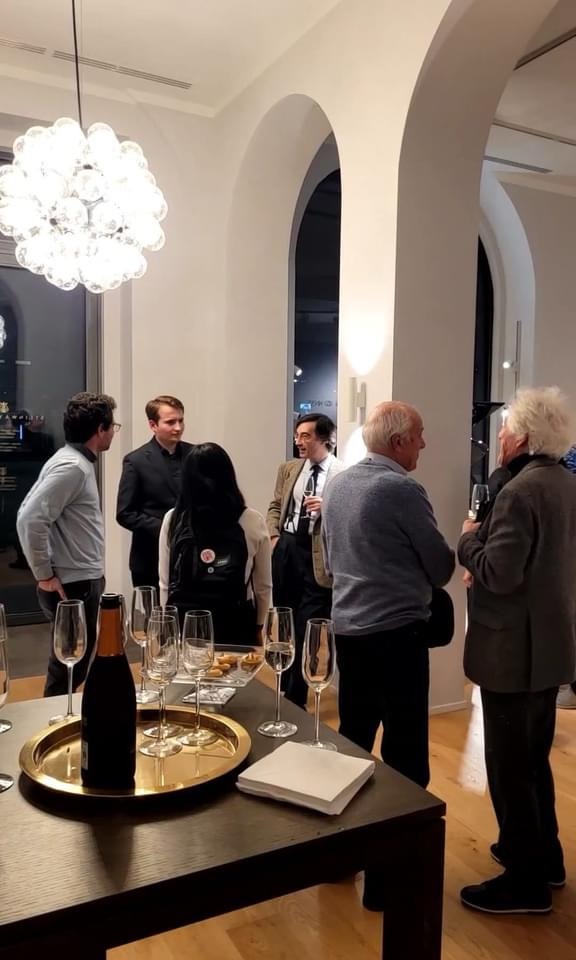
A room with a view in Florence for Misha Kaploukhii filling the Harold Acton library with some astonishingly refined playing on a Bechstein of 1890.
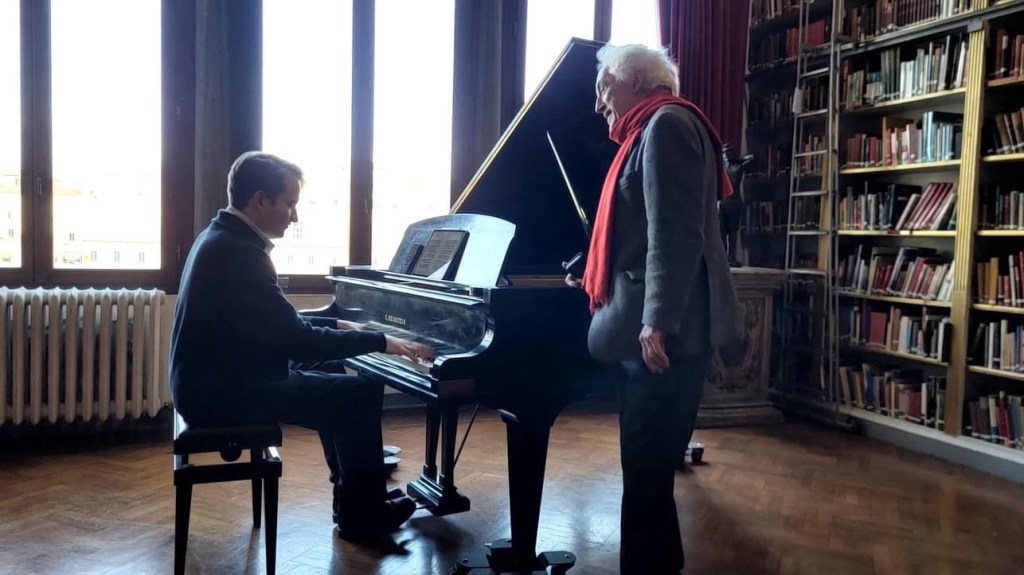
He managed to dig deep to find the still noble soul of this vintage instrument where the multi faceted Bagatelles op 119 that Beethoven late in life could create of such miniature tone poems were brought to life with extraordinary character. Very measured but also very lyrical with the beautifully shaped second with its civilised question and answer between the hands and the charm of the third and the extraordinary lyricism of the fourth. A dynamic drive of the fifth with it’s spirited dance character followed by the quasi improvised beauty of the sixth. A handful of crazy notes in crescendoing abundance was followed by the charm of expanding arpeggios of sheer delight and the shortest piece ever that was just like a wind blowing over the keys as the last bagatelle opened with the poignant outpouring of a hymn to life.

Even the mysterious sound world of Scelsi was played with a kaleidoscope of sounds, whispered and barely audible hypnotic repeated notes building in rhythmic energy with a jumble of sounds of Bartokian contrast and explosions of atomic proportions with animal animations.
Messiaen’s ‘Kiss of the baby Jesus’ filled this beautiful library with ethereal sounds of masterly control and ravishing radiant beauty reaching for the emphatic deeply felt passion of a true believer.The ending was played with incredible control of sound , the radiance of bells pealing on high as the gentle opening prayer was accompanied by a whispered trail of barely audible strands of gold. The final two chords placed with the poignant timing of a true master. It contrasted with the brooding opening of Prokofiev’s Fourth Sonata with it’s startling range of sounds of dramatic effect. An Andante too with etherial sounds of great beauty. The last movement suddenly bursting into life with a dynamic drive and exhilarating ‘joie de vivre’ after Prokofiev’s deep contemplation of the tragic death of a dear friend .

But it was Godowsky’s scintillating arabesques that he wraps around Strauss’s Die Fledermaus that showed the mastery of this twenty one year old virtuoso. A sense of style from a past era when pianists could ignite the keyboard with ravishing sounds that could seduce and excite with displays of astonishing technical mastery as they turned baubles into gems .
And gems they certainly were in Misha’s hands as the audience listened with astonished delight to such an exhilarating display of ‘carefully manicured bad taste ‘. Godowsky suffered from stage fright but all those that heard him in his studio never forgot what they heard.’There is nothing like it in the world’ Hoffman declared and Arrau considered him one of ‘the greatest technicians of all time.’ Rubinstein simply stated that it would take him five hundred years to acquire a mechanism like Godowsky’s!

An encore that just underlined the eclectic musicianship of this young musician as Greensleeves resounded amid the intricate beauty of Busoni’s elaborate invention .







https://christopheraxworthymusiccommentary.com/2022/01/24/alberto-chines-artistry-and-scholarship-in-rome/


https://christopheraxworthymusiccommentary.com/2024/10/25/the-strand-rising-stars-series-sherri-lun-the-magic-and-artistry-of-a-star-shining-brightly/
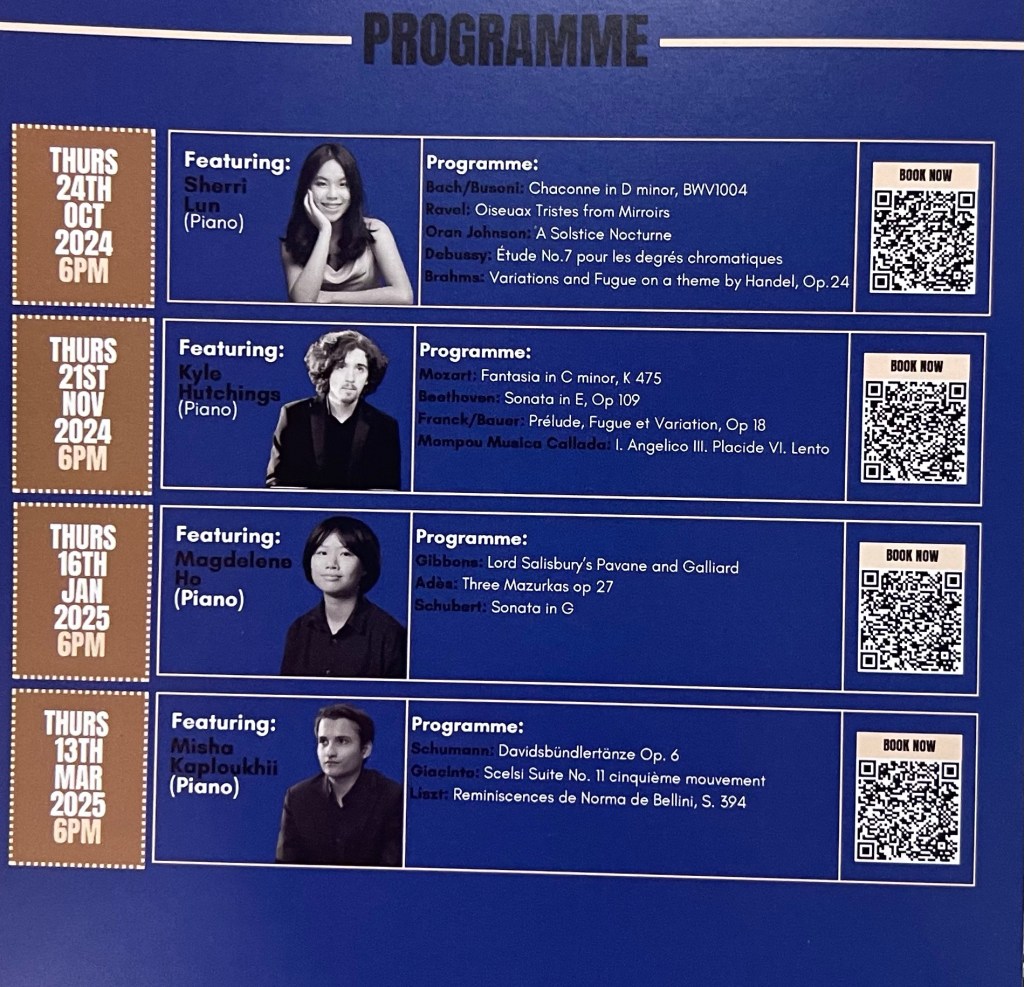


Misha Kaploukhii at the Razumovsky Academy with technical mastery and poetic sensitivity
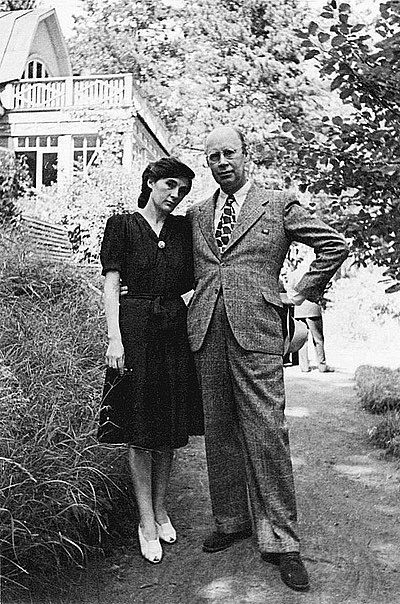
Sergei Prokofiev’s Piano Sonata No. 4 in C minor, Op. 29, subtitled D’après des vieux cahiers, or After Old Notebooks, was composed in 1917 and premiered on April 17 the next year by the composer himself in Petrograd The work was dedicated to Prokofiev’s late friend Maximilian Schmidthof, whose suicide in 1913 had shocked and saddened the composer.
- Allegro molto sostenuto
- Andante assai
- Allegro con brio,ma non leggiero
In his notes accompanying the full set of recordings of Prokofiev’s sonatas by Boris Berman David Fanning states the following:
Whether the restrained, even brooding quality of much of the Fourth Sonata relates in any direct way to Schmidthof’s death is uncertain, but it is certainly striking that the first two movements both start gloomily in the piano’s low register. Allegro molto sostenuto is the intriguing and apt marking for the first, in which a hesitant and uncertain mood prevails – the reverse of Prokofiev’s usual self-confidence. The Andante assai second movement alternates between progressively more elaborate statements of the opening theme and a nostalgic lyrical episode reminiscent of a Rachmaninov Etude-tableau; finally the two themes are heard in combination. With the rumbustious finale Prokofiev seems to be feeling himself again. But for all the gymnastics with which the main theme is varied there is less showiness in this essentially rather introvert work than in any of the other piano sonatas.
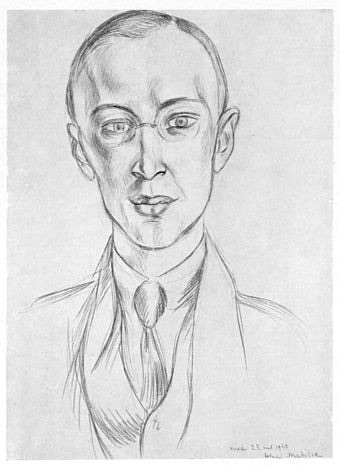
Prokofiev, as drawn by Matisse for the premiere of Chout (1921)
27 April 1891 Sontsovka Russian Empire now Ukraine
5 March 1953 (aged 61)Moscow, Soviet
The Eleven Bagatelles , Op. 119 were written between the 1790s and the early 1820s.
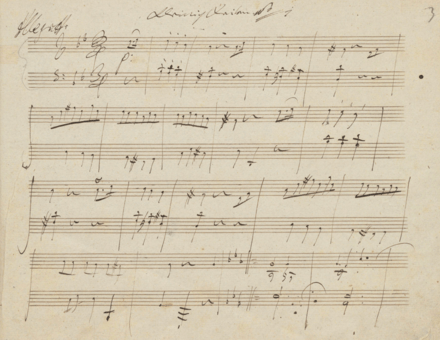
Page one of the manuscript from Beethoven’s Bagatelle in G minor, Op. 119 n.1 (c. 1822)
By the end of 1803, Beethoven had already sketched bagatelles Nos. 1 to 5 (along with several other short works for piano that he never published). In 1820, he first finished the last five bagatelles of Op. 119, and published them as a set of five in June 1821 for Wiener Pianoforteschule Schule by Friedrich Stark.The following year, he revised his old bagatelle sketches to construct a new collection for publication, adding a final bagatelle, No. 6, composed in late 1822.Initially Beethoven struggled to get a deal to publish any of the bagatelles Beethoven met with many people such as Peters of Leipzig and Pacini in Paris for publishing, who declined his request. Eventually Beethoven managed to have the entire set published: first by Clementi in London in 1823, Maurice Schlesinger in Paris some time around the end of 1823, and Sauer & Leidesdorf in Vienna on in April 1824. It is unclear to what degree this represents the composer’s intentions.
Some scholars have argued that the two halves of Op. 119 — Nos. 1 to 6, and Nos. 7 to 11 — are best thought of as separate collections. However, it is also possible that when Beethoven composed No. 6 in late 1822, he had already planned to send all eleven pieces to England. In that case, No. 6 would not be meant as a conclusion to the first five, but as a way to connect them with the latter five. The key relationship and thematic similarities between No. 6 and No. 7 support this hypothesis, as does the fact that in subsequent correspondence, Beethoven expressed only satisfaction with how the bagatelles were published in England after his ex-pupil Ferdinand Ries helped get the collection published.

Giacinto Francesco Maria Scelsi 8 January 1905 – 9 August 1988,was an Italian composer who also wrote surrealist poetry in French.
Born in the village of Pitelli near La Spezia , Scelsi spent most of his time in his mother’s old castle where he received education from a private tutor who taught him Latin, chess and fencing. Later, his family moved to Rome and his musical talents were encouraged by private lessons with Giacinto Sallustio . In Vienna, he studied with Walther Klein , a pupil of Arnold Schoenberg . He became the first exponent of dodecaphony in Italy, although he did not continue to use this system.He is best known for having composed music based around only one pitch , altered in all manners through microtonal oscillations , harmonic allusions, and changes in timbre and dynamics,as paradigmatically exemplified in his Quattro pezzi su una nota sola (“Four Pieces on a single note”, 1959).This composition remains his most famous work and one of the few performed to significant recognition during his lifetime. His musical output, which encompassed all Western classical genres except scenic music, remained largely undiscovered even within contemporary musical circles during most of his life. Today, some of his music has gained popularity in certain postmodern composition circles, with pieces like his “Anahit” and his String Quartets rising to increased prominence. The music of Scelsi was heard by millions in martin Scorsese’s Shutter Island , in which excerpts of his two works Quattro pezzi su una nota sola and Uaxuctum (3rd movement) .The suite n 11 was written in 1956 in Scelsi’s second period ( four periods are 1929/48 – 1952/59 – 1960/69 – 1970/85)
In Rome after the war, his wife left him (eventually inspiring Elegia per Ty), and he underwent a profound psychological crisis that eventually led him to the discovery of Eastern spirituality, and also to a radical transformation of his view of music. In this so-called second period , he rejected the notions of composition and authorship in favour of sheer improvisation . His improvisations were recorded on tape and later transcribed by collaborators under his guidance. They were then orchestrated and filled out by his meticulous performance instructions, or adjusted from time to time in close collaboration with the performers.Scelsi came to conceive of artistic creation as a means of communicating a higher, transcendent reality to the listener. In this view, the artist is considered a mere intermediary. For this reason, Scelsi never allowed his image to be shown in connection with his music; he preferred instead to identify himself by a line under a circle, as a symbol of Eastern provenance. Some photographs of Scelsi have emerged since his death.

Leopold Mordkhelovich Godowsky Sr. (13 February 1870 – 21 November 1938) was a Lithuanian-born American virtuoso pianist ,composer and teacher . He was one of the most highly regarded performers of his time,known for his theories concerning the application of relaxed weight and economy of motion within pianistic technique – principles later propagated by his pupils, such as Heinrich Neuhaus.
He was heralded among musical giants as the “Buddha of the Piano”.Ferruccio Busoni that he and Godowsky were “the only composers to have added anything of significance to keyboard writing since Franz Liszt”
In the three great Strauss transcriptions, Godowsky elevated the art of the piano paraphrase to a higher musical and pianistic plane; however their extreme technical difficulty remains a striking feature and places them out of the reach of ordinary pianists. The legendary pianist Leopold Godowsky (1870-1937) used to wow ‘em at concerts with these transcriptions of favorite tunes by the waltz king, and, in a delightful feat of anachronistic bravura. The quartet of arrangements–based on material from “Fledermaus,” “Wine, Woman and Song,” “Artist’s Life” and the “Symphonic Metamorphosis of the Schatz-Walzer Themes from ‘Zigeunerbaron’ For Left Hand Alone”–trades in sudden plunges into the minor, thick contrapuntal textures, excessive melodic embellishments and arpeggios for days. But these paraphrases truly retain the soul of the waltz. As a study in carefully manicured bad taste, this collection has few rivals.

A page from Godowsky’s highly challenging arrangement of Chopin Op. 25, No. 1
As a composer, Godowsky has been best known for his paraphrases of piano pieces by other composers, which he enhanced with ingenious contrapuntal devices and rich chromatic harmonies. His most famous work in this genre is the 53 Studies on Chopin’s Etudes (1894–1914), in which he varies the (already challenging) original études using various methods: introducing countermelodies , transferring the technically difficult passages from the right hand to the left, transcribing an entire piece for left hand solo, or even interweaving two études, with the left hand playing one and the right hand the other.Although his transcriptions are much more well known, Godowsky also composed a number of substantial original works. He considered the Passacaglia (1927) and a collection of pieces for left hand alone (1930–31) to be his most mature creations; both, however, employ traditional approach to harmony and counterpoint. A more experimental work was the Java Suite (Phonoramas) (1925), composed after a visit to Java, under the influence of gamelan music. Godowsky was equally comfortable writing large-scale works like the Passacaglia or the five-movement Piano Sonata in E minor (1911) as he was creating collections of smaller pieces, such as the 46 Miniatures for piano four hands and the Triakontameron (1920; subtitled “30 moods and scenes in triple measure”).
Although he regularly played public concerts until 1930, Godowsky was plagued by stage fright , and particularly disliked the recording studio, like many performers of his time. On one occasion, he described the recording process thus:
‘The fear of doing a trifling wrong augmented while playing; the better one succeeded in playing the foregoing, the greater the fear became while playing. It was a dreadful ordeal, increasingly so the more sensitive the artist, I broke down in my health in London in the Spring of 1930, owing to these nerve-killing tortures. How can one think of emotion!’
Consequently, it was acknowledged that Godowsky’s best work was not in public or in the recording studio, but at home. After leaving Godowsky’s home one night, Josef Hofmann told Abram Chasins: “Never forget what you heard tonight; never lose the memory of that sound. There is nothing like it in the world. It is tragic that the world has never heard Popsy as only he can play.”Claudio Arrau ,declared Godowsky “one of the greatest technicians”, even though he considered his playing “boring” and complained that Godowsky “never played above mezzo-forte.” Artur Rubinstein simple stated that it would take him “five hundred years to get a mechanism like Godowsky’s”.

Olivier Messiaen
10 December 1908 Avignon France 27 April 1992 (aged 83)Clichy , France
The Vingt Regards sur l’Enfant-Jésus (“Twenty Contemplations on the Infant Jesus”) are a suite of 20 pieces for solo piano by the French composer Olivier Messiaen (1908–1992).It was composed from March to September of 1944 following a January commission by Maurice Toesca wishing for a reading of his twelve poems on the nativity. The abandoned plan was later reworked with a dedication to his protégée Yvonne Loriod
- Regard du Père (“Contemplation of the Father”)
- Regard de l’étoile (“Contemplation of the star”)
- L’échange (“The exchange”)
- Regard de la Vierge (“Contemplation of the Virgin”)
- Regard du Fils sur le Fils (“Contemplation of the Son upon the Son”)
- Par Lui tout a été fait (“Through Him everything was made”)
- Regard de la Croix (“Contemplation of the Cross”)
- Regard des hauteurs (“Contemplation of the heights”)
- Regard du temps (“Contemplation of time”)
- Regard de l’Esprit de joie (“Contemplation of the joyful Spirit”)
- Première communion de la Vierge (“The Virgin’s first communion”)
- La parole toute-puissante (“The all-powerful word”)
- Noël (“Christmas”)
- Regard des Anges (“Contemplation of the Angels”)
- Le baiser de l’Enfant-Jésus (“The kiss of the Infant Jesus”)
- Regard des prophètes, des bergers et des Mages (“Contemplation of the prophets, the shepherds and the Magi”)
- Regard du silence (“Contemplation of silence”)
- Regard de l’Onction terrible (“Contemplation of the awesome Anointing”)
- Je dors, mais mon cœur veille (“I sleep, but my heart keeps watch”)
- Regard de l’Eglise d’amour (“Contemplation of the Church of love”)
Messiaen uses Thèmes or leitmotifs , recurring elements that represent certain ideas. They include:
- Thème de Dieu (“Theme of God”)
- Thème de l’amour mystique (“Theme of Mystical Love”)
- Thème de l’étoile et de la croix (“Theme of the Star and of the Cross”)
- Thème d’accords (“Theme of Chords”)

 ChristopherAxworthy-MusicCommentary
2 risposte a "Misha Kaploukhii in Florence and Milan for the Keyboard Trust and Robert Turnbull Piano Foundation"