
Oxana Yablonskaja in her Indian summer is one of the great pianist of our day. A timeless aristocratic bearing with music that she has lived with for a lifetime and can share so effortlessly. The music is deep within her like it was with her mentor Tatyana Nikolaeva.
Oxana travels without her scores because the music is so deeply embedded in her that every detail on the page has been transformed into sounds which have penetrated her soul. After all, the dots and dashes on the score are only an indication of what the composer wants to convey in sound. Beethoven when totally deaf could miraculously notate with precision the sounds that only he could hear in his head.
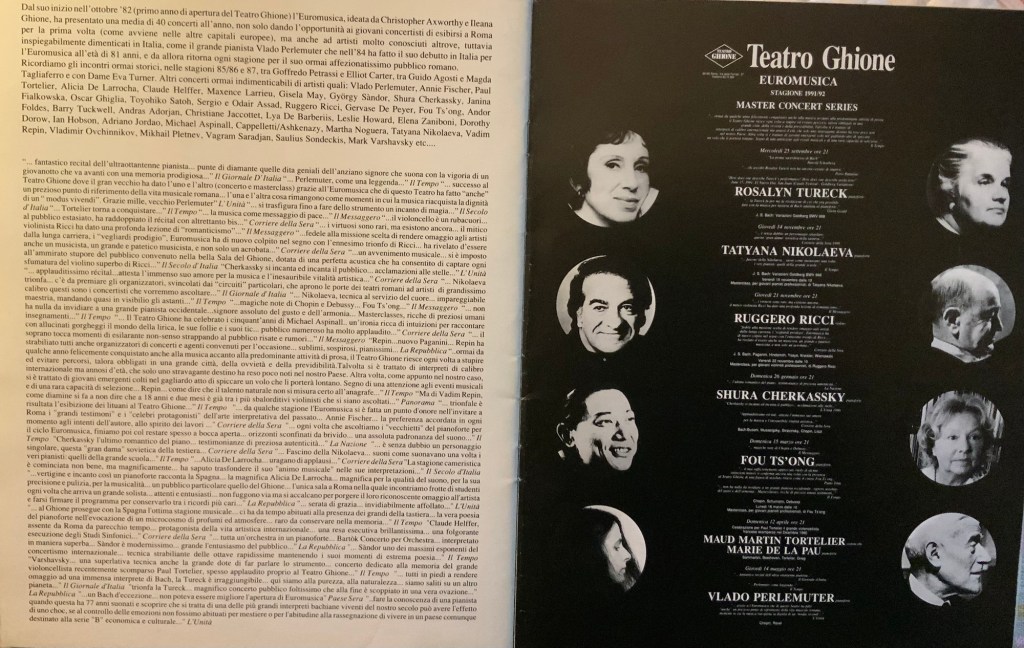
Nikolaeva in her Indian Summer played for us in Rome, the Bach Goldberg Variations and the Art of the Fugue without any ‘aide memoire’ just as she also played Mussorgsky Pictures and Tchaikowsky’s grandest of sonatas. In London she was playing the ‘48 and the 32 Beethoven Sonatas having been discovered by the discerning William Lyne at the Wigmore Hall.

Oxana had given a recital in Rome for us in the 80’s that included a performance of Prokofiev’s third sonata that I have never forgotten. Many years later she was invited by Francesco La Vecchia’s Orchestra (sponsored by the Cassa di Risparmio Bank ) in which some of the greatest soloists were heard in Rome for the first time not having been included in the limited programming possibilities of the two traditional music societies. Oxana played Rachmaninov 3rd Concerto with a very distinguished Turkish conductor who got so emotionally involved at the final great climax that he lost control. No problem for Oxana who took over completely and directed from a keyboard which she was already inseminating with the sumptuous sounds of a million notes. These are musicians from the great Russian school (like Eliso Virsaladze ) who are masters of their instrument but more importantly kapellmeisters with music deeply embedded in their soul.
A life in and for Music !
Trapani the jewel of Sicily where dreams can become reality – The International Piano Competition – Domenico Scarlatti
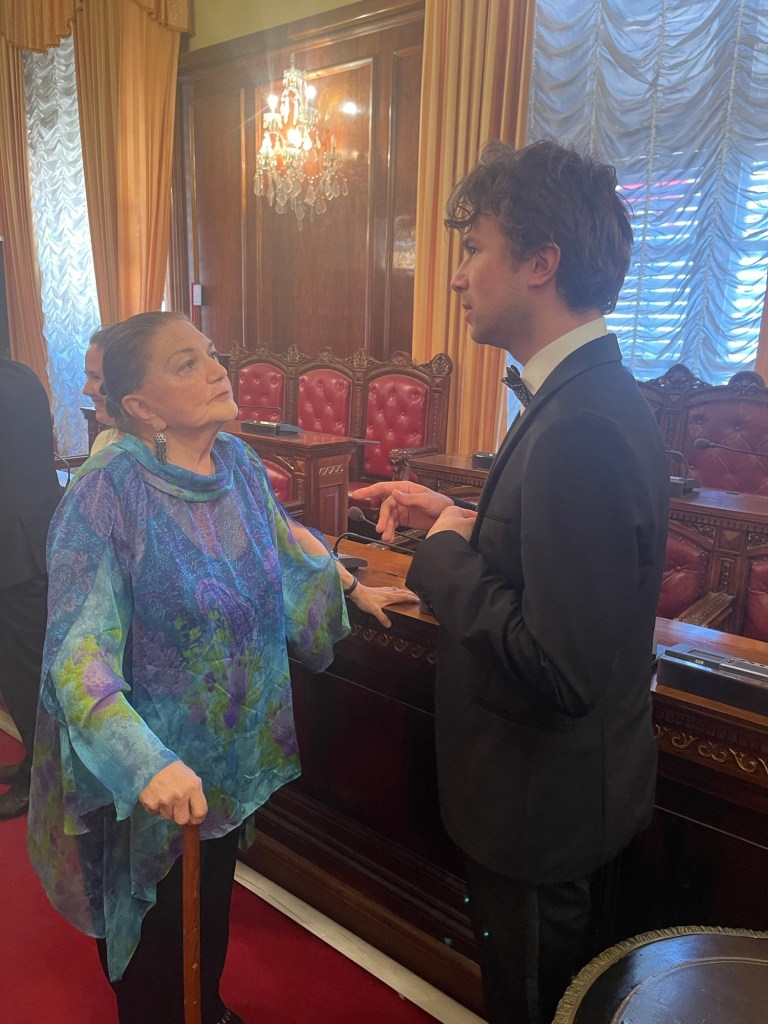
Last spring I had been invited to the second edition of the International Piano Competition in Trapani,Sicily .After many years Oxana recognised me and as soon as I walked in the door she very spiritedly said :’I will now have to practice !‘
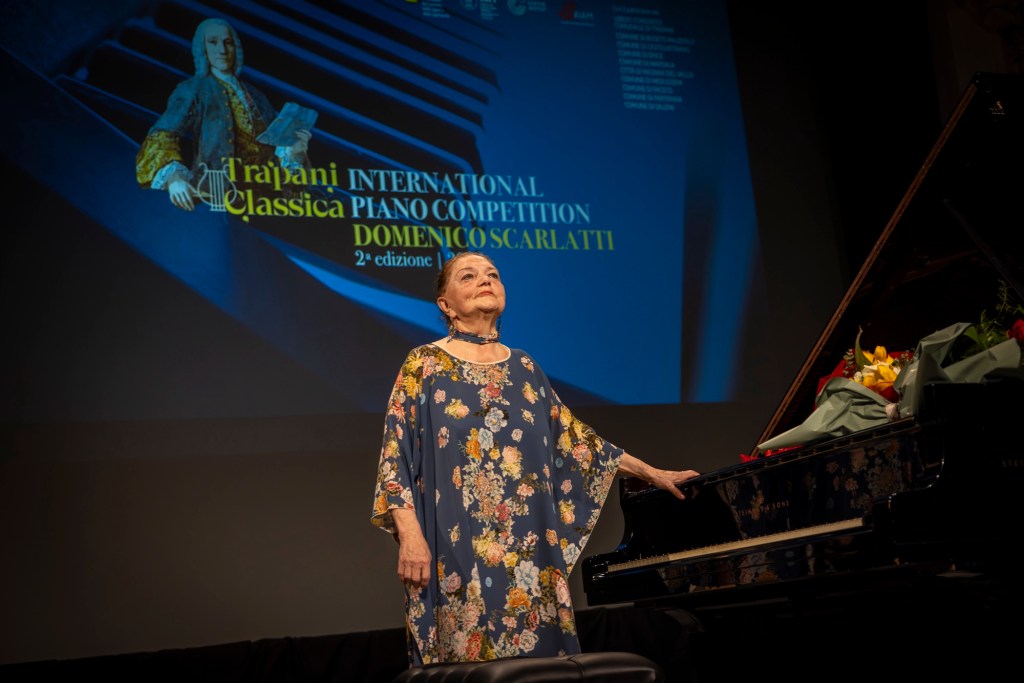
Oxana Yablonskaya La Regina – The queen of the Keys
Amazingly the day of her concert she had sat on the jury all day listening carefully to each competitor with equal concentration. At the end of a long day with the prospect of a solo recital only a few hours later she decided to join the other members of the jury for tea and a moments relaxation before donning her regal concert attire and astonishing us all with performances of aristocratic mastery.
https://christopheraxworthymusiccommentary.com/2024/10/17/mikhail-kambarov-at-steinway-hall-london-poetic-sensibility-of-a-master/
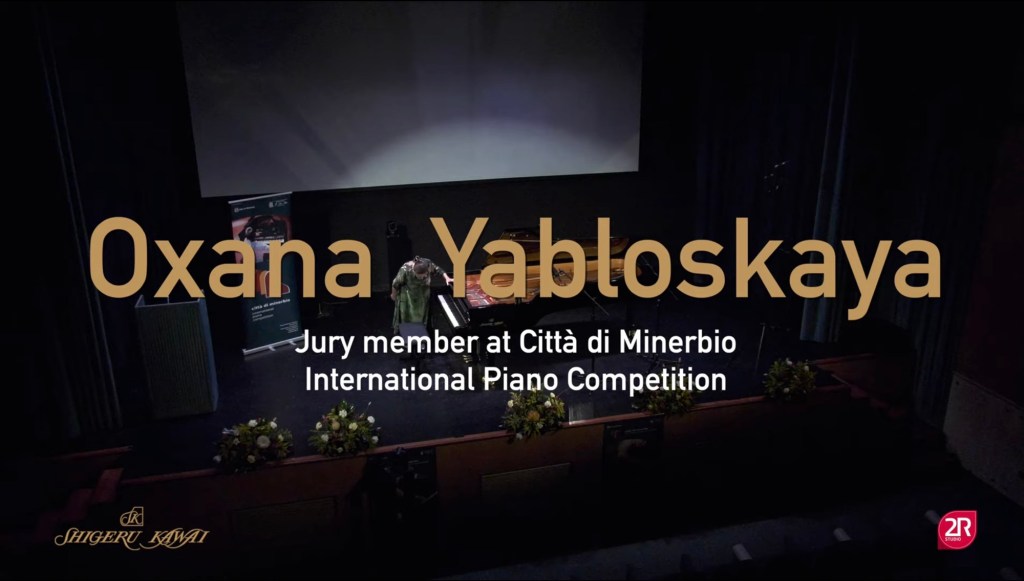
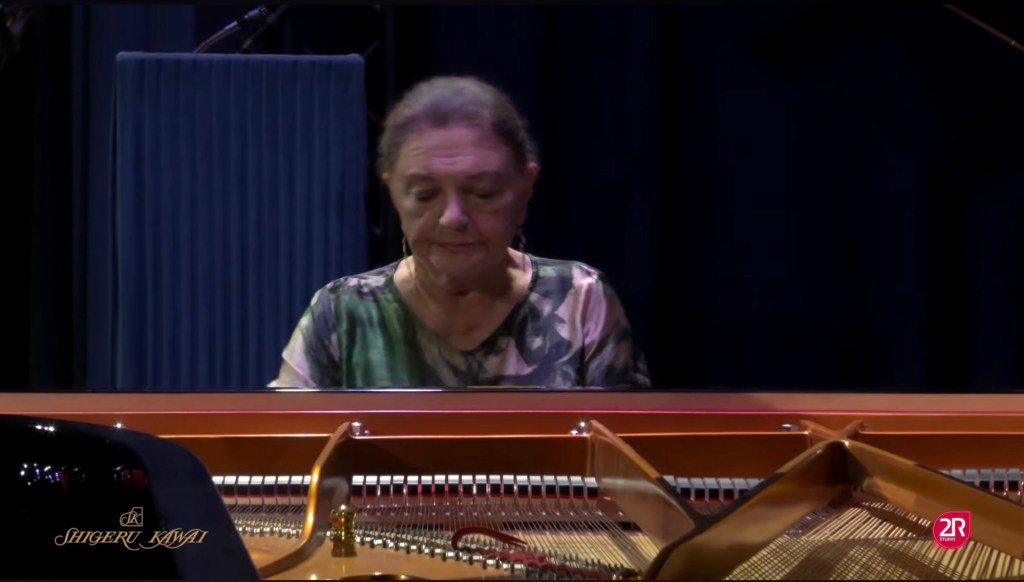
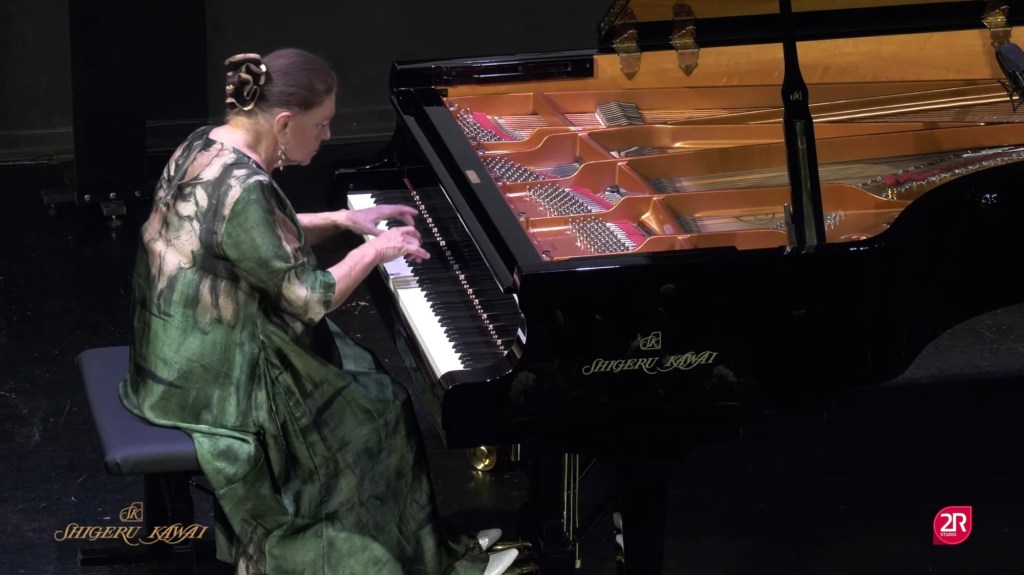
Now I have been sent a recital from the Competition in Minerbio where not only was she again generously helping young musicians but she also gave a recital which included Beethoven, but this time the ‘Tempest’ Sonata op 31 n. 2. Living and teaching in Jerusalem she is a tireless champion of so many young pianists who are all indebted to her for the help and guidance she is still happy to offer.
The concert had begun with the Melody from Gluck’s ‘Orfeo ed Euridice’ in the transcription of Sgambati. It was played with exquisite timeless beauty with hands that can still sculpture chiselled sounds allied to a ravishing sense of beauty. In fact to look at the arch of her hand is to look at the hand of Rubinstein or Argerich who can play with real weight as they search for beauty in every sound they make.There was a way of caressing the keys with subtle strokes that created sounds of natural beauty as she brought a breathtaking poignant delicacy to the beseeching gasps of supplication of Eurodice. Allowing the music to flow on a wave of sound to the last gasp as this great song of wonderment and beauty unfolded from her sensitive hands.

Beethoven’s ‘Tempest’ Sonata opened on the same magical wave as the Gluck, and the Allegro that followed was played with amazing clarity and control where the duplets were played with deliberate placing not the usual scramble of too many pianists! There was a beautiful etherial recitativo with just the right amount of pedal,as Beethoven has indicated, and it gave an echo effect of great potency only to be interrupted by the whispered devilish chords that struck fear as the momentum picked up again. The clarity to the rumbling bass in the coda, although Beethoven marks with a long pedal the whispered clarity of Oxana’s well oiled fingers was extremely convincing.
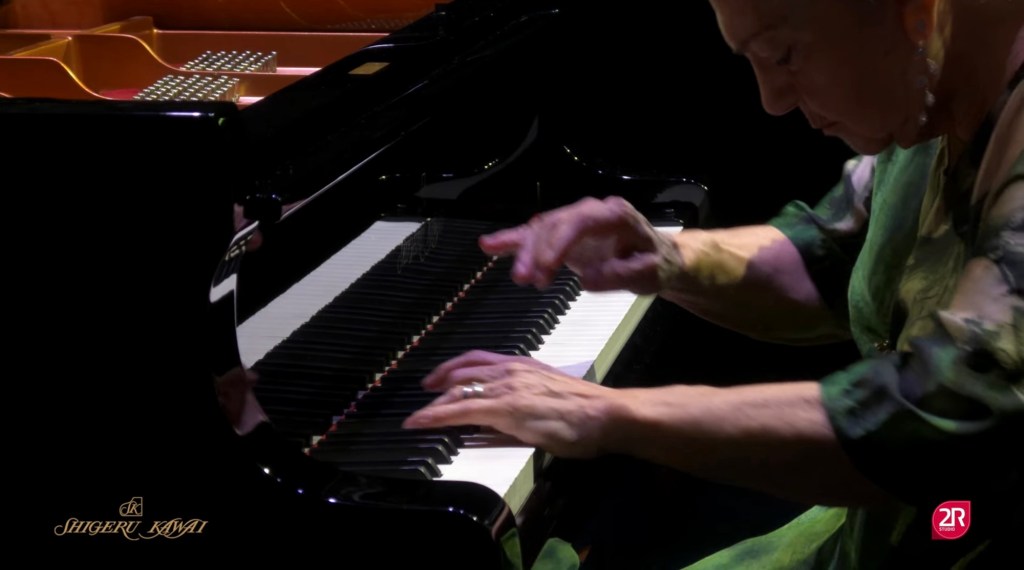
There was a beautiful poise to the opening of the Adagio with timeless poignancy and a richness to the chorale like central episode of Brahmsian beauty accompanied by the gasps of a heart beating with tireless insistence. Cascades of crystalline notes flowed over the entire keyboard as the melodic line was woven into this magic web of sounds with a glowing fluidity that in no way impeded the clarity of the accompaniment ( a tour de force of control ). The sudden ‘pianos’ that Beethoven seminates were incorporated into a timeless beauty and the final sigh on high I have rarely heard played with such significance as she barely touch the final B flat full stop in the bass . It was not really a full stop either because the ‘Allegretto’ just wafted in on a gently blowing breeze of grace and beauty. An aristocratic control of a movement that can so often loose all its character due to the breathless perpetuum mobile that is so often prospected. A scrupulous attention to Beethoven’s markings allowed the music box that is unexpectedly opened to contrast with the more emphatic return of the rondo theme before it disappears into the bass with the same whispered sounds with which its had opened.
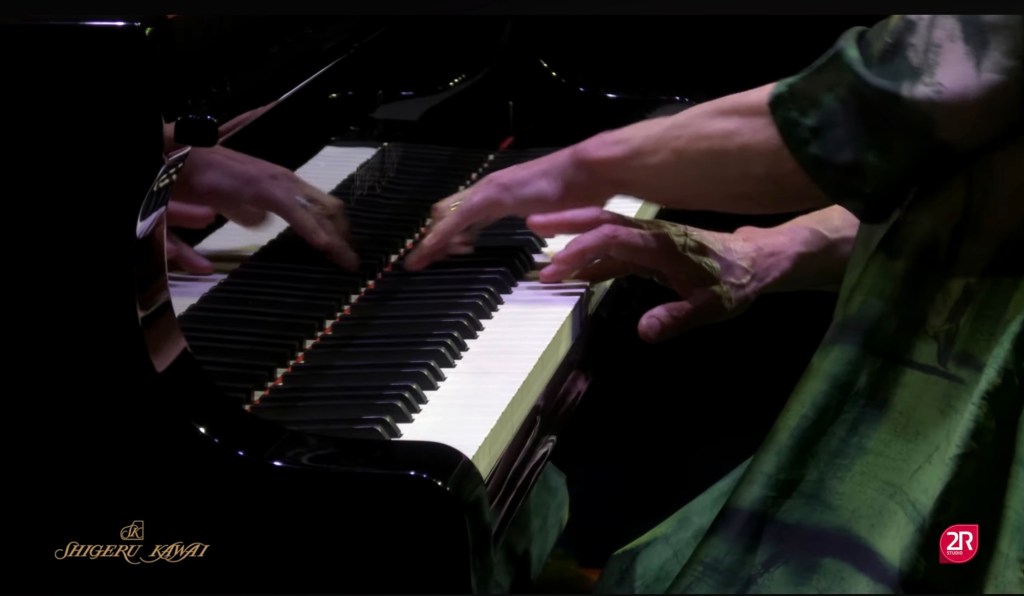
Liszt’s transcriptions of three songs by Schubert were prefaced by what I assume was one of his ländler , played with clarity, beguiling charm and a kaleidoscope of sounds of glowing beauty and fluidity.
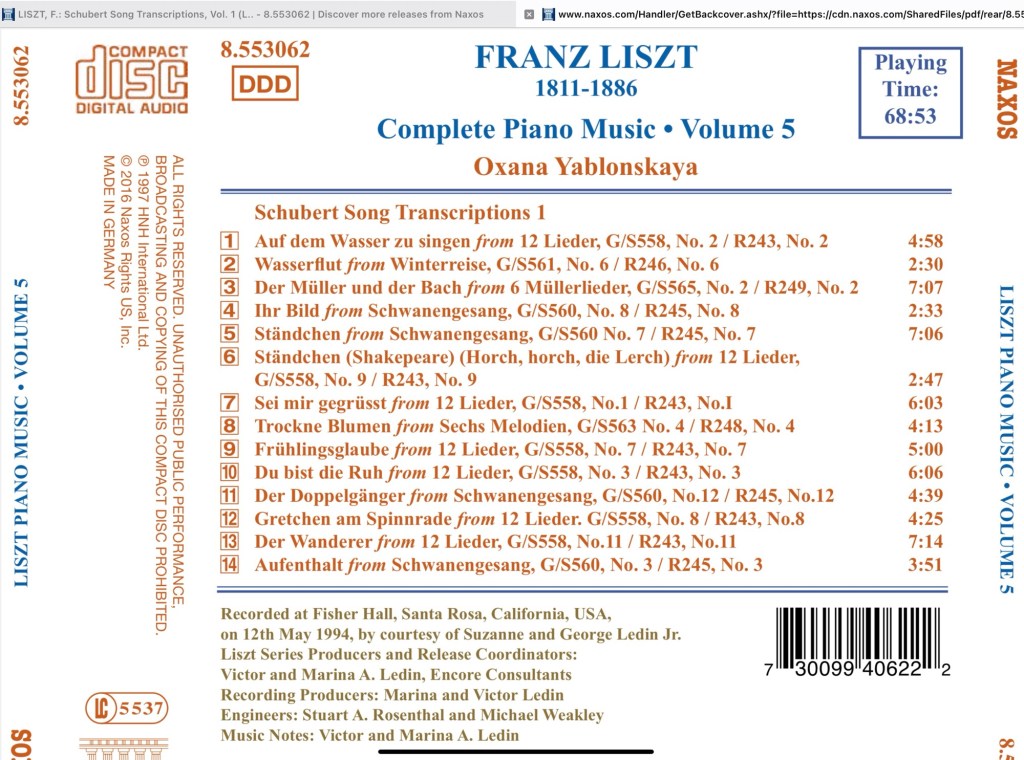
Liszt’s transcriptions of the Schubert songs have long been in the repertoire of the great Russian pianists from Sofronitsky to Bashkirov and Oxana has herself has recorded many of them .

She chose to play three of them in this recital : ’Standchen ’,’Auf dem Wasser zu singen’ and ‘Gretchen am Spinnrade’ with a distilled beauty of aristocratic control and poise .A sumptuous richness of the cello in ‘Standchen’ was answered by the whispered beseeching of the violins. as the gentle shadowing of the melody was played out with ravishing beauty and delicacy. There was a flexibility to ‘Auf dem wasser’ with heartrending rubato and a masterly sense of timing and grandeur in the style of the great pianists of another age.A sudden change of gear towards the end was with gasps of unexpected relief. A glorious outpouring of song in ‘Gretchen’ where the whispered continuous weaving built to a sumptuous passionate climax and the end of a recital that was indeed a great lesson for all those present . A great pianist showing what it means to play with simplicity and weight at the service of the composer.
‘ Je sens,Je joue ,Je transmets’.
It can seem so simple after a lifetime’s dedication to music as Oxana Yablonskaja has shown us in a masterful way.

Oxana Yablonskaya – Sorrento salutes the ‘Queen of the Keyboard’

Christopher Axworthy Dip.RAM ,ARAM
Christopher, Oxana is a great lady whom I had the pleasure of meeting after a concert I gave in Jerusalem a couple of years ago. She is a great artist, and your poetic description of her recital, and of others, is unequalled in the profession. Your words are such that we are transported to the venue without having been there! Thank you, and all the best! Craig Sheppard
 ChristopherAxworthy-MusicCommentary