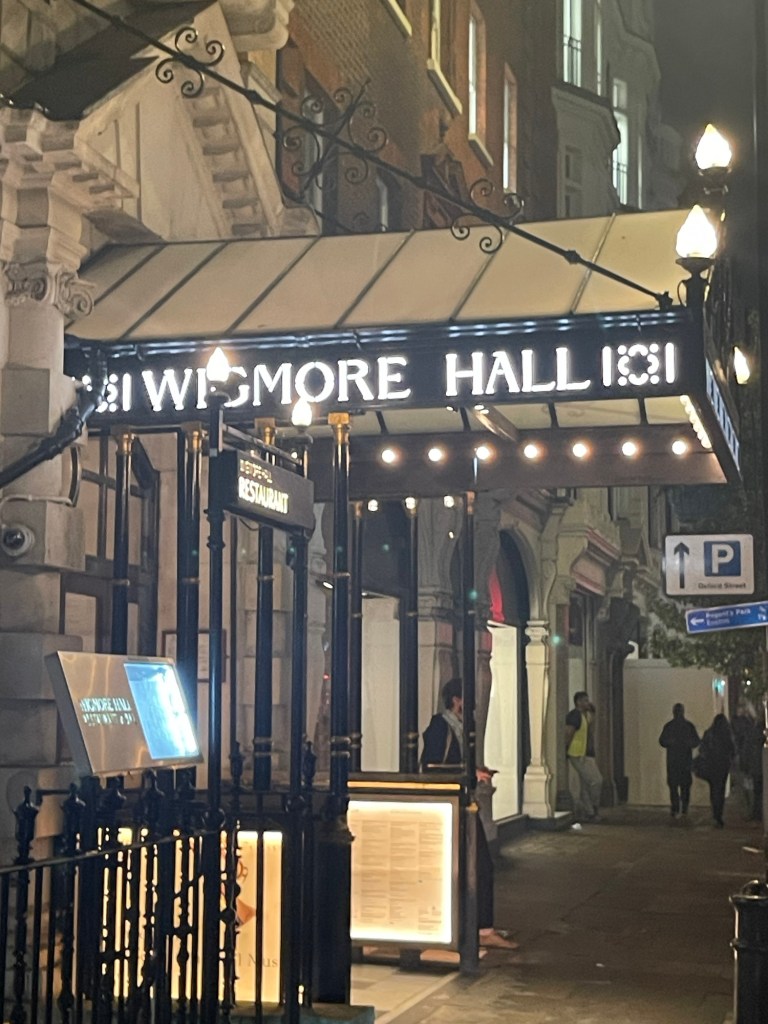
A tour de force from Cédric Tiberghien with a memorable performance of the Diabelli variations
No I pad or other extraneous aide memoires as this was a man possessed by the spirit of Beethoven living every moment with total dedication and devotion
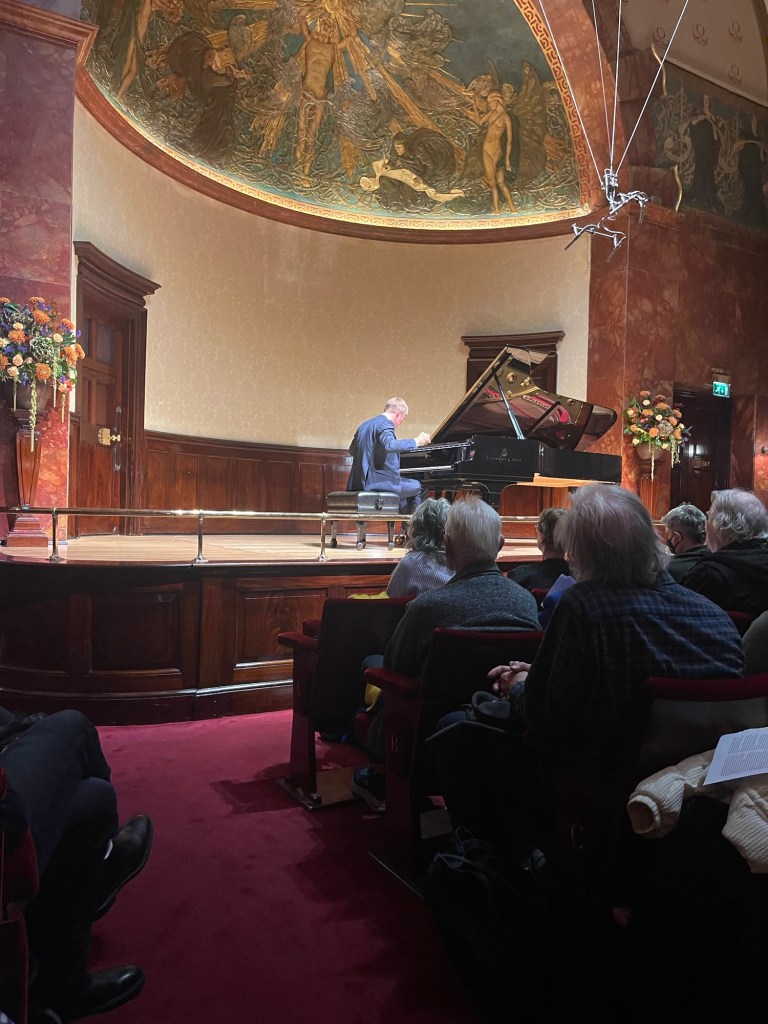
It was a very French Diabelli of the school of Sancon or Boulez with absolute rhythmic precision and scrupulous attention to the composers indications with sharp clean sounds of knife edge precision. This is not the school of Cortot or Perlemuter with the weight and depth of sound of fingers like limpets sucking the sounds deeply out of the keys with a rich full warmth.

There was no warmth today but instead the cold precision that allowed Beethoven to appear in a Boulezian guise .It was ‘music absolute’ shorn of any niceties or traditional vices .It was Beethoven naked infront of us and it was what kept us enthralled and riveted to our seats as rarely before.
Serkinian hysterisms of Brendelian mannerisms were all forgotten as Beethoven stood before us shorn of all excess and extraneous interventions
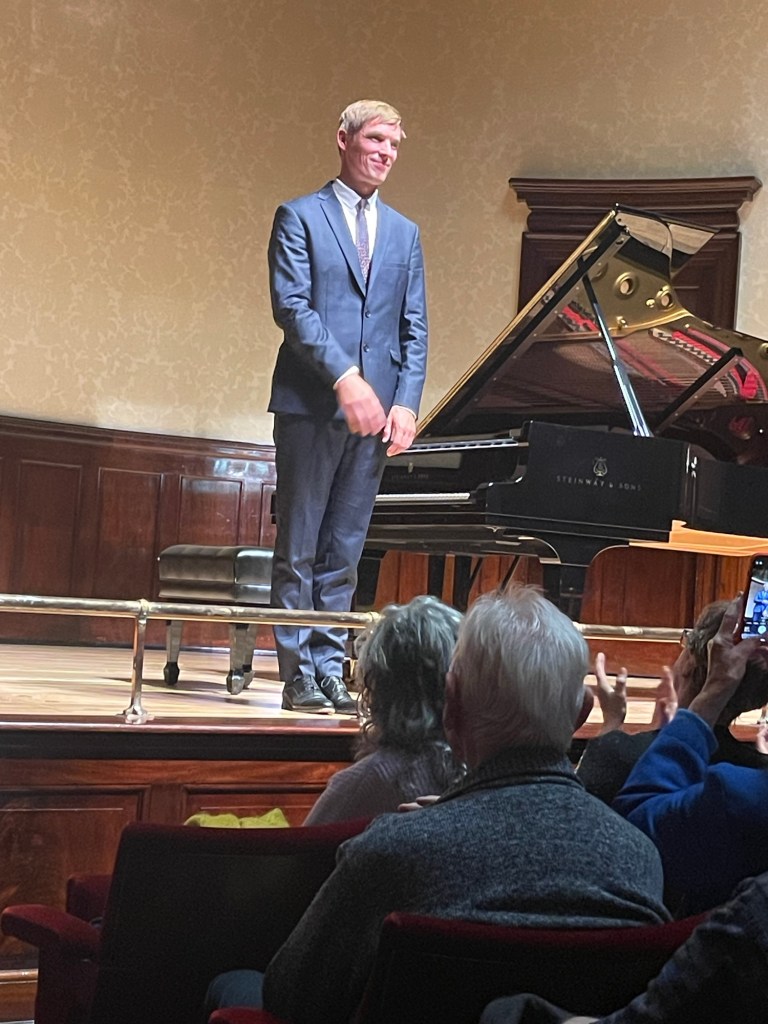
A standing ovation was the minimum that we could offer such a giant of daring commitment and artistry.
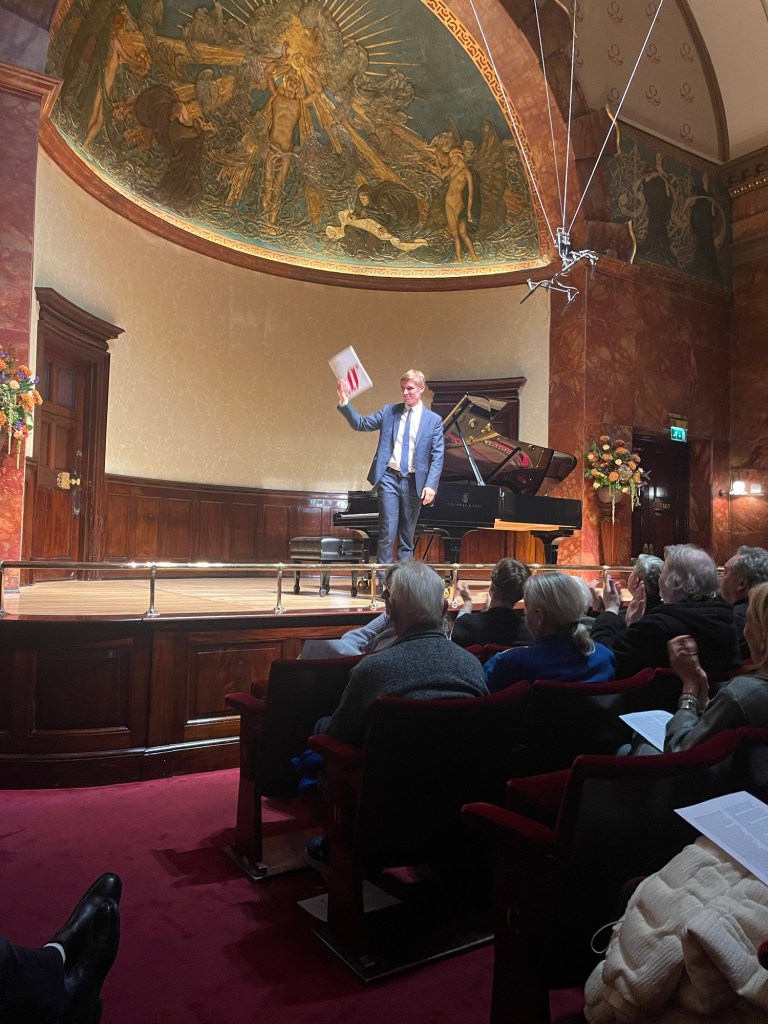
There was a dynamic drive from the very opening where the theme was played with very dramatic contrasts with Beethoven’s indications taken quite literally with ‘p’ ,’ sforzando’,’forte’ all within one bar where Tiberghien’s pin pointing was quite remarkable but it did loose something of the essential waltz ingredient – hardly a waltz any more but a declaration of intent. The taking of Beethoven’s markings with scientific punctiliousness worked wonderfully well with the first variation ‘Alla Marcia maestoso’ where the sudden changes in dynamics and Tiberghien’s intelligent musicianship gave extraordinary shape to an often rather violent ‘kick off’. His crystalline clarity was ideally suited to the whispered scampering of the second whereas the third and fourth whilst being lyrical and clear were also brittle and without the all embracing warmth that Beethoven envelopes us in.
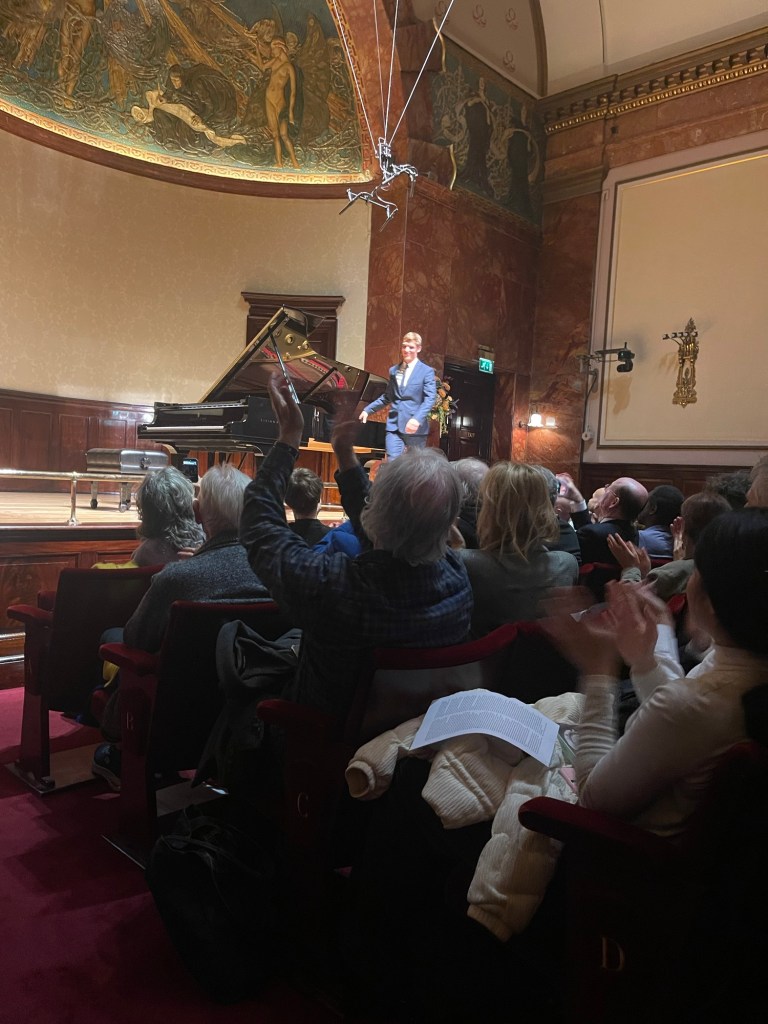
The rhythmic surprises of the fifth were played with just the Boulezian precision pointing right left and centre in quick succession.The sixth too was played with Serkin like rhythmic frenzy as the upward surges were answered with great insistence between the hands allowing the seventh to suddenly take wing.There was quite exquisite beauty in the eighth where the beautiful legato melody floats on barely whispered harp like sounds with remarkably clean whispered undulations.The ‘Allegro pesante e risoluto’ was played like a man possessed and was with startling effect as was the Presto of the tenth remarkable for its relentless forward movement despite the quite transcendental hurdles that the composer places before the performer.
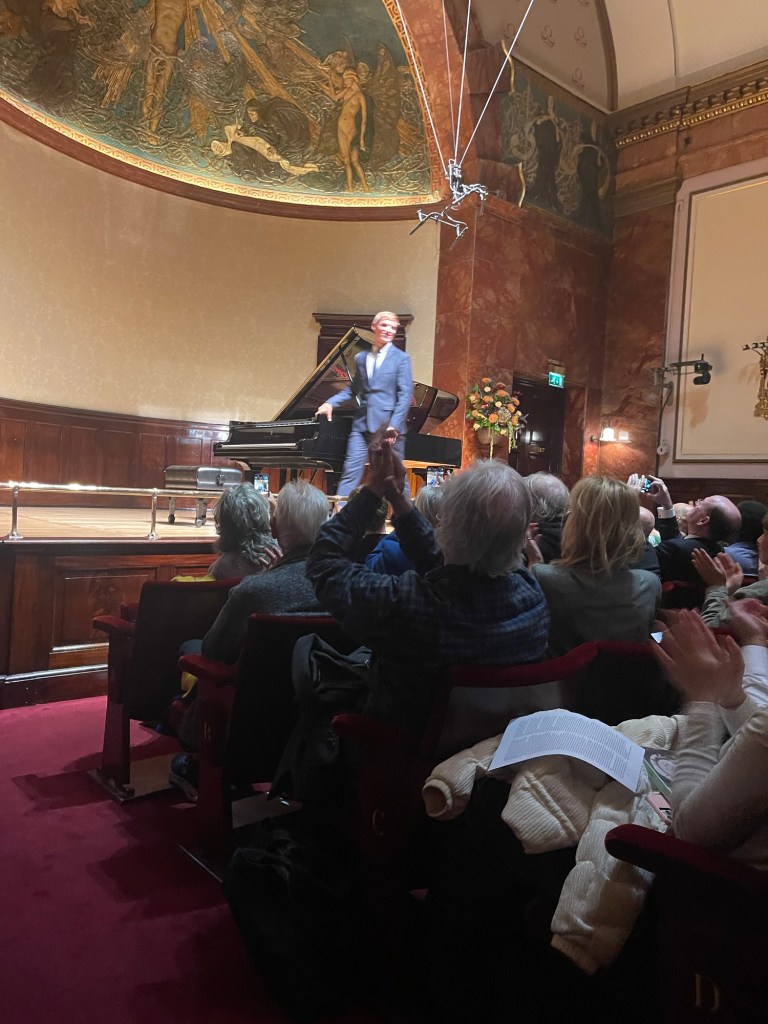
Again it was the ‘Allegretto’ and un ‘ poco piu moto’ of the eleventh and twelfth that suffered from the lack of all embracing warmth and depth of touch.In particular the meanderings of the eleventh seemed quite pointless and rather without any architectural shape or direction.Not so the thirteenth that I have never heard played with such character and even sense of humour.The scrupulous attention to ‘f’ and ‘p’ but above all the rests was quite breathtaking and was like opening a window on a completely new world.There was great beauty too to the ‘Grave e maestoso’ bathed in pedal but with a rhythmic precision of poignant intensity.Beethoven may be having fun but he was also nearing the end of his tormented life with so much left to express of suppressed deep inner feelings.

Mendelssohnian lightness to the fifteenth with the alternating staccato e legato contrasts was played with non stop rhythmic elan.If Serkin brought more overwhelming sound to the sixteenth and seventeenth the near hysterical overdrive was the same and was quite overwhelming in it’s impact. But the beauty of the ‘poco moderato’ eluded Tiberghien where the intellectual should meet the stylistic on open ground of sumptuous operatic beauty allowing the music to breathe and expand at last as it weaves it’s way through the nineteenth to the long slow ‘Andante’ . Again the warmth and beauty of a full string orchestra were replaced by the tempered coolness of the winds.Taking off with enviable energy as the ‘Allegro con brio’ took flight with dynamic drive just as the operatic humour he brought to the twenty second was remarkable for the scrupulous precision and respect for Beethoven’s markings brought such character to what was becoming almost too serious!

The lilting waltz of the twenty fifth was quite delectably ravishing as he played with clarity and delicacy but never forsaking the clockwork jewel like precision . I felt that the twenty sixth marked ‘piacevole’ could have had more time to unfold naturally and beautifully 9 like in op 109) before the electric precision of the twenty seventh and the driving sledgehammer accents of the twenty eighth. The gasps of the ‘twenty ninth ‘ Adagio ma non troppo’ I have never forgotten André Tchaikowsky’s performance where he miraculously incorporated the warm rich sotto voce sound with the rests that Beethoven marks very meticulously. I was expecting Tiberghien with his pin point precision to be supreme here and although it was very beautiful it was not what Beethoven had notated!
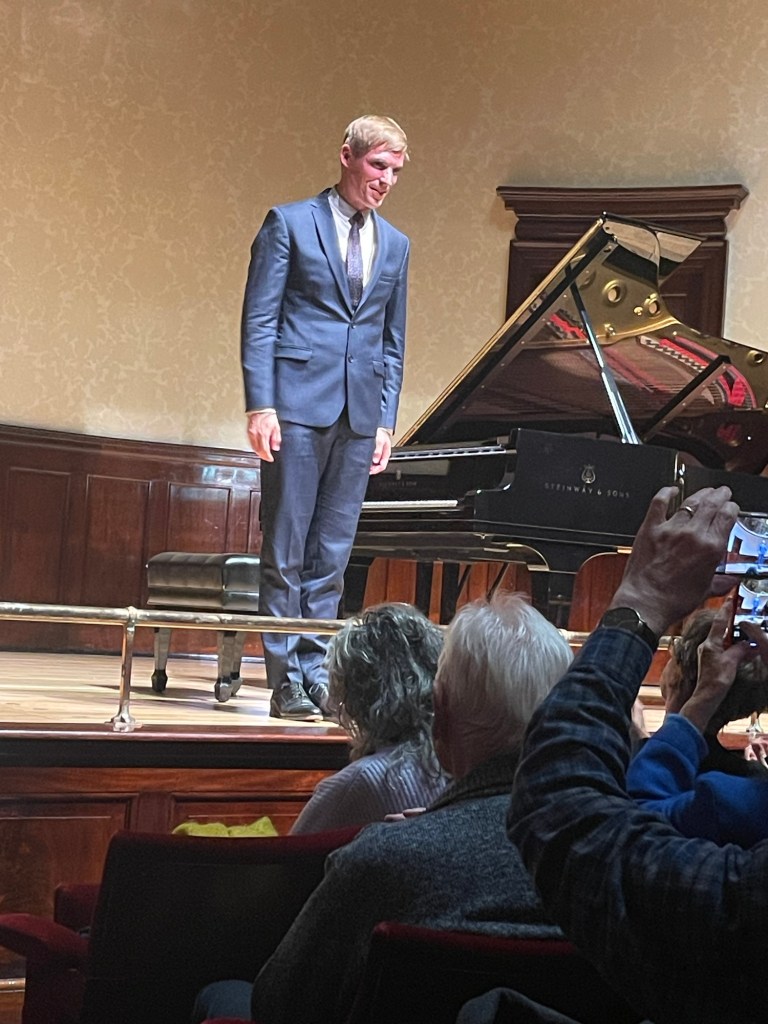
The thirtieth and thirty first were played with bel canto beauty but where the lack of real weight did not allow us to savour one of Beethoven’s most profound statements sharing a deep inner soul that is to be found only in the poignancy of the late quartets.The thirty second is a fugue every bit as ‘animalesco’ as I remember Serkin and Brendel but whilst it was extraordinarily clearly played it lacked the full orchestra sound that was so obviously in Beethoven’s secret ear. But the clarity of the sudden rush of quavers was done to absolute perfection and the cadenza flourishes were truly breathtaking.
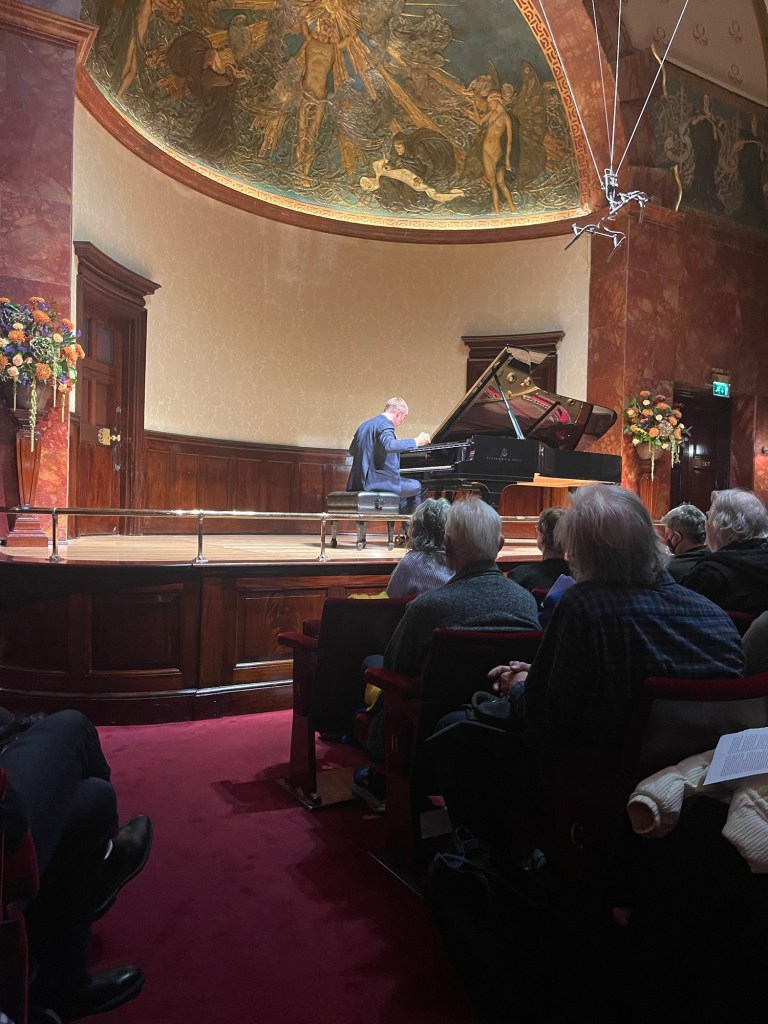
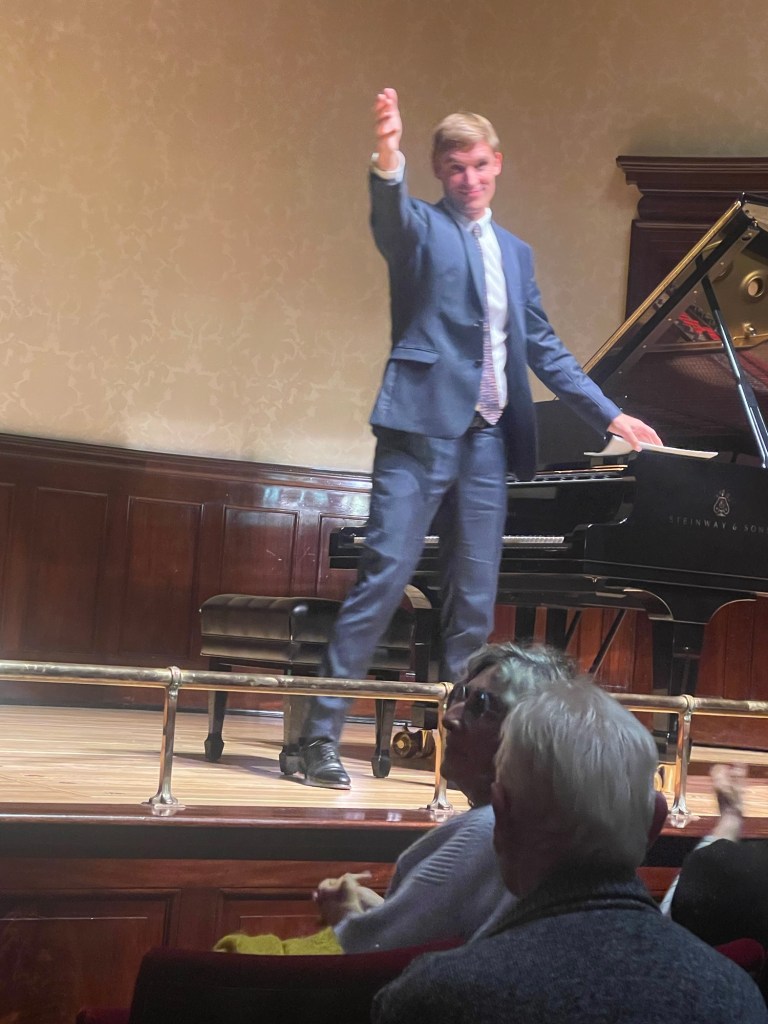
Tiberghien’s crystalline clarity and precision were ideally suited to the magical unravelling of the last variation and the way he just threw off the last chord showed what humility and respect he had shown throughout ,but here in particular with the final outpourings of the Genius from Bonn.

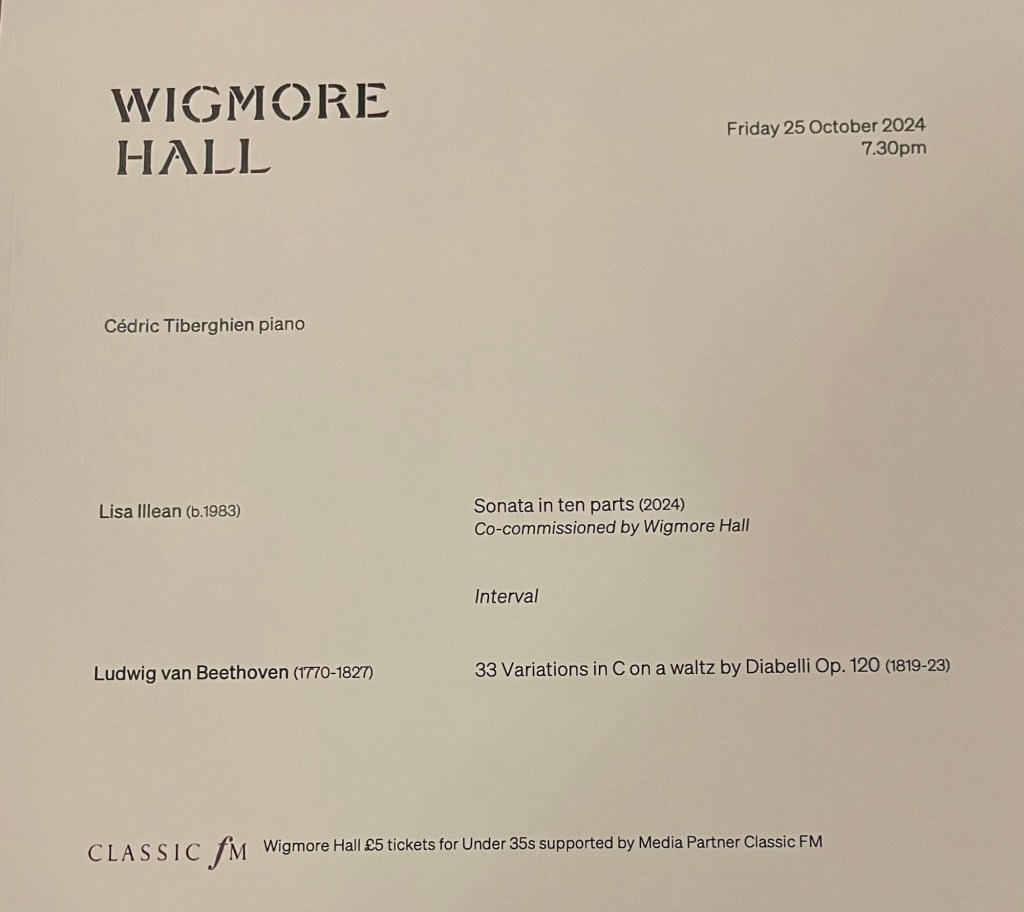
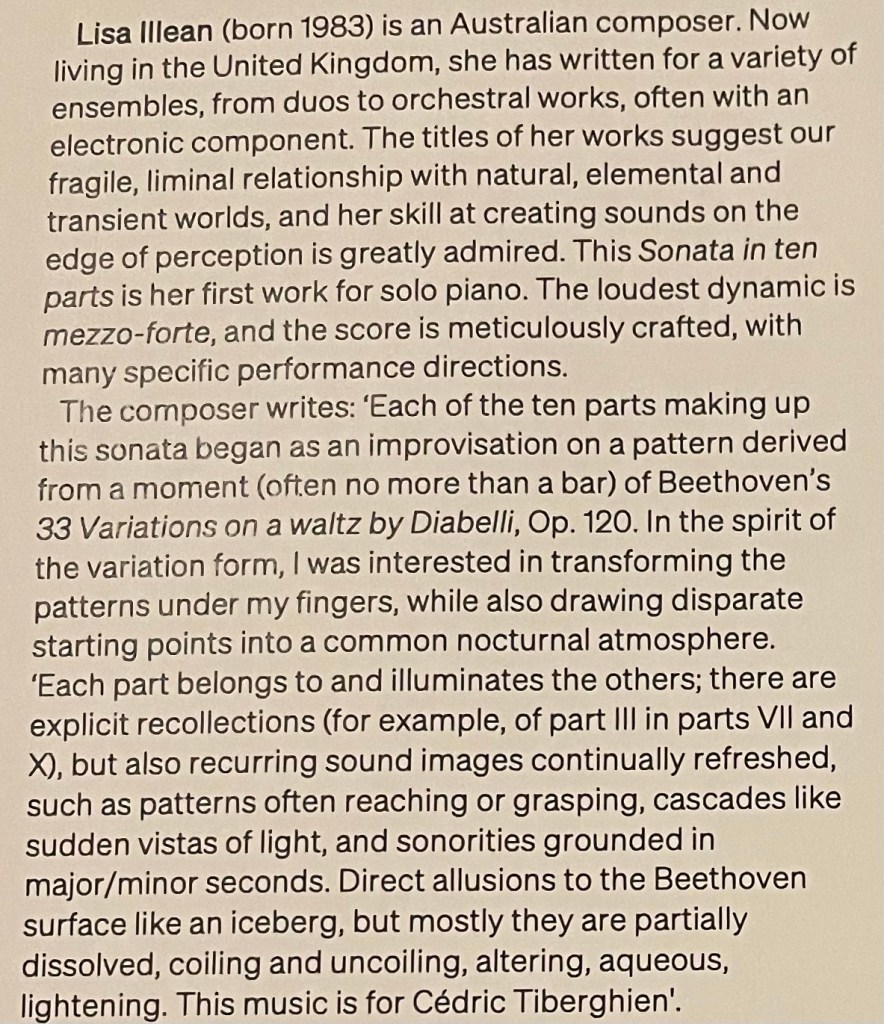
A dream of Diabelli had been a Wigmore co commission with a Sonata in ten parts by the Australian composer Lisa Illean.A work that never rose above mezzo forte but was a series of magical sounds that found the perfect interpreter in Tiberghien with his pure precision like the icicles of Michelangelian touch.A remarkable feat of touch and hammer like precision with glowing purity but never with any clouded pedal sounds .
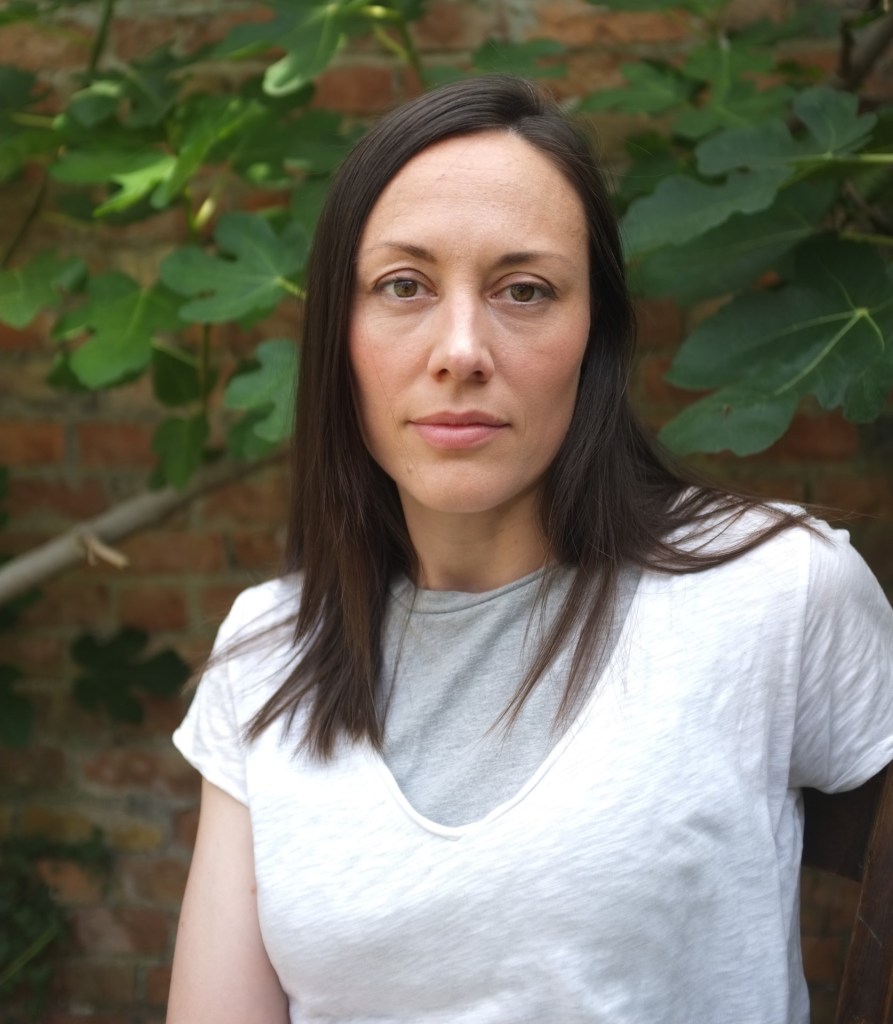
Born in Australia and now based in the UK, Lisa Illean composes ‘music that seeps into your consciousness’ (ABC Classic FM). Reflective and compelling, her ‘exquisitely quiet shadows’ (The Sydney Morning Herald) invite contemplation, often exploring unconventional tunings and the phenomena that arise through the interaction of quiet layers. Much of her work combines live and pre-recorded instrumental sound in performance to create ‘a soundscape unlike any other’ (Limelight). Her debut portrait album arcing, stilling, bending, gathering — described as ‘extraordinary stuff’ (The Arts Desk)— has been released on NMC recordings.

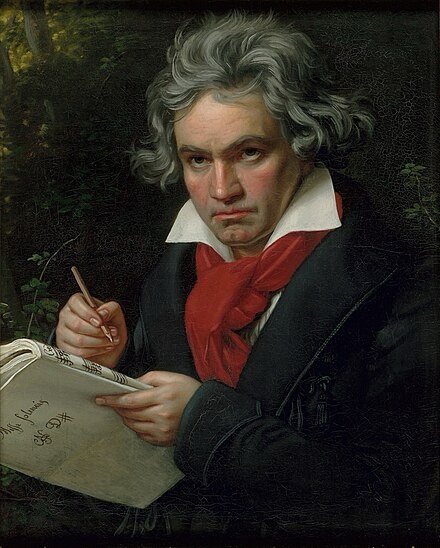
Ludwig van Beethoven
17 December 1770 Bonn 26 March 1827 (aged 56) Vienna
The 33 Variations on a waltz by Anton Diabelli, op 120, was written between 1819 and 1823 by Beethoven on a waltz by Anton Diabelli .It forms the first part of Diabelli’s publication Vaterlandischer Kunstlerverein , the second part consisting of 50 variations by 50 other composers including Carl Czerny,Franz Schubert ,Hummel,Moscheles,Kalkbrenner,a twelve year old Franz Liszt and a host of lesser-known names including Franz Xaver Mozart and others now largely forgotten.It is often considered to be one of the greatest sets of variations for keyboard along with Bach’s Goldberg Variations.Tovey called it “the greatest set of variations ever written”and pianist Alfred Brendel has described it as “the greatest of all piano works”.It also comprises, in the words of Hans von Bulow “a microcosm of Beethoven’s art”. Alfred Brendel wrote, “The theme has ceased to reign over its unruly offspring. Rather, the variations decide what the theme may have to offer them. Instead of being confirmed, adorned and glorified, it is improved, parodied, ridiculed, disclaimed, transfigured, mourned, stamped out and finally uplifted”.Maynard Solomon in The Late Beethoven: Music, Thought, Imagination expresses this idea symbolically, as a journey from the everyday world (“Diabelli’s theme conveys ideas, not only of the national, the commonplace, the humble, the rustic, the comic, but of the mother tongue, the earthly, the sensuous, and, ultimately, perhaps, of every waltzing couple under the sun”Of great significance, according to Kinderman, is the discovery that a few crucial variations were added in the final stage of composition, 1822–23 and inserted at important turning-points in the series. A careful study of these late additions reveals that they stand out from the others by having in common a return to, and special emphasis on, the melodic outline of Diabelli’s waltz, in the mode of parody.

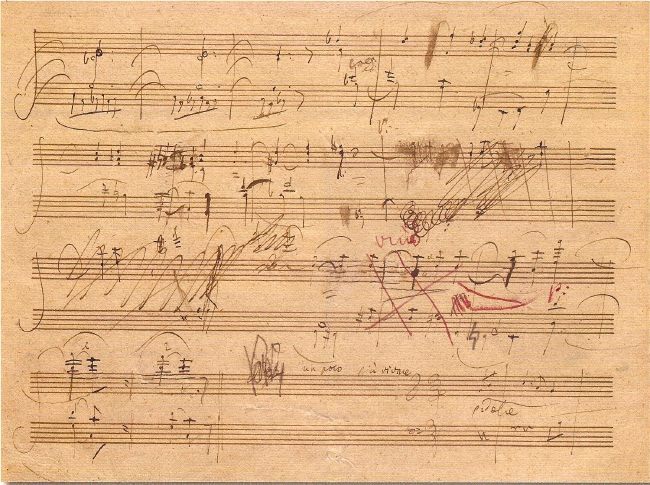
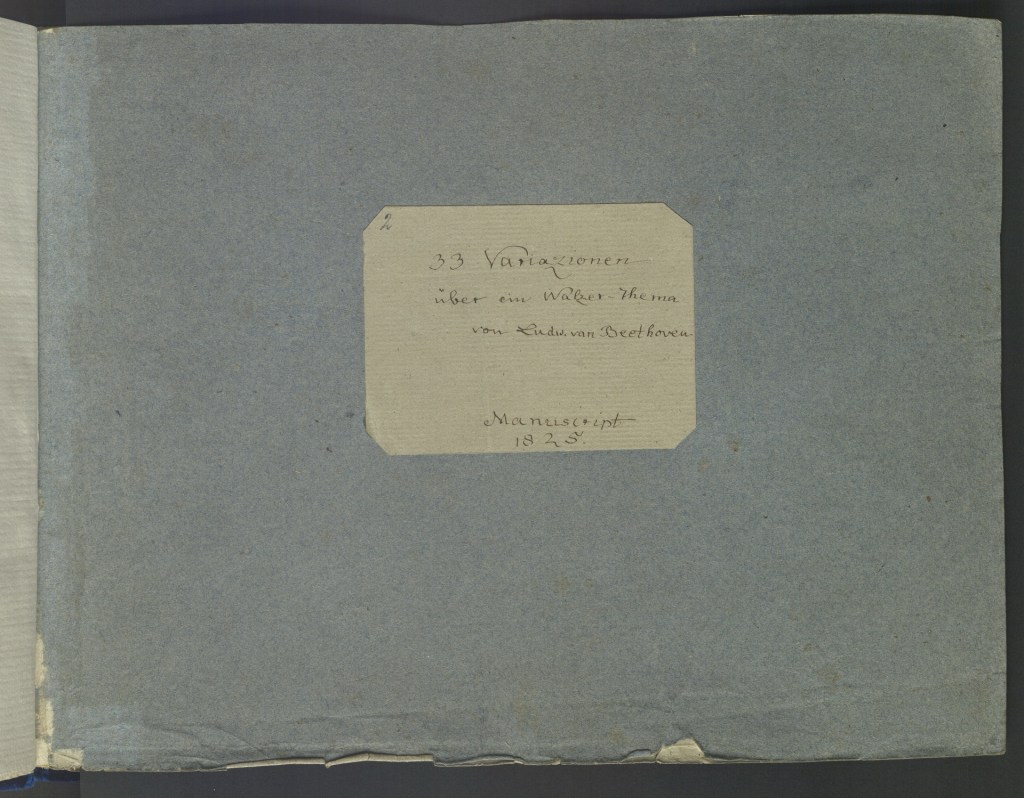
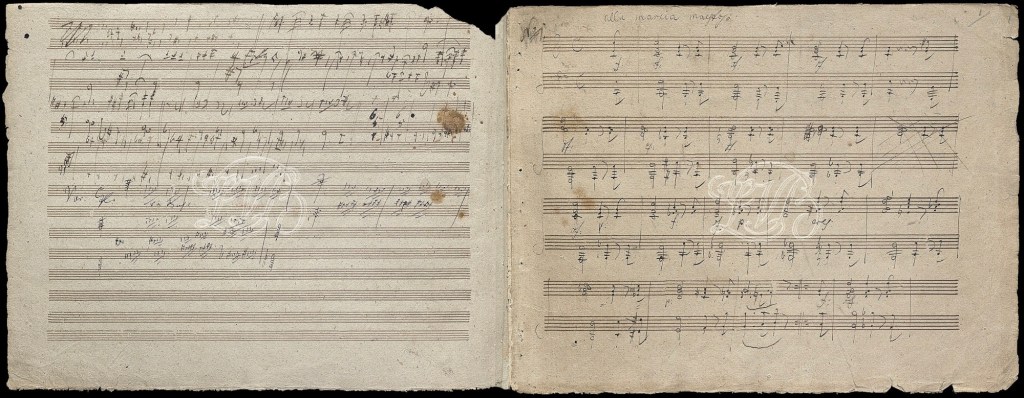
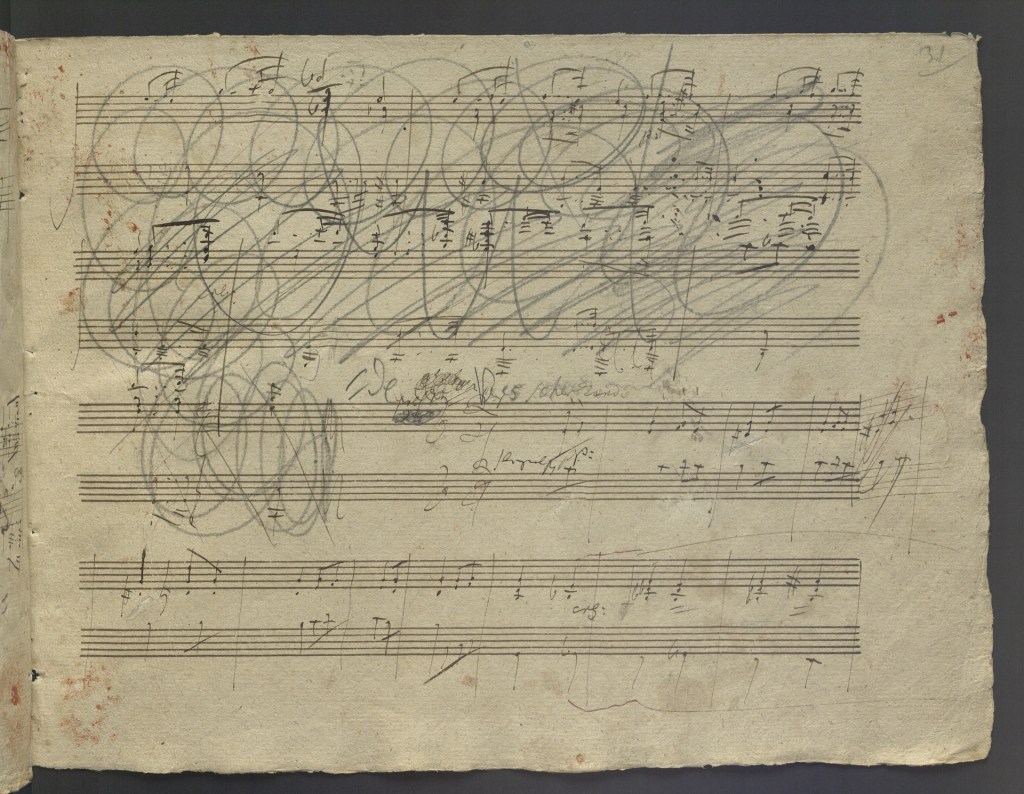

The autograph of the Diabelli variations gives a detailed insight into Beethoven’s working routine. It nicely illustrates how the composer worked, how he strove for a perfect final version by adding, crossing out and pasting over notes, by inserting sheets and so on. Beethoven’s handwriting gives evidence of the conflict between producing a well-readable copy and giving way to spontaneity and unrestrained expression. His way of writing says much about his musical intentions, and the manuscript also mirrors his complex personality.
His handwriting had always been quite attracting. Anton Diabelli, who ordered the variation cycle, wanted to own the autograph by all means and claimed that he as the publisher needed it as proof of ownership. And indeed, he managed to obtain it. Later, it came into the possession of two well-known autograph collectors: Heinrich Steger from Vienna and Louis Koch from Frankfurt. Thereafter, the manuscript remained in private possession for many years. Thanks to the contribution of many supporters, among them the public authorities, public and private foundations as well as music aficionados from all over the world, the manuscript could be acquired in 2009 and be added to the collection of the Beethoven-Haus. Last but not least this important achievement is owing to the efforts of outstanding Beethoven interpreters who gave charity concerts. Thanks to this common commitment artists and laymen can now enjoy this unusual master composition.
 ChristopherAxworthy-MusicCommentary