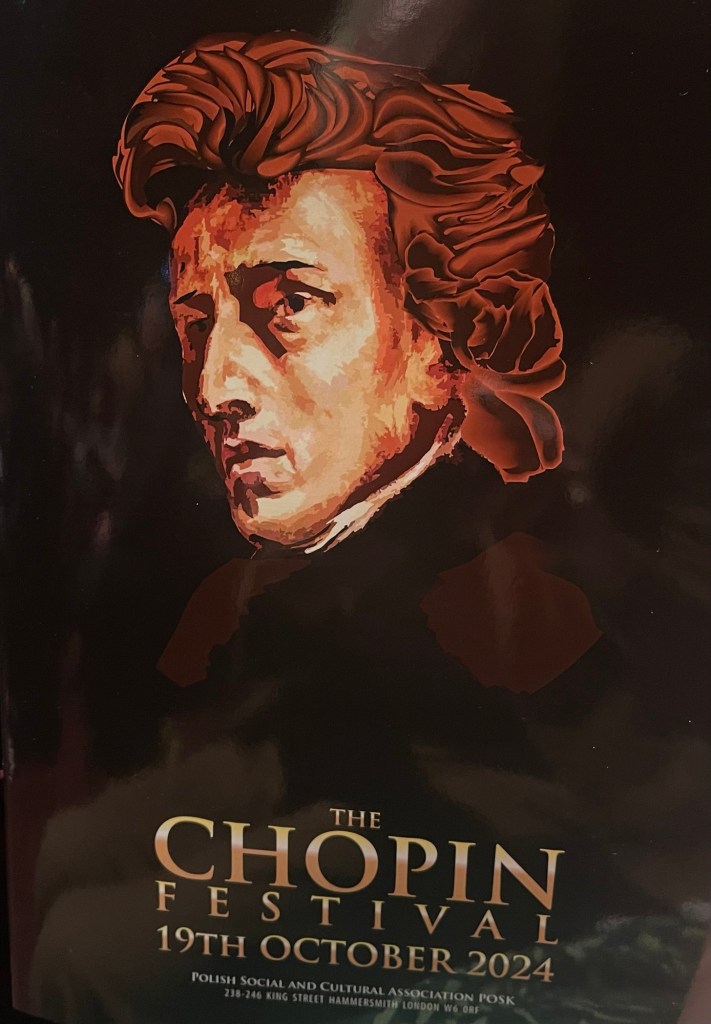
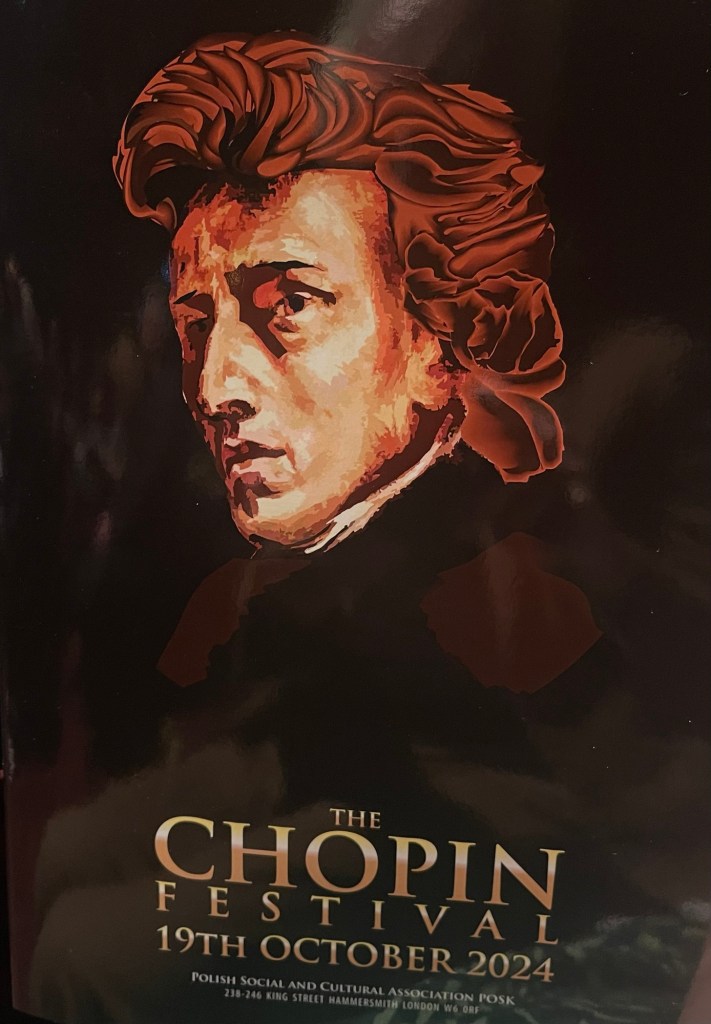
The 2024 Chopin Festival produced by Janusz Sikora Sikorski. A sumptuous six hour feast where the wonderful smells from the POSK restaurant were nothing compared to the refined perfumed sounds from a new Steinway piano that now sits so proudly on the stage of their theatre and last night was brought magnificently to life by four superb pianists .

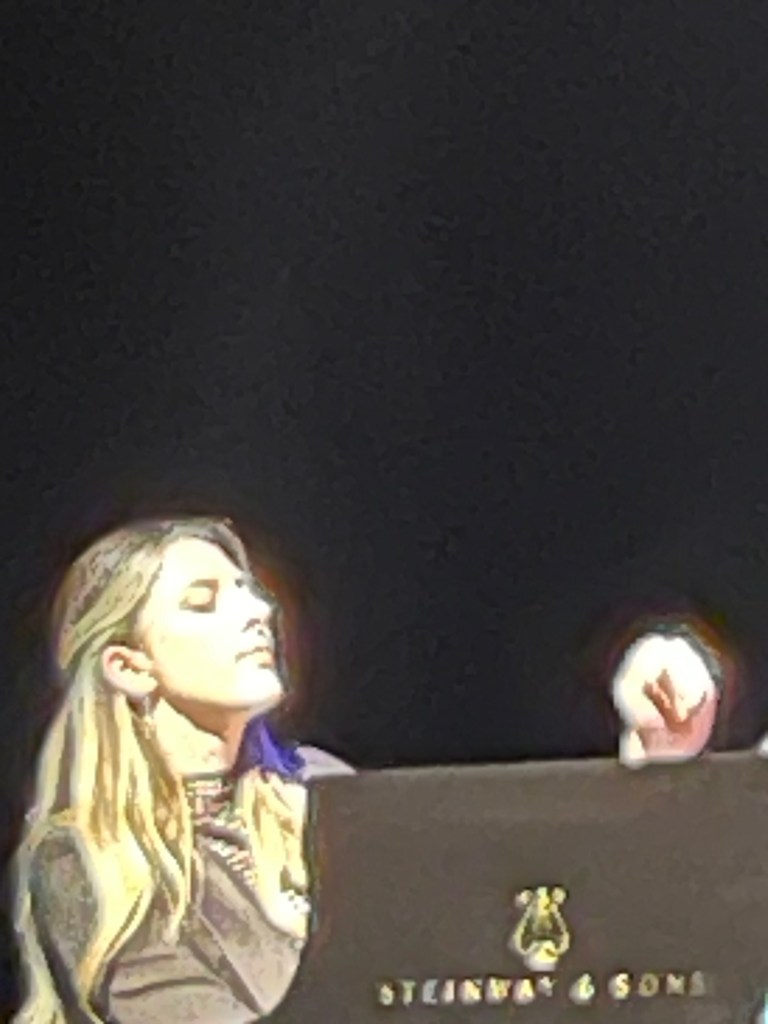
The refined intelligence and sumptuous beauty of Dominika Mak in two of Chopin’s greatest works : the Fourth Ballade and Barcarolle were even overshadowed by her miraculous performance of the Mazurkas op 59 .
There was a wonderfully produced programme with fascinating articles by Alan Walker and Norman Davies but no actual programme of the concert.
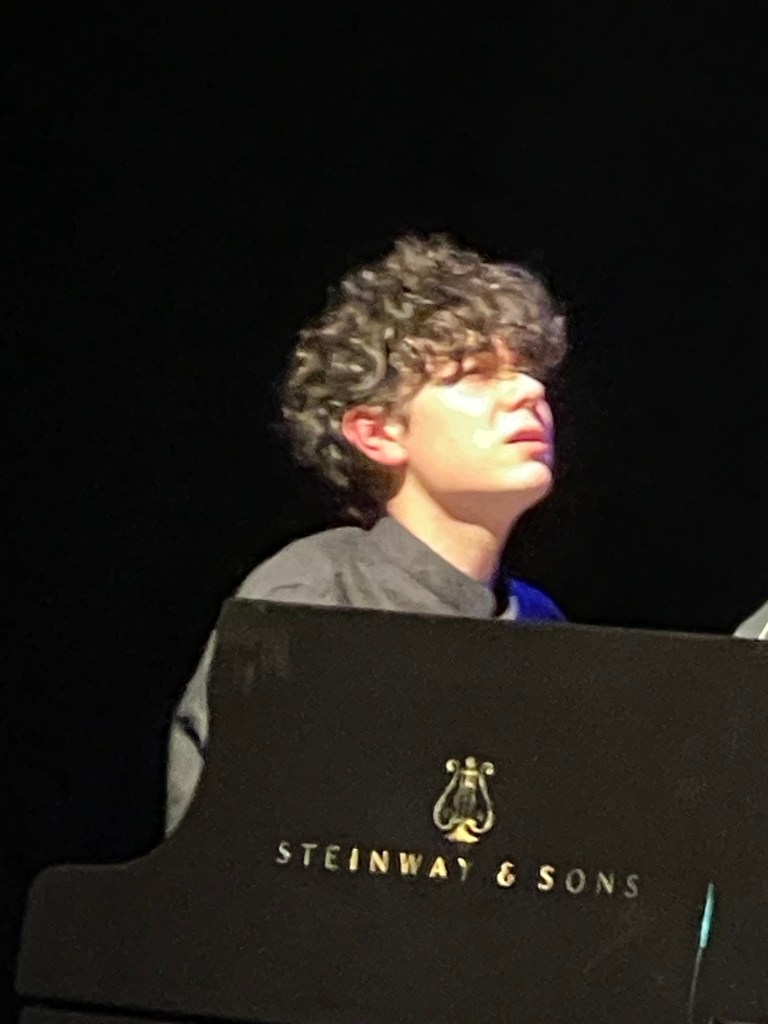
Great fluidity and refined rubato in Chopin’s most passionate of all Nocturnes. A cry of joy and ecstasy that this young man played with crystalline clarity where the intricate counterpoints were strands of sounds or voices each one answering the other with a remarkable technical mastery of sound. I was alarmed at hearing the opening of the B minor Sonata in a concert of four pianist of whom Mateusz was only the second! But alarm turned to deep enjoyment of a young man who could bring such architectural strength to this Maestoso opening movement.Unbounded admiration for the crystalline clarity of his fingers in the fleeting Scherzo and his mastery of line in the sumptuous Trio. Linking the end of the Scherzo to the opening dramatic opening of the Largo is a master stroke that only the most sensitive of artists can understand.The Presto non tanto although his youthful passion did not allow for the crescendo on the opening introductory flourish his musicianship and architectural understand immediately after added such excitement to the rondo as it returned ever more insistently until boiling over into a coda that was truly masterly.
A magical mystery tour it was indeed with a very youthful looking Mateusz Dubiel singing his heart out with one of Chopin’s most passionate of Nocturnes op 55 n.2 before plunging into a masterly account of the B minor Sonata op 58.
An interval was needed at this point like in a sumptuous feast where a sorbet is essential before continuing with such delicacies.

Piotr Pawlak on his very first appearance in London astonished us all with not only masterly accounts of the first three Scherzi but joined them into a unified whole by improvising transitional passages that could take us on a magic carpet from B minor to B flat minor to even the distant land of C sharp minor .A tradition that has been lost where pianists are no longer kapellmeisters but merely servants to their instrument.
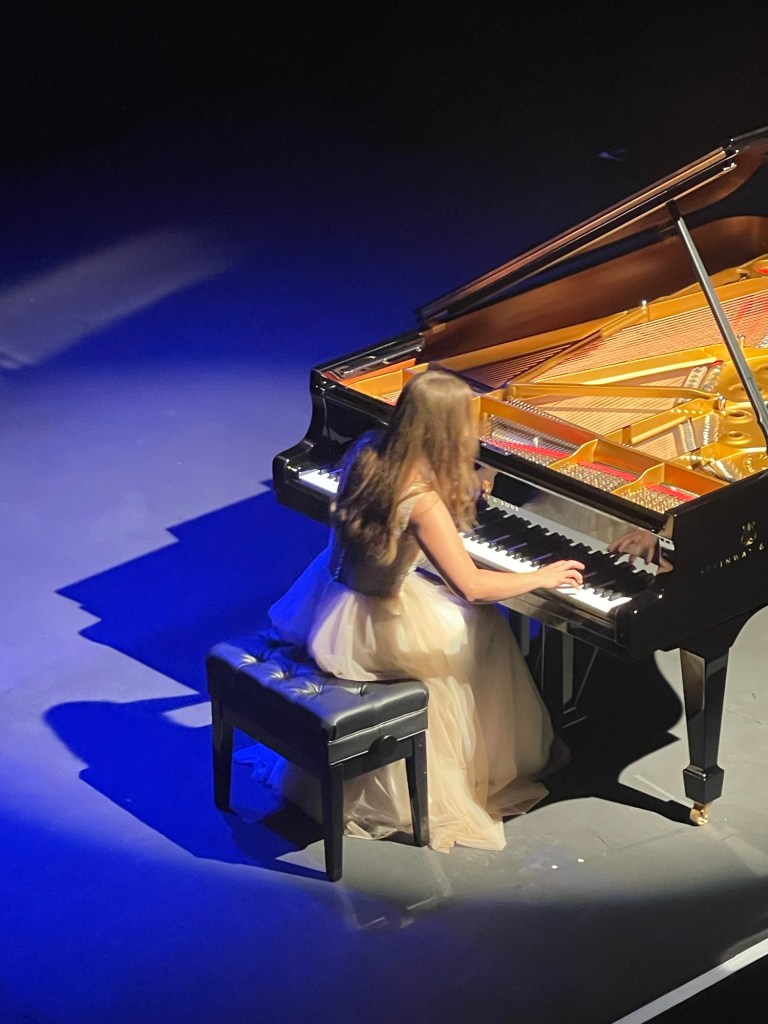
Chapeau to Alessandra say I! ‘Boadicea’ on her flaming chariot rides again .
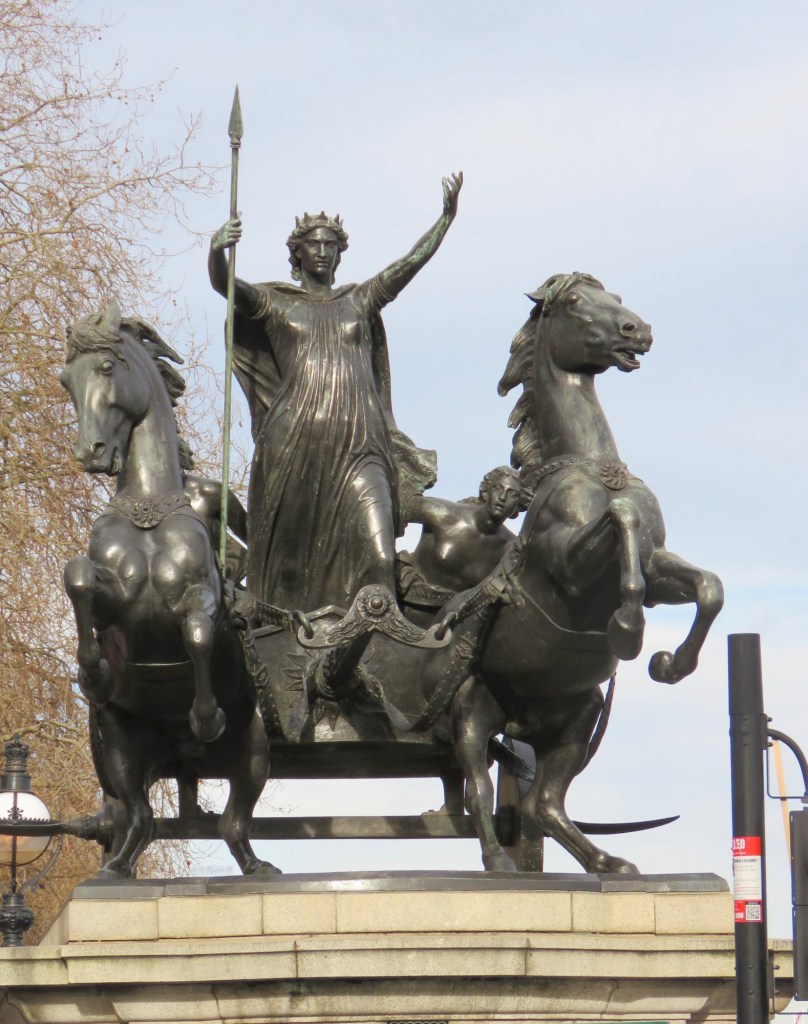
Last was the ‘ Boadicea’ of the keyboard Aleksandra Świgut opening with an Andante spianato of such whispered ravishing beauty that the simplicity of the appearance of a mazurka in its midst came as a liberation from jewels that were strewn with such artistry over the keys . We had heard some wonderful performances but this was the one that most shadowed Prof John Rink’s vivid description of Chopin’s own playing .
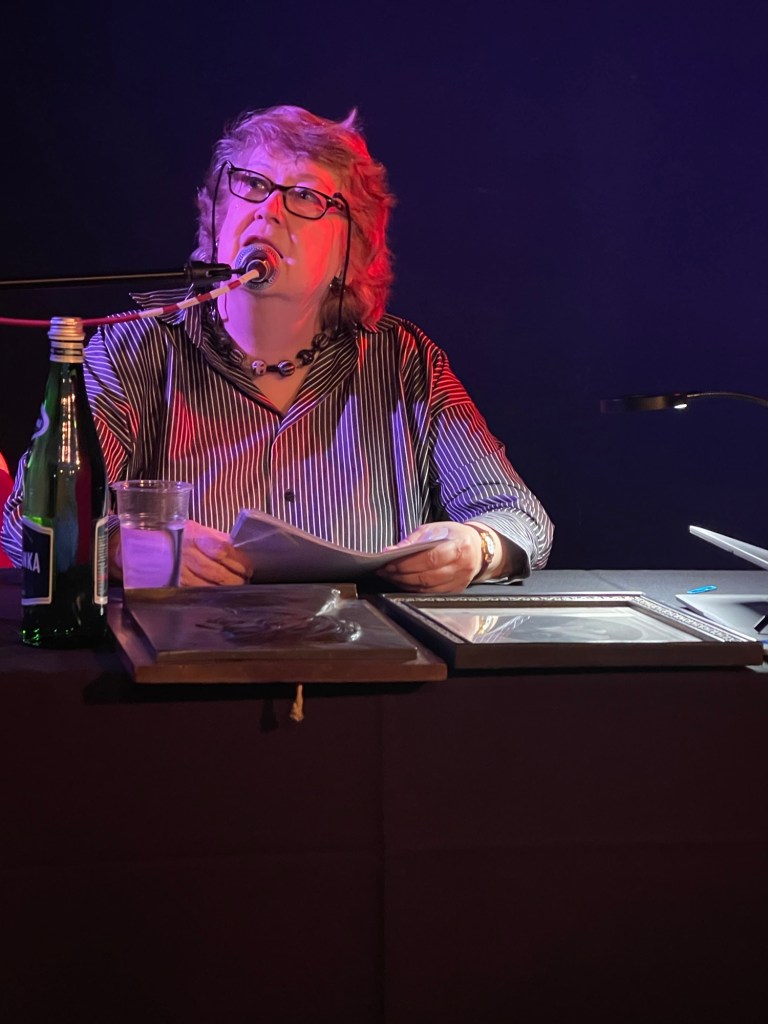
All these wonderful performances followed on from two illustrated talks ;the first of which was Lady Rose Cholmondeley’s fascinating and magnificently presented tale describing the ‘Mysteries surrounding Chopin ‘ . Slipped disc could take a leaf out of Lady Rose’s learned and almost forgotten BBC professionalism as she recounted many secrets that she had discovered about Chopin the man and was prepared to divulge to us today.

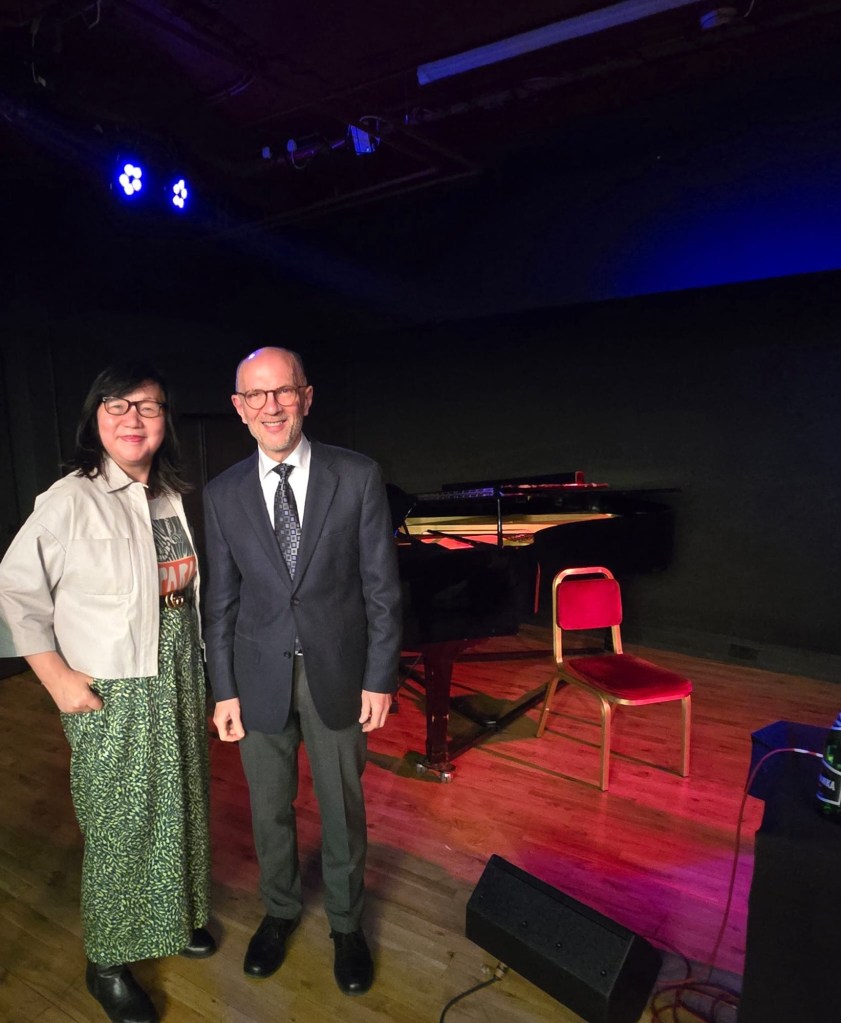
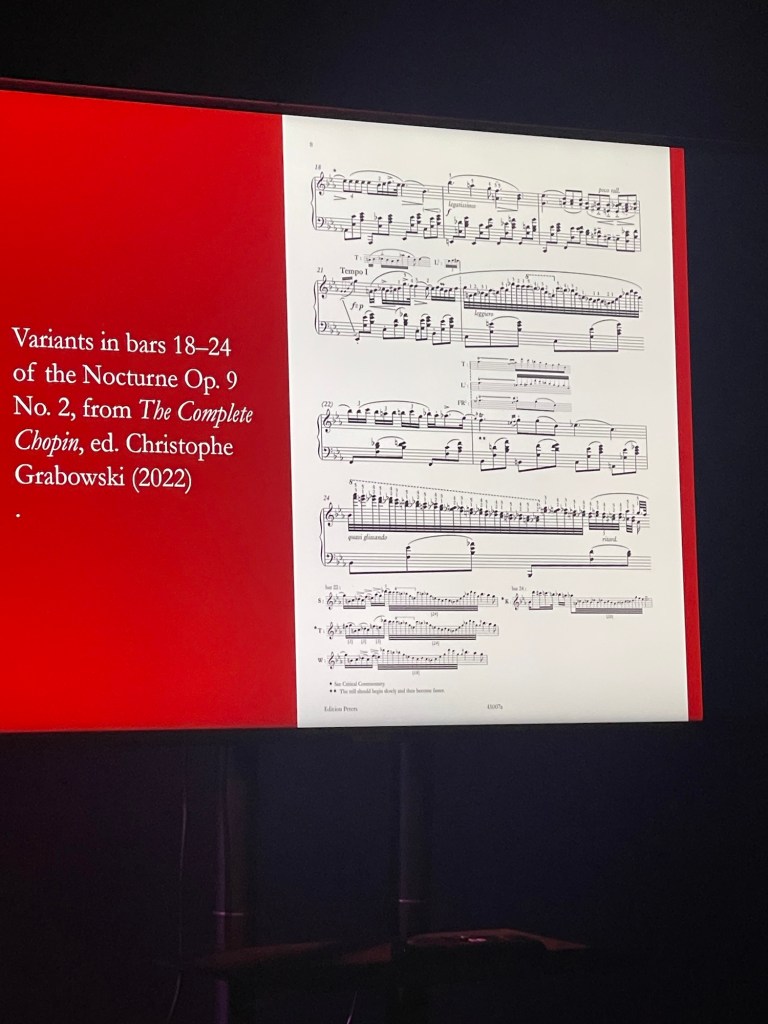

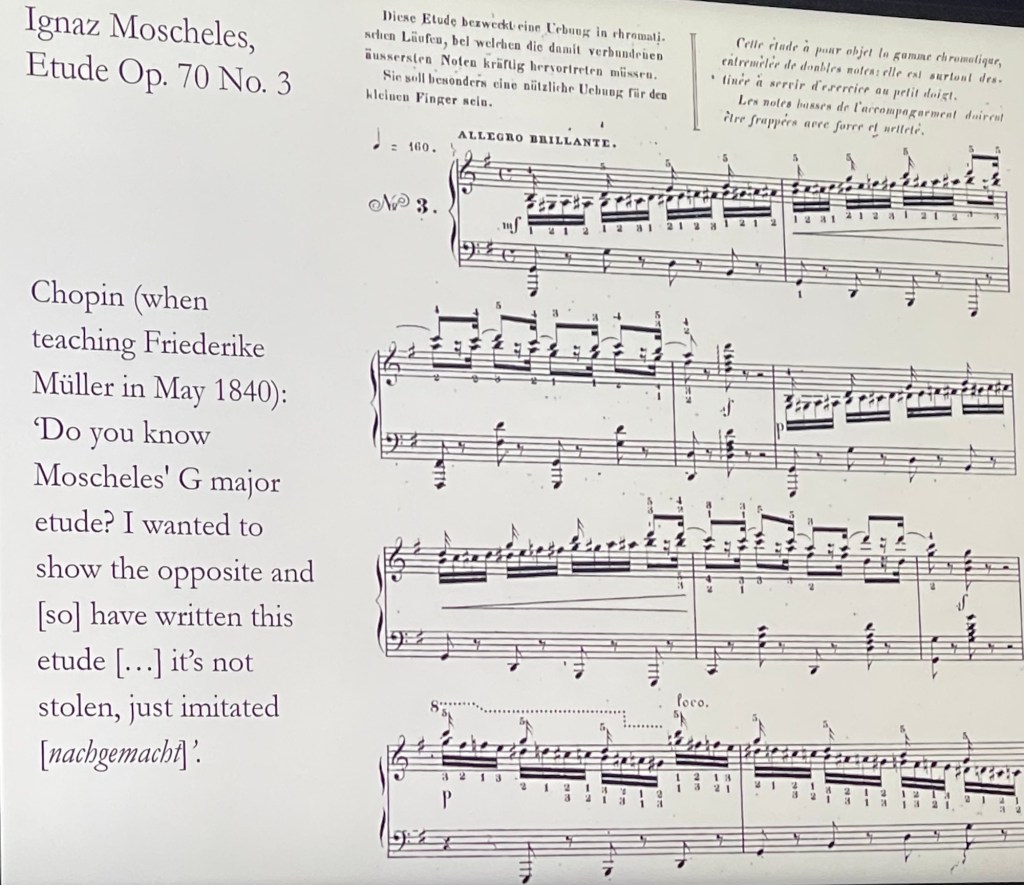
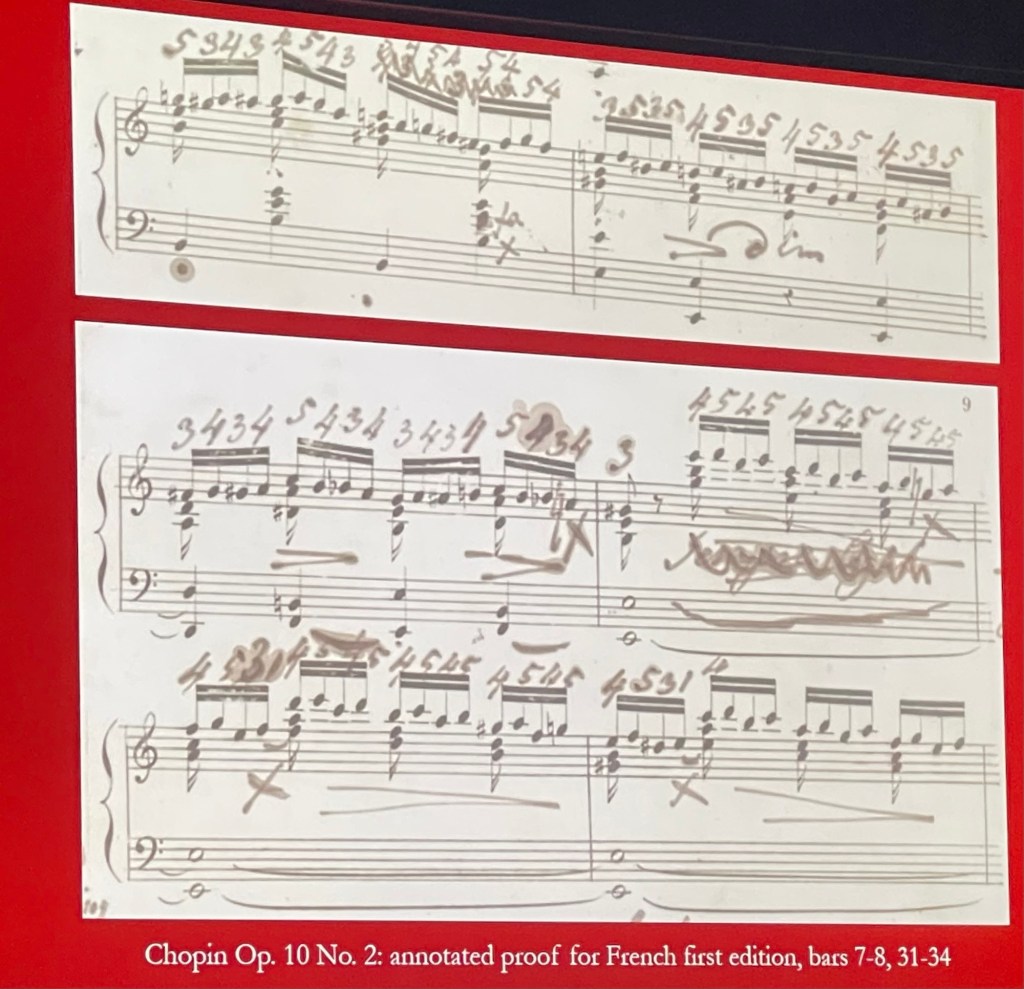
Prof Rink a much respected Chopin Scholar, Cambridge Professor and International Jury member ,took us on a tour of four of Chopin’s most significant early works , not only demonstrating at the piano but also with performances by Nelson Goerner of the introductions of op 2,13 and 14 .Also of Kochalski playing with great freedom the famous Nocturne op 9 n 2 .Nelson is a great friend of mine as was that other Nelson :Freire whose 80th birthday it would have been this week but for a cruel fateful destiny three years ago left us too early.
https://christopheraxworthymusiccommentary.com/2021/11/02/nelson-freire-rip/

I did find the Krakowiak in Nelsons interpretation rather slow for the Andantino quasi Allegretto indication and am used to hearing the much forgotten Stefan Askenase. There is also a wonderfully aristocratic timelessness to Rubinstein’s performance of op13 with Ormandy and the Philadelphia. Time was against us to discuss further which I would dearly have loved to do with such a renowned and dedicated expert. So many mysteries to unravel in Chopin’s scores apart from his times and heritage so expertly dealt with by Lady Rose
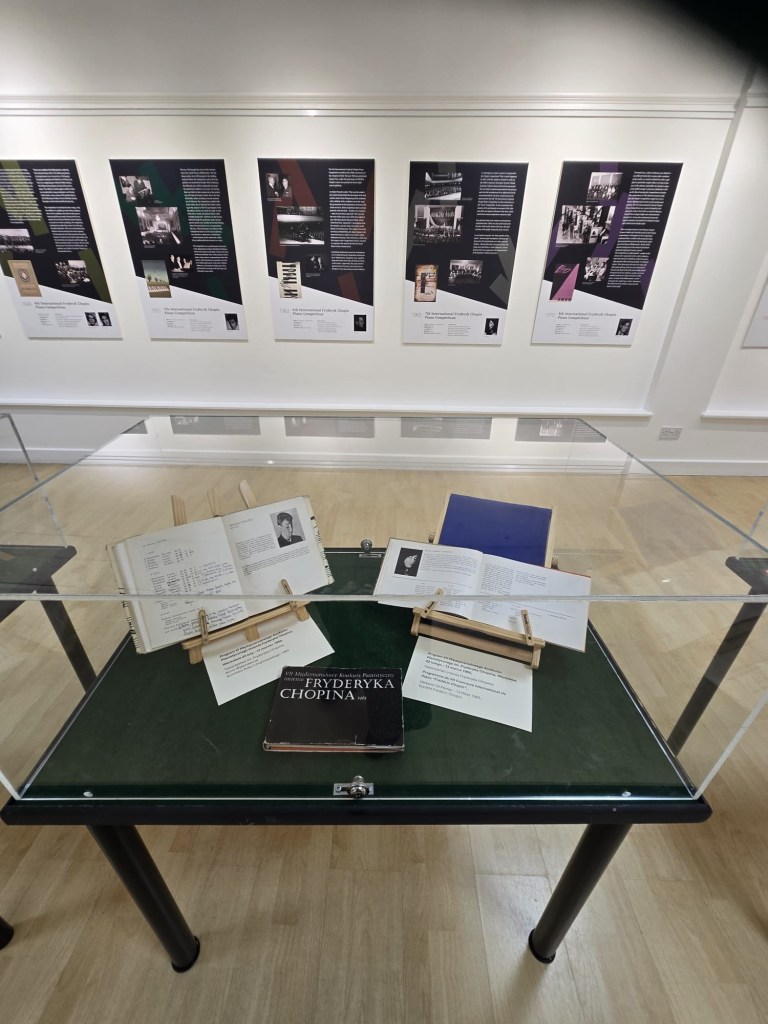
As if this was not enough there was the opening of an exhibition of the Chopin Competition in Warsaw from its first edition in 1927 where even Shostakovich had competed but Lev Oborin won ( his pupil Vladimir Ashkenazy was to win second prize at the 5th edition in 1955 -Fou Ts’ong third together with the Mazurka prize much to the astonishment of the Polish people who thought it was only they that could understand Chopin’s ‘canons covered in flowers’ !).
https://christopheraxworthymusiccommentary.com/2021/01/13/roberto-prosseda-pays-tribute-to-the-genius-of-chopin-and-the-inspirational-figure-of-fou-tsong/
1960 saw an 18 year old Pollini at the helm and an even younger Martha Argerich in 1965 and leading in chronological order to the present day with the charismatic mastery of Buce Liu who was immediately recognised by the critic Jed Distler in the very early stages as playing the Variations on ‘La ci darem la mano’ with the same beguiling sensitivity and mastery as Prof Rink described Chopins own performance when Schumann pronounced ‘Hats off gentlemen,a genius’
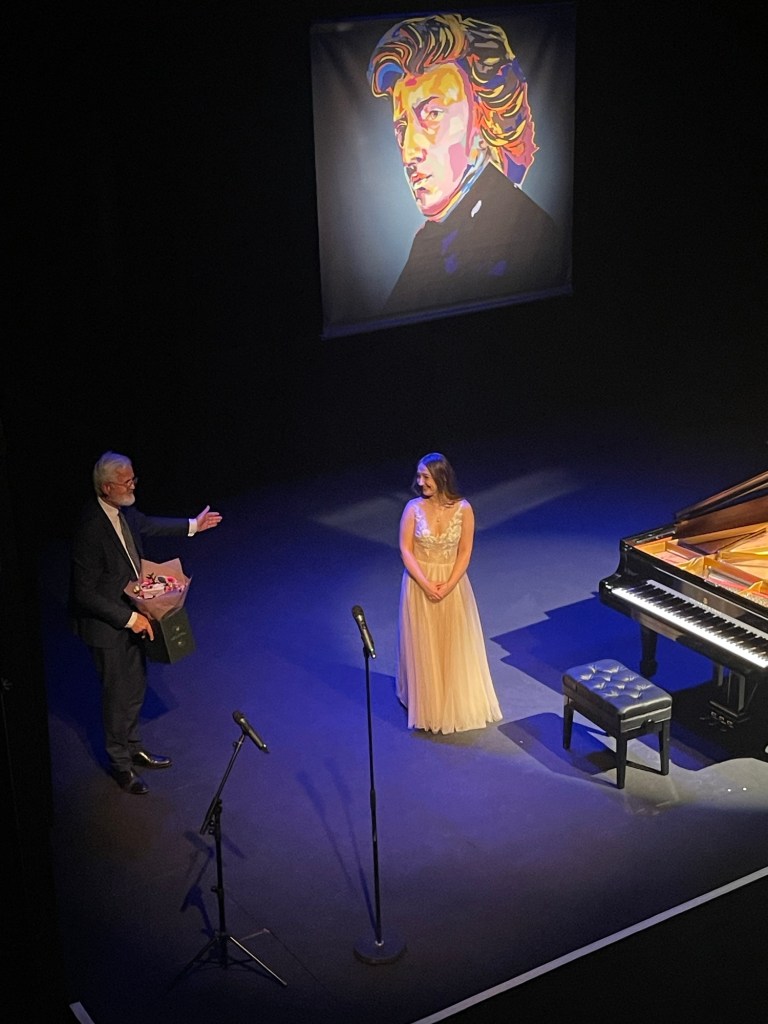
It was a nice touch to finish the Gala performances after such a glorious full immersion of Chopin with Aleksandar Swiguts all or nothing masterly account of these very variations that had put Chopin on the map on his arrival as a teenager in Paris and Vienna
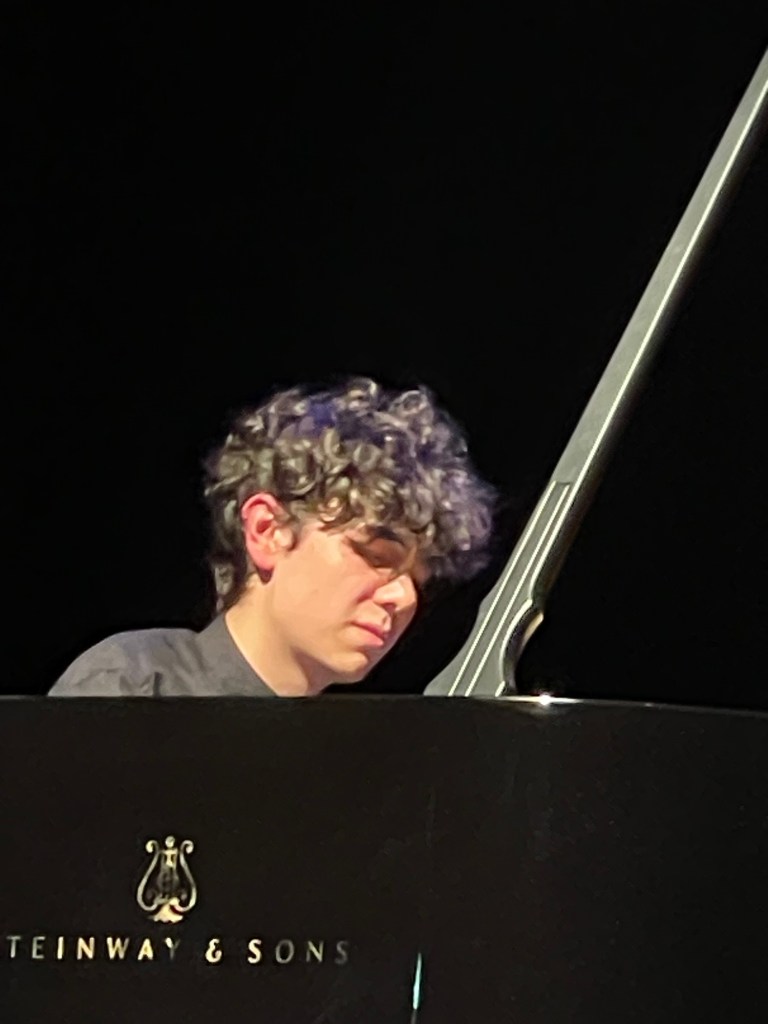
I learn from Cremona about Mateusz playing for the Fazioli Concert Hall last September
https://christopheraxworthymusiccommentary.com/2024/09/30/a-letter-from-cremona-the-eternal-city-of-music-where-dreams-become-reality/
Mateusz Dubiel was born in Bielsko-Biała (Poland) in 2004.
He graduated from the Stanisław Moniuszko Music School in his hometown, having studied with Anna Skarbowska.
He has been a Prize-winner in competitions both in nationwide venues in Poland, such as the First Prize at the 51st Fryderyk Chopin General Competition in Warsaw (2022), and in international venues, such as Second Prize in the Third International Piano Competition “Jeune Chopin” in Lugano, Switzerland-sponsored by Martha Argerich (2023), and II Prize in 5th Baltic International Piano Competition in Gdańsk.
He won First Prize and four specialty prizes in the 27th International Fryderyk Chopin Competition for Children and Youths in Szarfarnia (Poland).
In 2021 he placed sixth in the 12th “Arthur Rubinstein in memoriam” International Competition for Young Pianists in Bydgoszcz.
He has participated in classes with such noted pedagogues as Andrzej Jasiński, Kevin Kenner, Piotr Paleczny, Arie Vardi and Katarzyna Popowa-Zydron.
He has performed actively across Poland and abroad, including appearances in the Royal Castle in Warsaw, Chopin’s birth-house in Żelazowa Wola, the Krzysztof Penderecki European Music Center in Lusławice, the Academy of Music in Bydgoszcz, the Pomeranian Philharmonic, Cavatina Hall in Bielsko-Biała, and abroad in the Festsaal of the Amtshaus Hietzing in Vienna, the Orangerie du Parc de Bagaelle in Paris, and also in Budapest, Mallorca, Hamburg, Köln, and Vilnius (among others).
In May of 2023 he played solo recitals in Tokyo, in the “Chopin in Omotesando” festival, and in Osaka, Kobe, and Hamamatsu (Japan).
Mateusz Dubiel appeared in music festivals such as, among others, Chopin Festival in Duszniki-Zdrój (Poland), Paderewski Festival in Raleigh, and Chopin à Paris.
He won scholarships in numerous other competitions: Bielsko-Biała Mayoralty Prize, the National Fund for Young People in Music, the Teresa Sahakian Fund for the Royal Castle in Warsaw, the Ministry of NationalHeritage and Sport (for each of the last three years), and the Fund for “Young Poland” in 2021.
He is presently studying at the Music Academy in Kraków with prof. Mirosław Herbowski.
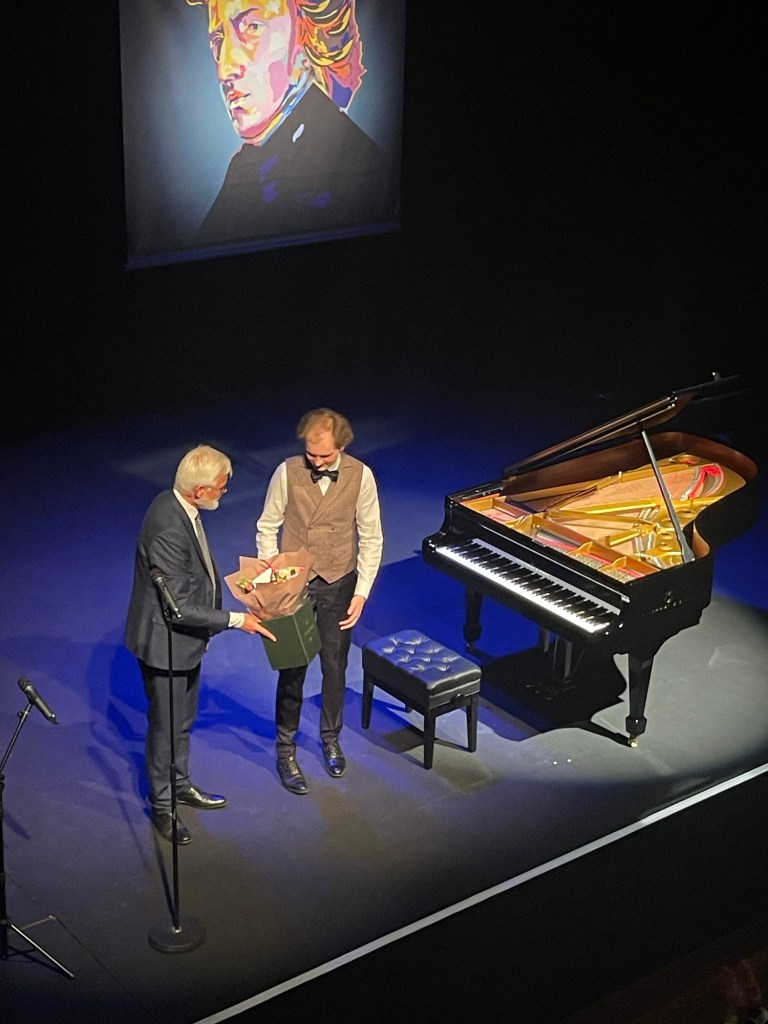
Piotr Pawlak was born on 20 February 1998. He is a student of Waldemar Wojtal at Gdańsk Music Academy.
Piotr Pawlak is one of the most versatile Polish pianist of the young generation. Winner of many international competitions, among others V Maj Lind International Piano Competition in Helsinki (2022) and XI International Chopin Piano Competition in Darmstadt (2017), laureate of Chopin Competitions in Beijing (2016), Budapest (2018) and Cracow (2019), International Competition of Polish Music in Rzeszów (2019), International Paderewski Competition in Bydgoszcz (2022) and International Chopin Competition on Period Instruments in Warsaw (2023).
After winning the competition in Helsinki, he regularly gives concerts in Finland. This year he made his debut with many Finnish orchestras, including Jyväskylä, Vassa and Kuopio, performing piano concertos of Mozart, Schumann, Brahms and Rachmaninoff. He played recitals in Helsinki, Tampere and Turku and is invited to the most prestigious Finnish piano festivals, e.g. Mänttä Music Festival and PianoEspoo Festival.
Piotr also performs frequently in Poland. This artistic season he cooperated with Polish Chamber Orchestra Sopot, Philharmonic Orchestra of Zielona Góra and Toruń Symphony Orchestra with Chopin and Grieg piano concertos.
In previous years he performed at numerous musical events in Germany, France, Spain, Italy, Hungary, Belgium, Switzerland, Georgia, Russia and United States. As a soloist, he has played with the Warsaw National Symphony Orchestra, Lower Silesia Philharmonic Orchestra, Holy Cross Philharmonic Orchestra, West Bohemian Symphony Orchestra, Ningbo Symphony Orchestra, Baltic Philharmonic Orchestra, Finnish Radio Symphony Orchestra and others. He performed on such stages as Sankt Petersburg Philharmonic, Berliner Philharmonic, Sala Verdi in Milano, Teatro alla Scala and at such festivals as „Kissinger Sommer” in Bad Kissingen or „Chopin and his Europe” in Warsaw. In 2019 he embarked on a concert tour of China.
Next season he will return several times to Finland, e.g. for concerts with Kymi Sinfonietta and Joensuu City Orchestra, he will also give a series of recitals in Japan.
He began his musical education on the piano at the age of six in Feliks Nowowiejski Music School in Gdansk with Ewa Włodarczyk, and then he continued to study with Waldemar Wojtal until the end of his studies in 2021. He also graduated music school finishing in organ studies, under the tutorship of Hanna Dys, and now he studies conducting in The Stanislaw Moniuszko Music Academy in Gdansk with Zygmunt Rychert. He attended masterclasses with, among others, Kevin Kenner, Dang Thai Son, Dmitrii Alexeev, Eugen Indijc, Phillippe Giusano, Katarzyna Popowa-Zydroń, Wojciech Świtała and Janusz Olejniczak.
Piotr Pawlak tries to bring back improvisation to the classical music world. He is inspired by historically informed performances, for example playing improvised cadenzas in Mozart’s piano concertos. In the Chopin Competition in Darmstadt, besides the 1st prize, he also received a prize for the best improvisation on the themes from Der Freischütz. In 2020 he was awarded 2nd prize on the „Transatlantyk Instant Composition Contest” at the International Film Festival in Katowice.
In addition to his pianistic career, Piotr has been a laureate of organ competitions and of national and international olympiads in mathematics, informatics and other sciences. After finishing his Master’s degree in Mathematics at the University of Gdansk in 2020, he is preparing a PhD dissertation about mapping class groups of non-orientable surfaces.He has won prizes in many international piano competitions, including first prize and the improvisation prize in the 11th Darmstadt International Chopin Competition, second prize in the 1st Beijing International Chopin Competition for Young Pianists and second prize in the 1st Stanisław Moniuszko International Polish Music Competition in Rzeszów. He is a recipient of scholarships from numerous Polish institutions: the National Children’s Fund, Ministry of Culture and National Heritage, Ministry of National Education, Marshal of Pomerania Voivodeship and Mayor of Gdańsk. He has performed extensively in Europe, as well as in the US and China.
 ChristopherAxworthy-MusicCommentary
2 risposte a "POSK Chopin Festival 2024 Mak – Dubiel-Pawlak- Swigut A feast of music and full immersion with Lady Rose Cholmondeley and Prof John Rink"