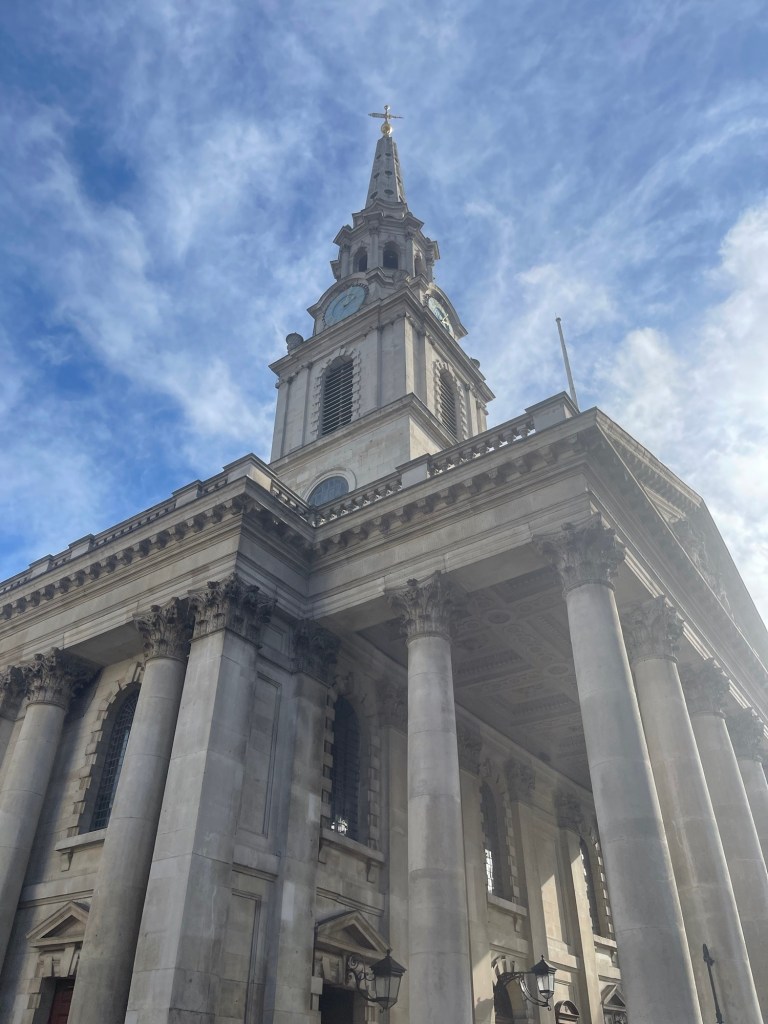
‘Un sacco vuoto non sta in piedi’ is a well know Italian saying which certainly does not apply here to this superb young Italian pianist. An intelligence and sensitive artistry combined with a technical mastery that held us spellbound at St Martin’s today.

With a Masters and Fellowship from the Royal Academy she also holds a degree in Physics from Padua , one of the oldest universities in Italy.
It was not surprising then that everything she played made such musical sense but it was allied to a beauty of execution where she looked as though she was swimming in the sumptuous sounds that were pouring from her movements.
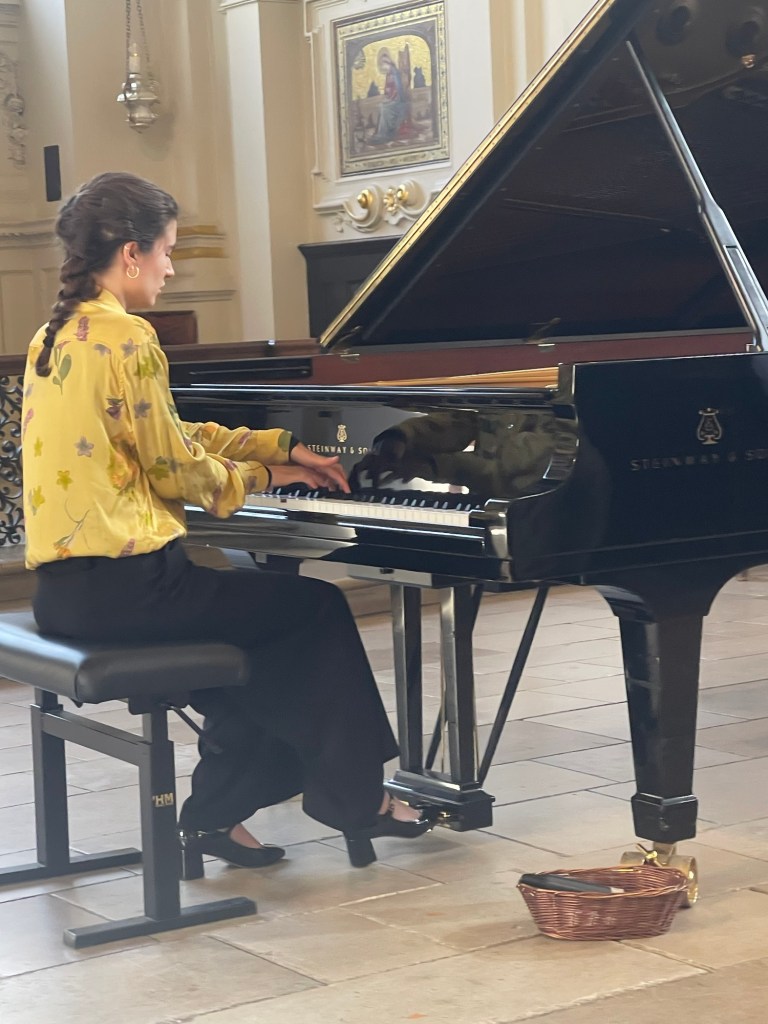
She was like an artist in front of his canvas. Except of course in the Turkish piece by Fazil Say where she is required to make the sound of the ‘Ud’ by dampening a string with her palm whilst the strings are then struck percussively but muted as with a leather covering. She created the most atmospheric sounds of insinuating colour and subtle inflections as the insistent haunting chant continued unabaited . It reminded me of the extraordinary effect that Bartok creates in his ‘Out of doors suite.’
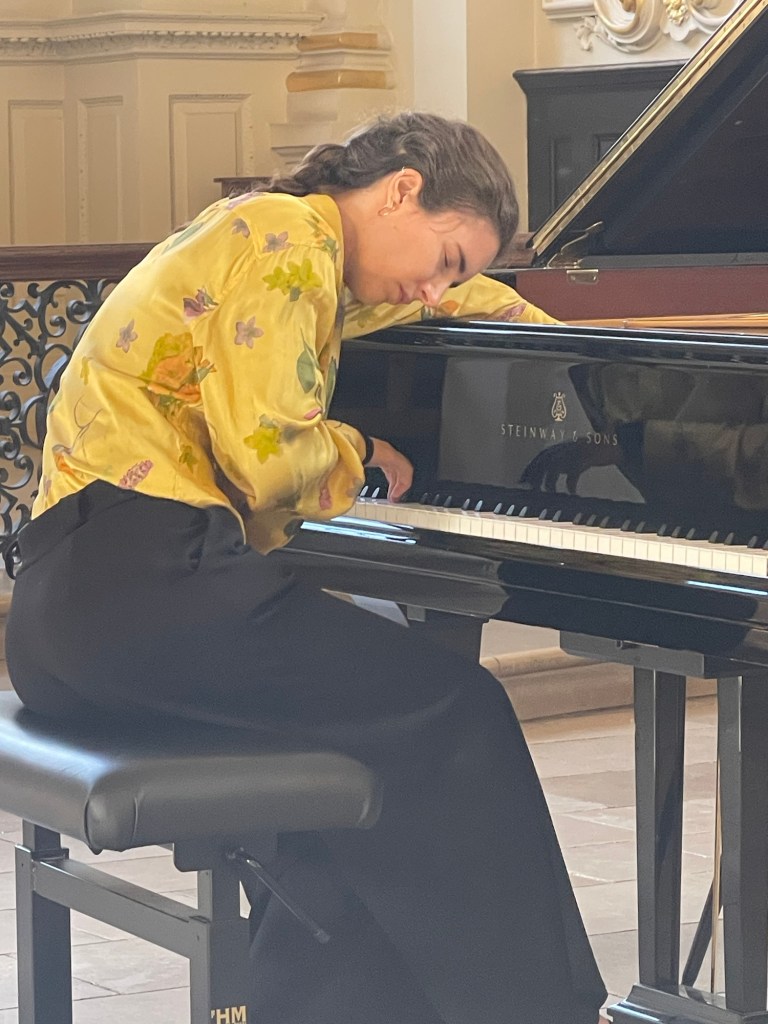
The only difference being the explosive central episode where our Sacco really let rip in jazz style alla Gulda or should I say Say ! Of course Bartok too created the sounds that he found in the countryside of his homeland as indeed Say does. Only Fazil Say has paid dearly for his honesty on behalf of the simple people of his country !
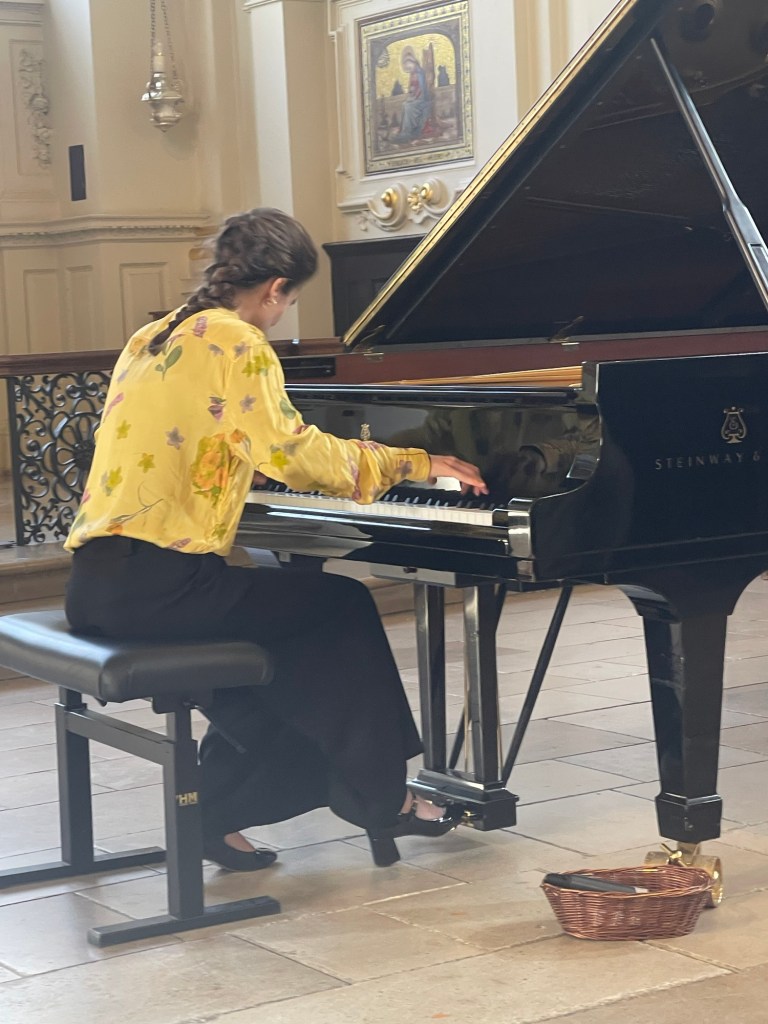
Sofia had started with ‘Baroque Splendour’ ( viva the PR boys that can invent titles that can entice an innocent public into titivation and temptation. If only Mozart or Schubert had known about them they would not have died paupers !)
What was programmed were three of the most famous pieces for harpsichord by Couperin and Daquin together with a Bach Toccata. ‘Les Barricades Mysterieuses’ immediately showed how the fluidity of Sofia’s playing could mould these simple harmonies into a beguiling magical amalgam of sounds. The famous ‘Cou cou ‘ was allowed to sing her heart out with ravishing piecing beauty as she jumped from branch to branch of this beautiful tree, blissfully happy to be in such a landscape full of streams of gold and silver murmurings. But Sofia also gave an architectural shape to this disarmingly simple piece with a kaleidoscope of sounds and a subtle range of dynamics . A rhythmic drive to ‘Le Tic Toc Choc’ with a beauty and delicacy that rarely we hear from others. Single notes that were spun as blocks of shifting harmonies played with an exhilaration and ‘joie de vivre’ that created a tone poem of delight (not Turkish as that came later in the untitled part !)

Bach of course was monumental with its opening so nobly stated by Sofia with a delicate fugato of extraordinary beauty and clarity followed by a deeply expressive recitativo before the Toccata where our Sacco was like a woman possessed of hysterical relentless energy.
An untitled second half opened with a Clementi sonata of dynamic drive and a passionate outpouring of streams of notes from one of the first virtuosi of the keyboard. A chiselled beauty of the Andante with long expressive lines played with poignant significance even if they were more of a craftsman than a genius.There was scintillating energy and technical assurance with the knotty twine of the final Presto played with breathtaking brilliance .
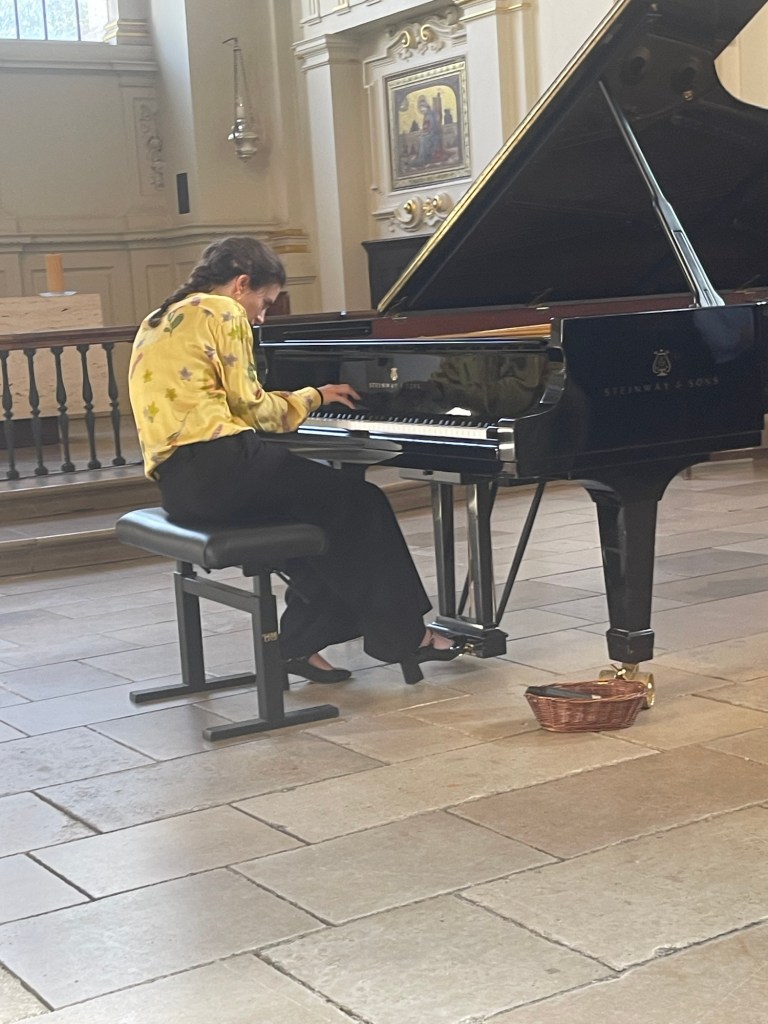
Say’s ‘Black Earth’ followed and I was so pleased that it was linked probably unintentionally, through lack of applause, to Respighi’s beautiful Nottorno. In this way it seemed to inhabit the same magic world of wondrous sounds and delicate atmospheres .
Playing of ravishing beauty and an extraordinarily poetic sense of balance .
No applause again allowed Liszt’s F minor transcendental study to enter in a whisper as it built to a tumultuous climax and romantic fervour. Intelligence too as the rests gave magnificent phrasing to a melodic line that too often is played with passion at the expense of intelligence and control.
Of course spontaneous applause after the animal excitement that our beautiful Sacco had generated and two encores one Baroque as per title and a Shostakovich Prelude as without.

A triumph that this ‘bag’ was not empty and could happily stand triumphantly in front of this capacity audience.
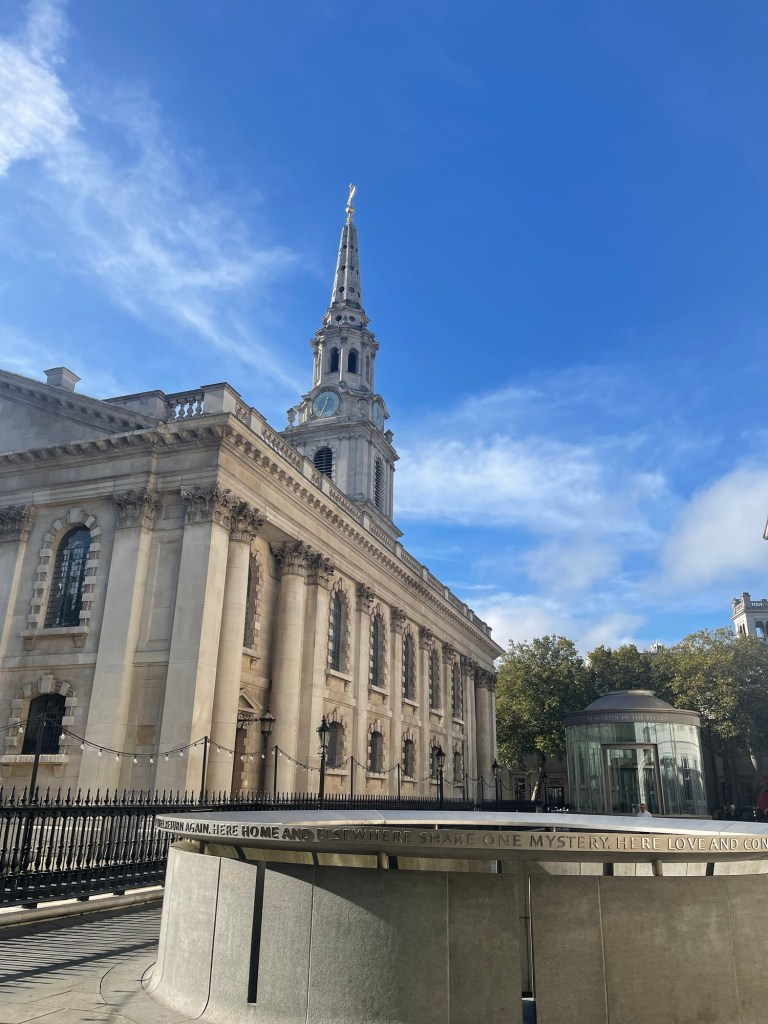


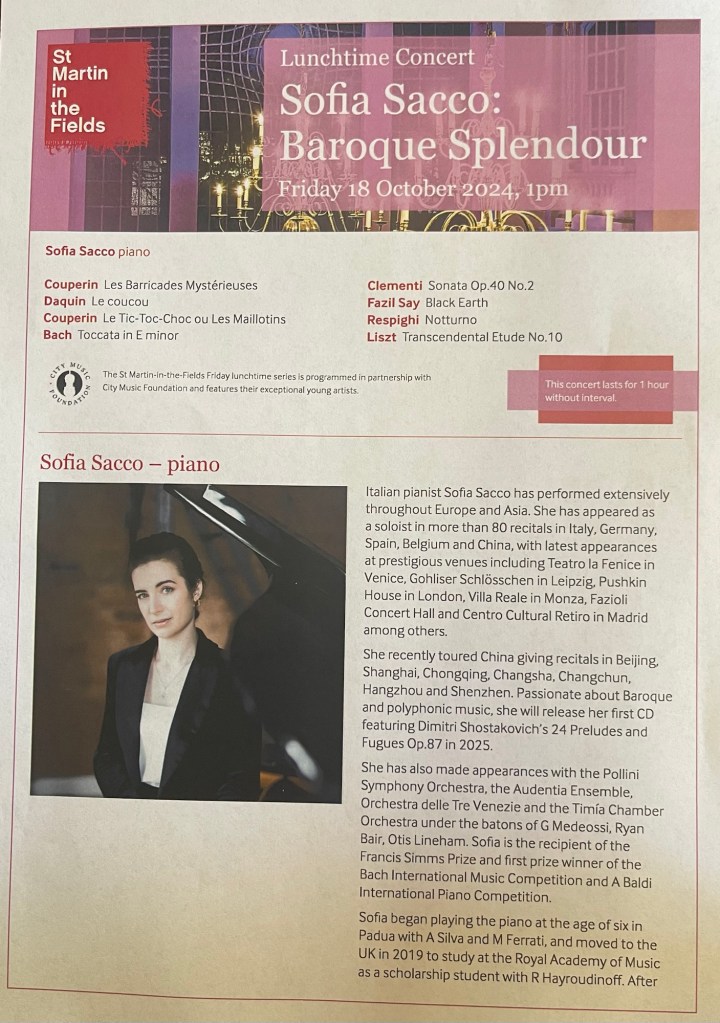

Sofia Sacco at St Mary’s

Italian pianist Sofia Sacco has performed extensively throughout Europe and Asia. She appeared as soloist in more than 80 recitals in Italy, Germany, Spain, Belgium, and China with latest appearances at prestigious venues including Teatro la Fenice in Venice, Gohliser Schlösschen in Leipzig, Pushkin House in London, Villa Reale in Monza, Fazioli Concert Hall and Centro Cultural Retiro in Madrid among others.She recently toured China giving recitals in Beijing, Shanghai, Chongqing, Changsha, Changchun, Hangzhou and Shenzhen. Passionate about Baroque and polyphonic music, she will release her first CD featuring Dimitri Shostakovich’s 24 Preludes and Fugues Op.87 in 2025.She has also made appearances with the Pollini Symphony Orchestra, the Audentia Ensemble, Orchestra delle Tre Venezie and the Timía Chamber Orchestra under the batons of G. Medeossi, Ryan Bair, Otis Lineham. Sofia is the recipient of the Francis Simms Prize and first prize winner of the Bach International Music Competition and A. Baldi International Piano Competition.Sofia began playing the piano at the age of 6 in Padua with A. Silva and M. Ferrati, and moved to the UK in 2019 to study at the Royal Academy of Music as a scholarship student with R. Hayroudinoff. After completing her Master of Arts and Professional Diploma, Sofia was appointed Hodgson Fellow of the Royal Academy of Music for two consecutive years, and has recently been awarded the Aud Jebsen Fellowship for 2024/2025.Inquisitive and widely curious, she is also a Physics graduate from the University of Padua. Alongside her performing career, Sofia is an enthusiastic teacher, and she currently holds a teaching position at Trinity Music School and Queen’s College in London as well as teaching at the Royal Academy of Music as part of her fellowship.
 ChristopherAxworthy-MusicCommentary