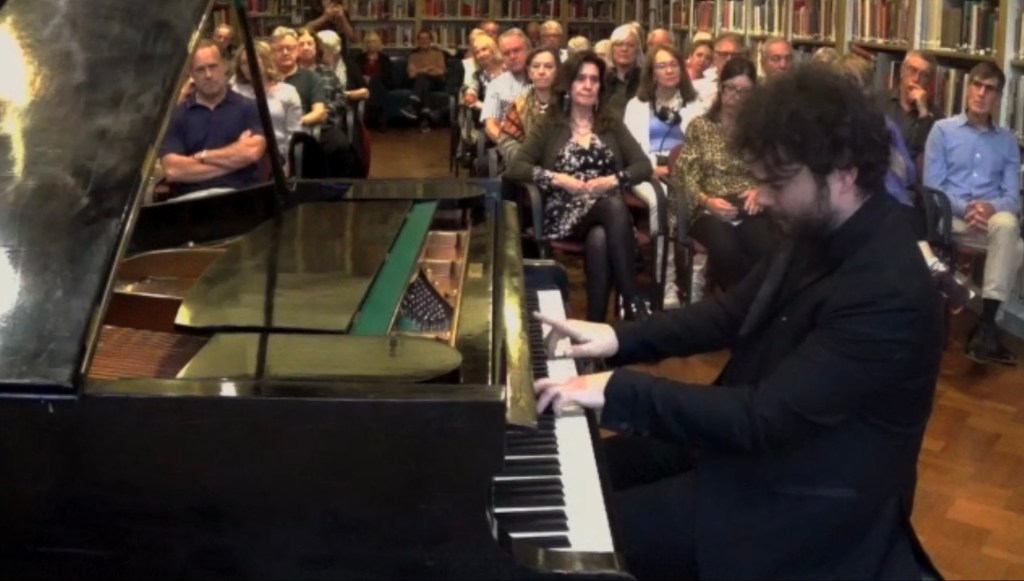
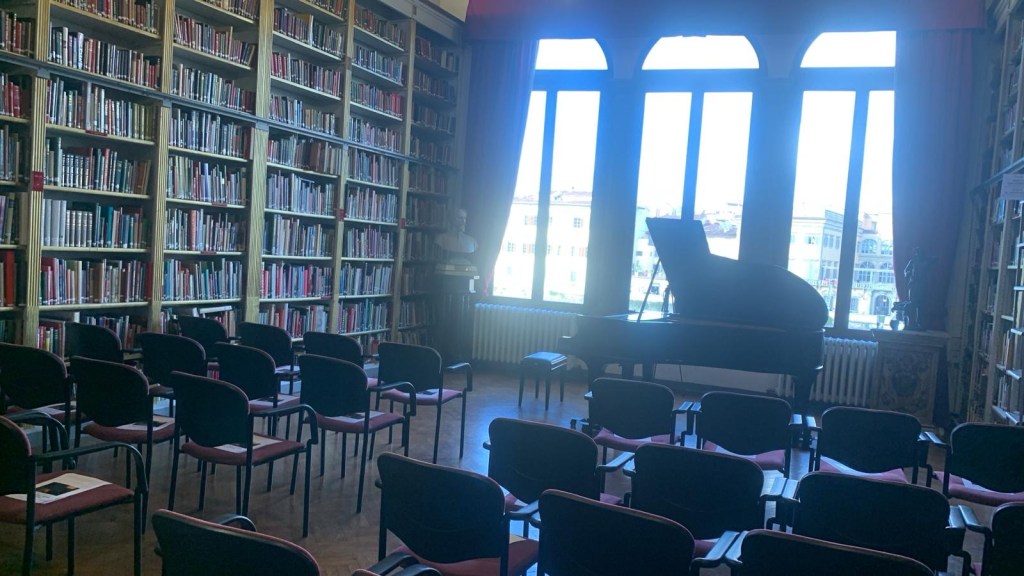
Simon Gammell OBE director of the British institute writes : ‘It was an exceptionally good concert. Giuliano has extraordinary sensibility aligned to his flawless technique – I have rarely been part of an audience so completely absorbed in the music. Truly fabulous! As he lives quite near Florence, it should be practical to invite him back sometime next year, which I would be happy to do .Thanks so much to all at KT for such a special evening.’
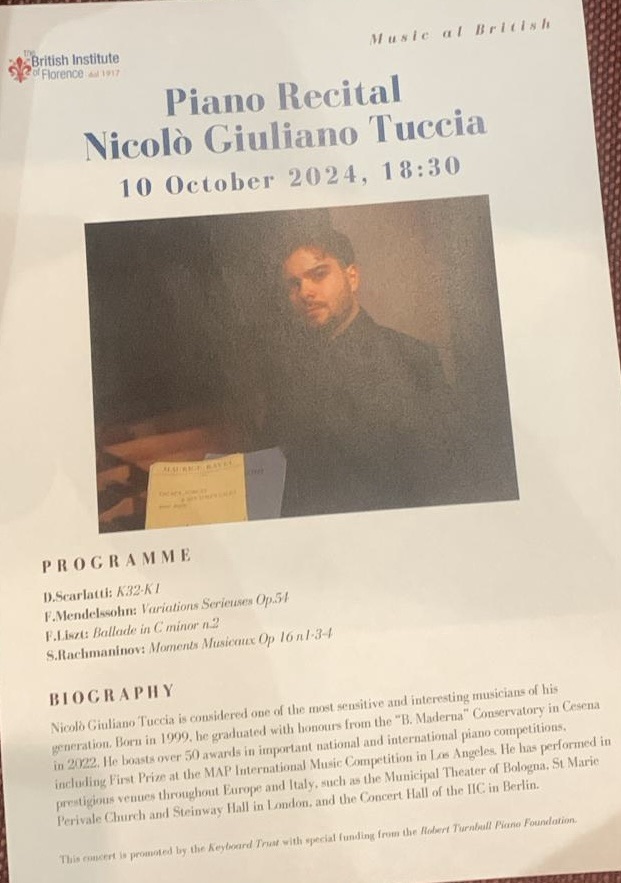
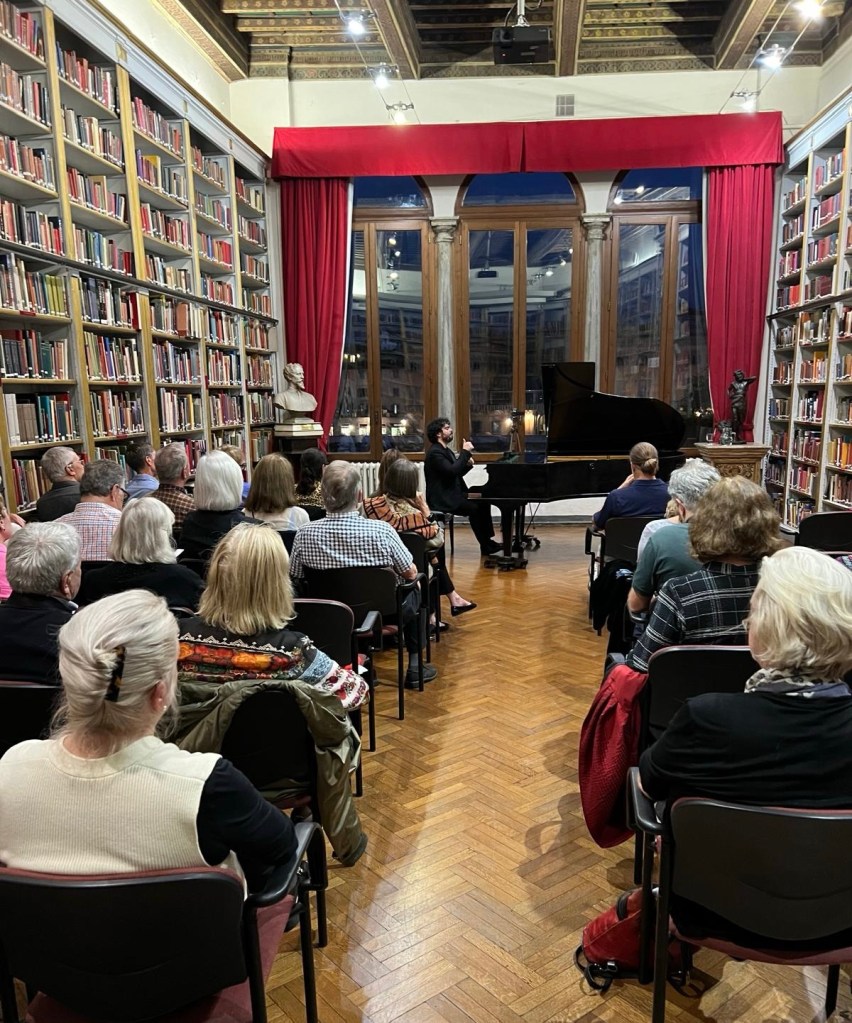
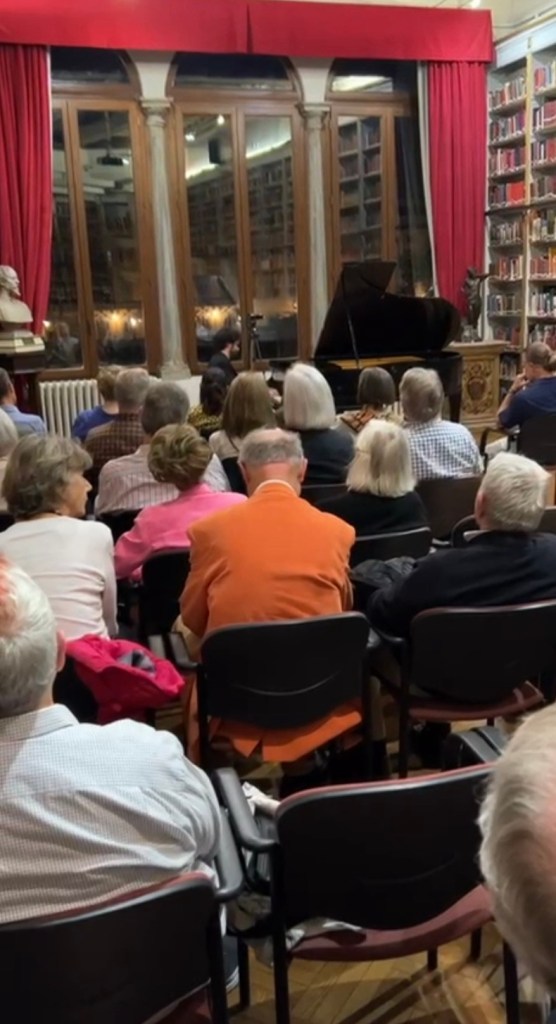
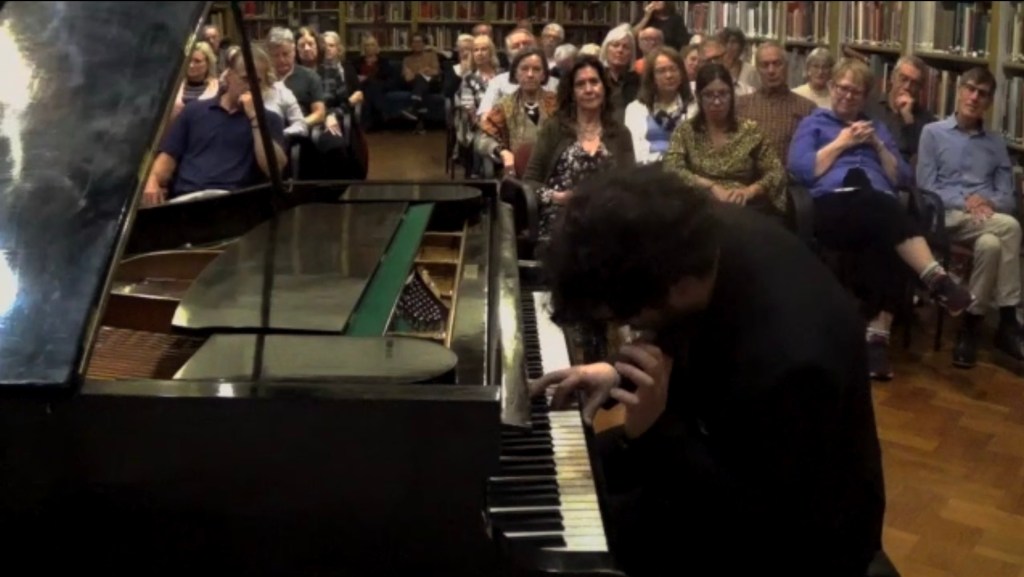
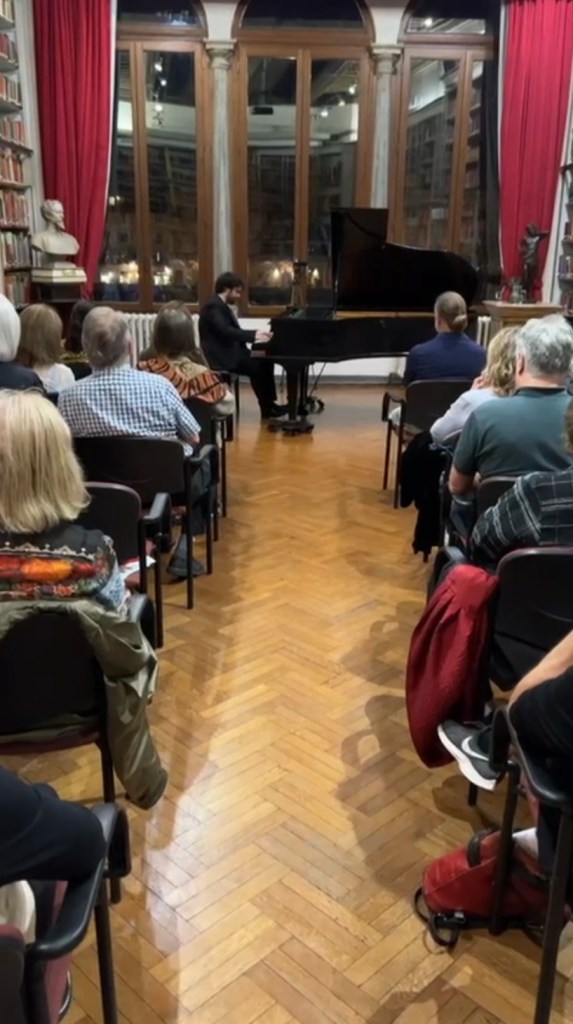
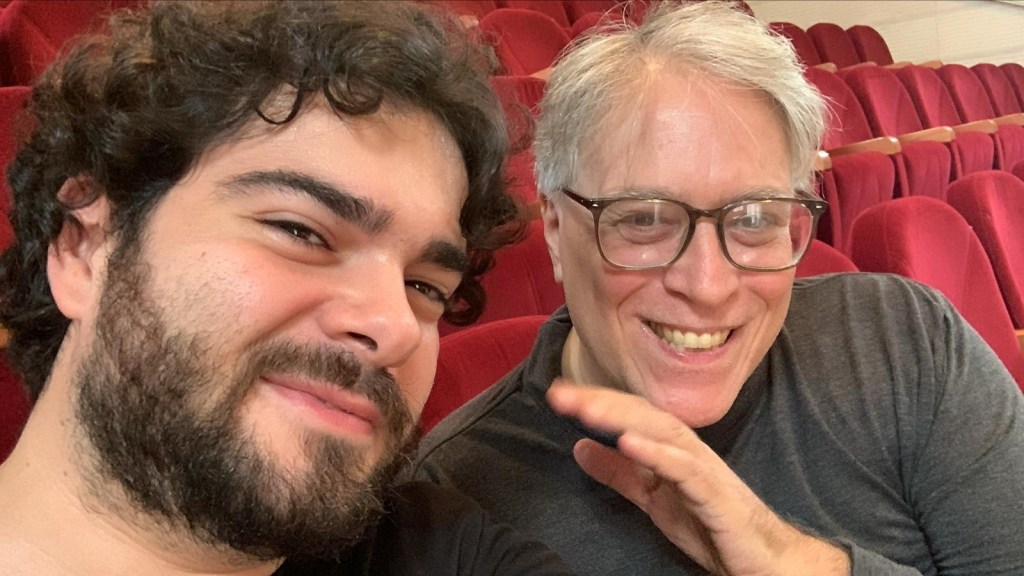
Giuliano writes :The concert was amazing!! Mister Simon was very kind and so happy to ask me to come and play again, even without the support of the kct. I attach screenshots. He said exactly with his own words: “one of the best concert of this year”. I am really very happy! also the audience filled me with compliments and bought some of my cds. I attach some photos thanks!!!
Diamonds are forever at Steinways – Giuliano Tuccia for the Keyboard Trust
Not only a fine pianist but Giuliano also recorded his concert while he was playing ! Here as some screen shots of the concert and although I was not able to be present this time Giuliano had sent me the recording so I too could enjoy a sumptuous feast of music making from afar.
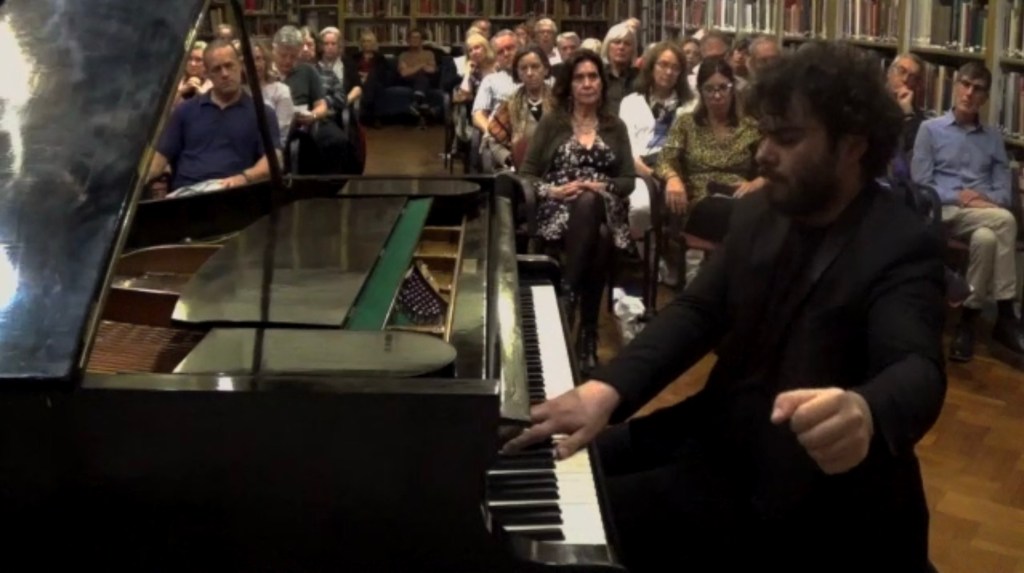
He may be a rough diamond but he is a diamond through and through as was demonstrated yet again in this recital .A performer in public must be able to communicate emotions ,atmospheres and delve into the audience’s soul to reveal feelings that even they did not realise they had. This young man from Forlì has this power to communicate and already has quite a baggage of technical preparation.As he performs more and more before a doting public he ,like Rubinstein, will continue to polish and look at some rough corners where emotions have taken precedence over cerebral note picking accuracy. I remember an anecdote ,that Rubinstein was happy to share, about a debut concert in Paris as a teenager ,where he cared more about life than sitting for hours at the piano. He played the Saint Saens second piano concerto which was more of a good impression than an example of precision . It did though also impress the composer – and for an encore he played the Chopin Winter Wind study op 25 n. 11 bringing out the march like rhythm in the left hand and leaving the right to fend for itself. An ovation from a public who had come to be seduced and not just to count the eggs in the basket . Myra Hess used to come on stage after playing late Beethoven with two carrots and an orange to play the ‘Black Key ‘ study op 10 n. 5 by Chopin!
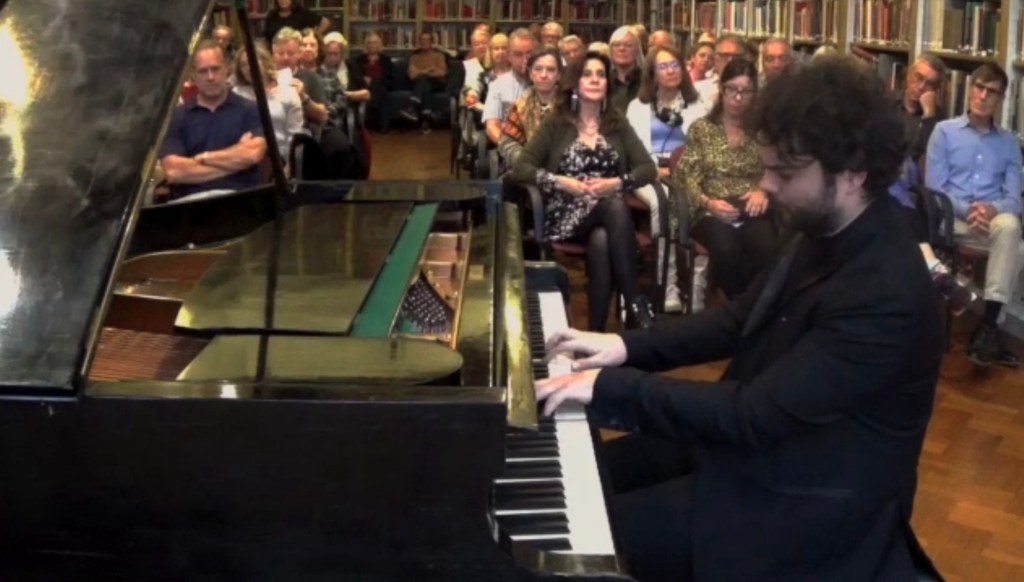
All this to say that Giuliano Tuccia has been born with the gift to communicate and although still perfecting his studies in Rovigo and Imola he can already hold an audience far better than many winners of International Competitions. Music is about communication and where words are not enough music can take us into a world of fantasy,colour and emotion where only the greatest of poets dare to tread.
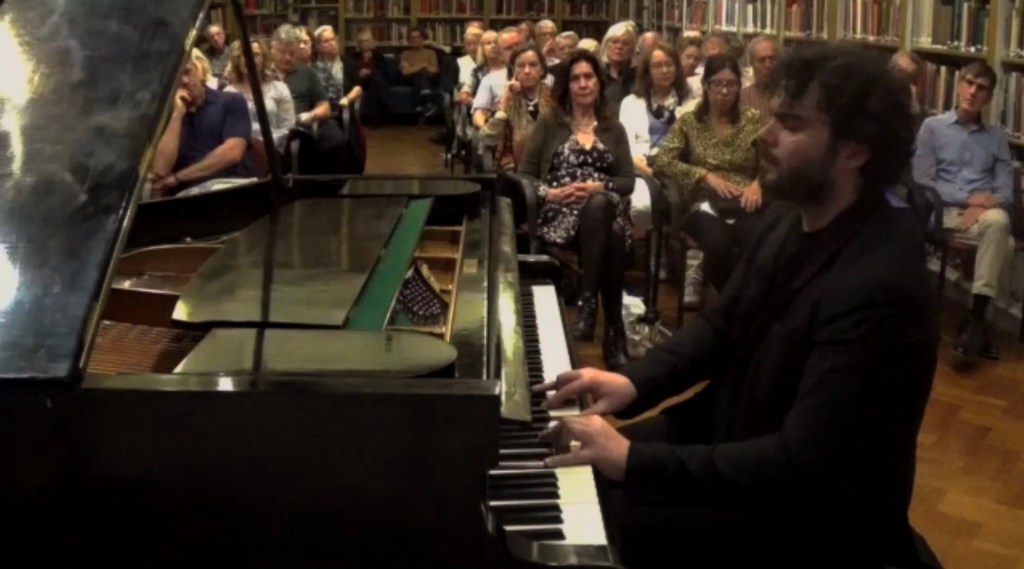
Two Scarlatti’s Sonatas played with a freedom and sense of fantasy with the whispered secrets of poignant beauty and almost improvised inner feelings of the first and the scintillating brilliance and delicacy of the second. Mendelssohn again with an improvised freedom allied to a musical intelligence and fearless technical panache. There were moments of ravishing beauty as there were of breathtaking brilliance.A deep contemplation of the 14th and 15th variation before the final explosion of the Allegro vivace . Dynamic drive combined with astonishing immediacy as we reached boiling point.
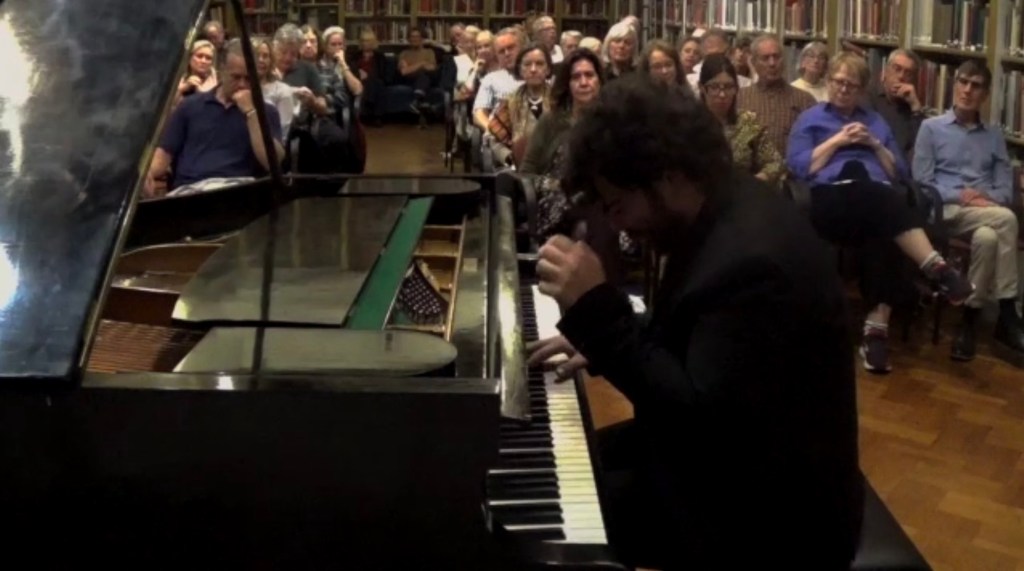
Liszt’s Second Ballade from the very opening a great drama was about to unfold from the hands of an artist who had seen a vision of this tragic world of Hero and Leander.Playing of aristocratic nobility and heartrending contrasts with Liszt the greatest showman on earth but also one of the most original composers of his day. Playing the second version that finishes in a dream not in triumph as Giuliano made us wait for the final resolution of the appoggiatura where peace and silence once more reign.Moments Musicaux that like Rachmaninov’s Etudes Tableaux are miniature tone poems of aching nostalgia and brooding intensity combined with sumptuous sounds and driving exhilaration.The simple beauty of the first with a stream of wondrous sounds out of which a single voice appears smothered by a gleaming trail of golden jeux perlé sounds.The deeply reflective brooding of the third was played with full rich sound with deeply felt participation of real intensity from Giuliano.The left hand footsteps crept about with sinister intent as the melodic line was etched above.The fourth Moment is a glorious outpouring of romantic sounds and pyrotechnics that was played with burning intensity and fearless abandon.
An ovation from an audience deeply moved to be part of such an uplifting musical experience were awarded with the most famous of all Chopin’s 19 Nocturnes.The one in E flat op 9 n. 2 that was played with the rubato and ravishment of the true Bel Canto and a delicacy and artistry of pianists of another age .
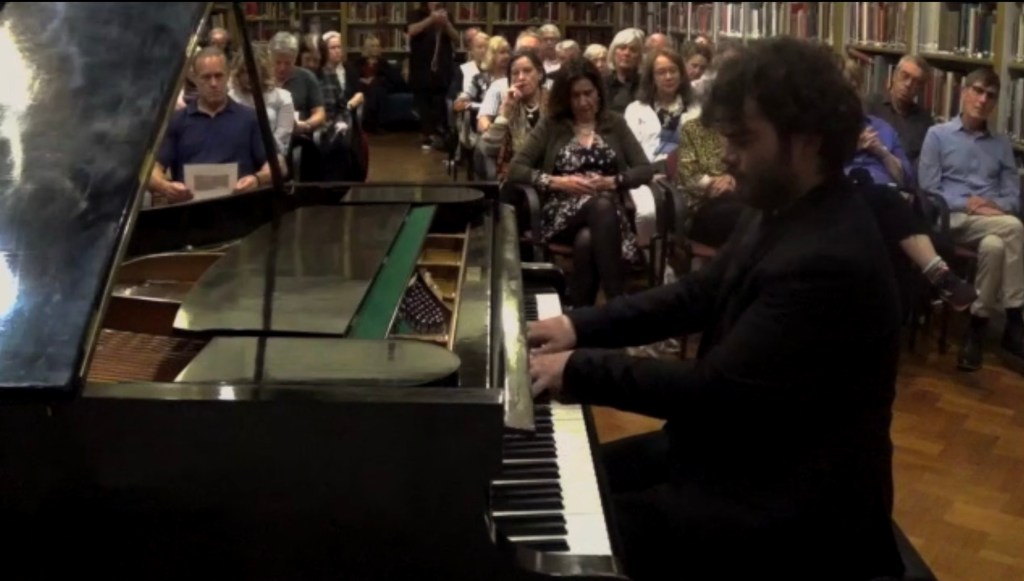
Giuliano not only a superb pianist but also an impresario of a concert series started in Forlì in memory of the illustrious but forgotten Genius, Guido Agosti, born and buried there
Forlì pays Homage to Guido Agosti
D.Scarlatti: K32-K1
F.Mendelssohn: Variations Serieuses Op.54
F.Liszt: Ballade in si minore n.2 S 170
S.Rachmaninov: Moments Musicaux Op 16 n1-3-4
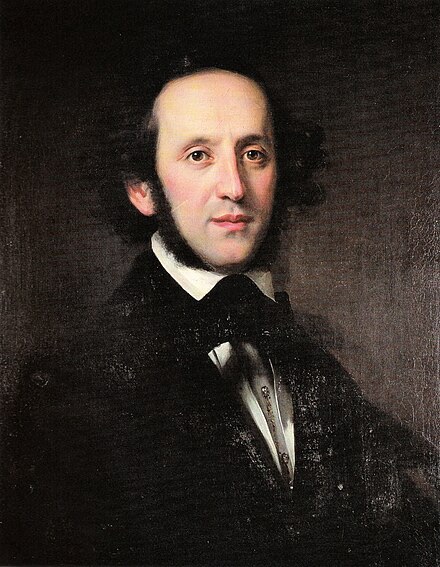
Jakob Ludwig Felix Mendelssohn Bartholdy
3 February 1809 Hamburg 4 November 1847 (aged 38) Leipzig
Variations sérieuses – Theme and 17 variations op 54, was completed on 4 June 1841.
It was written as part of a campaign to raise funds for the erection of a large bronze statue of Beethoven in his home town of Bonn 1]The publisher Pietron Mechetti asked Mendelssohn to contribute to a ‘Beethoven Album’, published in January 1842, which also included pieces by Liszt,Chopin,Moscheles and others, of which the proceeds would go to the Monument.Schumann’s Fantasie op 17 was the final result of a work originally intended for the same purpose
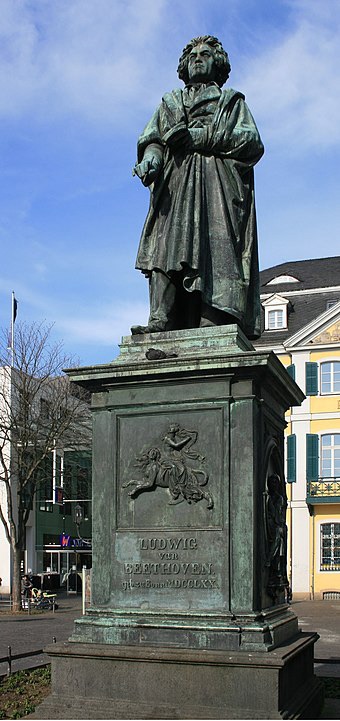
In 1828 the idea was born of a monument to Beethoven in his native town
Up to that time it had not been German or Austrian practice to erect statues of great cultural figures. Schiller had to wait until 1839; the first one of Mozart in Salzburg was not unveiled until 1842; and the first one of Beethoven in Vienna the city he spent most time in, was most associated with, and died in, was not created until 1880.
Liszt involved himself in the project in October 1839 when it became clear it was in danger of foundering through lack of financial support. Till then, the French contributions had totalled less than 425 francs; Liszt’s own personal donation exceeded 10,000 francs.He contributed his advocacy and also his personal energies in concerts and recitals, the proceeds of which went towards the construction fund. One such concert was his last public appearance with Chopin , a pair of piano duo concerts held at the Salle Pleyel and the Conservatoire de Paris on 25 and 26 April 1841.
The sole condition of Liszt’s involvement was that the sculptor of the statue of Beethoven should be the Italian, Lorenzo Bartolini but in the end the contract was awarded to a German, Ernst Julius Hahnel (1811–1891).The casting was done by Jakob Daniel Burgschmiet of Nuremberg.
Liszt returned to the concert stage for this purpose; he had earlier retired to compose and spend time with his family. He also wrote a special work for occasion of the unveiling, Festival Cantata for the Inauguration of the Beethoven Monument in Bonn, S.67 (Festkantate zur Enthüllung des Beethoven-Denkmals in Bonn).
Mendelssohn is known to have written three sets of piano variations, but only this one was published during his lifetime.The work consists of a Theme and Coda and 17 variations
- Theme: Andante sostenuto
- Variation 1
- Variation 2: Un poco più animato
- Variation 3: Più animato
- Variation 4
- Variation 5: Agitato
Variation 6: A tempo
Variation 7: Con fuoco
Variation 8: Allegro vivace
Variation 9
Variation 10: Moderato
Variation 11: Cantabile
Variation 12: Tempo del Tema
Variation 13: Sempre assai leggiero
Variation 14: Adagio
Variation 15: Poco a poco più agitato
Variation 16: Allegro vivace
Variation 17
Coda: Presto
The Ballade No. 2 in B minor S. 171 was written in 1853.
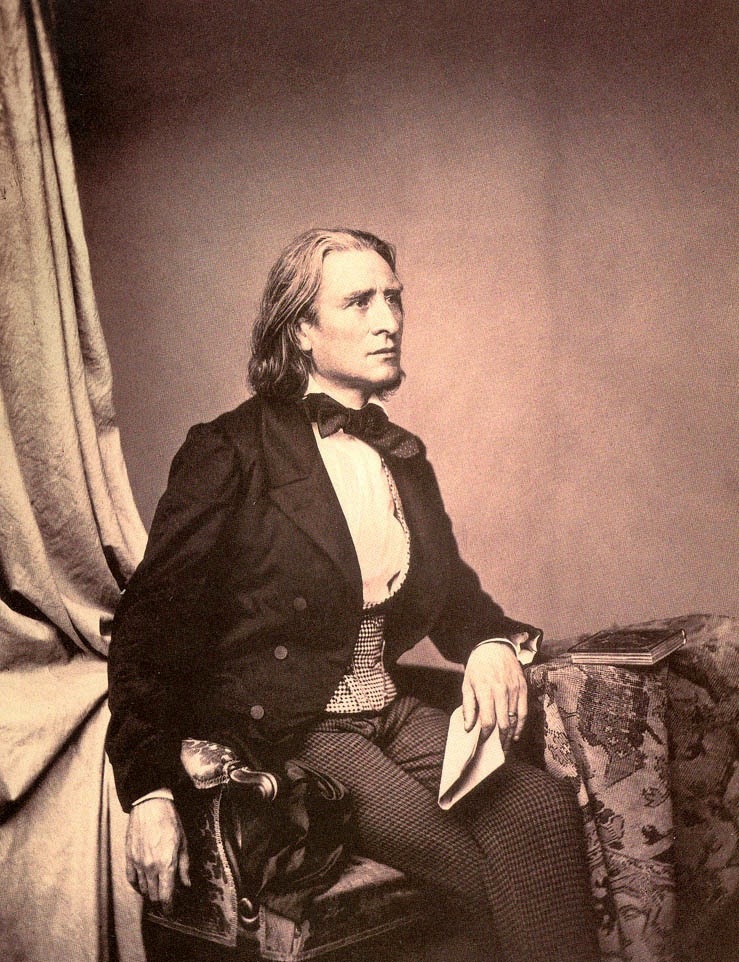
22 October 1811 Doborjan , Kingdom of Hungary, Austrian Empire
31 July 1886 (aged 74) Bayreuth , Kingdom of Bavaria, German Empire
Claudio Arrau , who studied under Liszt’s disciple Martin Krause , maintained that the Ballade was based on the Greek myth of Hero and Leander , with the piece’s chromatic ostinati representing the sea: “You really can perceive how the journey turns more and more difficult each time. In the fourth night he drowns. Next, the last pages are a transfiguration”.
The ballade is based largely on two themes: a broad opening melody underpinned by menacing chromatic rumbles in the lower register of the keyboard, and a luminous ensuing chordal meditation. These themes are repeated a half-step lower; then march-like triplet-rhythms unleash a flood of virtuosity. Eventually, Liszt transforms the opening melody into a rocking major-key cantabile and reiterates this with ever-more grandiose exultation. The luminous chords provide a contemplative close.
Leslie Howard writes about the original version S 170 a : ‘To be honest, Liszt never expected the original version of his Ballade No 2 to be published, but the original form has long been known—differing from the final version by the absence of two eight-bar phrases in the closing B major section, and by having a fast coda which recalls the central martial development material—this coda being itself a second draft of another cancelled fast ending. The original coda has appeared in several editions, although most of them fail to remark that, if it is performed, two eight-bar cuts need also to be made to restore the original text. It goes without saying that the beautiful quiet coda of the later version is a stroke of genius, but the present ending is not without its merits’
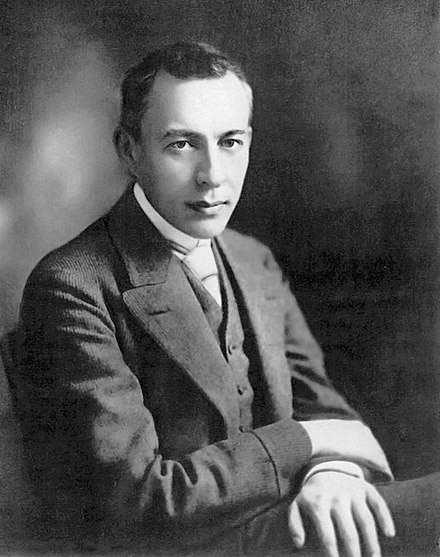
Sergei Vasilyevich Rachmaninov
1 April 1873 Semyonovo, , Novgorod Governorate, Russian Empire
28 March 1943 (aged 69) Beverly Hills California, U.S.
Six moments musicaux op.16, were written between October and December 1896.Each Moment musical reproduces a musical form characteristic of a previous musical era. In an interview in 1941, Rachmaninoff said, “What I try to do, when writing down my music, is to make it say simply and directly that which is in my heart when I am composing.” Even though Moments musicaux were written because he was short of money,the pieces summarize his knowledge of piano composition up to that point.
By the autumn of 1896, 23-year old Rachmaninoff’s financial status was precarious, not helped by his being robbed of money on an earlier train trip.Pressed for time, both financially and by those expecting a symphony, he “rushed into production.” On December 7, he wrote to Aleksandr Zatayevich , a Russian composer he had met before he had composed the work, saying, “I hurry in order to get money I need by a certain date … This perpetual financial pressure is, on the one hand, quite beneficial … by the 20th of this month I have to write six piano pieces.”[10]Rachmaninoff completed all six during October and December 1896, and dedicated all to Zatayevich
Andantino opens the set with a long, reflective melody that develops into a rapid climax. The third Andante cantabile is a contrast to its surrounding pieces, explicitly named ‘funeral march’ and ‘lament’ The fourth Presto draws inspiration from several sources, including the Chopin Preludes with an explosion of melodic intensity.
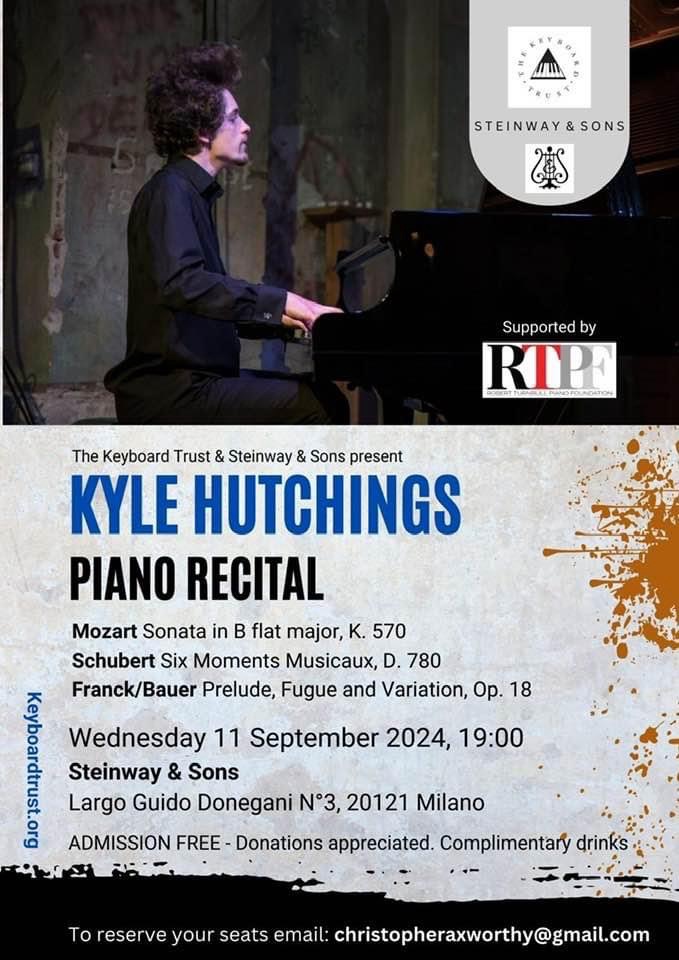
https://christopheraxworthymusiccommentary.com/2024/09/11/kyle-hutchings-a-poetic-troubadour-of-the-piano-reveals-the-heart-of-mozartschubert-and-franck-the-keyboard-trust-concert-tour-of-adbaston-ischiaflorence-and-milan/
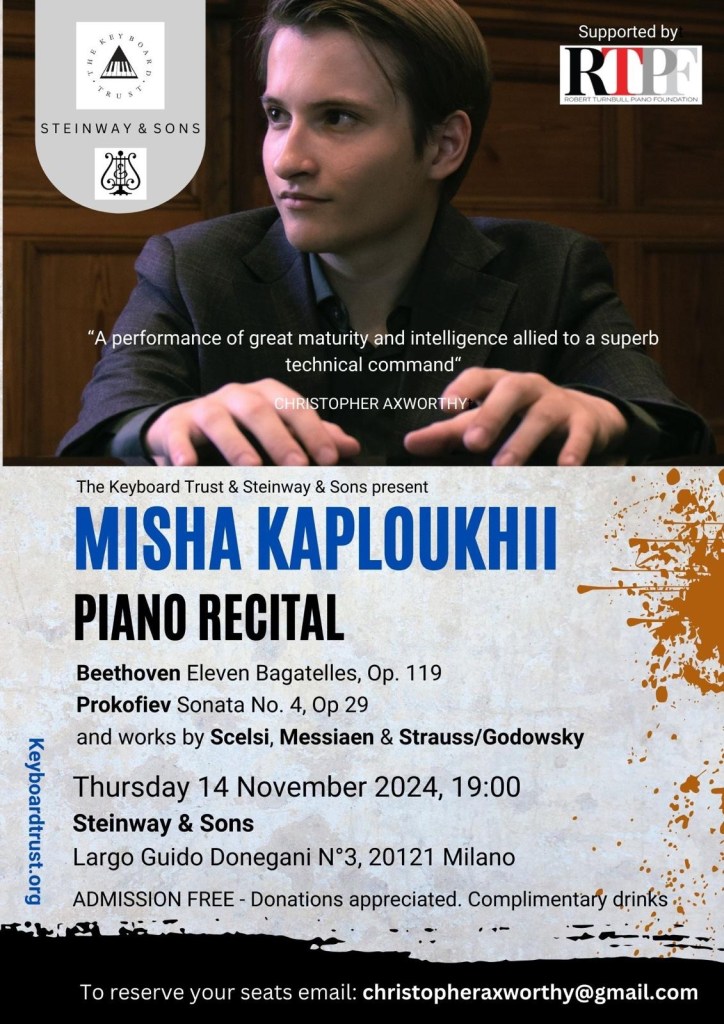
https://christopheraxworthymusiccommentary.com/2024/05/05/misha-kaploukhii-mastery-and-clarity-in-waltons-paradise-where-dreams-become-reality/

https://christopheraxworthymusiccommentary.com/2024/02/28/magdalene-ho-in-florence-and-milan-the-exquisite-finesse-and-noble-style-of-a-musical-genius/
 ChristopherAxworthy-MusicCommentary
Una risposta a "Nicolò Giuliano Tuccia ‘sensibility and mastery ignite the Harold Acton Library’ including a long distance review."