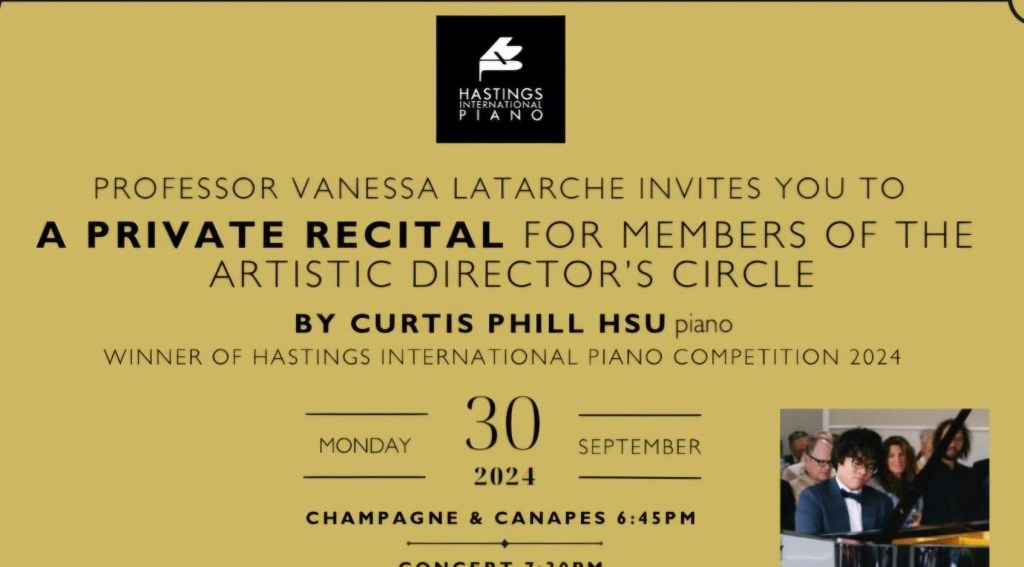

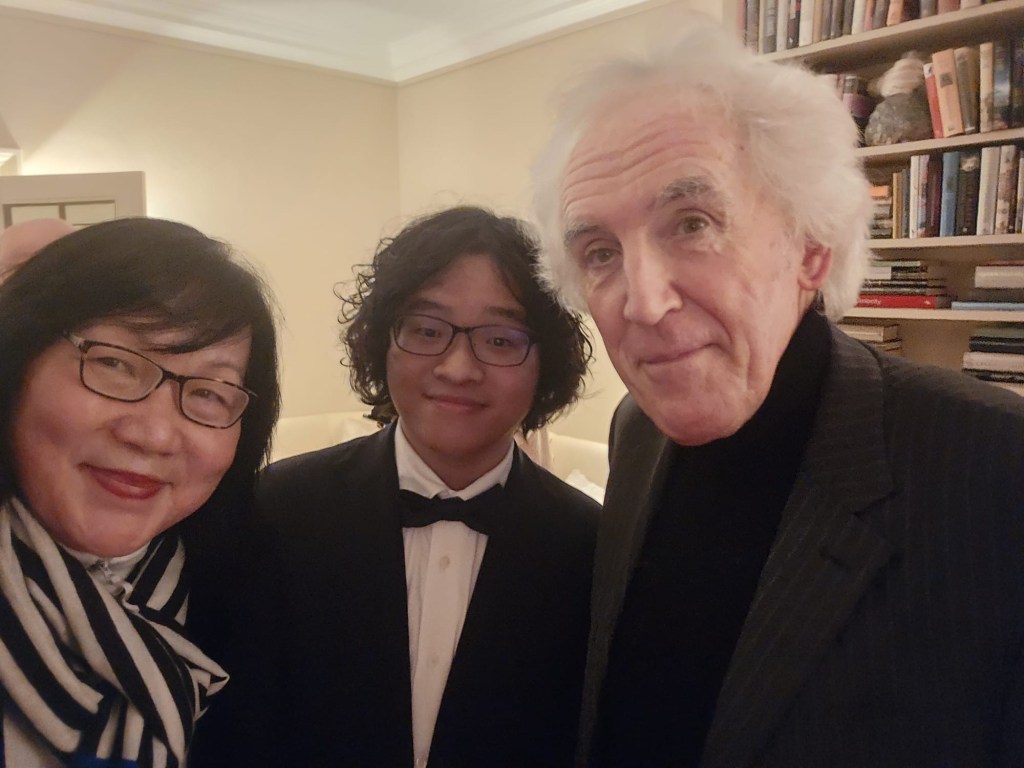
A remarkable private occasion for friends of the Hastings International Piano competition .
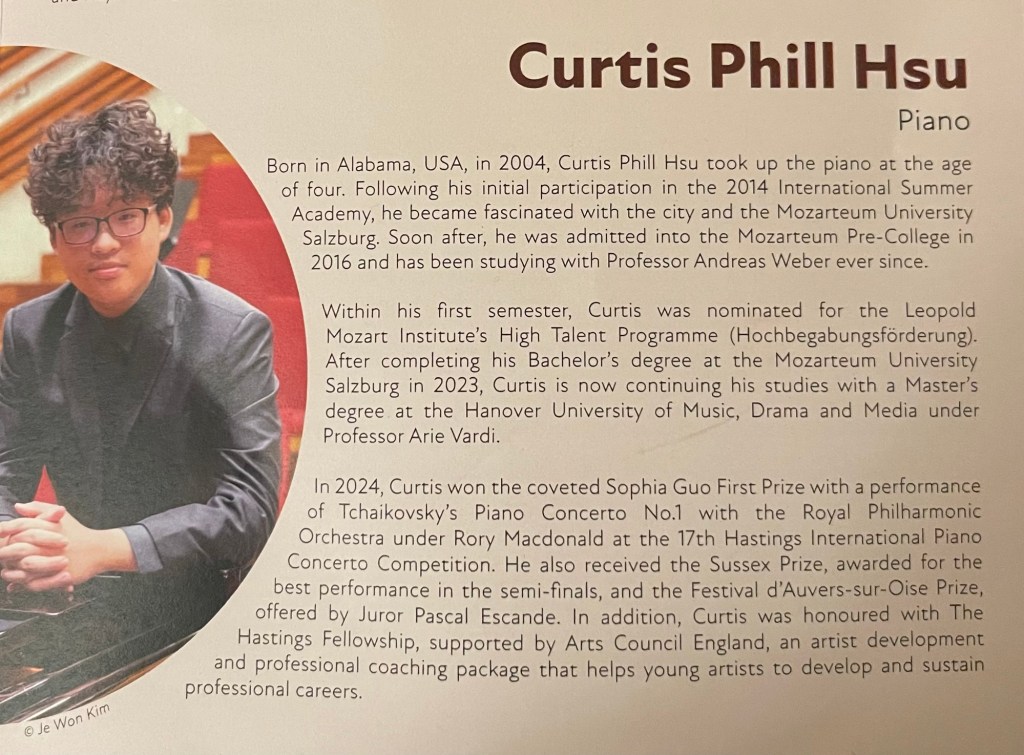
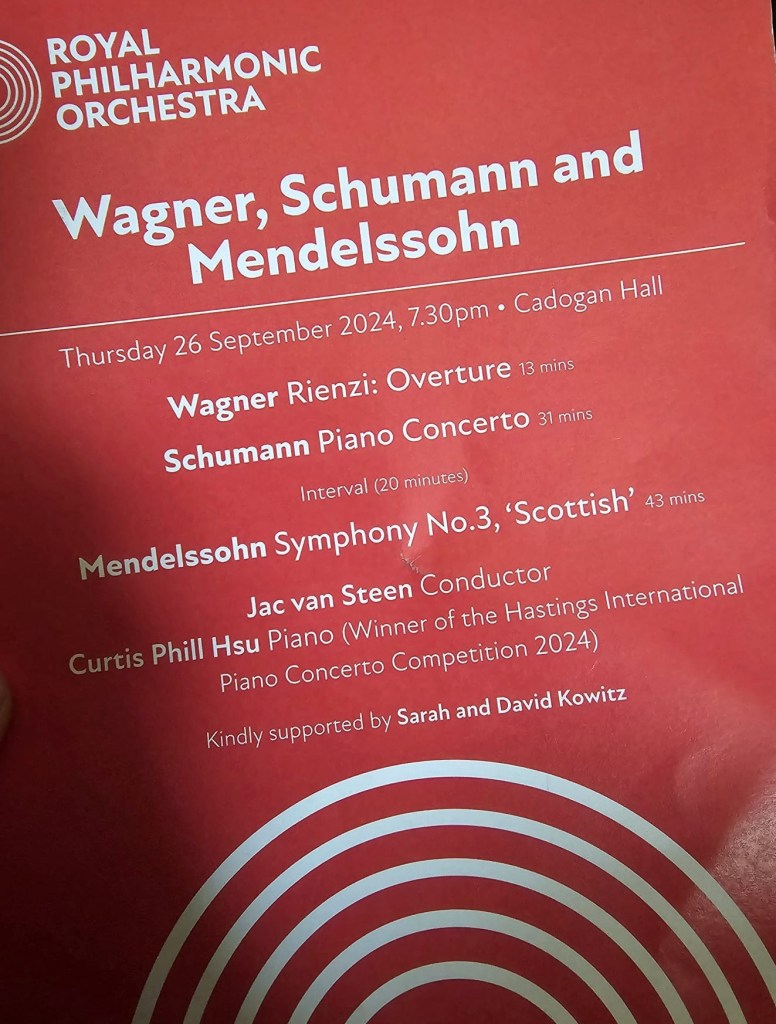
Curtis in London, from Hanover where he now studies with Arie Vardi, playing with the RPO last Thursday in the prize winners London debut concert. A very mature and also highly poetic interpretation of the Schumann piano concerto. It is interesting to note that Shunta Morimoto, the previous Gold medalist, won the competition with the same work but chose Beethoven 4 for his London debut .They both have played the old Tchaikowsky warhorse this year breathing fresh life into such a well known work. Curtis in Hastings and Shunta in Japan ( Shunta will at the end of the month play the Grieg concerto in Hastings)
Shunta Morimoto at Brighton Festival The sublime inspiration of a poet of the piano

Both choices show that the vision of Hastings is for master pianists who are above all else masterly musicians with something to say .
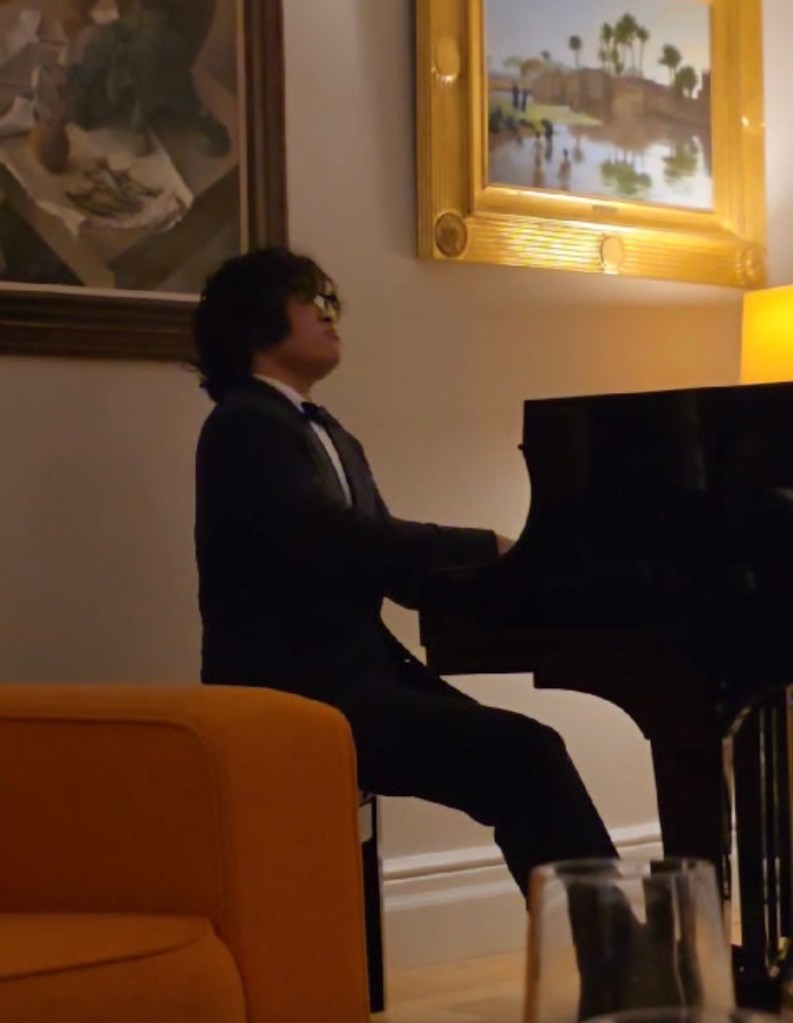
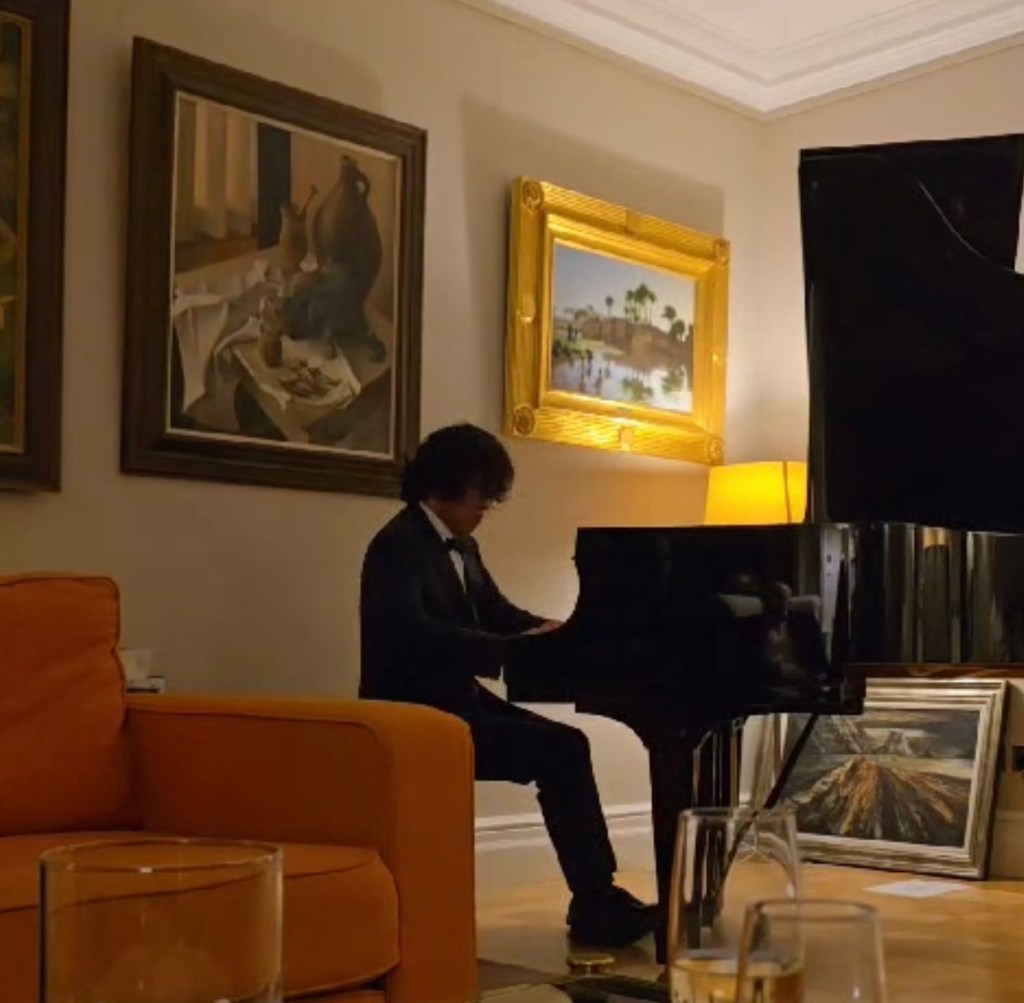
And so it was tonight Champagne and canapés washed down with the ‘Hammerklavier’ Sonata !
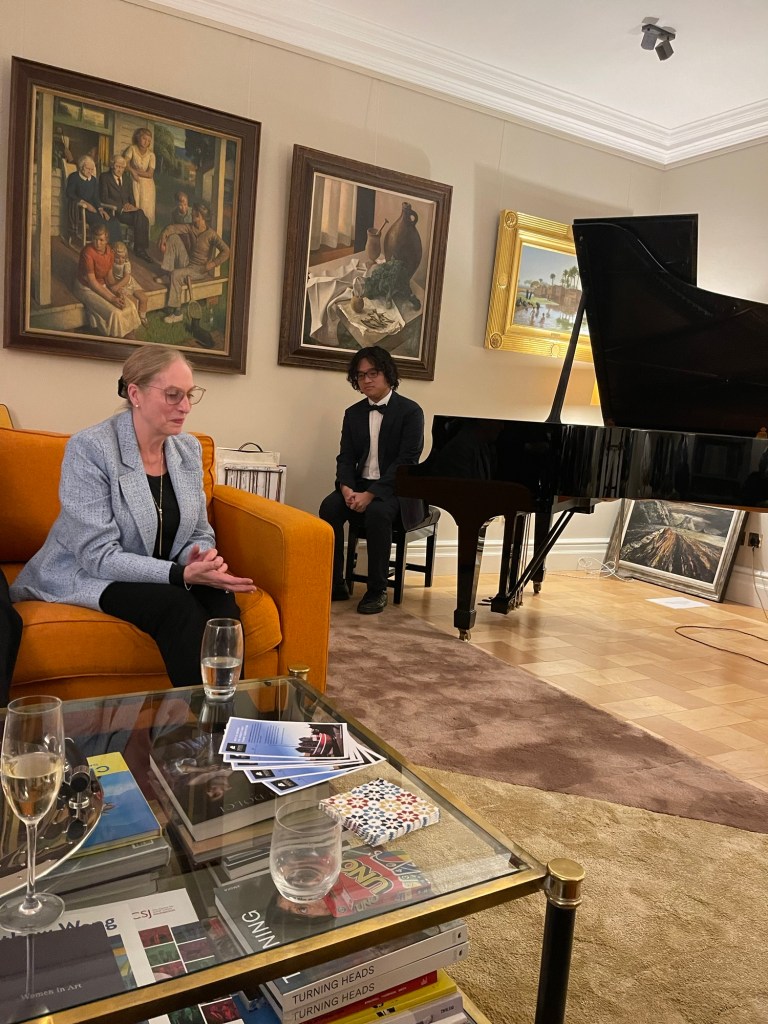
At only 19 this was a display of mature musicianship and masterly control. Prefacing it with two of the most important and poignant of Chopin’s nocturnes op 27 n 2 and op 48 n 1.
It was interesting to note that the first note of the D flat nocturne deep in the bass Curtis played with the right hand as he did the first deep bass note at the opening of ‘Hammerklavier’.
It prompted me to ask rather impishly afterwards if he was left or right handed !

I know Serkin would have shut the score if anyone dared open op 106 thinking to play safe. But Curtis, like Rana too recently, realised the struggle that this Sonata implies with its heroic call to arms that is not and should not be in a play safe zone.
Beatrice Rana- a tornado ignites the Wigmore Hall

Curtis demonstrated all that was implied by a Beethoven struggling with life, deafness and pianos that were not yet the instruments that his genius could foresee for the future.
An ‘Adagio sostenuto’ with passion but also strength of emotion and a kaleidoscope of sounds was followed by the ‘tour de force’ of a fugue that was written to scare off all but the fearless. The two Chopin Nocturnes were played with ravishing sounds and profound musicianship but where the bel canto could not float as freely as it could have with a slightly more fluid tempo.
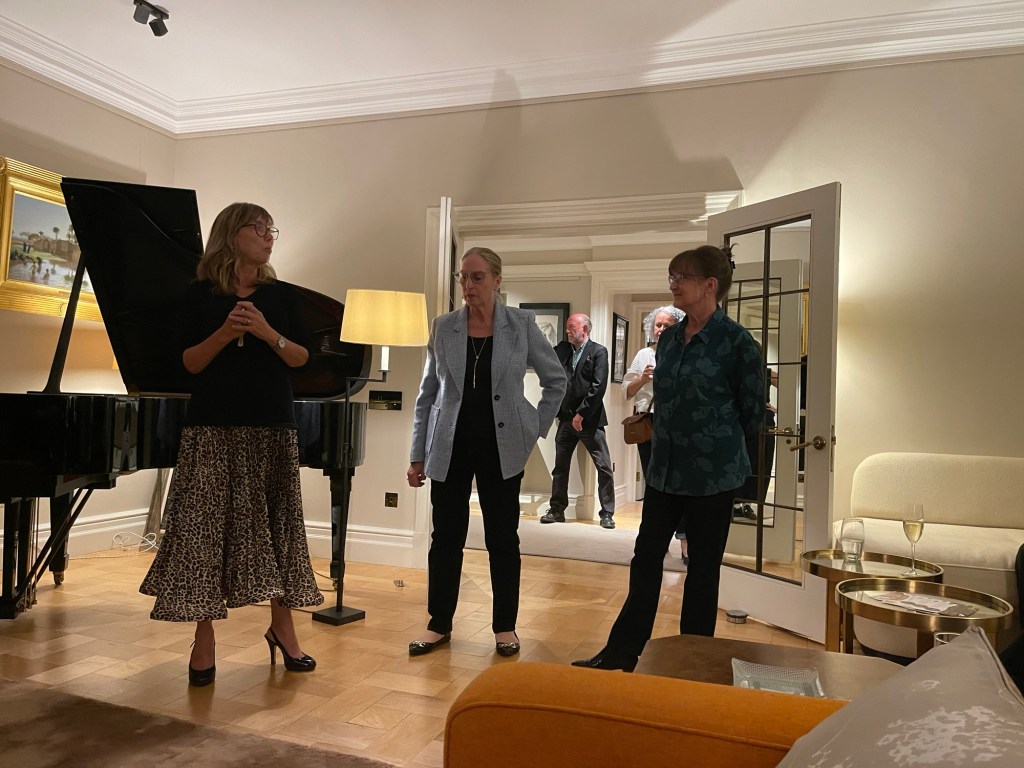
Promoted by Vanessa Latarche the enlightened artistic director and deus ex macchina of the Royal College, Hastings International Piano and much else besides, befriending so many extraordinarily talented young musicians as the great artist she is herself but also a sensitive caring figurehead. Already Curtis is receiving sessions from experts in how to deal with both the business and human side of his life at the start of a career.
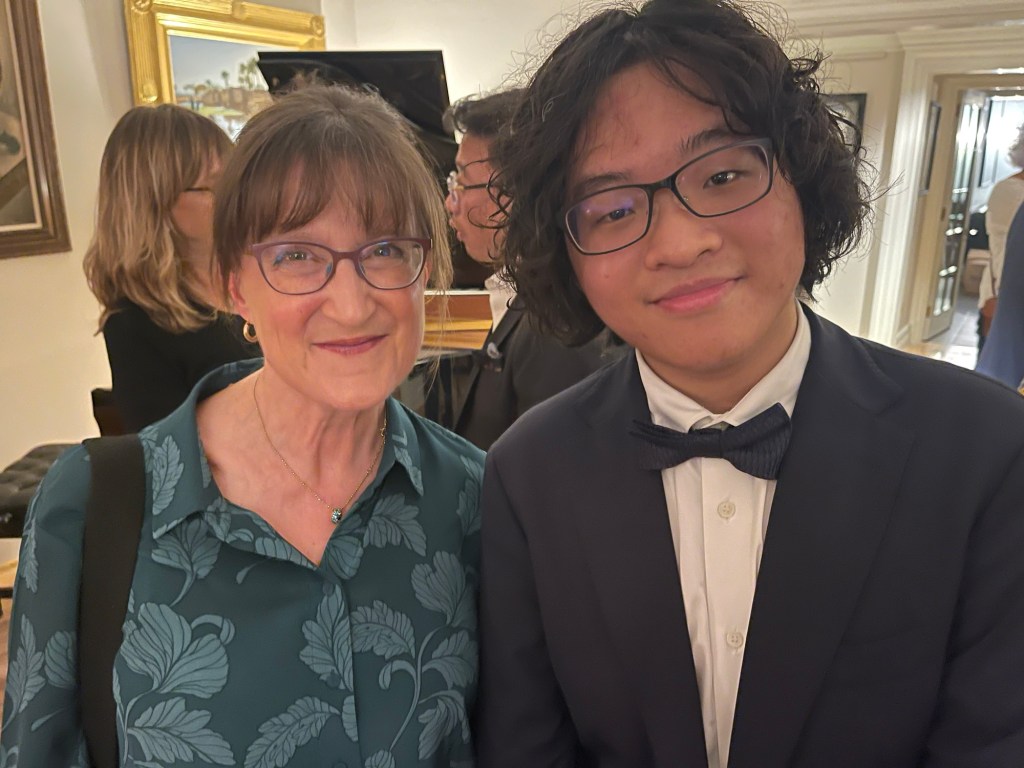
Youths that have sacrificed much for their calling but are also young and above all with the prospect of a happy life in front of them doing what they love.
Vanessa even managed to persuade Curtis to play a little ‘bon bon’ – her words not mine – which brought forth an outpouring of passion and virtuosity the same that Schumann felt for his beloved Clara . ‘Widmung’ was indeed breathtaking and overwhelming as one might expect from such a charming young nineteen year old artist with the world at his feet.
An interesting discussion with Roberto Prosseda in Cremona ,recently elected artistic director of the Rina Sala Gallo Competition in Monza just shows with what intelligence and care these gifted young musicians are looked over by their peers https://www.facebook.com/share/v/yBLVYNaujV9Emwpr/?mibextid=KsPBc6
A letter from Cremona ,the eternal city of music where dreams become reality.
P.S. Nadia Boulanger often quoted from Shakespeare in her classes this phrase:’Words without thought no more to heaven go ‘
And I am please to conclude this encounter with an extraordinary young artist by his beautiful and deeply thoughtful few words in response to mine about his performance.
“Dear Christopher, thank you for this warm and touching review and thank you for pointing out the tempo issue in Chopin – I completely agree.
About starting the note with the right hand – it’s just a matter of gesture. In my opinion, there are certain occasions where certain gestures are more or less helpful. A very clear example that comes to mind right now is Chopin first ballade in g. I always prefer to start the hand movement from the knees – make a very long upbeat, and slowly. The first sound I would not make it like paramount pictures the gong, but strings with bassoon – not trombone, not horn.
I believe every motion, every movement we do must be good for the music, for the instrument and for me, myself. If all three – it’s very good. If two of the three – it’s also very good. It should never contradict the interest.
I would gladly like to invite you to my upcoming performance at St. Mary’s Perivale on Tuesday 26th with a probably more experienced program – I’m sure you feel the same as I do that the Hammerklavier needs its time to develop. I haven’t really played in public, but yesterday was a nice place to try it out.
I hope I haven’t written too much or inconvenienced you, but your article inspired me to write this to you.”
All the best
Curtis
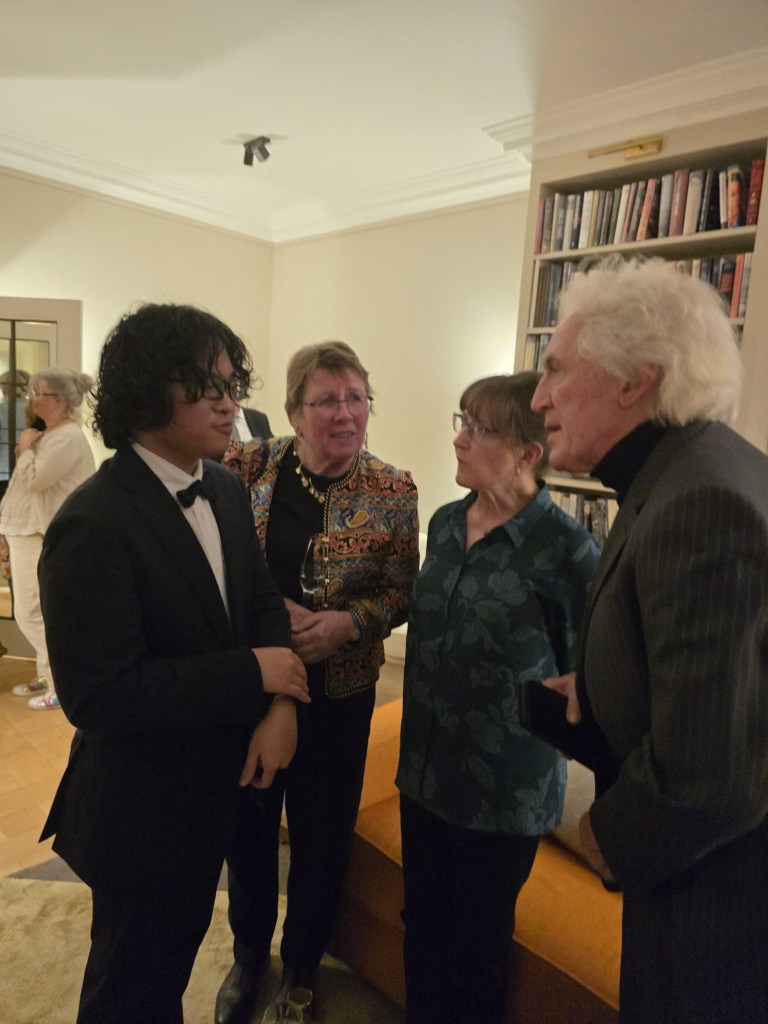
Sarah Biggs CEO of the Keyboard Trust looks on with Lydia Connolly

 ChristopherAxworthy-MusicCommentary