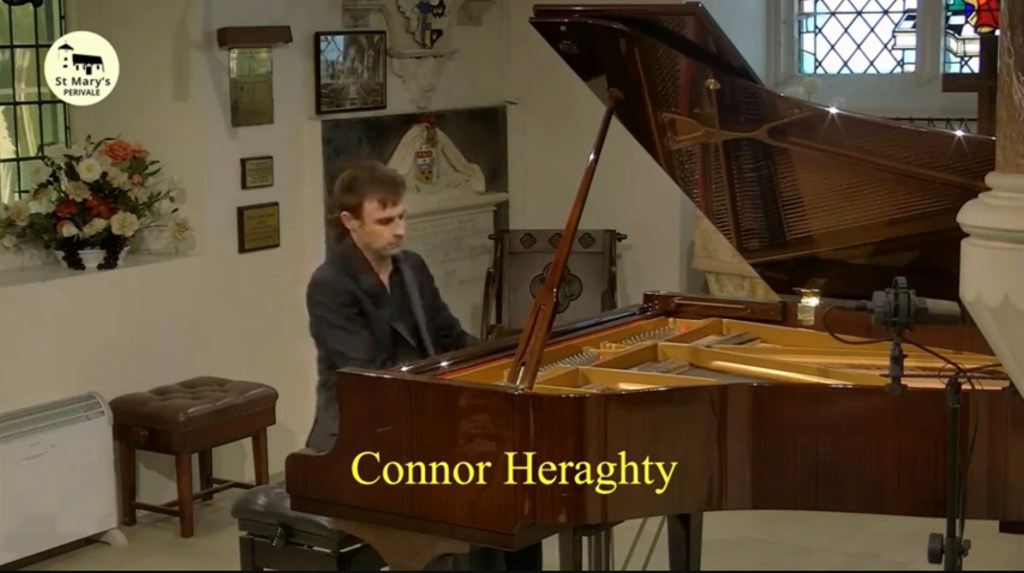
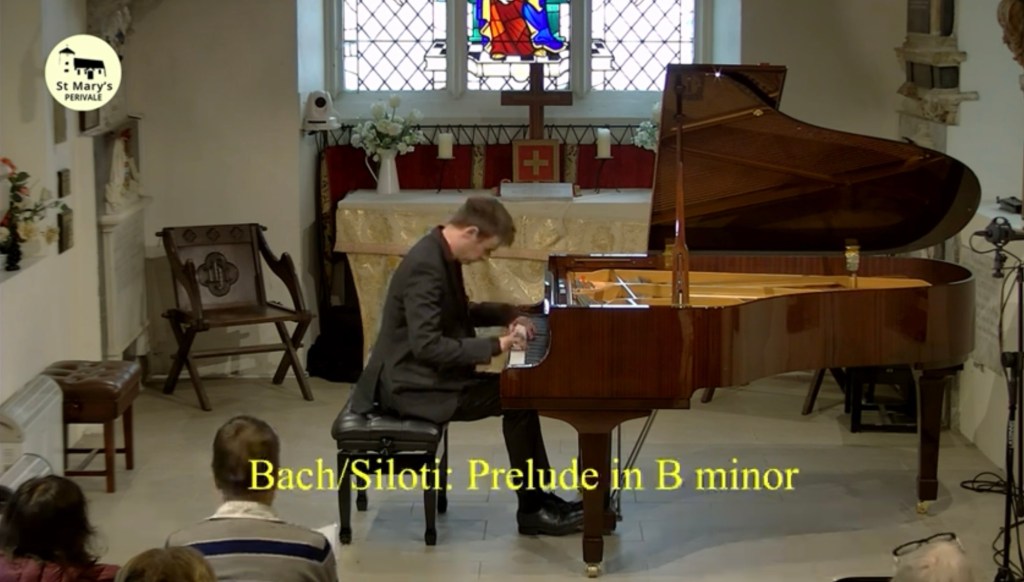
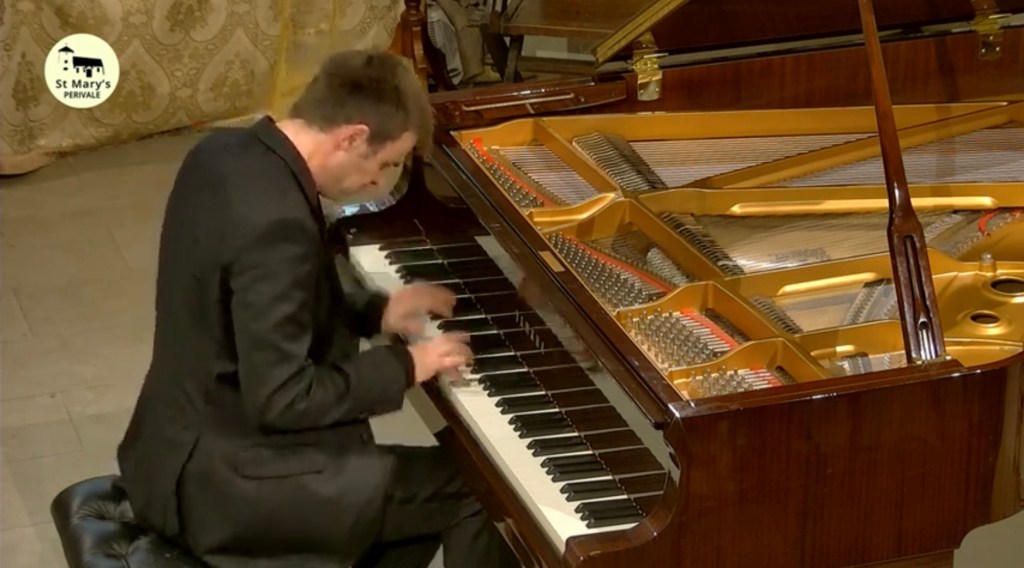
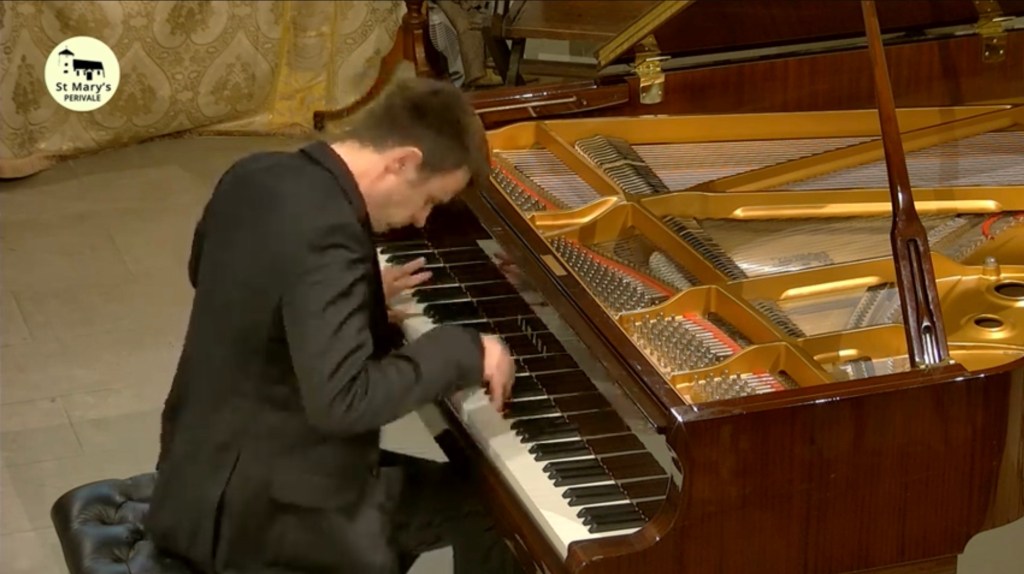
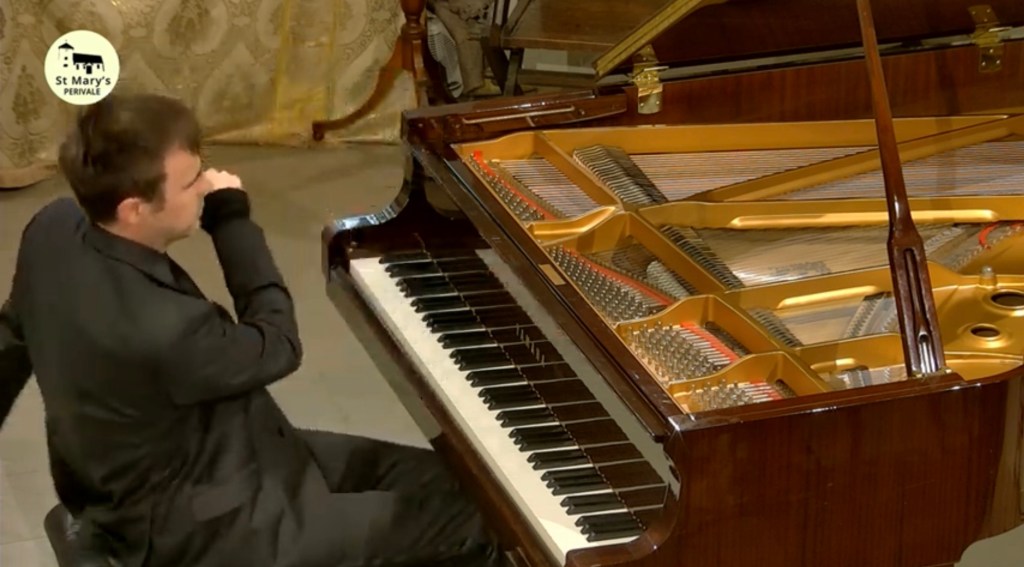
Playing of beauty and poetry from the very first notes of the sublime Prelude in B minor by Bach.Immediately apparent was his delicacy and beautiful colours with playing of timeless beauty of reverent solemnity.This poetic sensitivity was the mark of all that Connor did from sublime Bach to diabolical Liszt.
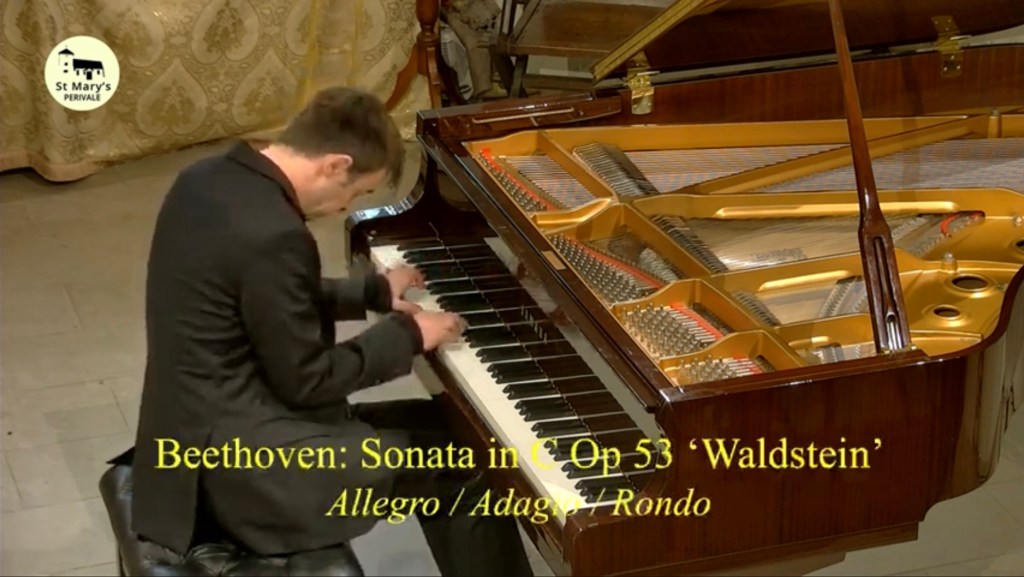
Beethoven’s ‘Waldstein’ Sonata is based very much on scales and arpeggios ,to quote Delius. Here it was given a more subdued poetic reading than usual from the very first notes that were played like mere vibrations before opening out to the beauty and intricacy of the mature Beethoven.Sometimes missing the clockwork rhythmic precision where Connor preferred to turn corners with more romantic style than Beethoven’s sometimes abrupt irascible change of gear. There was a poignant beauty to the Adagio introduction to the final Rondo.Bathed in pedal it was more conceived in pianistic terms than the orchestral that was obviously Beethoven’s inspiration.It was in the last movement ,though, that Beethoven does indeed ask for long pedal notes as the bell like first note rang out so beautifully in Connor’s hands before the undulating wave of accompaniment became alive and the melodic line was allowed to float on magical sounds as it was to do later in the coda suspended in air on a cloud of trills. The dynamic drive to the alternating episodes were beautifully contrasted of technical mastery and excitement with the wonderland surrounds that Beethoven had tried to express in sound.The famous glissandi in the coda were accommodated a little too romantically though to allow the savage drive of the coda to continue unabated to the final heroic bars.
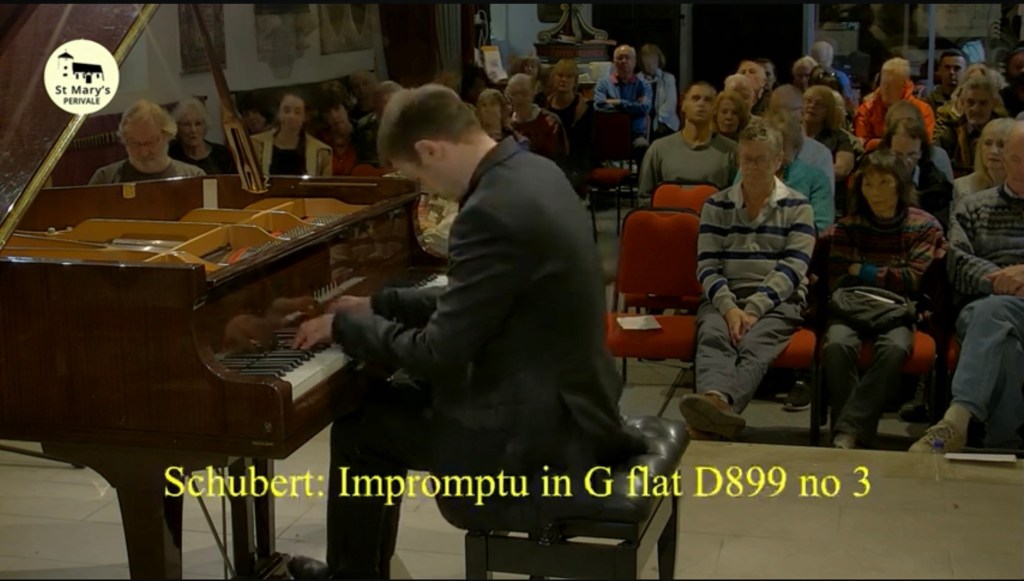
It was in Schubert’s G flat Impromptu that Connor returned to the world of his opening Bach where his playing was of ravishing beauty and refined poetry.There was a beautiful dialogue between the hands and a sense of balance that allowed the musical line to sing with such a sublime voice.
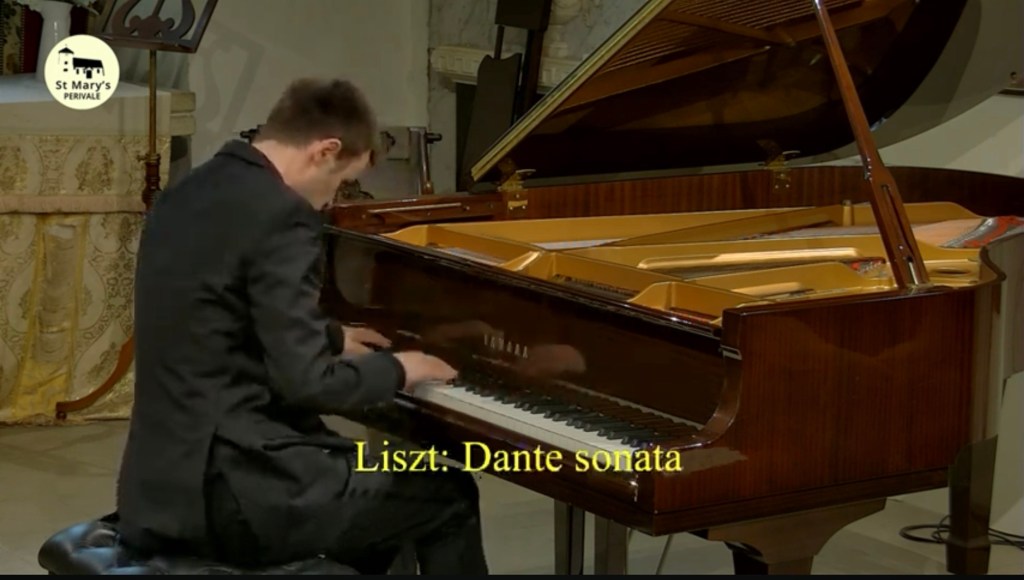
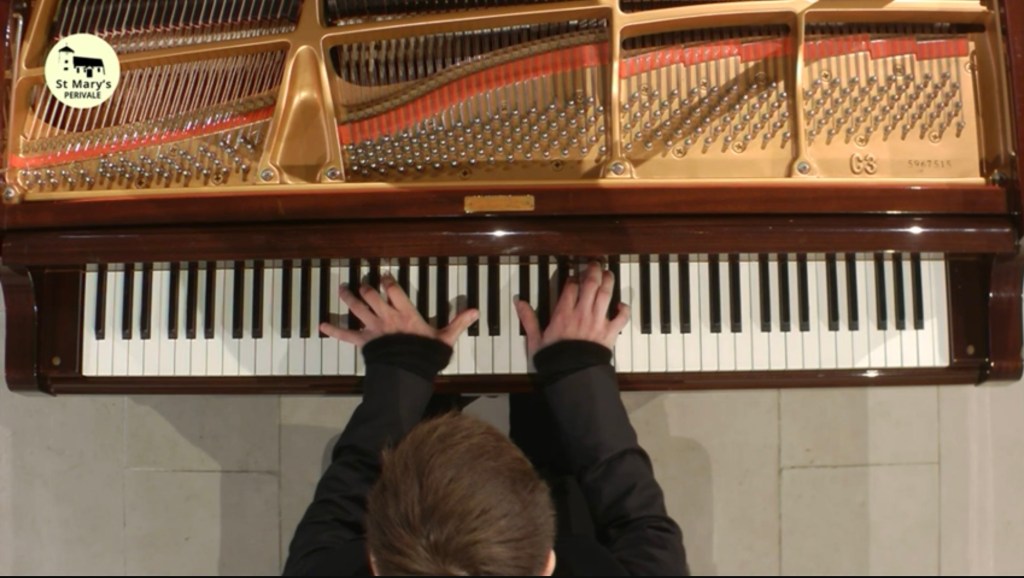
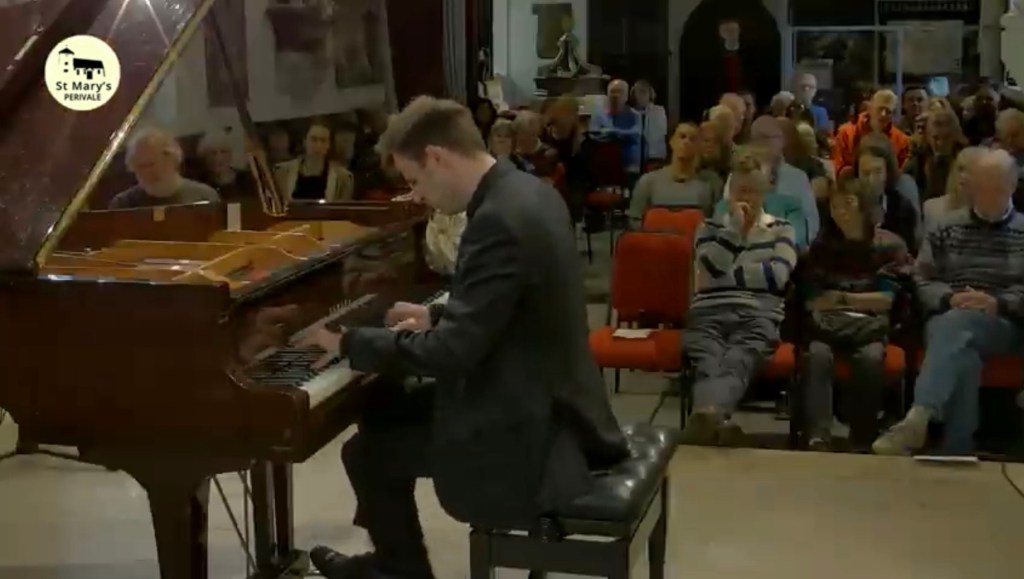
Liszt’s Dante Sonata opened with drama and mystery.Sumptuous rich sounds contrasted with sublime whispered secrets of poetic beauty. Fearless octaves were thrown off with dynamic drive and brilliance but always within the context of a great drama that was unfolding before our eyes.An ending of exhilarance and technical mastery with the final notoriously treacherous leaps played with musical understanding and the poetic shaping of a drama that was unfolded with musicianly architectural understanding and poetic beauty.
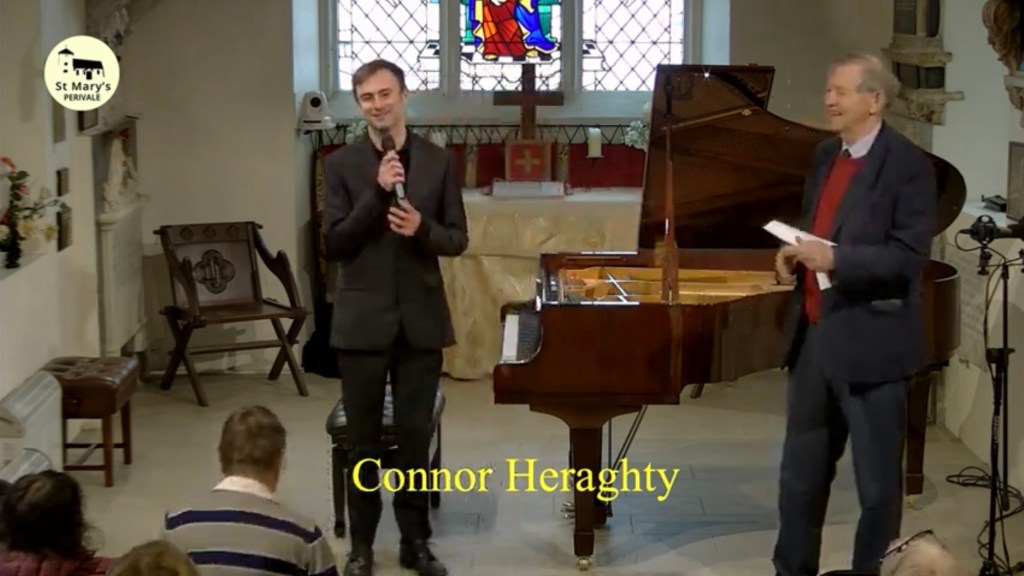
Connor Heraghty is a distinguished British concert pianist and has performed as a soloist and chamber musician at some of the most prestigious venues in the UK and Europe. Notable UK venues include Wigmore Hall, Milton Court Barbican, St Martin-in-the-Fields, St James’s Piccadilly, and Buckingham Palace, where he performed in the presence of King Charles. Internationally, he has performed for audiences at The Fazioli Concert Hall in Venice, The Lithuanian Music Theatre & Academy Hall, and Radziejowice Palace in Poland.
Connor was awarded a scholarship to study piano performance with Valéria Szervánszky at the Purcell School of Music. He continued his studies at the Guildhall School of Music & Drama under the guidance of Senior Professor of Piano, Joan Havill, where he completed his B.Mus (Hons), Master of Music, and Master of Performance postgraduate degrees, followed by the prestigious Artist Diploma. He currently studies with Norma Fisher.
Connor was appointed Junior Artist Fellow at Guildhall and has been supported by scholarships from The Guildhall Trust, Leverhulme Arts Trust, Countess of Munster, and the Alec Beecheno Bursary Award. Connor’s career has been shaped by mentorship from renowned musicians such as Nelson Delle-Vigne Fabbri, Sir Stephen Hough, Peter Frankl, and Michel Béroff.
His solo career is complemented by his role as co-founder of the prize-winning London Piano Duo with pianist Daisy Ou. Connor is represented by Piha Entertainment and is supported by Talent Unlimited Musicians.
Liszt is alive and well and today in Perivale
 ChristopherAxworthy-MusicCommentary