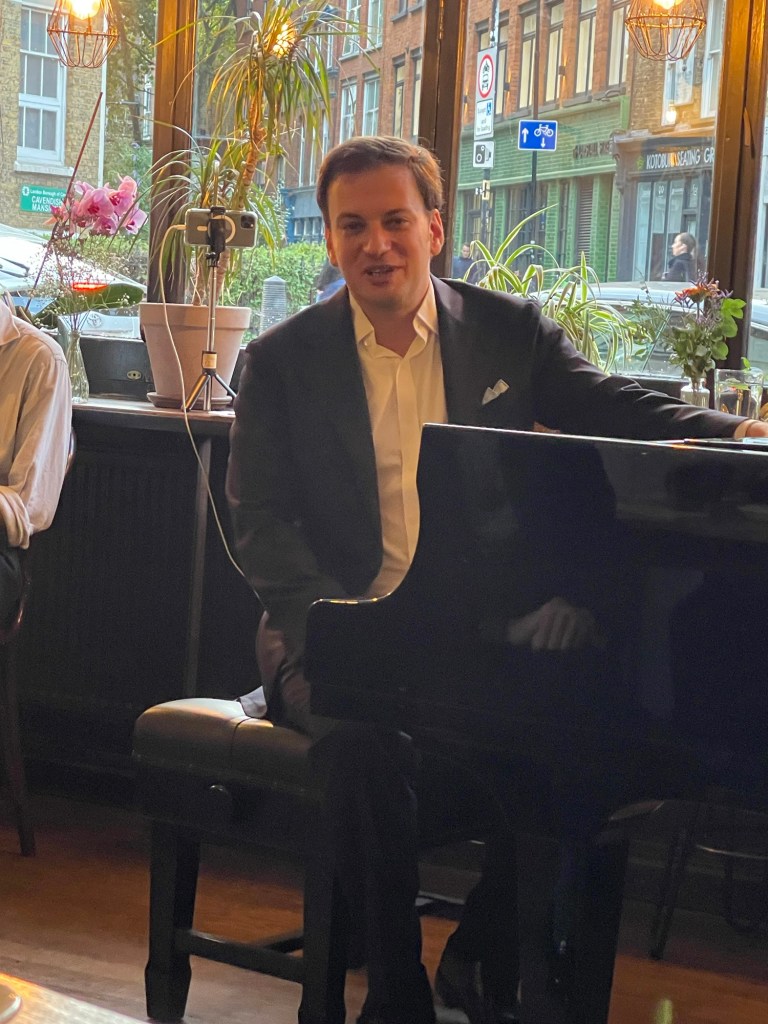
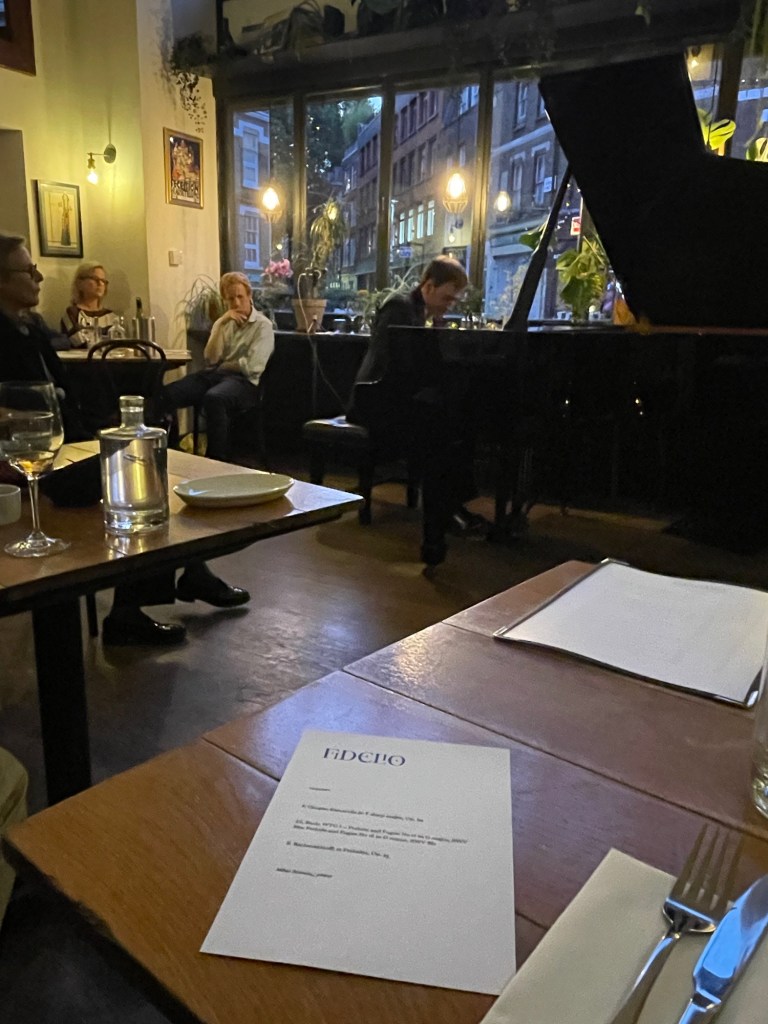
Programme:
F. Chopin: Barcarolle in F sharp major, Op. 60
J.S.Bach WTC Book 1 : Prelude and Fugue No 16 in G minor, BWV 861;
Prelude and Fugue No 15 in G major, BWV 860;
S. Rachmaninoff: 10 Preludes, Op. 23
Mihai Ritivoiu, piano.
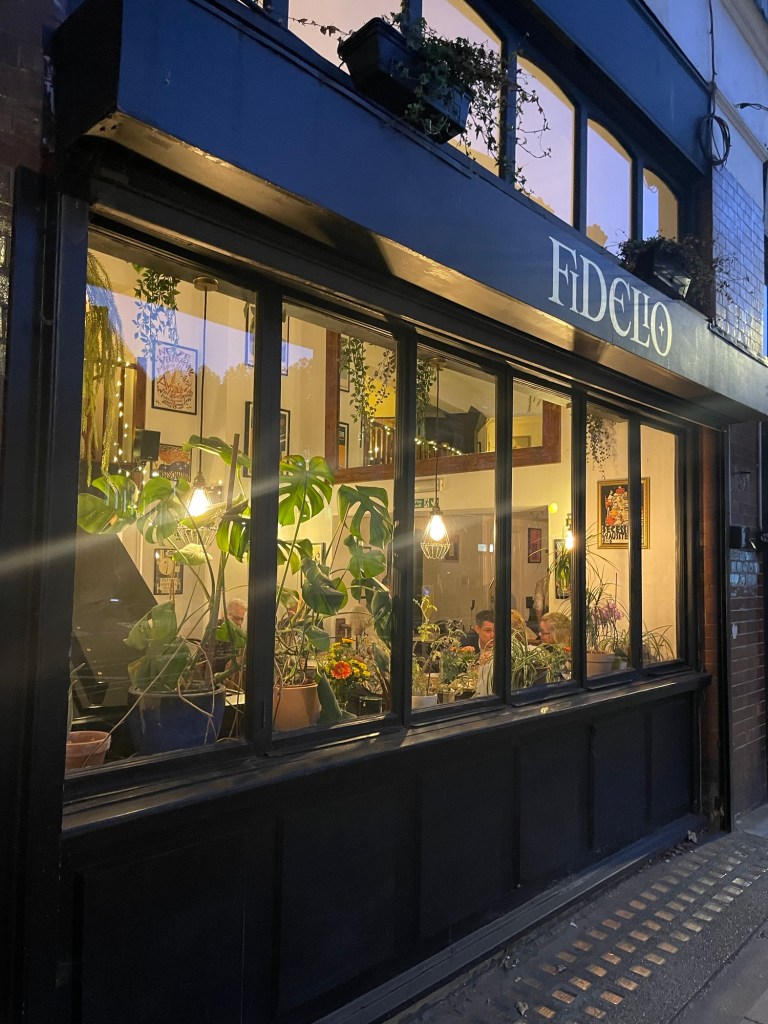
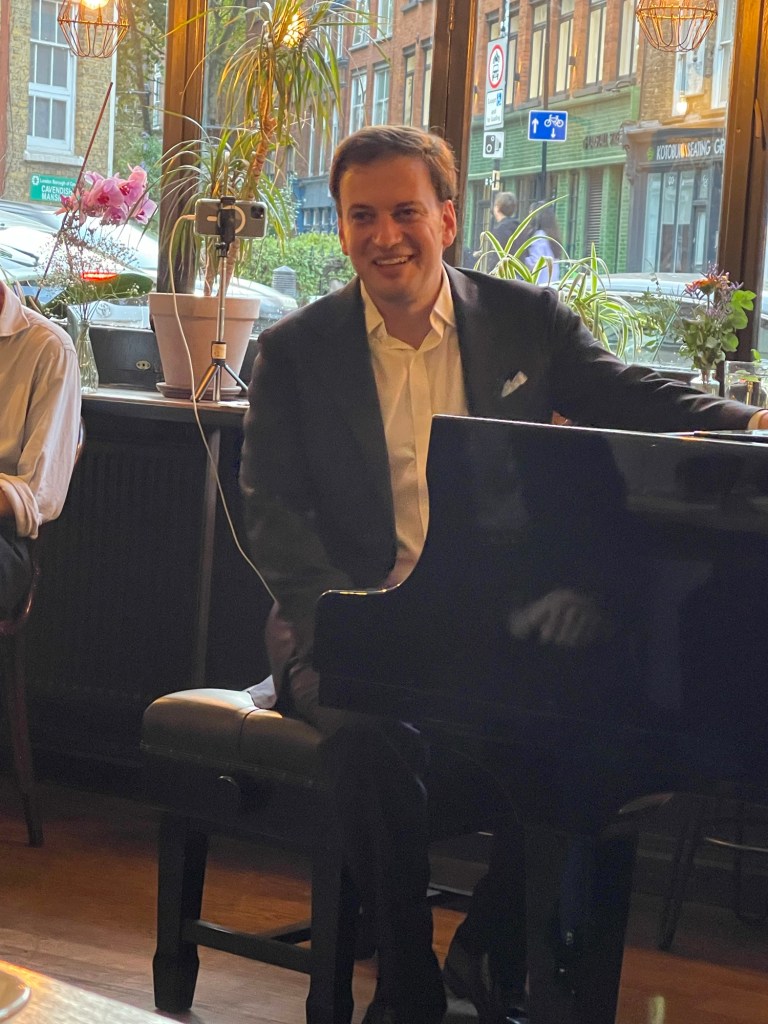
Mihai Ritivoiu at Fidelio with a sumptuous feast on wings of song .
There can be no greater song that Chopin’s Barcarolle , a continuous outpouring of mellifluous beauty .Played with the refined good taste that I can still remember from ten years ago when Mihai as a student of Joan Havill at the Guildhall played another of the last works of Chopin :the Polonaise Fantasie in Richard Goode’s Masterclass. Timeless beauty and aristocratic elegance as the music was allowed to unfold so simply in the Barcarolle today . A kaleidoscope of colours with a masterly control of sound and a true paradise found before the final build up to the glorious exultation of beauty that Chopin was to pen with searing intensity and sublime ecstasy.The coda was played with the ravishing beauty and simplicity that made it one of Ravel’s most cherished passages in all of Chopin.
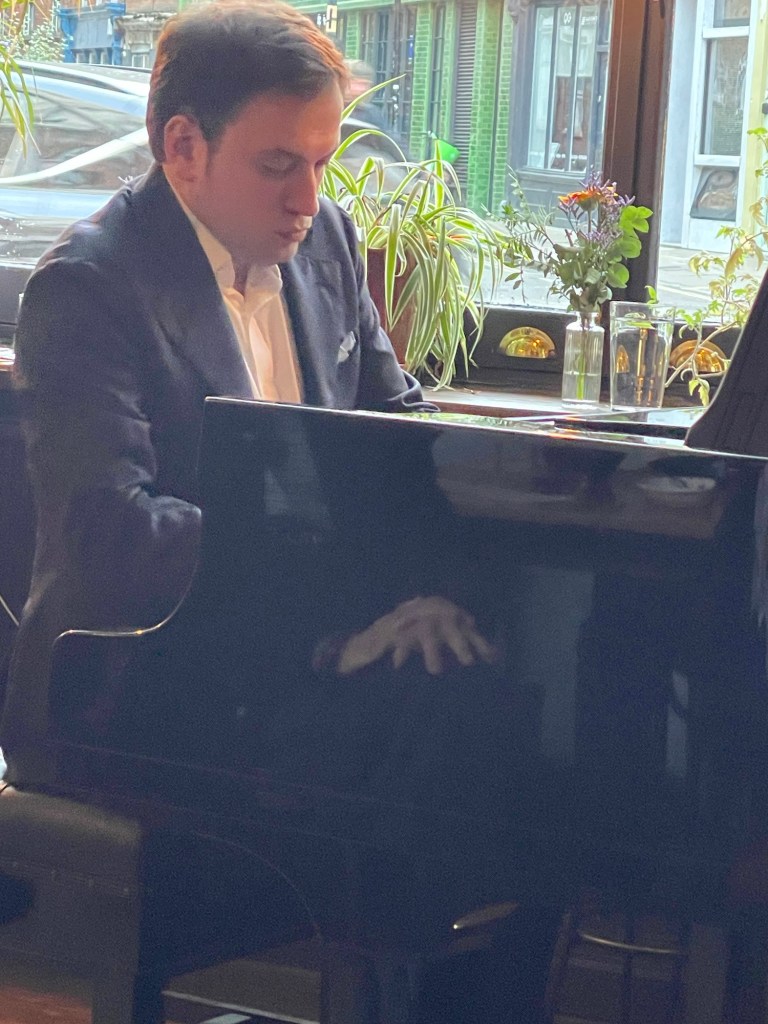
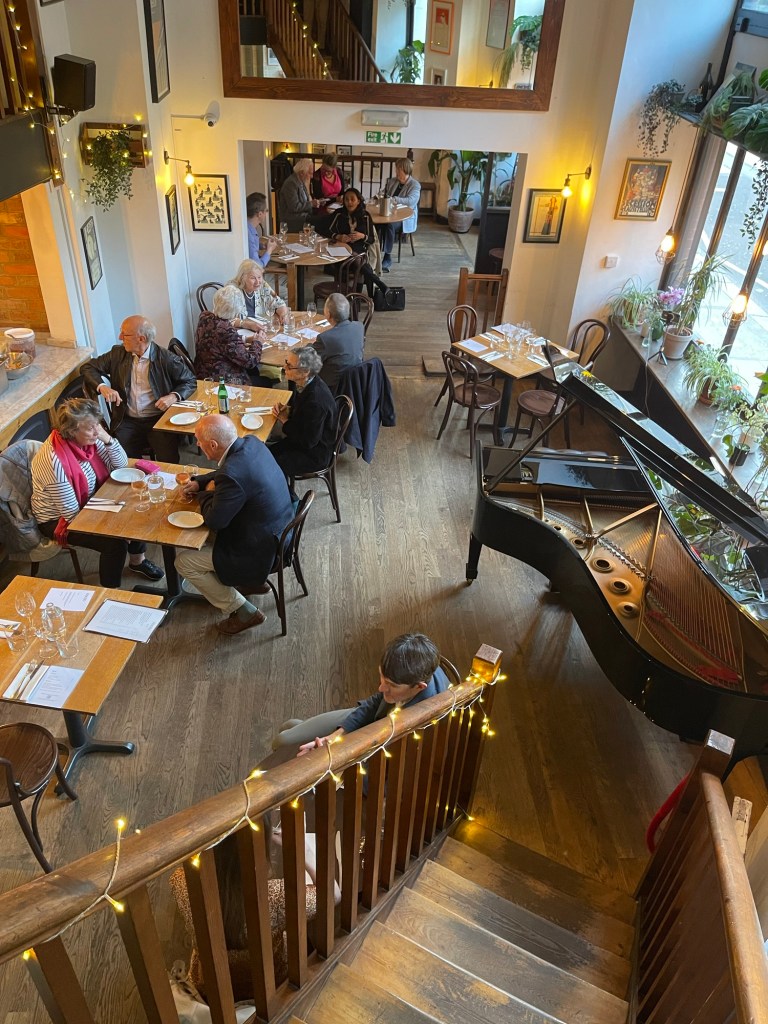
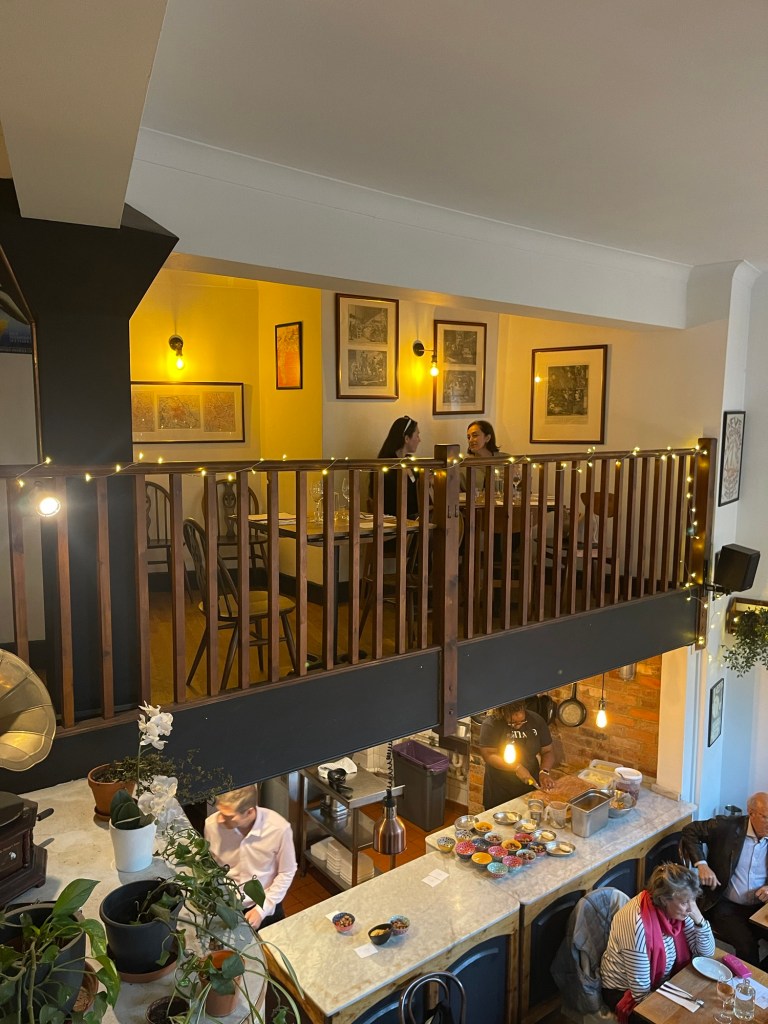
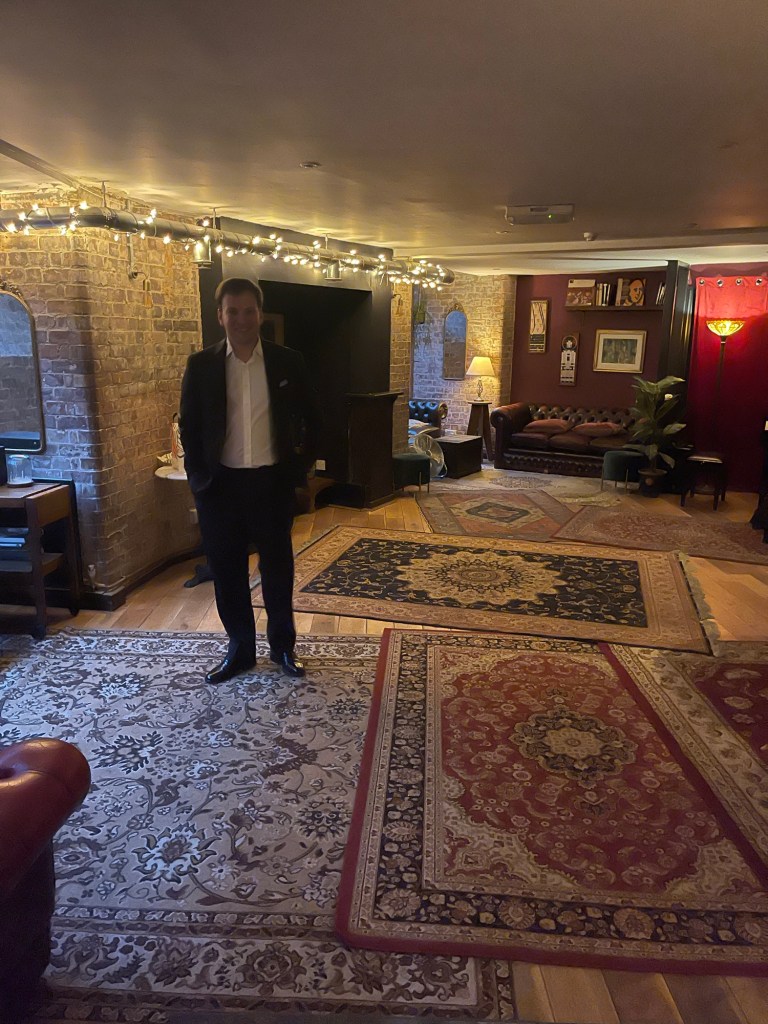
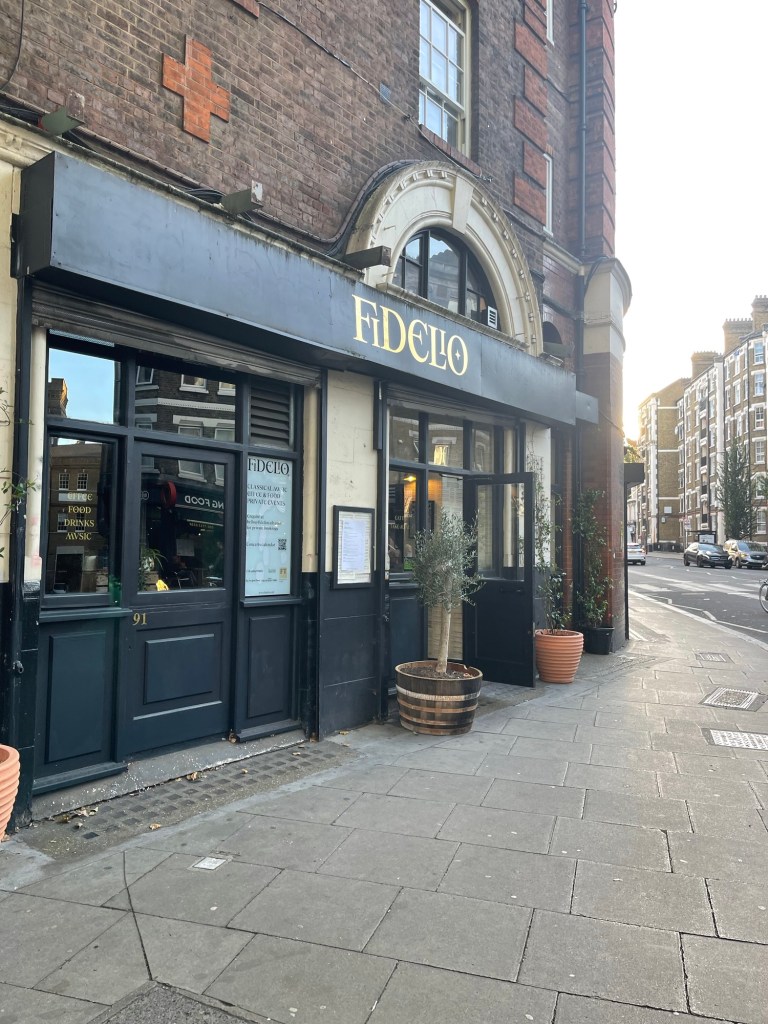
Today Mihai is a distinguished pianist of aristocratic authority who held us in his spell in this very atmospheric oasis that the conductor Raffaello Morales has given to a great city that like many is too often bereft of refined cultural dining venues where an ever diminishing minority can escape and allow their senses to be enriched and replenished.https://christopheraxworthymusiccommentary.com/2024/07/18/31232/
Angela Hewitt plays Bach and Brahms with the Fidelio Orchestra of Raffaello Morales
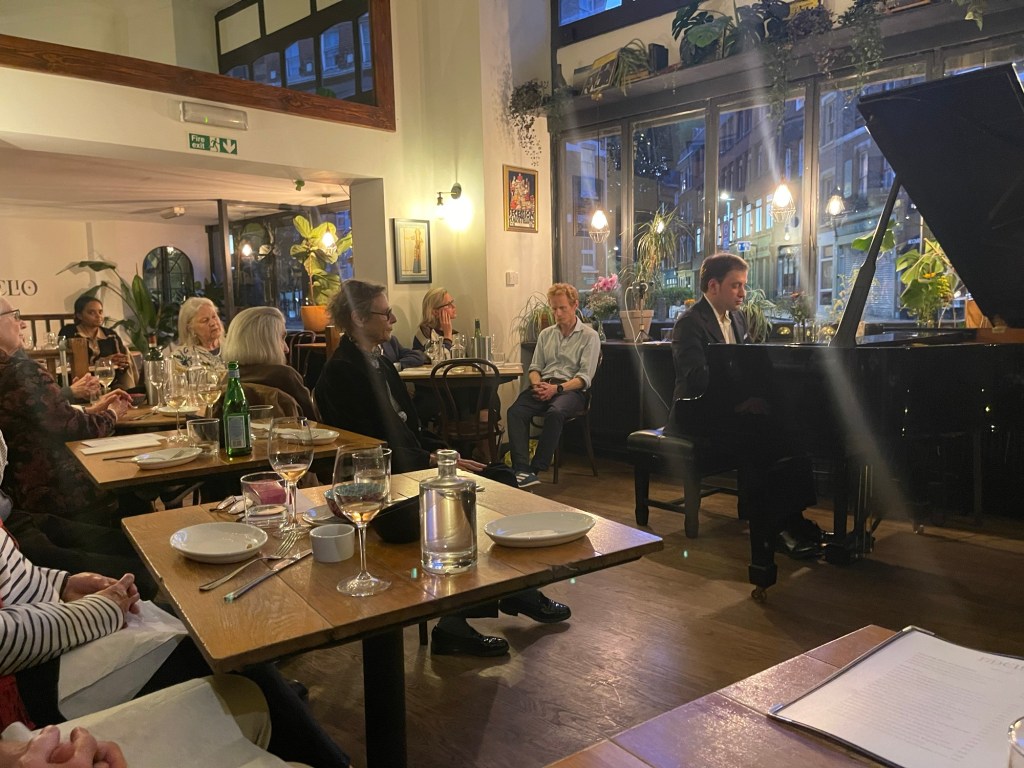
Wonderful to hear Bach Preludes and Fugues in a recital especially when played as today with the G minor and G major book one inserted into a pre dinner concert.
It reminded me of Casals who would always start the day with a Bach Prelude and Fugue on the piano that just cleansed the system before life took over.There was such joy in Mihai’s playing of the jeux perlé of the G major before the knotty twine of intricate counterpoints of the three part fugue . Following on from the refined beauty of the G minor that was played with wondrous poignant beauty as it was allowed to unfold so simply from such sensitive hands.The massive four part fugue was built up masterfully and was the exultation of a true believer .
Wonderful to hear the fugues played with such architectural shape and noble character , the words of Ebenezer Prout coming to mind after all these years. I asked Angela Hewitt during the interval of a recital in Florence whether she knew about Ebenezer and she spent the entire interval singing them at top voice much to the dismay of her Italian agent. I had sneaked backstage in the interval as I had to rush to catch my last train back home to Rome at the end of the afternoon concert at La Pergola. I did mention how much I was enjoying her recital especially having heard Lang Lang the day before .She made a desperate sign to me not to continue about Lang Lang as his agent was the same who was in the Green Room with us !
It was on this occasion that Angela asked if I had read the paper that day because the whole of Florence was talking about that ring!
https://christopheraxworthymusiccommentary.com/2024/03/21/lo-specchio-17th-december-2005-the-ring-ileana-has-shown-us-how-to-leave-the-stage/
Bach Preludes were followed by the sumptuous Ten Preludes that make up Rachmaninov’s op 23.
Sumptuous sounds and breathtaking virtuosity went hand in hand with poetic beauty and even Hollywoodian glamour – after all let’s not forget that this morose Russian who looked as though he had swallowed a knife had a heart full of passion and romantic effusions and died in Beverley Hills !
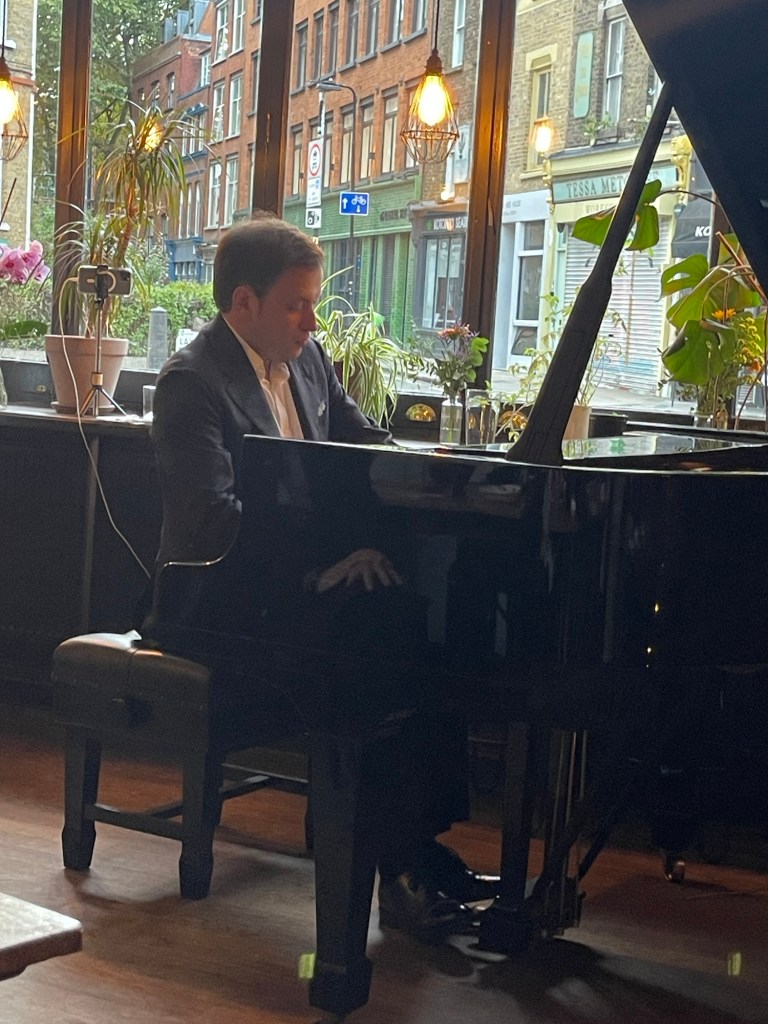
And what similarity there was between the opening Bach in G minor and the opening Rachmaninov , just a semitone between them but worlds apart ! The same improvised refined beauty but of a different more decadent world played with ravishing beauty and languid intensity. The B flat Prelude exploding like the second concerto with sumptuous cascades of notes and after the opening call to arms falling into the loving arms of unmistakeable Rachmaninovian decadence and nostalgia.The central episode was played with breathtaking beauty as it built to a transcendental climax with a Guinness book of records of notes spun so masterfully before the return of the call to arms.
D minor of the Tempo di Minuetto was played with the same capriciousness as the concerto in the same key. A busy juxtaposition of flights of notes with the pivot note of D allowing etherial dream like wafts of sounds to float so magically in the air before being reminded like in the Paganini Rhapsody that it was all a dream – so there!
The D major Prelude I have never forgotten the recording my grandmother had of Richter which I used to play over and over again together with the second concerto when I was a school boy who had fallen in love for the first time. I mean love in the true sense as Tortelier was to teach me and in this case with sounds that could explain what a shy young boy could not yet express in words. Mihai found just the same magic today with a rich and generous cantabile and a flowing bass , like in the Barcarolle, on which such beauty could flourish.The fifth and seventh were on the Richter record too so this was a real nostalgic voyage for me today as Mihai struck up the ‘Alla marcia’ with the same dynamic drive and authority.Transcendental technical command where the octaves were phrased always horizontally with passionate musical meaning as they dissolved into the world of Rawicz and Landauer – my Grandmothers recording too !
https://www.youtube.com/watch?v=2ADFcbhJOEo Mihai knew, like the recording, how to dissolve into a paradise of sumptuous sounds.
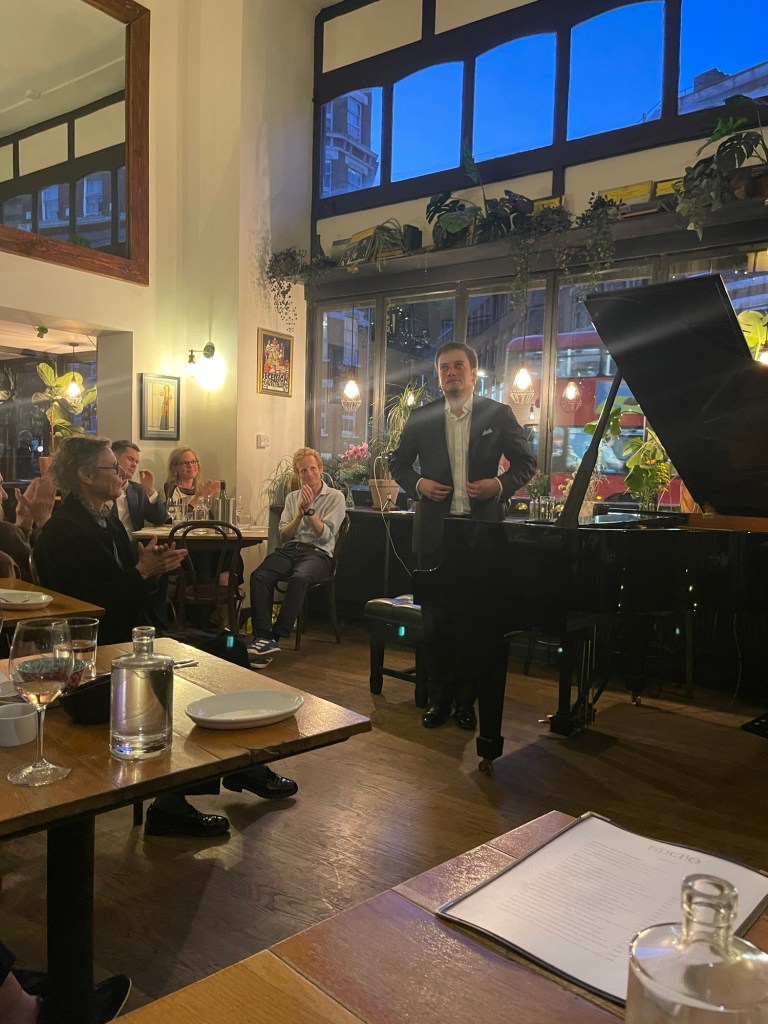
On the Richter record too was the ‘busy bee’ of the 7th Prelude that Mihai played with the same sense of balance and masterly control that allowed the melodic line to float as if there were two pianist at the keyboard not one.The secret of Thalberg was taken up by Rachmaninov,of course , who like Thalberg was one of the greatest virtuosi of all time. ‘Thalberg is the greatest’, declared the Princess Belgioso ‘but Liszt is unique’. So honour was saved in the famous duel between two giants of their time, probably of all time !
The E flat n. 6 is one of the most unashamedly romantic of all the preludes and was played with beguiling half lights and insinuating rubato. The 8th is the longest with its meandering weaving harmonies that finally run out of steam . Ending with a dozen straight chords ,just like the Schumann Toccata, where the composer puts the break on just in time! The ninth is Rachmaninov’s ‘Feux Follets’ on the black keys in E flat minor and is a ‘tour de force’ that strikes terror in all but the finest pianists. Mihai was not only unafraid but added a musical shape that like ‘Feux Follets’ in masterly hands can turn what has become a technical bauble into a ravishing gem.The final Largo in G flat was played with a masterly sense of balance that allowed the left hand to sing as in Chopin’s study op 25 n. 7 .The hands duetting with each other with poignant deeply felt meaning .
A poet speaks spring to mind and what better way to describe Mihai’s playing than that of a Poet of the Keyboard.

Born in Bucharest, the London-based Romanian pianist Mihai Ritivoiu is a top prize-winner of several national and international competitions, including the George
Enescu International Competition, where he was also distinguished with the special prize for the best interpretation of a piano sonata by George Enescu. He leads an international career performing solo and chamber music recitals in Europe and Asia, and has played concertos with the George Enescu Philharmonic Orchestra, Lausanne Chamber Orchestra, the English Chamber Orchestra and MDR Leipzig, and with conductors such as Joshua Weilerstein, Robert Trevino, Michael Collins, Jonathan Bloxham, Cristian Mandeal, Christian Badea and Horia Andreescu. He has been invited to play at prestigious festivals, including Young Euro Classic in Berlin and the Enescu Festival in Bucharest, and has performed in halls such as the Barbican Centre, Wigmore Hall, Cadogan Hall, Konzerthaus Berlin, Studio Ernest Ansermet Geneva, the Radio Hall and the Romanian Athenaeum in Bucharest.
Mihai Ritivoiu’s triumphant recital signals a musical renaissance at the National Liberal Club
Mihai Ritivoiu at St Martin in the Fields Simple great Beethoven from a musician who thinks more of the music than himself
Mihai Ritivoiu at St Mary’s A poet of the piano of great authority and aristocratic bearing
Ebenezer Prout ‘s 48
Book I
- He went to town in a hat that made all the people stare.
- John Sebastian Bach sat upon a tack, but he soon got up again with a howl!
- O what a very jolly thing it is to kiss a pretty girl!
- Broad beans and bacon…(1st countersubject)…make an excellent good dinner for a man who hasn’t anything to eat.(2nd countersubject)…with half a pint of stout.
- (Subject) Gin a body meet a body Comin’ through the rye,
(Answer) Gin a body kiss a body, Need a body cry? - He trod upon my corns with heavy boots—I yelled!
- When I get aboard a Channel steamer I begin to feel sick.
- You dirty boy! Just look at your face! Ain’t you ashamed?
- Hallo! Why, what the devil is the matter with the thing?
- Half a dozen dirty little beggar boys are playing with a puppy at the bottom of the street.
- The Bishop of Exeter was a most energetic man.
- The slimy worm was writhing on the footpath.
- Old Abram Brown was plagued with fleas, which caused him great alarm.
- As I sat at the organ, the wretched blower went and let the wind out.
- O Isabella Jane! Isabella Jane! Hold your jaw! Don’t make such a fuss! Shut up! Here’s a pretty row! What’s it all about?
- He spent his money, like a stupid ass.
- Put me in my little bed.
- How sad our state by nature is! What beastly fools we be!
- There! I have given too much to the cabman!
- On a bank of mud in the river Nile, upon a summer morning, a little hippopotamus was eating bread and jam.
- A little three-part fugue, which a gentleman named Bach composed, there’s a lot of triple counterpoint about it, and it isn’t very difficult to play.
- Brethren, the time is short!
- He went and slept under a bathing-machine at Margate.
- The man was very drunk, as to and fro, from left to right, across the road he staggered.
Book II
- Sir Augustus Harris tried to mix a pound of treacle with a pint of castor oil.
- Old Balaam’s donkey spoke like an ass.
- O, here’s a lark!
- Hey diddle diddle, the cat and the fiddle! The cow jumped over the moon!
- To play these fugues through is real jam.
- ‘Ark to the sound of the ‘oofs of the galloping ‘orse! I ‘ear ‘im comin’ up Regent Street at night. (Countersubject:) ‘Is ‘oofs go ‘ammer, ‘ammer, ‘ammer, ‘ammer, ‘ammer, ‘ammer, on the ‘ard ‘ighway.
- Mary, my dear, bring the whiskey and water in—bring the whiskey and water in.
- I went to church last night, and slept all the sermon through.
- I’d like to punch his head…(countersubject:) …if he gives me any more of his bally cheek.
- As I rode in a penny bus, going to the Mansion House, off came the wheel—down came the bus—all of the passengers fell in a heap on the floor of the rickety thing.
- Needles and pins! Needles and pins! When a man’s married his trouble begins.
- I told you you’d have the stomach-ache if you put such a lot of pepper in your tea.
- Great Scott! What a trouble it is to have to find the words for all these subjects!
- She cut her throat with a paper-knife that had got no handle. (Subject, bar 20:) The wound was broad and deep. (Bar 36:) They called the village doctor in: he put a bit of blotting-paper on her neck.
- The pretty little dickybirds are hopping to and fro upon the gravel walk before the house, and picking up the crumbs.
- Oh, my eye! Oh, my eye! What a precious mess I’m getting into today.
- I passed the night at a wayside inn, and could scarcely sleep a moment for the fleas.
- Two little boys were at play, and the one gave the other a cuff on the head, and the other hit back. (Countersubject:) Their mother sent them both to bed without their tea.
- In the middle of the Hackney Road today I saw a donkey in a fit.
- He that would thrive must rise at five.
- The noble Duke of York, he had ten thousand men, he marched them up the hill, and marched them down again.
- O, dear! What shall I do? It’s utterly impossible for me to learn this horrid fugue! I give it up! (Countersubject:) It ain’t no use! It ain’t a bit of good! Not a bit! No, not a bit!, No, not a bit!
- See what ample strides he takes.
- The wretched old street-singer has his clothes all in tatters, and toes showing through his boots.
 ChristopherAxworthy-MusicCommentary