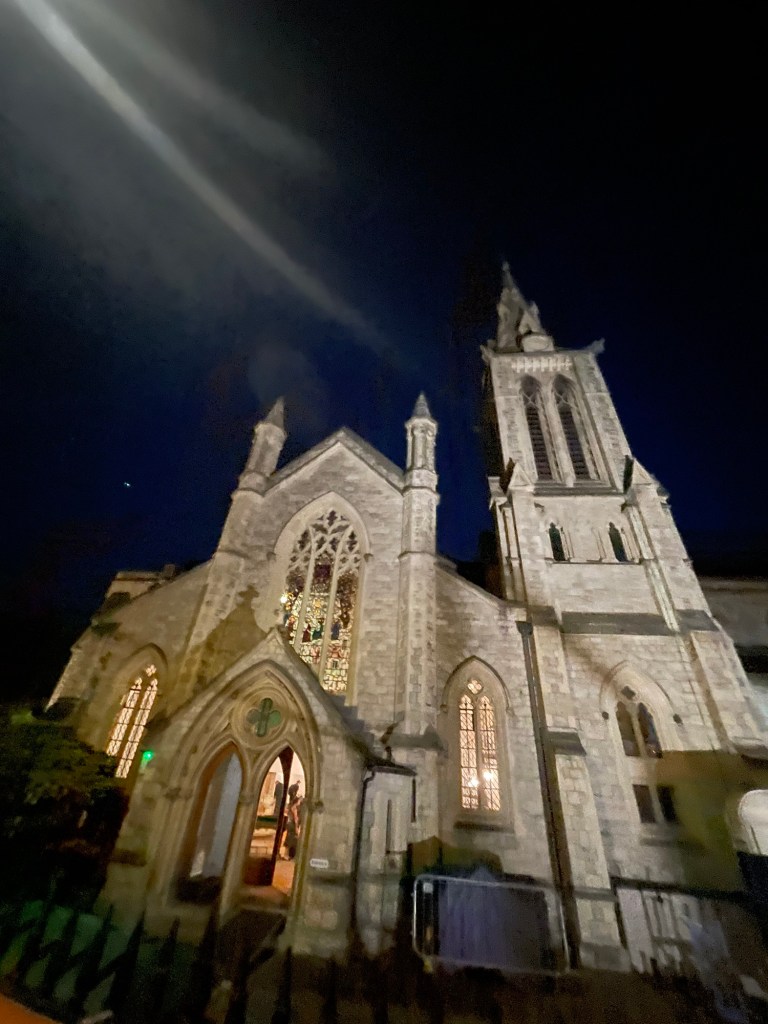
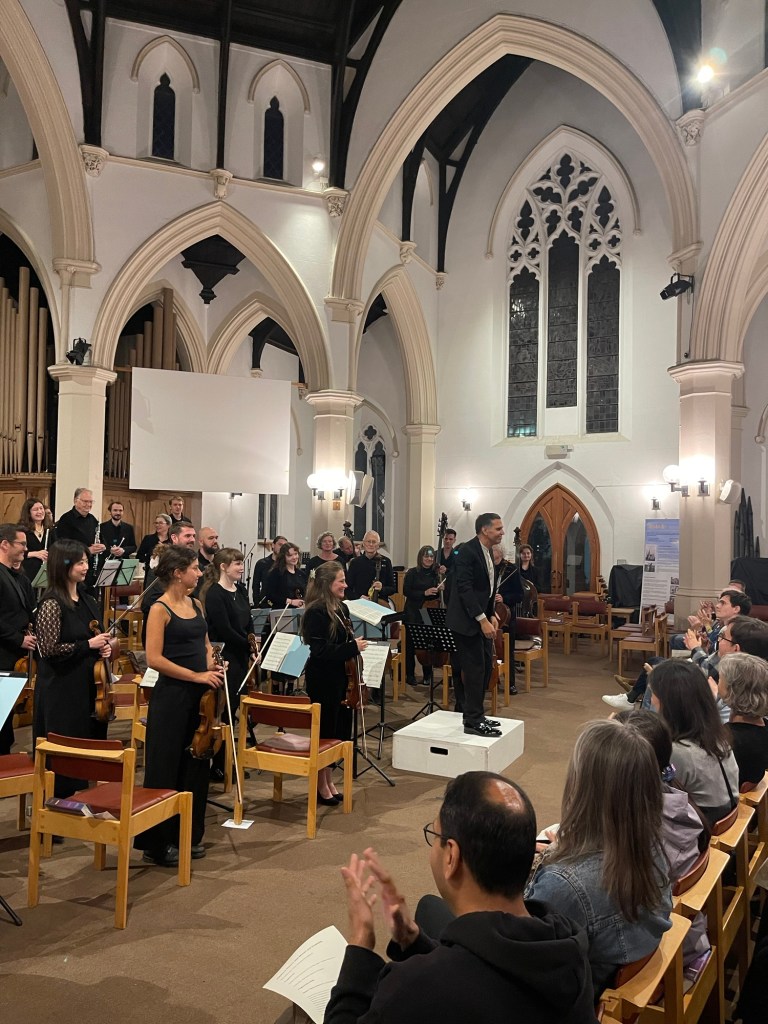
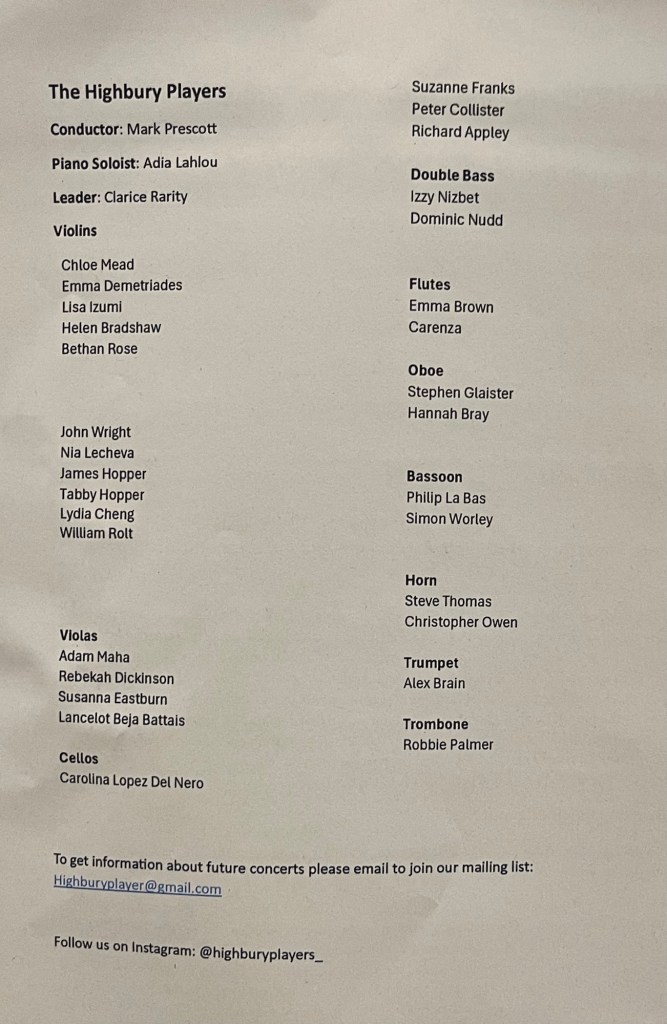
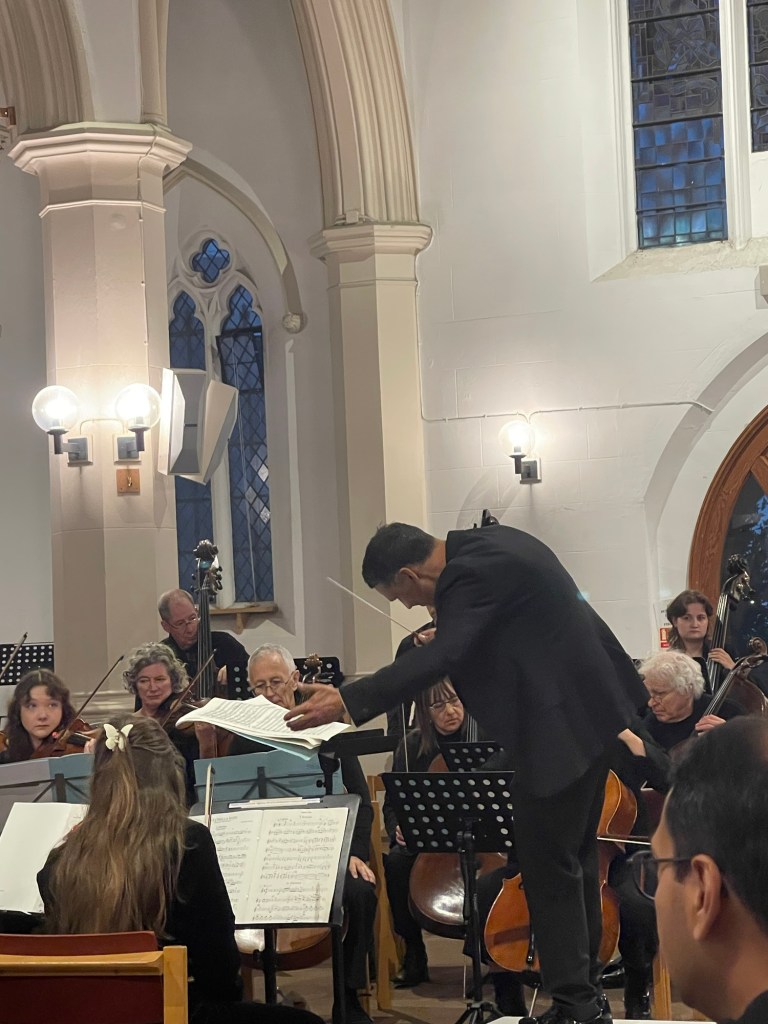
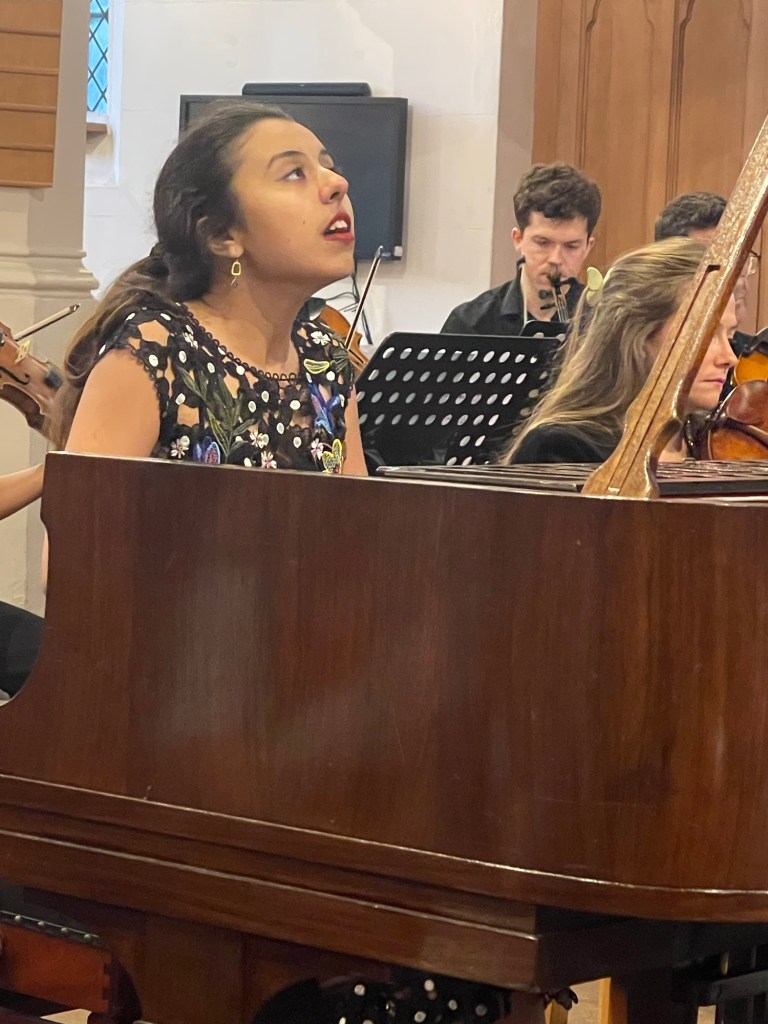
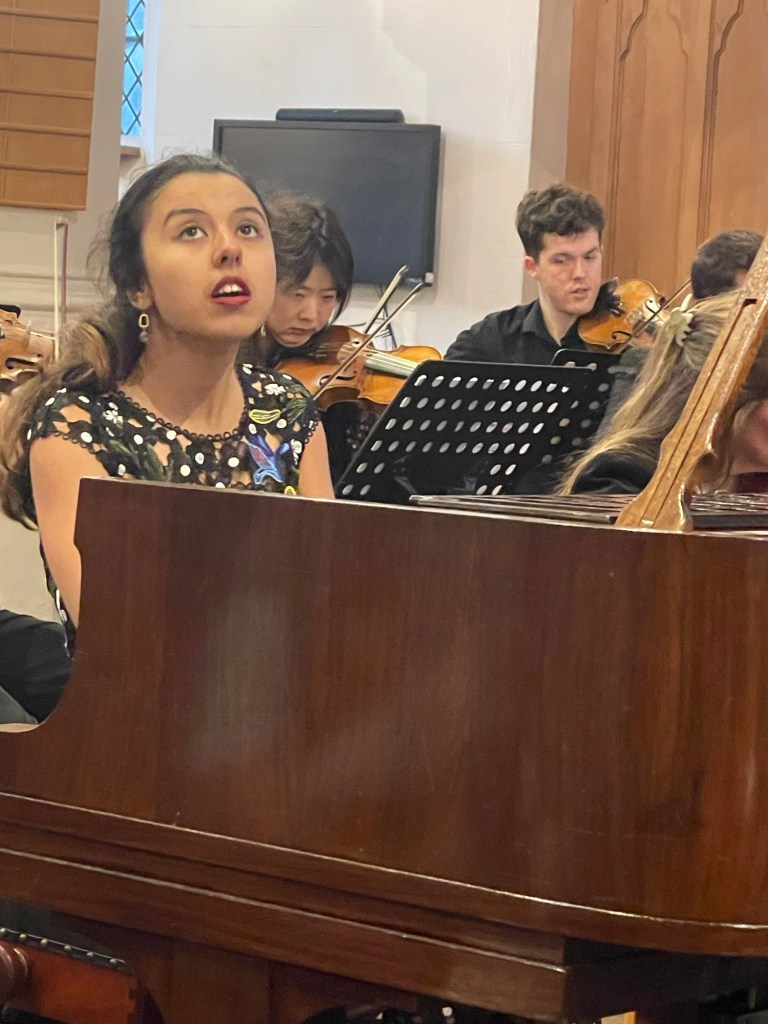
The crystalline beauty of Aïda Lahlou’s playing of Mozart’s last concerto resounded around this beautiful church accompanied by the valiant Highbury Players under their conductor Mark Prescott.

Aida from the class of Marcel Baudet at the Menuhin School.
(http://www.marcelbaudet.com/bio.html) played with a poetic sensibility of refined beauty and a sense of style and musical intelligence of aristocratic authority.Exquisite ornamentation of great taste enhanced the sublime beauty of one of Mozart’s most poignant slow movements. Her beautiful leasurely tempo for the last movement added a pastoral beauty of ease and charm to his 27th concerto written just months before his untimely death.
Stravinsky’s popular Pulcinella Suite gave the Highbury Players a chance to shine under their attentive conductor and was a charming way to close an hour of music in this very beautiful part of London.
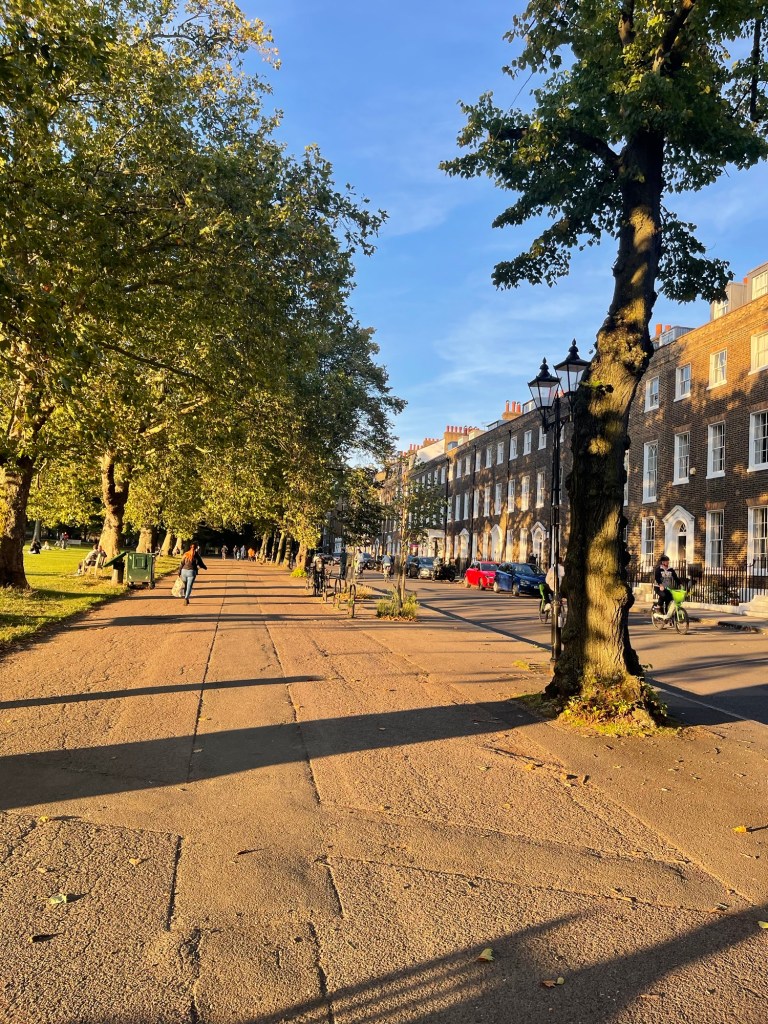
An oasis of Georgian elegance and open spaces where the genius of Mozart could act as an hors d’oevres to Saturday night’s revelry where refined dining go hand in hand with oft rumbustuous pub culture.
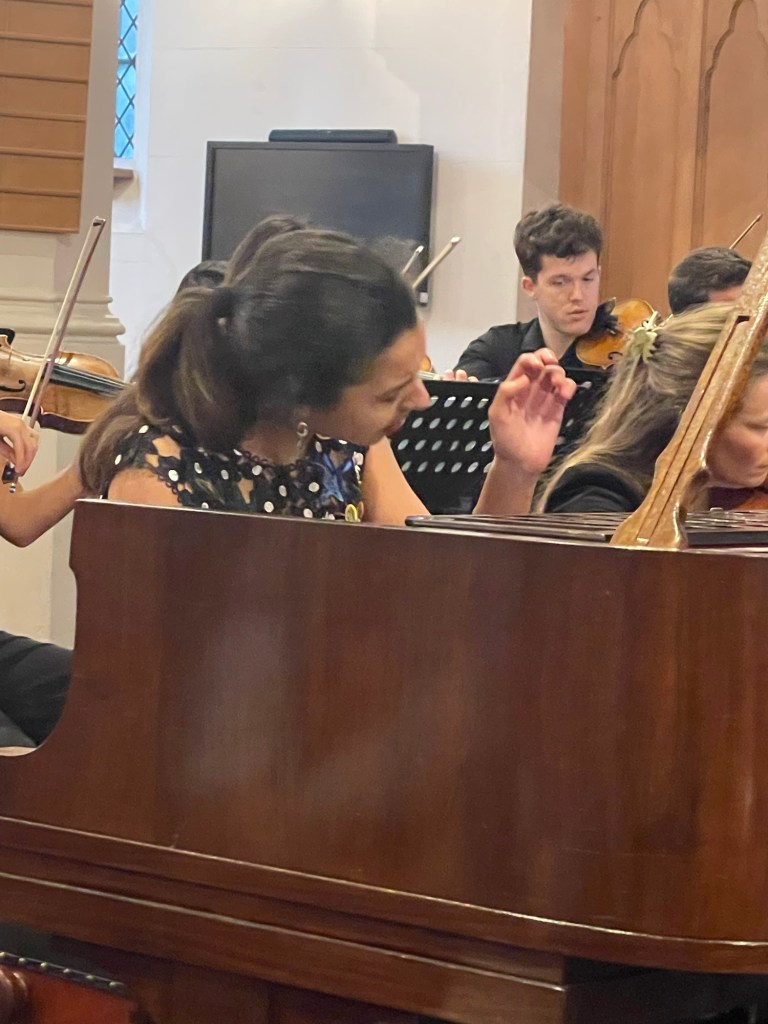
I am sure Mozart would have loved it as genius needs the nutriment of the people. ‘All the world is a stage and men and women merely players’. And as Aida showed us the operatic genius of Mozart is far reaching and eternal.

Probably the last work that Mozart was to perform in public before his untimely death at the age of only 35 it is full of beauty tinged with poignant beauty and eternal strength . Genius cannot be measured but can enrich and enlighten all those that are touched by it’s rays as we were last night.

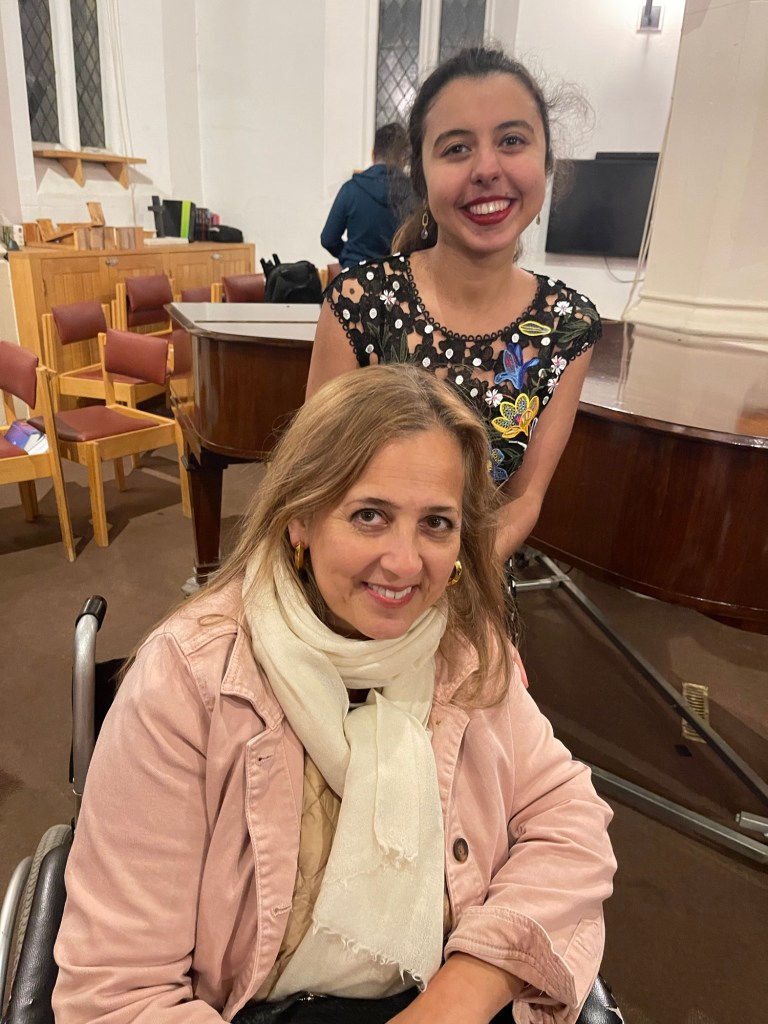
https://concursopianoibiza.com/?lang=en

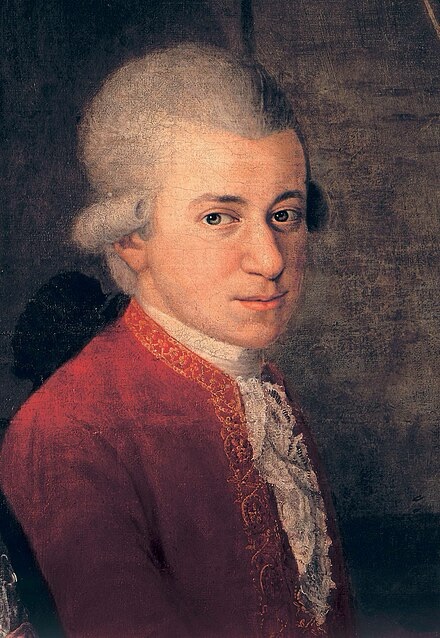
Wolfgang Amadeus Mozart
27 January 1756 Salzburg 5 December 1791 (aged 35) Vienna
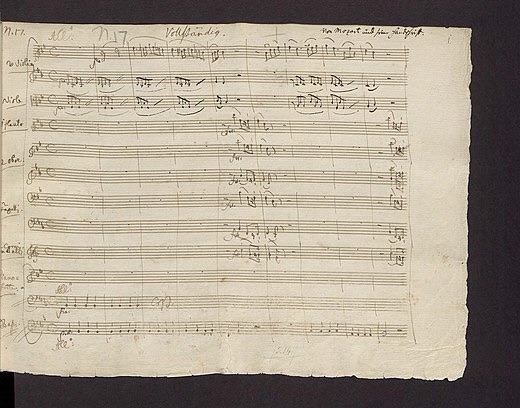
The concerto may have been first performed at a concert on 4 March 1791 in Jahn’s Hall by Mozart and if so, this was Mozart’s last appearance in a public concert,as he fell ill in September 1791 and died on 5 December 1791. Another possibility is that it was premiered by Mozart’s pupil Barbara Ployer on the occasion of a public concert at the Palais Auersperg in January 1791.
It has three movements :
- Allegro
- Larghetto
- Allegro
Although all three movements are in a major , minor keys are suggested, as is evident from the second theme of the first movement (in the dominant minor), as well as the presence of a remote minor key in the early development of that movement and of the tonic minor in the middle of the Larghetto.
Another interesting characteristic of the work is its rather strong thematic integration of the movements, which would become ever more important in the nineteenth century.The principal theme of the Larghetto, for instance, is revived as the second theme of the final movement (in measure 65).The principal theme for the finale was also used in Mozart’s song “Sehnsucht nach dem Frühling” (also called “Komm, lieber Mai”), K. 596, which immediately follows this concerto K.595 in the Kochel catalogue .Mozart wrote down his cadenzas for the first and third movements.
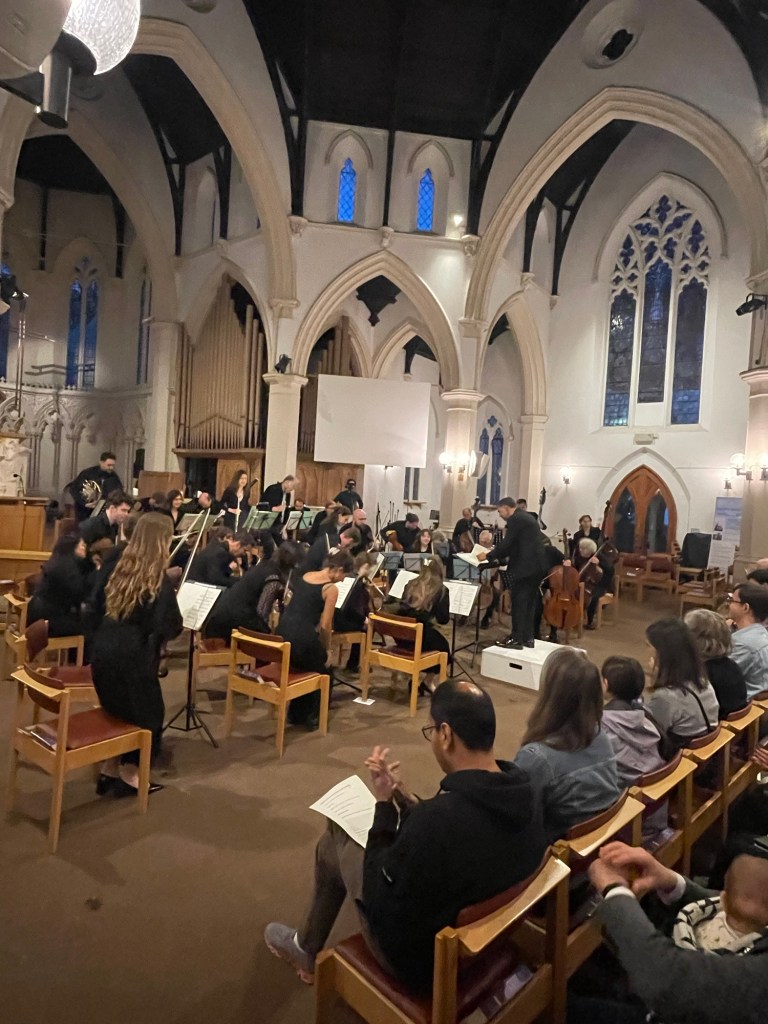

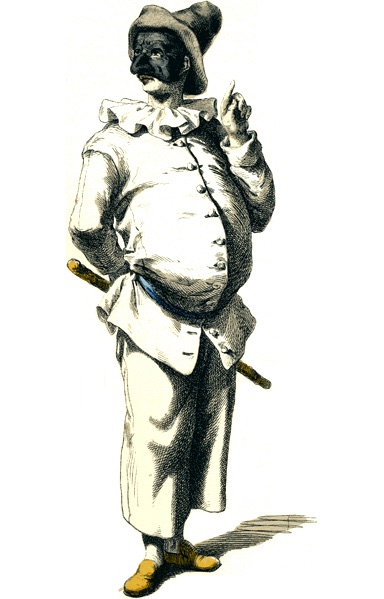
Pulcinella Suite
Stravinsky extracted a purely instrumental suite from his ballet which was premiered by the Boston Symphony Orchestra conducted by Pierre Monteux on 22 December 1922. It has these eight movements:
- Sinfonia
- Serenata
- Scherzino – Allegretto – Andantino
- Tarantella
- Toccata
- Gavotta (con due variazioni)
- Vivo (Duetto prior to revision)
- Minuetto – Finale
Pulcinella is taken from a manuscript from Naples, dating from 1700, containing a number of comedies portraying the traditional character of the popular Neapolitan stage. This libretto was derived from Quatre Polichinelles semblables (“Four similar Pulcinellas”).
Conductor Ernest Ansermet wrote to Stravinsky in 1919 about the project. The composer initially did not like the idea of music by Pergolesi, but once he studied the scores, which Diaghilev had found in libraries in Naples and London , he changed his mind. Stravinsky adapted the older music to a more modern style by borrowing specific themes and textures, but interjecting his modern rhythms, cadences, and harmonies.Pulcinella marked the beginning of Stravinsky’s second phase as a composer, his neoclassical period. He wrote:
‘Pulcinella was my discovery of the past, the epiphany through which the whole of my late work became possible. It was a backward look, of course—the first of many love affairs in that direction—but it was a look in the mirror, too.’
The Joy of Music -Adam Heron and friends at St Mary at Hill
 ChristopherAxworthy-MusicCommentary