
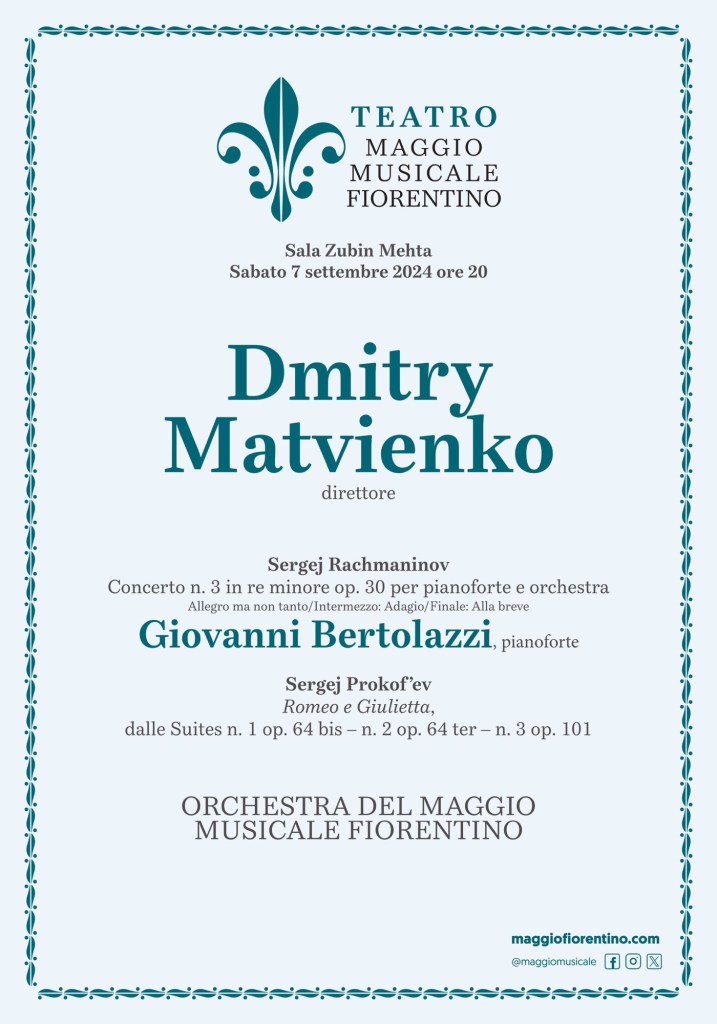
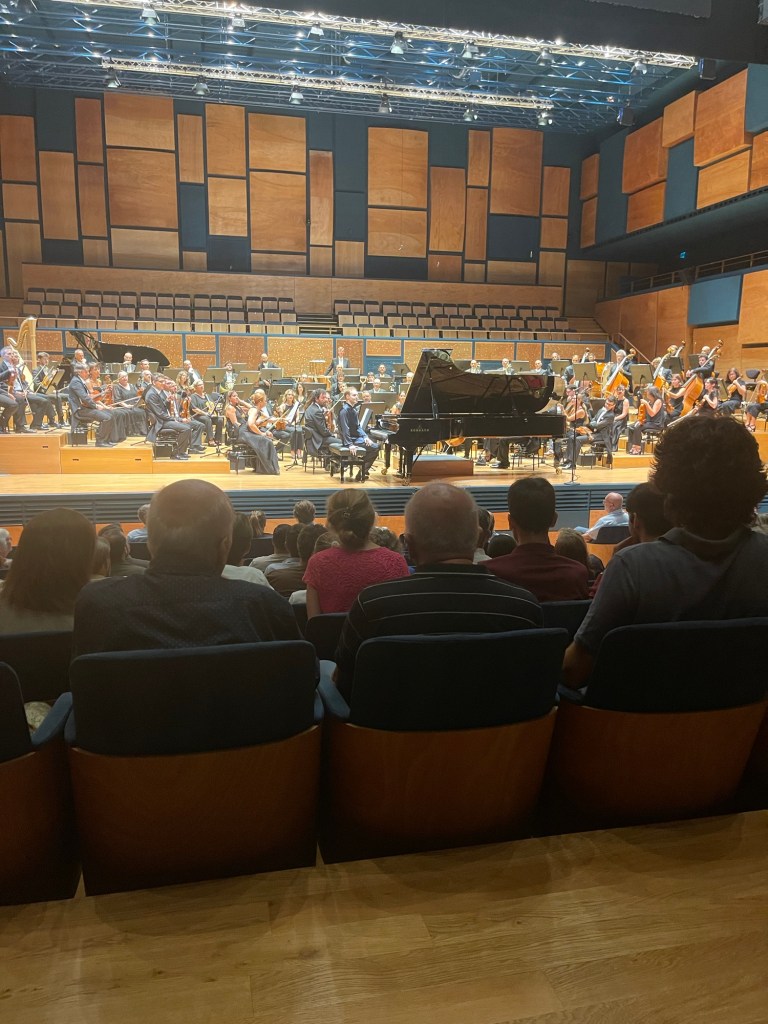
A triumph announced for Giovanni Bertolazzi but also for the longest piano in the world made by Borgato .

An orchestra that was drawn into intimate chamber music playing with Giovanni as they stretched Rachmaninov’s wondrous melodies with extraordinary elasticity .Thanks to the conductor Dmitry Matvienko following Giovanni’s every move and creating a sumptuous opening to the Adagio that created a scene of Philadelphian richness.
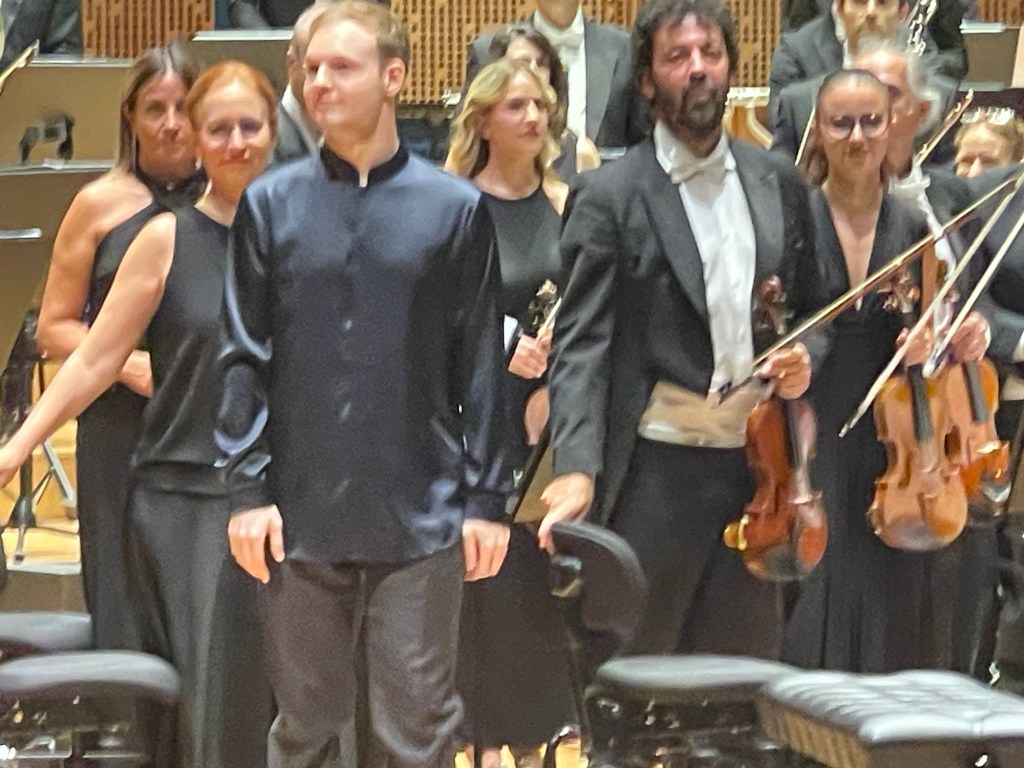
Giovanni from the very opening notes playing with simple artistry the beguiling melody that is to pervade the entire movement with ever more passion and dynamism .Buf it was above all the chamber music quality that Giovanni and Dmitry were seeking and they were lucky to have an orchestra listening to themselves with an unusually intimate give and take that I have only been aware of with Pappano and Rattle.
Giovanni ringing out the magnificent bass notes of his 3.33 meter instrument that stood so proudly before him with it’s five pedals all ready for expert drivers. Bass notes that he struck with relish at key points of burning passion .The lead into the cadenza I have never heard those isolated chords played with a poignant emptiness that struck terror rather than the usual casual hand over to the soloist and his showpiece cadenza.

Giovanni playing the theme in the cadenza with capricious breakneck glee but building up to a glorious triumphant declaration just dissolving into arabesques that the flute could float on in a duet of refined music making. If the treacherous woodwind chattering was not as precise as Giovanni it was with the brass and woodwind that he was later to dialogue together with consummate timeless beauty .In fact it was a performance of dynamic driven virtuosity alternating with oases of poetic beauty.The last movement played ‘alla breve’ indeed but when the glorious melody rang out there was all the time in the world to shape it with sumptuous ease and glowing purity.
Miraculously held together at the hollywoodian climax a concerto that struck fear even into Hoffman and Graffman was dispatched with dynamic brilliance
But it was the encore that showed the supreme artistry of Giovanni’s poetic playing and also allowed the piano to reveal secrets that until this ‘Valse Triste’ by Vecsey had lain hidden .Could it be Cziffra the magician or Giovanni the poet or both that could open up this great black limousine and show us the jewels hidden within .

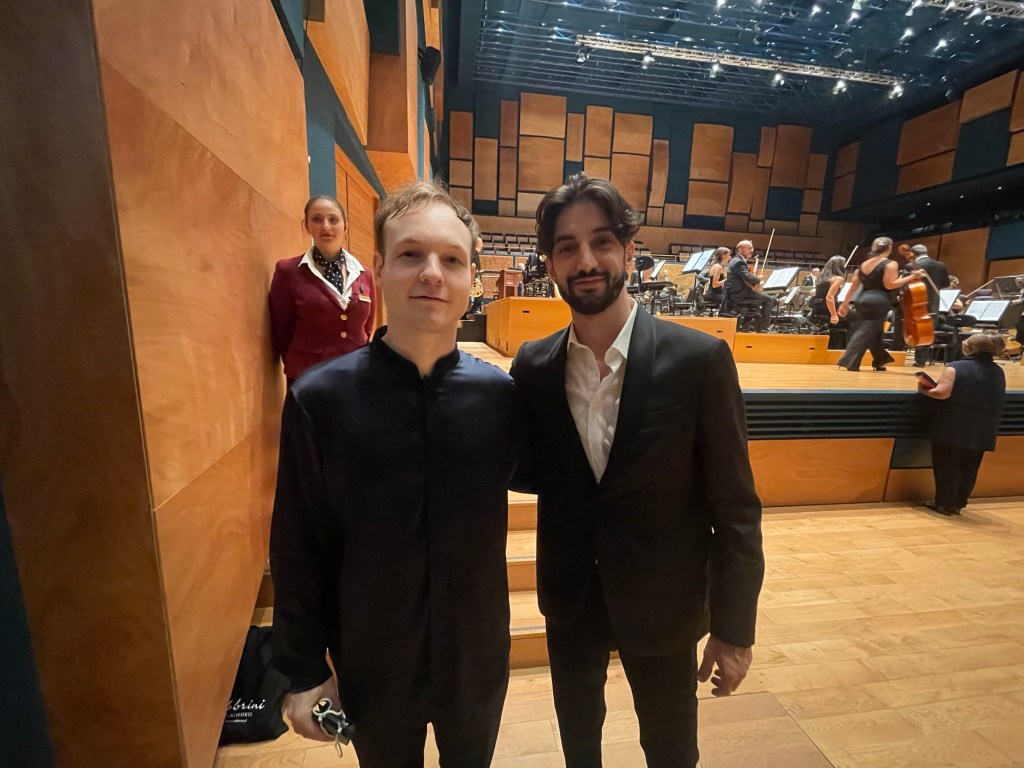
I had come to hear Giovanni’s first Rach 3 but was mesmerised too by Matvienko’s wonderfully theatrical conducting of Prokofiev’s Romeo and Juliet Suite .I have heard this orchestra many times but never as tonight with players listening to each other and a conductor who could illuminate their path with such authority and clarity.
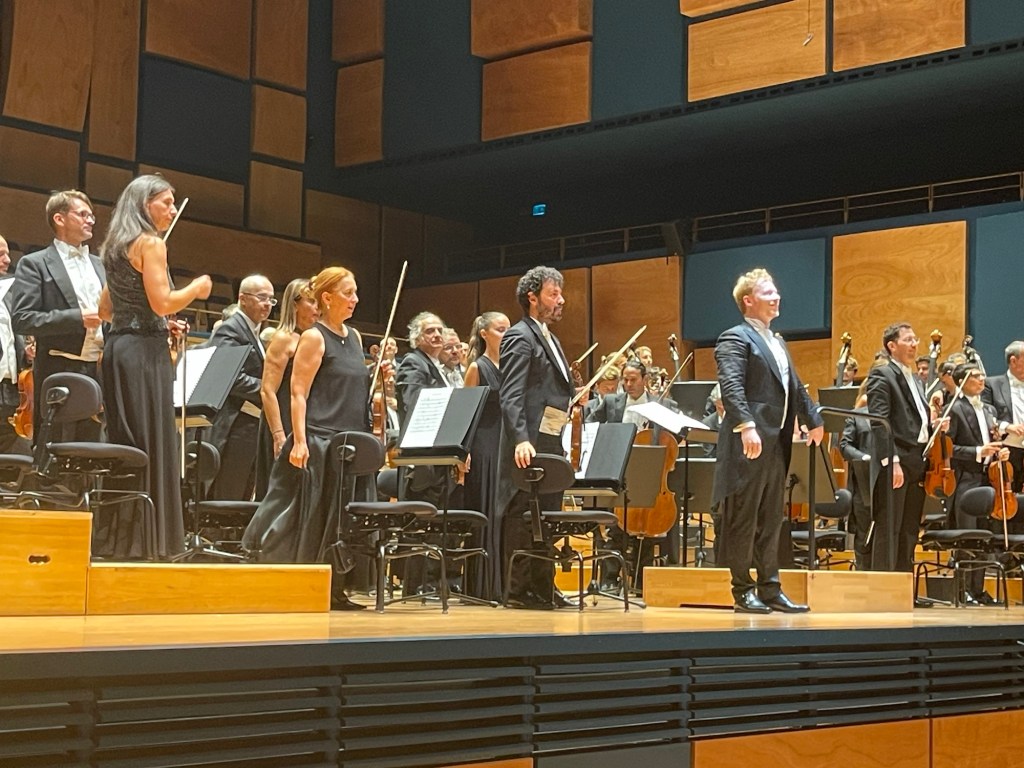
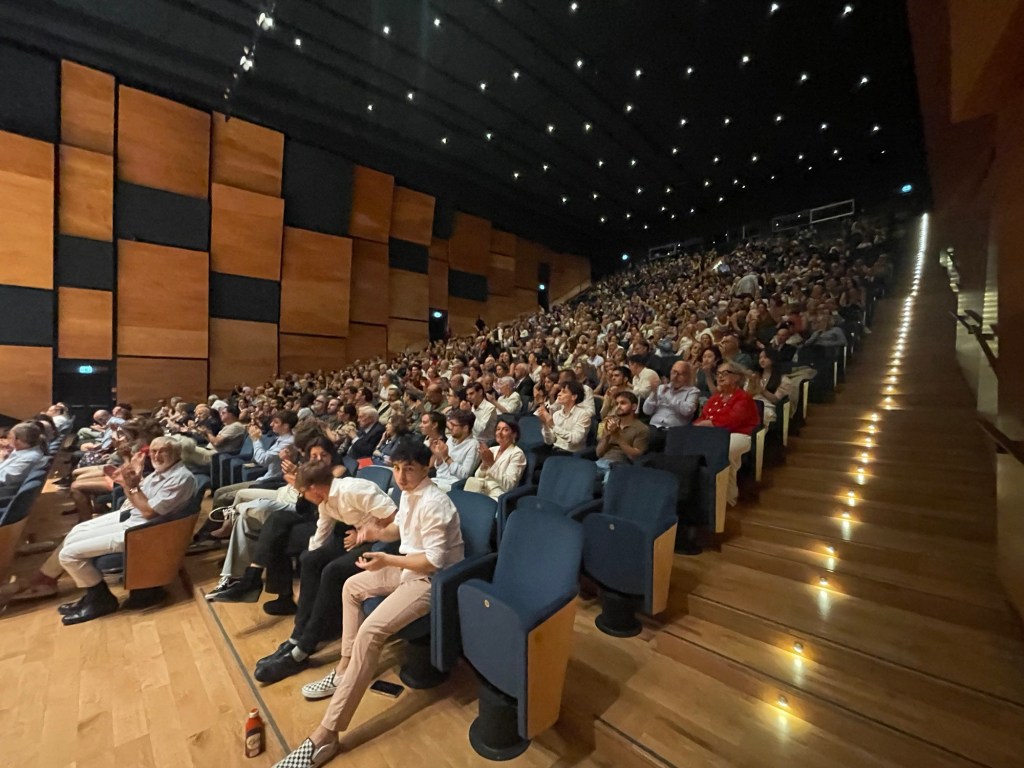
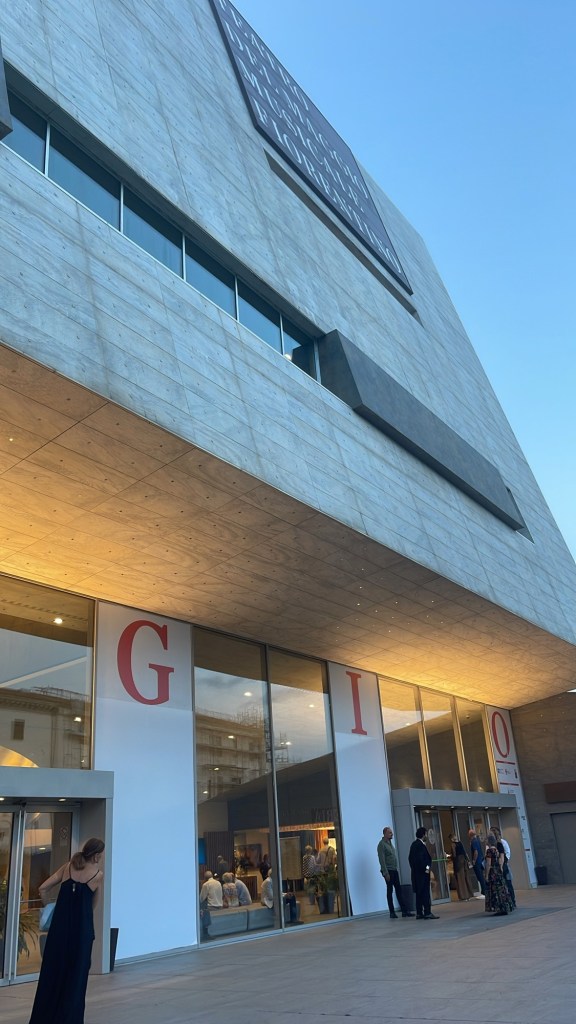
The opening concert of the season dedicated to two enormously talented young artists and a full house cheering them to the rafters in the hall named after one of the greatest conductors of our time -Zubin Mehta
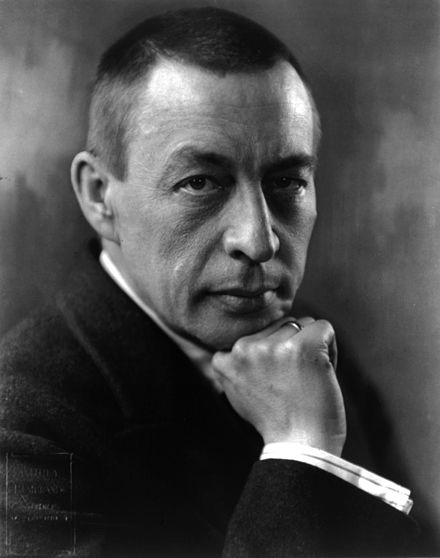
1 April 1873 Semyonovo, Russian Empire
28 March 1943 (aged 69) Beverly Hills California, U.S.
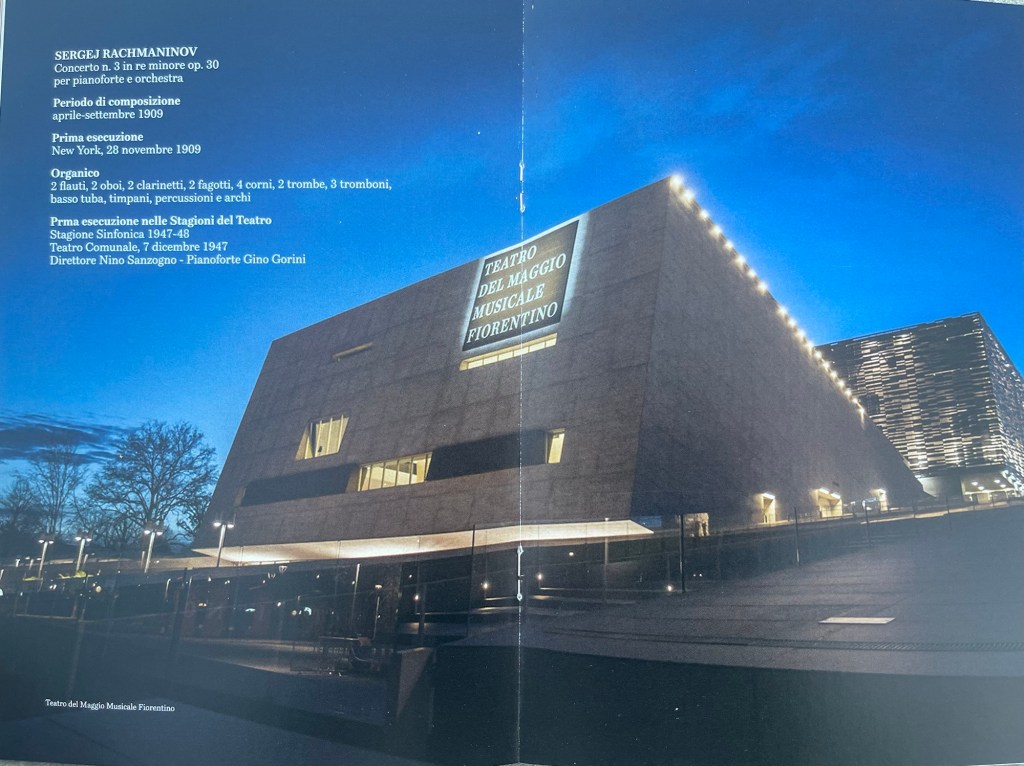
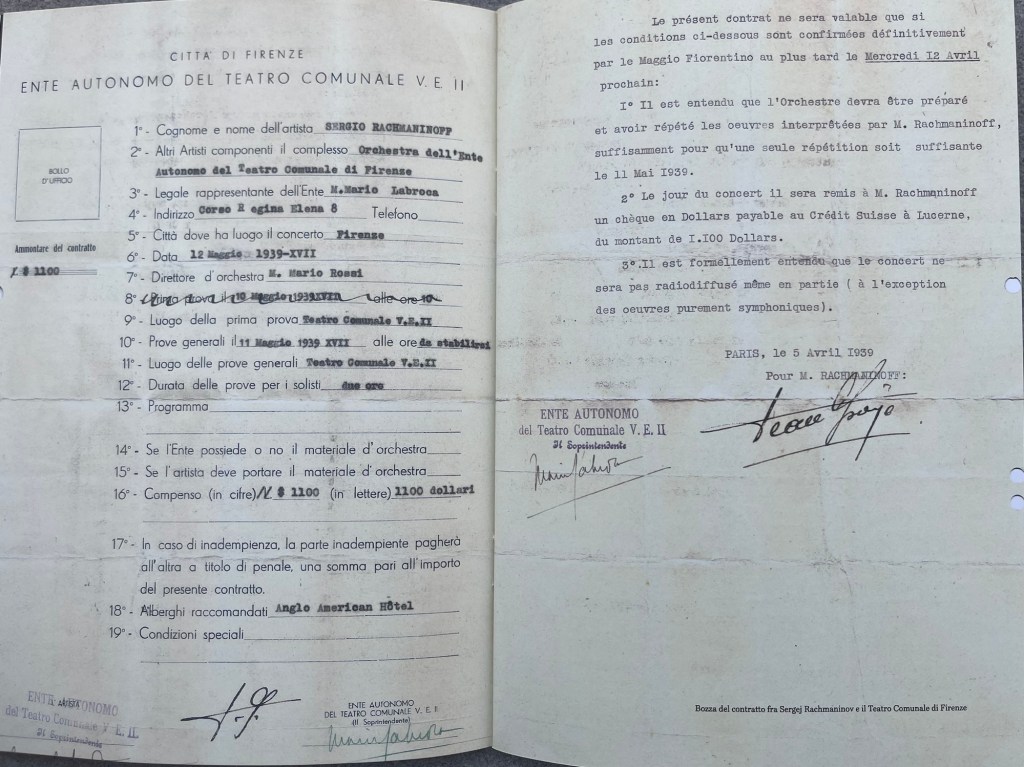
Rachmaninov’s Piano Concerto No. 3. in D minor op.30, was composed in the summer of 1909 and was premiered on November 28 of that year in New York City with the composer as soloist, accompanied by the New York Symphony Society under Walter Damrosch.Owing to its difficulty, the concerto is respected, even feared, by many pianists. Josef Hoffmann the pianist to whom the work is dedicated, never publicly performed it, saying that it “wasn’t for” him. Gary Graffman lamented he had not learned this concerto as a student, when he was “still too young to know fear”.
The work received a second performance under Gustav Mahler on January 16, 1910, an “experience Rachmaninoff treasured”.Rachmaninoff later described the rehearsal to Riesemann:
‘At that time Mahler was the only conductor whom I considered worthy to be classed with Nikisch. He devoted himself to the concerto until the accompaniment, which is rather complicated, had been practiced to perfection, although he had already gone through another long rehearsal. According to Mahler, every detail of the score was important – an attitude too rare amongst conductors. … Though the rehearsal was scheduled to end at 12:30, we played and played, far beyond this hour, and when Mahler announced that the first movement would be rehearsed again, I expected some protest or scene from the musicians, but I did not notice a single sign of annoyance. The orchestra played the first movement with a keen or perhaps even closer appreciation than the previous time.Vladimir Horowitz’s 1930 studio recording of the concerto brought immense popularity to the piece around the world. In 1927, Horowitz met with Rachmaninoff in New York, where he performed the piece for him. By receiving feedback from the composer, Horowitz’s interpretation of the concerto “most closely resembled Rachmaninoff’s performance in its finely chiseled, almost steely delivery.” Ruby Cheng writes, “With these expansions of musical expression and pianism, Horowitz brought the Third Concerto into a prominence that broke through any listener resistance.”Horowitz later said “Without false modesty, I brought this concerto to light. I brought it to life, and everywhere!”

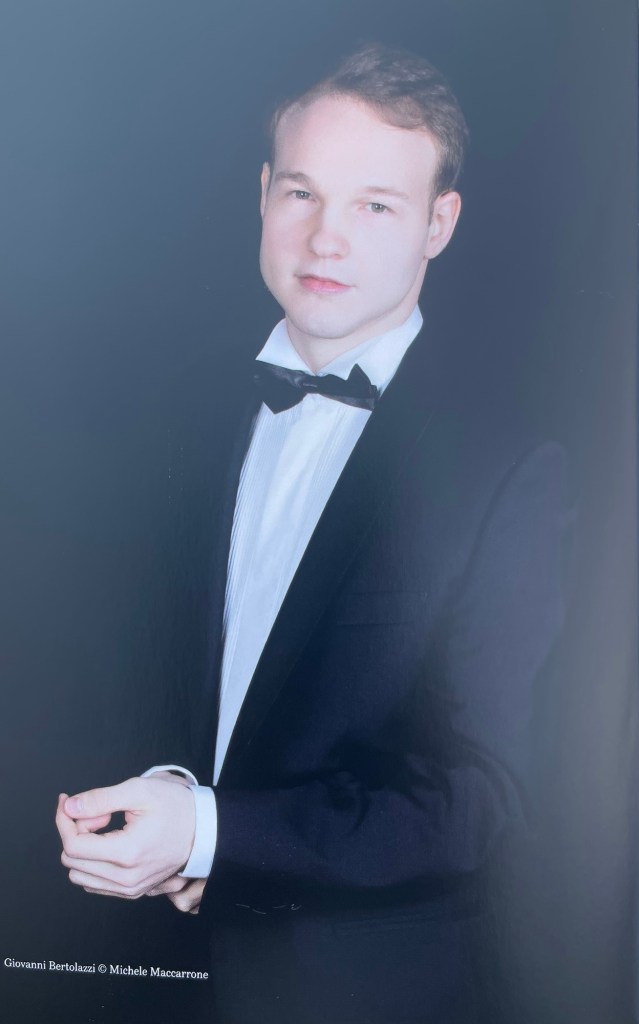
Giovanni Bertolazzi is the winner of the 2nd Prize and 5 special prizes at the “Franz Liszt” International Piano Competition in Budapest (2021).This important achievement came after more than 40 prizes in international piano competitions, including the “F. Busoni” in Bolzano, the “S. Thalberg” in Naples, the “Alkan Award for Piano Virtuosity” in Milan.He has been awarded the “Tabor Foundation Award” from Verbier Festival Academy during the Verbier Festival (2022).
Two young giants cross swords in Verbier Giovanni Bertolazzi and Nikita Lukinov
He received the International Piano Award “Guglielmina Durini Litta” in 2023. Highlights of his career include appearances with the Hungarian Philharmonic Orchestra, Kodaly Philharmonic Orchestra, Orchestra del Teatro La Fenice, Orchestra del Teatro Bellini and Orchestra Sinfonica Siciliana. Giovanni has performed at major venues including Teatro La Fenice in Venice, Teatro Ponchielli in Cremona, Teatro Politeama Garibaldi in Palermo, Sala Verdi in Milan Conservatory, Palazzo del Quirinale in Rome, “Franz Liszt” Academy of Music in Budapest, Liszt Ferenc Memorial Museum in Budapest, National Liberal Club in London, Église de Verbier, Castleton Theatre House (Virginia, USA).He has been a guest of prestigious musical organizations such as the Accademia Filarmonica of Verona, Amici della Musica of Padua, Bologna Festival, Società del Quartetto di Milano, Serate Musicali di Milano, Amici della Musica of Florence, Verbier Festival, Zoltan Kocsis Festival in Debrecen, Cziffra Festival in Budapest, Castleton Festival in Virginia (USA).He officially performed on the World longest Concert-Grand Piano at his first public presentation, the BORGATO GRAND-PRIX 333 (3,33 metres long).He has recorded two Albums entirely dedicated to Franz Liszt, published by BORGATO COLLECTION. The CDs have been recorded on a piano BORGATO GRAND-PRIX 333 and have received awards such as the “Supersonic Pizzicato Award” (PIZZICATO Magazine, Luxembourg), 5 Stars from Rivista MUSICA (Italy), Nominations at “International Classical Music Awards” (ICMA).His concerts and recordings has been featured by Radio France Musique, Bartók Rádió, Rai Radio3, Radio Romania Muzical.
Giovanni Bertolazzi -Homage to Zoltan Kocsis A giant returns to celebrate a genius
Giovanni Bertolazzi triumphs on the Keyboard Trust tour of USA October 2023 Virginia-Washington-Philadelphia- Delaware – New York
Giovanni Bertolazzi Liberal Club ‘En Blanc et Noir’ 5th June 2023 ‘A star is born!’
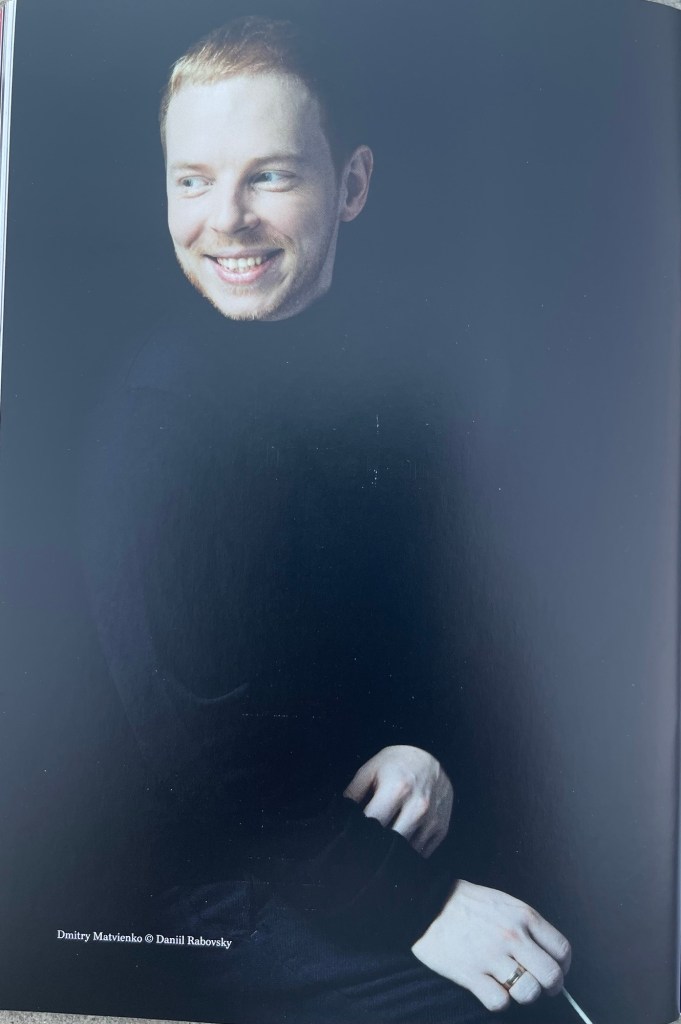
Dmitry Matvienko won the 2021 edition of the prestigious «Malko Competition for Young Conductors» where he received both First and Audience prizes. Prior to this achievement, he was awarded with the Critics and the «Made in Italy» prizes at the International Conducting Competition «Guido Cantelli».The 24/25 season marks the beginning of his tenure as Chief Conductor of the Aarhus Symphony Orchestra.
He received his first music lessons at the age of six, followed by formal training as a chorister and chorus master. He studied choral conducting at the St. Petersburg Conservatory and he was a member of the MusicAeterna Choir at the Perm Opera and Ballet Theatre under the artistic direction of Teodor Currentzis from 2012 to 2013. He furthered his conducting studies at the Moscow Conservatory and participated in master classes with Gennady Rozhdestvensky, Vladimir Jurowski, Teodor Currentzis, and Vasily Petrenko.In 2017, he joined the conductor internship program of the National Philharmonic Orchestra of Russia, led by chief conductor Vladimir Spivakov. Dmitry assisted and prepared various programs for conductors such as Vladimir Jurowski, Vasily Petrenko, and Michail Jurowski with Svetlanov Symphony Orchestra.While conducting for the Svetlanov Symphony, the National Philharmonic of Russia, the New Russian State Symphony Orchestra (chief conductor Yuri Bashmet), and the Moscow Chamber Orchestra “Musica Viva”, Dmitry led revivals of operas including Prince Igor, Faust, Iolanta, La Traviata, The Tsar’s Bride, The Firebird, and Verdi’s Requiem at the National Academic Opera and Ballet Theatre of Belarus.He also served as musical assistant to Vladimir Jurowski in new productions of The Nose (directed by Kirill Serebrennikov) and War and Peace (directed by Dimitri Tcherniakov) at the Bayerische Staatsoper.In recent seasons, Dmitry has conducted prestigious orchestras, including the Orchestra del Teatro Carlo Felice Genova, Orchestre Philarmonique de Monte-Carlo, Orchestra Teatro Comunale Bologna, Orchestra Teatro Regio Torino, National Orchestra of Russia, Bergen Philharmonic, Adelaide Symphony Orchestra, Sønderjyllands Symfoniorkester, Danish National Symphony Orchestra, Helsingborgs Symfoniorkester, the Orquesta de la Comunidad de Madrid, Orchestra del Teatro La Fenice of Venice, Aarhus Symfoniorkester, Iceland Symphony Orchestra, Orchestra del Teatro Lirico di Cagliari, Orchestre national de Lille, Arktisk Filharmoni, Dallas Symphony, Orchestra Sinfonica Nazionale RAI Torino, Orquestra Gulbenkian, Tonkünstler Wien, Atlanta Symphony, Orchestra del Teatro San Carlo di Napoli and Tokyo Symphony.In the 24/25 season he returns on the podium of Adelaide Symphony, Arctic Philharmonic, Aarhus Symfoniorkester, Helsingborgs Symfoniorkester, while also making his debut with West Australian Symphony Orchestra, Göteborgs Symfoniker, Orchestra del Maggio Musicale Fiorentino, Filarmonica Arturo Toscanini, Rotterdams Philharmonisch Orkest, L’Orchestre de Chambre de Lausanne and Oslo Philharmonic.After a successful operatic debut in Rome, where he conducted the Italian premiere of Warlikowski’s production of From the house of the Dead, he is set to make his German and Austrian operatic debut this season. He will lead Eugene Onegin at the Deutsche Oper am Rhein and a new production of Betrothal in a Monastery at the Theater an der Wien.

Very happy to share this review of my recordings by the authoritative music critic 𝐁𝐫𝐲𝐜𝐞 𝐌𝐨𝐫𝐫𝐢𝐬𝐨𝐧, published in “The Art of Pianists” !!! 💿🇬🇧
“𝑩𝒆𝒓𝒕𝒐𝒍𝒂𝒛𝒛𝒊, 𝒕𝒉𝒐𝒖𝒈𝒉 𝒊𝒏 𝒕𝒉𝒆 𝒆𝒂𝒓𝒍𝒚 𝒔𝒕𝒂𝒈𝒆𝒔 𝒐𝒇 𝒉𝒊𝒔 𝒄𝒂𝒓𝒆𝒆𝒓, 𝒊𝒔 𝒂 𝒄𝒍𝒆𝒂𝒓 𝒑𝒐𝒔𝒔𝒆𝒔𝒔𝒐𝒓 𝒐𝒇 𝒕𝒂𝒍𝒆𝒏𝒕, 𝒔𝒐𝒎𝒆𝒕𝒉𝒊𝒏𝒈 𝒕𝒉𝒂𝒕 𝒃𝒍𝒂𝒛𝒆𝒔 𝒐𝒖𝒕 𝒘𝒊𝒕𝒉 𝒂 𝒄𝒐𝒎𝒎𝒖𝒏𝒊𝒄𝒂𝒕𝒊𝒗𝒆 𝒇𝒐𝒓𝒄𝒆 (𝒕𝒉𝒐𝒖𝒈𝒉 𝒂𝒍𝒔𝒐 𝒘𝒊𝒕𝒉 𝒑𝒐𝒆𝒕𝒊𝒄 𝒅𝒆𝒍𝒊𝒄𝒂𝒄𝒚) 𝒕𝒉𝒂𝒕 𝒓𝒊𝒗𝒆𝒕𝒔 𝒚𝒐𝒖𝒓 𝒂𝒕𝒕𝒆𝒏𝒕𝒊𝒐𝒏.”
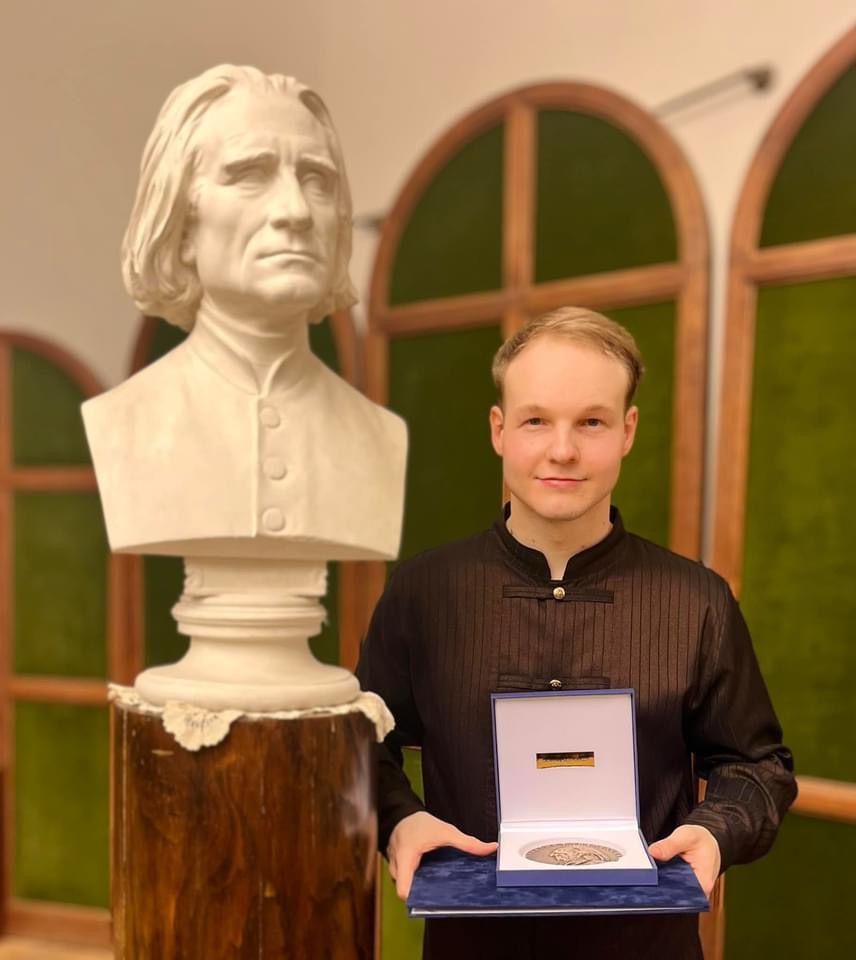
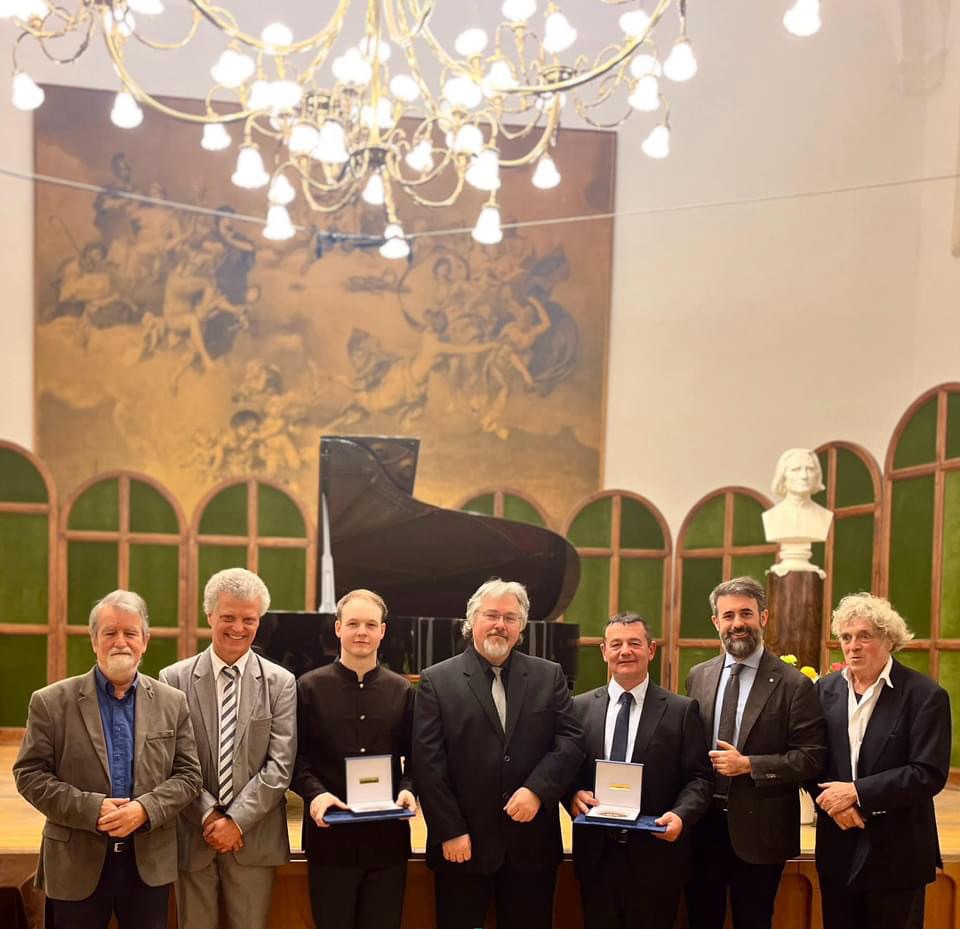
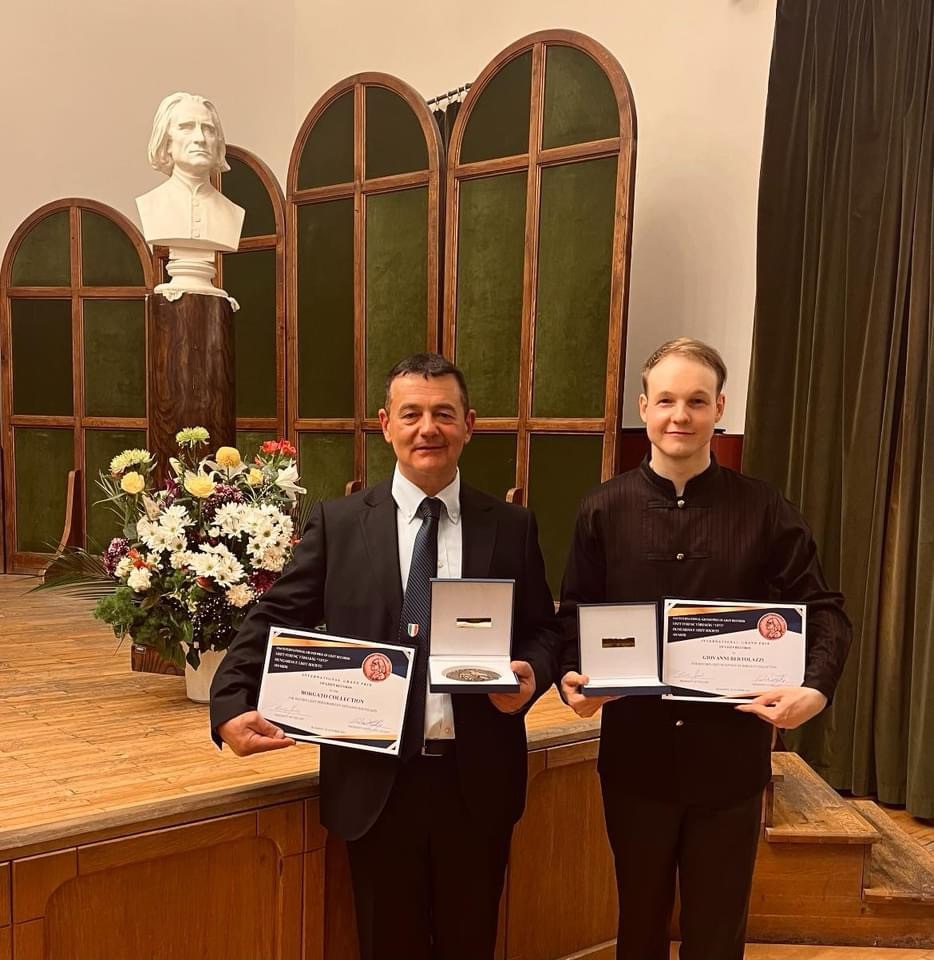
I have the great pleasure to share with you that I have been awarded the 𝟒𝟑𝐫𝐝 “𝐋𝐈𝐒𝐙𝐓 𝐅𝐄𝐑𝐄𝐍𝐂 𝐈𝐧𝐭𝐞𝐫𝐧𝐚𝐭𝐢𝐨𝐧𝐚𝐥 𝐆𝐫𝐚𝐧𝐝 𝐏𝐫𝐢𝐱 𝐝𝐮 𝐃𝐢𝐬𝐪𝐮𝐞” by the Liszt Society Budapest, for my Liszt recordings! 🇭🇺🏅
I am immensely honoured and moved to receive this prestigious award that in the past has been given to such great artists as Karajan, Muti, Solti, Bernstein, Brendel, Horowitz, Arrau, Zimerman, Berman, Cziffra, Kocsis, Pollini, Watts, Bolet, Howard… 🙏🏻
Borgato pianos

 ChristopherAxworthy-MusicCommentary
Una risposta a "Matvienko -Bertolazzi – Borgato in Florence and the season opens with a triumph"