
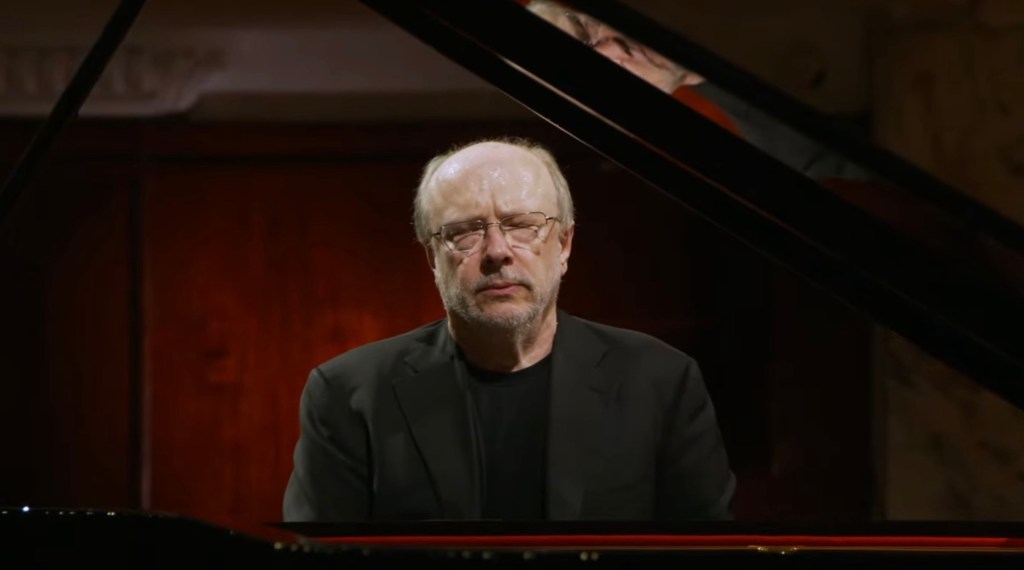


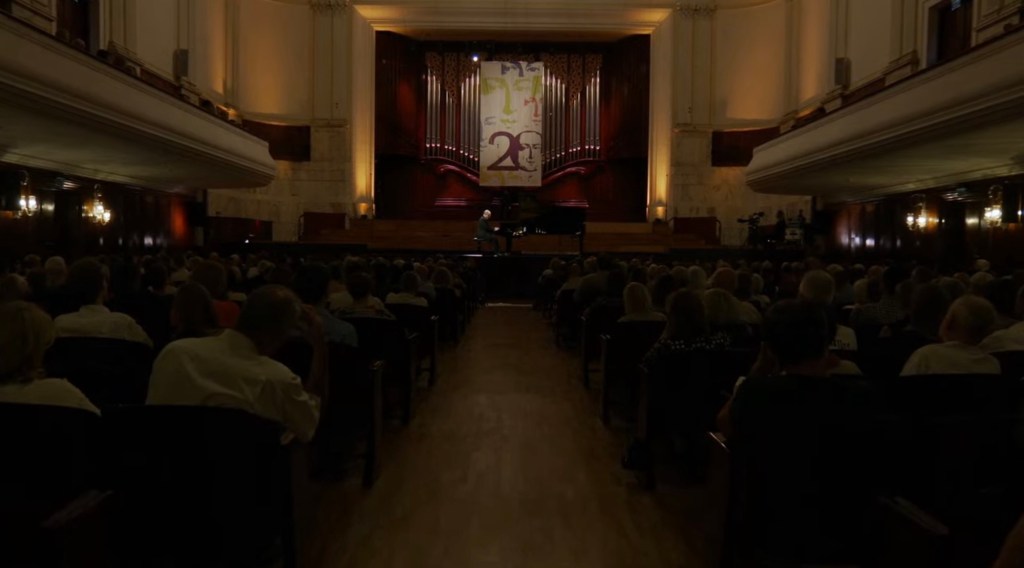
I have long admired Hamelin as one of the most phenomenally fearless pianists who can play seemingly with such ease works which we have only read about in history books. A technical mastery that has no boundaries with playing of a clarity and mastery that are quite unique. In fact he is one of the leaders of a great Canadian School of piano playing where Glenn Gould is followed by Louis Lortie,Janina Fialkowska,Angela Hewitt,Jon Kimura Parker and more recently Bruce Liu and Kevin Chen to name just a few. I had not heard Hamelin for quite some time until today and the last time I heard him in London was with the Kachaturian Piano Concerto. I remember after a momentous performance of the concerto he offered an encore of the innocuous minute waltz.But this was no ordinary Chopin waltz as this had been transcribed by Hamelin himself and it was the most phenomenal feat of piano playing that I can remember hearing live in the concert hall.I remember too in London a Norma Fantasy that was truly remarkable but like the Kachaturian seemed to lack the sumptuous warmth and grandeur that this music commands.Today ,though,I heard a different pianist as there was still the clarity and phenomenal technical command but there was a range of sounds and subtle inflections and an overall architectural authority that were truly of a great artist.

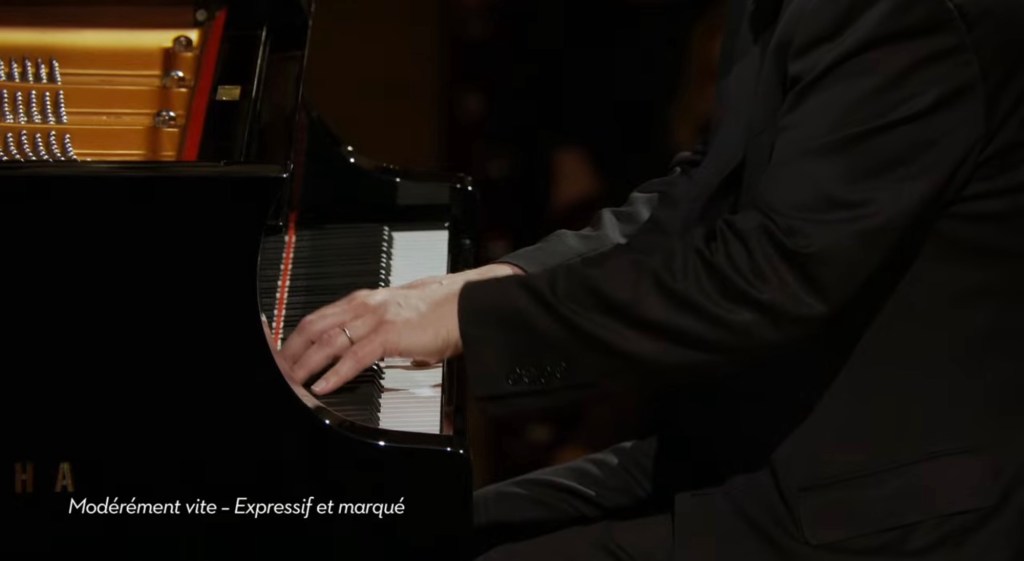
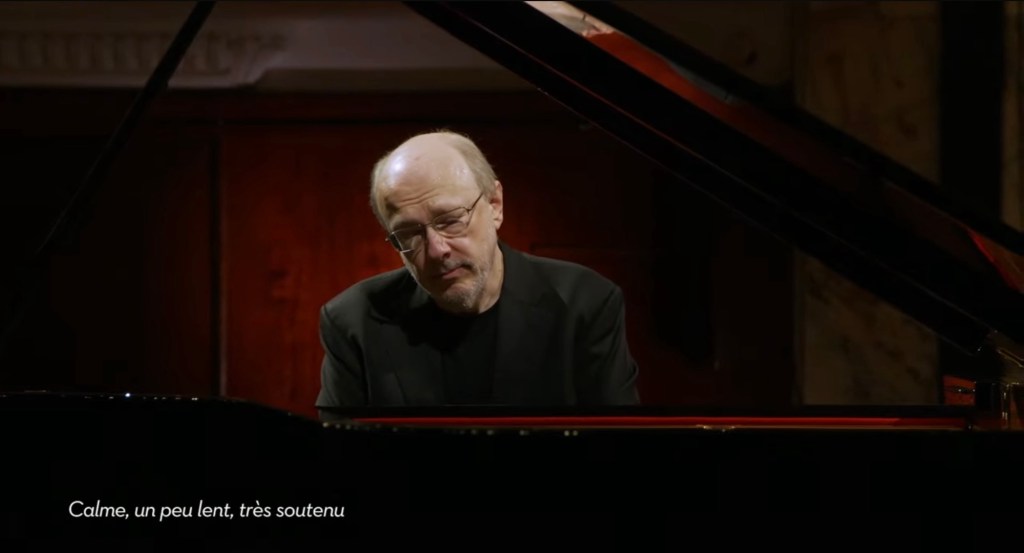
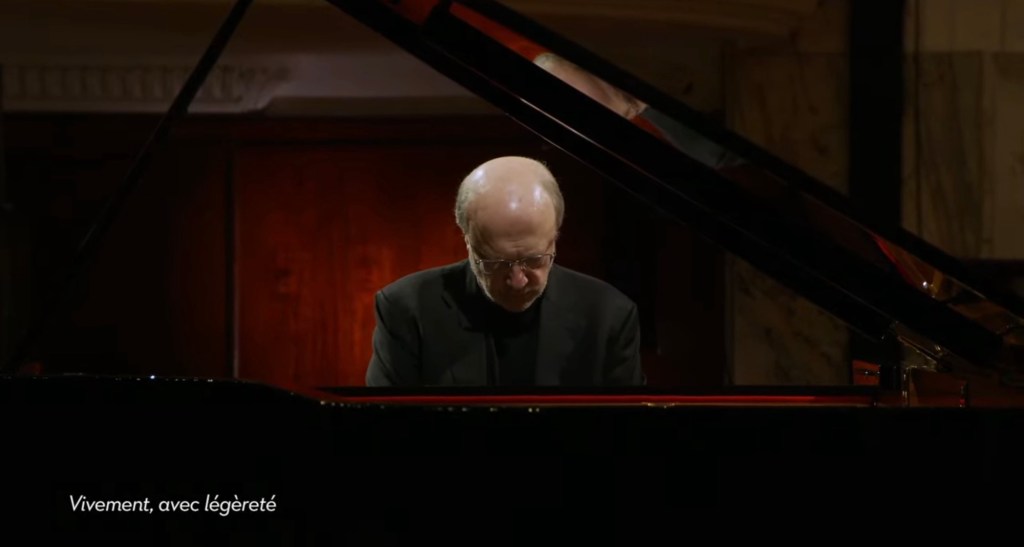
This was the first time I have heard the Dukas Sonata although I had known of its existence as being one of the longest and most complex of works that has never found it’s way into the standard pianistic repertoire.I was astounded ,listening mesmerised to a work of such coherence and subtlety allied to a unique technical brilliance.A kaleidoscope of sounds from the opening rhapsodic deep lament that like Rachmaninov’s first Sonata needs a great musician to show us the architectural line through such muddy waters. Hamelin although hardly seeming to move a muscle, his facial expressions showed with what anguish he was listening to every sound that his fingers could conjure out of this magic box.The second movement was played with a simplicity of etched sounds of glowing purity.The third movement was a breathtaking toccata played with scintillating brilliance and clarity but with a central episode of quasi religious piety that contrasted so well with all that surrounded it.The last movement was truly monumental and played with searing intensity where the last note like the Liszt B minor Sonata just drew a close to such noble sentiments.A quite extraordinary performance from a quite extraordinary artist where his concentration was such that every note had a place in a Gothic Cathedral of noble proportions. And let us not forget what courage to programme a virtually unknown masterpiece as the entire first half of such an important recital.This is an artist of rare Busonian integrity who risks all to share his total commitment to his musical discoveries with his audience.
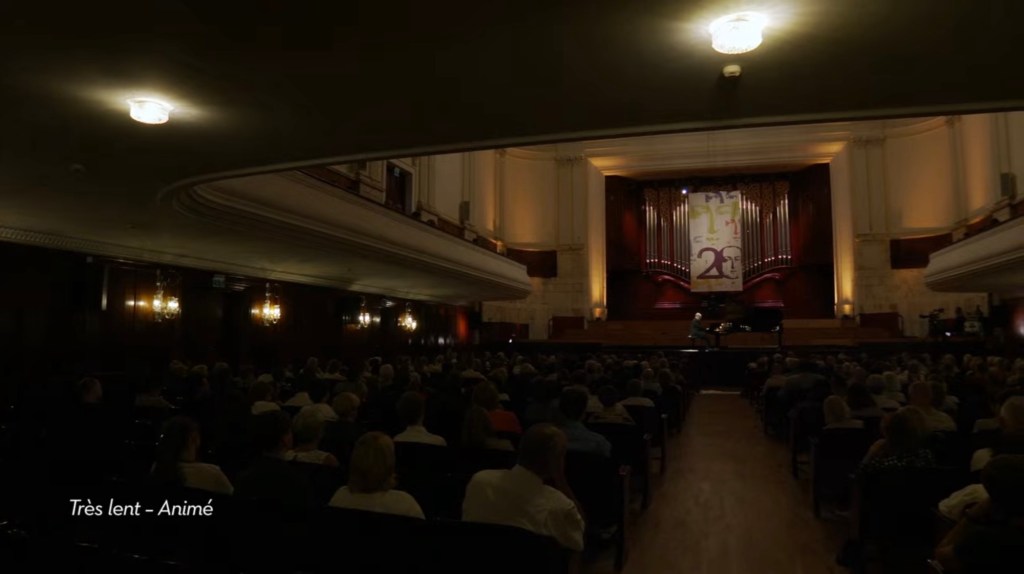

After the interval Schumann’s beautiful Waldszenen found an interpreter who could make every note speak .There were subtle inflections and rubato more of a singer than an instrumentalist.An intensity and deeply felt as Marc André created nine miniature tone poems of sumptuous colour and beauty.
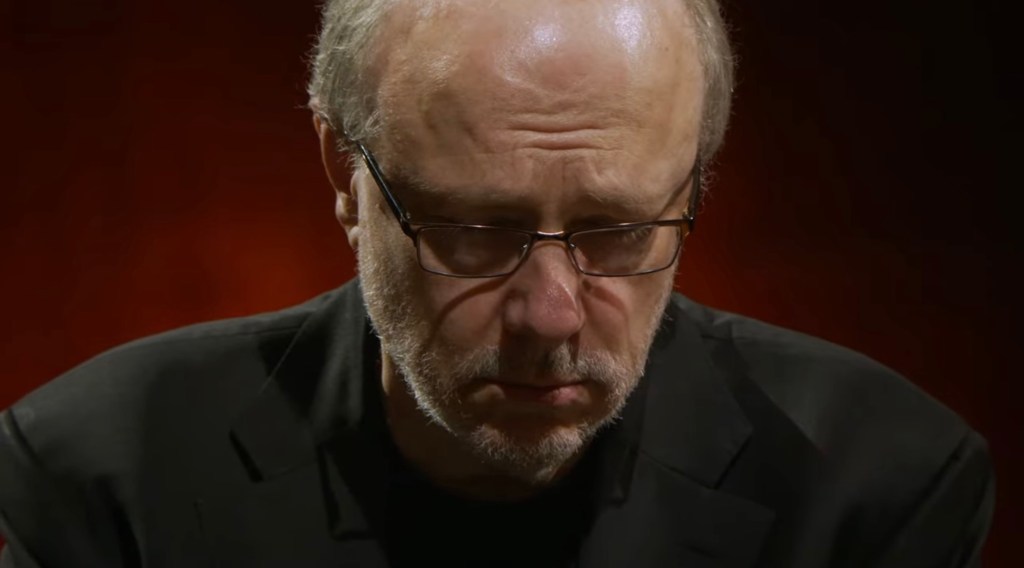
From the simplicity and improvised freedom of the ‘Entry’ leading to the inimitable characterisation of the ‘Hunter’. Glowing cantabile of ‘lonely flowers ‘ played with a beguiling rubato and teasing insinuation.His playing sent shivers down the spine in the ‘Haunted Place’ with an amazing sense of colour and touch creating an atmosphere that was simply eliminated with a flick of the fingers.A beautiful fluidity filled a ‘friendly landscape’ with welcoming warmth as the ‘Wayside Inn’ appeared in a hymn of nobility and subtle grace and what fun Marc- André had catching us all out at the end! A ‘prophet bird’ of such lethargic nostalgia as it flitted from branch to branch and a ‘Hunting Song’ of rhythmic energy and sumptuous full sounds.It was,though,the languid beauty of the ‘farewell’ that will remain in my memory for long to come with its full sumptuous bass that just opened up the ravishing sounds hidden inside the piano that were played with exquisite tenderness and nostalgia.

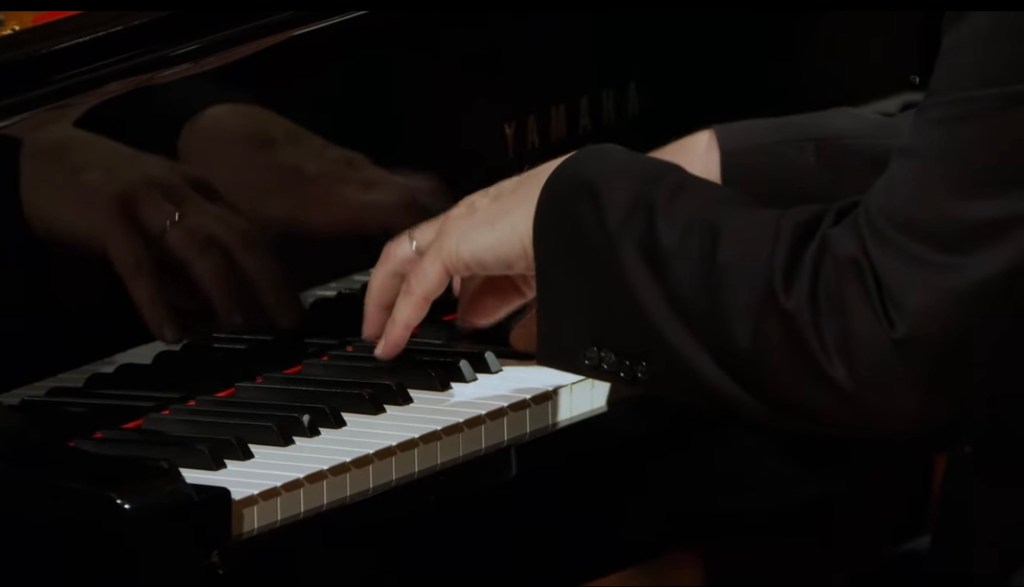
The sounds that Marc- André conjured out of this Yamaha piano in Ravel I have never heard before .There was a palette of sounds that were truly remarkable where Marc- André was commanding each finger to play each key with just the right weight and colour hardly ever lifting his hands off the key.His fingers were like limpets sucking the very sounds out of each note .This was a horizontal approach to the keys hardly ever hitting them vertically but always being able to weigh up the sounds before producing them.This can seem from outside a very cerebral approach but the intensity and meaning that Marc -André exerts does not need any extrovert showmanship or party pleasing tricks of the trade.Listening today especially to ‘Gaspard de la Nuit’ I was aware that a seemingly infallible artist such as Hamelin has matured and acquired a soul and depth allied of course to his always impeccable musicianship.

There was a languid beauty to ‘Ondine’ with a sumptuous sense of balance that allowed us to enjoy the splashing waters without ever getting any water in our eyes!.It was played with an ease and fluidity and a chameleonic sense of colour with a beautifully placed cadence of jewel like sounds that were just hinted at as ‘Ondine’ rested before dashing off again.An accent too with such sinister overtones on the G sharp when Ondine is all alone before flitting off on a wave of sounds .
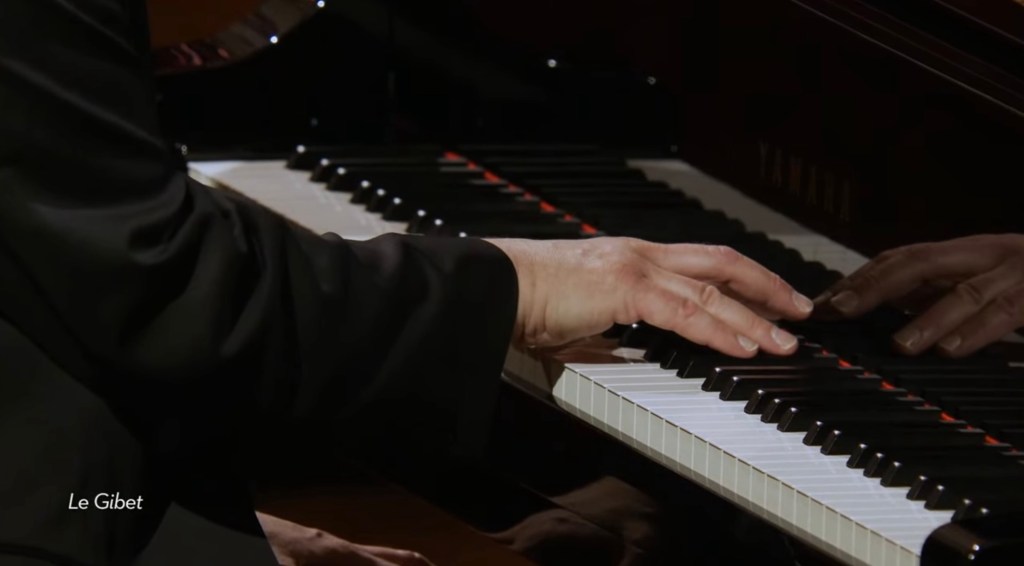
‘Le Gibet’ played ‘Très lent’ was in fact much slower than I have ever heard it before but with wondrous sounds where the tolling B flat was ever present. Ravel marks the score ‘ un peu en dehors ,mais sans expression ‘. and which Marc – André played with a glowing purity of poignant desolation.In fact a movement that can so often seem like a rest between two showpieces became today a work of such searing beauty and the true pinnacle of Ravel’s genius even if he was trying to out do Liszt and Balakirev for pure virtuosity!
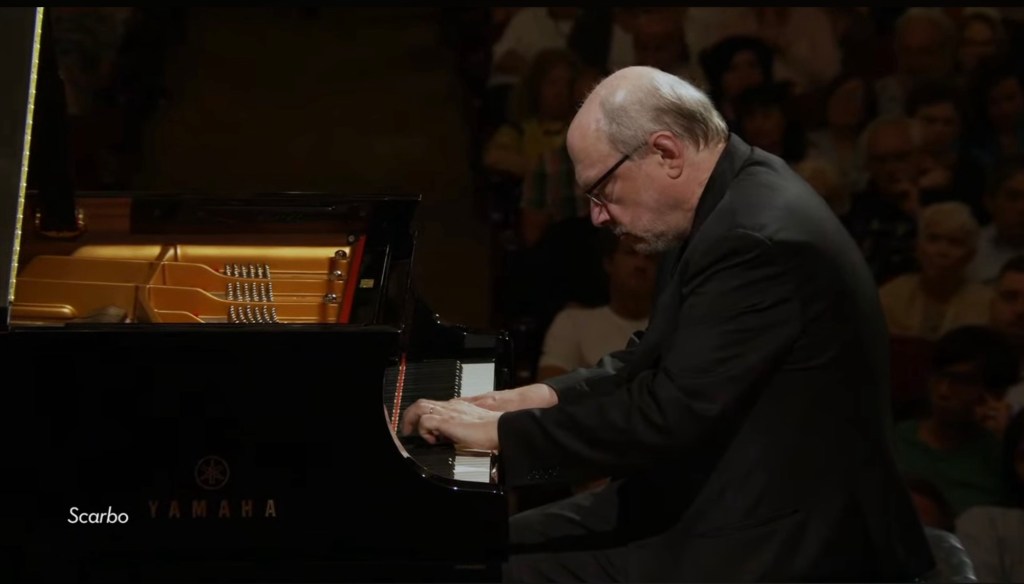
It was very interesting to hear Marc-André play the last of the opening three notes very short in ‘Scarbo’ and it immediately gave sinister overtones to all that was to follow.There were of course breathtaking exhilarating bursts of dynamism that were played with driving rhythmic energy and clarity .Climaxes of Lisztian proportions were bathed in pedal and grandeur but always with a wonderful sense of orchestral colour.This was truly a masterly performance created with such originality and searing intensity.
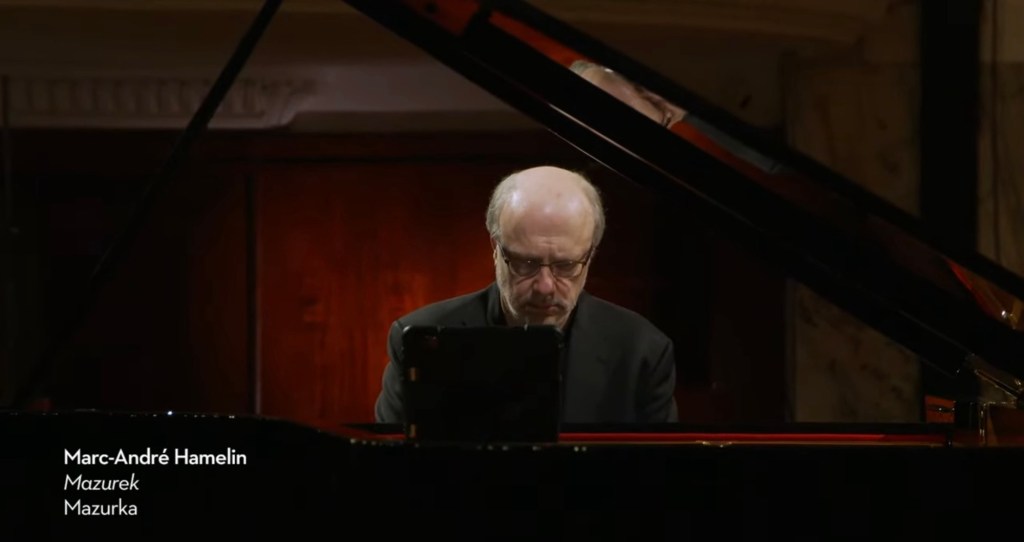
A standing ovation even if Marc-André had excluded Chopin from his programme.But he did include a Mazurka of his own and dedicated it to an American friend of Polish extraction who had passed away this year. A work lasting about five minutes of ravishing colours and subtle rhythms.
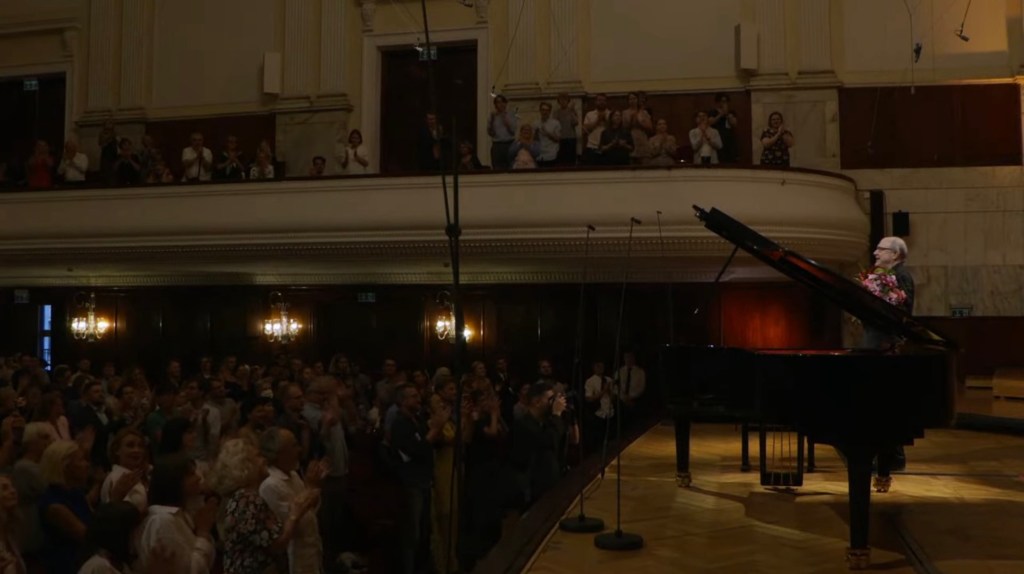
One more encore from an audience on their feet again treated to a virtuoso showpiece by Prokofiev which brought this remarkable recital to a dynamic end.
Piano Sonata in E-flat minor was composed by Paul Dukas between 1899 and 1900, and published in 1901.
- Modérément vif (expressif et marqué)
- Calme – un peu lent – très soutenu
- Vivement – avec légèreté
- Très lent
‘The Sonata is classical in structure and in four movements, connected more by mutual formal perfection and nobility of thought than by cyclic procedures. The first movement … is built on two sharply contrasted themes, developed according to the sonata-form. The Andante is in the direct line of the great slow movements of Beethoven, and a supreme example of the grandeur attainable by modern technique working in this inspired form. The agitated Scherzo, with its unexpected fugal conclusion, is followed by the heroic Finale, comparable in breadth and majesty to the Stairway of Honour of the Palace of Versailles . By the vastness of its proportions, the quality of its writing, the power of its developments, and by its luminous lyricism, the Sonata in E flat minor is unrivalled by any other composition of this type. It transcends the piano, the factor that has retarded comprehension of it being its own magnitude.
In the first decade of the 20th century, following the immense success of his orchestral work The Sorcerer’s Apprentice Dukas completed two complex and technically demanding large-scale works for solo piano: the Piano Sonata, dedicated to Saint -Saens , and Variations,Interlude and Finale on a Theme by Rameau (1902). In Dukas’s piano works critics have discerned the influence of Beethoven, or, “Beethoven as he was interpreted to the French mind by César Franck”.Both works were premiered by Edouard Risler a celebrated pianist of the era.
In an analysis in 1928 by the critic Irving Schwerké wrote:
Born in 1865, Dukas could have (and probably did) compose a good deal literally and stylistically in the 19th century, but his fastidious craftsmanship and self-criticism saw him burn far more music than he allowed to survive. All of a sudden, on the turn of the new century, he wrote two large-scale works which bring together a reverence for the recent and long-gone past with bold new thinking of how to write for the piano. Begun in 1899, the Variations take an innocent dance theme by Rameau and subject it to a dazzling sequence of treatments coloured by strict counterpoint, dreamy rhapsody and a Lisztian scale of piano writing.
Even more ambitious and contrapuntal in its workings is the 40-minute Piano Sonata which has long been regarded as a summit of fin-de-siècle piano writing. The Sonata has often been compared to Beethoven’s Hammerklavier Sonata for its colossal dimensions, its structural complexities and its tightrope virtuoso writing. Dukas himself later discussed its journey in terms of a symbolic victory over ‘the beast within’, and ‘the triumph of Apollo over the Pythian serpent’.

Paul Abraham Dukas 1 October 1865 – 17 May 1935 Paris
Paul Dukas (1865-1935) was born in Paris, France. He was a student at the Paris Conservatory where he studied piano, harmony, and composition. He won the Prix de Rome for a counterpoint and fugue in 1886 and again in 1888 with the cantata, Velleda. He was the music critic for the Revue Hebdomadaire and Gazette des Beaux-Arts and at the same time, he was a professor of orchestration at the Conservatoire. His strong critical sense led him to destroy a number of his compositions and only allow a relatively small number of works to be published. He remained influential and respected as a teacher.
– Dukas’ output for the piano includes just five works: the Piano Sonata and the Variations, each of them a homage to a past master, to Beethoven and (more explicitly) to Rameau. The Sonata can be considered as a sort of French Hammerklavier Sonata, for its colossal dimensions, its structural and harmonic complexities and its virtuoso writing. It is a masterwork of immense scope, one of the greatest French piano sonatas ever written.

Waldszenen (Forest Scenes), Op.82, is a set of nine short solo piano pieces composed by Robert Schumann in 1848–1849, first published in 1850–1851 in Leipzig .
On the set, Schumann wrote: “The titles for pieces of music, since they again have come into favor in our day, have been censured here and there, and it has been said that ‘good music needs no sign-post.’ Certainly not, but neither does a title rob it of its value; and the composer, by adding one, at least prevents a complete misunderstanding of the character of his music. What is important is that such a verbal heading should be significant and apt. It may be considered the test of the general level of the composer’s education”

Eintritt (Entry)
Nicht zu schnell – Not too fast
Jäger auf der Lauer (Hunters on the Lookout)
Höchst lebhaft – Very lively
Einsame Blumen (Lonely Flowers)
Einfach – Simple
Verrufene Stelle (Haunted Place)
Ziemlich langsam – Pretty slow3:07D
Freudlich Landschaft (Friendly Landscape)
Schnell – Fast major
Herberge (Wayside Inn)
Mäßig – Moderate
Vogel als Prophet (Bird as Prophet)
Langsam. Sehr zart – Slowly. Very tender
Jagdlied (Hunting Song)
Rasch, kräftig – Fast, strong
Abschied (Farewell)
Nicht schnell – Not fast
Gaspard de la nuit (subtitled Trois poèmes pour piano d’après Aloysius Bertrand),by Maurice Ravel , written in 1908. It has three movements, each based on a poem or fantaisie from the collection Gaspard de la Nuit – Fantaises à la manière de Rembrandt et de Callot completed in 1836 by Aloysius Bertrand. It was premiered in Paris, on January 9, 1909, by Ricardo Vines and dedicated to Harold Bauer .
Famous for its difficulty, partly because Ravel intended the Scarbo movement to be more difficult than Balakirev’s Islamey . Because of its technical challenges and profound musical structure, Scarbo is considered one of the most difficult solo piano pieces in the standard repertoire.Ravel himself said: “Gaspard has been a devil in coming, but that is only logical since it was he who is the author of the poems. My ambition is to say with notes what a poet expresses with words.”
Ondine is a tale of the water nymph singing to seduce the observer into visiting her kingdom deep at the bottom of a lake.
Le Gibet presents the observer with a view of the desert, where the lone corpse of a hanged man on a gibbet stands out against the horizon, reddened by the setting sun. Meanwhile, a bell tolls from inside the walls of a far-off city, creating the deathly atmosphere that surrounds the observer.
Scarbo depicts the nighttime mischief of a small fiend or goblin making pirouettes,flitting in and out of the darkness, disappearing and suddenly reappearing. Its uneven flight, hitting and scratching against the walls and bed curtains, casting a growing shadow in the moonlight creates a nightmarish scene for the observer lying in his bed.
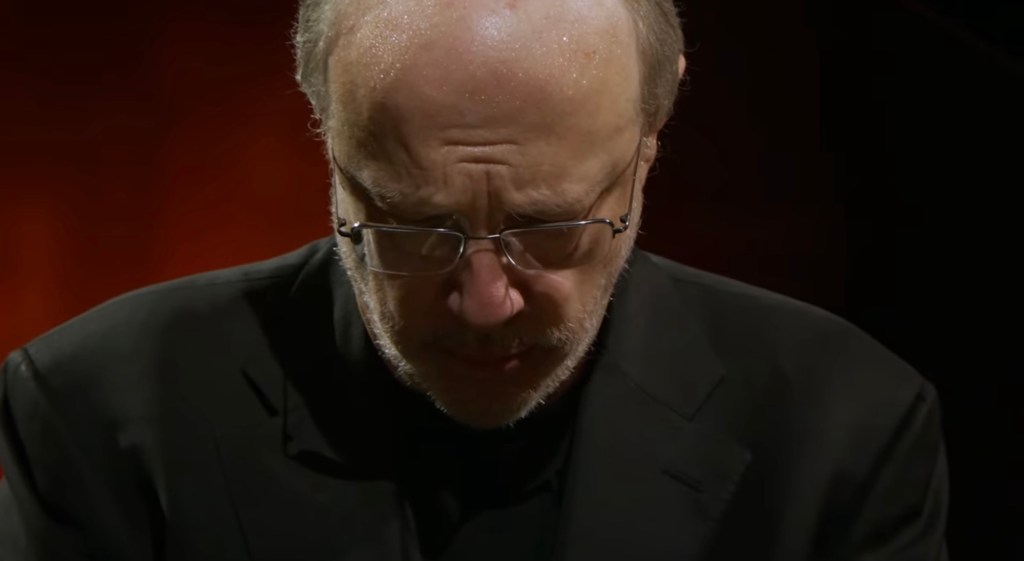

Hamelin at the Wigmore Hall The Pied Piper calls the tune
Andsnes and Hamelin at the Wigmore
Marc- Andre Hamelin at the Wigmore Hall
 ChristopherAxworthy-MusicCommentary