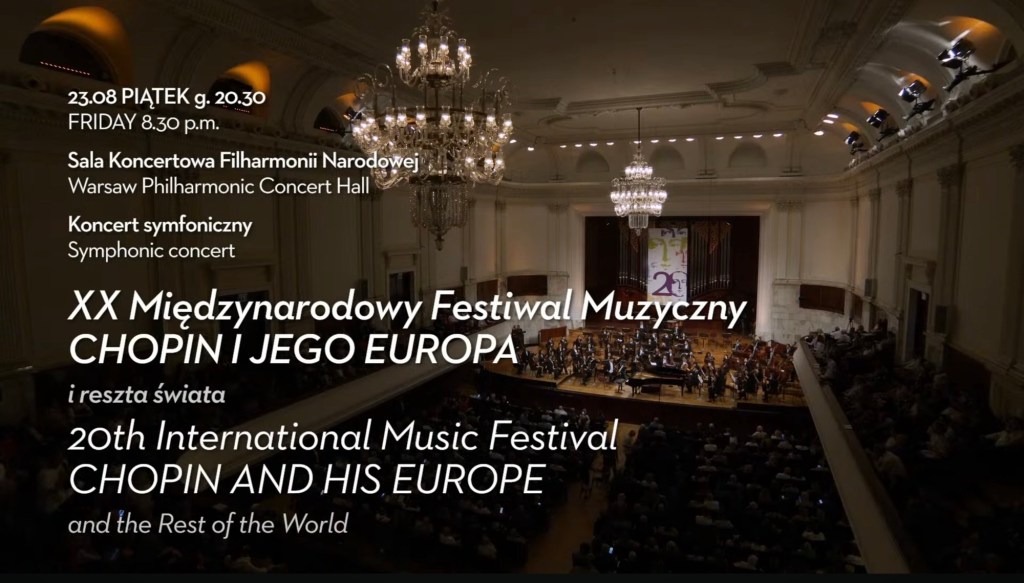
https://www.youtube.com/live/-5c9d_DqALU?feature=shared
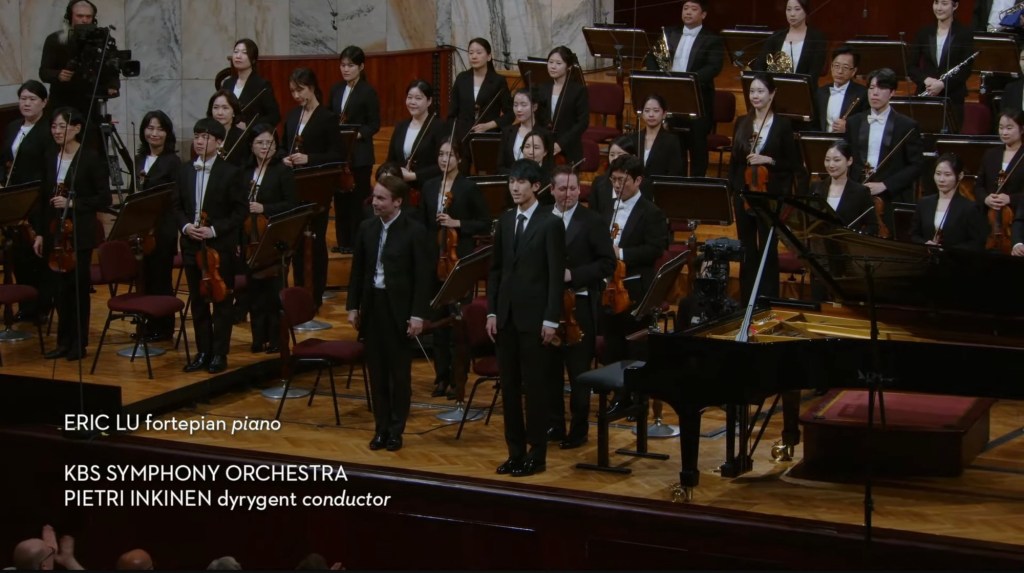
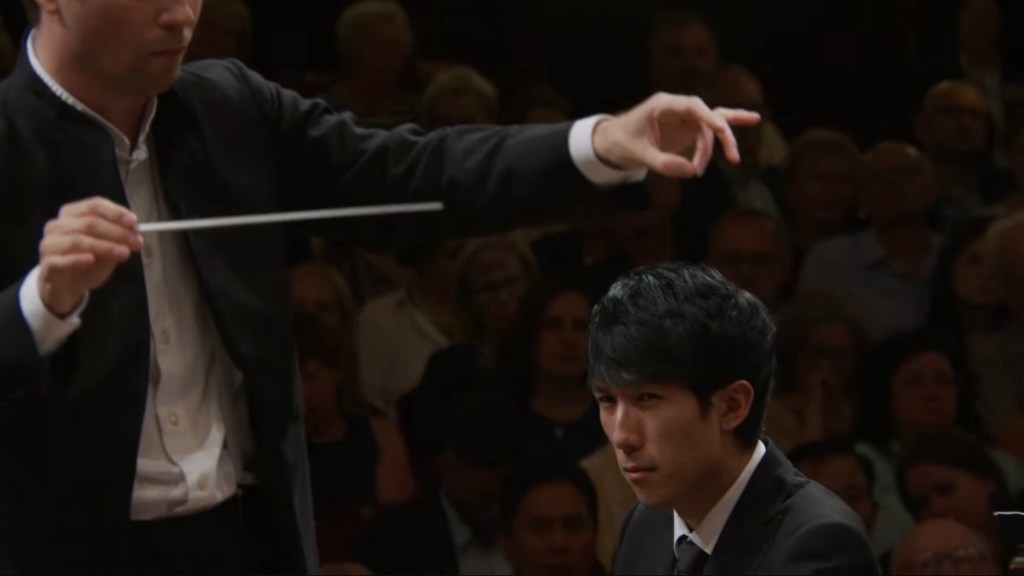
A beautiful performance of Chopin’s Second concerto played with superb musicianship and sensitivity. Gone was the so called tradition where personal inflections and flirtations have distorted Chopin’s thoughts. It was Artur Rubinstein who was the first to break with tradition ,even if he had been mentored by Paderewski who had an extraordinarily strong and unique personality. Of course he was followed by Pollini and then Zimerman ( who in turn had been mentored by Rubinstein) . Eric Lu showed us a Chopin of elegance and strength looking deep into the score with a quite extraordinary sensitivity to sound.The slow movement in particular was of a chiselled timeless beauty and the Rondo just slipped in with a delicacy and elegance of great luminosity with the same poetic brilliance of the scintillating scales and arabesques that the young Chopin would have demonstrated in his own very few concerts as a young man who was the revolutionary poet of the piano.
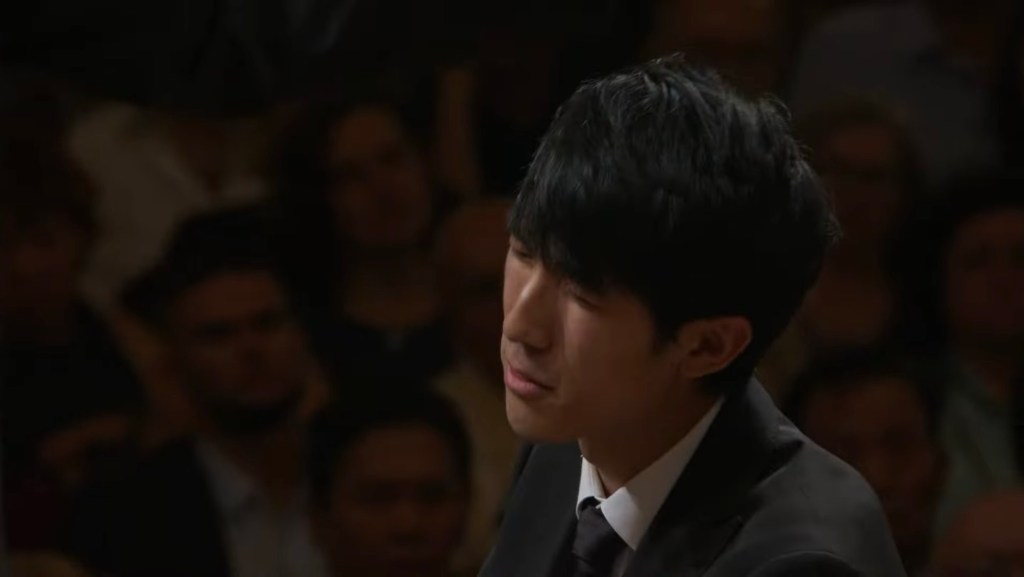
What was a true revelation with Eric Lu was his ability to recreate even the most well known of pieces and make them sound refreshingly new.Not by adding his own personality and distortions but by looking deeply into the score and with a delicacy and ultra sensitivity to sound recreate a score that we have taken for granted for too long . I remember hearing him for the first time in London playing Mozart’s B minor Adagio and A minor Rondo and being totally seduced by scores that in lesser hands did not reveal the same magic as this young man could show us.
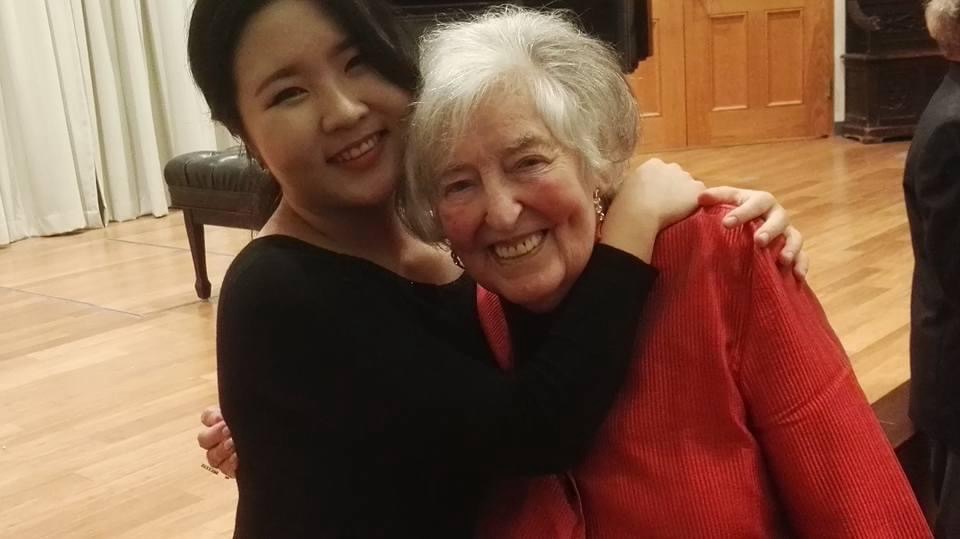
I had heard about this young man when he was a student in Philadelphia and Elisabeth Glendenning had told me about him.Beth had been assistant to Eugene Ormandy and although retired she was very much part of Curtis Institute and organised concerts for young musicians in her retirement home.
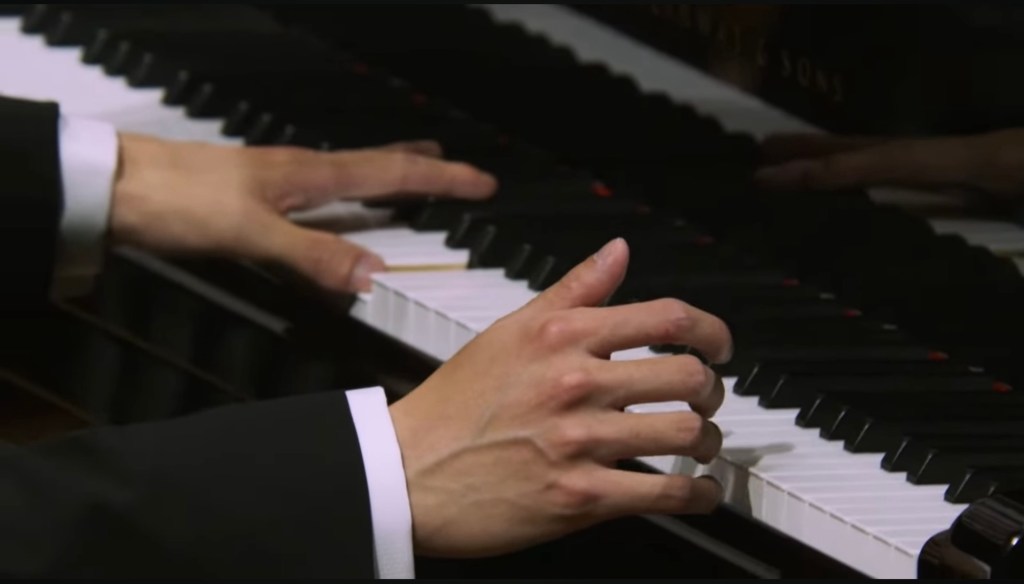
And so it was with the first encore.What could be better known that the waltz in C sharp minor op 64 n. 2 ? But today it was as if we were hearing it for the first time! I had never been aware of the sighing opening of one chord dissolving into another or the ravishing beauty of the jeux perlé where every note had the same inflections that Caballé could enflame her audiences with.
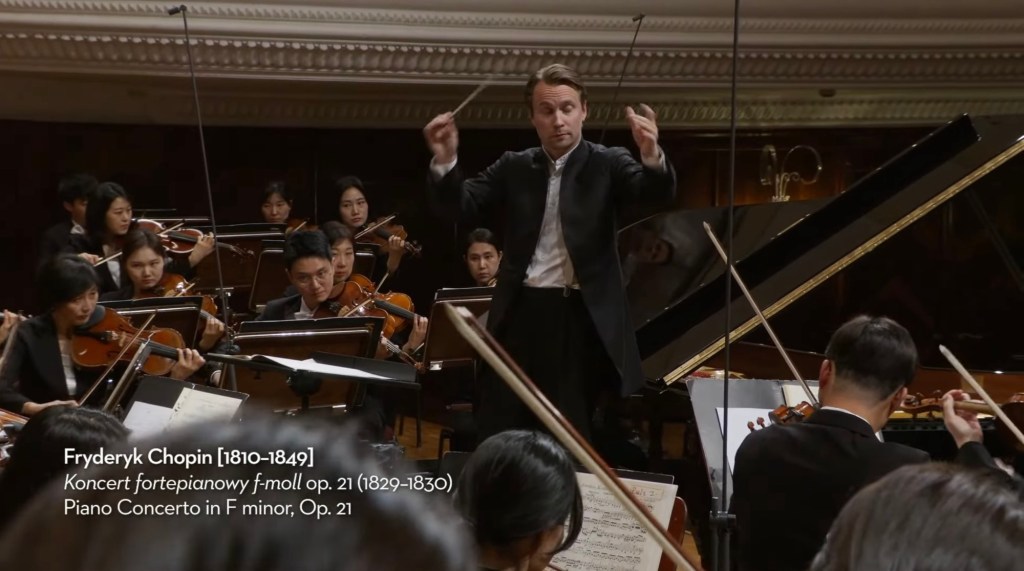
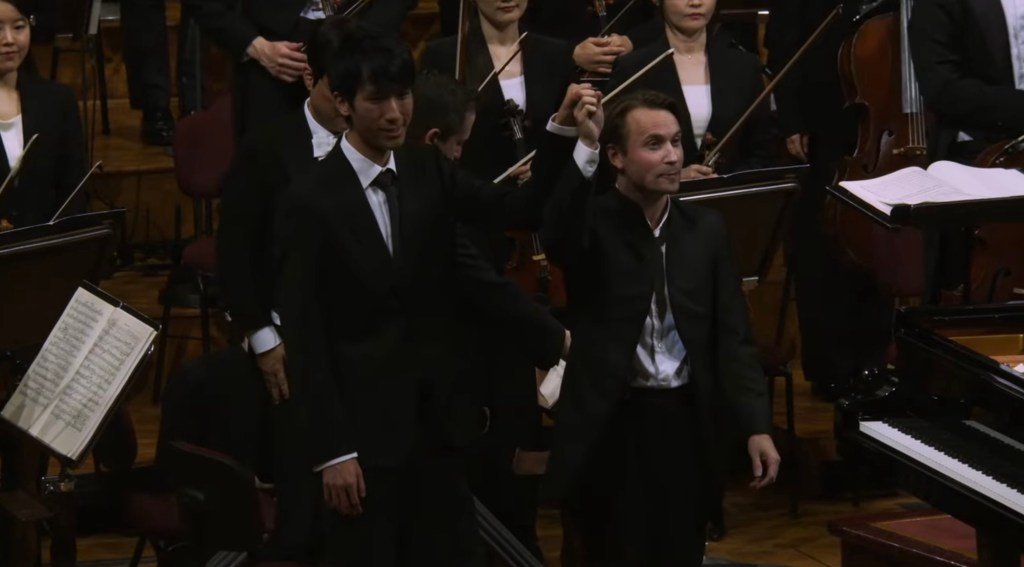
One must mention the Finnish conductor Pietri Inkinen who from the very opening of the Chopin set tempi that immediately showed us the strength of Chopin’s often criticised orchestration.The opening was a true ‘Maestoso’ and gave Eric Lu the possibility to enter with the same authority as the more dramatic E minor concerto.The entry though is at the top of the piano but was given great strength played like an opening recitativo with the final nobility in the bass .A much lamented Nelson Freire used to play a discreet bass chord before entering to open up the harmonics of the piano.
Nelson Freire RIP……the legacy of a great artist
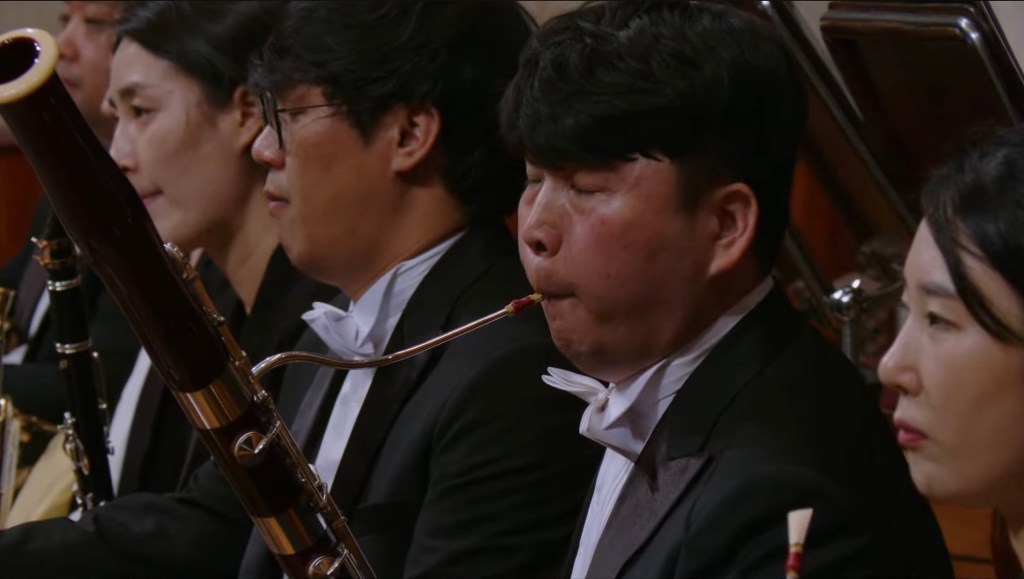
There was a beautiful tempo to the ‘Larghetto’ and the ‘Allegro vivace’ just seemed to grow out of the golden glow of the final A flat cadence. Chopin’s fellow composers and Prof. Elsner’s former students, Ignacy Felixstowe Dobrzynski ( 1807-1867) and Tomasz Nidecki (1807-1852), are believed to have helped Chopin orchestrate his piano concertos. This gave an excuse for other musicians to make slight alterations in the score .Alfred Cortot created his own orchestration of the F minor concerto and recorded it with the London Philharmonic Orchestra under John Barbirolli in 1935. Ingolf Wunder recorded Alfred Cortot’s orchestration with minor changes done by himself in 2015. More recently (in 2017), Mikhail Pletnev recorded his arrangements of both of Chopin’s piano concertos, conducting the Mahler Chamber Orchestra , with pianist Daniil Trifonov
There were some reflections though that I was glad to share with the distinguished critic ,Michael Moran ,based in Warsaw, while he was travelling home on the metro after having been overwhelmed by a magnificent performance of Sibelius’s Second Symphony.
I had just heard a remarkable recital in the same hall by Szymon Nehring another Gold medal winner like Eric Lu. The Rubinstein and Leeds respectively.
Szymon Nehring in Warsaw Classicism and visionary romantic – the revelations of a master
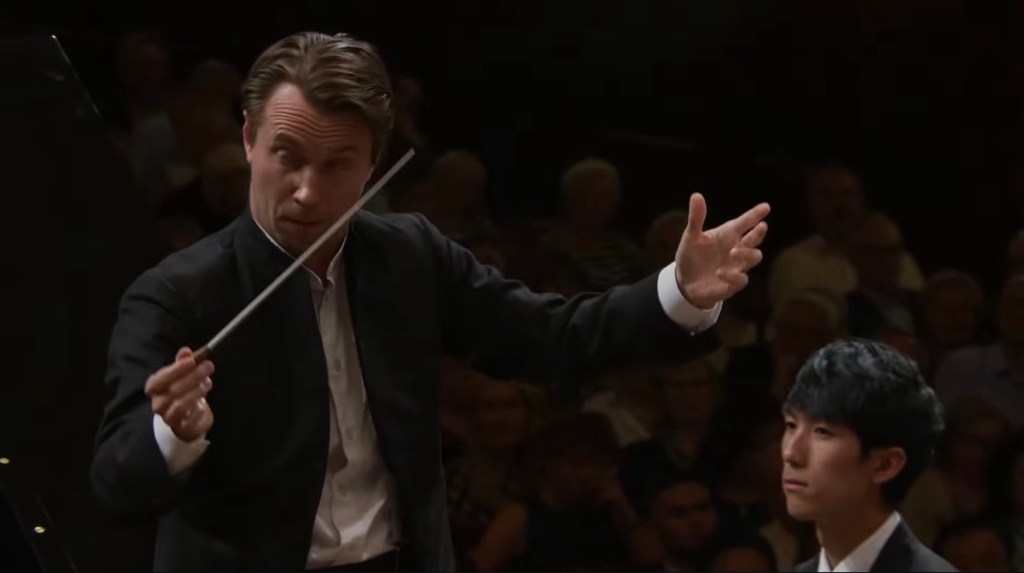
M.M ‘Hello Chris …. I listened to Szymon and agree with everything you say in your review. So many concerts I simply cannot keep up and listen and eat and sleep and write ….. so thank you !! On the Metro after an incredible Sibelius 2nd Symphony with the magnificent South Korean KBS Symphony Orchestra under the brilliant Finnish conductor ….. Pietari Inkinen …..’
C.A. ‘And me this morning .I am listening now. I like Eric Lu but he has no real aristocratic authority yet just a very sensitive musician with a technical mastery from Curtis ….like Nehring from Yale …..we used to call it rather enviously the transatlantic sound ….Rubinstein could never play with that cleanliness or correctness but he could tell such wondrous stories that will never be forgotten.
M.M ‘Agree completely about Rubinstein more and more …. the narrative, interpretative element is so often missing in too many young pianists. We could talk long into the night concerning training of the young !’
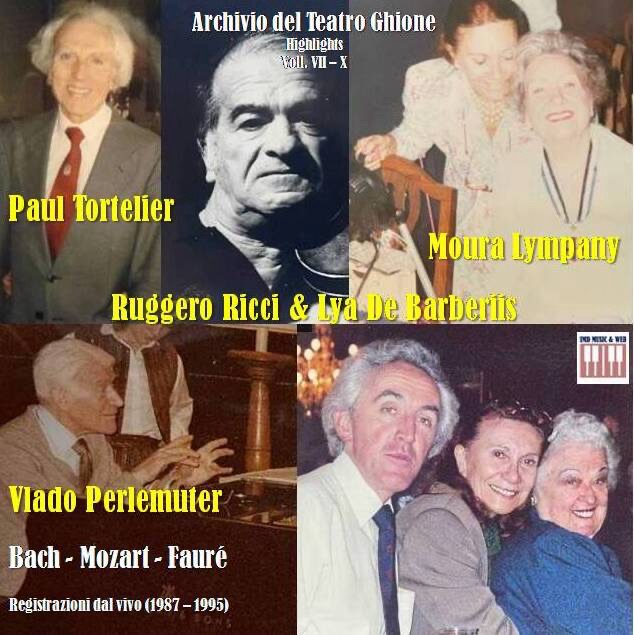
C.A.’It is not the training as Ruggiero Ricci said to me.When he was young it took days to cross the Atlantic that was time filled with contemplation,practice and relaxation. Now you can be playing in London today ,Tokyo tomorrow and New York the day after .Life in the fast lane is good for the bank balance but not for the soul’
M.M. ‘The literary inspiration for all nineteenth century composers is scarcely ever mentioned yet is vital …. Well, reading ….. do conservatoires insist on it ? How many young musical artists read the poetry that inspired Schumann and Liszt ?Many have never even heard of Byron …. that profound influence on creative life in all the arts in Europe.’
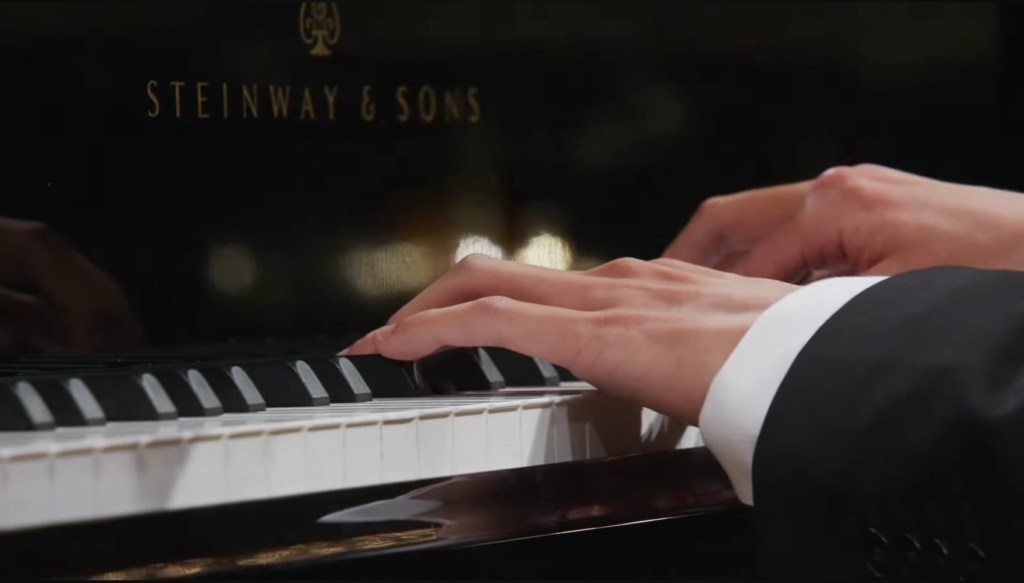
Fascinating food for thought especially now that there is such an extraordinary preparation for pianists. I doubt there has ever been a time when so many pianists could play with such mastery.When I was a student in London we used to look in awe at anyone who could play Rachmaninov 3 or Prokofiev 2.Ashkenazy made his London orchestral debut with both in the same programme! There was also the palette of sounds that although Matthay was expounding his theory that in each note there was an infinite variety of sounds , it took the arrival of Richter to show us that there was a level of sound from pianissimo to mezzo forte that we never knew existed! We were told to project the sound ( as Richter spoke about with enormous admiration Rubinstein’s old style concert cantabile ) .
I remember Richter playing Beethoven’s op 22 Sonata in the vast space of the Royal Festival Hall and not understanding a critic who said that the slow movement had been non existent.He meant ,of course,that the sound was not projected out but we the audience were drawn in, to a magic world that was completely new to us in the west.
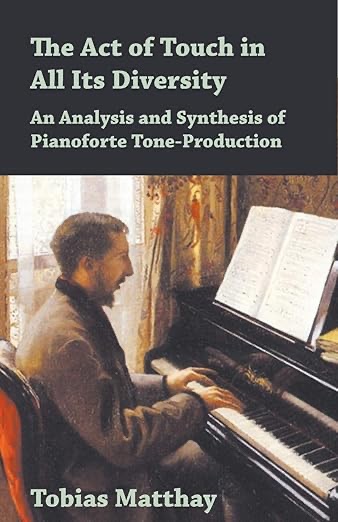
“Act of Touch in All Its Diversity ” is a guide to playing the piano or pianoforte by English pianist Tobias Matthay. It aims to provide the reader with a full understanding of the foundations of playing the instrument, explaining each step with simple instructions and expert tips. This classic guide is recommended for novices and new players, as well as those with an interest in early pianos and their operation. Contents include: “Preamble”, “The Problem of Pianoforte Training”, “The Problem of Education in the Art of Tone-Production”, “The Problem of Muscular Education”, “The Final Problem: The Union of Execution with Conception”, and “Conclusion, and Summary”. Tobias Augustus Matthay (1858 – 1945) was an English pianist, composer, and teacher. He was taught composition while at the Royal Academy of Music by Arthur Sullivan and Sir William Sterndale Bennett, and he was instructed in the piano by William Dorrell and Walter Macfarren. Many vintage books such as this are increasingly scarce and expensive. It is with this in mind that we are republishing this volume now in an affordable, modern, high-quality edition complete with a specially-commissioned new biography of the author
There is also the question of weight that seems to be missing in young pianists.I remember Tortelier asking me if I understood what he meant by playing with weight.He explained that it was playing into the keys , deeply like a limpet sucking out the juice from within, not on the surface but within the very body. Perlemuter of course ,a protégée of Cortot was to show me how never to leave the keys.Like an organist even changing fingers while holding one key down so as to make a perfect finger legato and never to strike the key percussively like a sledge hammer!
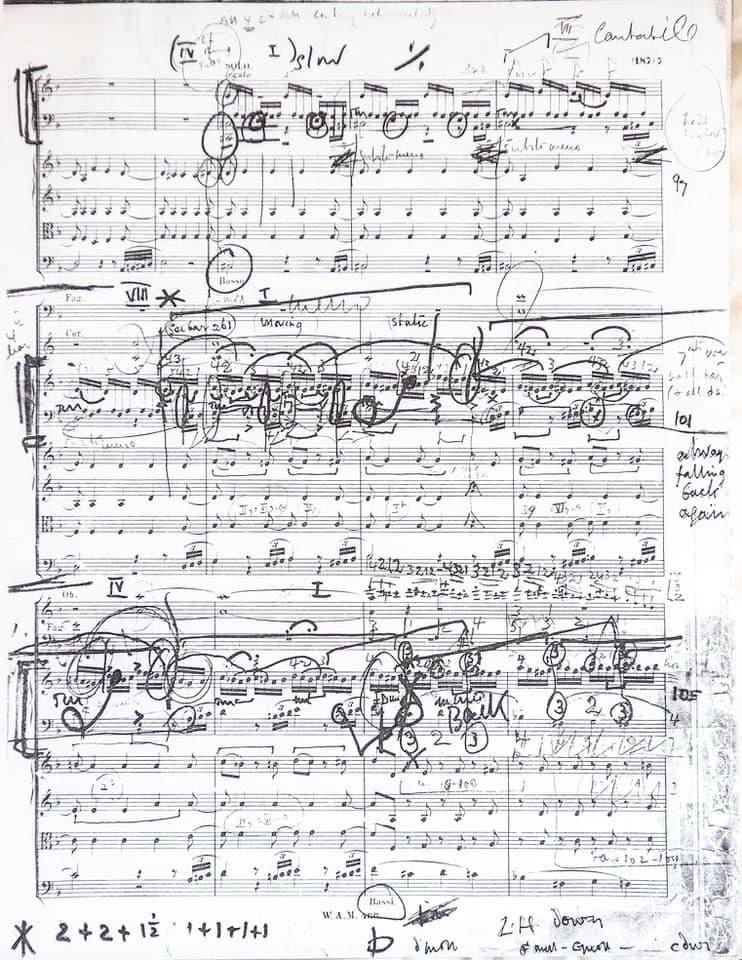
To see the scores with Perlemuters fingers is to see the scores of Curzon where the actual notes are almost obliterated by colours and fingerings – as Nadia Boulanger quoted often to her students :”Words without thought no more to heaven go”
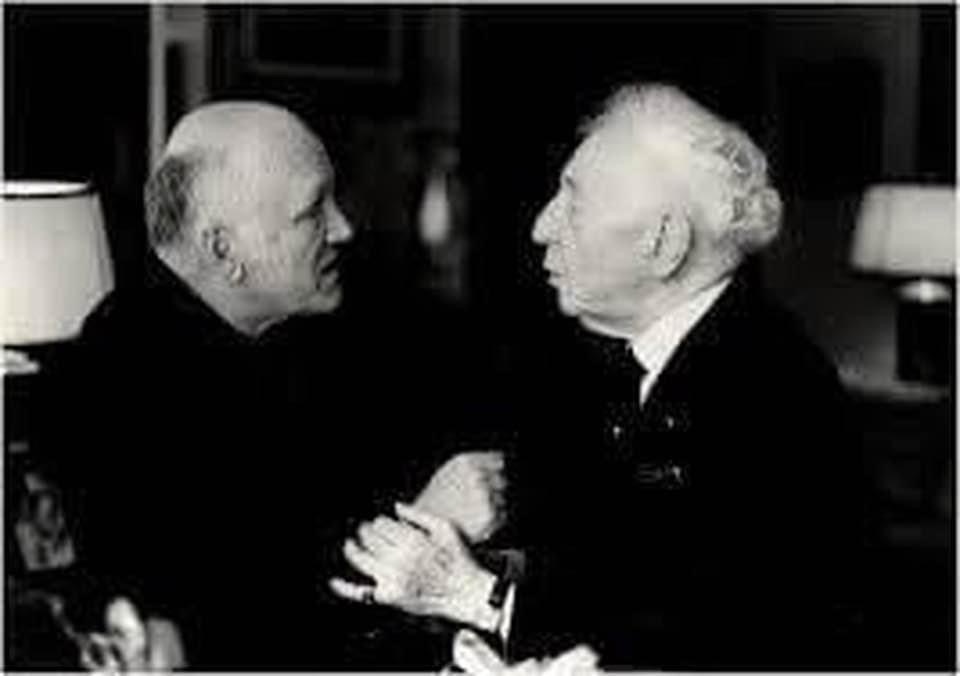
For me Rubinstein was and still is the example of playing with real aristocratic weight and the sounds that he made in the concert hall I have rarely if ever heard since.I think it comes too with experience and the real love of what you are doing and of course a mature mastery that comes only with age. This is how Rubinstein described it :
And Cortot is still such a poetic inspiration :
https://youtu.be/UroWVTDb8Oo?feature=shared
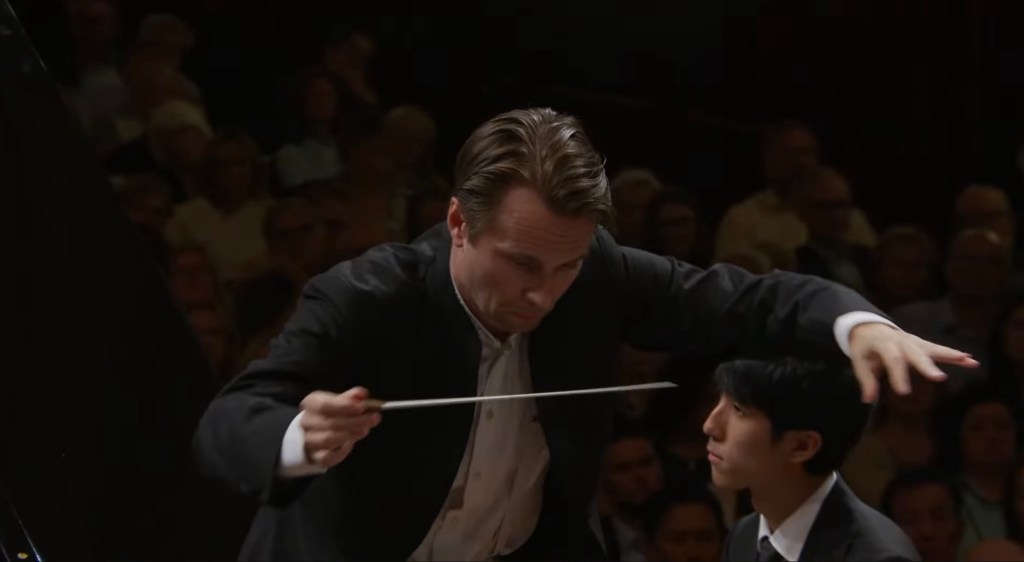
Leeds winner Eric Lu showed an astonishing command of keyboard tone and color.. the sign he is already a true artist. It was a spellbinding experience.” – The Guardian
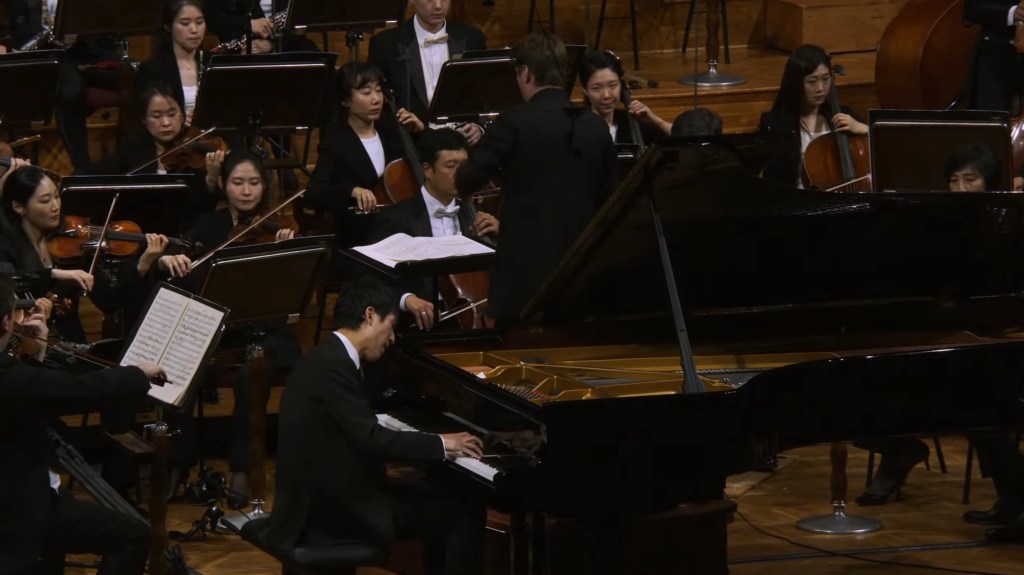
“Lu’s playing is in a rare class – sensitive and emotionally intuitive.” – BBC Music Magazine
Eric Lu won First Prize at The Leeds International Piano Competition in 2018 at the age of 20. The following year, he signed an exclusive contract with Warner Classics, and has since collaborated with some of the world’s most prestigious orchestras, and presented in major recital venues.
Recent and forthcoming orchestral collaborations include the Chicago Symphony Orchestra, London Symphony Orchestra, Boston Symphony Orchestra, Los Angeles Philharmonic, Oslo Philharmonic, Orchestre Philharmonique du Luxembourg, Royal Stockholm Philharmonic, Orchestre National de Lille, Finnish Radio Symphony, Yomiuri Nippon Symphony, Seattle Symphony, Helsinki Philharmonic, Royal Philharmonic, Tokyo Symphony, Shanghai Symphony at the BBC Proms, amongst others. Conductors he collaborates with include Riccardo Muti, Mirga Gražinytė-Tyla, Ryan Bancroft, Marin Alsop, Duncan Ward, Vasily Petrenko, Edward Gardner, Sir Mark Elder, Thomas Dausgaard, Ruth Reinhardt, Earl Lee, Kerem Hasan, Nuno Coehlo, Dinis Sousa, and Martin Frӧst.
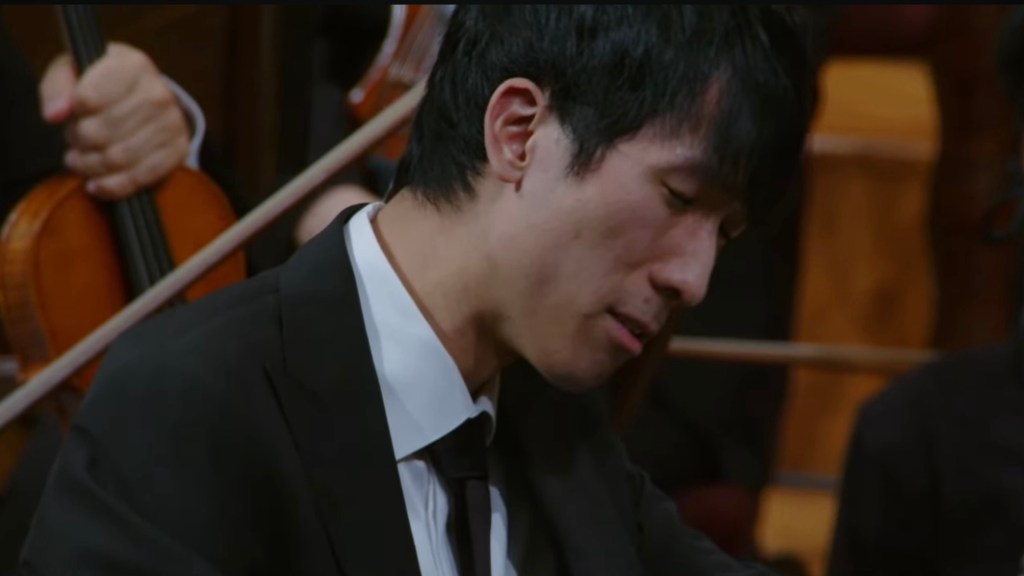
Active as a recitalist, he is presented on stages including the Köln Philharmonie, Concertgebouw Amsterdam, Queen Elizabeth Hall London, Elbphilharmonie Hamburg, Leipzig Gewandhaus, San Francisco Davies Hall, BOZAR Brussels, Fondation Louis Vuitton Paris, 92nd St Y, Aspen Music Festival, Seoul Arts Centre, Warsaw Philharmonic Hall, and Sala São Paulo. In 2025, he is appearing for the 7th consecutive year in recital at Wigmore Hall London. He has also been invited for the 7th time to Warsaw’s ‘Chopin and his Europe Festival’ and will debut at La Roque-d’Anthéron Festival.
Eric’s third album on Warner Classics was released in December 2022, featuring Schubert Sonatas D. 959 and 784. It was met with worldwide critical acclaim, receiving BBC Music Magazine’s Instrumental Choice, writing, “Lu’s place among today’s Schubertians is confirmed”. His previous album of the Chopin 24 Preludes, and Schumann’s Geistervariationen was hailed ‘truly magical’ by International Piano.
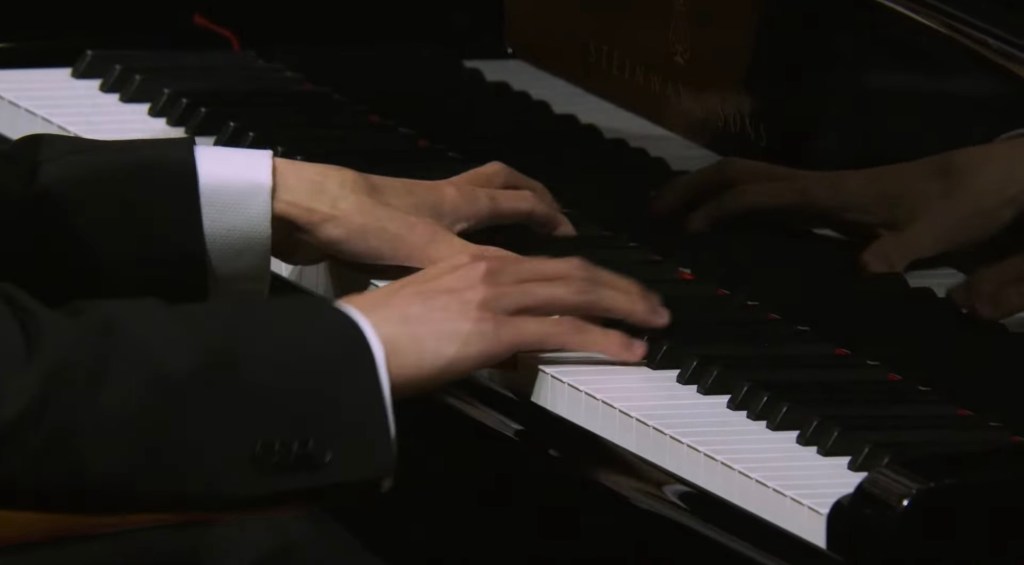
Born in Massachusetts in 1997, Eric Lu first came to international attention as a Laureate of the 2015 Chopin International Competition in Warsaw aged just 17. He was also awarded the International German Piano Award in 2017, and Avery Fisher Career Grant in 2021. Eric was a BBC New Generation Artist from 2019-22. Eric Lu was born on December 15, 1997 to a father from Kaohsiung ,Taiwan , and a mother from Shanghai ,China . He grew up in Bedford Massachusetts , and started piano studies at age six with Dorothy Shi (杨镜钏) in the Boston area. Later on, he enrolled at the New England Conservatory Preparatory School , where he studied with Alexander Korsantia and A. Ramon Rivera. In 2013, he was admitted into the Curtis Institute of Music in Philadelphia, where he studied with Jonathan Biss and Robert McDonald. He is also a pupil of Dang Thai Son.
 ChristopherAxworthy-MusicCommentary