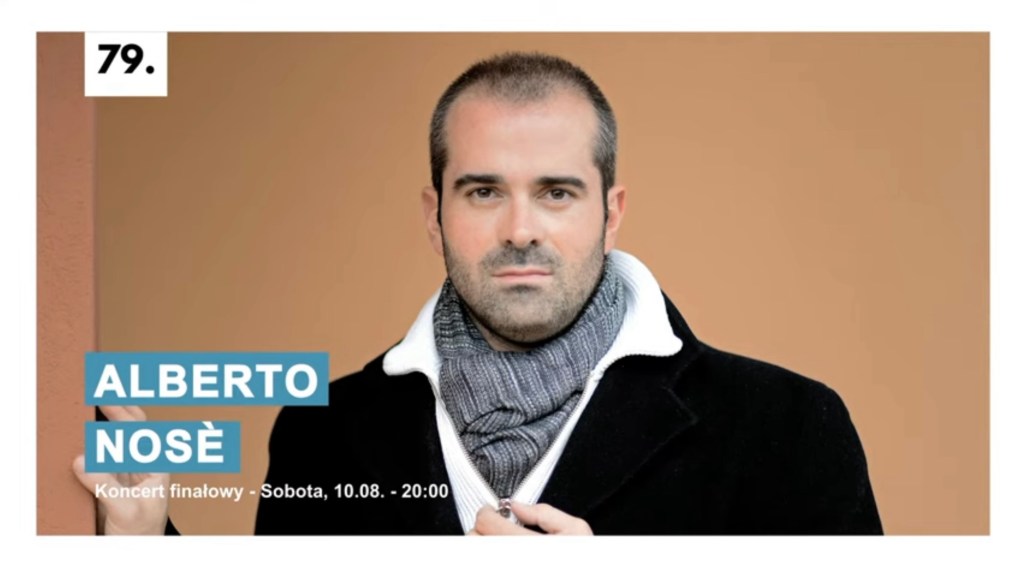

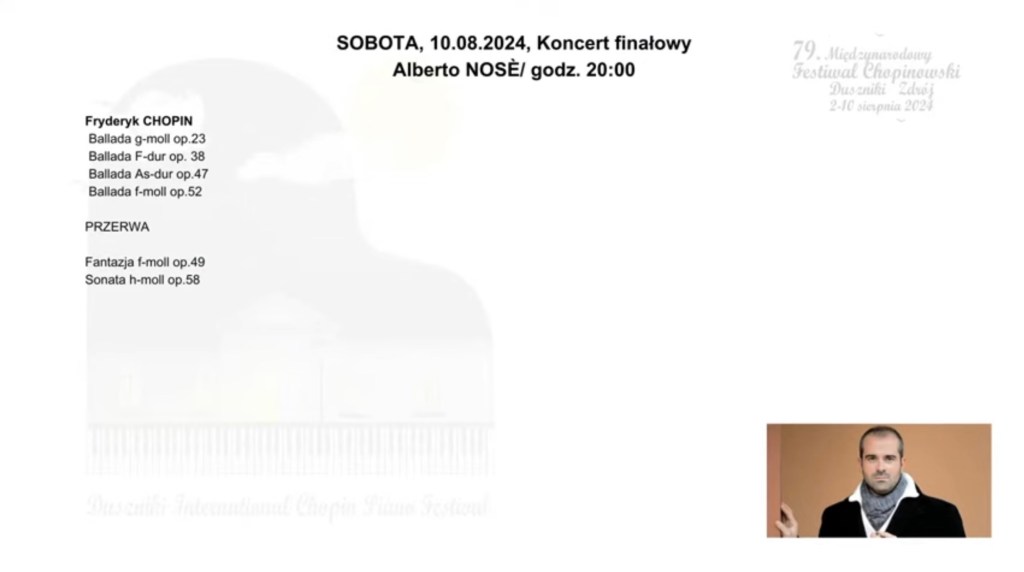
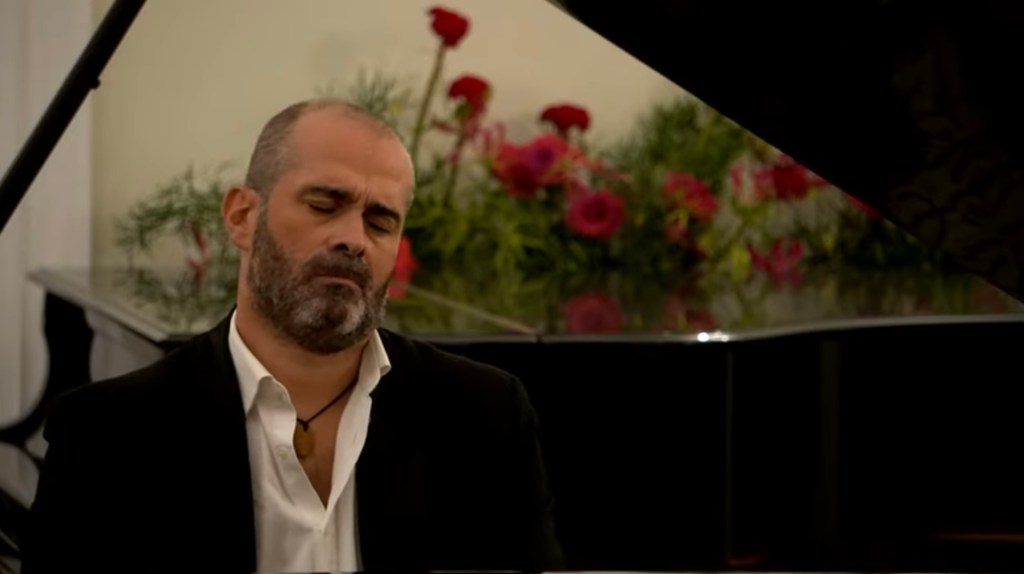
Wonderful to be able to listen to this final recital of the Duszniki Festival 2024. Prof.Paleczny is usually a master of understatement but on this occasion he had told me that this was the real thing !
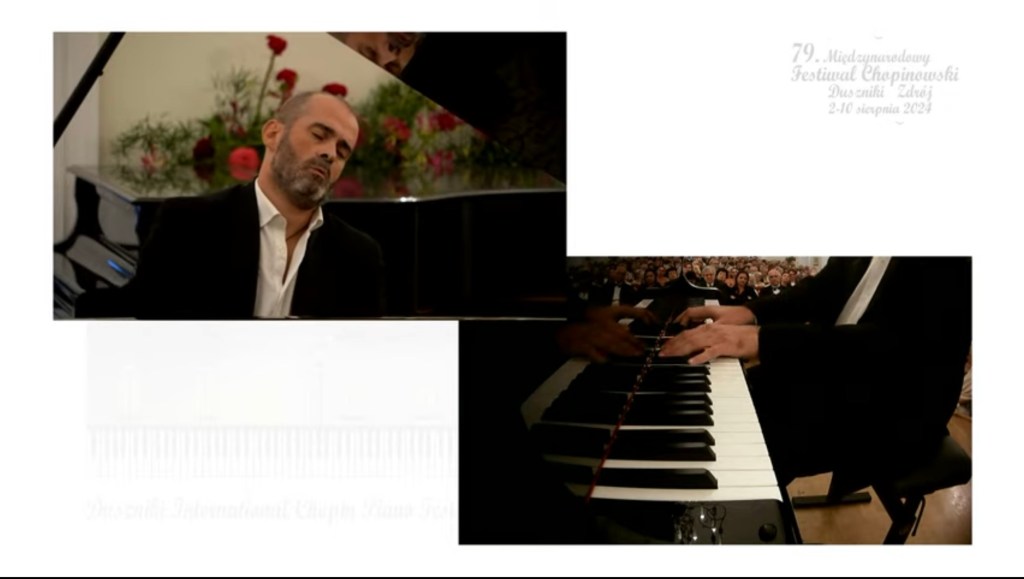
It was quite simply the finest Chopin recital I have ever heard.Played as a great outpouring of song from the very first note to the last. There was no moment where Nadia Boulanger’s favourite exhortation from Shakespeare :’words without thought no more to heaven go ‘ would have been applicable .Maestro Nosè took us to a world of wondrous sounds with the sumptuous rich colours of this Shigeru Kwai of luxuriant Philadelphian richness and it was as if we had entered a world where nothing else exists.There was no moment where a musical language was not allowed to unfold with timeless beauty and overwhelming mastery as he shared a unique voyage of discovery.
The very first Chopin recitals I heard as a child were those of Jan Smeterlin one of many great pianists who would give Chopin recitals in the Royal Festival Hall in London.I remember Vlado Perlemuter and Stefan Askenase,Alexander Brailowsky ,Stanislas Niedzielski and of course later Shura Cherkassky,Claudio Arrau,Fou Ts’ong ,Vladimir Ashkenazy,Daniel Barenboim,Sviatoslav Richter .The greatest of them all was Artur Rubinstein in his wonderful Indian Summer when we would queue up at dawn for tickets for his annual recitals in June. Peter Katin too would sell out the Festival Hall for his Chopin recitals even though his was a Chopin of miniaturist perfection that many critics found rather cold ,but he should not be forgotten.
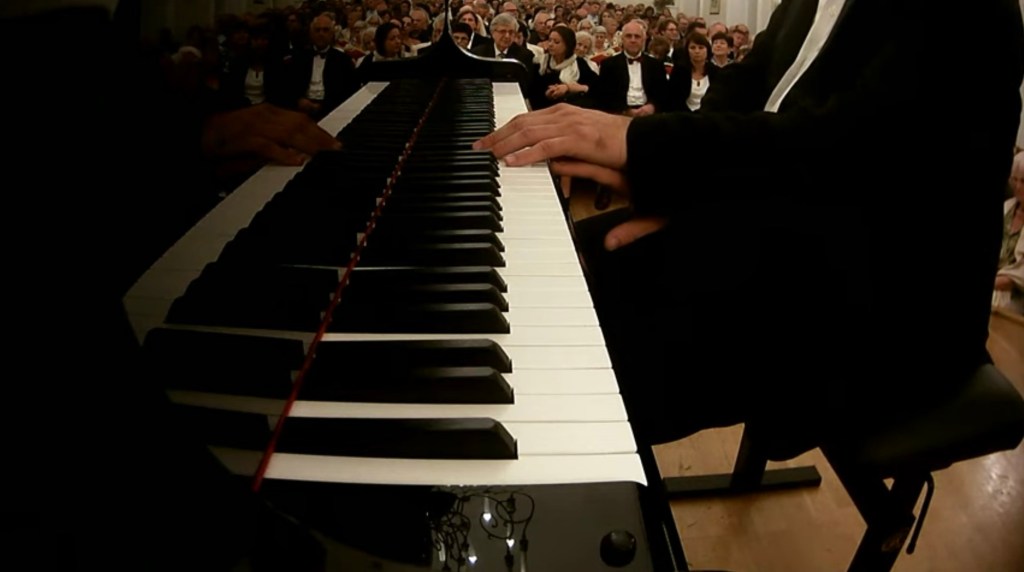
All this to say that today I heard a Chopin of aristocratic nobility and beauty allied to an intelligence where Chopin’s indications in the score were scrupulously interpreted.It was not a cold perfection but an artist who had become Chopin at the moment of creation and could imbue every note with an authority and passionate conviction that held us in his – Chopin’s- spell for over two hours.
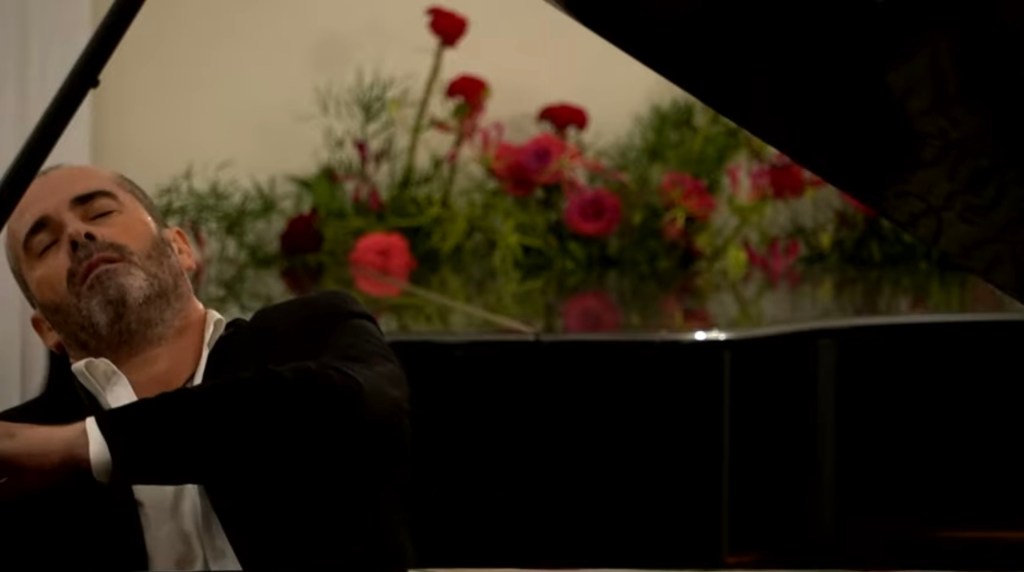
A programme that included the Four Ballades played as one glorious whole.The F minor Fantasie and the B minor Sonata were followed by four encores that included not only a Revolutionary study of overwhelming passion but the Mazurka op 17 n. 4 that we had heard in recitals this week from Arsenii Moon and Sophia Liu. Maestro Nosè ,though,brought a magic to this most delicate of Mazurkas that was nothing short of miraculous.A poetic freedom and subtle beauty that saw his two hands entwined at the end as Chopin’s final gasps were barely whispered by both hands united in poetic beauty.And what poignant beauty he brought to the barely audible sounds that he dedicated to two recently deceased colleagues ,Eugen Indjic and a Polish pianist and teacher, Prof. Stefan Wojtas.
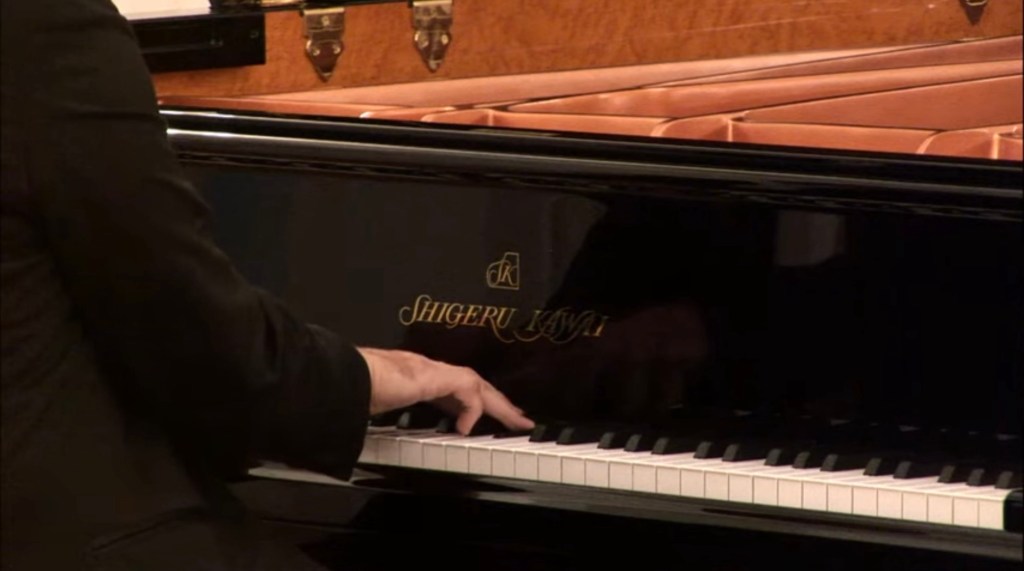
The Ballade in G minor ,from the very first note there was a beauty of sound where Chopin writes ‘pesante’ which means playing with the weight of fingers that delve deeply into each note, not just an opening flourish. Chopin sang from the very first notes of this ‘Largo’ with the exquisite poignancy of the cadenza out of which would grow a heart melting melody that was played with such a sensitive balance that it touched us as never before.Every phrase made such musical sense even the most seemingly virtuosistic was simply a glorious outpouring of ravishing sounds.Sumptuous climaxes grew so naturally out of this musical discourse that we were barely aware of the subtle musicianship involved of being able to conceive the whole architectural whole whilst still finding so much poetic meaning in every phrase.The ‘Presto con fuoco’ was a true lesson in selfless musicianship as the technical difficulties just dissolved into miraculous phrasing and passionate drive.Delicacy and gently flowing beauty of the Second Ballade belied the scrupulous attention to detail that even a barely noticed ‘pianissimo’ became such a poignant moment of subtle beauty. The ‘ Presto con fuoco’ was played with limpet like fingers of sumptuous enrichment finding the deep meaning behind the notes so often played as disjointed episodes.Suddenly Chopin’s indication of ‘slentando’ illuminated the return of the main theme that was played with ravishing beauty as the counterpoints duetted so poignantly together. Even the trills into the agitato coda were played like a stream of legato sounds that took us into the exhilaration of these final pages.Until the abrupt interruption and the stroke of Genius of the return of the opening theme .It was played with a sensitivity of sublime beauty as we awaited it’s whispered entry where even the rests before the final cadence were of such overwhelming significance.
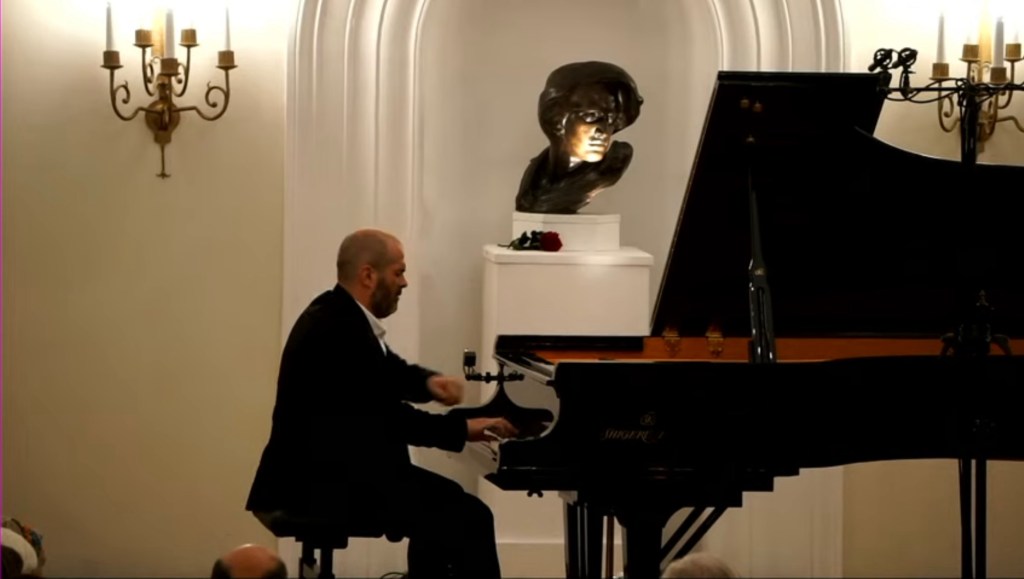
The pastoral gentleness of the third ballade was played with simplicity where even ‘forte’ was played in relation to the musical line and not cutting through it as is often the case in lesser hands. The trills and arabesques were like jewels leading the way to the real opening of the ballade where gentle sounds just dropped onto the keys as the music moved forward with interruptions of delicious jeux perlé and passionate outcries.The build up to the final glorious climax was played with such subtle colouring that the inevitability of this glorious outpouring came as a blinding light in a pastoral landscape.
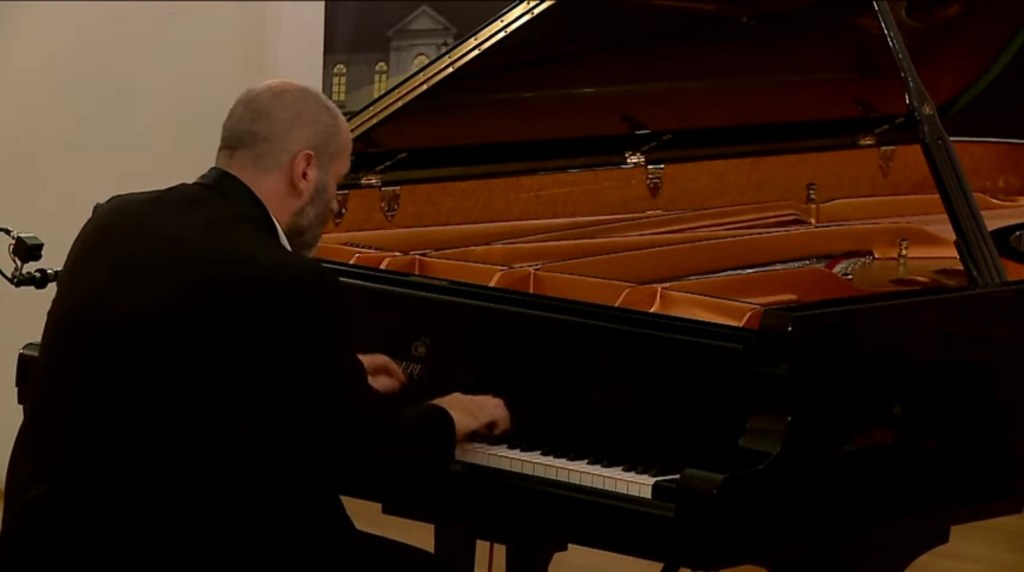
There was radiance and beauty as the Fourth Ballade was allowed to unfold with aristocratic simplicity of art that disguises art.This like the slow movement of the B minor Sonata is one of the most difficult things to play .It should be played with a simplicity that as Schnabel famously said about Mozart :’is too easy for children and too difficult for adults’.A left hand accompaniment that took over so naturally as the theme is transformed on its voyage of discovery of sublime beauty and genial invention. A continuous flowing pulse gave a great architectural shape to this work that is truly one of the pinnacles of the Romantic repertoire.There was a flowing uninterrupted beauty as the music unfolded on a wave of glorious sounds reaching it tumultuous climax.Five pianissimo chords that shone like stars brought us to the coda that I have never heard played with such mastery and musical understanding.
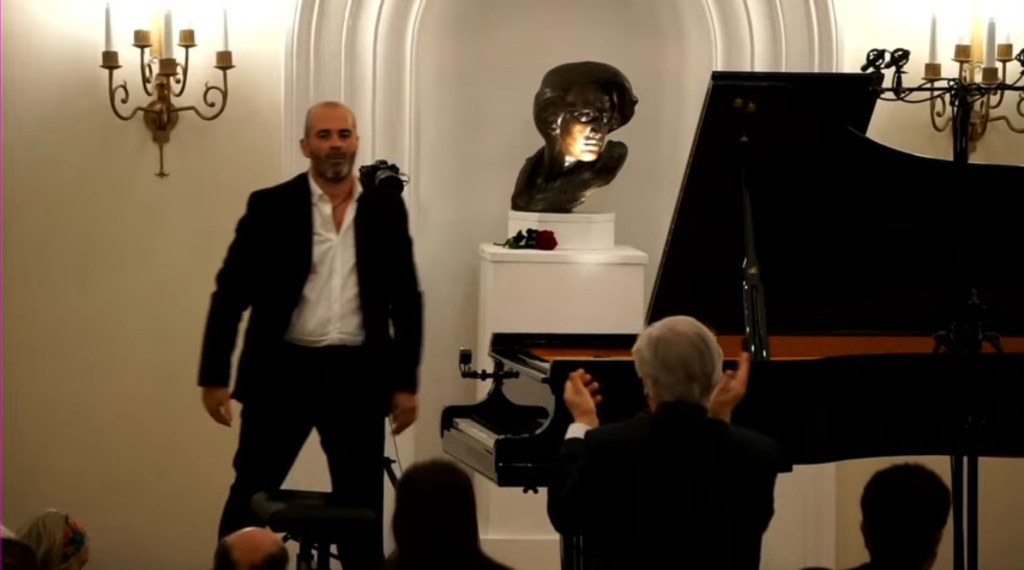
A standing ovation from an audience overwhelmed by such performances of mastery and poetic authority .
After the interval more masterly performance of the Fantasie and Sonata in B minor .The beautiful phrasing of the opening of the Fantasie was made so clear in Maestro Nosè’s poetic hands .Staccato and legato merely dots and dashes to show the real phrasing which is in an artist’s blood.There was a wonderful sensitivity to Chopin’s changing harmonies and the sumptuous climax of octaves were infact just vibrations of horizontal harmonies played with fearless understanding .Wonderful change from G flat to the warm opening of B of the ‘Lento sostenuto’ was played with such poignant meaning as it disappeared to a mere whisper about to explode back onto G flat.What passion and exhilaration he brought to this wondrous tone poem and the only Fantasie that Chopin was to write (the Polonaise Fantasie was a completely new creation in Chopin’s last years).
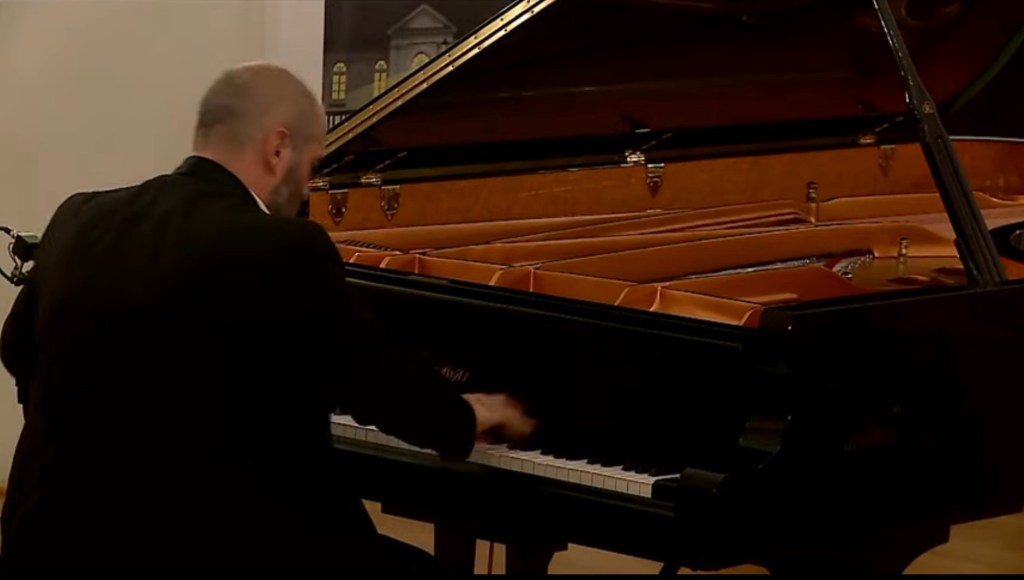
The B minor Sonata was another great outpouring of song where every note had a significance and was played with nobility and aristocratic control.Have Chopin’s counterpoints ever been allowed to chatter together so poignantly? A ravishing beauty to the second subject as he went straight into the development leaving the repeat to others.There was a jewel like clarity to the ‘Scherzo’ of subtle shape and a living stream of beauty.A trio bathed in pedal that has rarely been played with such simplicity and shape.Straight into the declamation of the ‘Largo’ melting into a cantabile of magic and ravishing beauty. Inner counterpoints were hinted at with poetic sensibility as the harmonies were just floated in the air until the final magical cadence that was played with breathtaking beauty.The return of the cantabile even more radiant and beautifully embellished brought the ‘Largo’ to a noble end on two beautifully placed final chords played with aristocratic poise.Out of these chords grew the opening of the ‘Presto con fuoco’.A rondo in which each return grew more in intensity and excitement.A tour de force of masterly playing but above all of control and sumptuous sound.Following Chopin’s famous 2/3 fingering to give even more impetus to the growing excitement being generated .A masterly performance from a ‘Giant’ of the keyboard. Four encores and a standing ovation were a wonderful way to crown this final concert of the Duszniki Festival.
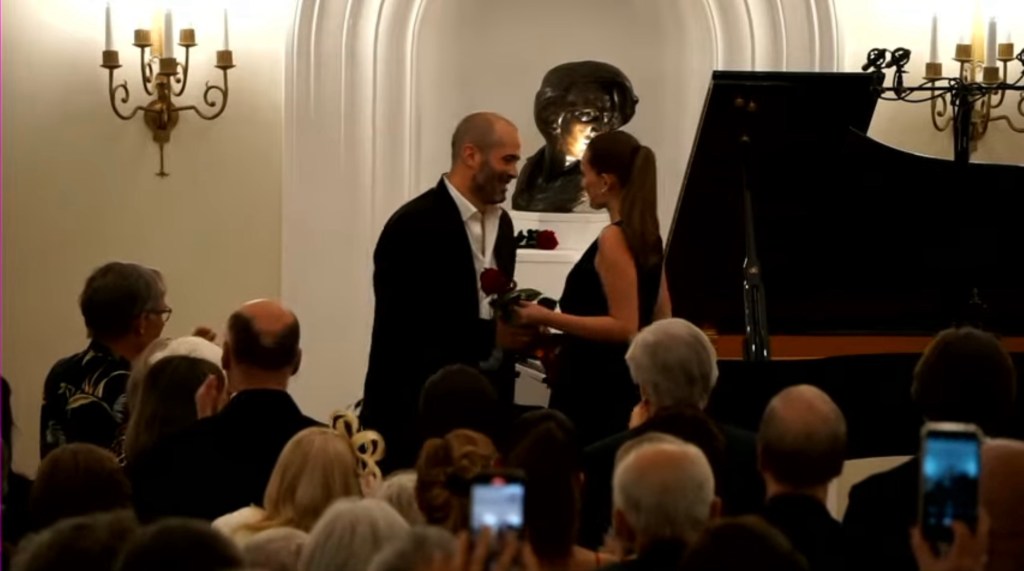

Defined by The New York Times “an artist with supreme technical mastery, dazzling and charming with his highly cultivated sound”, Alberto Nosè is one of the most awarded piano artists of his generation.He stood out the international music world at the age of eleven winning 1st Prize at the Jugend für Mozart International Competition in Salzburg.Top prize winner of Montecarlo Piano Masters, New York Concert Artists, Paloma O’Shea in Santander, Long-Thibaud in Paris, Maj Lind in Helsinki, Busoni in Bolzano, he was laureate at the F. Chopin International Piano Competition in 2000 which led him to a worldwide career as soloist as well as with major orchestras (London Philharmonic Orchestra, English Chamber Orchestra, Philharmonique de Radio France, Sinfonica de Madrid) in the most renowed concert venues like Carnegie Hall in New York, Southbank Centre in London, Konzerhaus in Berlin, Théâtre du Châtelet and Salle Pleyel in Paris, Auditorium in Madrid, Mozarteum in Salzburg, Suntory Hall in Tokyo, City Hall in Hong Kong, Bellas Artes in Mexico City, Teatro Colon in Buenos Aires, La Fenice in Venice, Santa Cecilia in Rome.Jury member in many international piano competitions like Kiev, Tbilisi, New York, Hong Kong, Helsinki, Budapest, Graz, Ljubljana, Warsaw, he is co-founder of the International Amadeus Competition in Lazise, Italy.His debut album for Piano Le Magazine featuring works by Brahms, Chopin, Liszt and Prokofiev won several awards like CHOC du Monde de la Musique and La Clef by ResMusica.His CD of the Keyboard Sonatas by J. Ch. Bach, recorded on modern piano and published by Naxos, has been broadcast by Radio France, BBC 3, Radio 4 Netherland, Radio New Zealand, ABC Classic FM USA and Australia.His third album with Schumann’s Symphonic Etudes and Prokofiev’s Romeo and Juliet for Harmonia Mundi won Diapason d’Or.Since 2019 he has been founder, artistic director and producer of Amadeus Sound Project, an independent record label which releases all his new recording projects.Invited to teach master classes around the world, he was guest professor at the Music Conservatory in Geneva, Sibelius Academy in Helsinki, Mannes College of Music in New York, as well as at Music Academies in Gdansk and Bydgoszcz.
His musical education started at Verona Conservatory and continued at Imola International Piano Academy. His artistic development has been also enriched by his musical studies with Maurizio Pollini, Murray Perhaia, Andrzej Jasinski, Paul Badura-Skoda, Michael Beroff, Alexander Lonquich, Arie Vardi, Fou Ts’ong, Karl-Heinz Kämmerling.
He has been Piano Professor at Verona Conservatory of Music since 2022 and on the faculty of the International Accademia Amadeus in Valeggio sul Mincio, Italy.
 ChristopherAxworthy-MusicCommentary