

There must be something about the air in Duszniki that allows very fine artists to reach heights that rarely even they could have imagined. Superb live streaming allows us to eavesdrop on this wonderful array of pianists that Piotr Paleczny surprises us with every year.
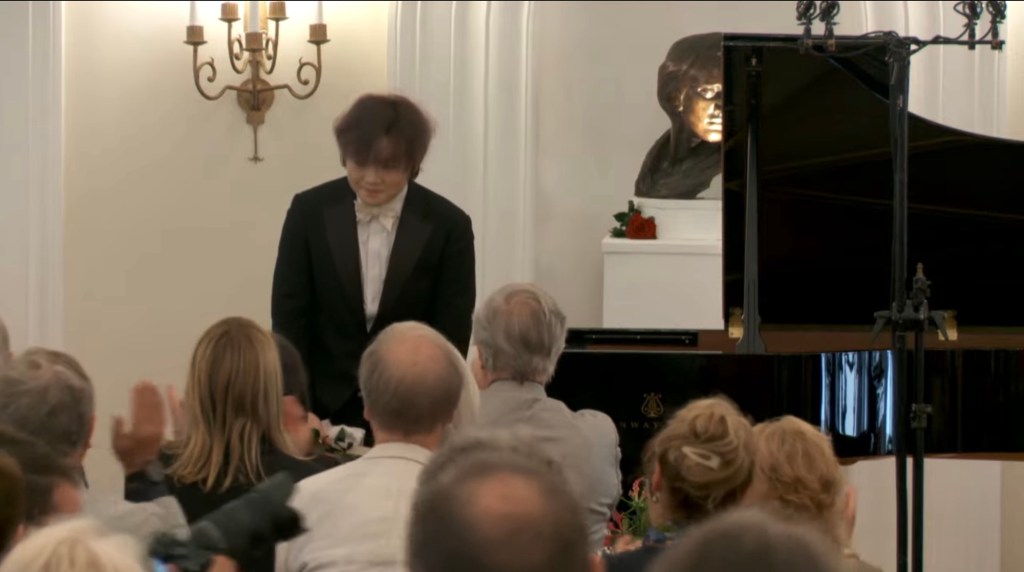
Presiding over the concerts with such an eagle eye that when he gives a standing ovation to a pianist the whole audience follows suite.And it was just such a standing ovation that was awarded to Hao Rao today.
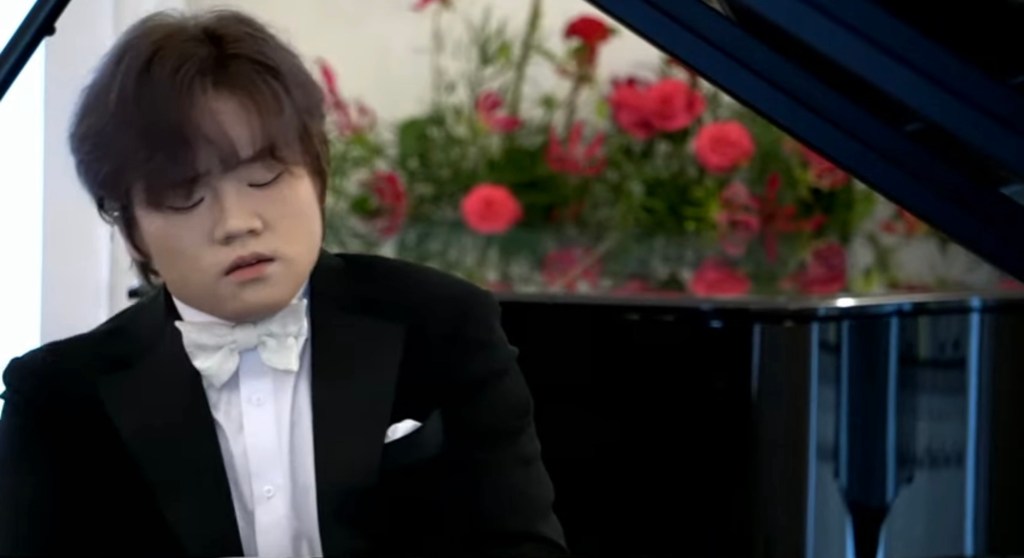
Hao Rao plays Chopin in Zelazowa Wola Playing of aristocratic timeless beauty
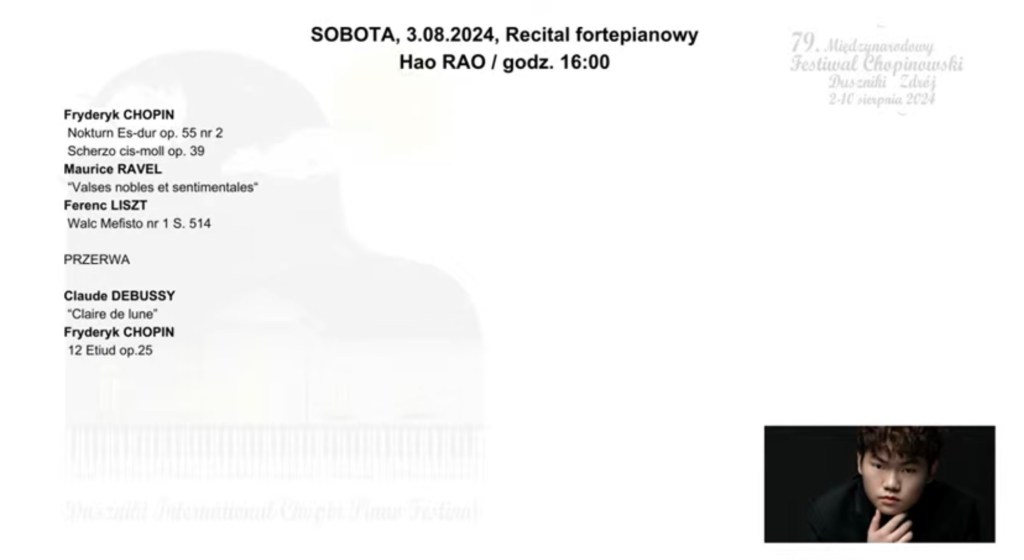

I had heard Hao Rao last year in that other series in the birthplace of Chopin but today, a year on ,I heard the same very fine young pianist but one that miraculously has become a great artist. Seated at the piano with the minimum of movement but with hands that remind me of Emil Gilels .Fingers that are like limpets sucking out the infinite colours within each key but without any percussive hardness.Always a rich velvet sound whether in the extreme delicacy of Debussy and Ravel or the romantic fervour of Chopin.It was obvious from the opening outpouring of ravishing sounds that here was a young artist of profound sensibility .One of Chopin’s most passionate outpourings op 55 n.2 was played with aristocratic sensitivity of poignant beauty.An audience at once caught in this young man’s spell as complete silence befell in the hall as the agitated sounds of Chopin’s third scherzo broke such a magic shared moment.
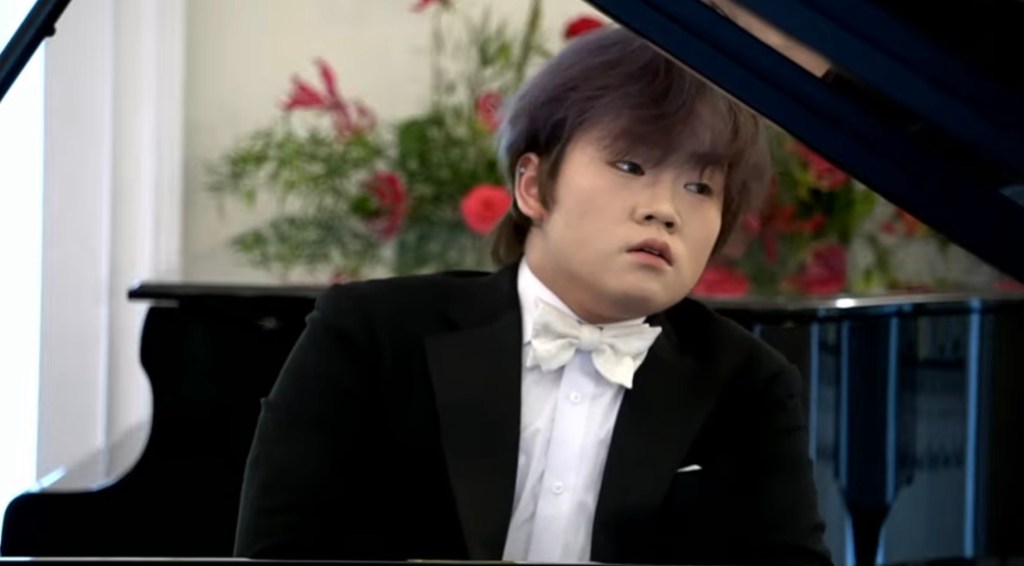
There was a full sumptuous sound to the octaves of the third scherzo.This was more a symphonic performance than a pianistic one with a great sense of architectural line .The ‘Presto con fuoco’ linked inexorably to the ‘meno mosso’ as passion and intelligence were allied to transcendental technical authority .Ravishing shimmering sounds to the arabesques that Chopin allows to grow from the deep chiming bass notes after the noble beauty of the chorale .There was the subtle change of key ‘sottovoce’ played with aristocratic sensibility with streams of notes disappearing into the distance as the coda was allowed to unwind with its insistent bass notes building up the tension to a Lisztian fervour .The burning intensity of the final coda bubbling over with dramatic intensity as Chopin was to do in his fourth ballade with even more poetic inspiration .Hao Rao played it with the youthful passion and brilliance of the virtuoso Chopin with a scrupulous attention to the composers indications and the controlled tension of a mature artist.
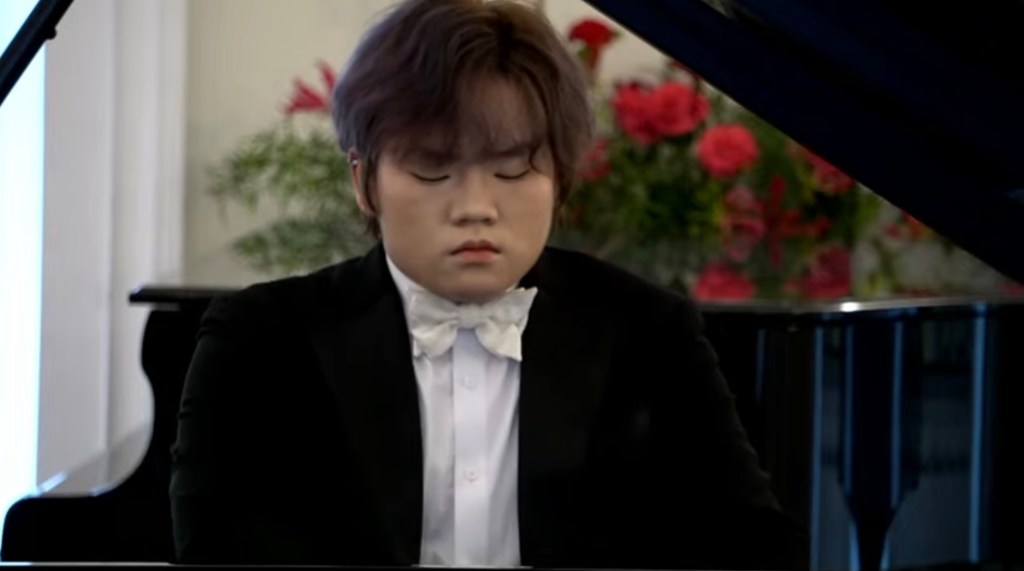
Ravel’s Valses nobles were played with a completely different palette of sounds.A kaleidoscope of colours with a ravishing fluidity and delicacy .A sultry timeless beauty to the second waltz with Hao Rao playing with natural flowing movements .He brought such character to each waltz as his musicianship and artistry combined with intelligence and sensibility.The third waltz had a simple child like lilt and there were wistful arabesques as the music moved forward with fleeting lightness.There were never any hard edges to the sound as this was a real chamber orchestra with players listening attentively with chameleonic sensibility. Perlemuter might have played with more weight of true finger legato but the colours that Hao Rao found today were indeed the sounds of the supreme colourist that was Ravel.
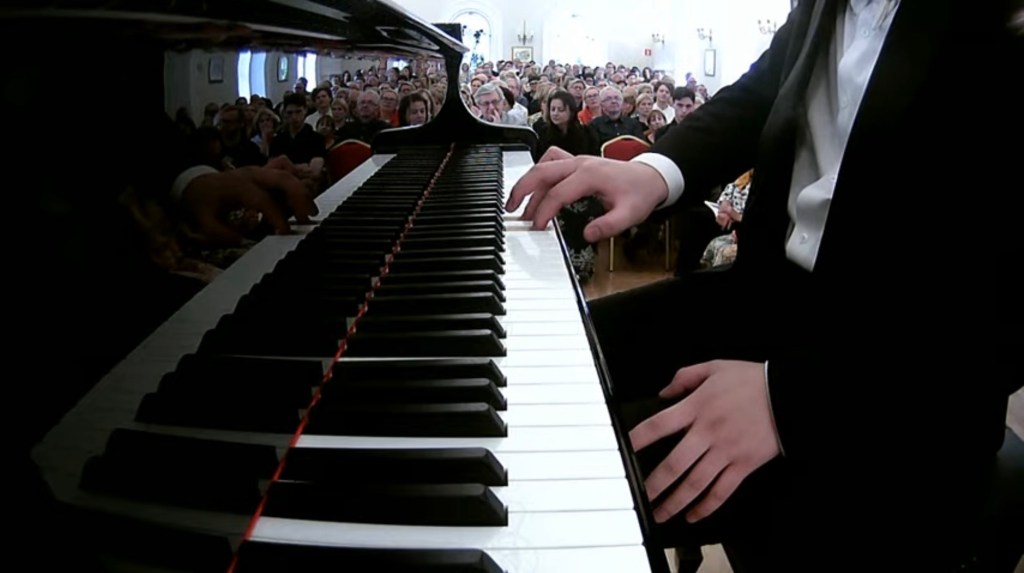
Hao Rao brought a theatrical colour to Liszt’s Mephisto with transcendental excitement as he depicted this tone poem with hypnotic brilliance and poetry. What beauty he brought to the central episode and I doubt whether the bird calls have ever sounded so crisp and clean with the languid beauty of streams of seemless scales just adding to the ravishing beauty. Virtuosity and brilliance too with the fearless abandon of the notorious final leaps, but there was also the oasis of beauty of the final recitativi interspersed with electric shocks of Lisztian dynamism.
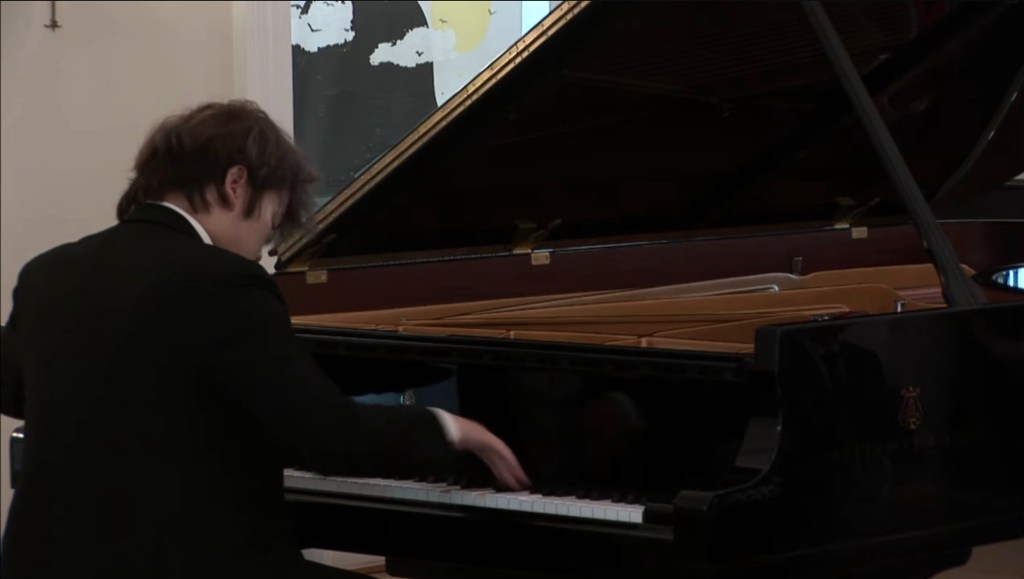
Debussy’s ‘Clair de Lune’ was a beautiful way to preface Chopin’s most poetic set of studies op 25. ‘Andante très expressif ‘ Debussy writes and one should not forget that Debussy edited the works of Chopin so knew exactly the importance of the composers original thoughts .Hao Rao played with delicacy and beauty and yet another sound world with the freedom of a singer with languid beauty flowing and glowing with timeless beauty.The beauty of the ‘Tempo rubato’ was played with a rare whispered sensibility with the four arpeggiated chords almost inaudible , but a stage whisper that carried across the hall with penetrating beauty before the ‘un poco mosso’ .A wave of sumptuous sounds allowed the melodic line to glow and shine with simplicity and breathtaking beauty.Debussy writes on the final seven bars ‘pp morendo jusqu’à la fin’.It was just this as Hao Rao allowed the final D flat chord to become the opening of Chopin’s ‘Aeolian Harp’ study op 25 n.1.

Hao Rao has been playing the Chopin Studies since he was 13 and now at the ripe old age of 21 he has acquired a mastery of them that is remarkable.A technical mastery ,ca va sans dire ,but it is the poetic meaning that marks these studies out as Chopin the revolutionary.Creating a technique on the piano that was not just mechanical but with the advent of the pedals on pianos with a more sensitive touch adding a true technical mastery where the body and hand movements are allied to the musical shape that is being depicted.Like a great painter with his canvas and the artist using natural movements to create the harmony of nature.It was exactly this mastery that Hao Rao showed us today as the first study was a melodic line floating on moving harmonies as they reached for the climax before dissolving to seemless scales and a whispered final trill that was merely a pulsating heartbeat.There was the wistful entry of the F minor study as it wove it’s way forward with magic glowing sounds. Clarity and architectural shape he brought to the third with a beautifully phrased melodic line and the final notes allowed to disappear into the distance with nonchalant ease and mastery. The fourth was very rhythmically pointed and contrasted with the unusually mellifluous fifth study with it’s beautiful flowing tenor melody of bel canto flexibility and the final arpeggiated chord played with infinite mastery reaching out to the final top G sharp.The left hand was so beautifully shaped in the notorious double third study that the technical difficulty was of no relevance as the thirds were allowed to accompany the melodic line.
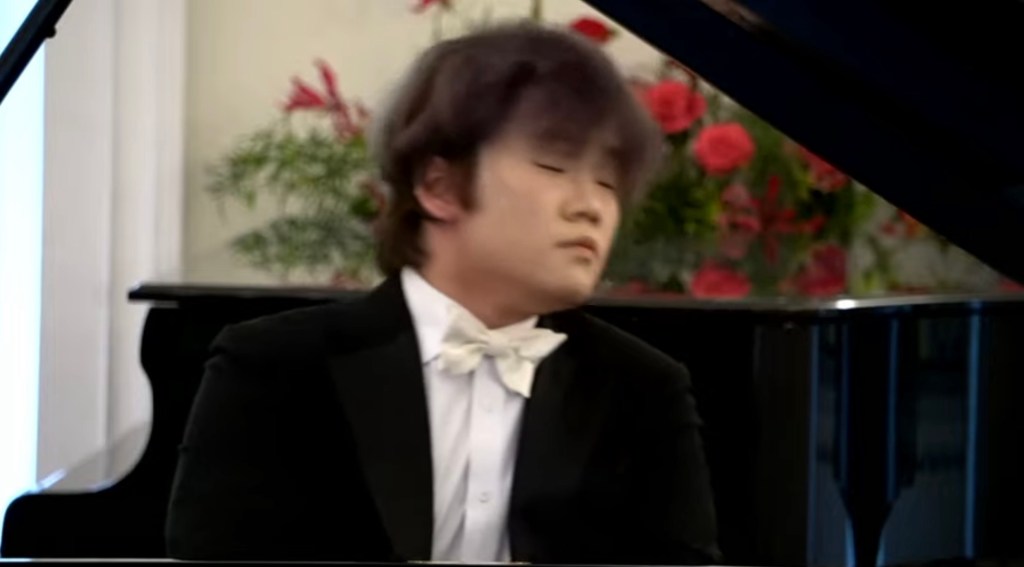
The beauty and poignancy he brought to the ‘ Lento’ duet study will long remain in my memory for the aristocratic sensibility and meaning he brought to this most beautiful of genial nocturnal musings.The study in sixths was allowed to float in on the final chord as this young artist had seen the studies op 25 as one architectural whole .The ‘Butterfly’ study was played with fleeting lightness but also with an overall architectural shape,keeping the tempo to the last note, I have never heard the final two bars played more convincingly and as Chopin had indeed indicated! The octaves of the tenth study again entered on the crest of the previous butterflies! Building to an enormous climax but with sumptuous full sounds never hard or brittle where the music was shaped ,as in the Scherzo, as living moving phrases.There was a ravishing beauty to the ‘Lento’ where Hao Rao’s legato playing was something rarely encountered with hands moving like a web welding the sounds together with sumptuous beauty and ease.The aristocratic authority he brought to the final two studies will long be remembered.From the barely whispered opening of the ‘Winter Wind’ to the overwhelming richness of sound that he brought to the ‘Ocean’. Study. A remarkable performance not only for the technical mastery but for the musical understanding and poetic intelligence he brought to each of the twelve steps leading to the creation of an overwhelmingly beautiful Gothic cathedral .
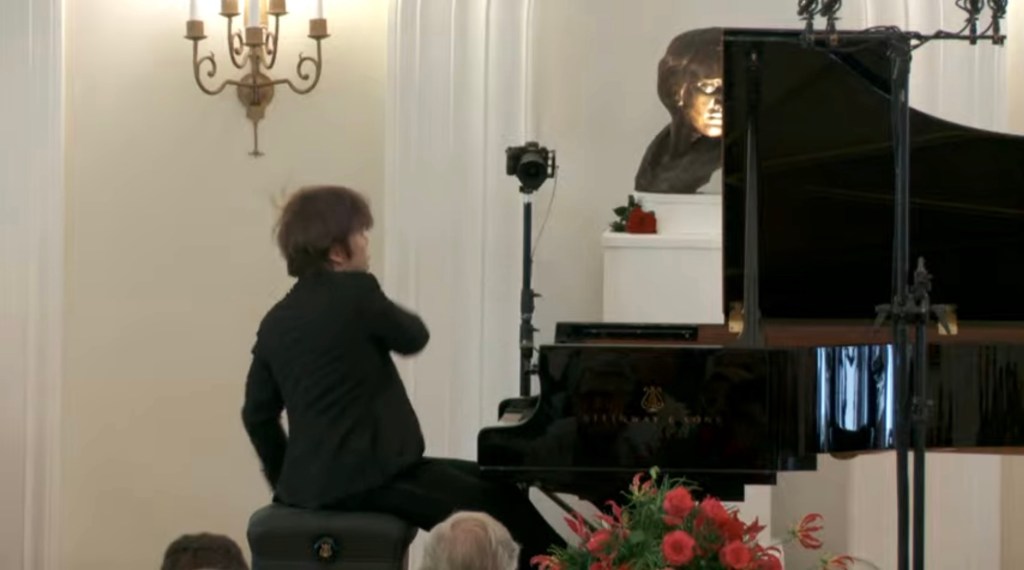
Three encores which included Volodos’s breathtaking reworking of Mozart ‘s Turkish March and the whispered beauty of Chopin’s study op 10 n. 3 ,brought Maestro Paleczny to his feet together with the entire audience to salute an artist of extraordinary mastery and poetic sensibility.

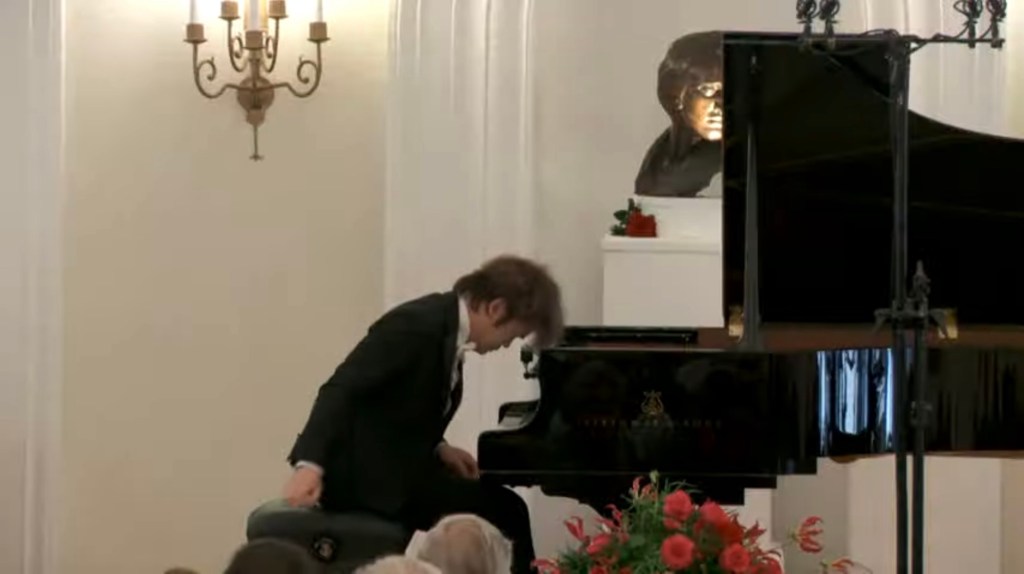
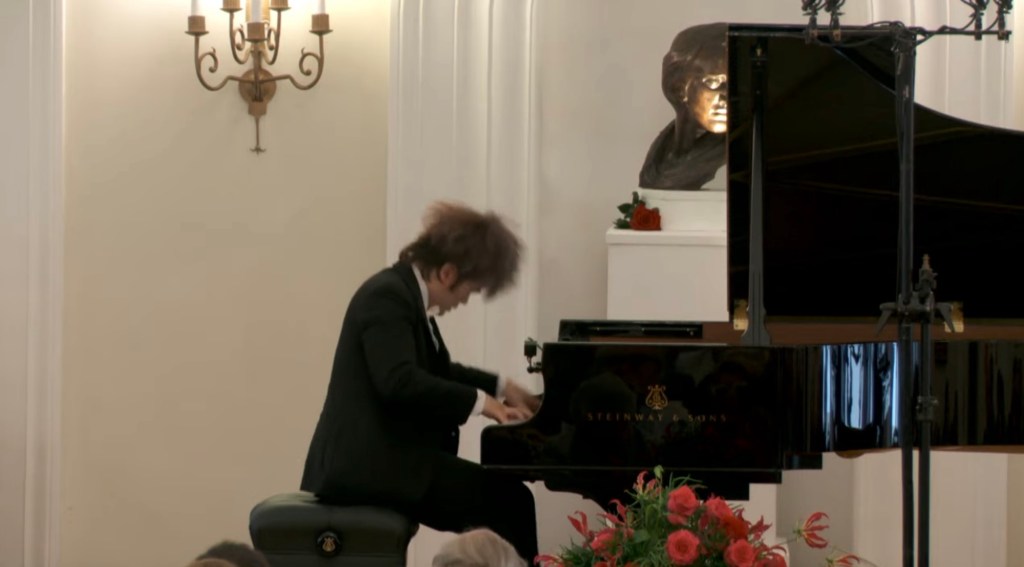
Hao Rao was born on 4 February 2004 in Xiangxi Prefecture, Hunan Province, China. He started learning to play the piano at the age of four. He developed his talent under the tutelage of Vivian Li at the secondary school of the Chinese Xinghai Conservatory in Guangzhou. A solo recital – which he gave when he was 13, during which he played Chopin etudes – at the Guangzhou Opera House/Guang Zhou Da Ju Yuan in China opened the door to performances all over the world. He has given concerts in China, the United States and Europe. He has taken part in many music festivals, performing on one stage with titled musicians. He is a laureate of prestigious competitions for young artists, e.g: The International Piano Competition in Ettlingen (Germany) and the International Piano Competition in Aarhus (Denmark), as well as the International Mozart Competition in Zhuhai (China), the Gina Bachauer International Piano Competition (USA) and the Vladimir Krajnev International Piano Competition in Moscow (Russia). He is also a laureate of the 2nd prize in the Junior e-Piano Competition of the University of Minnesota and the 5th prize in the International Fryderyk Chopin Youth Competition in Beijing. At the 18th International Fryderyk Chopin Piano Competition he qualified for the final “twelve” of the competition.


 ChristopherAxworthy-MusicCommentary