
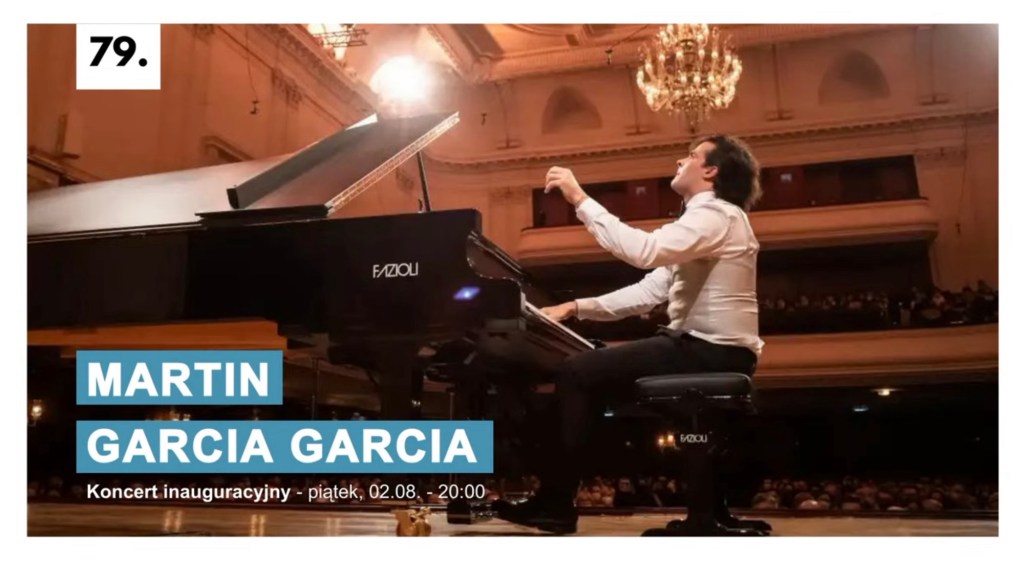
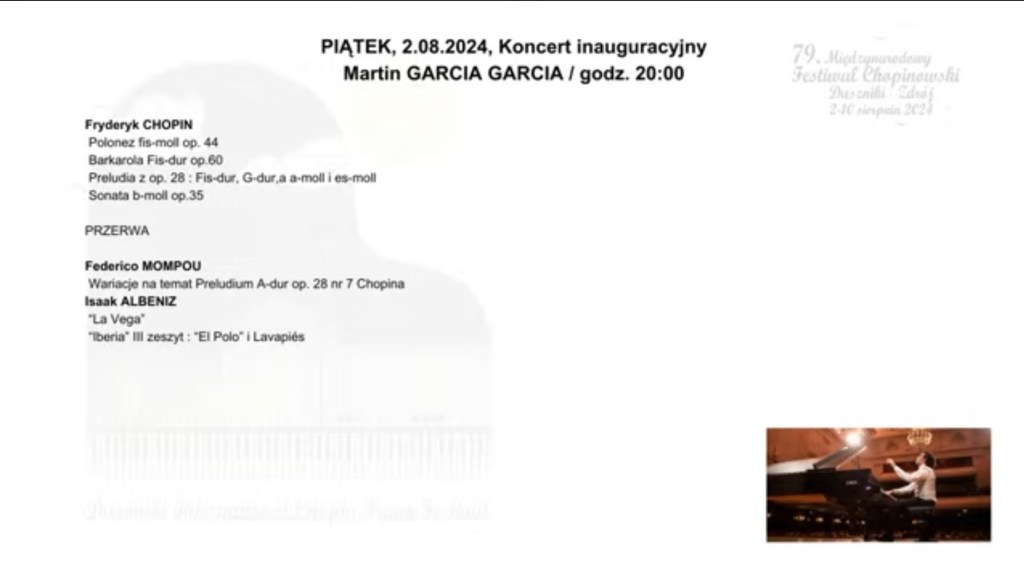
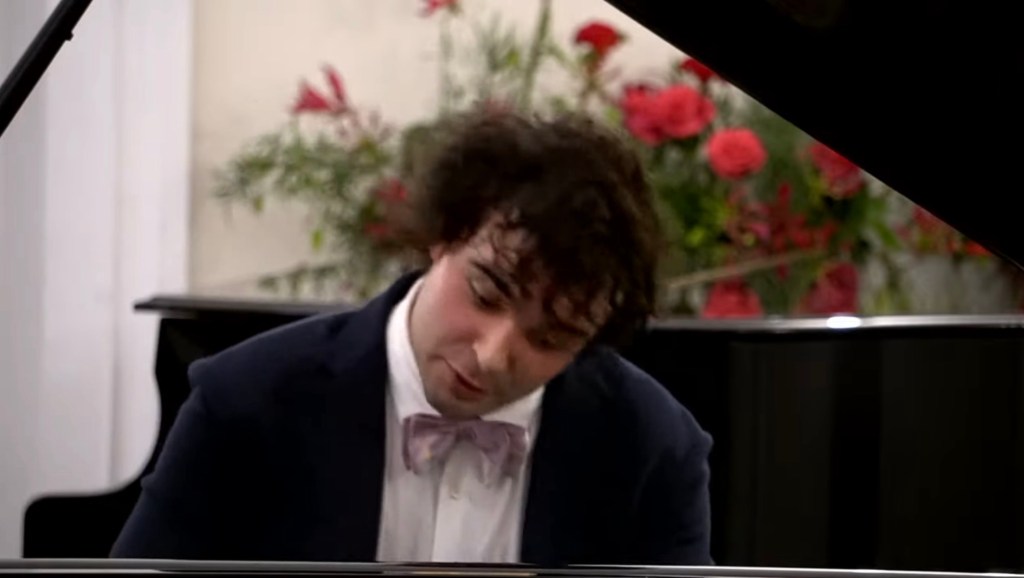
I had heard Martin just a month ago from Chopin’s birth place Zelazowa Wola playing on an Erard of 1838 in a concert streamed without audience.Today was the opening of the Duszniki festival playing this time to a full hall and on a new Fazioli Concert Grand piano. I had heard Martin play in Cremona in the Fazioli Concert Hall last September and had heard a very fine pianist who had made his mark in the Chopin Competition in Warsaw.Today I heard again that fine pianist who has now miraculously matured into a great artist. I quote from my review at Zelazowa Wola which I can only confirm.
Martin Garcia Garcia with the aristocratic playing of a great artist.A Fantasia of marvels in Chopin’s birthplace
The Polonaise op 44 opened this first half dedicated to Chopin in Duszniki : ‘Martin’s limpet like fingers could make the octaves sing with such beauty of legato and shape with a supreme sense of style.He brought an extraordinary architectural shape to the central transition dissolving so naturally into the beautiful central Mazurka.The final eruptions that lead back into the polonaise were like thunderbolts played with fearless abandon .The final coda I always have Stefan Askenase in my mind but today there was the same nobility and delicacy but also an extraordinary clarity .This was the performance of a true artist who had seen this work as a great tone poem and had lived every moment of it with mastery and poetic vision.’
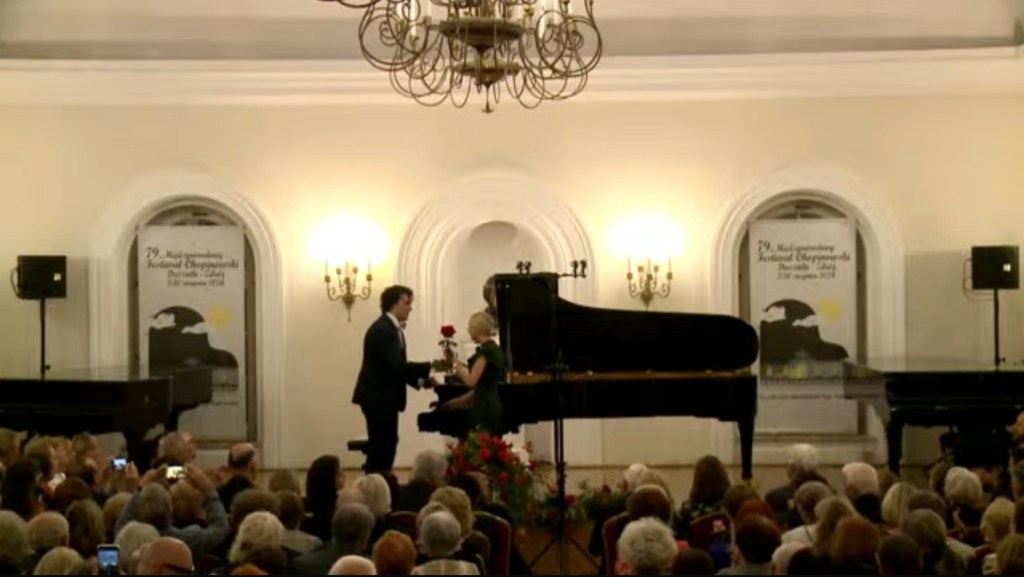
‘The Barcarolle is one of the greatest of works for the piano where there is a continual outpouring of mellifluous beauty reaching heights of the sublime. Nothing could deflect from the refined beauty and poetry of the playing though.The overhead camera allowed us to appreciated the delicate continuous circular movement of his left hand as the barcarolle continued on it’s way with ravishing beauty.Sublime heights were reached with Chopin’s indication ‘dolce sfogato’ revealed with playing of rare sensitivy in a passage that Perlemuter would exclaim ‘we have arrived in heaven’. Martin picking up the tempo towards the end that gave great shape of joy and exultation and a point of arrival from which he could dissolve as the music gradually disintegrates with veiled beauty before our astonished eyes.’

‘Four Preludes from op 28 were played with such beguiling mastery that I look forward in the future to hearing all 24 from such a master.Op 28 n. 13 is one of the most beautiful of this box of jewels and it was the left hand that was played unusually expressively revealing the ravishing beauty of the melody that sits above this weaving wave of notes.Op 28 n. 3 was a wash of sounds flooding the melodic line that was played with simplicity and clarity.Digging deep into the sombre bass notes of n. 2 with the imperious melody played with just one finger projecting sounds of aristocratic, chiselled nobility.There was a dark brooding to n. 14 which prepared us for the extraordinary last movement of the sonata that was to follow.’
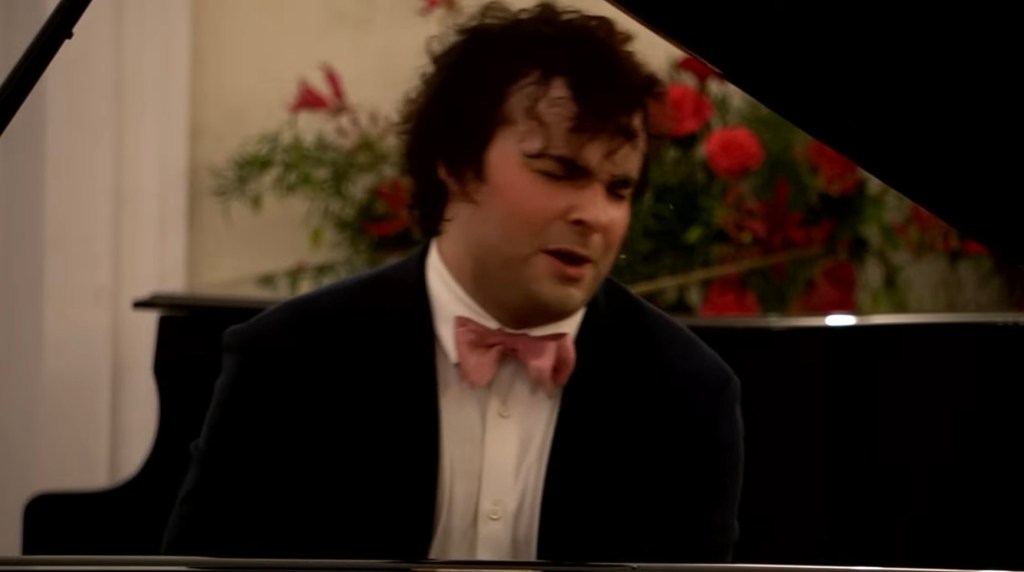
A masterly performance of the B flat minor Sonata op 35 which must truly be one of the greatest masterpieces of all time.Aristocratic nobility and clarity were mixed with luminosity and poetic mastery. A scrupulous attention to Chopin’s very precise markings had me scurrying to the score to see if the two chords before the second subject were indeed staccato! Adding the much debated repeat by going back to the ‘Grave’ introduction and not just the ‘Doppio movimento’ as tradition has dictated ,showed a true thinking musician at the service of the composer.A beautifully artistic scherzo ,not the usual rhythmic exercise but shaped with the same wonderful sound that was to pervade the whole of this recital.The ‘più lento’ I never thought I would hear as beautifully played as I remember from Rubinstein – today in Martin’s hands I was reminded of the sentiment without sentimentality of Rubinstein . There was a gentle but relentless throbbing to the funeral march with the poignancy of the melodic line floated above it as it preceded with heart rending inevitability.I had never noticed the deep bass just before the entry of the Trio until today and again went scurrying to the score as I usually only do with artists of the calibre of Murray Perahia who like Martin really look deeply into the score to find the real meaning of the composer ,transmitting it with humility,intelligence and poetic sensibility.The last movement was exactly as it has been described as the wind wailing over the graves.No pointing of melody but again scrupulous attention to Chopin’s wishes.’ The second half of this opening concert was dedicated to Spanish music by Mompou and Albeniz returning to Chopin for two encores. A beguiling performance of the first Impromptu op 29 with teasing jeux perlé of a lost age .A ravishing performance of the waltz in C sharp op 64 n. 2 that reminded me of the artistry of Rubinstein with it’s timeless elegance and beauty.And of course it was to Rubinstein that Martin turned for a performance of a work that had the audiences in Spain and South America in delirium carrying Rubinstein through the streets after such a rousing performance of Navarra.A work that the composer considered ‘ shamelessly cheap’- but surely a great artist can turn even a bauble into a gem as we heard again today!

But it was in the Variations by Mompou that Martin showed his supreme artistry with a kaleidoscope of sounds as he delved deeply into the piano and found jewels that glittered and seduced. With the final reminiscence of the Prelude that returned with a delicacy and a light that shone with such intimate blinding simplicity and beauty.This was after a series of variations that had ranged from the pungent harmonies and voices that suddenly appeared in the midst of an always recognisable Prelude.There was a playful dance of almost jazz idioms and a left hand study that was every bit as beautiful as Godowsky or Scriabin’s studies.It was played with supreme artistry of such subtle colouring and of quite seductive beauty as Martin’s sensitive fingers just stroked the keys with infinite care.There was even a Mazurka of infectious dance rhythm but full of the charm that Mompou exudes.There was a scherzo of scintillating quixotic brilliance and a nocturne of quite overwhelming beauty. Romantic ardour too of almost Shultz- Evler Viennese charm, but it was the sudden appearance of Chopin’s Fantasie Impromptu hidden amongst all the jewels that glittered and glistened in this remarkable young man’s hands that made one wonder why this work has rarely if ever been heard in the concert hall.I know of Mompou’s atmospheric salon pieces that Agosti placed in the waste basket when one of his students dared present them in his masterclasses in Siena in the 60’s.But this much larger work full of fantasy and contrasts showed the mastery of a much more serious composer than the one Agosti had in mind!

Albeniz of course was given masterly performances by an artist who was living every minute and where every sound had a meaning and a voice but always of refined good taste.I have not heard the like since Alicia De Larrocha showed us the true aristocratic sounds of Spain with the same kaleidoscopic sense of colour and brilliance that we witnessed today.
A Fazioli piano today and a historic Erard a month ago but artistry and supreme style are born in the soul not on the drawing board.


Cremona the city of dreams – a global network where dreams become reality

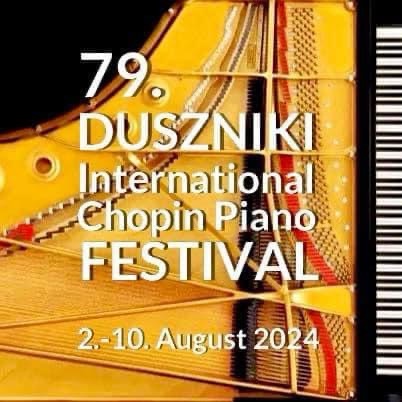
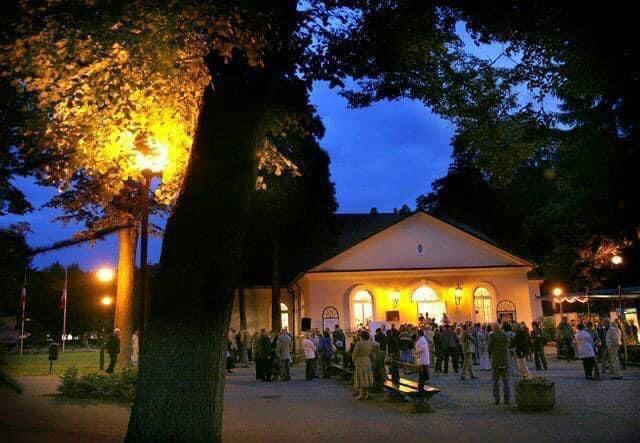
On the occasion of Inauguration day 79 at the edition of the Chopinowski Festival in Duszniki-Zdrój, I have the honor to inform you about today’s book premiere by Dr. Aneta Teichman titled “Piotr Paleczny. Portrait of the Artist”.
I would like to express my deep gratitude to the Author of the book, Mrs. Aneta Teichman, for her enormous, very complicated work and extraordinary commitment to the realization of this project.
I sincerely thank the POLIHYMNIA Music Publishing House for their kindness, patience and help in keeping the planned date of the book premiere.
I wholeheartedly thank Mrs. Anita W Ansik-Płoci fotografiiska, the author of the photograph used on the cover!
I would like to thank everyone whose work and help made it possible to realize and publish the book!

The Variations on a Theme of Chopin is a work for solo piano by Federico Mompou. The theme is based on the Prelude in A op 28 n.7 (the shortest of the 24 Preludes ).
It started out as a piece for cello and piano, written in collaboration between Mompou and the cellist Gaspar Cassadò.Work on this version of the piece started in 1938, but was abandoned. Mompou completed the full set of 12 variations in 1957,dedicated to Mompou’s friend Pedro Masaveu, a banker who had made available to Mompou his house in which to compose.The variations were premiered by the Catalan pianist Albert Attenelle in 1964 after working with the composer.
- Theme. Andantino (A major)
- Variation 1. Tranquillo e molto amabile (A major)
- Variation 2. Gracioso (A major)
- Variation 3. Lento (D major, for the left hand)
- Variation 4. Espressivo (F major)
- Variation 5. Tempo di Mazurka (A major)
- Variation 6. Recitativo (G minor)
- Variation 7. Allegro leggiero (A major)
- Variation 8. Andante dolce e espressivo (F major)
- Variation 9. Valse (A major)
- Variation 10. Évocation. Cantabile molto espressivo (F sharp minor; Mompou quotes his own Cancion y Danza n. 6 and in the middle section, he quotes the central theme from Chopin’s Fantasie Impromptu op 66
- Variation 11. Lento dolce e legato (F sharp minor)
- Variation 12. Galope y Epílogo (A major).
La Vega” was intended to be the second movement of a symphonic suite called Alhambra after the Arab palace in Granada , in the Andalusia region in Spain.The suite was drafted in Paris in December 1896, and consisted of six pieces:
- Preludio
- La Vega
- Lindaraja
- Generalife
- Zambra
- Alarme!
Albéniz completed only “La Vega” (on 26 January 1897) and the first 16 bars of “Generalife”. The score was written in piano solo format, and “La Vega” was later orchestrated. The orchestral version of “La Vega” was never published however, but the composer decided to publish the piano solo version after discarding the last three pages and writing a new, more developed version of the entire piece, with a reprise of the opening “A” section taking the place of the three discarded pages. This new expanded version was completed on 14 February 1897 and published that year.The piece lasts approximately 14 minutes.
“La Vega” is an evocation of the Granada plains on the edge of the city, a “musical reflection”, as the composer put it, contemplated from the Alhambra Palace. Claude Debussy , on hearing Albéniz play the piece, enthusiastically told him of his wish to immediately go and discover Granada.
Iberia is a suite for piano composed between 1905 and 1909 .It is composed of four books of three pieces each; El Polo (flamenco palo) and Lavapies,after a district of Madrid,both are from Book 3
It is Albéniz’s best-known work and considered his masterpiece. It was highly praised by Claude Debussy and Olivier Messiaen , who said: “Iberia is the wonder for the piano; it is perhaps on the highest place among the more brilliant pieces for the king of instruments”. Stylistically, this suite falls squarely in the school of Impressionism , especially in its musical evocations of Spain.It is considered one of the most challenging works for the piano: “There is really nothing in Isaac Albeniz’s Iberia that a good three-handed pianist could not master, given unlimited years of practice and permission to play at half tempo. But there are few pianists thus endowed.”Albéniz had originally intended to include Navarra in the last book of Iberia, but then he decided that it was ‘shamelessly cheap’ and did not belong there; he composed ‘Jerez’ as a substitute!
The twelve pieces were first performed by the French pianist Blanche Selva , but each book was premiered in a different place and on a different date. Three of the performances were in Paris , the other being in a small town in the south of France.
- Book I: May 9, 1906, Salle Pleyel , Paris
- Book II: September 11, 1907, Saint- Jean – de- Luz
- Book III: January 2, 1908, Palace of Princess de Polignac , Paris
- Book IV: February 9, 1909, Société Nazionale de Musique ,Paris
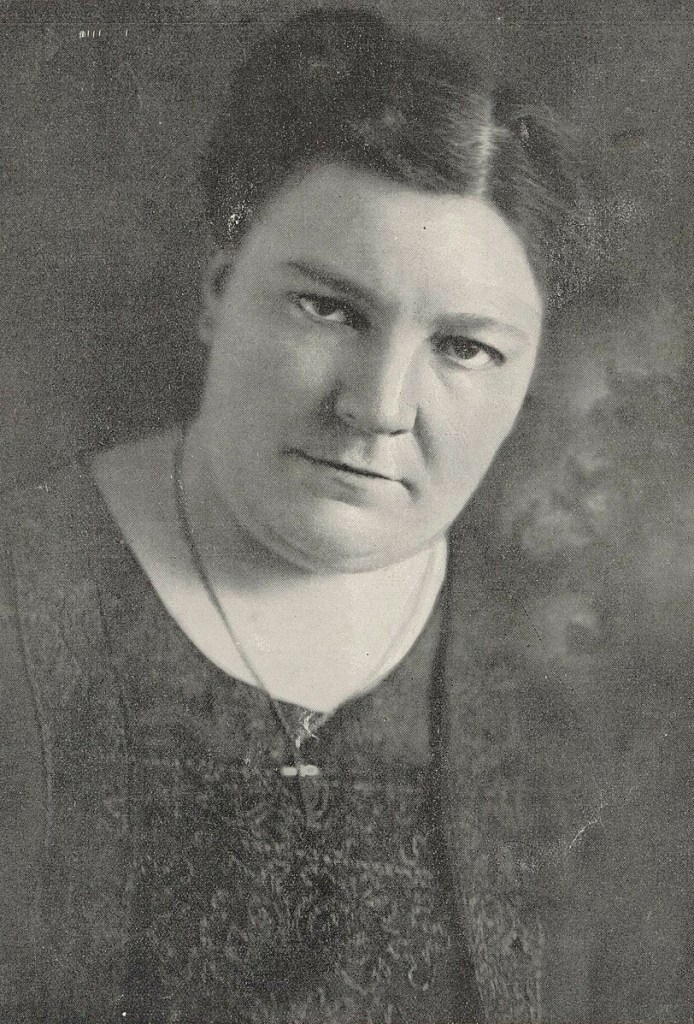
Marie Blanche Selva (Catalan Blanca Selva i Henry, 29 January 1884 – 3 December 1942) was a French pianist, music educator, writer and composer of Spanish origin.
https://www.youtube.com/watch?v=IdlM-nK8ppM
 ChristopherAxworthy-MusicCommentary