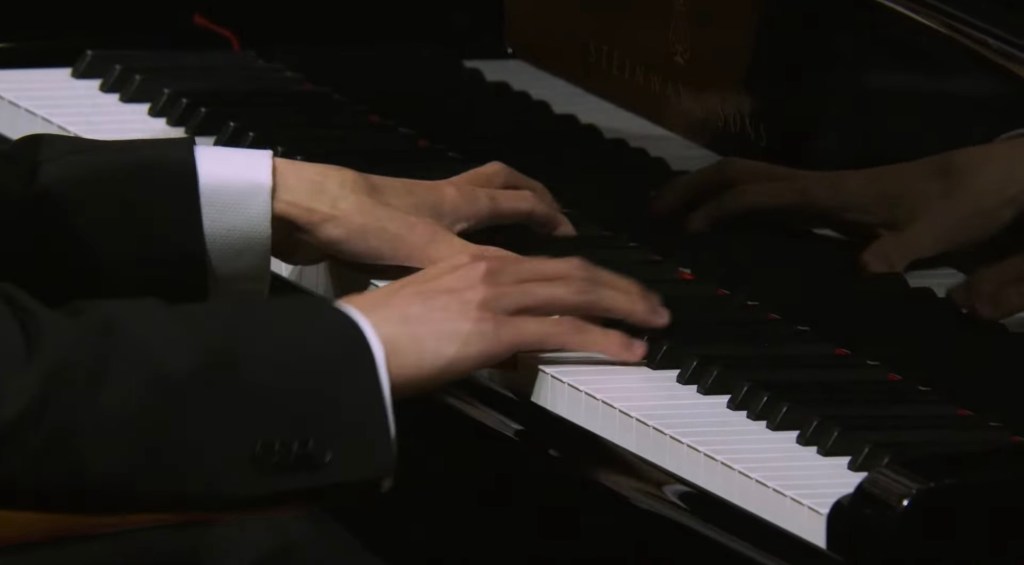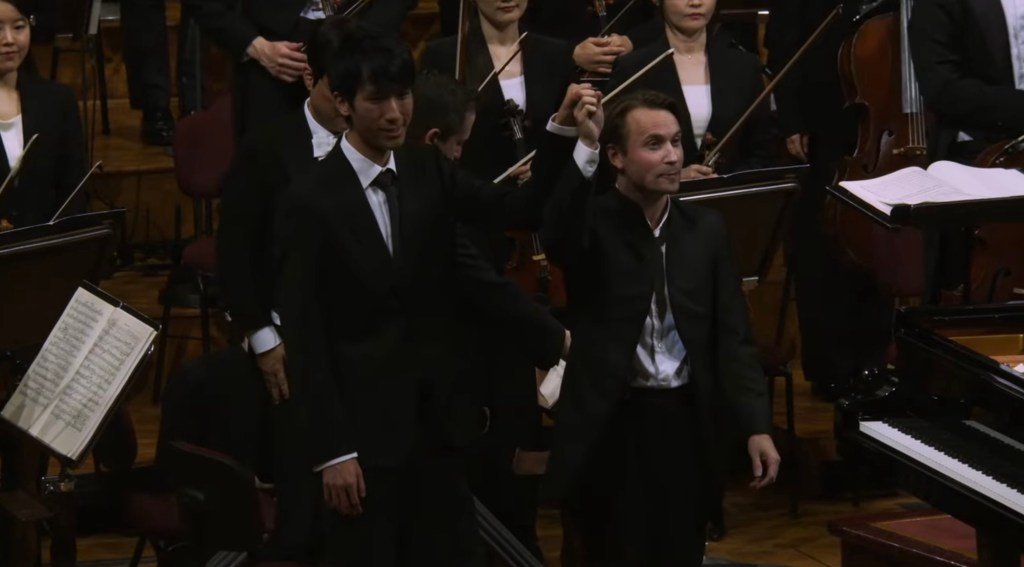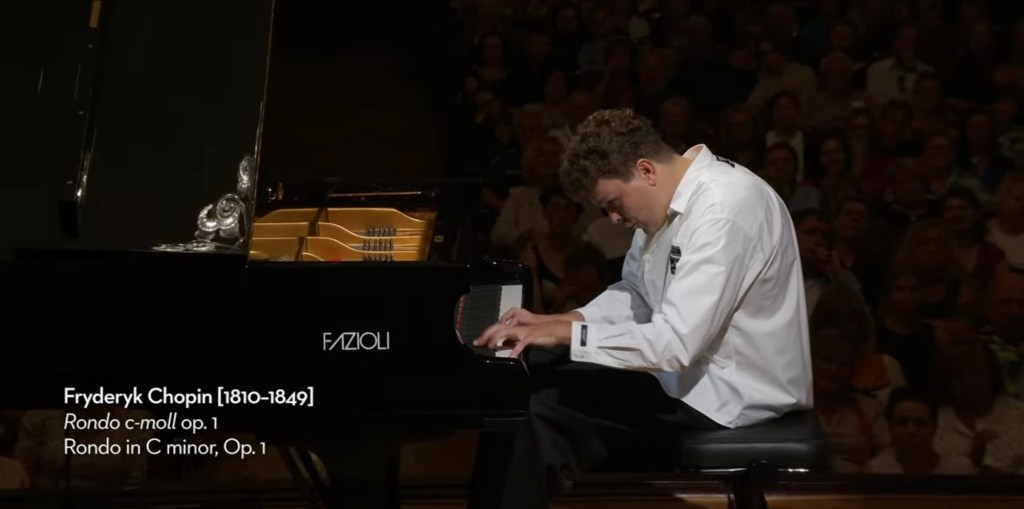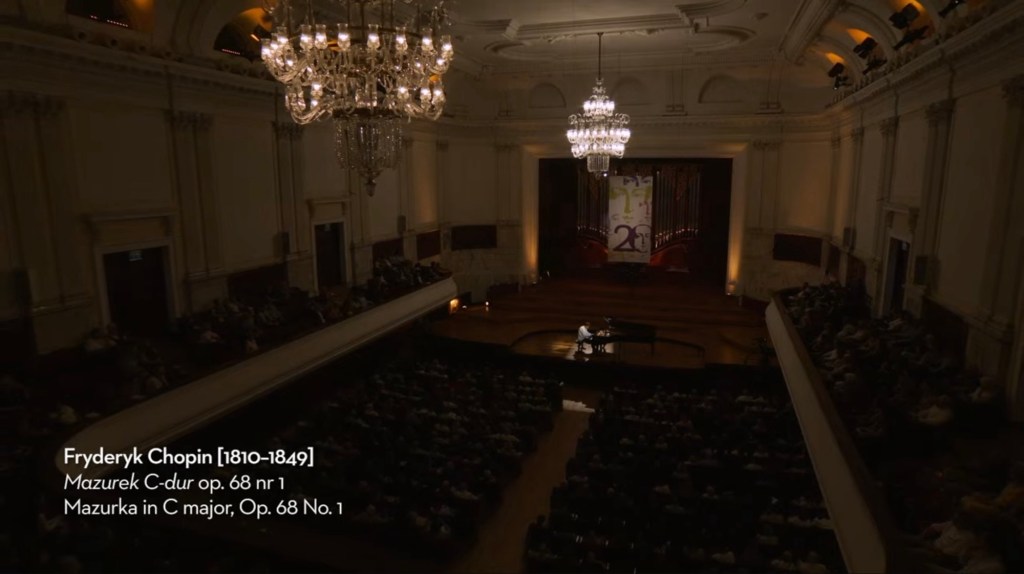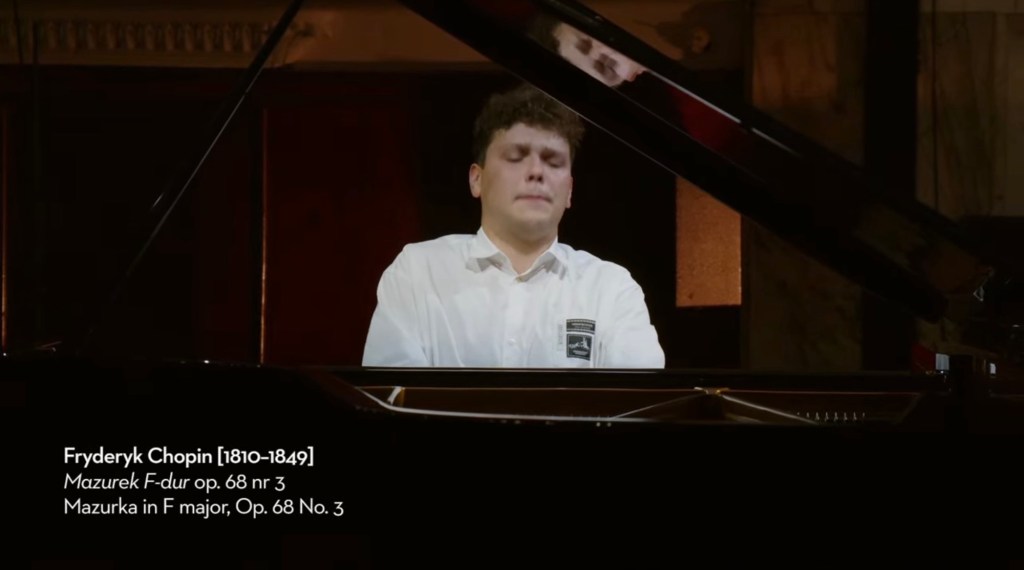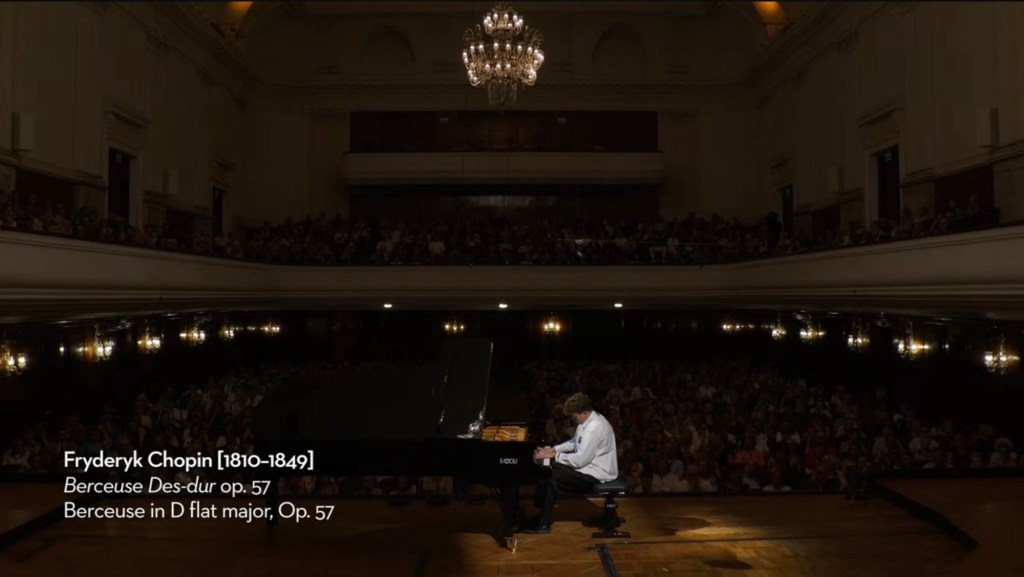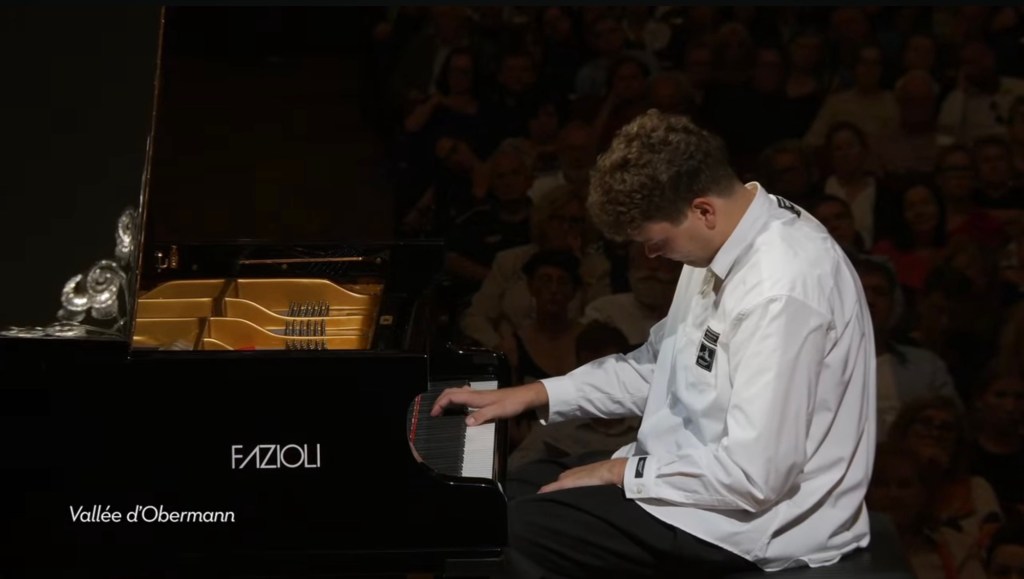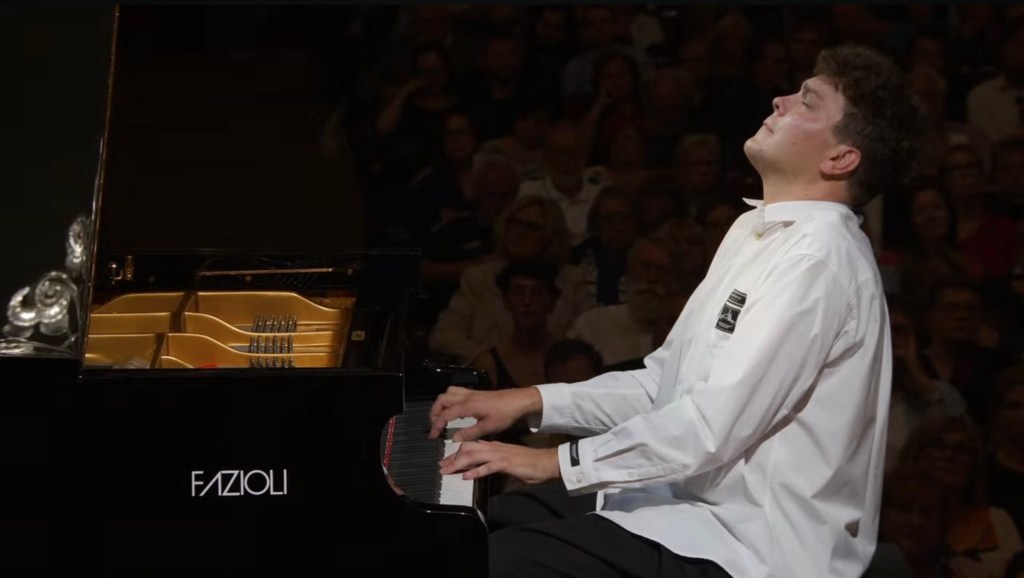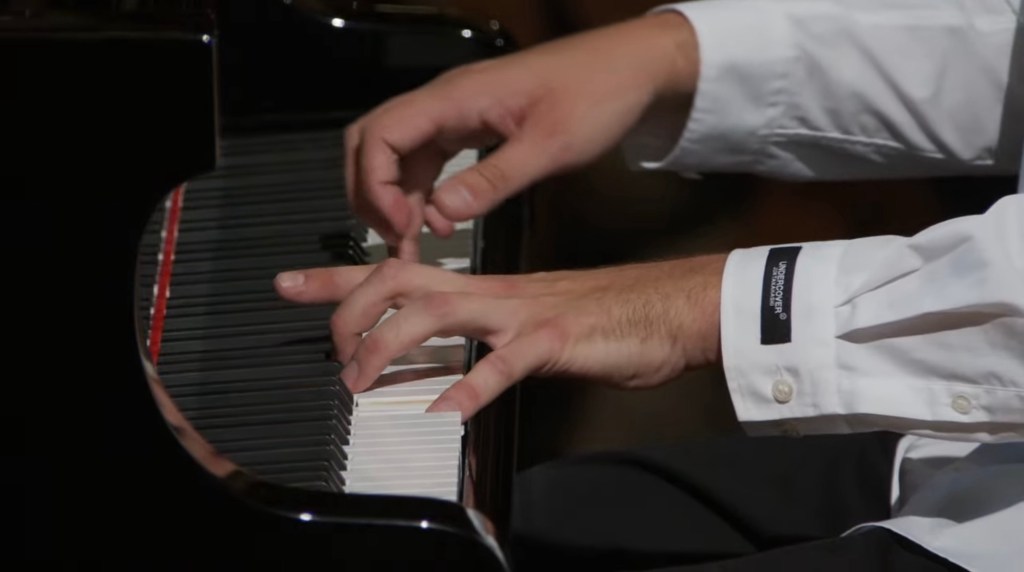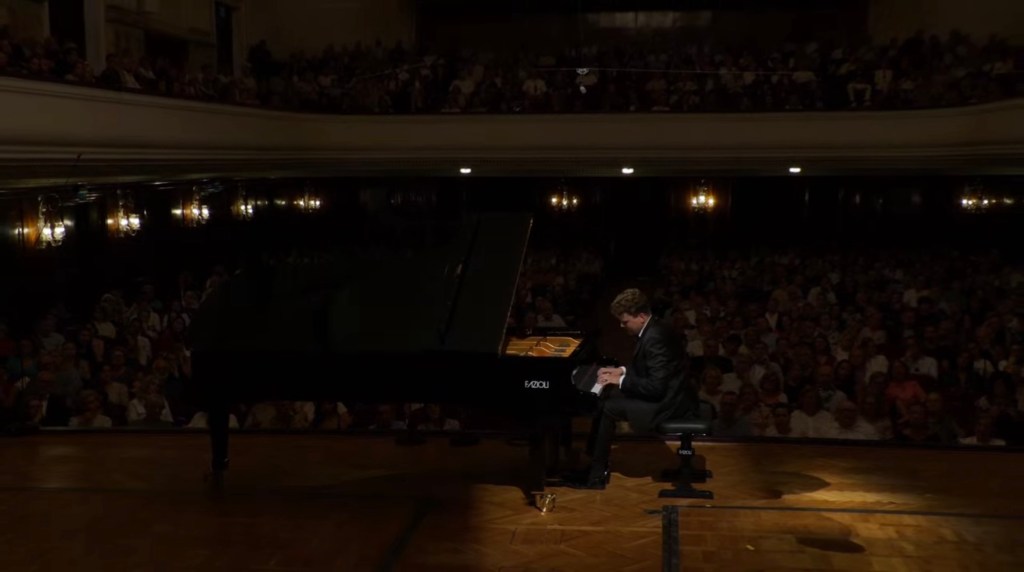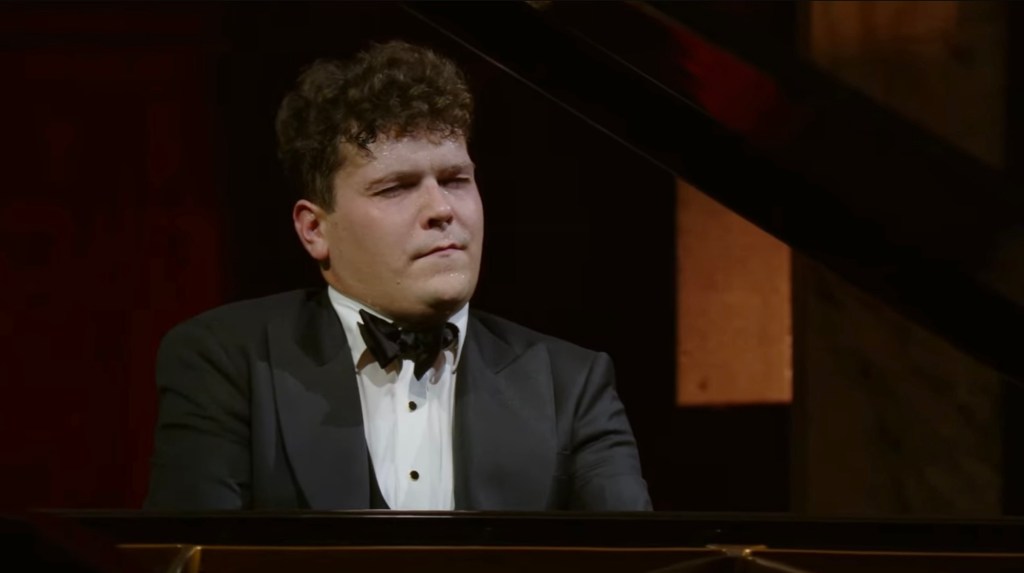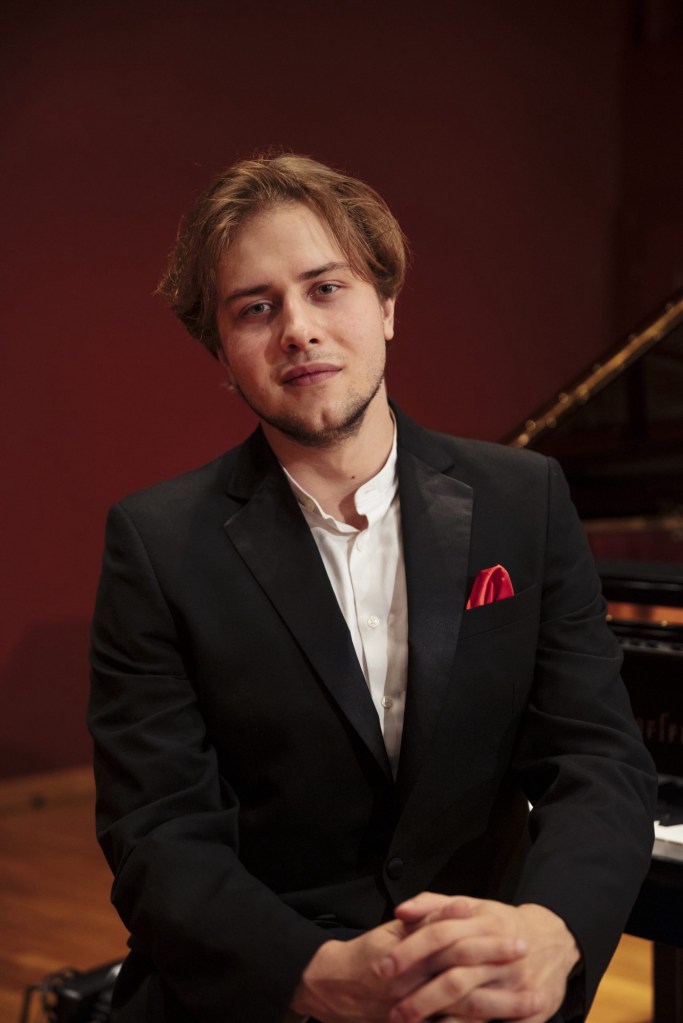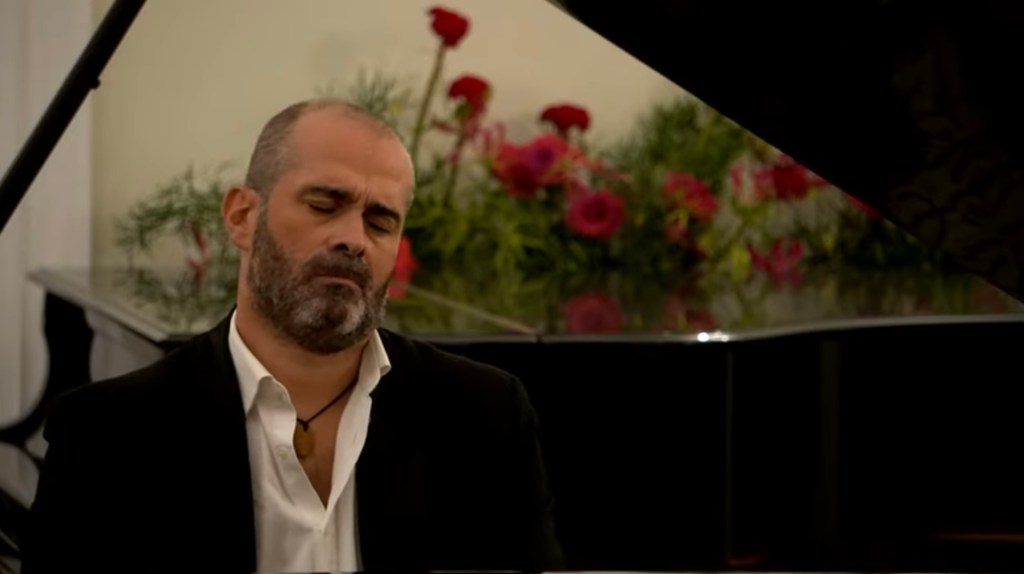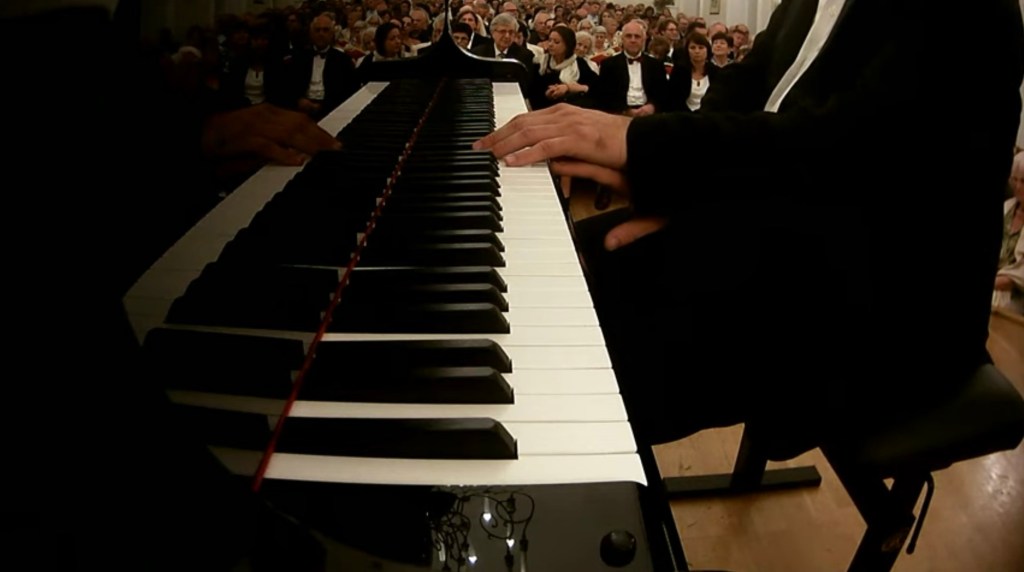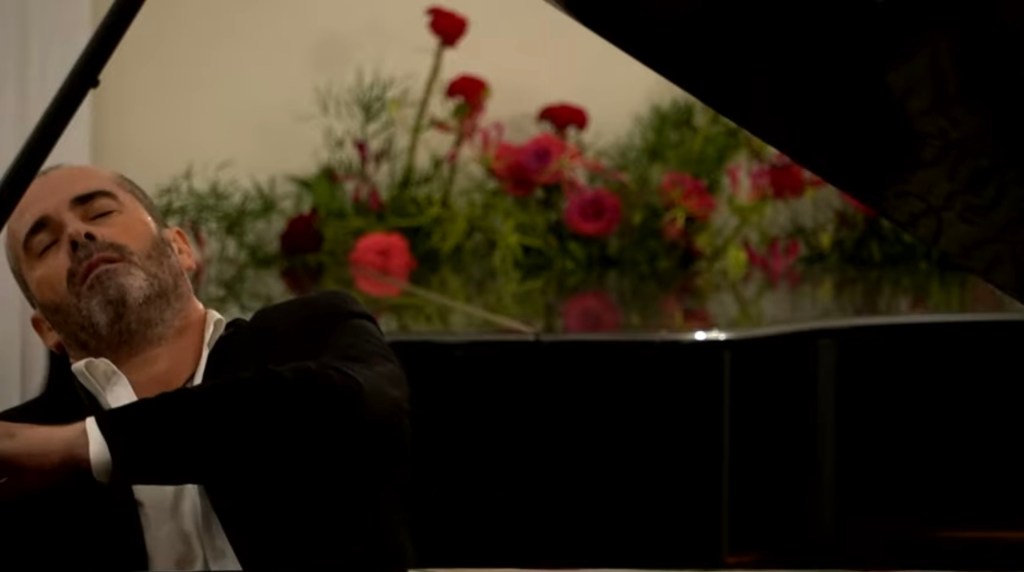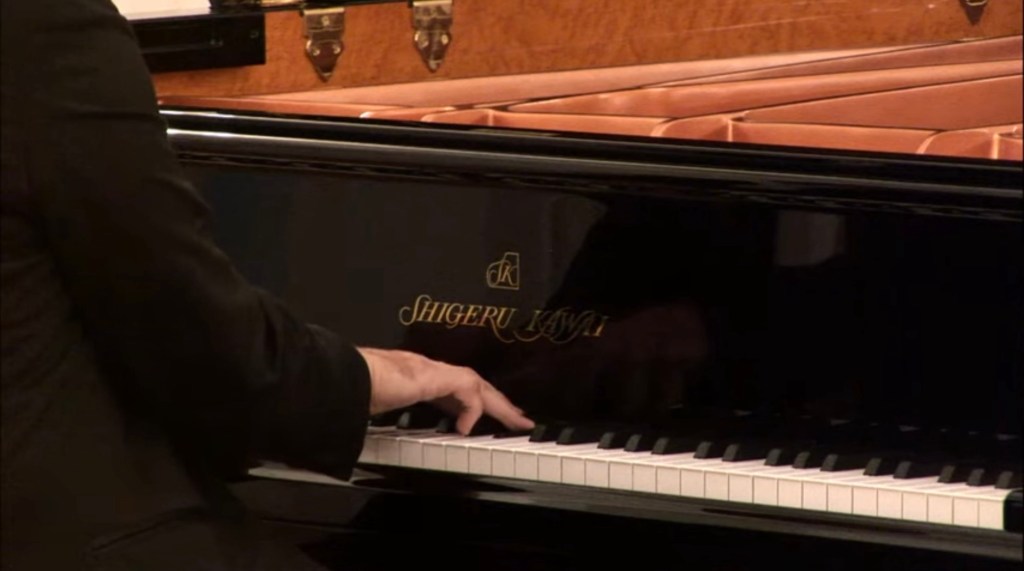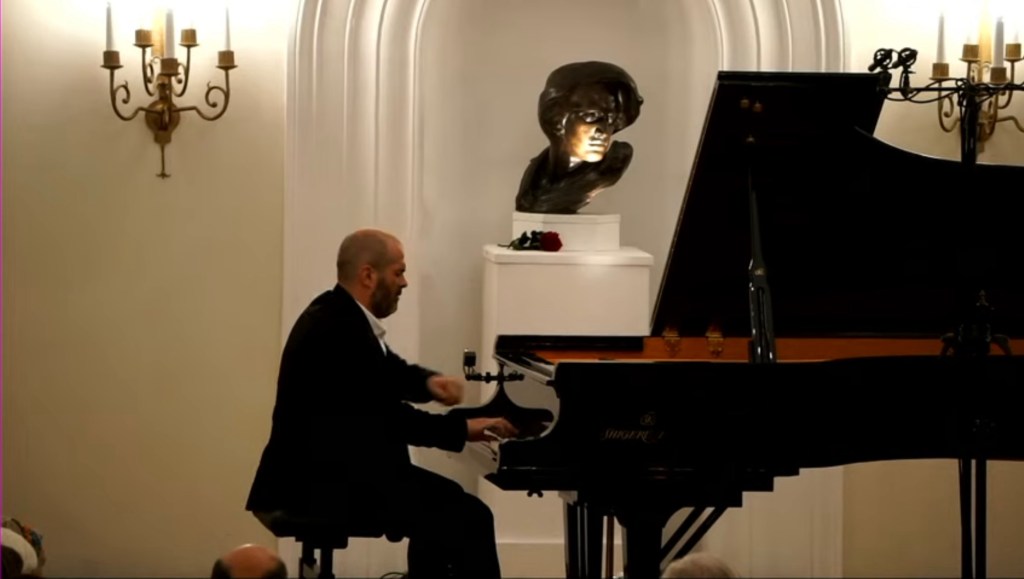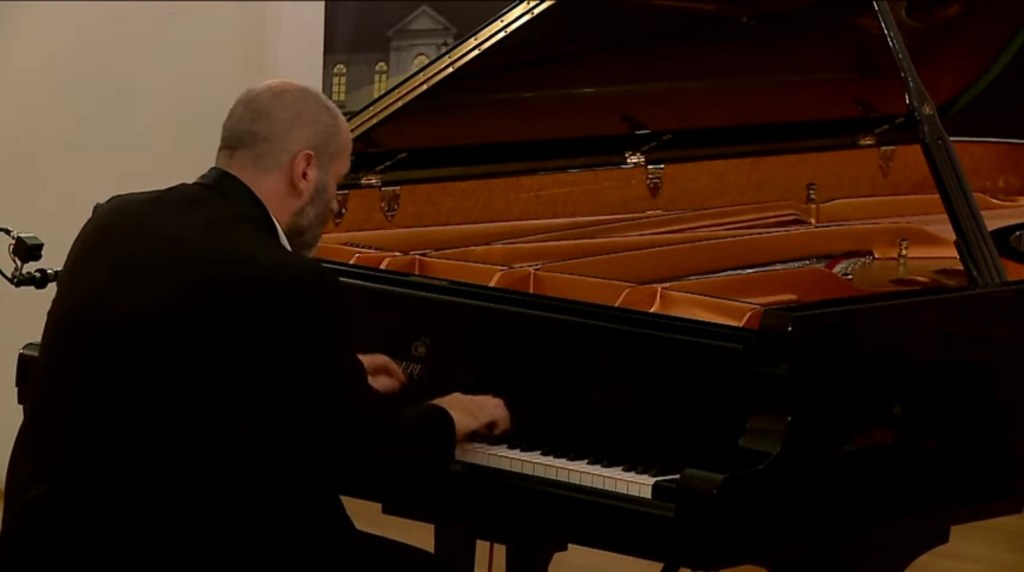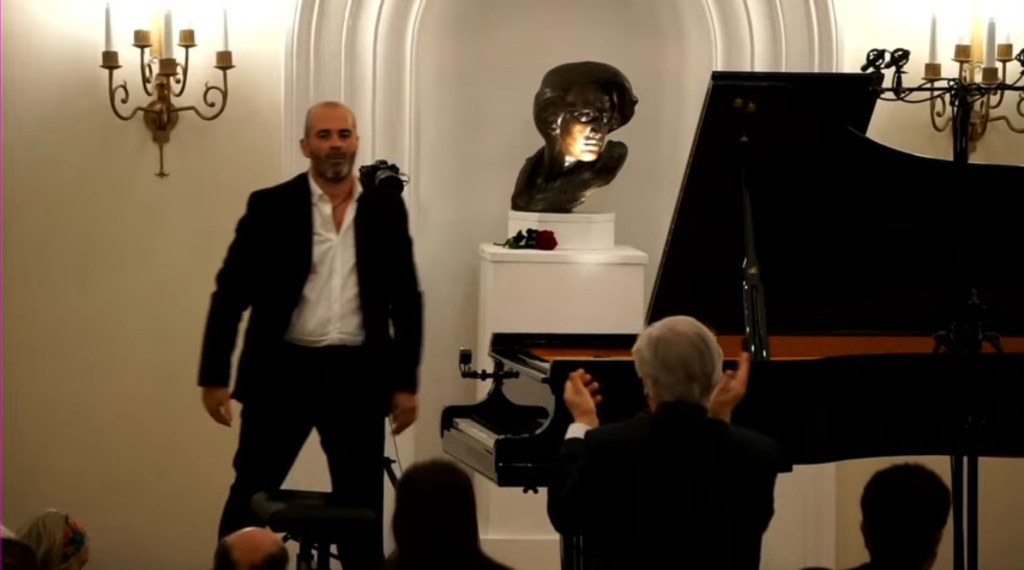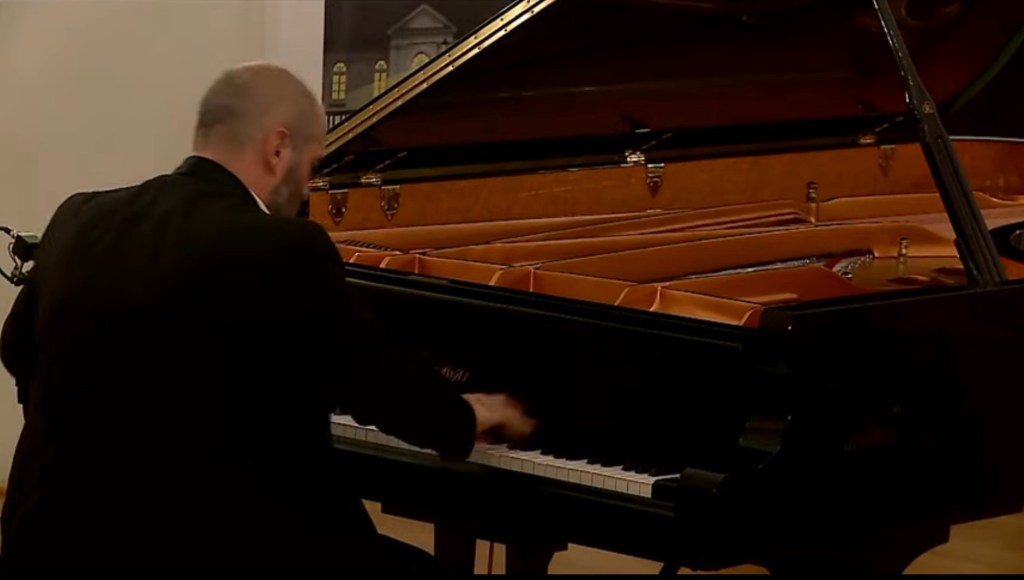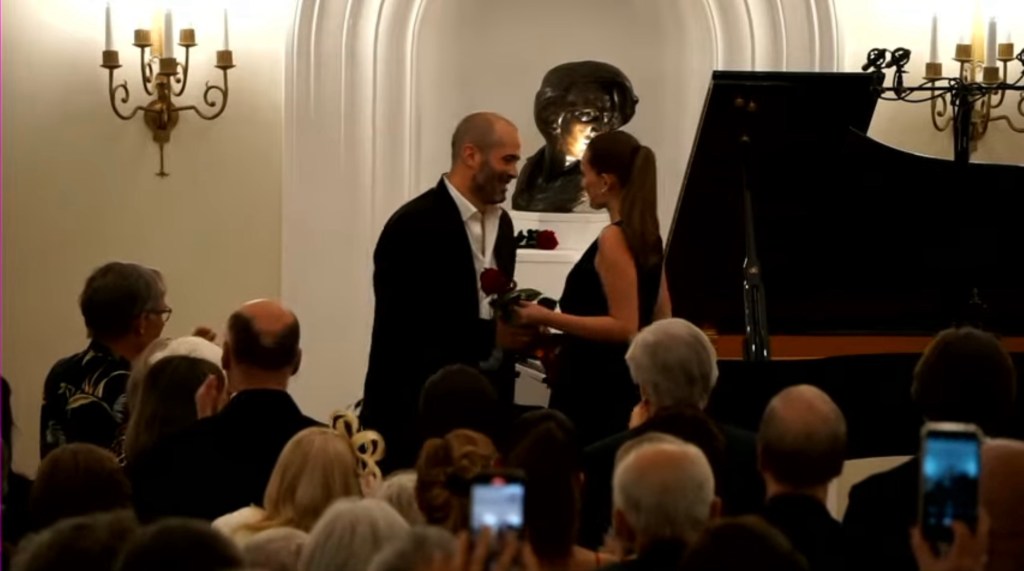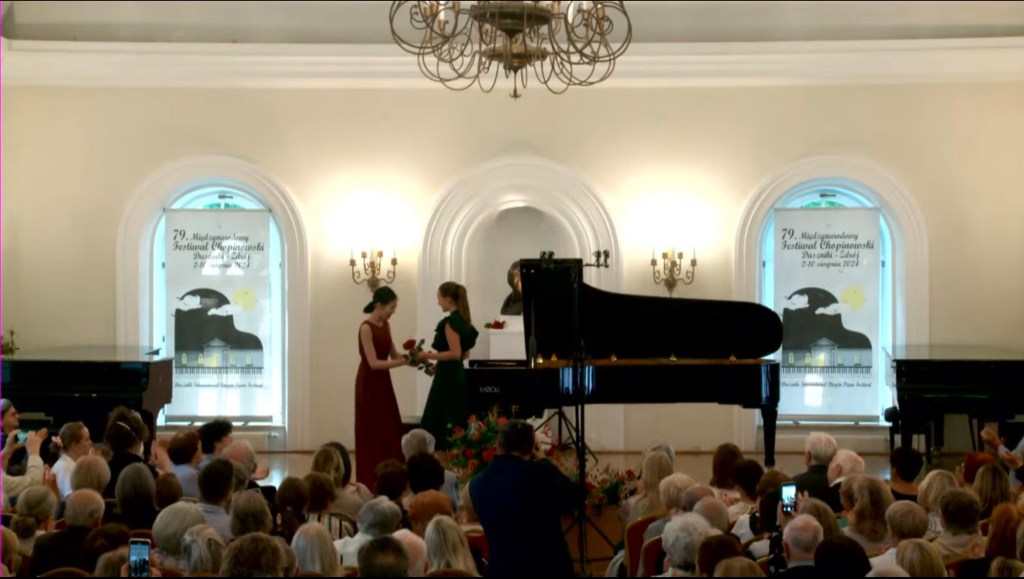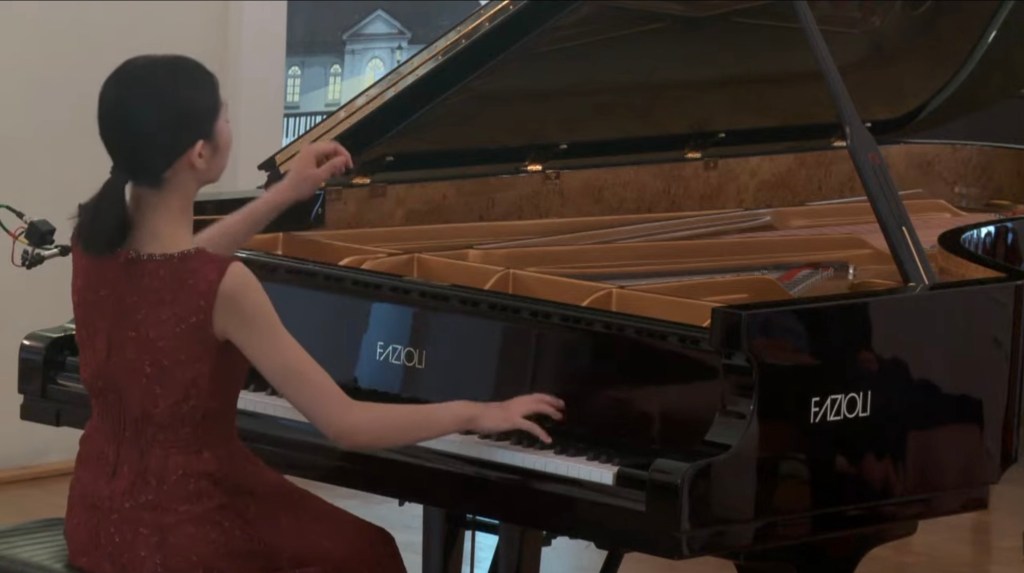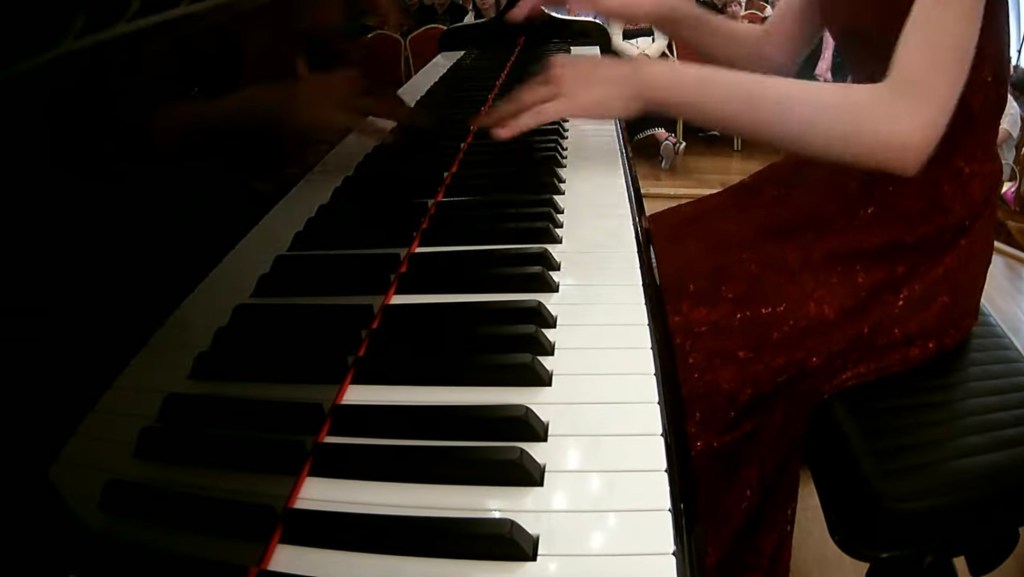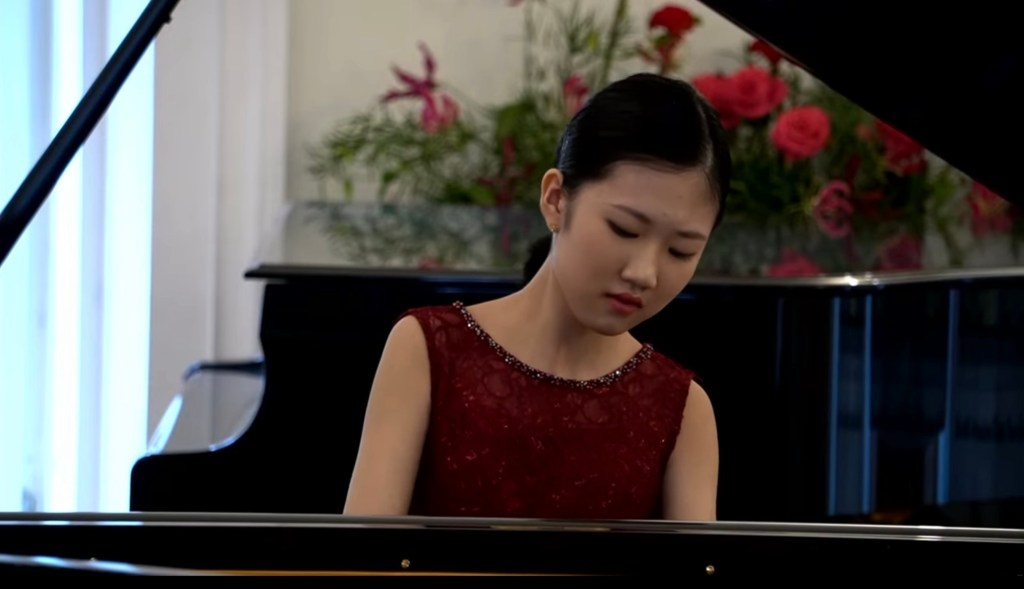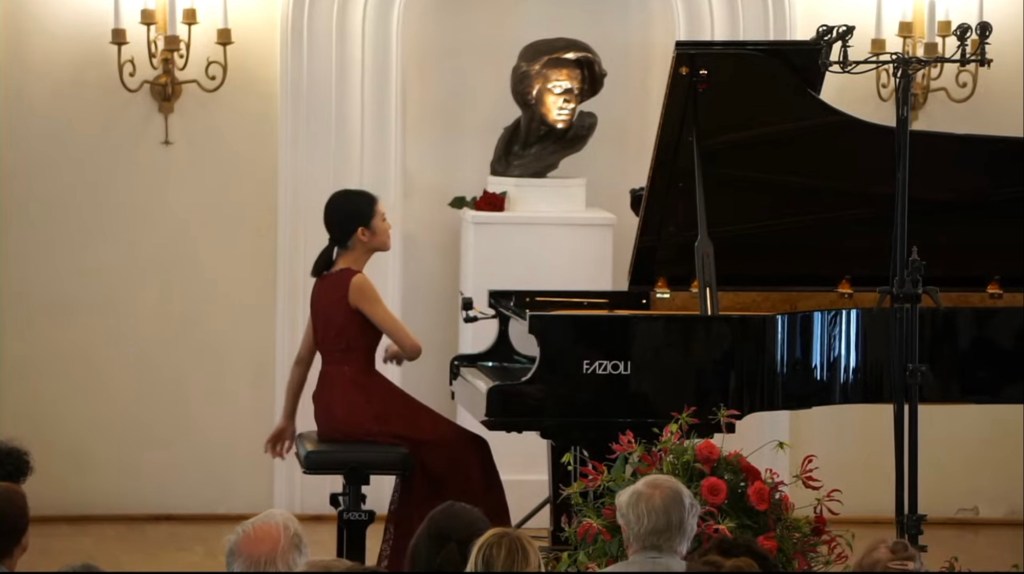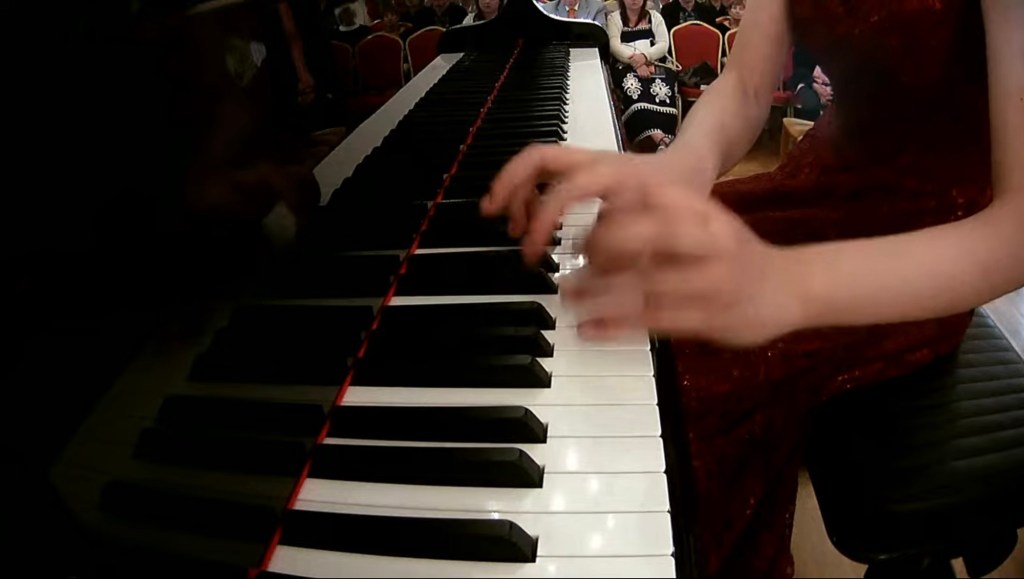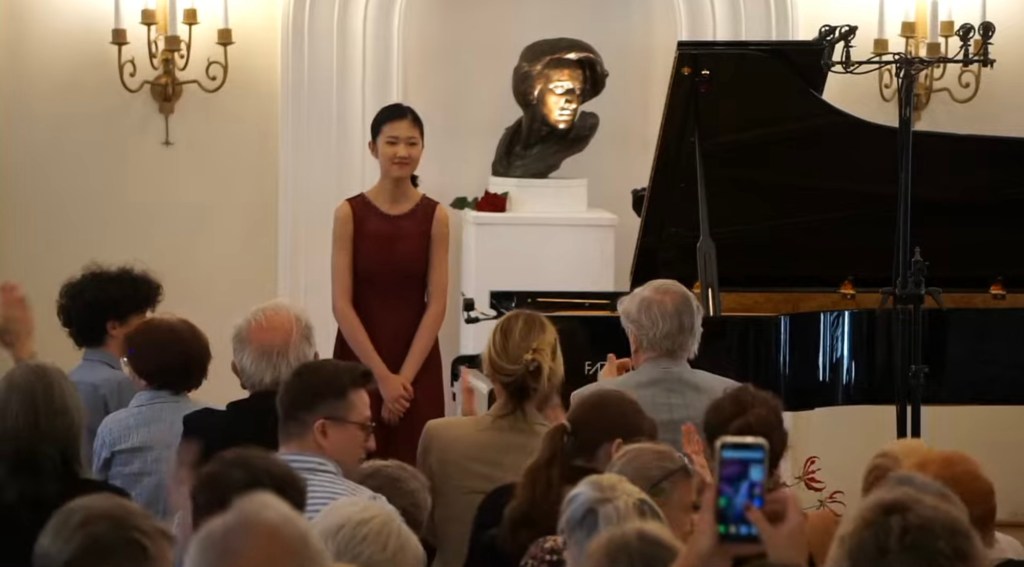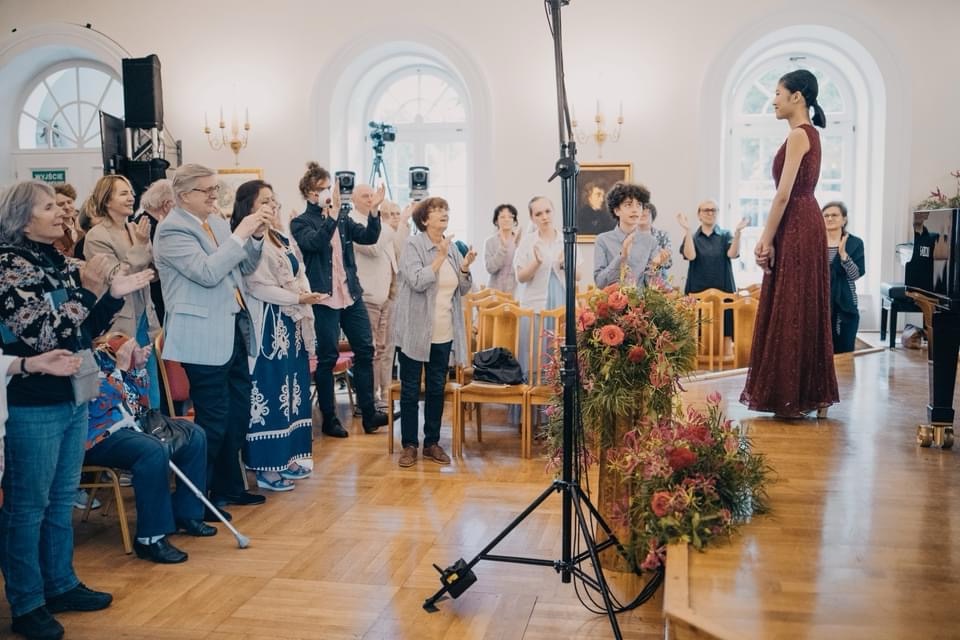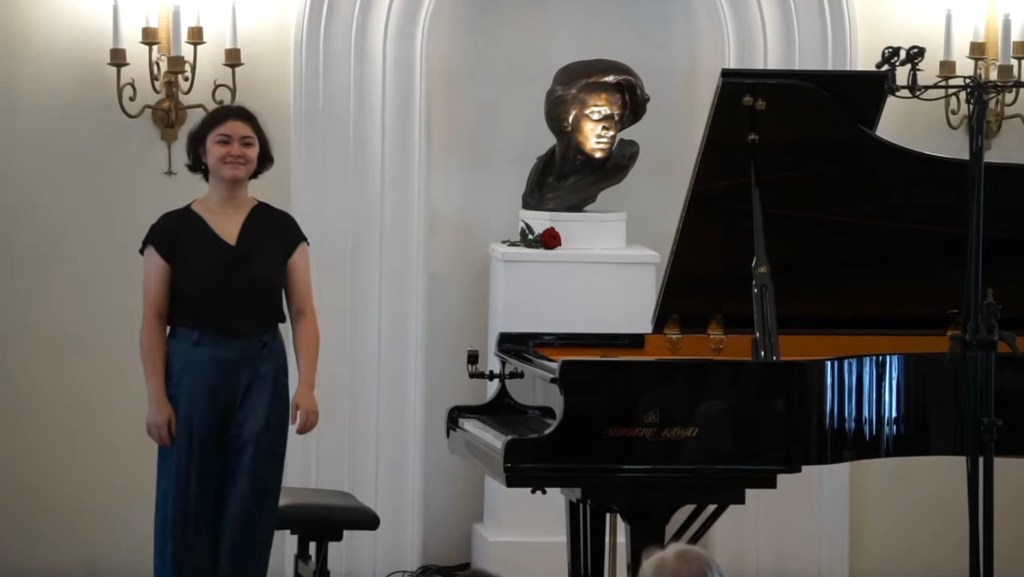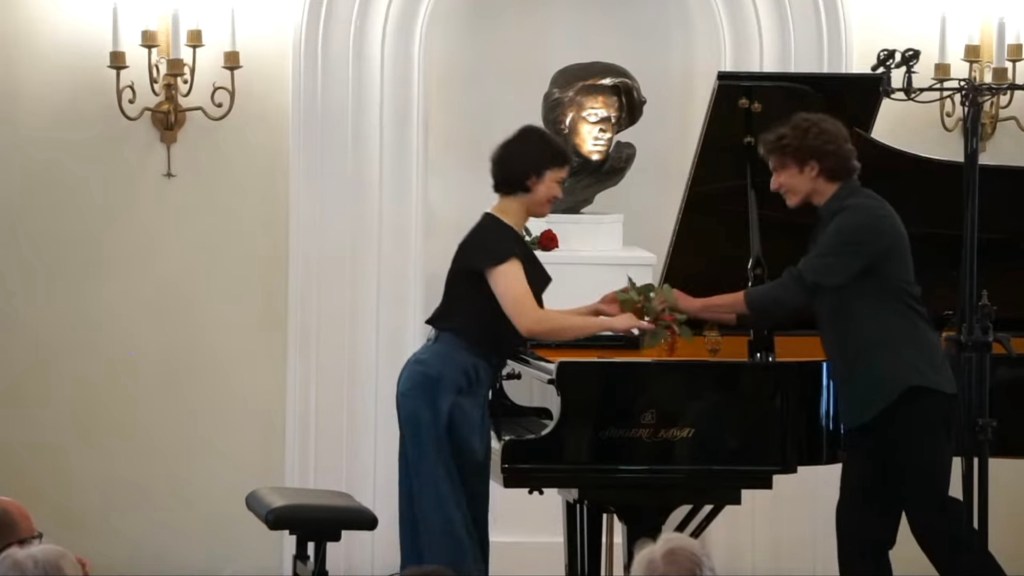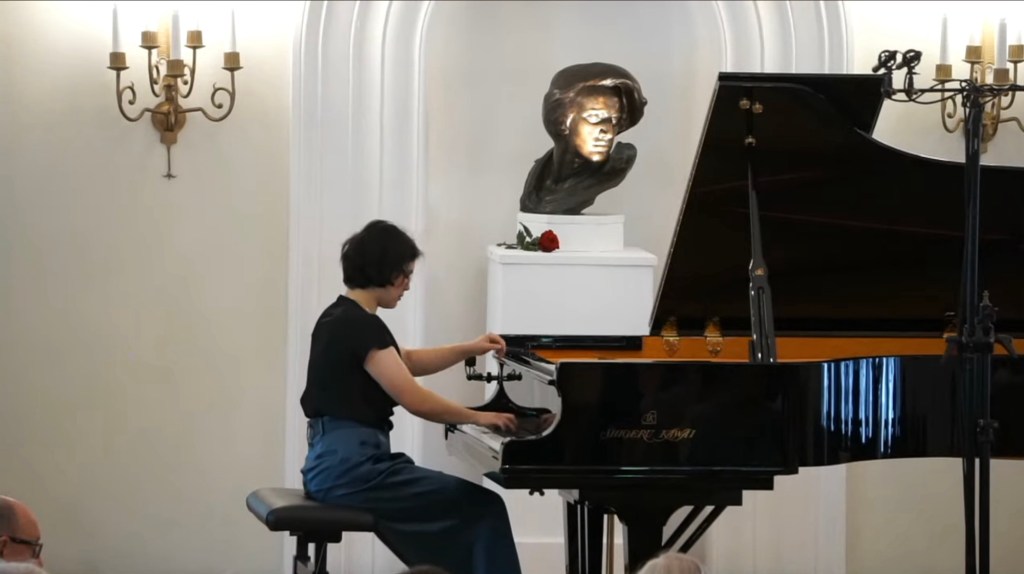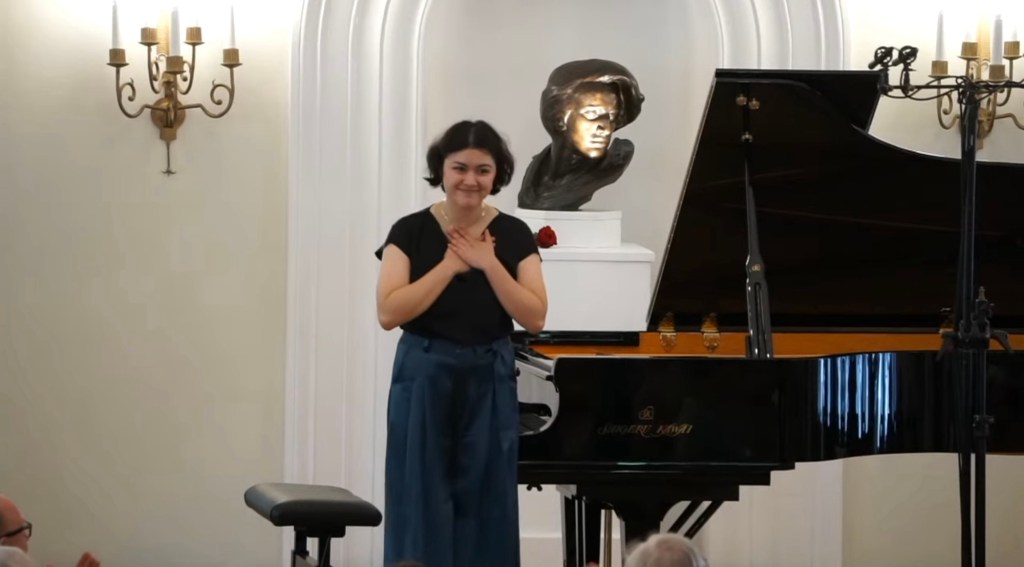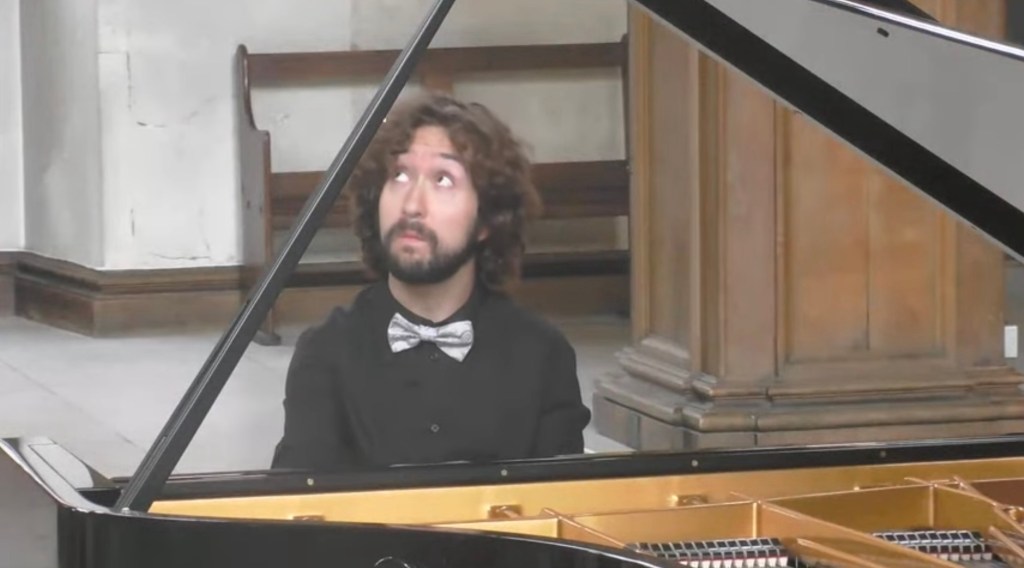
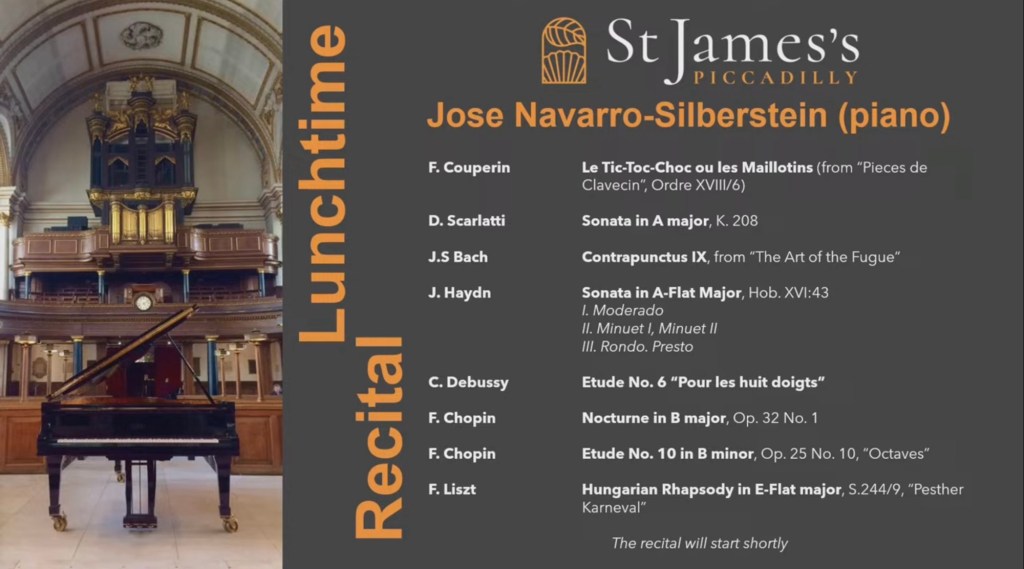
José Navarro- Silberstein at St James’s Masterly performances of authority and style

https://www.youtube.com/live/AU12vLRhXWY?si=C6VPbj9uL8qJyo8D

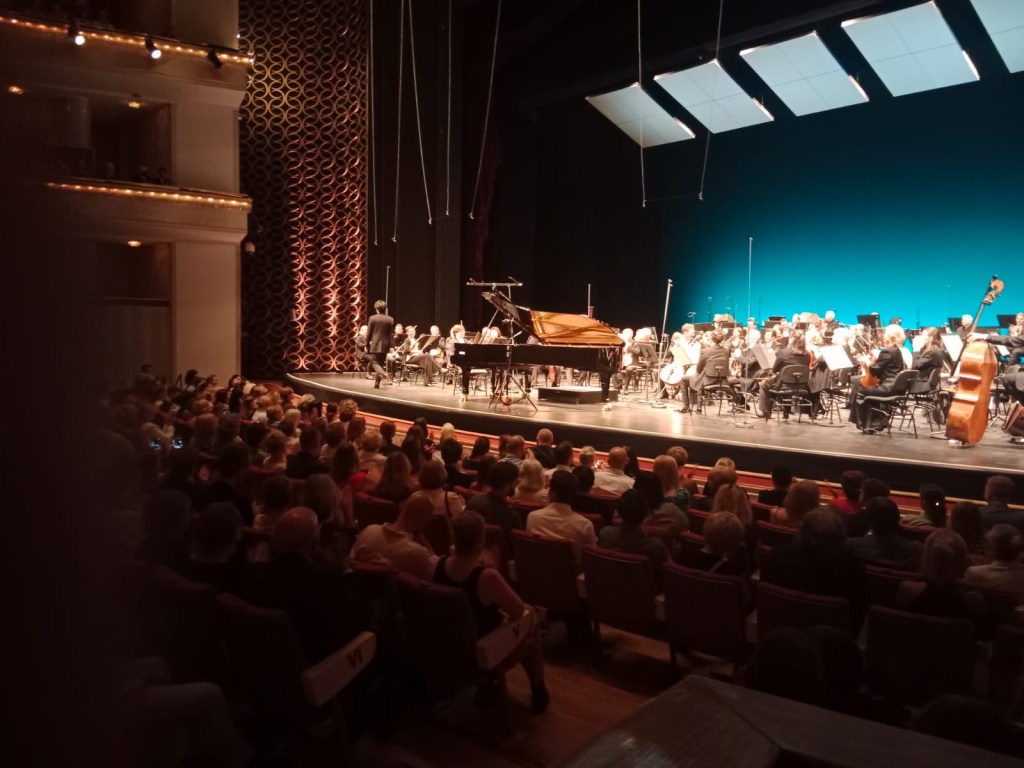
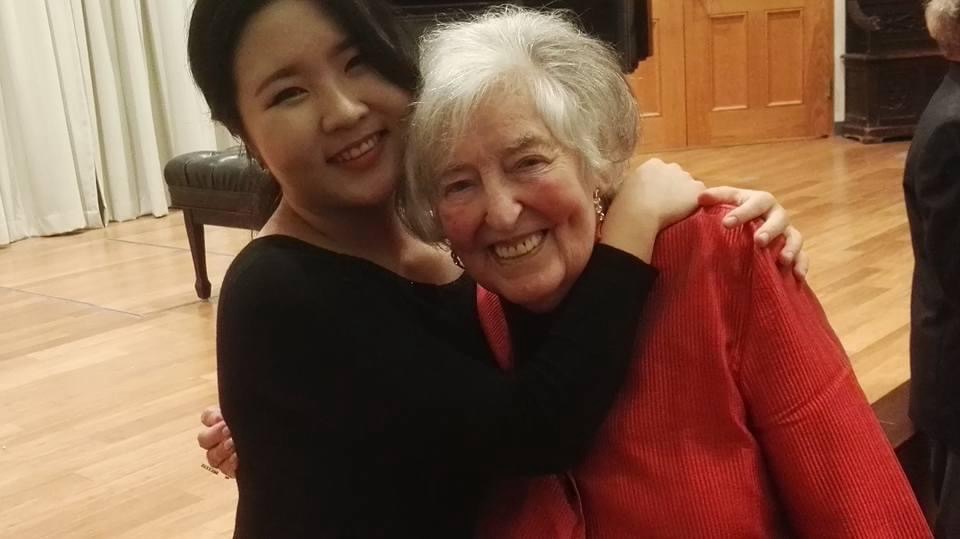
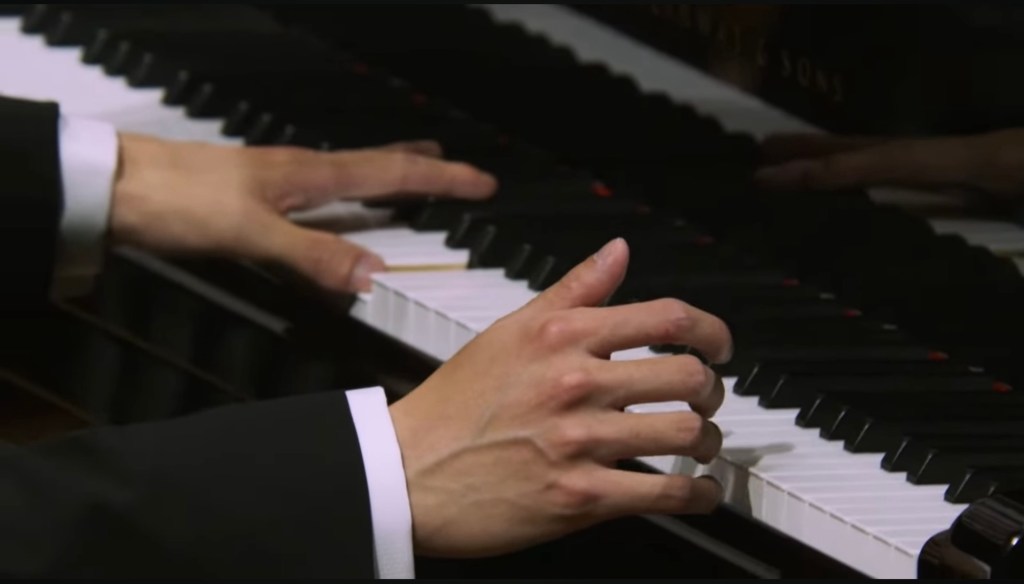
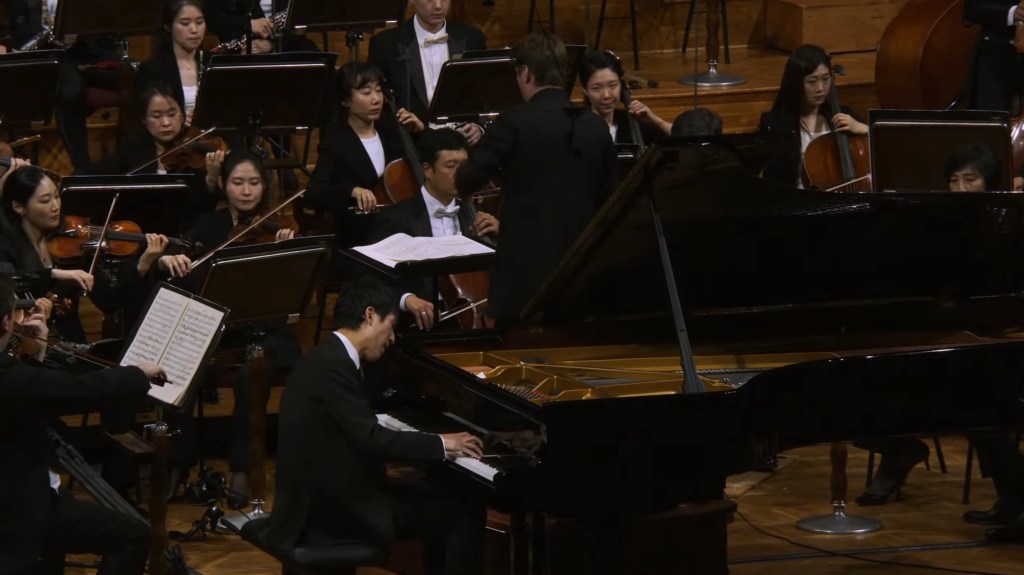
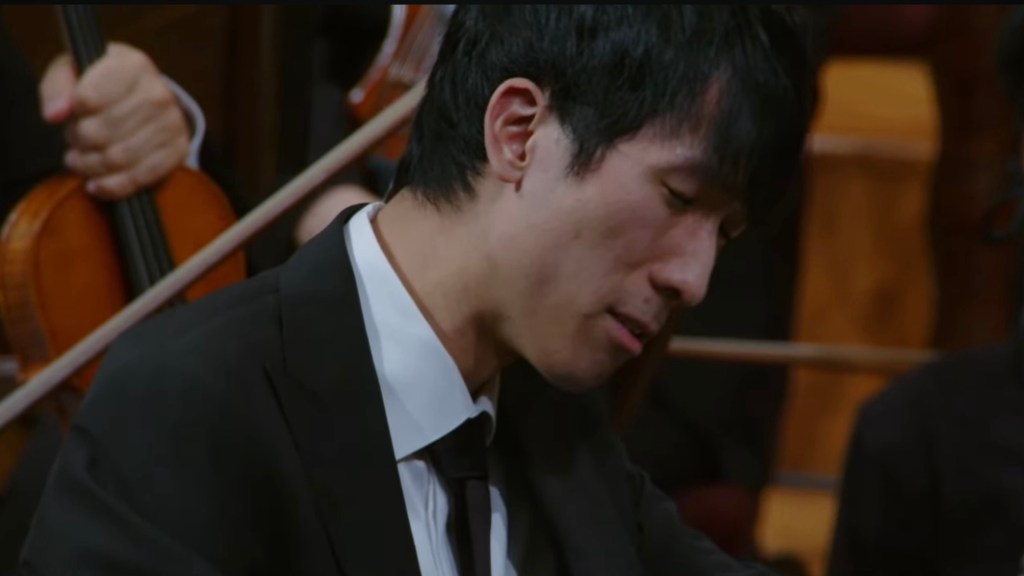
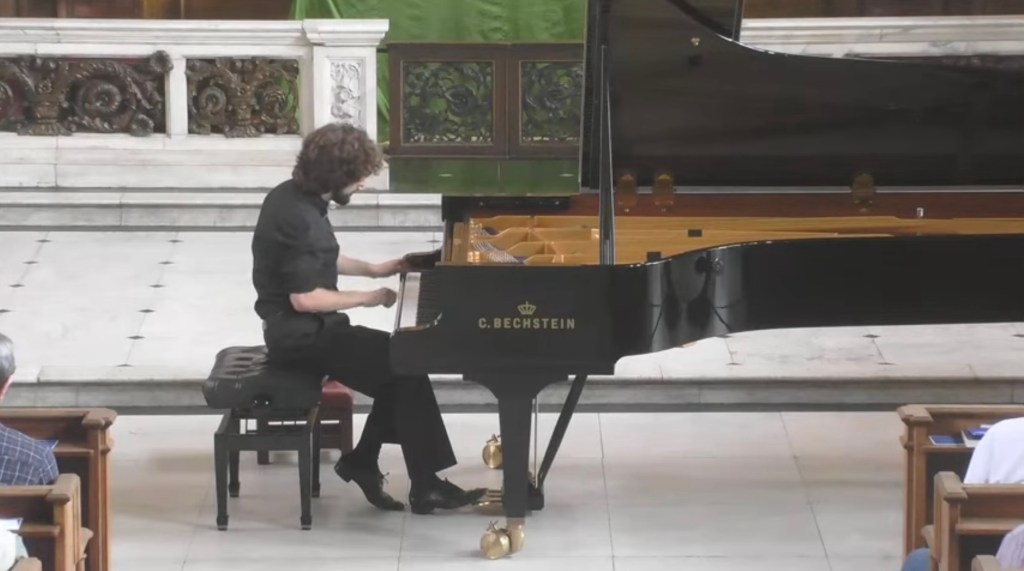
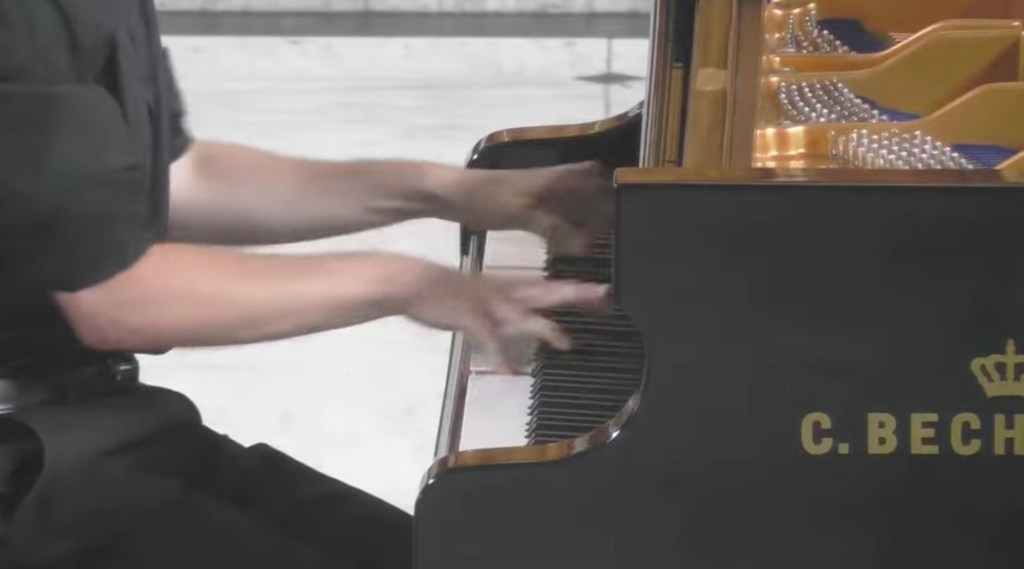
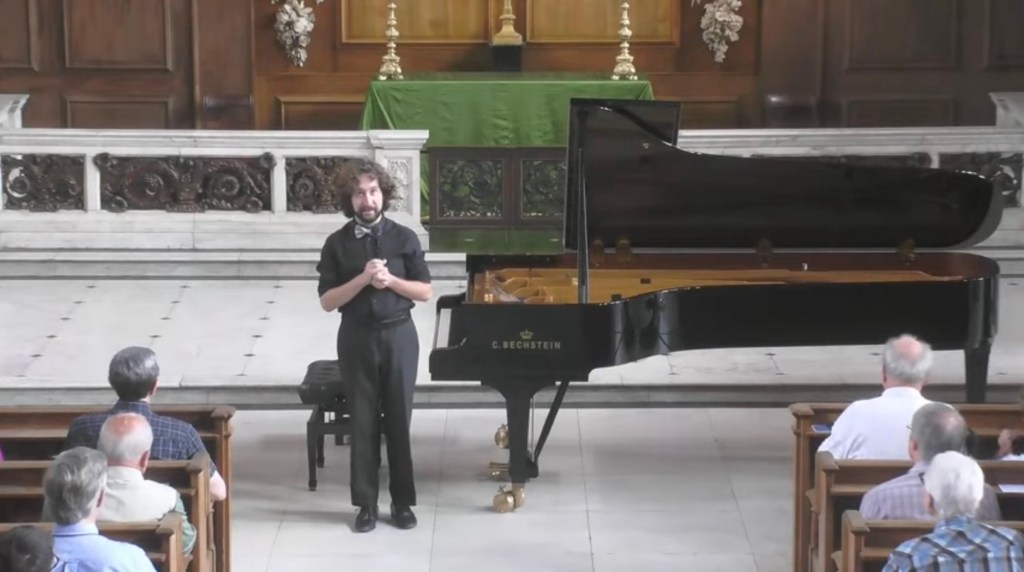
I have heard José play many times during his studies in London but today I heard a master playing with authority and style and an obvious enjoyment that was infectious.
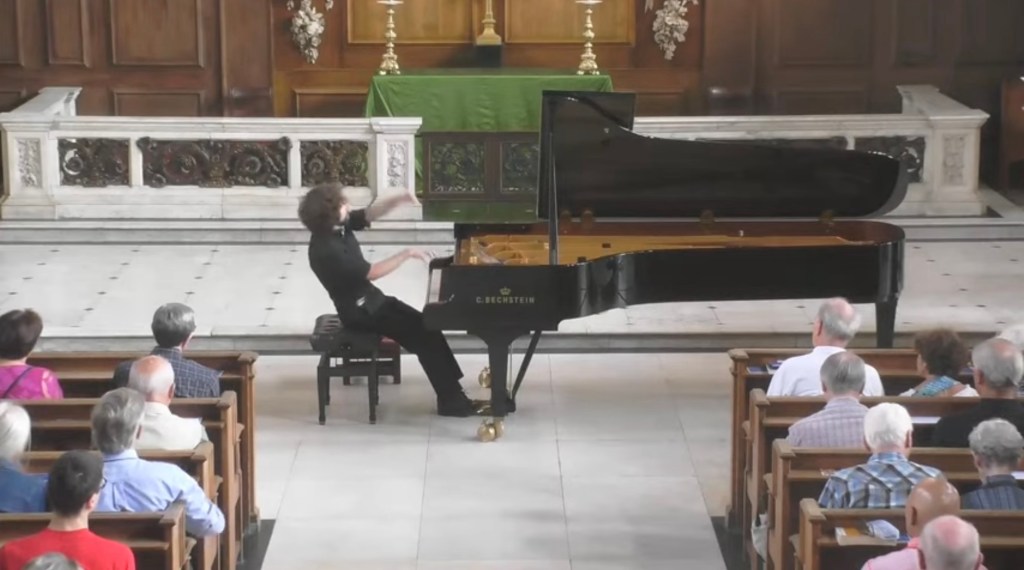
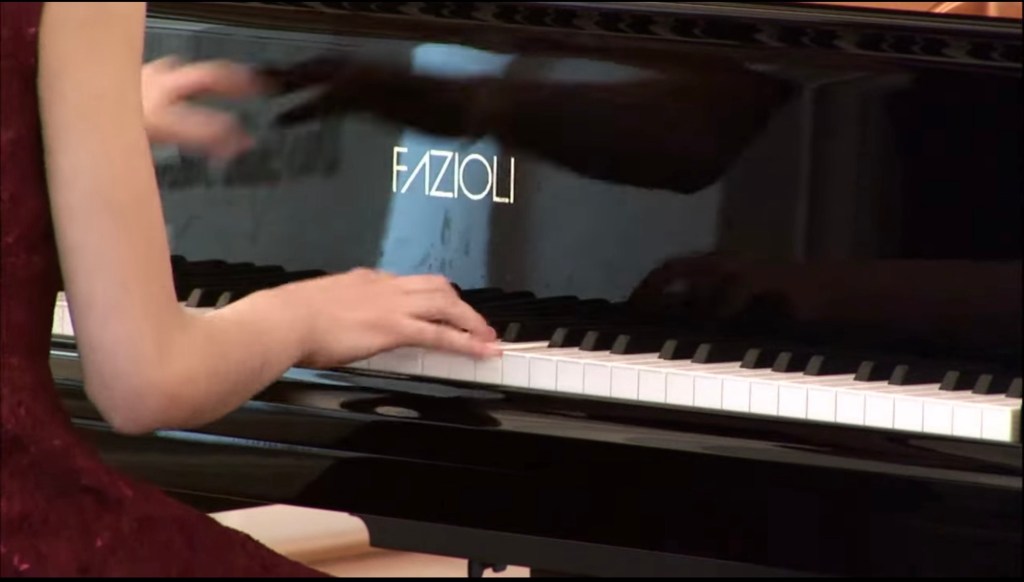
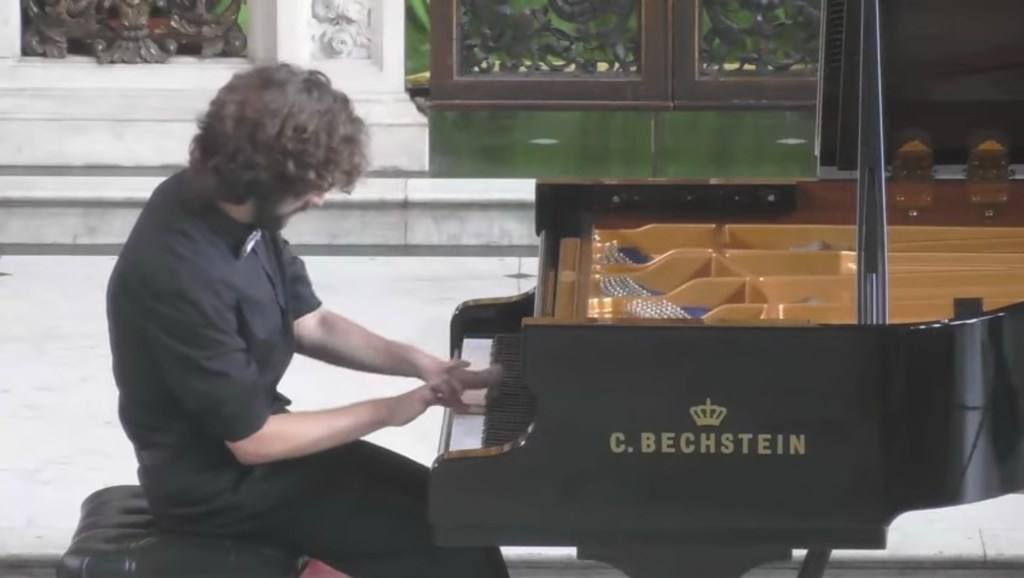
I had first met this young Bolivian when a trustee of the Keyboard Trust, Dr Moritz von Bredow had introduced him to me.He had discovered a very young pianist in Bolivia whilst on a tour with his choir. He was so impressed that he advised him to come to Europe to study and today we hear the result of that intensive study with some of the finest teachers who include: Paul Badura Skoda,Balasz Szokolay,Claudio Martinez Mehtner,Norma Fisher,Frank Bralay,Ian Jones etc. He has been given many performance opportunities in London too by the intrepid Canan Maxton and her Talent Unlimited organisation.I was surprised to see today not the Fazioli piano,that had been chosen many years ago by Alberto Portugheis for St James’s but a magnificent Bechstein Concert Grand.Of course the great German pianos have colours and a depth of sound that are immediately recognisable but as demonstrated today they do not always keep in tune as well as the other more modern makes.
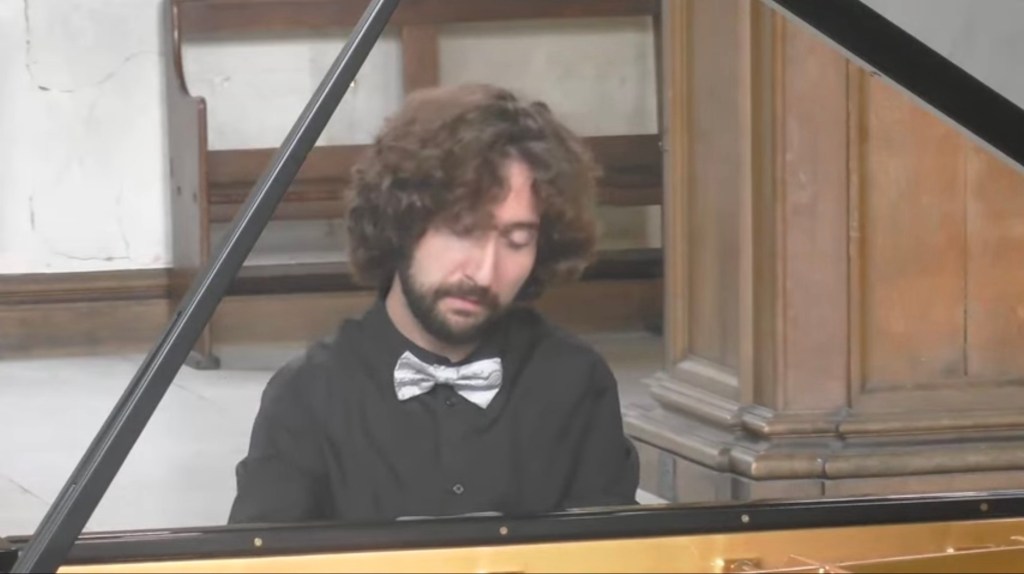
José is such a wonderful musician though that we were immediately immersed in a musical discourse where technical details are of secondary importance.It was immediately apparent from the opening Couperin Tic Toc ,that is so often played as a toccata type study , but today was played like the miniature tone poem it truly can be in the poetic hands of an artist.The resonant acoustic and rich sound of the piano helped shape this little jewel and fill it with coherence, character and wit.There followed the haunting beauty of Scarlatti’s beautiful Sonata K.208.A long drawn out melodic line of poignant beauty with ornaments added in the repeat that just added to the rarified beauty of what is a true Bel canto.The Contrapunctus IX from Bach’s Art of Fugue was a genial way of ending this first group of baroque pieces.A knotty twine of great clarity with a Busonian rhythmic energy played at breakneck speed that almost unsurprisingly came unstuck and it was only José’s musical understanding and mastery that kept it on the straight and narrow. It reminds me of ‘Nun Freud each lieben,Christen gmein’ Bach Busoni Chorale Prelude and it was a genial idea to play just this Contrapunctus and allow us to marvel at Bach’s genius without having to sit through the 90 minutes of the complete unfinished masterpiece.
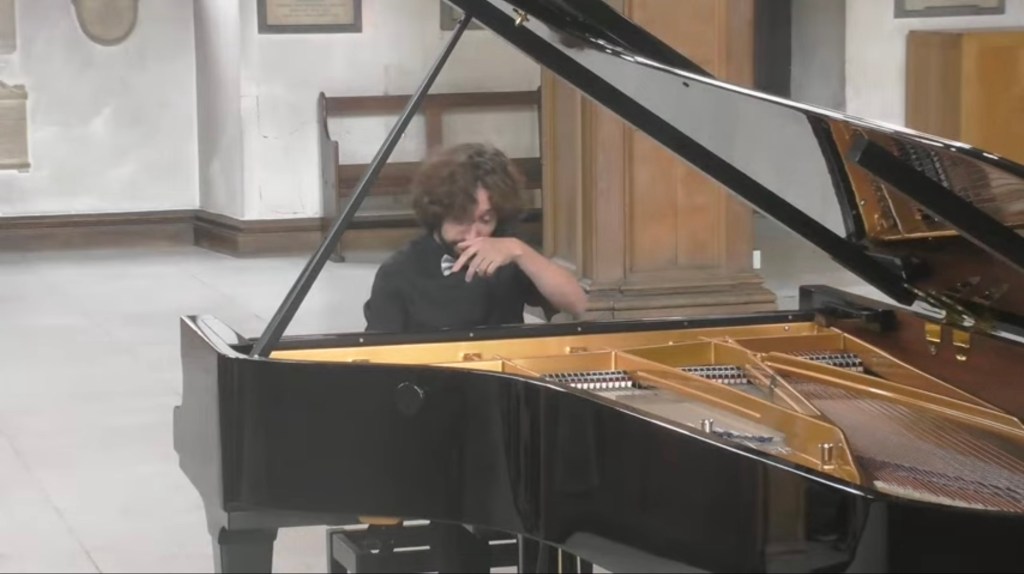
What a marvel Haydn is when played like today.The Sonata Hob XVI :43 not often heard in the concert hall was played with beguiling elegance and charm with crystal clear ornaments like tightly wound springs sparkling in this scintillating atmosphere.A wonderfully rhythmic Minuet 1 that contrasted so well with the delicate mellifluous Minuet 11.The last movement was full of Haydenesque wit and delicious playful charm that José played with a sense of improvised discovery that brought it vividly to life with a jeux perlé of ravishing simplicity.
There were mists of sound in the Debussy study that was nevertheless played with a clarity and transparency of quite astonishing mastery with a charming capricious ending just thrown off with nonchalance and style. The beauty of the Bel Canto that he brought to Chopin Nocturne op 32 n. 1 was quite memorable as he played with aristocratic good taste and a refined timeless beauty.Attacking the study op 25 n. 10 that just seemed to grow out of the final chord of the Nocturne.Octaves shaped into dynamic sounds of fiery passion and a beautiful central episode that was played with great freedom but also with architectural strength that made it truly belong to the whole study.
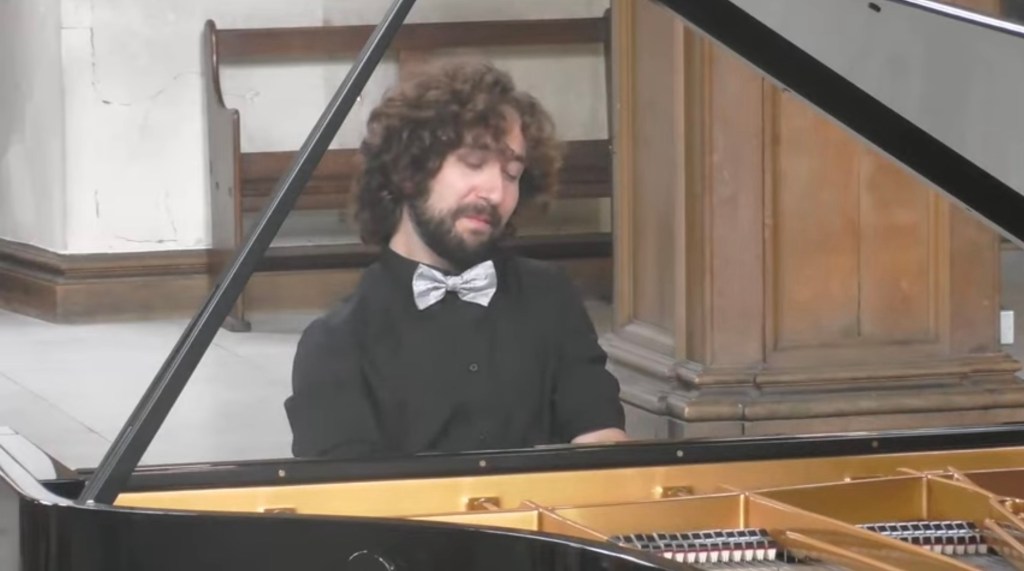
The dramatic theatrical opening to the Liszt ‘Pesther Karneval’ revealed a magic box of sumptuous seductive beauty and piano playing of another age.A mastery of style and a command of the keyboard that was truly breathtaking and brought this lunchtime recital to a triumphant end.

A young aspiring pianist has become a great artist ready to take the world by storm.A name to watch indeed.
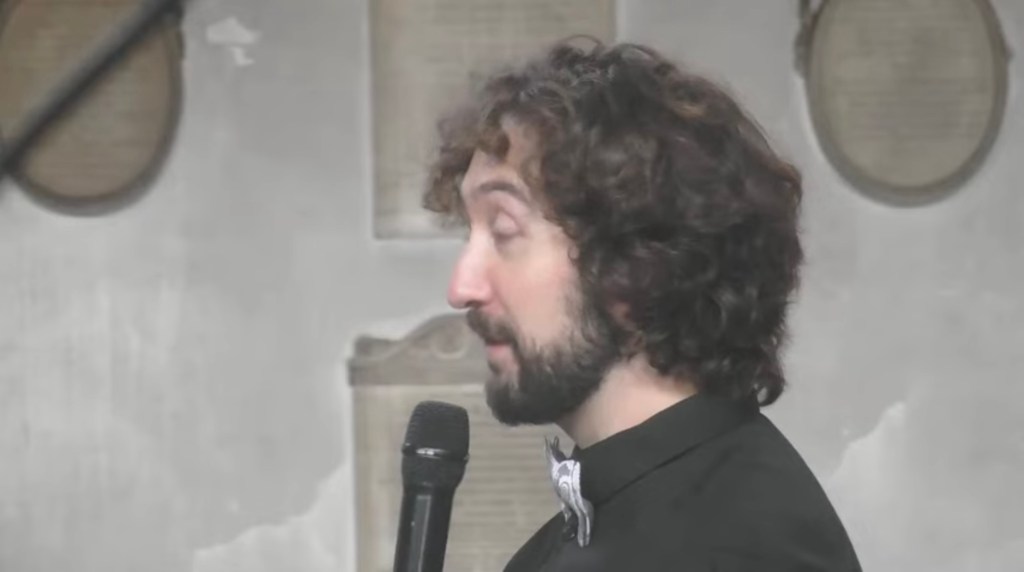
The young Bolivian pianist has performed in different countries in venues and festivals in Germany, United Kingdom, USA, France, Spain, Austria, Italy, Belgium, the Netherlands, Switzerland, Slovenia, Croatia, Georgia, Lithuania, Chile and Bolivia. Venues include the Teatro Municipal “Alberto Saavedra Pérez” in his hometown La Paz and the Musikverein in Vienna. He is supported by Talent Unlimited in London. He was one of the last pupils of Paul Badura-Skoda, from whom he gained a particular interest in period instruments.As a soloist, he has performed with the Jena Philharmonic Orchestra, Norddeutsche Philharmonie Rostock, Georgian Philarmonic Orchestra, La Paz Symphony Orchestra, Orquesta de Jóvenes Musicos Bolivianos and Orquesta Sinfónica Juvenil de Santa Cruz de la Sierra under the baton of Timothy Redmond, Markus L. Frank, Wojciech Rajski and Andreas Penninger.
His debut CD “Vibrant Rhythms” recently released by GENUIN Classics garnered international acclaim from important musical publications such as the BBC Music Magazine, Pizzicato, PianoNews and Interlude among many others. He awarded the Supersonic Award by Pizzicato and was nominated for the ICMA 2024.Jose is a prize winner at the Anton Rubinstein Piano Competition in Düsseldorf, Tbilisi International Piano Competition in Georgia, International Competition Young Academy Award in Rome, Claudio Arrau International Piano Competition in Chile among many others. He was a finalist at the Eppan Piano Academy and at the 63rd Ferruccio Busoni International Piano Competition.”Navarro-Silberstein is the master of all Latin American moods, playing with both feeling and real flair”. BBC MUSIC MAGAZINE.
He is a co-founder and the Artistic Director of Mazurka Concerts, a new concert platform in Cologne, Germany. The platform aims to connect young performers with a younger audience through a unique concert experience.As a pedagogue he has given masterclasses in La Paz Conservatory, Sucre Conservatory Santa Cruz Fine Arts College and Laredo School in Cochabamba and in the framework of the Eppan Piano Academy 2021. He served as a jury member at national music competitions.
He studied with Balasz Szokolay at the Franz Liszt University in Weimar and with Claudio Martínez Mehner at the University of Music and Dance in Cologne. In 2017-18 he had an Erasmus Year at the University of Arts in Graz and the Music Academy in Zagreb with Milana Chernyavska and Ruben Dalibaltayan. He just concluded his Artist Diploma programme at the Royal College of Music in London under the guidance of Norma Fisher and Ian Jones. Since September 2023 he is an Artist in Residence at the Queen Elisabeth Music Chapel under the guidance of Frank Braley and Avo Kouyoumdjian.He has scholarships from The Robert Turnbull Piano Foundation, Herrmann Foundaiton Liechtenstein- Bolivia, Theo and Petra Lieven Foundation of Hamburg, Clavarte Foundation in Bern and Elfrun Gabriel Foundation for Young Pianists.

https://www.navarrosilberstein.com/

Jose Navarro Silberstein – masterly performances of red hot intensity

José Navarro-Silberstein in Perivale with playing of authority and haunting beauty

José Navarro-Silberstein in Perivale with playing of authority and haunting beauty
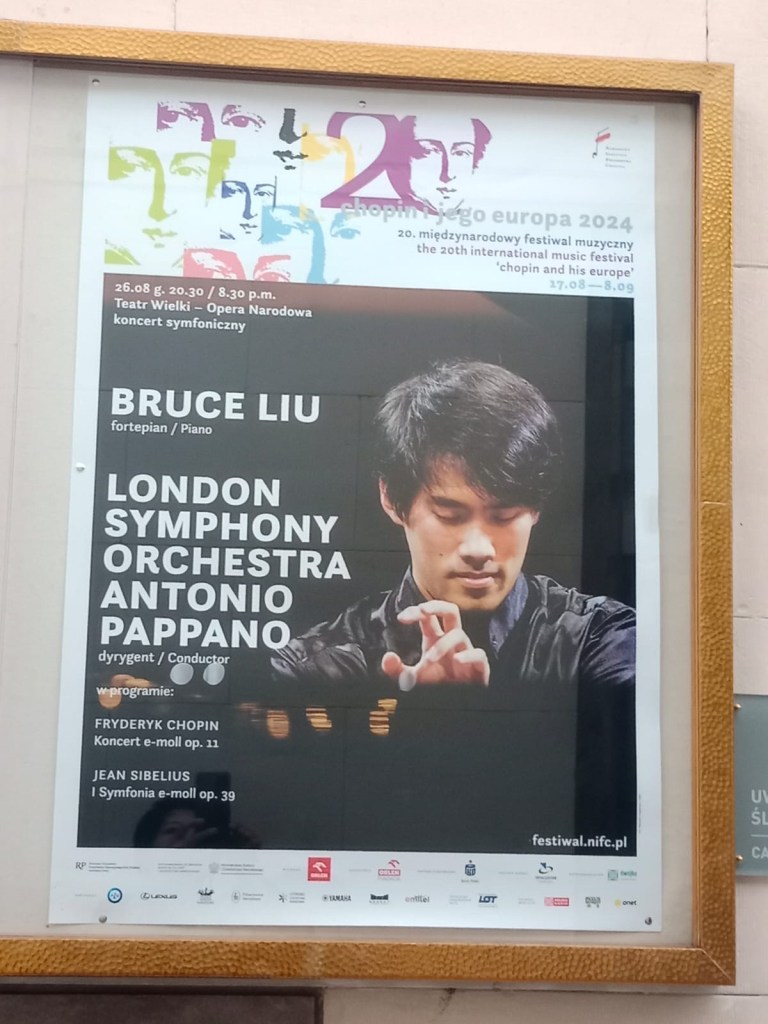
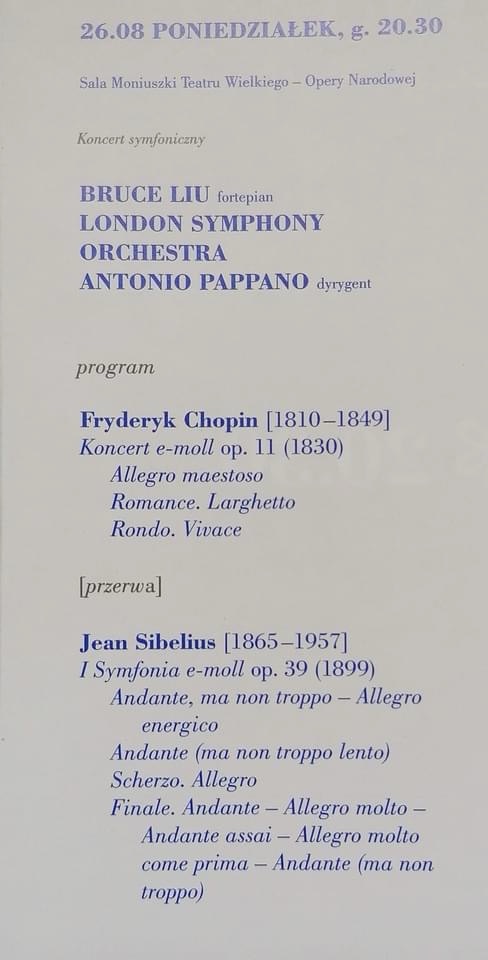
Bruce Liu and Sir Antonio Pappano take Warsaw by storm

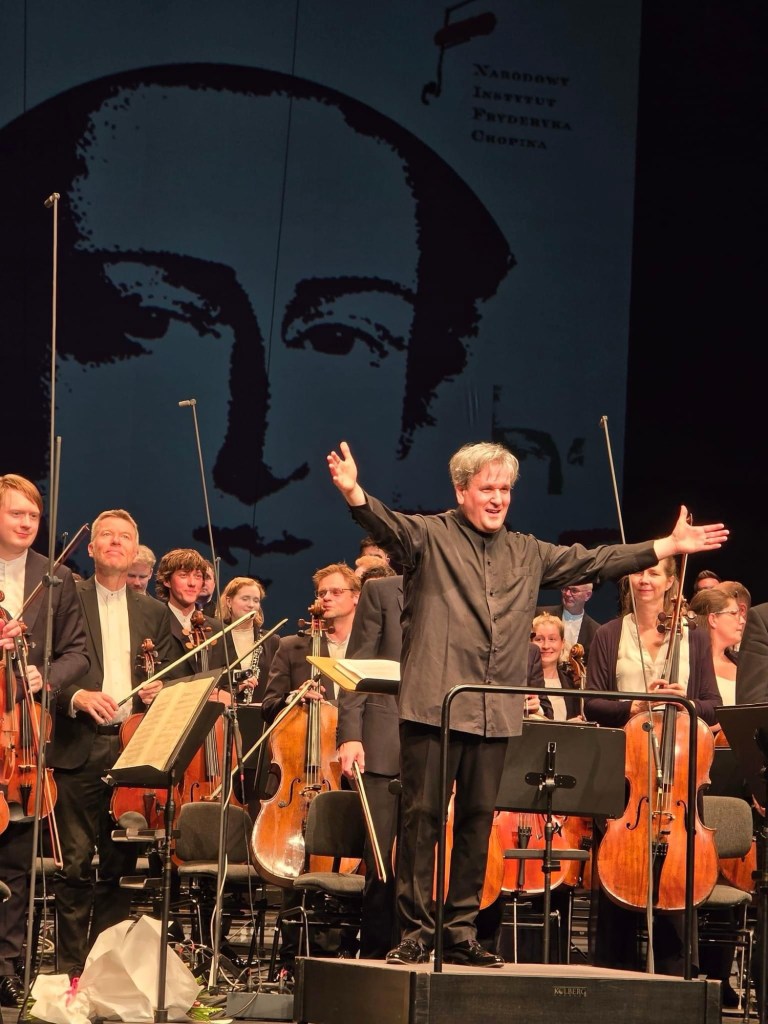
Sir Antonio Pappano with his London Symphony Orchestra

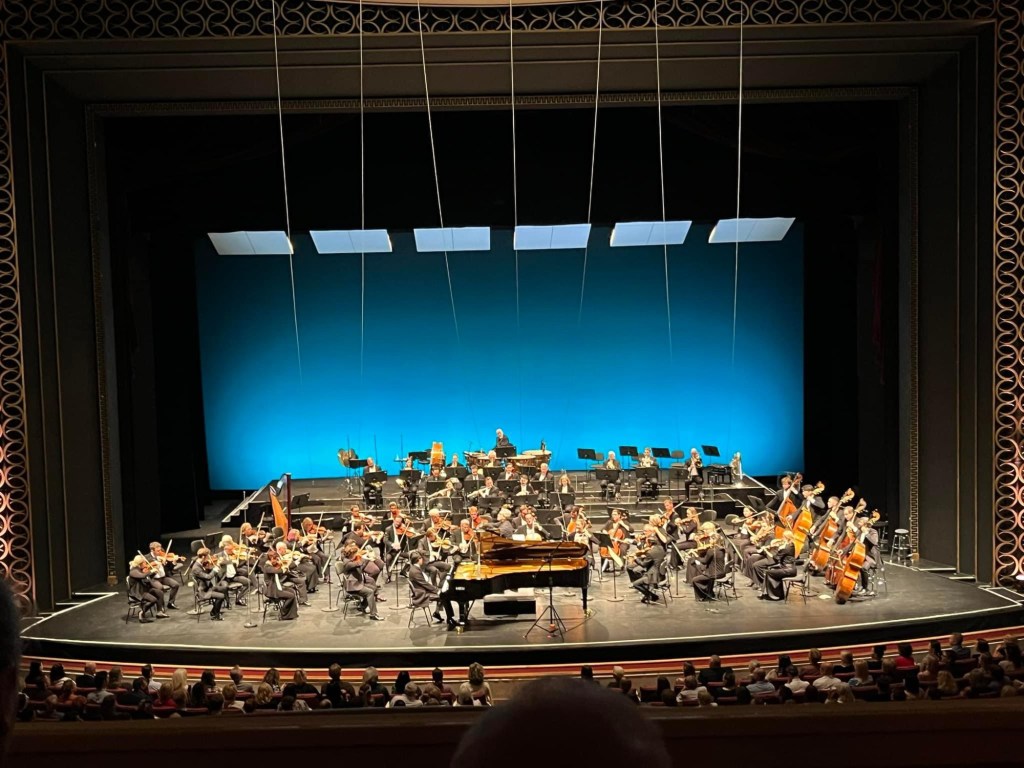
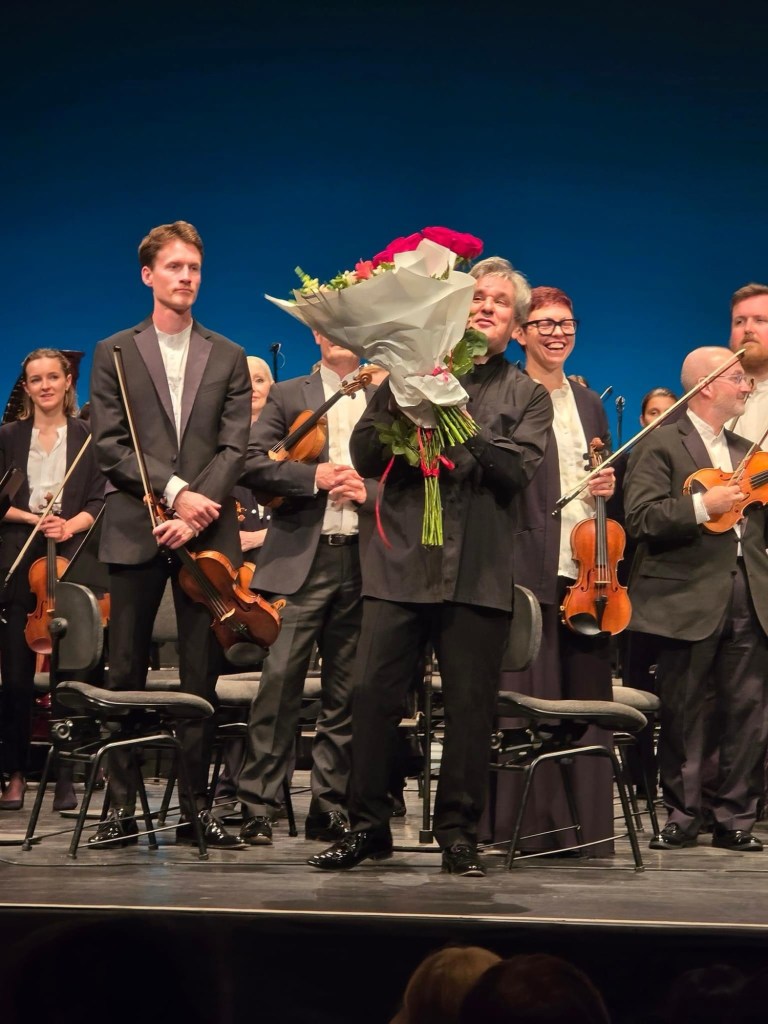
Quite extraordinary performances from the London Symphony Orchestra under their conductor Sir Antonio Pappano .As a very discerning friend of mine present in the hall said: “You can use superlatives – we don’t get music making like this often .Bruce’s playing was very spontaneous,sensitive and musical.The orchestra sounded like a small orchestra .Extraordinary control.”

“Sibelius is incredibly difficult music but very rewarding .Made evident last night by the personality of the players and their joy of playing”

Many of the concerts are streamed live but this year there are a lot fewer but they are broadcast on the Polish Radio Channel 2 and I was able to hear most of the concert on the excellent live broadcast .A Bruce Liu in wonderful form who from a brilliant competition winner has developed into a mature artist who can find colours and bring to life an old warhorse like Chopin 1.From the very opening the orchestra under Pappano played with the same full rich sound that I remember from the Philadelphia under Ormandy with Gilels.Bruce found some exquisite colouring and in particular used the bass notes to sustain the ravishing beauty of his cantabile playing .Here was the true Bel Canto where the melodic line is held in one long breath with a beguiling rubato that belongs to another age.Such exquite phrasing and delicacy but also intelligence and spontaneity.Pappano following his every move as they truly wove a magic web together.
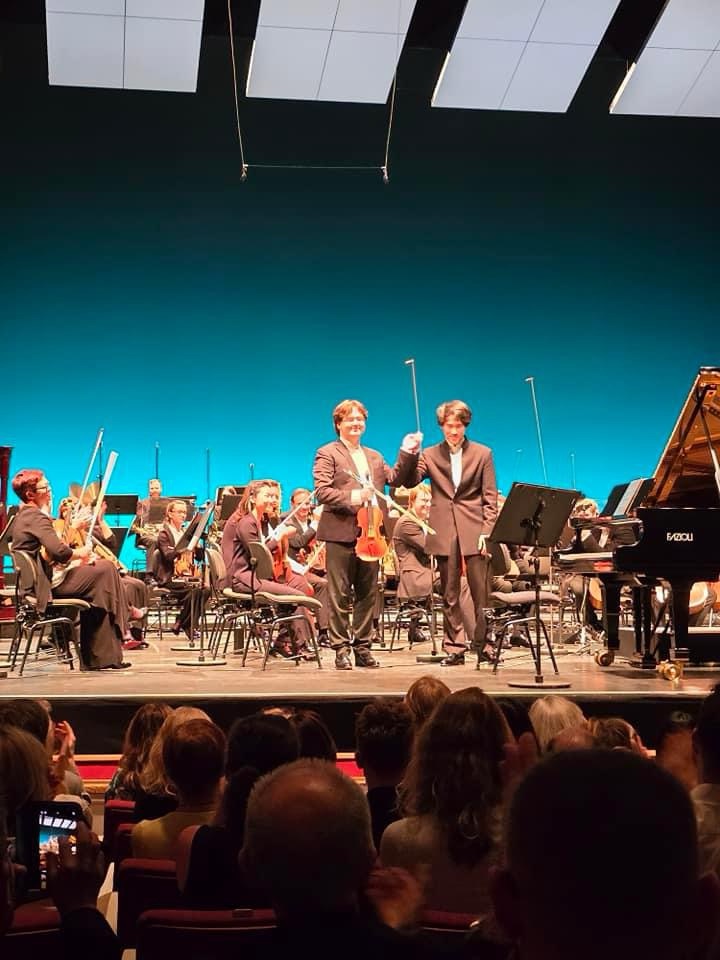
Bruce Liu with the concert master Benjamin Marquise Gilmore after their performance together of a transcription for violin and piano of Chopin /Sarasate :Nocturne op 9 n. 2 .I have not heard that since Ruggiero Ricci played them all in various transcriptions in Rome some years ago .
https://www.youtube.com/watch?v=EaIu0imP8y8
https://www.prestomusic.com/classical/products/8017038–chopin-nocturnes-arr-for-violin-and-piano?srsltid=AfmBOopFiwH_gfyZz3GyRH_orHkiXqjj1oL0Vgk3xtYT0yhRrK7BzzAz
https://christopheraxworthymusiccommentary.com/2024/03/20/christopher-axworthy-dip-ram-aram/

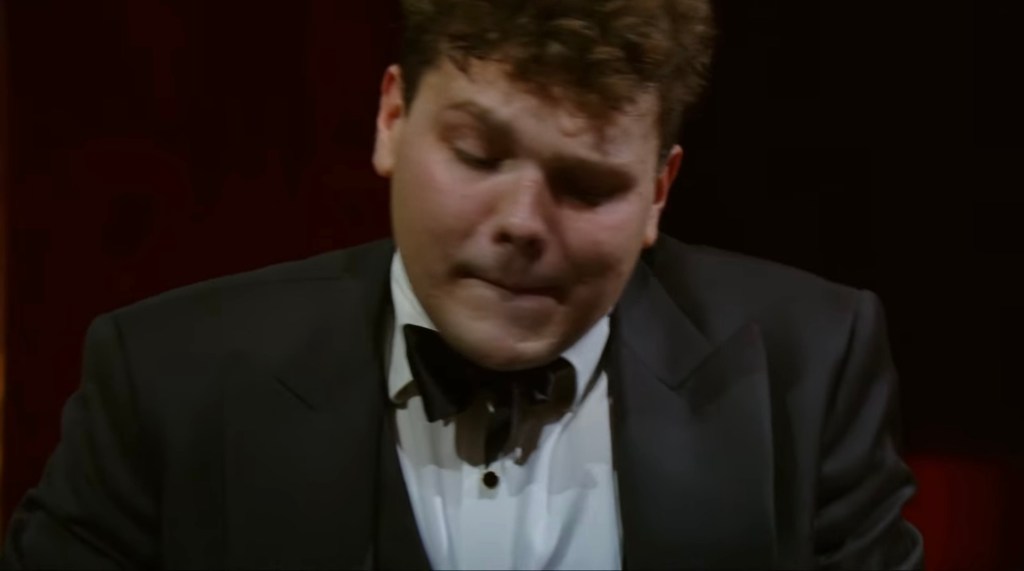
What a surprise to find Bruce handing over the reigns to his first violin colleague who played with the same aristocratic mastery and old world style that had seduced a full hall during the Concerto.A black key study played with radiance and sparkling clarity as well as magical unexpected shadings had the audience on their feet to salute a master.I hope the broadcast might become available to listen to again as I missed most of the Sibelius which they tell me was the stuff that legends are made of .

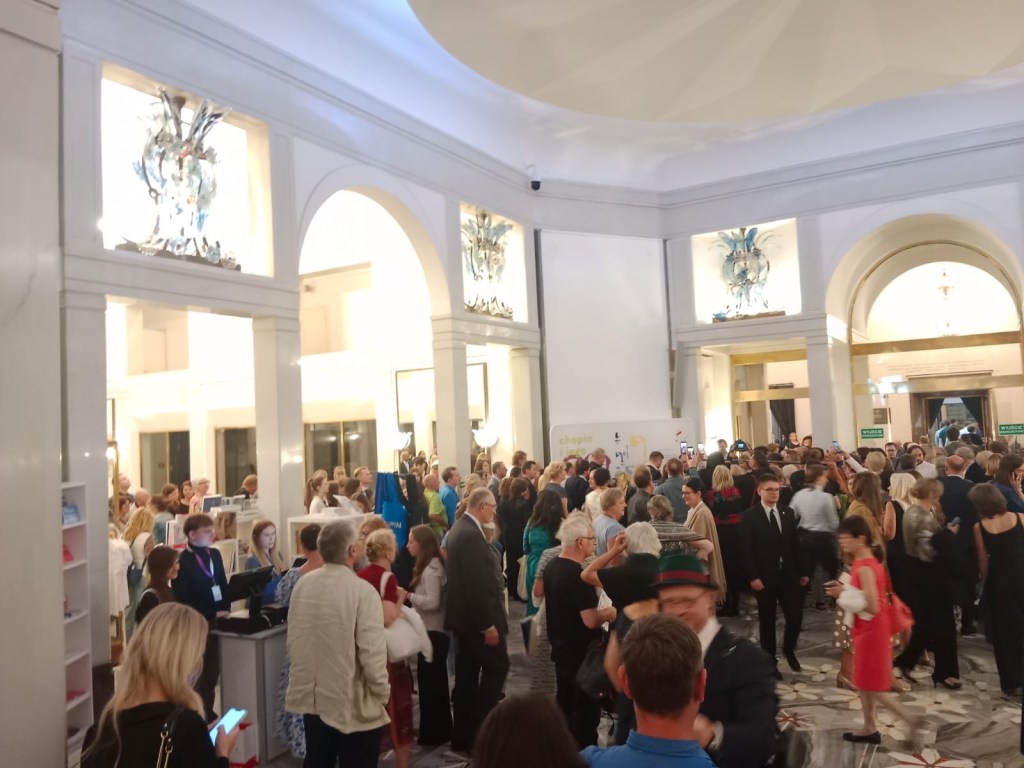
Pre concert tea in the Hotel Bristol built by Paderewski after his first American tour.Centre is Richard Berkeley Dennis whose great great grandfather had built the original hall where the concert was taking place tonight.The facade is still his as the interior was rebuilt after the war.Michael Moran and Yisha Xue on the left .Roger Pillai,Tomasz Lis the Polish pianist living in London and Iko Bylicki founder of the Chopin Society in Vancouver where Bruce has performed,also cousin of Richard B.D.

Bruce Liu at the Wigmore Hall London A supreme stylist creating a new Golden Age of piano playing of mastery and refined good taste

Stars shine brightly in Warsaw with Dang Thai Son,Bruce Liu and Lukas Geniusas

Bruce Liu’s triumphant debut at the Edinburgh Festival

Bruce Liu takes London by storm

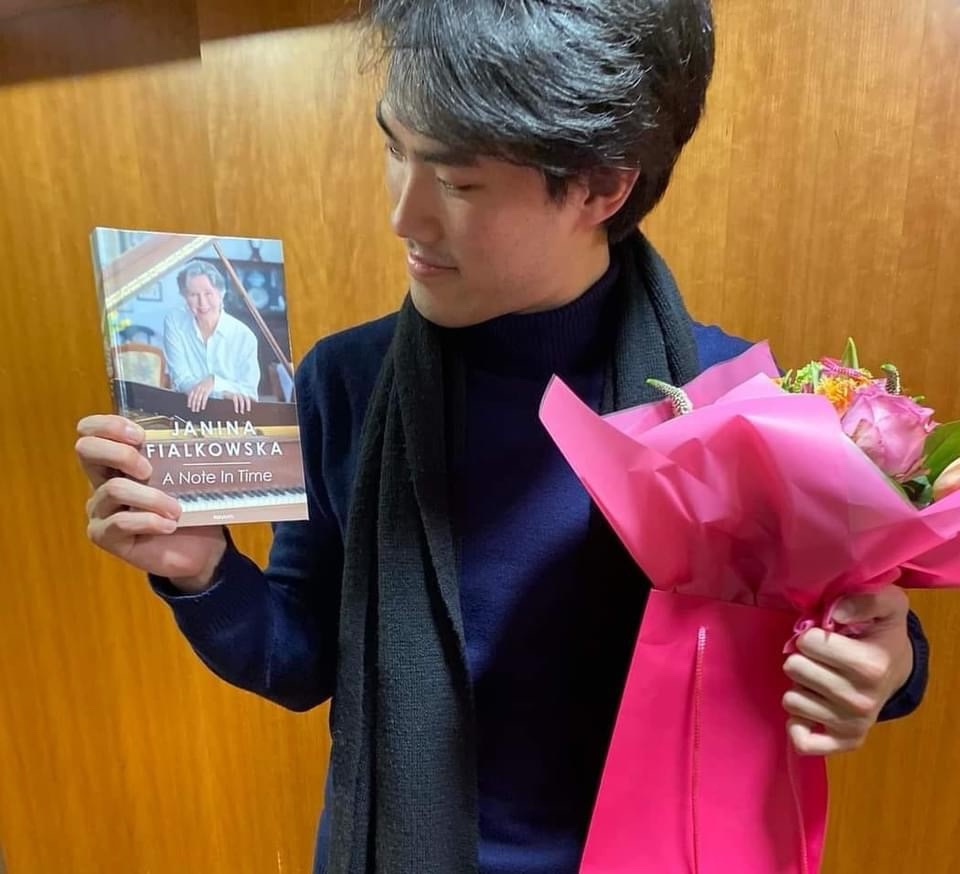
Bruce Liu with the autobiography of Janina Fialkowska

Bruce Xiaoyu Liu showing the way to Eutopia for Chopin’s 212th birthday

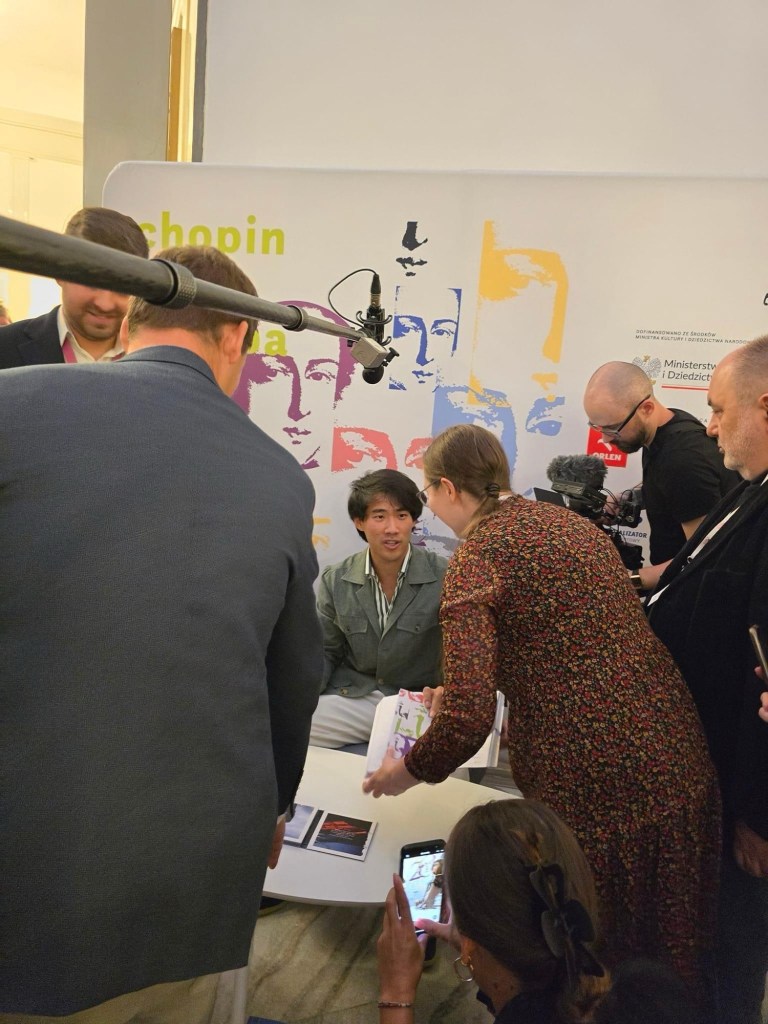
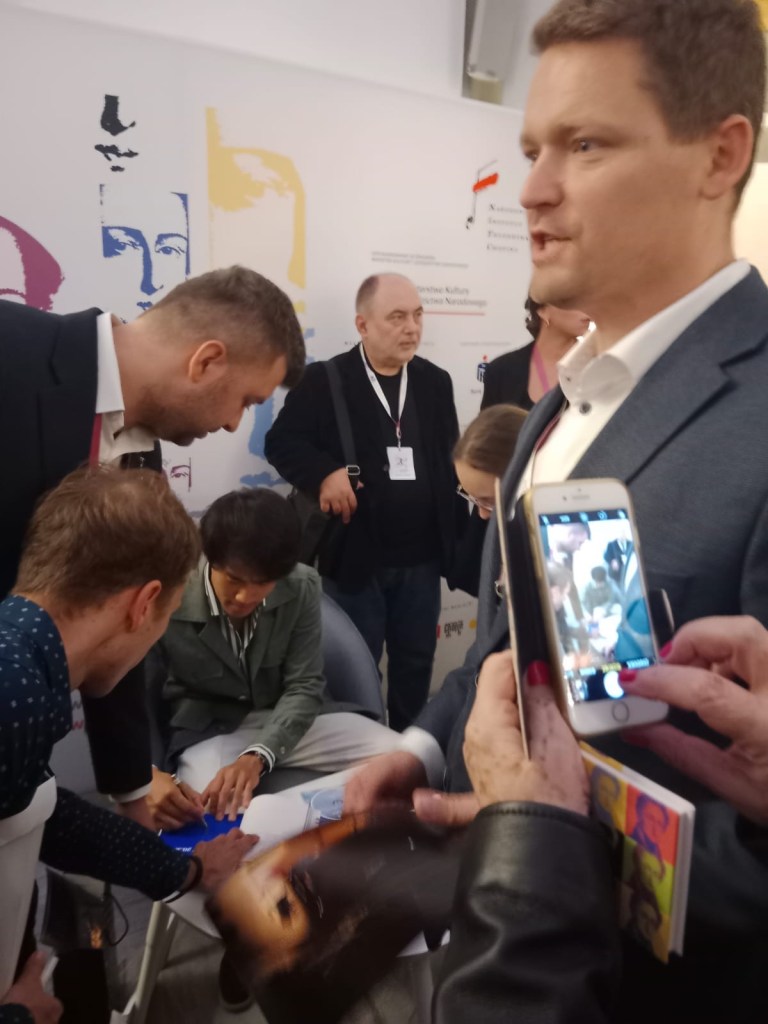
Bruce Liu besieged by press and public after his triumphant return to Warsaw
The distinguished critic Michael Moran with Aleksandar Laskowski of the Narodowy Institut Fryderyka Chopina
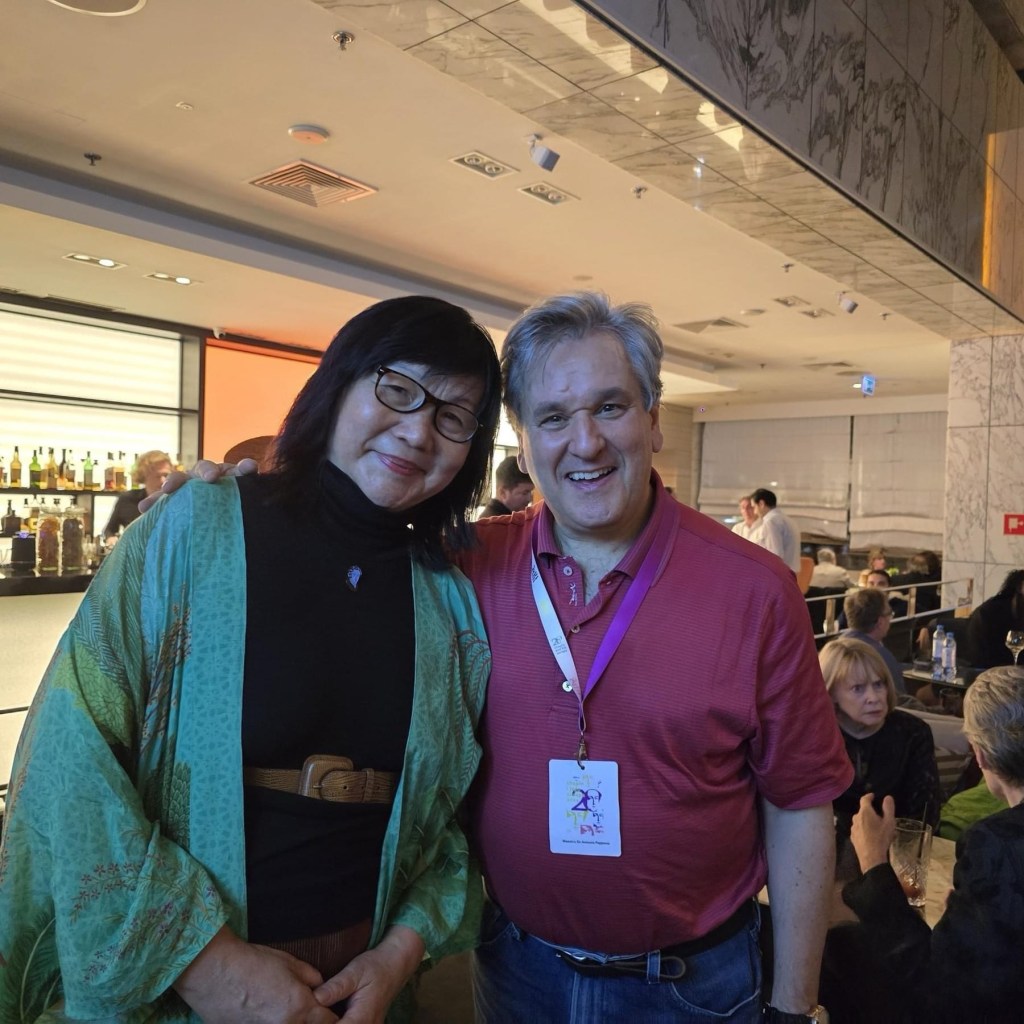
Yisha Xue with Sir Antonio Pappano
Yisha with Bruce
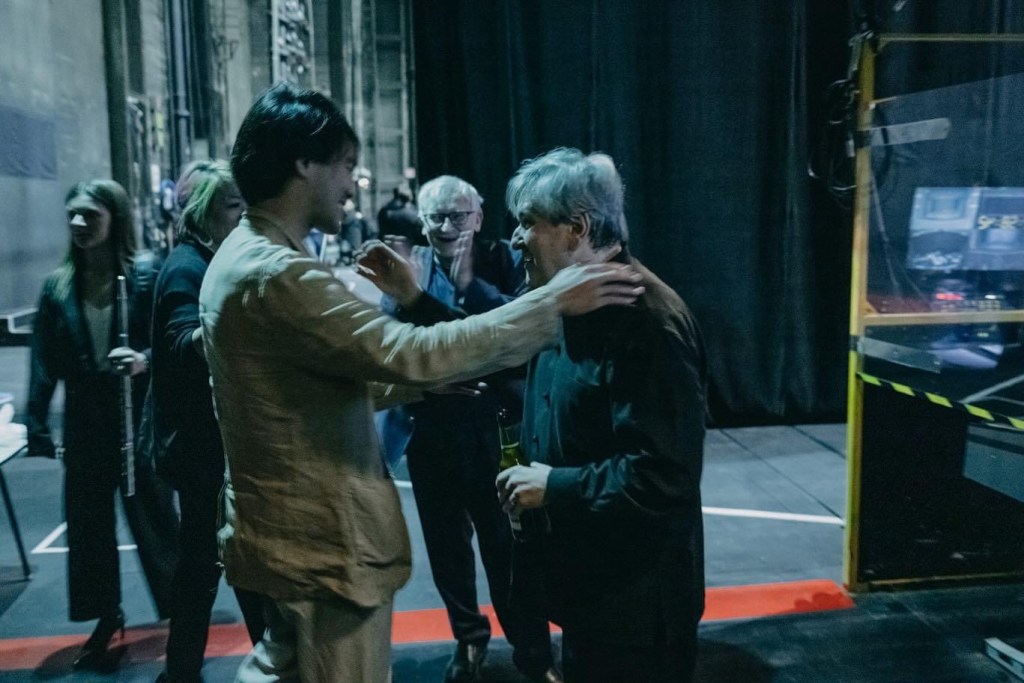
Backstage Bruce and Toni
Arrivederci and thank you

Dear Christopher, reading your review of Bruce’s concert in Warsaw, I wanted you to listen to his performance from Ljubljana last night… which was even more free, more elegant, more inspired… like a carpet of beauty, light on the way and faith in life and people . Bruce and Sir Pappano’s chemistry is magical. I am still deeply moved by what I experienced yesterday, please feel some of this beauty, I know you will appreciate it. I enjoy your reviews, it seems that this war horse “has a lot of energy and hidden life left in him”

https://drive.google.com/file/d/122PI4EItqY1Yp5oFDIOEXQtwpPVAH_HQ/view?usp=share_link

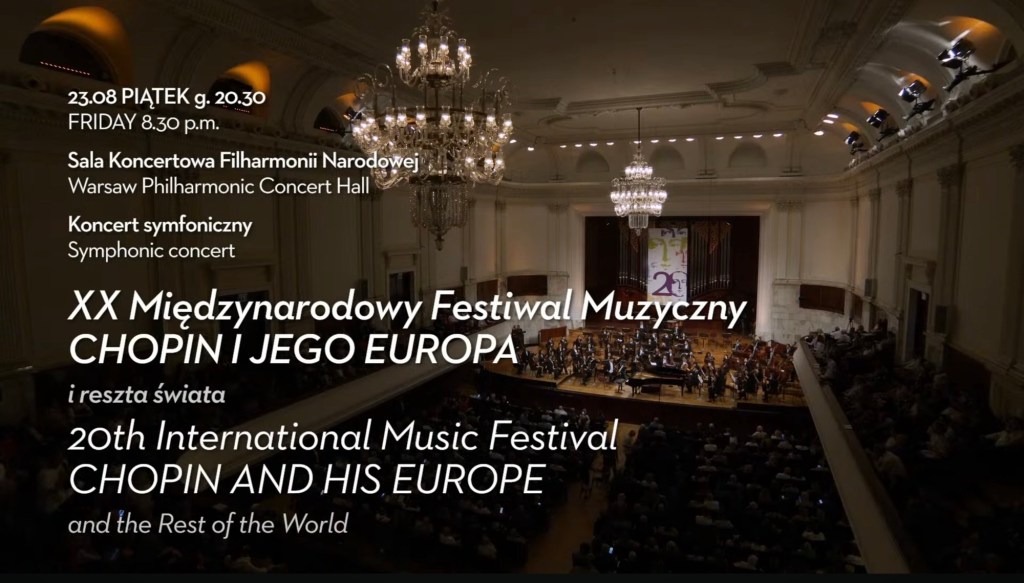
Superb Chopin with Eric Lu in Warsaw .’To be or not to be with life in the fast lane’

https://www.youtube.com/live/-5c9d_DqALU?feature=shared

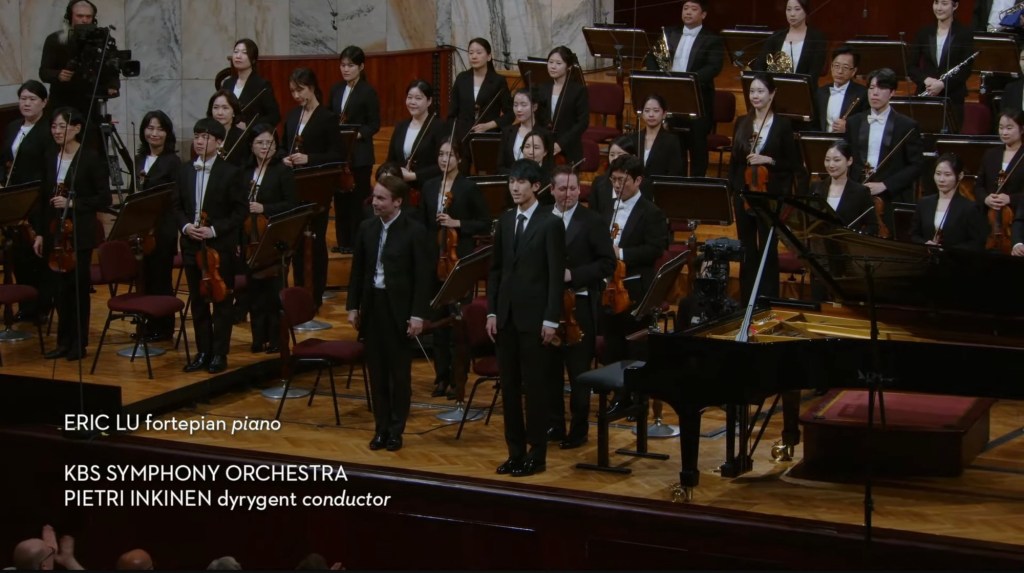
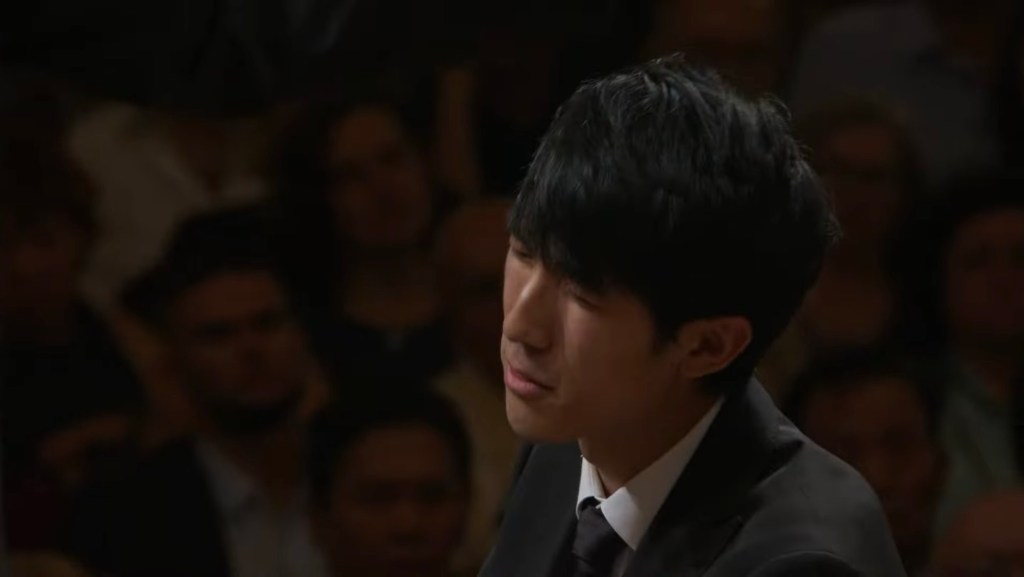
A beautiful performance of Chopin’s Second concerto played with superb musicianship and sensitivity. Gone was the so called tradition where personal inflections and flirtations have distorted Chopin’s thoughts. It was Artur Rubinstein who was the first to break with tradition ,even if he had been mentored by Paderewski who had an extraordinarily strong and unique personality. Of course he was followed by Pollini and then Zimerman ( who in turn had been mentored by Rubinstein) . Eric Lu showed us a Chopin of elegance and strength looking deep into the score with a quite extraordinary sensitivity to sound.The slow movement in particular was of a chiselled timeless beauty and the Rondo just slipped in with a delicacy and elegance of great luminosity with the same poetic brilliance of the scintillating scales and arabesques that the young Chopin would have demonstrated in his own very few concerts as a young man who was the revolutionary poet of the piano.

What was a true revelation with Eric Lu was his ability to recreate even the most well known of pieces and make them sound refreshingly new.Not by adding his own personality and distortions but by looking deeply into the score and with a delicacy and ultra sensitivity to sound recreate a score that we have taken for granted for too long . I remember hearing him for the first time in London playing Mozart’s B minor Adagio and A minor Rondo and being totally seduced by scores that in lesser hands did not reveal the same magic as this young man could show us.

Elisabeth Glendenning with Chloe Mun ,winner of Busoni and Geneva .on tour with the Keyboard Trust in Philadelphia.

I had heard about this young man when he was a student in Philadelphia and Elisabeth Glendenning had told me about him.Beth had been assistant to Eugene Ormandy and although retired she was very much part of Curtis Institute and organised concerts for young musicians in her retirement home.

And so it was with the first encore.What could be better known that the waltz in C sharp minor op 64 n. 2 ? But today it was as if we were hearing it for the first time! I had never been aware of the sighing opening of one chord dissolving into another or the ravishing beauty of the jeux perlé where every note had the same inflections that Caballé could enflame her audiences with.
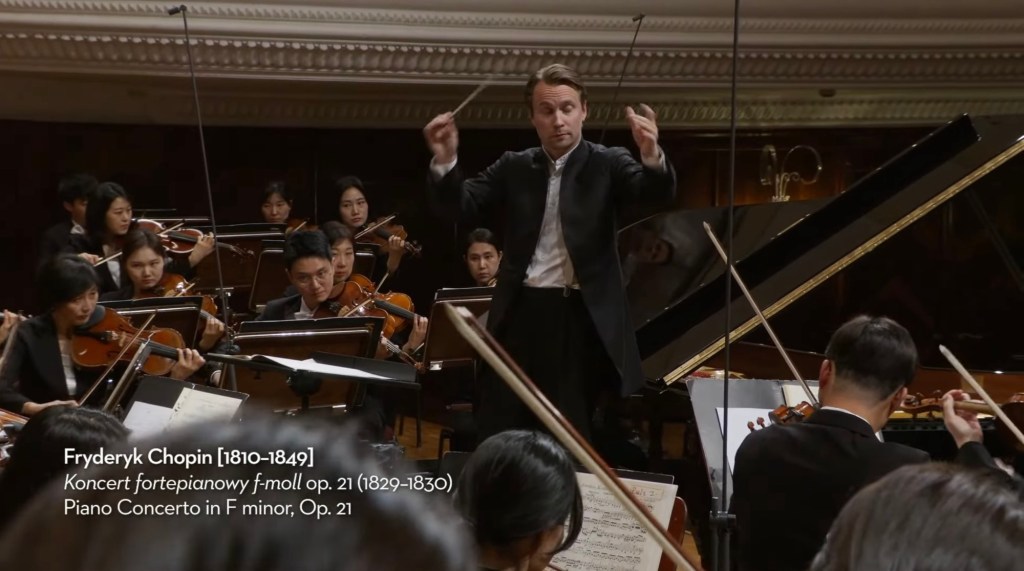
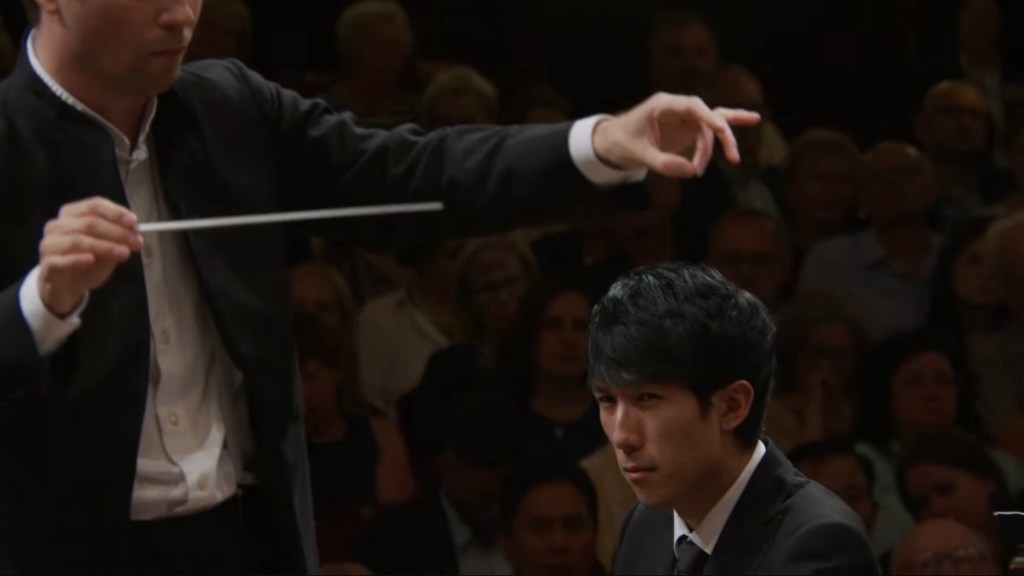
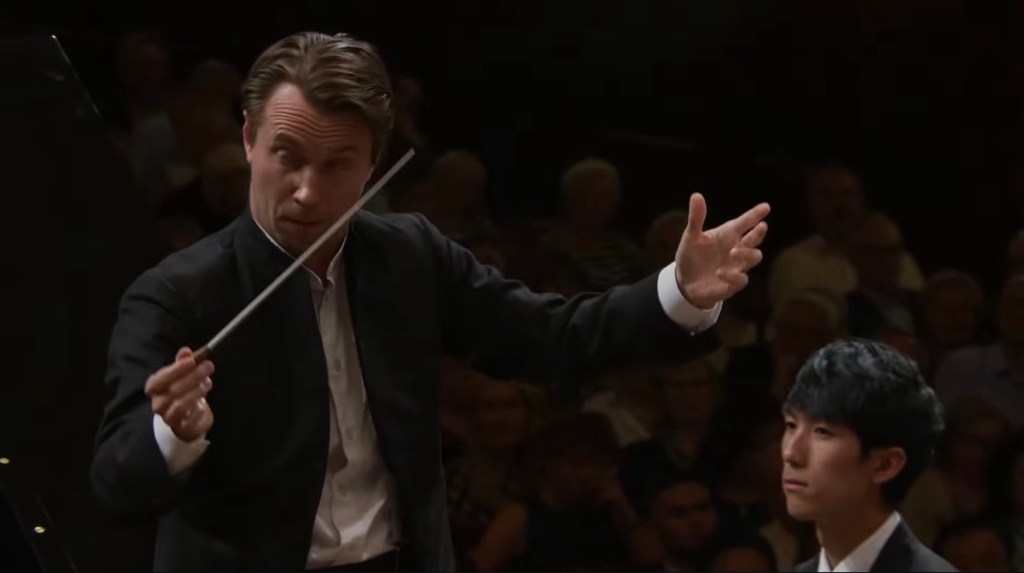
One must mention the Finnish conductor Pietri Inkinen who from the very opening of the Chopin set tempi that immediately showed us the strength of Chopin’s often criticised orchestration.The opening was a true ‘Maestoso’ and gave Eric Lu the possibility to enter with the same authority as the more dramatic E minor concerto.The entry though is at the top of the piano but was given great strength played like an opening recitativo with the final nobility in the bass .A much lamented Nelson Freire used to play a discreet bass chord before entering to open up the harmonics of the piano.

Nelson Freire RIP……the legacy of a great artist

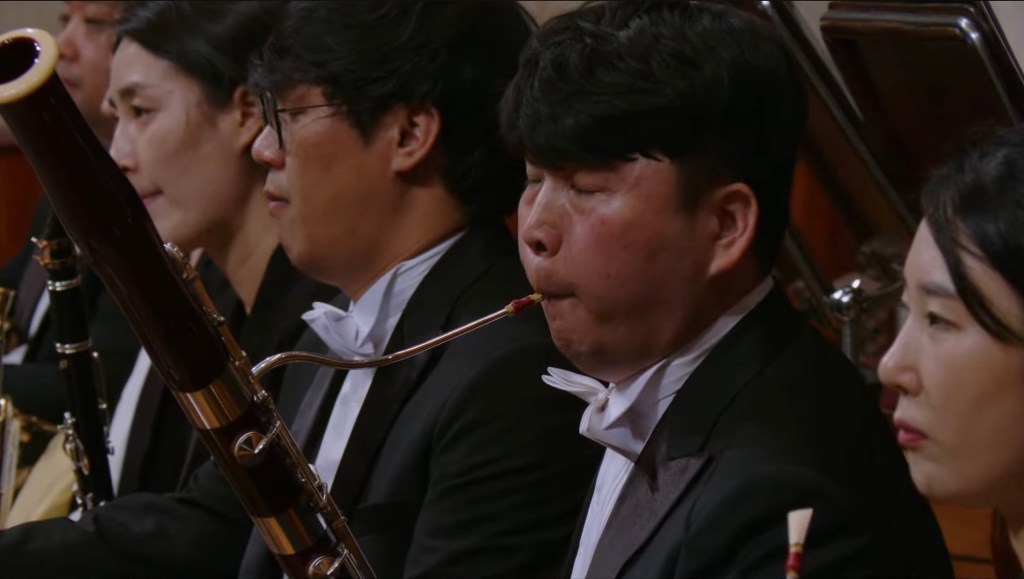
The superb bassoon (Chopin’s favourite wind instrument) duetting with Eric Lu in the Larghetto

There was a beautiful tempo to the ‘Larghetto’ and the ‘Allegro vivace’ just seemed to grow out of the golden glow of the final A flat cadence. Chopin’s fellow composers and Prof. Elsner’s former students, Ignacy Felixstowe Dobrzynski ( 1807-1867) and Tomasz Nidecki  (1807-1852), are believed to have helped Chopin orchestrate his piano concertos. This gave an excuse for other musicians to make slight alterations in the score .Alfred Cortot created his own orchestration of the F minor concerto and recorded it with the London Philharmonic Orchestra  under John Barbirolli  in 1935. Ingolf Wunder  recorded Alfred Cortot’s orchestration with minor changes done by himself in 2015. More recently (in 2017), Mikhail Pletnev  recorded his arrangements of both of Chopin’s piano concertos, conducting the Mahler Chamber Orchestra , with pianist Daniil Trifonov

There were some reflections though that I was glad to share with the distinguished critic ,Michael Moran ,based in Warsaw, while he was travelling home on the metro after having been overwhelmed by a magnificent performance of Sibelius’s Second Symphony.

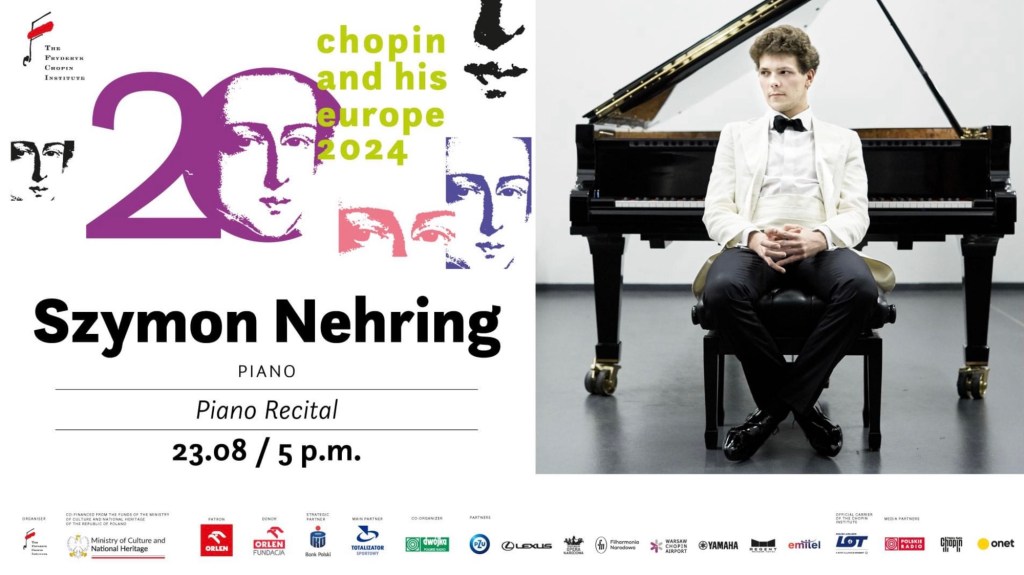
I had just heard a remarkable recital in the same hall by Szymon Nehring another Gold medal winner like Eric Lu. The Rubinstein and Leeds respectively.

Szymon Nehring in Warsaw Classicism and visionary romantic – the revelations of a master

M.M ‘Hello Chris …. I listened to Szymon and agree with everything you say in your review. So many concerts I simply cannot keep up and listen and eat and sleep and write ….. so thank you !! On the Metro after an incredible Sibelius 2nd Symphony with the magnificent South Korean KBS Symphony Orchestra under the brilliant Finnish conductor ….. Pietari Inkinen …..’

C.A. ‘And me this morning .I am listening now. I like Eric Lu but he has no real aristocratic authority yet just a very sensitive musician with a technical mastery from Curtis ….like Nehring from Yale …..we used to call it rather enviously the transatlantic sound ….Rubinstein could never play with that cleanliness or correctness but he could tell such wondrous stories that will never be forgotten.

M.M ‘Agree completely about Rubinstein more and more …. the narrative, interpretative element is so often missing in too many young pianists. We could talk long into the night concerning training of the young !’

C.A.’It is not the training as Ruggiero Ricci said to me.When he was young it took days to cross the Atlantic that was time filled with contemplation,practice and relaxation. Now you can be playing in London today ,Tokyo tomorrow and New York the day after .Life in the fast lane is good for the bank balance but not for the soul’

M.M. ‘The literary inspiration for all nineteenth century composers is scarcely ever mentioned yet is vital …. Well, reading ….. do conservatoires insist on it ? How many young musical artists read the poetry that inspired Schumann and Liszt ?Many have never even heard of Byron …. that profound influence on creative life in all the arts in Europe.’

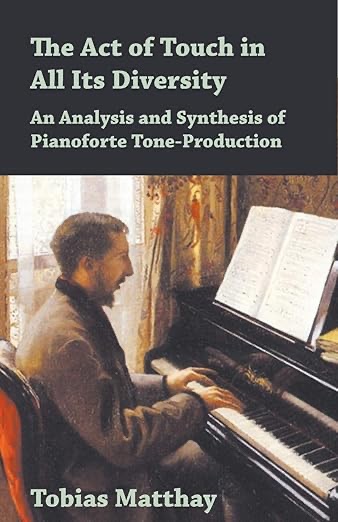
Fascinating food for thought especially now that there is such an extraordinary preparation for pianists. I doubt there has ever been a time when so many pianists could play with such mastery.When I was a student in London we used to look in awe at anyone who could play Rachmaninov 3 or Prokofiev 2.Ashkenazy made his London orchestral debut with both in the same programme! There was also the palette of sounds that although Matthay was expounding his theory that in each note there was an infinite variety of sounds , it took the arrival of Richter to show us that there was a level of sound from pianissimo to mezzo forte that we never knew existed! We were told to project the sound ( as Richter spoke about with enormous admiration Rubinstein’s old style concert cantabile ) .

https://christopheraxworthymusiccommentary.com/2024/03/20/christopher-axworthy-dip-ram-aram/

I remember Richter playing Beethoven’s op 22 Sonata in the vast space of the Royal Festival Hall and not understanding a critic who said that the slow movement had been non existent.He meant ,of course,that the sound was not projected out but we the audience were drawn in, to a magic world that was completely new to us in the west.


 “Act of Touch in All Its Diversity ” is a guide to playing the piano or pianoforte by English pianist Tobias Matthay. It aims to provide the reader with a full understanding of the foundations of playing the instrument, explaining each step with simple instructions and expert tips. This classic guide is recommended for novices and new players, as well as those with an interest in early pianos and their operation. Contents include: “Preamble”, “The Problem of Pianoforte Training”, “The Problem of Education in the Art of Tone-Production”, “The Problem of Muscular Education”, “The Final Problem: The Union of Execution with Conception”, and “Conclusion, and Summary”. Tobias Augustus Matthay (1858 – 1945) was an English pianist, composer, and teacher. He was taught composition while at the Royal Academy of Music by Arthur Sullivan and Sir William Sterndale Bennett, and he was instructed in the piano by William Dorrell and Walter Macfarren. Many vintage books such as this are increasingly scarce and expensive. It is with this in mind that we are republishing this volume now in an affordable, modern, high-quality edition complete with a specially-commissioned new biography of the author

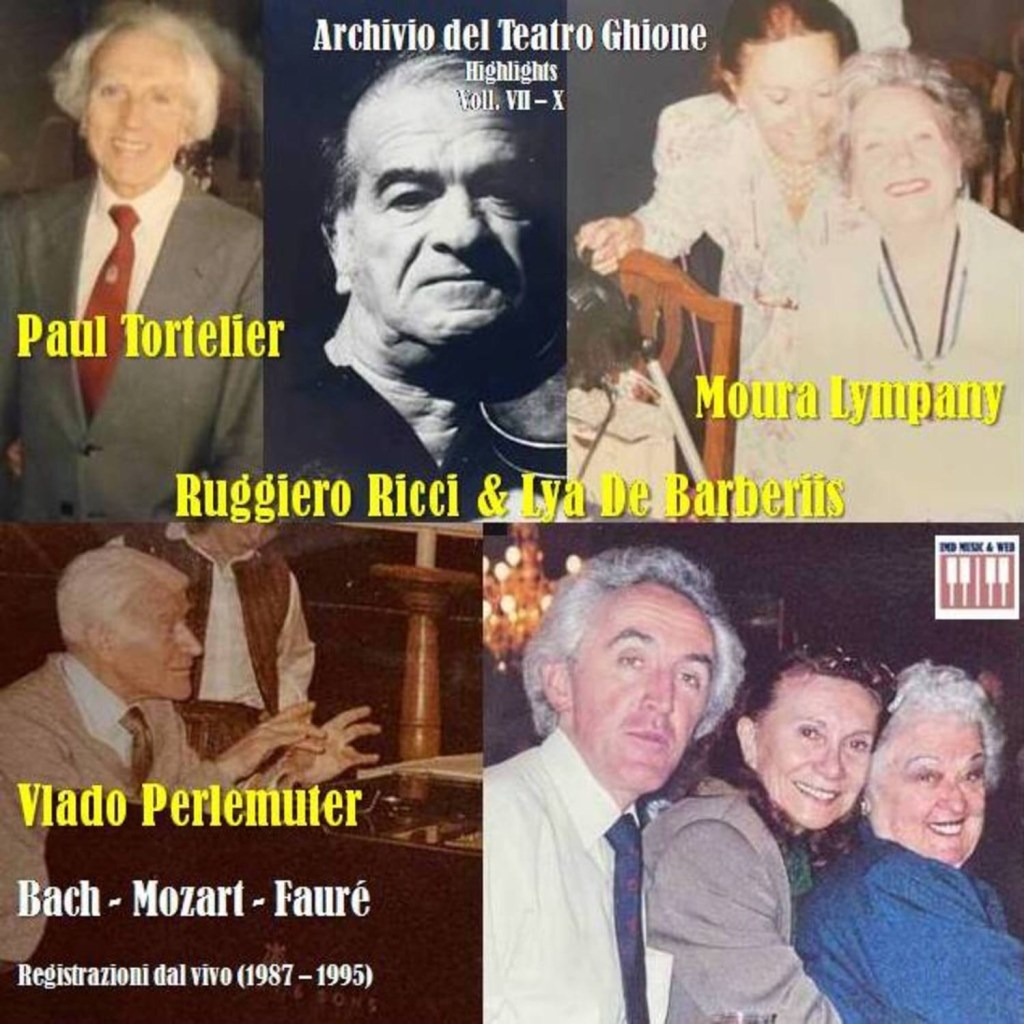
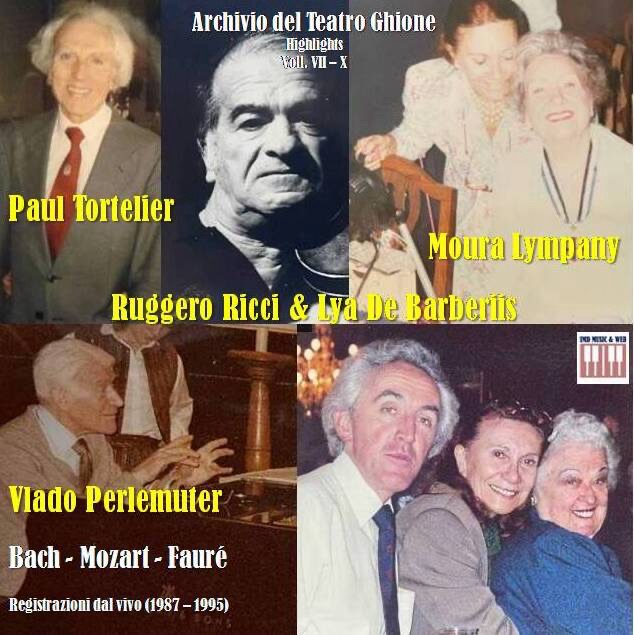
There is also the question of weight that seems to be missing in young pianists.I remember Tortelier asking me if I understood what he meant by playing with weight.He explained that it was playing into the keys , deeply like a limpet sucking out the juice from within, not on the surface but within the very body. Perlemuter of course ,a protégée of Cortot was to show me how never to leave the keys.Like an organist even changing fingers while holding one key down so as to make a perfect finger legato and never to strike the key percussively like a sledge hammer!

Clifford Curzon Mozart K 466

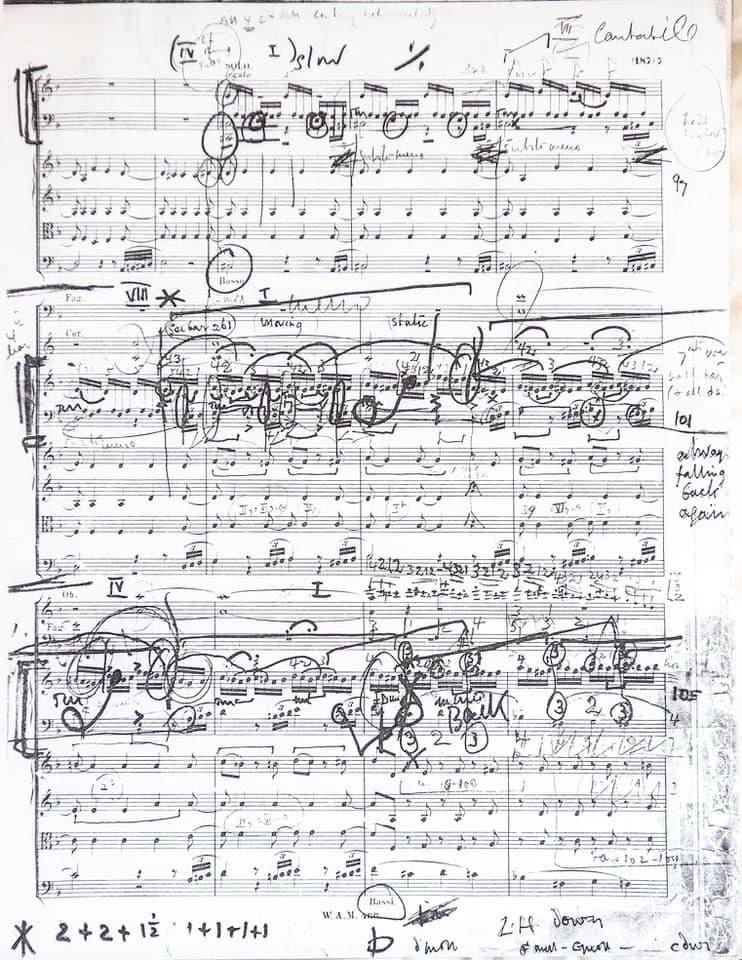
To see the scores with Perlemuters fingers is to see the scores of Curzon where the actual notes are almost obliterated by colours and fingerings – as Nadia Boulanger quoted often to her students :”Words without thought no more to heaven go”

Richter with Rubinstein in Paris on the famous occasion when Sol Hurok left them to talk together .The next morning they both needed the doctor after drinking much Champagne together .

For me Rubinstein was and still is the example of playing with real aristocratic weight and the sounds that he made in the concert hall I have rarely if ever heard since.I think it comes too with experience and the real love of what you are doing and of course a mature mastery that comes only with age. This is how Rubinstein described it :

And Cortot is still such a poetic inspiration :

https://youtu.be/UroWVTDb8Oo?feature=shared

Leeds winner Eric Lu showed an astonishing command of keyboard tone and color.. the sign he is already a true artist. It was a spellbinding experience.” – The Guardian

“Lu’s playing is in a rare class – sensitive and emotionally intuitive.” – BBC Music Magazine

Eric Lu won First Prize at The Leeds International Piano Competition in 2018 at the age of 20. The following year, he signed an exclusive contract with Warner Classics, and has since collaborated with some of the world’s most prestigious orchestras, and presented in major recital venues.

Recent and forthcoming orchestral collaborations include the Chicago Symphony Orchestra, London Symphony Orchestra, Boston Symphony Orchestra, Los Angeles Philharmonic, Oslo Philharmonic, Orchestre Philharmonique du Luxembourg, Royal Stockholm Philharmonic, Orchestre National de Lille, Finnish Radio Symphony, Yomiuri Nippon Symphony, Seattle Symphony, Helsinki Philharmonic, Royal Philharmonic, Tokyo Symphony, Shanghai Symphony at the BBC Proms, amongst others. Conductors he collaborates with include Riccardo Muti, Mirga Gražinytė-Tyla, Ryan Bancroft, Marin Alsop, Duncan Ward, Vasily Petrenko, Edward Gardner, Sir Mark Elder, Thomas Dausgaard, Ruth Reinhardt, Earl Lee, Kerem Hasan, Nuno Coehlo, Dinis Sousa, and Martin Frӧst.

Active as a recitalist, he is presented on stages including the Köln Philharmonie, Concertgebouw Amsterdam, Queen Elizabeth Hall London, Elbphilharmonie Hamburg, Leipzig Gewandhaus, San Francisco Davies Hall, BOZAR Brussels, Fondation Louis Vuitton Paris, 92nd St Y, Aspen Music Festival, Seoul Arts Centre, Warsaw Philharmonic Hall, and Sala São Paulo. In 2025, he is appearing for the 7th consecutive year in recital at Wigmore Hall London. He has also been invited for the 7th time to Warsaw’s ‘Chopin and his Europe Festival’ and will debut at La Roque-d’Anthéron Festival.

Eric’s third album on Warner Classics was released in December 2022, featuring Schubert Sonatas D. 959 and 784. It was met with worldwide critical acclaim, receiving BBC Music Magazine’s Instrumental Choice, writing, “Lu’s place among today’s Schubertians is confirmed”. His previous album of the Chopin 24 Preludes, and Schumann’s Geistervariationen was hailed ‘truly magical’ by International Piano.

Born in Massachusetts in 1997, Eric Lu first came to international attention as a Laureate of the 2015 Chopin International Competition in Warsaw aged just 17. He was also awarded the International German Piano Award in 2017, and Avery Fisher Career Grant in 2021. Eric was a BBC New Generation Artist from 2019-22. Eric Lu was born on December 15, 1997 to a father from Kaohsiung ,Taiwan , and a mother from Shanghai ,China . He grew up in Bedford Massachusetts , and started piano studies at age six with Dorothy Shi (杨镜钏) in the Boston area. Later on, he enrolled at the New England Conservatory Preparatory School , where he studied with Alexander Korsantia and A. Ramon Rivera. In 2013, he was admitted into the Curtis Institute of Music  in Philadelphia, where he studied with Jonathan Biss and Robert McDonald. He is also a pupil of Dang Thai Son.

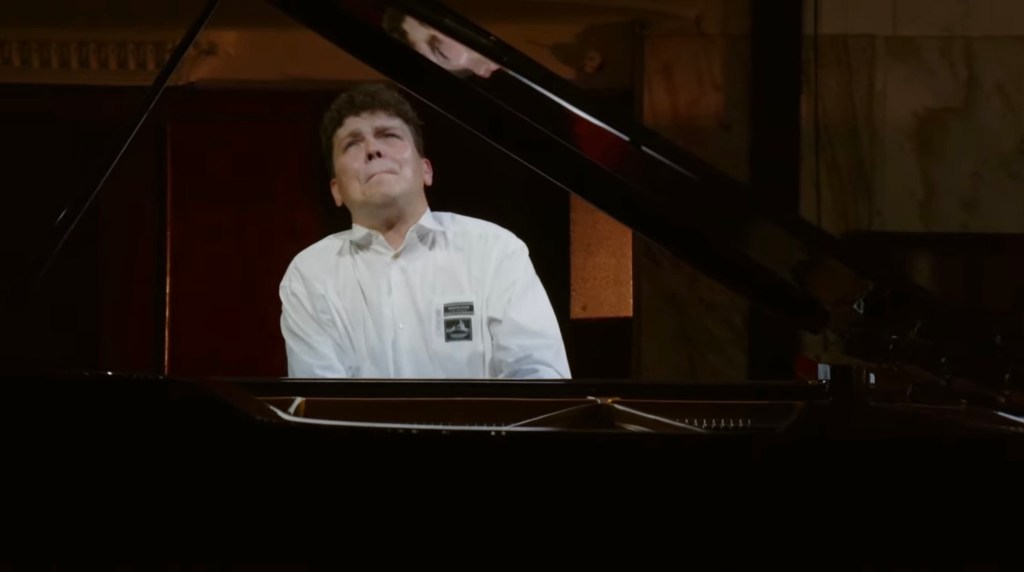
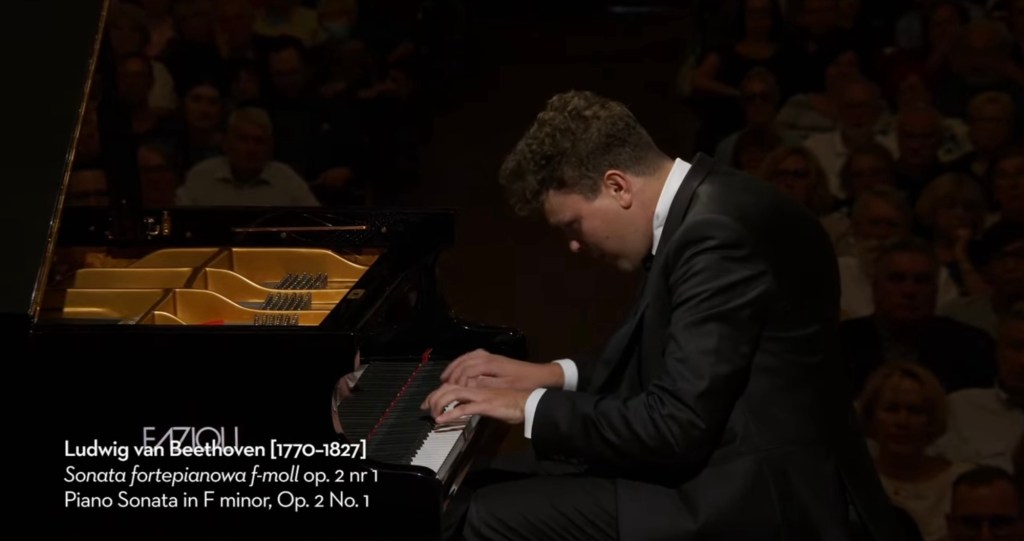
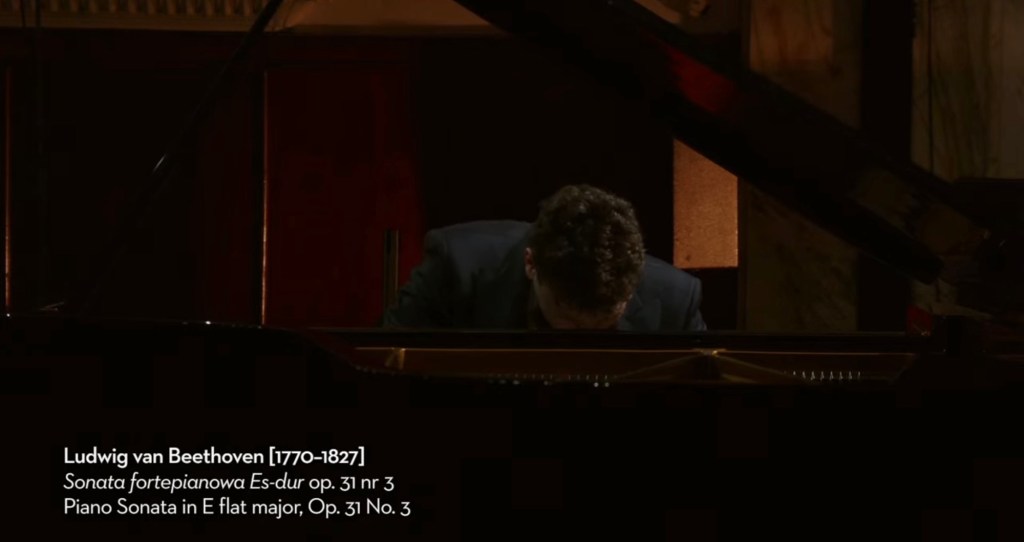
Szymon Nehring in Warsaw Classicism and visionary romantic – the revelations of a master

https://www.youtube.com/live/D_rrfTym0YI?feature=shared

Ludwig van Beethoven [1770 –1827]
Piano Sonata in F minor, Op. 2 No. 1
Piano Sonata in E flat major, Op. 31 No. 3

Fryderyk Chopin [1810 –1849]
Rondo in C minor, Op. 1
Berceuse in D flat major, Op. 57

Ferenc Liszt [1811 –1886]
Années de pèlerinage. Première année. Suisse, S. 160

An extraordinary recital from a pianist whose debut recital I had heard some years ago at the Wigmore Hall in London as winner of the Rubinstein Competition.I remember the discussions between Menahem Pressler and Peter Frankl during the interval talking about his phenomenal performance of ‘Petrushka’. We were all astonished and amazed until Pressler gently pointed out that it is a dance and it would have been impossible to dance to his performance without breaking a leg!

Scrupulous attention to Beethoven’s markings but maybe even too literal with staccatos very short and sharp but with an enviable driving energy .An Adagio etched in pure sculptured sounds with a beautifully drawn out ending (even though not marked in the score) and with two short pianissimi chords of poignant beauty. There was an elegance and simplicity ln the Menuetto and Trio and an astonishing dynamic drive to the Prestissimo that I have only heard similar from Serkin

Tonight we heard two Beethoven Sonatas played with enviable technical assurance and scrupulous attention to the composers wishes.Trills that were like springs,staccatos that were scrupulously played as such and above all a clarity and fingerfertigkeit that was truly phenomenal.But one felt that this was such a classical performance that any personal feelings or participation were swept away by an exemplary exposition of the notes on the printed page.But it was rather black and white and by choice lacking in colour or any personal fantasy.

A dramatic opening of precision and rhythmic energy as this was the start of an epic journey of pastoral freshness.A driving rhythm to the Scherzo of clockwork precision and drive and strange being so scrupulous that he should have added a ritardando on the final pianissimo chords.There was a full beautiful tone to the Menuetto and a Trio of elegance almost like a music box but again why the unmarked ritardando at the end . The Presto con fuoco was played with an exhilarating ‘joie de vivre’ with a relentless forward movement of dynamic drive

After the interval Maestro Nehring appeared without the rather formal jacket that he had worn for Beethoven appearing in a painter’s ample tunic and he was suddenly freed of all the formal restraints that he had imposed on himself in the first half and now played with a freedom and ravishing sense of colour that were breathtaking .

This early Rondo was played with such precision but also with the beauty of the ‘Più lento’ of chiselled elegance .Cascades of notes were played with delicacy and brilliance as it unwound with great style with barely whispered left hand scales accompanying the melody with extraordinary beauty.

A rubato of such beguiling beauty in the Mazurkas and the true vision of a great artist .If the Berceuse was a little fast and one feared that his precision and clarity might again obscure his artistic soul ,that was completely forgotten when the end of the Berceuse magically became the start of Liszt’s ‘Au Lac de Wallenstadt.’
Here the doors to heaven truly opened as this young man gave some of the most personal and beautiful performances of Liszt that I have ever heard.The ravishing beauty of ‘Au Lac ‘ where the waves were barely audible as the melodic line glowed and glistened as it was shaped with extraordinary sensibility.A rubato that was barely noticeable but drew you in to his magic spell which is where we remained for these four pieces from ‘Années de Pèlerinage’.
Obviously he had chosen the most poetic pieces as we passed from the ‘Lac’ to a ‘Pastorale’ bathed in pedal and of a luminosity of sparkling purity. ‘Les Cloches de Genèvre’ was revealed to be the miniature masterpiece that it truly is and the ‘Vallée d’Obermann’ was quite breathtaking and simply the greatest performance I have ever heard.A poetic understanding of a truly great tone poem where he passed from breathtaking passion to barely whispered confessions of heartrending poignancy.

The entire second half had been played without a break ,from the early Rondo op 1 played with a real sense of character and style and Chopin’s heartrending last piece for piano the Mazurka op 68 n. 4 through the Berceuse to a Liszt of remarkable poetic freedom even adding some embellishments that added even more poignancy and potency to such overwhelming;y convincing interpretations.

Two encores showed off the phenomenal technical mastery of this young musician with a minute waltz that I have never heard played with such clarity and precision but allied to a beguiling rubato and infectious sense of style.’Etincelles’ a famous encore of Horowitz was played with breathtaking charm and virtuosity with some additions that sounded as though they could have been by Volodos and an ending that was even more ‘tongue in cheek’ than Horowitz himself.

An artist who is really the incarnation of Florestan and Eusebius where the duel personality of severely classical on one hand and visionary mastery on the other could exist in the same person with only an interval and a change of clothes to separate them! Astonishing ! I know which one I prefer and am sure as he matures as artist he will combine the two worlds into the one glorious whole of his choice.

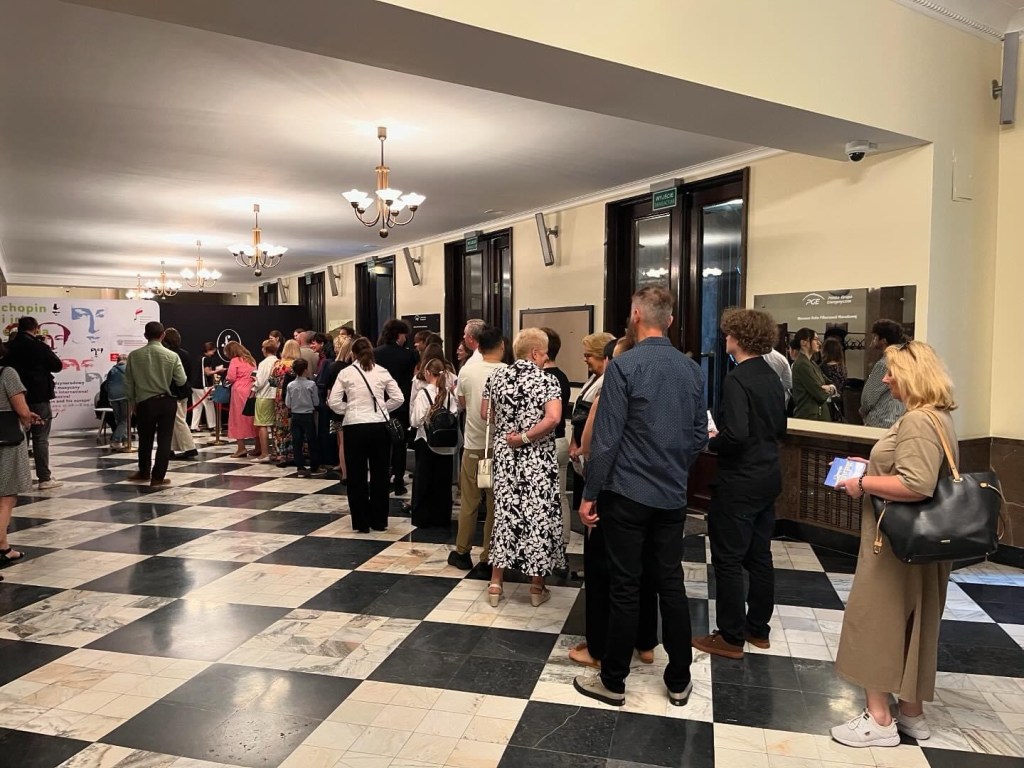
Queue of admirers after the concert

Considered to be the most gifted and promising pianist of his generation in Poland, Szymon Nehring is the only Pole to have won first prize at the Arthur Rubinstein International Piano Competition in Tel Aviv (2017). He was also a finalist at the Chopin Competition in Warsaw at only 19 .

Szymon performs with orchestras such as Sinfonia Varsovia, Warsaw Philharmonic Orchestra, Polish National Radio Symphony Orchestra in Katowice, NFM Wroclaw Philharmonic, Israel Symphony Orchestra, Bamberger Symphoniker, Hamburger Symphoniker, Orchester philharmonique de Marseille and Orchestre Paseloup in France and the Orchestra of the Eighteenth Century, collaborating with conductors such as John Axelrod, Lukas Borowicz, Sylvain Cambreling, Karina Canellakis, Pablo Heras-Casado, Marzena Diakun, Lawrence Foster, Giancarlo Guerrero, Jacek Kaspszyk, Grzegorz Nowak, Pawel Przytocki, George Tchitchinadze, David Zinman and Omer Meir Wellber. He also performed and recorded with the late Krzysztof Penderecki, among other works his piano concerto.

Szymon Nehring has performed in venues such as Carnegie Hall, Tonhalle Zürich, the Elbphilharmonie in Hamburg, the Palau de la Música Catalana in Barcelona, the Auditorio Nacional in Madrid, the Konzerthaus in Berlin, the DR Koncerthuset in Copenhagen, the Musikverein in Vienna, as well as the Herkulessaal and the Prinzregententheater in Munich.

Many recordings have already been released, in recital and with orchestra, including Chopin’s two piano concertos under the baton of K. Penderecki. During the 2024/25 season, a new minimalistic recording will be released, as well as the first Volume of a Chopin Solo Works Cycle for the Chopin Institute in Warsaw, a project meant to last several seasons. Amongst halls he will perform in this season are Bozar in Brussels, Laeiszhalle in Hamburg and La Seine Musicale in Paris. He will also perform Szymanowski´s 4th Symphony at home and on tour with the Polish National Radio Symphony Orchestra and Marin Alsop.

He started his education as a student of the M. Karłowicz’s Primary School and then the F. Chopin’s Secondary Music School in Cracow (2008–2014), which he graduated with distinction, being in the piano class of Olga Łazarska. Then he graduated from the Academy of Music in Bydgoszcz under the guidance of prof. Stefan Wojtas and in the period of 2017–2019 he has completed the Artist Diploma program at the Yale University in New Haven in the class of prof. Boris Berman. Since 2020, he has been a PHD student at the Doctoral School of the Academy of Music in Bydgoszcz in the class of prof. Katarzyna Popowa-Zydroń.

In 2015, he was awarded the Krystian Zimerman scholarship.

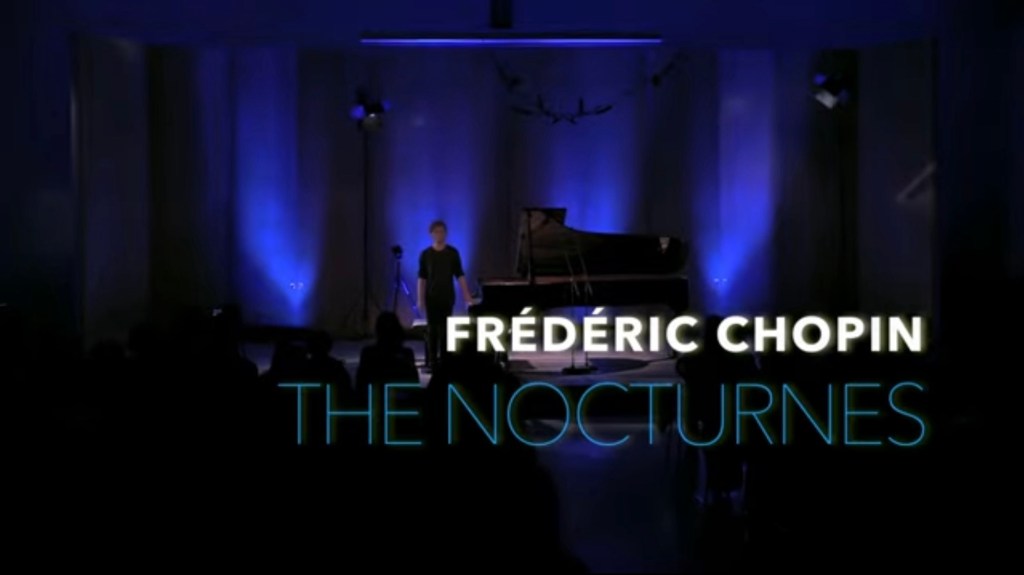
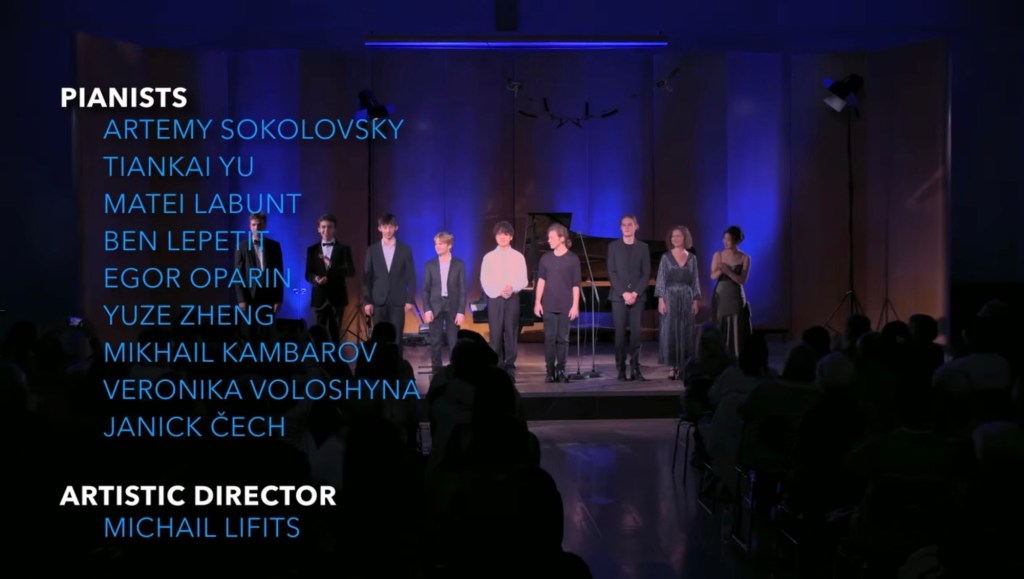
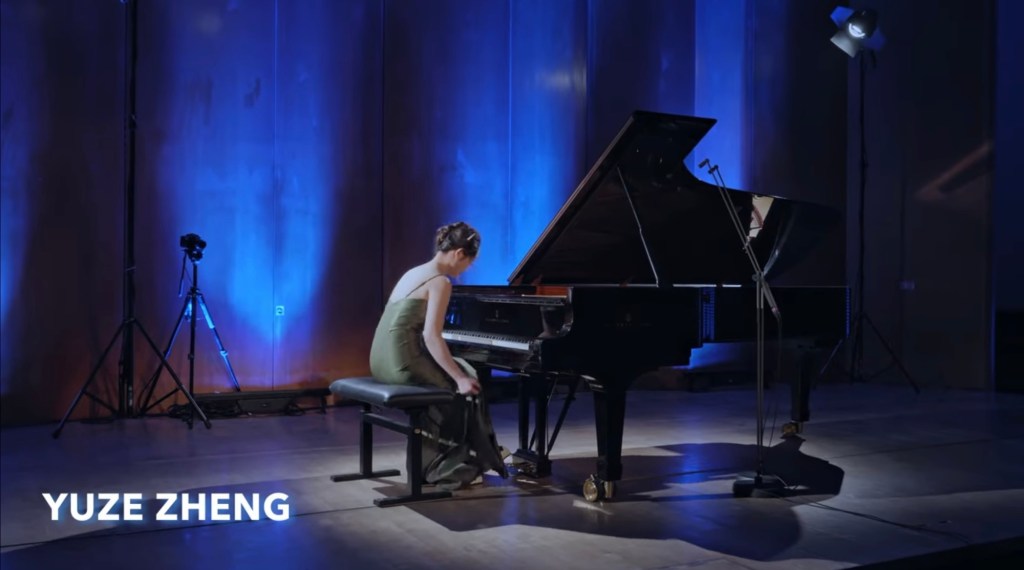
The extraordinary class of Michail Lifits.Nine young pianists of artistic integrity and refined musicianship who illuminated the beauty of Chopin’s 21 nocturnes
https://youtu.be/3AIxf7CFToQ?si=kazfvnFeY5Sj2w26

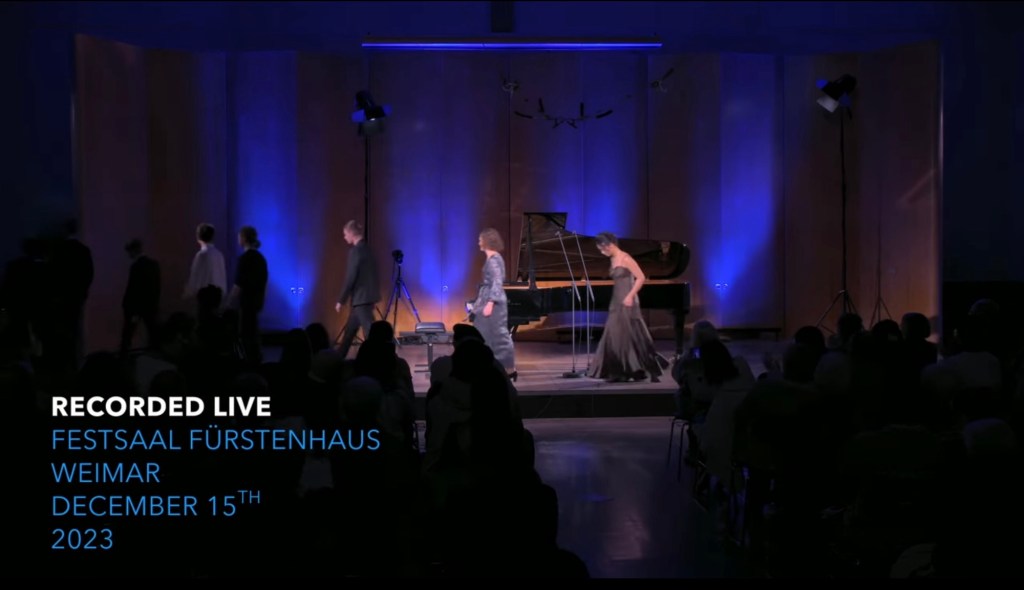
All 21 nocturnes by Frédéric Chopin were performed under the motto ‘Images of the Night’ on the same evening. The cycle, which is an important part of piano literature and which Chopin composed between 1827 and 1846, was presented to the public by various students of Prof. Michail Lifits’ piano class at the Weimar University of Music in December 2023. “Chopin made the soul of the piano sing. His music combines the singing and the virtuoso in a very organic way, which allows us pianists to experience a very intense connection with our instrument,” says Lifits.

A quite extraordinary line up of pianists each with an individual poetic sensibility that illuminated these 21 gems with refined artistry and musicianly intelligence.Professor Lifits sharing his genial mastery with young musicians only too ready to be inspired and moved by such refined beauty where every note has a poignant meaning to bring to life the wishes of the composer.
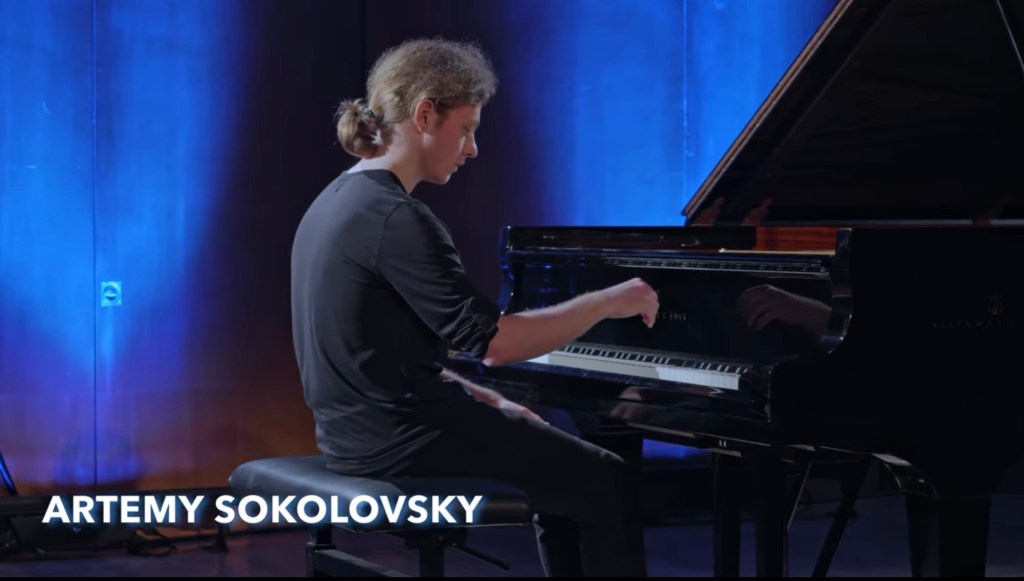
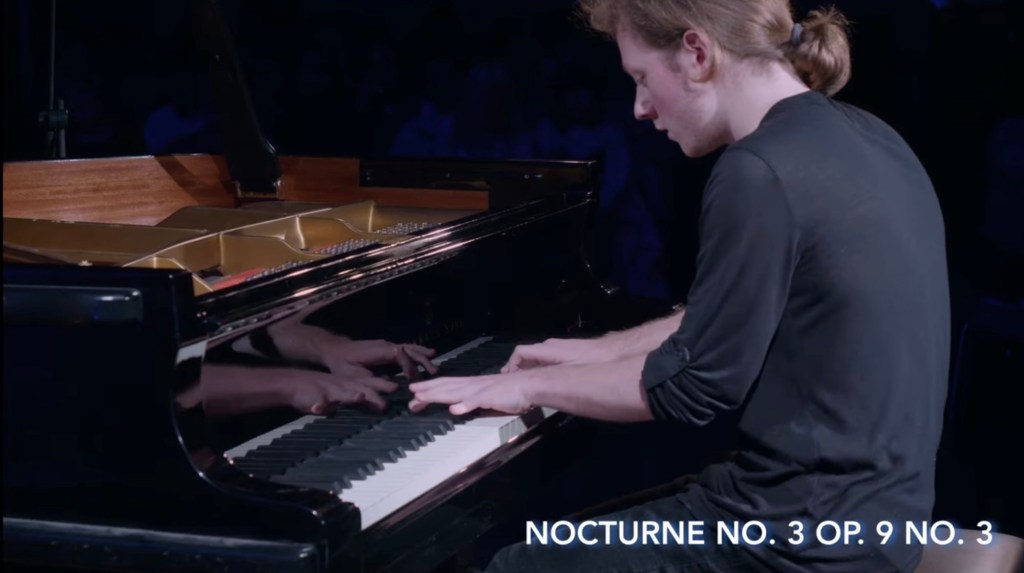
A beautifully shaped aristocratic rubato of natural fluidity .Beautiful voicing of the thumb in the central octave episode of op 9 n.1 and there was mystery and poetic beauty of the pianississimo legatissimo of timeless beauty before the final return of the opening. Beguiling radiance and a refined tone palette he brought to one of the best known Nocturnes : op 9 n. 2 ,and the agitato of op 9 n. 3 was played with a superb sense of balance sustained by a bass that allowed the melodic line to sing out unimpeded
A chiselled beauty of the Andante cantabile of op 15 n.1 ,wistful and enticing of disarming simplicity.The beautiful physical movement of his arms and hands gave great fluidity to all he caressed from the keys.Even the ‘con fuoco’ was played with nobility but always singing and never harsh or ungrateful but part of the overall architectural shape.He brought rich bold sounds to op 15 n. 2 ,the nocturne that Rubinstein made his own .There were trills and embellishments that were mere vibrations of sound and if his youthful passion made the ‘doppio movimento’ a little unsteady he brought pure magic of timeless beauty to the coda.A beautiful architectural shape of subtle shading in op 15 n.3 ,the poor relation of the three,but not in this man’s sensitive poetic hands.There was a wondrous stillness to the chorale and his control of sound in the coda showed a masterly sense of legato as the music disappeared into the distance with wondrous beauty.
The barely murmured left hand of op 27 n.1 caressing the keys as the melancholic melodic line just floated and hovered above the radiantly poignant sounds .The ‘piu mosso’ entered so stealthily building to a passionate climax with the ‘con anima’ played with ‘soul’ not strength and the left hand octave recitativo played with nobility and enviable legato.Op 27 n. 2 was rather slow but was imbued with poetic beauty with a magic question and answer and the dying sighs in the coda were of truly glowing beauty.
Simplicity and beauty rather than drama and nobility until the final bars where the drama was finally played out with passionate commitment . Its twin op 31 n. 2 was allowed to flow so naturally and if the central ‘piu agitato’ could have been more horizontal than vertical it was played with the great temperament more of an Impromptu than a Nocturne
He brought a beautiful cantabile to op 37 n.1 with the chorale played with string quartet richness .Op 37 n. 2 was thrown off with the same ease and charm as the third Impromptu as he brought a gentle pastoral flow to the beautiful central episode
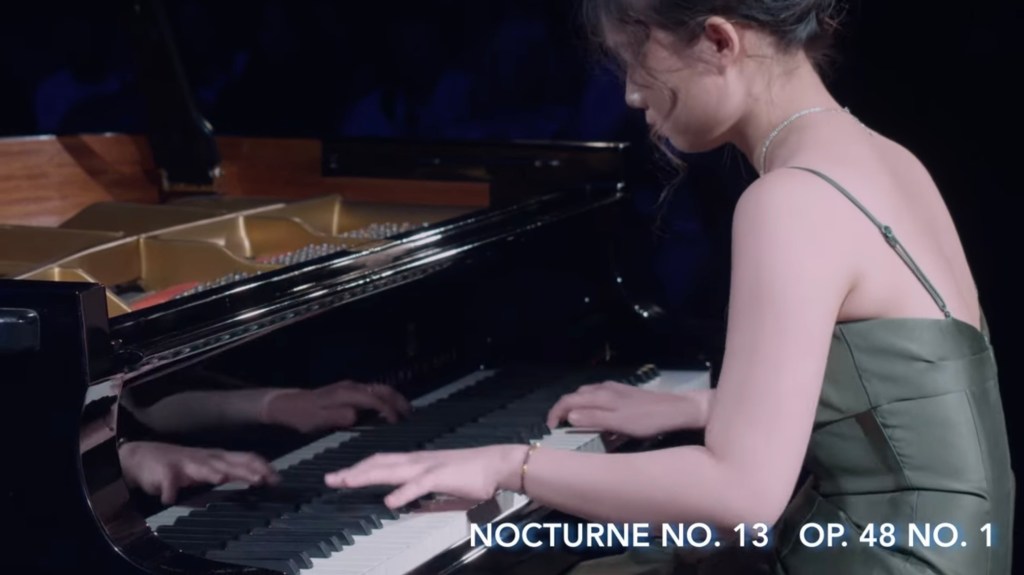
Sumptuous elegance and style as the ‘ poco più lento’ entered in whispered tones building very subtly to a climax and cascades of octaves as it reached out for the ‘doppio movimento’. Here the melodic line was floated on a passionate outpouring of exhilaration and excitement as the final notes spread their wings to reach into the infinite of the longest and most complex of all the nocturnes. Op 48 n. 2 was played with a flowing tempo full of subtle colours and inflections and poetically slowing down almost to a halt before the return of the theme .The often whimsical ‘molto più lento’ was here played with subtle shaping of poetic beauty as vibrations of sound filled the air before a final etherial farewell and a beautifully placed final chord.
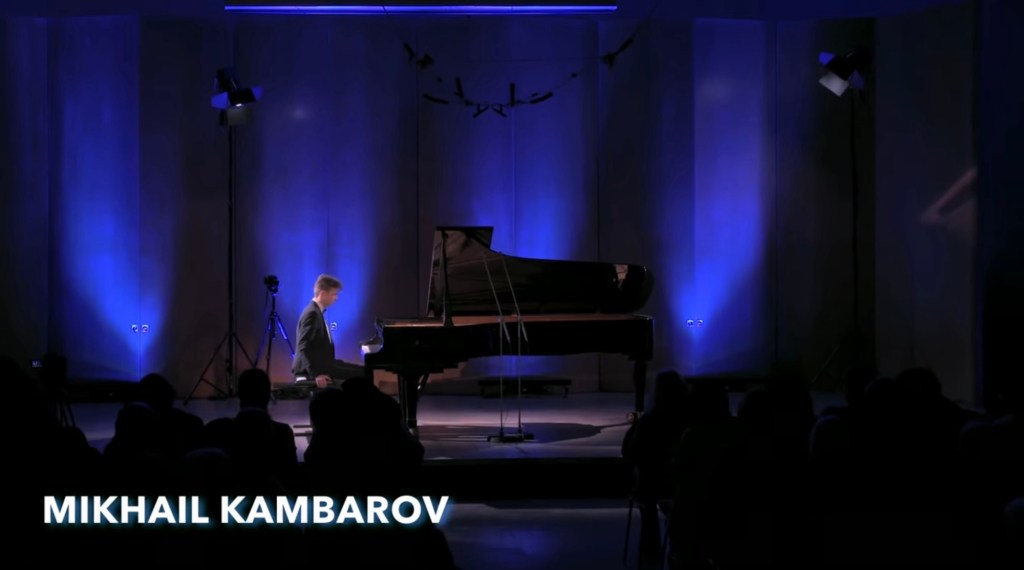
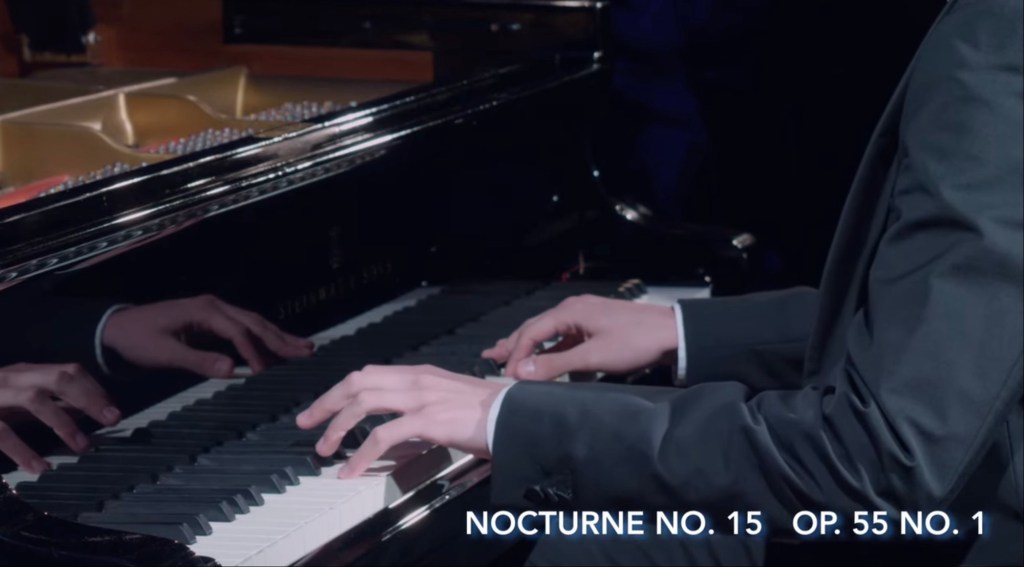
Op 55 n.1 was Cherkassky’s favourite nocturne and Mikhail played it with the same poetic fantasy as the great master.The ‘piu mosso’ entering with elegance and subdued passion leading to a beautifully shaped cadenza of passion and breathtaking beauty as the main theme returned. This time embellished with poetic artistry and cascades of notes gently accompanying a deep tenor melody of subtle beauty.The ‘Lento sostenuto’ of op 55 n.2 is one of the most passionate outpourings of all the nocturnes and was played with aristocratic authority with whispered counterpoints of scintillating radiance and hidden beauty.
https://christopheraxworthymusiccommentary.com/2024/04/11/trapani-the-jewel-of-sicily-where-dreams-can-become-reality-the-international-piano-competition-domenico-scarlatti/
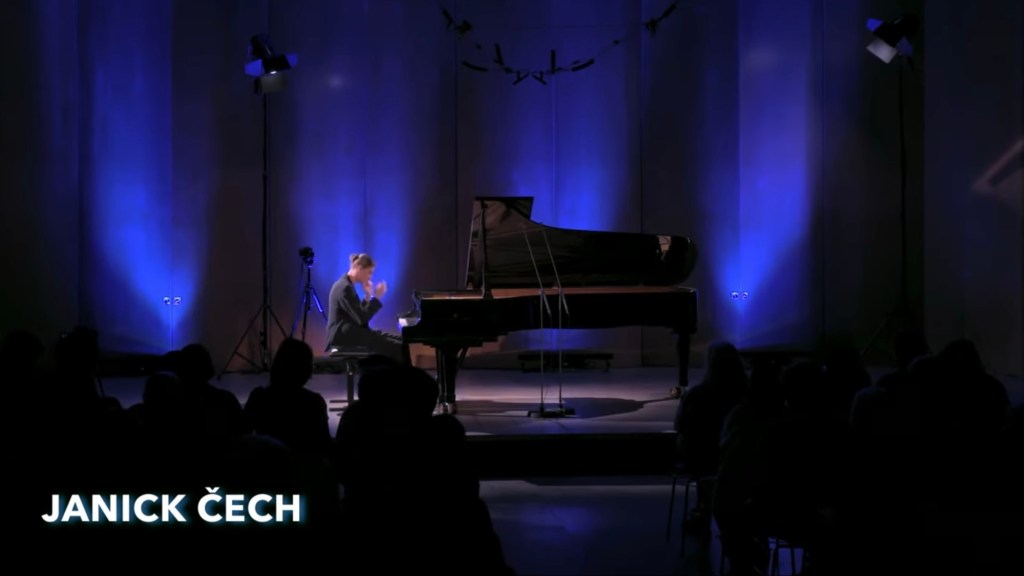
Hands that waded into the waters with beautiful natural movements as she sculptured the sounds of these two last late nocturnes.There was a whispered beauty to the B major nocturne ,played rather slowly but with a poetic explosion of ornaments of ravishing beauty.There was languid beauty to the E major nocturne with a beautifully fluid central episode of imposing ‘agitato’ and the meeting of the two worlds as the nocturne was brought to a poignant ending.
Three posthumous nocturnes were played with a simplicity and beguiling beauty .Op 72 n. 1 was bathed in pedal as the melody of nostalgia was played with subtle artistry and beauty.The nocturne in C sharp minor op posth was played with great delicacy and a chiselled beauty and the final C minor was played with aristocratic poise.
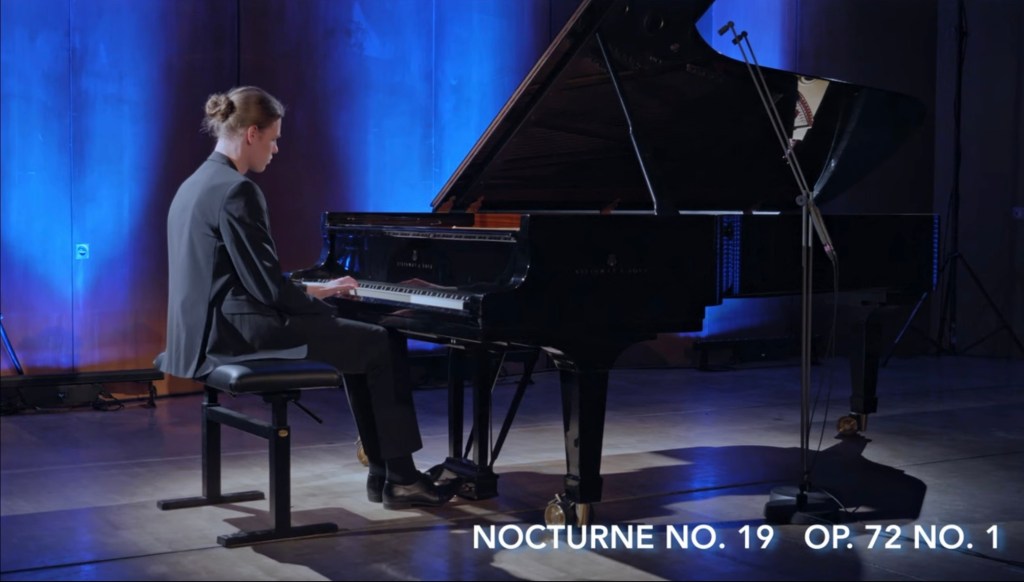
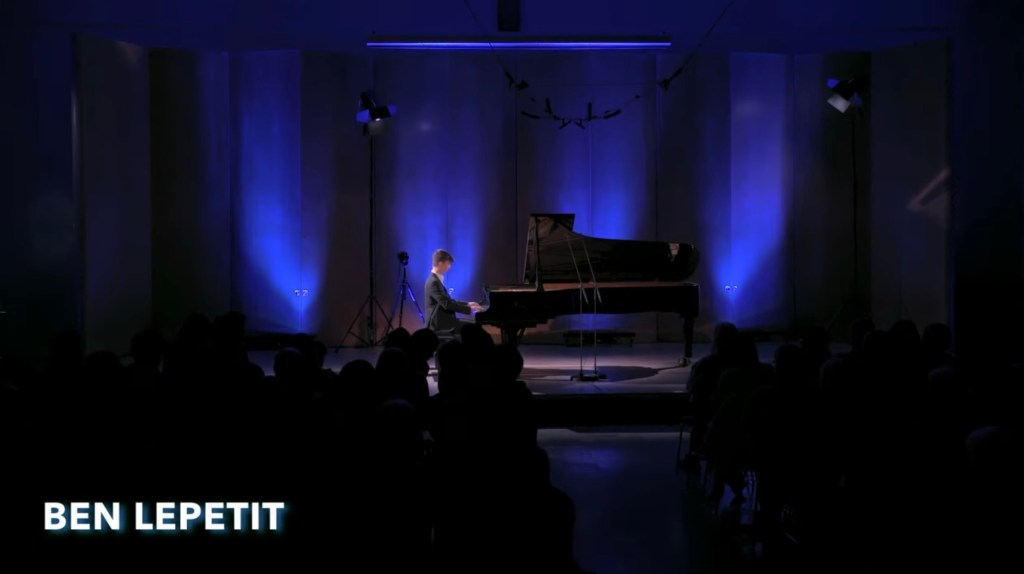
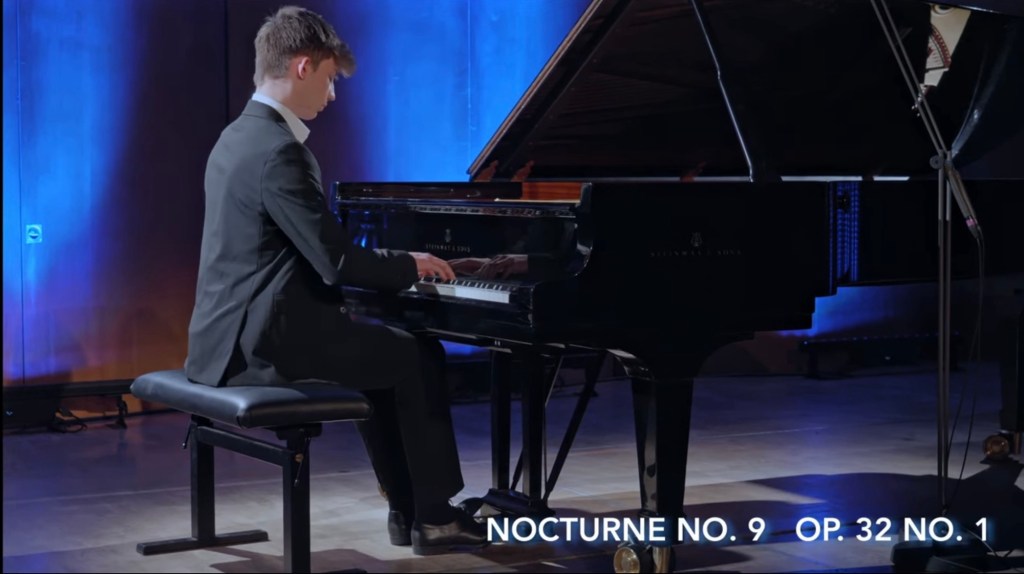
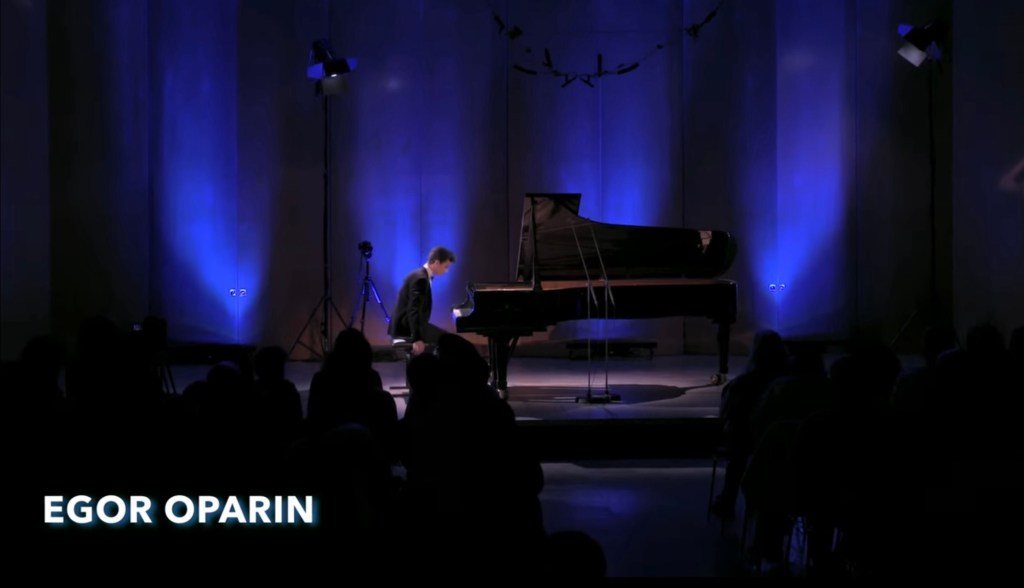
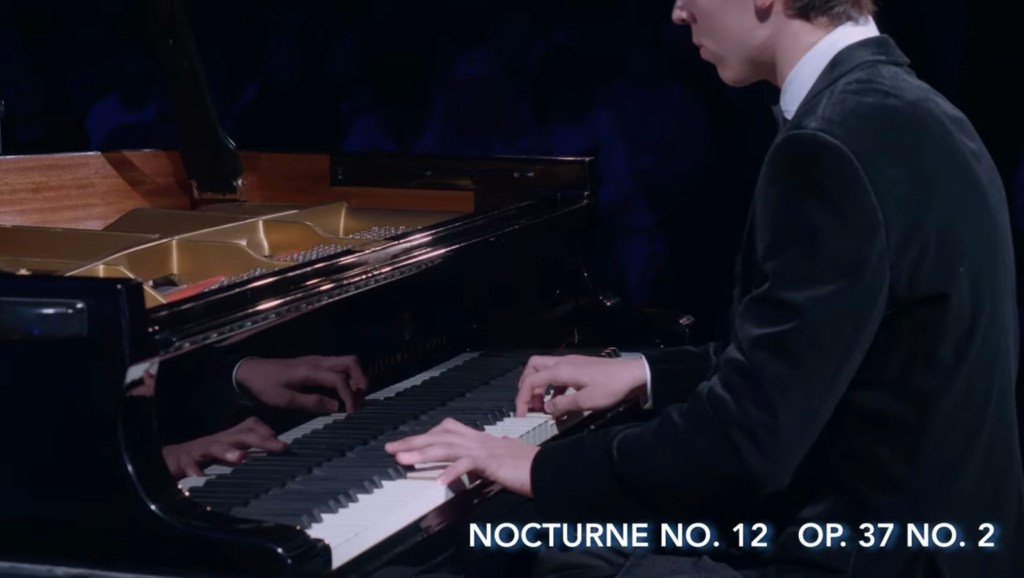
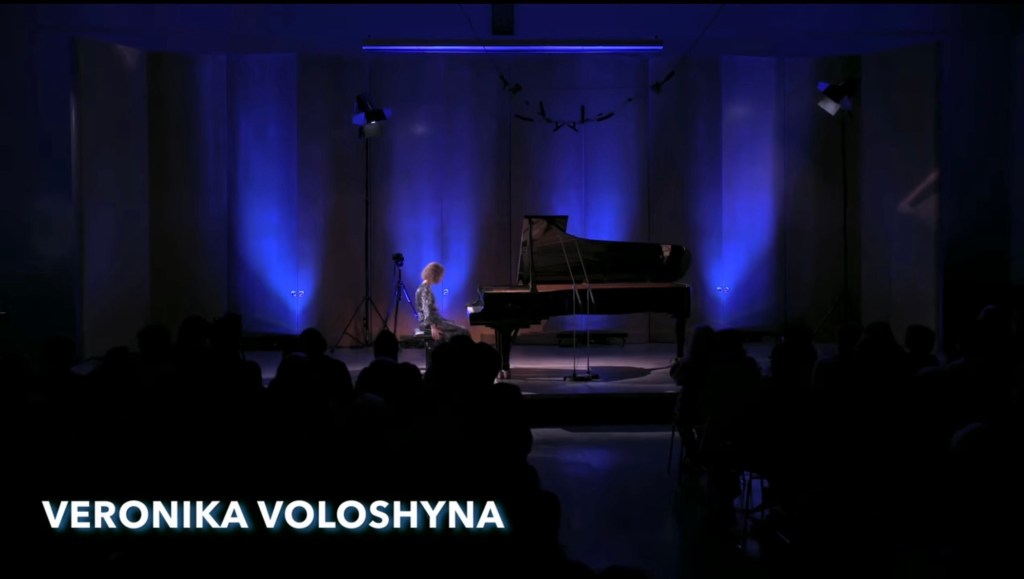
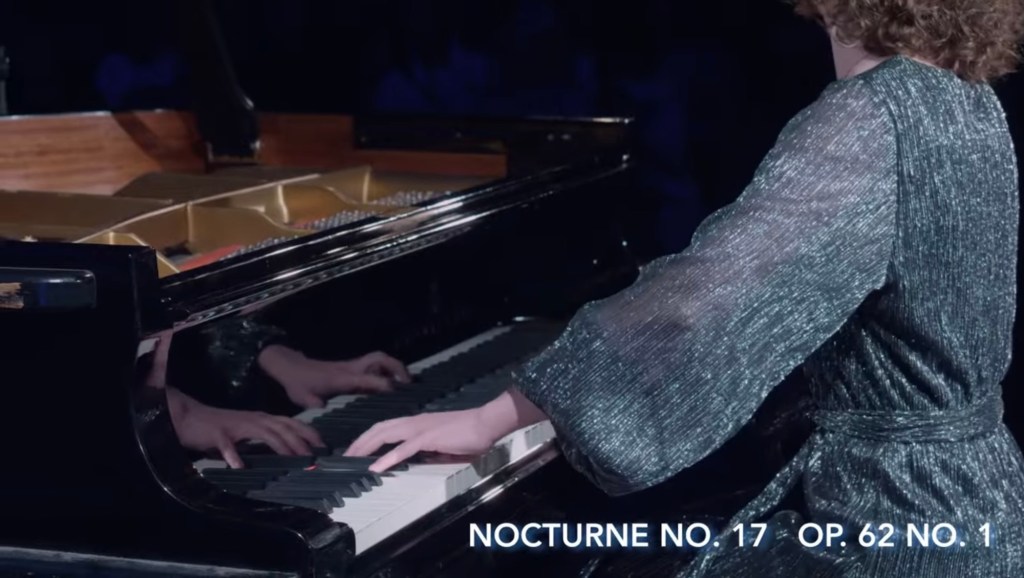
00:00:00 – Start 00:00:30 – Nocturne No. 1 op. 9 No. 1 (Artemy Sokolovsky) 00:05:47 – Nocturne No. 2 op. 9 No. 2 (Artemy Sokolovsky) 00:09:38 – Nocturne No. 3 op. 9 No. 3 Artemy Sokolovsky) 00:16:47 – Nocturne No. 4 op. 15 No. 1 (Tiankai Yu) 00:21:06 – Nocturne No. 5 op. 15 No. 2 (Tiankai Yu) 00:24:29 – Nocturne No. 6 op. 15 No. 3 (Tiankai Yu) 00:30:13 – Nocturne No. 7 op. 27 No. 1 (Matei Labunt) 00:35:52 – Nocturne No. 8 op. 27 No. 2 (Matei Labunt) 00:43:02 – Nocturne No. 9 op. 32 No. 1 (Ben Lepetit) 00:47:58 – Nocturne No. 10 op. 32 No. 2 (Ben Lepetit) 00:53:11 – Nocturne No. 11 op. 37 No. 1 (Egor Oparin) 00:58:43 – Nocturne No. 12 op. 37 No. 2 (Egor Oparin) 01:04:46 – Nocturne No. 13 op. 48 No. 1 (Yuze Zheng) 01:11:31 – Nocturne No. 14 op. 48 No. 2 (Yuze Zheng) 01:20:14 – Nocturne No. 15 op. 55 No. 1 (Mikhail Kambarov) 01:25:29 – Nocturne No. 16 op. 55 No. 2 (Mikhail Kambarov) 01:31:14 – Nocturne No. 17 op. 62 No. 1 (Veronika Voloshyna ) 01:40:30 – Nocturne No. 18 op. 62 No. 2 (Veronika Voloshyna) 01:47:10 – Nocturne No. 19 op. 72 No. 1 (Janick Čech) 01:51:19 – Nocturne No. 20 op. posthum (Janick Čech) 01:55:32 – Nocturne No. 21 op. posthum (Janick Čech) 01:58:59 – Applause / Credits University of Music FRANZ LISZT Weimar: Website: https://www.hfm-weimar.de Concert recording from 15 December 2023 in the Festsaal Fürstenhaus of the University of Music FRANZ LISZT Weimar.

The extraordinary class of Michail Lifits.Nine young pianists of artistic integrity and refined musicianship who illuminated the beauty of Chopin’s 21 nocturnes

https://youtu.be/3AIxf7CFToQ?si=kazfvnFeY5Sj2w26

All 21 nocturnes by Frédéric Chopin were performed under the motto ‘Images of the Night’ on the same evening. The cycle, which is an important part of piano literature and which Chopin composed between 1827 and 1846, was presented to the public by various students of Prof. Michail Lifits’ piano class at the Weimar University of Music in December 2023. “Chopin made the soul of the piano sing. His music combines the singing and the virtuoso in a very organic way, which allows us pianists to experience a very intense connection with our instrument,” says Lifits.

A quite extraordinary line up of pianists each with an individual poetic sensibility that illuminated these 21 gems with refined artistry and musicianly intelligence.Professor Lifits sharing his genial mastery with young musicians only too ready to be inspired and moved by such refined beauty where every note has a poignant meaning to bring to life the wishes of the composer.

A beautifully shaped aristocratic rubato of natural fluidity .Beautiful voicing of the thumb in the central octave episode of op 9 n.1 and there was mystery and poetic beauty of the pianississimo legatissimo of timeless beauty before the final return of the opening. Beguiling radiance and a refined tone palette he brought to one of the best known Nocturnes : op 9 n. 2 ,and the agitato of op 9 n. 3 was played with a superb sense of balance sustained by a bass that allowed the melodic line to sing out unimpeded
A chiselled beauty of the Andante cantabile of op 15 n.1 ,wistful and enticing of disarming simplicity.The beautiful physical movement of his arms and hands gave great fluidity to all he caressed from the keys.Even the ‘con fuoco’ was played with nobility but always singing and never harsh or ungrateful but part of the overall architectural shape.He brought rich bold sounds to op 15 n. 2 ,the nocturne that Rubinstein made his own .There were trills and embellishments that were mere vibrations of sound and if his youthful passion made the ‘doppio movimento’ a little unsteady he brought pure magic of timeless beauty to the coda.A beautiful architectural shape of subtle shading in op 15 n.3 ,the poor relation of the three,but not in this man’s sensitive poetic hands.There was a wondrous stillness to the chorale and his control of sound in the coda showed a masterly sense of legato as the music disappeared into the distance with wondrous beauty.
The barely murmured left hand of op 27 n.1 caressing the keys as the melancholic melodic line just floated and hovered above the radiantly poignant sounds .The ‘piu mosso’ entered so stealthily building to a passionate climax with the ‘con anima’ played with ‘soul’ not strength and the left hand octave recitativo played with nobility and enviable legato.Op 27 n. 2 was rather slow but was imbued with poetic beauty with a magic question and answer and the dying sighs in the coda were of truly glowing beauty.
Simplicity and beauty rather than drama and nobility until the final bars where the drama was finally played out with passionate commitment . Its twin op 31 n. 2 was allowed to flow so naturally and if the central ‘piu agitato’ could have been more horizontal than vertical it was played with the great temperament more of an Impromptu than a Nocturne
He brought a beautiful cantabile to op 37 n.1 with the chorale played with string quartet richness .Op 37 n. 2 was thrown off with the same ease and charm as the third Impromptu as he brought a gentle pastoral flow to the beautiful central episode
Sumptuous elegance and style as the ‘ poco più lento’ entered in whispered tones building very subtly to a climax and cascades of octaves as it reached out for the ‘doppio movimento’. Here the melodic line was floated on a passionate outpouring of exhilaration and excitement as the final notes spread their wings to reach into the infinite of the longest and most complex of all the nocturnes. Op 48 n. 2 was played with a flowing tempo full of subtle colours and inflections and poetically slowing down almost to a halt before the return of the theme .The often whimsical ‘molto più lento’ was here played with subtle shaping of poetic beauty as vibrations of sound filled the air before a final etherial farewell and a beautifully placed final chord.
Op 55 n.1 was Cherkassky’s favourite nocturne and Mikhail played it with the same poetic fantasy as the great master.The ‘piu mosso’ entering with elegance and subdued passion leading to a beautifully shaped cadenza of passion and breathtaking beauty as the main theme returned. This time embellished with poetic artistry and cascades of notes gently accompanying a deep tenor melody of subtle beauty.The ‘Lento sostenuto’ of op 55 n.2 is one of the most passionate outpourings of all the nocturnes and was played with aristocratic authority with whispered counterpoints of scintillating radiance and hidden beauty.
https://christopheraxworthymusiccommentary.com/2024/04/11/trapani-the-jewel-of-sicily-where-dreams-can-become-reality-the-international-piano-competition-domenico-scarlatti/
Hands that waded into the waters with beautiful natural movements as she sculptured the sounds of these two last late nocturnes.There was a whispered beauty to the B major nocturne ,played rather slowly but with a poetic explosion of ornaments of ravishing beauty.There was languid beauty to the E major nocturne with a beautifully fluid central episode of imposing ‘agitato’ and the meeting of the two worlds as the nocturne was brought to a poignant ending.
Three posthumous nocturnes were played with a simplicity and beguiling beauty .Op 72 n. 1 was bathed in pedal as the melody of nostalgia was played with subtle artistry and beauty.The nocturne in C sharp minor op posth was played with great delicacy and a chiselled beauty and the final C minor was played with aristocratic poise.
00:00:00 – Start 00:00:30 – Nocturne No. 1 op. 9 No. 1 (Artemy Sokolovsky) 00:05:47 – Nocturne No. 2 op. 9 No. 2 (Artemy Sokolovsky) 00:09:38 – Nocturne No. 3 op. 9 No. 3 Artemy Sokolovsky) 00:16:47 – Nocturne No. 4 op. 15 No. 1 (Tiankai Yu) 00:21:06 – Nocturne No. 5 op. 15 No. 2 (Tiankai Yu) 00:24:29 – Nocturne No. 6 op. 15 No. 3 (Tiankai Yu) 00:30:13 – Nocturne No. 7 op. 27 No. 1 (Matei Labunt) 00:35:52 – Nocturne No. 8 op. 27 No. 2 (Matei Labunt) 00:43:02 – Nocturne No. 9 op. 32 No. 1 (Ben Lepetit) 00:47:58 – Nocturne No. 10 op. 32 No. 2 (Ben Lepetit) 00:53:11 – Nocturne No. 11 op. 37 No. 1 (Egor Oparin) 00:58:43 – Nocturne No. 12 op. 37 No. 2 (Egor Oparin) 01:04:46 – Nocturne No. 13 op. 48 No. 1 (Yuze Zheng) 01:11:31 – Nocturne No. 14 op. 48 No. 2 (Yuze Zheng) 01:20:14 – Nocturne No. 15 op. 55 No. 1 (Mikhail Kambarov) 01:25:29 – Nocturne No. 16 op. 55 No. 2 (Mikhail Kambarov) 01:31:14 – Nocturne No. 17 op. 62 No. 1 (Veronika Voloshyna ) 01:40:30 – Nocturne No. 18 op. 62 No. 2 (Veronika Voloshyna) 01:47:10 – Nocturne No. 19 op. 72 No. 1 (Janick Čech) 01:51:19 – Nocturne No. 20 op. posthum (Janick Čech) 01:55:32 – Nocturne No. 21 op. posthum (Janick Čech) 01:58:59 – Applause / Credits University of Music FRANZ LISZT Weimar: Website: https://www.hfm-weimar.de Concert recording from 15 December 2023 in the Festsaal Fürstenhaus of the University of Music FRANZ LISZT Weimar.

Nikita Lukinov ……..”If music be the food of love play on ….and on” A Master on a voyage of discovery and sharing in Scotland

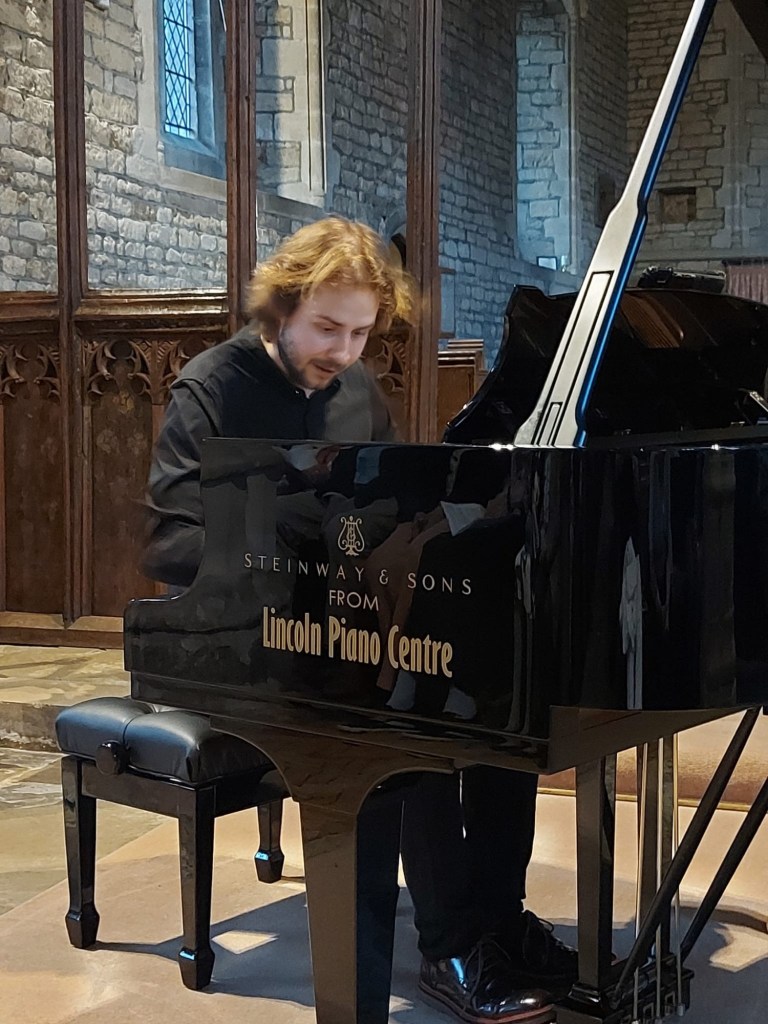
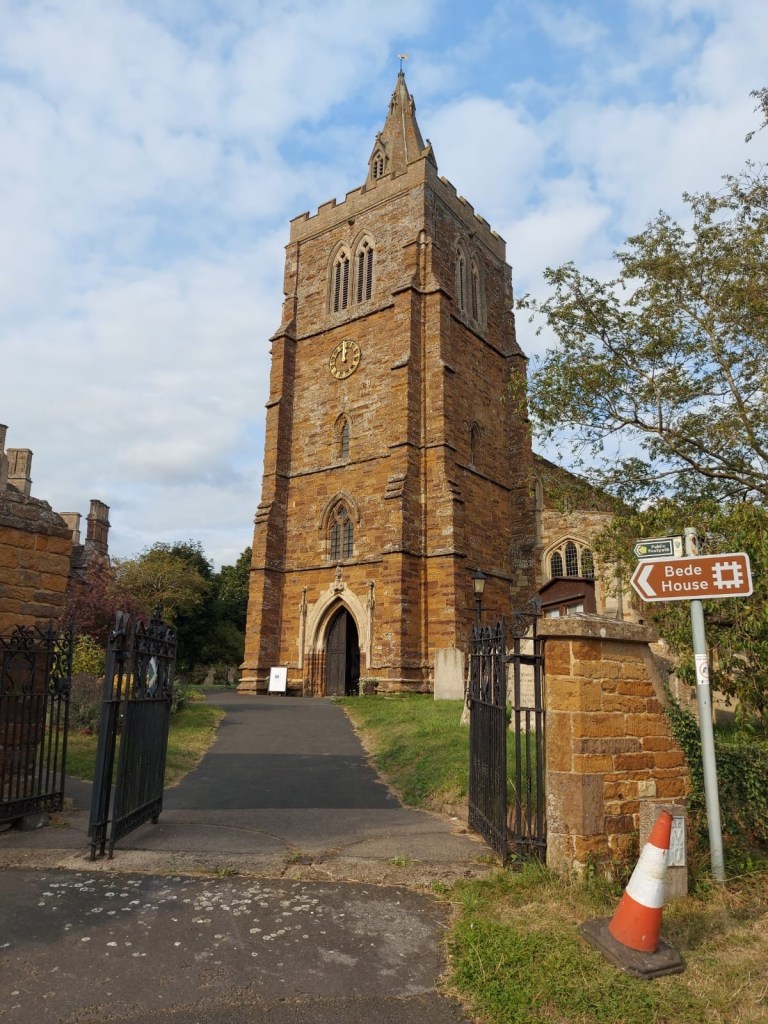
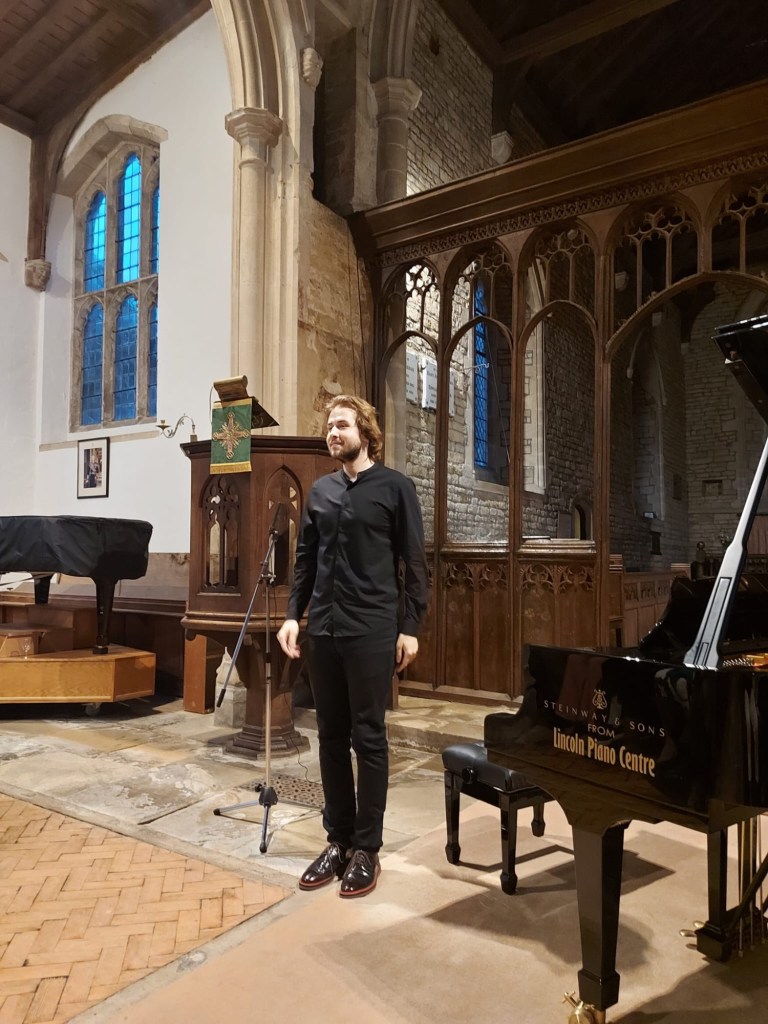
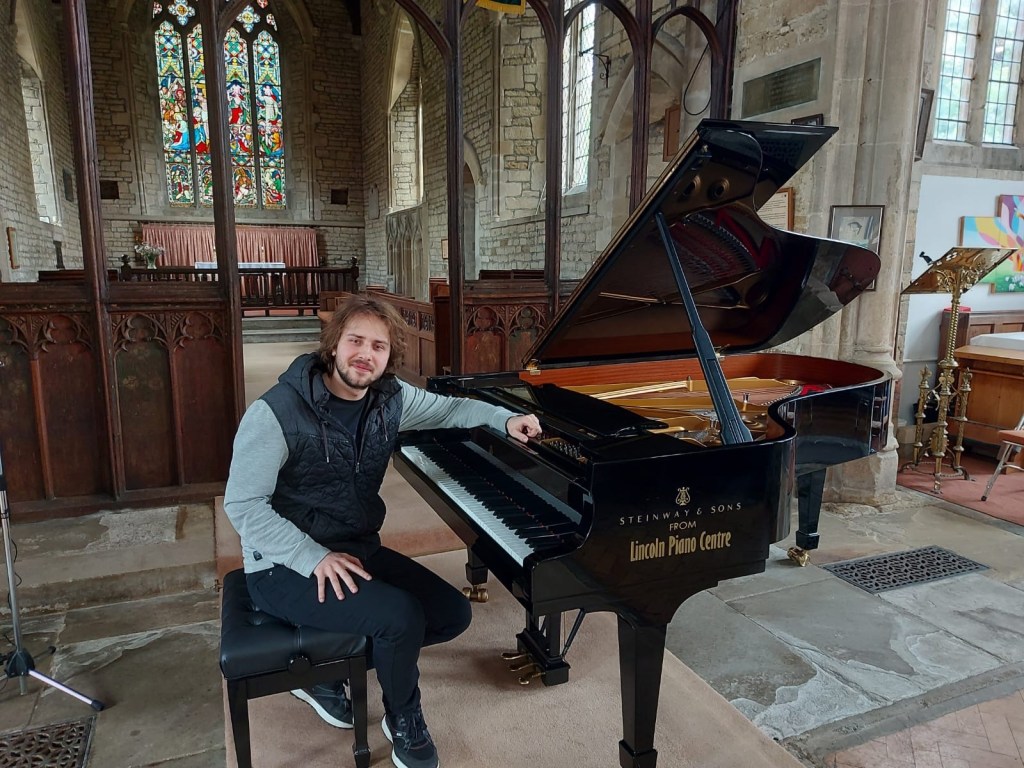
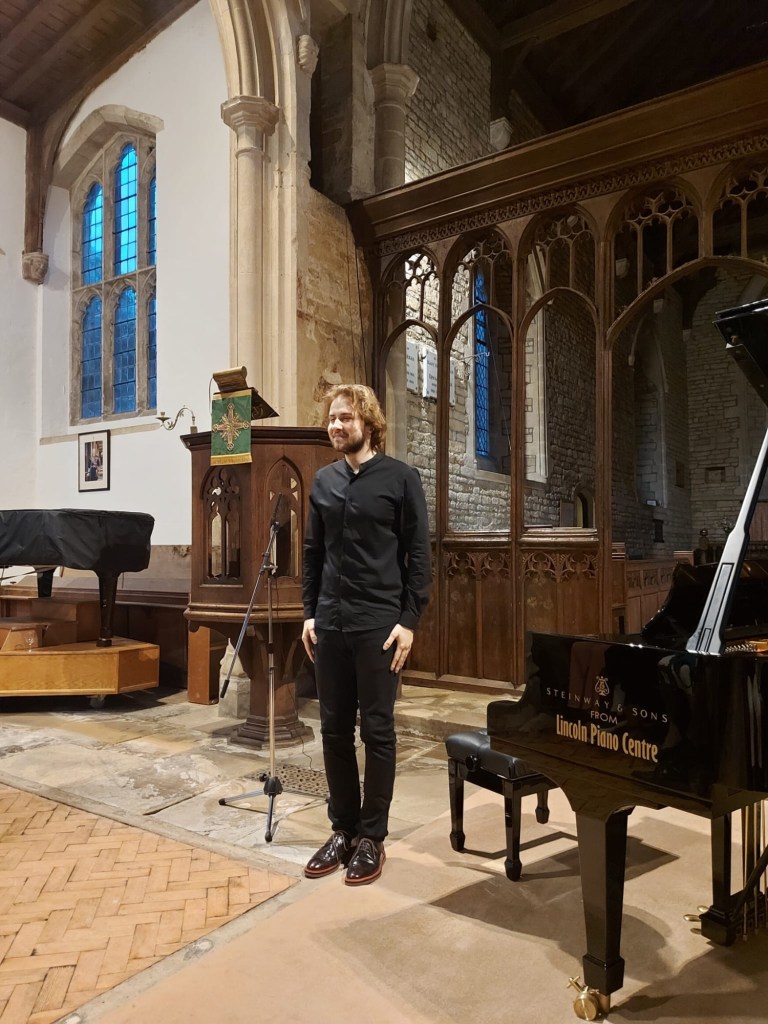
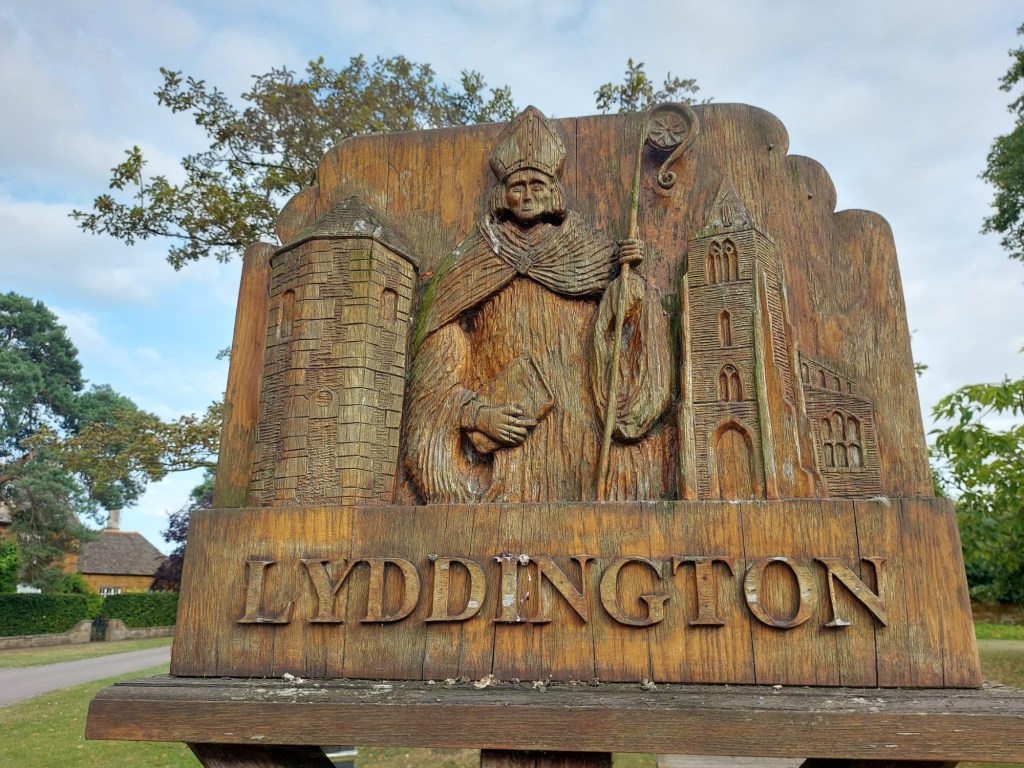
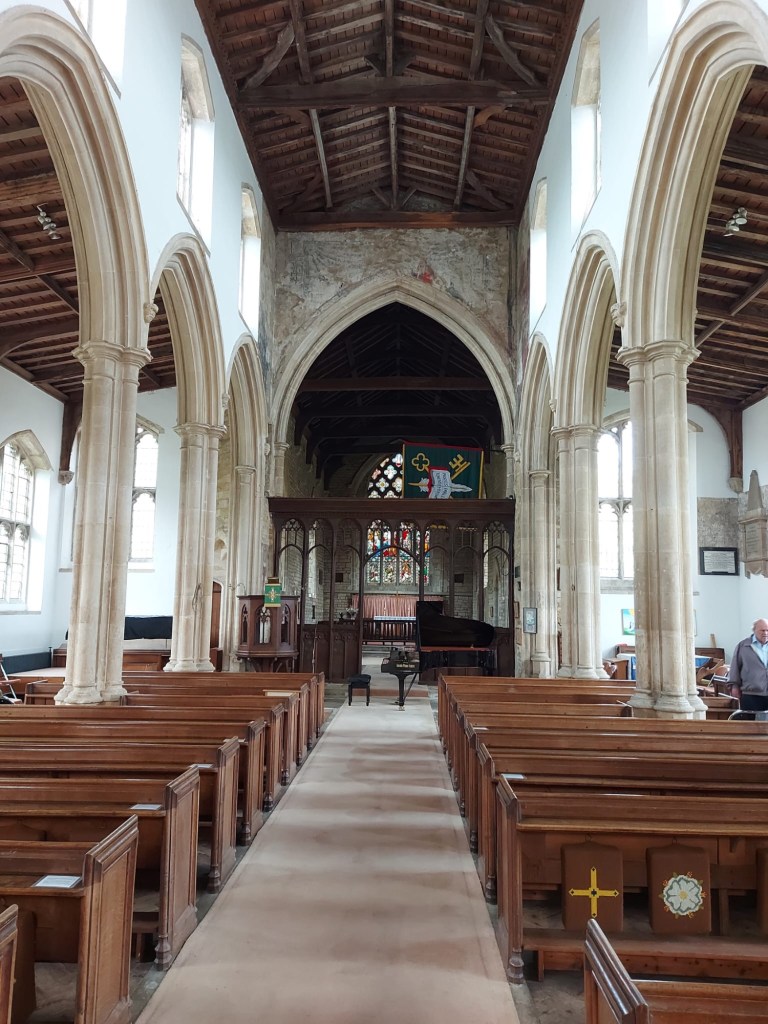
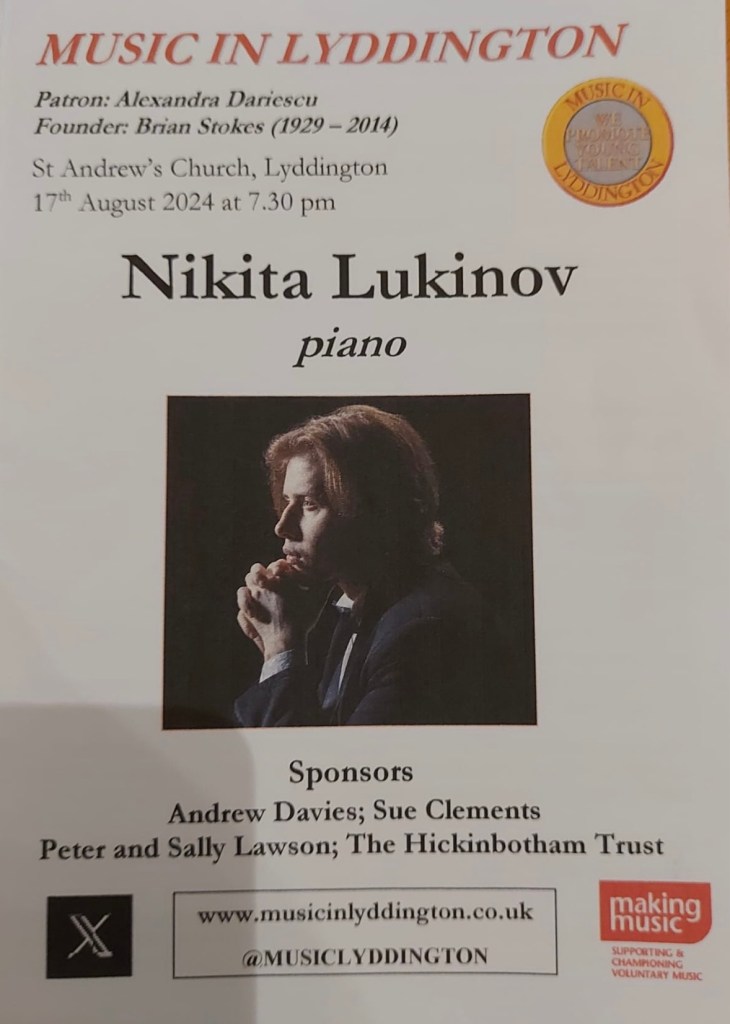
Just three days before his 20 concert tour of Scotland Nikita Lukinov treated Lyddington to a taste of what the people in Scotland can look forward to over the bleak winter months when live music is much more than a rarity. It reminds me of the tours in the remotest parts of Canada that Angela Hewitt,Janina Fialkowska , Marc Andre Hamelin and Jon Kimura Parker ,would undertake to bring music into the remotest parts of that vast country .Hats off to Nikita who has organised this tour that will bring the message of music and fill the lives of so many people in some of the remotest parts of Scotland.

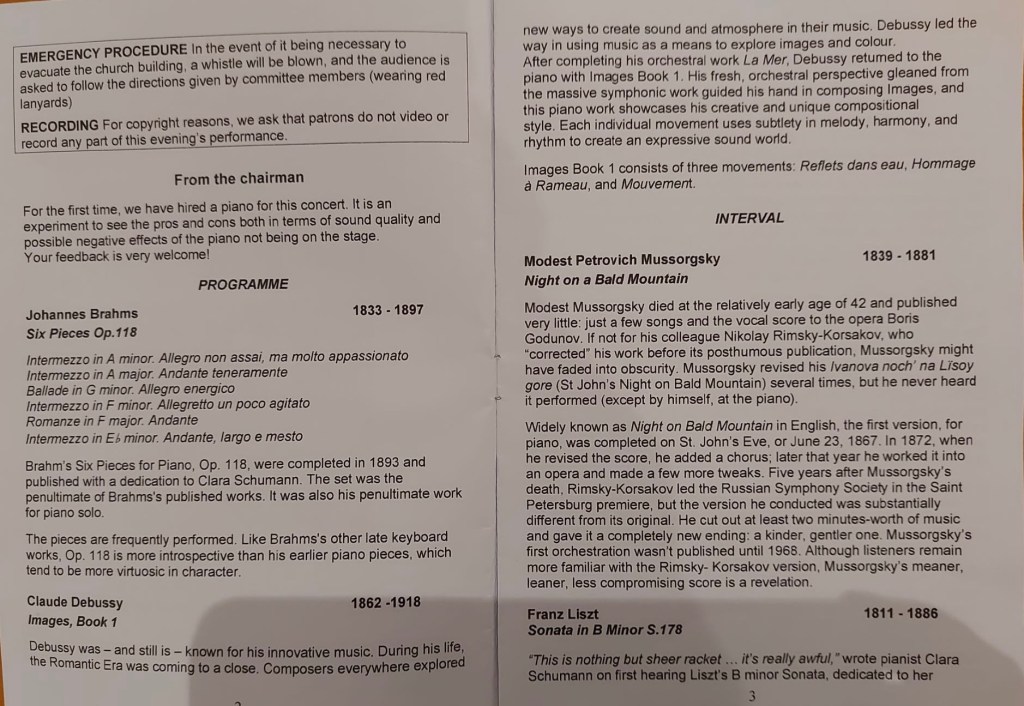
A programme of Brahms,Debussy,Mussorgsky finishing with the pinnacle of the Romantic repertoire Liszt’s mighty B minor Sonata.

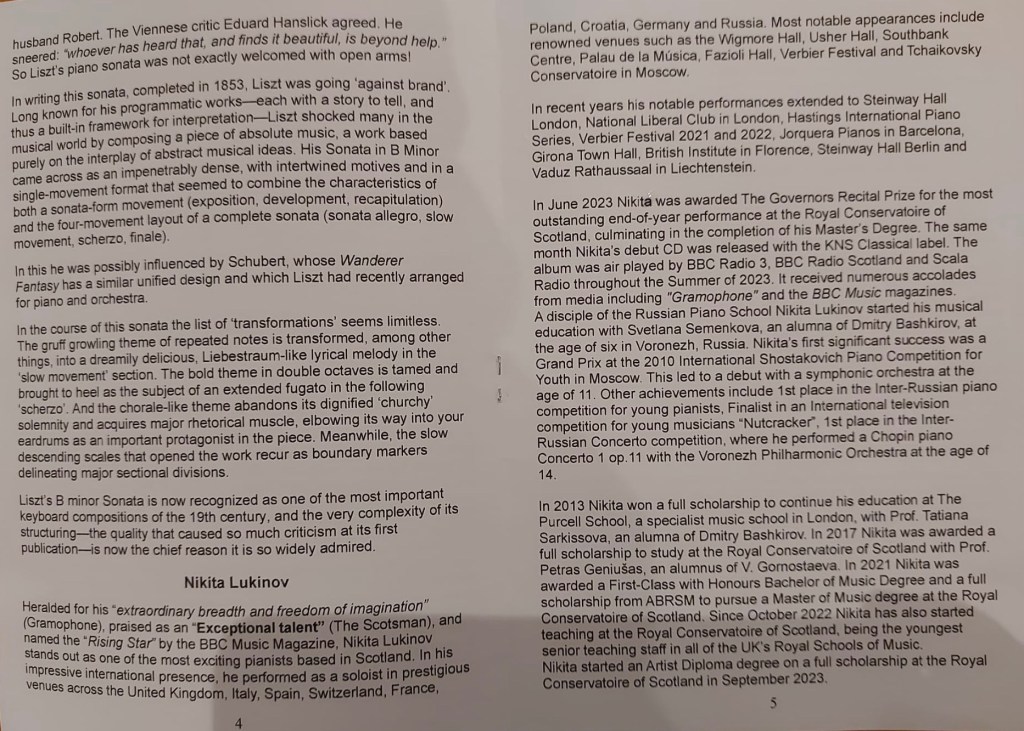
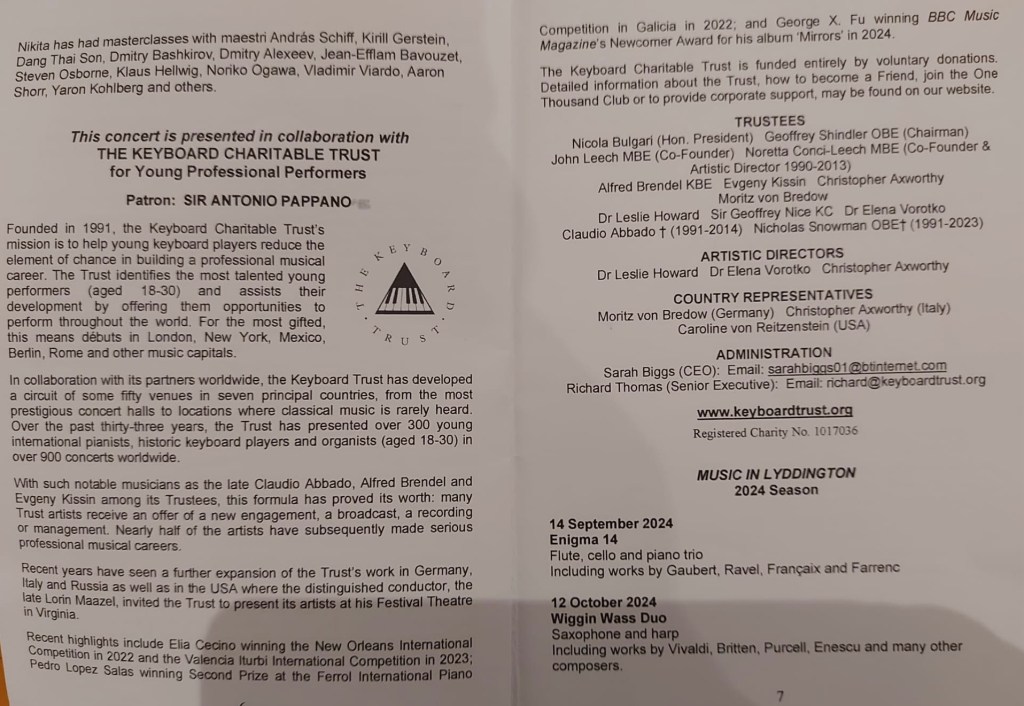
I have heard Nikita play it quite a few times since he took us by surprise at the Bluthner Piano Centre in London with playing of an intelligence and a scrupulous attention to what the composer actually wrote! Leslie Howard the legendary Liszt expert interviewed him afterwards and of course the Keyboard Trust has been honoured to help a young musician who has all the ingredients to bewitch and beguile audiences around the world for years to come. In fact he has gone on to play in Switzerland,Italy and Germany with ever more success. A graduate and now fellow of the Royal Scottish Conservatoire in Glasgow where he studied with Petras Genusias.Having studied in Russia with Svetlana Semenkova, a student of Dmitri Bashkirov before winning a scholarship to the Purcell School where he studied with another disciple of Bashkirov ,Tatiana Sarkissova – Alexeev. It is enough to listen to the first page of the Liszt Sonata to realise that we are in the hands of a master who with maturity and mastery can show us an architectural monument full of sublime poetry and passionate declarations.

The concert had begun with the six piano pieces op 118 by Brahms .His penultimate work for piano which are intimate confessions dedicated to Clara Schumann.Each piece is so intense and full of poetic and passionate significance that it requires not only great sensitivity from the performer but also a deep concentration from the audience. Nikita from the first notes of the opening Intermezzo showed his authority as he carved out each of the pieces with architectural shape and glowing fluidity. A simplicity that allowed the melodic line to shine through all he did with the passionate flowing opening Intermezzo answered by the extraordinarily poignant lyricism of the second. He brought a beautiful glowing stillness to the pianissimi chords before the return and the pastoral beauty of the intertwined counterpoints communing so intimately together. A Ballade that was full of sumptuous sounds with the simple flowing lyrical central episode contrasting with the nobility and grandeur of the opening. An ending of supreme poetic significance as grandeur dissolves into intimate confessions. A beautiful flowing tempo to the third Intermezzo where the music was allowed to unfold so simply as it led into the unearthly beauty of the Romance.A deep meditative beauty where suddenly a ray of sun shines so radiantly with an interlude of heartrending simplicity played with a rare sensibility but always with a sense of line of intense sentiment but never sentimentality. The last Intermezzo is one of Brahms most concise tone poems for solo piano. Nikita played it with a wondrous sense of poetic yearning with glowing luminosity and fluidity. There was a grandiose orchestral central episode building to a mighty climax of sumptuous rich sounds before dissolving back to a land of beauty and mystery.The final gasp that Brahms marks ‘sff’ could in fact have been played with even more of a dying cry for help as it dissolved so magically into infinity. This was a remarkable performance as Nikita had managed to unite these six miniature tone poems into one unified whole which showed a rare intelligence and mature musicianship allied to a deeply poetic sensibility.
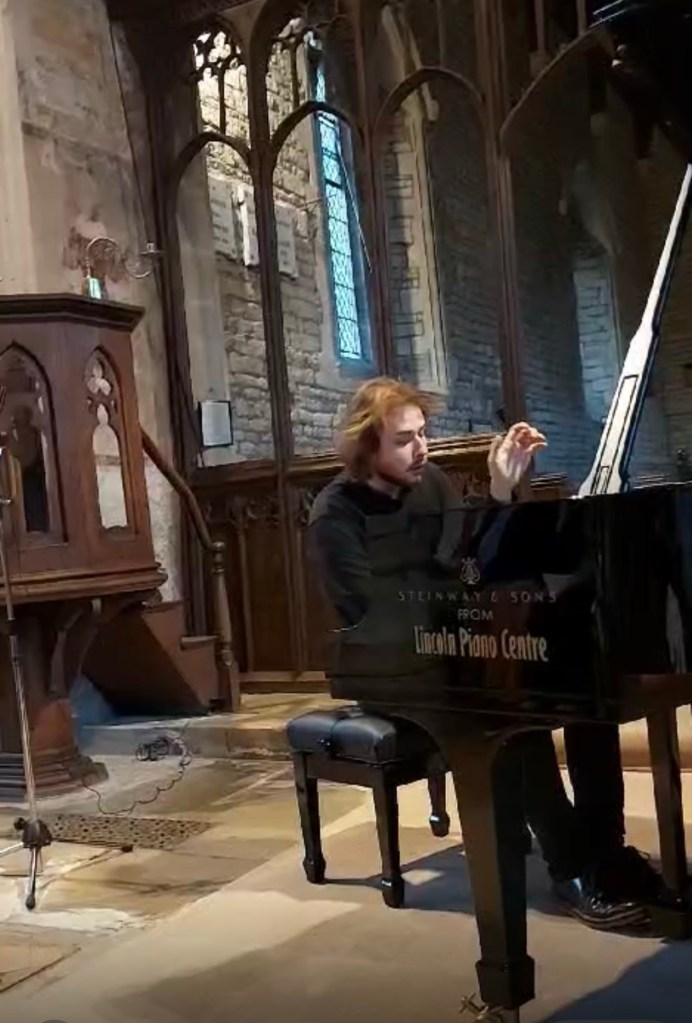
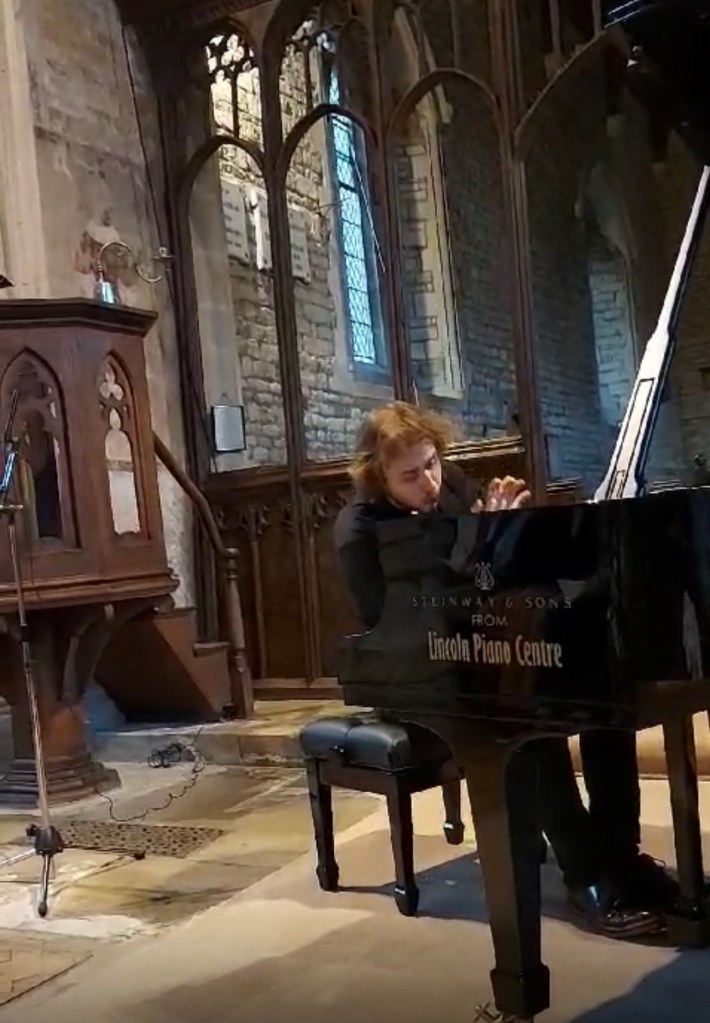
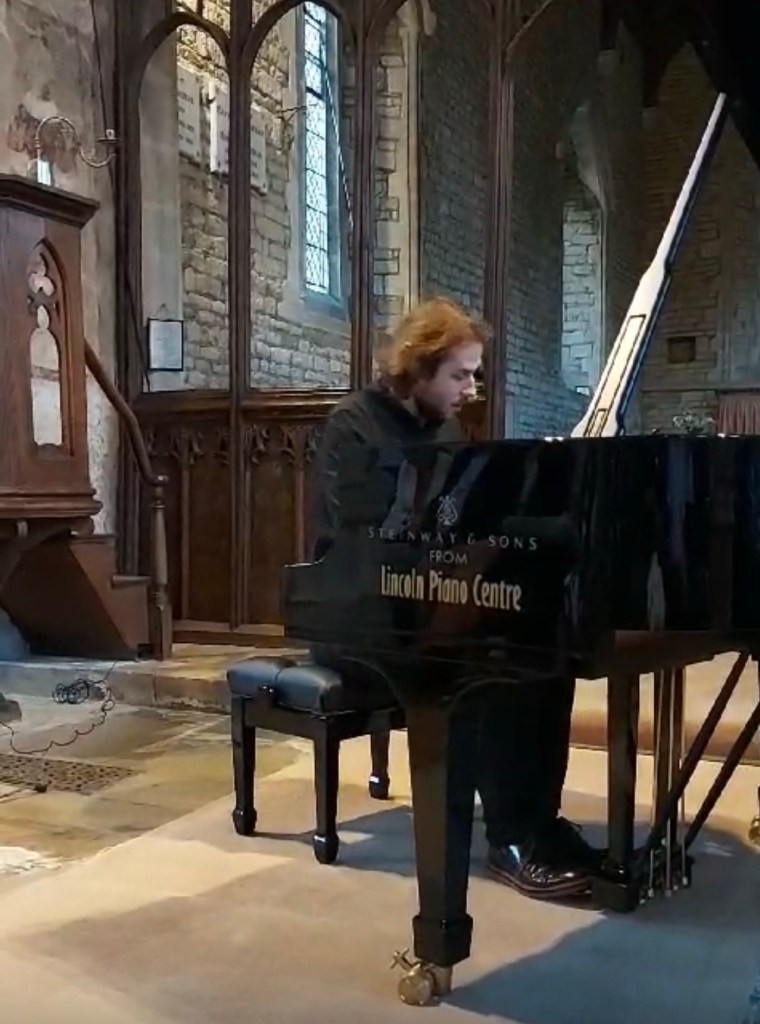
Debussy’s three Images Book 1 followed with a kaleidoscope of colours in ‘Reflets dans l’eau’ but there was also a beautiful clarity and sense of balance that gave a great sense of line to a piece that can so often be submerged in pedal. ‘Homage a Rameau’ too had the same aristocratic timeless beauty that I remember from Rubinstein and the change of colour in the central episode is one of those magic moments that Nikita could savour with his extraordinarily sensitive tone palette.’Mouvement’ I have never heard played with such clarity and driving rhythmic impetus.Building in excitement as the chordal melodic line is surrounded by notes spread over the entire keyboard. Played with relentless energy it was truly a tour de force of refined virtuosity.

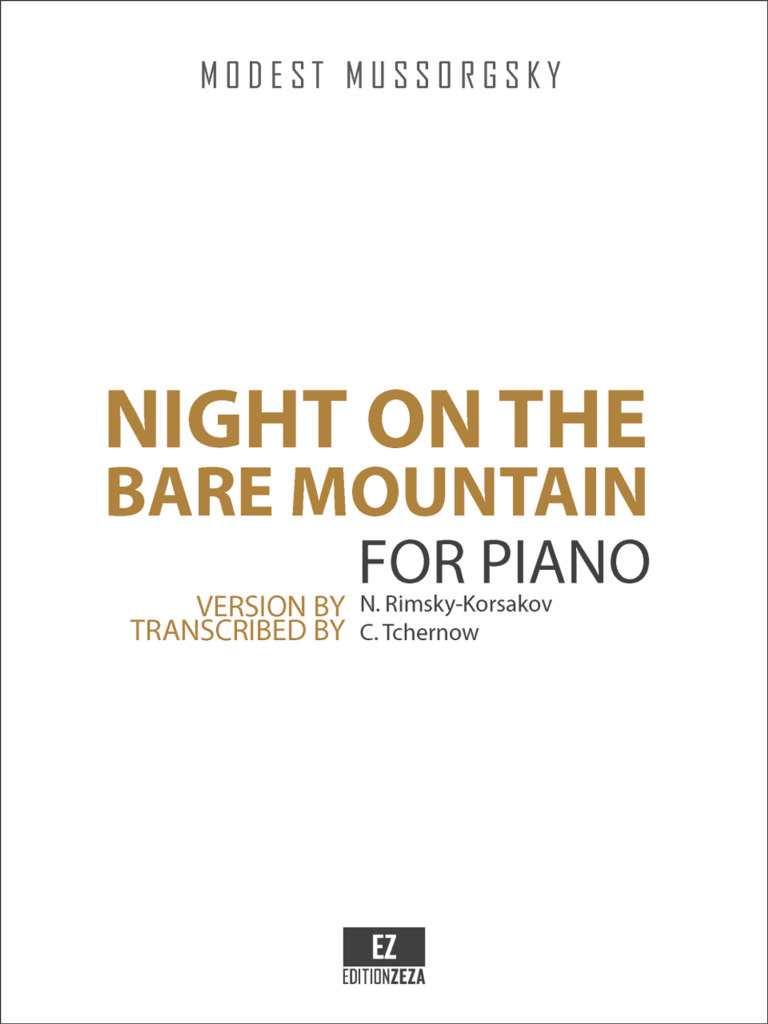
The Mussorgsky was an arrangement of Rimsky Korsakov transcribed for piano by Tchernow. A musical picture of of ‘St John’s eve on a Bald Mountain’ it is a true tone poem in the style of Saint-Saens /Liszt .Mussorgsky described the story of ‘a witches’ sabbath, separate episodes of sorcerers, a ceremonial march of all this rubbish, a finale—glory to the sabbath.’ It was played with a dramatic sense of colour and building excitement of obsessive rhythmic insistence .There was a dynamic rhythmic drive that dissolved into the beauty of the ending with magical arpeggios and a melodic line of great nostalgia and luminosity before the final subdued note very similar to the ending of Liszt sonata that was to follow.


Night on the Bare Mountain” is a composition by Modest Mussorgsky, and this piano transcription by C.Tchernow is based on N. Rimsky-Korsakov’s version.
Night on Bald Mountain is a composition by Modest Mussorgsky that exists in at least two versions—a seldom performed 1867 version or a later (1886) and very popular “fantasy for orchestra” arranged by Nikolai Rimsky-Korsakov, A Night on the Bare Mountain, based on the vocal score of the “Dream Vision of the Peasant Lad” (1880) from The Fair at Sorochyntsi with some revisions, most notably the omission of the choir. There is also a version orchestrated by twentieth-century conductor Leopold Stokowski; this is the version used in the now-classic 1940 Walt Disney animated film Fantasia.

Nikita’s Liszt Sonata I have admired from the first time I heard him play it almost four years ago.It has grown in stature since then and has an unmistakable authority without losing his scrupulous attention to Liszt’s very precise markings in the score.It is a poetical journey with a great sense of architectural shape of a driving energy that even in the beauty of the Andante Sostenuto or Adagio never looses its sense of line or direction.Cascades of notes of glistening and gleaming brilliance and a poetic sensibility of passionate conviction but never losing the overall shape of a new form that Liszt brought to perfection in this masterpiece.Themes that become the great characters of a drama that is played out with aristocratic authority and mastery. There was a controlled passion to the entry of the ‘fugato’ that evolved so naturally from the sombre return of the opening theme.Building to a sumptuous climax of octaves passed from the right to the left hand with transcendental command and a final drawn out chord allowed to vibrate in the pedal with such knowing daring.The genius of Liszt took over at this point as he substituted his original triumphant ending with one of the most remarkable pages ever written for the piano and which Nikita played with aristocratic authority and poetic significance.The final three chords reaching into the future and a world that Liszt could foresee in the distance and would be pursued by his disciple Busoni.

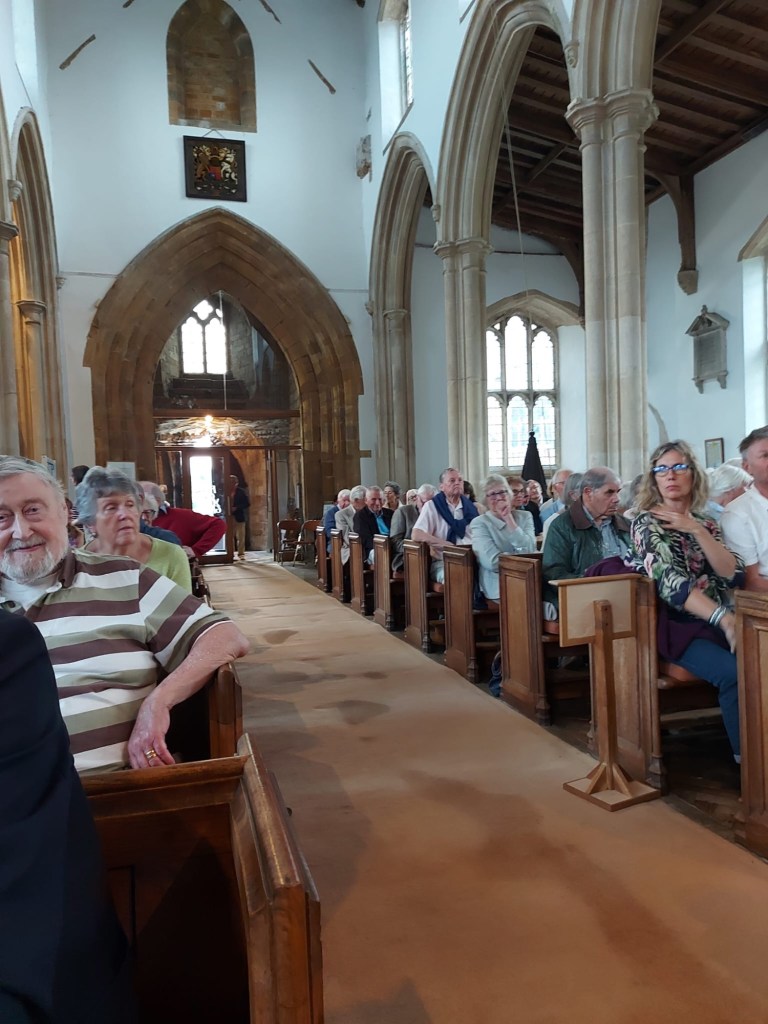
A capacity audience for Nikita’s recital

Nikita Lukinov plays breathtaking charity recital for Ukraine in Berlin.

Nikita Lukinov at the National Liberal Club ‘A supreme stylist astonishes and seduces’

Nikita Lukinov’s triumphant tour for the Keyboard Trust of Italy in Venice,Padua,Abano Terme ,Vicenza

Lukinov Gramophone review review and Lagrasse festival

Nikita Lukinov Shrewsbury and Market Drayton

Two young giants cross swords in Verbier Giovanni Bertolazzi and Nikita Lukinov

Nikita Lukinov at St Mary’s a masterly warrior with canons covered in flowers

Nikita Lukinov at St Marys The charm and aristocratic style of a star

Nikita Lukinov at Bluthner Piano Centre for the Keyboard Trust Liszt restored to greatness.

Nikita Lukinov at St Mary’s No pumpkins just the magic of music making at its finest

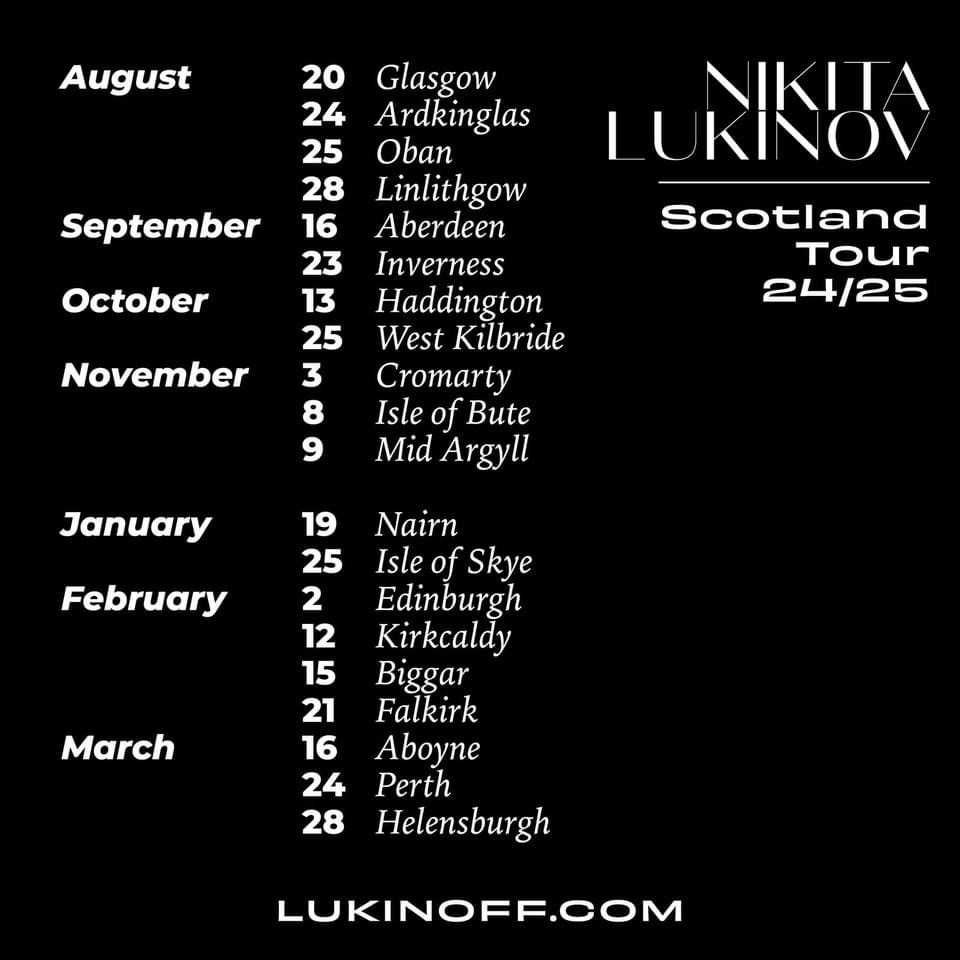
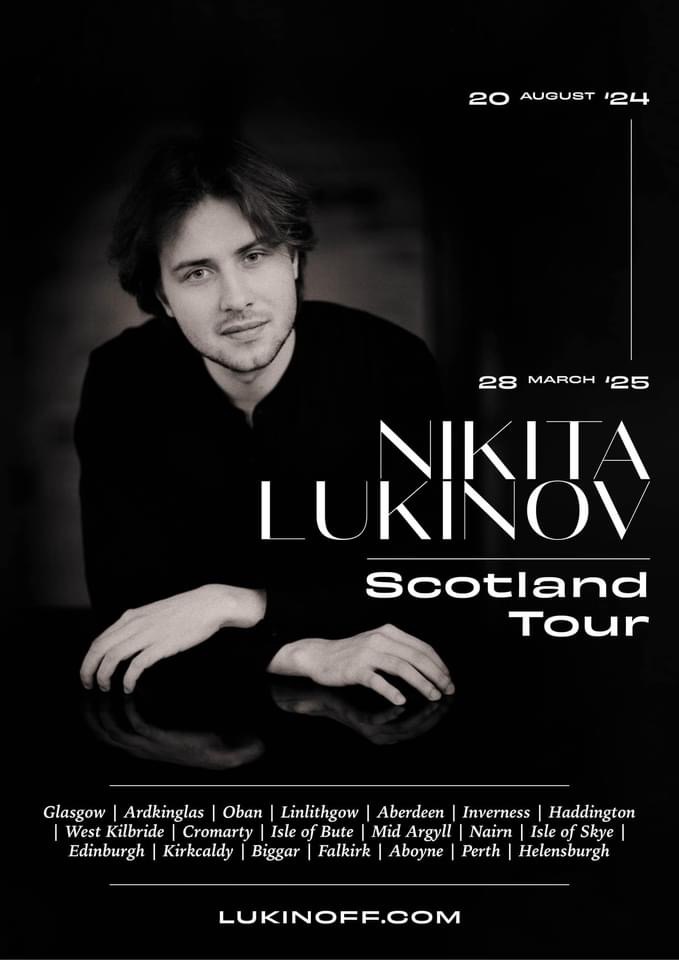
Join me on this extraordinary musical journey across Scotland in the 2024/25 season, featuring 20 captivating recitals from the Scottish Borders to Cromarty and from Aberdeen to the Isle of Skye! 🏴󠁧󠁢󠁳󠁣󠁴󠁿 Swipe for a recital agenda and check the website for more information about each concert 🎹
This tour brings world-class classical music to diverse communities, with special outreach events in local care homes and schools organised by the Live Music Now Scotland. Experience the magic of live performances that uplift and connect us all! 🥳
Hugely looking forward to exploring Bonnie Scotland!
Gratitude to the City Music Foundation for recognising and supporting this milestone project!
Special thanks to Denis Epifantsev for a truly amazing design of this poster, agenda and many other things I will soon finally share
Live Music Now Scotland
City Music Foundation
Royal Conservatoire of Scotland
Hu Huixin
Paul Docherty
Sarah Hanniffy
Annabel Stevens
Ursula Coe
Rebekah Woodier
https://christopheraxworthymusiccommentary.com/2023/06/02/the-gift-of-music-the-keyboard-trust-at-30/

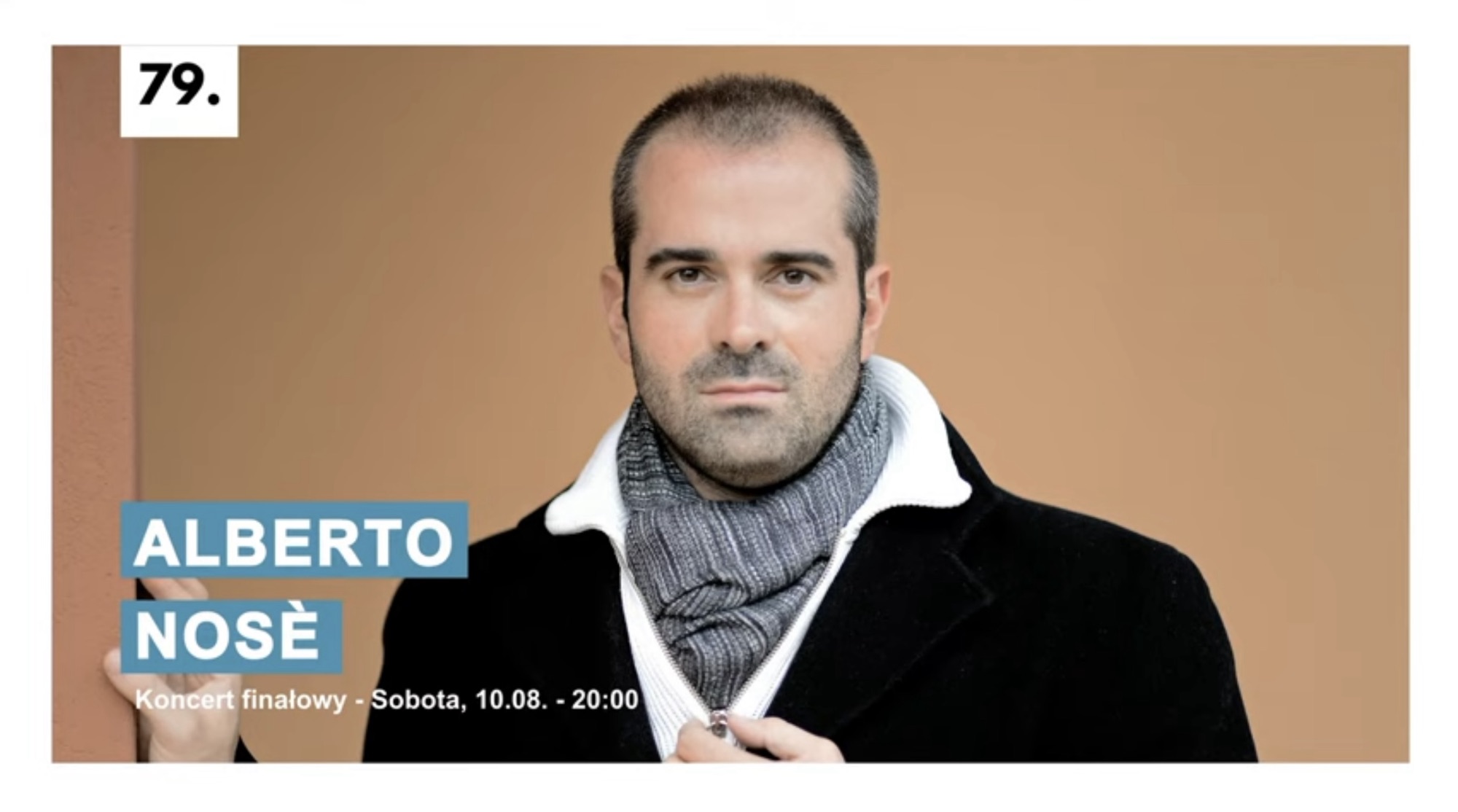
Alberto Nosè a Giant of the keyboard .The reincarnation of Chopin overwhelms Duszniki with poetic mastery.

http://www.youtube.com/live/-E_iLDIkOOg

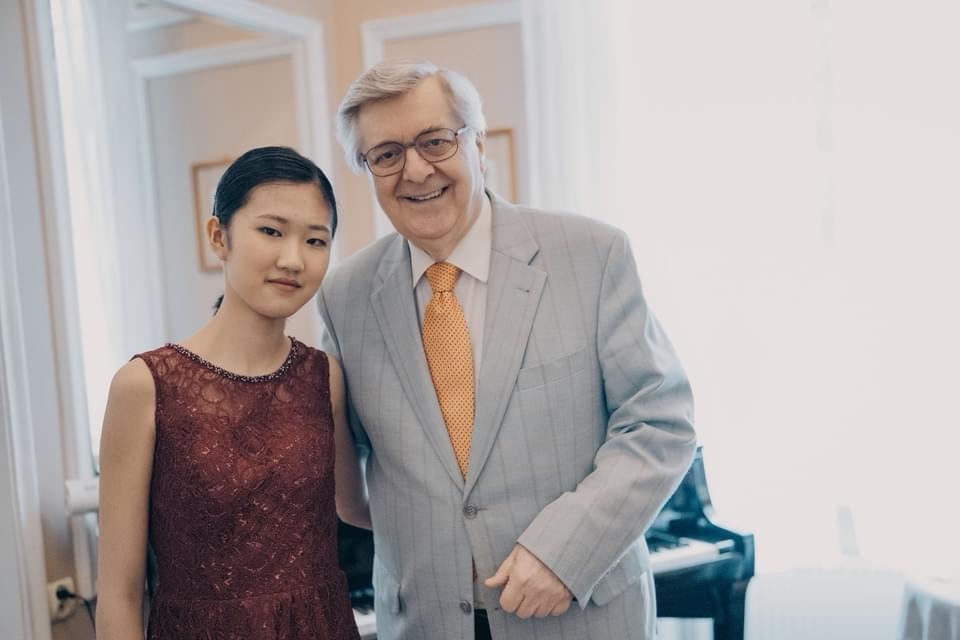
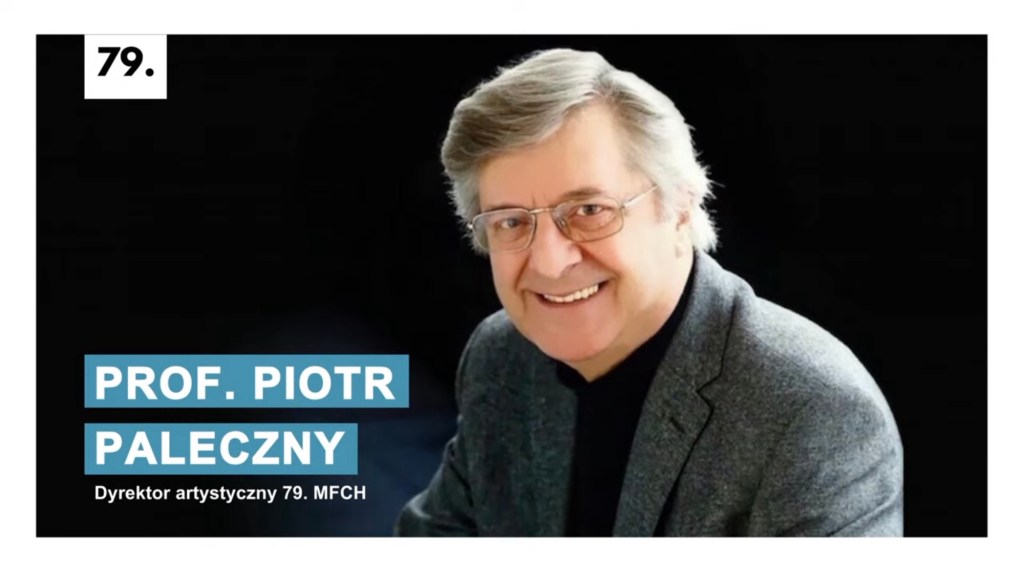
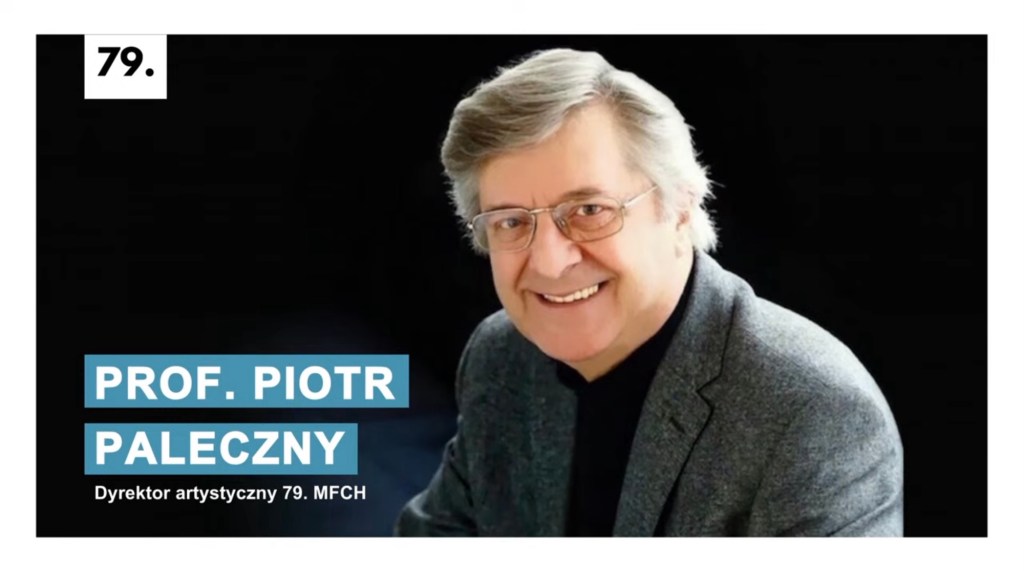
Wonderful to be able to listen to this final recital of the Duszniki Festival 2024. Prof.Paleczny is usually a master of understatement but on this occasion he had told me that this was the real thing !

It was quite simply the finest Chopin recital I have ever heard.Played as a great outpouring of song from the very first note to the last. There was no moment where Nadia Boulanger’s favourite exhortation from Shakespeare :’words without thought no more to heaven go ‘ would have been applicable .Maestro Nosè took us to a world of wondrous sounds with the sumptuous rich colours of this Shigeru Kwai of luxuriant Philadelphian richness and it was as if we had entered a world where nothing else exists.There was no moment where a musical language was not allowed to unfold with timeless beauty and overwhelming mastery as he shared a unique voyage of discovery.

The very first Chopin recitals I heard as a child were those of Jan Smeterlin one of many great pianists who would give Chopin recitals in the Royal Festival Hall in London.I remember Vlado Perlemuter and Stefan Askenase,Alexander Brailowsky ,Stanislas Niedzielski and of course later Shura Cherkassky,Claudio Arrau,Fou Ts’ong ,Vladimir Ashkenazy,Daniel Barenboim,Sviatoslav Richter .The greatest of them all was Artur Rubinstein in his wonderful Indian Summer when we would queue up at dawn for tickets for his annual recitals in June. Peter Katin too would sell out the Festival Hall for his Chopin recitals even though his was a Chopin of miniaturist perfection that many critics found rather cold ,but he should not be forgotten.

All this to say that today I heard a Chopin of aristocratic nobility and beauty allied to an intelligence where Chopin’s indications in the score were scrupulously interpreted.It was not a cold perfection but an artist who had become Chopin at the moment of creation and could imbue every note with an authority and passionate conviction that held us in his – Chopin’s- spell for over two hours.

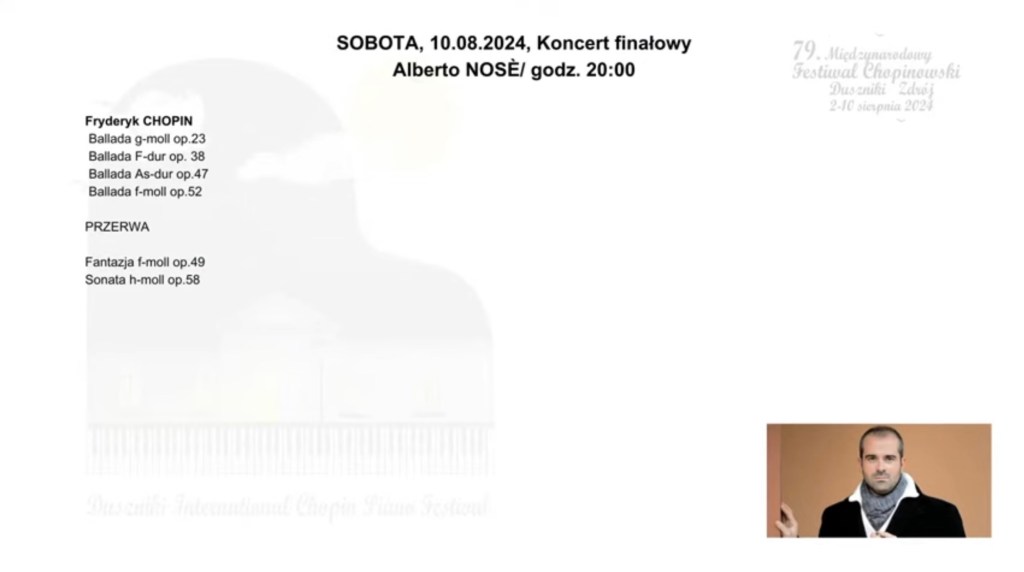
A programme that included the Four Ballades played as one glorious whole.The F minor Fantasie and the B minor Sonata were followed by four encores that included not only a Revolutionary study of overwhelming passion but the Mazurka op 17 n. 4 that we had heard in recitals this week from Arsenii Moon and Sophia Liu. Maestro Nosè ,though,brought a magic to this most delicate of Mazurkas that was nothing short of miraculous.A poetic freedom and subtle beauty that saw his two hands entwined at the end as Chopin’s final gasps were barely whispered by both hands united in poetic beauty.And what poignant beauty he brought to the barely audible sounds that he dedicated to two recently deceased colleagues ,Eugen Indjic and a Polish pianist and teacher, Prof. Stefan Wojtas.

The Ballade in G minor ,from the very first note there was a beauty of sound where Chopin writes ‘pesante’ which means playing with the weight of fingers that delve deeply into each note, not just an opening flourish. Chopin sang from the very first notes of this ‘Largo’ with the exquisite poignancy of the cadenza out of which would grow a heart melting melody that was played with such a sensitive balance that it touched us as never before.Every phrase made such musical sense even the most seemingly virtuosistic was simply a glorious outpouring of ravishing sounds.Sumptuous climaxes grew so naturally out of this musical discourse that we were barely aware of the subtle musicianship involved of being able to conceive the whole architectural whole whilst still finding so much poetic meaning in every phrase.The ‘Presto con fuoco’ was a true lesson in selfless musicianship as the technical difficulties just dissolved into miraculous phrasing and passionate drive.Delicacy and gently flowing beauty of the Second Ballade belied the scrupulous attention to detail that even a barely noticed ‘pianissimo’ became such a poignant moment of subtle beauty. The ‘ Presto con fuoco’ was played with limpet like fingers of sumptuous enrichment finding the deep meaning behind the notes so often played as disjointed episodes.Suddenly Chopin’s indication of ‘slentando’ illuminated the return of the main theme that was played with ravishing beauty as the counterpoints duetted so poignantly together. Even the trills into the agitato coda were played like a stream of legato sounds that took us into the exhilaration of these final pages.Until the abrupt interruption and the stroke of Genius of the return of the opening theme .It was played with a sensitivity of sublime beauty as we awaited it’s whispered entry where even the rests before the final cadence were of such overwhelming significance.

The pastoral gentleness of the third ballade was played with simplicity where even ‘forte’ was played in relation to the musical line and not cutting through it as is often the case in lesser hands. The trills and arabesques were like jewels leading the way to the real opening of the ballade where gentle sounds just dropped onto the keys as the music moved forward with interruptions of delicious jeux perlé and passionate outcries.The build up to the final glorious climax was played with such subtle colouring that the inevitability of this glorious outpouring came as a blinding light in a pastoral landscape.

There was radiance and beauty as the Fourth Ballade was allowed to unfold with aristocratic simplicity of art that disguises art.This like the slow movement of the B minor Sonata is one of the most difficult things to play .It should be played with a simplicity that as Schnabel famously said about Mozart :’is too easy for children and too difficult for adults’.A left hand accompaniment that took over so naturally as the theme is transformed on its voyage of discovery of sublime beauty and genial invention. A continuous flowing pulse gave a great architectural shape to this work that is truly one of the pinnacles of the Romantic repertoire.There was a flowing uninterrupted beauty as the music unfolded on a wave of glorious sounds reaching it tumultuous climax.Five pianissimo chords that shone like stars brought us to the coda that I have never heard played with such mastery and musical understanding.

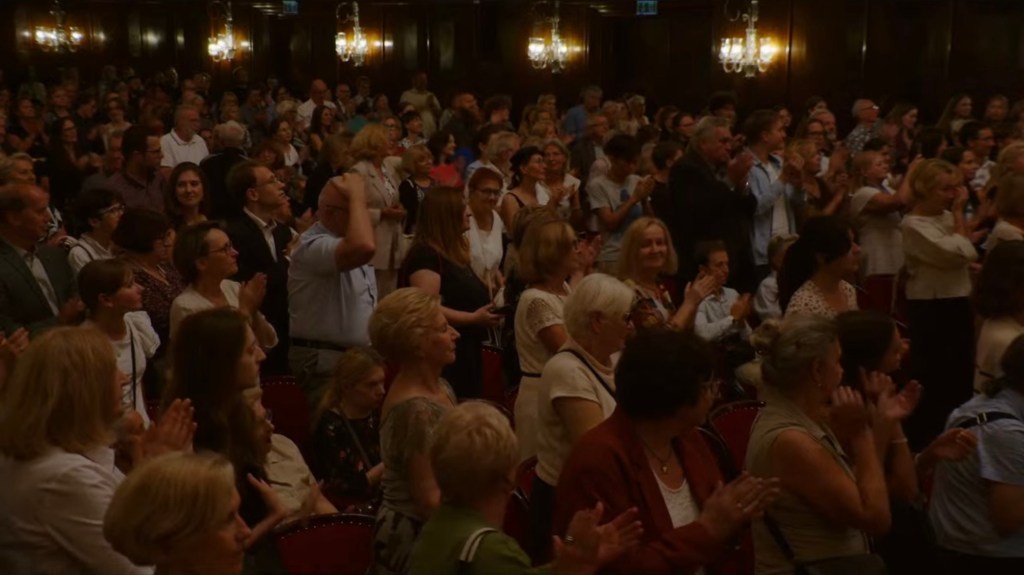
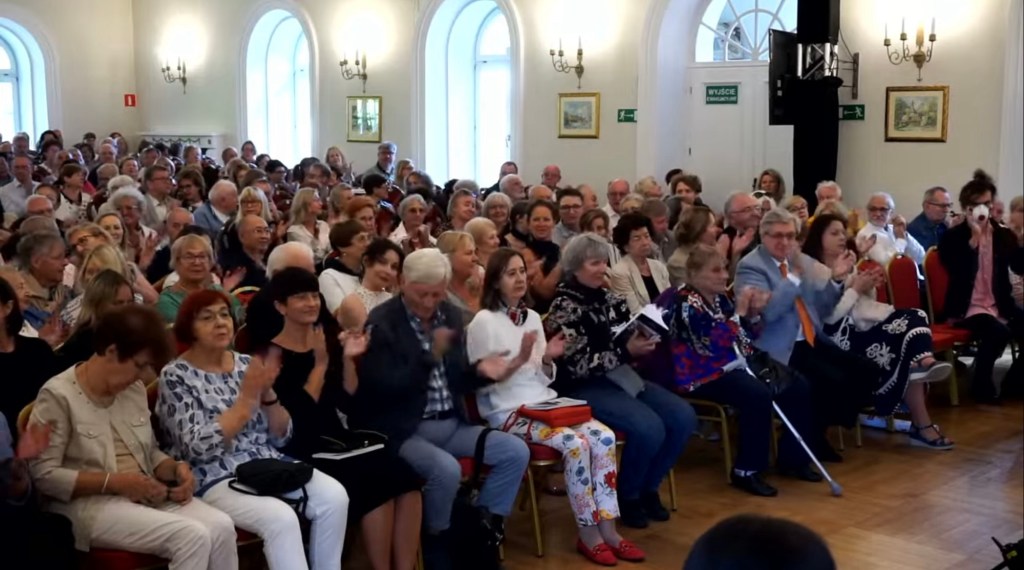
A standing ovation from an audience overwhelmed by such performances of mastery and poetic authority .

After the interval more masterly performance of the Fantasie and Sonata in B minor .The beautiful phrasing of the opening of the Fantasie was made so clear in Maestro Nosè’s poetic hands .Staccato and legato merely dots and dashes to show the real phrasing which is in an artist’s blood.There was a wonderful sensitivity to Chopin’s changing harmonies and the sumptuous climax of octaves were infact just vibrations of horizontal harmonies played with fearless understanding .Wonderful change from G flat to the warm opening of B of the ‘Lento sostenuto’ was played with such poignant meaning as it disappeared to a mere whisper about to explode back onto G flat.What passion and exhilaration he brought to this wondrous tone poem and the only Fantasie that Chopin was to write (the Polonaise Fantasie was a completely new creation in Chopin’s last years).

The B minor Sonata was another great outpouring of song where every note had a significance and was played with nobility and aristocratic control.Have Chopin’s counterpoints ever been allowed to chatter together so poignantly? A ravishing beauty to the second subject as he went straight into the development leaving the repeat to others.There was a jewel like clarity to the ‘Scherzo’ of subtle shape and a living stream of beauty.A trio bathed in pedal that has rarely been played with such simplicity and shape.Straight into the declamation of the ‘Largo’ melting into a cantabile of magic and ravishing beauty. Inner counterpoints were hinted at with poetic sensibility as the harmonies were just floated in the air until the final magical cadence that was played with breathtaking beauty.The return of the cantabile even more radiant and beautifully embellished brought the ‘Largo’ to a noble end on two beautifully placed final chords played with aristocratic poise.Out of these chords grew the opening of the ‘Presto con fuoco’.A rondo in which each return grew more in intensity and excitement.A tour de force of masterly playing but above all of control and sumptuous sound.Following Chopin’s famous 2/3 fingering to give even more impetus to the growing excitement being generated .A masterly performance from a ‘Giant’ of the keyboard. Four encores and a standing ovation were a wonderful way to crown this final concert of the Duszniki Festival.

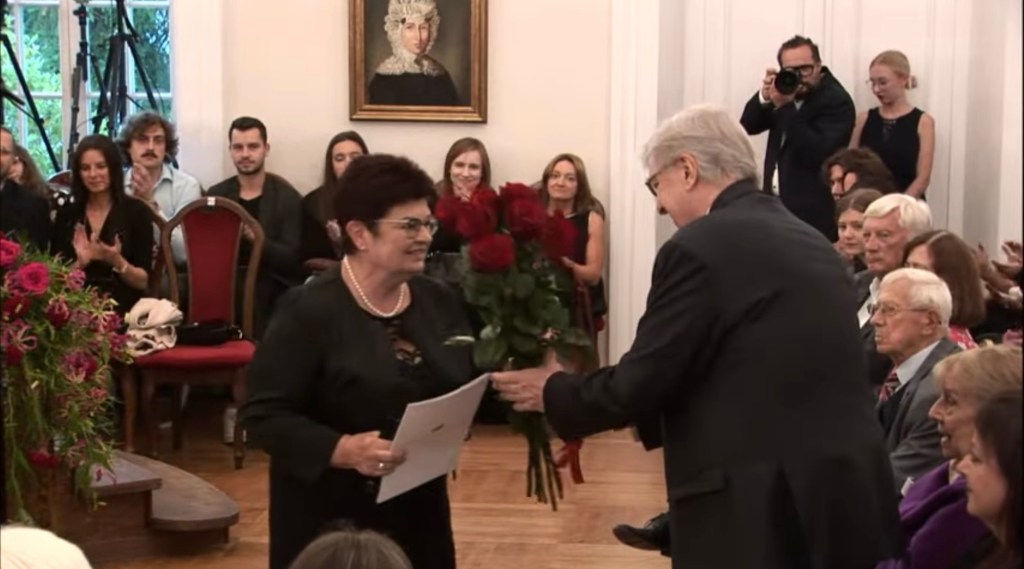
Artistic director Poitr Paleczny receiving red roses too

Defined by The New York Times “an artist with supreme technical mastery, dazzling and charming with his highly cultivated sound”, Alberto Nosè is one of the most awarded piano artists of his generation.He stood out the international music world at the age of eleven winning 1st Prize at the Jugend für Mozart International Competition in Salzburg.Top prize winner of Montecarlo Piano Masters, New York Concert Artists, Paloma O’Shea in Santander, Long-Thibaud in Paris, Maj Lind in Helsinki, Busoni in Bolzano, he was laureate at the F. Chopin International Piano Competition in 2000 which led him to a worldwide career as soloist as well as with major orchestras (London Philharmonic Orchestra, English Chamber Orchestra, Philharmonique de Radio France, Sinfonica de Madrid) in the most renowed concert venues like Carnegie Hall in New York, Southbank Centre in London, Konzerhaus in Berlin, Théâtre du Châtelet and Salle Pleyel in Paris, Auditorium in Madrid, Mozarteum in Salzburg, Suntory Hall in Tokyo, City Hall in Hong Kong, Bellas Artes in Mexico City, Teatro Colon in Buenos Aires, La Fenice in Venice, Santa Cecilia in Rome.Jury member in many international piano competitions like Kiev, Tbilisi, New York, Hong Kong, Helsinki, Budapest, Graz, Ljubljana, Warsaw, he is co-founder of the International Amadeus Competition in Lazise, Italy.His debut album for Piano Le Magazine featuring works by Brahms, Chopin, Liszt and Prokofiev won several awards like CHOC du Monde de la Musique and La Clef by ResMusica.His CD of the Keyboard Sonatas by J. Ch. Bach, recorded on modern piano and published by Naxos, has been broadcast by Radio France, BBC 3, Radio 4 Netherland, Radio New Zealand, ABC Classic FM USA and Australia.His third album with Schumann’s Symphonic Etudes and Prokofiev’s Romeo and Juliet for Harmonia Mundi won Diapason d’Or.Since 2019 he has been founder, artistic director and producer of Amadeus Sound Project, an independent record label which releases all his new recording projects.Invited to teach master classes around the world, he was guest professor at the Music Conservatory in Geneva, Sibelius Academy in Helsinki, Mannes College of Music in New York, as well as at Music Academies in Gdansk and Bydgoszcz.

His musical education started at Verona Conservatory and continued at Imola International Piano Academy. His artistic development has been also enriched by his musical studies with Maurizio Pollini, Murray Perhaia, Andrzej Jasinski, Paul Badura-Skoda, Michael Beroff, Alexander Lonquich, Arie Vardi, Fou Ts’ong, Karl-Heinz Kämmerling.


He has been Piano Professor at Verona Conservatory of Music since 2022 and on the faculty of the International Accademia Amadeus in Valeggio sul Mincio, Italy.

https://www.albertonose.com/biography

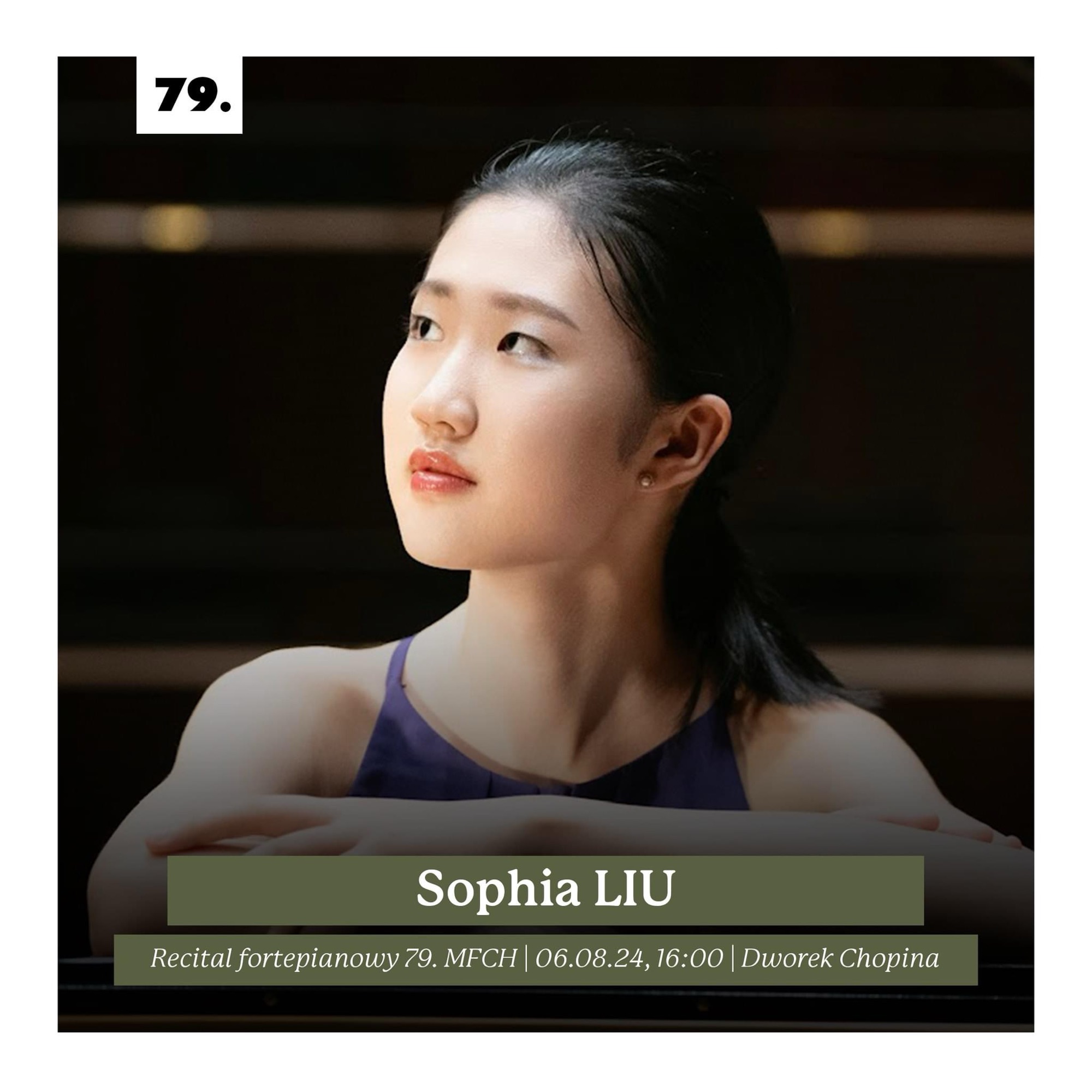
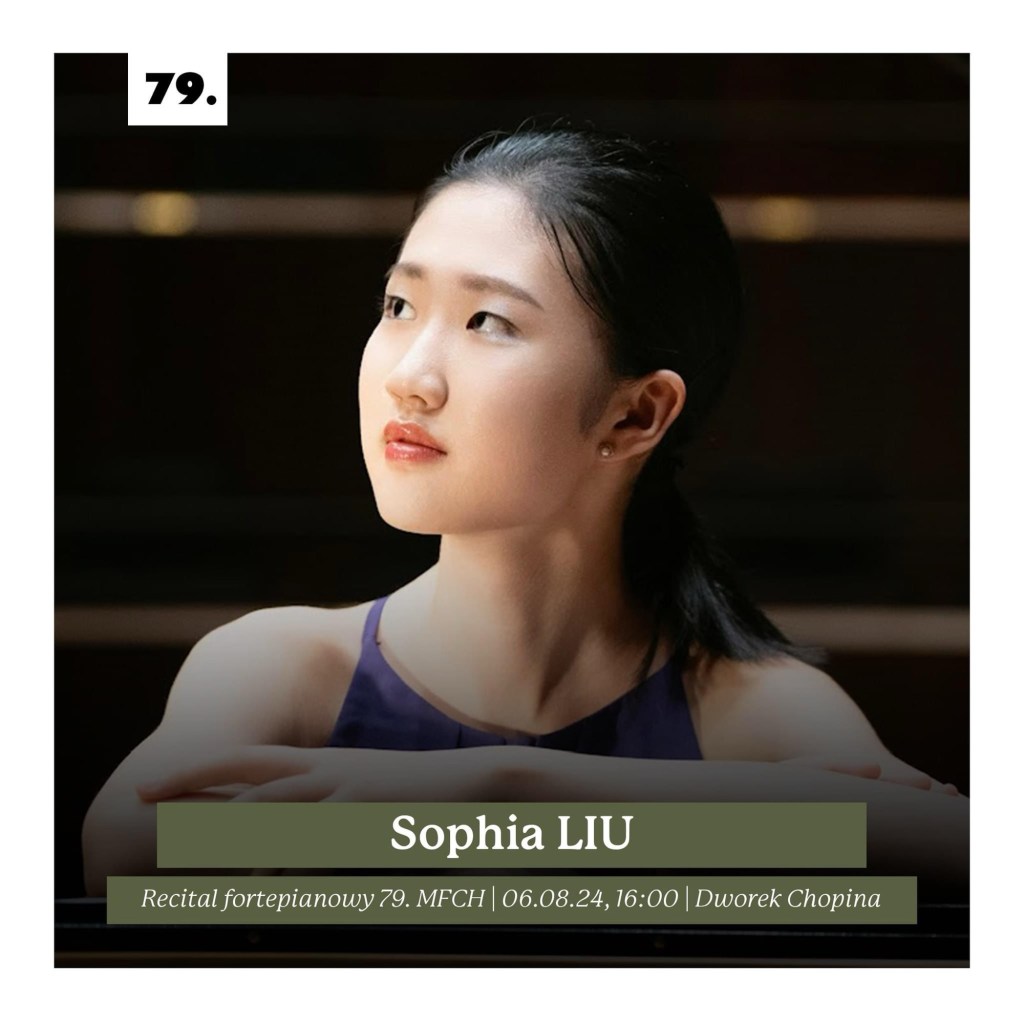
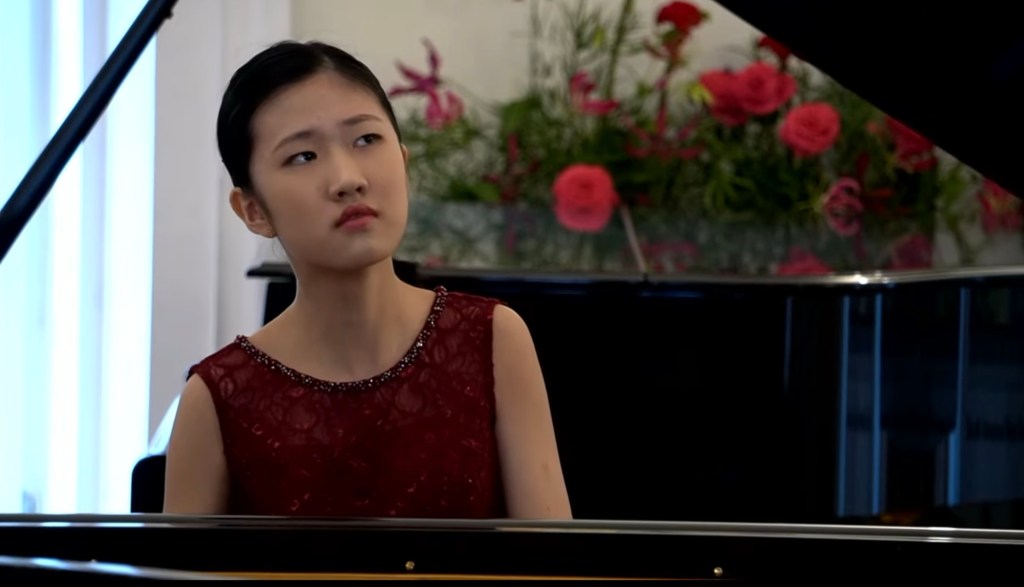
Sophia Liu ‘A star is born’ A sensational recital by a 16 year old Canadian illuminates Duszniki with the blinding light of genius.


Sophia Liu was born in Shanghai China, moved to Japan at the age of 2. She started learning piano at age 4.
 
Her first public performance on the stage was at age 5, won the Gold Award of Kobe City Piano Competition and Government’s Education Committee Award; won the Grand Prize of category up 12y in Piano Competition of Chinese Composition in Hangzhou China.
 
Sophia moved to Montreal at age 7. Shortly after she won the Second Prize of category up 10y in Canada Music Competition.
 
At age 8 she won the First Prize of category up 10y in Concerto Competition of McGill University and a full scholarship of McGill Conservatory. She performed with the symphony orchestra to play Beethoven fifth piano concerto and had a great success.
 
At age 9 she won the First Prize of category up 12y and Third Prize of category 13-17y in Chopin International Piano Competition Hartford,CT. She performed twice at Carnegie Hall in New York City. She won the gold medal at the Quebec Music Festival in Canada.
 
Start with the current teacher:
Mr. Dang Thai Son(private)
Professor of McGill Sara Laimon(Conservatory)
Mr. Zhengyu Chen
Ms. Tina Kakabadze
Ms. Motoko Takeuchi
Ms. Xiaoling Wen
 
2015.4~2015.7  Kobe Chinese Tongwen School (Japan)
2016.1~              MISS EDGAR’S AND MISS CRAMP’S SCHOOL
2016.9~             McGill Conservatory
Photo credit Szymon Korzuch
🎹 Sophia LIU – 6.08.2024
15 yr old outstandingly talented canadian pianist!!
Remember this name, ladies and gentlemen 👍
https://www.youtube.com/live/n5Sp20JTazQ?si=5c0-JwODpMUyerwc
Many many congratulations 👏👏👏

https://www.youtube.com/live/n5Sp20JTazQ?si=5c0-JwODpMUyerwc

Sophia LIU / godz. 16:00 Ferenc LISZT Walc Mefisto nr 1 S. 514 Sonetto 123 del Petrarca nr 6 z “Annèes de pèlerinage. Italie S.161 Réminiscences de Norma S. 394 PRZERWA Fryderyk CHOPIN Nokturn G-dur op. 37 nr 2 4 Mazurki op.17: B-dur, e-moll, As-dur, a-moll Wariacje na temat “Là ci darem la mano” z opery “Don Giovanni”, Mozart

I am lost for words.I listened by chance to Sophia intrigued by Prof Paleczny saying that she was a name to watch .That must be the understatement of the century !I remember Serkin telling Richard Goode off after he had heard Murray Perahia .’You told me he was good ,but you did not tell me how good!’. Here is a young lady who plays with the same phenomenal mastery as Kevin Chen and Yunchan Lim both of whom were absolute revelations at Duszniki and have gone on to conquer the world.Both Kevin Chen,Bruce Liu and now Sophia are from the remarkable Canadian school of piano playing.Both Sophia and Bruce with Dang Thai Son in Montreal and Kevin with Marilyn Engle in Calgary.But if one adds up all the Canadians from Glenn Gould,Janina Fialkowska ,Angela Hewitt,Marc André Hamelin ,John Kimura Parker to the present day one begins to realise that there is something special in the air in Canada that can produce pianists of such intelligence ,stylistic and technical mastery with such a relaxed natural way of playing.

Sophia opened with Liszt ,not the barnstorming virtuoso but the poetic pianistic genius who like Chopin and Thalberg had created a completely new world for a piano that had evolved from a percussive instrument to one where the pedals became ‘ it’s very soul ’ .A black box of hammers and strings could give the illusion of being able to sing with the same beauty as the human voice or become a complete orchestra of ten wonderful players that could multiply into an infinite number of orchestral musicians.A pianist that must be an illusionist and know the secrets of balance,touch and of course fingerfertigkeit.

This used to be a novelty for the virtuosi of the nineteenth century where playing with sounds and teasing of sentiments became the power of an entertainer over an audience.Gradually this new technical mastery was placed at the service of an interpreter whose only wish was to transmit the composers wishes into sound.Leschetisky accused Schnabel of being a musician not a pianist.De Pachmann used to talk to the public whilst he played his ‘lollipops’ to let them know how it was going.There appeared out of this the great pianist who was above all a great musician.As students we would buy the recordings of Brendel or Pollini to hear exactly how the score could be translated into sound.Rubinstein too broke away from the so called ‘tradition’ where the tricks of the trade of pianists became more and more distant from what the composer had actually bequeathed to us on the printed page.

All this to say that the phenomenal technical command of this young lady was always at the service of the composer whether it be Liszt or Chopin.Liszt edited the works of Beethoven and knew exactly the importance of the indications the composer had written in the score.Chopin’s scores are of a clockwork precision and especially his pedal markings that give a clear indication of the phrasing and type of touch required.Debussy edited the works of Chopin and the precise detail in Debussy’s works is of quite extraordinary clarity.

A Mephisto Waltz with an inner energy and extraordinary command of the keyboard imbuing all she did with character and authority.Crystalline fingers allied to a great temperament.A poet too with the way she gently phrased the entry to the ravishingly beautiful central episode.Brilliantly clear bird calls were played with sparkling clarity .A driving passion but with a masterly control where the treacherous leaps held no terror for her because it was part of a musical language .A red hot passion ignited the piano with sumptuous sounds as Mephisto reached it’s climax with notes soaring across the keyboard with masterly ease .The control at the end where she managed to reduce the sound before unleashing diabolical double octaves showed a maturity way above her actual years.

The sonetto 123 del Petrarca was a wonderful oasis of luminosity and delicacy.A great architectural shape to poetic musings with a beautifully whispered but etched melodic line of breathtaking beauty .Exquisite arpeggios of radiance created a poignant atmosphere to the final prolong sigh.

There was nobility and authority to the opening of ‘Norma’ as a tale was about to unfold of quite extraordinary theatrical intensity.There was a kaleidoscope of colours and a ravishing sense of balance but also a clarity where the melodic line is accompanied by octaves as the piano ignites with burning intensity.There was a subtle beauty to the recitativi answered by the orchestral tutti’s as the music melts into a deep lament of radiant colour. Building in beauty with the barely audible whispered bass drum on which the haunting Bellinian melodies unfold with breathtaking virtuosity but above all a sumptuous beauty and absolute control.

Digging deep into the keys for the ‘war’ theme that was played with extraordinary rhythmic precision and a virtuosity of amazing elasticity and fluidity.A wind blows across the keys on which the melodic line sings out with ever more exultation and excitement.The genial combination of the two themes together I have never heard played with such fearless abandon and clarity.I remember being astonished by Kevin Chen but today I was truly astounded!

After the interval Sophia dedicated the recital to Chopin and it was here that she showed her aristocratic sense of style with four Mazurka’s that were for me the highlight of all I had heard in Duszniki this year ….or others if it comes to that .

Some things cannot be taught but natural instinct can be deadened instead of being nurtured! There was a National outcry in the ‘50’s when a Chinese pianist was awarded the coveted Mazurka prize at the Chopin Competition in Warsaw.But as Fou Ts’ong pointed out the poetic soul of nostalgia and melancholy are the same sentiments as in Chinese poetry ( of which his father was an expert and the first to translate them – both parents later committed suicide in the cultural revolution ).You see a ‘soul’ knows no frontiers !

Roberto Prosseda pays tribute to the genius of Chopin and the inspirational figure of Fou Ts’ong

The first Mazurka was played with crystalline clarity and beguiling rhythms with an especially hauntingly capricious central episode.A heart rending nostalgia inhabited the second with a ravishing sense of style and delicacy.A haunting melodic line to the third with exquisite embellishments played with disarming poetic simplicity and exquisite finesse.Arsenii Moon had just played op 17 n. 4 very beautifully but Sophia played it with even more refined delicacy and above all a poetic simplicity that was deeply touching.

There was a beautiful natural freedom to the Nocturne in G op.37 n.2 where Chopin’s exquisite bel canto in this nocturne resembled more an Impromptu.Unwinding with ravishing harmonic changes with refined sensitivity and above all simplicity.The beautiful lilting central episode, so reminiscent of the second Ballade glistened with refined streams of sound with a pastoral feeling of subtle nostalgia.A miraculous performance from the refined delicacy of Sophia’s sensitive fingers . I had not heard this nocturne for too long and was made aware of it by the artistry of this young artist.

The variations of ‘La ci darem la mano ‘ from Mozart’s Don Giovanni I have not heard since Cherkassky used to play them in his recitals for us in Rome.It is a ‘tour de force’ of refined technical mastery but it is above all a piece that needs a supreme stylist to keep up with the chameleonic changes of character allied to subtle technical difficulties.Sophia played the introduction with simplicity and refined elegance of half lights.Magic colours illuminated the piano as never before as intelligence and fantasy combined with such style.Even the simple statement of Mozart’s theme was full of subtle colouring that it became truly a thing to cherish .There was an amazing jeux perlé of another age which not even Cherkassky could rival ,because Sophia also had a youthful spirit of discovery and exhilaration as the notes just spun so magically from her well oiled fingers.There was an amazing dexterity too as the the leaps were thrown off with such ease.The final Polonaise was played with refined beauty and the same scintillating brilliance that had Schumann declare ‘Hats off Gentlemen a Genius’ when Chopin first played them as a teenager to the aristocratic audiences of the time.

Three encores each more astonishing than the other .Chopin’s rarely played Ecossaises were played with brilliance and exquisite style.The Black Key Study op 10 n.5 will never be forgotten by those that heard such a miracle.I have no idea what the last encore was but it is enough to say that at last this rather staid audience were on their feet to cheer one of the great pianists of our time as they had Kevin Chen and Yunchan Lim


Photo credit: Szymon Korzuch

Avery Gagliano at Duszniki Festival A musician speaks with eloquence and simple mastery

Avery Gagliano is a thoughtful and reflective interpreter, and one looks forward to her future performances.” – South Florida Classical Review

“Her ability to inhabit every room in the immense imagination of Frédéric Chopin came as a revelation.” – New York Classical Review

Avery is a recent graduate of the Curtis Institute of Music, where she studied with Robert McDonald, Gary Graffman, and Jonathan Biss. In Fall 2024, she joins Sir András Schiff’s Performance Programme for Young Pianists at the Kronberg Academy in Germany. 

https://www.youtube.com/live/kCdqrgV8tfQ?feature=shared

The artistic director Piotr Paleczny writes :

🎹 Avery GAGLIANO

  • 9.08.2024 16:00
    Wonderful recital – crystalline musicality and naturalness of the game!
    A pianist without exception devoted to the message of the depth of music, honest and modest – avoiding non-musical, cheap, theatrical gestures intended to arouse and unfortunately often effectively inducing applause from the audience.
    The entire second part of Avery Gagliano’s recital was filled with one monumental work. Schubert- exquisitely performed, extremely demanding Sonata in B flat major in D. 960 !!
    Well done and hearty congratulations 👏👏👏

I was very pleased to be able to hear this recital that Prof Paleczny had praised so highly.

Due to a copyright problem I was not able to hear the last recital of this year’s festival by Alberto Nosé and decided that I would listen instead to this beautiful programme of Avery Gagliano that I had missed but was still available on streaming.

Playing of a true musician and it was her encore of ‘Jesu Joy of Man’s Desiring ‘ that reminded me of Dame Myra Hess as had her whole programme.The imperious opening of Handel’s 5th Suite was played with a natural musicianship that allowed the music to breathe so beautifully.Rich golden sounds with hands that seemed to belong to the keys as they extracted the very life blood that was hidden within each note.

Uncle Tobbs (Tobias Matthay) the teacher of both Dame Myra Hess and Dame Moura Lympany wrote many a treatise on the art of touch .It was though these two great ladies who could show the world that with simple musicianship and infinite gradations of sound what it meant to make the music speak without resorting to crowd pleasing circus tricks.Murray Perahia and Andras Schiff have taken over that mantle today and they can take the most simple music and imbue it with such poignant meaning.Not for them the virtuosity or grandiloquence of the works of the Russian repertoire but more attuned to the deeply meaningful works of the Viennese classics where a lifetime is not enough to delve into the inner meaning of such masterpieces.

Avery today just looking a her programme showed the same selfless musicianship where the performer is at the service of the composer, delving deeply into the scores to find their inner meaning.There was a beautiful flowing tempo to the Allemande of the Handel Suite with a stimulating dialogue between the two hands.Even the Courante had a dynamic drive but always with a subtle musical shape to each phrase.The majestic opening of the Air with variations belied the simplicity with which she played this innocent melody.Variations that were played with a clarity and ever more exhilaration.

Even in Chopin her restrained passion and luminosity of sound gave such nobility to one of Chopin’s most passionate outpourings,the Nocturne op 55 n. 2 .Beautifully moulded mazurkas showed off the robust dance and deeply nostalgic melancholy of these miniature tone poems.

A completely different sound for Ravel that had a natural flexibility but above all a simplicity of ravishing glowing sound.The minuet was played with a velvet beauty to the sound with glowing colours glistening as the music moved inexorably forward.There was a dynamic drive to the Animé of moving harmonies and sumptuous sounds.

It was Schubert’s last Sonata ,though, that was given a monumental performance with the simplicity and poise of this great outpouring of song.The beauty of the opening with the ominous bass trill hardly changing the atmosphere but was a premonition of the deep uncertainty that was obviously encircling Schubert in his final year on this earth.In fact there was always a sense of the unknown as the modulations and even the attempts at bucolic brilliance always had a slight shadow over them thanks to Avery’s extraordinary poetic sensitivity.Such was her scrupulous attention to the composers wishes she even included the repeat of the first movement which includes some very important bars that are very often overlooked in trying not to overburden the listener.This is never the case for a true interpreter because such is the musical discourse that the listener can be taken on a wondrous voyage of discovery together.There was a simple noble beauty to the slow movement with full rich sound of the central chorale .A brilliant Scherzo and a trio that was allowed to speak for itself without any exaggeration.A slightly reticent Rondo that built in energy and depth each time that it was called to arms.Passion and rhythmic energy went hand in hand with the glorious outpouring of Schubert’s seemingly endless mellifluous invention.A performance of a true musician but also of a pianist of remarkable technical command and authority .

Two encores for a very enthusiastic audience that had listened with rapt attention to the wonderful music making that Avery had shared with them. ‘Jesu Joy of Man’S Desiring’ in the famous transcription of J.S. Bach by Myra Hess and a final rumbustuous Mazurka by Chopin.