
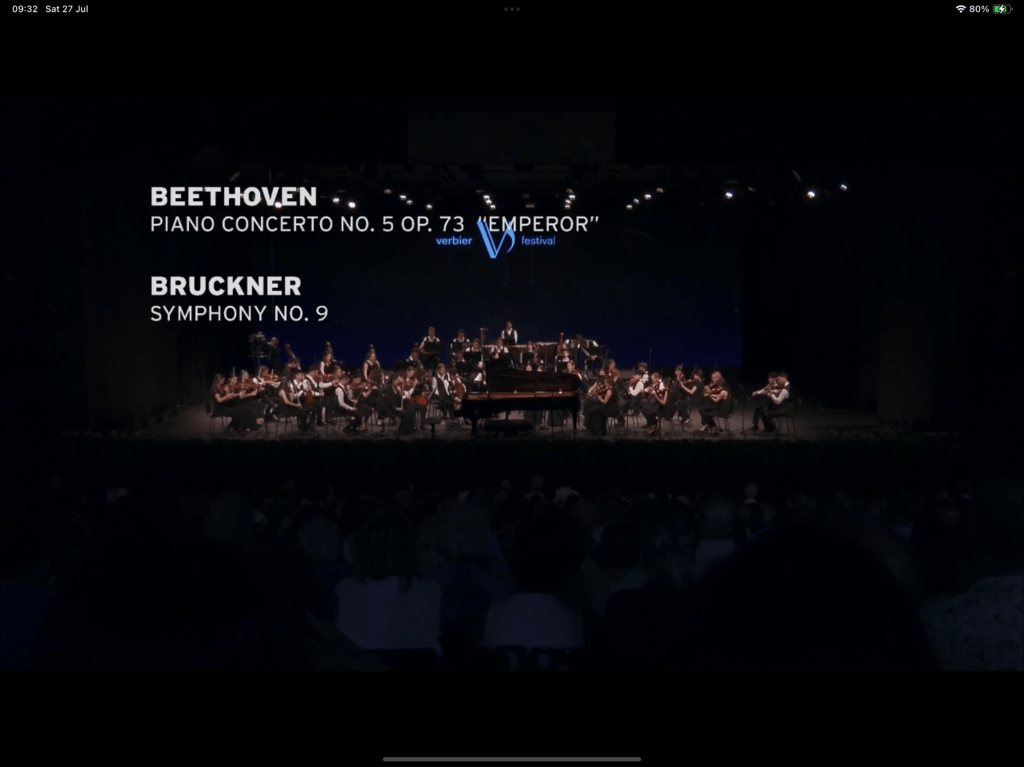
I have heard many memorable Emperor’s over the past half century or so but today will remain in my memory as one of the finest. I had heard many times Rubinstein – ‘The Prince of Pianists ‘ and one performance in particular where he played Beethoven 3, 4 and 5 with Antal Dorati in the Festival Hall in London (the 4th is on video ) .The slow movement of the Emperor was so beautiful even the orchestra in rehearsal applauded the great octogenarian. I had heard too Radu Lupu making his debut at the Proms playing the Emperor and the Choral Fantasy .This was the young Lupu ,like the early Kempff , who both played with breathtaking grandiosity before starting their search for the perfect legato,leaving their youthful exuberance behind for something much more poetically poignant. Lupu even played the horn part in the Choral fantasy when the horn failed to make its entry! Curzon too I heard in rehearsal and was so bowled over by the opening of the Choral Fantasy and the Emperor that I immediately spent my meagre student allowance of a ticket for the concert .
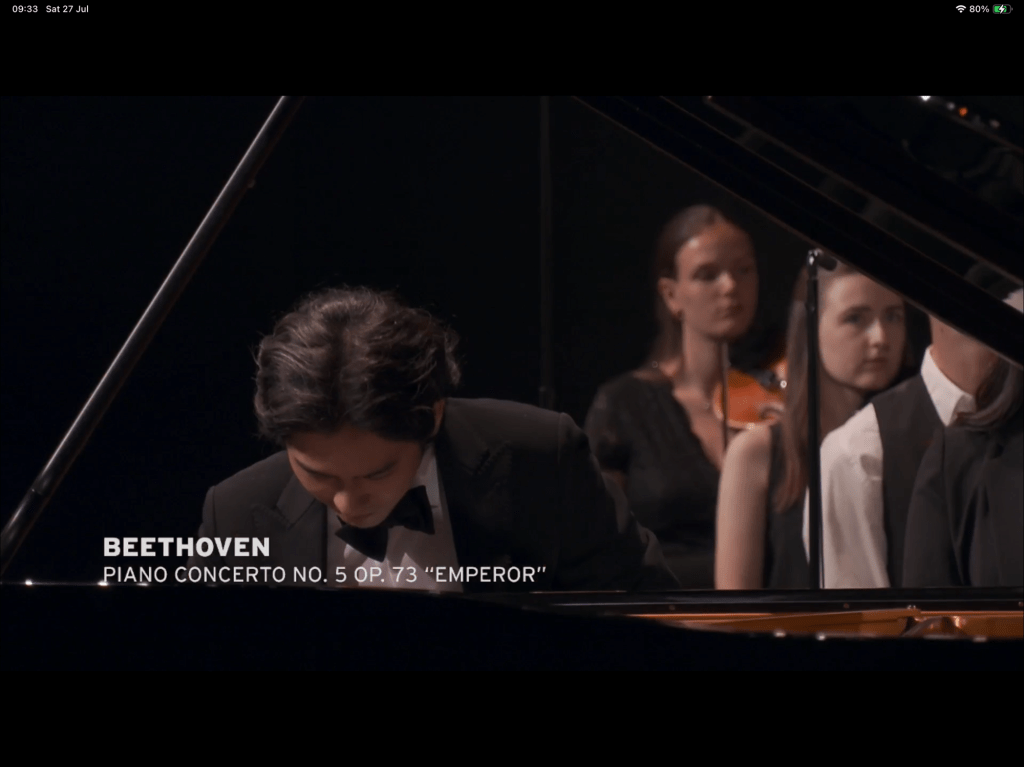
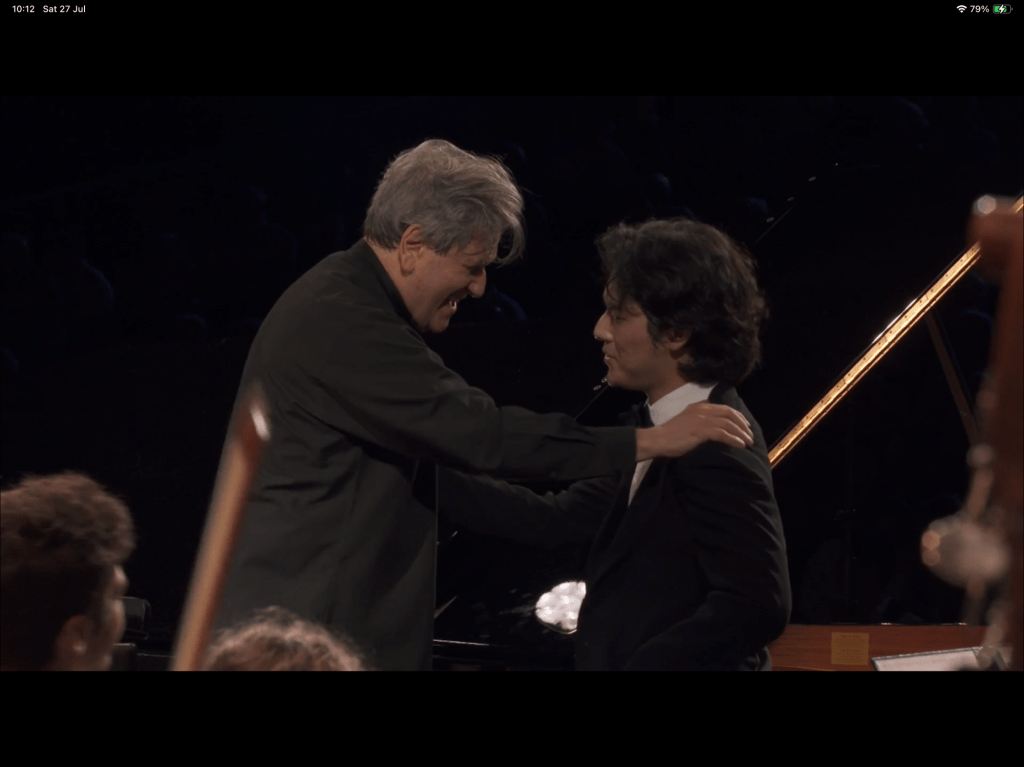
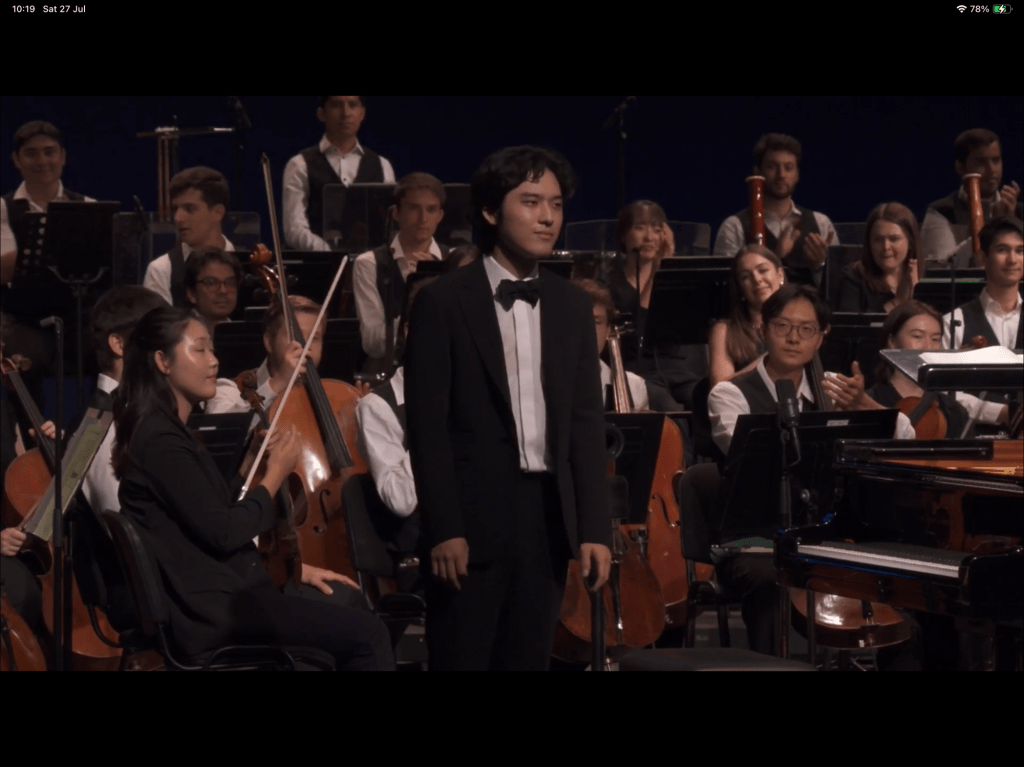
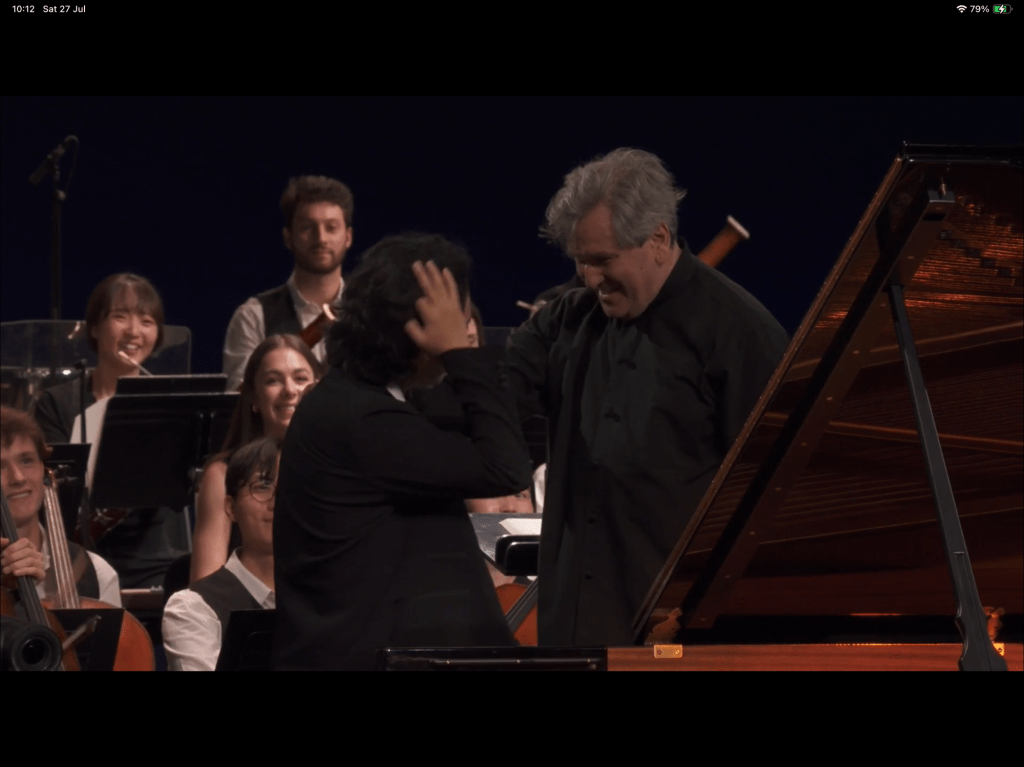
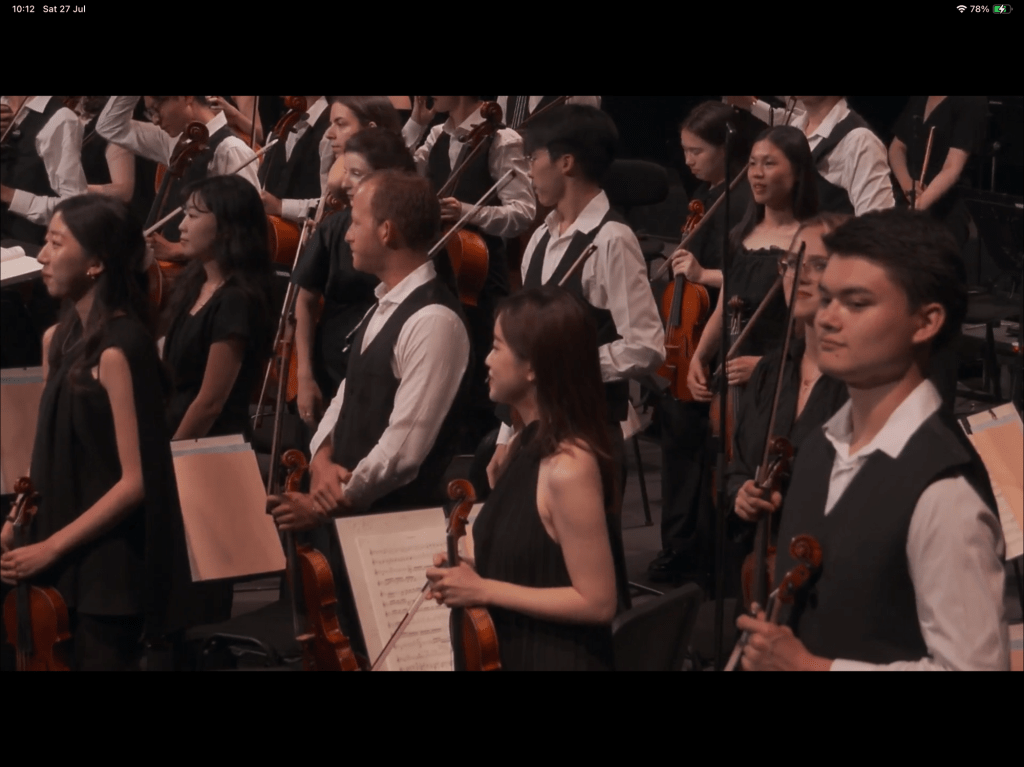
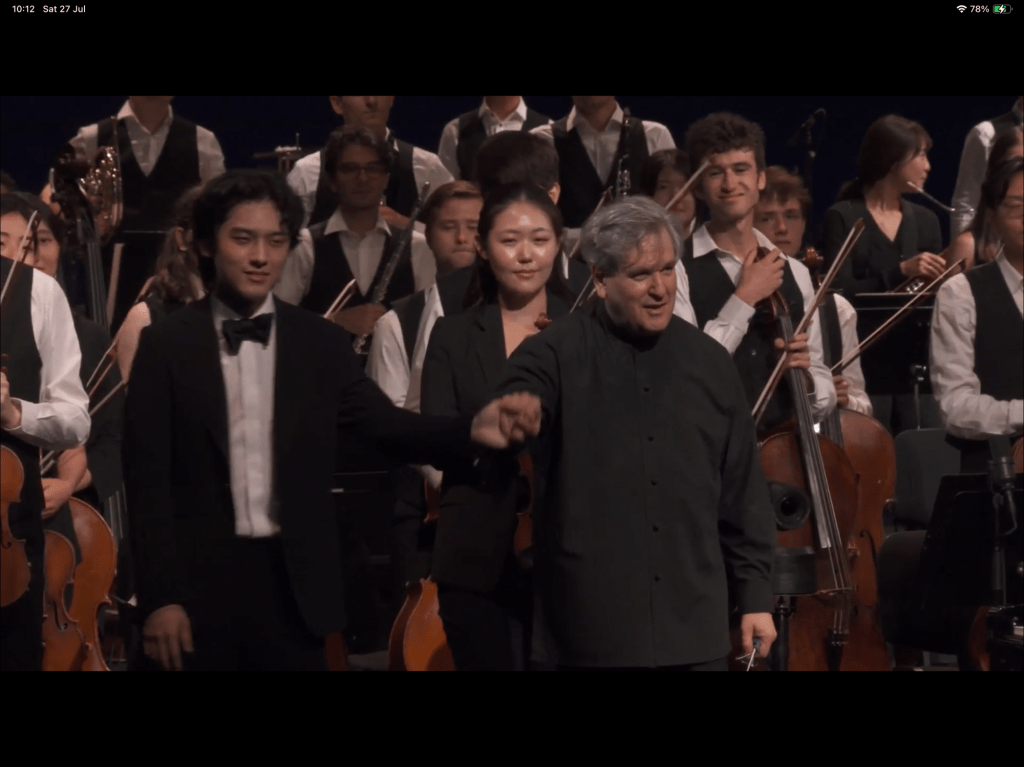
What came across today was the maturity of this young pianist . An opening of aristocratic nobility with great personality and authority even playing the single recitativi with one pointed finger. Living every moment with Pappano’s passionately inspired conducting inspiring the pianist and the young players to heights that I would not have believed possible. There was inspired playing in particular from the young horn and clarinet players.
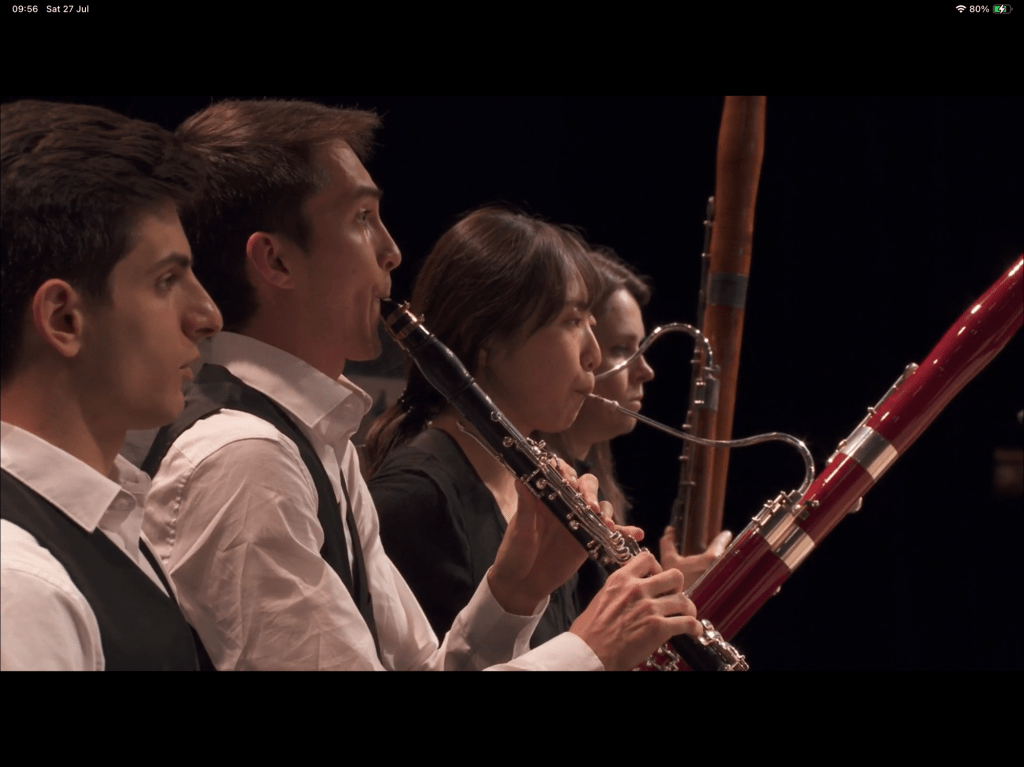
Lim looking at them as fellow chamber music players as they conversed together with the extraordinary freedom that comes when you are all riding on the same wave with one player inspiring the other on a voyage of discovery together .
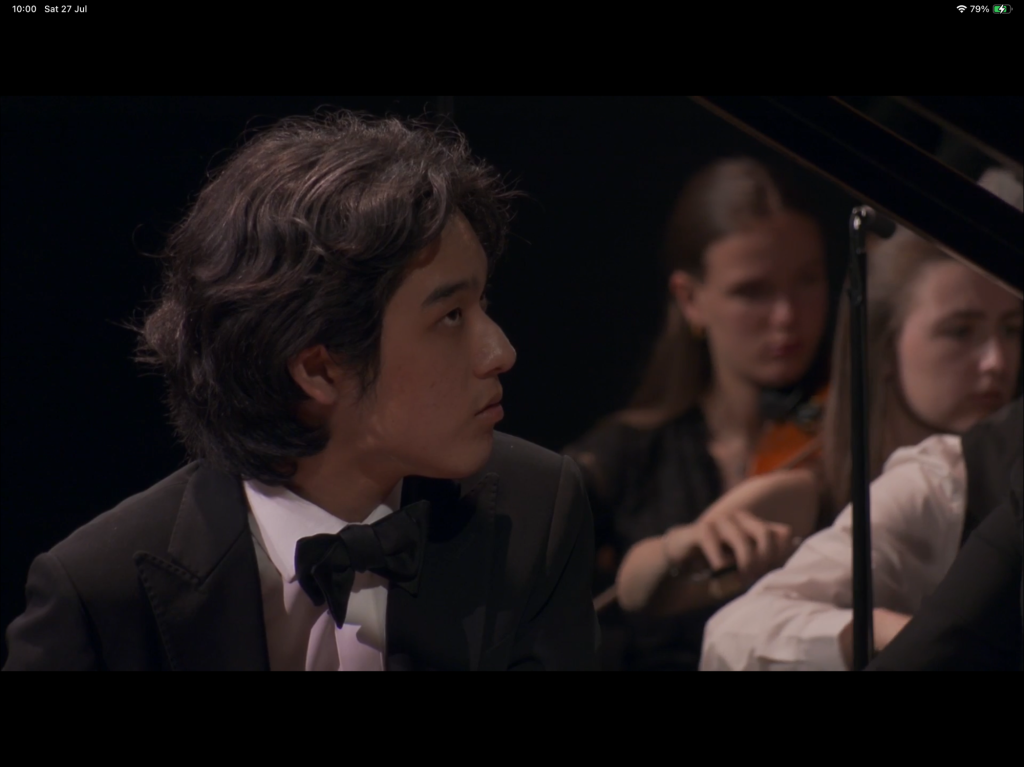
There was a glowing luminosity to Lim’s playing and a quite extraordinary delicacy and shading but always of imperial importance. The ‘ leggiermente’ of the first movement was truly magical as the pianissimo was projected with the timeless beauty that was truly Rubinstein’s. There was the ravishing beauty of the trills on the second entry of the piano as Lim moulded his gently falling phrases with poetic sensibility .Trills that were living sounds of subtle shaping as indeed they were in the last movement where the long trills before the entry of the Rondo brought a smile to this young man’s face as he played with slight crescendi e diminuendi matching his young colleagues in the orchestra.
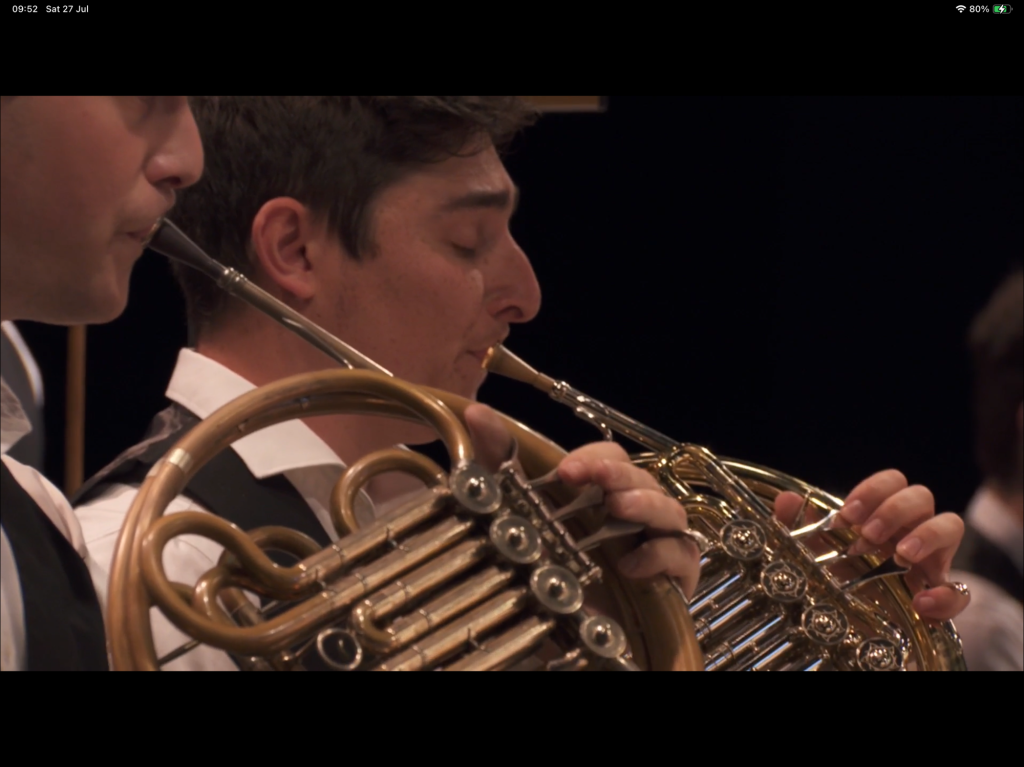
This was not the Emperor of Napoleon but an Emperor of the people, of authority , sensitivity and generosity, listening to the people who had elected him Emperor. Quite extraordinary how he matched the pizzicato strings as scales just flowed leggieremente from his fingers like water from a stream .There was truly magic at the end of the cadenza where the horn and piano played with the sort of breathtaking inspiration that makes live music making so essential for true artists. It made one aware of those magic moments at the end of the cadenzas of the 3rd and 4th concerti too where time stands still as the Genius of Beethoven bewitches us and enriches our soul.Pappano right to the final resting place after the last three chords held the energy in the air with the authority and conviction that must surely have been Toscanini’s.
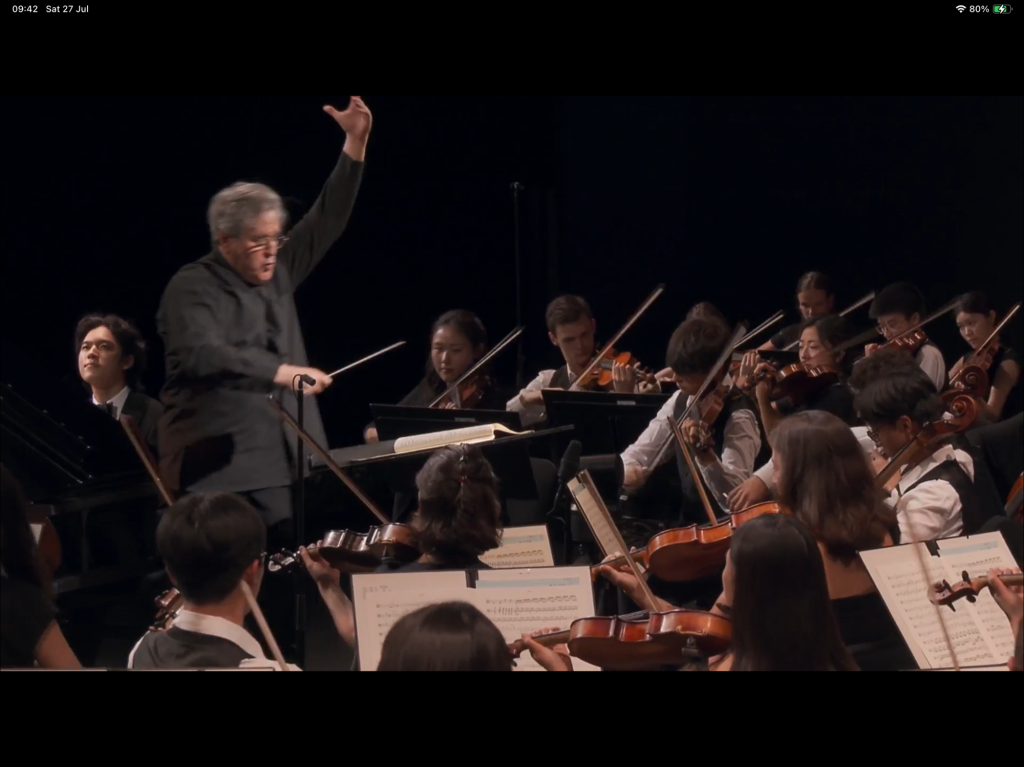
Wondrous beauty of the opening of the ‘Adagio un poco moto’ where the searing beauty of the violas I have never heard even from the sumptuous Philadelphia Orchestra .The crystalline beauty of Lim’s entry missing those unbelievable inflections that only Rubinstein could bring to a seemingly simple scale but nevertheless of ravishing simplicity .Playing the ornament before the beat so the top note shone like the star it is , with the falling scale transformed into a melody of extraordinary poignant beauty.
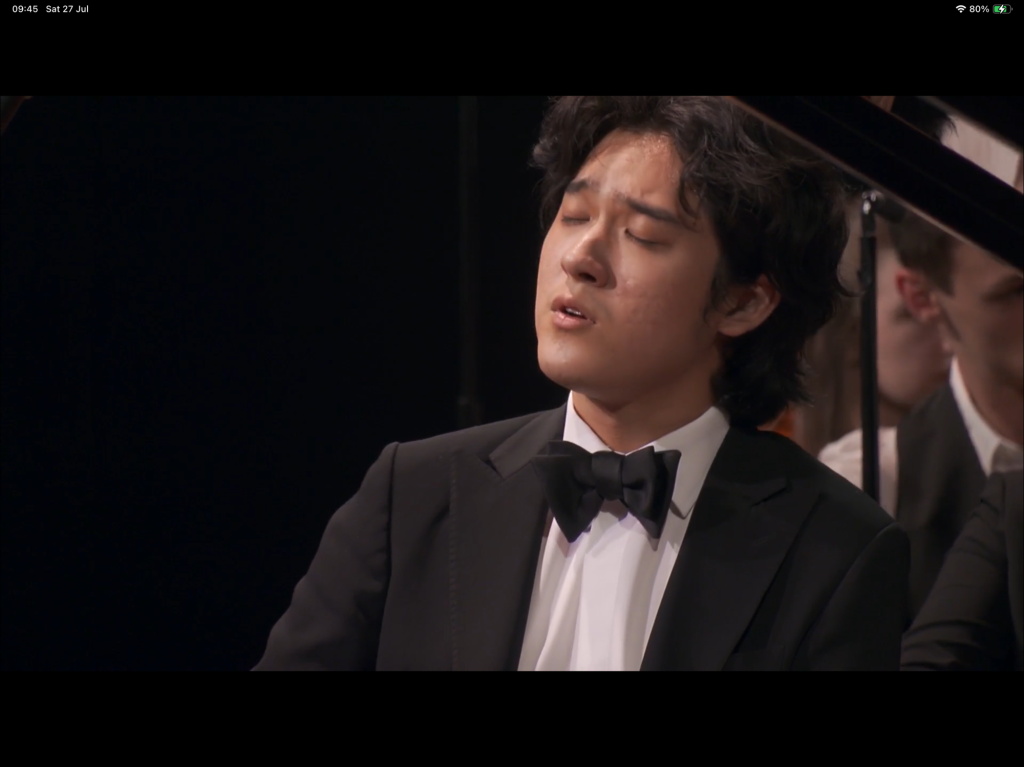
It was played with a subtlety of phrasing that was of a simplicity of breathtaking sensitivity. Even the double thirds that follow were played with an architectural shape and the final eight played with a timeless staccato before the trills, that was unbearably beautiful.Following the orchestra as Lim accompanied them with ravishingly beautiful embellishments before finally dying away to the note of B .
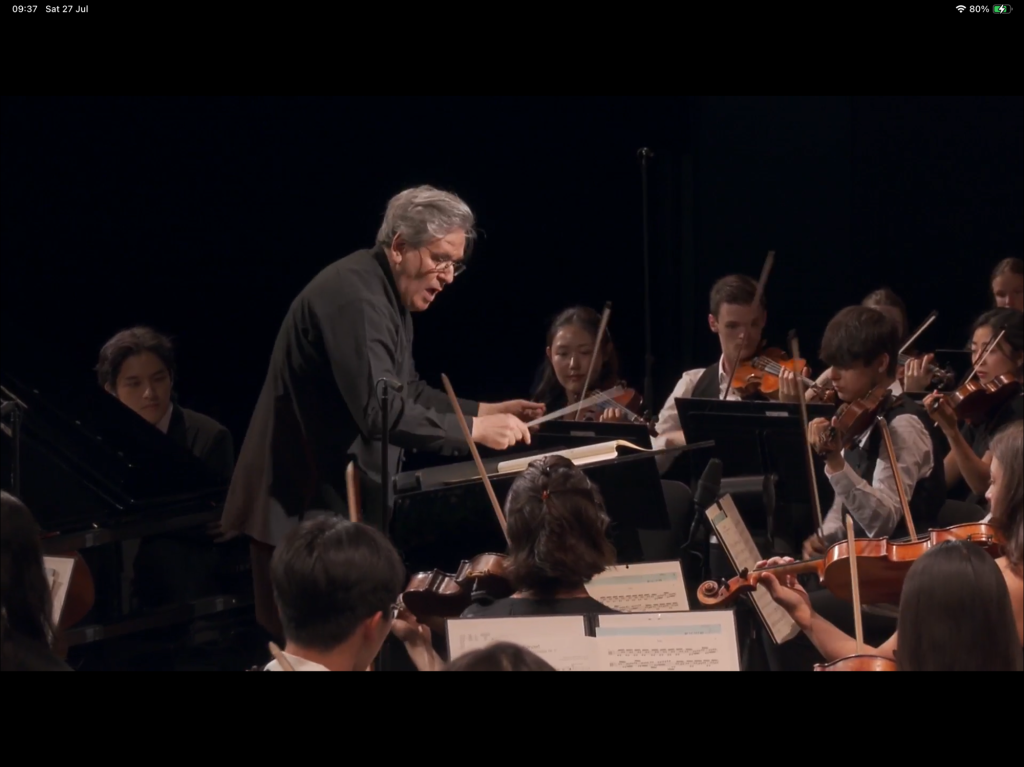
A note that Pappano was to transform into B flat with such sensitivity that the shock wave was palpable even on this streamed performance. Lim just hinting at what was to burst forth in the Rondo with subtle impish good humour.The Rondo bursting in ,sotto voce , before bursting into flames with the second fortissimo phrase.
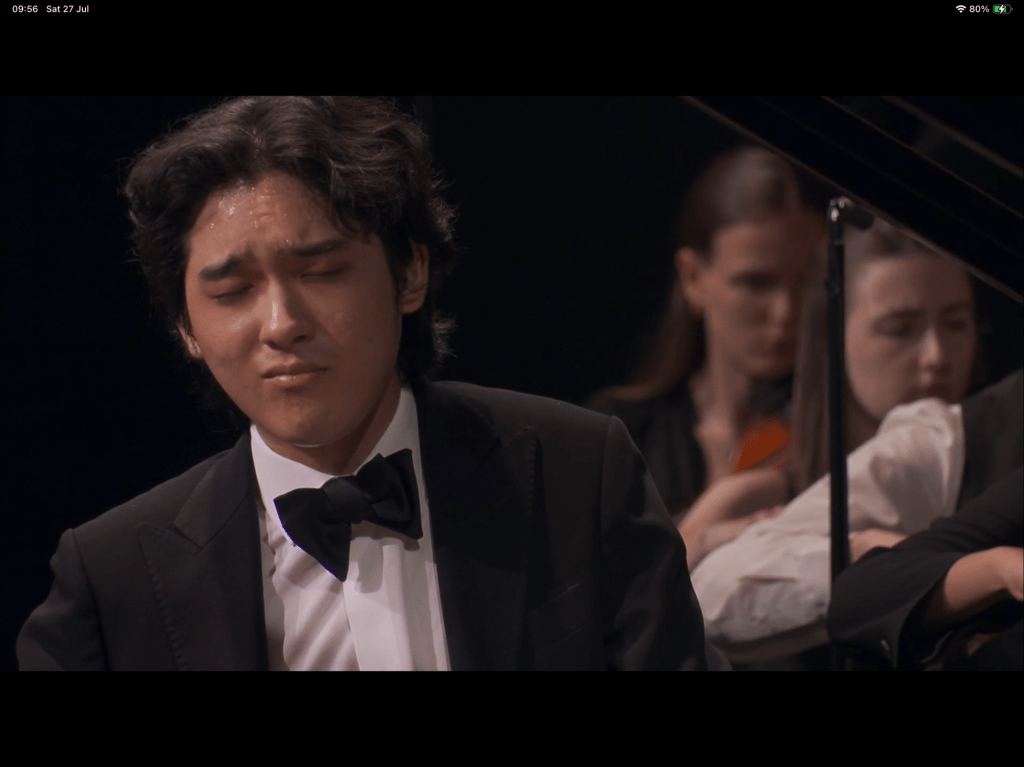
All through this performance Lim’s scrupulous attention to the score was of such surprising fidelity that it had me hurrying to check out what I had taken for granted for over half a century! A Rondo of dynamic drive and crystalline clarity – Delius used to complain that Beethoven was all scales and arpeggios. An added bass note just gave a depth to the sound as notes cascaded across the keyboard with such mastery .But it depends who is playing these scales and arpeggios ! As living vibrant rhythmic elements as today and not just dry schoolboy exercises, Lim showed us just how live and vibrant they can be.
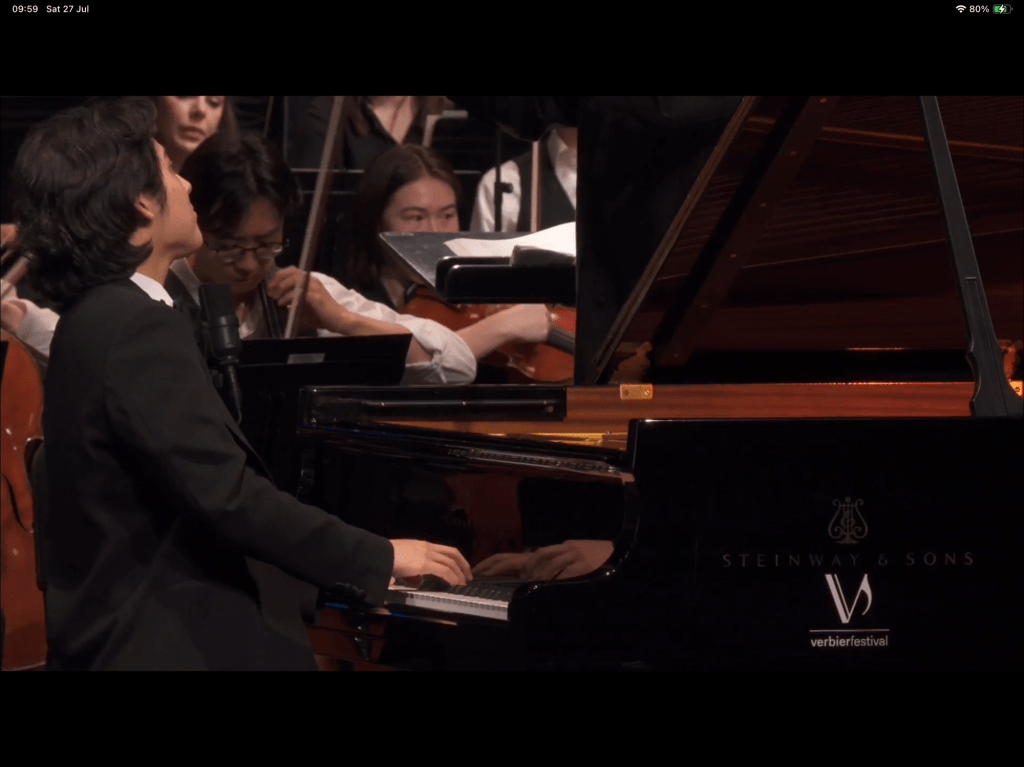
The second entry pianissimo was played with unbelievable breathtaking whispers where the arpeggios were barely audible over a bass of extraordinary clarity and clockwork precision.The recitativo poco ritard the last time was played forte ,not piano as the first time, and looking closely at the score I found that Beethoven had not marked them to be played the same.What a remarkable intelligent musician this young man is. Even the final scale and phrases of the coda were played in tempo with the ritardando only slight on the final bars and together with the percussion leading so inevitably to the final great explosion. Discreetly joining in with the final triumphant ending as I am sure is an Emperor’s right.
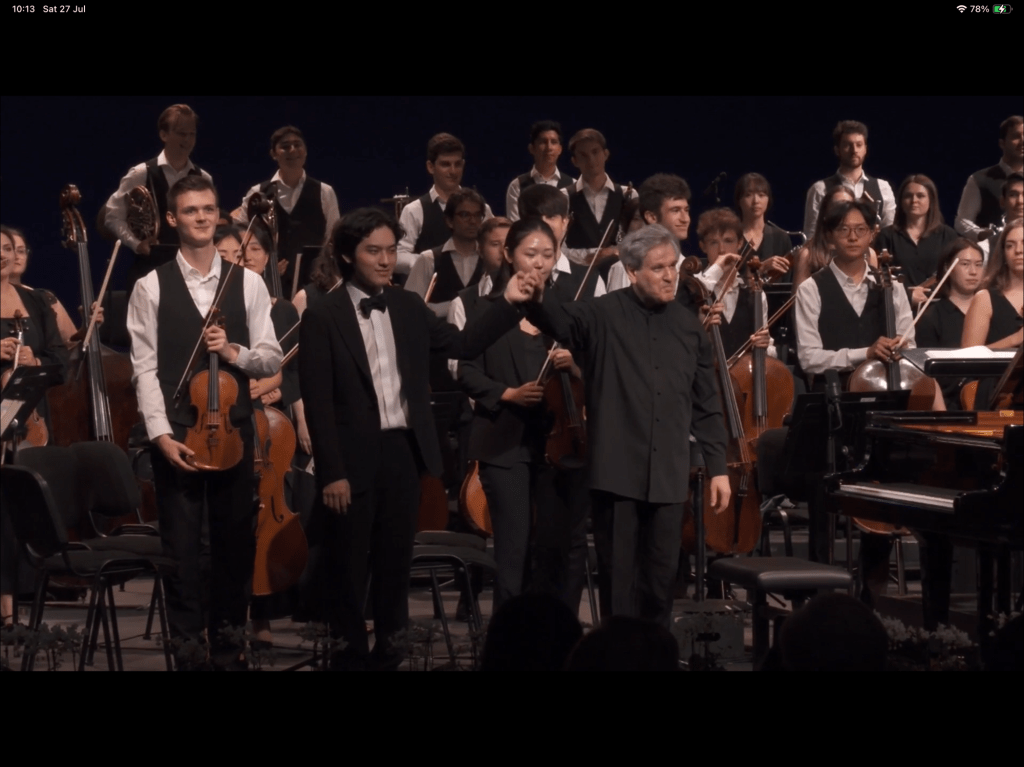
Mentioning Wilhelm Kempff it was his transcription of the Siciliano for the Sonata n 2 in E flat BWV 1031 that our young hero chose to thank the orchestra and the audience with today . A performance of breathtaking beauty where the fluidity and glowing beauty of the melodic line was matched by the non legato perfection of the accompaniment.Subtle pointing of tenor notes illuminated the velvet beauty that together with a discrete bass note just showed that we were in the hands of a true magician who could turn this box of hammers and strings into a sumptuous casket of glimmering jewels.This was indeed a Poet speaking and as the distinguished announcer said this young man is proving on each appearance to be one of the most important pianists of our time.
I remember the first time i heard this piece was in a recital by Kempff’s protégée Idil Birit in our theatre in Rome .When my wife came to produce and star in the the play ‘Who’s afraid of Virginia Woolf’ I was amazed to hear Idil play it quietly at the end when the wife breaks down on stage and admits their baby had died. My wife had remembered Idil’s magical performance and chose it as the music to accompany a moment so touchingly delicate. It was one of those breathtaking moments that was only to be repeated when Idil played it as an encore in memory of my wife who had since died on stage.

Yunchan is a man in love and like Pappano a love that knows no bounds as it is shared so generously with all those that come under their spell .
Yuchan Lim will be playing the Emperor at the BBC Proms at the Royal Albert Hall on Monday 29th July at 19.30 – broadcast on BBC Radio 3 – live and for 30 days after.
Live at the BBC Proms the BBC Symphony Orchestra, conducted by Paavo Järvi in Bruckner’s Symphony No. 1. Pianist Yunchan Lim plays Beethoven’s ‘Emperor’ Concerto.
https://www.bbc.co.uk/programmes/m0021b7h
Presented by Tom Service, live from the Royal Albert Hall, London
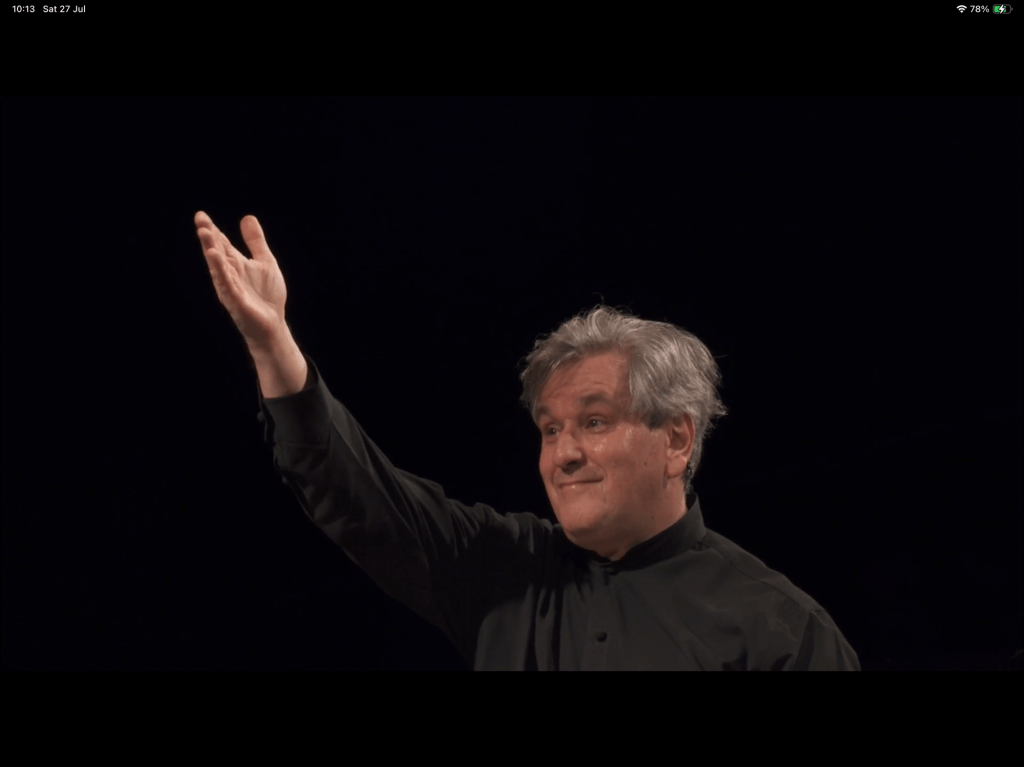

The Piano Concerto No. 5 in E-flat major, Op. 73, known as the Emperor Concerto in English-speaking countries, was composed in 1809 in Vienna, and id dedicated to Archduke Rudolf, who was his patron, friend, and pupil.
Beethoven’s return to Vienna from Heiligenstadt in 1802 marked a change in musical style and is now often designated as the start of his middle or “heroic” period characterized by many original works composed on a grand scale.In the autumn of 1808, after being rejected for a position at the Royal Theatre, Beethoven received an offer from Napoleon’s brother Jerome Bonaparte , the King of Westphalia, for a well-paid position as Kapellmeister at the court in Cassel. To persuade him to stay in Vienna, Archduke Rudolf, Prince Kinsky , and Prince Lobkowitz pledged to pay him a pension of 4000 florins a year.Archduke Rudolf paid his share of the salary on the agreed date.Kinsky, immediately called to military duty, did not contribute and died in November 1812 after falling from his horse.When the Austrian currency destabilized in 1811, Lobkowitz went bankrupt. To benefit from the agreement, Beethoven had to obtain recourse from the law, which in 1815 brought him some payment.
Beethoven felt the Napoleonic Wars reaching Vienna in early 1809 and completed writing the piano concerto in April while Vienna was under siege by Napoleon’s armies.He wrote to his publisher in July 1809 that there was “nothing but drums, cannons, men, misery of all sorts” around him.To save his hearing, he fled to his brother’s cellar and covered his ears with pillows.The work’s heroic style reflects the war-ridden era in its military topics and heroic tone.Beethoven experimented with new techniques, such as the piano entrance beginning earlier than typical and with a cadenza.
The concerto’s public premiere was on 28 November 1811 in Leipzig with Friedrich Schneider as the soloist.Beethoven’s hearing loss did not prevent him from composing music, but it made playing at concerts increasingly difficult.The concerto debuted in Vienna on 12 February 1812, with Carl Czerny , Beethoven’s pupil, as the soloist.The English premiere was on 8 May 1820 with Charles Neate as soloist.Felix Mendelssohn gave an English performance on 24 June 1829.Archduke Rudolf of Austria was Beethoven’s aristocratic patron, and in 1803 or 1804, Rudolf began studying piano and composition with Beethoven. They became friends, and their meetings continued until 1824.Beethoven dedicated many pieces to him, including this concerto.
The origins of the concerto’s epithet, Emperor, are obscure and no consensus exists on its origin. An unlikely and unauthenticated story says that at the first Vienna performance, a French officer said, “C’est l’Empereur!”Other sources say that Johann Baptist Cramer coined it. Beethoven would have disliked the epithet due to his disapproval of Napoleon’s conquest and had previously reconsidered the dedication of his Eroica Symphony ; initially dedicated to Napoleon, Beethoven changed it after Napoleon assumed the title of emperor in 1804.
Liszt frequently performed the concerto throughout his life, including at an 1841 performance with Hector Berlioz conducting,at the unveiling of the Beethoven Monument in 1845,and at an 1877 all-Beethoven concert with Ferruccio Busoni in attendance.At the 1877 concert, Liszt played with nine fingers because of an injury to his left hand. Eleven-year-old Busoni was “bitterly disappointed” at his performance but was the only one who noticed.
The musicologist Alfred Einstein described the concerto as “the apotheosis of the military concept.” He believed it was the sister work of Eroica because it evokes imagery of an emperor such as Napoleon.Alfred Brendel said it has “a grand and radiant vision, a noble vision of freedom.”In the 1860 edition of his biography of Beethoven, Anton Schindler wrote that the concerto was “the summit of all concerto music ever written.”Joseph Kerman stated it was a “triumph”.As of 2021, it was the most performed piano concerto at Carnegie Hall , with 215 performances.
On 2 October 1912, Frank La Forge recorded the adagio movement with a studio orchestra for the Victor Talking Machine Company ; the recording was issued as Victor 55030-A.In 1922, Frederic Lamond made the first complete recording with the Royal Albert Hall Orchestra under Eugene Goossens .In 1945, Walter Gieseking made a stereophonic tape recording for German radio with the Grosses Funkorchester under Artur Rother . It is one of the earliest Stereo recordings and one of about 300 such recordings made during the war, of which five survived. During the quiet passages, anti-aircraft weapons can be heard.
Yunchan Lim in Verbier The supreme mastery of a poet of the piano.
The Pianistic Perfection of Yunchan Lim at the Wigmore Hall
Yunchan Lim in Poland – the refined beauty and maturity of a great artist
 ChristopherAxworthy-MusicCommentary
