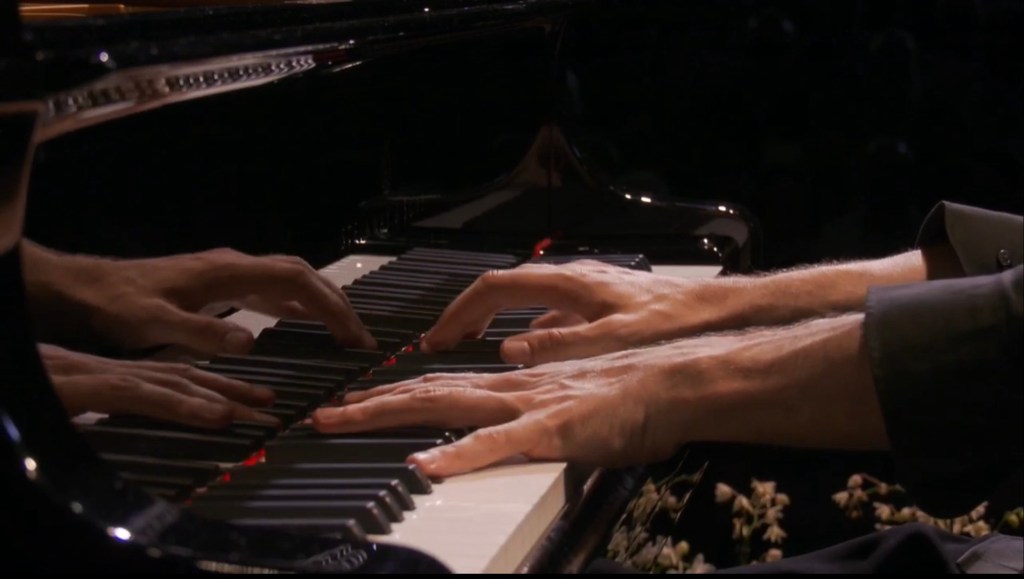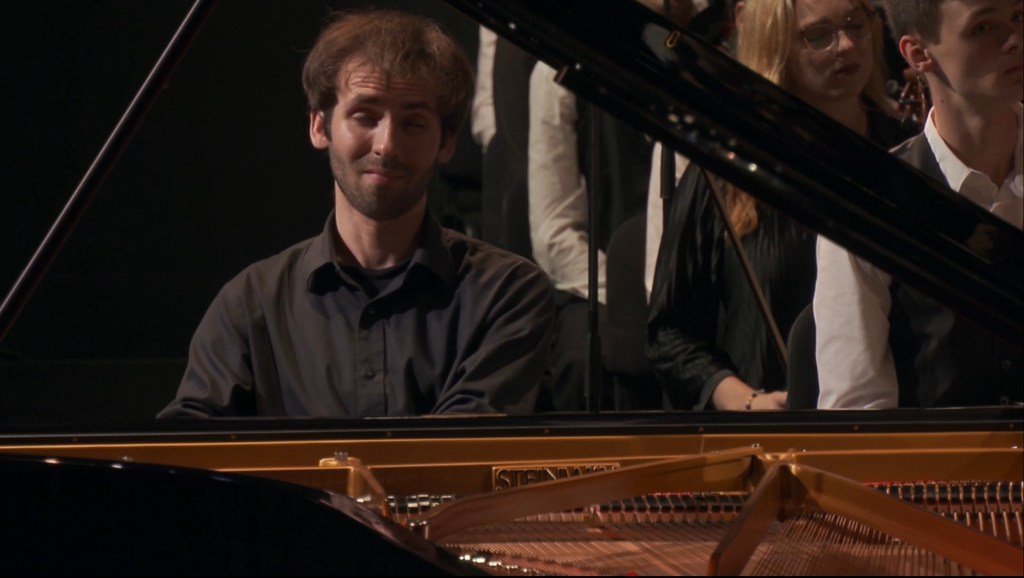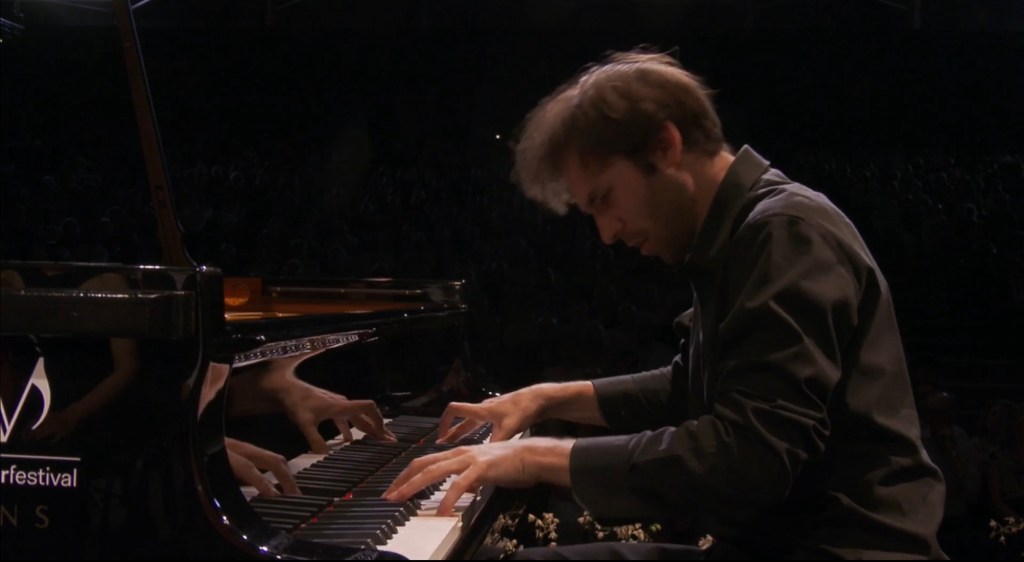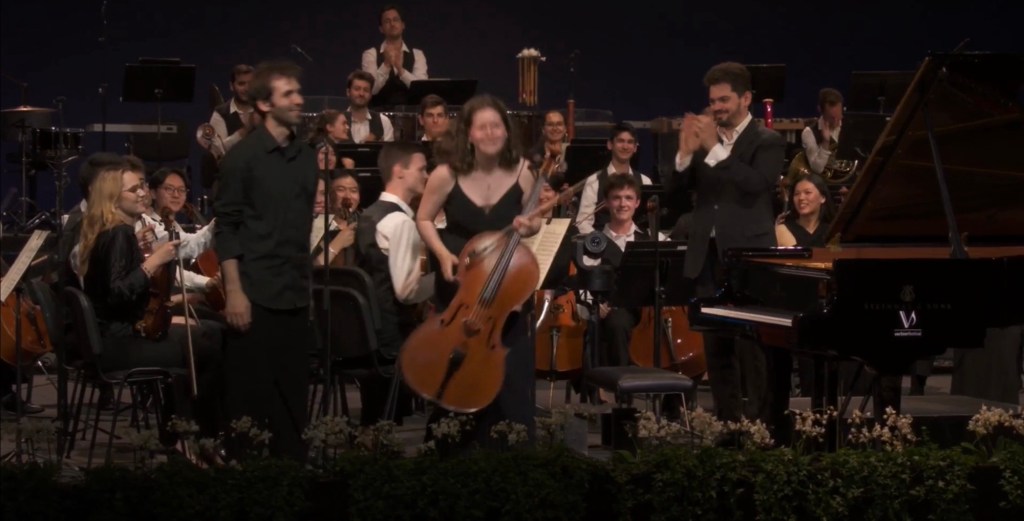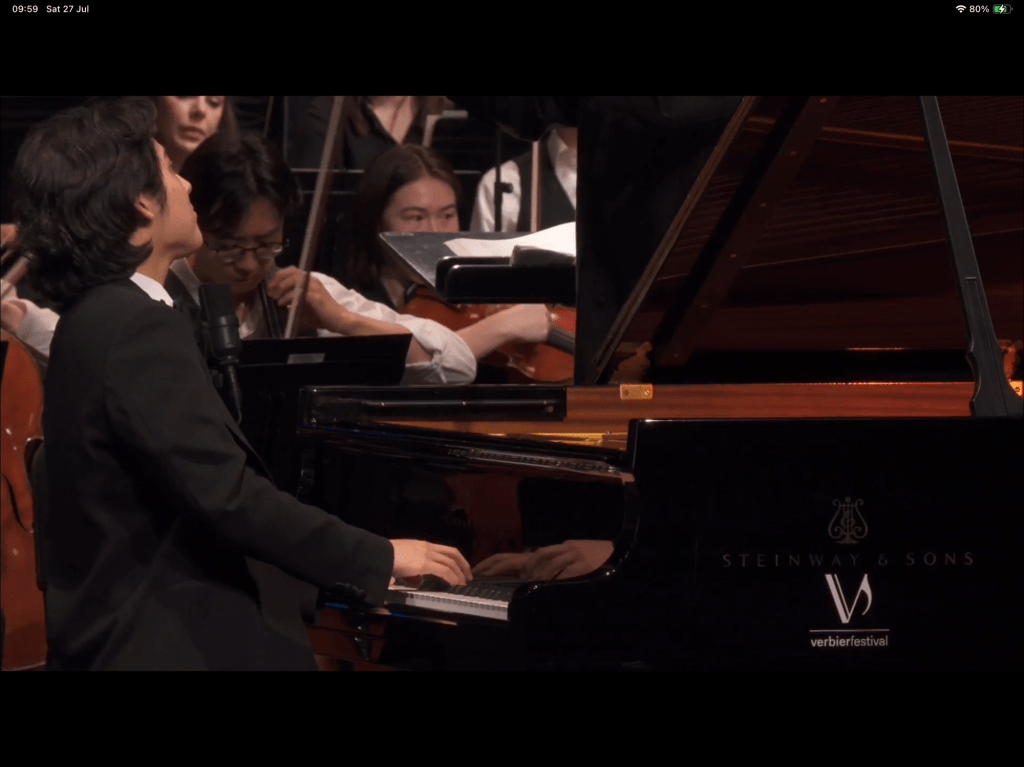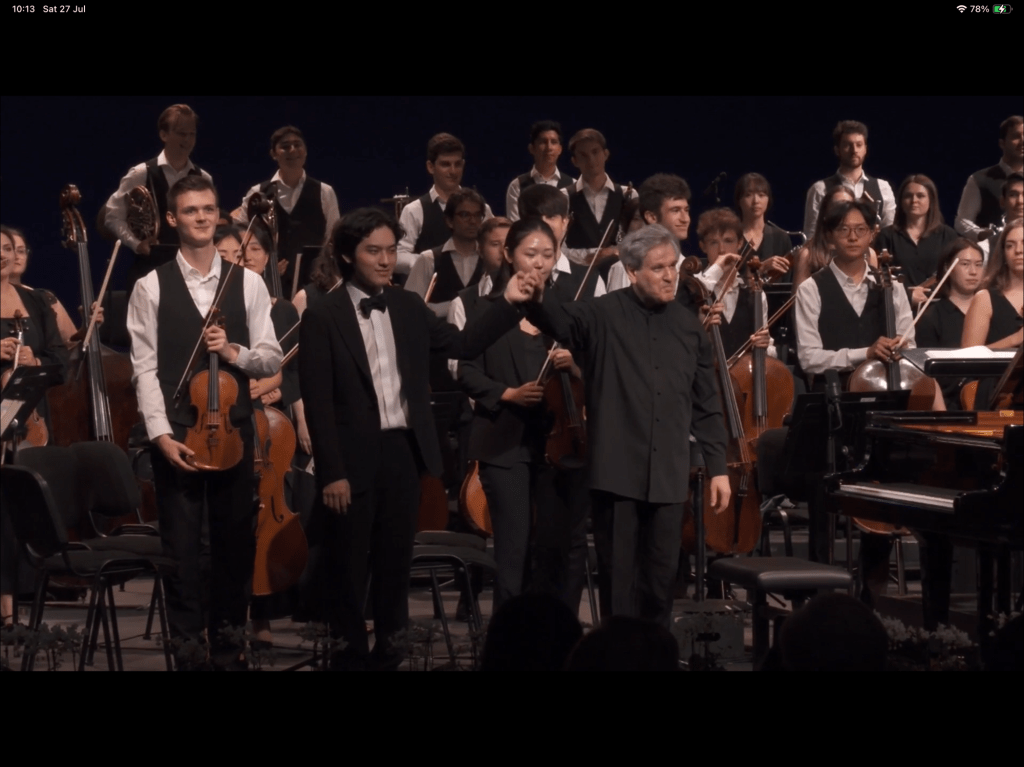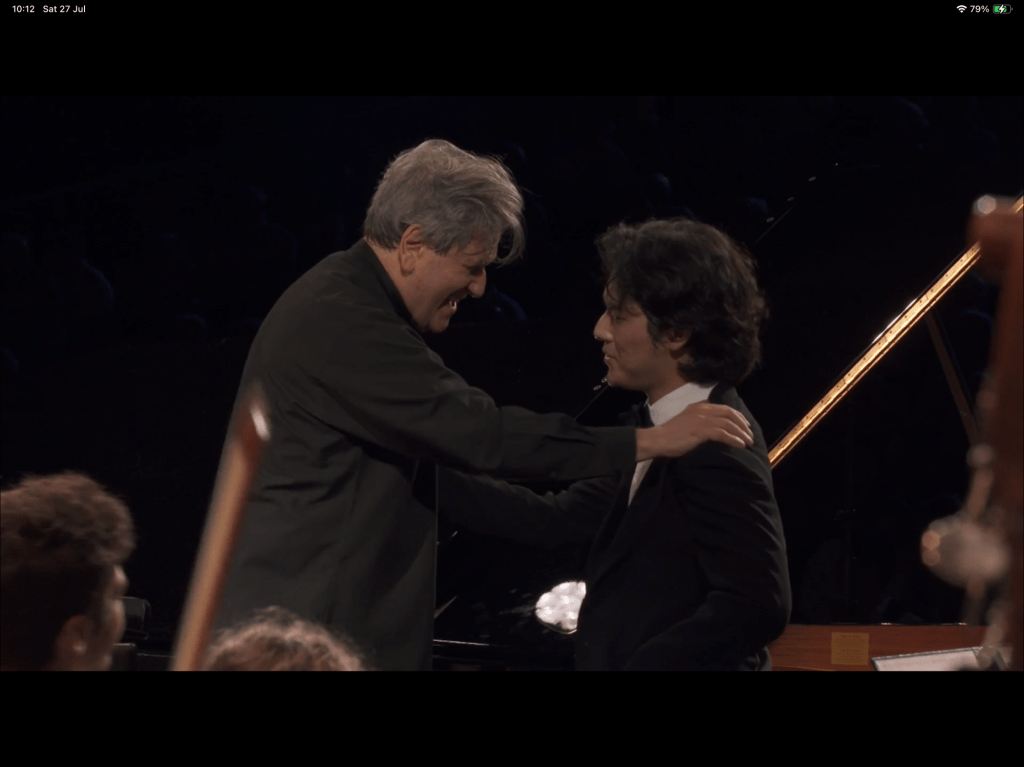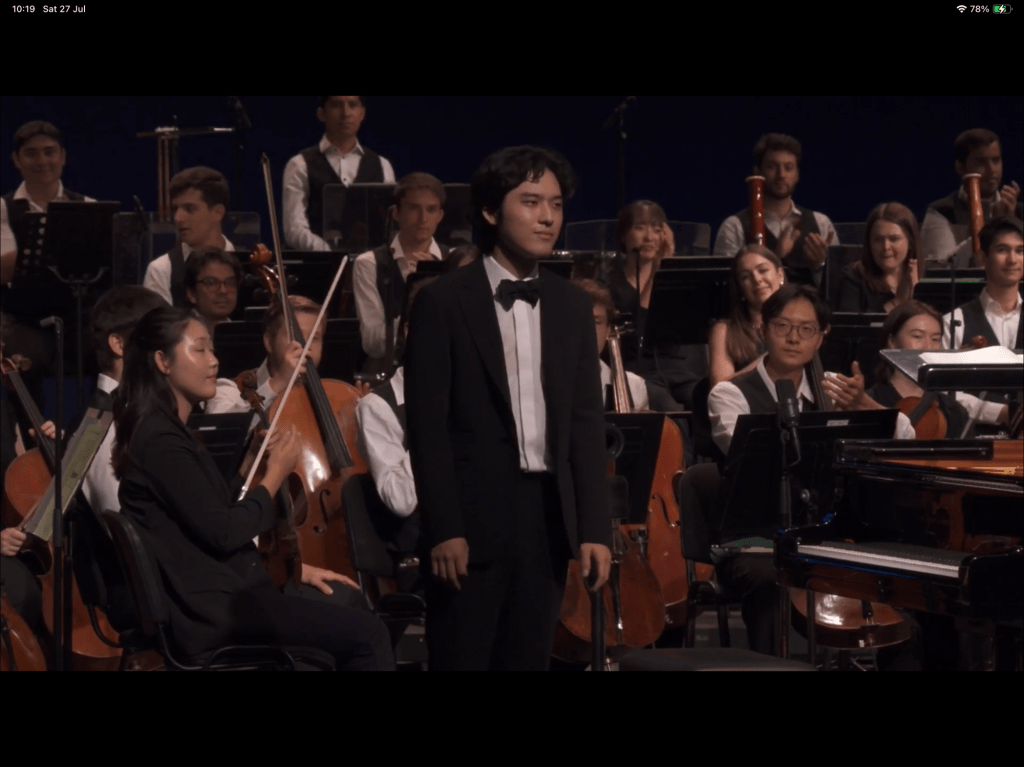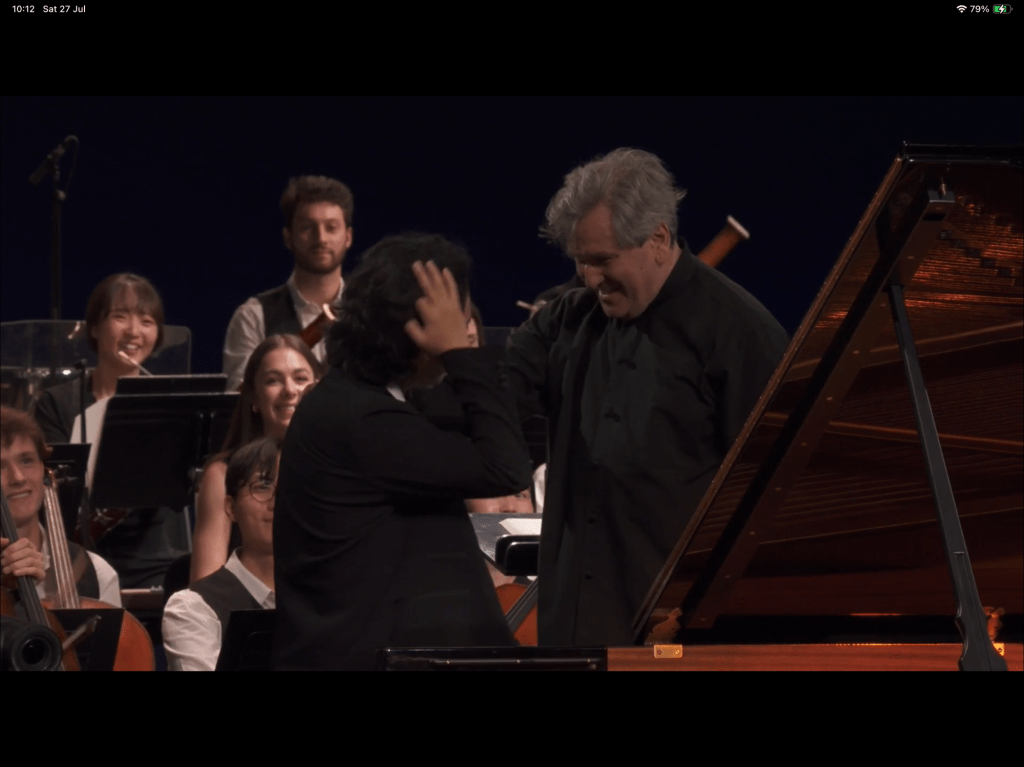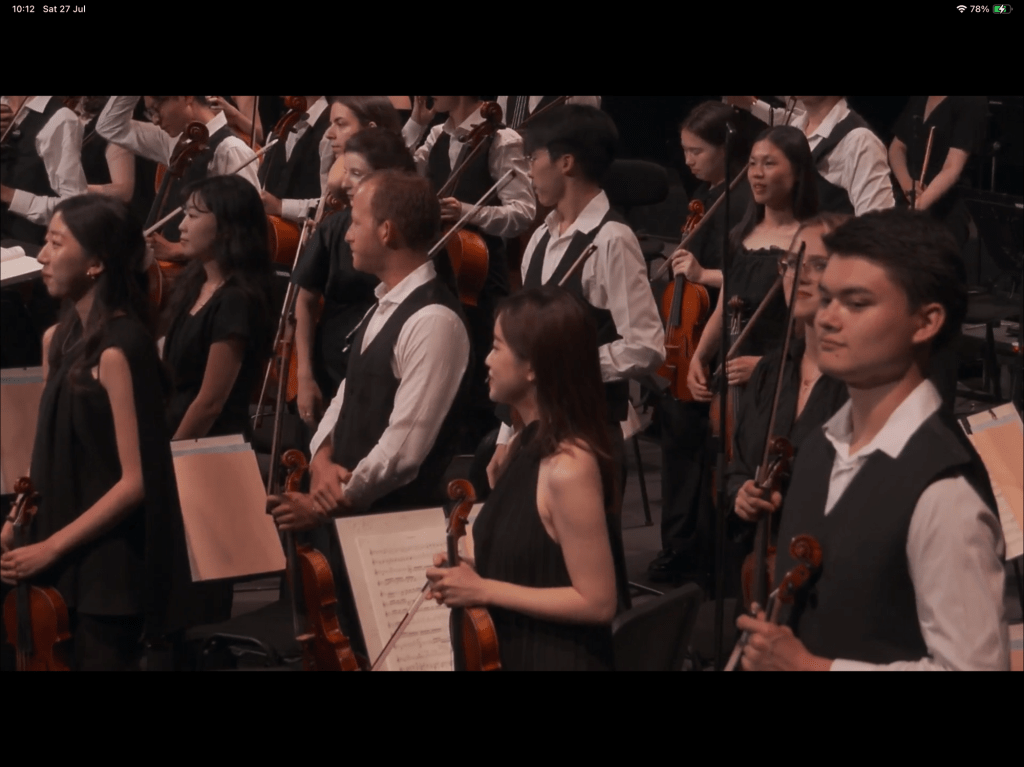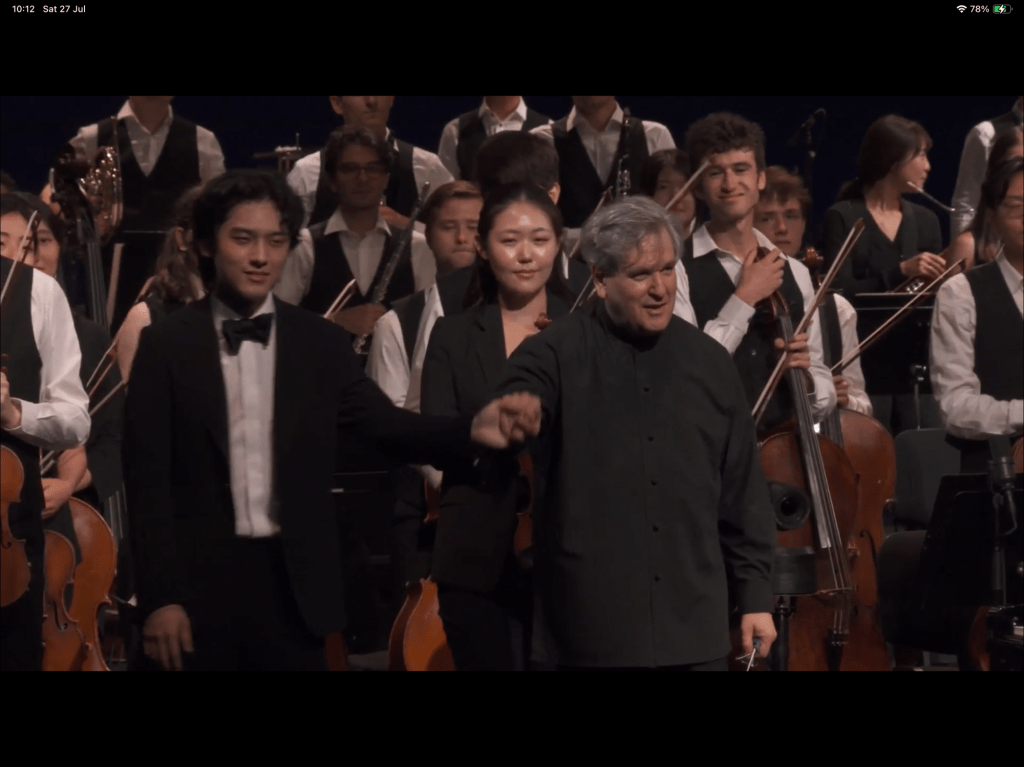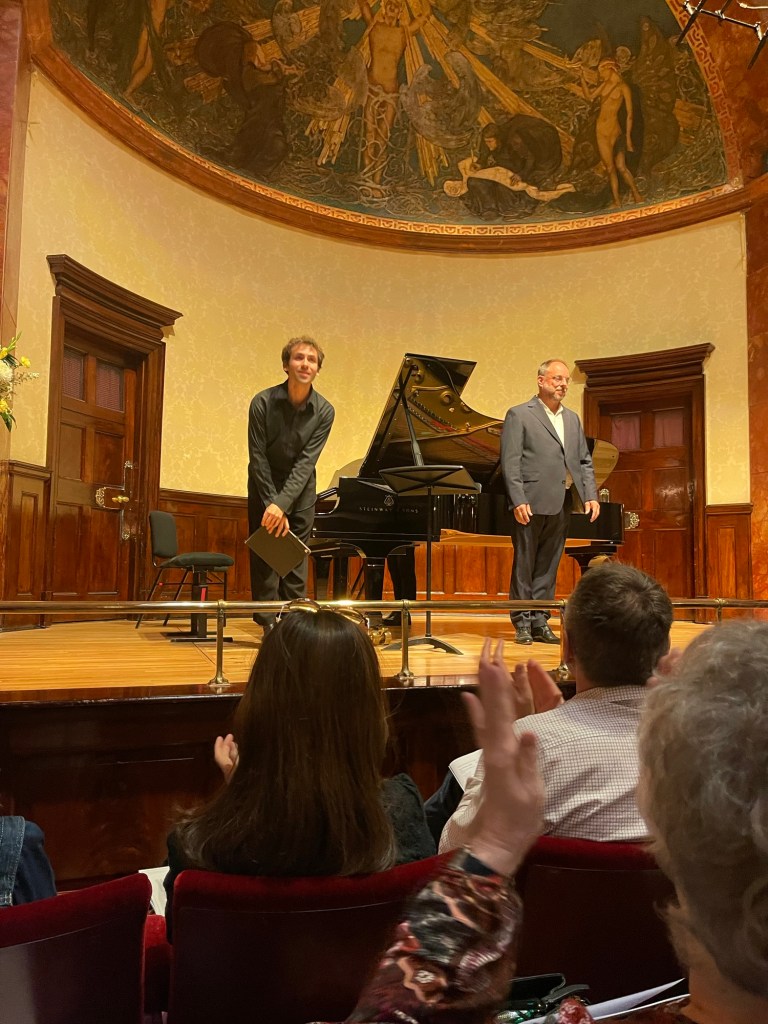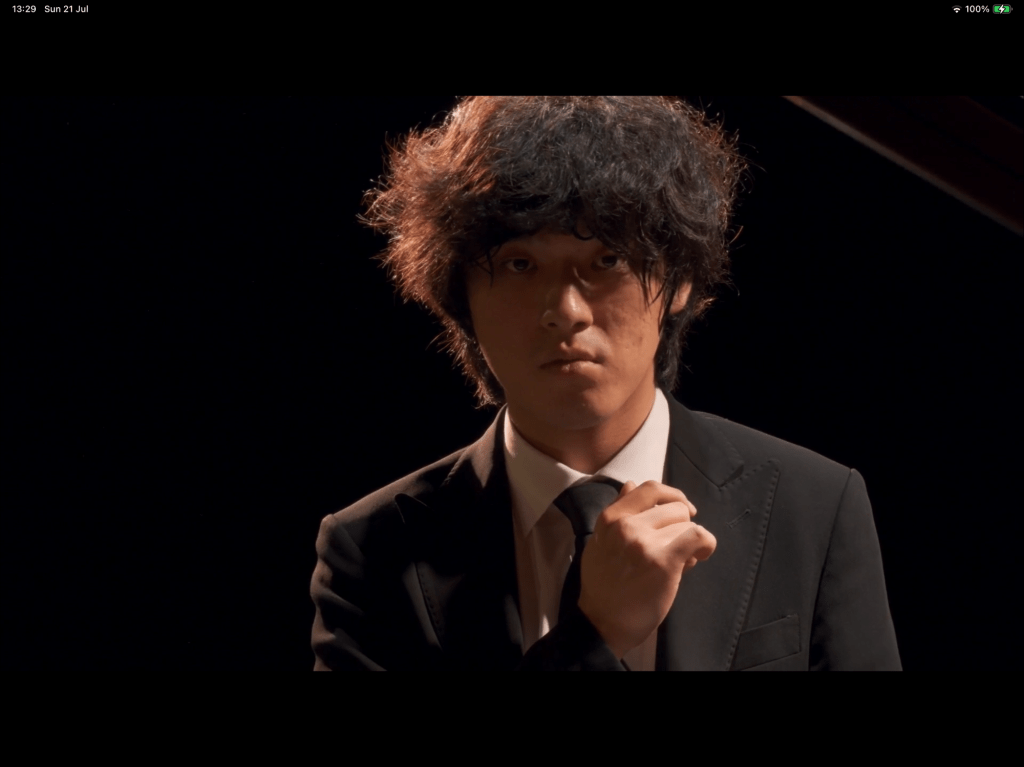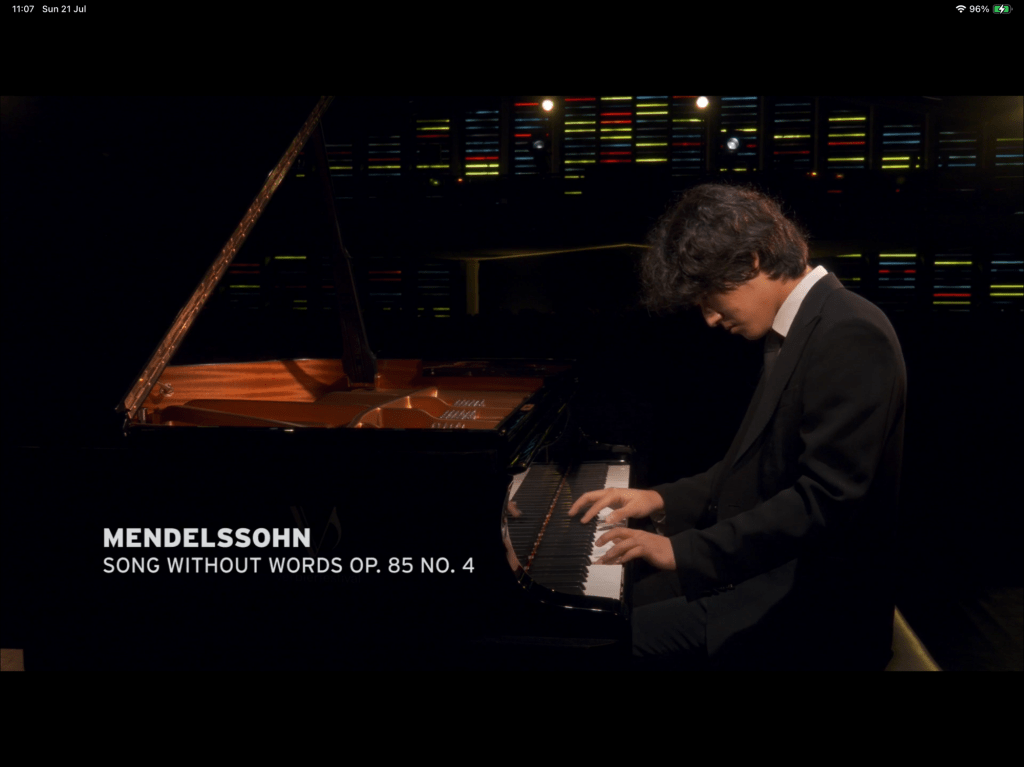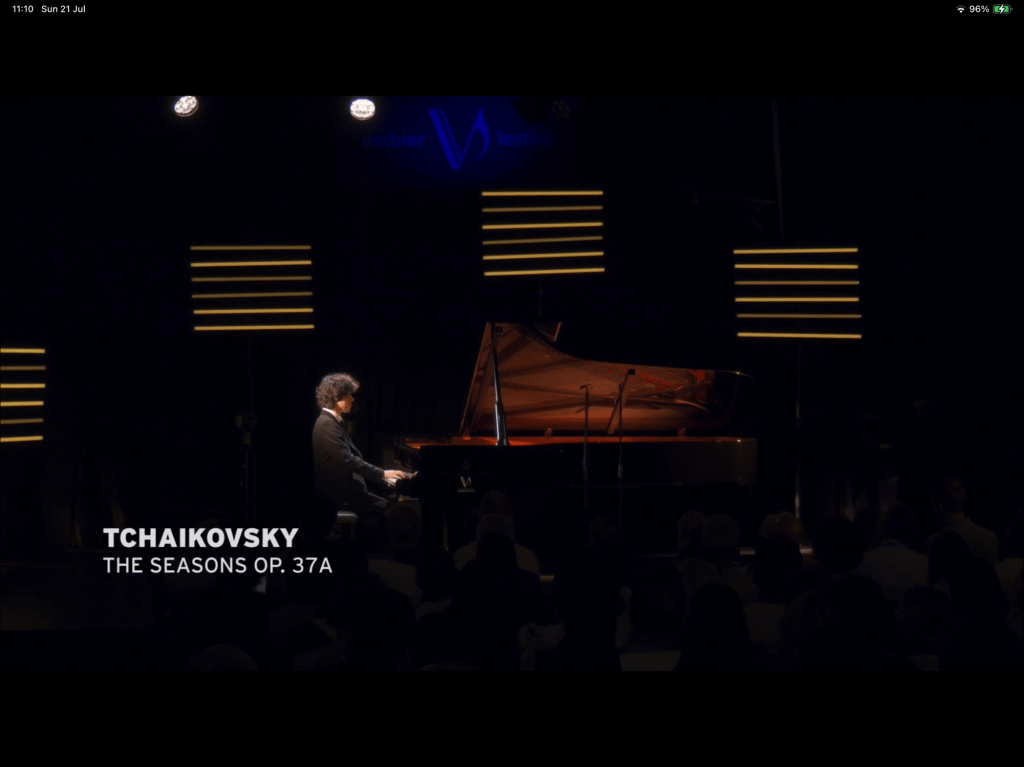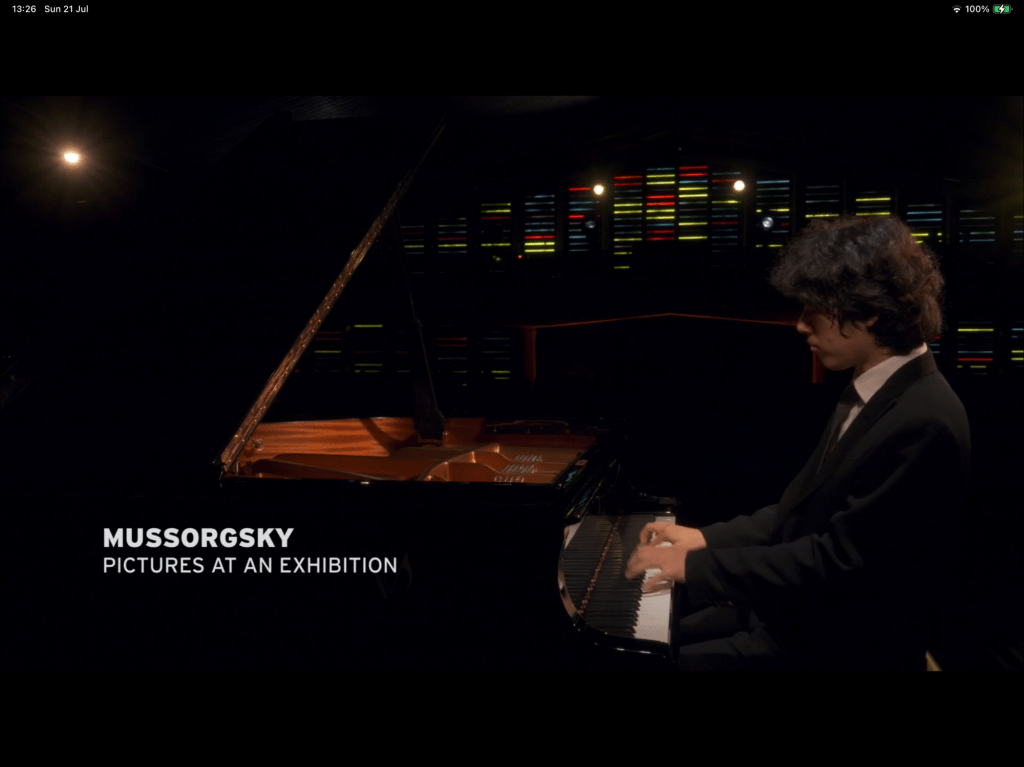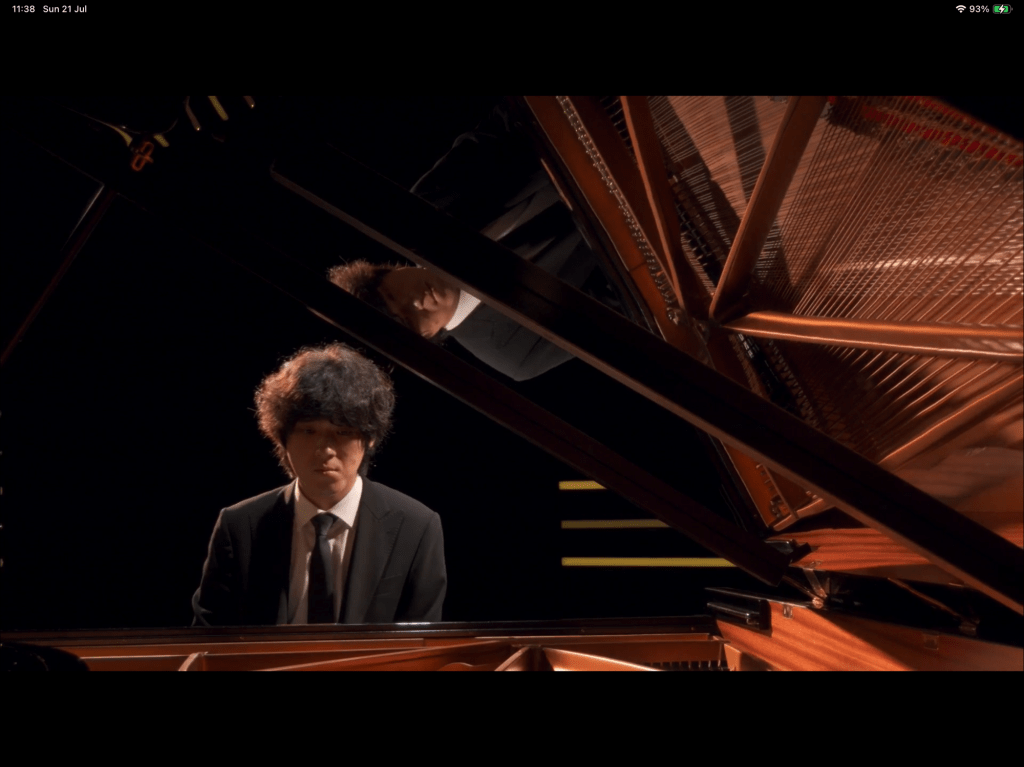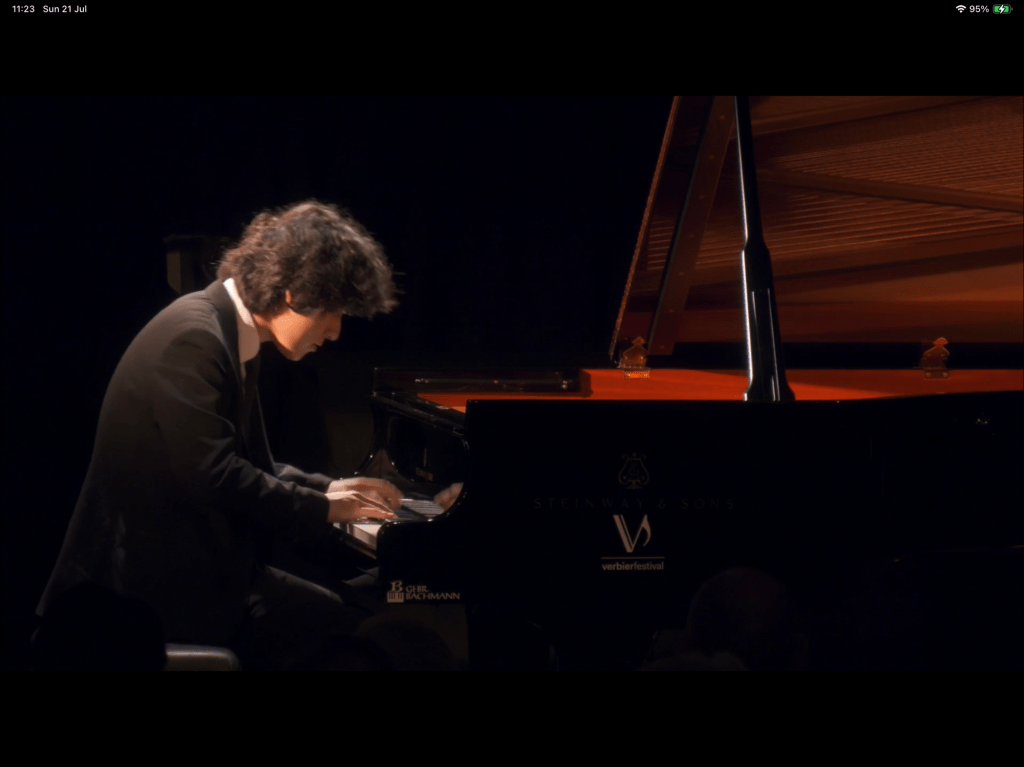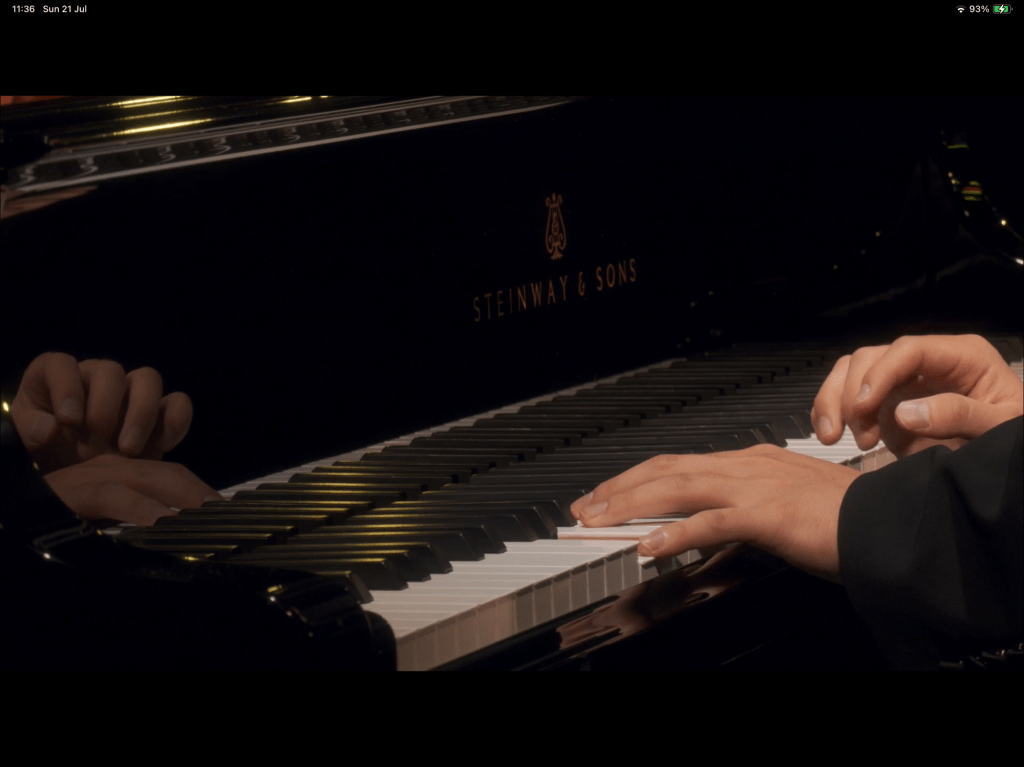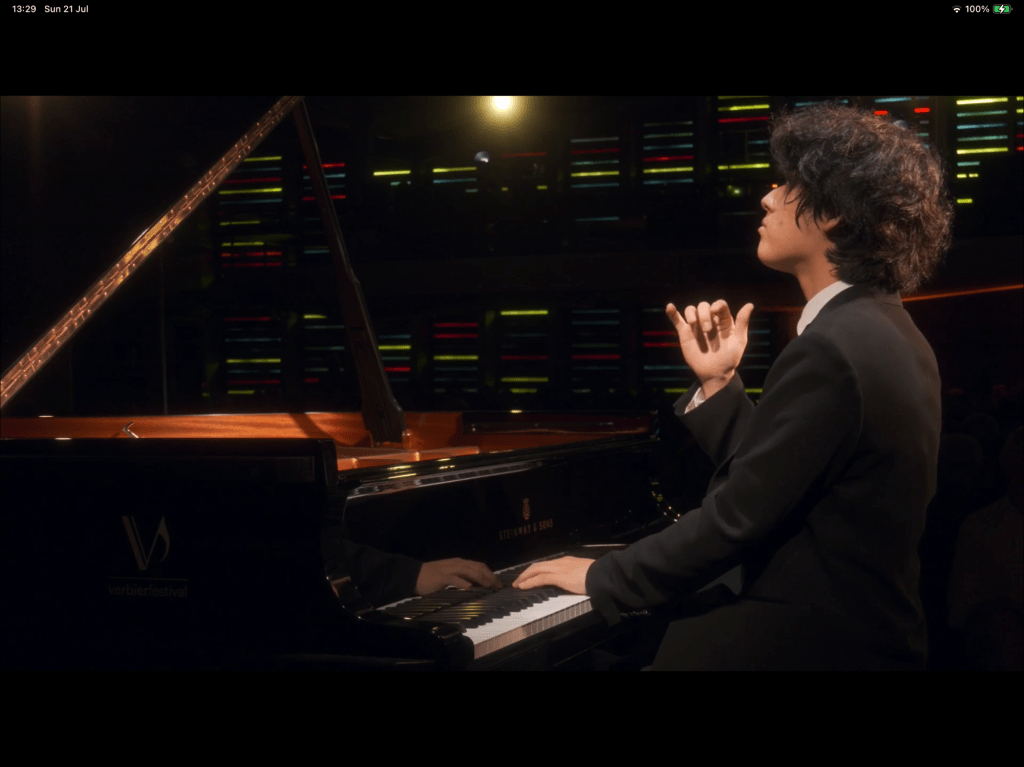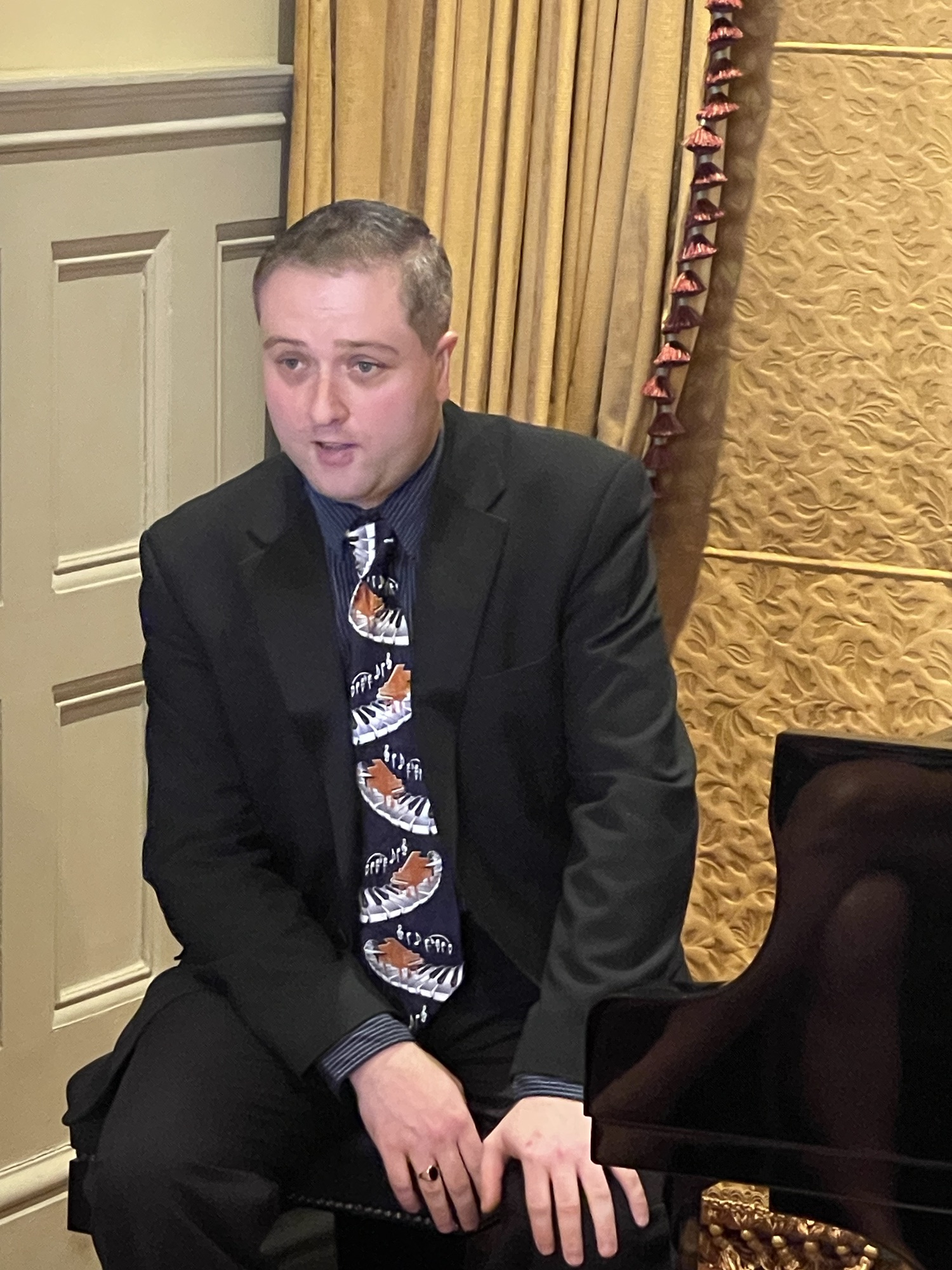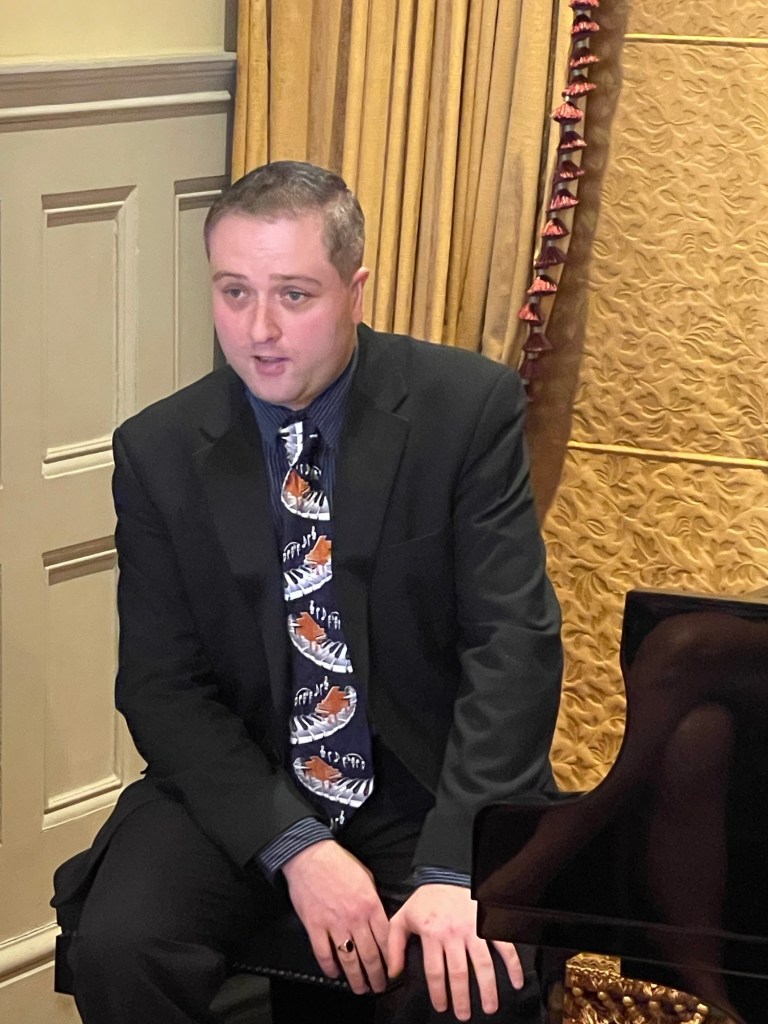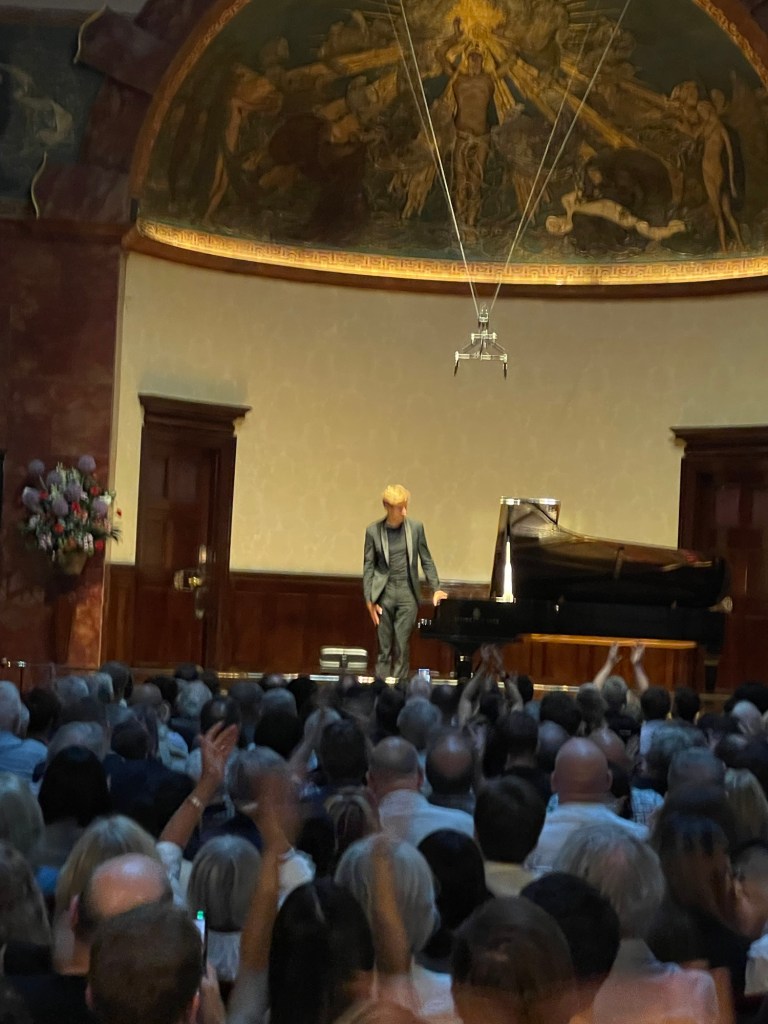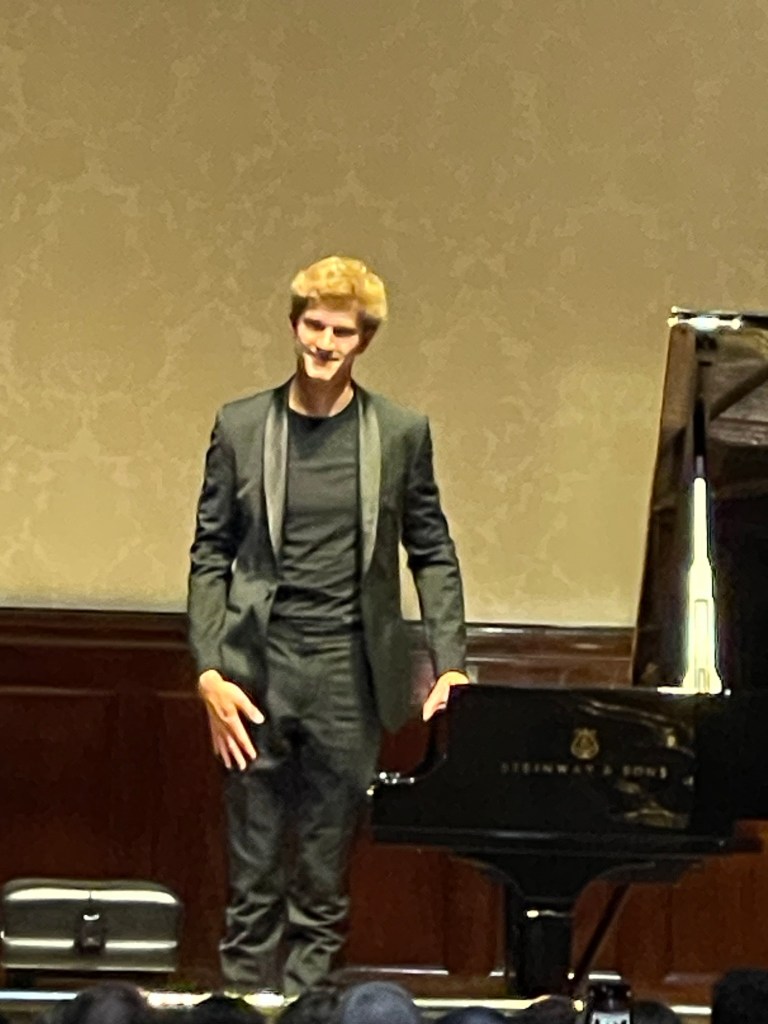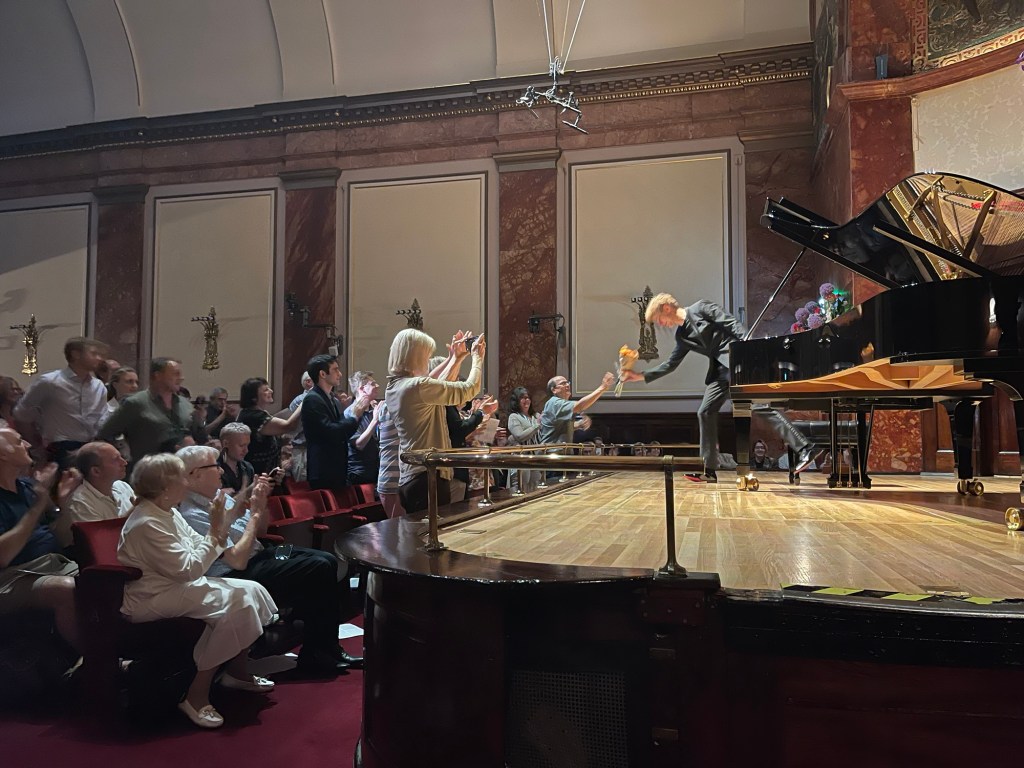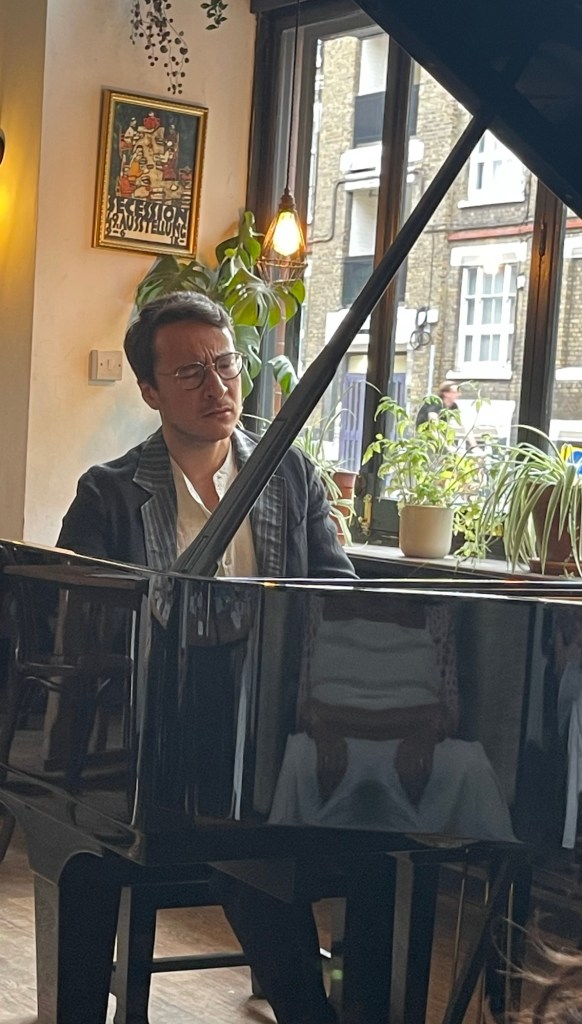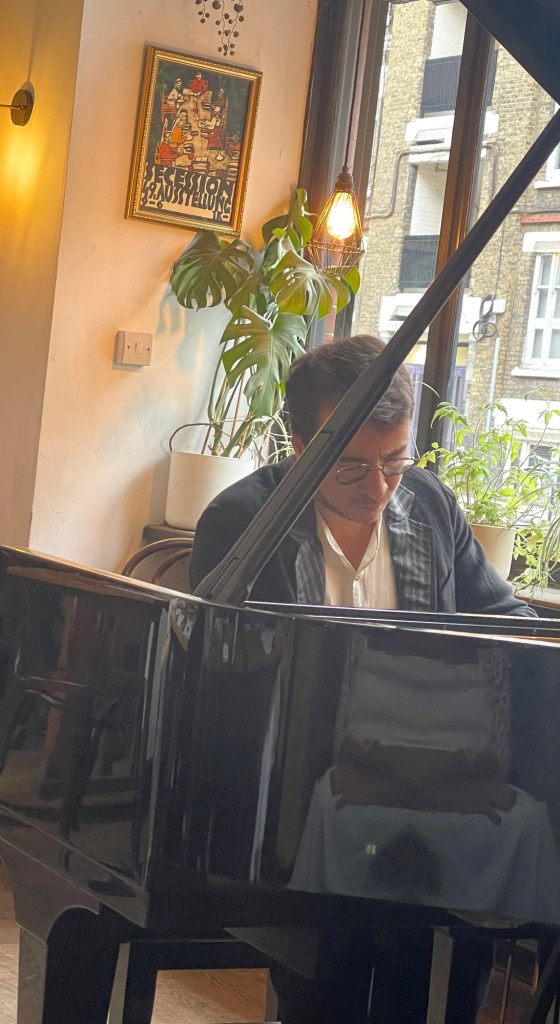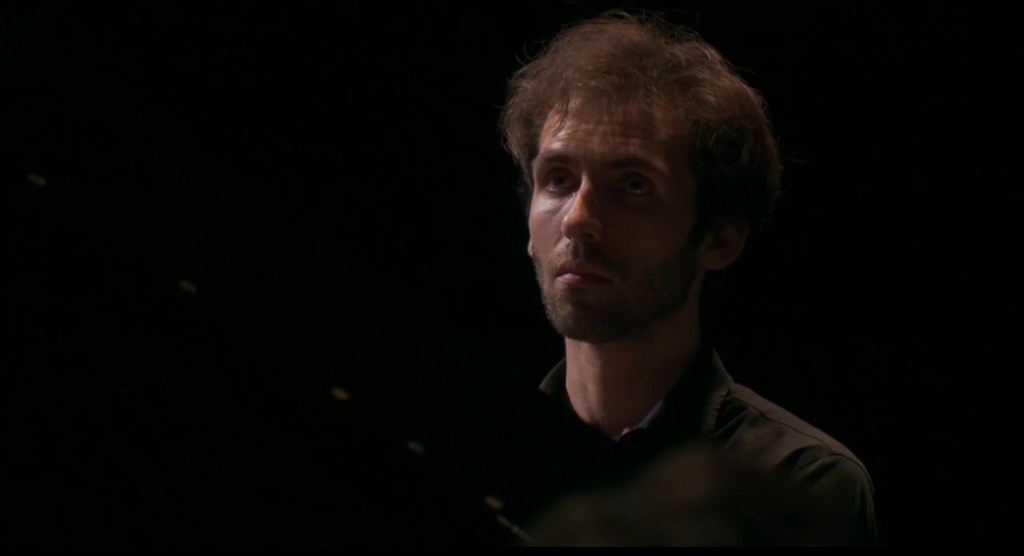
Kantorow in Verbier – Nobility,passion and poetry unite in Brahms 2 with Lahav Shani

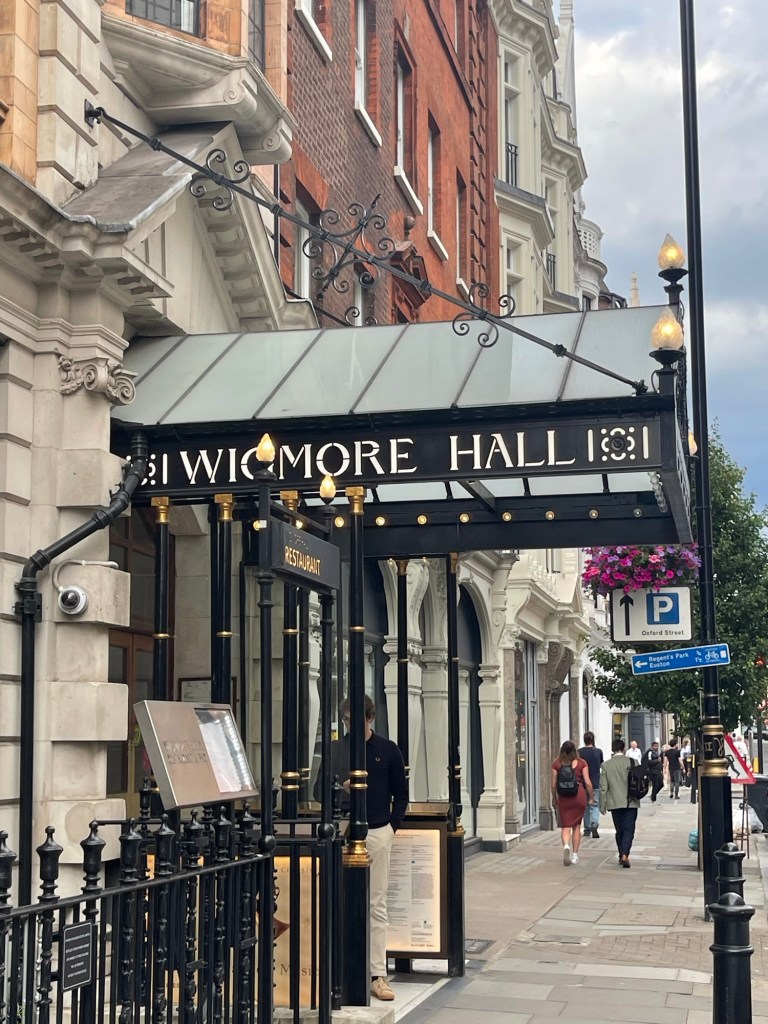
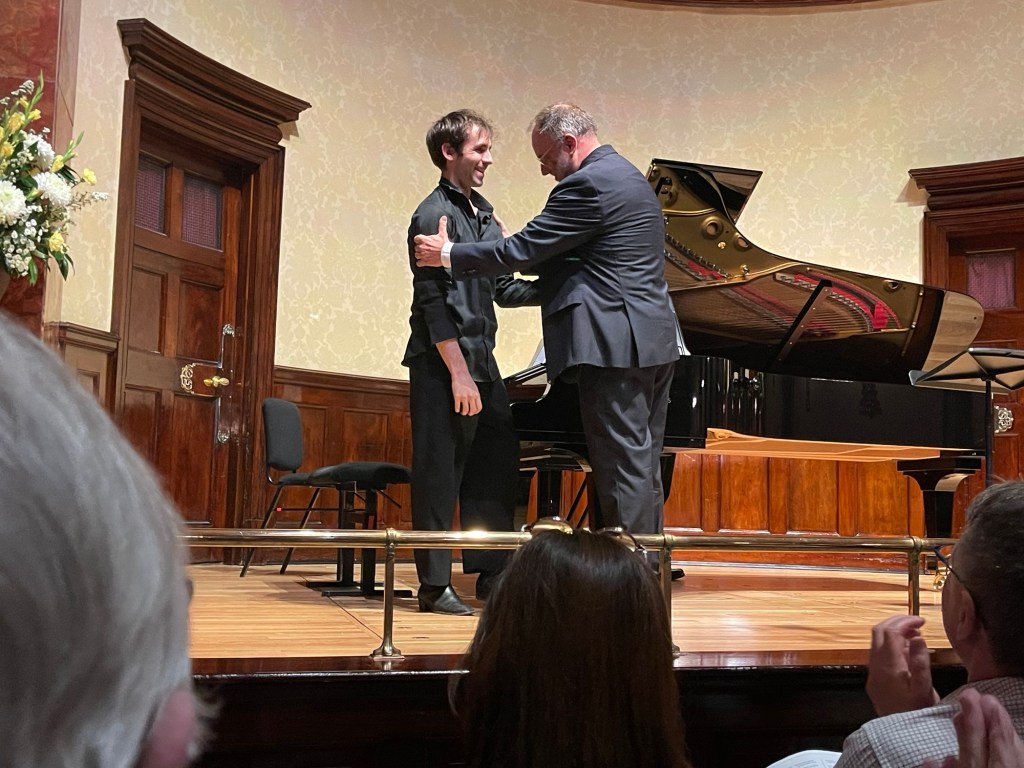
Just time for Alexandre Kantorow to fly in from the opening ceremony of the Olympic Games in Paris on Friday having played with Matthias Goerne on Tuesday in London https://christopheraxworthymusiccommentary.com/2024/07/24/miracles-at-the-wigmore-hall-matthias-goerne-and-alexandre-kantorow-entwined-with-poetic-perfection/
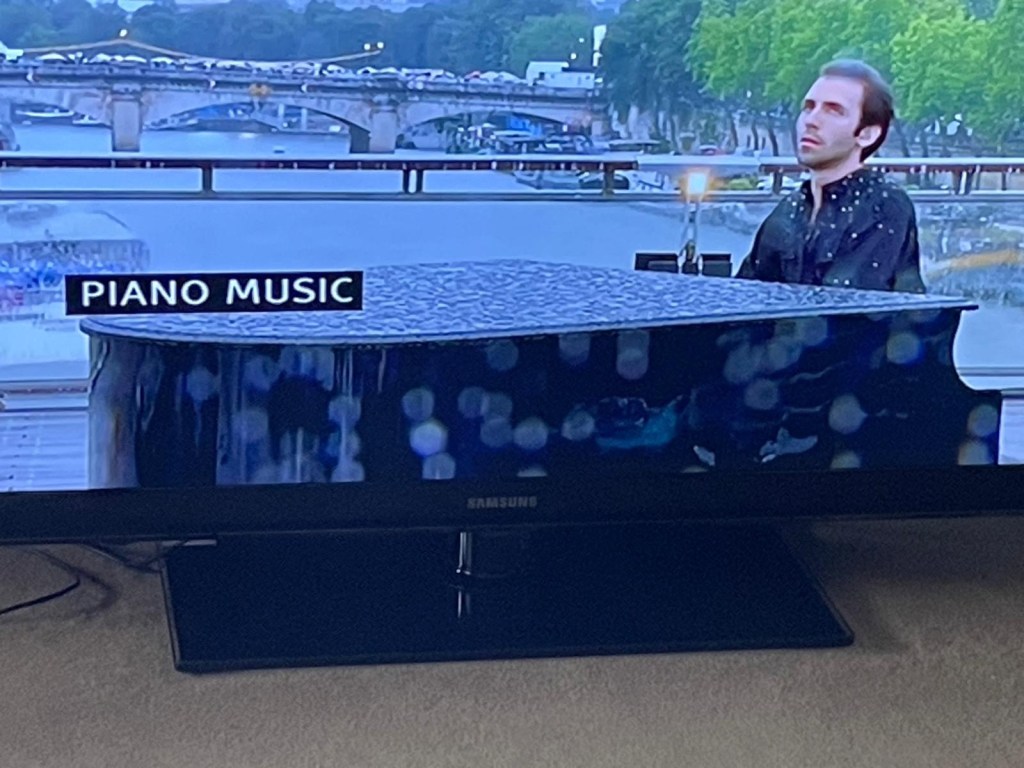
‘Singin in the rain’ the opening ceremony in Paris last Friday
27-year-old French pianist Alexandre Kantorow performs in the rain during the opening ceremony of the Paris 2024 Olympic Games.
Kantorow, who in 2022 was named as one of Classic FM’s Rising Stars, played Ravel’s Jeux d’eau (‘Water Games’) to the worldwide audience of hundreds of millions.

And now Saturday a recital in Verbier with the same programme that I had heard a few months ago in London.https://christopheraxworthymusiccommentary.com/2024/03/21/alexandre-kantorow-bestrides-the-wigmore-hall-like-a-colossus/
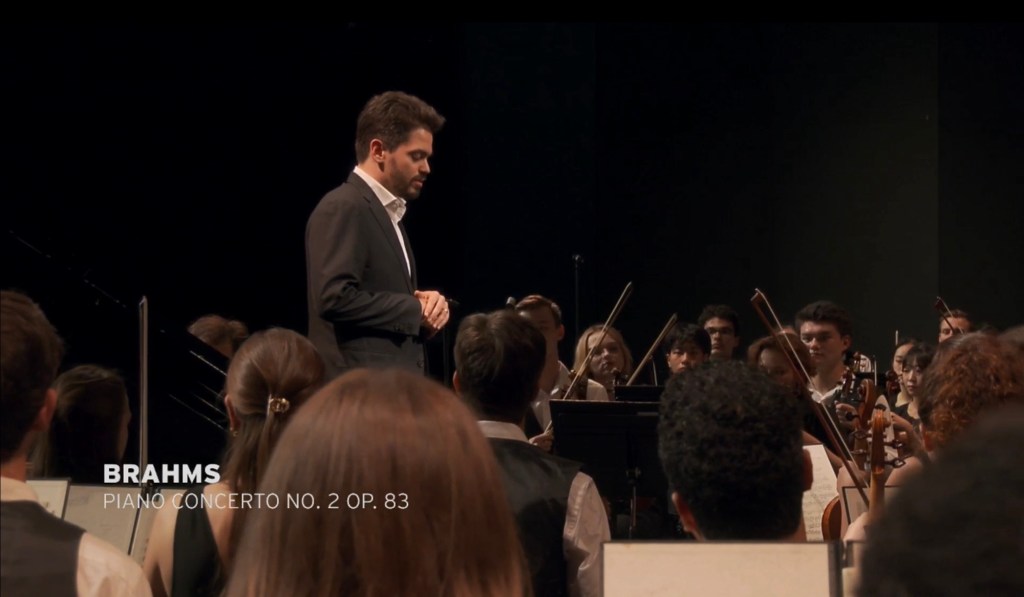
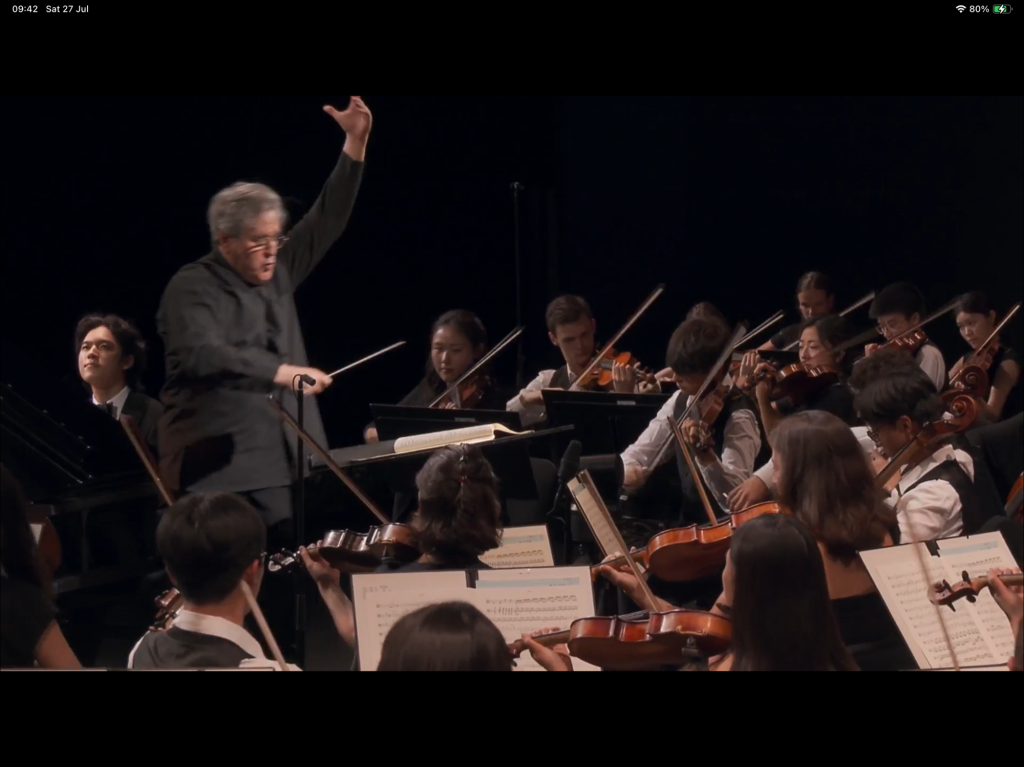
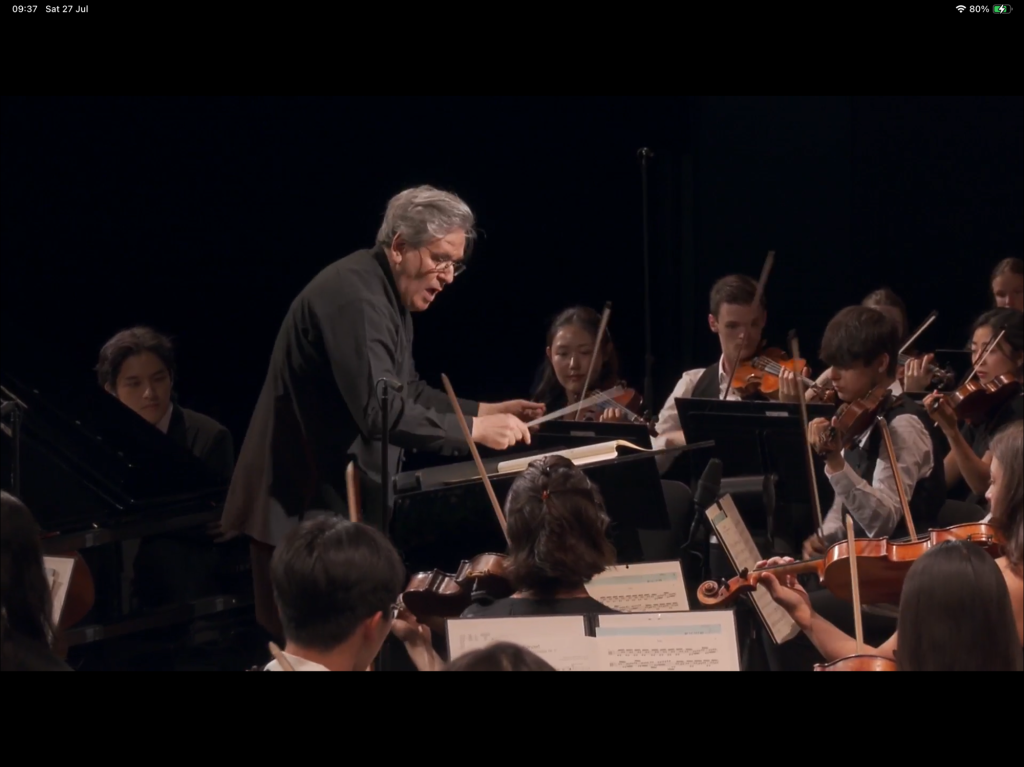
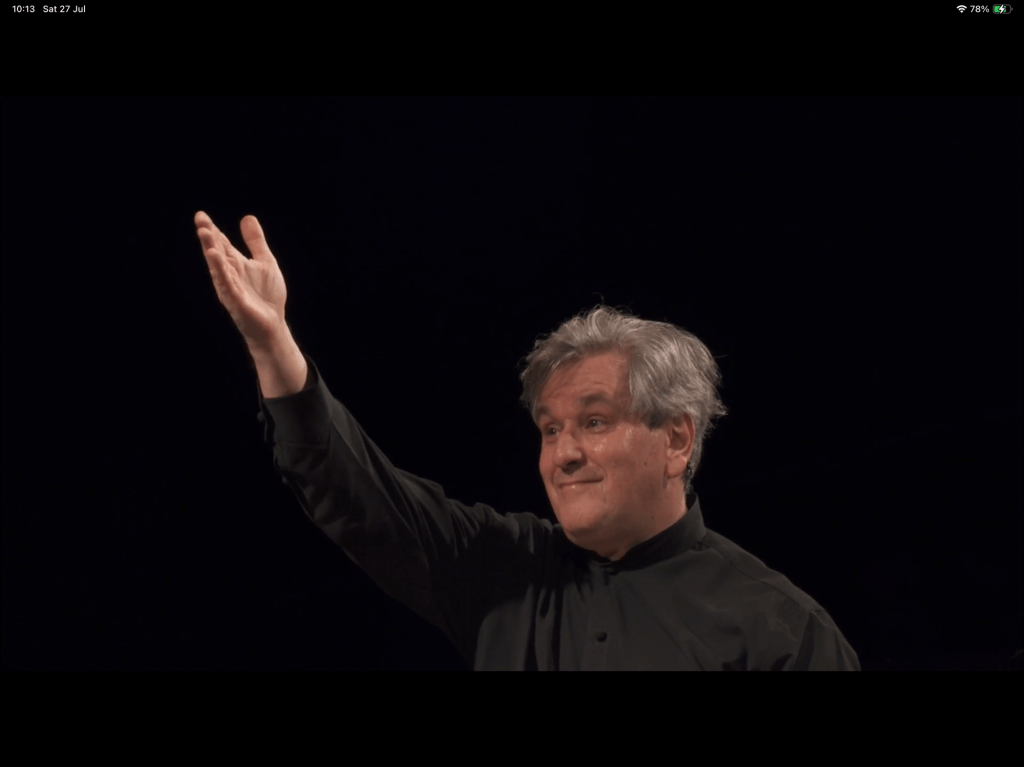
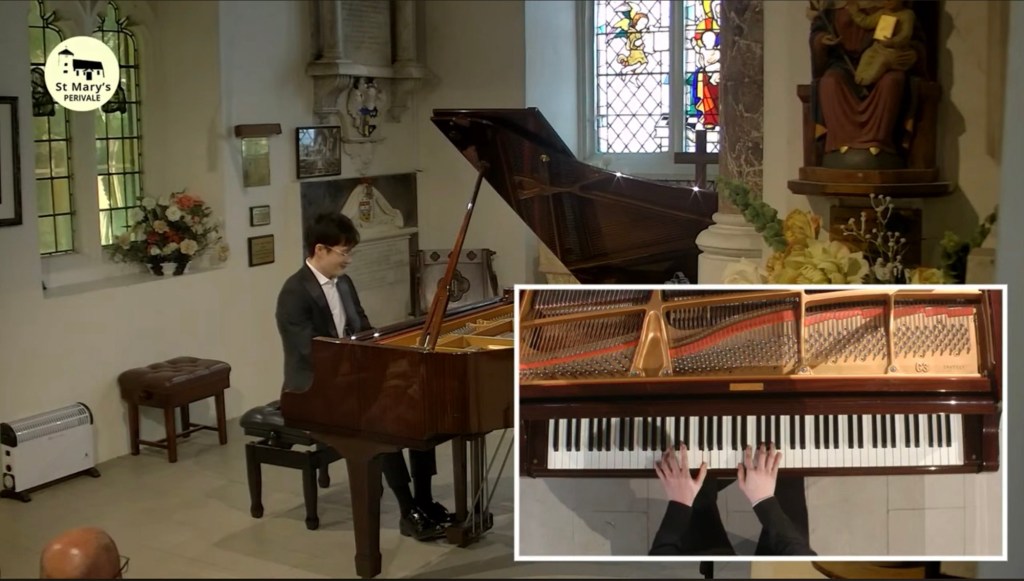
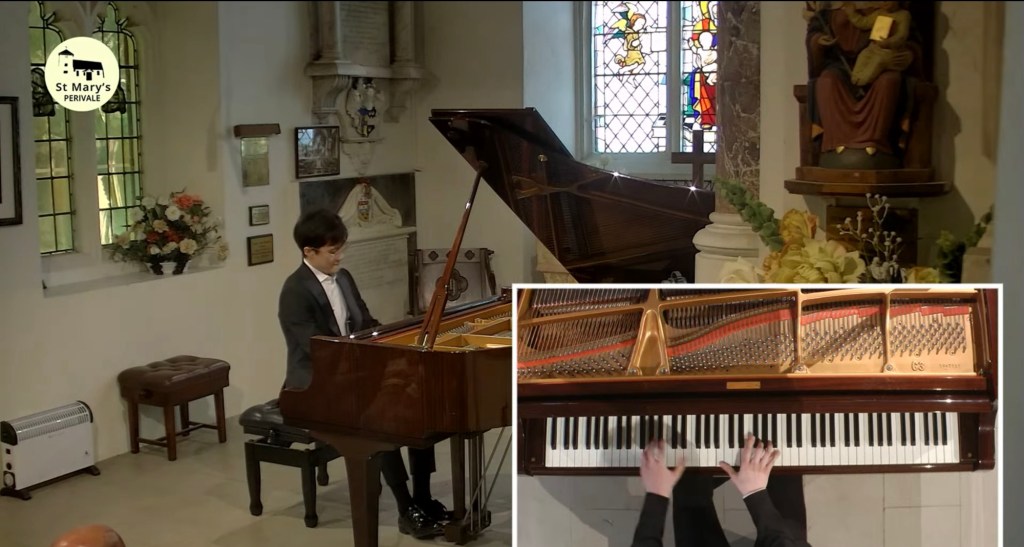
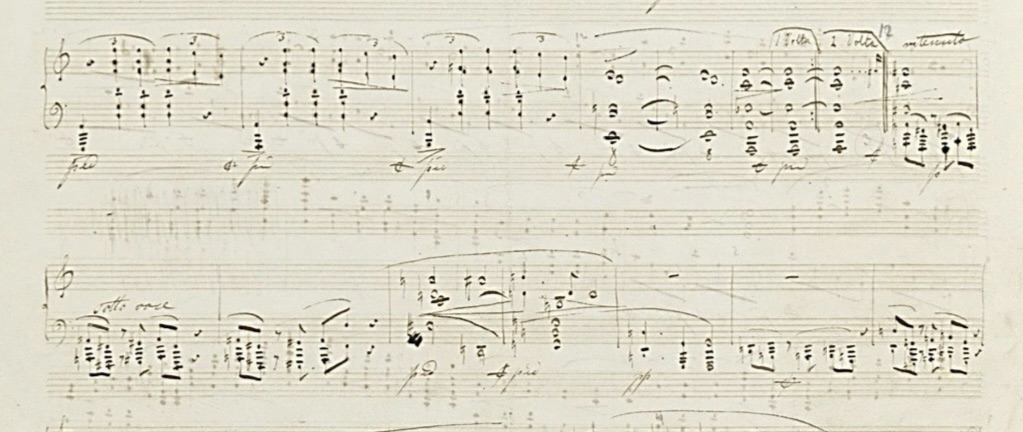
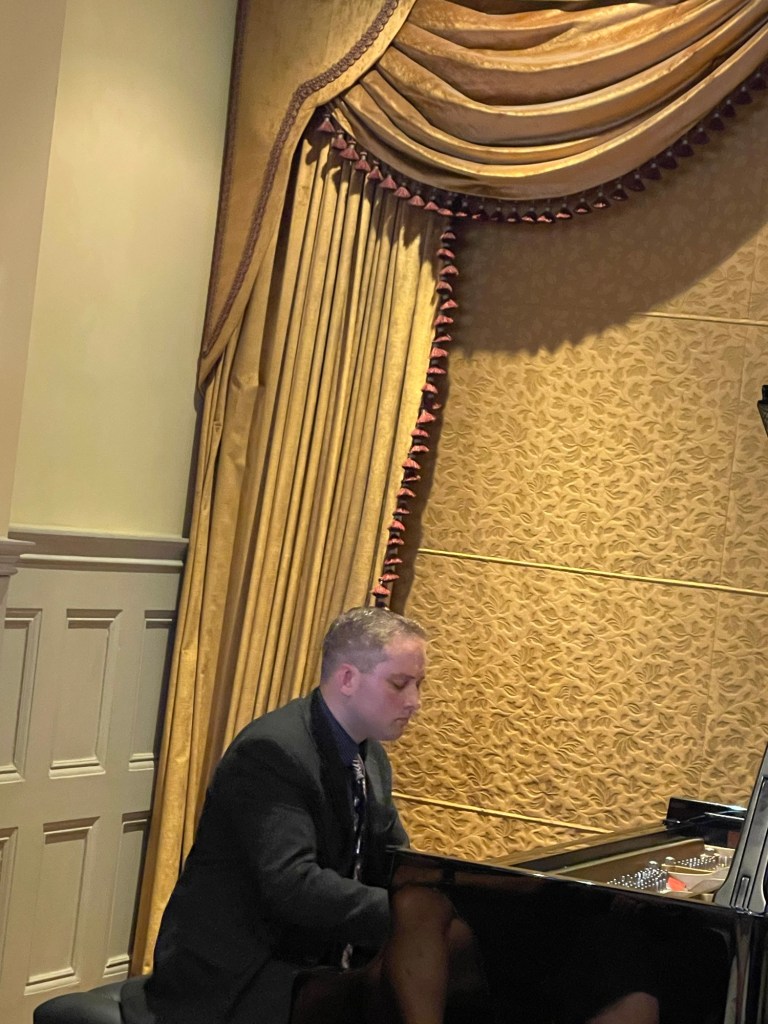
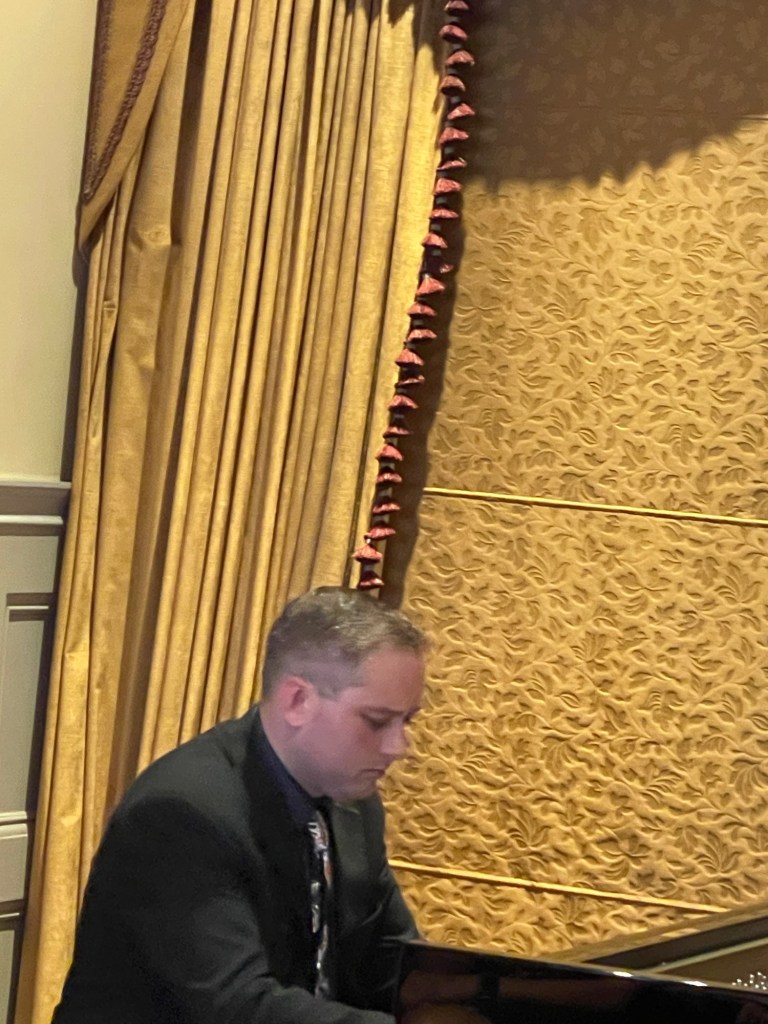
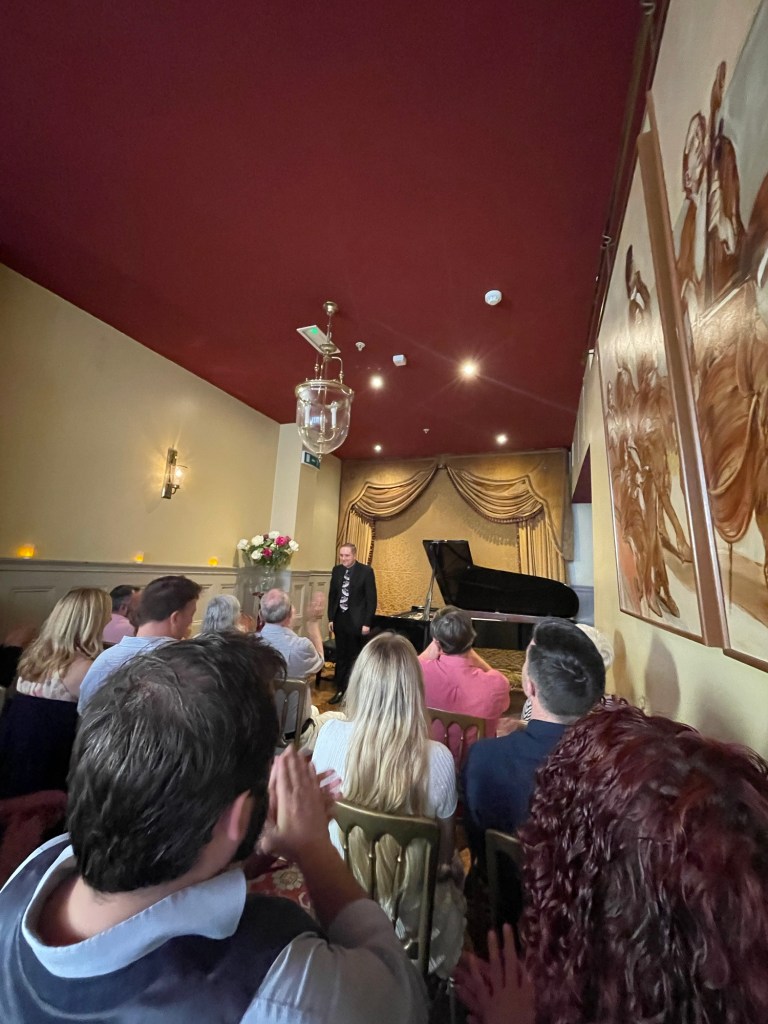
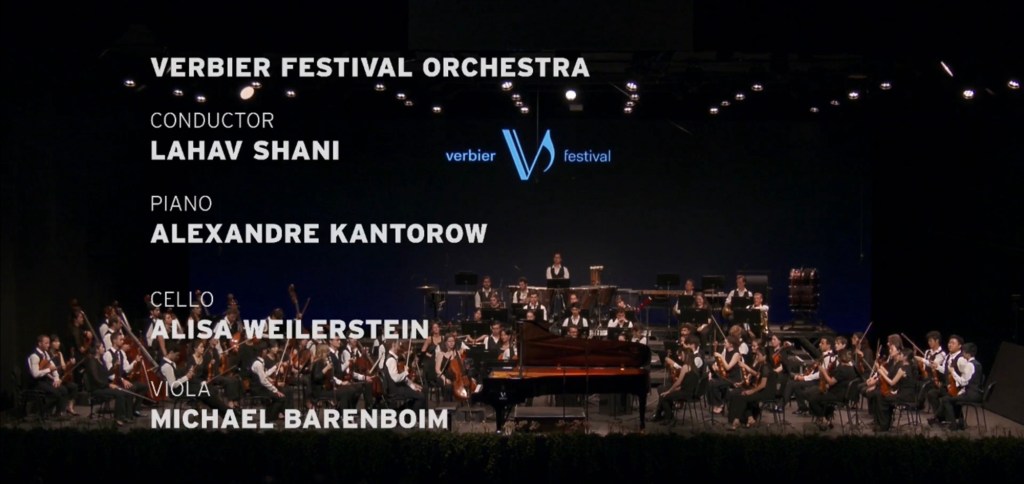
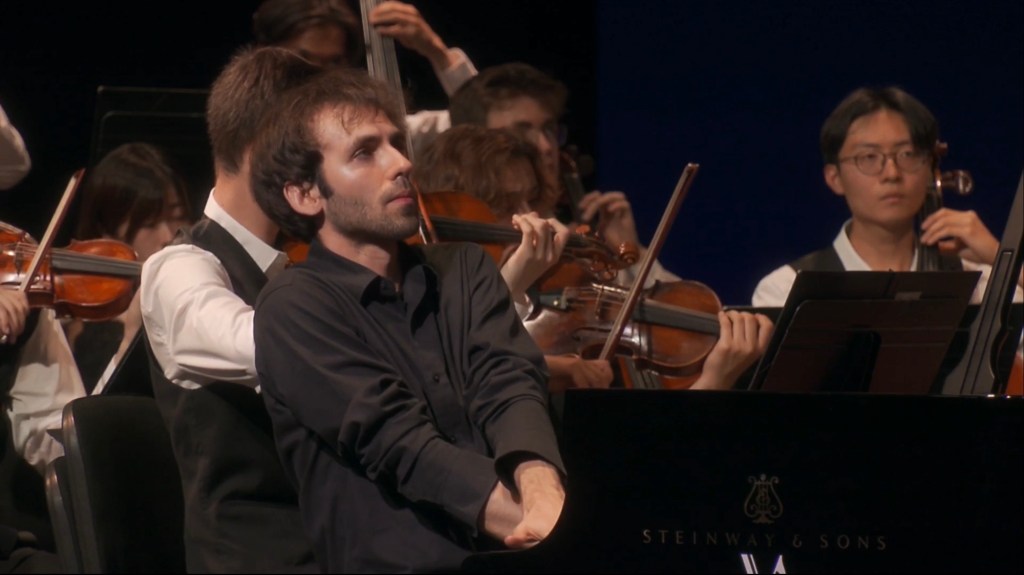
Monday in Verbier playing the Brahms Second Piano Concerto a work I had heard him play a few month ago with his father conducting .Today he was conducted by Lahav Shani who had recently been conducting Martha Argerich in Rome and himself playing at home Prokofiev Third with his Rotterdam Philharmonic. Conducting without the score he was able to delve deep into the heart of Brahms as he and Kantorow ignited the passion of these young players re-creating together what Brahms called ‘a very small concerto with a small and pretty scherzo’.It is in fact a difficult work to master because on one hand it is one of the longest and most arduous of concertos, but on the other it has qualities that are pure chamber music .This is a work only for the greatest of musicians who can weave in and out of a monumental work without ever dominating or overpowering the architectural line.Many pianists succeed with the First concerto but are unable to come to terms as successfully with the second. Kantorow had chosen Brahms 2 and Tchaikowsky 2 that brought him an overwhelming victory in the competition in Moscow in 2019.
https://www.medici.tv/_nuxt/img/icon-copy-link.ab69da8.svg

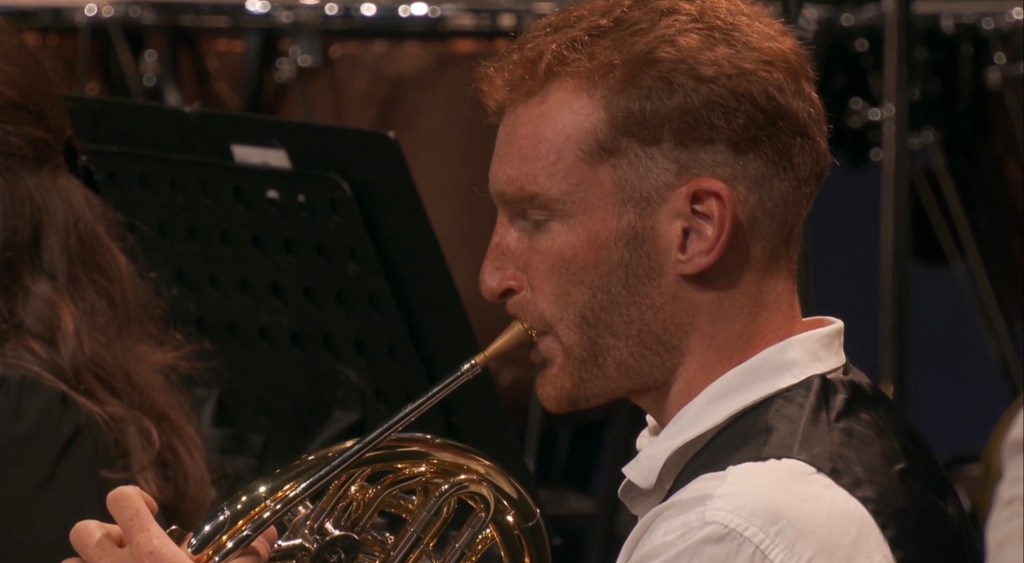
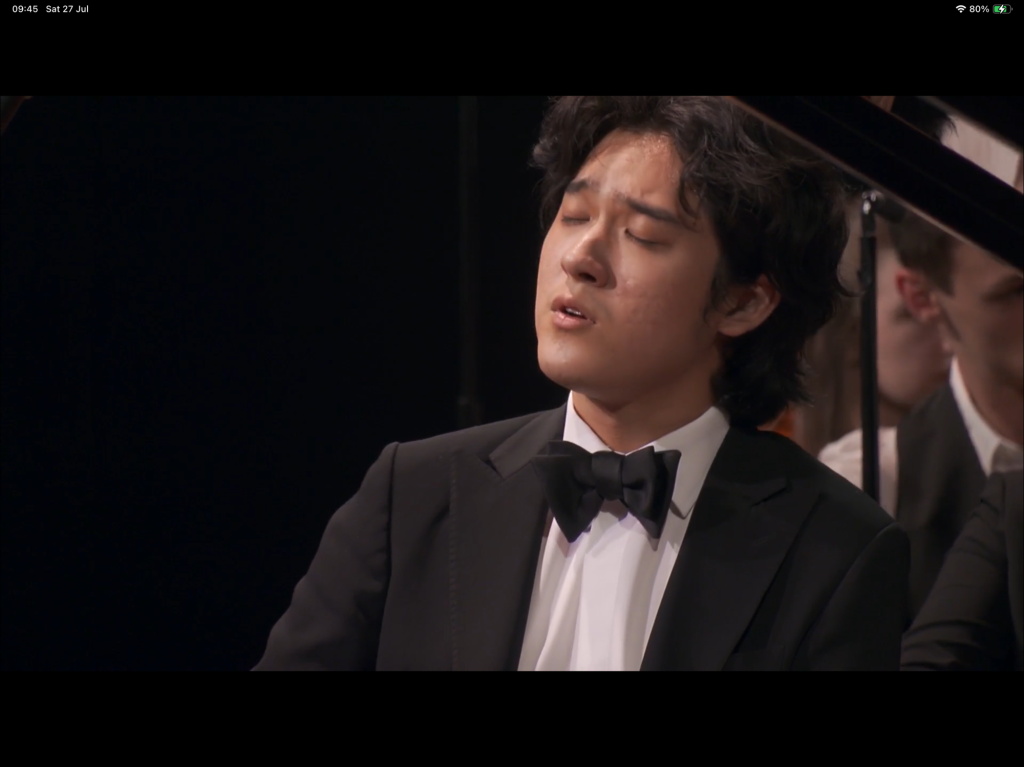
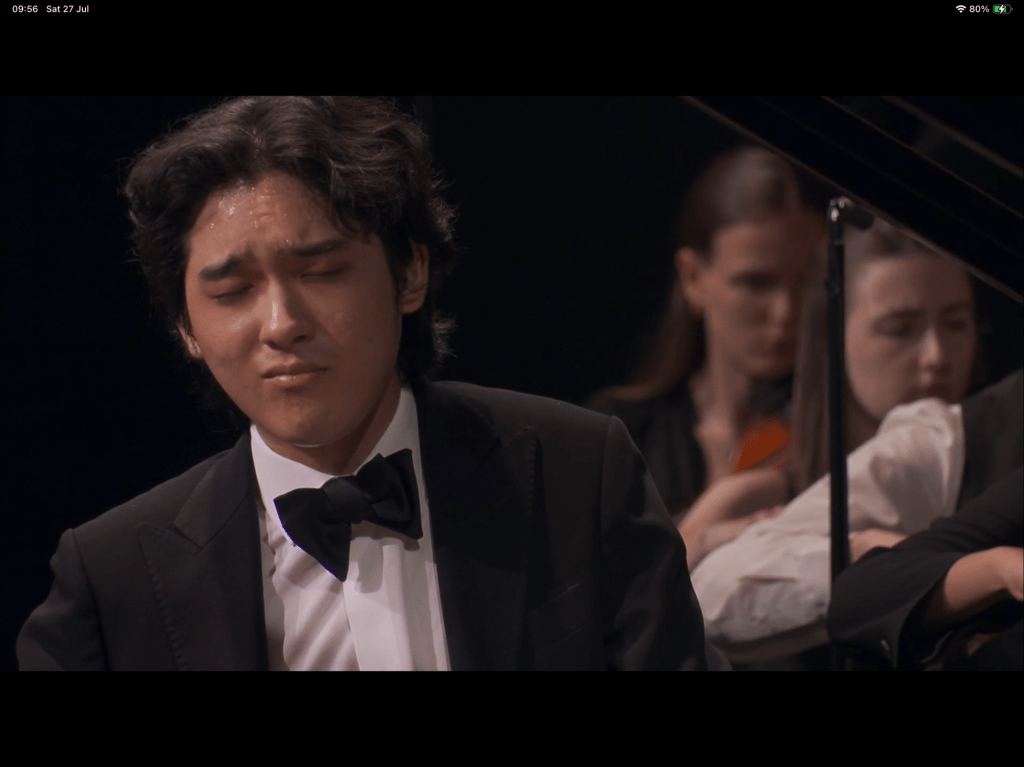
The Brahms of Kantorow is grandiose with sumptuous sound ,thinking always in orchestral terms never purely pianistic.It was immediately apparent the chamber quality of this work with the beautiful opening solo horn and the gentle comment from the piano where the final top F from the pianist shone like a gentle star in the distance as the full orchestra began to take their place.Brahms marks staccato very often but these are orchestral staccati that are full and robust ,more marcato than staccato .The pianistic crossing of hands at the end of the cadenza was a genial way of keeping control of the build up to the entry of the full orchestra.
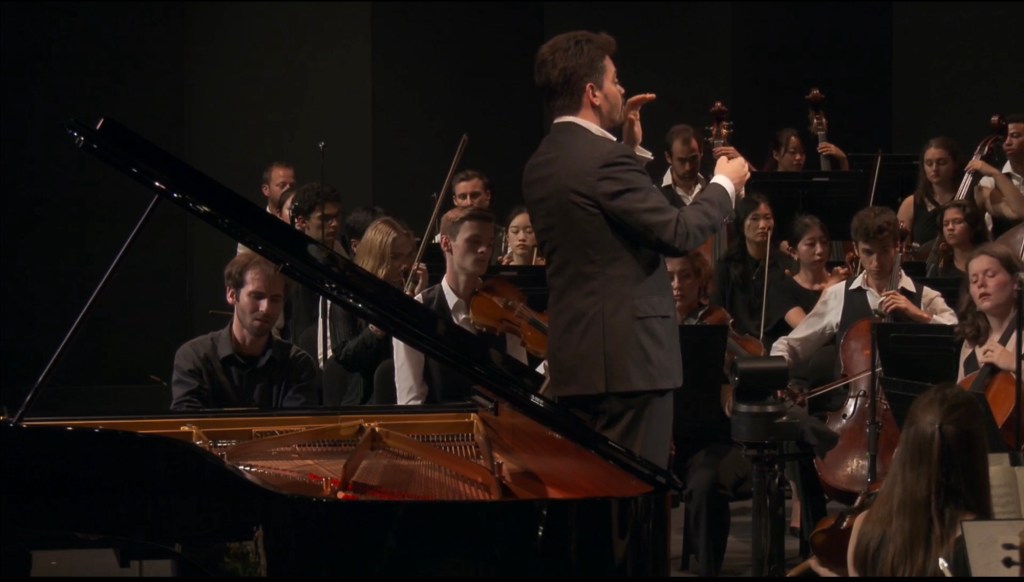
Some very expressive conducting from Shani who knew how to get the very best from these superb young players.There were sumptuous full sounds from the piano but also sounds of radiance and beauty.Aristocratic nobility of the second subject before building up the tension with the orchestra .Poetic lyricism went hand in hand with dynamic technical command .Has the magical return to the recapitulation ever sounded so beautiful as it finds its way back to the haunting horn solo again? The Scherzo was played truly ‘Allegro Appassionato’ bursting into a poetic lyricism of searing intensity .Technical difficulties just dissolved in Kantorow’s hands as the pianissimo octave cadenza was just a prelude to expansive Brahmsian outpourings.The animal excitement of the ending was judged to perfection ,always in control but with an intensity that was hypnotic .The piano arpeggios ringing out at the end above the full orchestra as the final pianistic flourish was thrown off with enviable authority.
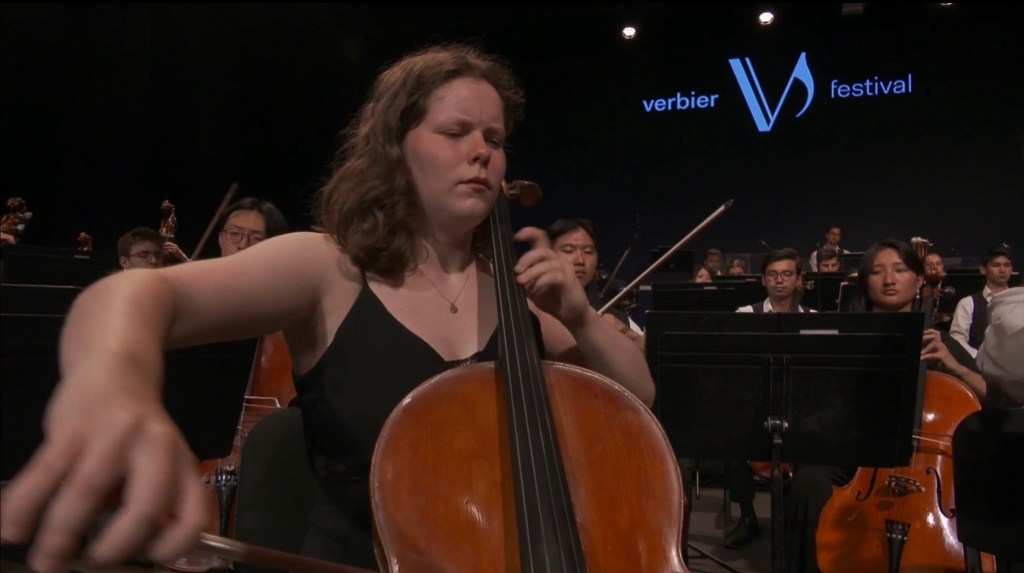
Superb Swiss cellist Clara Schlotz
https://youtu.be/z2TM-CsreFo?feature=shared

There was ravishing beauty in the ‘Andante’ with the solo cello of Clara Schlotz of aristocratic poise and intensity. Kantorow playing with a delicacy and sense of colour matched by the beauty of the orchestra in the sensitive hands of Shani.The sudden dramatic outbursts were played with dynamic drive and an architectural sense of great intelligence.The unearthly beauty of the ‘più Adagio’ was of heart rending beauty and restrained aristocratic intensity.The deep bass of the piano in the final drawn out chord was of such golden beauty that the innocence of the ‘ Allegretto grazioso ‘ came as a refreshing surprise and a release from such deeply felt sentiments.The last movement was played with a buoyancy and ‘joie de vivre’ where the syncopated chords from the piano just added even more of a dance character to this refreshingly lyrical final movement. The notorious difficulties of double thirds and much else just paled into insignificance with such a sumptuous pastoral feeling of well being and grandiose joy.
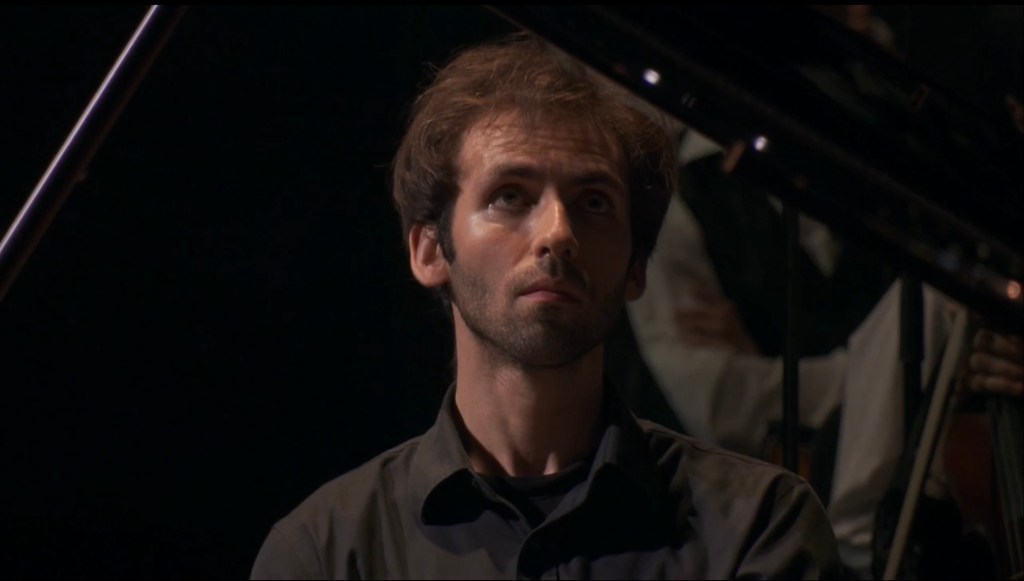
The Intermezzo op 117 n. 1 was Kantorow’ s way of thanking his audience and it was played with a kaleidoscope of colours of poignant meaning .The minutes of aching silence at the end showed the power this young poet has to hold us in his spell as he takes us on a wondrous voyage of discovery to a world of beauty and imagination.
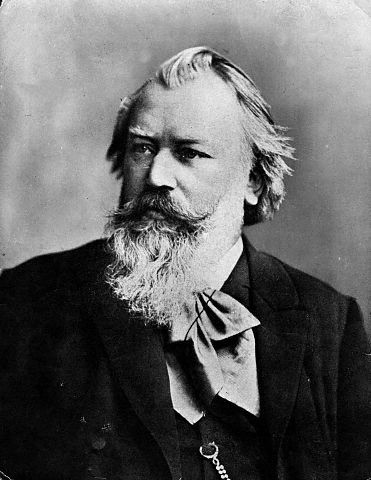
Johannes Brahms
7 May 1833,Hamburg 3 April 1897  Vienna.

 Piano Concerto No. 2 op 83 was written 22 years after the first concerto his.Brahms began work on the piece in 1878 and completed it in 1881 while in Pressbaum near Vienna. It took him three years to work on this concerto, which indicates that he was always self-critical. He wrote to Clara Schumann: “I want to tell you that I have written a very small piano concerto with a very small and pretty scherzo.” Ironically, he was describing a huge piece.It is dedicated to his teacher, Eduardo Marxsen . The public premiere of the concerto was given in Budapest  on 9 November 1881, with Brahms as soloist and the Budapest Philharmonic Orchestra , and was an immediate success.[2] He proceeded to perform the piece in many cities across Europe.The slow movement is unusual in utilizing an extensive cello solo within a piano concerto (the source of this idea may be Clara Schumann ‘s Piano Concerto , which features a slow movement scored only for cello and piano). Brahms subsequently rewrote the cello’s theme and changed it into a song, Immer leiser wird mein Schlummer (“My Slumber Grows Ever More Peaceful”) with lyrics by Hermann Lingg op 105 n. 2. Within the concerto, the cello plays the theme for the first three minutes, before the piano comes in. 
https://www.verbierfestival.com/en/musician/thompson-christian/

Alexandre Kantorow ignites and delights Naples at San Carlo with his great artistry

Alexandre Kantorow takes the Philharmonie de Paris by storm
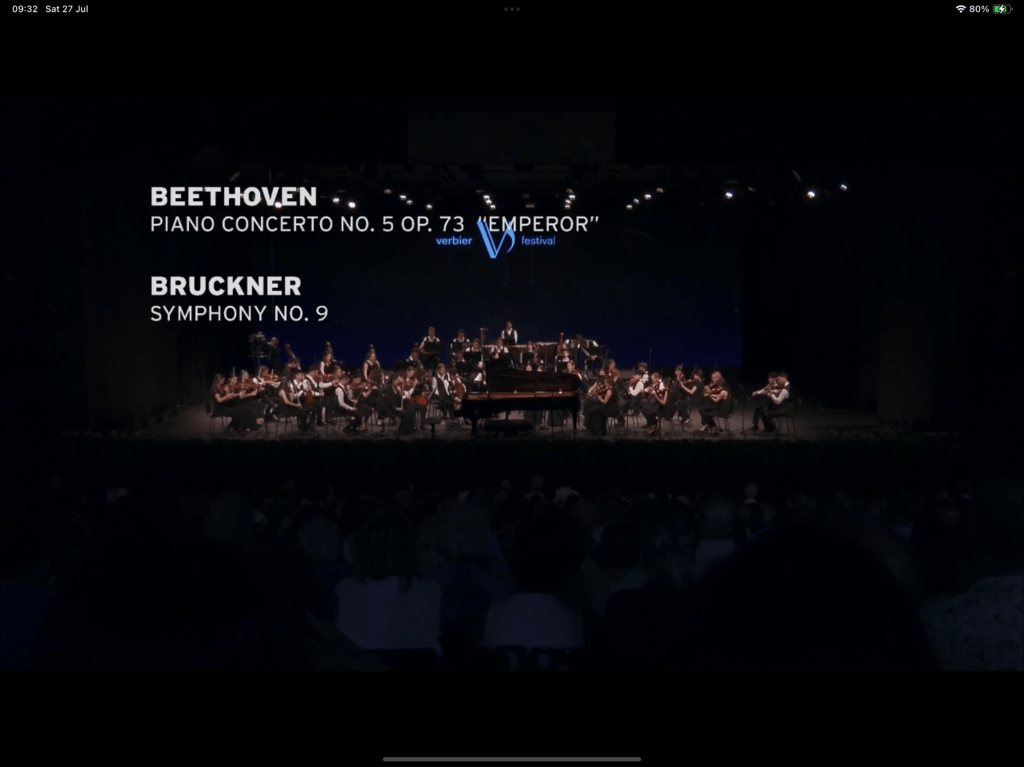
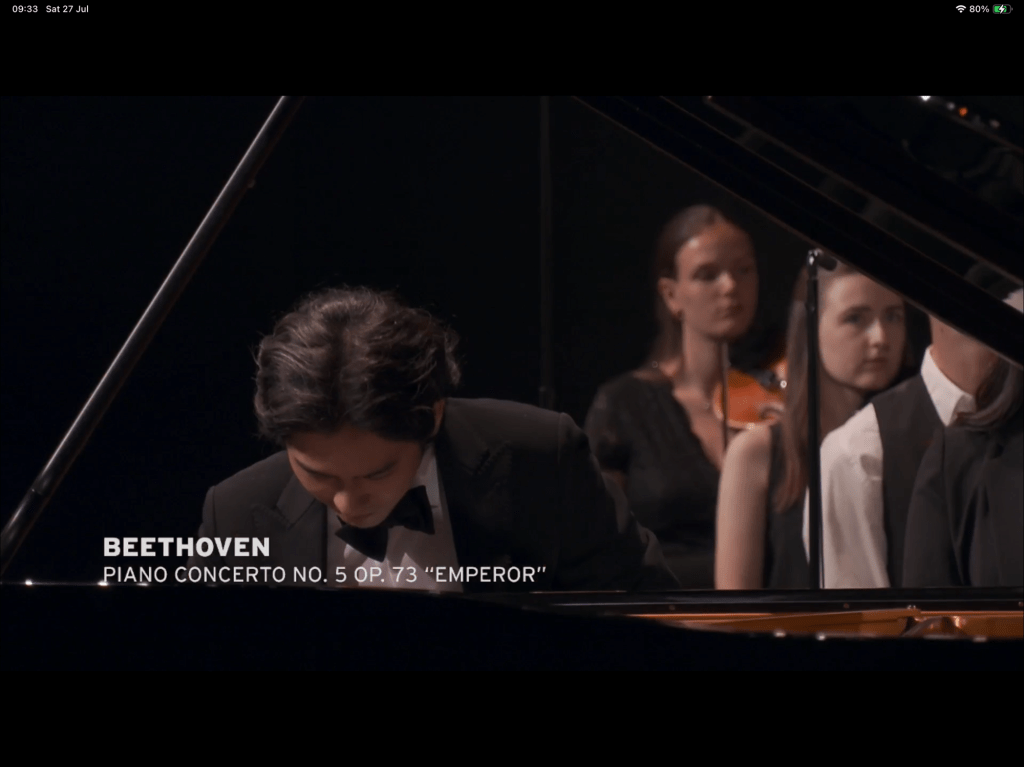
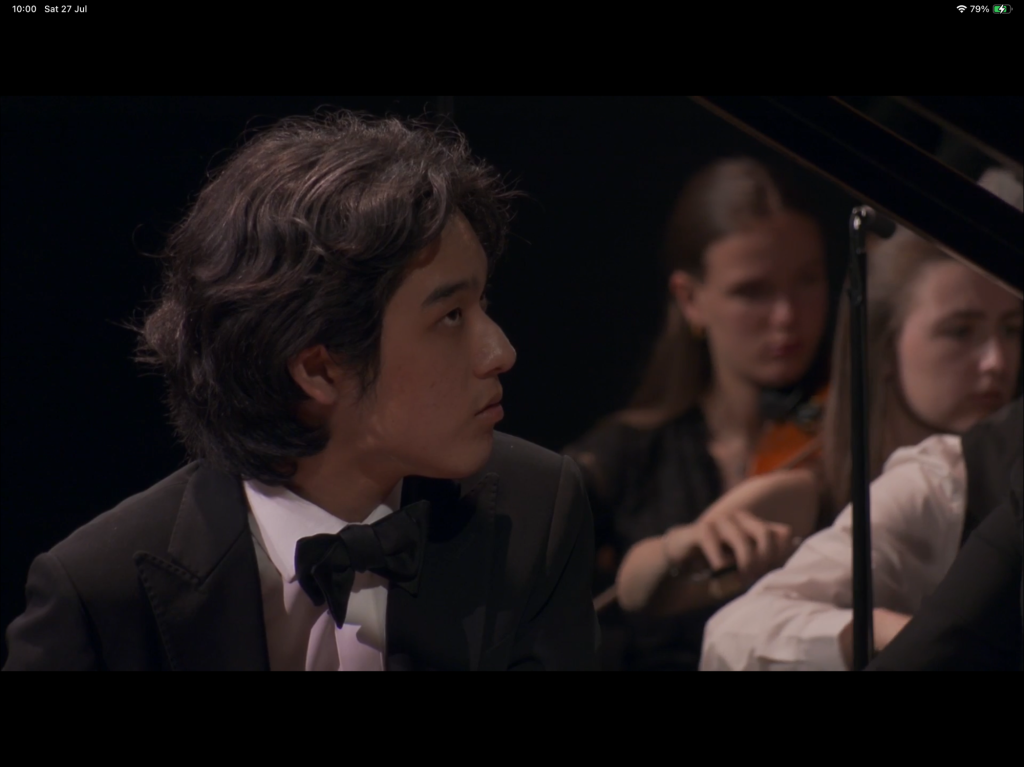
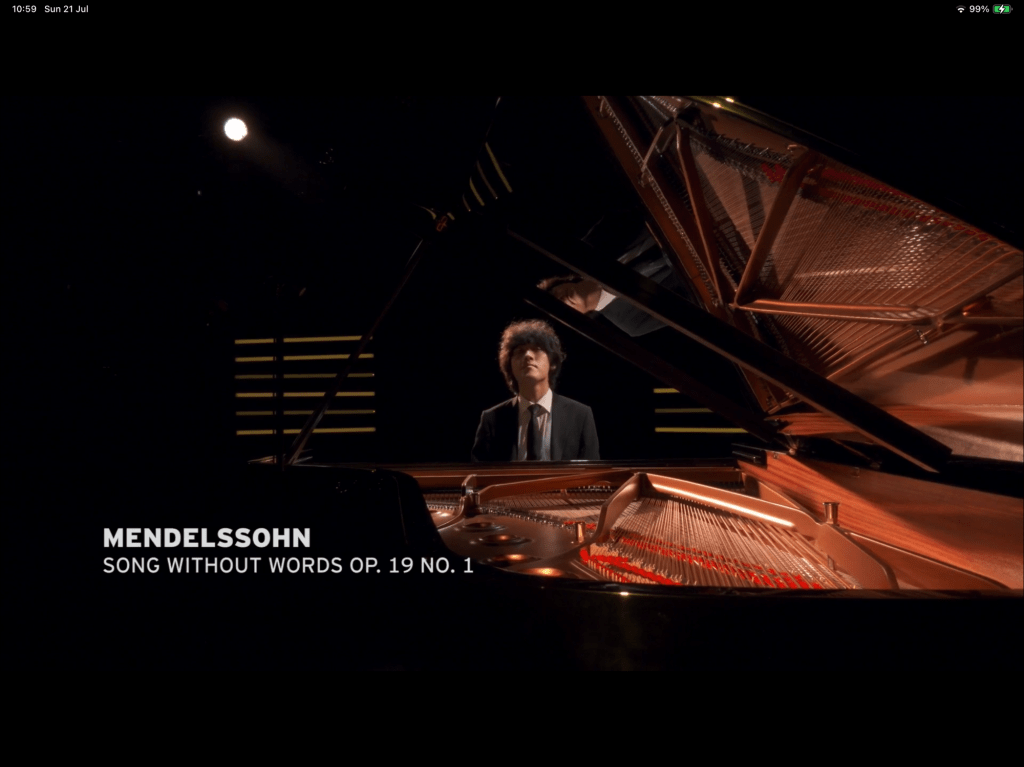
Yunchan Lim The Emperor in Verbier

https://www.medici.tv/_nuxt/img/icon-copy-link.ab69da8.svg

I have heard many memorable Emperor’s over the past half century or so but today will remain in my memory as one of the finest. I had heard many times Rubinstein – ‘The Prince of Pianists ‘ and one performance in particular where he played Beethoven 3, 4 and 5 with Antal Dorati in the Festival Hall in London (the 4th is on video ) .The slow movement of the Emperor was so beautiful even the orchestra in rehearsal applauded the great octogenarian. I had heard too Radu Lupu making his debut at the Proms playing the Emperor and the Choral Fantasy .This was the young Lupu ,like the early Kempff , who both played with breathtaking grandiosity before starting their search for the perfect legato,leaving their youthful exuberance behind for something much more poetically poignant. Lupu even played the horn part in the Choral fantasy when the horn failed to make its entry! Curzon too I heard in rehearsal and was so bowled over by the opening of the Choral Fantasy and the Emperor that I immediately spent my meagre student allowance of a ticket for the concert .

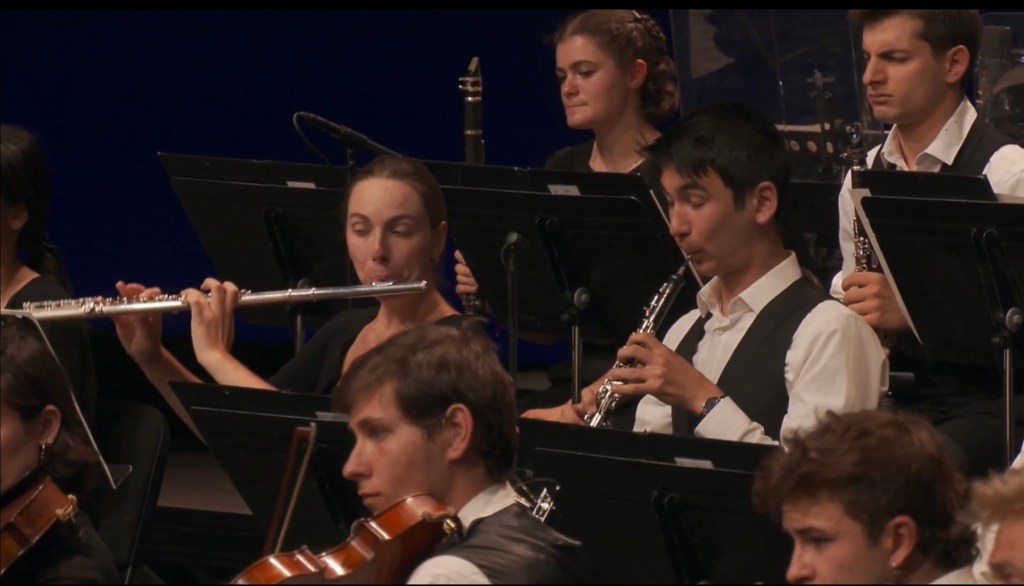
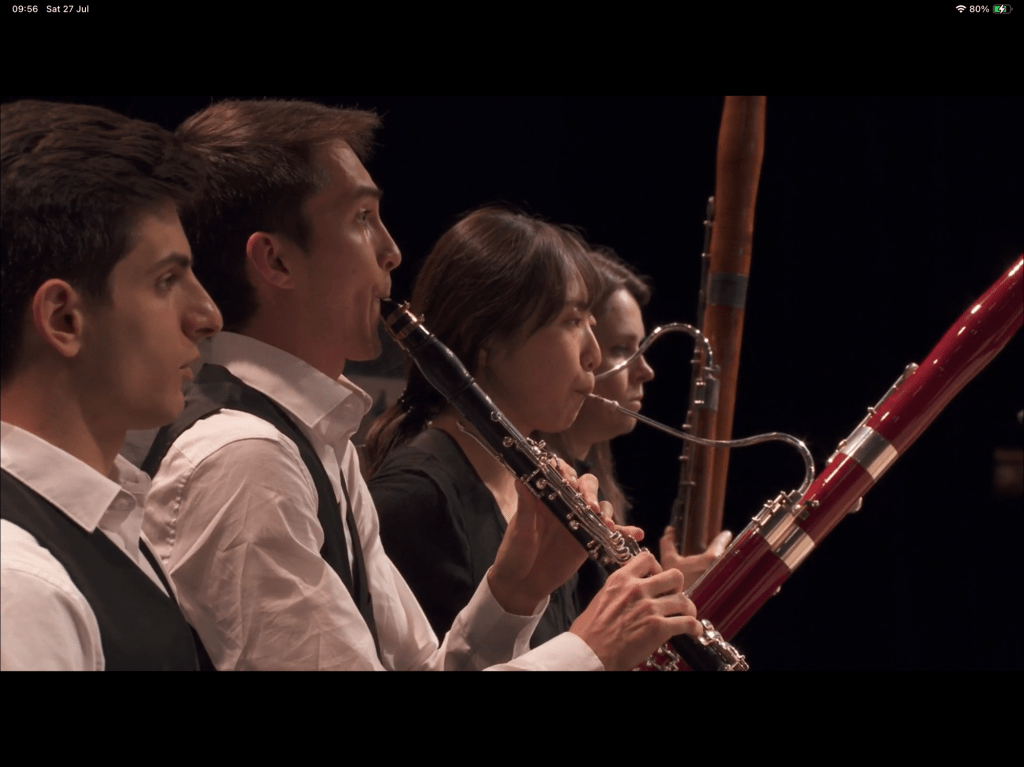
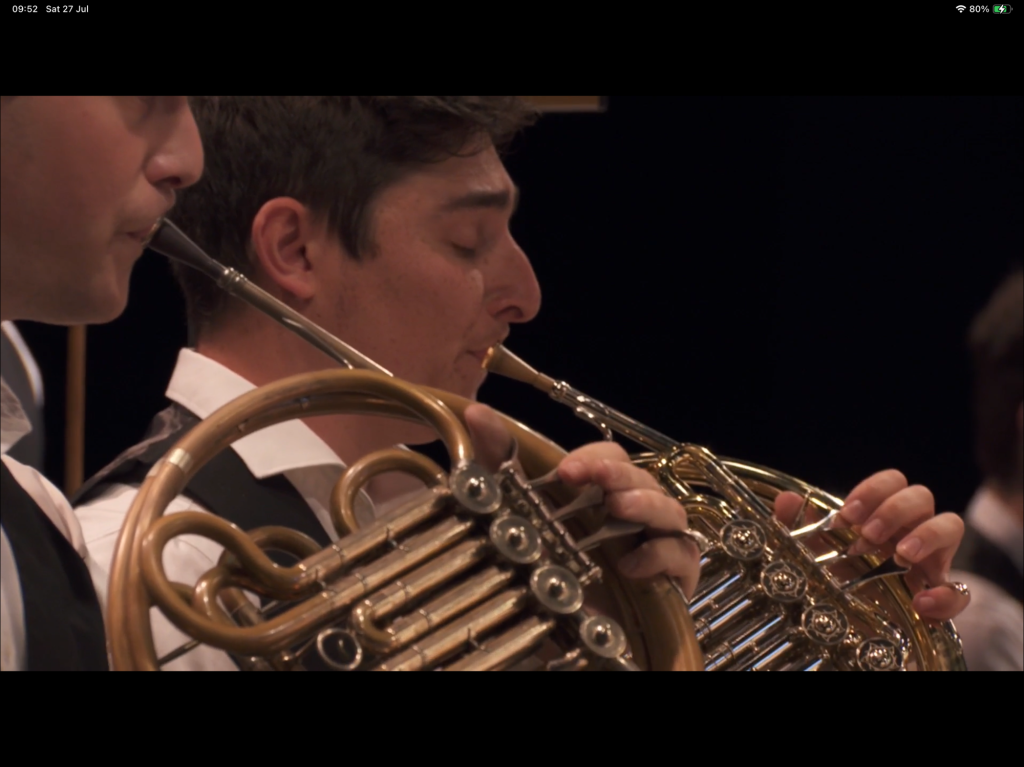
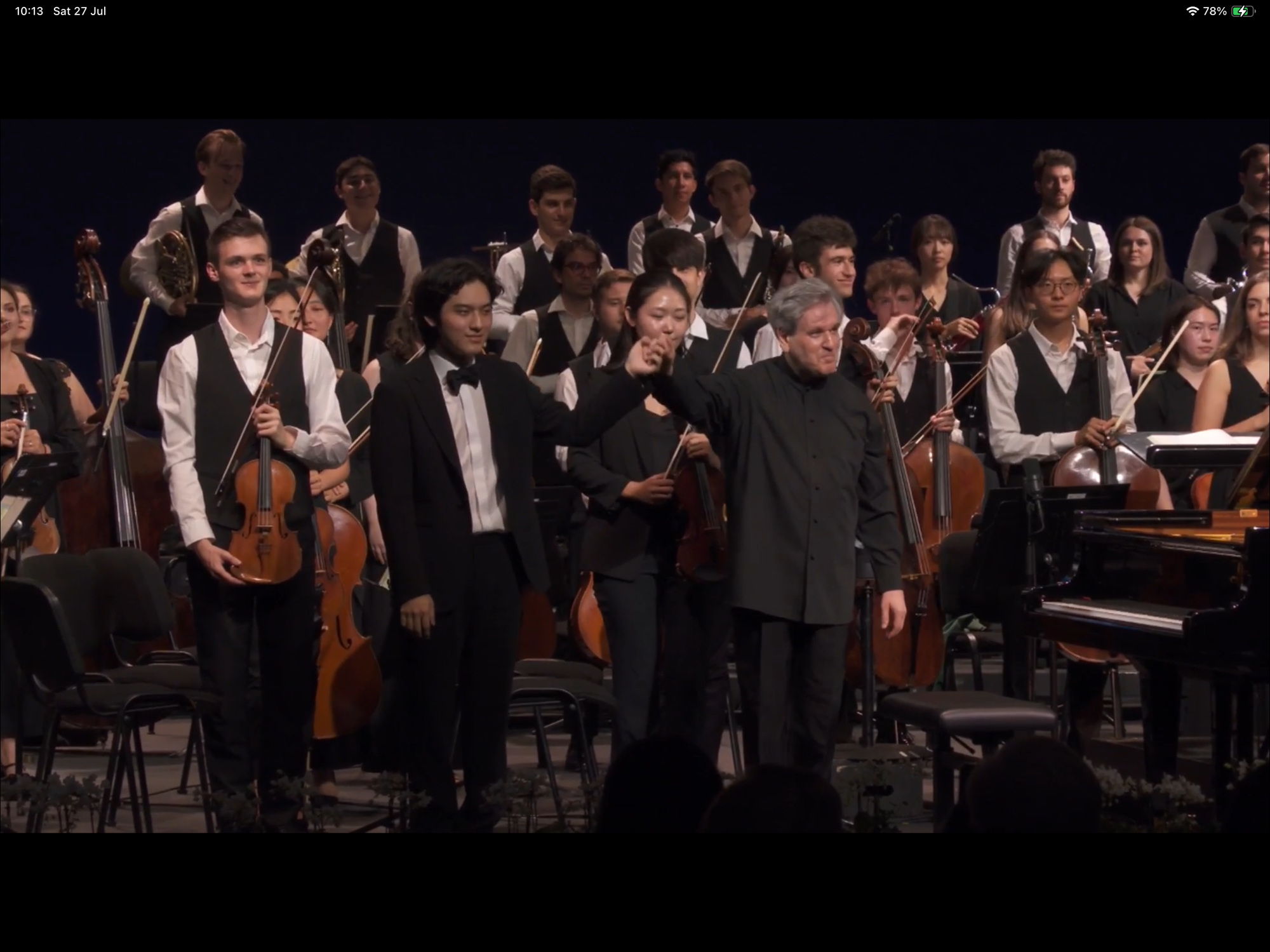
What came across today was the maturity of this young pianist . An opening of aristocratic nobility with great personality and authority even playing the single recitativi with one pointed finger. Living every moment with Pappano’s passionately inspired conducting inspiring the pianist and the young players to heights that I would not have believed possible. There was inspired playing in particular from the young horn and clarinet players.

Lim looking at them as fellow chamber music players as they conversed together with the extraordinary freedom that comes when you are all riding on the same wave with one player inspiring the other on a voyage of discovery together .

There was a glowing luminosity to Lim’s playing and a quite extraordinary delicacy and shading but always of imperial importance. The ‘ leggiermente’ of the first movement was truly magical as the pianissimo was projected with the timeless beauty that was truly Rubinstein’s. There was the ravishing beauty of the trills on the second entry of the piano as Lim moulded his gently falling phrases with poetic sensibility .Trills that were living sounds of subtle shaping as indeed they were in the last movement where the long trills before the entry of the Rondo brought a smile to this young man’s face as he played with slight crescendi e diminuendi matching his young colleagues in the orchestra.

This was not the Emperor of Napoleon but an Emperor of the people, of authority , sensitivity and generosity, listening to the people who had elected him Emperor. Quite extraordinary how he matched the pizzicato strings as scales just flowed leggieremente from his fingers like water from a stream .There was truly magic at the end of the cadenza where the horn and piano played with the sort of breathtaking inspiration that makes live music making so essential for true artists. It made one aware of those magic moments at the end of the cadenzas of the 3rd and 4th concerti too where time stands still as the Genius of Beethoven bewitches us and enriches our soul.Pappano right to the final resting place after the last three chords held the energy in the air with the authority and conviction that must surely have been Toscanini’s.

Wondrous beauty of the opening of the ‘Adagio un poco moto’ where the searing beauty of the violas I have never heard even from the sumptuous Philadelphia Orchestra .The crystalline beauty of Lim’s entry missing those unbelievable inflections that only Rubinstein could bring to a seemingly simple scale but nevertheless of ravishing simplicity .Playing the ornament before the beat so the top note shone like the star it is , with the falling scale transformed into a melody of extraordinary poignant beauty.

It was played with a subtlety of phrasing that was of a simplicity of breathtaking sensitivity. Even the double thirds that follow were played with an architectural shape and the final eight played with a timeless staccato before the trills, that was unbearably beautiful.Following the orchestra as Lim accompanied them with ravishingly beautiful embellishments before finally dying away to the note of B .

A note that Pappano was to transform into B flat with such sensitivity that the shock wave was palpable even on this streamed performance. Lim just hinting at what was to burst forth in the Rondo with subtle impish good humour.The Rondo bursting in ,sotto voce , before bursting into flames with the second fortissimo phrase.
All through this performance Lim’s scrupulous attention to the score was of such surprising fidelity that it had me hurrying to check out what I had taken for granted for over half a century! A Rondo of dynamic drive and crystalline clarity – Delius used to complain that Beethoven was all scales and arpeggios. An added bass note just gave a depth to the sound as notes cascaded across the keyboard with such mastery .But it depends who is playing these scales and arpeggios ! As living vibrant rhythmic elements as today and not just dry schoolboy exercises, Lim showed us just how live and vibrant they can be.

The second entry pianissimo was played with unbelievable breathtaking whispers where the arpeggios were barely audible over a bass of extraordinary clarity and clockwork precision.The recitativo poco ritard the last time was played forte ,not piano as the first time, and looking closely at the score I found that Beethoven had not marked them to be played the same.What a remarkable intelligent musician this young man is. Even the final scale and phrases of the coda were played in tempo with the ritardando only slight on the final bars and together with the percussion leading so inevitably to the final great explosion. Discreetly joining in with the final triumphant ending as I am sure is an Emperor’s right.

Mentioning Wilhelm Kempff it was his transcription of the Siciliano for the Sonata n 2 in E flat BWV 1031 that our young hero chose to thank the orchestra and the audience with today . A performance of breathtaking beauty where the fluidity and glowing beauty of the melodic line was matched by the non legato perfection of the accompaniment.Subtle pointing of tenor notes illuminated the velvet beauty that together with a discrete bass note just showed that we were in the hands of a true magician who could turn this box of hammers and strings into a sumptuous casket of glimmering jewels.This was indeed a Poet speaking and as the distinguished announcer said this young man is proving on each appearance to be one of the most important pianists of our time.

I remember the first time i heard this piece was in a recital by Kempff’s protégée Idil Birit in our theatre in Rome .When my wife came to produce and star in the the play ‘Who’s afraid of Virginia Woolf’ I was amazed to hear Idil play it quietly at the end when the wife breaks down on stage and admits their baby had died. My wife had remembered Idil’s magical performance and chose it as the music to accompany a moment so touchingly delicate. It was one of those breathtaking moments that was only to be repeated when Idil played it as an encore in memory of my wife who had since died on stage.

Yunchan is a man in love and like Pappano a love that knows no bounds as it is shared so generously with all those that come under their spell .

Yuchan Lim will be playing the Emperor at the BBC Proms at the Royal Albert Hall on Monday 29th July at 19.30 – broadcast on BBC Radio 3 – live and for 30 days after.

Live at the BBC Proms the BBC Symphony Orchestra, conducted by Paavo Järvi in Bruckner’s Symphony No. 1. Pianist Yunchan Lim plays Beethoven’s ‘Emperor’ Concerto. 

https://www.bbc.co.uk/programmes/m0021b7h

Presented by Tom Service, live from the Royal Albert Hall, London

Sketch of the First Movement

The Piano Concerto No. 5 in E-flat major, Op. 73, known as the Emperor Concerto in English-speaking countries, was composed in 1809 in Vienna, and id dedicated to Archduke Rudolf, who was his patron, friend, and pupil. 

Beethoven’s return to Vienna from Heiligenstadt in 1802 marked a change in musical style and is now often designated as the start of his middle or “heroic” period characterized by many original works composed on a grand scale.In the autumn of 1808, after being rejected for a position at the Royal Theatre, Beethoven received an offer from Napoleon’s brother Jerome Bonaparte , the King of Westphalia, for a well-paid position as Kapellmeister  at the court in Cassel. To persuade him to stay in Vienna, Archduke Rudolf, Prince Kinsky , and Prince Lobkowitz pledged to pay him a pension of 4000 florins a year.Archduke Rudolf paid his share of the salary on the agreed date.Kinsky, immediately called to military duty, did not contribute and died in November 1812 after falling from his horse.When the Austrian currency destabilized in 1811, Lobkowitz went bankrupt. To benefit from the agreement, Beethoven had to obtain recourse from the law, which in 1815 brought him some payment.

Beethoven felt the Napoleonic Wars reaching Vienna in early 1809 and completed writing the piano concerto in April while Vienna was under siege by Napoleon’s armies.He wrote to his publisher in July 1809 that there was “nothing but drums, cannons, men, misery of all sorts” around him.To save his hearing, he fled to his brother’s cellar and covered his ears with pillows.The work’s heroic style reflects the war-ridden era in its military topics and heroic tone.Beethoven experimented with new techniques, such as the piano entrance beginning earlier than typical and with a cadenza.

The concerto’s public premiere was on 28 November 1811 in Leipzig with Friedrich Schneider  as the soloist.Beethoven’s hearing loss did not prevent him from composing music, but it made playing at concerts increasingly difficult.The concerto debuted in Vienna on 12 February 1812, with Carl Czerny , Beethoven’s pupil, as the soloist.The English premiere was on 8 May 1820 with Charles Neate as soloist.Felix Mendelssohn gave an English performance on 24 June 1829.Archduke Rudolf of Austria was Beethoven’s aristocratic patron, and in 1803 or 1804, Rudolf began studying piano and composition with Beethoven. They became friends, and their meetings continued until 1824.Beethoven dedicated many pieces to him, including this concerto.

The origins of the concerto’s epithet, Emperor, are obscure and no consensus exists on its origin. An unlikely and unauthenticated story says that at the first Vienna performance, a French officer said, “C’est l’Empereur!”Other sources say that Johann Baptist Cramer coined it. Beethoven would have disliked the epithet due to his disapproval of Napoleon’s conquest and had previously reconsidered the dedication of his Eroica Symphony ; initially dedicated to Napoleon, Beethoven changed it after Napoleon assumed the title of emperor in 1804.

Liszt frequently performed the concerto throughout his life, including at an 1841 performance with Hector Berlioz conducting,at the unveiling of the Beethoven Monument  in 1845,and at an 1877 all-Beethoven concert with Ferruccio Busoni  in attendance.At the 1877 concert, Liszt played with nine fingers because of an injury to his left hand. Eleven-year-old Busoni was “bitterly disappointed” at his performance but was the only one who noticed.

The musicologist Alfred Einstein  described the concerto as “the apotheosis of the military concept.” He believed it was the sister work of Eroica because it evokes imagery of an emperor such as Napoleon.Alfred Brendel  said it has “a grand and radiant vision, a noble vision of freedom.”In the 1860 edition of his biography of Beethoven, Anton Schindler  wrote that the concerto was “the summit of all concerto music ever written.”Joseph Kerman stated it was a “triumph”.As of 2021, it was the most performed piano concerto at Carnegie Hall , with 215 performances.

On 2 October 1912, Frank La Forge  recorded the adagio movement with a studio orchestra for the Victor Talking Machine Company ; the recording was issued as Victor 55030-A.In 1922, Frederic Lamond  made the first complete recording with the Royal Albert Hall  Orchestra under Eugene Goossens .In 1945, Walter Gieseking  made a stereophonic tape recording for German radio with the Grosses Funkorchester under Artur Rother . It is one of the earliest Stereo recordings and one of about 300 such recordings made during the war, of which five survived. During the quiet passages, anti-aircraft weapons can be heard.

Yunchan Lim in Verbier The supreme mastery of a poet of the piano.

The Pianistic Perfection of Yunchan Lim at the Wigmore Hall

Yunchan Lim in Poland – the refined beauty and maturity of a great artist

https://christopheraxworthymusiccommentary.com/2024/03/20/christopher-axworthy-dip-ram-aram/

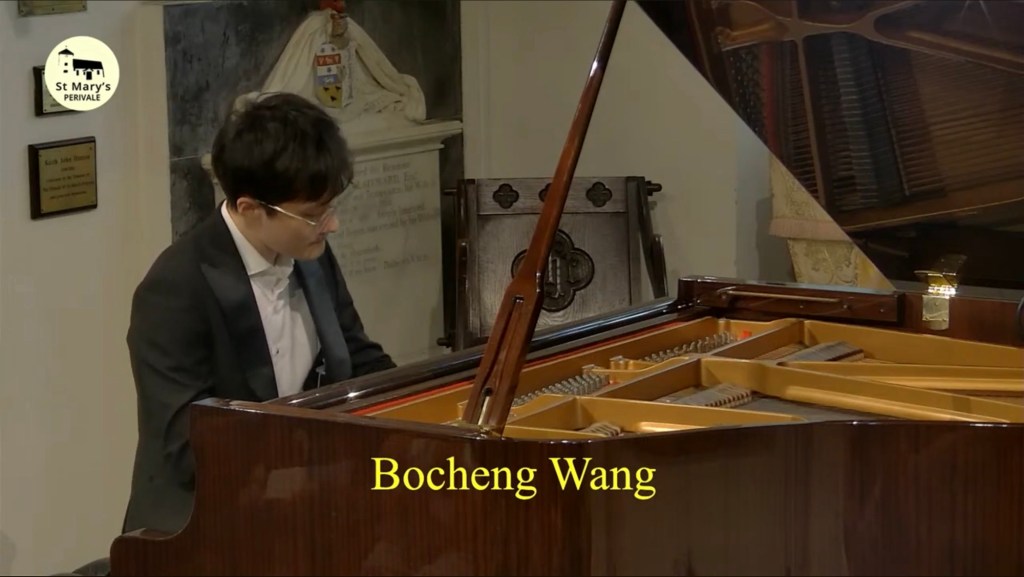
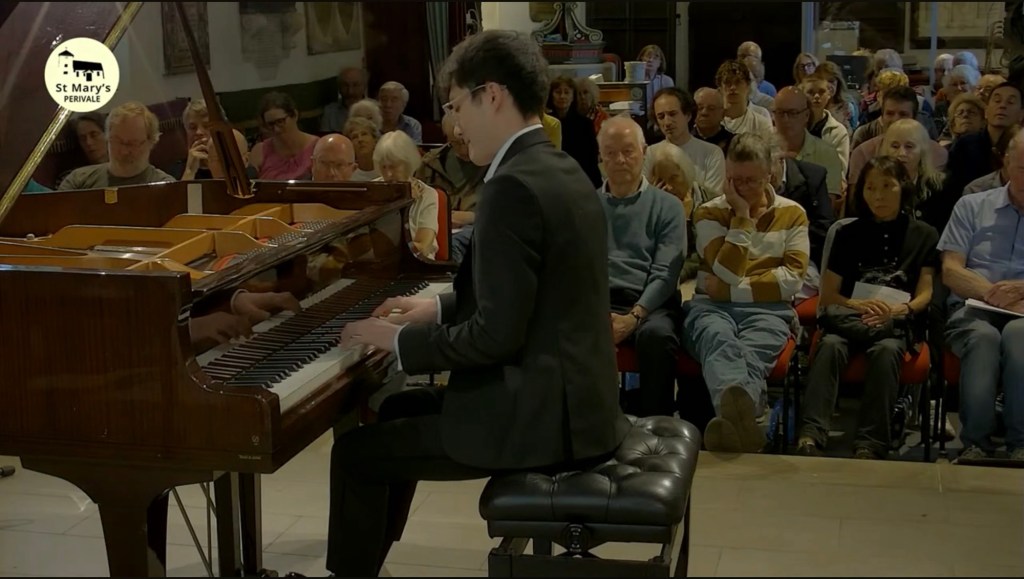
Bocheng Wang at St Mary’s The clarity and refined intelligence of a true poet.

https://www.youtube.com/live/avSRpUK-elM?feature=shared

I have heard Bocheng play many times over the past years when he was an undergraduate at the Royal Academy and have always been impressed by his highly professional playing of intelligent musicianship and technical clarity. He is now a post graduate having been awarded all the highest prizes and is being mentored – maybe on a fellowship?- by Tessa Nicholson that renowned trainer of some of the finest pianists of their generation – Alim Beisembayev,Mark Viner,Tyler Hay etc .It was very interesting to hear an all ‘French’ programme culminating in three of Chopin’s masterpieces that were the work of a young Polish emigré who had come to seek out an aristocratic audience in Paris that could appreciate his refined genius.’Hats off Gentlemen a Genius’ penned Schumann on hearing the teenager playing his op 2 Variations. Chopin, though, was destined never to return to the homeland that he always had in his heart. It was this same refined elegance and glowing clarity that Bocheng brought to all he played.

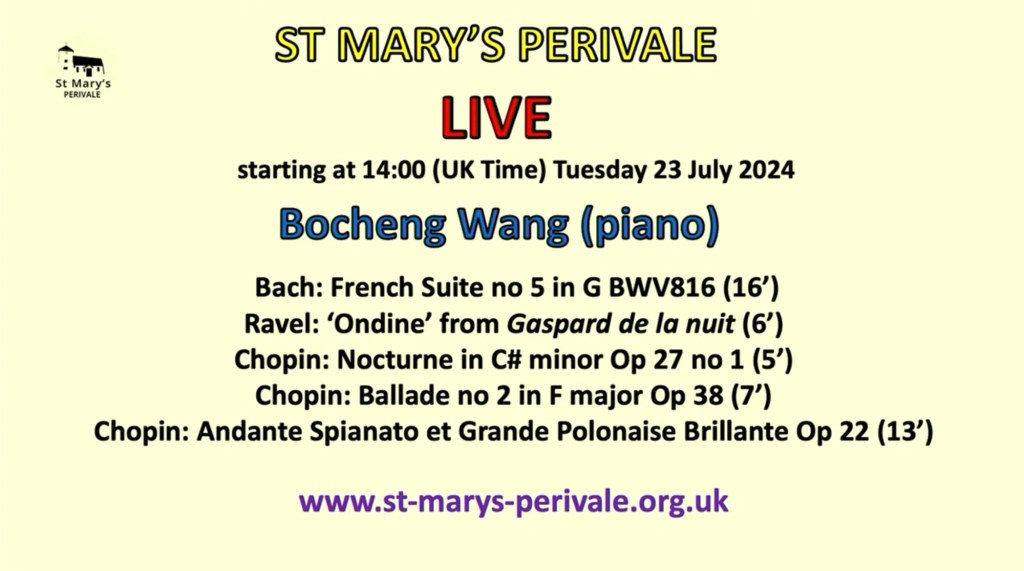
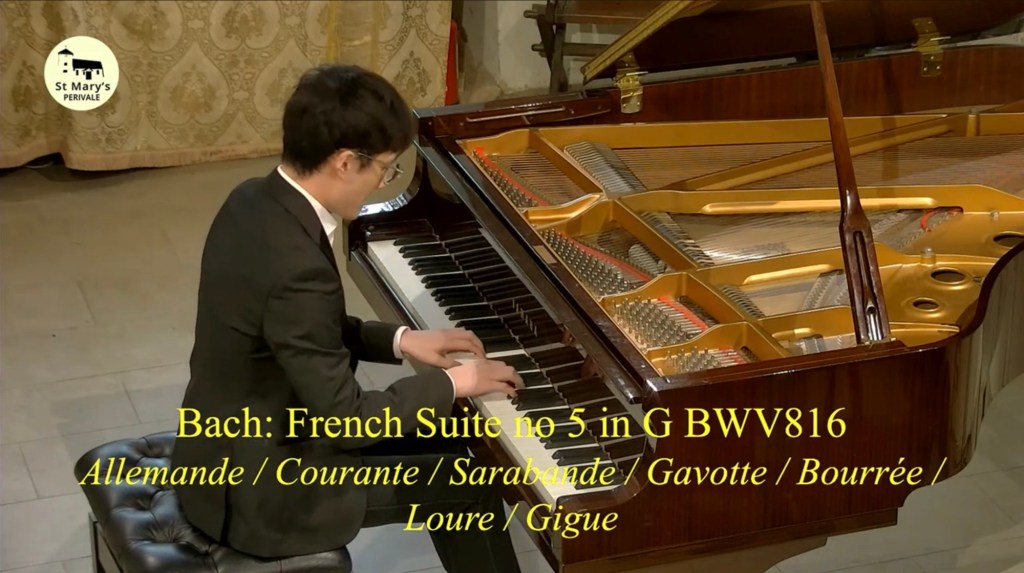
Chopin had Bach’s Preludes and Fugues always on his piano so it was fitting the Bocheng should play one of the most beautiful of his French Suites, the one in G. There was a clarity and a flowing simplicity to the opening ‘Allemande’ . Discreet ornamentation just added to the beauty of his performance with refined good taste and sensitivity .A Courante of dynamic drive and a Sarabande of poignant beauty where the subtle ornamentation was of bel canto beauty .The Gavotte was played with grace and elegance and again subtle ornamentation that just added to its dance like character.There was a poignant beauty to the falling phrases of the Loure which contrasted with the brilliance of the Gigue that was played with an exhilarating drive that showed his technical mastery and superb musicianship .

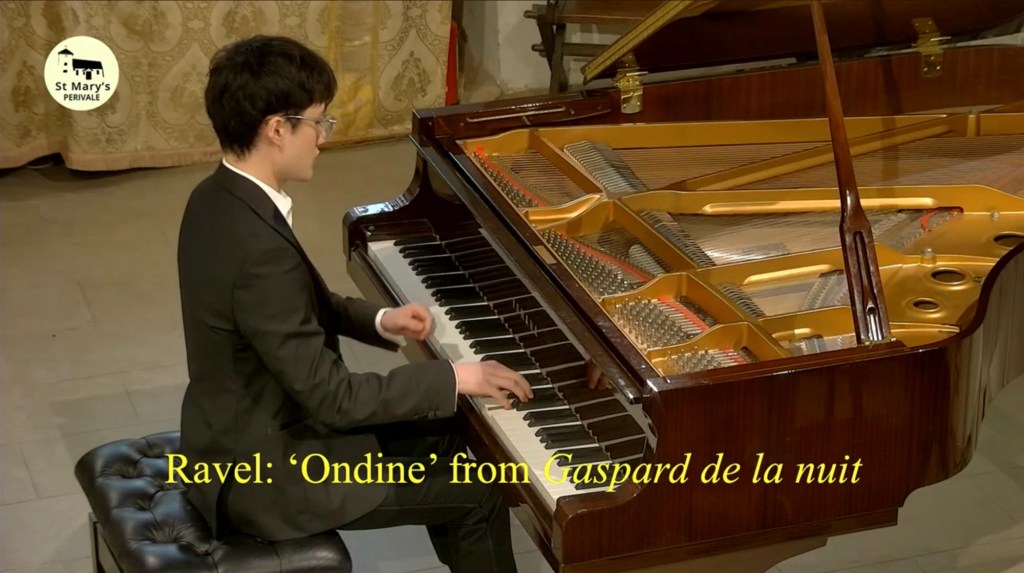
Ondine appeared with ravishing beauty swimming in and out of the streams of water that Bocheng brilliantly described .Gradually she emerged and rose with triumphant radiance above the searing waves that are to envelope her completely . Played with transcendental authority and command with a whispered ending bathed in pedal of poignant simplicity and poetic beauty before she swam off in the now calmed waters.A remarkable performance that makes one want to hear the whole of this extraordinary suite based on the poem of Aloysius Bertrand.

A performance of Chopin’s Nocturne op 27 n.1 that was a tone poem of refined beauty and exhilaration.From the deep brooding of the opening on which floated a melody that was shaped with the subtle rubato of a bel canto singer.A central episode that seemed to creep in out of this beauty and build to a climax of Polonaise exhilaration and aristocratic nobility before dying away to the serenity and ravishing beauty of the final bars.Playing of refined artistry and poetic understanding allied to a sensitive tone palette of poignant beauty.

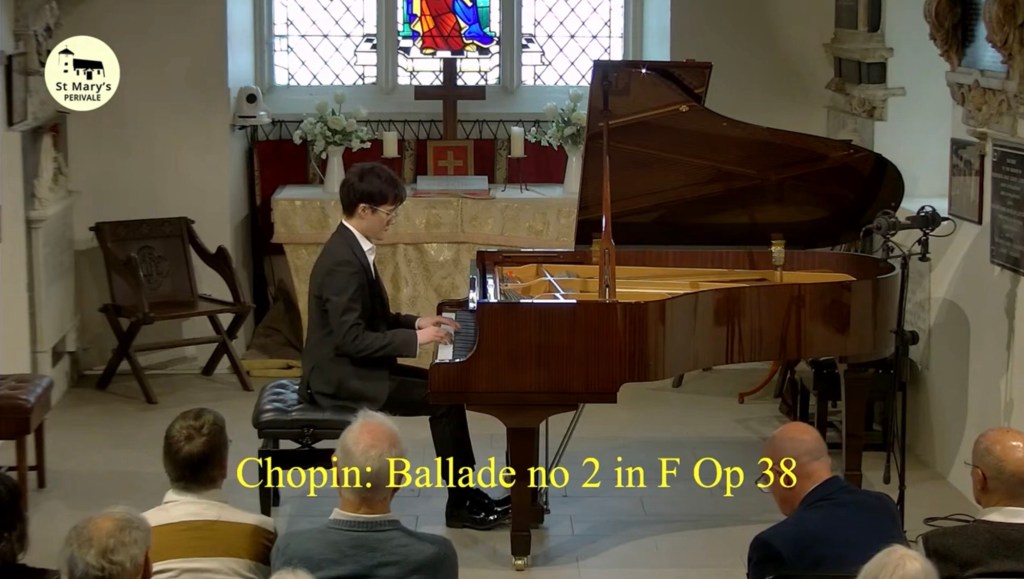
The second Ballade had an architectural shape that was quite remarkable .Despite the dramatic contrasts Bocheng managed to construct a work of strength and beauty.An opening of childlike simplicity with a flowing lilting tempo of great delicacy .The explosive eruptions were played with a brilliance and passion that were united in a duet of significance and searing intensity as one phrase answered another before exploding into a coda of exhilaration and passionate drive.Bocheng managed to keep always an undercurrent that was constant despite the dramatic contrasts.Even the genial final bars were part of a picture that had been tainted with genius.

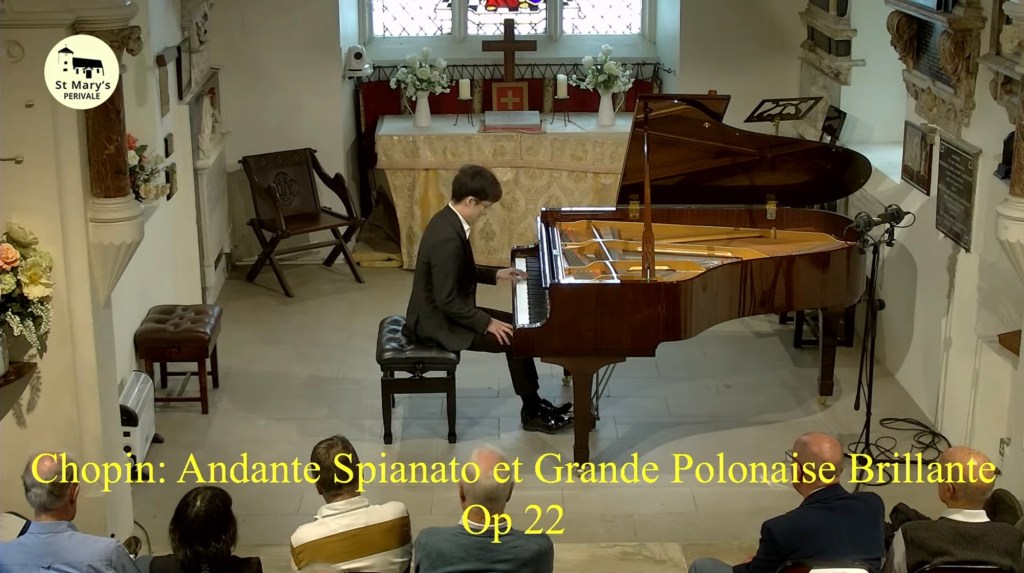
The highlight of the recital was the final work which was of aristocratic playing of nobility and brilliance.This is the real thing with a Chopin of great inner sentiment but never sentimentality or teasing crowd pleasing filigree playing .From the very first notes there was an undercurrent of beauty on which floated the glorious outpouring of bel canto tinged with nostalgia and beguiling melancholy .Even the embellishments were played with an authority where every note had a significance and not just thrown off with crowd teasing brilliance.The Mazurka too was played with a rhythmic fervour and sense of direction that gave great strength to such a seemingly simple melody. Bocheng’s orchestra I have never heard played so well with sumptuous sounds of noble brilliance.No wonder the Polonaise was ‘Grande’ and ‘Brillante’ which is rarely the case with pianists who like to play cat and mouse with Chopin’s teasingly virtuosistic streams of notes.There was an inner strength to Bocheng’s playing that had the same authority that was Rubinstein’s or Fou Ts’ongs where the so called Chopin tradition was exchanged for artists who could delve into Chopin’s heart instead of skating over the top with superficial showmanship.

Letting his hair down Bocheng offered an encore of Mozart alla Turca Jazz a reworking by Fazil Say /Wang with it’s impishly cheeky reworking of Mozart .Ending with glissandi up and down the keyboard it was a wonderful way of bringing this last concert of the season to glorious end.

Bocheng Wang has performed as a soloist with the Hillingdon Philharmonic Orchestra, the Royal Academy of Music Symphony Orchestra, the Dulwich Symphony Orchestra and the London Mozart Players. He has toured across Europe including in the UK, Germany, Poland, Denmark, France and Spain. Following his debut recital at Wigmore Hall in 2023, Bocheng was described by The Arts Desk as ‘a force to be reckoned with’, playing passages ‘with mastery and drama’. An artist with Making Music UK, Bocheng has performed at festivals including PianoTexas International Festival & Academy, Ferrara Summer Festival, Dartington Music Summer School and Festival and The International Musical Artistry Goslar. He has taken masterclasses with the likes of Richard Goode, Stephen Kovacevich, Pavel Gililov, Arie Vardi, Imogen Cooper, Pascal Rogé and Steven Osborne. His important competition successes include First Prize at the Royal Overseas-League Piano Competition (2023), Second Prize at the Windsor International Piano Competition (2022), Semi-finalist Prize at the Santander International Piano Competition (2018), and the First & Grand Prize at the Croydon Performing Arts Festival Concerto Competition (2015). Bocheng reached the highest level of achievement during his studies at the Royal Academy of Music, culminating in full marks from the Academy’s Advanced Diploma in Performance programme under Professor Ian Fountain. He also previously achieved a Master’s Degree with the highest performance award DipRAM and a Bachelor’s Degree with First Class Honours under Professor Ian Fountain ( 2020-23)and Professor Christopher Elton (2016-20). Bocheng’s studies were supported by Sir Elton John. He is currently a pupil of Professor Tessa Nicholson. 

Bocheng Wang at St James’s Piccadilly Supreme musicianship and style

Bocheng Wang’s wondrous Chopin at St Mary’s

Bocheng Wang’s magnificent Rachmaninov at St Mary’s<

Bocheng Wang at Farm Street Church
  

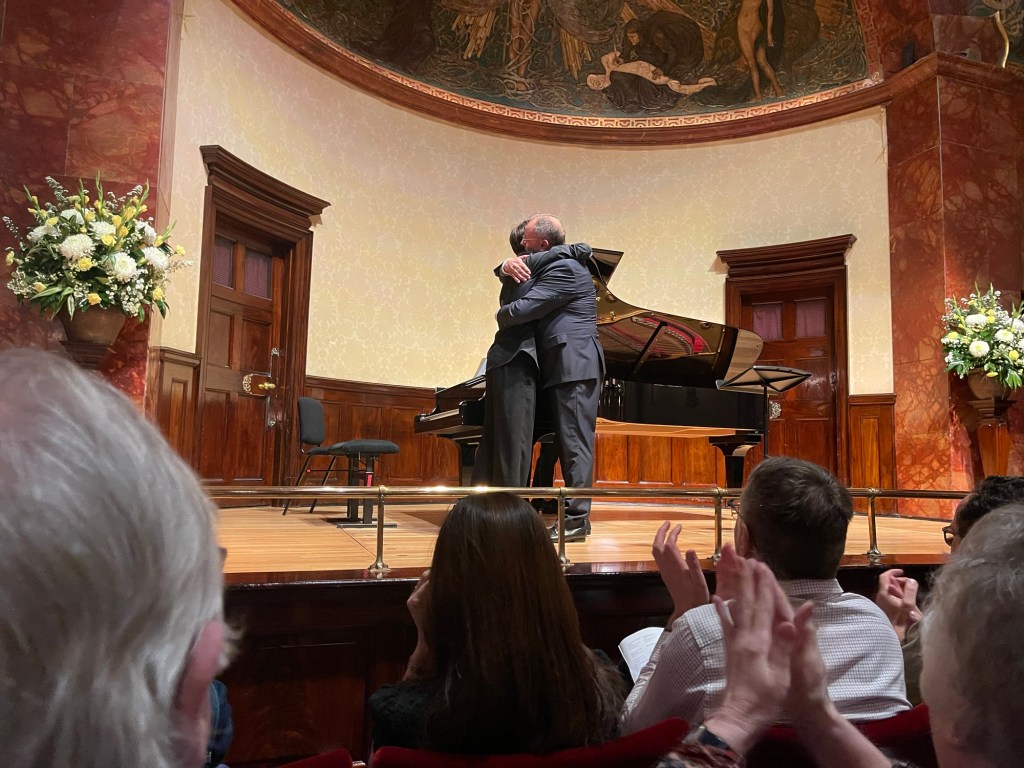
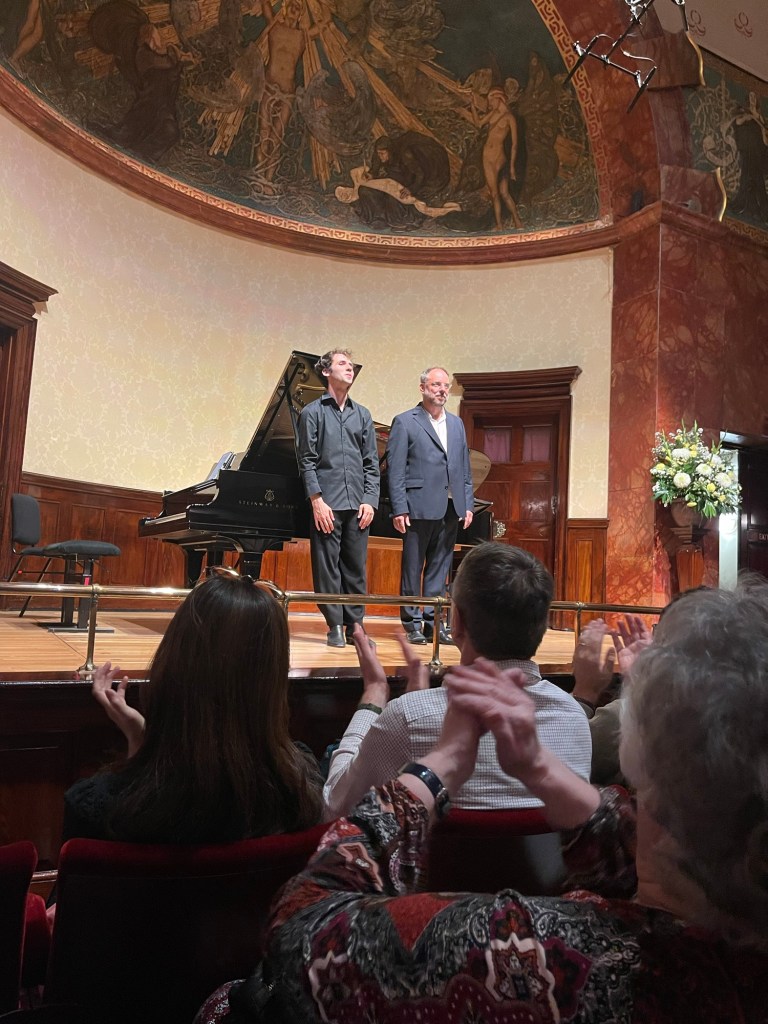
‘Miracles at the Wigmore Hall’. Matthias Goerne and Alexandre Kantorow entwined with poetic perfection

Franz Schubert (1797-1828) Der Wanderer D489 (1816)
Wehmut D772 (?1822-3)
Der Jüngling und der Tod D545 (1817)
Fahrt zum Hades D526 (1817)
Schatzgräbers Begehr D761 (1822)
Grenzen der Menschheit D716 (1821)
Das Heimweh D851 (1825)
Wer sich der Einsamkeit ergibt (Gesänge des Harfners I) D478
(1816/1822)
Wer nie sein Brot mit Tränen ass (Gesänge des Harfners II)
D480 (1816/1822)
An die Türen will ich schleichen (Gesänge des Harfners III)
D479 (1816/1822)
Pilgerweise D789 (1823)
Des Fischers Liebesglück D933 (1827)
Der Winterabend D938 (1828)
Abendstern D806 (1824)
Die Sommernacht D289 (1815)
Der liebliche Stern D861 (1825)

https://media.wigmore-hall.org.uk/documents/NEW_Programme_23_July_2024_730pm_FULL.pdf

Miracles do happen and usually only at the Wigmore Hall these days.
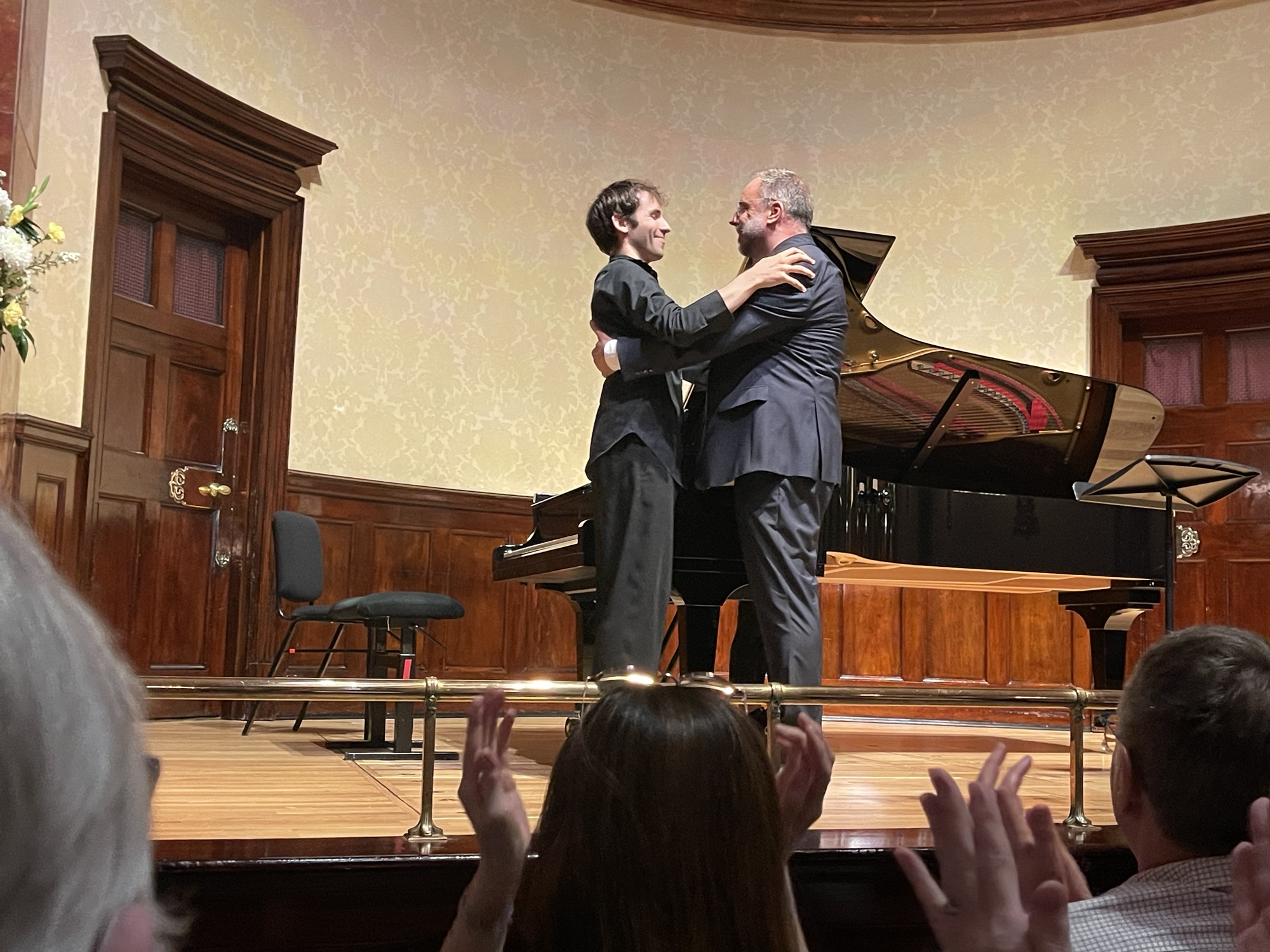
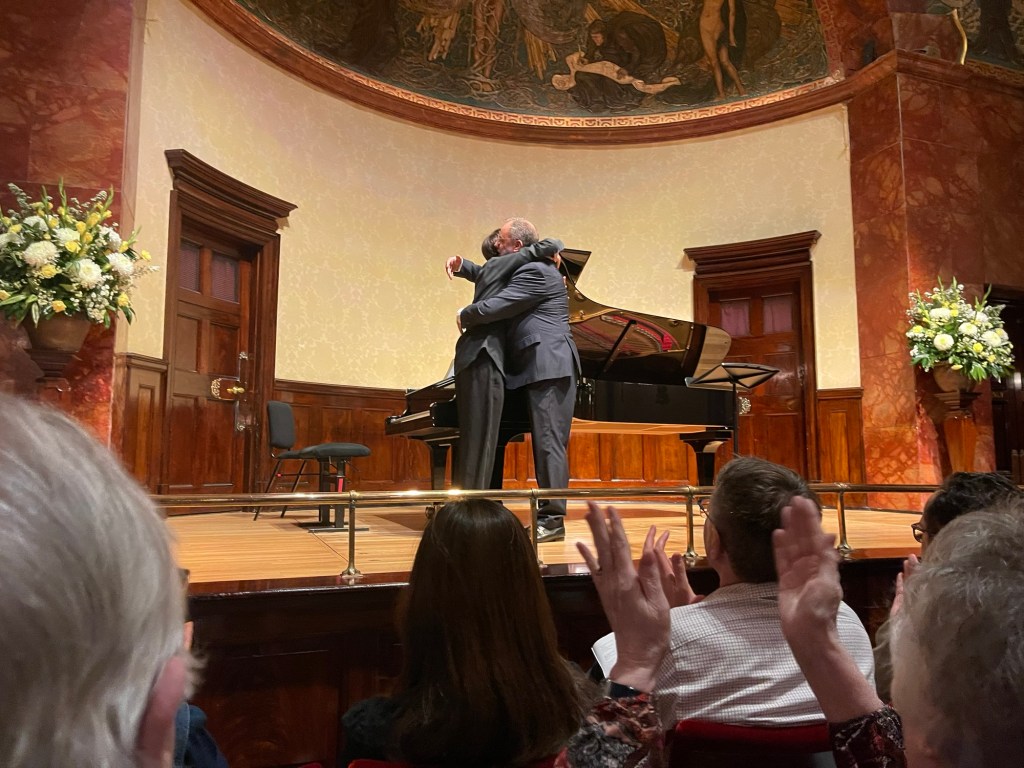
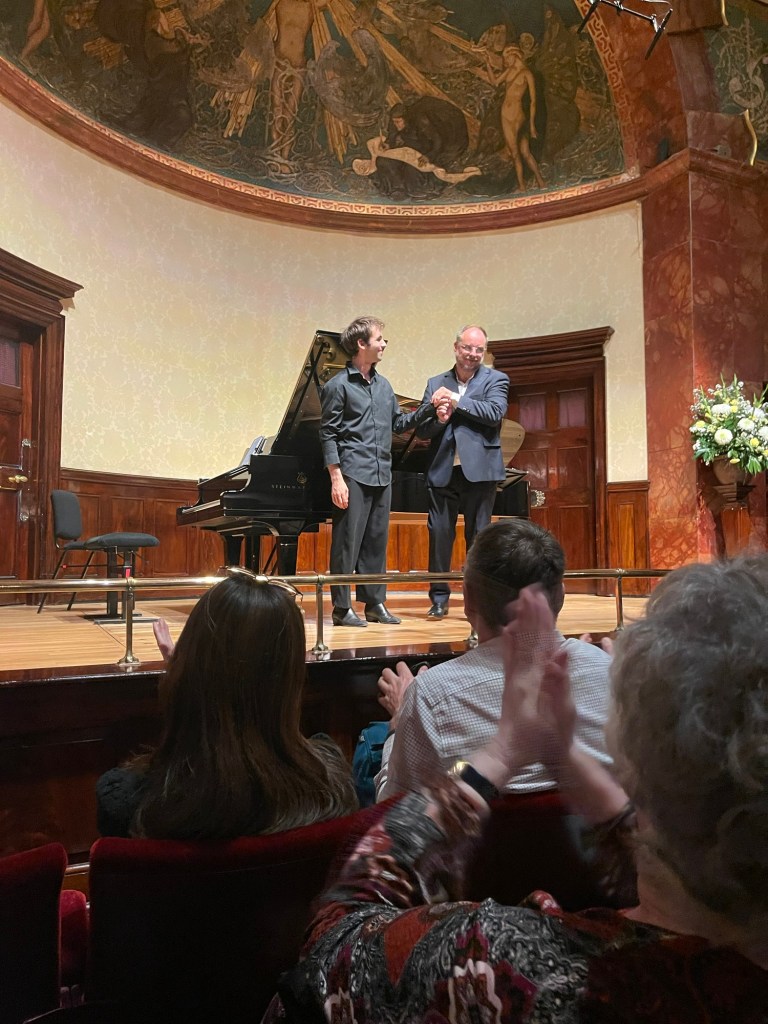
Matthias Goerne and Alexandre Kantorow two poets entwined with searing intensity and heart rending sensitivity as Schubert’s world for over an hour became ours.
Bewitched bothered and bewildered that such beauty can still exist ,we sat in awed silence as the hypnotic intensity of ‘Des Fischers Liebesgluck ‘ became almost unbearable.Tears have never been so beautifully described as in ‘Wer nie sein Brot mit Tranen ass ’ as ‘all guilt is avenged on earth’ .Or the brooding intensity in ‘A die Turen will ich schleichen’ as they ‘shed a tear and I’ll not know why they weep’. Has there ever been anything so beautiful on this stage as the whispered asides of ‘think of her and love’s happiness and sighed in silence and muse and muse’ of ‘Der Winterabend’ And finally as our two poets bid us farewell with ‘Der liebliche Stern’ as we ‘draw near to that lovely star’ and the genius of the short lived Schubert illuminates our lives for ever more .


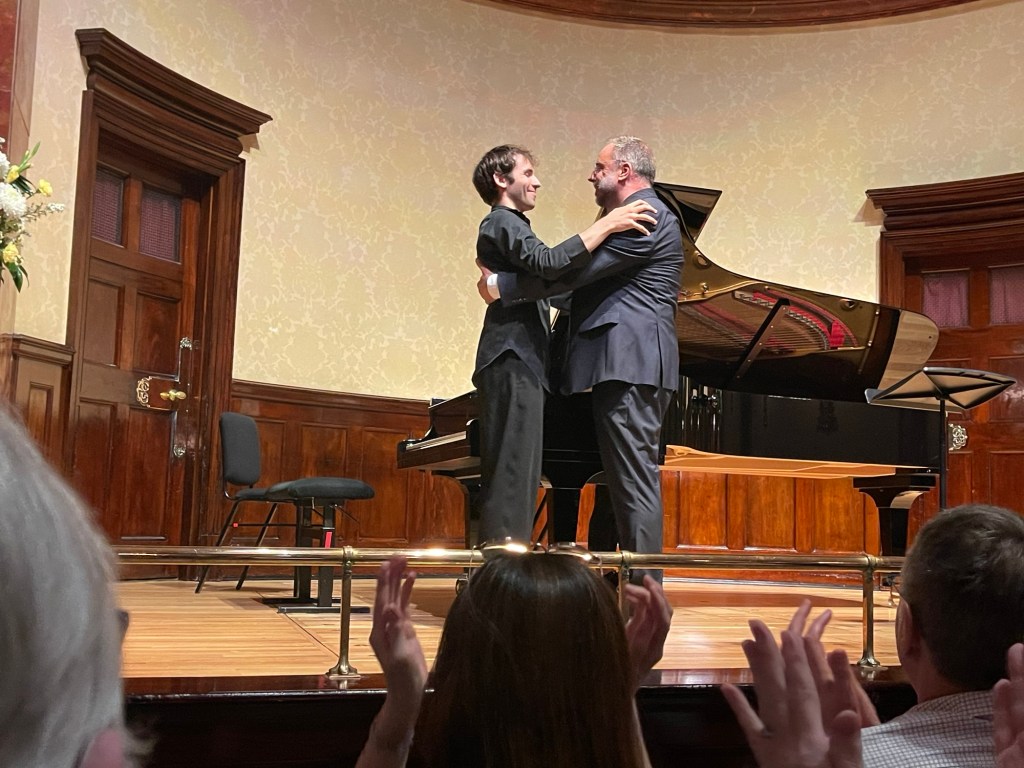
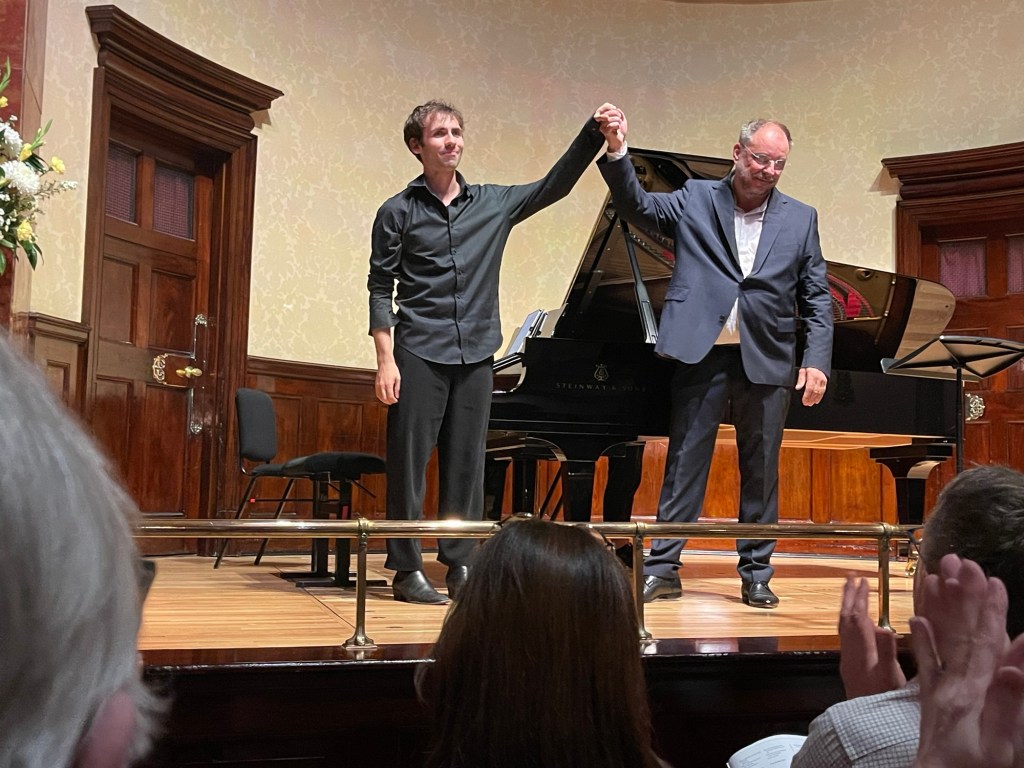
Entwined music making as these two remarkable artists came to the end of their extraordinary journey together and embraced each other as we embraced them.


Love knows no bounds and music is its life’s blood.The Bard was always right !


Courtesy of BA cancelling my flight back home that I was able to witness this miracle tonight !

Alexandre Kantorow bestrides the Wigmore Hall like a Colossus.

Yunchan Lim in Verbier The supreme mastery of a poet of the piano.

https://www.medici.tv/_nuxt/img/icon-copy-link.ab69da8.svg

Incredible recital by this young pianist much feted for his appearance at the Van Cliburn Competition where his performance of the Liszt Transcendental studies and Rachmaninov’s Third Concerto have gone down in history. But there is much much more to this young man as his programmes since have proven.
I must admit I did not bother to listen to yet another Korean phenomenon playing Liszt and Rachmaninov but I did stop and listen to him in the remarkable series of Piotr Paleczny that takes place every year in Duszniki and is streamed world wide.
It was here that I was at first surprised and then dumbfounded by this young ‘wizz kid’ who opened the recital with the Four Ballades by Brahms.
It was one of the finest most profound performances I have every heard and made me feel very ashamed for assuming it was yet another of the highly trained ‘wizz’ kids that run off with all the prizes at International Piano Competitions.
https://christopheraxworthymusiccommentary.com/2022/08/16/yunchan-lim-in-poland-the-refined-beauty-and-maturity-of-a-great-artist/
I was not able to find a seat for his London debut but luckily it was streamed live ,like today, and here again the programme was unexpectedly of Byrd,Bach and Beethoven – the three greatest B’s in the history of music.I was luckier in Rome and sat in the front row at the University La Sapienza for the same ‘Big B ‘ programme.
https://christopheraxworthymusiccommentary.com/2023/01/20/the-pianistic-perfection-of-yunchan-lim-at-the-wigmore-hall/


Today it is thanks to Sir Norman Rosenthal and Jessica Duchen that I was tempted to listen to a predominately Russian programme and I just thank God that I have lived long enough to hear such a revelatory performance of Mussorgsky.
A work I truly never wanted to hear again but that today was recreated before our incredulous eyes. Not quite the reworking and hysterisms of Horowitz but many subtle additions that just enhanced the vision of this Poet of the Keyboard. Not only a Poet but a great musical personality ready to stand by his convictions as the music making he offers really does prove that there still exists a phrase that was used to describe Shura Cherkassky in Le monde de la Musique – ‘Je sens,Je joue Je trasmets’ https://youtu.be/Mlzf9rqvQb8?feature=shared https://youtu.be/ZFumJqMprEA?feature=shared

A quite extraordinary flexibility as every note seemed to have a voice of its own even the bass at certain points was allowed to emerge .A ravishing bel canto of delicacy and the poignant beauty of its age with a beautiful fluidity where time just seemed to stand still.
A freedom with the same beauty of phrasing of a singer
A range of emotions from the contemplative of January and the dynamic drive of February. March saw wistful beauty and a kaleidoscope of colours and poetic utterances.There was a suave ‘French’ charm for April , that of Poulenc, and the unmistakable sound that was truly Rubinstein’s . A beautiful sense of balance allowed the melodic line of May to sing with glowing luminosity whereas the beguiling rubato for June created true magic with the whispered return of the opening after the central episode .A coda of almost Messiaenic beauty as the melodic line gradually unwound. Bells resounded in July with a joyous outpouring as Yunchan was feeling his way with the total mastery of sounds from a different age.August saw a brilliant perpetuum mobile of extraordinary clarity and architectural shape as the Great bells of September moved inexorably forward with its dynamically driven ending.Yunchan’s hands were visibly shaking as he carved out the magical melody of October with ravishing beauty and simplicity.I have not heard it played so poignantly since Cherkassky used to play it as a favourite encore piece.What a story there was to tell for November with wonderfully subtle jeux perlé left hand arpeggios as the melody gradually took flight.A fleetingly suggestive accompaniment as the melodic line was carved out in the tenor register.December was delightfully nostalgic with beguiling rubato of aristocratic good taste demonstrating a maturity way beyond his actual years. His slight lack of synchronisation was an expressive devise from the magicians of the keyboard from another era. A magical performance from a work all to rarely heard in the concert hall as it takes a supreme stylist to unite the twelve seasons into one unified whole as we heard today.
A quite extraordinary performance of ‘Pictures’ played with intelligence and also incorporating many ideas from Ravel’s orchestration back into the fabric of Mussorgsky’s original inspiration – leaving out also ,as does Ravel ,the last promenade before ‘The market place at Limoges’.
Ravel the supreme colourist and Yunchan an extraordinarily intelligent musician combined to bring fresh life to this much maligned masterpiece. Adding multi coloured layers to a work that can seem very black and white and merely a vehicle for hard hitting virtuosi.Yunchan with poetic sensibility and mastery placed it where it truly belongs at the pinnacle of the piano repertoire .
There were changes of register in sound from the very first ‘Promenade’ with startling changes of colour.Strange tremolandi and added embellishments began to appear in ‘Gnomus’ and added bass notes gave depth to the sound .The tension that he created in the ‘poco a poco accelerando’ was quite overwhelming disappearing into a cloud of smoke with the treacherous final bars ‘velocissimo con tutto forza’ ( a red rag to the bull in too many cases ) just demonstrating the absolute technical perfection of this young master.The whispered ending of the second promenade was breathtakingly beautiful and opened the gate for the ‘Vecchio Castello’.Played with intelligence but with a freedom and remarkable contrasts – this was a great personality interpreting exactly what the composer had seen in Hartman’s painting. ‘Espressivo’ does not necessarily mean piano as Yunchan showed us with the chiselled beauty deep into the keys of the return of the theme .The whispered breathless ending was suddenly awakened by a scream every bit as frightening as Munch’s famous painting.The third promenade played ‘pesamente’ but not with hard sound but full glorious orchestral sounds with the impish final comment heralding the arrival of the quarrelling children in the ‘Tuileries’.The pointed rhythmic emphasis he gave to the opening phrases were played so deliberately imitating the childish moaning of children trying to out do each other .It was just part of the great character he gave to this piece with the sly songs commented on by skittish asides and then disappearing into the distance with the nonchalant ease of naughty children.What a lesson in balance Yunchan showed us with ‘Bydlo’ lumbering along quite quietly but the melodic line punched out fortissimo and pesante – not the accompaniment fortissimo that is too often the case in lesser hands.As ‘Bydlo’ progressed great bass notes were added with breathtaking effect and the gradual diminuendo ‘perdendosi’ was masterly .The two final notes just pointed at with aristocratic masterly ease .The fourth Promenade bathed in pedal and of featherlight beauty as the chicks were about to be hatched.The ‘chicks ballet ‘ was astonishing for the left hand counterpoints that rang out with such luminosity where the chicks were just clucking away with masterly ease.What a wonder to see this young pianist’s arch of the hand just moving the trills from one place to another like those slot machines that used to serve you automatically in the good old days! There was a great opening statement of operatic proportions to ‘Samuel Goldenberg’ but it was the beseeching appearance of ‘Schmuyle’ bathed in pedal that was so astonishing.The last four notes were of glorious timeless nobility. Eliminating the fifth promenade we were thrown into the chattering confusion of the ‘Market Place in Limoges’. Here there was no doubt that with Yunchan we were in the hands of a master with a transcendental control of sound and characterisation without any hardness or stiffness in what is really such an unpianistic piece.’Catacombae’ was terrifying with its long reverberations allowed to ring out with glowing fluidity and there was magic in the air as the tremolandi were mere vibrations of sound where under and between bewitchment could be enacted.A masterly control of sound and colour and a musicianship that made him realise that the piece must resolve on a single pointed F sharp and not just disappear into oblivion. The same F sharp that ‘Baba Jaga’ needs for his devilish work. It was here that the great virtuoso Yunchan could show his metal as his musicianship combined with technical mastery added glissandi and bass notes to augement the sounds without any ungrateful hardness .This was a young man with an orchestra in his fingers, and hand in hand with Ravel, a poetic fantasy in his heart and intelligent musicianship in his head.An amazing ‘tour de force’ as the ‘Great Gate ‘ was allowed to reverberate with astonishing nobility .On his knees too as the slow plainsong chant that interrupts the ever more insistent tolling bells was played with abrupt changes of register and it was this rather than the pealing of bells that took our breath away.
A masterpiece restored to greatness in this young man’s poetic hands !
And as an encore Chopin’s Nocturne op 9 n. 2 restored to the great bel canto piece that it is. ‘ Old Style’ playing with hands slightly out of sink and phrases stretched to the limit of expressiveness .This is a magician who has discovered the secret of how to allow this box of hammers and strings a voice every bit as beautiful as Caballé. A young man in love with the piano .
It reminds me of Fou Ts’ong listening to Cherkassky and then a world famous Eastern European pianist a few days before his own concert in Rome. I warned Ts’ong impishly that you know neither of them really looks at the score and can be very free with the notes of others.
Ts’ong listened carefully to both and then rebuked me : ‘But Shura loves the piano this other man hates it!’
https://drive.google.com/file/d/1DmdTaZWs7B6bCCJAOaFa2wDDIznr4_rO/view?usp=drive_web

Christopher Axworthy Dip.RAM ,ARAM

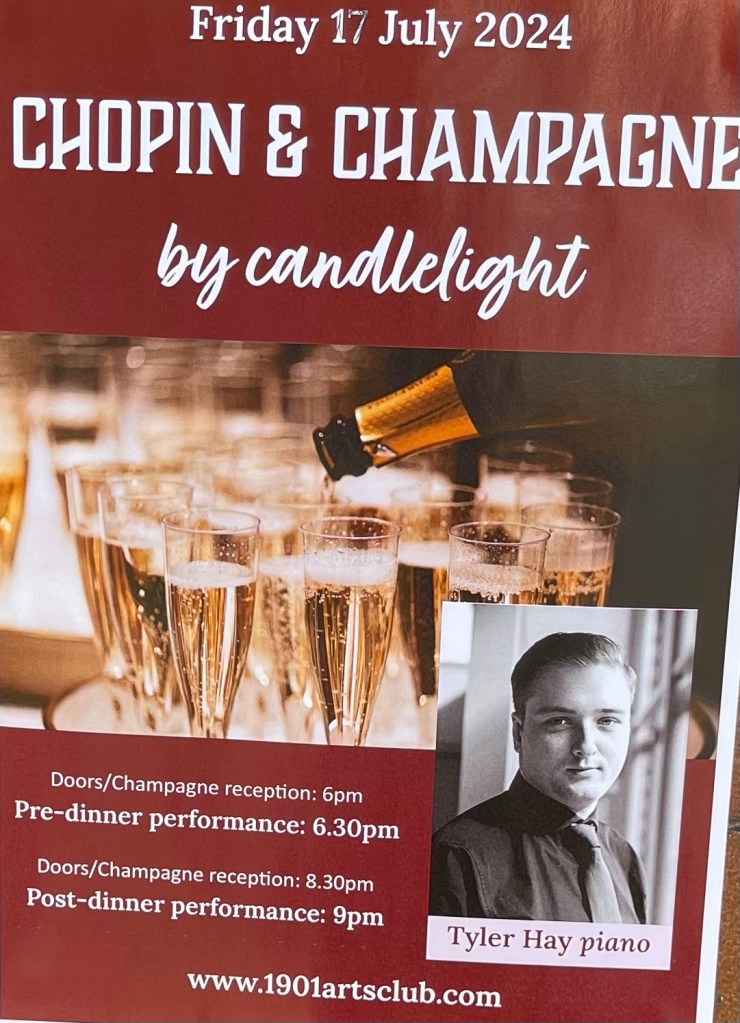
Making ‘Hay’ while the sun shines Chopin by candlelight exhilarating and illuminating

The 1901 Arts Club in Waterloo

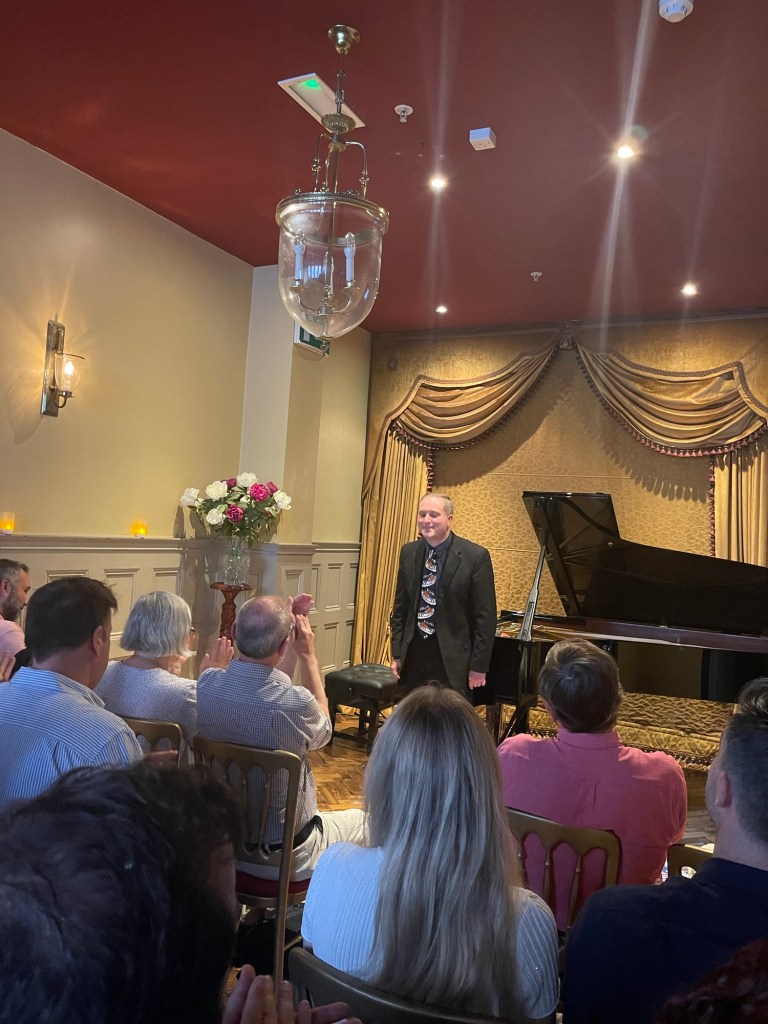
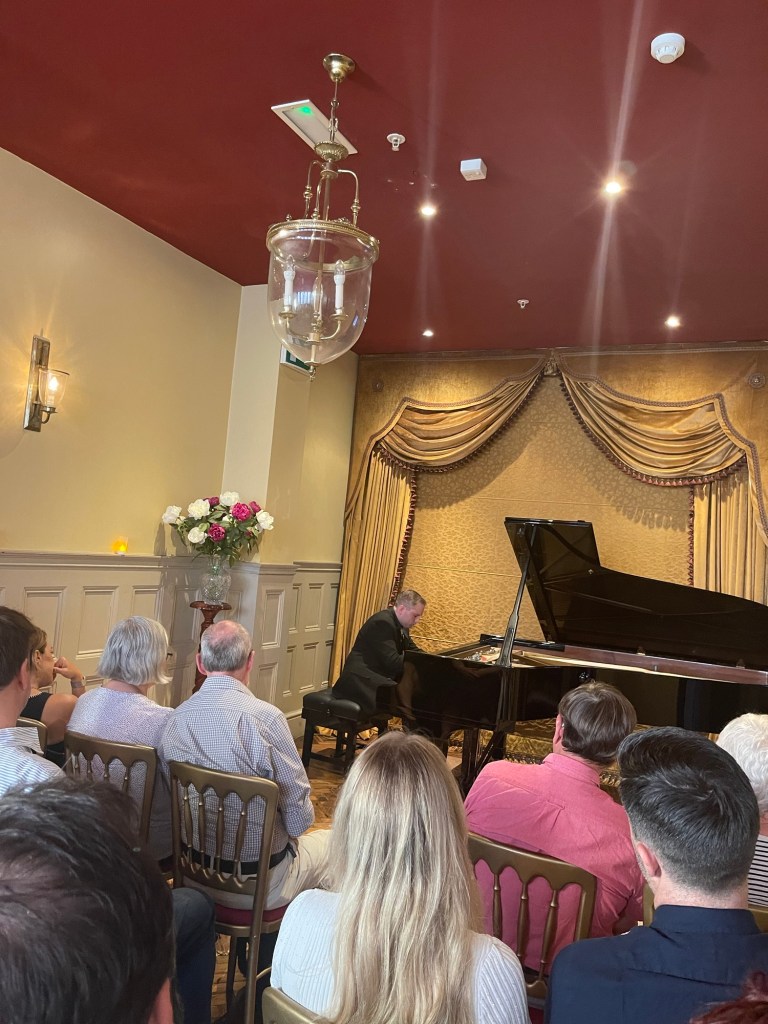
Tyler Hay by candlelight with two Chopin recitals in one evening in the 1901 Club in Waterloo.
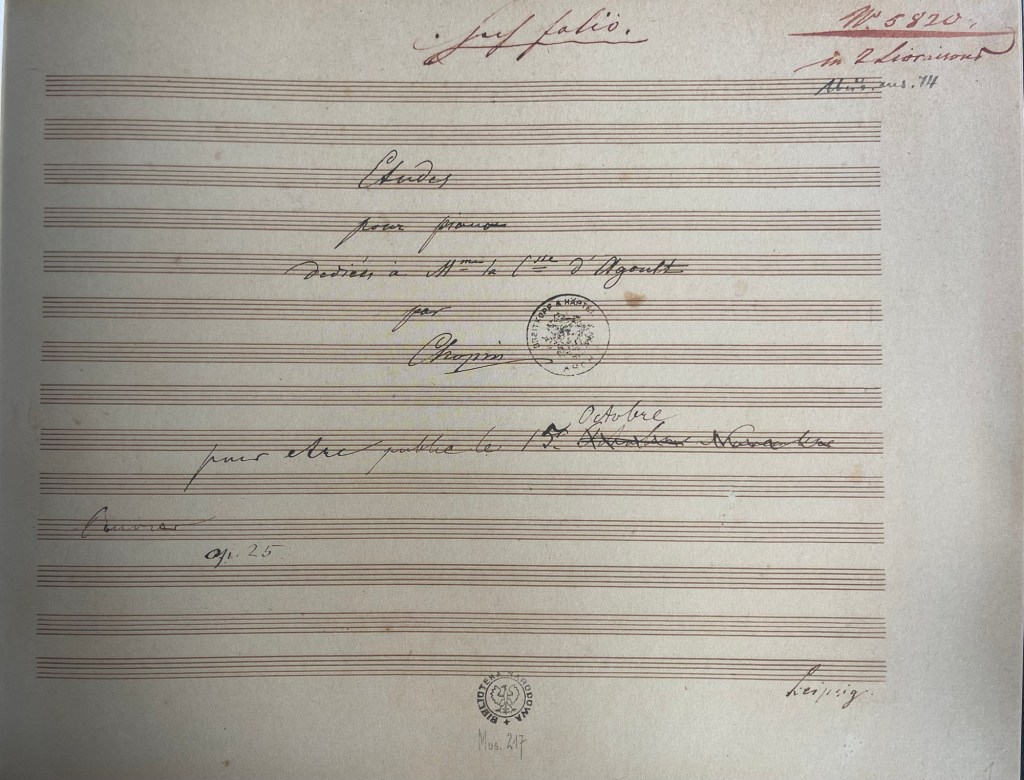
A programme that included the Etudes op 25 and the B flat minor Sonata op 35.


Having played 24 studies by Czerny for his birthday treat in Perivale and the Alkan Symphony for Thomas Kelly’s Piano festival I think the amount of notes that this young man has managed to digest this month must go down in the Guinness book of records.

Tyler Hay at St Mary’s Perivale ‘The Perfect Pianist comes of age ‘

Leaving his 20’s behind him with a bang as he enters maturity and demonstrates his artistic integrity and capacity with a smile on his face which defies the serious musician behind this glittering facade.Delving deep into the scores as he not only searches in the archives finding some true lost gems but also discovering details in well known scores that have been inexplicably overlooked.

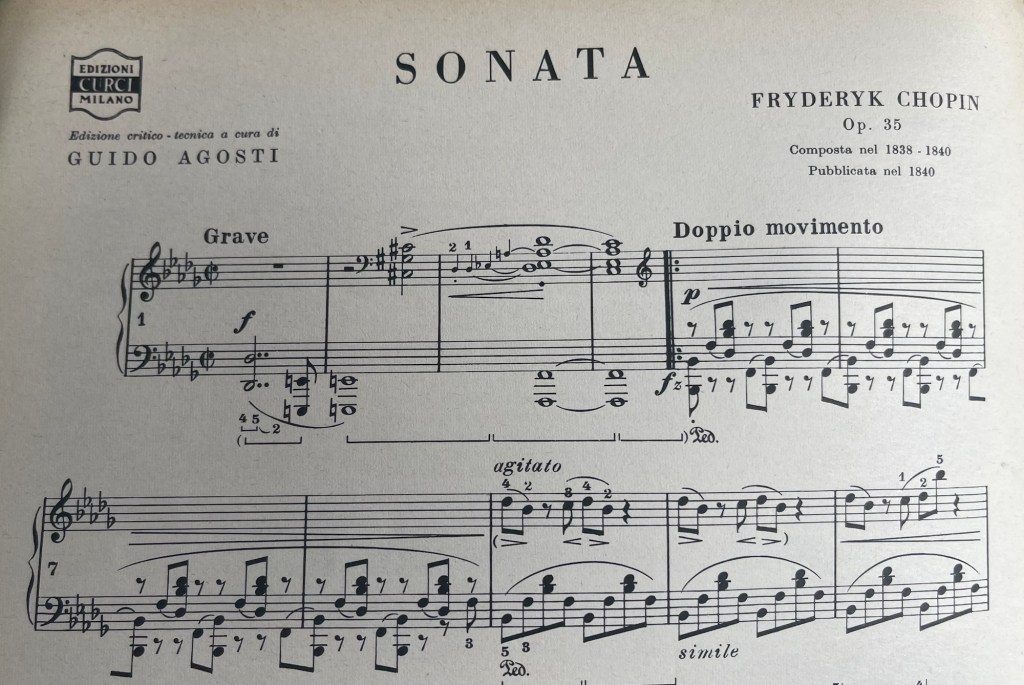
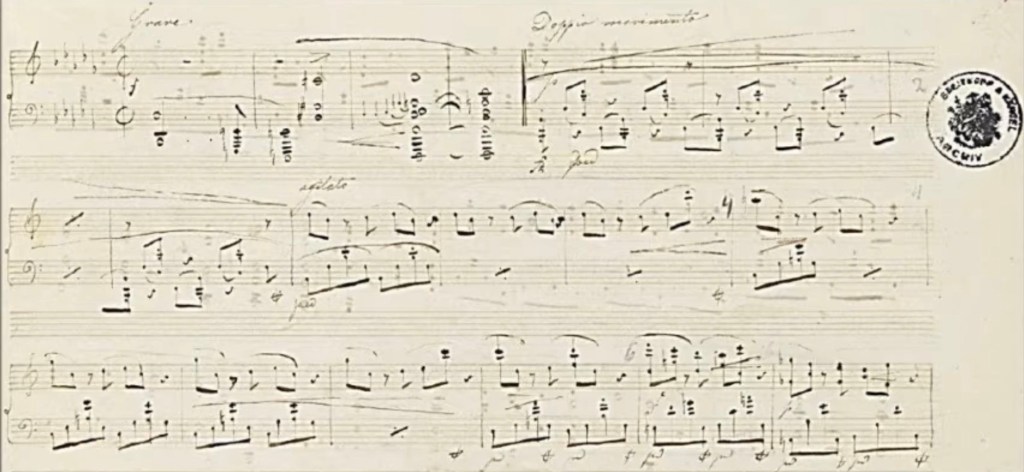
Just such a case in point was outlined by Tyler when I innocently asked him the 100 dollar question.What do you do about the repeat in the first movement of the Chopin B flat minor Sonata ? Tyler had looked very carefully at the manuscript score and found that the bass octave A flat is not tied but repeated and would take us very naturally back to the opening D flat and so to the ‘Grave’ not to the ‘doppio movimento’ which is the root of much conjecture! A detail for sure but for discerning interpreters it is essential to search out all the deciphers that the composers have left for posterity.I am of the opinion of Rubinstein that it is better not to repeat the exposition as was the traditional manner of all classical Sonatas.I also think the same is true of the Schubert Sonatas written around the same time as Chopin’s.These were two composer using the traditional forms still that were soon to change thanks to Schubert’s Wanderer Fantasy taken up by Liszt incorporating the transformation of themes as a new art form.

However Tyler gave an exemplary performance and it was particularly fresh and simple without any rhetoric from the so called Chopin tradition but playing exactly what he found in the score with musicianship and mastery.It was Schnabel who famously said ( about Mozart but it certainly could apply to Chopin too ) that ‘ music is too difficult for adults but too easy for children!’ There was an overall architectural shape to the first movement where the second subject was ‘sostenuto’ ( with more weight) rather than at a different tempo.It allowed the music to flow naturally and carried us along on a wave of sublime inspiration.There was precision in the Scherzo but also a feeling of buoyancy that allowed the Trio to be a complete contrast and only a slight relaxation of tempo as Chopin indicates ‘piu lento’.A Funeral March of poignancy and beauty was followed by the whispering of ‘the wind over the gravestones’ or as Schumann said ‘more of a mockery than any sort of music’.Little could we have imagined the struggle that Tyler had on the hottest day of the the year to navigate such folly with the keys bathed in water!

In fact Tyler had chosen to finish the recital in true aquatic fashion with a Venetian Boat Song op 19 n.6 by Mendelssohn a composer that Tyler impishly said that Chopin hated !

Luckily the next work was the Nocturne op 72 n.4 that Tyler had learnt but had not actually programmed in his recitals.So this was the ideal occasion before embarking of twelve of the most strenuous pieces for piano ever written!

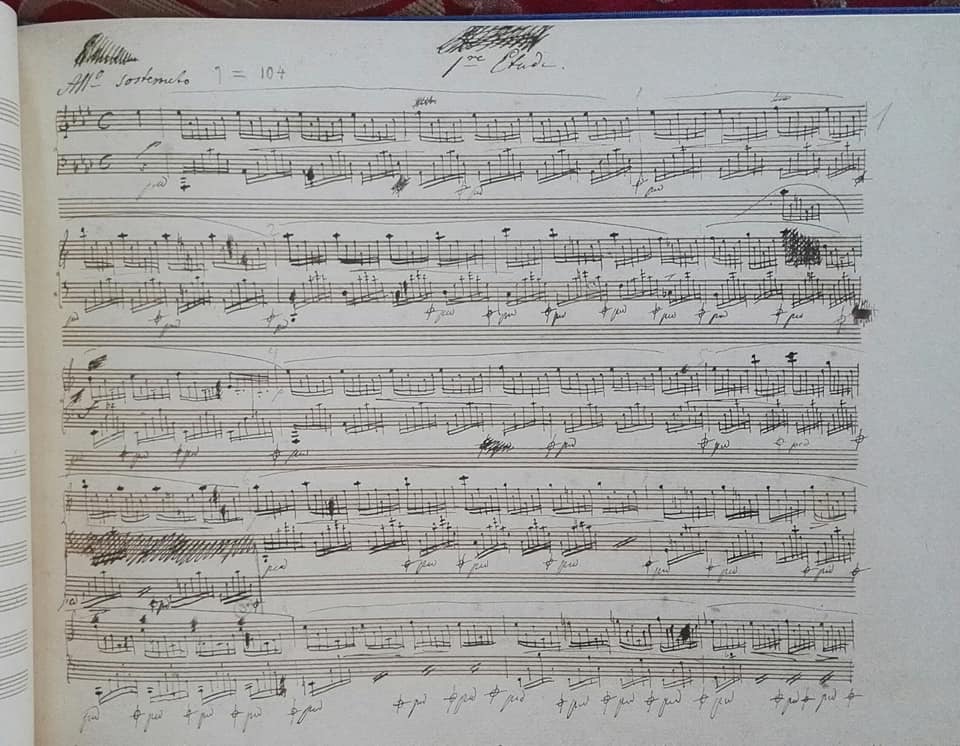
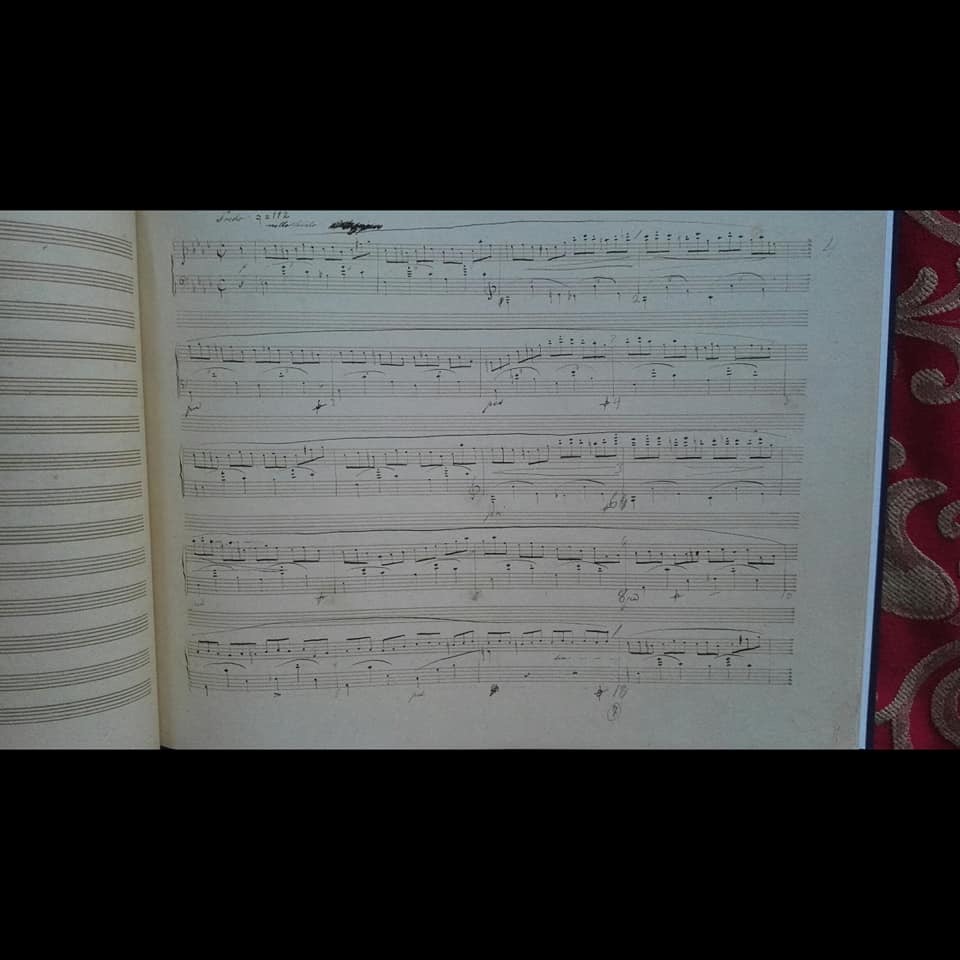
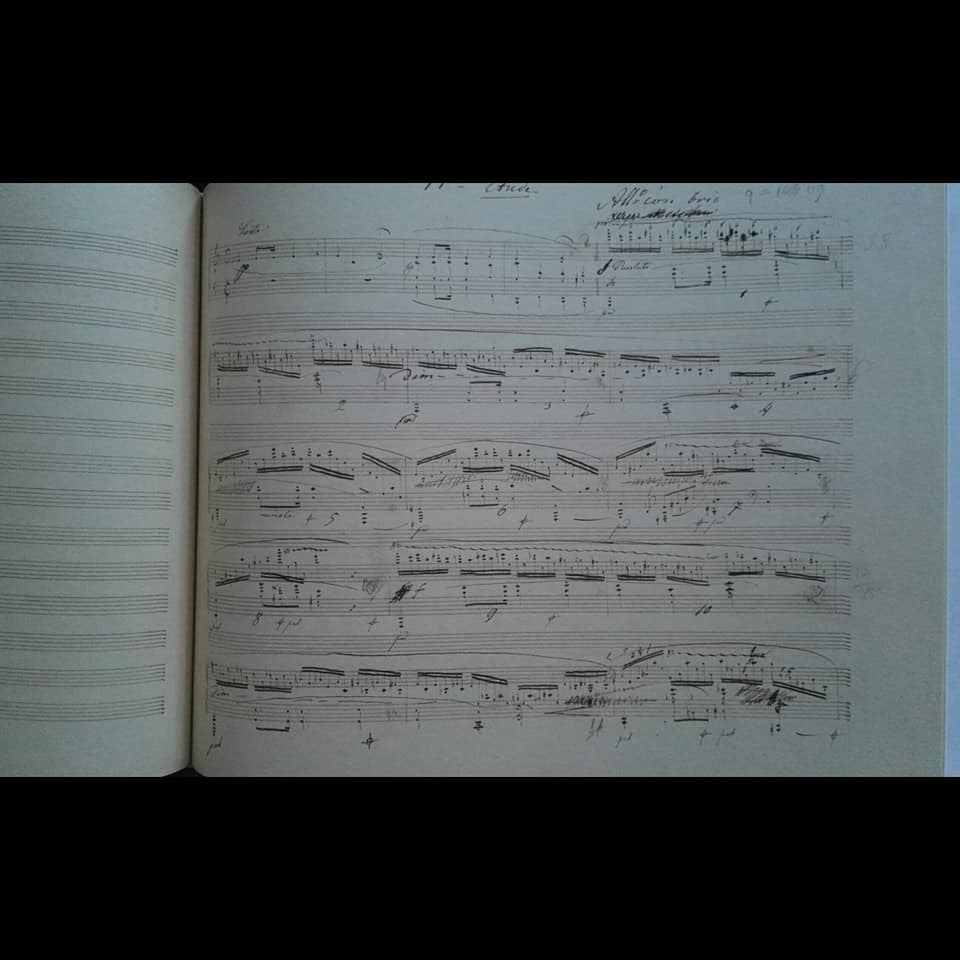
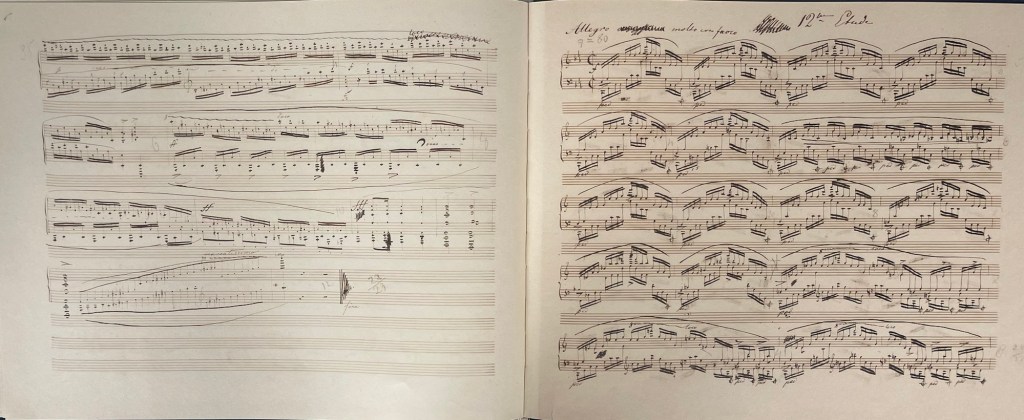
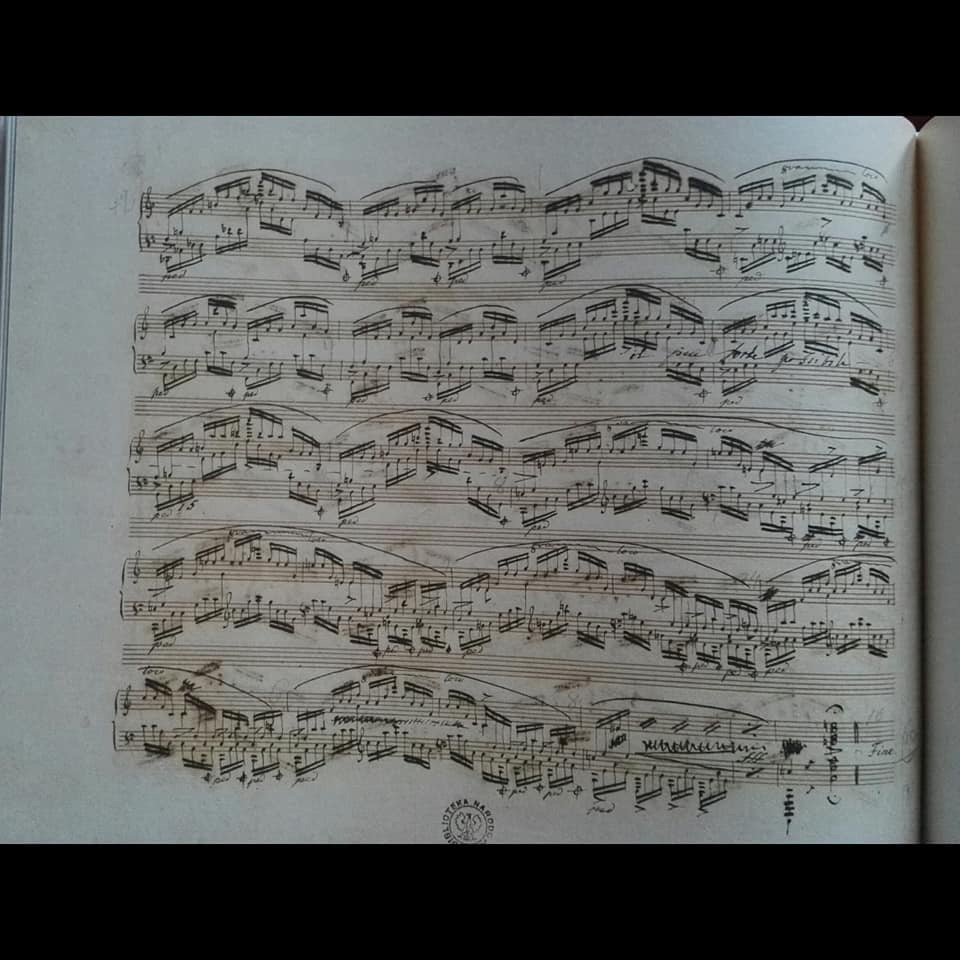
And so it was today that we heard the Chopin Studies op 25 played as the composer had indicated.Each of the 12 studies was a miniature tone poem.Bathed in the sunlight, or should I say candlelight,that Chopin’s own pedal indications had asked for .Tyler shaped each one with a luminosity and poetry that I have only heard similar on the old recording of Cortot. Completely different of course but the one thing- the most important thing in common was the poetry that is concealed in what are conceived also as studies.

The Aolian Harp of the first study showing exactly what Sir Charles Hallé had described on hearing Chopin on his last tour in Manchester.

”Il faut graver bien distintemente les grandes e les petites notes” writes Chopin at the bottom of the first page .Long pedal markings overlapping the bar lines and the pianissimo asked for by Chopin so perfectly played by Tyler. The long held pedal at the end gave such an etherial magical sound.

The second study too like silk.Not the usual note for note performances we are used to but washes of sound perfectly articulated of course but with the poetry and music utmost in mind.The final three long “C’s” which can sound out of place were here of a magic that one never wanted them to stop.It was interesting to note that Rubinstein played this study,which I had never heard before in his recitals,at the last concert in his long career at the Wigmore hall in 1976.

The third and fourth to contrast were played with great clarity with some suprising inner notes that gave such substance and depth to the sound.The end of the fifth that linked up to the 6th.It grew out of the final crescendo flourish that always had seemed out of place .Here in Tyler’s hands it is exactly as Chopin in his own hand has indicated.

Here too one must mention the sumptuous middle melody of the fifth played with a wonderful sense of balance and also a flexibility of pulse that again showed the hands of a great musical personality.I have only heard a similar sense of “rubato” live from Rubinstein although Murray Perahia on CD is pure magic too.

The technically difficult double thirds accompanied the left hand melodic line with a subtle sense of sound like a wind passing over the grave indeed !The absolute clarity and jeux perlé of the “double” thirds was just the relief and contrast that was needed.

Beautiful sense of colour in the Lento that is the 7th study where Chopin marks so clearly that the melody is in the left hand with only counterpoint comments from the right( Cortot and Perlemuter are the only others that I have heard make this distinction so clearly)

The 8th played very much molto legato and sotto voce to contrast with the absolute clarity of the “ Butterfly” study that is n.9.The ending that can sound so abrupt in some hands here was perfectly and so naturally shaped.

The great octave study entered like a mist as Chopin indicates poco a poco crescendo .

Such was his identification with this sound world he had seen this study as great wedges of sound interrupted only by the extreme legato cantabile of the middle Lento section. Chopin marks very precisely here the fingering he wants to obtain this effect.

The great “Winter Wind” study n. 11 where there were great washes of sound ,again as Chopin so clearly indicates .The final great scale played unusually cleanly with a very precise final note.Of course all clearly indicated in Chopin’s own hand .

The final 12th study was played with enormous sonority and very clear melodic line as Chopin indicates very clearly .The ending marked “ il piu forte possibile” and a final crescendo to “fff”. It brought this revelatory performance to a breathtaking ending.

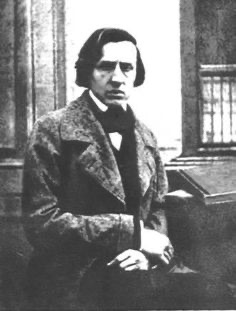
Daguerreotype, c. 1849

Fryderyk Franciszek Chopin 1 March 1810 Zelazowa Wola, Poland

17 October 1849 (aged 39). Paris, France

Some time after writing the Marche funèbre,(1837) Chopin composed the other movements of the Sonata op 35 ,completing the entire sonata by 1839. In a letter on 8 August 1839, addressed to Fontana, Chopin wrote:

I am writing here a Sonata in B flat minor which will contain my March which you already know. There is an Allegro, then a Scherzo in E flat minor, the March and a short Finale about three pages of my manuscript-paper. The left hand and the right hand gossip in unison after the March. … My father has written to say that my old sonata [in C minor, Op. 4] has been published by Haslinger and that the German critics praise it. Including the ones in your hands I now have six manuscripts. I’ll see the publishers damned before they get them for nothing.

Haslinger’s unauthorised dissemination of Chopin’s early C minor sonata (he had gone as far as engraving the work and allowing it to circulate, against the composer’s wishes) may have increased the pressure Chopin had to publish a piano sonata, which may explain why Chopin added the other movements to the Marche funèbre to produce a sonata.It was finished in the summer of 1839 in Nohant in France and published in May 1840 in London,Leipzig and Paris.

‘Chopin is still up and down, never exactly good or bad. […] He is gay as soon as he feels a little strength, and when he’s melancholy he falls back onto his piano and composes beautiful pages.’
(Letter from George Sand  to Charlotte Marliani, end of July 1839)

‘His creativity was spontaneous, miraculous’, wrote Sand in The Story of My Life,‘he found it without seeking it, without expecting it. It arrived at his piano suddenly, completely, sublimely, or it sang in his head during a walk, and he would hasten to hear it again by recreating it on his instrument………..But then would begin the most heartbreaking labour I have ever witnessed…….He would shut himself up in his room for days at a time, weeping, pacing, breaking his pens, repeating or changing a single measure a hundred times, writing it and erasing it with equal frequency and beginning again the next day with desperate perseverance. He would spend six weeks on a page, only to end up writing it just as he had done in his first outpouring.’

The sonata comprises four movements:

  1. Grave – Doppio movimento 
  2. Scherzo 
  3. Marche funèbre: Lento 
  4. Finale: Presto 

The first major criticism, by Schumann , appeared in 1841. He described the sonata as “four of [his] maddest children under the same roof” and found the title “Sonata” capricious and slightly presumptuous.He also remarked that the Marche funèbre “has something repulsive” about it, and that “an adagio in its place, perhaps in D-flat, would have had a far more beautiful effect”.In addition, the finale caused a stir among Schumann and other musicians. Schumann said that the movement “seems more like a mockery than any [sort of] music”,and when Felix Mendelssohn was asked for an opinion of it, he commented, “Oh, I abhor it”. Franz Liszt, a friend of Chopin’s, remarked that the Marche funèbre is “of such penetrating sweetness that we can scarcely deem it of this earth”.It was Anton Rubinstein who said that the fourth movement is the “wind howling around the gravestones”.

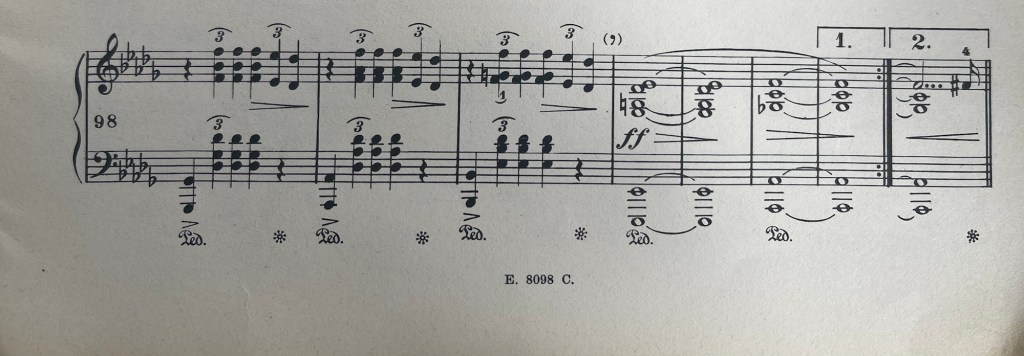
When the sonata was published in 1840 the London and Paris editions indicated the repeat of the exposition as starting at the very beginning of the movement (at the Grave section). However, the Leipzig edition designed the repeat as beginning at the Doppio movimento section. Although the critical edition published by Breitkopf & Hartel  (that was edited, among others, by Franz Liszt, Carl Reinecke , and Johannes Brahms ) indicate the repeat similarly to the London and Paris first editions, almost all 20th-century editions are similar to the Leipzig edition in this regard with the repeat to the Doppio movimento ,Charles Rosen  argues that the repeat of the exposition in the manner perpetrated by the Leipzig edition is a serious error, saying it is “musically impossible” as it interrupts the D♭ major cadence (which ends the exposition) with the B♭ minor accompanimental figure.Karol Mikuli’s 1880 complete edition of Chopin contained a repeat sign after the Grave in the first movement of the Piano Sonata No. 2. Mikuli was a student of Chopin from 1844 to 1848 and also observed lessons Chopin gave to other students – including those where this sonata was taught – and took extensive notes.

Many great artists including Barenboim,Horowitz,Rachmaninoff,Rubinstein,Ohlssohn,Kissin exclude the repetition altogether

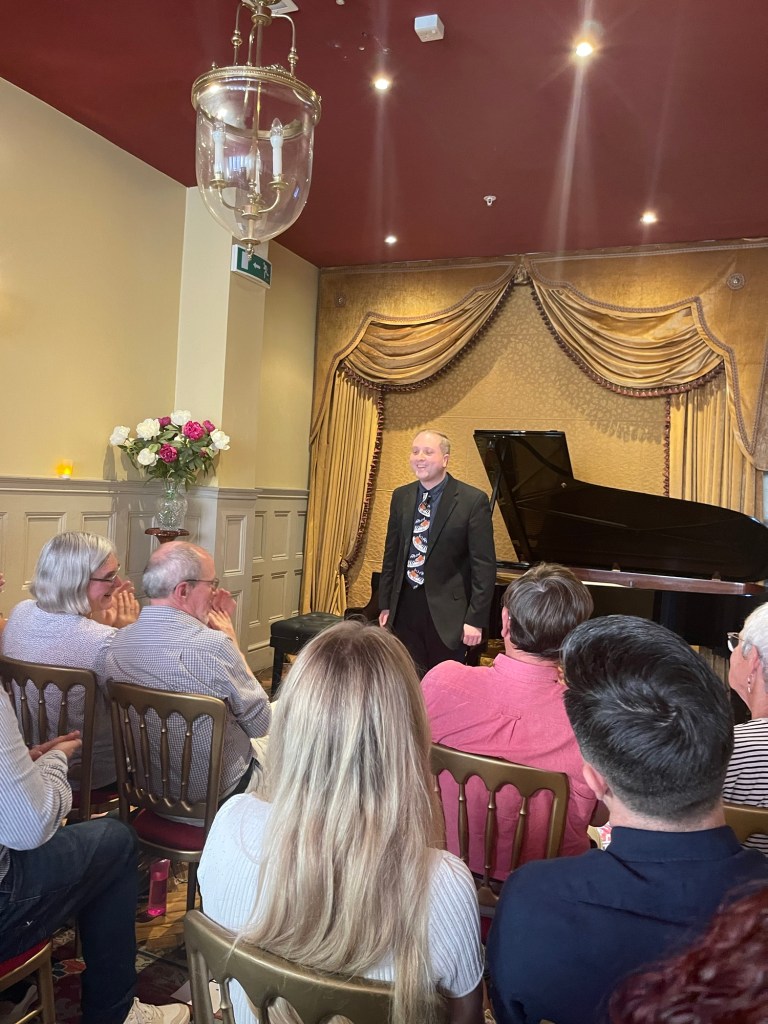
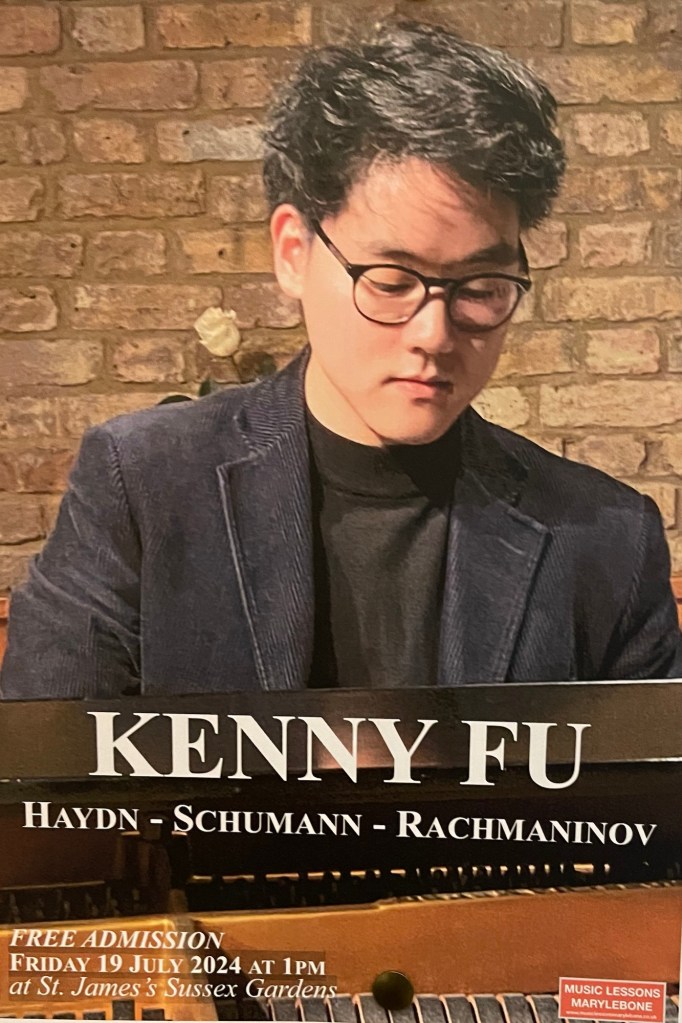
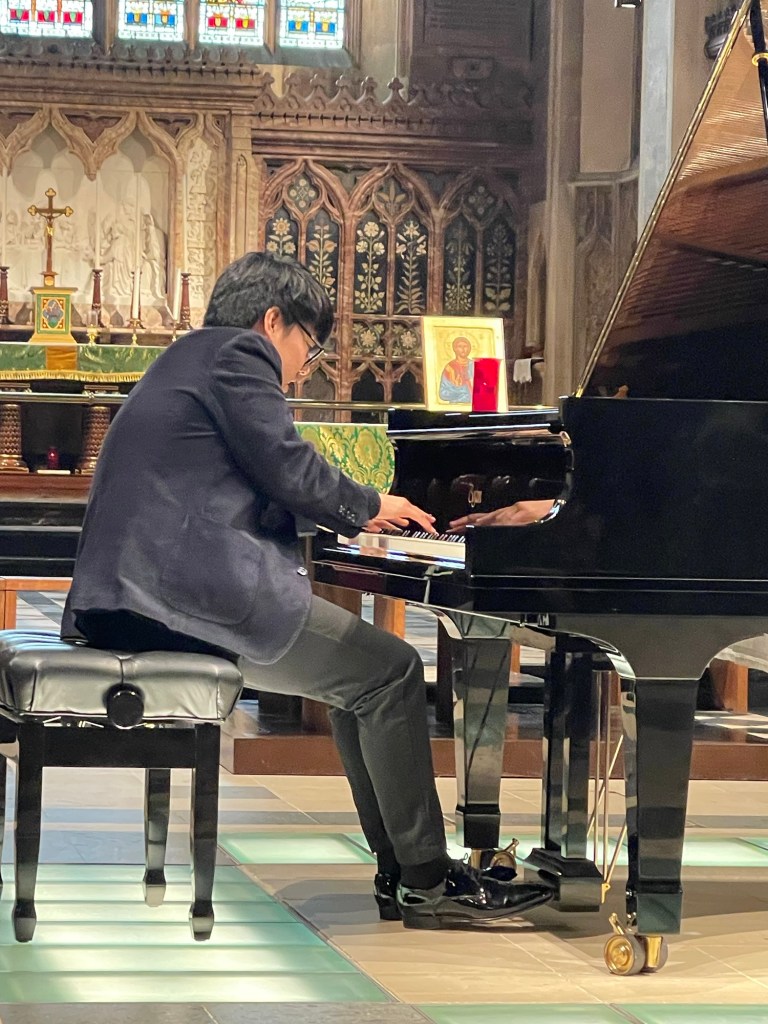
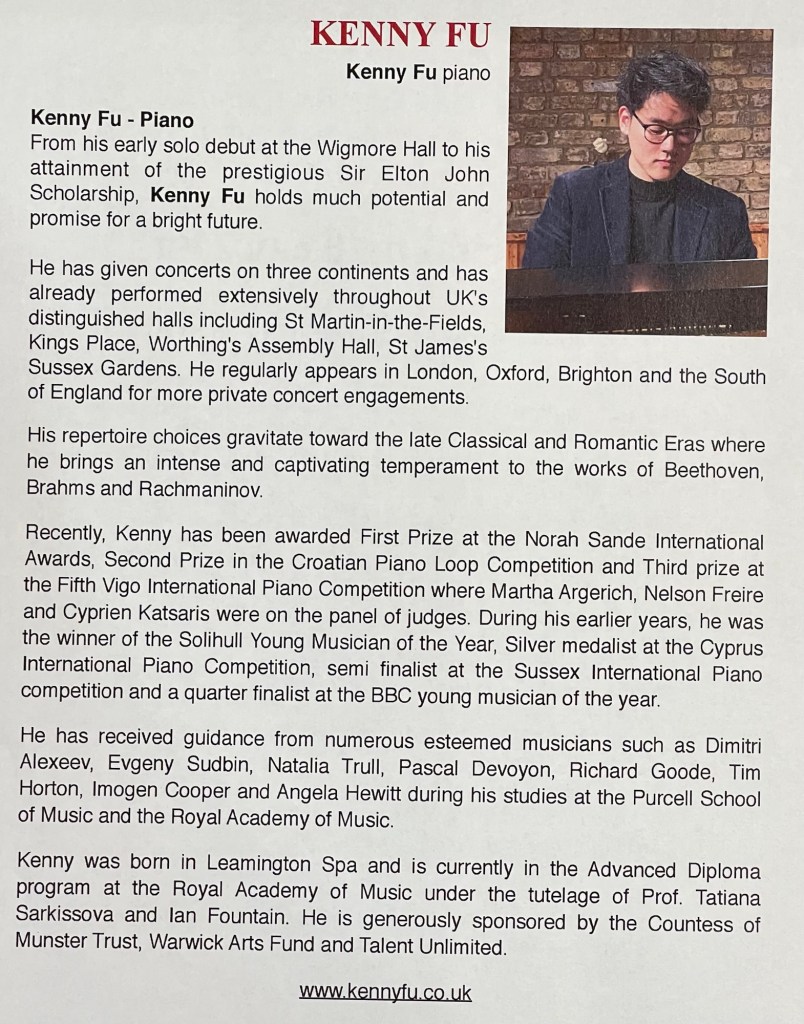
Kenny Fu at St James’s Lancaster Gate ‘clarity and intelligence of refined brilliance’

A superb Kenny Fu on what must be the hottest day of the year .Hotting up inside too with Rachmaninov’s demonic Second Sonata played with remarkable clarity and control as the monstrous technical obstacles just disappeared under his superb musicianship and architectural understand .He created a monument every bit as impressive as the one we were seated in. St James’s Lancaster Gate where I had heard Badura Skoda in what turned out to be his last London recital.
And today Kenny giving one of his first having graduated from the Purcell School and the Royal Academy and now about to perfect his studies in Italy.


The opening Haydn Sonata in E minor immediately showed his musical pedigree from the class of Tatyana Sarkissova Alexeev and Ian Fountain .A spontaneity and crystal clarity with fingers like taut springs with a boundless energy, each one with a subtle voice if its own .The simplicity and poignant beauty of the ‘Adagio’ unfolded with chiselled beauty as he caressed the keys with a natural movement of refined delicacy .The delicious ‘joie de vivre’ of the ‘vivace molto’ brought a hypnotic rhythmic elan to a movement full of concealed charm and wit.


A masterly performance of Schumann’s elusive Humoreske showed not only his kaleidoscopic sense of colour but the passionate musical understanding of a supreme stylist.There was a subtle beauty to the opening as he allowed the music to unfold so poetically with a superb sense of balance.Bursts of energy were played with a clarity but always with the architectural whole in mind. There were moments that were barely whispered with a sense of improvised freedom. A dynamic drive too that was never hard but always with clarity and beauty of sound.Lumimosity and simplicity of the ‘Einfach und Zart’ was followed by quite considerable technical mastery in the continual flow of the Intermezzo .’Innig’ was played with a beautiful melodic outpouring and a subtle sense of colour and rubato.There was nobility in the ‘Mit einigen Pomp’ with magic as a melody appeared in its midst before an exhilarating final bars of great drive and dynamism.

The Rachmaninov Second Sonata was played with sumptuous sound and transcendental virtuosity but again it was the clarity that was so extraordinary .A web of sounds that Kenny could steer through with musicianship and intelligence.There are moments in the Rachmaninov Sonata that are like notes being fired over the keys but there are also moments of intimacy and glowing beauty.Kenny managed to link all these parts together and show us the overall shape of a difficult work that at time borders on hysterical.

Kenny Fu at St Mary’s ‘Rachmaninov ignites and inflames an artist of impeccable musicianship’

Kenny Fu the making of an artist with poetry and intelligence at St Mary’s

The Wigmore Hall welcomes back Jan Lisiecki and the birth of a great artist

Jan Lisiecki piano
Fryderyk Chopin (1810-1849) Prelude in D flat Op. 28 No. 15 (1838-9)
Prelude in A flat B86 (1834)
Johann Sebastian Bach (1685-1750) Prelude in C from The Well-tempered Clavier Book I
BWV846 (1722)
Sergey Rachmaninov (1873-1943) Prelude in D minor Op. 23 No. 3 (1901-3)
Karol Szymanowski (1882-1937) Prelude in B minor Op. 1 No. 1 (1899-1900)
Prelude in D minor Op. 1 No. 2 (1899-1900)
Prelude in D flat minor Op. 1 No. 3 (1899-1900)
Olivier Messiaen (1908-1992) From Préludes (1928-9)
La colombe • Chant d’extase dans un paysage
triste • Le nombre léger
Fryderyk Chopin Prelude in C sharp minor Op. 45 (1841)
Sergey Rachmaninov Prélude from Morceaux de fantaisie Op. 3 (1892)
Henryk Mikolaj Górecki (1933-2010) From 4 Preludes Op. 1 (1955)
Molto agitato • Molto allegro quasi presto
Johann Sebastian Bach Prelude in C minor from The Well-tempered Clavier
Book I BWV847 (1722)
Sergey Rachmaninov Prelude in G minor Op. 23 No. 5 (1901-3)


Interval


Fryderyk Chopin 24 Preludes Op. 28 (1838-9)
Prelude in C • Prelude in A minor • Prelude in G •
Prelude in E minor • Prelude in D • Prelude in B
minor • Prelude in A • Prelude in F sharp minor •
Prelude in E • Prelude in C sharp minor • Prelude
in B • Prelude in G sharp minor • Prelude in F
sharp • Prelude in E flat minor • Prelude in D flat•
Prelude in B flat minor • Prelude in A flat •
Prelude in C minor • Prelude in E flat • Prelude in
C minor • Prelude in B flat • Prelude in G minor •
Prelude in F • Prelude in D minor

In concert, the artist is usually sharply focused on the present.
In playing the preludes, however, there is always a sense of
anticipation, of preparing and looking towards the next piece. By
definition, and certainly by tradition, a prelude anticipates the
main presentation, setting the stage by creating a mood and
colour. Can a recital be composed entirely of such introductions,
then, one leading directly into the next, and still be profound?
A master of the short form, Chopin brought the prelude out from
the shadows and into the spotlight. Using its concise format and
flexible form, Chopin embraced its ability to establish a mood.
The collection of 24 Preludes Op. 28 is a colour wheel of
emotions, showcasing all 24 keys and the atmospheres they can
convey. Instead of foreshadowing the masterpiece, they become
the focal point, and despite their individual brevity, Chopin was
always able to fully develop his melodic concepts. Certainly there
is a sense of each Prelude ‘falling’ into the next one, and there are
even some indications in the score that span between individual
pieces. Yet, these works can also be taken out of context, so to
speak. For this reason I am presenting Chopin’s Prelude Op. 28
No. 15 twice in this programme, to demonstrate its different
function as a worthy standalone piece, as compared to its
forming part of the greater whole (in this case the set of Op. 28
Preludes). While Chopin reinvented the prelude format with the
aforementioned set, other composers also embraced this open-
ended musical form with newfound purpose, stamping it with
their individuality. In this recital, I hope to showcase the broad
possibilities of the humble prelude, from Bach to Górecki, taking
the audience on a musical expedition and answering the above-
posed rhetorical question with an emphatic ‘yes’.
© Jan Lisiecki

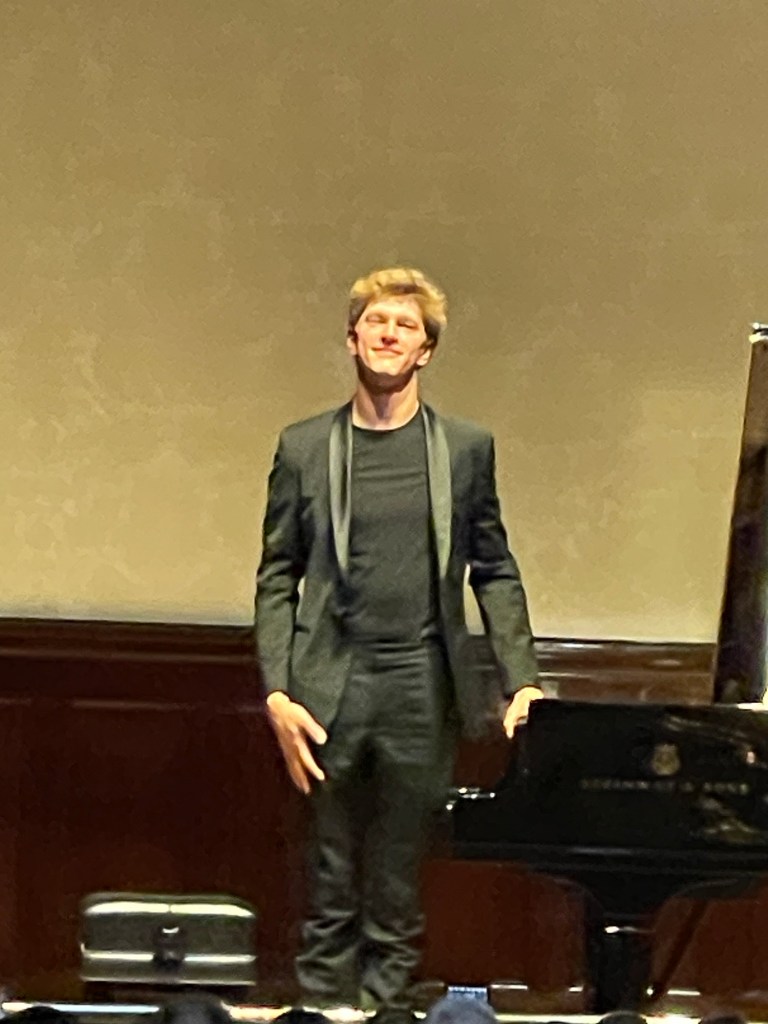
Wonderful to see the young piano prodigy turn into a great artist
I am sure the transition has not been easy but tonight I witnessed the birth of a great artist after having been very concerned at the last recital I heard here ten years ago.

Jan Lisiecki at the Wigmore Hall


Tonight there was not only total authority and aristocratic good taste but a range of sounds that rarely I have heard before .Playing of breathtaking beauty that could turn such well known works into a new discovery with no distortions or contortions but by simply looking closely at the score and with intelligence and supreme artistry shaped phrases with surprising originality.
There was passionate involvement too when needed and a transcendental technical command that could shape the B flat minor Chopin Prelude with supreme authority and fearless abandon.

A concert dedicated to the ‘Prelude’ with a first half played without a break, of Preludes by many different composers but culminating of course in a performance of THE Prelude – by Rachmaninov .The one rarely ever heard in concert these days but was the obligatory calling card for the composer.
It was the Chopin prelude op 45 though that will remain in my memory for the sumptuous sounds and the whispered poetic washes of colour out of which was born a melodic outpouring of radiance and glowing fluidity.Reservations about two rather streamlined Bach preludes fell to the wayside as they were incorporated into a carefully constructed whole.There were revelations too with three ravishingly beautiful preludes by Szymanowski and the whispered ethereal sounds of pure magic of three Messiaen early Preludes.A kaleidoscope of sounds with ‘Chant d’extase ‘ bathed in a mist of ravishing beauty and where ‘ Le nombre’ was very energetic with a delicate embroidery of brilliance ending with a single aristocratically placed bass note. The two Gorecki preludes were frightening as he unleashed sudden dynamic power and hammered precision that took us by surprise.A perpetuum mobile of breathtaking brilliance and diabolical tumultuous trills with both hands.The three preludes by Rachmaninov revealed the sumptuous richness of the Philadelphian sound world that Rachmaninov so adored.The D minor op 23 n.3 was played with beguiling rhythmic insistence full of changing colours and capricious changes of gear.The coda a ravishing world of wondrous sounds before the nonchalance of the ending just like his Paganini variations. THE Prelude was played with overwhelming authority and magic sounds that seemed to appear like an apparition out of the majesty of the opening chords.There was grandeur as the gasping phrases lead up to the tumultuous climax which was as breathtaking as I imagine the composer’s command performances always were .The Bach C minor prelude appeared mysteriously out of the end of the Gorecki prelude and seemed to me rather too mistily streamlined and un Tureck like to say the least.The opening Bach Prelude too had seemed too fast but it was the intelligence of this young artist who realised there is no set way to play Bach and he adapted his genius with chameleonic ease to the overall picture that he himself has described above.

The second half was dedicated to Chopin’s 24 preludes op 28 played as a whole that has only become the habit many years after Chopin’s untimely death.Played together it has an architectural strength that makes the idea of just a group of preludes almost unimaginable.However Jan today, as he has so eloquently written,found it interesting to hear just a single prelude : n 15 ‘Raindrop’ ( admittedly the longest and a real tone poem) and then hear it again in the context of what has become known as a unified whole and one of the great masterpieces of this innovative genius.There was a whispered opening of subtle colouring that immediately blossomed into the brooding second prelude where the long sustained melody was allowed to resonate with sumptuous beauty above such a disturbing turbulence.Suddenly the third sprang to life with brilliance and clarity revealing a temperament of great intensity.There was ravishing beauty to the fourth played with whispered simplicity and phrasing of rare delicacy.Clarity and brilliance of the agitated fifth opened the door for the poetic beauty of the sixth.The gentle pulsating heartbeat allowing the cello melody to sing below it with poignant beauty.We held our breath as the final gasps drew us in to this secret world that this young artist was sharing with us.

Wondrous phrasing of the shortest prelude before the beautifully shaped moving sounds of passionate intensity of the eighth.An extraordinary sense of balance allowed the solemn Largo to be so ponderously clear and the tenth was thrown off with the ease and grace of pianists of yesteryear with enviable jeux perlé of silf like lightness.A beautiful outpouring of melody shaped the next one with beauty and a sense of improvised freedom.The Presto opening of the twelfth was played with whispered tones as it slyly entered the scene gradually gaining in power before the final abrupt chords.It was the left hand of the thirteenth that was allowed the same voice as the right in a duet of glowing beauty where the visionary ‘piu lento’ was of heart rending beauty. A blast of wind enter the scene ,dry and abrupt, as the whispered beauty of the ‘Raindrop’ Prelude was allowed to resound again on this platform but this time as the culmination of a masterwork.The sixteenth prelude like the 16th Goldberg variation signalled a complete change – Bach of course with a French overture but Chopin a study of breathtaking brilliance and dynamic drive that was played fearlessly by our young poetic virtuoso.
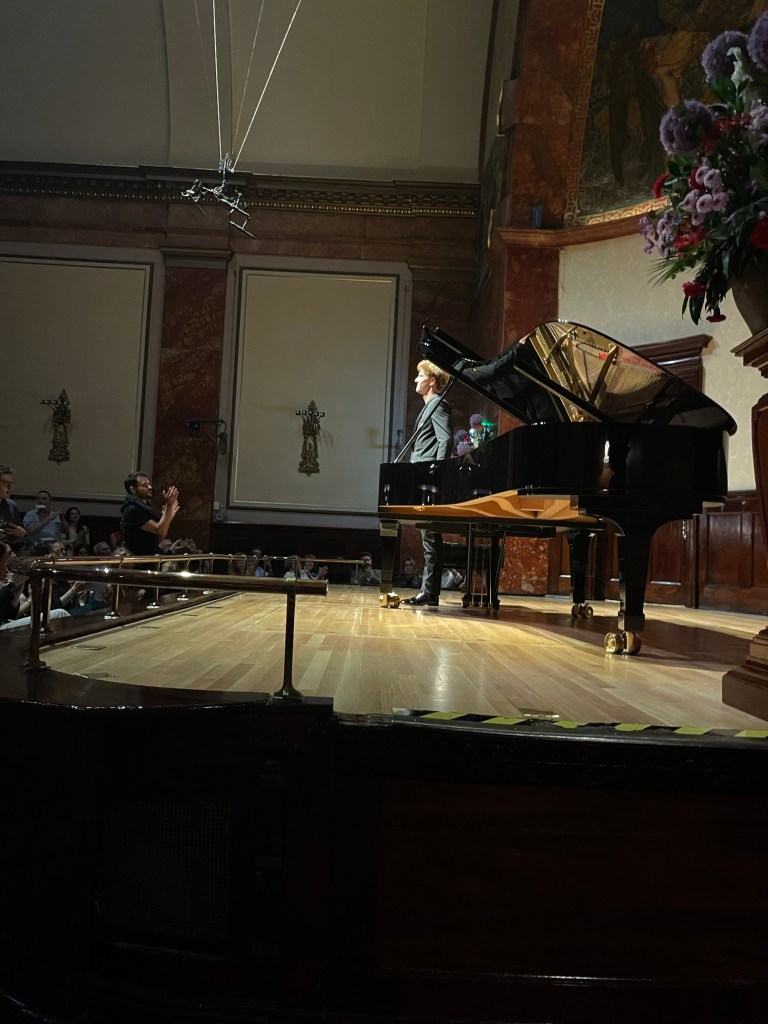
The seventeenth in A flat is also a great tone poem which Jan played with great architectural shape.A mist of A flat at the end allowed the melody to be submerged in a magic mist of sumptuous beauty.The eighteenth just growing quietly out of this mist as this recitativo picked up power with passionate abandon .The nineteenth one of the most trascendentally difficult of all these ‘24 problems’ was played with a sumptuous masterly ease of mellifluous expansiveness.There was the same sense of noble grandeur to the C minor Prelude that Jan had brought to the Rachmaninov op 3.Gradually dying away to a whisper we dared not breathe such was the tension and atmosphere created by this young poet of the piano.The simple glowing beauty of the next prelude was followed by the whispered entry of the octaves that gradually built to a tumultuously passionate climax that was defused only by the glowing fluidity of the penultimate prelude.The opening left hand declaration of the final prelude left us in no doubt of the passion and exhilaration that we were about to enjoy.A relentless tempo in which streams of notes shot from one end of the piano to the the other.Double thirds just cascaded with passionate intensity and fearless abandon but it was the final three D’s that revealed the great artistry of this young musician- each given a voice of its own instead of the more usual pounding to the bottom of the keys of lesser artists.
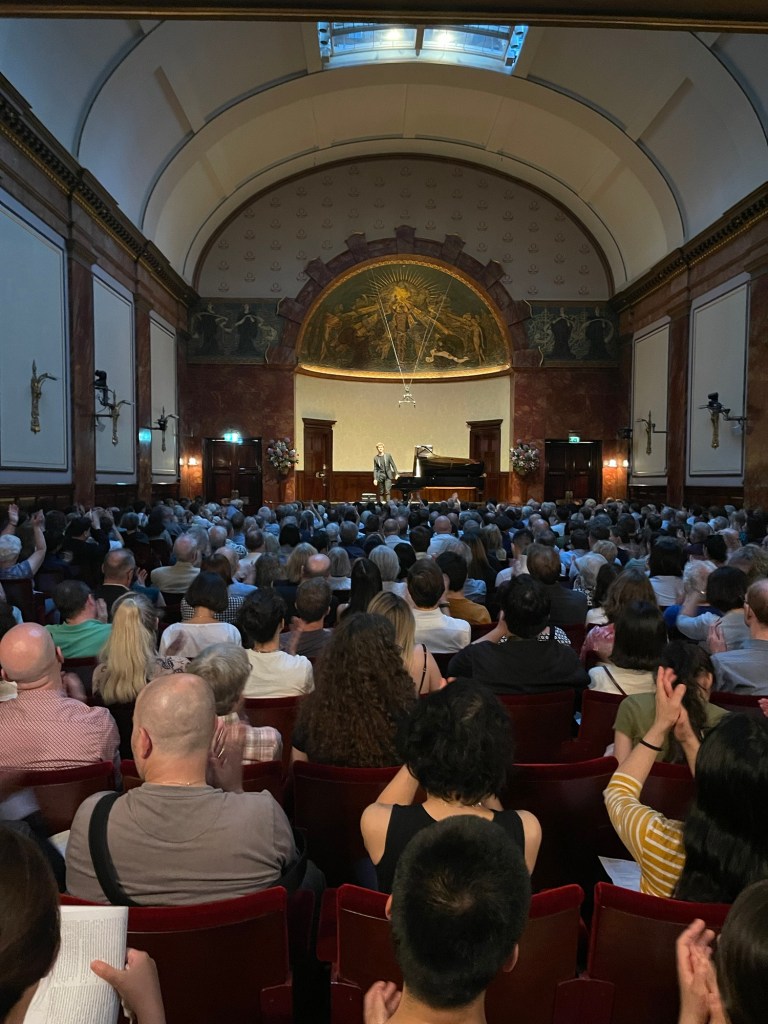
An ovation and a welcome back for this young musician returning as the great artist he has become.

A single whispered Romance by Schumann was his way of thanking an audience who had listened with baited breath to his wonderful music making.

An artist is born Pappano and Lisiecki in Rome

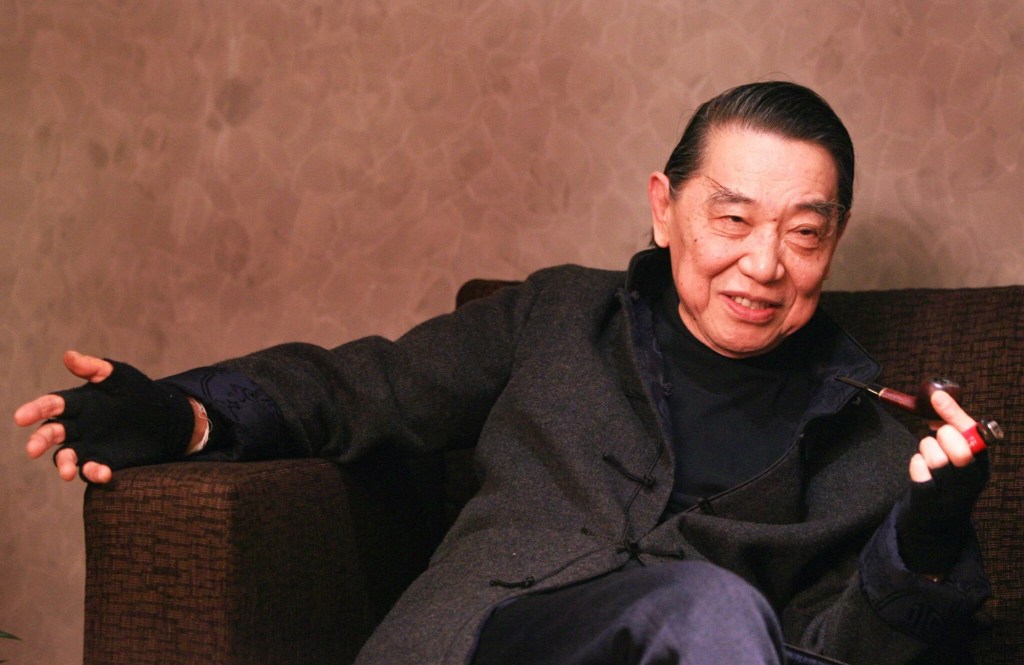
The Preludes I last heard in Sermoneta many years ago played by Fou Ts’ong.It was the genius of Ts’ong who inspired generations of young musicians in his masterclasses including in Sermoneta but mostly in the piano Academy in Como .He had surprised the world when he was awarded the ‘Mazurka’Prize at one of the very first Chopin Competitions in Warsaw.How could a Chinese pianist understand the soul of a Pole!?Ts’ong simply said that the soul in Chopin was the same soul that was in ancient Chinese poetry of which his father was an expert.A soul knows no boundaries!It was Ts’ong too who declared Chopin’s 24 Preludes to be 24 problems.More than the 24 studies because each of the preludes has a different technical problem that needs to be mastered with technical precision and artistry.

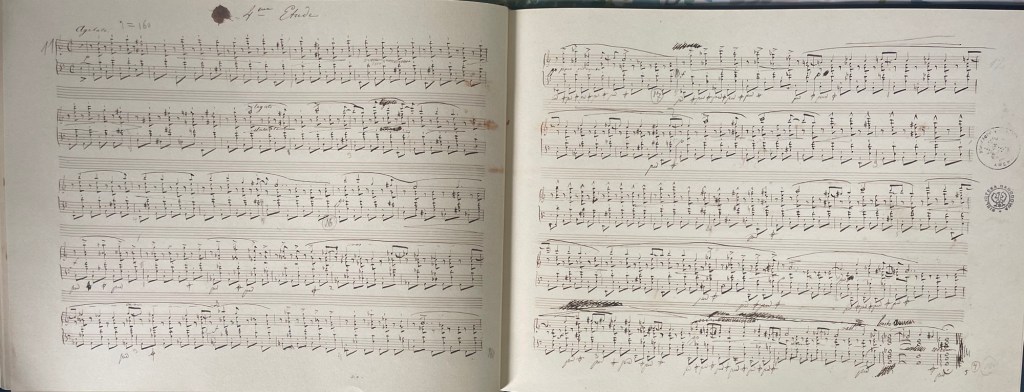
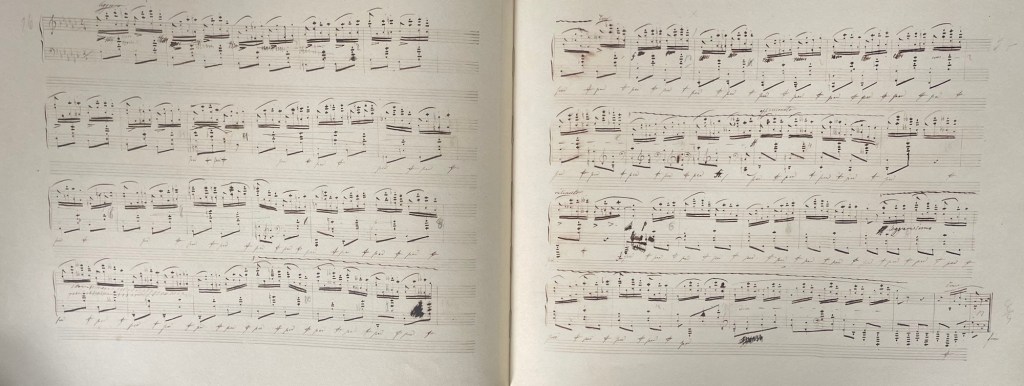
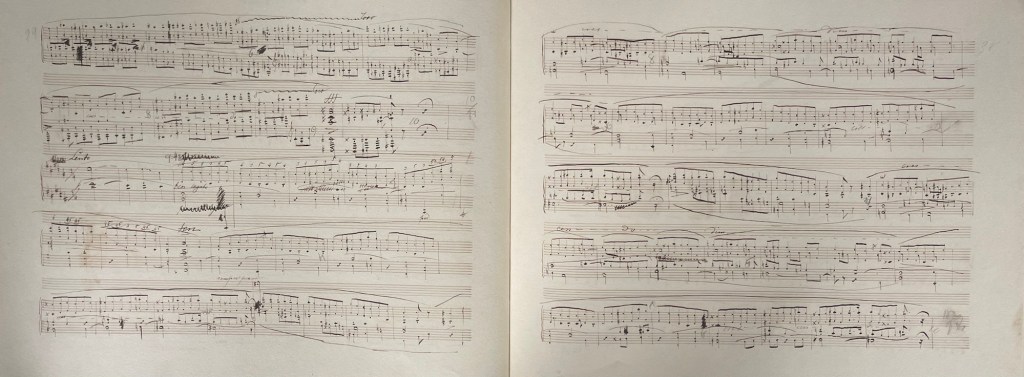
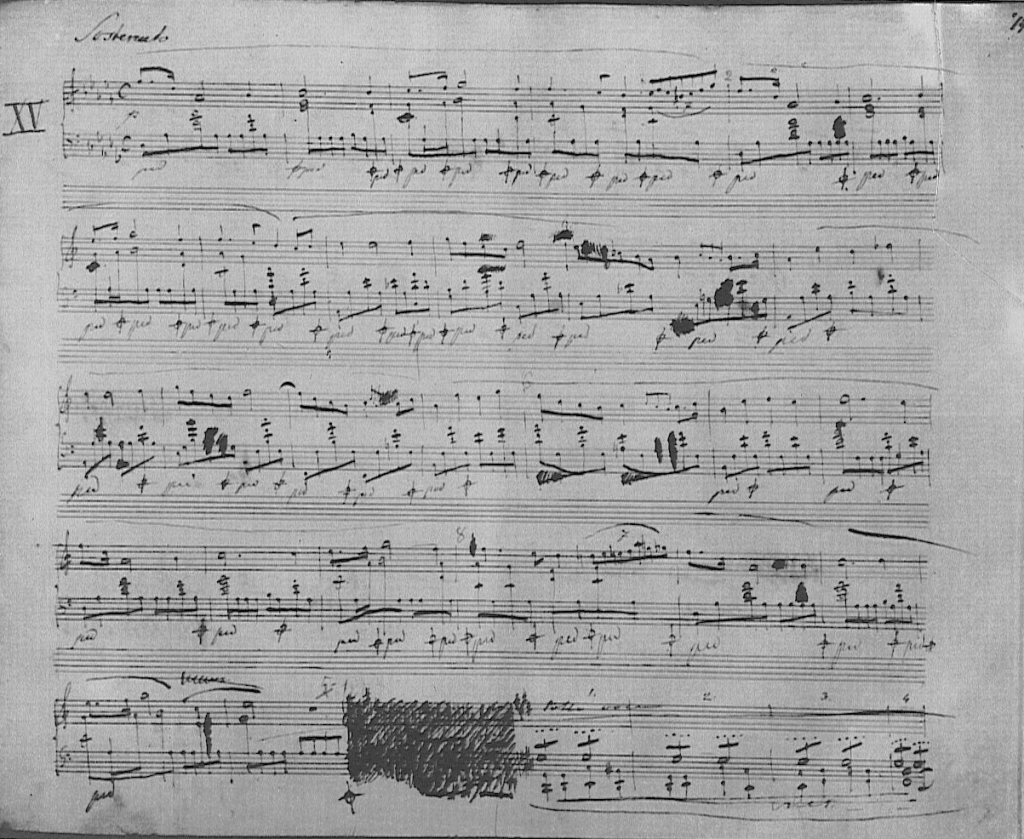
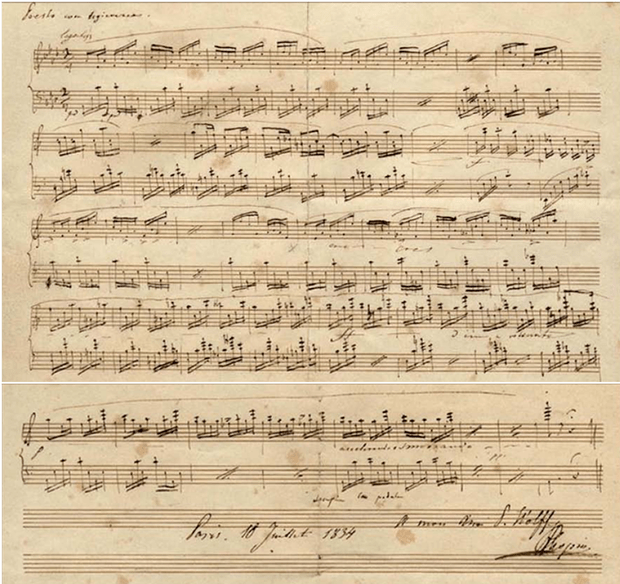
Prelude op 28 n.15 ‘Raindrop’ autograph
In addition, Chopin wrote three other preludes: a prelude in C♯ minor, Op. 45; a piece in A♭ major from 1834 and an unfinished prelude in E flat minor

Chopin’s 24 Preludes, op .28, are a set of short pieces for the piano, one in each of the twenty-four keys , originally published in 1839.

Prelude in A flat 1834

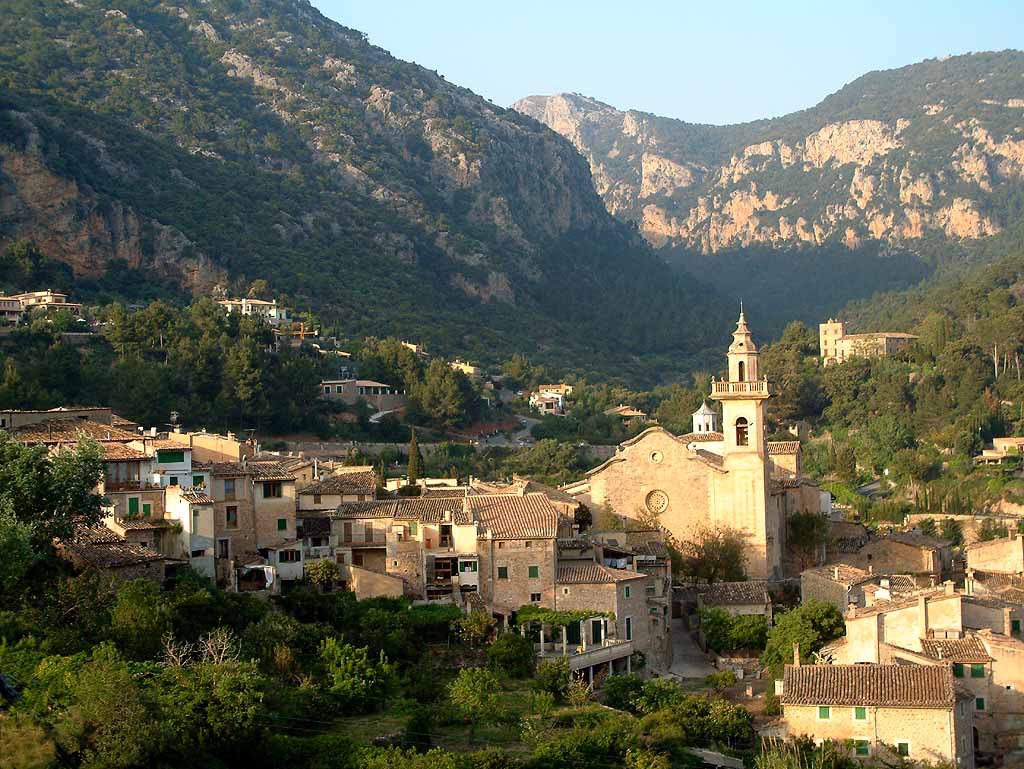
Chopin wrote them between 1835 and 1839, partly at Valldemossa,Mallorca, where he spent the winter of 1838–39 and where he had fled with George Sand and her children to escape the damp Paris weather.

Valldemossa Mallorca

In Majorca, Chopin had a copy of Bach’s ‘48’ and as in each of Bach’s two sets of preludes and fugues, his Op. 28 set comprises a complete cycle of the major and minor keys, albeit with a different ordering.Whereas Bach had arranged his collection of 48 preludes and fugues according to keys separated by rising semitones , Chopin’s chosen key sequence is a circle of fifths , with each major key being followed by its relative minor, and so on (i.e. C major, A minor, G major, E minor, etc.). It is thought that Chopin might have conceived the cycle as a single performance entity for continuous recital.An opposing view is that the set was never intended for continuous performance, and that the individual preludes were indeed conceived as possible introductions for other works.Chopin himself never played more than four of the preludes at any single public performance.Nor was this the practice for the 25 years after his death.

Unfinished prelude in E flat minor

The first pianist to programme the complete set in a recital was probably Anna Yesipova in 1876.Nowadays, the complete set of Op. 28 preludes has become part of the repertoire , and many concert pianists have recorded the entire set, beginning with Busoni in 1915, when making piano rolls for the Duo-Art label. Alfred Cortot was the next pianist to record the complete preludes in 1926.

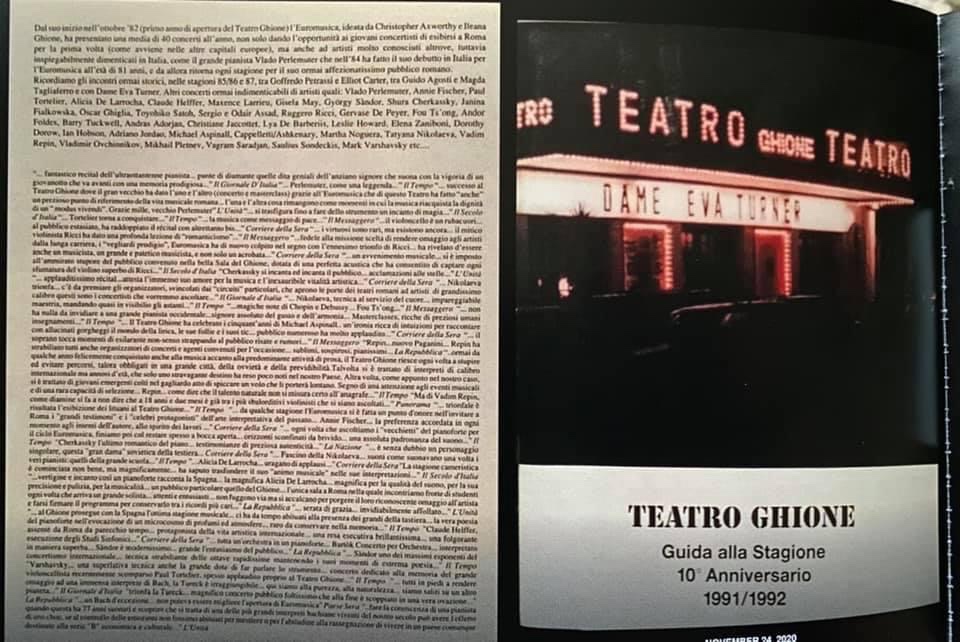
He would also play the 24 Studies op 10 and 25 together with the 24 Preludes op 28 in the same programme.Something that Fou Ts’ong had done at the Festival Hall in London and on my request at the Ghione Theatre in Rome.

https://m.youtube.com/watch?v=EqDJVUfqLPg

‘ I imagine this is how Chopin would have played – a marvel’ Herman Hesse

These were the words to describe Fou Ts’ongs playing of Chopin and it was a privilege for me to be able to invite him to Rome to the Teatro Ghione year after year not only to give recitals but to share his inspirational gifts with young musicians in the masterclasses that he held there too.

Roberto Prosseda pays tribute to the genius of Chopin and the inspirational figure of Fou Ts’ong

Francois Dumont remembering the genius of Fou Ts’ong at the Razumovsky Academy

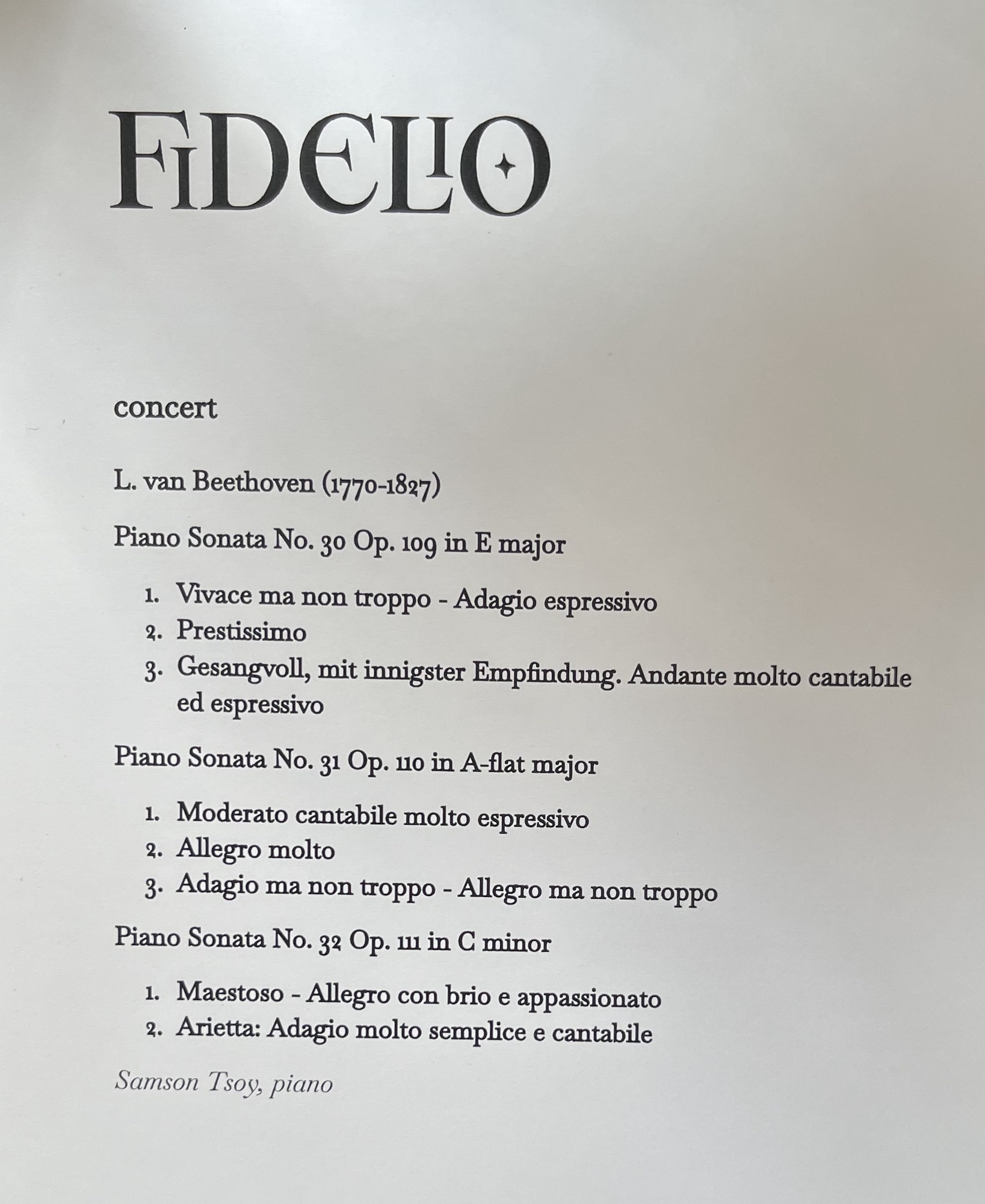
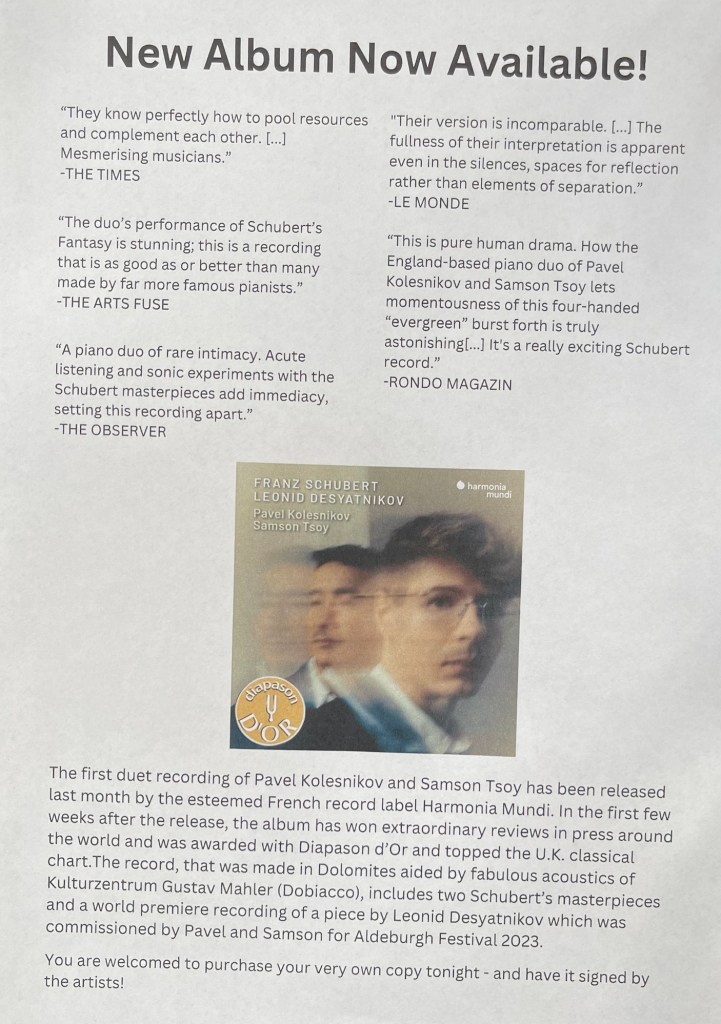
Review of Samson Tsoy The Trilogy at Fidelio

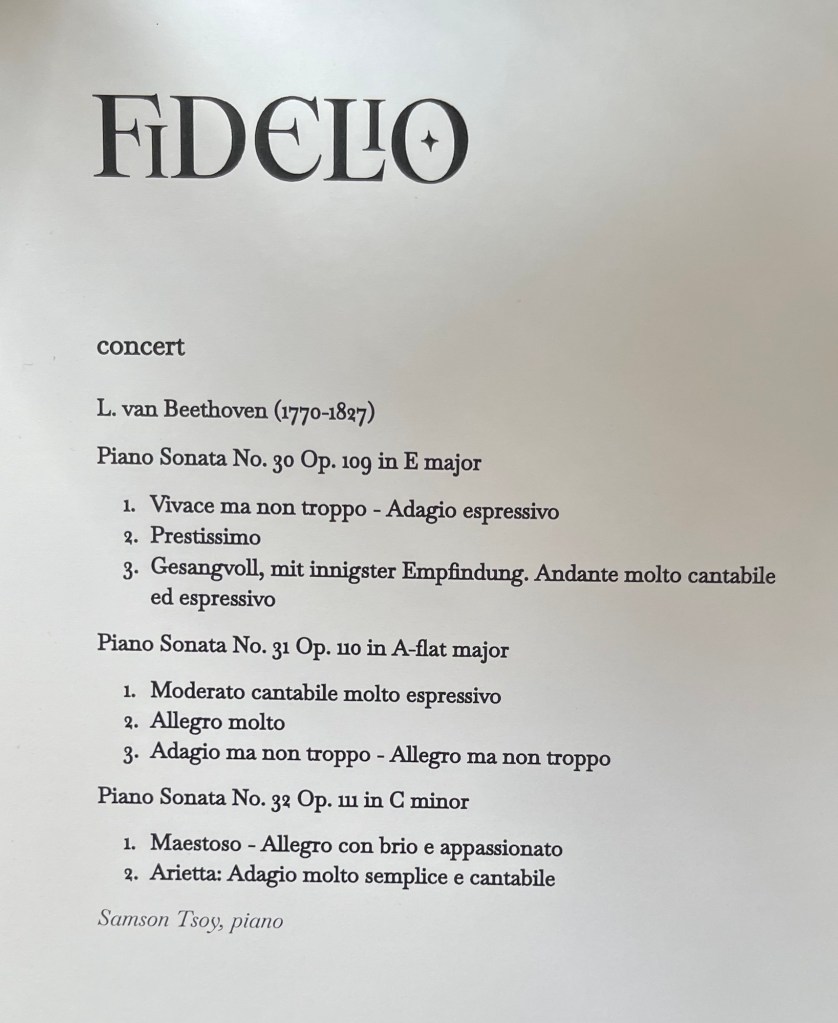
SAMSON TSOY: BEETHOVEN’S LAST THREE SONATAS – Mastery and restless conviction reaching for the skies with Fidelian courage

July 17, 2024 6:30 PM

The last three sonatas are the summary of Beethoven’s late style at the keyboard. Written with the idea of a coherent set of works, they speak to listeners of all times and age and they are a spectacular example of synthesis and richness of details.Samson Tsoy brings Beethoven to Fidelio.
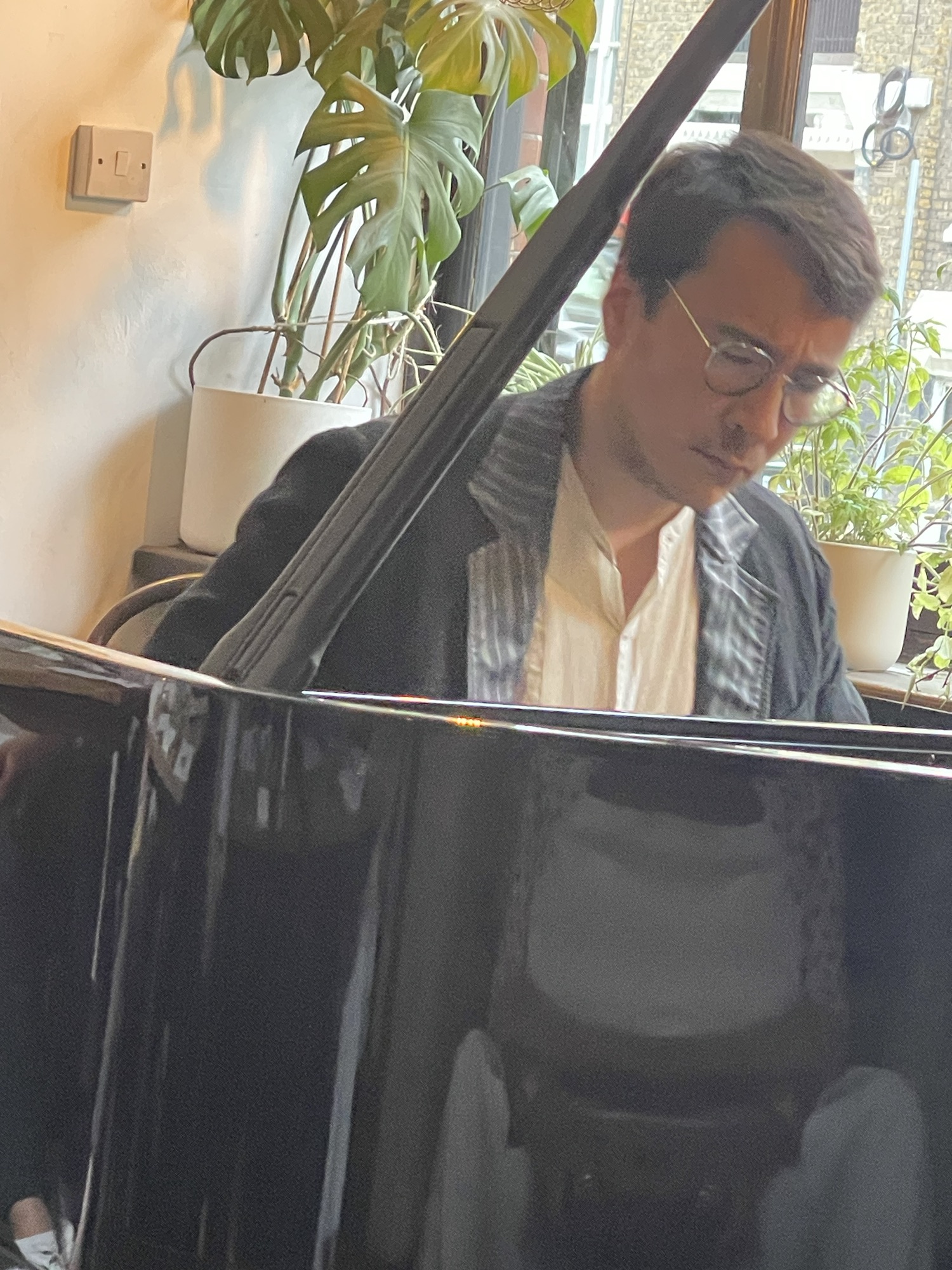
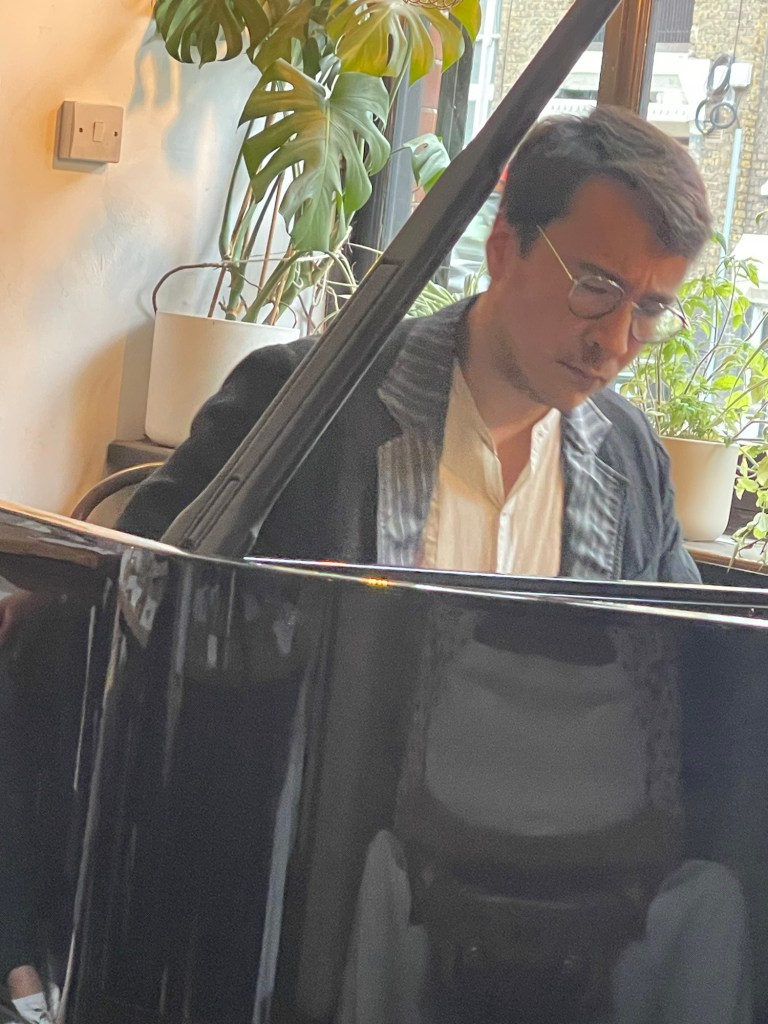
The Trilogy played with mastery and the unrelenting conviction that I have not heard since Serkin.A driving force that united these three last sonatas with the irascible temperament of a tormented soul reaching out to the paradise that only he could envisage awaiting on the horizon.
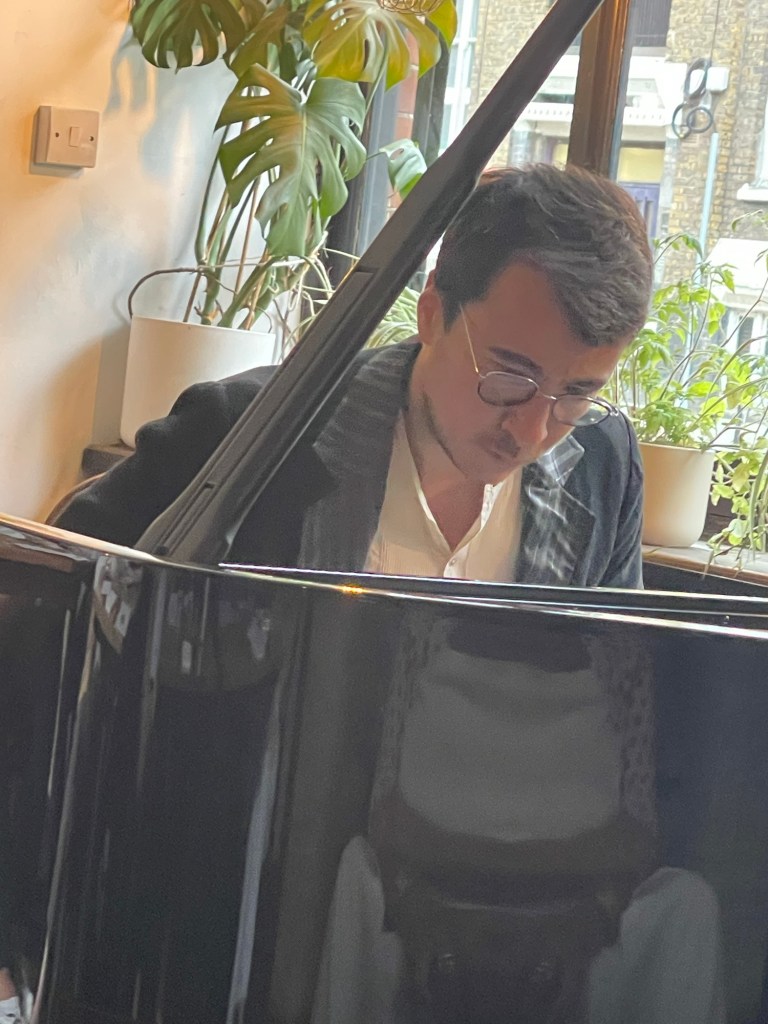
A remarkable performance in the four day residency that he and Pavel Kolesnikov are sharing over the next days.On the menu some of the greatest works ever written for the keyboard with the Goldberg Variations,the Beethoven trilogy and Schubert four hands.
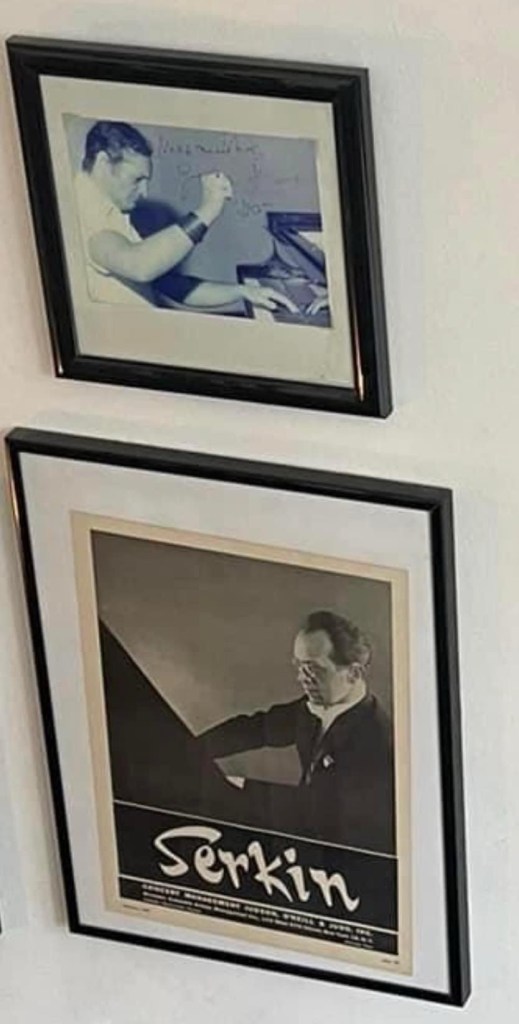
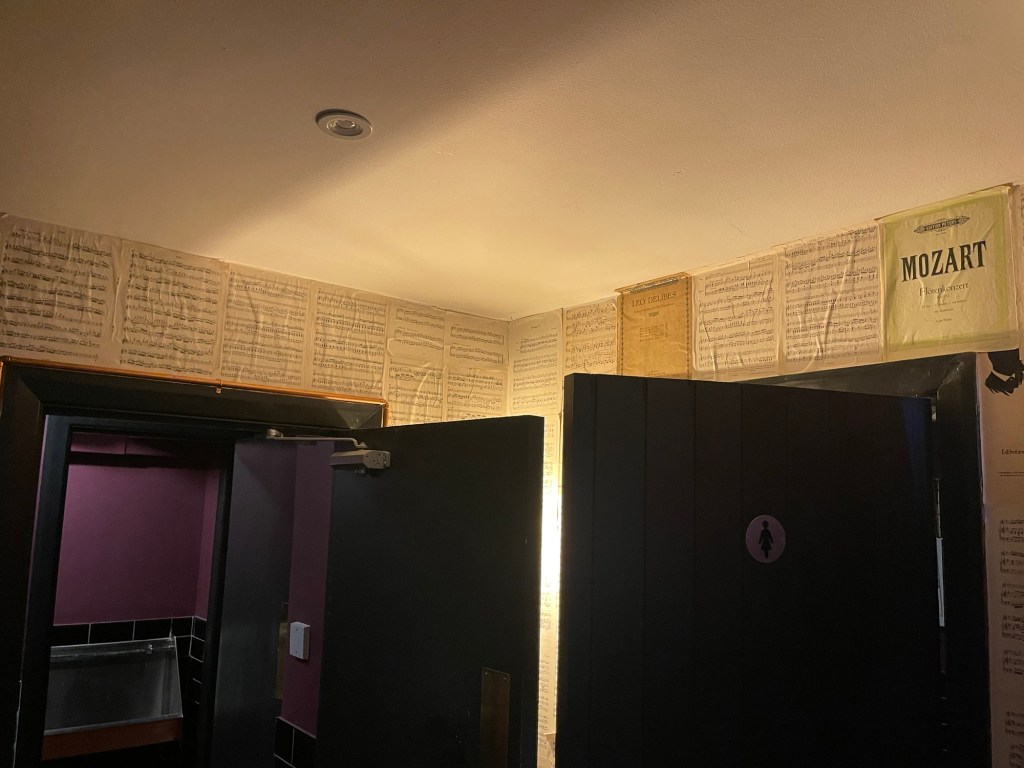
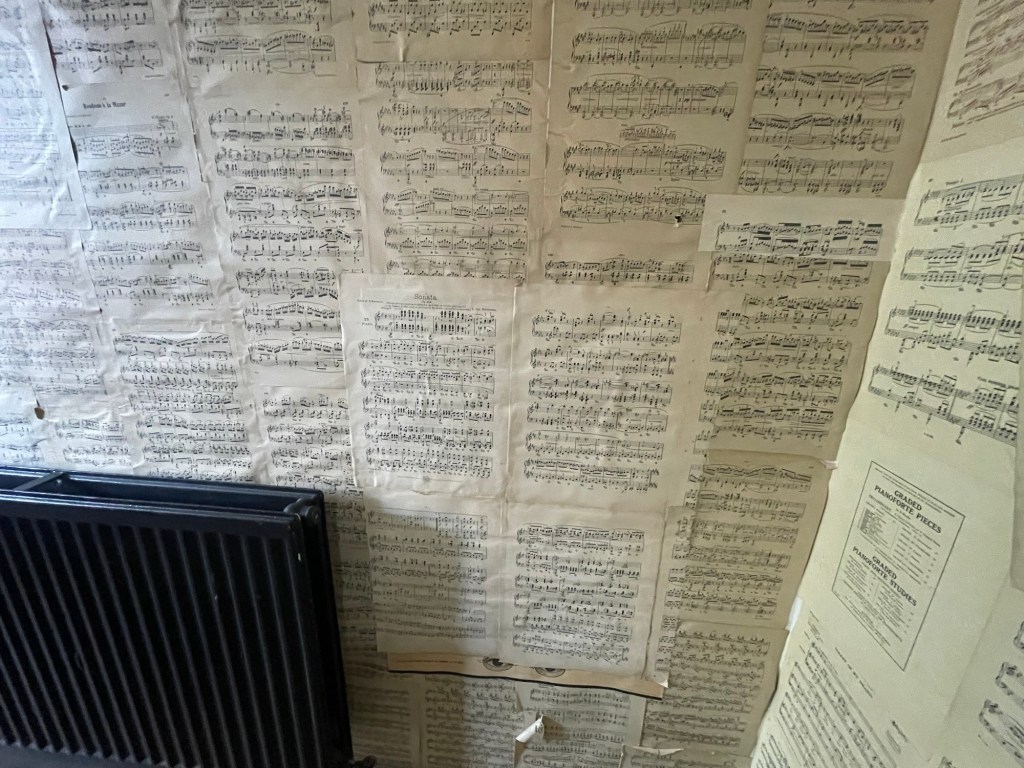
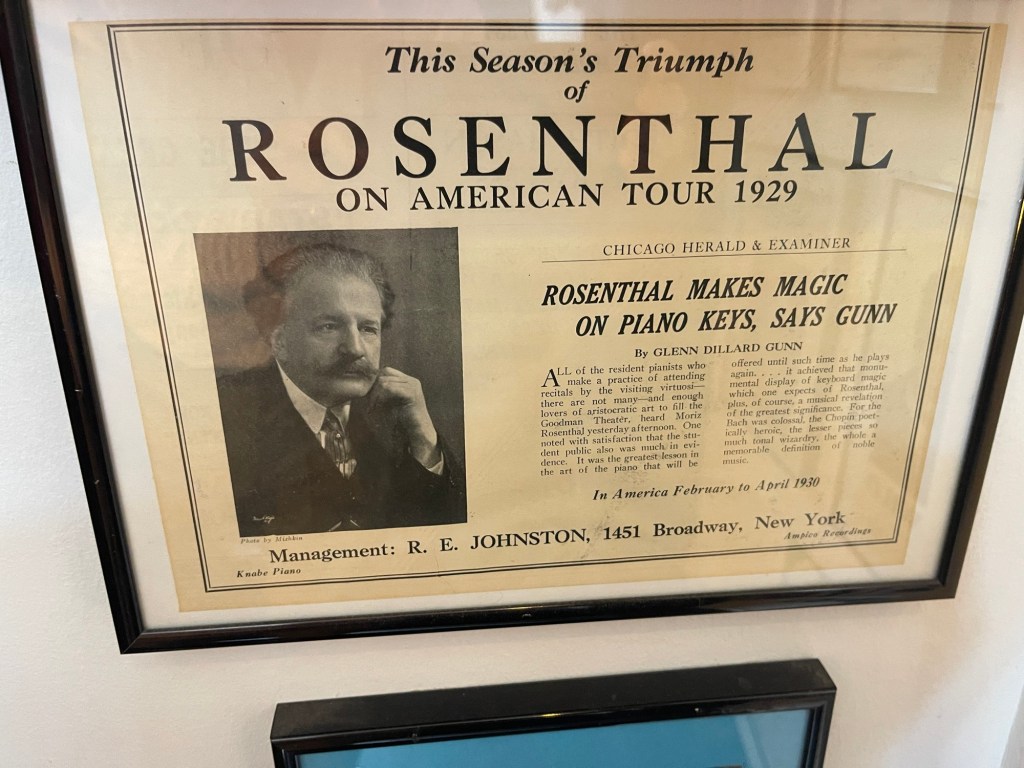
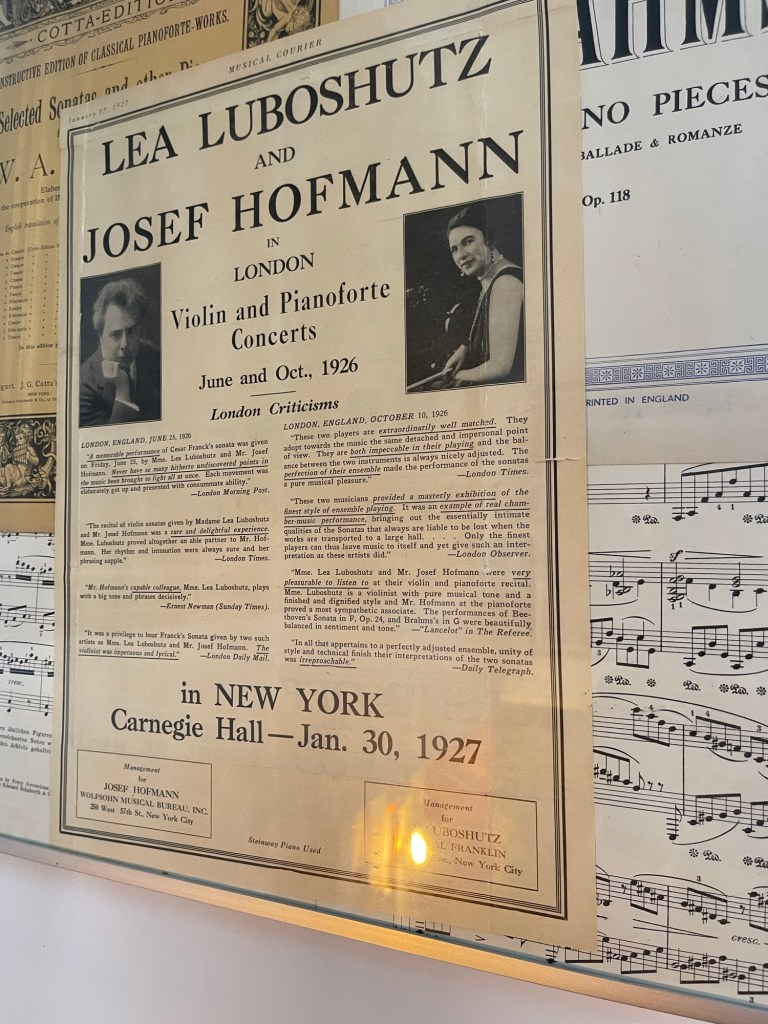
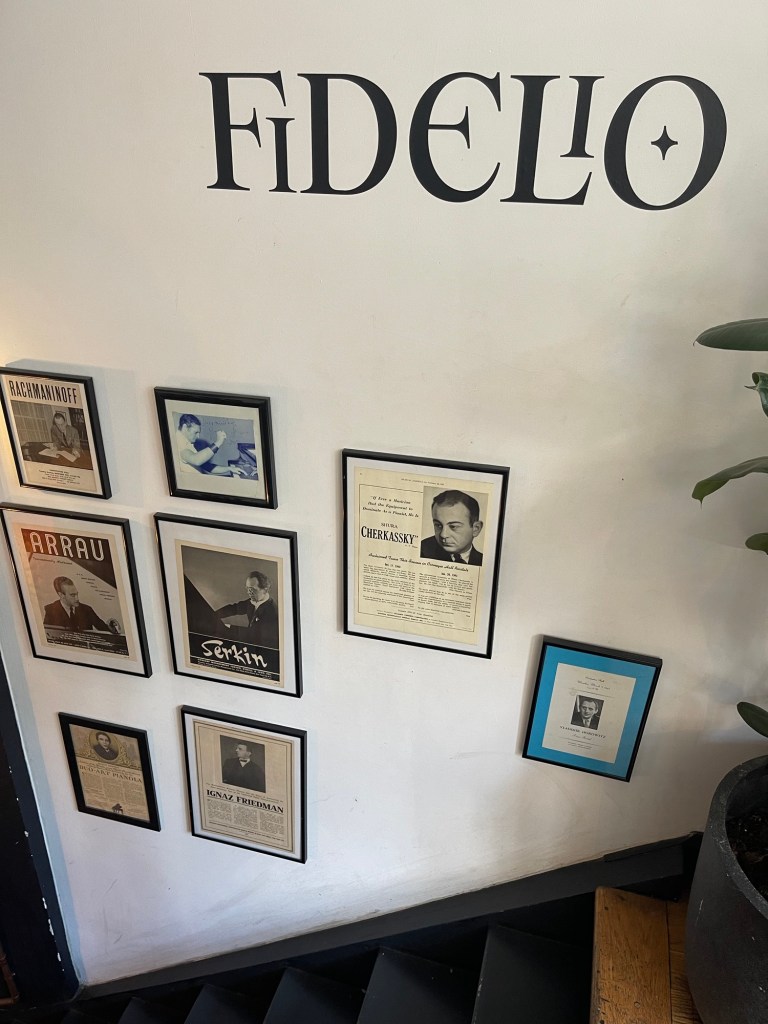
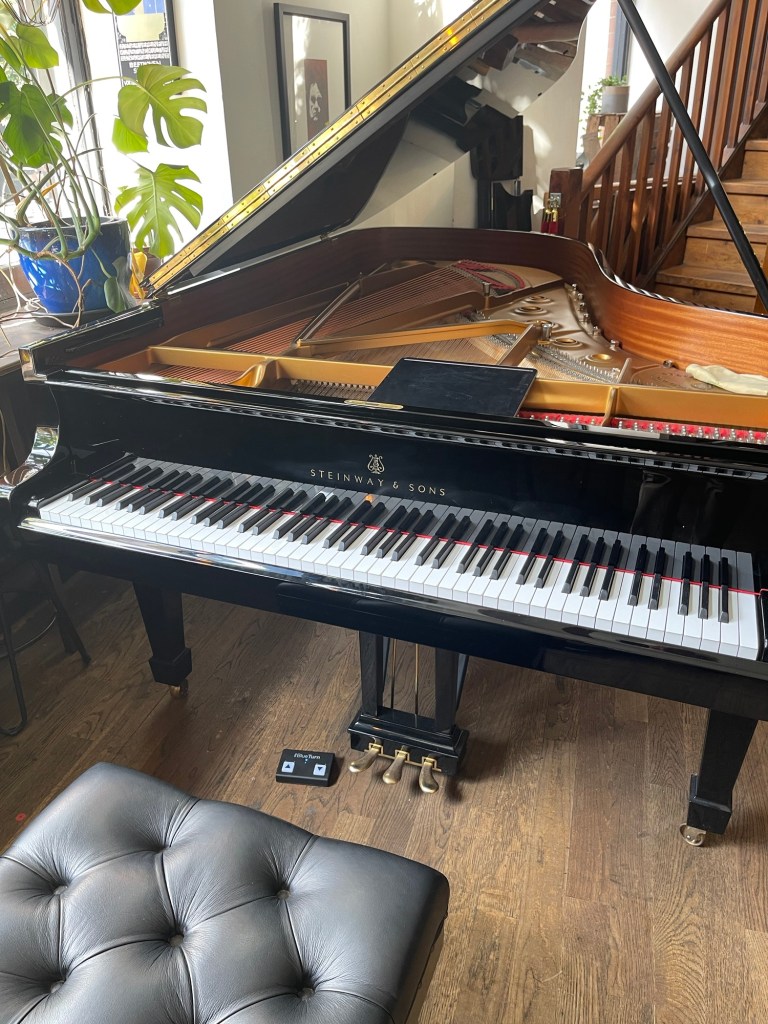
Masterpieces played by partners in music and in life as they allow their music making to resound around this warm intimate atmosphere.Raffaello Morales ,the conductor,has created in the Italian quarter of the city a venue that exudes his love of music and with refined good taste has adorned every angle of this ‘musical bistro’ with original programmes of some of legendary pianists of the past.

Not content to stop there he has covered parts of the walls with musical scores of works such as Carnaval or the Hammerklavier.
Wherever you look there are objects which exude his passion for music.Presenting the concert with quite considerable insights he was later to be seen supervising every detail of the culinary feast that was to follow the musical one.

Beethovens op 109 was played with a flowing almost improvised freedom with a true sense of discovery that was both passionate and contemplative.The two ‘Adagio espressivo’ interruptions were but the consequence of a tension that was created within such a seemingly mellifluous flow (similarly in op 110) .It was to be this tension that pervaded all Samson’s performances as this was a vision of a tormented soul gradually coming to terms with himself and life.Clouds were gradually opening and rays of light were allowed to reassure his soul of a more peaceful future world ahead. It was an extraordinary statement and was the key to Samson’s reading of the trilogy.It had much in common with Serkin’s performances that were like electric shocks that included the physical stamping on the pedals but luckily no moaning or spitting in the confined space Fidelio! As Fou Ts’ong said it is easier to be intimate in a large space than in a smaller one – a performer’s paradox ! A tumultuous second movement played with the rough agressiveness for which Beethoven was renowned .Relentless to the final stamping of the feet with a final few chords like a hurricane of suppressed energy. Samson understandably had an ‘aide memoire’ hidden away for three different programmes in the same week but such was his involvement he had no time to even glance at the i pad as this was an all or nothing performance of quite extraordinary dynamism.What an oasis was the theme of the ‘Andante’ played with string quartet texture.If he threw his hands in the air with the grace of a dancer in the first variation it certainly did not turn into a waltz but remained the poignant oasis that the theme had envisaged.A continual forward movement in the second variation – leggiermente but always orchestral not pianistic leading to the ‘Allegro vivace ‘ that was played with fearless abandon and considerable technical mastery.The gradual unweaving of the knotty twine revealed the theme floating on streams of sound like a continuous flow of water coming to rest so naturally and delicately.The fourth variation played in a subdued stately manner and only ‘forte’ as Beethoven has indicated.It was infact the scrupulous attention to Beethoven’s markings that showed a musician or should I say a medium between the composer and his sounds.The return of the theme was played with masculine authority with sentiment but never sentimentality which was such a significant part of Samson’s interpretations.The trills ( like with Scriabin a century later) that are just streams of sound on which Beethoven can enact this great drama that excites and exhilarates but also burns itself out as the theme returns unscathed by the journey it has undergone (as opposed to the Goldberg Variations which if you ignore Busoni ,and I sincerely hope you do ,is a vision of paradise after the ‘slings and arrows of outrageous fortune’.The vision of paradise with Beethoven had another few stops to go yet!A robust orchestral sound here too .These are not piano pieces but orchestral and Samson is directing his orchestra of 88 players like a great conductor showing us the way through a great score.Piano,forte,staccato, pizzicato etc take on a different meaning in orchestral terms.This is not always the case with many who try to play these masterpieces in a pianistic way with a sense of balance that has no meaning for such profound statements.It is a question of weight as Tortelier once said to me , of never leaving the keys or strings where fingers are like limpets sucking out their life’s blood.A continual flow of sounds and some unusually passionate playing with the left hand chords at the end of the exposition.This made for an even more startling contrast with Beethoven’s daring move from E flat to D flat before the development.Even in the development there was some very robust playing from the cello and bass but with fragments of the opening motif always to the fore.An extraordinarily daring sense of balance spurred on by Samson’s authoritative conviction.A very deliberate pace to the Scherzo was the antithesis of the previous Sonata which included some masterly playing of the treacherous Trio .Almost coming unstuck with the final bars or was it intentional ? An interpreter that one trusts can open gates that are food for thought and have one scurrying to look at the score ( This happened often with Murray Perahia who when Serkin heard him as a student recommended by Richard Goode exclaimed ‘you told me he was good ,but you did not tell me how good !’ ) The ‘Adagio ‘ was played with profound beauty , very measured and poignantly pointed with a beautiful sense of balance .Even the vibrating ‘A’ seeemed so right as it found its way to the sublime ‘Arioso dolente’.The subtle appearance of the fugue as Beethoven indicates with his very precise pedal markings was played with radiance and simplicity.If the Arioso had been the sumptuous sound of the Philadelphia the fugue was the clarity of a woodwind ensemble .Beethoven’s knotty twine was allowed to unfold with mellifluous simplicity until the true electric shock of the bass ‘G’ which in Samson’s hands was truly overwhelming – I could see Sir Norman Rosenthal almost jump out of his seat! Again the change from E flat this time to D was like one door shutting and another opening as the ‘Arioso’ appeared even more beautifully embellished than before . Beethoven’s mastery of Bel Canto could certainly put Bellini to shame !The great whispered chords gradually grew in sound and one could see Samson literally shaking as the sounds were indeed vibrating throughout his being.Leading to the magical return of the inverted fugue and the gradual build up to the triumphant outpouring of glorious resignation.It was played with devil may care passion where the notes were of little importance when it was what was said not necessarily how it was said.A gruff climax that I imagine would have been how the master himself might have played it if only he had not completely lost his hearing .Another remarkable performance and a second brick of the great edifice that Samson was reconstructing with such commitment and mastery.

A short break for Samson had him hurrying back not wanting to leave this mighty edifice only two thirds constructed.Not allowing himself or us to settle as he struck the mighty opening of Beethoven’s last Sonata.Maestoso indeed with Beethoven’s no nonsense ‘sfp’s’ played with fearless abandon as we moved with trembling expectancy to the first appearance of ‘C’.Now the fun could begin with the ‘Allegro con brio ed appassionata’ as Perlemuter said like water boiling over at one hundred degrees.It was played with just the dynamic drive of turbulent exasperation and desperation bursting into bel canto song only to relieve momentarily this whirlwind of sounds.Samson here playing full out stamping on the pedal as he urged himself on with the same passion with which the composer had put pen to paper.There was a beautiful full sound to the ‘Arietta’ which was indeed played ‘molto semplice e cantabile’ with the variations unwinding with a continual forward movement that was hypnotic .The explosion of the third variation was where Samson like Serkin lost all self control as the music possessed them with some hypnotic power.Gradually subsiding to the fourth variation where fragments of the theme are just floated on gently vibrating sounds.It was here that I missed the truly etherial sounds that I believe Beethoven had discovered on this final trilogic journey.I remember Serkin too at this point creating an oasis of absolute calm where we were drawn in to sounds that were not projected out but floated into the stratosphere.The gradual build up to the final bars was indeed a triumphant testimonial of truth and maybe of a believer too although Beethoven would never have admitted it .But Beethoven’s world was sound not words .Sounds that were only in his head but by some miracle he could write down so posterity could be drawn into such a wondrous journey that was to be his last.Thank you Samson ,your selfless commitment and dedication mark you out as a very special artist indeed.
Cherkassky has pride of place on the wall at Fidelio and he was quoted as saying in Le Monde de la Musique when asked about his playing : ( he too hated talking about music – musicians yes , gossip in particular, but never making himself self conscious about his music making ) 
‘Je sens – Je Joue- Je transmets’ . 
Performers are the servants of the composer as we heard today.
‘Bon appetit‘. Christopher Axworthy

POINT AND COUNTERPOINT – thoughts on the Trilogy 

Ludwig van Beethoven
17 December 1770 Bonn 26 March 1827 (aged 56) Vienna 
Op 109 first movement 
Dedicated  to Maximiliane Brentano, the daughter of Beethoven’s long-standing friend Antonie Brentano
https://youtu.be/1jLT7rD-K-c?feature=shared
https://youtu.be/fGeni1qan0w?feature=shared

In the summer of 1819, Adolf Martin Schlesinger , from the Schlesinger firm of music publishers based in Berlin sent his son Maurice to meet Beethoven to form business relations with the composer.The two met in Modling, where Maurice left a favourable impression on the composer.After some negotiation by letter, the elder Schlesinger offered to purchase three piano sonatas for 90 ducats in April 1820, though Beethoven had originally asked for 120 ducats. In May 1820, Beethoven agreed, and he undertook to deliver the sonatas within three months. These three sonatas are the ones now known as Op. 109 ,110, and 111 , the last of Beethoven’s piano sonatas.

Op 111 original manuscript of opening page 
https://youtu.be/_ELxpwNuTio?feature=shared

The composer was prevented from completing the promised sonatas on schedule by several factors, including his work on the Missa solemnis  (Op. 123), rheumatic attacks  in the winter of 1820, and a bout of jaundice  in the summer of 1821.Work on Op. 109 can be traced back to early in 1820, even before Beethoven’s negotiations with Schlesinger . Recent research suggests that Friedrich Starke  had asked Beethoven for a composition for his piano anthology The Vienna Pianoforte School, and that Beethoven had interrupted work on the Missa Solemnis . In the end, though, he offered Starke numbers 7–11 of the Bagatelles op 119 .The first pianists to undertake bringing Beethoven’s last sonatas to public attention were Franz Liszt , who regularly included them in his programs between 1830 and 1840,and Hans von Bulow who even included several of the late sonatas in one evening.Arabella Goddard  is credited as having been the first pianist to program all of Beethoven’s late sonatas in a single concert series.The Sonata op 111 along with Beethoven’s Diabelli Variations op 120 ( 1823) and his two collections of bagatelles — op 119 ( 1822) and op 126  (1823) was one of Beethoven’s last compositions for piano. Nearly ignored by contemporaries, it was not until the second half of the 19th century that it found its way into the repertoire of most leading pianists.

Op 111 Title page of the first edition, with dedication

Beethoven’s last sonata op 111 was written between 1821 and 1822.

Autograph of the 3rd variation of the second movement op 111

It was dedicated to his friend, pupil, and patron, Archduke Rudolf and consists of only two contrasting movements . The second movement is marked as an arietta with variations that Thomas Mann called “farewell to the sonata form”.Together with Beethoven’s The Diabelli Variations op.120(1823) and his two collections of bagatelles op 119 (1822) and op 126 (1823) the sonata was one of Beethoven’s last compositions for piano. Nearly ignored by contemporaries, it was not until the second half of the 19th century that it found its way into the repertoire of most leading pianists..Beethoven conceived of the plan for his final three piano sonatas (op 109.110 and 111 )during the summer of 1820, while he worked on his Missa solemnis. Although the work was only seriously outlined by 1819, the famous first theme of the allegro ed appassionato was found in a draft book dating from 1801 to 1802, contemporary to his Second Symphony .Moreover, the study of these draft books implies that Beethoven initially had plans for a sonata in three movements, quite different from that which we know: it is only thereafter that the initial theme of the first movement became that of the string Quartet n.13 , and that what should have been used as the theme with the adagio—a slow melody in A flat – was abandoned. Only the motif planned for the third movement, the famous theme mentioned above, was preserved to become that of the first movement. The Arietta, too, offers a considerable amount of research on its themes; the drafts found for this movement seem to indicate that as the second movement took form, Beethoven gave up the idea of a third movement, the sonata finally appearing to him as ideal

There is also an amusing and revealing story relating to having a ‘cuppa’ after such a monumental chore as the Beethoven Trilogy.I had been intrigued one day to see the final concert in a complete Beethoven Sonata Cycle completely sold out at one of the major concert halls in London.Intrigued to see that the final trilogy would be performed twice by the same pianist on the same day with only time for a quick cup of tea between performances.I listened to the first performance that was relayed on the radio and was able to follow the score with a glass of wine in hand and an easily accessible on/off button on the radio.I was bowled over by a performance where every detail of the score was played to perfection.Needless to say neither the radio or the wine were even contemplated in an hour of extraordinary music making.A renowned critic who had found a ticket for the second performance was equally bowled over but his reaction was surprising as it was revealing .’Well,Chris,it was a quite extraordinary performance.I remember though hearing Claudio Arrau playing the trilogy in the Festival Hall.At the end of the performance not only he was exhausted but the audience was too.There was no way that he could have had a quick cup of tea and done it all over again!’Make of it what you will but I will never forget Serkin too literally shaking at the end of the Hammerklavier or the Diabelli Variations.It is a spiritual journey that carries on long after the last note has sounded.I remember Mitsuko Uchida too pointing out to an audience member that she did not want to be photographed or recorded because a concert should remain in the memory as a wonderful experience and not just a thing printed on a sterile page.I think all those present yesterday too were exhilarated and exhausted judging by the moments of moving collective silence that we shared together at the end of op.111.Awaiting the refined dinner that our genial host had programmed as suitable fare for Late Beethoven !

The legendary Guido Agosti held summer masterclasses in Siena for over thirty years.All the major pianists and musicians of the time would flock to learn from a master,a student of Busoni,where sounds heard in that studio have never been forgotten.He was persuaded by us in 1983 to give a public performance of the last two Beethoven Sonatas.The recording of op 110 from this concert is a testament,and one of the very few CD’s ever made,of this great master.
This is a recently made master of op 111 https://drive.google.com/file/d/1zdb2qjgWnA3HyPph_6FxnxjLHy7APc_f/view?usp=drive_web

https://christopheraxworthymusiccommentary.com/2024/01/03/forli-pays-homage-to-guido-agosti/
The facsimile of the manuscript were given to the Ghione theatre by Maestro Agosti.They still adorn the walls of this beautiful theatre ,created by Ileana Ghione and her husband,that became a cultural centre of excellence in the 80’s and 90’s.

In the summer of 1819, Adolf Martin Schlesinger from the Schlesinger firm of music publishers based in Berlin sent his son Maurice to meet Beethoven to form business relations with the composer.The two met in Modling,where Maurice left a favourable impression on the composer.After some negotiation by letter, the elder Schlesinger offered to purchase three piano sonatas for 90 ducats in April 1820, though Beethoven had originally asked for 120 ducats. In May 1820, Beethoven agreed, and he undertook to deliver the sonatas within three months. These three sonatas are the ones now known as Op. 109,110, and 111 the last of Beethoven’s piano 

Beethoven’s own markings with the ‘bebung‘ or vibrated notes in the Adagio of op.110

The composer was prevented from completing the promised sonatas on schedule by several factors, including his work on the Missa solemnis (Op. 123),rheumatic attacks in the winter of 1820, and a bout of jaundice in the summer of 1821.Op. 110 “did not begin to take shape” until the latter half of 1821.Although Op. 109 was published by Schlesinger in November 1821, correspondence shows that Op. 110 was still not ready by the middle of December 1821. The sonata’s completed autograph score bears the date 25 December 1821, but Beethoven continued to revise the last movement and did not finish until early 1822.The copyist’s score was presumably delivered to Schlesinger around this time, since Beethoven received a payment of 30 ducats for the sonata in January 1822.

Samson Tsoy: Mastery and restless conviction reaching for the skies with Fidelian courage

SAMSON TSOY: BEETHOVEN’S LAST THREE SONATAS – Mastery and restless conviction reaching for the skies with Fidelian courage

July 17, 2024 6:30 PM

The last three sonatas are the summary of Beethoven’s late style at the keyboard. Written with the idea of a coherent set of works, they speak to listeners of all times and age and they are a spectacular example of synthesis and richness of details.

Samson Tsoy brings Beethoven to Fidelio.
The Trilogy played with mastery and the unrelenting conviction that I have not heard since Serkin.


A driving force that united these three last sonatas with the irascible temperament of a tormented soul reaching out to the paradise that only he could envisage awaiting on the horizon.
A remarkable performance in the four day residency that he and Pavel Kolesnikov are sharing over the next days.

Pavel applauding his partner on their journey of discovery together


On the menu some of the greatest works ever written for the keyboard with the Goldberg Variations,the Beethoven trilogy and Schubert four hands.
Masterpieces played by partners in music and in life as they allow their music making to resound around this warm intimate atmosphere.

Pavel Kolesnikov and Samson Tsoy triumph with The Rite of Spring.Inspired playing of astonishing clarity and insight


Raffaello Morales ,the conductor,has created in the Italian quarter of the city a venue that exudes his love of music and with refined good taste has adorned every angle of this ‘musical bistro’ with original programmes of some of legendary pianists of the past.

Not content to stop there he has covered parts of the walls with musical scores of works such as Carnaval or the Hammerklavier.
Wherever you look there are objects which exude his passion for music.

Angela Hewitt plays Bach and Brahms with the Fidelio Orchestra of Raffaello Morales


Presenting the concert with quite considerable insights he was later to be seen supervising every detail of the culinary feast that was to follow the musical one.

Beethovens op 109 was played with a flowing almost improvised freedom with a true sense of discovery that was both passionate and contemplative.The two ‘Adagio espressivo’ interruptions were but the consequence of a tension that was created within such a seemingly mellifluous flow (similarly in op 110) .It was to be this tension that pervaded all Samson’s performances as this was a vision of a tormented soul gradually coming to terms with himself and life.Clouds were gradually opening and rays of light were allowed to reassure his soul of a more peaceful future world ahead. It was an extraordinary statement and was the key to Samson’s reading of the trilogy.It had much in common with Serkin’s performances that were like electric shocks that included the physical stamping on the pedals but luckily no moaning or spitting in the confined space Fidelio! As Fou Ts’ong said it is easier to be intimate in a large space than in a smaller one – a performer’s paradox ! A tumultuous second movement played with the rough agressiveness for which Beethoven was renowned .Relentless to the final stamping of the feet with a final few chords like a hurricane of suppressed energy. Samson understandably had an ‘aide memoire’ hidden away for three different programmes in the same week but such was his involvement he had no time to even glance at the i pad as this was an all or nothing performance of quite extraordinary dynamism.What an oasis was the theme of the ‘Andante’ played with string quartet texture.If he threw his hands in the air with the grace of a dancer in the first variation it certainly did not turn into a waltz but remained the poignant oasis that the theme had envisaged.A continual forward movement in the second variation – leggiermente but always orchestral not pianistic leading to the ‘Allegro vivace ‘ that was played with fearless abandon and considerable technical mastery.The gradual unweaving of the knotty twine revealed the theme floating on streams of sound like a continuous flow of water coming to rest so naturally and delicately.The fourth variation played in a subdued stately manner and only ‘forte’ as Beethoven has indicated.It was infact the scrupulous attention to Beethoven’s markings that showed a musician or should I say a medium between the composer and his sounds.The return of the theme was played with masculine authority with sentiment but never sentimentality which was such a significant part of Samson’s interpretations.The trills ( like with Scriabin a century later) that are just streams of sound on which Beethoven can enact this great drama that excites and exhilarates but also burns itself out as the theme returns unscathed by the journey it has undergone (as opposed to the Goldberg Variations which if you ignore Busoni ,and I sincerely hope you do ,is a vision of paradise after the ‘slings and arrows of outrageous fortune’.The vision of paradise with Beethoven had another few stops to go yet!
A robust orchestral sound here too .These are not piano pieces but orchestral and Samson is directing his orchestra of 88 players like a great conductor showing us the way through a great score.Piano,forte,staccato, pizzicato etc take on a different meaning in orchestral terms.This is not always the case with many who try to play these masterpieces in a pianistic way with a sense of balance that has no meaning for such profound statements.It is a question of weight as Tortelier once said to me , of never leaving the keys or strings where fingers are like limpets sucking out their life’s blood.A continual flow of sounds and some unusually passionate playing with the left hand chords at the end of the exposition.This made for an even more startling contrast with Beethoven’s daring move from E flat to D flat before the development.Even in the development there was some very robust playing from the cello and bass but with fragments of the opening motif always to the fore.An extraordinarily daring sense of balance spurred on by Samson’s authoritative conviction.A very deliberate pace to the Scherzo was the antithesis of the previous Sonata which included some masterly playing of the treacherous Trio .Almost coming unstuck with the final bars or was it intentional ? An interpreter that one trusts can open gates that are food for thought and have one scurrying to look at the score ( This happened often with Murray Perahia who when Serkin heard him as a student recommended by Richard Goode exclaimed ‘you told me he was good ,but you did not tell me how good !’ ) The ‘Adagio ‘ was played with profound beauty , very measured and poignantly pointed with a beautiful sense of balance .Even the vibrating ‘A’ seeemed so right as it found its way to the sublime ‘Arioso dolente’.The subtle appearance of the fugue as Beethoven indicates with his very precise pedal markings was played with radiance and simplicity.If the Arioso had been the sumptuous sound of the Philadelphia the fugue was the clarity of a woodwind ensemble .Beethoven’s knotty twine was allowed to unfold with mellifluous simplicity until the true electric shock of the bass ‘G’ which in Samson’s hands was truly overwhelming – I could see Sir Norman Rosenthal almost jump out of his seat! Again the change from E flat this time to D was like one door shutting and another opening as the ‘Arioso’ appeared even more beautifully embellished than before . Beethoven’s mastery of Bel Canto could certainly put Bellini to shame !The great whispered chords gradually grew in sound and one could see Samson literally shaking as the sounds were indeed vibrating throughout his being.Leading to the magical return of the inverted fugue and the gradual build up to the triumphant outpouring of glorious resignation.It was played with devil may care passion where the notes were of little importance when it was what was said not necessarily how it was said.A gruff climax that I imagine would have been how the master himself might have played it if only he had not completely lost his hearing .Another remarkable performance and a second brick of the great edifice that Samson was reconstructing with such commitment and mastery.
A short break for Samson had him hurrying back not wanting to leave this mighty edifice only two thirds constructed.Not allowing himself or us to settle as he struck the mighty opening of Beethoven’s last Sonata.Maestoso indeed with Beethoven’s no nonsense ‘sfp’s’ played with fearless abandon as we moved with trembling expectancy to the first appearance of ‘C’.Now the fun could begin with the ‘Allegro con brio ed appassionata’ as Perlemuter said like water boiling over at one hundred degrees.It was played with just the dynamic drive of turbulent exasperation and desperation bursting into bel canto song only to relieve momentarily this whirlwind of sounds.Samson here playing full out stamping on the pedal as he urged himself on with the same passion with which the composer had put pen to paper.There was a beautiful full sound to the ‘Arietta’ which was indeed played ‘molto semplice e cantabile’ with the variations unwinding with a continual forward movement that was hypnotic .The explosion of the third variation was where Samson like Serkin lost all self control as the music possessed them with some hypnotic power.Gradually subsiding to the fourth variation where fragments of the theme are just floated on gently vibrating sounds.It was here that I missed the truly etherial sounds that I believe Beethoven had discovered on this final trilogic journey.I remember Serkin too at this point creating an oasis of absolute calm where we were drawn in to sounds that were not projected out but floated into the stratosphere.The gradual build up to the final bars was indeed a triumphant testimonial of truth and maybe of a believer too although Beethoven would never have admitted it .But Beethoven’s world was sound not words .Sounds that were only in his head but by some miracle he could write down so posterity could be drawn into such a wondrous journey that was to be his last.Thank you Samson ,your selfless commitment and dedication mark you out as a very special artist indeed.
Cherkassky has pride of place on the wall at Fidelio and he was quoted as saying in Le Monde de la Musique when asked about his playing : ( he too hated talking about music – musicians yes , gossip in particular, but never making himself self conscious about his music making )
‘Je sens – Je Joue- Je transmets’ .
Performers are the servants of the composer as we heard today.
‘Bon appetit‘
The Italian Church of St Peter opposite Fidelio

POINT AND COUNTERPOINT – thoughts on the Trilogy

Ludwig van Beethoven
17 December 1770 Bonn 26 March 1827 (aged 56) Vienna
Op 109 first movement
Dedicated  to Maximiliane Brentano, the daughter of Beethoven’s long-standing friend Antonie Brentano
https://youtu.be/1jLT7rD-K-c?feature=shared
https://youtu.be/fGeni1qan0w?feature=shared

In the summer of 1819, Adolf Martin Schlesinger , from the Schlesinger firm of music publishers based in Berlin sent his son Maurice to meet Beethoven to form business relations with the composer.The two met in Modling, where Maurice left a favourable impression on the composer.After some negotiation by letter, the elder Schlesinger offered to purchase three piano sonatas for 90 ducats in April 1820, though Beethoven had originally asked for 120 ducats. In May 1820, Beethoven agreed, and he undertook to deliver the sonatas within three months. These three sonatas are the ones now known as Op. 109 ,110, and 111 , the last of Beethoven’s piano sonatas.

Op 111 original manuscript of opening page
https://youtu.be/_ELxpwNuTio?feature=shared

The composer was prevented from completing the promised sonatas on schedule by several factors, including his work on the Missa solemnis  (Op. 123), rheumatic attacks  in the winter of 1820, and a bout of jaundice  in the summer of 1821.Work on Op. 109 can be traced back to early in 1820, even before Beethoven’s negotiations with Schlesinger . Recent research suggests that Friedrich Starke  had asked Beethoven for a composition for his piano anthology The Vienna Pianoforte School, and that Beethoven had interrupted work on the Missa Solemnis . In the end, though, he offered Starke numbers 7–11 of the Bagatelles op 119 .The first pianists to undertake bringing Beethoven’s last sonatas to public attention were Franz Liszt , who regularly included them in his programs between 1830 and 1840,and Hans von Bulow who even included several of the late sonatas in one evening.Arabella Goddard  is credited as having been the first pianist to program all of Beethoven’s late sonatas in a single concert series.The Sonata op 111 along with Beethoven’s Diabelli Variations op 120 ( 1823) and his two collections of bagatelles — op 119 ( 1822) and op 126  (1823) was one of Beethoven’s last compositions for piano. Nearly ignored by contemporaries, it was not until the second half of the 19th century that it found its way into the repertoire of most leading pianists.

Op 111 Title page of the first edition, with dedication

Beethoven’s last sonata op 111 was written between 1821 and 1822.

Autograph of the 3rd variation of the second movement op 111

It was dedicated to his friend, pupil, and patron, Archduke Rudolf and consists of only two contrasting movements . The second movement is marked as an arietta with variations that Thomas Mann called “farewell to the sonata form”.Together with Beethoven’s The Diabelli Variations op.120(1823) and his two collections of bagatelles op 119 (1822) and op 126 (1823) the sonata was one of Beethoven’s last compositions for piano. Nearly ignored by contemporaries, it was not until the second half of the 19th century that it found its way into the repertoire of most leading pianists..Beethoven conceived of the plan for his final three piano sonatas (op 109.110 and 111 )during the summer of 1820, while he worked on his Missa solemnis. Although the work was only seriously outlined by 1819, the famous first theme of the allegro ed appassionato was found in a draft book dating from 1801 to 1802, contemporary to his Second Symphony .Moreover, the study of these draft books implies that Beethoven initially had plans for a sonata in three movements, quite different from that which we know: it is only thereafter that the initial theme of the first movement became that of the string Quartet n.13 , and that what should have been used as the theme with the adagio—a slow melody in A flat – was abandoned. Only the motif planned for the third movement, the famous theme mentioned above, was preserved to become that of the first movement. The Arietta, too, offers a considerable amount of research on its themes; the drafts found for this movement seem to indicate that as the second movement took form, Beethoven gave up the idea of a third movement, the sonata finally appearing to him as ideal.

There is also an amusing and revealing story relating to having a ‘cuppa’ after such a monumental chore as the Beethoven Trilogy.I had been intrigued one day to see the final concert in a complete Beethoven Sonata Cycle completely sold out at one of the major concert halls in London.Intrigued to see that the final trilogy would be performed twice by the same pianist on the same day with only time for a quick cup of tea between performances.I listened to the first performance that was relayed on the radio and was able to follow the score with a glass of wine in hand and an easily accessible on/off button on the radio.I was bowled over by a performance where every detail of the score was played to perfection.Needless to say neither the radio or the wine were even contemplated in an hour of extraordinary music making.A renowned critic who had found a ticket for the second performance was equally bowled over but his reaction was surprising as it was revealing .’Well,Chris,it was a quite extraordinary performance.I remember though hearing Claudio Arrau playing the trilogy in the Festival Hall.At the end of the performance not only he was exhausted but the audience was too.There was no way that he could have had a quick cup of tea and done it all over again!’Make of it what you will but I will never forget Serkin too literally shaking at the end of the Hammerklavier or the Diabelli Variations.It is a spiritual journey that carries on long after the last note has sounded.I remember Mitsuko Uchida too pointing out to an audience member that she did not want to be photographed or recorded because a concert should remain in the memory as a wonderful experience and not just a thing printed on a sterile page.I think all those present yesterday too were exhilarated and exhausted judging by the moments of moving collective silence that we shared together at the end of op.111.Awaiting the refined dinner that our genial host had programmed as suitable fare for Late Beethoven !

The legendary Guido Agosti held summer masterclasses in Siena for over thirty years.All the major pianists and musicians of the time would flock to learn from a master,a student of Busoni,where sounds heard in that studio have never been forgotten.He was persuaded by us in 1983 to give a public performance of the last two Beethoven Sonatas.The recording of op 110 from this concert is a testament,and one of the very few CD’s ever made,of this great master.
This is a recently made master of op 111 https://drive.google.com/file/d/1zdb2qjgWnA3HyPph_6FxnxjLHy7APc_f/view?usp=drive_web

https://christopheraxworthymusiccommentary.com/2024/01/03/forli-pays-homage-to-guido-agosti/
The facsimile of the manuscript were given to the Ghione theatre by Maestro Agosti.They still adorn the walls of this beautiful theatre ,created by Ileana Ghione and her husband,that became a cultural centre of excellence in the 80’s and 90’s.

In the summer of 1819, Adolf Martin Schlesinger from the Schlesinger firm of music publishers based in Berlin sent his son Maurice to meet Beethoven to form business relations with the composer.The two met in Modling,where Maurice left a favourable impression on the composer.After some negotiation by letter, the elder Schlesinger offered to purchase three piano sonatas for 90 ducats in April 1820, though Beethoven had originally asked for 120 ducats. In May 1820, Beethoven agreed, and he undertook to deliver the sonatas within three months. These three sonatas are the ones now known as Op. 109,110, and 111 the last of Beethoven’s piano 

Beethoven’s own markings with the ‘bebung‘ or vibrated notes in the Adagio of op.110

The composer was prevented from completing the promised sonatas on schedule by several factors, including his work on the Missa solemnis (Op. 123),rheumatic attacks in the winter of 1820, and a bout of jaundice in the summer of 1821.Op. 110 “did not begin to take shape” until the latter half of 1821.Although Op. 109 was published by Schlesinger in November 1821, correspondence shows that Op. 110 was still not ready by the middle of December 1821. The sonata’s completed autograph score bears the date 25 December 1821, but Beethoven continued to revise the last movement and did not finish until early 1822.The copyist’s score was presumably delivered to Schlesinger around this time, since Beethoven received a payment of 30 ducats for the sonata in January 1822.

Samson Tsoy – A poet speaks at the Wigmore Hall and a star is born