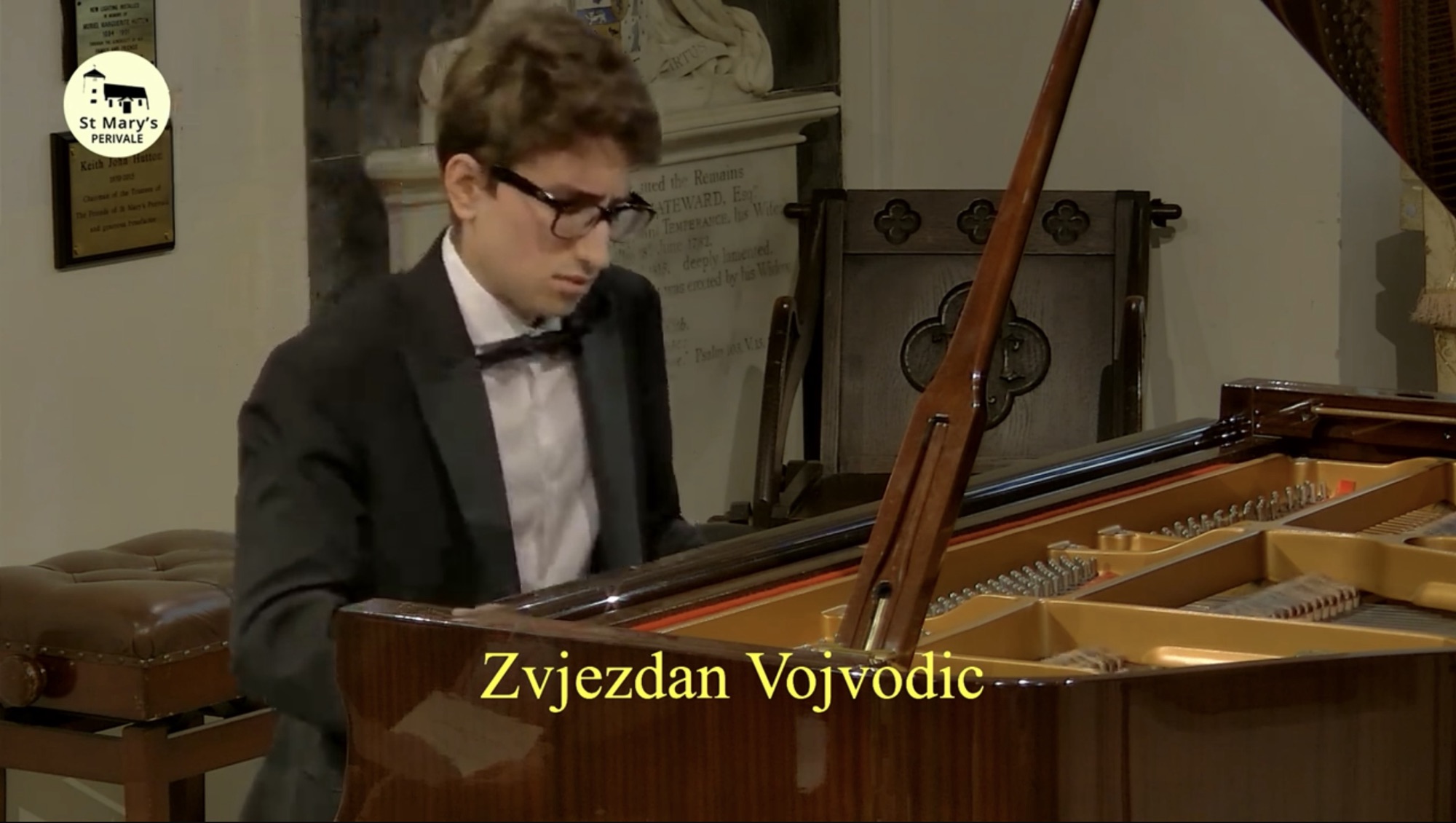
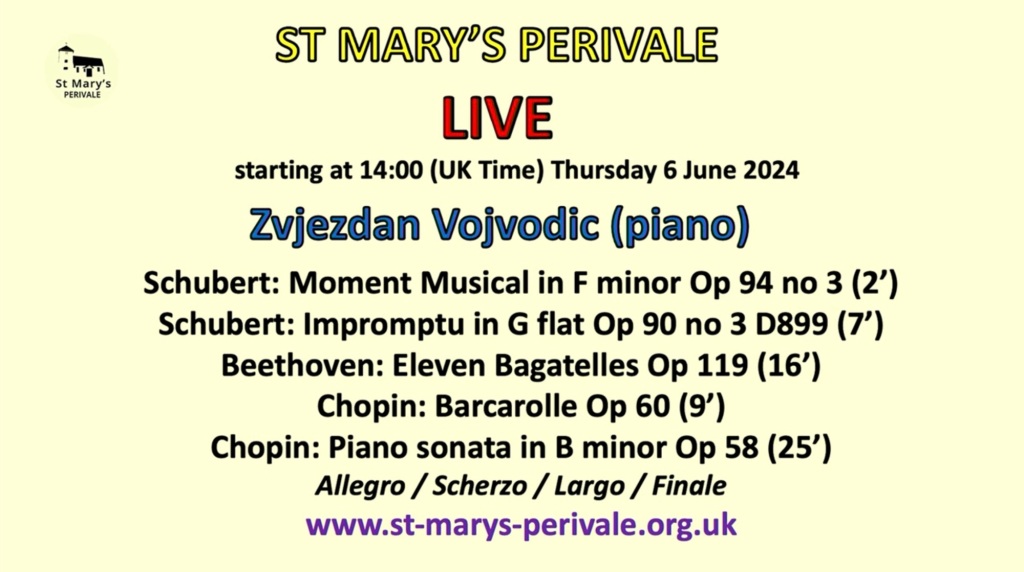
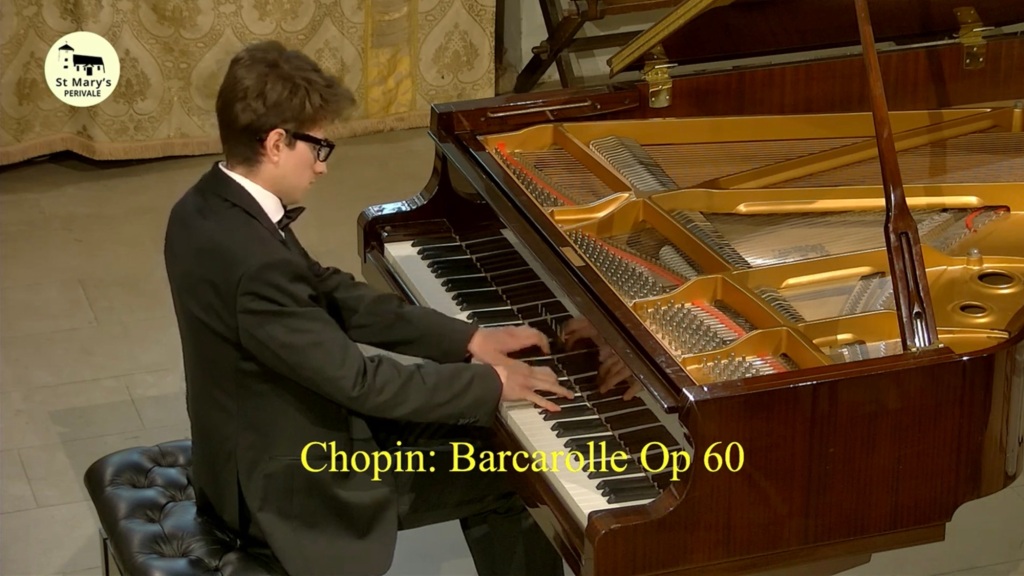
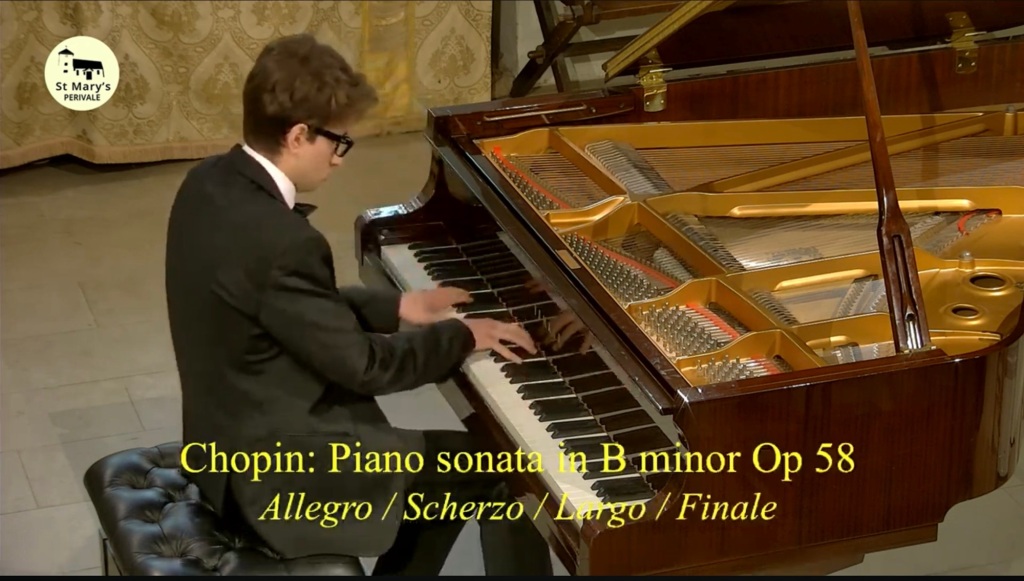
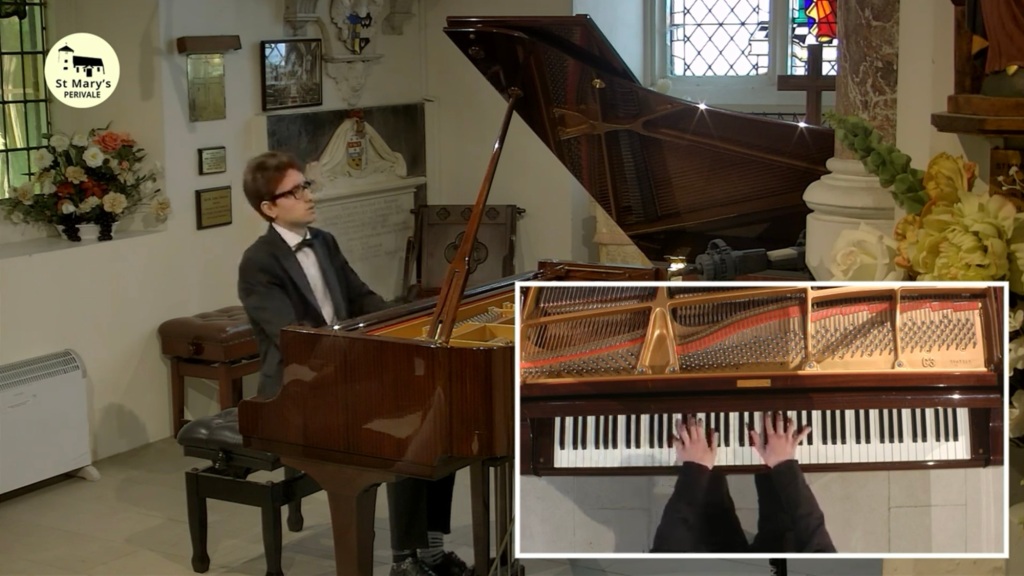
Playing of great clarity and sterling musicianship allied to a technical command of brilliance and authority.It brought a welcome breath of fresh air to the Chopin B minor Sonata and earned this young man a standing ovation from the eclectic audience that Dr Mather has nurtured over the years with his many seasons that give a platform to young musicians at the start of their career.
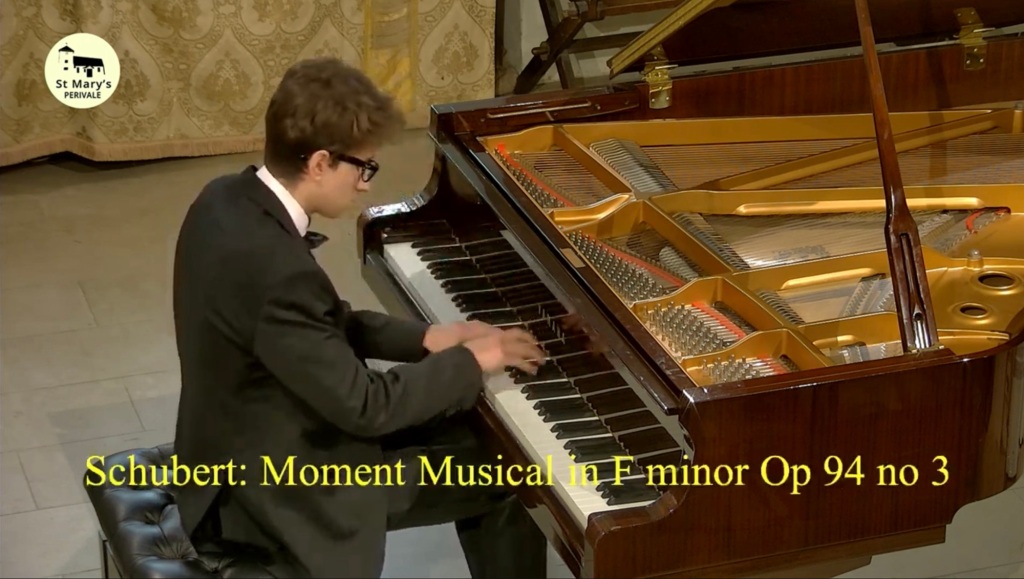
Schubert’s Moment Musicaux in F minor and Impromptu in G flat had the same simple musicianship that allowed the music to speak so directly as did the Eleven Bagatelles by Beethoven op 119. Eleven jewels that did not quite glitter and shine with the composers impish personality but which glowed with a light of purity and precision.
It was Chopin with his Barcarolle op 60 and Sonata op 58 that illuminated this young man’s soul and using more pedal ,which is indeed the soul of the piano, he allowed the music to unfold with even more authority and poetry. A remarkable clarity and technical mastery but in Chopin allied more to a world of fantasy and artistry that obviously touched this young man more than the respectable beauty of his Schubert and Beethoven.
A kaleidoscope of colours though were saved for the encore by his fellow Croatian, Dora Pejacevic ,with a Nocturne of fantasy and ravishing shimmering sounds.It was here that this young Croation pianist allowed us a glimpse into his inner world of fantasy and imagination with a freedom that he had held remarkably under control until this final heartfelt glimpse of his homeland.
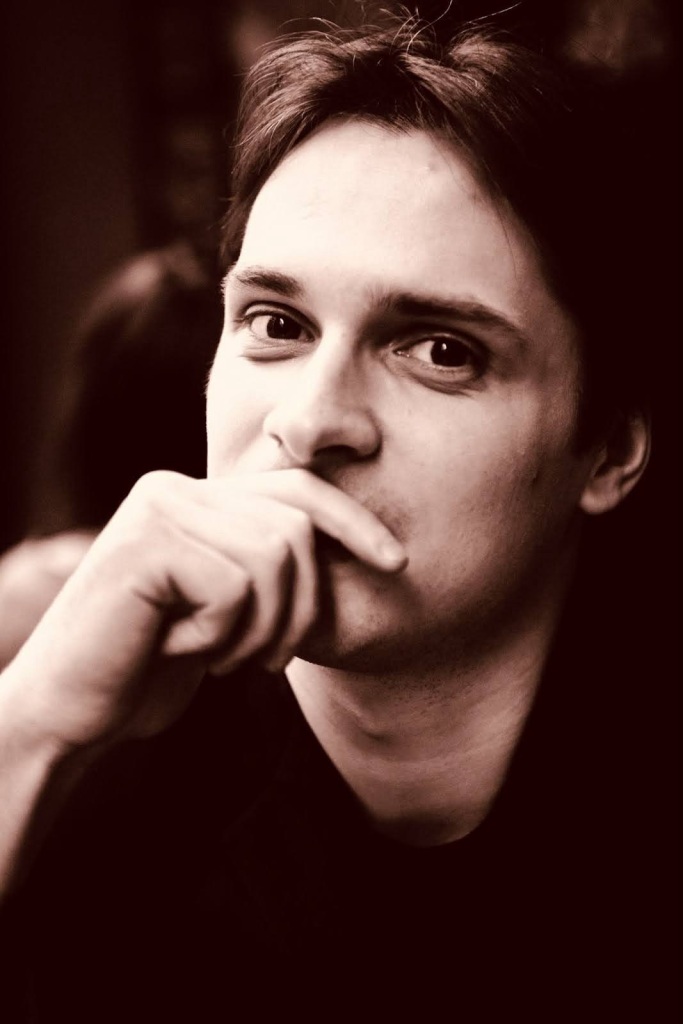
Croatian young pianist Zvjezdan Vojvodic made his concerto debut at the age of 15, as a laureate of the 50 th prestigious international piano competition “Virtuosi per musica di pianoforte” in the Czech Republic where he got the opportunity to perform Chopin’s Piano Concerto in f minor at the opening concert of that competition in the following year. Zvjezdan was born in Croatia in 2003, where he completed his primary and secondary music education in the class of professor and excellent advisor Ivanka Kordic. Since the autumn of 2021, Zvjezdan has been studying at the Royal College of Music in London, UK. His teachers are Ian Jones and Dinara Klinton, and Zvjezdan is now 3 rd year student at RCM as William Mealings Scholar supported by the Cosmina and Douglas Liversidge Scholarship.
He won over 80 first and special awards at national and international competitions. At the Croatian national competitions (2015-2021) he continuously won four first prizes in the piano category and twice in the piano duo. Among international awards we can point some 1 st prizes: “Merci maestro”, (Brussels, 2017); „Jurica Murai”, laureate of the competition (Varaždin, 2017); “Ars nova”, laureate of the competition (Trieste, 2017); “Isidor Bajic”, (Novi Sad, 2018); “EPTA” (Osijek, 2019). At the renowned XII. Darmstadt International Chopin Piano Competition, held in Autumn 2022, as the youngest competitor he reached the final stage and was one of the prize winners. And in 2023. Zvjezdan won 1 st prize at the Watford International Piano Competition held in the UK.
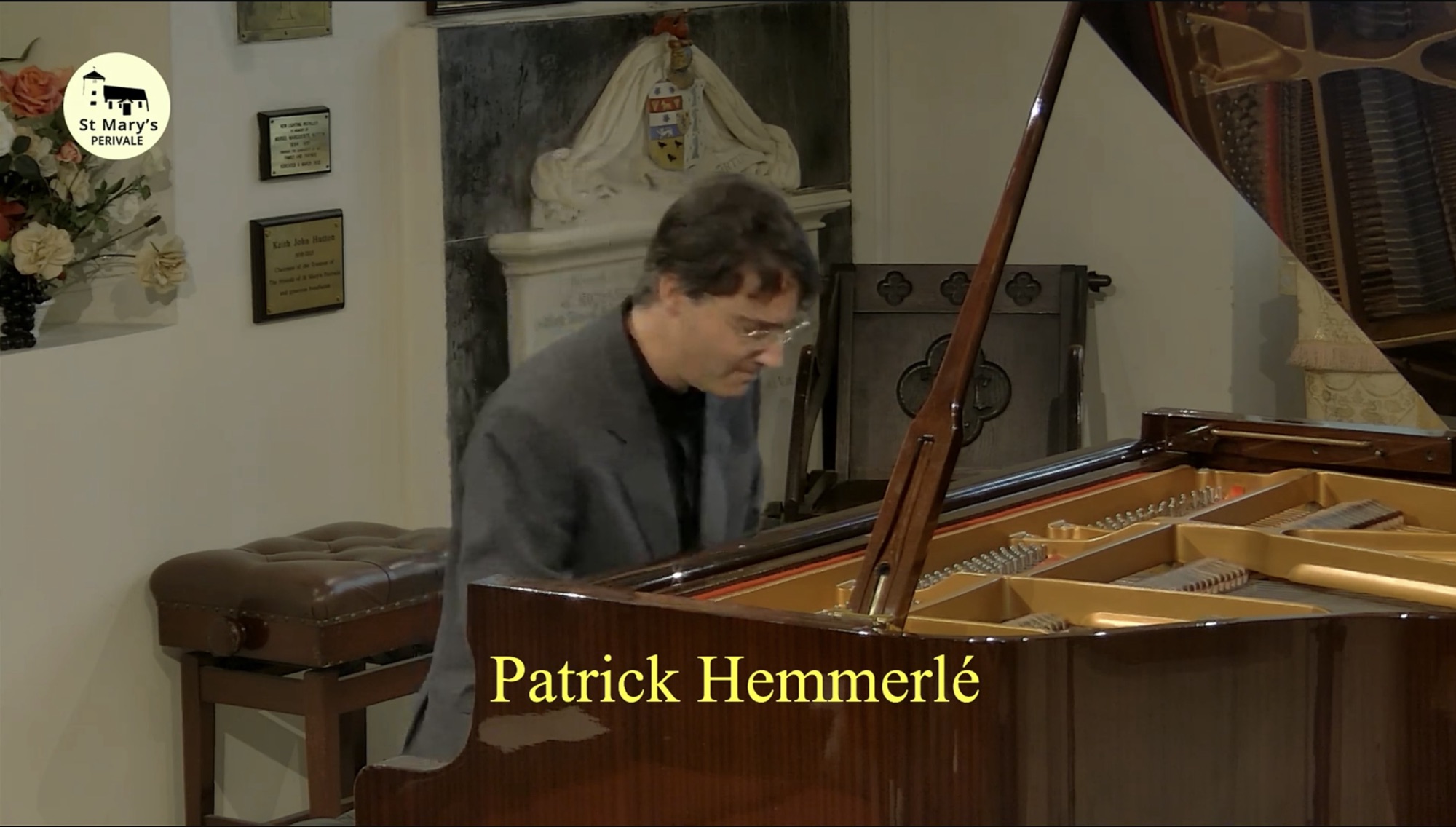
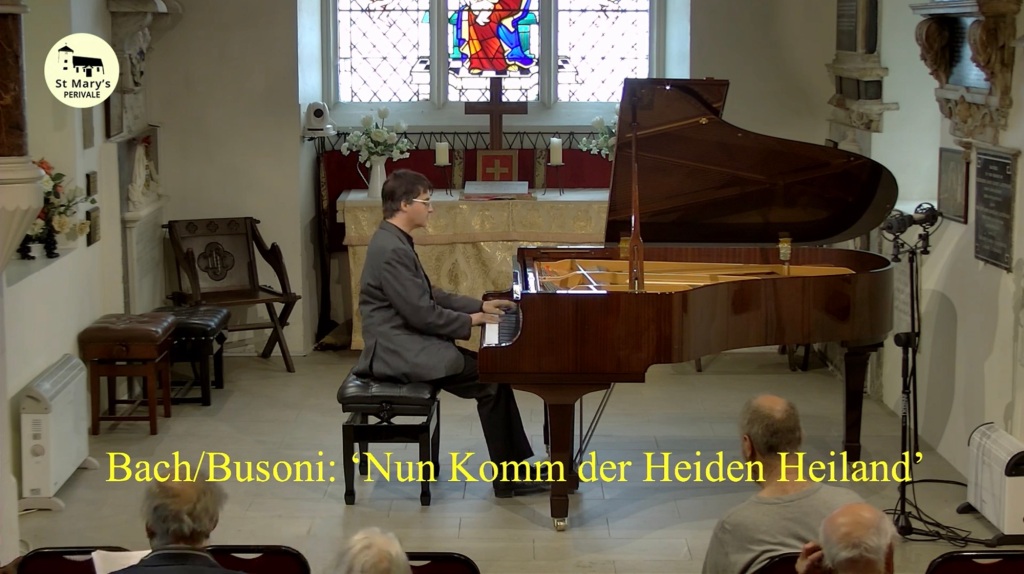
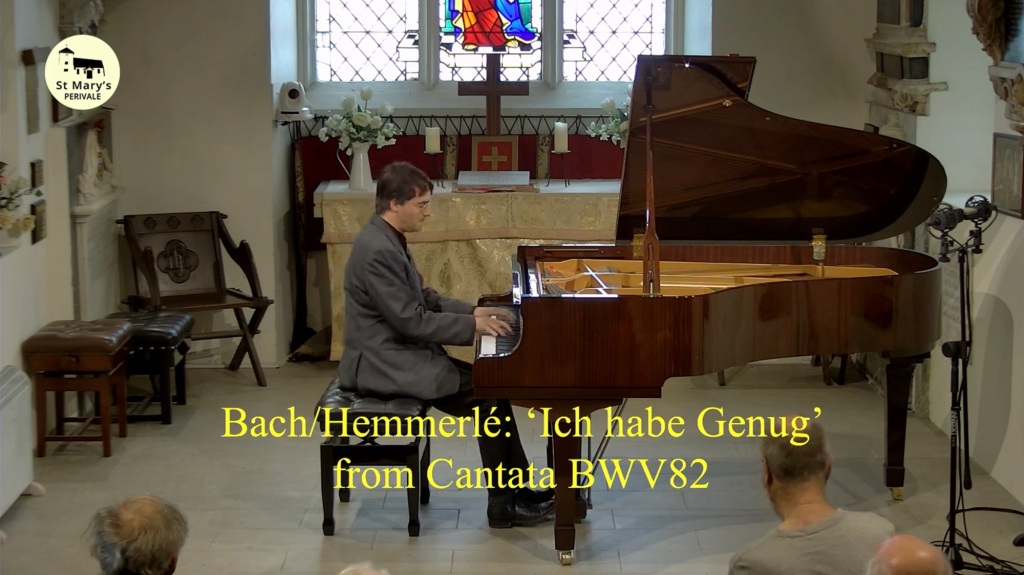
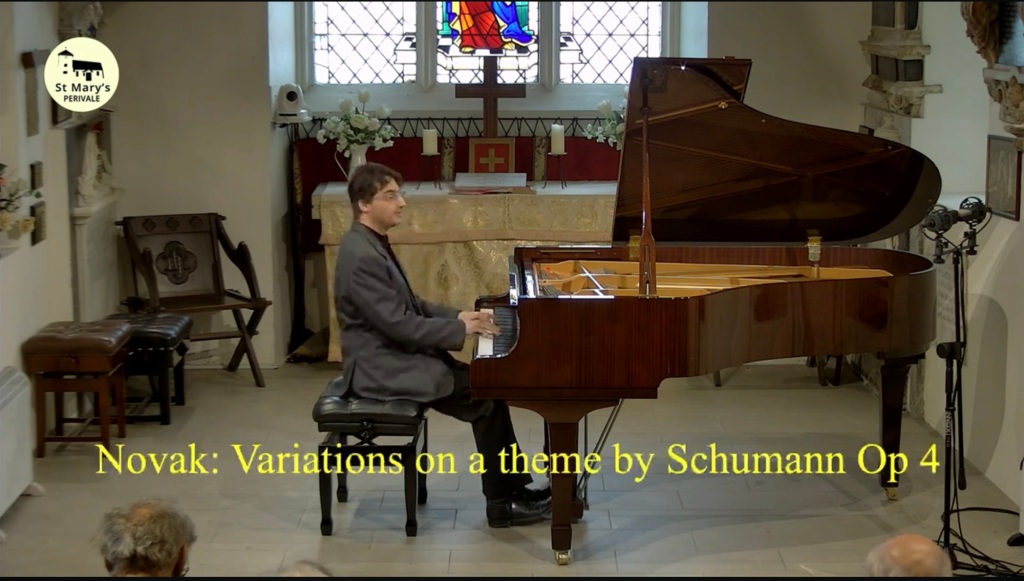
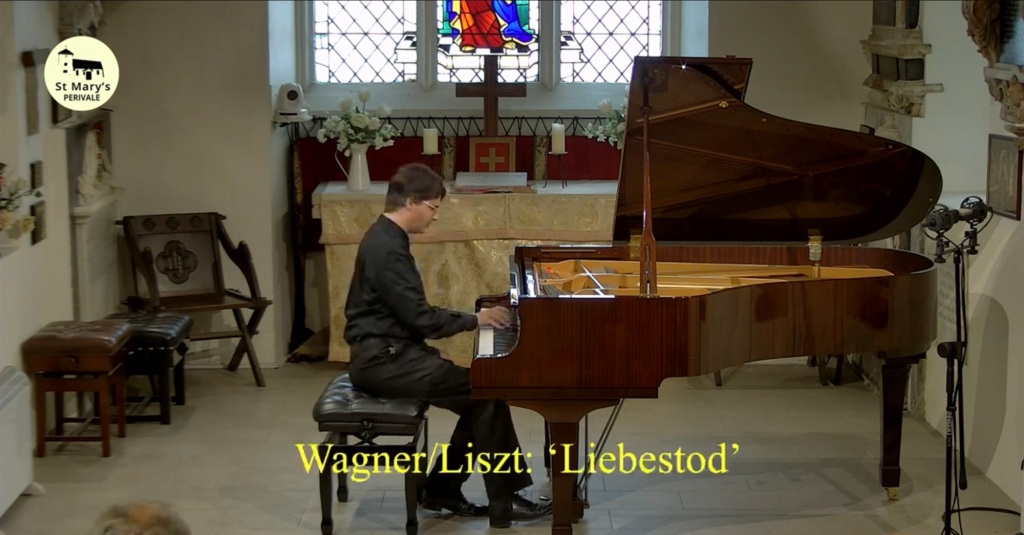
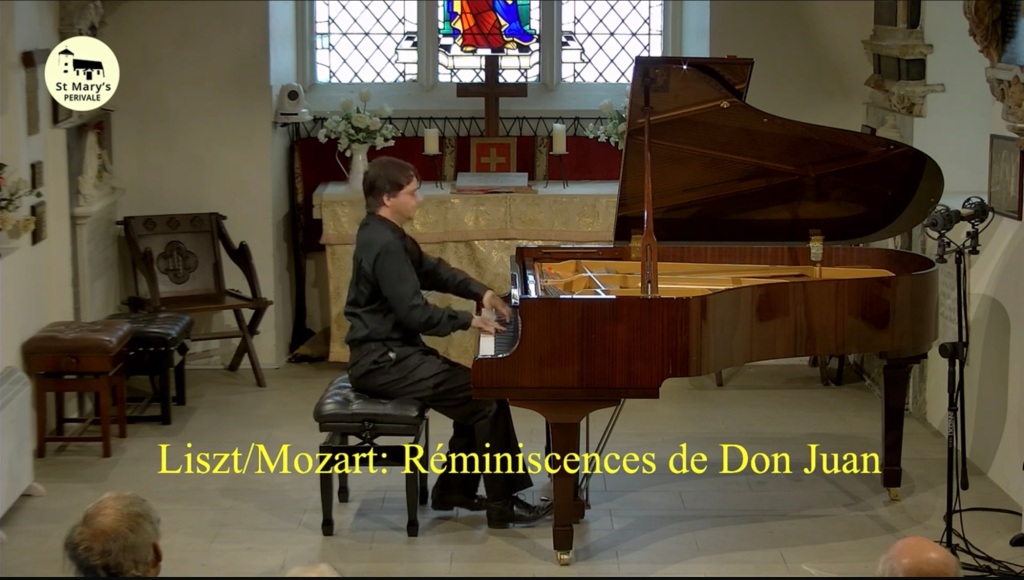
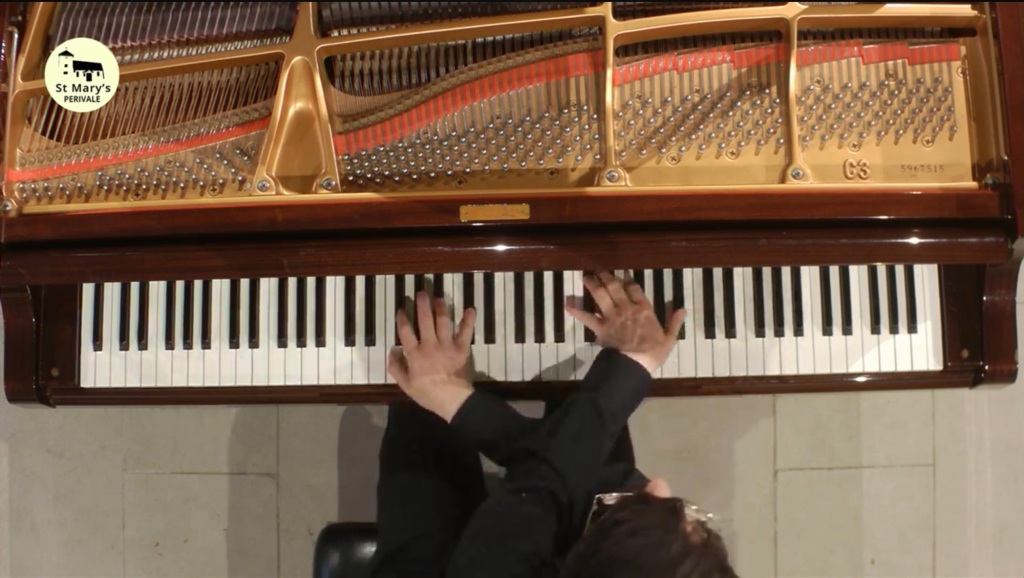
Another extraordinary recital by Patrick Hemmerlé who seems to digest the piano repertoire,conventional and unconventional, with a voracious appetite that is quite astonishing. Intelligence,curiosity,mastery and simplicity. A sense of communication and effortless beauty that brings us scores of notorious difficulty time after time.Today was even more astonishing as he played one of the most difficult pieces in the piano repertoire with a smile on his face as he lived Mozart’s drama describing each character with the same effect that we would have experienced in the theatre. Bach that just spun from his fingers with the crystalline clarity of the Fantasia in C minor or the searing intensity of ‘Nun Komm…….’ in Busoni’s transcription.Patrick,an ever more Busonian character himself , had even made his own transcription of the elaborate weaving of Bach’s ‘Ich habe Genug’ that he found time to write whiling away the boredom of being far from a piano with Covid! Wagner’s heart rending passionate outpouring so lusciously described in his father in law’s genial hands was mirrored by the sparse but poignant transcription,or more pointedly a ramble by that illusive figure Percy Grainger. Der Rosenkavalier where with just the unmistakeable stroke of chiming chords he could create the same atmosphere of Strauss’s sumptuous score .It reminded me very much of another Busonian figure : Ronald Stevenson whose Grimes Fantasy was similarly poignant with Britten’s unmistakable chord progressions creating the same desolate atmosphere as the crowds swaying on stage. It needs just one saliant detail to describe so grafically an entire opera. The variations by Novak ,that the composer himself had not thought worthy of his later compositions, in Patrick’s hands revealed a set of variations that were so much more interesting and varied than the rather repetitive monocoloured theme from Schumann’s usually richly ‘coloured leaves’ op. 99. If the Don Juan Fantasy was astonishing for it’s fearless virtuosity and breathtaking vision it was the little waltz by Schubert played as an encore that truly stole our hearts.Beauty,simplicity and a ravishing sense of balance combined to calm the red hot cauldron with which Liszt had described Mozart’s great operatic masterpiece. It also was of great interest as Schubert gave it to his friend Kupelwieser as a wedding present in 1826 and it was never written down.A family descendent played it to Strauss in 1943 who did write it down and it was eventually published in 1970. Yet another sting in the tail for this remarkable young artist who never fails to astonish,inform or seduce.
Patrick Hemmerlé is one of Europe’s foremost and most enigmatic pianists. Refusing to follow musical traditional conventions, he has forged a unique path in the musical world which leaves him free to immerse himself with singular dedication into the repertoire and musical expression resonating with the profoundest convictions. The results are interpretations of startling insight and originality. By dauntlessly performing all 24 Chopin Etudes or 24 of Bach’s Preludes and Fugues in a single concert, as well as championing lesser-known composers he feels a deep affinity for, he has developed a reputation as an original with something out of the ordinary to say,
French born and trained at the Conservatoire de Paris under Billy Edie, and laureate of many international piano competitions, he now lives in Cambridge, England, where he has built up a staunchly loyal following. He also performs all over the world and recent engagements have taken him to New York, Berlin, Paris, Vienna and Prague and China. He has published 5 CDs, and his latest recording project to be issued shortly, is a pairing of Bach’s Well Tempered Clavier and Fischer’s Ariadne Musica. Patrick is a member of Clare Hall, where he is in charge of the concert programme.
Réminiscences de Don Juan (S. 418) on themes from mozart’s Mozart’s 1787 opera Don Giovanni
As Busoni says in the preface to his 1918 edition of the work, the Réminiscences carries “an almost symbolic significance as the highest point of pianism.” Liszt wrote the work in 1841 and published a two-piano version (S. 656) in 1877. It is extremely technically demanding and considered to be among the most taxing of Liszt’s works and in the entire repertoire . Neuhaus simply stated that with the exception of Ginzburg probably nobody but the pianola played without smudges.” https://youtube.com/watch?v=5VU7NsF5E1E&feature=shared
It was the final piece for Horowitz’s graduation concert at the Kiev’s conservatory; at the end all the professors stood up to express their approval. Horowitz, after claiming to Backhaus that the most difficult piano piece he ever played was Liszt’s Feux-follets without hesitation, he added that Réminiscences de Don Juan is not an easy piece either. Horowitz had it in his concert programmes, as well as the Liszt Sonata, which was not often played at the time, in his early years in Europe
Scriabin injured his right hand overpracticing this piece and Balakirev’s Islamey , and wrote the funeral march of his First Piano Sonata in memory of his damaged hand.
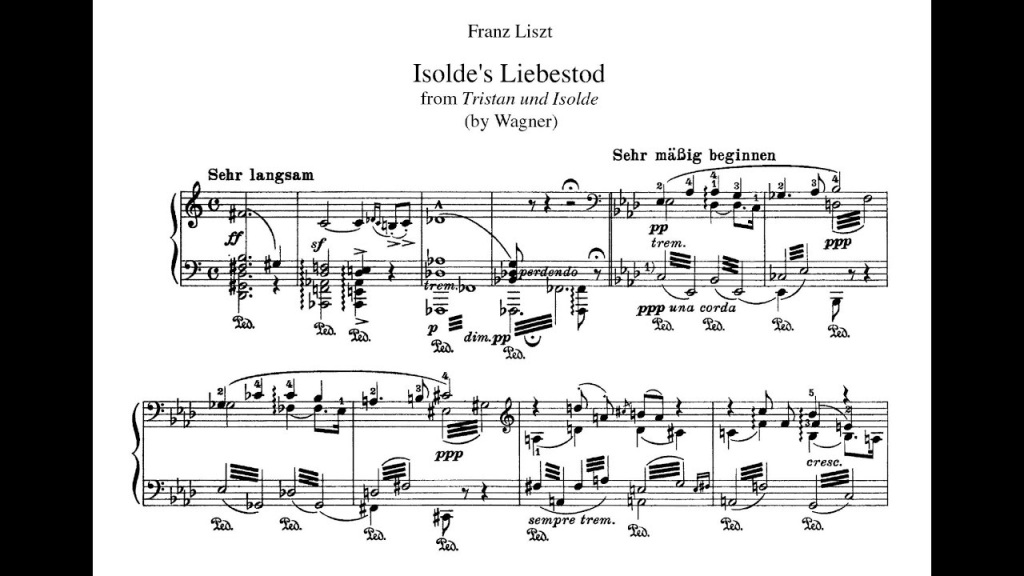
Tristan and Isolde is a musical drama in three acts written by Richard Wagner between 1857 and 1859, and premiered in 1865. Two years after the debut of the work at the National Theater of Munich, Franz Liszt (who was Wagner’s father in law) made a piano transcription of Isolde’s final aria. The piece, called “Mild und leise”, was referred to as “Verklärung” (Transfiguration) by Wagner. Liszt prefaced his transcription with a four bar excerpt from the Love Duet from Act II, which in the opera is sung to the words “sehnend verlangter Liebestod”. Accordingly, he referred to his transcription as ‘Liebestod’. Later it was designated with the catalogue number S. 447. Liszt’s transcription (which underwent a revision in 1875) became famous in Europe well before Wagner’s opera reached most places.
Vitězslav NOVÁK (1870-1949) Variations on a theme by Schumann, Op.4 (1893)
Viktor Novák
5 December 1870 Bohemia 18 July 1949 Czechoslovakia
He was a Czech composer and academic teacher at the Prague Conservatory Stylistically, he was part of the neo- romantic tradition, and his music is considered an important example of Czech modernism He worked towards a strong Czech identity in culture after the country became independent in 1918. Born Viktor he changed his name to Vítězslav to identify more closely with his Czech identity, as many of those of his generation had already done. At the conservatory, he studied piano and attended Dvorak’s masterclasses in composition
His chamber music includes some fine piano music such as the variations on a theme of Schumann of 1893, the Sonata Eroica of 1900, Exotion of 1911, the six sonatinas of 1919–1920 and Pan, op 43 an important work left out of Michaels Kennedy’s inadequate Oxford Concise Dictionary of Music. There are the Reminiscences Op 6 of 1884 and Songs of a Winter Night Op 30, the final burleske of which is a foot-tappper, and, in 1920, Novák put together twenty-one short piano pieces which he entitled Mladi (Youth) with the Opus number 55.
Most of his chamber music are early works and include two piano trios in G minor of 1892 and D minor of 1902, a Piano Quartet revised in 1899, a Piano Quintet revised in 1897, three string quartets (1899, 1905 and 1930), and a Cello Sonata of 1941.His Piano Concerto in E minor of 1895 apparently not performed until about 20 years later and which Novák referred to as a monster.Dvorak helped Novák considerably and encouraged him to study philosophy as well. But, by the mid 1890s, Novák was in crisis. He could not find an original voice for his music and despaired sinking into depression. He travelled to a remote region on the borders of Bohemia and Moravia and fell in love with Slovak folk songs which lifted his spirits. He collected many of these songs and seem to fuse them within his own work. It was this contact with nature that inspired him and he felt freed from traditional forms as in the work of the great masters and his mature music probably owes most to Richard Strauss than Brahms
His early works shows a debt to Brahms with his Serenade in F for orchestra of 1894 and the Orchestral Bohemian dances of 1897. He revised the serenade in the last year of his life.But, by far, the most impressive symphonic poem is De Profundis Op 67 of 1941 written during the Nazi occupation. Novák made it clear that he hated the Nazis and could have been arrested for his outspoken views. The title comes from Psalm 130, “Out of the depths have I cried unto Thee, O Lord.” and the score is headed up, “consecrated to the suffering of the Czech people during the German reign of terror 1939–1945.” The large orchestra includes a part for organ played by Jiři Reinberger at the premiere in Brno on 20 November 1941 with the Czech Radio Symphony Orchestra under Bretislav Bakala. In Brno, Czech people were still being shot and hung simply for the amusement of the German people.He had composed another large scale symphony between 1931–1934 called the Autumn Symphony which is a choral symphony. But his finest choral piece is generally agreed to be The Spectre’s Bride of 1912–1913.
Percy Aldridge Grainger (born George Percy Grainger; 8 July 1882 – 20 February 1961) was an Australian-born composer, arranger and pianist who moved to the United States in 1914 and became an American citizen in 1918. In the course of a long and innovative career he played a prominent role in the revival of interest in British folk music in the early years of the 20th century. Although much of his work was experimental and unusual, the piece with which he is most generally associated is his piano arrangement of “Country Gardens”.
Grainger was a great admirer of the music of Richard Strauss, considering him to be a genius and ‘a humane soul whose music overflowed with the milk of human kindness’. Meetings between the two composers took place on various occasions during the early part of the twentieth century, and Strauss was on at least two occasions to conduct Grainger’s music in Germany. Work commenced on the Ramble on Love (‘Ramble on the love-duet in the opera “The Rose-Bearer” [Der Rosenkavalier] FSFM No 4’) before 1920. But it was his mother’s suicide in 1922 that drove Grainger to complete this most elaborate of all his piano paraphrases, with her name obliquely enshrined in the title. It is one of the most meticulously notated piano pieces in the repertoire, with copious use of the sostenuto (middle) pedal where the sumptuous sound world of Strauss is conjured up to dazzling effect in this transcription that marks the full range and summit of Grainger’s pianism.Except for three months’ formal schooling as a 12-year-old, during which he was bullied and ridiculed by his classmates, Percy was educated at home.Rose, an autodidact with a dominating presence, supervised his music and literature studies and engaged other tutors for languages, art and drama.At the age of 10 he began studying piano under Louis Pabst, a German-born graduate of the Moscow Conservatory, Melbourne’s leading piano teacher. Grainger’s first known composition, “A Birthday Gift to Mother”, is dated 1893.Pabst arranged Grainger’s first public concert appearances, at Melbourne’s Masonic Hall in July and September 1894. After Pabst returned to Europe in the autumn of 1894, Grainger’s new piano tutor, Adelaide Burkitt, arranged for his appearances at a series of concerts in October 1894 at Melbourne’s Royal Exhibition Building . The size of this enormous venue horrified the young pianist; nevertheless, his performance delighted the Melbourne critics, who dubbed him “the flaxen-haired phenomenon who plays like a master”.This public acclaim helped Rose to decide that her son should continue his studies in Germany.He left Australia at the age of 13 to attend the Hoch Conservatory in Frankfurt .
Grainger’s biographer, records that during his Frankfurt years, Grainger began to develop sexual appetites that were “distinctly abnormal”; by the age of 16 he had started to experiment in flagellation and other sado-masochistic practices, which he continued to pursue through most of his adult life. Bird surmises that Grainger’s fascination with themes of punishment and pain derived from the harsh discipline to which Rose had subjected him as a child.
Between 1901 and 1914 he was based in London, where he established himself first as a society pianist and later as a concert performer, composer, and collector of original folk melodies. As his reputation grew he met many of the significant figures in European music, forming important friendships with Delius and Grieg . He became a champion of Nordicmusic and culture, his enthusiasm for which he often expressed in private letters, sometimes in crudely racial or anti-Semitic terms.
In 1914, Grainger moved to the United States, where he lived for the rest of his life, though he travelled widely in Europe and Australia.
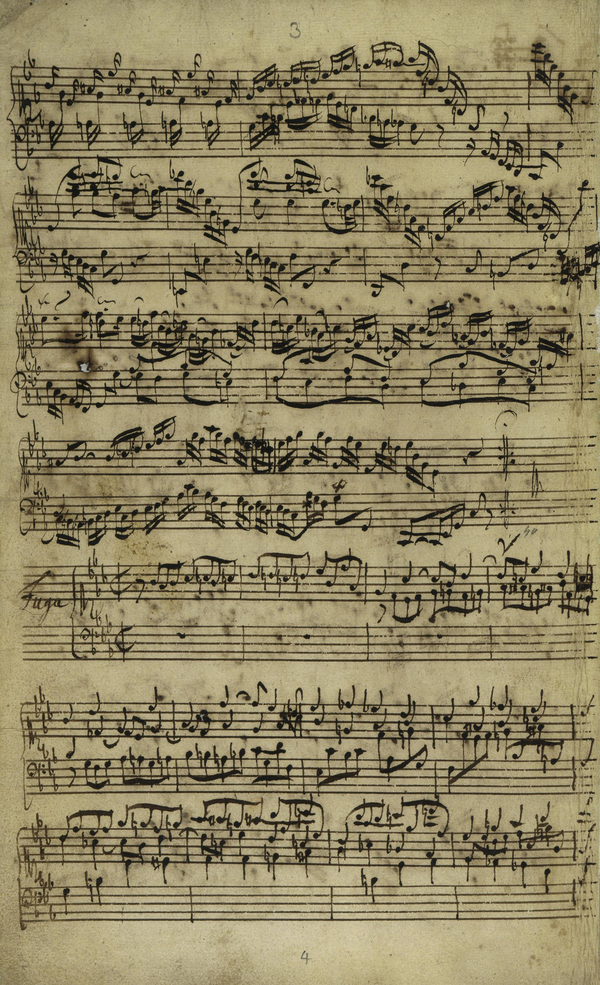
Bach’s second autograph of the Fantasia and Fugue in C minor, BWV 906: p. 3, showing the end of the Fantasia and the start of the Fugue.
Fantasia and Fugue in C minor, BWV 906, is an unfinished work composed by sometime during Bach’s tenure in Leipzig (1723–1750). The work survives in two autograph scores, one with the fantasia alone, and the other, believed to have been penned around 1738 in which the fugue is incomplete.It is notable for being one of Bach’s latest compositions in the prelude and fugue format.
In 1802 Forkel,the first biographer of Bach described two keyboard fantasies by Bach .He sees the first of these, the Chromatic Fantasia BWV 903 as “unique and unequalled”, and the second, the one in C minor (BWV 906), as a work of different character, “rather the Allegro of a Sonata”. Unaware of the composition’s second autograph, which was only discovered in Dresden in 1876, he thinks that the Fugue is unconnected to the Fantasia and that the end of the Fugue is likely by another composer.
Busoni used the fantasia and his own completion of the fugue in his Fantasia ,Adagio e Fuga BV B37.
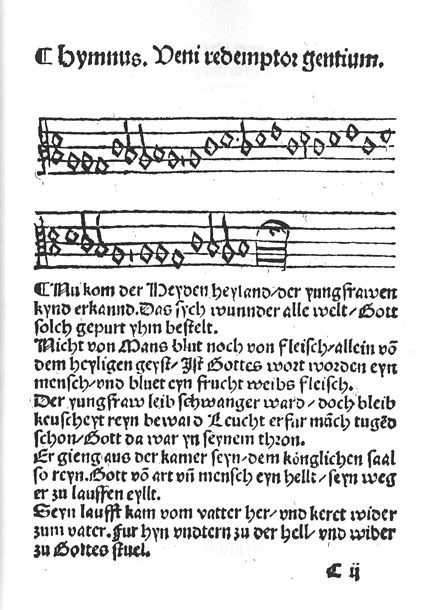
“Nun komm, der Heiden Heiland” (original: “Nu kom der Heyden heyland”, English: “Savior of the nations, come“, literally: Now come, Saviour of the heathen) is a Lutheran chorale of 1524 with words written by Martin Luther , based on “Veni redemptor gentilmente ” by Ambrose and a melody, Zahn 1174, based on its plainchant. The song was the prominent hymn for the first Sunday of Advent for centuries. It was used widely in organ settings by Protestant Baroque composers, most notably J.S. Bach who also composed two church cantatas beginning with the hymn.
Bach arranged the cantata during his career (BWV 699). There have been many variations of Bach’s arrangement. One of the most respected solo instrumental versions is one by Busoni in his Bach- Busoni Editions .
Ich habe genug (original: Ich habe genung, English: “I have enough” or “I am content”), BWV 82,is a cantata by Bach which he composed bass in Leipzig in 1727 for the Feast Mariae Reinigung(Purification of Mary) and first performed it on 2 February 1727. In a version for soprano BWV 82a, possibly first performed in 1731, the part of the obbligato oboe is replaced by a flute . Part of the music appears in the Notebook for Anna Magdalena Bach . The cantata is one of the most recorded and performed of Bach’s sacred cantatas. The opening aria and so-called “slumber aria” are regarded as some of the most inspired creations of Bach.
The gift of a waltz encore
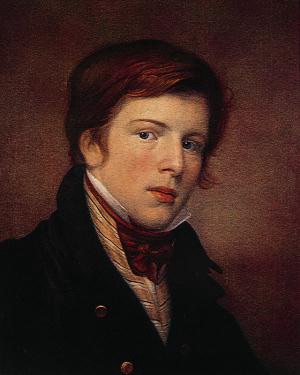
Leopold Kupelwieser (17 October 1796, Markt Piesting – 17 November 1862, Vienna) was an Austrian painter. He was the son of Johann Baptist Georg Kilian Kupelwieser (1760–1813), co-owner of a factory that produced tableware
Leopold Kupelwieser was an artist, born in 1796, and a friend of Schubert. The artist got married in 1826. To honor them, Schubert composed the couple a little waltz in G flat major. According to lore, the waltz was never written down. It was played and enjoyed by descendants of the couple, generation after generation. Finally, one of these descendants played the waltz for Richard Strauss. This was during World War in 1943. Strauss transcribed the waltz—which was at last published in 1970.
“Very delicate,” says Muti of the Kupelwieser Waltz, and “very nostalgic.” Also expressive of “best wishes for the marriage and for the future of this couple.”
Just before he plays the piece, he says, “It’s quite unknown but very beautiful.”
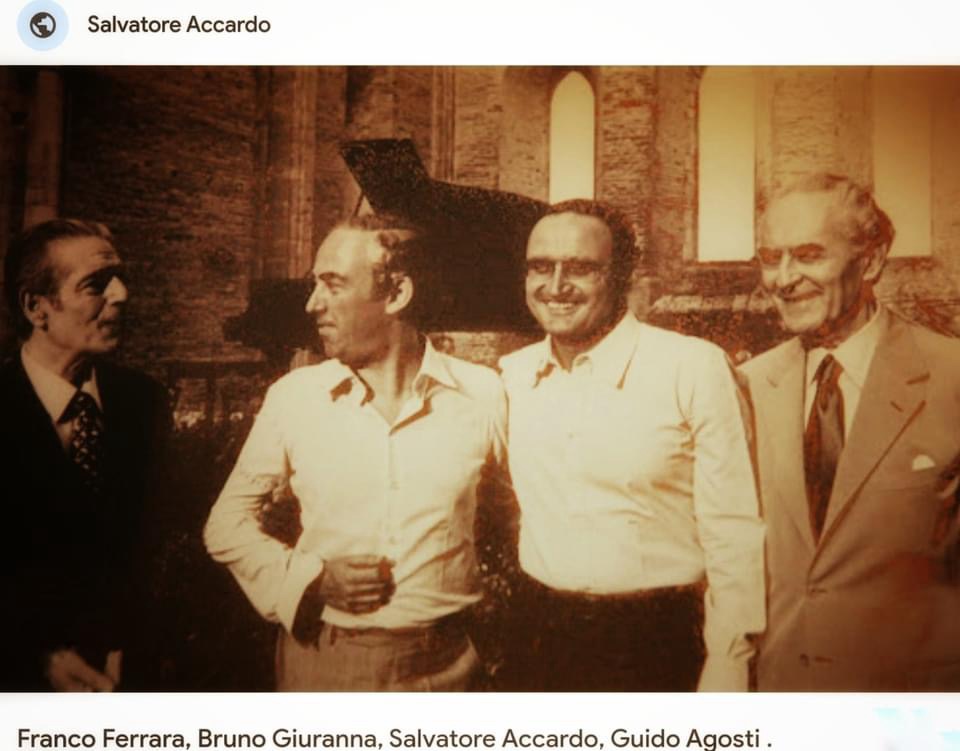
Guido Agosti (Forlì, 11 agosto 1901 – Milano, 2 giugno 1989) è stato un pianista, compositore e docente italiano.
Studiò dal 1911 al 1914 presso il Liceo Musicale di Bologna, sotto la guida di Ferruccio Busoni, Bruno Mugellini e Filippo Ivaldi. Si diplomò in pianoforte a 13 anni. In seguito, studiò privatamente composizione con Giacomo Benvenuti. Esordì quindi come concertista, ottenendo lusinghieri successi sia in Italia che all’estero, ma la sua promettente carriera di brillante solista fu spesso ostacolata da problemi nervosi. Si dedicò perciò all’insegnamento, e tra il 1933 e il 1949 insegnò nei conservatori di Venezia, Roma e Milano.
Dopo la seconda guerra mondiale, tenne sistematicamente importanti corsi di perfezionamento pianistico prima a Roma e successivamente presso l’Accademia Musicale Chigiana di Siena, formando nella sua lunga carriera un gran numero di musicisti, tra cui spiccano Maria Tipo, Daniela Sabatini, Hector Pell. Tenne inoltre corsi presso l’Accademia di Stato Franz Liszt di Weimar, l’Accademia Sibelius di Helsinki e la Juilliard School di Nuova York. Fu spesso membro di giuria di importanti concorsi pianistici internazionali.
Fu anche compositore (musica per pianoforte e per orchestra, liriche, revisione di musiche antiche). La sua trascrizione per pianoforte solo della Firebird Suite di Stravinsky è tuttora in repertorio di vari importanti pianisti.
Ricominciò l’attività concertistica nel 1967, suonando spesso in trio con il flautista Severino Gazzelloni e il violoncellista Enrico Mainardi e con il Quartetto di Roma.
Le sue non numerose incisioni (alcune delle quali in tarda età) sono dedicate soprattutto a composizioni di Beethoven (sonate) e Debussy (preludi).
P. S. : LA BIOGRAFIA E LE IMMAGINI SONO TRATTE DAL WEB, CI SCUSIAMO IN ANTICIPO PER EVENTUALI ERRORI E/O INESATTEZZE. GRAZIE PER LA COMPRENSIONE E L’INTERESSE.
There was an imperious opening to the Fantasia but combined with great tenderness .The startling contrasts were played with disarming simplicity but always with a menacing twist in the tail as this great drama was played out in an absolutely operatic way. In Sasha’s poetic hands one could envisage the drama unfolding as there was an overall sound even where Mozart writes ‘forte’ and then sudden ‘piano’ and the added gasps of ‘fp’ . Sounds that were always in the context of actors on stage conversing with one another in an age of civilised mutual anticipation.The Allegro burst onto the scene with dynamic drive with Sasha always keeping the sound under control where the contrasts and rhythmic drive were of more importance than the mere beauty of the voice . Playing of impeccable style and authoritative musicianship it was the ‘Più Allegro’ that truly ignited the piano with sumptuous rich orchestral sounds of dynamic drive and clarity.The ‘recitativi’ were pure opera as the voices conversed , punctuated only by the comments from the ‘tutti’.The return of the opening was like re visiting a distant landscape, which after a brief reminder took flight as Mozart paved the way so dramatically to the Sonata that it precedes.
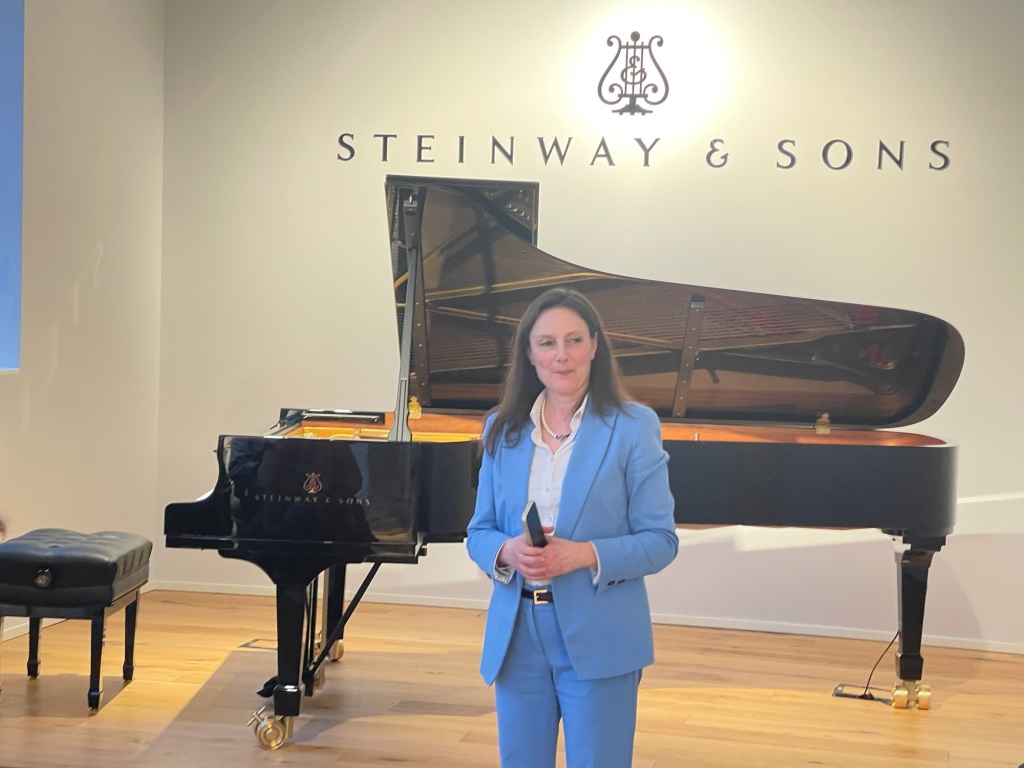
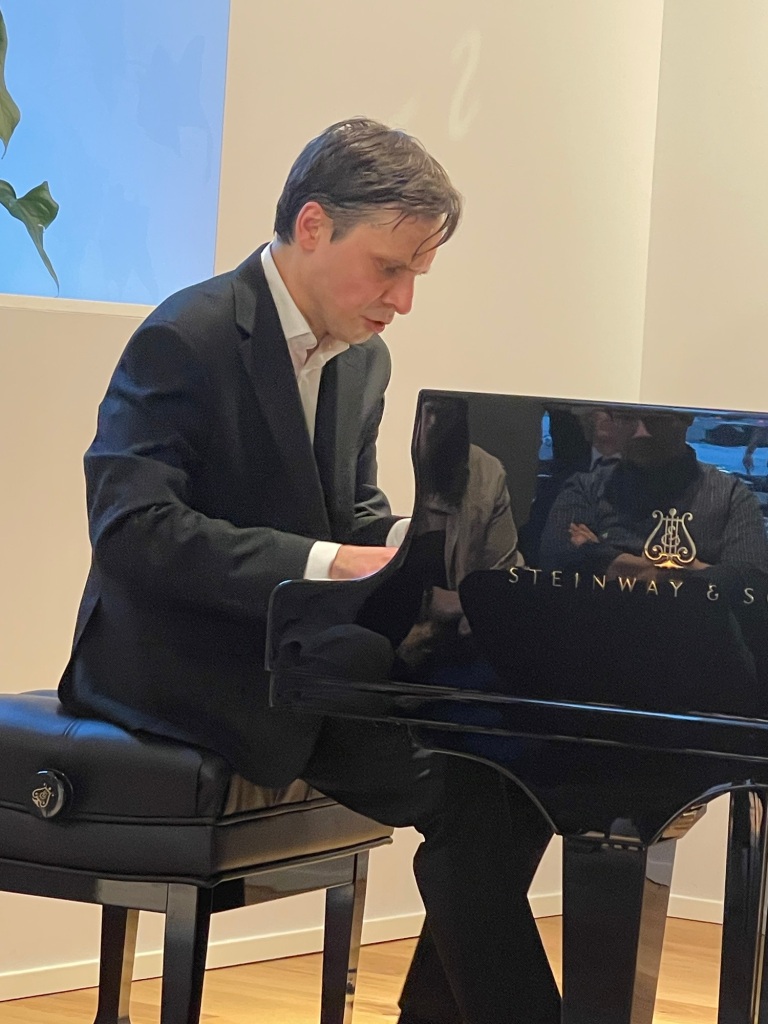
The two Brahms Rhapsodies were played with nobility and ravishing beauty. Grandiose sounds but also extreme delicacy with wild outbursts short lived as radiance and beauty were allowed to reign. A masterly use of the pedals allowed Sasha to find orchestral sounds of dynamic drive and urgency but always with a glorious outpouring of golden sounds on this sumptuous concert grand .A piano so generously offered to artists such as Sasha by the dynamic new manager, Maura Romano, of this beautiful new flagship showroom for Steinways just a stone’s throw from that other Mecca that is La Scala Opera House.
It was the orchestral sounds that opened the ‘Wanderer’ that were played with burning intensity as Sasha could now reveal the true nobility of this remarkable work.There was an architectural shape and sweep to the genial transformation of themes, that was to be the inspiration for Liszt and later for his son in law,Richard Wagner. It was the Adagio – ‘The Wanderer’ – that Sasha gave a truly orchestra fullness too with its quartet richness where every strand was of vital importance.The variations that followed were of chameleonic character from the gentle weaving of the first to the explosive second and the ravishing mellifluous beauty of the third .The gently cascading embellishements of the last were transformed into such a typically Beethovenian tempest .A true eruption played by Sasha with astonishing control and virtuosity but above all the sense of balance of a conductor who is listening to the whole and steering us through the maze of notes with intelligence and clarity of vision.There was the rich embroidery of the Scherzo that after the beseeching innocence and questioning beauty of the Trio was to erupt with cascades of notes and driving rhythms leaving us breathless at the foot of the mighty final Fugato. Nobility and dynamic drive were allied to passion and orchestral colours that Sasha played with unrelenting conviction and artistry. His scrupulous attention to the detail in the score allowed the music to rise and fall as the composer has very meticulously indicated. A mighty work restored to greatness as indeed Richter did many years ago with his landmark recording in collaboration with the musicologist Paul Badura Skoda,taking the music from being a vehicle for an apprentice and giving it back into the hands of a great artist.
It was the great ‘old’ school of Perlemuter or Tagliaferro who would show us ,with the ‘weight’ of their true deep legato, a line clearly defined ,never allowing fussy detail to cloud the overall vision.This was in a way the performance that Sasha gave us today of ‘Ondine’ that he played as an encore. An encore but also in Milan a wish to enjoy the sumptuous sounds of this beautiful new Steinway Concert Grand that sits so proudly in the flagship of Steinways .There were of course the enormous number of notes that were played with remarkable mastery but there was a clarity of line that made ‘Ondine’ immediately so enticing. A sparkling brilliance as this water nymph splashed her way in and out of the water that Sasha created with fluidity and luminosity. We were not aware of the remarkable technical hurdles as the music flowed constantly forward like the water it was depicting.The massive climax was played with a clarity ,where the musical line was surrounded by clouds of notes,without any slowing or muddying of the texture.
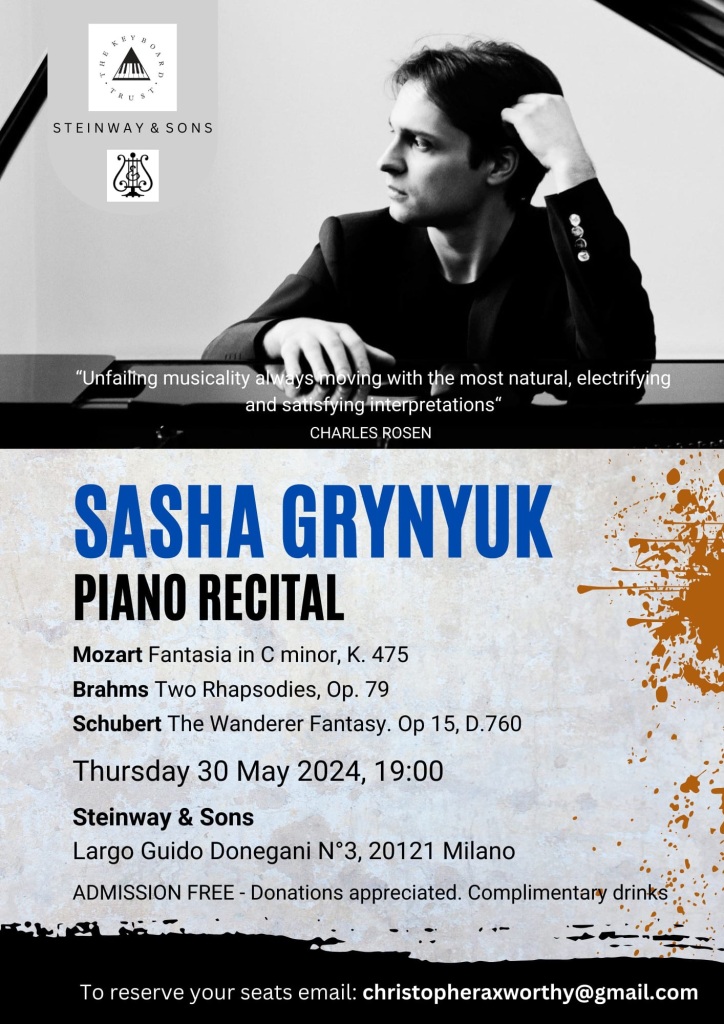
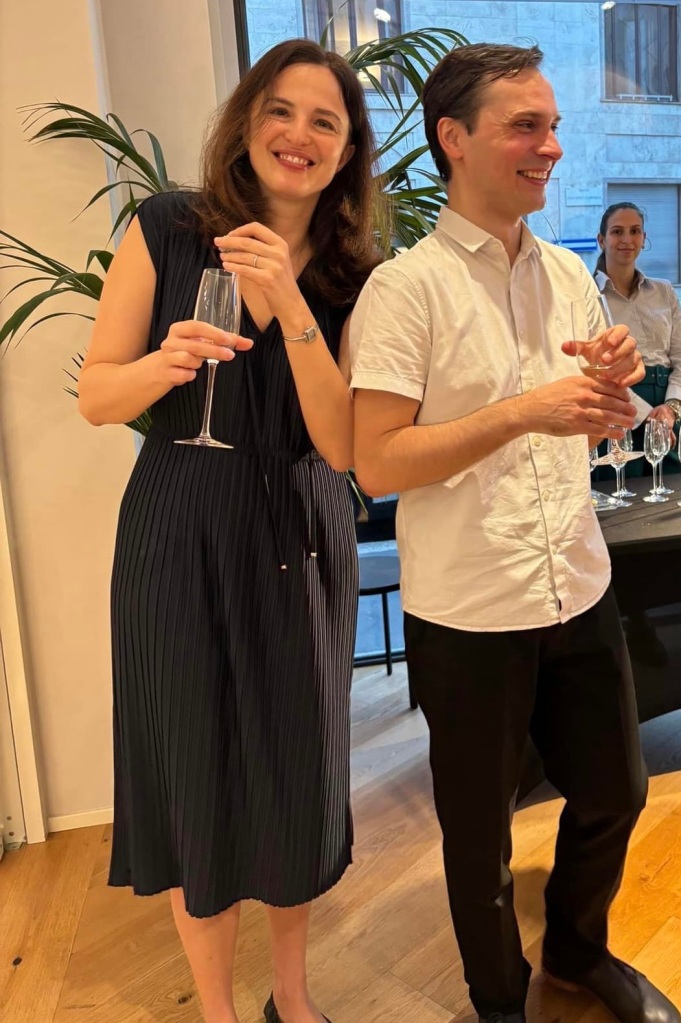
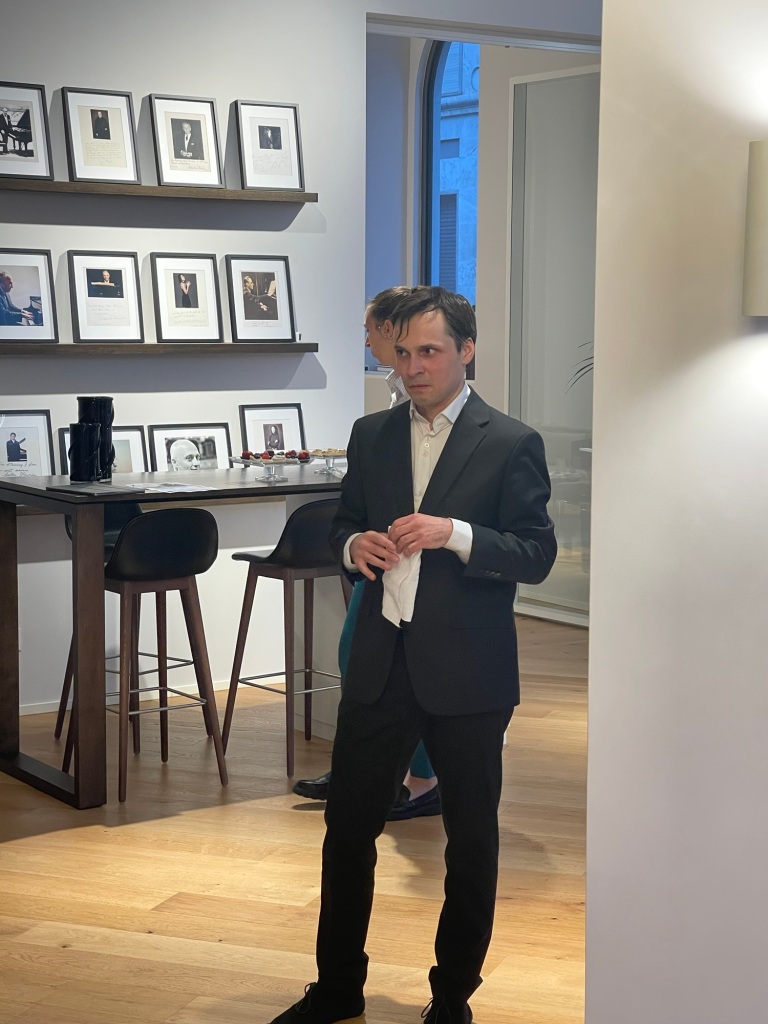
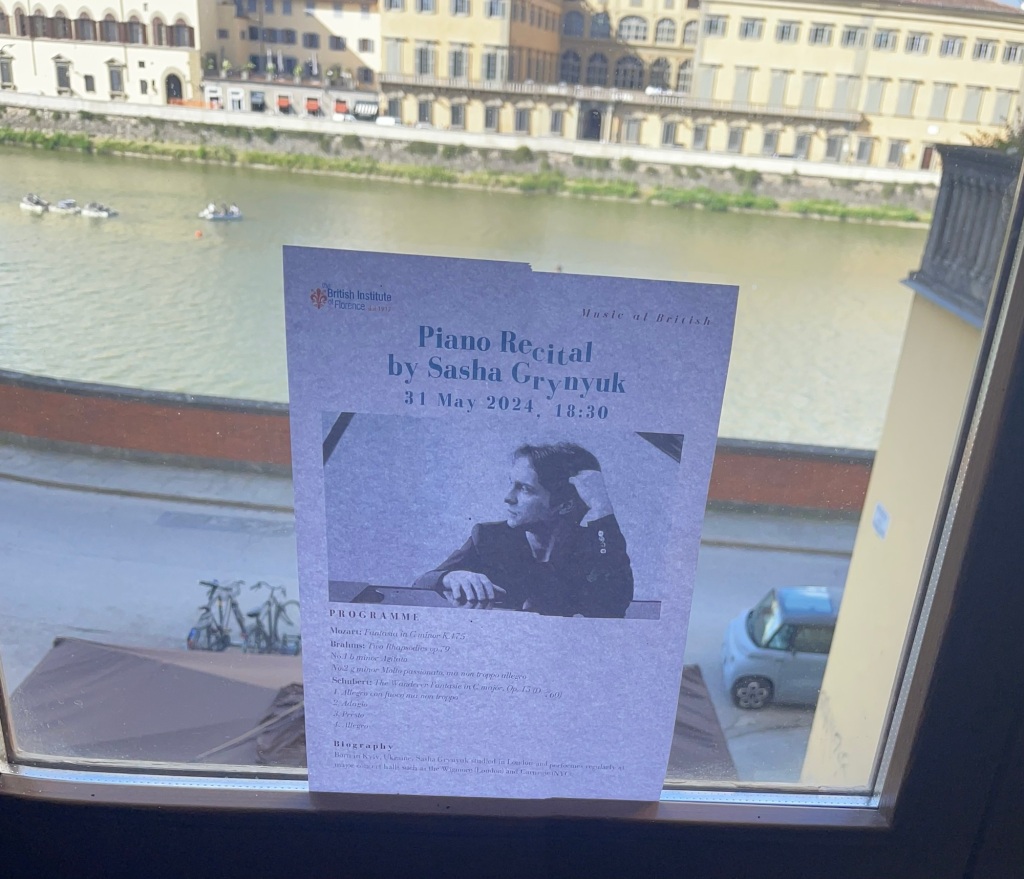
Alessandro Livi with Sasha ….after the concertSasha with his wife Katya GorbatioukCarlotta helping us to enjoy the sumptuous hospitality that Steinways offer in an after concert reception – here with the pianist Pasquale Evangelista who had come from Cremona especially to listen to Sasha It was Curzon who said that playing the piano was 90% hard work and here is the evidence after a magnificent all or nothing performance of the Wanderer Fantasy that will long resound in this hall for Sasha’s extraordinary musicianship and dynamic drive.Maura at work and playMaura a friend to all great artists https://www.britishinstitute.it/en Piano Recital by Sasha Grynyuk 31 May – 18.30 Born in Kyiv, Ukraine, Sasha Grynyuk studied at the National Music Academy of Ukraine and later at the Guildhall School of Music and Drama in London.
Winner of numerous competitions, prizes and awards, Sasha has performed around the world in major venues including Wigmore Hall, Barbican Hall, Royal Festival Hall, Queen Elizabeth Hall (London), Carnegie Hall (New York) and the Teatro Real (Rio de Janeiro). He has performed with such orchestras as the Royal Philharmonic, Bergen Philharmonic and the National Symphony Orchestra of Ukraine.
“An impressive artist with remarkable, unfailing musicality always moving with the most natural, electrifying, and satisfying interpretations”. Charles Rosen (legendary American pianist and critic)
PROGRAMME: MozartFantasia in C minor K.475
BrahmsTwo Rhapsodies op.79 No.1 b minor Agitato No.2 g minor Molto passionato, ma non troppo allegro
Schubert The Wanderer Fantasie in C major, Op. 15 (D. 760) 1. Allegro con fuoco ma non troppo 2. Adagio 3. Presto 4. Allegro
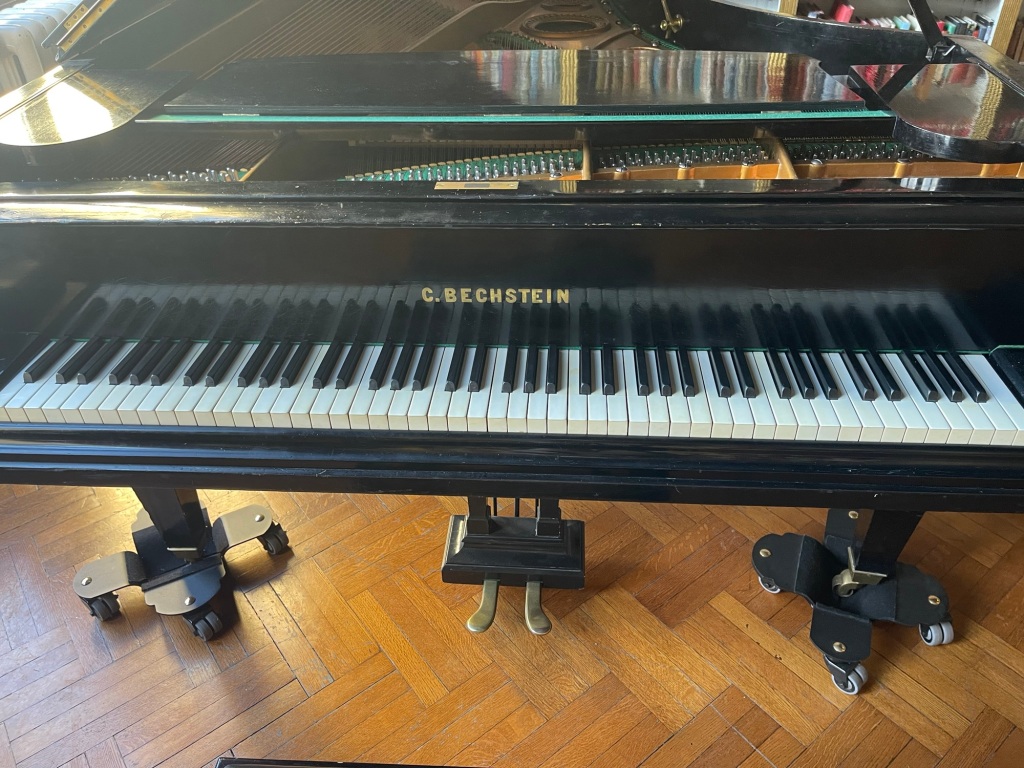
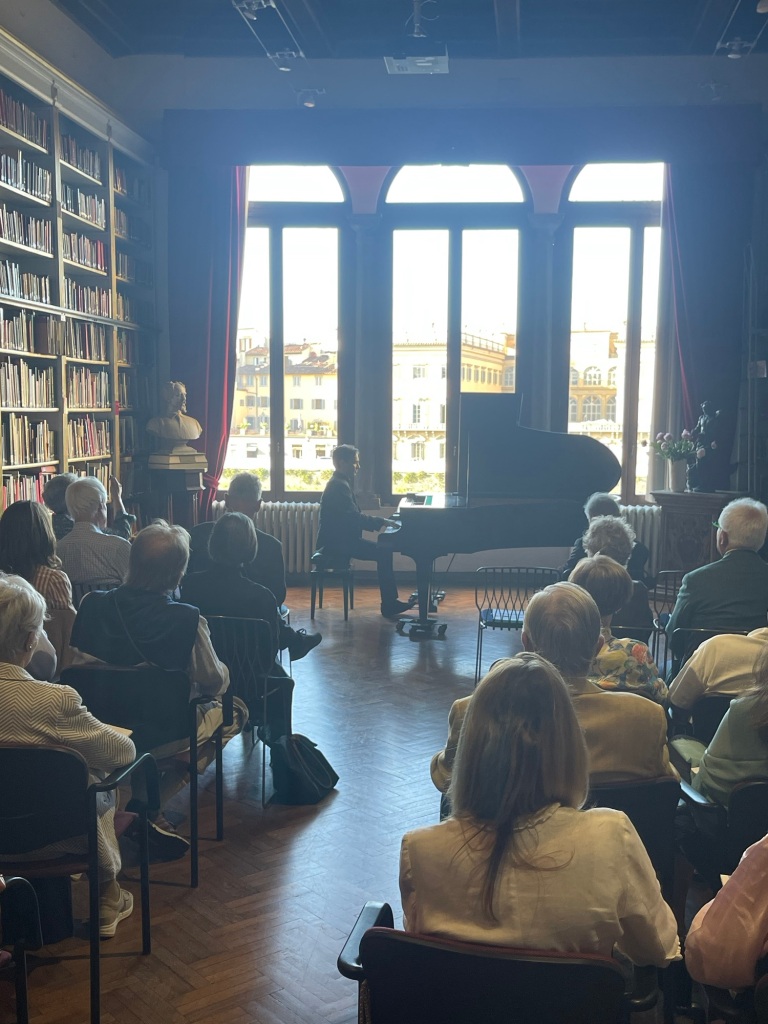
Sasha’s second concert was in the beautiful Harold Acton Library in Florence .Now part of the British Institute it has an 1890 Bechstein piano in its midst that Angela Hewitt has quite rightly said is the right piano for these surroundings. It is a piano with a soul and a sound of antique beauty like looking at a ‘daguerreotype’ photo that has faded with age but the memory of past glories has remained within its very bones. A piano with a past that has a story to tell to he who can persuade her to give up her secrets.
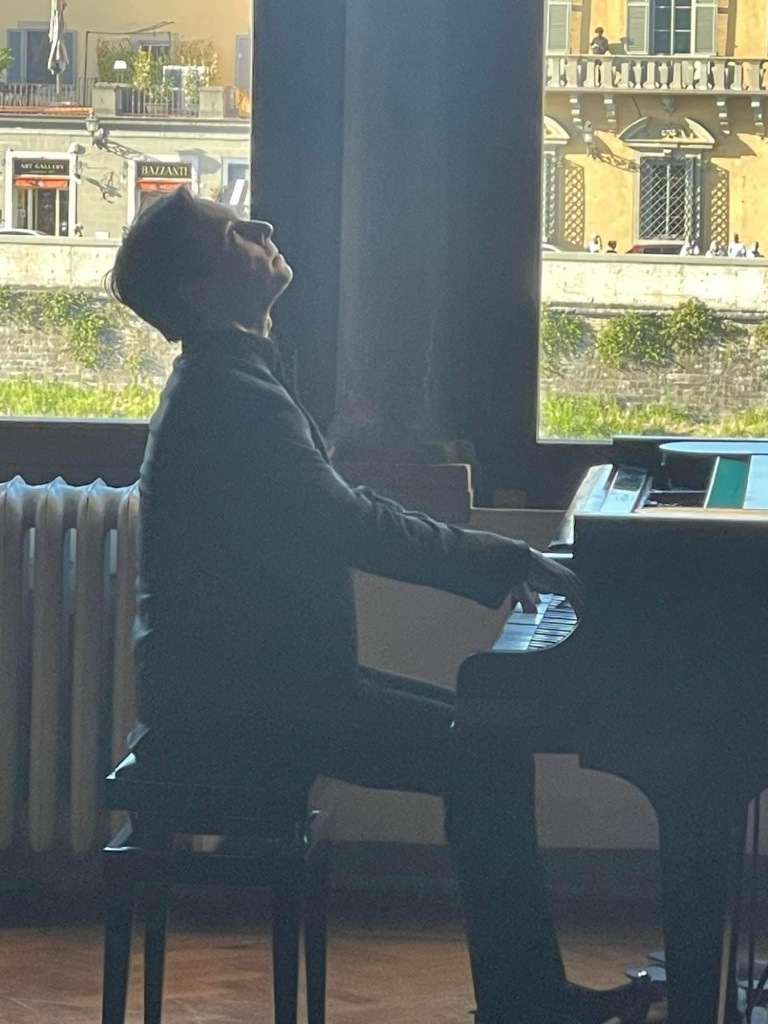
Sasha is just such a musician or should I say magician because he could conjure up sounds of exquisite subtlety and tonal refinement as he delved deep into the piano and persuaded it with love and mastery to give up its secrets and allow the music to unfold every bit as expressive as the human voice. There was a luminosity and glow to the sound with a natural fluidity with no hard edges.
The Mozart was quite extraordinary as every note had a different inflection where even the imperious opening seemed to take on a different significance .There was magic in the air tonight with Brahms Rhapsodies that were not the usual hard hitting passionate declarations but sumptuous full sounds of great luminosity followed by etherial golden whispers of poignant meaning.
A monumental performance of the ‘Wanderer’ fantasy that from the very first call to arms was transformed into living sounds of searing intensity and urgency. Sasha’s quite extraordinary sensitivity to sound was because he was listening to every note that his hands were extracting from this ‘casserole ‘ ( as Vlado Perlemuter would call a piano of a certain vintage ) .He recreated a much maligned work and transformed it into the masterpiece that had influenced all that came after it. A transformation of themes that was to be the new path for composers such as Liszt and even more importantly his son in law Richard Wagner.Etherial sounds mixed with a glorious fluidity of colours rarely found on modern day pianos was used by Sasha to demonstrate that music must speak and in order to do that it must make sense which requires extraordinary concentration and control.
This piano does not play itself but will reveal its secrets only to the finest musicians who have a sensitivity to sound and balance. It is the difference between a ‘cordon bleu ‘ where all the senses are involved : taste ,smell,texture and beauty to create something unique that will remain in the memory for long to come. And there is the perfection of modern day pianos which can almost play themselves ( the new ‘Spiro’ piano at Steinways actually does that and can reproduce via computer any performance that is programmed with superhuman fidelity) but it is difficult to find the sounds that these old German pianos still contain.In a way it is the difference between the convenience of a micro oven or the laboriously slow wood heated furnace. It was Rosalyn Tureck who said that her favourite piano was still the ‘old’ Bechstein as she had such a sensitivity to sound that if she found the piano lid open on stage at the beginning of a concert she would look aghast as she set about removing any speck of dust on the keys that might interfere with her super sensitive fingers. Chloe Mun who had played on this piano last year confided that for the classical repertoire she loved this piano much more than the modern pianos with their perfect technical brilliance.
A monumental performance not of forceful virtuosity but of thoughtful musicality.There was magic in the air as Sasha transformed this rarified atmosphere where every one of us was involved in a musical voyage together with the artist as the washes of sound in Ravel’s ‘Ondine’ filled this beautiful library with ravishing sounds of rarified beauty. A magic carpet on a voyage of discovery.
Sasha with film producer Janara Khassenova who had recently made a documentary about the founders of the Keyboard Trust
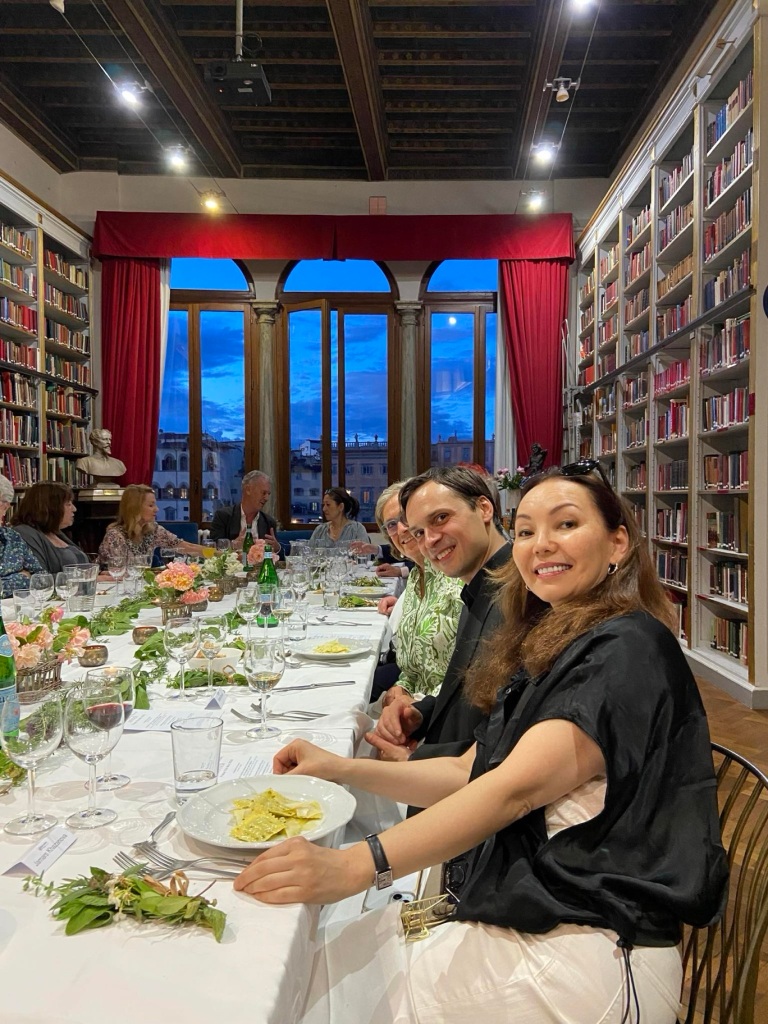
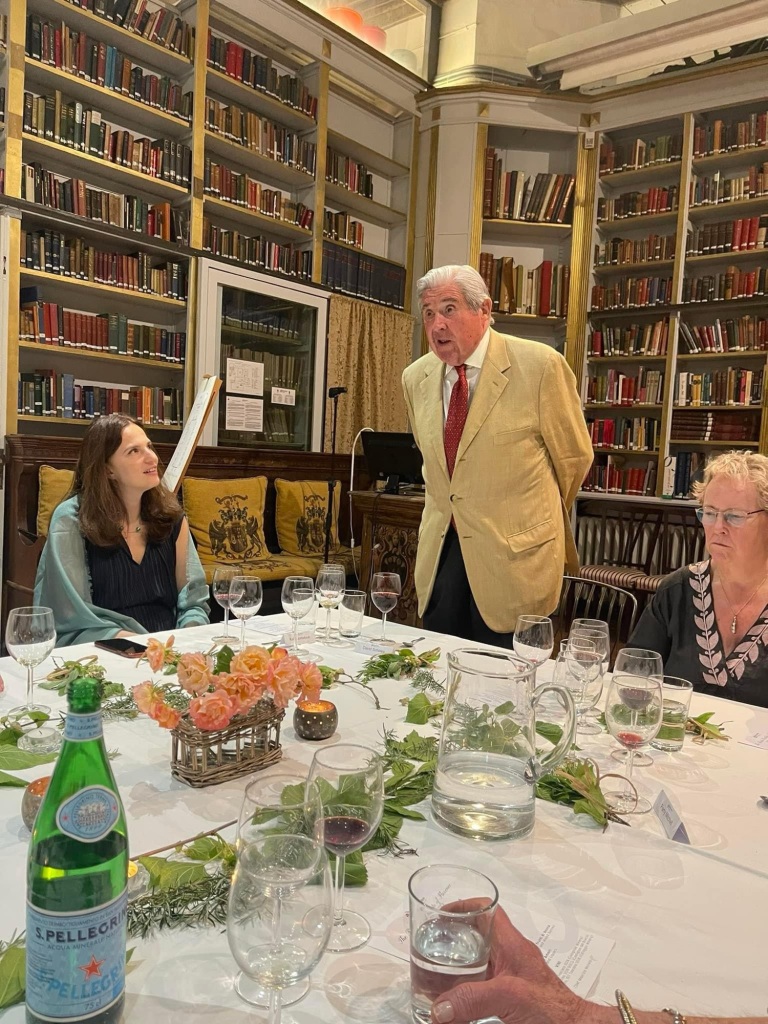
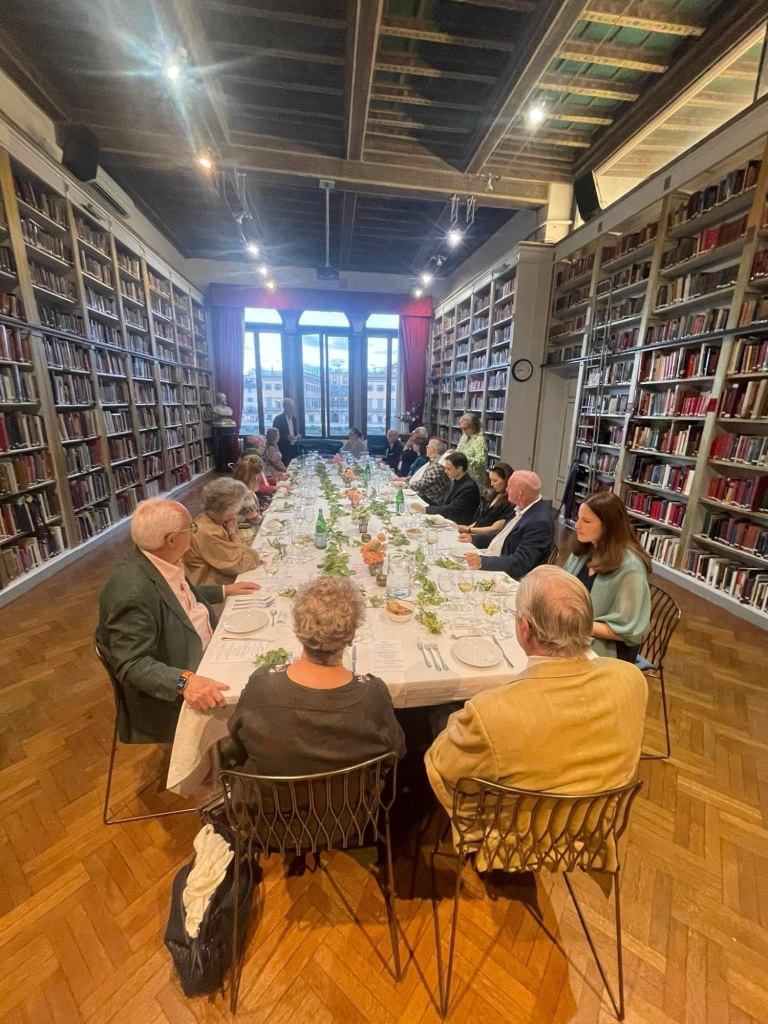
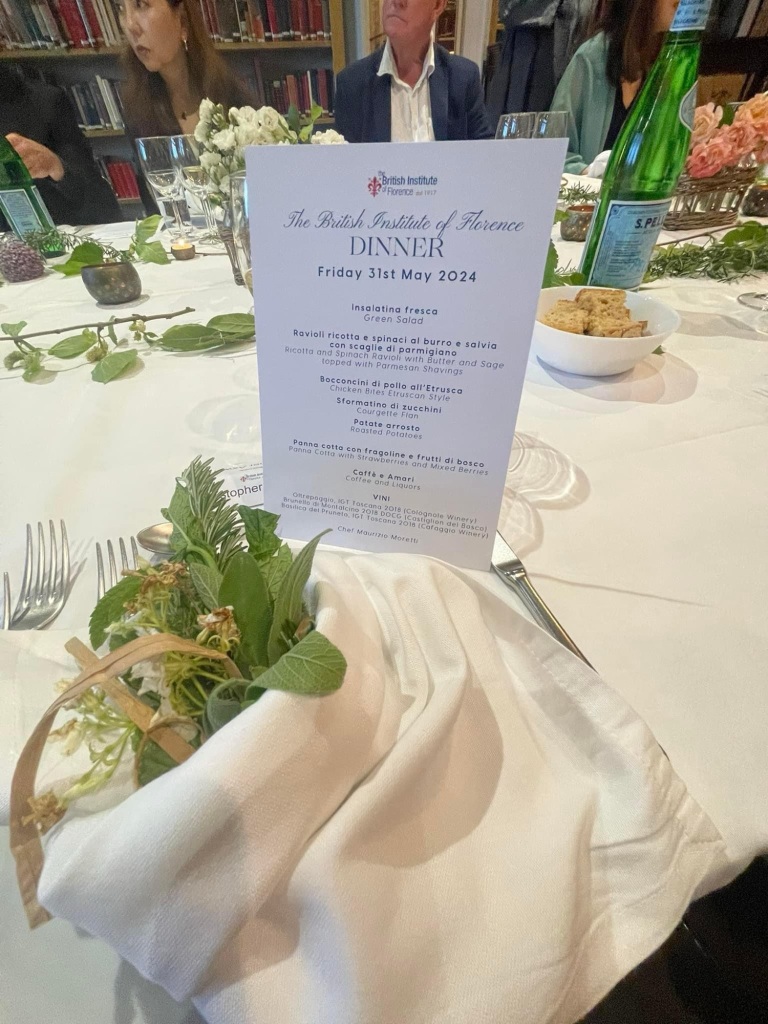
Another miracle was performed by Simon and Jennifer Gammell transforming the concert hall into a table truly fit for a King as there followed a sumptuous feast for the annual meeting of the patrons of the British Institute. A short speech from Sir David Scholey exclaiming that he would gladly return every Friday to experience such miracles of music and cuisine – transformation of themes indeed!
The ever sensitive David also reminded us that whilst Sasha was playing, his wife had received a message from her parents in Odessa saying that bombs were being dropped on their beloved city in that very minute.Not to dampen the proceedings but to make us aware that a room with a view should also look on the distant horizon and see a world still in conflict.Make music not war is a very simplistic motto to follow but not so easy to convince deeply scarred peoples with conflicting views and traditions.We can and must try!
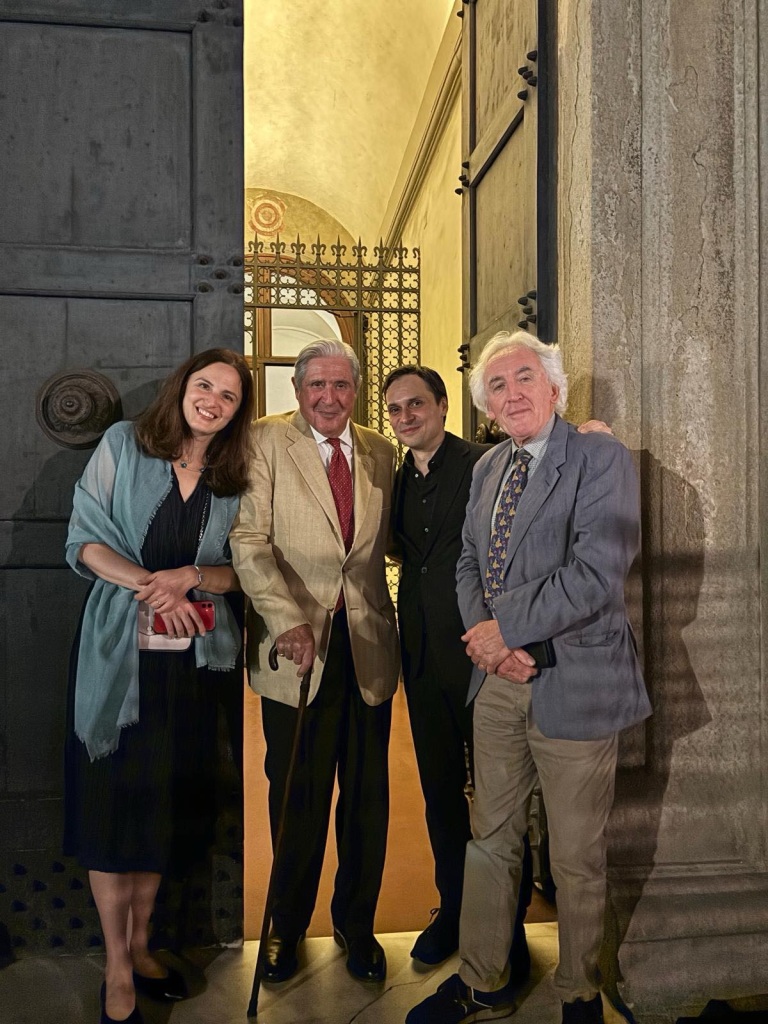
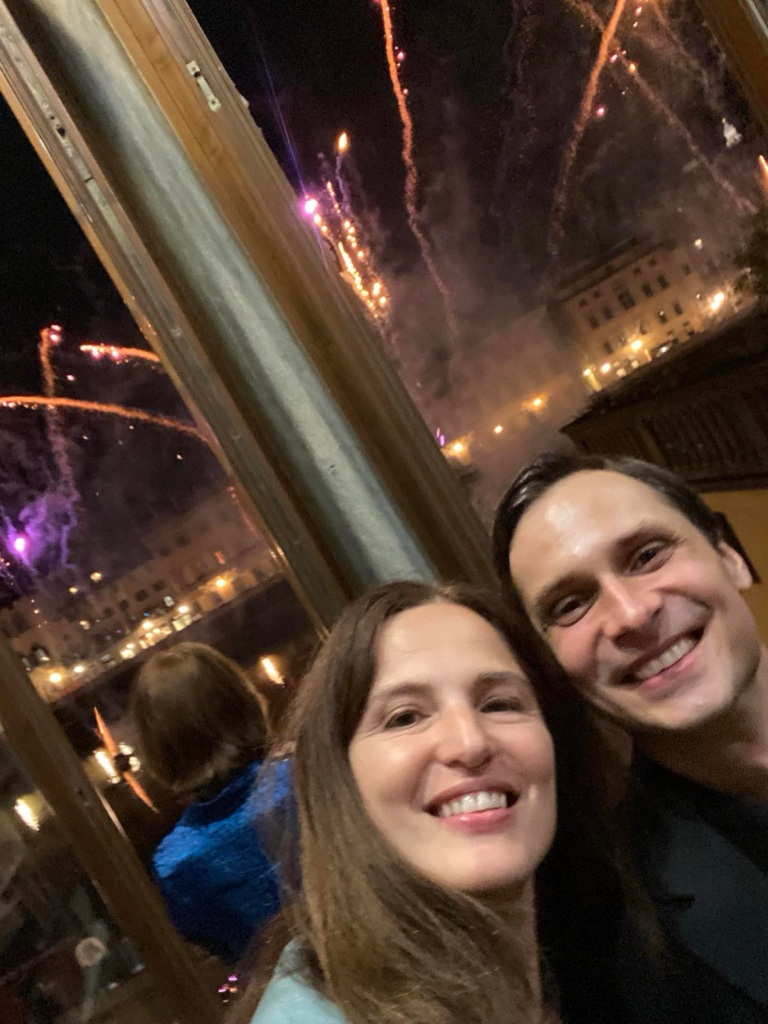
Florence in party mood tonight with yet another view from this beautiful room .Sir David Scholey with Katya and Sasha GrynukSimon Gammell OBE director of the British Institite ,centre Yet another miracle – the concert hall transformed in a feast for all sensesA wonderful end to this short tour for the Grynuk’s Wolfgang Amadeus Mozart 27 January 1756. Salzburg. 5 December 1791 Vienna
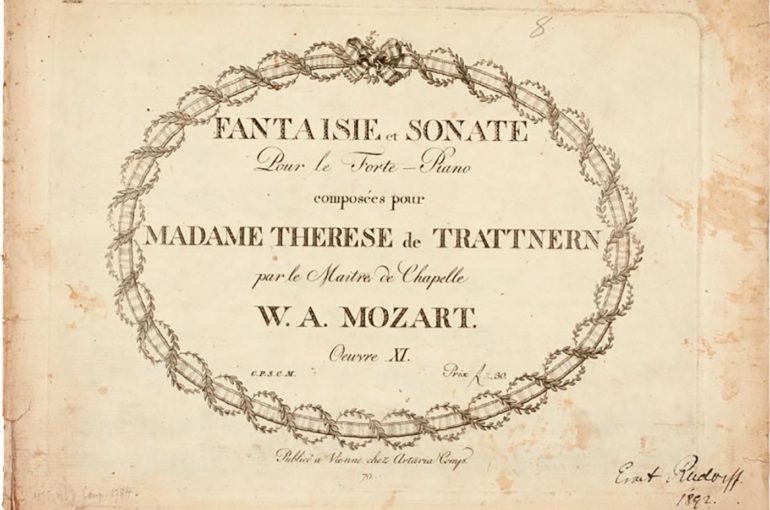
Fantasia No. 4 in C minor, K. 475 was composed by Mozart in Vienna on 20 May 1785 and was published as Opus 11, in December 1785, together with the Sonata in C minor K.457, the only one of Mozart’s piano sonatas to be published together with a work of a different genre.
This astonishing Fantasia is probably one of Mozart’s most innovative compositions for solo keyboard. It was composed for Therese Trattner (1758–1793), and published by Artaria in Vienna towards the end of 1785, alongside the Piano Sonata in C minor K.457.
Therese (born Maria Theresia) Trattner was the daughter of the court mathematician Joseph Anton Nagel. In 1776, she married the widowed Johann Thomas Trattner, a Vienna publisher and bookseller that Mozart knew well. After Mozart settled in Vienna in 1781, Therese Trattner became one of his first piano students, and surely one of the most talented, she remained so until the composer’s death. In 1784, the Mozarts lived in Trattner’s house on the Graben in Vienna. Well connected in Viennese society, Therese Trattner helped him to organise three subscription concerts here, at which the Piano concertos were performed and which further promoted his reputation as a piano virtuoso in Vienna. She also gave concerts (“academies”) herself in her flat in the Trattnerhof, at which Mozart was present.
Although published together Fantasia K.475 and Sonata K.457 were conceived independently: the rediscovery of the autograph of the two works confirms this.
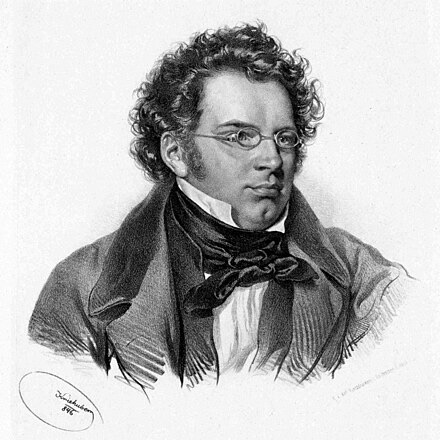
Franz Peter Schubert
31 January 1797, Himmelpfortgrund Vienna 19 November1828 Vienna
The Fantasie in C major, Op. 15 ( D.760), popularly known as the Wanderer Fantasy, is a four-movement fantasy for solo piano composed by Schubert in 1822 when only 25 in a life that was tragically cut short by the age of 31.It is widely considered his most technically demanding composition for the piano and Schubert himself said “the devil may play it,” in reference to his own inability to do so properly.The whole work is based on one single basic motif from which all themes are developed. This motif is distilled from the theme of the second movement, which is a sequence of variations on a melody taken from the lied “Der Wanderer”, which Schubert wrote in 1816. It is from this that the work’s popular name is derived.The four movements are played without a break. After the first movement Allegro con fuoco ma non troppo in C major and the second movement Adagio (which begins in C-sharp minor and ends in E major), follow a scherzo presto in A-flat major and the technically transcendental finale, which starts in fugato returning to the key of C major and becomes more and more virtuosic as it moves toward its thunderous conclusion.Liszt was fascinated by the Wanderer Fantasy, transcribing it for piano and orchestra (S.366) and two pianos (S.653). He additionally edited the original score and added some various interpretations in ossia and made a complete rearrangement of the final movement (S.565a).I remember a recent lesson I had listened to of Elisso Virsaladze in which I was struck by the vehemence of the Wanderer Fantasy and the ragged corners that we are more used to in a Beethoven almost twice Schubert’s age .It made me wonder about the maturity of the 25 year old Schubert and could he have had a premonition that his life was to be curtailed only six years later.We are used to the mellifluous Schubert of rounded corners and seemless streams of melodic invention.But surely in the final three sonatas written in the last months of his life the A major and C minor start with a call to arms and only in the last B flat sonata do we arrive at the peace and tranquility that Beethoven was to find too in his last sonata.But the deep rumblings in the bass in Schubert’s last sonata give food for thought that his life was not all sweetness and light.I remember Richter’s long tribulation in the recording studio to put on record as near definitive version as possible of the Wanderer Fantasy with the help of the pianist and musicologist Paul Badura Skoda.
Johannes Brahms 7 May 1833 Hamburg 3 April 1897 (aged 63) Vienna
The Rhapsodies, Op. 79, for piano were written by Brahms in 1879 during his summer stay in Portschach,when he had reached the maturity of his career. They were inscribed to his friend, the musician and composer Elisabeth von Herzogenberg. At the suggestion of the dedicatee, Brahms reluctantly renamed the sophisticated compositions from “Klavierstücke” (piano pieces) to “rhapsodies”.
No. 1 in B minor. Agitato is the more extensive piece, with outer sections in sonata form enclosing a lyrical, nocturne-like central section in B major and with a coda ending in that key.
No. 2 in G minor. Molto passionato, ma non troppo allegro is a more compact piece in a more conventional sonata form.



























 ChristopherAxworthy-MusicCommentary