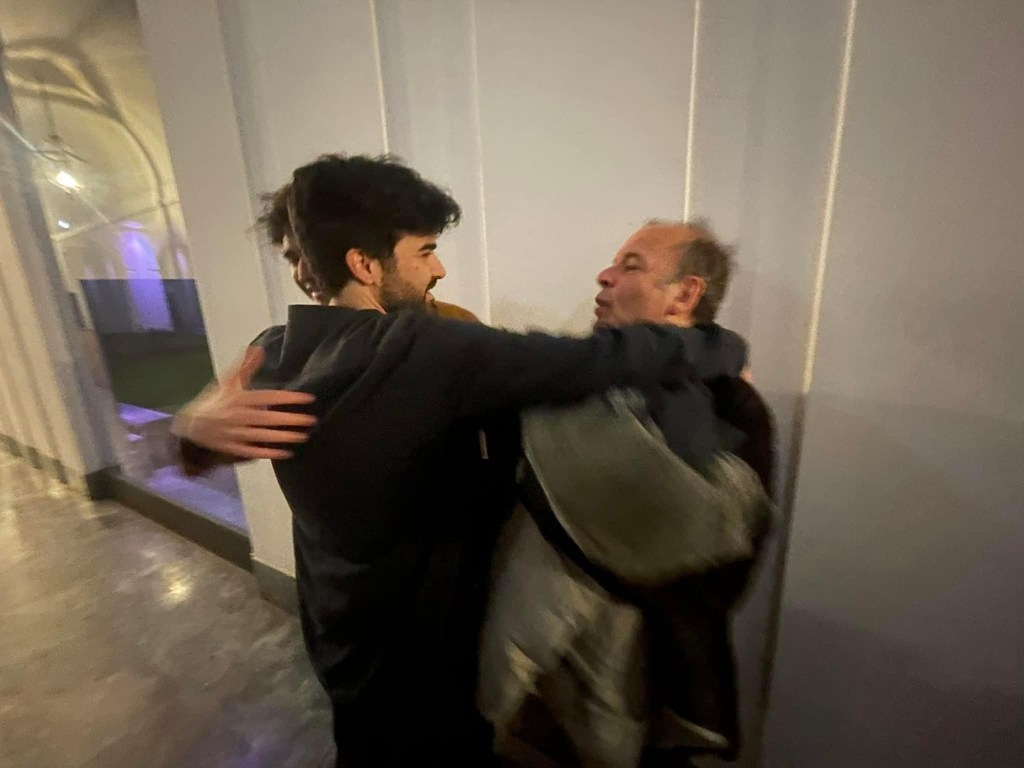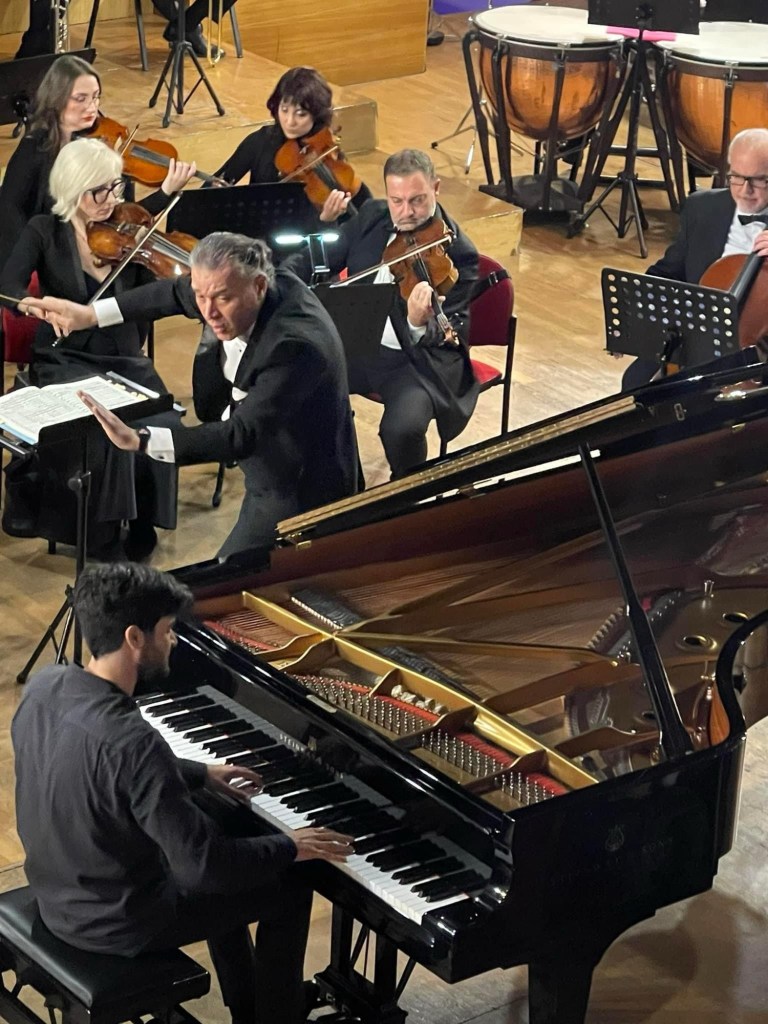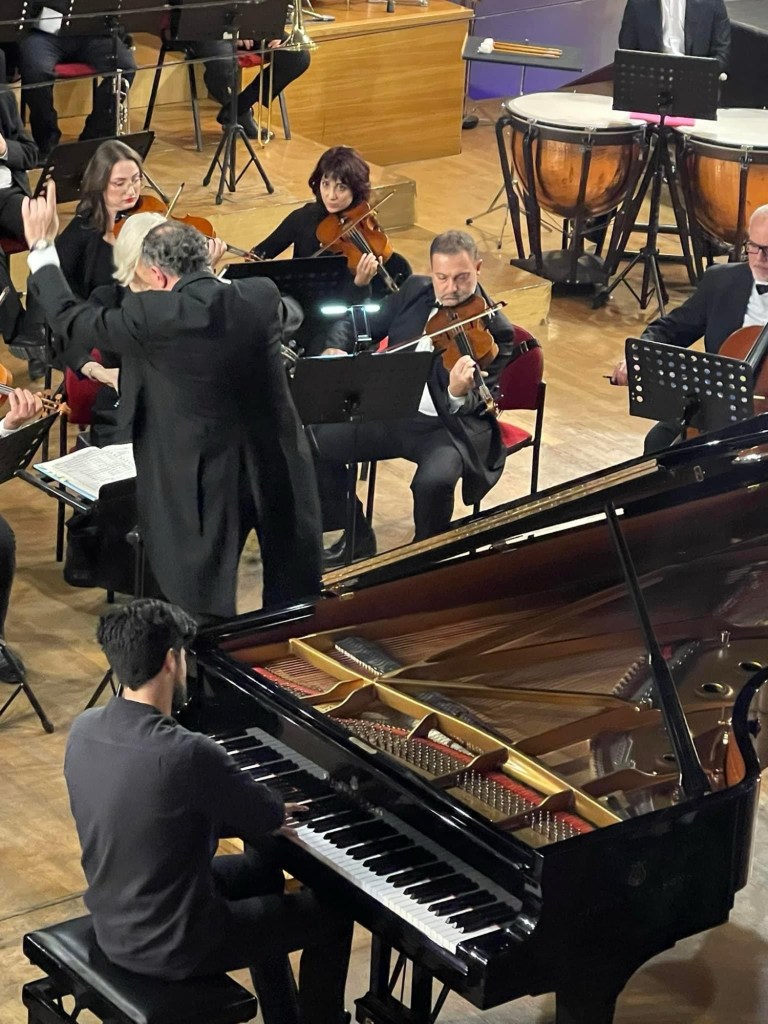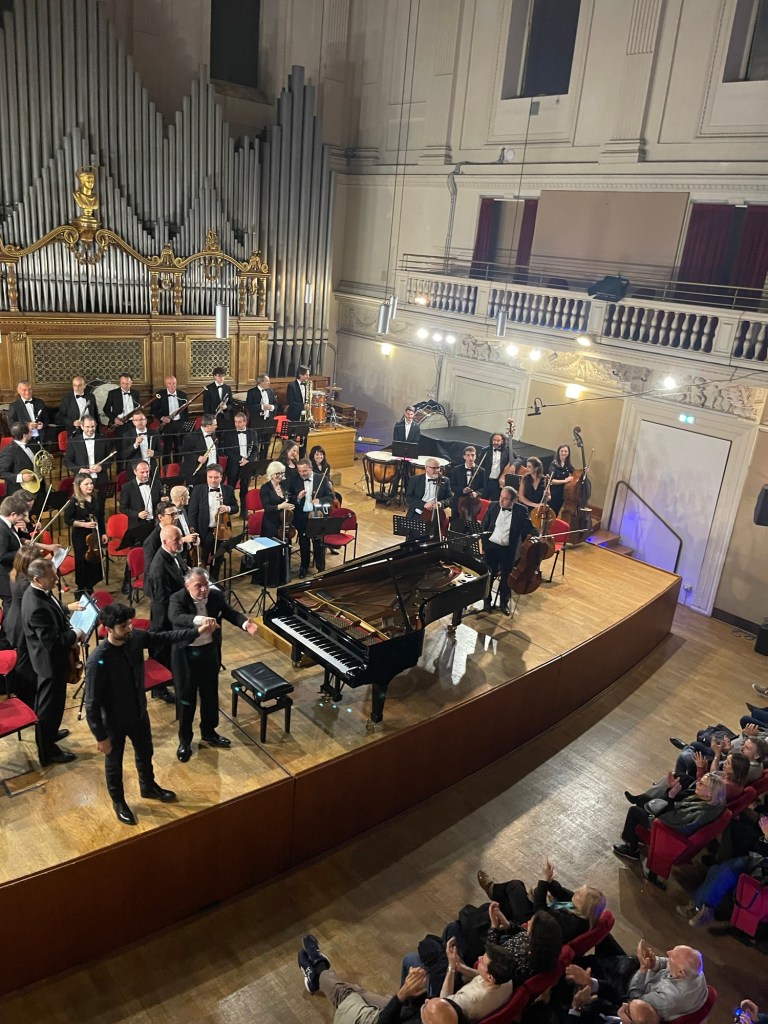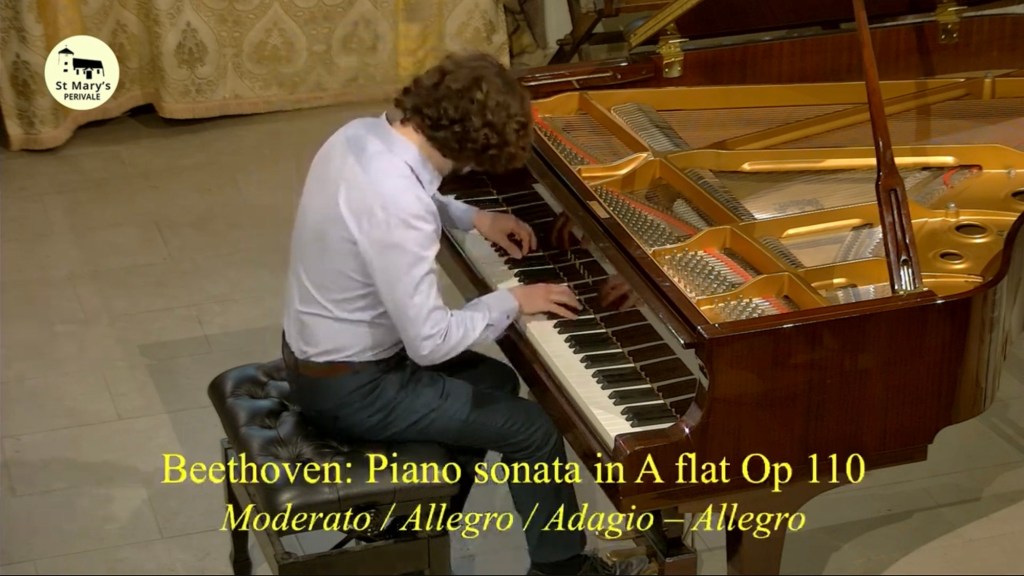
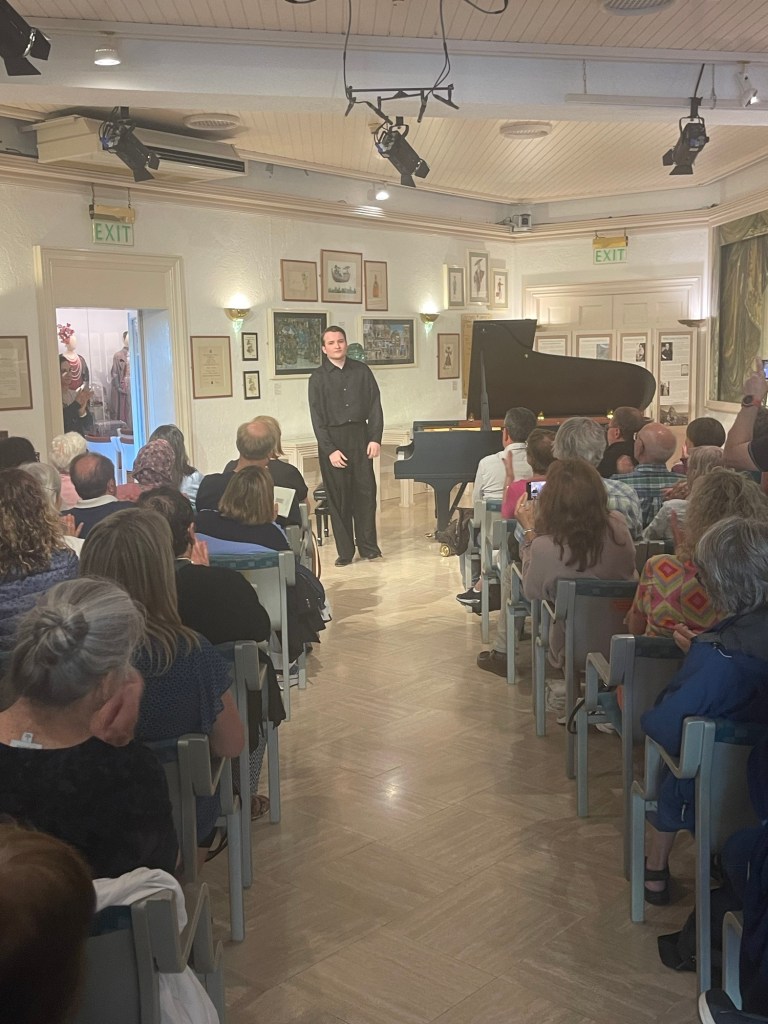
Misha Kaploukhii mastery and clarity in Walton’s paradise where dreams become reality – updated to include the Sheepdrove Competition and graduation recital

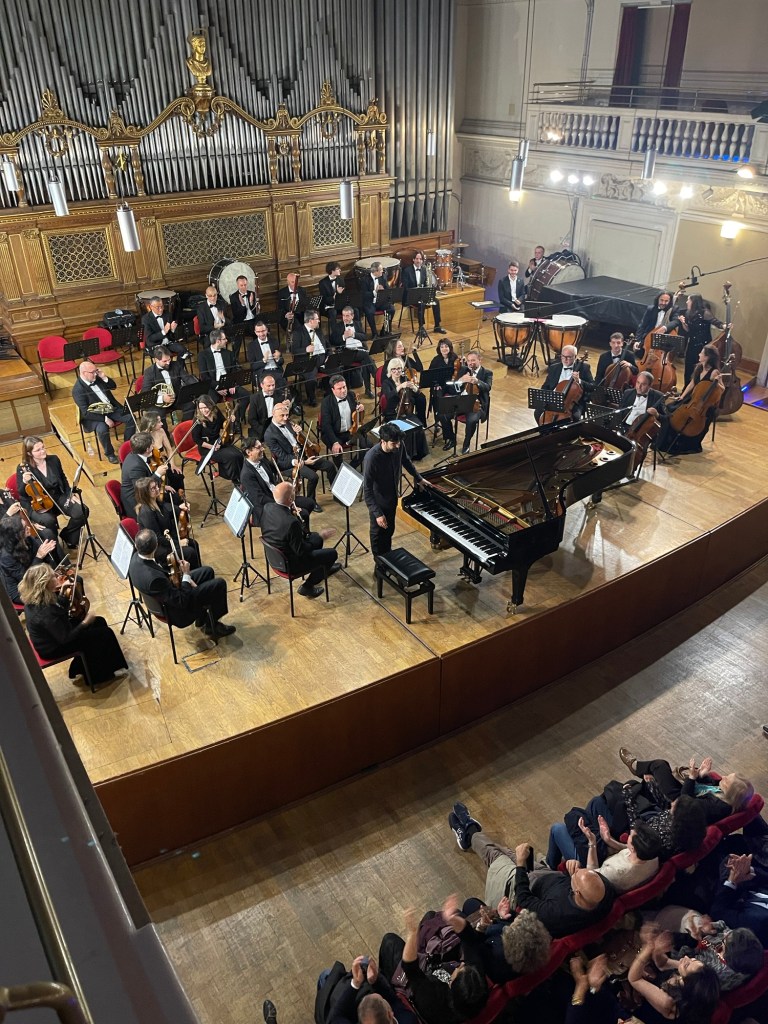
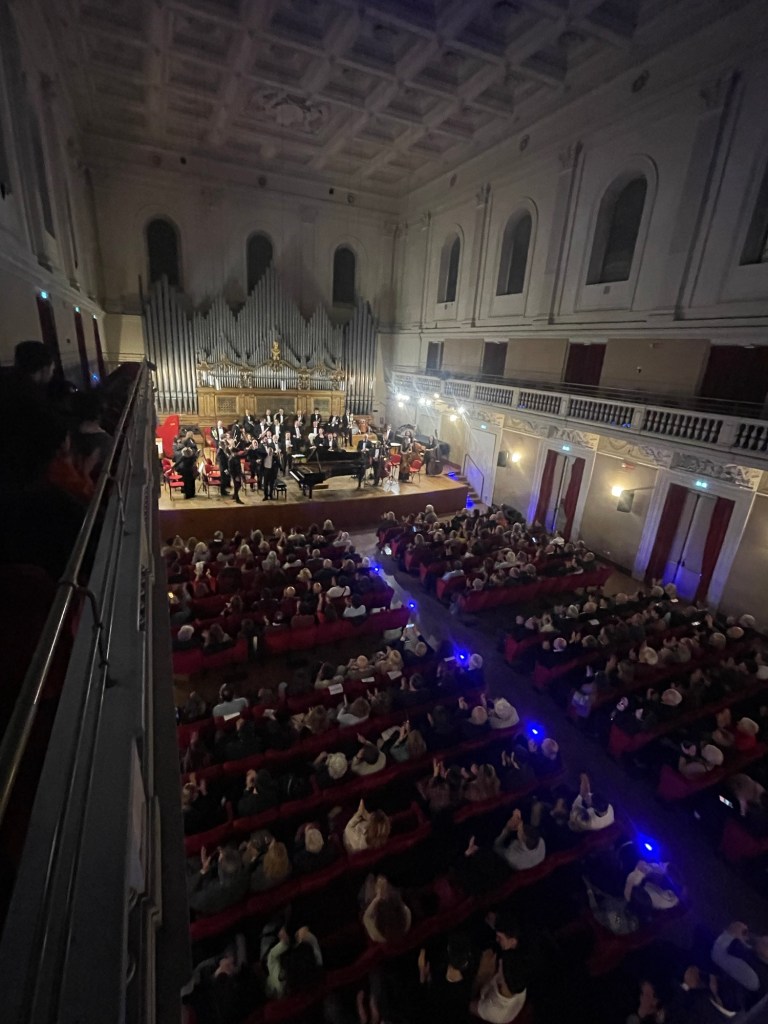
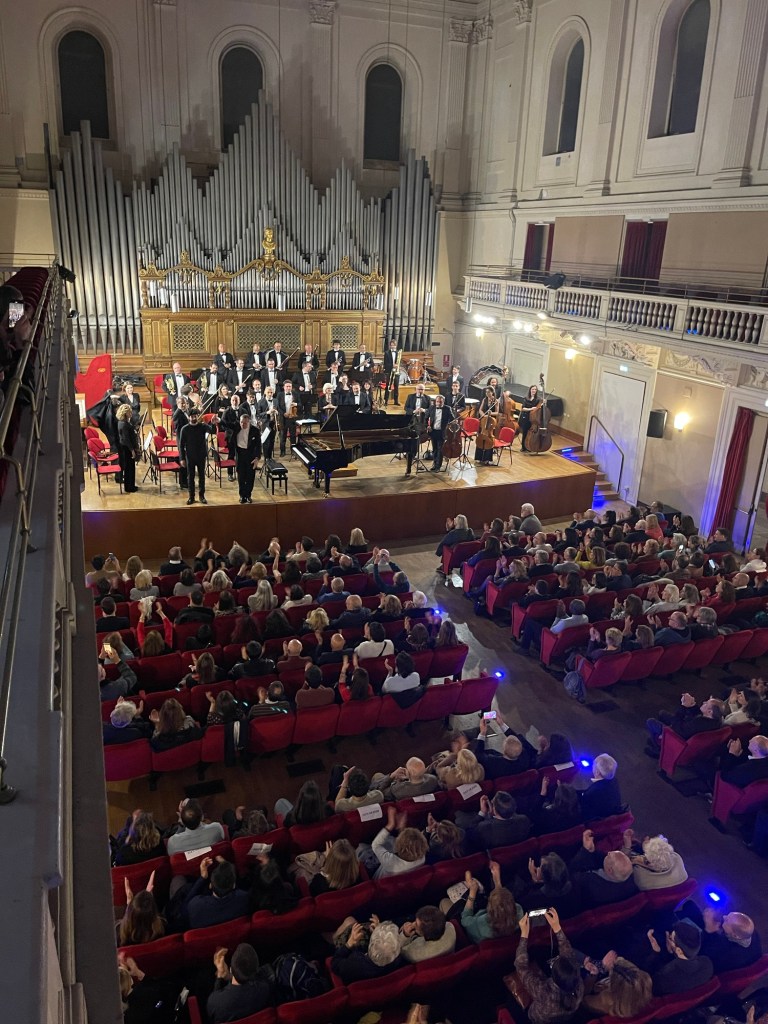
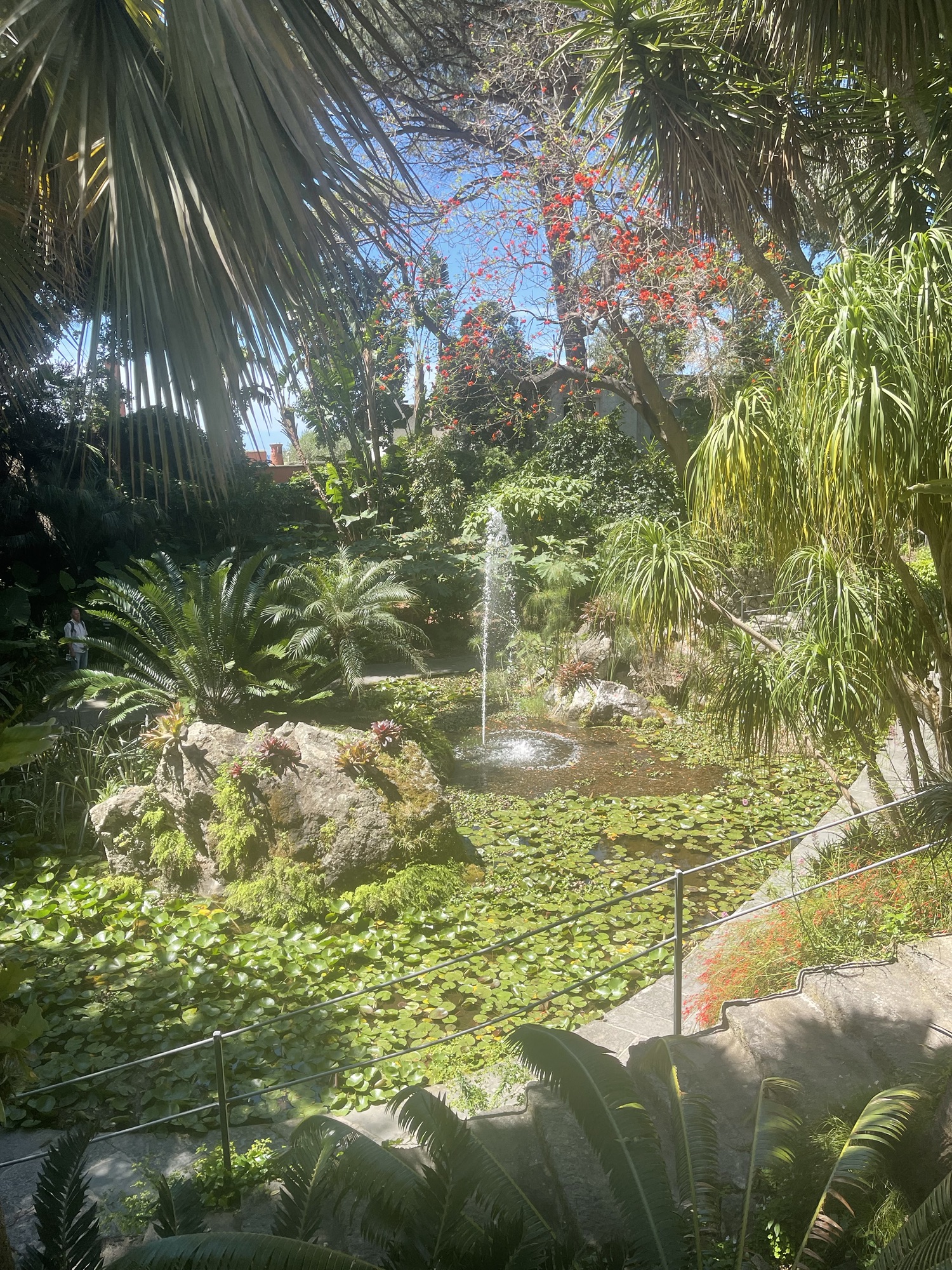
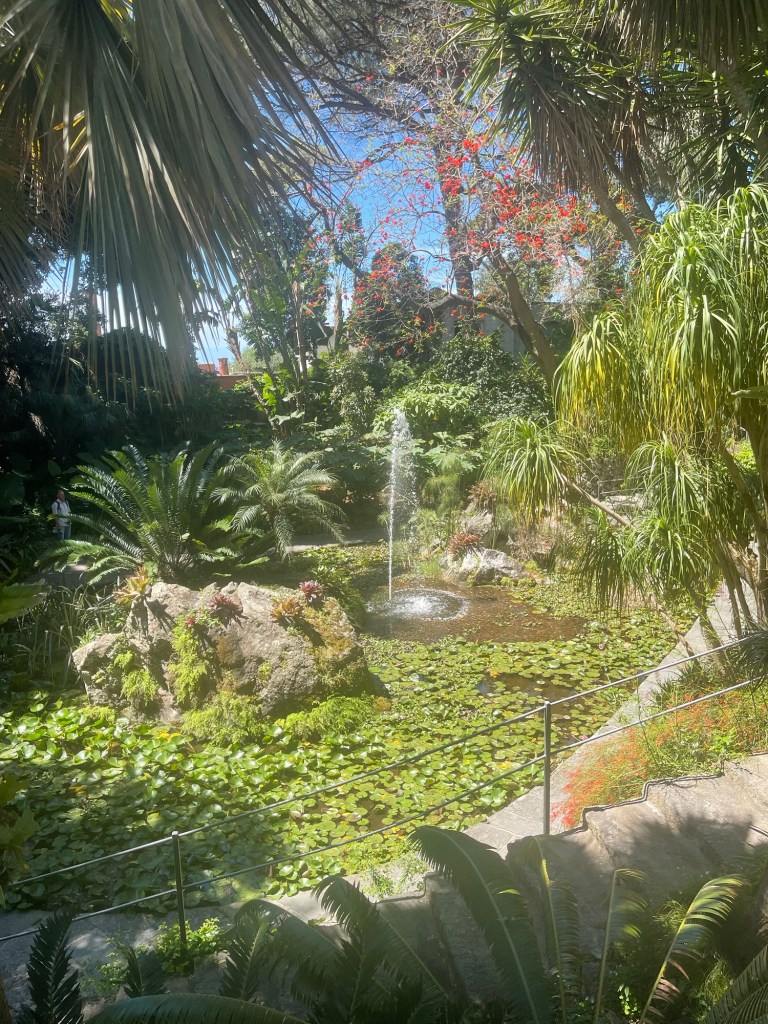
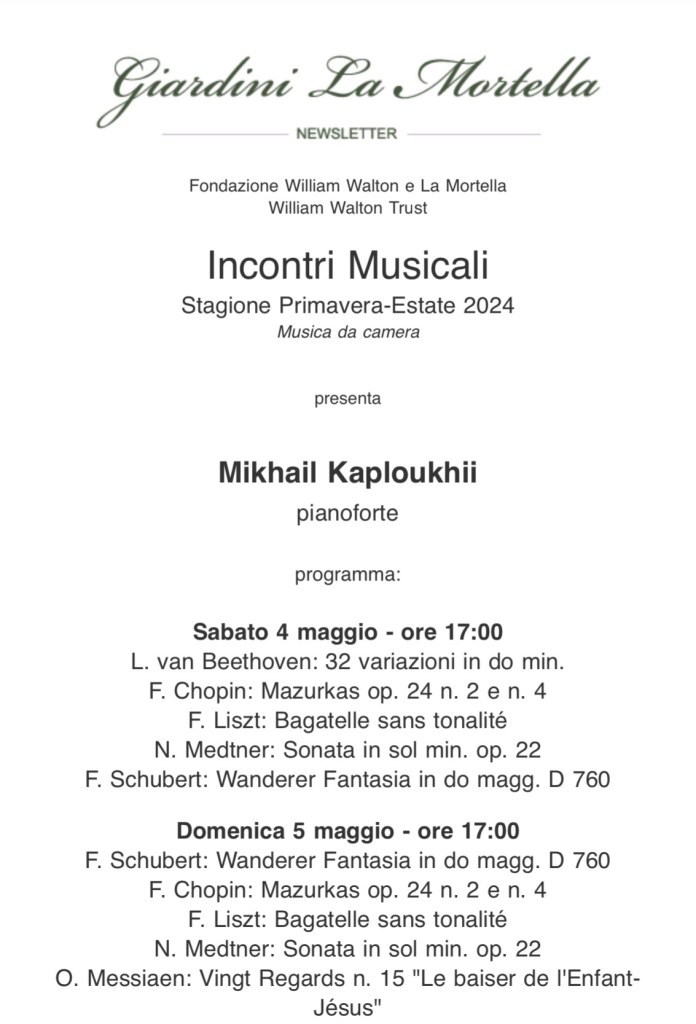
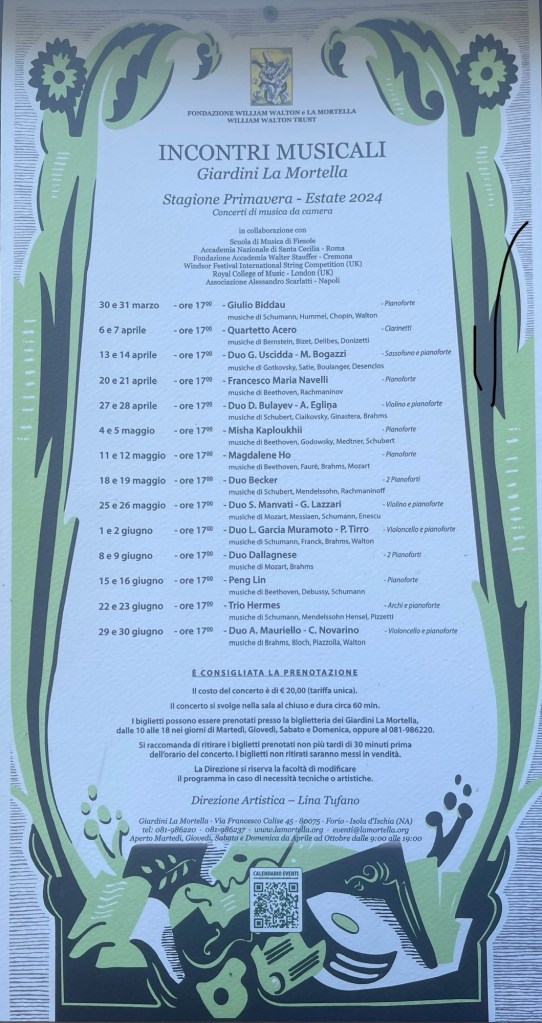
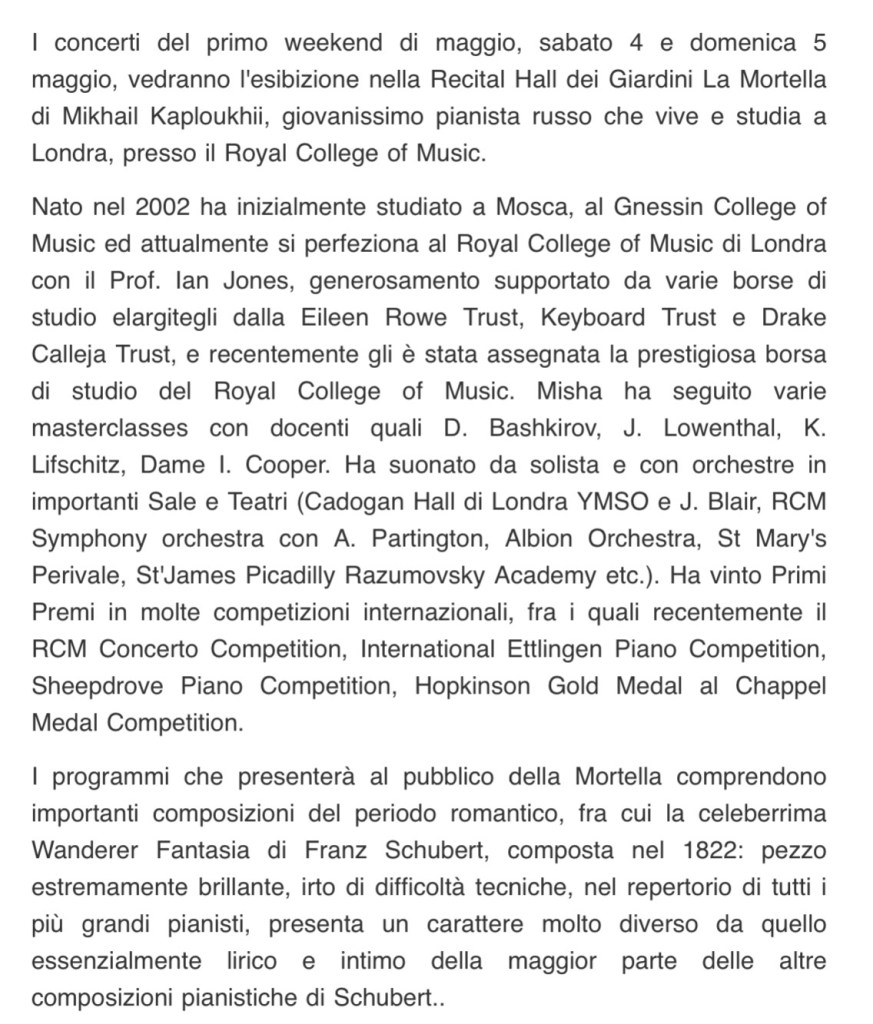
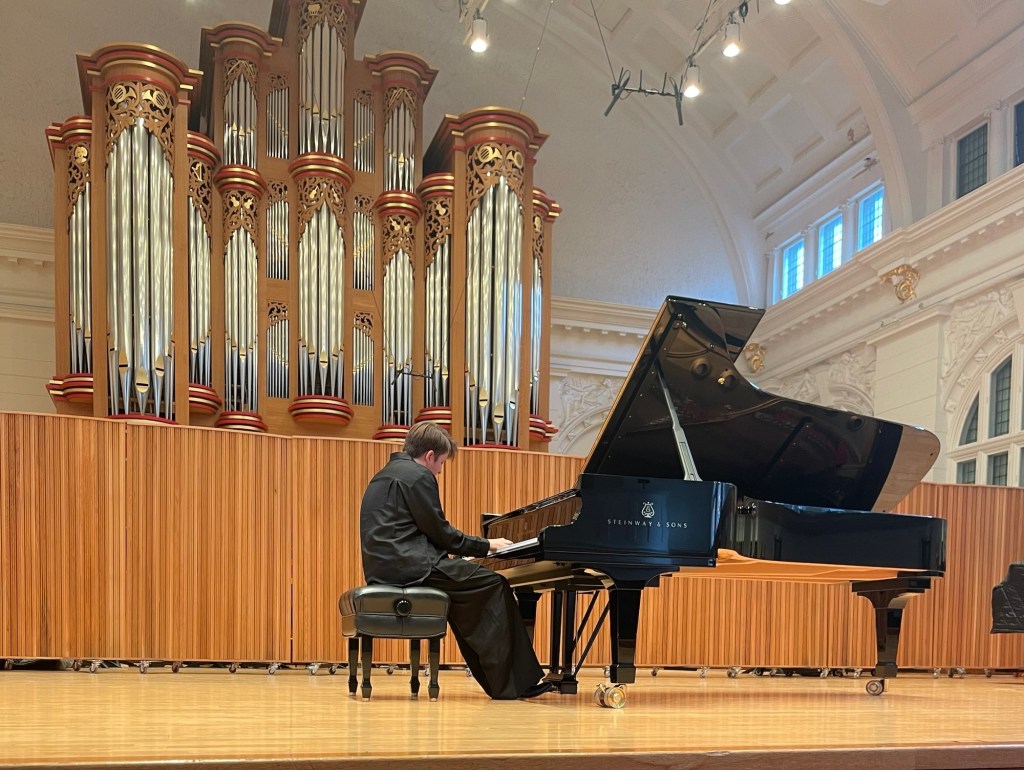
Playing of extraordinary clarity and mastery on Ischia today from Misha Kaploukhii .From Beethoven to Schubert via Chopin,Liszt,Medtner and Brahms .Whatever he played there was a dynamic drive and authority that was quite overwhelming. https://christopheraxworthymusiccommentary.com/2024/02/17/hats-off-the-chappell-gold-medal-has-uncovered-a-genius/ Having recently won one of the two top prizes at the Royal College of Music in London together with Magdalene Ho , the artistic director of La Mortella ,Lina Tufano immediately invited them both to play in this paradise of music and nature that was an oasis for the Waltons whose express wish was to give a platform to talented young musicians at the start of their careers.


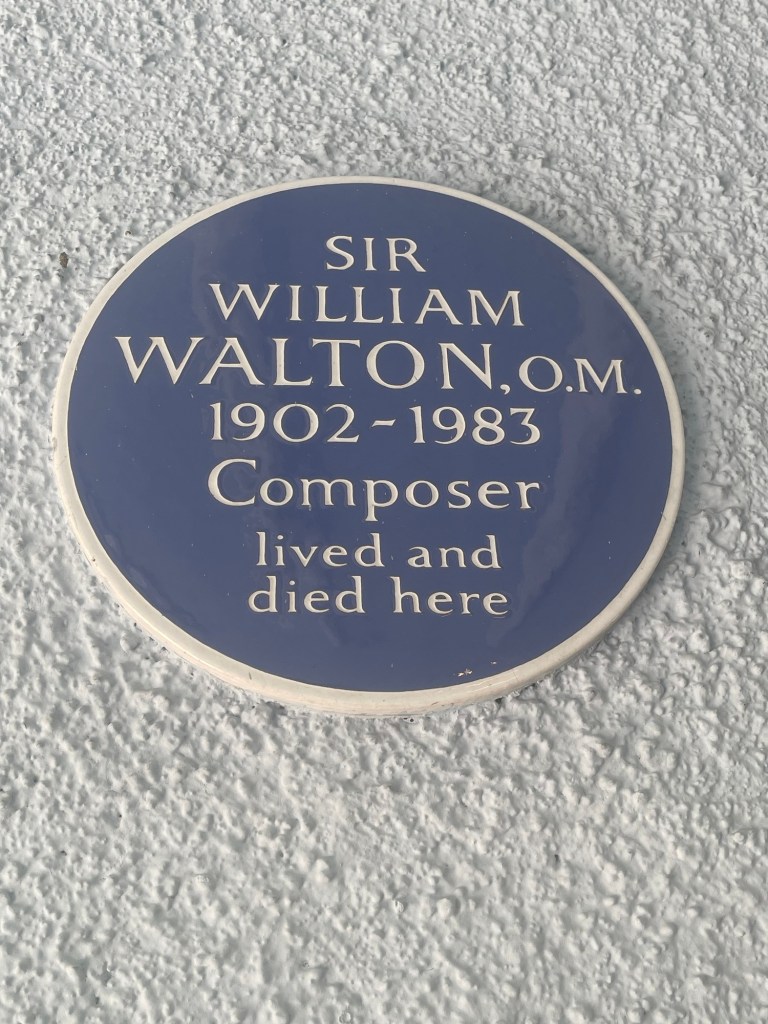
A full house despite a very rough sea to reach this paradise of Ischia that is just off the bay of Naples. And so it was to Beethoven that Misha opened the first of his two afternoon recitals.The 32 Variations in C minor, a key that so often signifies defiance and nobility for Beethoven as it did too for Mozart. It was with a gesture of aristocratic nobility that the theme was allowed to ring out with a call to arms in this concert hall built alongside the music room where Sir William Walton would pen his mighty fanfares.
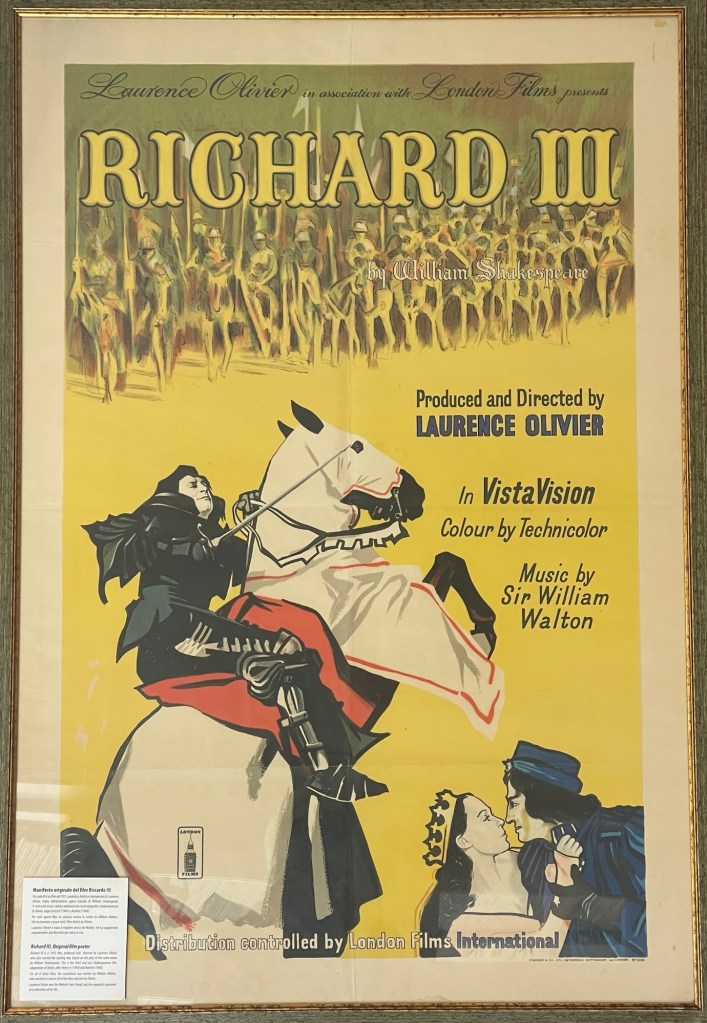
Those for the Royal occasions and for the famous films of Shakespeare with Lawrence Olivier who would often holiday here with his close friends,the Waltons, seeking peace and anonymity from the Hollywoodian spotlight.
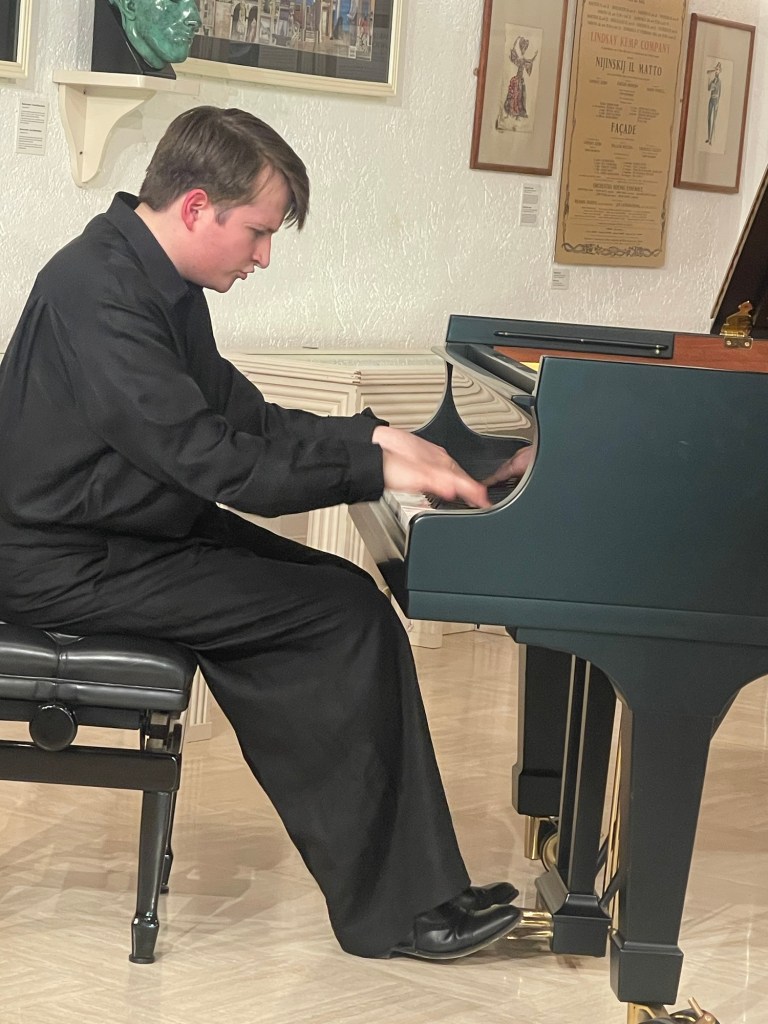
A mighty opening where Beethoven’s duel personality would contrast vehemence with tenderness with very little in between.These are variations that have long been associated with the learning of a classical piano technique as they are 32 variations posing different problems for the pianist more in vein with Brahms than most of Beethoven’s other works. In fact the other two essential works for aspiring young instrumentalists are the Handel Variations by Brahms and the Wanderer Fantasy of Schubert. They are all master works though and it is refreshing to be reminded of this as such masterly performances of the Beethoven and Schubert were allowed to unfold with the clarity and intelligent musicianship of this twenty one year old pianist.Variations that unwound with driving intensity always careful to follow Beethoven’s very precise markings.
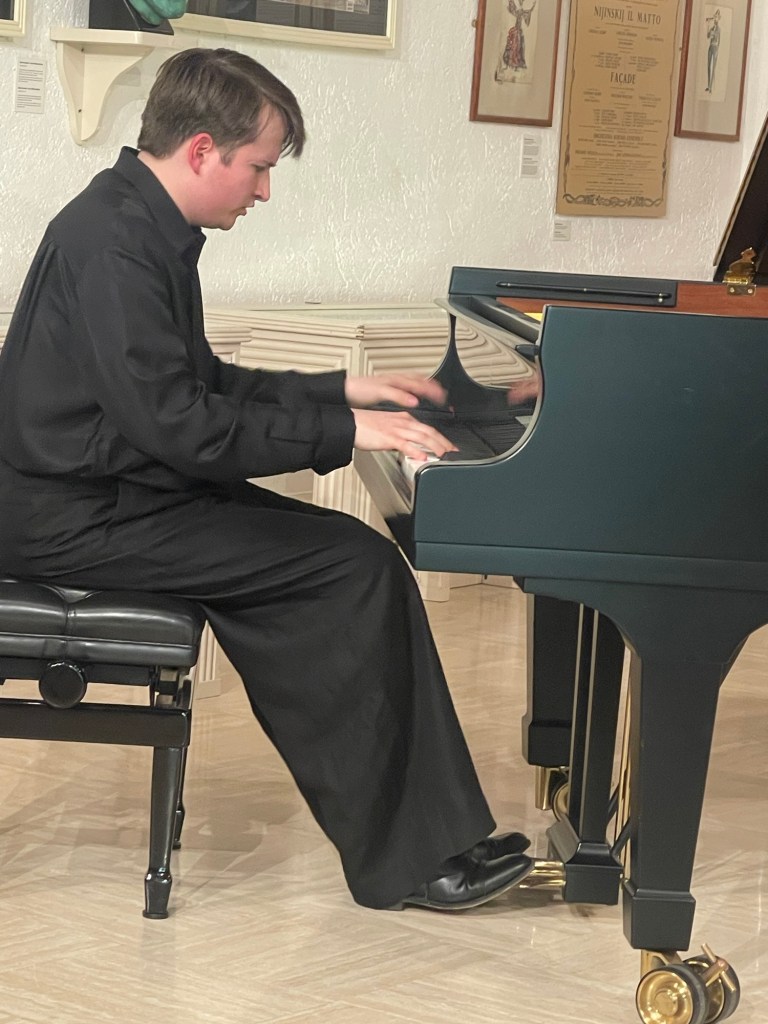
The gentle opening of the first five variations from the alternating leggiermente patter,first from the right and then the left hands and finally together, leading to alternating rhythmic patterns before the first Beethovenian outburst of irascible impatience with the sixth variation. Gradually building up the tension and speeded up note values before dissolving quite abruptly to the major.Here Misha produced a sumptuous full string quartet sound as this produced the means for the next four variations .Double thirds played with clarity and etherial lightness and a play on rhythmic diversity before the beautifully mellifluous return to the minor.
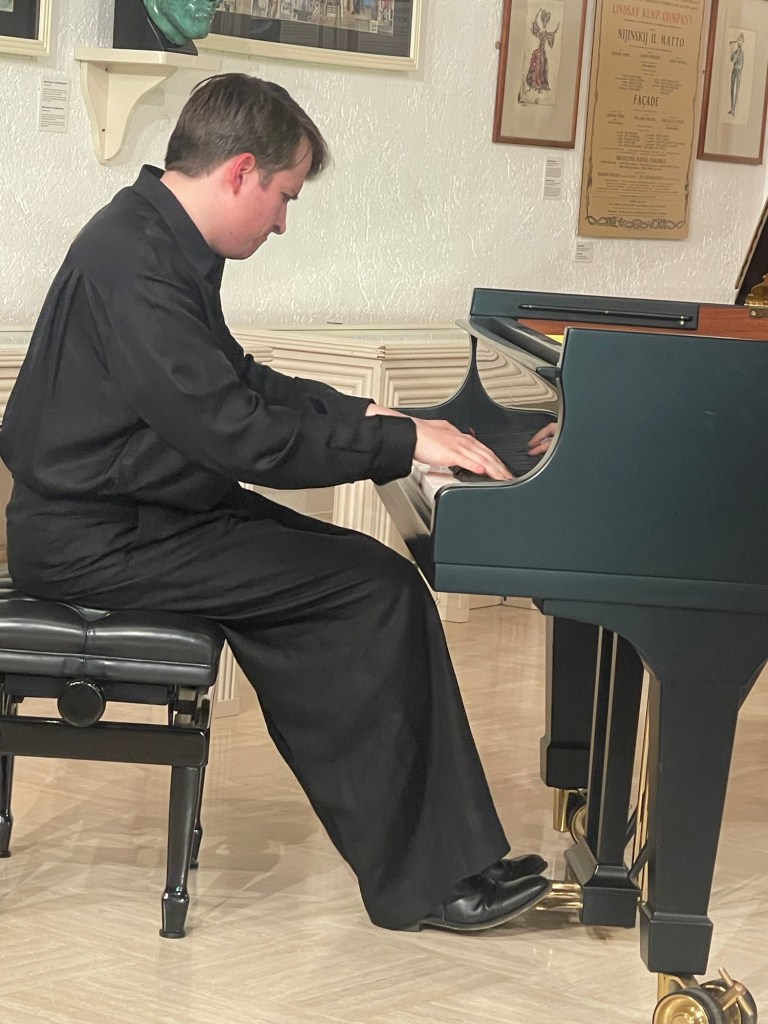
Misha reserving the Beethovenian shock tactic for the eighteenth variation with its streams of notes shooting off like rockets leading to the dynamic rhythmic drive of the next four variations. An alternation of dynamism and delicacy brought us to the remarkable last two variations where Beethoven’s genius begins to shine through after a deftly hidden but nevertheless didactic display of musical exercises. A gentle cloud of C minor on which the music gradually builds to boiling point and the inevitable explosion before the gradually diminishing forces and the triumphant final bars that were played with aristocratic nobility before the final tongue in cheek whispered farewell. A remarkable performance where Misha was able to restore a work that even Beethoven did not particularly admire, to the concert hall,as did Emil Gilels and Annie Fischer in a glorious past era.
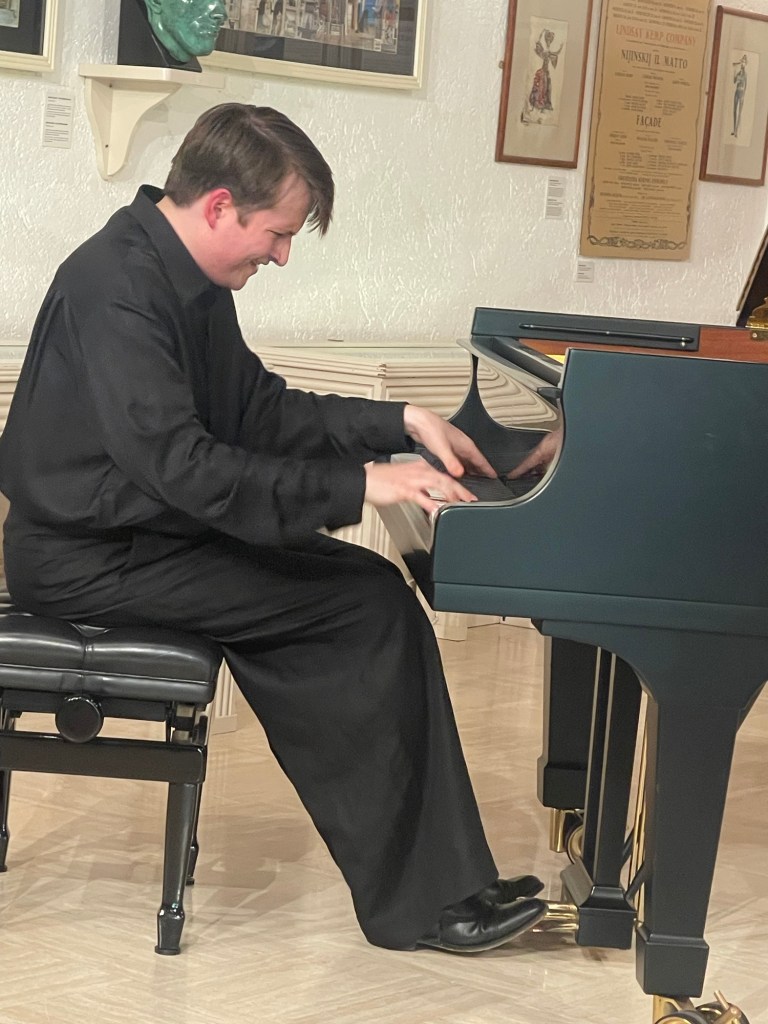
Two Chopin Mazurkas were played with the beguiling style of hypnotic rhythmic freedom and sense of dance .A haunting beauty of deep nostalgia with beautifully spun ornaments that unwound from his well oiled fingers like glittering springs but always incorporated into an architectural shape of subtle musicianship.

Liszt’s Bagatelle S.216 a was perhaps the unexpected highlight for me of the recital with Misha’s absolute clarity that could spin Liszt’s busy web of sounds with brilliance and teasing virtuosity.A remarkable rhythmic energy and very powerful vision of a work that can seem very ungrateful in lesser hands but today was made to sparkle with tantalising nonchalance and hypnotic insistence.The final remarkable bars just thrown off with masterly ease and was like a breath of fresh air before the sumptuous gloom and brooding intensity of Medtner.
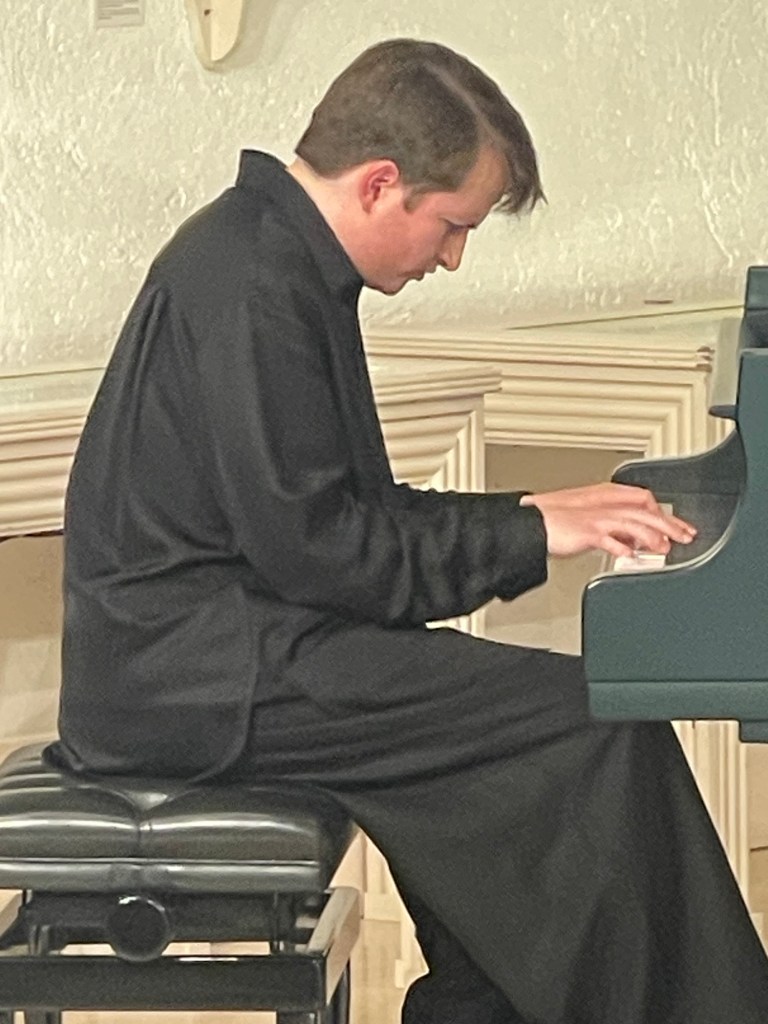
And so on to a masterly performance of Medtner’s G minor Sonata op. 22. It was played with nobility and wild abandon and a kaleidoscope of colours .With its chameleonic changes of moods but, as with most of Medtner’s works, I find it hard to come to terms with his seemingly incoherent sense of line and direction. Misha played it with evident authority and total conviction I just wish I could have found the magic line that could bind these seemless streams of notes together into one architectural whole. I am so glad and grateful to be able to listen twice this weekend on Ischia to this work being performed by such an accomplished young virtuoso and will do my best to dispel my idea of Medtner as Rachmaninov without the tunes! It was the great Emil Gilels who only a year after the composers death began to include this very sonata in his programmes in the Soviet Union.There could be no greater commendation than that!

Alessandra Vinciguerra,director of La Mortella, presenting the concert

There was a dynamic Beethovenian drive to the opening of the ‘Wanderer Fantasy’ where again it was the remarkable clarity of his playing that illuminated the unusual virtuoso demands that Schubert makes of all those that dare play this extraordinarily revolutionary work. Playing of searing intensity where even Schubert’s usually seemless mellifluous outpourings are short lived as the music erupts with tempestuous fury. Extraordinary control and a dynamic range of sounds allowed Misha to sweep all before him as he lay the music exhausted to one side allowing the rhythmic impetus to gradually subside for the ‘Adagio ‘ of ‘Die Sonne dunkt mich hier so kalt’ of the song ‘Der Wanderer’. Beautifully played with full string quartet sound where every note had a poignant meaning as the theme unfolded to a series of variations of fantasy and beauty. Eventually the theme was allowed to float magically on a gently weaving accompaniment as seemless streams of jeux perlé golden sounds poured with exquisite delicacy from Misha’s sensitive fingers.Gradually building to a Beethovenian climax of unbridled dynamic drive before the etherial sounds that Schubert depicts with such genius allowing the music to disappear into the very depths of the keyboard. Masterly playing from this young pianist of vision and imagination.
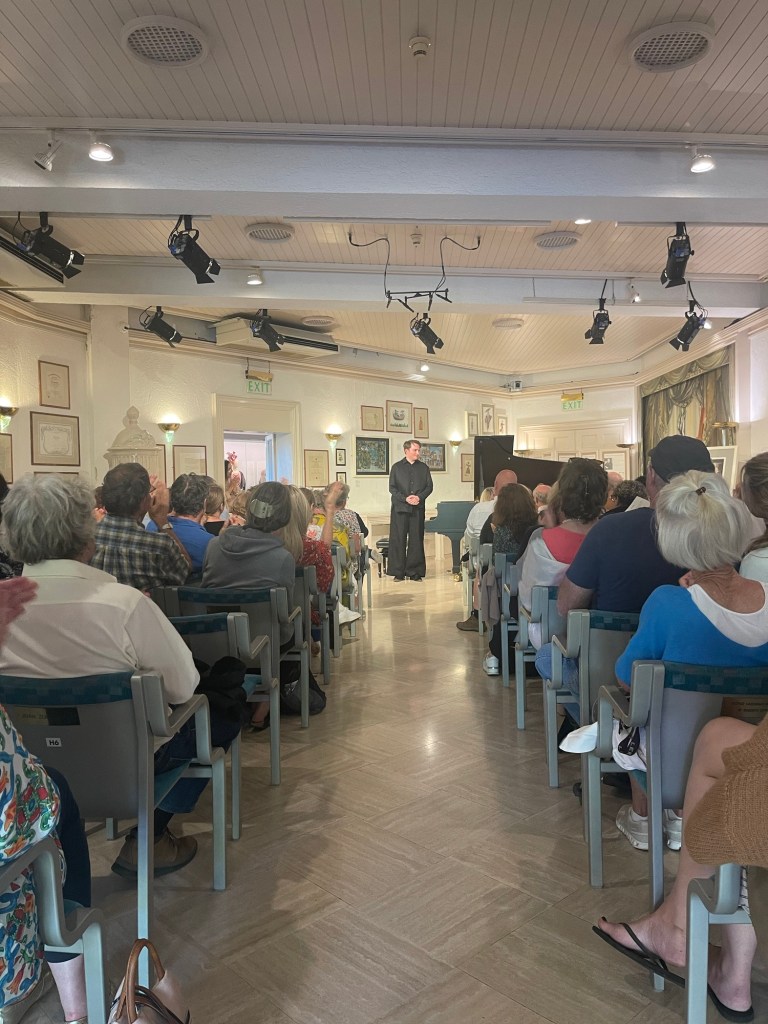
The eruption of the Scherzo was as surprising as it was breathtaking in its audacity.Streams of notes spread over the entire keyboard that were mere waves of moving colours anchored by an imperious bass before the lyrical beauty, charm and hushed tones of the trio. Erupting again with demonic intensity the return of the Scherzo was played with breathtaking waves of notes of exhilaration and excitement where the silence after the final fortissimo chord was of expectancy and suspense. The opening declaration of the Fugue in the left hand was played with great authority and the whole movement played with a driving intensity and technical prowess that was overwhelming and quite breathtaking in its fearless abandon.A total control even in moments of red hot passion demonstrated Misha’s total mastery allied to impeccable musicianship and sense of style.His playing of Messiaen was masterly with a kaleidoscopic sense of colour that was quite extraordinarily poignant and with a pregnant beauty of searing intensity and heart rending meaning.A transcendental control of sound that was a revelation as indeed Messiaen can be if played with the same passionate intensity of a true believer.
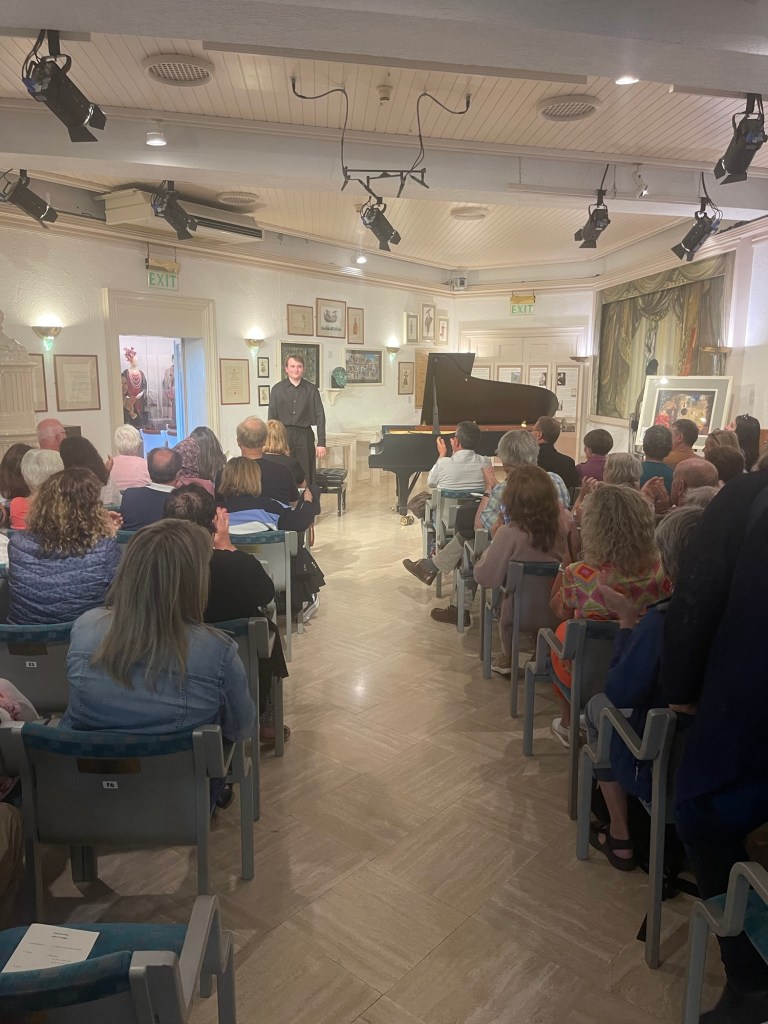
An encore of the deeply moving chorale prelude ‘Herzlich Tut mich verlangen’ by Brahms was written in his last days on this earth with thoughts of death and the hereafter deeply embedded in his soul.Intense poetic playing of great sensibility and ravishing beauty was the only way that this young poet of the keyboard knew how to thank such an attentive audience.
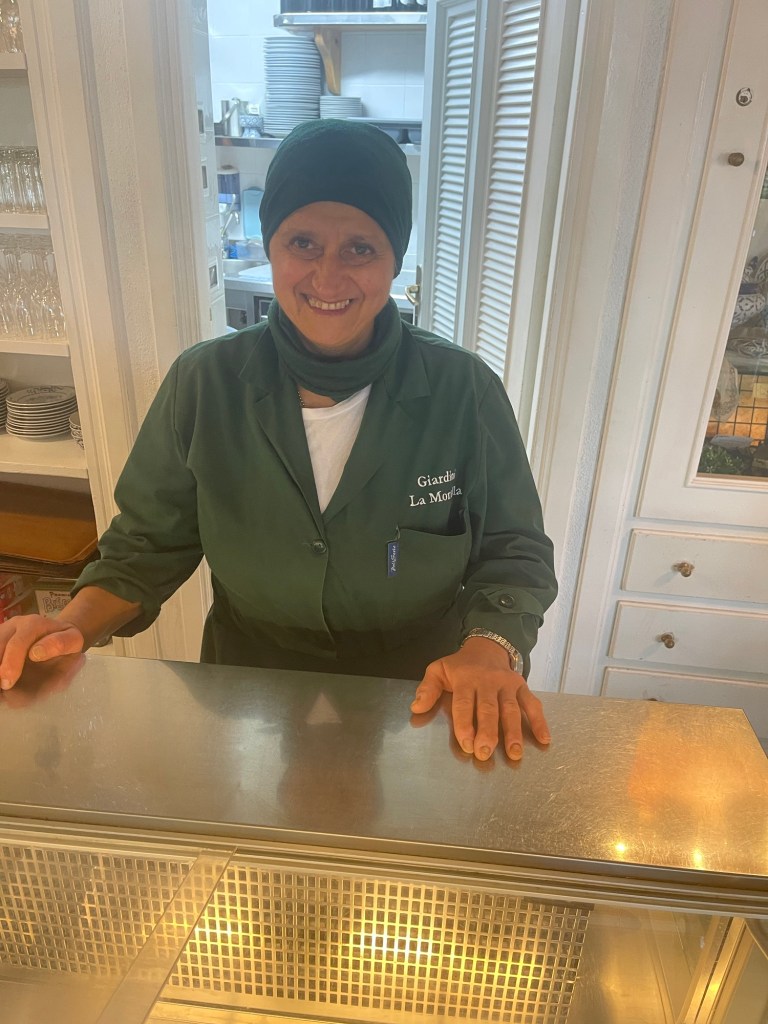
Signora Lucia our guardian angel in Paradise
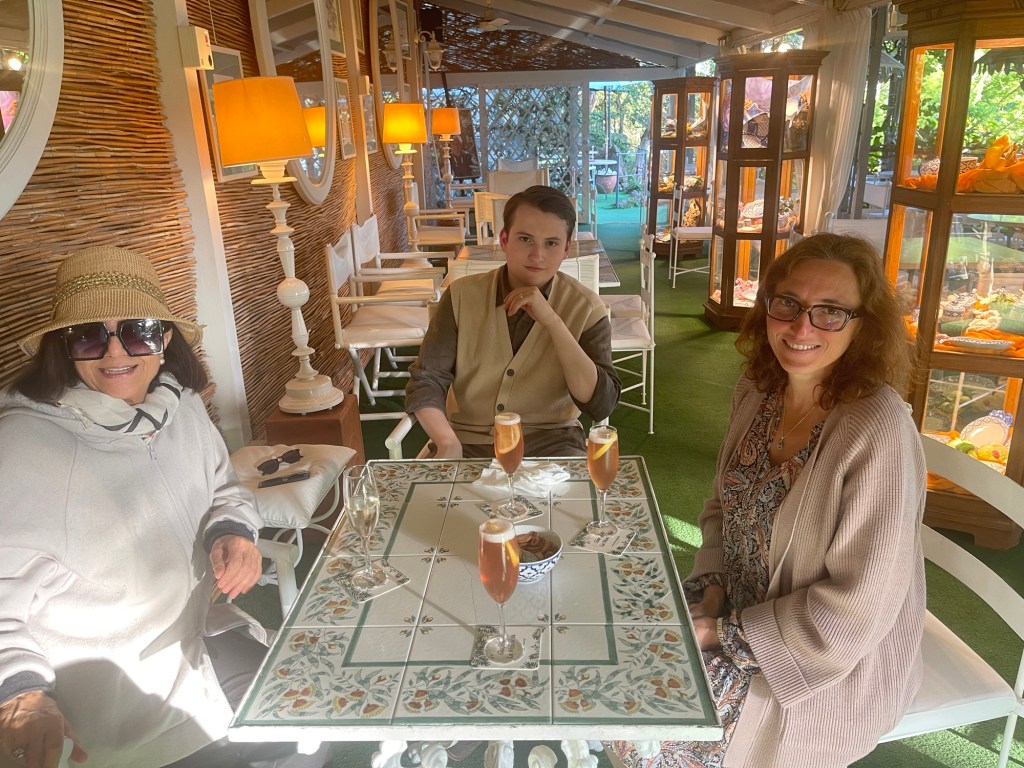
Prof Lina Tufano artistic director (left) enjoying an after concert aperitivo with her guests of the specialty of La Mortella : Spritz with Mirto
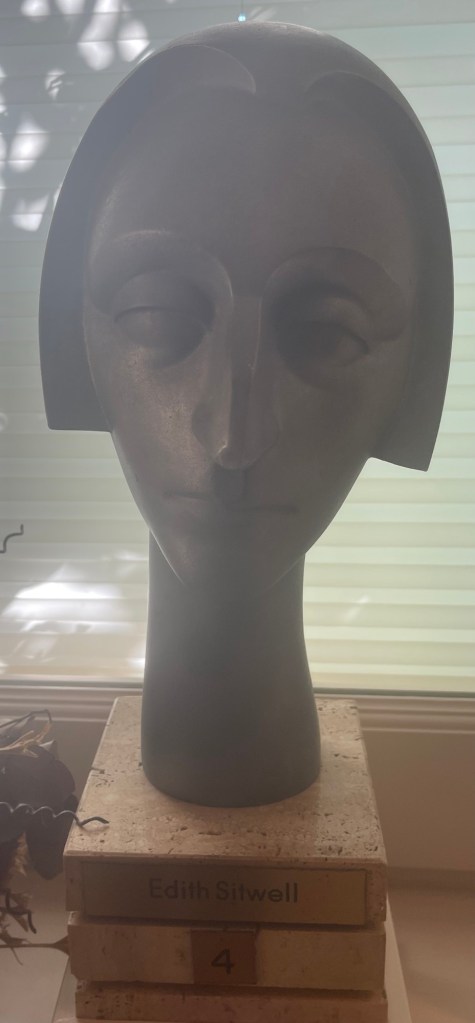
Dame Edith looking on bemused
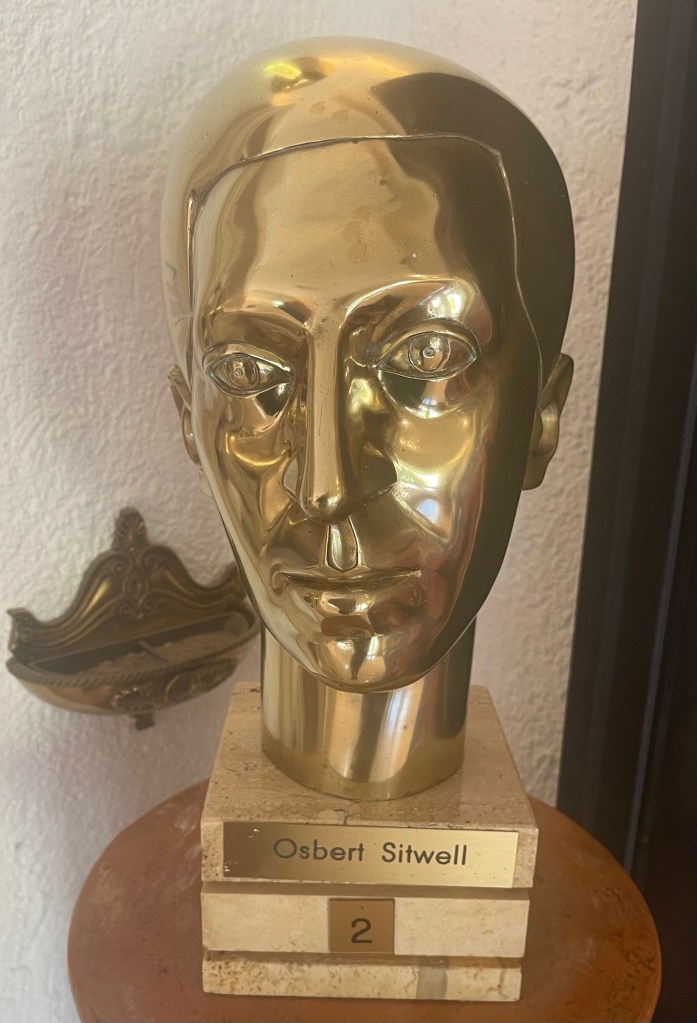
As was Sir Osbert
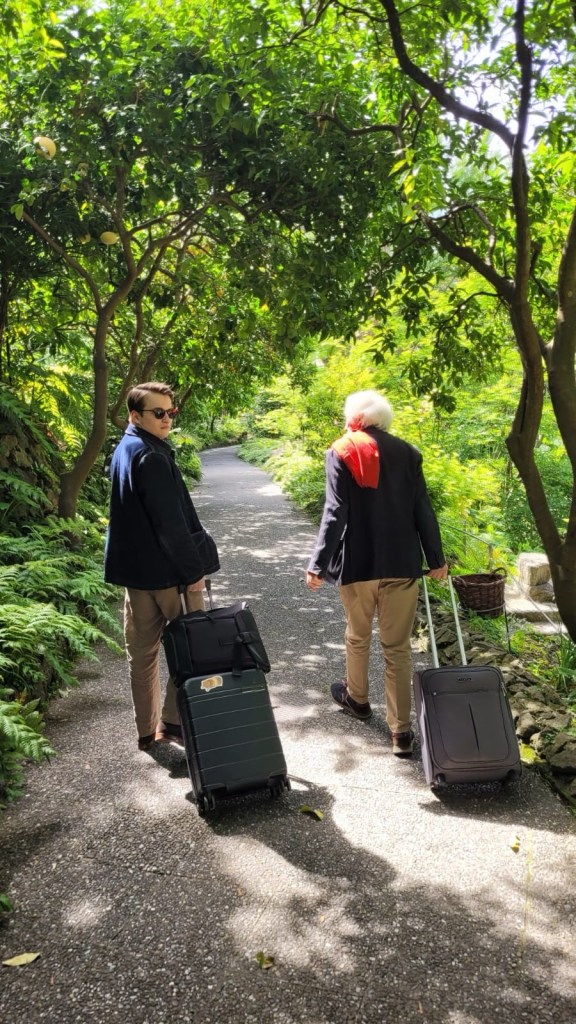
Paradise found arrivederci

Ludwig van Beethoven 17 December 1770 Bonn – 26 March 1827 Vienna

32 Variations on an Original Theme in C minor, WoO 80 (German: 32 Variationen über ein eigenes Thema), for solo piano by WAS written in 1806.They have have been called “Beethoven’s most overt pianistic homage to the Baroque.” Receiving a favorable review in the Allgemeine musikalische Zeitung  (Leipzig) in 1807,it remains popular today especially amongst music students where together with Schubert Wanderer and Brahms Handel Variations is allows aspiring young musicians to acquire a classical technique and understand styles .Nevertheless, Beethoven did not see fit to assign it an opus number . It is said that later in his life he heard a friend practicing it and after listening for some time he said “Whose is that?” “Yours”, was the answer. “Mine? That piece of folly mine?” was his retort; “Oh, Beethoven, what an ass you were in those days!” Beethoven’s most overt pianistic homage to the Baroque, the 32 Variations on an original theme in C minor, WoO80, date from the end of 1806 (the year of the ‘Razumovsky’ quartets, the fourth symphony and the violin concerto) and were published the following year without dedication or opus number. The variations are an elaborate take on the traditional chaconne, a ceremonial triple-time dance over a ground bass that was popularized at the court of Louis XIV. (Bach’s monumental D minor violin ciaconna and Handel’s G major chaconne are famous examples, though it is doubtful that Beethoven would have known either.) Again, the music may have originated in the composer’s famous extemporizations.The poetic heart of the work lies in the five central major-keyed variations, beginning with No 12, closer in outline to the original theme than any of the previous variations.
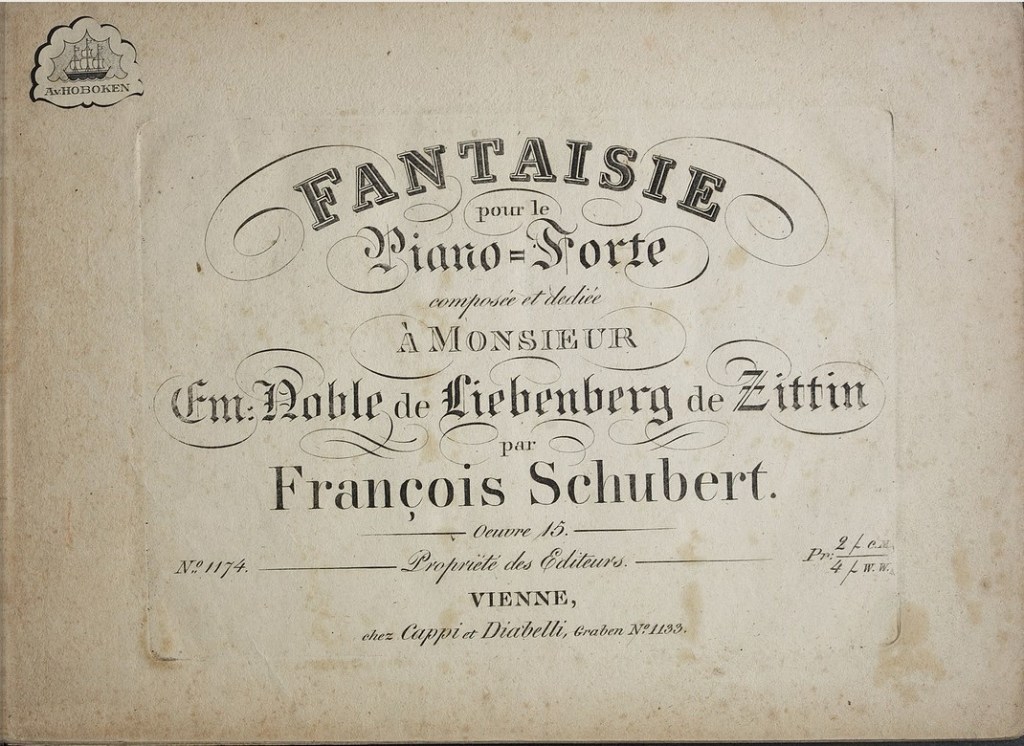
The Fantasie in C major, Op. 15 ( D.760), popularly known as the Wanderer Fantasy, is a four-movement fantasy for solo piano composed by Schubert in 1822 when only 25 in a life that was tragically cut short by the age of 31.It is widely considered his most technically demanding composition for the piano and Schubert himself said “the devil may play it,” in reference to his own inability to do so properly.The whole work is based on one single basic motif from which all themes are developed. This motif is distilled from the theme of the second movement, which is a sequence of variations on a melody taken from the lied “Der Wanderer”, which Schubert wrote in 1816. It is from this that the work’s popular name is derived.The four movements are played without a break. After the first movement Allegro con fuoco ma non troppo in C major and the second movement Adagio (which begins in C-sharp minor and ends in E major), follow a scherzo presto in A-flat major and the technically transcendental finale, which starts in fugato returning to the key of C major and becomes more and more virtuosic as it moves toward its thunderous conclusion.Liszt was fascinated by the Wanderer Fantasy, transcribing it for piano and orchestra (S.366) and two pianos (S.653). He additionally edited the original score and added some various interpretations in ossia and made a complete rearrangement of the final movement (S.565a).I remember a recent lesson I had listened to of Elisso Virsaladze in which I was struck by the vehemence of the Wanderer Fantasy and the ragged corners that we are more used to in a Beethoven almost twice Schubert’s age .It made me wonder about the maturity of the 25 year old Schubert and could he have had a premonition that his life was to be curtailed only six years later.We are used to the mellifluous Schubert of rounded corners and seemless streams of melodic invention.But surely in the final three sonatas written in the last months of his life the A major and C minor start with a call to arms and only in the last B flat sonata do we arrive at the peace and tranquility that Beethoven was to find too in his last sonata.But the deep rumblings in the bass in Schubert’s last sonata give food for thought that his life was not all sweetness and light.I remember Richter’s long tribulation in the recording studio to put on record as near definitive version as possible of the Wanderer Fantasy with the help of the pianist and musicologist Paul Badura Skoda.

Schubert’s Wanderer Fantasy and the challenges of an Urtext edition

At the heart of ‘Wanderer’ is a song he wrote in 1816 based on a text by Georg Philipp Schmidt von Lübeck (1766 – 1849). In the song, the wander seeks happiness, but cannot find it anywhere – when he sighs ‘where?’ the answer comes back, ‘There, where you are not, is your happiness.’ Schmidt von Lübeck’s original title, Des Fremdlings Abendlied (The Stranger’s Evening Song) places it in greater perspective – this is the question of every stranger looking for something that may not exist where he’s seeking it.

The work as a whole is the product of experimentation on Schubert’s part – he links the entire work in four movements through a set of similar rhythms and in the last movement, wraps the whole structure around to bring in elements of the first movement. The work is a challenge for the pianist, and both its virtuosity and structure fascinated the Romantics (most importantly Liszt)for decades.The Fantasy was commissioned by a wealthy amateur pianist, Emanuel Karl Liebenberg, a pupil of Hummel ( who had been a pupil of Mozart ) Schubert recognized that he had written a work that makes greater technical demands on the performer than did the two piano sonatas he wrote after this piece was completed.
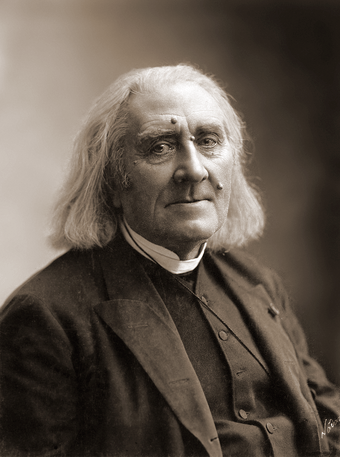
Liszt (1811-1886 ) in March 1886, four months before his death.

Franz Liszt (1811–86)


Bagatelle without tonality, S.261a 
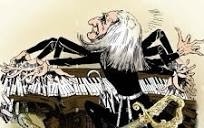
At a later stage in his life Liszt experimented with “forbidden” things such as parallel 5ths in the “Csárdás macabre”and atonality in the Bagatelle sans tonality (“Bagatelle without Tonality”). Pieces like the “2nd Mephisto-Waltz” are unconventional because of their numerous repetitions of short motives. Also showing experimental characteristics are the Via crucis of 1878, as well as Unstern!Nuages Gris and the two works entitled La lugubre gondola of the 1880s.

Bagatelle sans tonalité was written by in 1885. The manuscript bears the title “Fourth Mephisto Waltz”and may have been intended to replace the piece now known as the Fourth Mephisto Waltz when it appeared Liszt would not be able to finish it; the phrase Bagatelle ohne Tonart actually appears as a subtitle on the front page of the manuscript.

While it is not especially dissonant, it is extremely chromatic becoming what Liszt’s contemporary Fétis called “omnitonic”in that it lacks any definite feeling for a tonal center.Like the Fourth Mephisto Waltz, however, it was not published until 1955.Written in waltz form,the Bagatelle remains one of Liszt’s most adventurous experiments in pushing beyond the bounds of tonality, concluding with an upward rush of diminished sevenths .
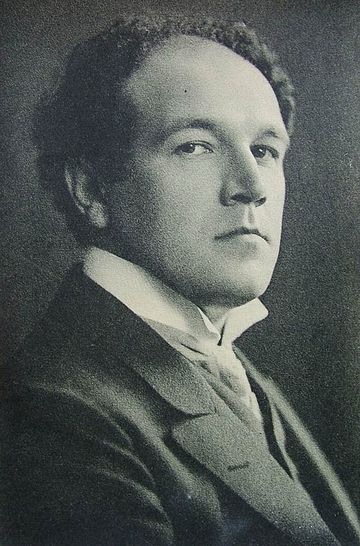

Nikolai Karlovich Medtner 5 January 1880, Moscow-13 November 1951 (aged 71) Golders Green England

Performed by Prokofiev and Horowitz, recorded by Moiseiwitsch and Gilels, this one-movement work, completed in 1910, is the Medtner sonata which is the best known of his 14 Sonatas ,for its powerful drama strongly appealing to the emotions but also its coherence as a perfect organic whole on a large scale. As Heinrich Neuhaus wrote: ‘The sonata’s trajectory is felt from the first to the last note as one uninterrupted line.’ All the thematic material is integrated and never ceases to grow organically right up to the massive coda, which is a true culmination in both synthesizing and intensifying what has gone before, with two pages of characteristically Medtnerian contrasting rhythms in the right and left hands. The sonata’s daring tonal scheme—a rising sequence of alternately minor and major thirds—is further evidence of Medtner’s originality in his use of traditional musical language and design.
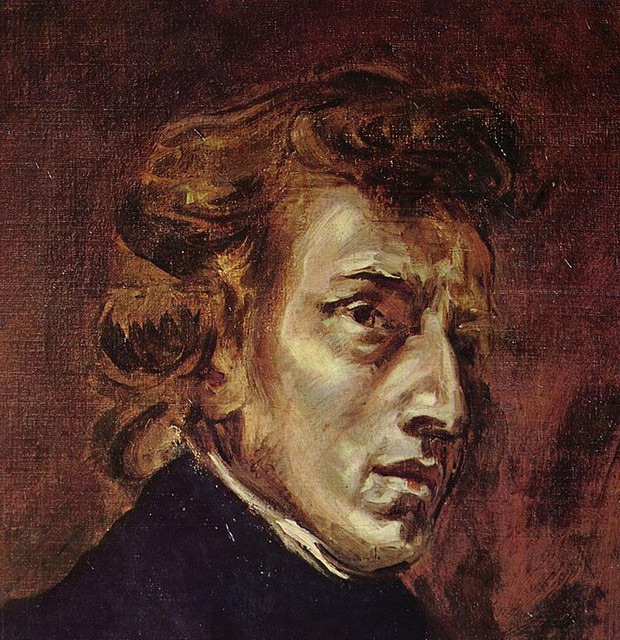

Fryderyk Franciszek Chopin;1 March 1810 – 17 October 

Over the years 1825–1849, Chopin wrote at least 59 compositions for piano called Mazurkas referring to one of the traditional Polish dances

  • 58 have been published
    • 45 during Chopin’s lifetime, of which 41 have opus numbers (with the remaining four works being two early mazurkas from 1826 and the famous “Notre Temps” and “Émile Gaillard” mazurkas that were published individually in 1841)
    • 13 posthumously, of which 8 have posthumous opus numbers (specifically, Opp. 67 & 68)
  • 11 further mazurkas are known whose manuscripts are either in private hands (2) or untraced (at least 9).

The serial numbering of the 58 published mazurkas normally goes only up to 51. The remaining 7 are referred to by their key or catalogue number.

Chopin while he used the traditional mazurka as his model, he was able to transform his mazurkas into an entirely new genre, one that became known as a “Chopin genre”.

In 1852, three years after Chopin’s death, Liszt published a piece about Chopin’s mazurkas, saying that Chopin had been directly influenced by Polish national music to compose his mazurkas. Liszt also provided descriptions of specific dance scenes, which were not completely accurate, but were “a way to raise the status of these works [mazurkas].”While Liszt’s claim was inaccurate, the actions of scholars who read his writing proved to be more disastrous. When reading Liszt’s work, scholars interpreted the word “national” as “folk,” creating the “longest standing myth in Chopin criticism—the myth that Chopin’s mazurkas are national works rooted in an authentic Polish-folk music tradition.”In fact, the most likely explanation for Chopin’s influence is the national music he was hearing as a young man in urban areas of Poland, such as Warsaw.

After scholars created this myth, they furthered it through their own writings in different ways. Some picked specific mazurkas that they could apply to a point they were trying to make in support of Chopin’s direct connection with folk music. Others simply made generalizations so that their claims of this connection would make sense. In all cases, since these writers were well-respected and carried weight in the scholarly community, people accepted their suggestions as truth, which allowed the myth to grow. However, in 1921, Béla Bartok  published an essay in which he said that Chopin “had not known authentic Polish folk music.”By the time of his death in 1945, Bartók was a very well known and respected composer, as well as a prominent expert on folk music, so his opinion and his writing carried a great deal of weight. Bartók suggested that Chopin instead had been influenced by national, and not folk music.Schumann described Chopin Mazurkas as ‘Canons covered in flowers’.The Op. 24 mazurkas  were published in 1836, when the composer was 26 

Mazurka in C major, Op. 24 No. 2

The second mazurka marked Allegro non troppo opening with a quiet alternation of C and G major sotto voce chords.

Mazurka in B-flat minor, Op. 24 No. 4

The fourth mazurka of the set is in B flat minor but ends on the dominant note (F) alone
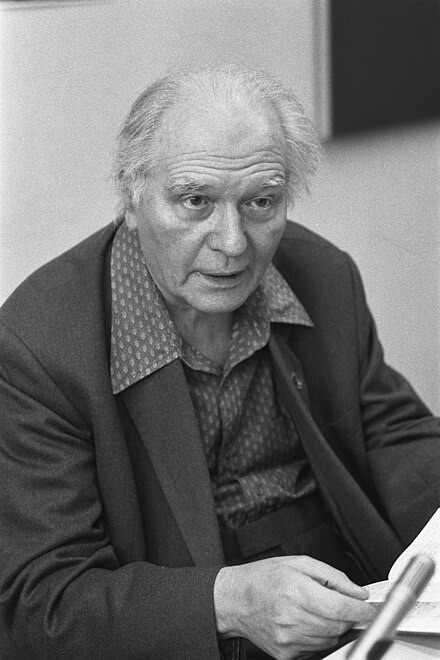

Olivier Eugène Prosper Charles Messiaen 10 December 1908 – 27 April 1992

Olivier Messiaen was born on 10 December 1908 in Avignon into a literary family. His father was an eminent translator of English literature and his mother, Cécile Sauvage, was a published poet. Messiaen displayed a precocious musical talent from an early age, being accepted by the time he was eleven into the Paris Conservatoire where he studied piano, composition and organ. After graduation, he served as organist at the Église de la Sainte-Trinité in Paris from 1931 until his death, and his own contribution to the organ repertoire is arguably greater than that of any other composer since Bach.

In 1932 Messiaen married the violinist Claire Delbos and they had a son five years later. During World War II, he was captured while serving as a medical auxiliary and held as a prisoner of war at Görlitz in Silesia. It was there that he wrote one of his most famous works, the Quatuor pour le fin de temps (Quartet for the End of Time)which was first performed in the camp by four of the prisoners. After his release in 1941, Messiaen returned to Paris and took up a professorship at the Conservatoire. Towards the end of war, Claire developed mental health problems following an operation. Her condition worsened steadily and she was eventually hospitalised until her death in 1959.

Messiaen had been fascinated by birdsong since adolescence; he once described birds as ‘probably the greatest musicians to inhabit our planet’. In 1953 he began travelling around France, meticulously notating different birdsong and using it in his musicBy the 1960s as his growing international reputation was taking him further afield (including Japan, Iran, Argentina and Australia), he extended concert trips to further his birdsong research, often accompanied by his second wife, the pianist Yvonne Loriod, whom he had married in 1961.

Messiaen wrote Vingt regards sur l’Enfant-Jésus between March and September 1944. The origins of the work lay in a request from the writer Maurice Toesca for twelve short piano pieces to accompany his poetry on the Nativity in a radio production. However, Messiaen strayed extensively from his brief to produce his largest, most ambitious work to date. Vingt Regards places enormous technical and musical demands on the pianist; it is a work of great contrasts, ranging from the aching tenderness of Regard de la Vierge, through the awesome mystery of L’échange (referring to the divine trade whereby God became man in order that men could become gods) to the primal brutality of Par Lui tout a éte fait. Today, the work is rarely heard in full, though shorter sections or individual movements are often included in recital programmes.

The twenty Regards, variously translated as ‘gazes’, ‘aspects’ or ‘glances’, are twenty contemplations on the Infant Jesus, seen from different perspectives; in other words the Regard du Père represents a contemplation on Jesus by God the Father, Regard de l’étoile by the star, Regard de la Vierge by the Virgin,and so on.Vingt Regards had its première on 26 March 1945 at the Salle Gaveau in Paris with Yvonne Loriod, the work’s dedicatee, who was only twenty-one years old at the time. The event divided critical opinion, with one critic paying homage to ‘a very great musician who proclaims himself triumphantly in the Vingt Regards sur l’Enfant-Jésus’, while another vehemently asserted that the composer was ‘attempting to translate the sublime utterances of the Apocalypse through muddled literature and music, smelling of the hair-shirt, in which it is impossible to detect either any usefulness or pleasure’. Over half a century later, the work has stood the test of time and is regarded today as a keystone in twentieth-century piano repertoire.Le Baiser is the 15th of 20

Olivier Messiaen (1908–1992)
Vingt Regards sur l’Enfant-Jésus

  1. Regard du Père (Gaze of the Father)
  2. Regard de l’étoile (Gaze of the Star)
  3. L’échange (The Exchange)
  4. Regard de la Vierge (Gaze of the Virgin)
  5. Regard du Fils sur le Fils (Gaze of the Son upon the Son)
  6. Par Lui tout a été fait (By Him Everything was Created)
  7. Regard de la Croix (Gaze of the Cross)
  8. Regard des hauteurs (Gaze of the Heights)
  9. Regards du Temps (Gaze of Time)
  10. Regard de l’Esprit de joie (Gaze of the Spirit of Joy)
  11. Première communion de la Vierge (First Communion of the Virgin)
  12. La parole toute puissante (The All-Powerful Word)
  13. Noël (Christmas)
  14. Regard des Anges (Gaze of the Angels)
  15. Le baiser de l’Enfant-Jésus (The Kiss of the Infant Jesus)
  16. Regard des prophètes, des bergers et des Mages (Gaze of the Prophets, the Shepherds and the Magi)
  17. Regard du silence (Gaze of Silence)
  18. Regard de l’Onction terrible (Gaze of the Great Anointment)
  19. Je dors, mais mon cœur veille (I Sleep, but my Heart is Awake)
  20. Regard de l’Eglise d’amour (Gaze of the Church of Love)
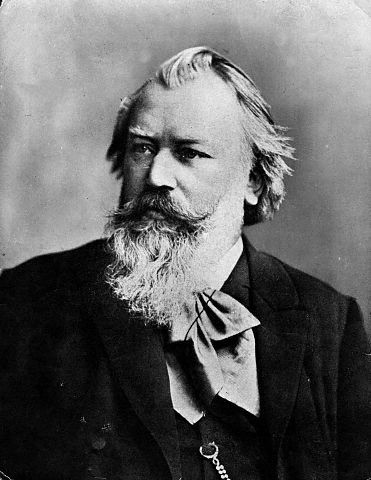
Brahms in 1889
7 May 1833 Hamburg 3 April 1897 (aged 63) Vienna

Eleven Chorale Preludes, Op. 122, is a collection of works for organ by Johannes Brahms , written in 1896, at the end of the composer’s life, immediately after the death of his beloved friend, Clara Schumann, published posthumously in 1902. They are based on verses of nine Lutheran chorales, two of them set twice, and are relatively short, compact miniatures. They were the last compositions Brahms ever wrote, composed around the time that he became aware of the cancer that would ultimately prove fatal; thus the final piece is, appropriately enough, a second setting of “O Welt, ich muß dich lassen.” Brahms was prepared for death and even longing for it . It is no coincidence that the text to most of the chorales are concerned with death and the hereafter Busoni arranged the six most pianistic for piano in 1897 and they are 4/5/8/9/10/11.

  1. Mein Jesu, der du mich (My Jesus. who [chose] me) in E minor
  2. Herzliebster Jesu,was hastily du verbrochen (O dearest Jesu) in G minor
  3. O Welt, ich muß dich lassen (O world, I must leave you) in F major
  4. Herzlich tut mich erfreuen (My heart is filled) in D major
  5. Scmucke dich,o liebe Seele  (Deck yourself, O dear soul) in E major
  6. O wie selig seid ihr doch, ihr Frommen (O how blessed are you pious ones)in D minor
  7. O Gott, du frommer Gott (O God, you faithful God) in A minor
  8. Es ist e in Ros’entsprungen  (It is an upspringing rose) in F major
  9. Herzlich tut mich verlagen  (I am heartily longing) in A minor
  10. Herzlich tut mich verlangen (second setting) in A minor
  11. O Welt, ich muß dich lassen (second setting) in F major
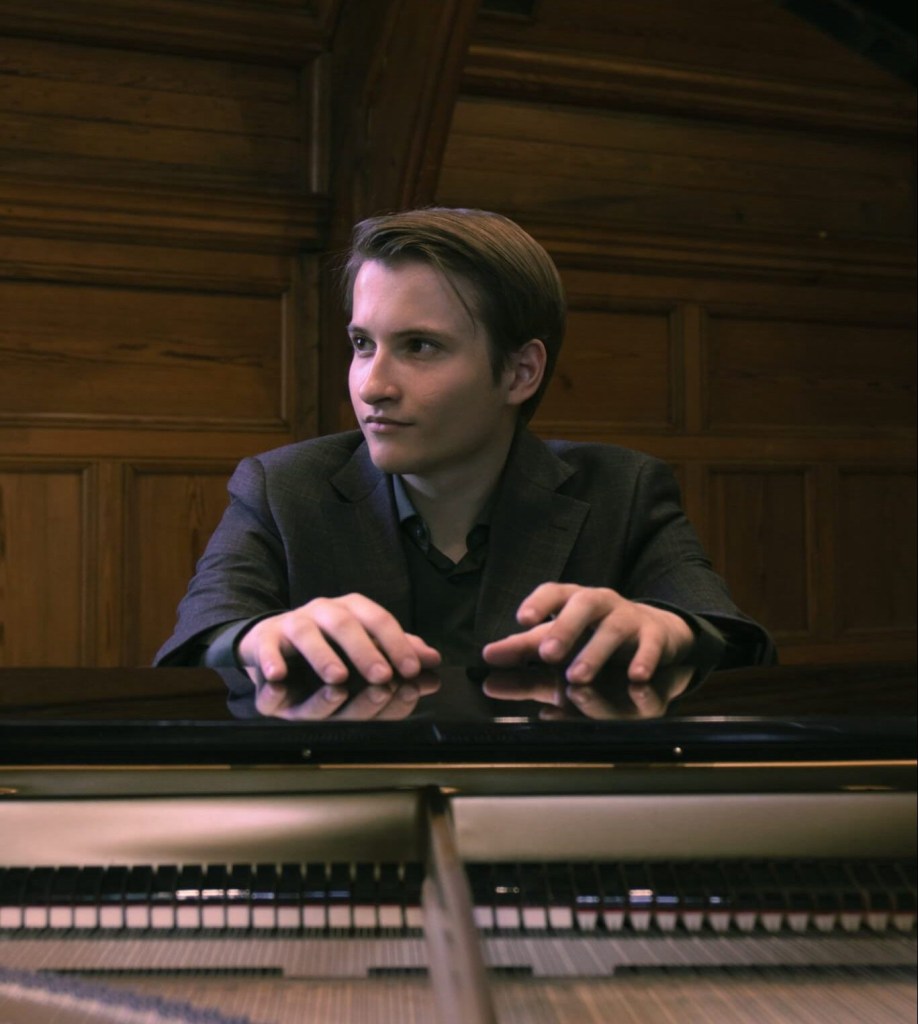
Misha Kaploukhii was born in 2002 and is an alumnus of the Moscow Gnessin College of Music, where he studied in the piano class of Mikhail Egiazarian. Misha is currently studying at the Royal College of Music; he is an RCM and ABRSM award holder generously supported by Robert Turnbull Piano Foundation and Talent Unlimited charity studying for a Bachelor of Music with Professor Ian Jones.
Misha has gained inspiration from lessons and masterclasses with musicians such as Claudio Martínez Mehner, Dmitri Bashkirov, Jerome Lowenthal and Konstantin Lifschitz. He has performed with orchestras around the world including his recent debut in Cadogan Hall with the Rachmaninoff 1st Piano Concerto. How repertoire includes a wide range of solo and chamber music. Recently, Misha has won prizes in the RCM concerto competition (playing Liszt’s 2nd Piano Concerto) and in the International Ettlingen Piano Competition.”
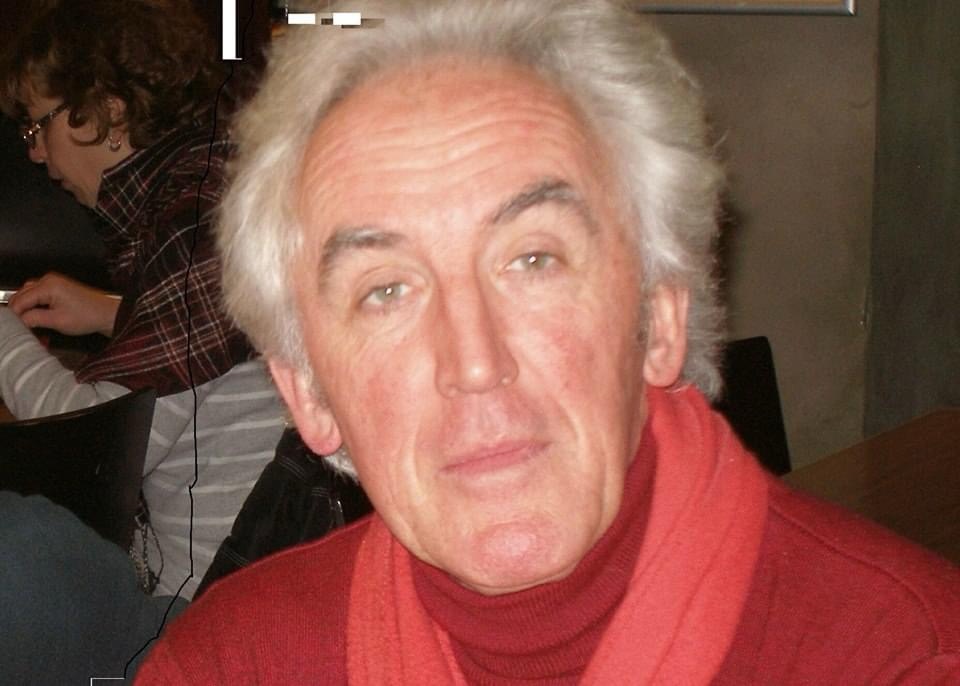
https://christopheraxworthymusiccommentary.com/2022/10/13/misha-kaploukhii-plays-rachmaninov-beauty-and-youthfulness-triumph/

https://christopheraxworthymusiccommentary.com/2022/10/28/misha-kaploukii-plays-liszt-at-the-rcm-a-sea-symphony-concert-youth-and-music-a-joy-to-behold/

https://christopheraxworthymusiccommentary.com/2023/11/15/misha-kaploukhii-at-st-jamess-piccadilly-the-intelligence-and-maturity-of-a-young-master/

https://christopheraxworthymusiccommentary.com/2024/03/20/christopher-axworthy-dip-ram-aram/
Since returning from Ischia Misha has not been still or silent as you can appreciate below

MISHA KAPLOUKHII winner of the Sheepdrove Piano Competition today
Many congratulations you can hear him also at Cadogan Hall next February 19th playing Brahms Second Piano Concerto also at the Royal College of Music on Friday 24th at 11.50 for his Graduation Recital ( free entry)

A wonderful opportunity to hear the best international piano students drawn from all the major UK conservatoires – and to cast your vote for the audience prize!
Now celebrating its 15th Anniversary, this notable competition, established by the Sheepdrove Trust, is open to candidates aged 26 and under from the eight major UK music colleges, and attracts young pianists of the highest standard from around the world. Today’s competition, which this year has an emphasis on Chopin, features four shortlisted finalists and takes place in the tranquil setting of Sheepdrove on the Lambourn Downs. The overall winner will perform a solo recital in the Corn Exchange on Monday 20 May as part of the Festival’s popular Young Artists Lunchtime Recital Series.
Prizes

1st Prize: The Kindersley Prize of £3,000. Misha Kaploukhii
2nd Prize: £1,500 donated by Greenham Trust. Kasparas Mikuzis
3rd Prize: £750 donated by the Friends of NSF. Yuxuan Zhao
4th Prize: £500 donated by an anonymous donor.Max Artemenko
Audience Prize: £250 donated by an anonymous donor Misha Kaploukhii
The Robert Turnbull Piano Foundation Prize Angeliki Giannopoulow and Xizong Chen
Jury

Rupert Christiansen
Mark Eynon
Mikhail Kazakevich
Elena Vorotko
David Whelton
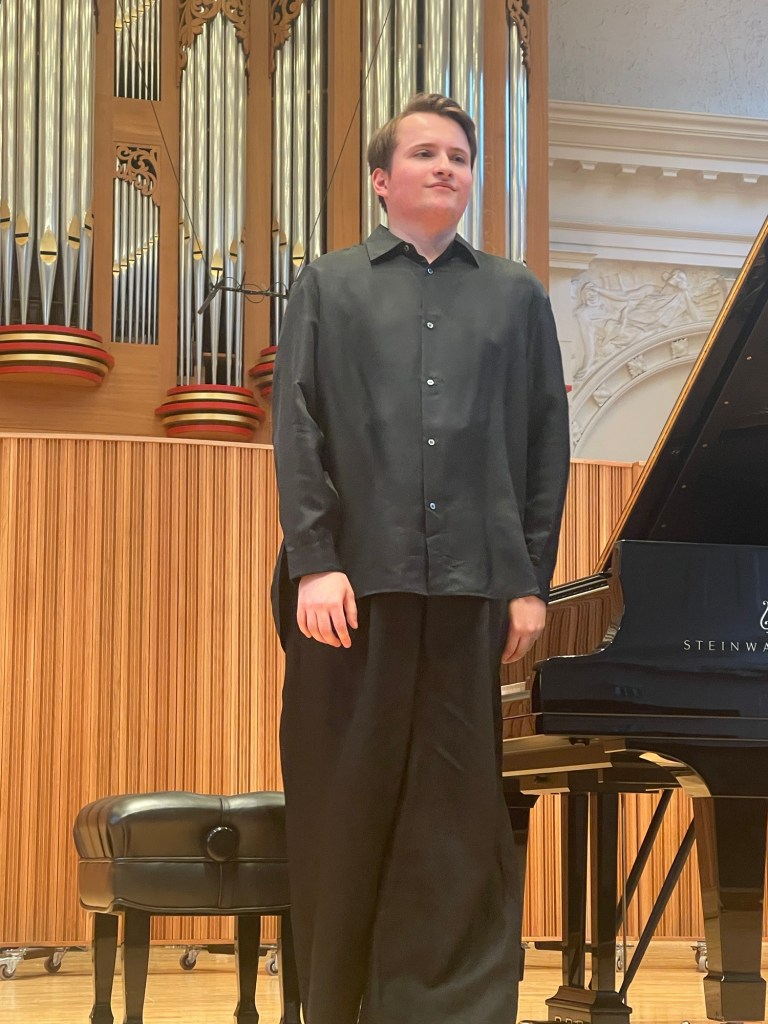
Some superb playing if rather unusual attire.One could say the same about Yuja Wang but it is their playing that astonishes and astounds.
Misha Kaploukhii’s graduation recital today kissing the Enfant Jesu a breathtaking goodbye as only Messiaen knew how.
After an all or nothing performance of Schubert’s Wanderer Fantasy ,a monumental Medtner G minor Sonata and even a Bukovina Prelude it is hardly surprising that last Sunday saw him winner of the coveted Sheepdrove Competition and considered the finest artist from all the eight major conservatories of the land.
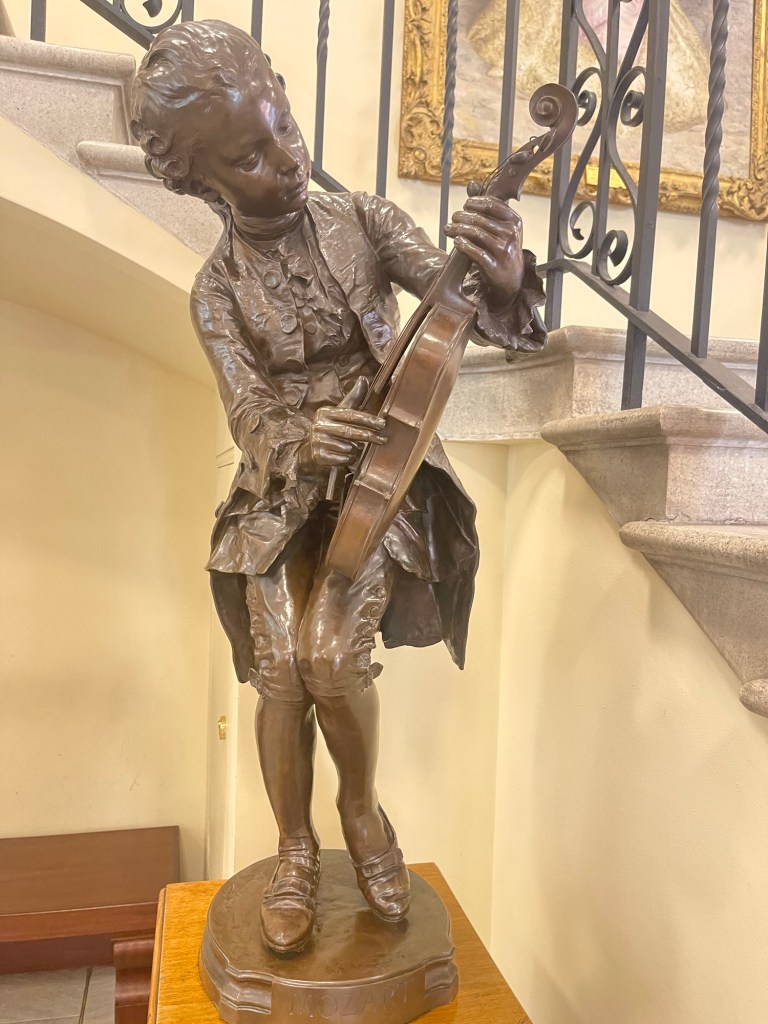
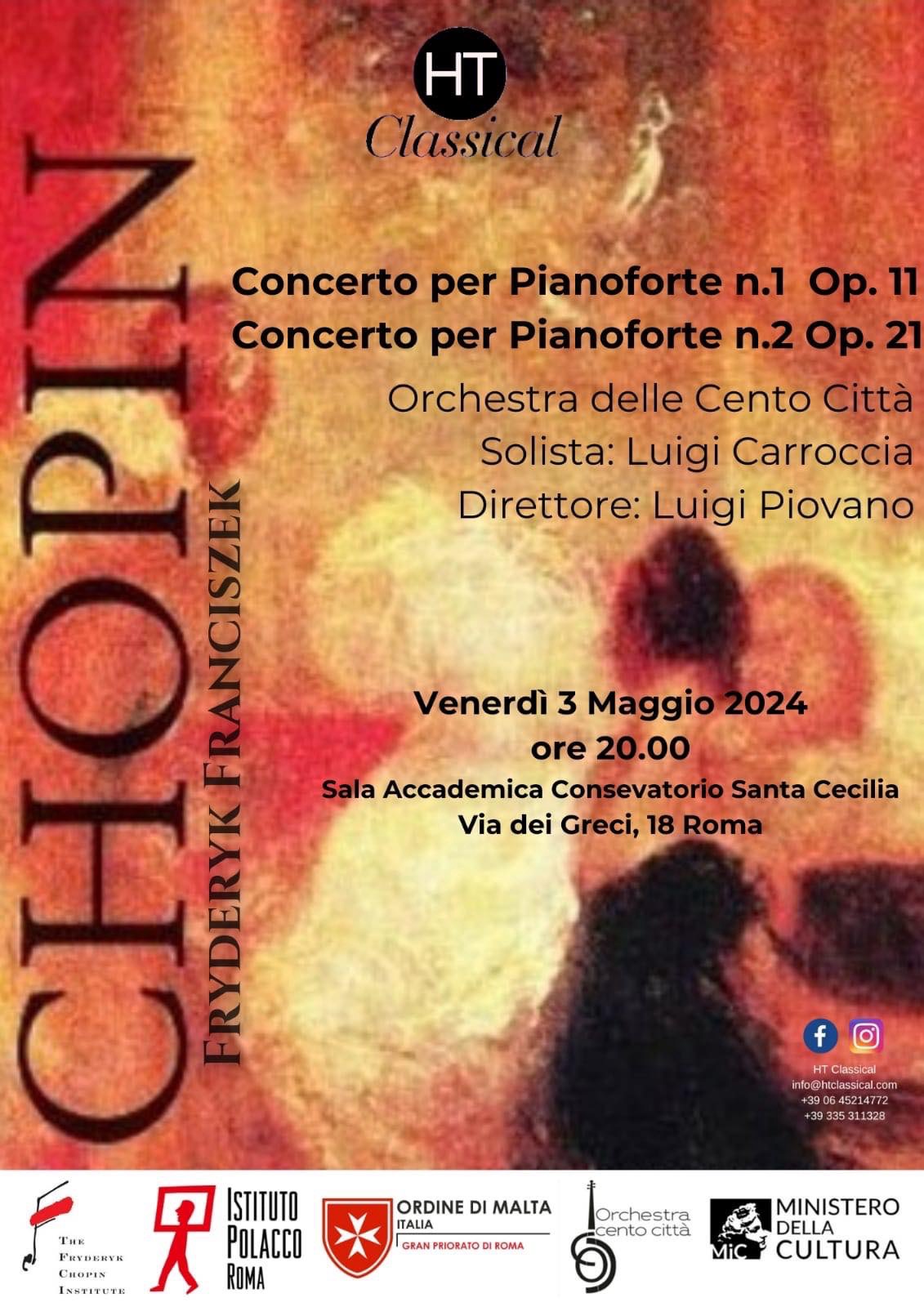
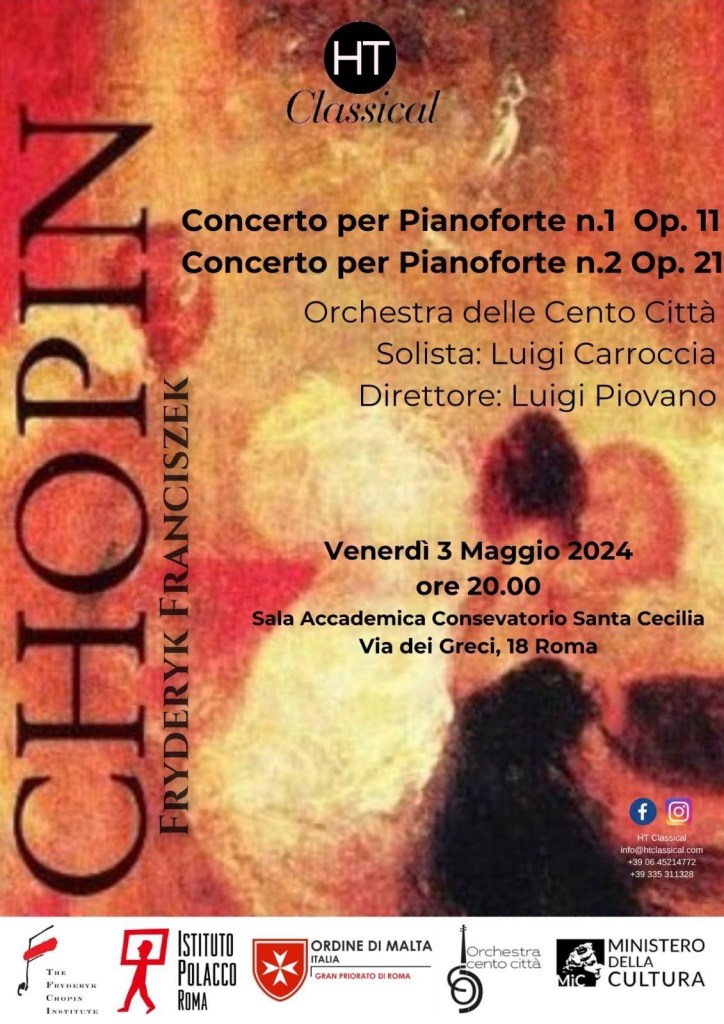
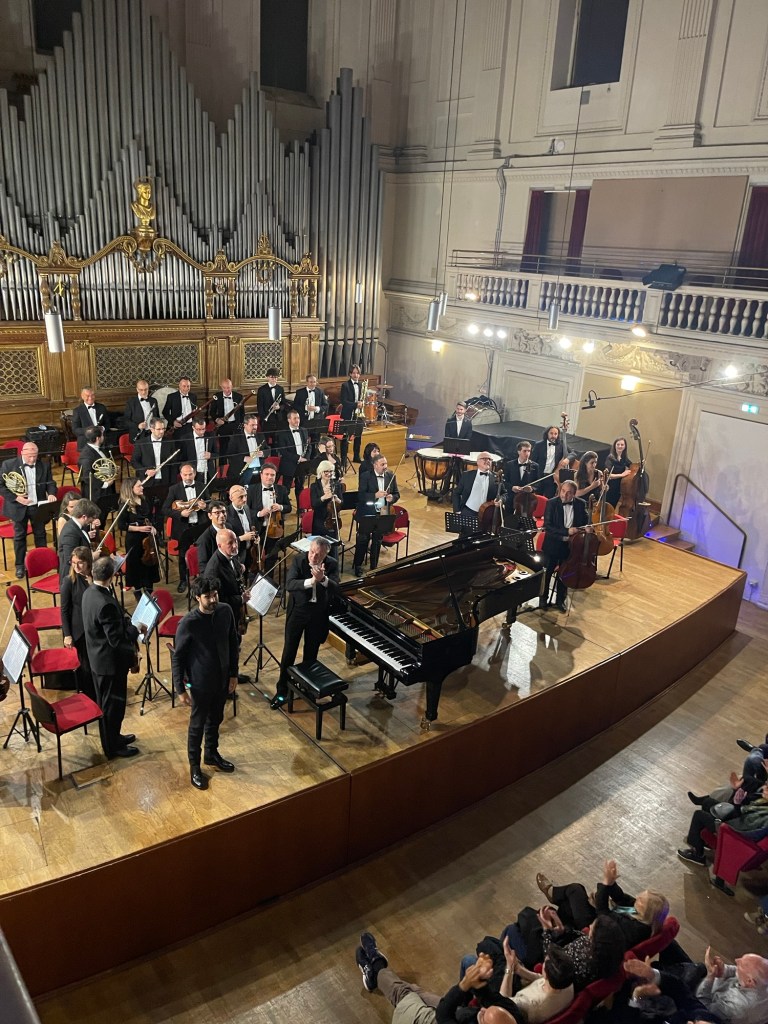
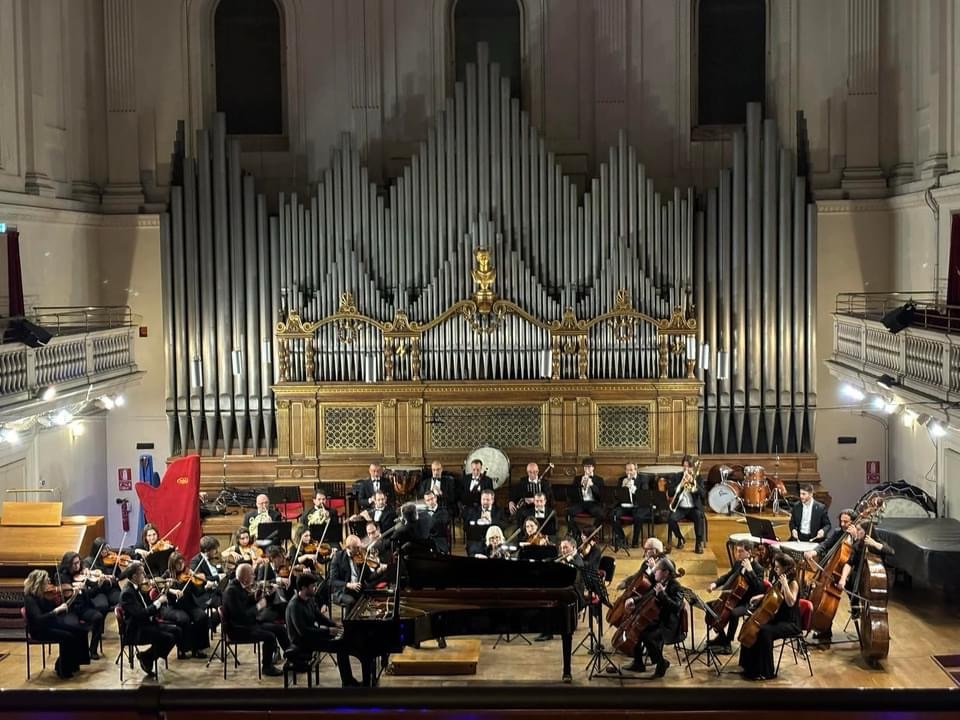
Luigi Carroccia ‘The poet of the piano’ Chopin Concerti op 11 and 21 in Rome Orchestra delle Cento Città directed by Luigi Piovano

https://instytutpolski.pl/roma/2024/04/14/chopin/

A poet of the keyboard with Luigi Carrochia showing us what it means to bring the Bel Canto back to this magnificent historic hall.


A scintillating display of brilliance and poetry where notes became streams of gold and Chopin’s glorious mellifluous outpourings became heart rending love letters shared with us with simplicity and refined aristocratic style .


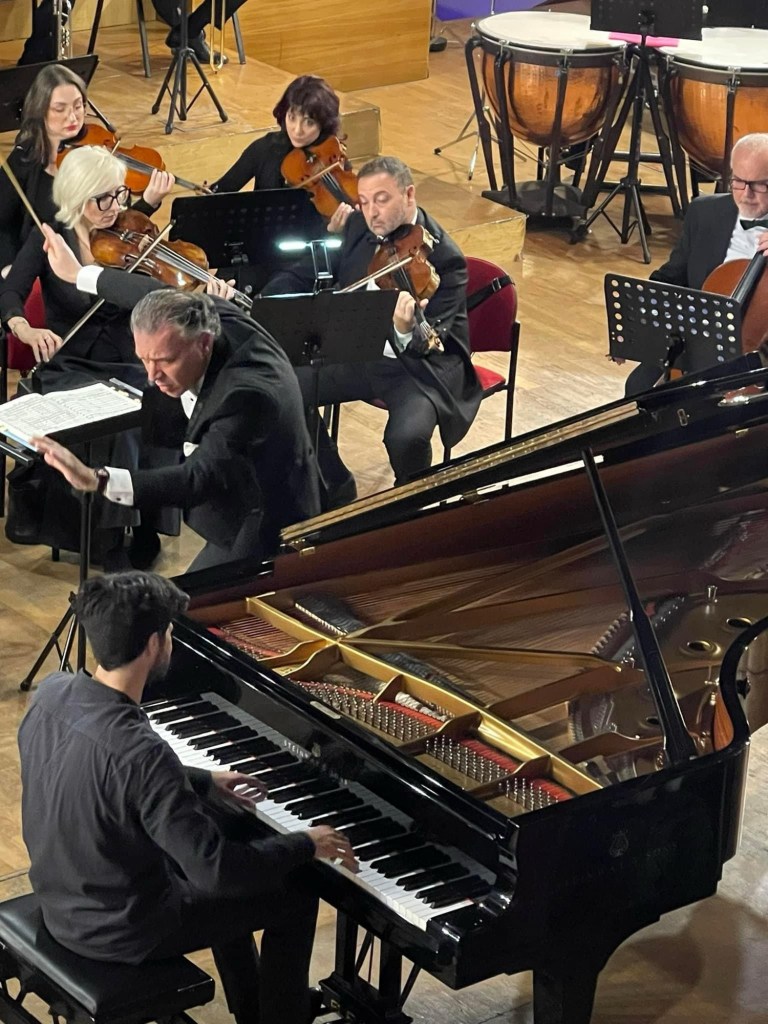
Luigi Piovano hovering like a golden eagle ready to pounce as he followed his fellow Luigi’s every move .
An orchestra inspired by such selfless music making made Chopin’s oft criticised orchestration a subtle blend of dynamic drive as well as creating a sumptuous velvet carpet on which the Luigi’s could place their glistening jewels .
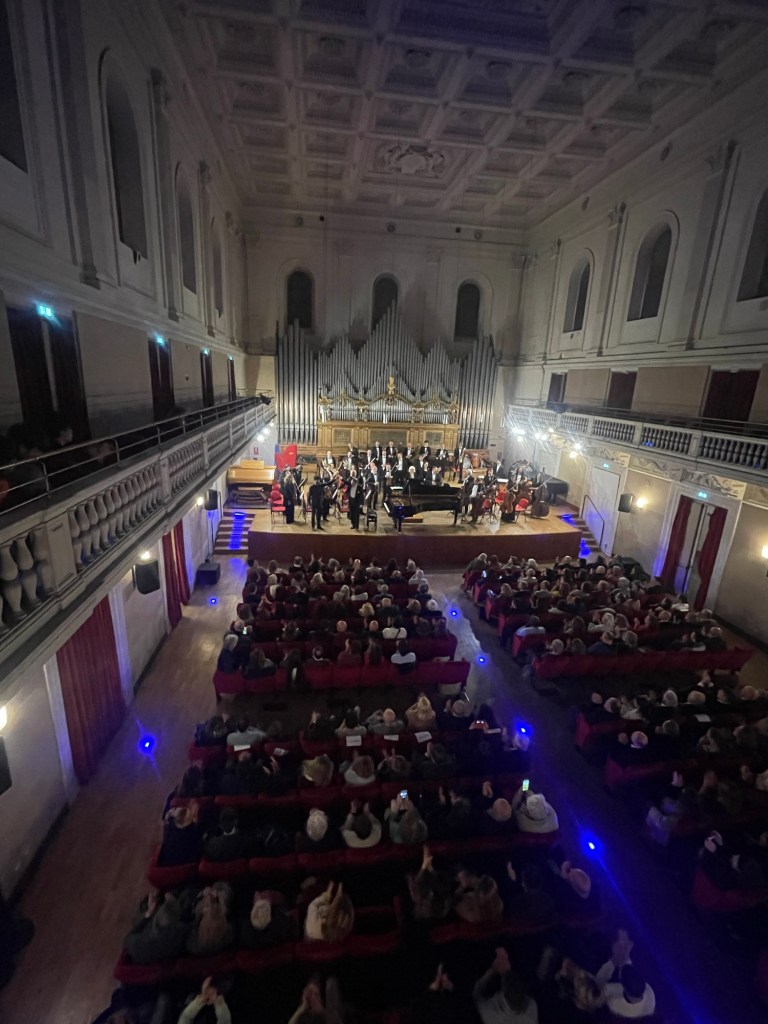
A hall full to the rafters with many illustrious guests not least Louis Lortie flown in especially from Berlin to cheer a musician he has helped to grow and mature into an artist who he is proud to call a colleague .

Luigi con Louis Lortie


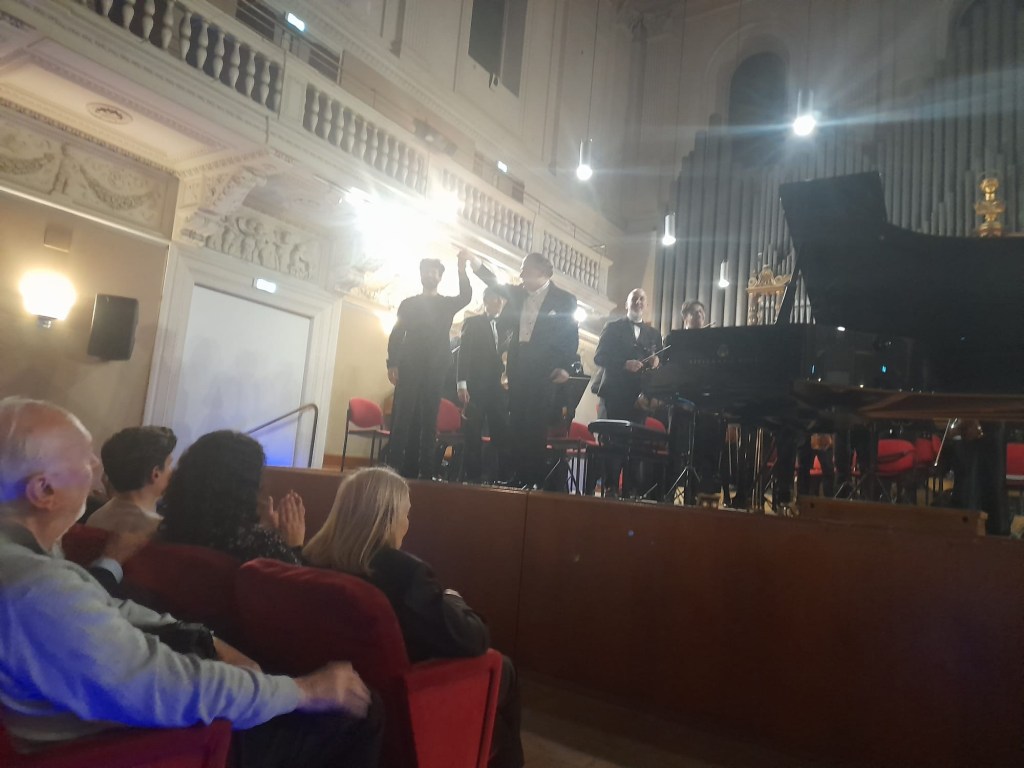
After two Chopin concertos with the public hungry for more Luigi was happy to be able to play just one more time the ravishing opening of the second movement of the second concerto.
What more could one add?
If music be the food of love please oh please play on !


Beginning with the last of the two concertos number one in E minor is certainly the longest and most overtly brilliant of the two.
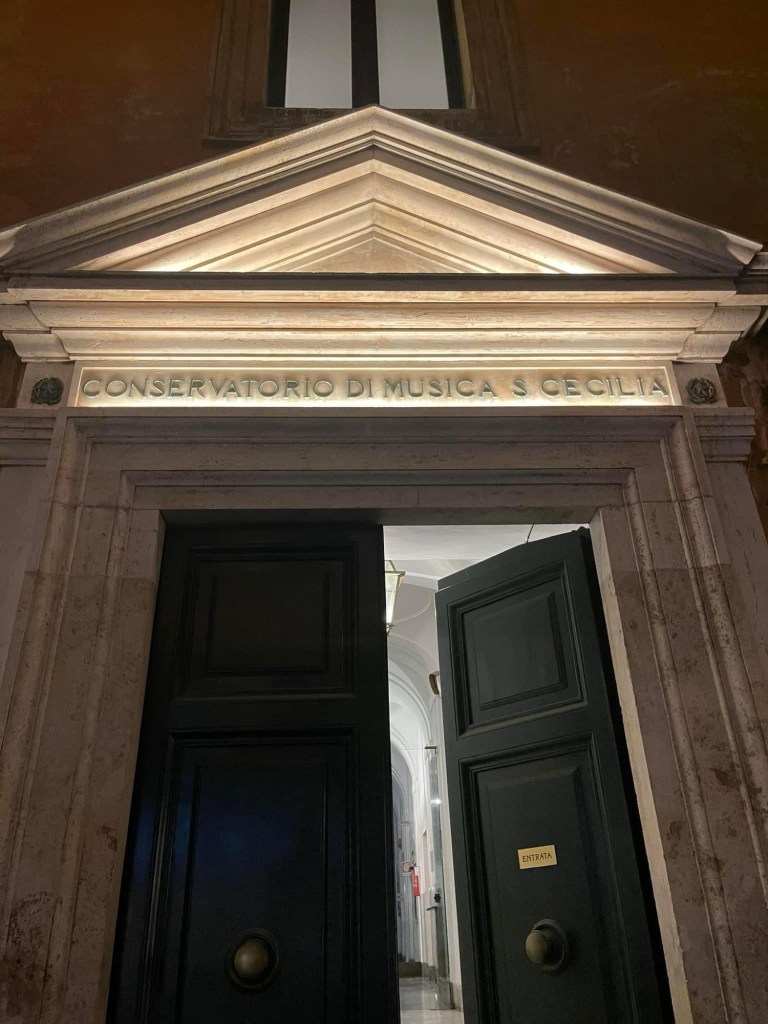
Playing from Carroccia of aristocratic style of refined good taste and poetry. His solo entry immediately established the presence of a poet of the piano.There had been dynamic drive with rich sumptuous sounds that the celebrated cellist and elected kapellmeister of this very fine Orchestra delle Cento Città conducted with the conviction of his great artistry that he has demonstrated for years with Pappano at S.Cecilia.
Carroccia found some exquisite left hand colours that illuminated the streams of notes that were pouring from his agile hands as the beauty of his jeux perlé was as exhilarating as it was ravishing.
If he sometimes missed the weight and incisive rhythmic drive it was always because he was searching for the true poetic meaning behind Chopin’s stream of silver sounds.


Towards the end of the first movement there was a sudden change of gear as the musicians had realised what a joy it was to make such rarified music together in a hall that has seen in the past the greatest musicians of our times . The hall that was used by Visconti for his magical ‘Death in Venice’ ,with the ‘Adagietto’ from Mahler’s Fifth directed by the never forgotten Franco Ferrara.I remember too,as a student in Rome of Mozzato and Agosti, sitting on this stage and being entranced by Elisabeth Schwarzkopf and later seated in the hall for Pina Carmirelli playing the Brahms violin sonatas with a very young Murray Perahia standing in for an indisposed Rudolf Serkin! More recently I heard one of the last recitals of Aldo Ciccolini that he dedicated to the Neopolitan family who had befriended him in his hour of need.


Piovano provided a wonderfully atmospheric opening to the slow movement which allowed Carroccia to float the beautiful bel canto melodic line with fluidity and a glowing sense of projection.The streams of arabesques that he wove over the orchestras seemless melodic outpouring was a wonder of sensitivity of chamber music proportions.We and the orchestra had been captivated by the spell that this young musician had created where we all followed every note in one of those magic moments that can sometimes happen with live performance.The spell was broken with a joyful last movement egged on by Piovano who shared his evident ‘joie de vivre’ with the orchestra and pianist.The lyrical central episode was an exquisite oasis before the explosive brilliance of the youthful virtuoso Chopin.

After a brief interval there followed the Second Concerto that was infact written before the first. It is shorter and much less openly brilliant than the first op 11, as every note has a poignant meaning of youthful yearning and simplicity. The orchestra here sounded rather breathless as the opening of this concerto is more a fantasy than the march like opening of op 11. However it took our poet of the piano only a few notes to take us into a world of poignant youthful hope and beauty. Poetic rather than heroic and a continuous outpouring of song as Chopin was to show us later,in the last of his all too short 39 years on this earth ,with the Barcarolle op 60. Carroccia revealed the beauty and innocence of this haunting work with ravishing playing where every note was projected with glowing sounds of poetic poignancy.

Embellishments that unwound so naturally and were simply part of the melodic line – here was the Caballé of the piano. And it was the exquisite beauty of the slow movement (that obviously had remained in Caroccia’s heart as he played it again as an encore – a solo musing of past beauty). Piovano too was under his spell as he hovered over the keyboard ready to capture those magic moments together and transmit them to their noble accomplices. A final slow flourish which I remember from Rubinstein’s hands was played with the same timeless beauty but ready to float into the beautifully simple final movement without breaking the spell. A final movement that was was of delicacy and charm but also of the scintillating brilliance of a poet of the piano.


An ovation for this young pianist who had had the courage to play these two concertos together in the same programme when still only a few years older than the composer who had written them as a visiting card for himself as an aspiring young virtuoso. I remember the excitement that Kissin and Mehta brought to the same ‘tour de force’ especially as Kissin was only 11 at the time!!!!

Last but not least the superb young piano technician Marco Dardanelli who I was happy to compliment after watching him clean the piano after tuning with the same passion that Luigi Carroccia had played the notes of Chopin
The great critic of La Repubblica Dino Villatico from the good old days when newspapers informed us of culture not just disaster
Giovanni Del Monte of HT Classical organisers of the concert
https://instytutpolski.pl/roma/2024/04/14/chopin/
Julian Kainrath with Louis Lortie
Giovedì 16 maggio 2024
Sala dei Giganti al Liviano, Padova • ore 20.15
JULIAN KAINRATH (violino)
LUIGI CARROCCIA (pianoforte)
Debussy: Sonata
Mozart: Sonata K 304
Beethoven: Sonata op. 47 “a Kreutzer”
Jacoba Stinchelli
Alessandra Giorgia Brustia on the left
Daguerreotype, c. 1849
Fryderyk Franciszek Chopin 1 March 1810 Zelazowa Wola Poland
17 October 1849 (aged 39) Paris, France

I concerti combinano due elementi diversi, per non dire – opposti: un puro suonare e una poeticità fortemente espressiva; il virtuosismo e la romanticità. Sono stati composti secondo il modello preso da Hummel, ma proveniente da Mozart. In essi il compositore porta la brillantezza pianistica elaborata con i brani scritti in precedenza, nello stile brillant, all’apice e allo stesso tempo le dice addio. È diventata un mezzo di espressione, non un fine in sé. Metaforicamente parlando – nella musica dei concerti è apparso il volto di Chopin, fino a quel momento velato con una convenzione stilistica. Ambedue i concerti esprimono in modo diretto la personalità del compositore la quale per la prima volta si manifesta con una grande forza e si concretizza in un insieme di caratteristiche che formano l’inconfondibile idioma stilistico particolare di Chopin, facilmente riconoscibile. Il tratto dominante è la “romanticità”: nei concerti, soprattutto nelle parti centrali, cioè nei due Larghetto, essa appare in forma di “poeticità” del primo romanticismo.

(Mieczysław Tomaszewski, “Chopin. Człowiek, dzieło, rezonans”)


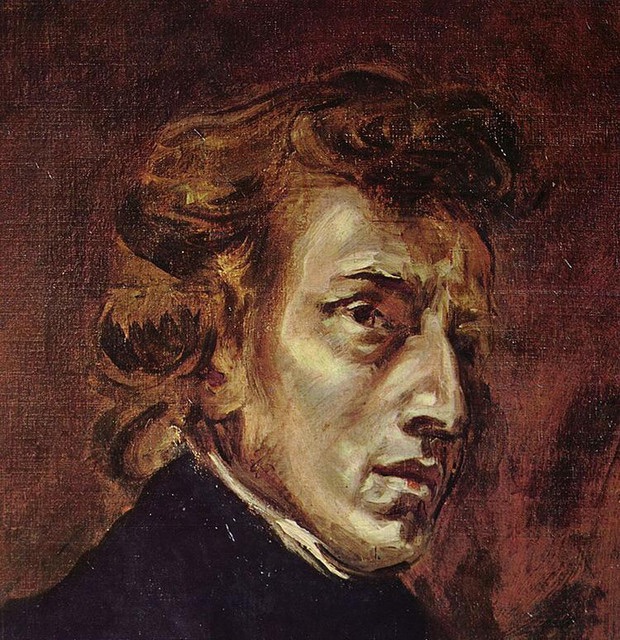
Chopin at 28, from Delacroix’s joint portrait of Chopin and Georges Sand 1838

Chopin’s compositions for piano and orchestra originated from the late 1820s to the early 1830s, and comprise three concert pieces he composed 1827–1828, while a student at the Central School of Music in Warsaw ,two piano concertos , completed and premièred between finishing his studies (mid 1829) and leaving Poland (late 1830),and later drafts, resulting in two more published works.Among these, and the other works in the brilliant style which Chopin composed in this period, the concertos are the most accomplished ones.Chopin’s compositions for piano and orchestra belong to a group of compositions in brilliant style, no longer confined by the tenets of the Classical period which were written for the concert stage in the late 1820s to early 1830s. In September 1828, while a student of Josef Elsner at Warsaw’s Central School of Music, Chopin visited Berlin and having graduated in July 1829 the next month, he visited Vienna , where he successfully presented the Variations on ‘Là ci darem la mano’ and the Rondo à la Krakowiak  in concert.

Chronologically the works for piano and orchestra are :

Variations on ‘Là ci darem la mano in B♭ major (1827), Op. 2.

  • Fantasy on Polish Airs in A major (1828), Op. 13.
  • Rondo à la Krakowiak, in F major (1828), Op. 14.
  • Piano Concerto n. 2 in F minor (1829–1830), Op. 21.
  • Piano Concerto n. 1 in E minor (1830), Op. 11.
  • Grande polonaise brillante (1830–1831), in 1834 expanded with an introductory Andante spianato for solo piano, and a fanfare-like transition to the earlier composition, together published as op. 22
  • Drafts for more concertos, ultimately resulting in the Allegro de Concert for solo piano (1832–41), Op. 46.

Luigi Carroccia was born into a musical family and his first piano teachers were his father and grandfather. His studies continued at the Claudio Monteverdi Conservatory in Bolzano, where he earned his Bachelor’s and Master’s Degrees with honors and at the Royal Birmingham Conservatoire where he attended a Psp in Piano.During these years Luigi has been appreciated for his sensitivity and unique personality, and has won prizes in many competitions, such as the Maria Herrero International Competition in Granada, the National Piano Competition “Città di Magliano Sabina”, “Giulio Rospigiosi”,”Città di Albenga”, “Città di Oleggio”, “Città di Filadelfia”, and the Premio Abbado, organized by the Italian Ministry of Culture in memory of Claudio Abbado. He distinguished himself at the Ferruccio Busoni International Piano Competition 2015, the 17° International Fryderyk Chopin Competition in Warsaw, and the 15th Van Cliburn International Piano Competition in Fort Worth.
Luigi was invited to record a program entirely dedicated to F. Chopin’s music for Radio Classica and he was awarded a medal for his performances of works by A. Scriabin during the “IV Mejdunaroden Festival” in Kjustendil, Bulgaria. He has regularly performed in Italy, Poland, Turkey, United States, England, Bulgaria, Germany and Japan.
Since September 2018, Luigi has been an artist in residence of the Queen Elisabeth Music Chapel, under the guidance of Louis Lortie and Avedis Kouyoumdjian.

Descritto dal Fort Worth Star-Telegram come un “aristocratico del pianoforte”, Luigi Carroccia è riconosciuto come uno dei pianisti italiani più promettenti della sua generazione e le sue interpretazioni, caratterizzate da uno spiccato lirismo e una grande comunicatività, hanno suscitato grande interesse nel panorama pianistico internazionale.
Luigi ha vinto numerosi premi in Concorsi nazionali ed internazionali, tra i quali il “Virtuoso Prize” del Vendome Piano Prize svolto durante il Festival di Verbier e il “Premio Abbado” indetto dal MIUR in memoria di Claudio Abbado. Ha riscosso inoltre grandi consensi nei Concorsi “Van Cliburn” di Fort Worth, “F. Busoni” di Bolzano e “Fryderyk Chopin” di Varsavia dove ha ricevuto grandi apprezzamenti da musicisti quali K. Zimerman e M. Argerich.
La sua attività concertistica lo ha visto regolarmente impegnato in Italia e all’estero per Festival come il Duszniki International Chopin Piano Festival, il Miami International Piano Festival, il Dresdner Musikfestspiele e in sale come l’Ishibashi Memorial Hall dell’Università di Tokyo, Flagey di Bruxelles, la Symphony Hall di Birmingham, le sale Apollinee del Teatro La Fenice di Venezia e la Salle Bourgie di Montreal.
Luigi ha intrapreso i suoi studi musicali sotto la guida del padre e del nonno, entrambi musicisti. La sua maturazione artistica è poi proseguita presso il Conservatorio “C. Monteverdi” di Bolzano, dove ha ottenuto il Diploma Vecchio ordinamento in Pianoforte con il massimo dei voti e lode e il Diploma Accademico di II livello in Pianoforte solistico con 110, lode e menzione d’onore.
Nel 2016 è stato ammesso con Full Merit Scholarship e Junior Fellowship al Royal Birmingham Conservatoire dove ha frequentato un Post-graduate PSP in Piano performance.
Dal 2018 al 2022 Luigi è stato Artist in Residence presso la Queen Elisabeth Music Chapel di Waterloo sotto la guida di Louis Lortie.

https://christopheraxworthymusiccommentary.com/2024/03/20/christopher-axworthy-dip-ram-aram/

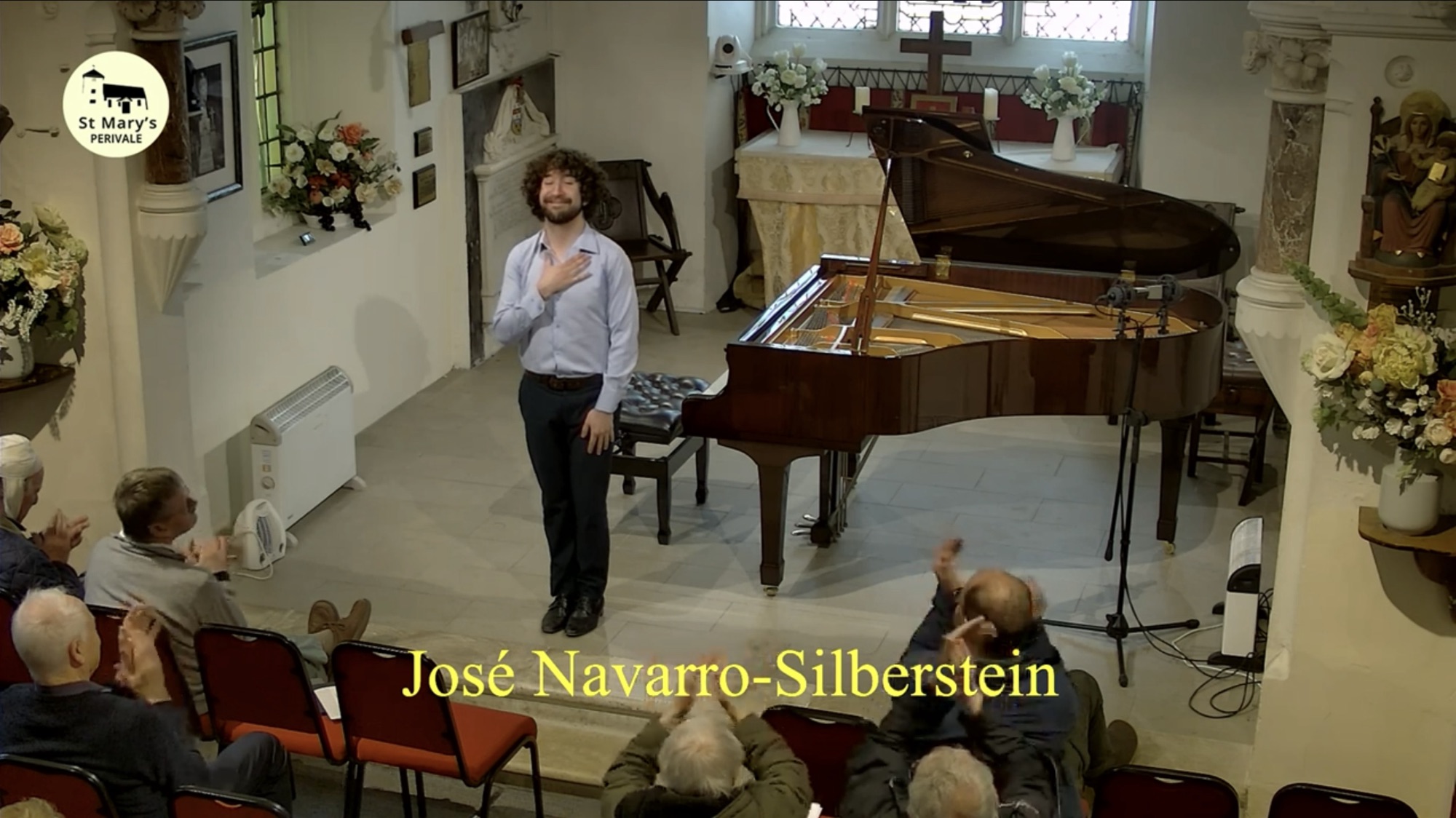
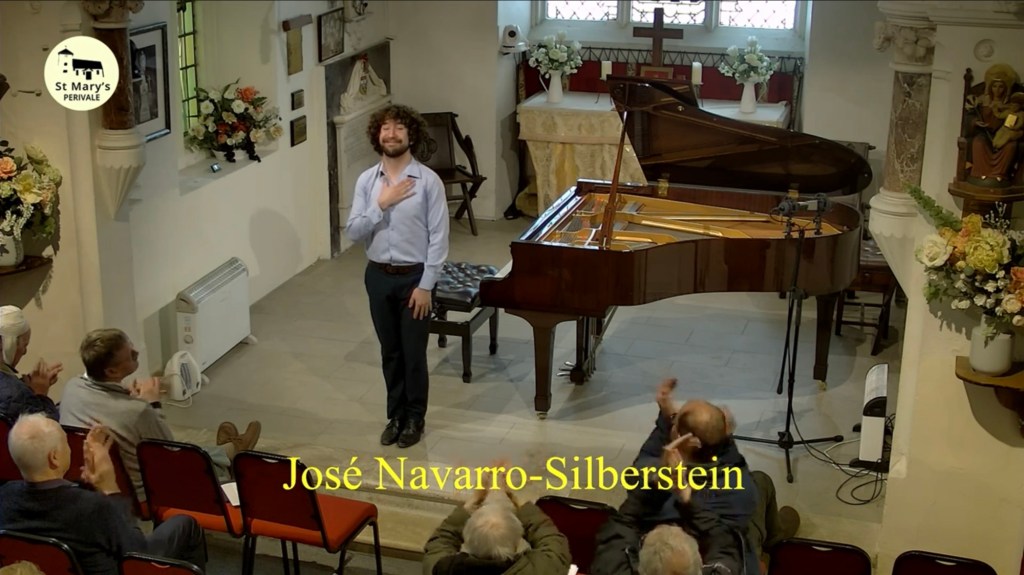
José Navarro-Silberstein in Perivale with playing of authority and haunting beauty

https://youtube.com/live/QMBnvBBQAoc?feature=shared


It was the music of his native South America played as an encore that ignited this young musicians imagination with playing of haunting beauty and a kaleidoscope of colours and sounds of radiance and fluidity. His total authority and hypnotic sense of communication in a very atmospheric work by Villa Lobos created an atmosphere of the scintillating colours and the native rhythms of his homeland bringing a recital full of radiance and beauty to a breathtaking end.

José is a master musician as his playing of Beethoven demonstrated .A scrupulous attention to the composers very precise indications were allied to a technical command with sounds of clarity and beauty.The dialogue between the bass and the soprano in the development was played with simplicity where Beethovens careful shaping of the left hand was beautifully played without disturbing the mellifluous beauty of the right hand. Sometimes his Latin temperament took over and embellishments could have unwound with more ease and the deep left hand throbbing in the recapitulation could have been less passionate.But it was his love and respect for Beethoven’s most mellifluous of his last sonatas that shone through all he did. The Allegro molto – Scherzo was shaped with real style and sense of proportion.A dynamic drive but never overpowering but beautifully shaped.Beethoven’s irascible character had been tamed as the coda gently flowed into the ‘Adagio’ that was played with poignant dignity and beauty.Beethoven’s long pedal and vibrating notes created a haunting atmosphere on which could float one of Beethoven’s most beautiful melodies.The gentle left hand heartbeat was beautifully controlled as the melodic line was allowed to float unimpeded with flowing luminosity. The Fugue was masterly controlled and allowed to unfold naturally as it built to the long E flat that miraculously dissolves down to D for the return of the ‘Arioso’ ‘perdendo le forze – dolente’. Beethoven fills this most poignant of melodies with a series of rests that are like breaths for a singer but that José took a little too literally and his Latin temperament disturbed the simplicity that he had kept so aristocratically under control.The inversion of the fugue was gently whispered as it gradually built to the glorious outpouring with which this Sonata finishes.Again José’s temperament and passionate love of the music almost made him loose control and his arrangement of the hands for the final great triumph of A flat lost the noble impact it surely should have. José is indeed a intelligent young artist with a passionate heart of gold!

It was refreshing to hear the Holberg Suite in concert as I have not heard it since my own school days when it was standard fare for advanced piano students.It is a beautiful piece that José played with nobility and poignant beauty.The prelude has a haunting beauty that pervades it and José’s sumptuous sound palette was very touching.He brought delicacy and simplicity to the ‘Sarabande’ and charm and grace of orchestral nobility to the ‘Gavotte’.The ‘Air’ he played with weight and intensity as the long drawn out melodic line was allowed to sing with simple beauty.There was a beauty to the tenor melody as it was gently accompanied by whispered embellishments.I found the ‘Rigaudon’ a little too fast for comfort as it lost a little of it’s rhythmic precision. It created,though, the excitement and exhilaration needed to round off the simple innocence of this delightful suite of dances and if the ending was a little too thrown away it was because the pianist was obviously enjoying every minute of it as we were too.

The three Chopin Mazukas were played with great style and colour but were sometimes rather too fast and breathless .One felt that José was playing more in the style of Chopin that actually what was written on the printed page and infact he left out a big chunk of the first one too! There were ,of course, many beautiful moments as José is a true artist and there was the haunting beauty of the opening of op 50 n.2 and the beauty of Chopin’s knotty twine in op 50 n.3.

It was the Liszt Hungarian Rhapsody that suddenly unleashed the showman in José as the ‘Pesther Karneval’ took to the stage opening with dynamism and grandiose nobility .With chameleonic changes of colour and character and scintillating virtuosity he swept across the keys as Liszt must have done with this,the longest of his 19 Rhapsodies.A glorious outpouring of sumptuous sounds of dynamic drive and passionate conviction brought this very varied programme to a brilliant close.

The young Bolivian pianist has performed in different countries in venues and festivals in Europe, South America and USA. Halls include Teatro Municipal “Alberto Saavedra Pérez” in his hometown La Paz to the Musikverein in Vienna. He is a Talent Unlimited Artist in London. As a soloist, he has performed with the Jena Philharmonic Orchestra, Norddeutsche Philharmonie Rostock, Georgian Philarmonic Orchestra, La Paz Symphony Orchestra, Orquesta de Jóvenes Musicos Bolivianos, Orquesta Sinfónica Juvenil de Santa Cruz de la Sierra among others. He is a prize winner at the Anton Rubinstein Piano Competition in Düsseldorf, Tbilisi International Piano Competition in Georgia, International Competition Young Academy Award in Rome, Claudio Arrau International Piano Competition in Chile among many others. He was a finalist at the Eppan Piano Academy and at the 63r d Ferruccio Busoni International Piano Competition. In Bolivia he gave masterclasses in La Paz Conservatory, Sucre Conservatory Santa Cruz Fine Arts College and Laredo School in Cochabamba. He served as a jury member in national music competitions. He was mentored by Paul Badura Skoda. He studied with Balasz Szokolay at the Franz Liszt University in Weimar and with Claudio Martínez Mehner at the University of Music and Dance in Cologne. At the moment he is at the Artist Diploma programme at the Royal College of Music in London under the guidance of Norma Fisher and Ian Jones.He holds scholarships from Royal College of Music, Herrmann Foundaiton Liechtenstein- Bolivia, Theo and Petra Lieven Foundation of Hamburg, Clavarte Foundation in Bern and Elfrun Gabriel Foundation for Young Pianists.

https://christopheraxworthymusiccommentary.com/2023/06/08/jose-navarro-silberstein-masterly-performances-of-red-hot-intensity/

https://christopheraxworthymusiccommentary.com/2023/06/21/jose-navarro-silberstein-at-st-jamess-a-master-musician-with-a-heart-of-gold/

https://christopheraxworthymusiccommentary.com/2023/08/02/jose-andres-navarro-at-st-jamess-piccadilly-temperamentauthority-and-musical-integrity/

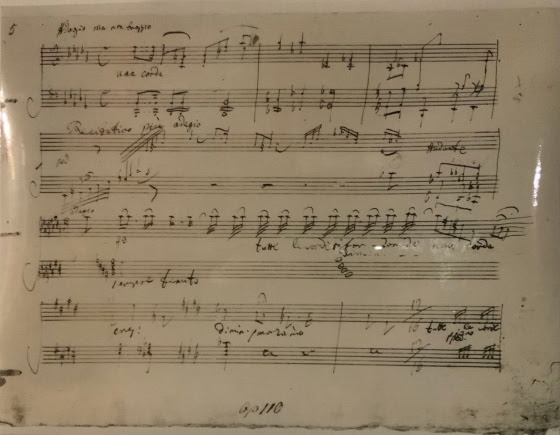
Beethoven’s A flat major Sonata, Op 110, was his penultimate sonata, written in 1821, The outward gentleness of the opening movement belies its tautness of form, and the contrast with the brief second, a scherzo marked Allegro molto – capricious, gruffly humorous, even violent – is extreme. Beethoven subversively sneaks in references to two street songs popular at the time: Unsa Kätz häd Katzln ghabt (‘Our cat has had kittens’) and Ich bin lüderlich, du bist lüderlich (‘I’m dissolute, you’re dissolute’)! 

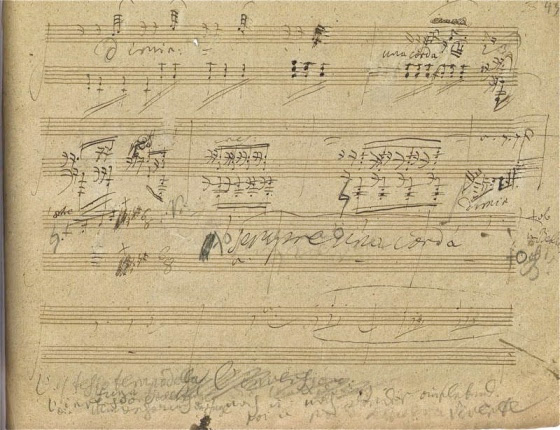
Facsimile of last movement p.43 

But it’s in the finale that the weight of the sonata lies, and it begins with a declamatory, recitative-like passage that starts in the minor, moving to an emotionally pained aria-like section.Beethoven introduces a quietly authoritative fugue, based on a theme reminiscent of the one that opened the sonata. Its progress interrupted by the aria once more, its line now disjunct and almost sobbing for breath. The way in which the composer moves into the major via a sequence of G major chords is a passage of pure radiance, that Edwin Fischer described as ‘like a reawakening heartbeat’. This leads to a second appearance of the fugue in inversion culminating in a magnificently triumphant conclusion.

The legendary Guido Agosti held summer masterclasses in Siena for over thirty years.All the major pianists and musicians of the time would flock to learn from a master,a student of Busoni,where sounds heard in that studio have never been forgotten.He was persuaded by us in 1983 to give a public performance of the last two Beethoven Sonatas.The recording of op 110 from this concert is a testament,and one of the very few CD’s ever made,of this great master.
This is a recently made master of op 111 https://drive.google.com/file/d/1zdb2qjgWnA3HyPph_6FxnxjLHy7APc_f/view?usp=drive_web

https://christopheraxworthymusiccommentary.com/2024/01/03/forli-pays-homage-to-guido-agosti/The facsimile of the manuscript were given to the Ghione theatre by Maestro Agosti.They still adorn the walls of this beautiful theatre ,created by Ileana Ghione and her husband,that became a cultural centre of excellence in the 80’s and 90’s.

Beethoven’s own markings with the ‘bebung‘ or vibrated notes in the Adagio of op.110

In the summer of 1819, Adolf Martin Schlesinger from the Schlesinger firm of music publishers based in Berlin sent his son Maurice to meet Beethoven to form business relations with the composer.The two met in Modling,where Maurice left a favourable impression on the composer.After some negotiation by letter, the elder Schlesinger offered to purchase three piano sonatas for 90 ducats in April 1820, though Beethoven had originally asked for 120 ducats. In May 1820, Beethoven agreed, and he undertook to deliver the sonatas within three months. These three sonatas are the ones now known as Op. 109,110, and 111 the last of Beethoven’s piano 

The composer was prevented from completing the promised sonatas on schedule by several factors, including his work on the Missa solemnis (Op. 123),rheumatic attacks in the winter of 1820, and a bout of jaundice in the summer of 1821.Op. 110 “did not begin to take shape” until the latter half of 1821.Although Op. 109 was published by Schlesinger in November 1821, correspondence shows that Op. 110 was still not ready by the middle of December 1821. The sonata’s completed autograph score bears the date 25 December 1821, but Beethoven continued to revise the last movement and did not finish until early 1822.The copyist’s score was presumably delivered to Schlesinger around this time, since Beethoven received a payment of 30 ducats for the sonata in January 1822.

https://youtube.com/watch?v=Lfnq7ZuDuGQ&feature=shared


Edvard Hagerup Grieg 15 June 1843 – 4 September 1907 Bergen Norway

The Holberg Suite was originally composed for the piano, but a year later was adapted by Grieg himself for string orchestra .The suite consists of an introduction and a set of dances. It is an early essay in neoclassicism an attempt to echo as much as was known in Grieg’s time of the music of Holberg’s era.The Holberg Suite, op 40, more properly From Holberg’s Time (Norwegian: Fra Holbergs tid), subtitled “Suite in olden style” (Norwegian: Suite i gammel stil), is a suite of five movements based on eighteenth-century dance forms, written in 1884 to celebrate the 200th anniversary of the birth of Dano-Norwegian humanist  playwright Ludvig Holberg (1684–1754).

  1. Prelude – Allegro vivace
  2. Sarabande – Andante
  3. Gavotte – Allegretto
  4. Aria – Andante religioso
  5. Rigaudon – Allegro con brio

Franz Liszt  22 October 1811 – 31 July 1886

Hungarian Rhapsody No. 9, S.244/9 is nicknamed the “Carnival in Pest” or “Pesther Carneval” and was composed in 1847.Liszt used five themes in this rhapsody. The first of these, possibly Italian in origin, can be found in one Liszt’s manuscript notebooks. The second theme is a csardas by an unknown composer. After the third theme, which is an unidentified folk tune, Liszt quotes an authentic Hungarian folk song, A kertmegi káposzta. The final theme quoted is a third folk tune, Mikor én még legény voltam.Liszt wrote a set of 19 piano pieces based on Hungarian Folk Themes during 1846–1853, and later in 1882 and 1885. Liszt incorporated many themes he had heard in his native western Hungary and which he believed to be folk music, though many were in fact tunes written by members of the Hungarian upper middle class, or by composers such as Jozsef Kossovits ,often played by Gypsy bands. The large scale structure of each was influenced by the verbunkos a Hungarian dance in several parts, each with a different tempo.Within this structure, Liszt preserved the two main structural elements of typical Gypsy improvisation—the lassan (“slow”) and the friska (“fast”). At the same time, Liszt incorporated a number of effects unique to the sound of Gypsy bands, especially the pianistic equivalent of the cimbalom.He also makes much use of the Hungarian gypsy scale.


Fryderyk Franciszek Chopin;1 March 1810 – 17 October 1849

Over the years 1825–1849, Chopin wrote at least 59 compositions for piano called Mazurkas referring to one of the traditional Polish dances

  • 58 have been published
    • 45 during Chopin’s lifetime, of which 41 have opus numbers (with the remaining four works being two early mazurkas from 1826 and the famous “Notre Temps” and “Émile Gaillard” mazurkas that were published individually in 1841)
    • 13 posthumously, of which 8 have posthumous opus numbers (specifically, Opp. 67 & 68)
  • 11 further mazurkas are known whose manuscripts are either in private hands (2) or untraced (at least 9).

The serial numbering of the 58 published mazurkas normally goes only up to 51. The remaining 7 are referred to by their key or catalogue number.

Chopin while he used the traditional mazurka as his model, he was able to transform his mazurkas into an entirely new genre, one that became known as a “Chopin genre”.

In 1852, three years after Chopin’s death, Liszt published a piece about Chopin’s mazurkas, saying that Chopin had been directly influenced by Polish national music to compose his mazurkas. Liszt also provided descriptions of specific dance scenes, which were not completely accurate, but were “a way to raise the status of these works [mazurkas].”While Liszt’s claim was inaccurate, the actions of scholars who read his writing proved to be more disastrous. When reading Liszt’s work, scholars interpreted the word “national” as “folk,” creating the “longest standing myth in Chopin criticism—the myth that Chopin’s mazurkas are national works rooted in an authentic Polish-folk music tradition.”In fact, the most likely explanation for Chopin’s influence is the national music he was hearing as a young man in urban areas of Poland, such as Warsaw.

After scholars created this myth, they furthered it through their own writings in different ways. Some picked specific mazurkas that they could apply to a point they were trying to make in support of Chopin’s direct connection with folk music. Others simply made generalizations so that their claims of this connection would make sense. In all cases, since these writers were well-respected and carried weight in the scholarly community, people accepted their suggestions as truth, which allowed the myth to grow. However, in 1921, Béla Bartok  published an essay in which he said that Chopin “had not known authentic Polish folk music.”By the time of his death in 1945, Bartók was a very well known and respected composer, as well as a prominent expert on folk music, so his opinion and his writing carried a great deal of weight. Bartók suggested that Chopin instead had been influenced by national, and not folk music.Schumann described Chopin Mazurkas as ‘Canons covered in flowers’.The op .50 mazurkas are a set of three written and published in 1842.

Programme notes for Deal Gabriele Sutkuté

Jean-Philippe Rameau – Suite in D major (Pièces de Clavecin):

I. Les Tendres Plaintes (Rondeau)

V. La Follette (Rondeau)

VIII. Les Cyclopes (Rondeau)

8min.

Claude Debussy – Estampes (“Prints”), L.100 :

I. Pagodes (“Pagodas”)

II. La soirée dans Grenade (“Evening in Granada”) 

III. Jardins sous la pluie (“Gardens in the Rain”)

15min.

Ashkan Layegh – For Solo Piano (2023)

8min.

Florence Anna Maunders – Tuphānī Rakasa

3,5min

C. Debussy – “La plus que lente” (Valse), L. 121

5min.

M. Ravel– La valse, M. 72

The French Baroque composer Jean – Philippe Rameau wrote three books of Pièces de clavecin for the harpsichord .The first, Premier Livre de Pièces de Clavecin, was published in 1706 ; the second, Pièces de Clavessin, in 1724; and the third, Nouvelles Suites de Pièces de Clavecin, in 1726 or 1727. They were followed in 1741 by Pièces de clave in En concerts, in which the harpsichord can either be accompanied by violin (or flute) and viola da gamba or played alone. An isolated piece, “La Dauphine“, survives from 1747.

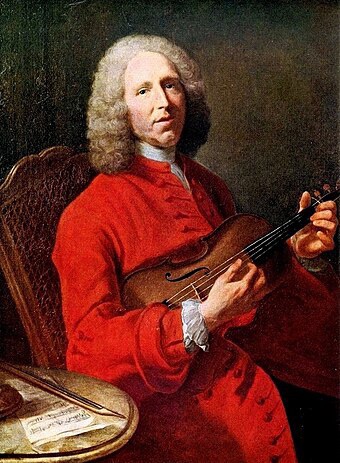
Jean-Philippe Rameau topped the summit of the Musical Establishment—named Compositeur du Cabinet du Roi in 1745—yet his pedigree was hardly auspicious. For a time a travelling violinist, he held numerous undistinguished posts as provincial organist (rarely serving out his contract and on one occasion deliberately playing sufficiently badly to ensure his dismissal) before finally settling in Paris at the age of forty.

Something of a theorist—his treatise On the Technique of the Fingers on the Harpsichord makes for essential reading—Rameau’s intellectualism combines in his music to produce passion and tenderness, in his own words ‘true music … the language of the heart’. Some sixty keyboard works are known, gathered by key into five suites

Jean-Philippe Rameau, by Joseph Aved, 1728

Those played tonight are from 1724 and are the first,fifth and eighth from his Suite in D : Les Tendres Plaintes -la Follette– Les Cyclopes

  1. Les Tendres Plaintes. Rondeau .An almost tongue-in-cheek character piece, with a title so hackneyed that Rameau was surely poking a bit of fun: Les tendres plaintes (‘The tender sighs ‘) It is nevertheless a ravishing pearl piece , and Rameau clearly thought enough of it to rework it as a ballet movement in Zoroastre (1749).
  2. Les Niais de Sologne – Premier Double des Niais – Deuxième Double des Niais
  3. Les Soupirs. Tendrement
  4. La Joyeuse. Rondeau
  5. La Follette. Rondeau (The Sprite) is a bright gigue like Rondeau
  6. L’Entretien des Muses
  7. Les Tourbillons. Rondeau
  8. Les Cyclopes. Rondeau. Is the jewel of the set with a musical description of the mythological smithies who forged Jupiter’s thunderbolts in the deep recesses of the Earth. Here Rameau uses his special technique of ‘batteries’ which he claimed to have invented. As he explains in the preface to the 1724 collection: ‘In one of the batteries the hands make between them the consecutive movement of two drumsticks; and in the other, the left hand passes over the right to play alternately the bass and treble.’ Incidentally, Les cyclopes is believed to be one of the pieces played by the Jesuit Amiot before the Chinese Emperor; sadly, it seems to have not made much of an impression.
  9. Le Lardon. Menuet
  10. La Boiteuse

Ashkan Layegh was born in Tehran, Iran in 1997. He started learning the piano at the age of 6 in Iran. He attained a high-school degree in Maths, which gained him a place to study Architecture at the University of Tehran in 2016.
He won First Prize at the International Barbad Piano Competition, Shiraz, in 2017. Shortly after the competition, the Chair of the Jury, Layla Ramezan, the Lausanne-based Iranian concert pianist, introduced Ashkan to the British conductor Mark Stephenson. Subsequently, Ashkan was invited to perform in a chamber music concert at the Iranian Embassy, Prince’s Gate, London, in April 2017, which was organized by Mark Stephenson (Artistic Director: The Internava Project).
In December 2017, with the encouragement and support of Mark Stephenson, Ashkan auditioned for both the Royal Academy of Music and Royal College of Music in London. He is the first young musician from Iran since the Revolution to be offered places at both institutions, and he won a full scholarship to study at the Royal Academy of Music.
In addition to his piano studies he is a keen jazz pianist and he also plays Electric/Acoustic Guitar and the Setar — traditional Persian Instrument. In December 2019, he formed his own ensemble, Ashkan Layegh Quartet — Phemo — to perform his own music.

Florence Anna Maunders started to compose music when she was a teenager, and her early tape-based pieces from this time reveal an early fascination with the unusual juxtapositions of sounds and collisions of styles which have been a hallmark of her music-making ever since. This is perhaps a reflection of the music which interested and excited her from a very young age – medieval dance music, prog-rock, electronic minimalism, bebop jazz, Eastern folk music, the music of Stravinsky & Messiaen, and the grand orchestral tradition of the European concert hall. Flori started out young, as a chorister, clarinetist and saxophone player, but following an undergraduate degree at the Royal Northern College of Music, where she studied with Anthony Gilbert, Adam Gorb, Simon Holt & Clark Rundell, she’s enjoyed a mixed and international career as a jazz pianist, orchestral percussionist, vocalist arranger, electronic music producer and teacher. Since 2018 she’s had a bit of a radical transformation of her self and her career, and returned to composition as a main artistic focus, and is currently working on a PhD as a doctoral fellow at Cardiff University.

Since returning to writing music, she’s enjoyed significant successes in the UK, the USA, Europe and across the rest of the world, leading to a string of high profile awards & prizes including the Royal Philharmonic Prize.

I work, compositionally, like a novelist. I know what the story arc’s gonna be, I know who my characters are; I know what direction [it’s] gonna go in, what’s gonna happen in each chapter. I know what the results of these conversations are gonna be between these two characters, but I haven’t written all the dialogue.”
Florence Anna Maunders
She is a multi-award-winning composer, percussionist, pianist, educator, and producer based in the UK. Florence’s work explores unusual juxtapositions of sounds and collisions of styles, influenced by her interests in music ranging from medieval dance, prog-rock, electronic minimalism, bebop jazz, Eastern folk music, Stravinsky, and Messiaen. Following a varied international career as a jazz pianist, orchestral percussionist, electronic music producer, teacher, and more, she returned to composition as her main artistic focus in 2018. Since then, she has received multiple accolades — in the past year alone being a Royal Philharmonic Society Composer 2022-23 and receiving prizes and commissions from Khemia Ensemble,Uitgast Festival Prize,BCMG’s Flourish!Commission ,Third Coast percussion,Currents Creative Partner, LCO New, Drake Music Ascendant Commisssion, and more.

1908
(AchilleClaude Debussy
22 August 1862 – 25 March 1918

La plus que lentL.121 was written for solo piano in 1910,shortly after his publication of the Préludes Book 1.It was first played at the New Carlton Hotel in Paris, where it was transcribed for strings and performed by the popular ‘gipsy’ violinist, Léoni, for whom Debussy wrote it (and who was given the manuscript by the composer).La plus que lente is, in Debussy’s wryly humorous way, the valse lente to outdo all others.”It is marked “Molto rubato con morbidezza” indicating Debussy’s encouragement of a flexible tempo.

During the same year of its composition, an orchestration of the work was conceived, but Debussy opposed the score’s heavy use of percussion and proposed a new one, writing to his publisher:

“Examining the brassy score of La plus que lente, it appears to me to be uselessly ornamented with trombones,kettle drums,triangles , etc., and thus it addresses itself to a sort of de luxe saloon that I am accustomed to ignore!—there are certain clumsinesses that one can easily avoid! So I permitted myself to try another kind of arrangement which seems more practical. And it is impossible to begin the same way in a saloon as in a salon. There absolutely must be a few preparatory measures. But let’s not limit ourselves to beer parlours. Let’s think of the numberless five-o’-clock teas where assemble the beautiful audiences I’ve dreamed of.” Claude Debussy, 25 August 1910 

Estampes (“Prints”), L.100 It was finished in 1903. The first performance of the work was given by Ricardo Vines at the Salle Erard of the Société Nazionale de Musique  in Paris on 9 January 1904.

This three-movement suite is one of a number of piano works by Debussy which are often described as impressionistic , a term borrowed from painting. This style of composition had been pioneered by Ravel  in Jeu d’eau written in 1901, and was soon adopted by Debussy (for example in the earlier numbers of Images,but Debussy did not himself identify as an impressionist.

Pagodes evokes Indonesian gamelan music, which Debussy first heard in the Paris World Conference Exhibition of 1889.Debussy marks in the text that “Pagodes” should be played “presque sans nuance“, or “almost without nuance.” This rigidity of rhythm helps to reduce the natural inclination of pianists to add rubato and excessive expression.

La soirée dans Grenade uses the Arabic scale  and mimics guitar strumming to evoke images of Granada ,Spain .Debussy’s only personal experience with the country was a few hours spent in San Sebastian de los Reyes near Madrid. Despite this, Manuel de Falla said of the movement: “There is not even one measure of this music borrowed from the Spanish folklore, and yet the entire composition in its most minute details, conveys admirably Spain.”

Jardins sous la pluie describes a garden in the Normandy  town of Orbec during an extremely violent rainstorm. Throughout the piece, there are sections that evoke the sounds of the wind blowing, a thunderstorm raging, and raindrops dropping. It makes use of two folk melodies, the lullaby Dodo,l’enfant do and Nous n’irons plus au bois parce qu’il fait un temps insupportable (We will no longer go to the woods because the weather is unbearable).


Joseph Maurice Ravel. 7 March 1875 – 28 December 1937. 

Photo of Ravel in the French Army in 1916. 
Ravel finally joined the Thirteenth Artillery Regiment as a lorry driver in March 1915, when he was forty.Stravinsky expressed admiration for his friend’s courage: “at his age and with his name he could have had an easier place, or done nothing”.Some of Ravel’s duties put him in mortal danger, driving munitions at night under heavy German bombardment.

The idea of La valse began first with the title “Vienne” as early as 1906, where Ravel intended to orchestrate a piece in tribute to the waltz form and to Johann Strauss.As he himself stated:’You know my intense attraction to these wonderful rhythms and that I value the joie de vivre expressed in the dance much more deeply than Franckist puritanism.Ravel completely reworked his idea of Wien into what became La valse, which was to have been written under commission from Diaghilev as a ballet. However, he never produced the ballet after hearing a two-piano reduction performed by Ravel and Marcelle Meyer saying it was a “masterpiece” but rejected Ravel’s work as “not a ballet. It’s a portrait of ballet”. Ravel, hurt by the comment, ended the relationship and when the two men met again during 1925, Ravel refused to shake Diaghilev’s hand. Diaghilev challenged Ravel to a duel, but friends persuaded Diaghilev to recant. The men never met again.Ravel described La valse with the following preface to the score:
‘Through whirling clouds, waltzing couples may be faintly distinguished. The clouds gradually scatter: one sees at letter A an immense hall peopled with a whirling crowd. The scene is gradually illuminated. The light of the chandeliers bursts forth at the fortissimo letter B. Set in an imperial court, about 1855.’
https://christopheraxworthymusiccommentary.com/2024/03/20/christopher-axworthy-dip-ram-aram/