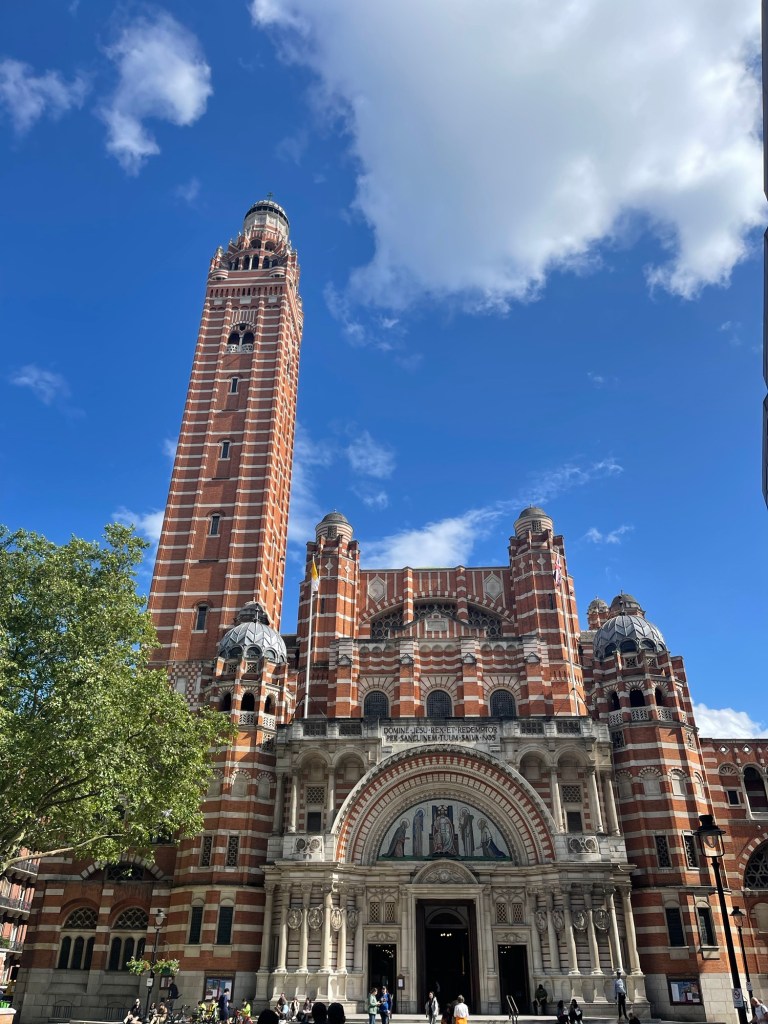
- Chopin—Polonaise Fantaisie Op.61
- Chopin—Mazurkas Op.24: Nos 1 & 4
- Chopin—Ballade No.4 Op.52
- Schumann—Kreisleriana Op.16
- Liszt—Hungarian Dance No.2
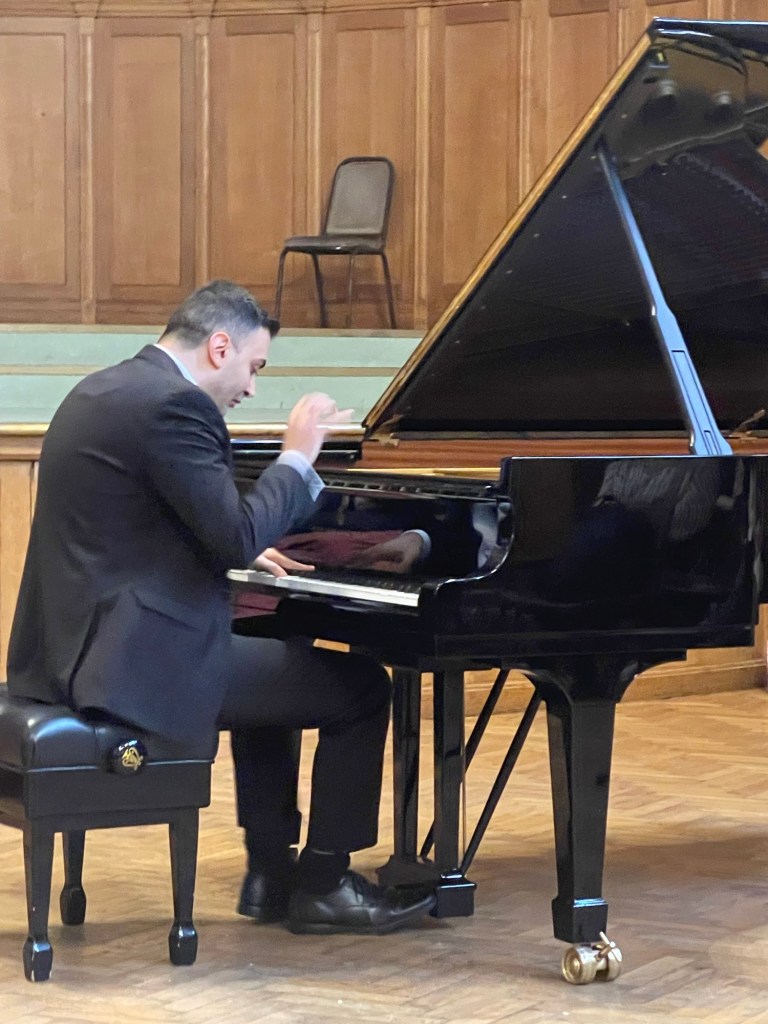
Wonderful to see this giant of a man play with the velvet gloves of an Angel
Helped by Barenboim to flee Syria when he auditioned as a youthful pianist in the interval of a conducting rehearsal .He could not provide the music as in Syria the scores were not available but he sat at the piano and played Beethoven’s penultimate Sonata that he had learnt by ear from a recording much to the astonishment of Barenboim .
Studies followed with the indomitable Sulamita Aronovsky and Dmitri Alexeev renowned winner of the Gold medal in Leeds over Uchida and Schiff.
Riyad has turned rags into riches and is now a Professor at the junior Guildhall school of Music and Drama with a career that has taken him around the world.
It is on ‘wings of song’ with his passionate love of music that has saved Riyad from an inevitable life of suffering in his homeland
It was this love that shone through all he did today for Lady Rose Cholmondeley and her ‘friends’ of the Chopin Society.
Playing of rare beauty often played phrase by phrase in astonished gasps rather than in a big expansive breath.
Chopin,Schumann and Liszt were on the menu but it was the Danse de Leila by a compatriot that ignited his soul and with great expansive lines he drew the same poignant feeling for his homeland that Chopin was to draw in his Mazurkas .
‘Canons covered in flowers’ exclaimed Schumann how right can you be! ‘Hats off Gentlemen.A Genius!’
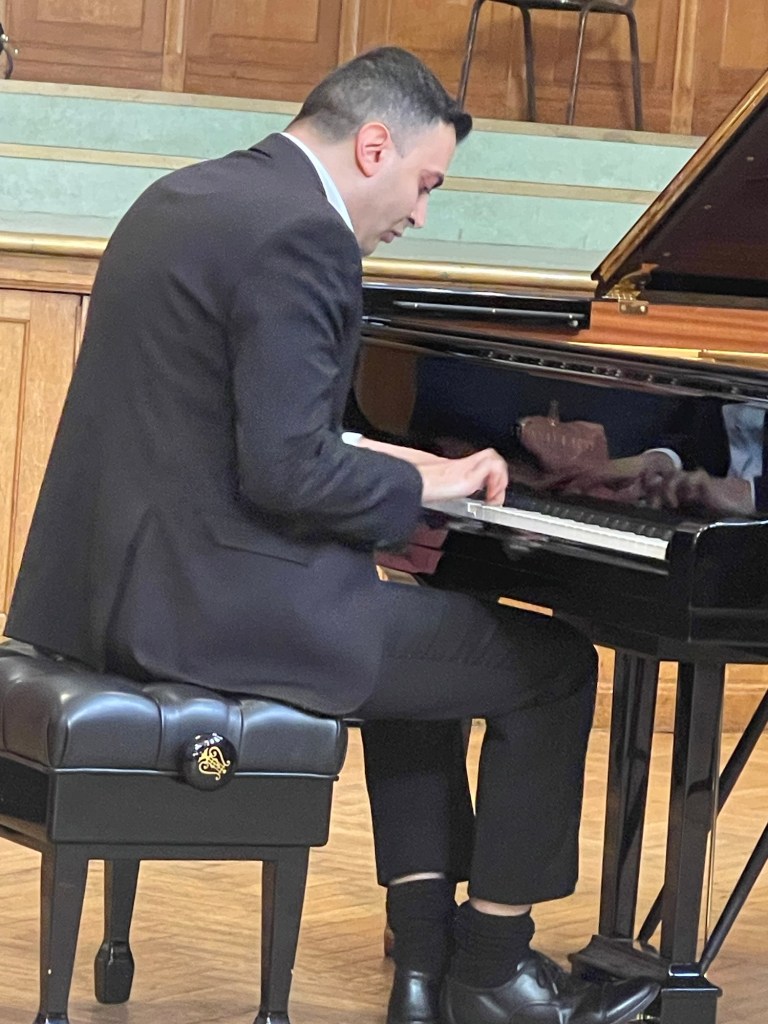
Riyad did not know but as he opened his recital with Chopin’s Polonaise – Fantasie I was reminded of the very first work I heard Vlado Perlemuter play and whose 120th birthday it would have been today. I arrived at the last minute from London in 1968 as a ‘fresher’ at the Royal Academy to hear and study in Dartington – the famous summer school run by Sir Willian Glock and the valiant and ever elegant John Amis. I will never forget the sound that Vlado made in those beautiful surroundings- rich and full but never hard or ungrateful- sometimes even nasal as he would play loudly with the soft pedal down to get that very french sound that could be so much part of his french heritage from Cortot. I was later to learn that this was weight and as Vlado later showed me in lessons in his home in Rue Ampère in Paris just what it meant never to leave the keys. I still have my score of the Fourth Ballade with three or four fingerings on the same note! I recently saw a score of Clifford Curzon with the same multicoloured fingerings on every note.These were artists looking for the perfect legato to deny the piano its percussive birthright and persuade us that this black box of hammers and strings was as multicoloured as any orchestra.
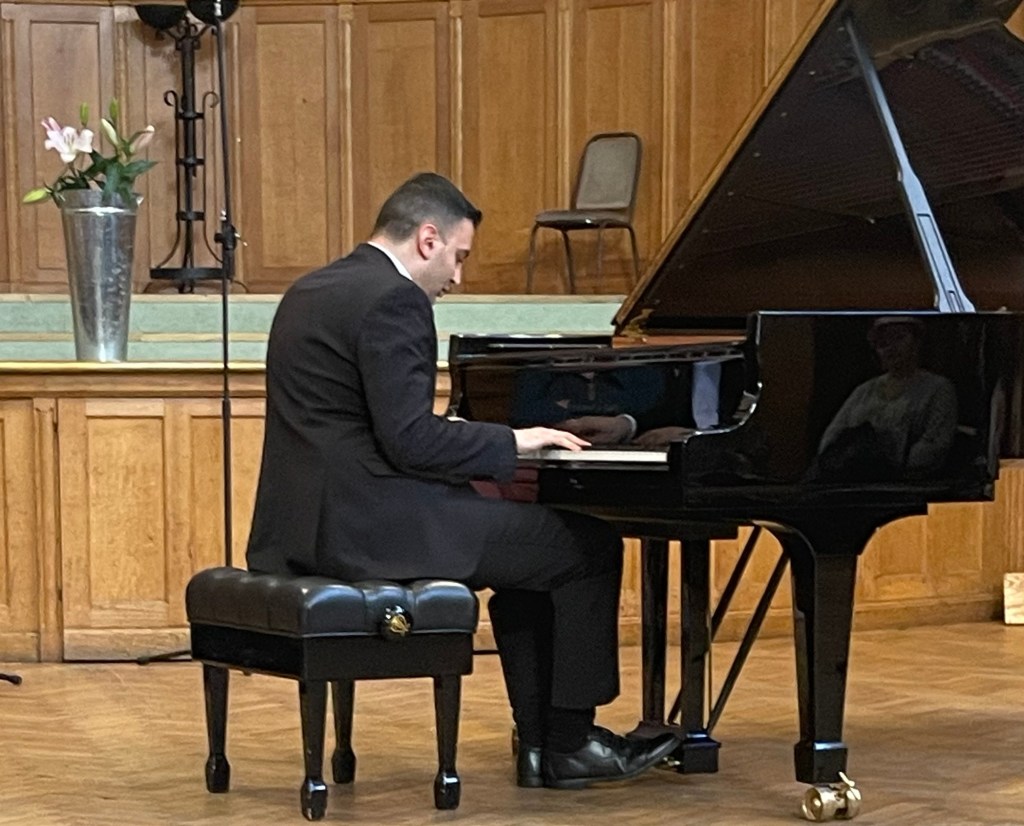
Riyad showed us today what it means to truly love the piano and to seek out the beauty from every phrase. Playing with arms strangely tied closely to his body – sink or swim?! The greatest pianists I have noted are those that look as though they are swimming in sound with a natural seemingly relaxed continual circular movement. In spite of this and because of his warm artistic soul he could produce some exquisite sounds of purity and ravishing beauty. His great love of the music meant that he tended to think like Grieg in short beautiful modules that linked from one to another but did not always give a great architectural arch to the whole work.The Polonaise was exactly this as he played with beauty ,intelligence and aristocratic good taste but in a strange way it was as though we were looking at the work through a magnifying glass from within and not looking on from afar at a great edifice of monumental proportions.
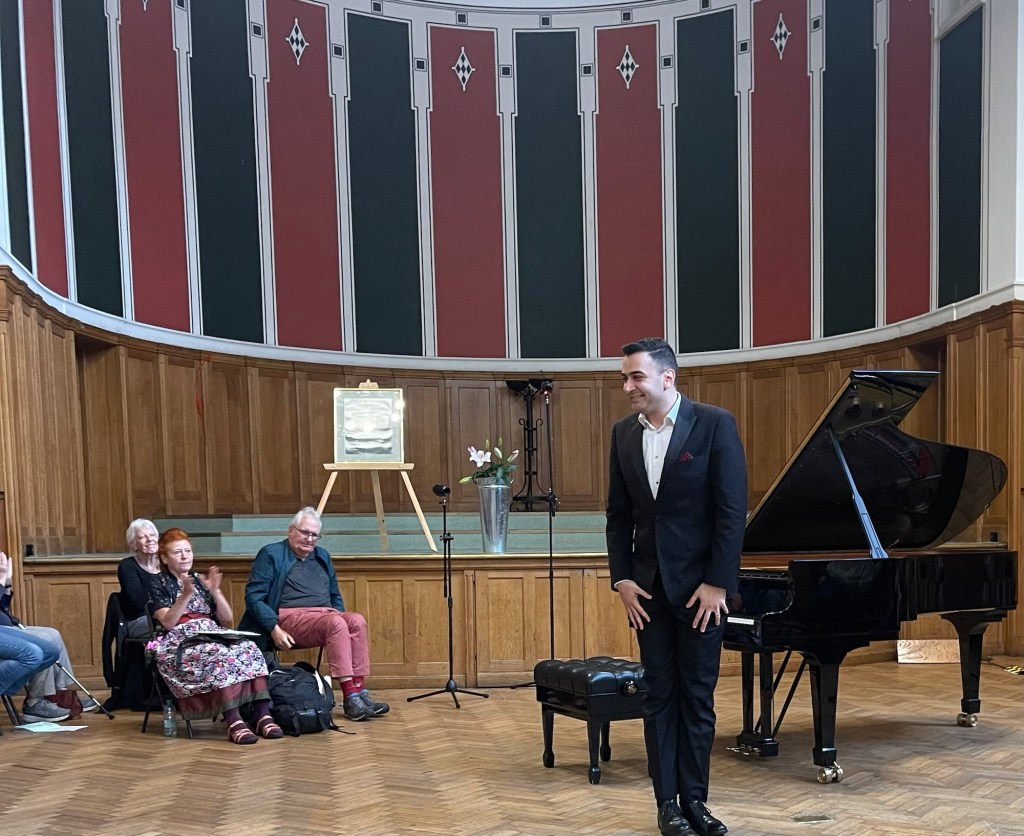
The four Mazurkas op 24 were played with ravishing sound and an innate sense of dance in gasps of heart rending nostalgia .The beautiful ending of the first led into the beguiling rhythmic drive of the second.’Con anima’ Chopin writes over the third and this is exactly what Riyad did so beautifully as he revealed the very soul of a young man a long way from his homeland but was still so much part of his being.The fourth is truly a tone poem of beguiling beauty with tantalising rhythms and deeply felt mellifluous outpourings and was the ideal way to lead into one of Chopin’s greatest compositions.
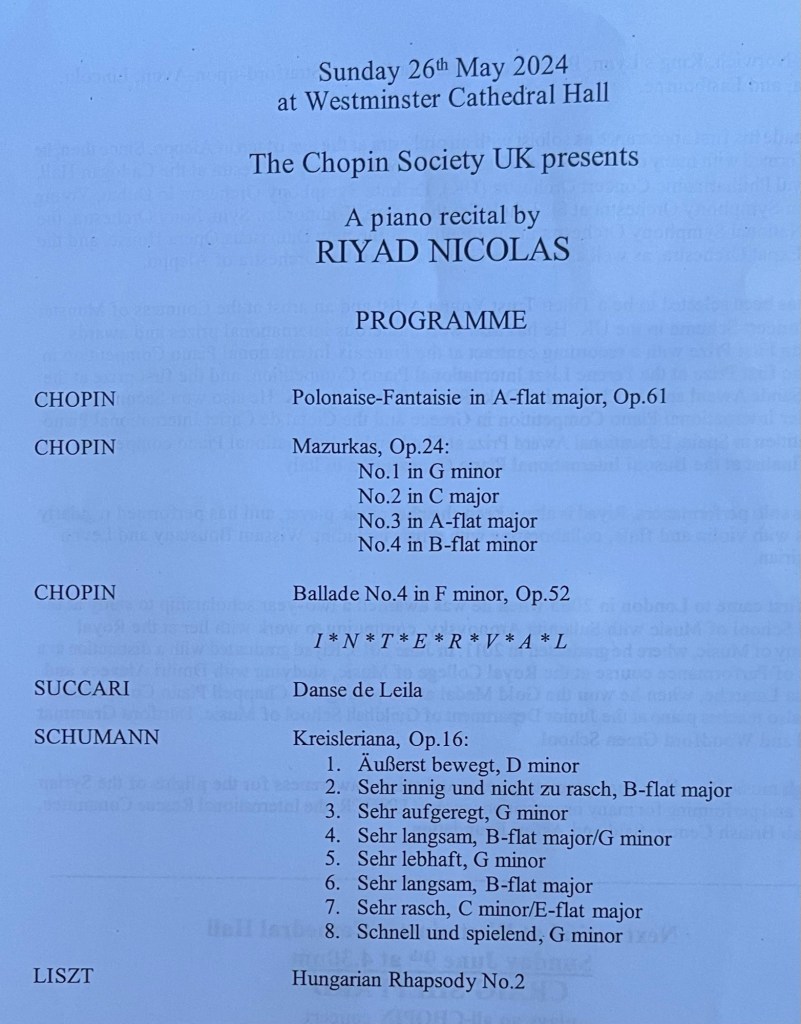
It was the opening of the Fourth Ballade that revealed Riyad’s true artistry and poetic soul.This etherial opening repeated half way through the Ballade and is where Perlemuter wrote in my score ‘avec un sentiment de regret’. A work that is a picture painted in sound and that Riyad played with architectural shape and real understanding. A technical control that passed unnoticed as he allowed the music to unfold with the natural unadorned simplicity of a monumental composition of a Genius who had created a work to take it’s place with the Liszt Sonata and the Schumann Fantasie as the pinnacles of the ‘ Romantic’ era.
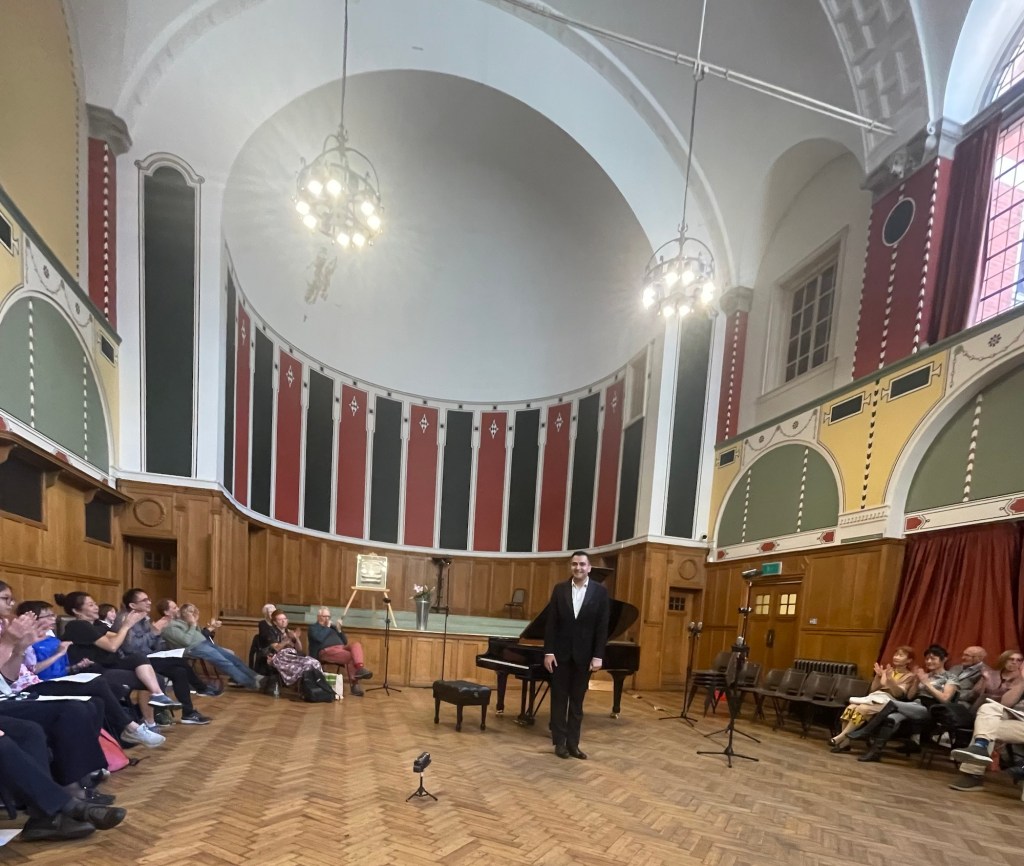
After the interval Riyad played a piece by Dia Succari who was born in Aleppo, Syria, in 1938 and died in 2010,a composer, teacher and conductor in Paris from 1969 until his death in2010. He melded the melodies and rhythms of Arabic music in a Classical language influenced by composers such as Debussy, Ravel and Faure.Playing the Danse de Leila with heartfelt passion and long phrases beautifully shaped with a kaleidoscopic sense of colour and fantasy.
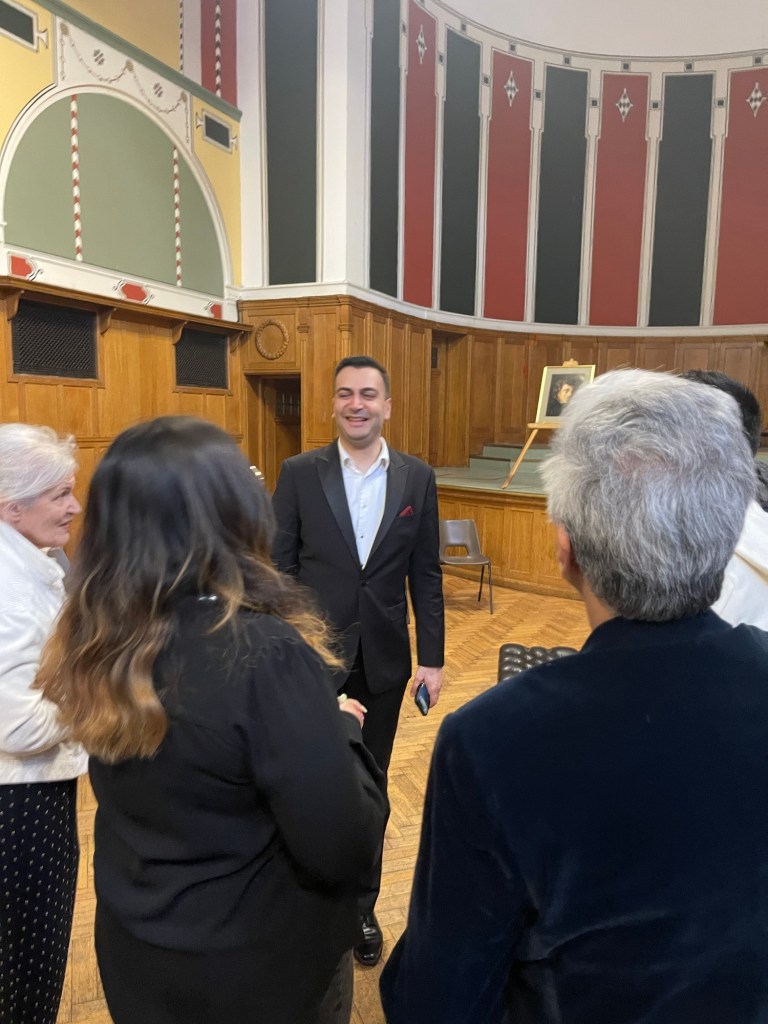
Schumann’s ever elusive eight scenes that make up ‘Kreisleriana’ were played with great style, with each piece linked to the other in a whole that Riyad managed to convey with musicianship and poetic insight. From the waves of sound of the first to the long beautifully sung simple legato lines of the second with it’s interruptions of two intermezzi ;the first of spikey dynamic drive and the second of expansive romantic abandon. He brought a romantic fervour to the sumptuous melodic weavings of the third contrasting with it’s glorious final outpouring of rhythmic drive. There was a subtle beauty to the ‘ sehr langsam’ of the fourth where the ‘bewegter’ took flight on a magic carpet of simple beauty. The impish good humour of the fifth burst into a passionate romantic fervour before the whispered confessions of the sixth. The seventh was thrown of with great technical command where even the treacherous left hand ,that is usually split between the hands,was fearlessly played as Schumann had actually written it! There was a beautiful ending to this movement where the music disintegrates before our very eyes and the final haunting whispers of the last are heard in the distance .Bursting into ever greater outbursts of romantic fervour the relentless opening snail like percourse ended with whispered asides deep in the heart of the piano.
Liszt’s most famous Hungarian Rhapsody was played with subtle colouring and the dynamic drive and virtuosity that brought this usually staid public in Westminster Hall to their feet. An all or nothing performance but always from an artist who has such love in his velvet clad hands.
An encore – a Rubinstein favourite – the waltz op 64 n.2 was Riyad’s way of thanking an enthusiastic audience for allowing him to show us what it means to make love not war!
Riyad Nicolas at St Mary’s Refined beauty in the name of peace
P.S. A note from Riyad that I am glad to include and correct a few details in the above :
‘Thank you so much for your kind words and detailed review! I greatly appreciate your highlights on my love and passion for music, and I cannot thank you enough. I will also share it shortly. I hope it is okay for me to share a few points from the review: 1) The Arabic piece I performed was written by Dia Succari, not the violinist Nejmi Al Succari. 2) I love playing to Barenboim from time to time, but he did not help me fly from Syria to London initially. 3) We had music scores in Syria. Warmest …’
I had confused Riyad with another remarkable Syrian pianist who had played for the Keyboard Trust some time ago and who had in fact played Brahms 2nd Piano Concerto to Barenboim never having had access to the score.Remarkable lives of course of great suffering and which music could very well be the common denominator that could bring peace instead of war. Edward Said and Daniel Barenboim have created The West–Eastern Divan Orchestra which is based in Seville, Spain, and consists of musicians from countries across the Spanish world and the Middle East—of Egyptian, Iranian, Israeli, Jordanian, Lebanese, Palestinian, Syrian, and Hispanic background in an attempt to find the common denominator of music as a way of peacefully communicating with each other.
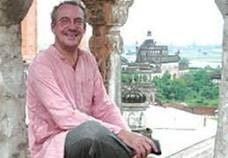
Michael George Andrew Axworthy FRSA, FRAS was a British academic, author, and commentator. He was the head of the Iran section at the British Foreign & Commonwealth Office between 1998 and 2000.
Born: 26 September 1962, Woking
Died: 16 March 2019 (age 56 years), Rome,Italy
Education: Peterhouse, The King’s School Chester
My late cousin Michael Axworthy was an expert in Persian history his father having been the Shah’s banker and he as a little boy having been so influenced by the experience. They managed to escape and Michael went to Peterhouse College,Cambridge and became an expert on the history of that part of the world .He wrote five books and created a movement dedicated to trying to find a common denominator within the very roots of the Far Eastern culture that could be the starting point for drawing factions together that are unable to comunicate with each other because of deep inner grievances. Make love not war is a very simplistic motto for something engraved so deeply within all the peoples so intensely involved.
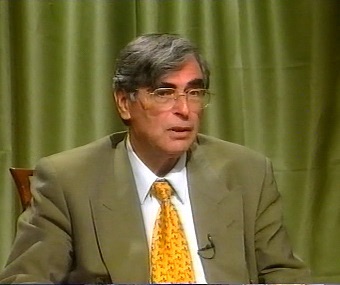
Dia SUCCARI was born in Aleppo, Syria, in 1938 and died in 2010. He studied music with his father and with Michael Boricenko before going on to the Conservatoire National Supérieur de Musique de Paris in 1951 (13 years old) where he studied theory with Henri Challan, Noël Gallon,Marcel Bitsch and Jeanine Rueff and composition with Tony Aubin and Olivier Messiaen and conducting with Robert Blot and Manuel Rosenthal.There he obtained first prizes (Harmony, Conterpoint, Fugue and Composition classes). He was an active composer, occasionally conductor and teacher in Paris since 1969.
He was professor of theory at the Conservatoire National de Région de Paris and at the Université Paris Sorbonne, and taugh music training at the Conservatoire de Suresnes.
His musical compositions were various: instrumental, lyrical, solo, chamber and orchestral.
He also wrote didactic books about theory (solfege, harmony,counterpoint..).
He studied in depth the musical Maquams and their rhythmic versatility which is quite recognizable in his compositions written in a classical language, without simplify or modify traditional arabic music but polishing it with a western veneer influenced by great French composers such as Debussy, Ravel, Fauré and others. The outcome called Dia Succari, neither oriental nor european but the both.
He opened new horizons in Arabic music. Among his essential works:
• Syrian suite for piano (Jobert Ed.)
• The night of destiny for piano (Jobert Ed.)
• Album from folklore, violin and piano (Fertile Plaine Ed.)
• Yakza for oriental instruments, voices and orchestra
• Forget what you have learnt for speaker, voices and orchestra
• Sin flûte and violin (Billaudot Ed.)
• Ur Nina, song, clarinet and piano (Fertile Plaine Ed.)
• Trio for piano,violin and cello
• Baal and Anat for stings
• Silex’s sparkle for chamber orchestra
• Forgotten splendours for orchestra
• When the morning reveals it lights for violon and orchestra
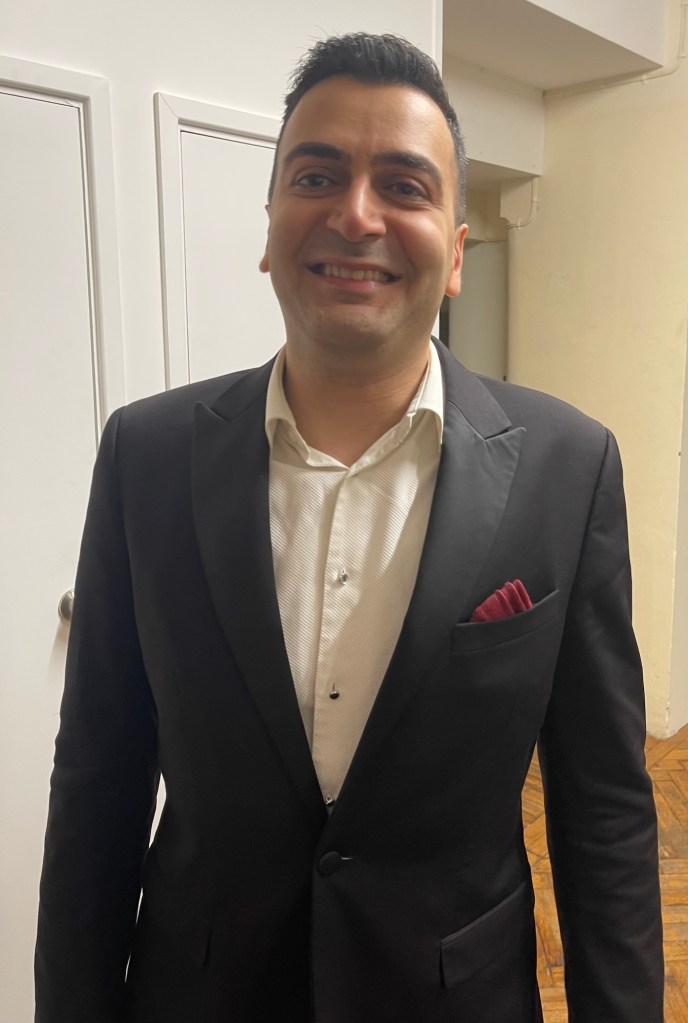
Riyad is very talented and has a very high level of musical sensitivity. He reached an impressive level of musicianship which speaks a dedication to music that bodes well for his career” Maestro Daniel Barenboim
Syrian British Pianist, Riyad Nicolas was born in Aleppo, Syria, in 1989, and has already established himself as a leading figure of his generation on the international performing circuit. He has been complimented by such musicians as Daniel Barenboim, Vladimir Ashkenazy and Mitsuko Uchida .Riyad has given solo recitals in many prestigious venues at the UK, including Royal Albert Hall, Cadogan Hall, Wigmore Hall, Barbican, St. Martin-in-the-Fields, St. James’s Piccadilly, and Leighton House in London, and Bridgwater Hall and Staller Hall in Manchester. Concert performances have also taken him to USA, including a debut at the Kennedy Center in Washington and Chicago Cultural Center (Dame Myra Hess series), Yehudi Menuhin Forum in Switzerland, plus other performing venues in France, Spain, Germany, Holland, Malta, the Gulf, Lebanon and Syria.In the UK, Riyad is regularly invited to give recitals hosted by the Beethoven Piano Society of Europe and the Chopin Society UK, and performed extensively as solo pianist for over 80 music societies in the UK. He has also been invited to performing numerous UK musical festivals such as Harrogate, Norfolk-Norwich, King’s Lynn, Brighton, Devon, Darlington, Stratford-upon-Avon, Lincoln, Crediton, and Eastbourne.Riyad made his first appearance as soloist with an orchestra at the age of ten in Aleppo. Since then, he has performed with many orchestras including the London Chamber Orchestra at the Cadogan Hall, The Royal Philharmonic Concert Orchestra (UK), Emirate Symphony Orchestra in Dubai, Young Musician Symphony Orchestra at St. John’s Smith Square, Todmorden Symphony Orchestra, the Syrian National Symphony Orchestra at the opening of the new Damascus Opera House, and the Syrian Expat Orchestra, as well as with the Gomidas Chamber Orchestra of Aleppo.Riyad has been selected to be a Tillett Trust Young Artist and an artist at the Countess of Munster Trust Concert Scheme in the UK. He has also won numerous international prizes and awards including First Prize with a recording contract at the Francaix International Piano Competition in Paris, the first Prize at the Ferenc Liszt International Piano Competition, and the first prize at the Norah Sande Award and the Christopher Duke Recital Prize in the UK. He also won Second Prize at the Seiler International Piano Competition in Greece and the Ciutat de Carlet International Piano Competition in Spain, Educational Award Prize at The London International Piano competition and was a finalist at the Busoni International Piano Competition in Italy.Besides solo performances, Riyad is also a keen chamber music player, and has performed regularly in duos with violin and flute, collaborating with artists including the flautist Wissam Boustany and the Violinist Levon Chilingirian.Riyad first came to London in 2005 when he was awarded a two-year scholarship to study at the Purcell School of Music with Sulamita Aronovsky, continuing to work with her at the Royal Academy of Music, where he graduated in 2011. In June 2015, Riyad graduated with a distinction in a Master of Performance course at the Royal College of Music, studying with Dmitri Alexeev and Vanessa Latarche, when he won the Gold Medal at the prestigious Chappell Piano Competition. Riyad also teaches piano at the Junior Department of Guildhall School of Music, Dartford Grammar School and Woodford Green School. Through music Riyad has been promoting peace and raising awareness for the plights of the Syrian people and performing for many organizations such as UNHCR, the International Rescue Committee, the Arab British Centre, Said and Asfari Foundation. Riyad Nicolas is one of the most exciting young artists to emerge from the Middle East.
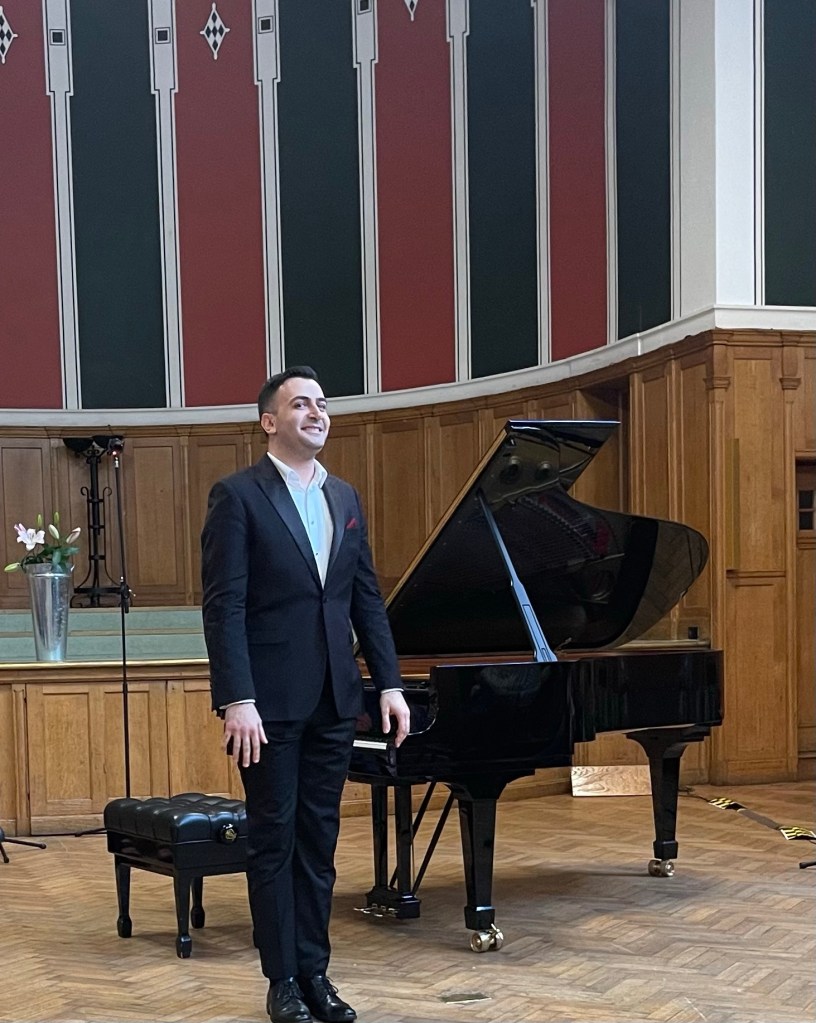
Our piano, a fine 2015 Hamburg Steinway Model B Grand, chosen for us by Ulrich Gerhartz, Steinway’s Head of Artist & Concert Services, is maintained by Steinways and tuned by them immediately before each performance.
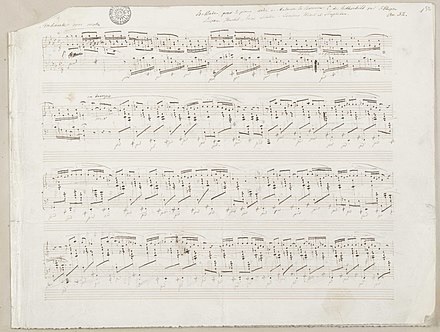
Autograph manuscript, Bodleian Library ,1842
The Ballade No. 4 in F minor, Op. 52 was completed in 1842 in Paris and is considered not only one of Chopin’s masterpieces, but one of the masterpieces of 19th-century piano music.john Ogdon described it as “ the most exalted, intense and sublimely powerful of all Chopin’s compositions… It is unbelievable that it lasts only twelve minutes, for it contains the experience of a lifetime.”
Dedicated to Baroness Rothschild ,wife of Nathaniel de Rothschild,who had invited Chopin to play in her Parisian residence, where she introduced him to the aristocracy and nobility.
Alfred Cortot claims that the inspiration for this ballade is Adam Mickiewicz’s poem The Three Budrys, which tells of three brothers sent away by their father to seek treasures, and the story of their return with three Polish brides.
Kreisleriana, op 16 is in eight movements subtitled Phantasien für das Pianoforte. Schumann claimed to have written it in only four days in April 1838 and a revised version appeared in 1850. The work was dedicated to Chopin , but when a copy was sent to the Polish composer, “he commented favorably only on the design of the title page”.
Kreisleriana is a very dramatic work and is viewed by some critics as one of Schumann’s finest compositions.In 1839, soon after publishing it, Schumann called it in a letter “my favourite work,” remarking that “The title conveys nothing to any but Germans. Johannes Kreisler is one of E.T.A.Hoffmann’s creations, an eccentric, wild, and witty conductor.”
Like the kaleidoscopic Kreisler, each number has multiple contrasting sections, resembling the imaginary musician’s manic depression , and recalling Schumann’s own “Florestan” and “Eusebius,” the two characters Schumann used to indicate his own contrasting impulsive and dreamy sides. Johannes Kreisler appears in several books by Hoffmann, including Kater Murray and most notably in the Kreisleriana section of Fantasiestücke in Callots Manier, published in 1814.
In a letter to his wife Clara , Schumann reveals that she has figured largely in the composition of Kreisleriana:
I’m overflowing with music and beautiful melodies now – imagine, since my last letter I’ve finished another whole notebook of new pieces. I intend to call it Kreisleriana. You and one of your ideas play the main role in it, and I want to dedicate it to you – yes, to you and nobody else – and then you will smile so sweetly when you discover yourself in it.
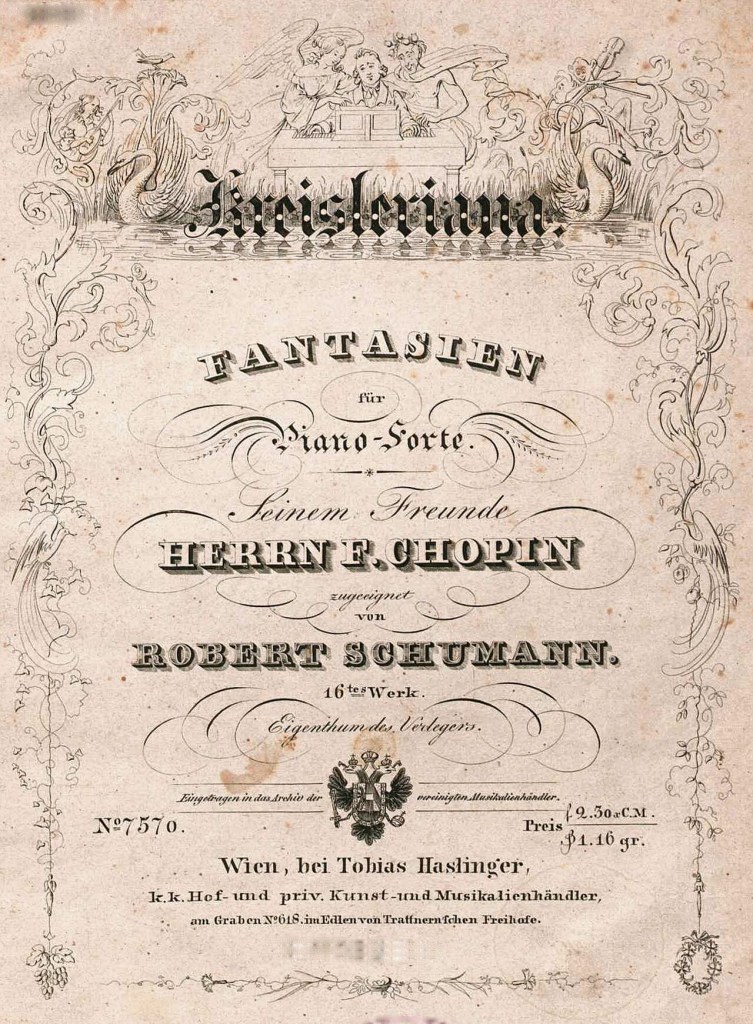
- Äußerst bewegt (Extremely animated),
- Sehr innig und nicht zu rasch (Very inwardly and not too quickly), This movement in ABACA form, with its lyrical main theme includes two contrasting intermezzi . In his 1850 edition, Schumann extended the first reprise of the theme by twenty measures in order to repeat it in full.
- Sehr aufgeregt (Very agitated),
- Sehr langsam (Very slowly),
- Sehr lebhaft (Very lively),
- Sehr langsam (Very slowly),
- Sehr rasch (Very fast),
- Schnell und spielend (Fast and playful), G minor. Schumann used material from this movement in the fourth movement of his first symphony
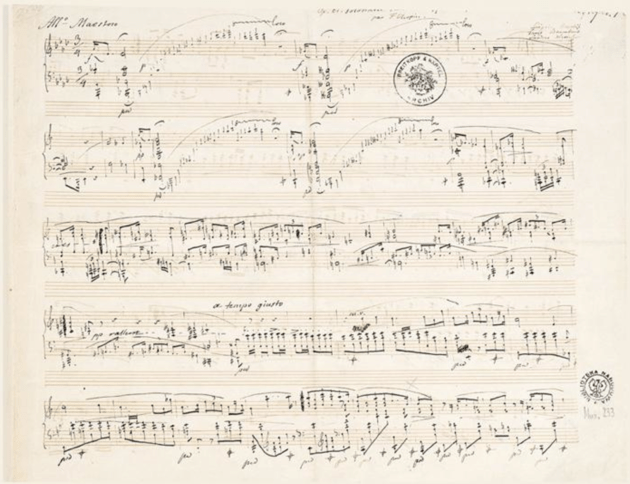
The Polonaise-fantaisie op 61 Is dedicated to Mme A. Veyret,and was written and published in 1846 in late autumn: in Paris, London and Leipzig. Its shape and its style caused much consternation. It was quite some time before listeners could come to terms with it and appreciate that ‘the piano speaks here in a language not previously known’.Liszt’s opinion of the work, expressed in his controversial monograph from 1852 did a great deal of damage, stating that the Polonaise-Fantasy was dominated by ‘an elegiac tristesse ….punctuated by startled movements, melancholic smiles, unexpected jolts, pauses full of tremors, like those felt by somebody caught in an ambush, surrounded on all sides…’. Frederick Niecks’s stated that the Polonaise-Fantasy ‘stands, on account of its pathological contents, outside the sphere of art’.It was slow to gain favour with musicians, due to its harmonic complexity and intricate form.One of the first critics to speak positively of the work, writing in 1947 stated that it “works on the hearer’s imagination with a power of suggestion equaled only by the F minor Fantasy op 49 or the fourth Ballade op 52”, Justice was rendered to it as a wonderful poetical vision expressed in the language of a grand pianistic poem by great pianists such as Horowitz, Rubinstein ,Cortot and Richter.Arthur Hedley, writes about the ‘spirit that breathes’ in Chopin’s polonaises: ‘pride in the past, lamentation for the present, hope for the future’.
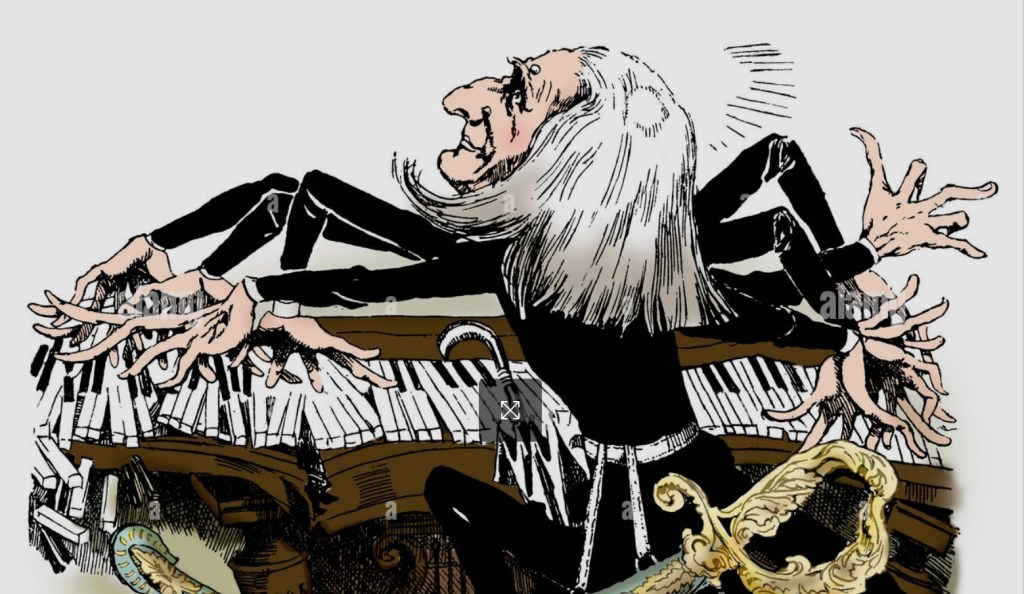
Hungarian Rhapsody No. 2 in C-sharp minor, S 244/2 is the second in a set of 19 Hungarian Rhapsodies by Liszt ,published in 1851, and is by far the most famous of the set.
Franz Liszt was strongly influenced by the music heard in his youth, particularly Hungarian folk music, with its unique gypsy scale , rhythmic spontaneity and direct, seductive expression. These elements would eventually play a significant role in Liszt’s compositions. Although this prolific composer’s works are highly varied in style, a relatively large part of his output is nationalistic in character, the Hungarian Rhapsodies being an ideal example.
Composed in 1847 and dedicated to Count Laszlo Teleki Hungarian Rhapsody No. 2 was first published as a piano solo in 1851 by Bartholf Senufo .Its immediate success and popularity on the concert stage led to an orchestrated version, arranged (together with five other rhapsodies) in 1857–1860 by the composer in collaboration with Franz Doppler , and published by Schuberth in 1874–1875. In addition to the orchestral version, the composer arranged a piano duet version in 1874, published by Schuberth the following year.
Offering an outstanding contrast to the serious and dramatic lassan, the following friska holds enormous appeal for audiences, with its simple alternating tonic and dominant harmonization, its energetic, toe-tapping rhythms, and breathtaking “pianistics”.
Most unusual in this composition is the composer’s invitation for the performer to perform a cadenza , although most pianists choose to decline the invitation.Rachmaninov wrote a famous cadenza for his interpretation. Liszt himself wrote several cadenzas for his pupils’ performances of the piece,but they were rarely performed.Other pianists have arranged their own versions of the Rhapsody with changes beyond that of simply adding a cadenza, most notably Horowitz in 1953.
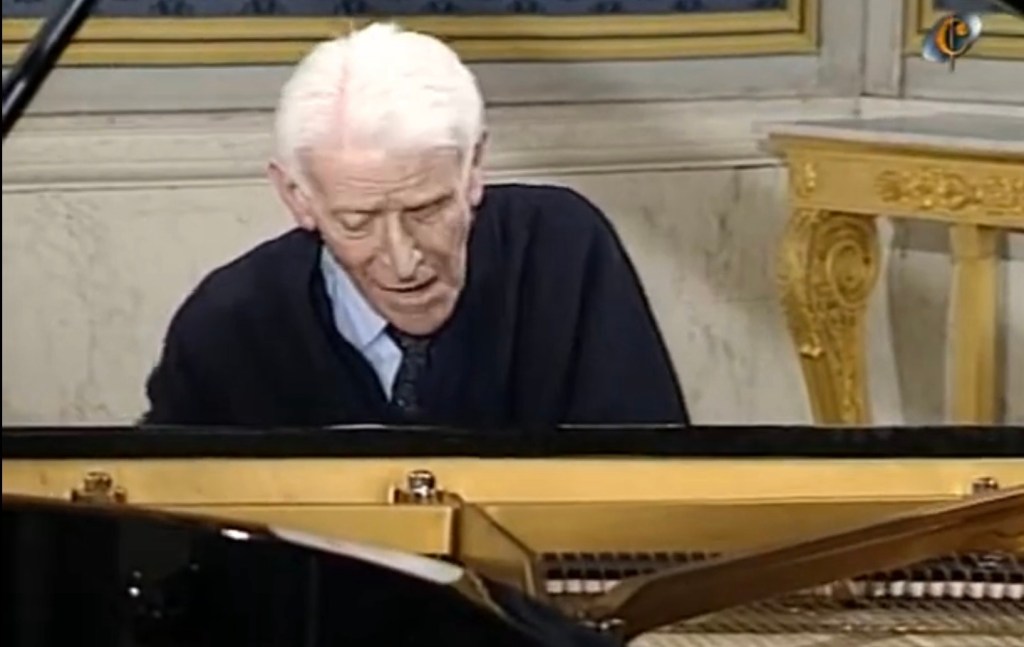
Vladislas “Vlado” Perlemuter (26 May 1904 – 4 September 2002) was a Lithuanian-born French pianist and teacher. Vlado Perlemuter.
https://christopheraxworthymusiccommentary.com/2023/12/05/ileana-and-joan-3rd-december-2023/

A friend ,Antonio Lizzi , sent me this CD that was signed after one of Vlado’s many concerts in Rome for my Euromusica Series .He reminded me that today would have been Vlado’s 120th birthday
Andrzej Wiercinski at La Mortella Ischia The William Walton Foundation – Refined artistry and musical intelligence in Paradise
 ChristopherAxworthy-MusicCommentary