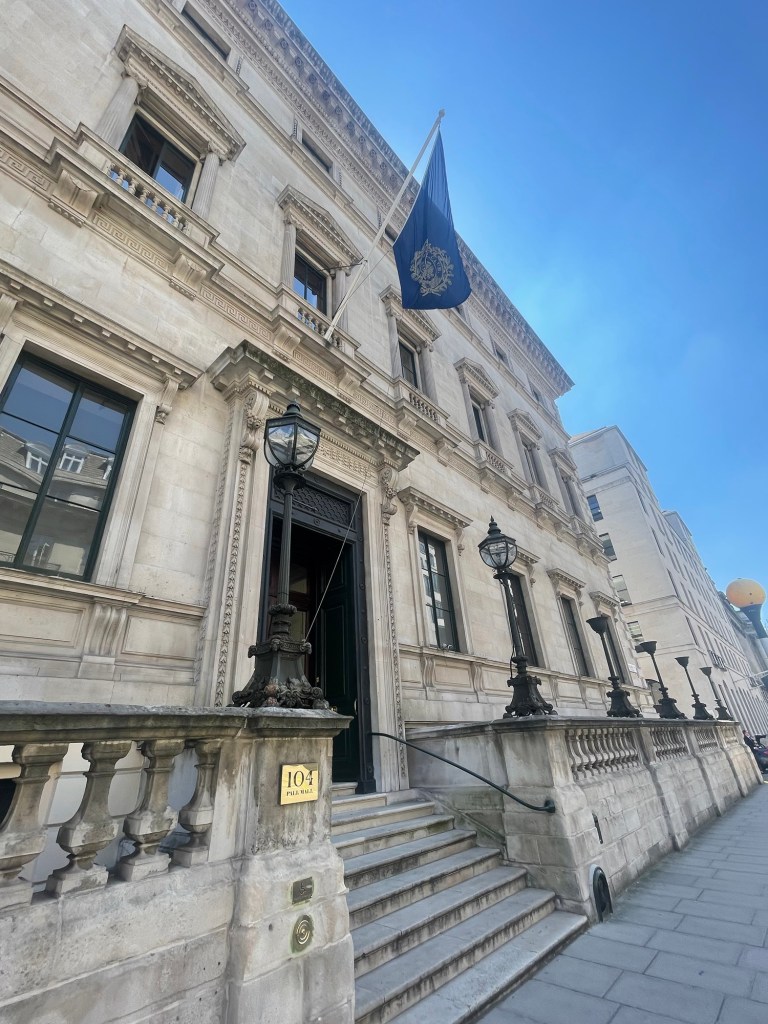
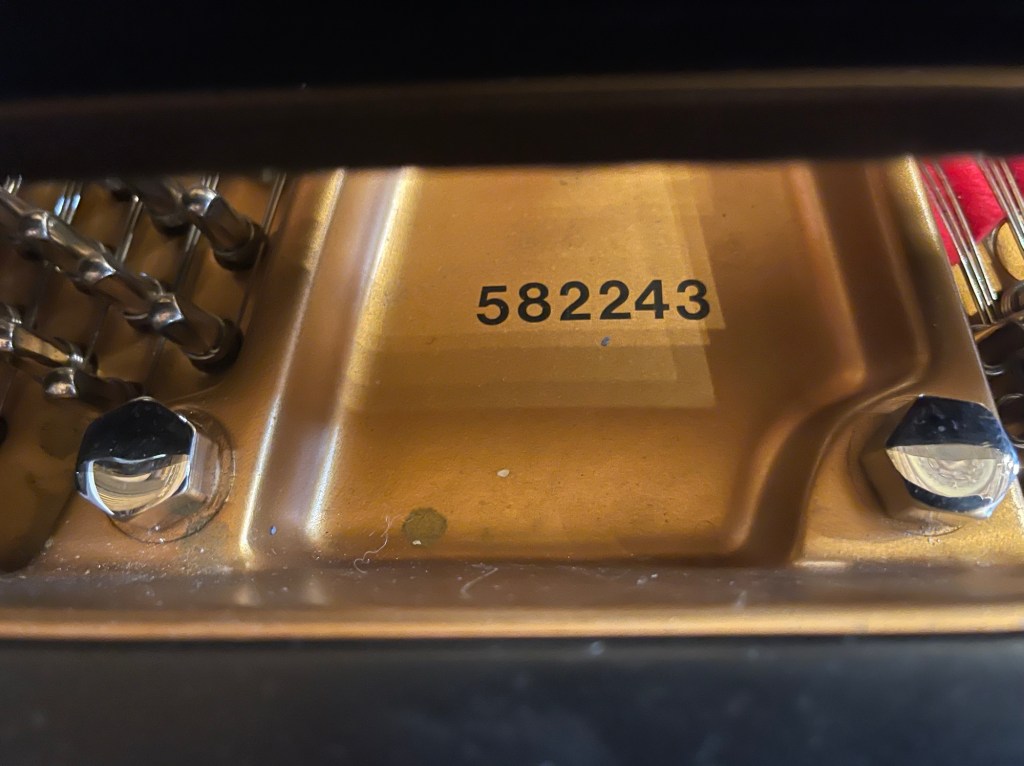
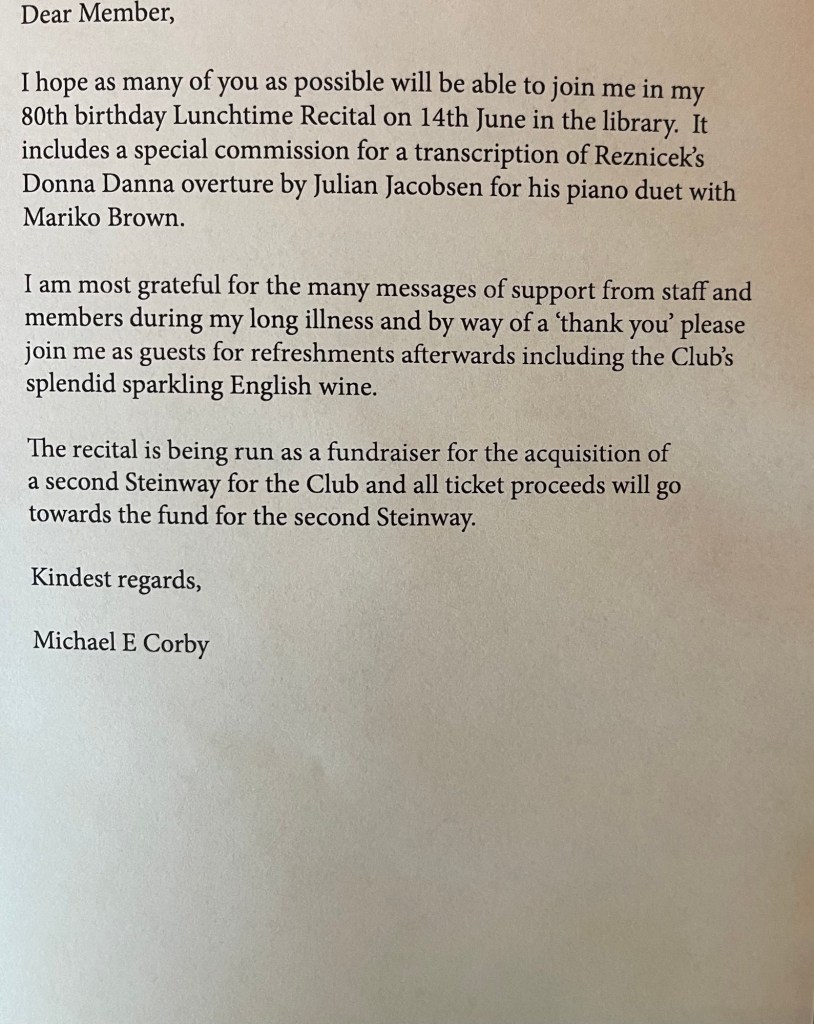
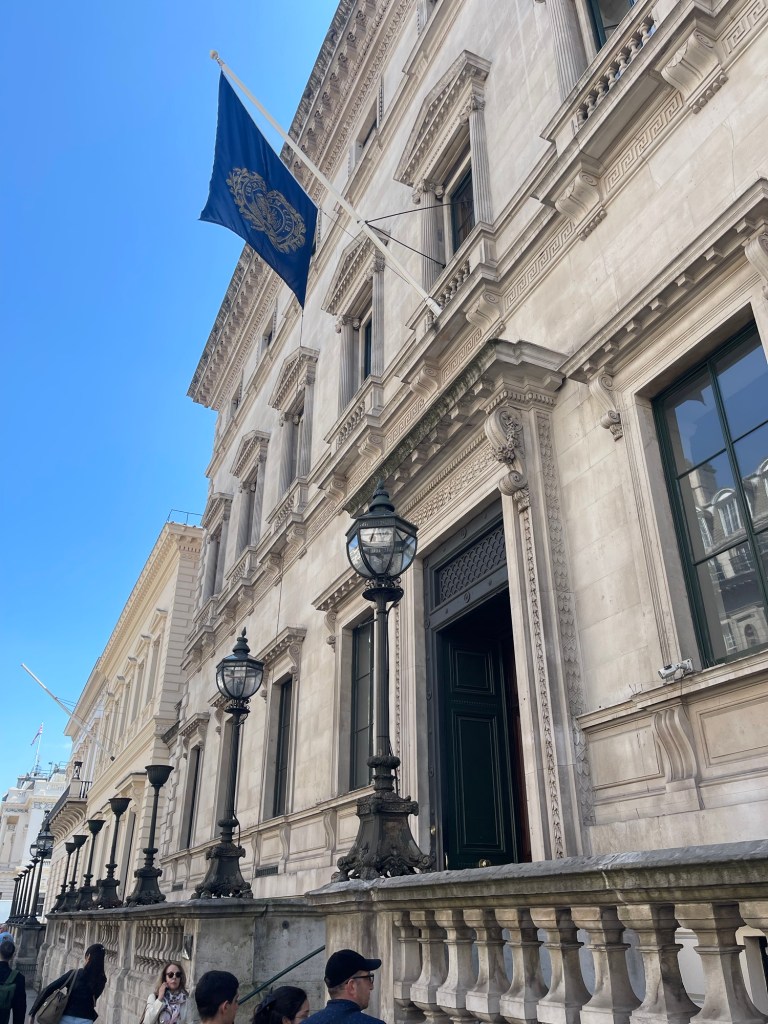
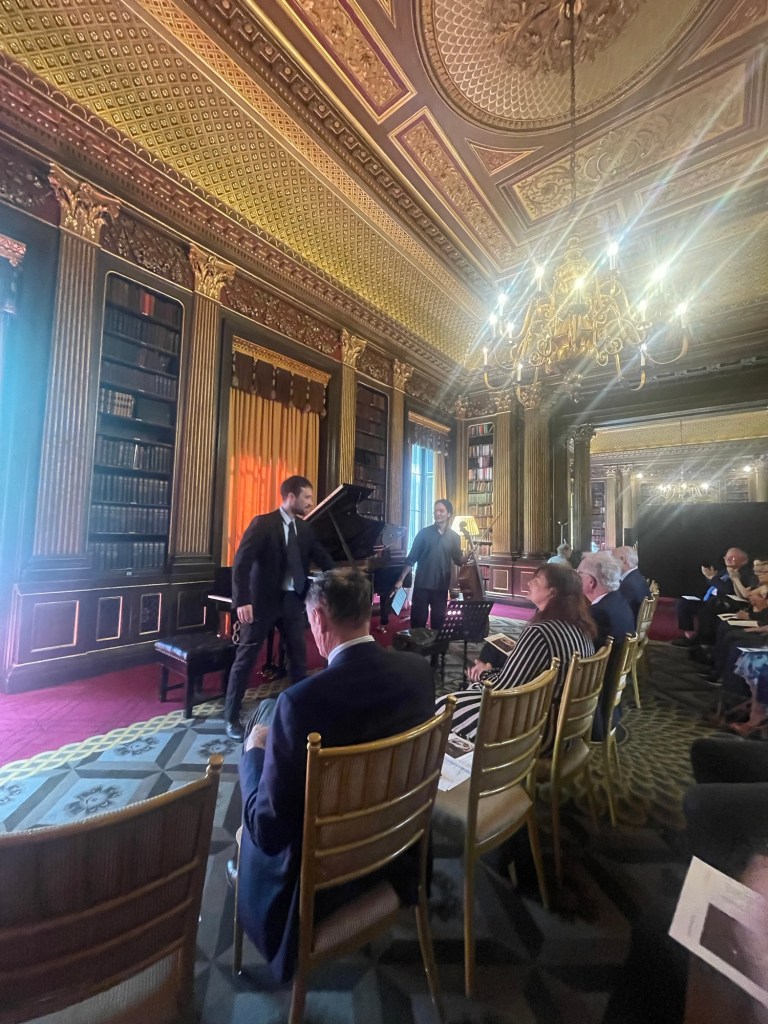
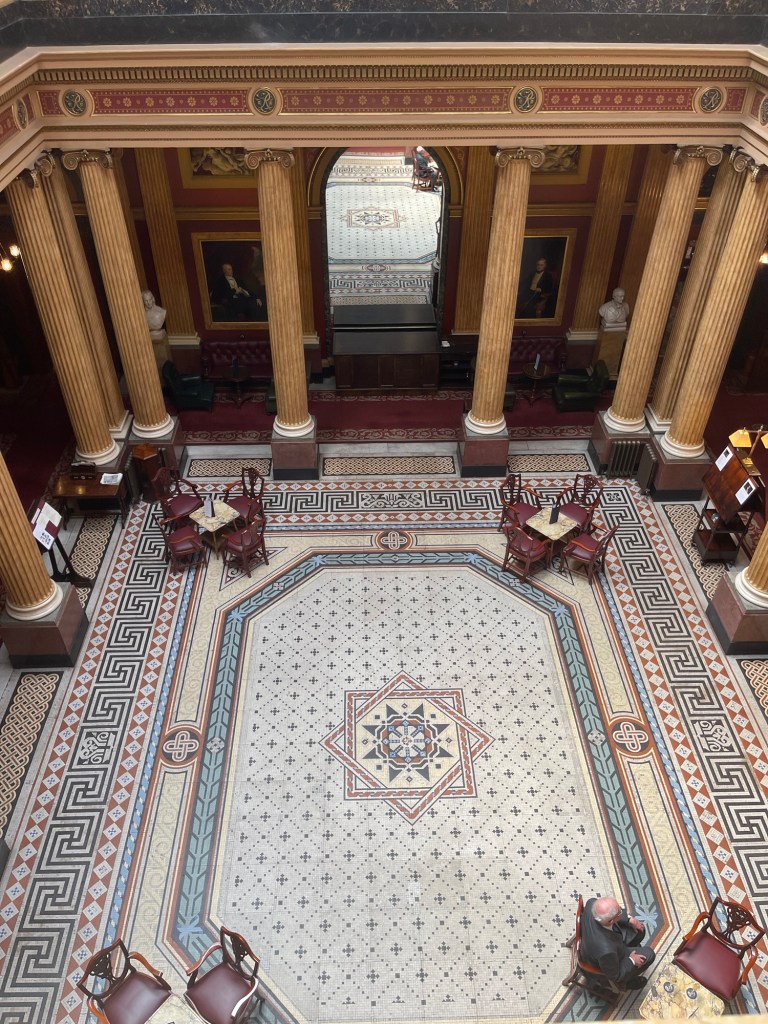
All set at the Reform Club to be welcomed by the indomitable Michael Corby who is dedicating his 80th birthday celebrations on the 14th June to funding a twin for the magnificent ex Wigmore Steinway that has now found a truly glorious retirement home.
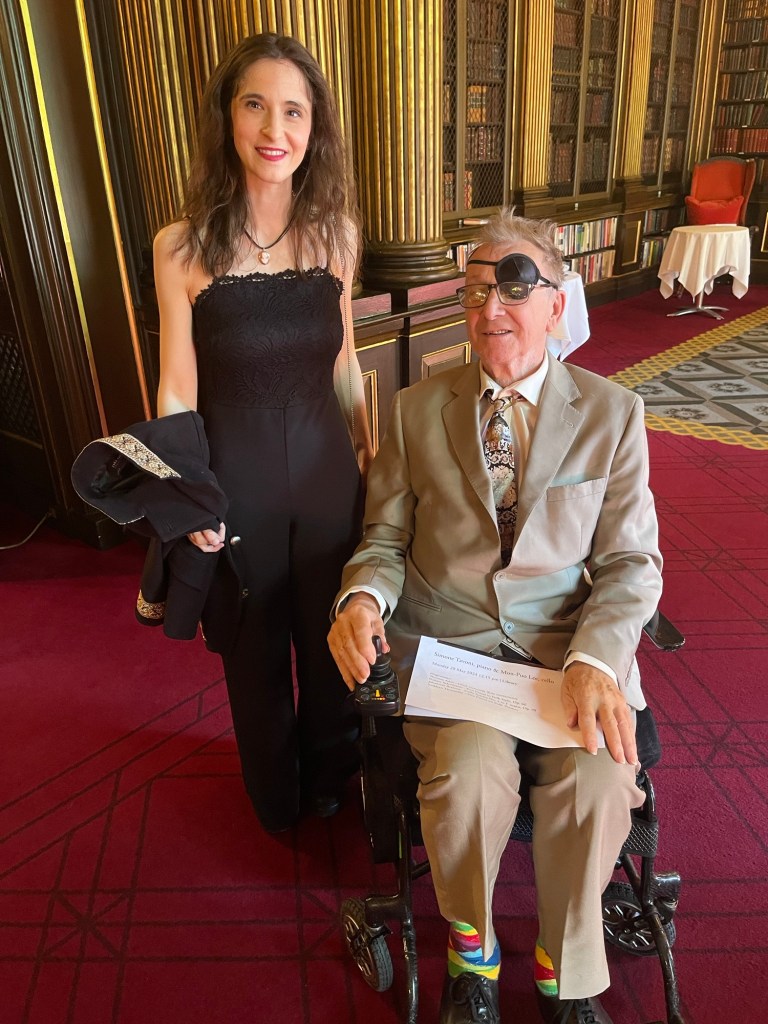
Michael has had a miraculous escape and highly recommends leaving the hot water tap on before going to bed!
His passion for music has surmounted all obstacles and his presence at the Reform Club is a guarantee of sumptuous music making.

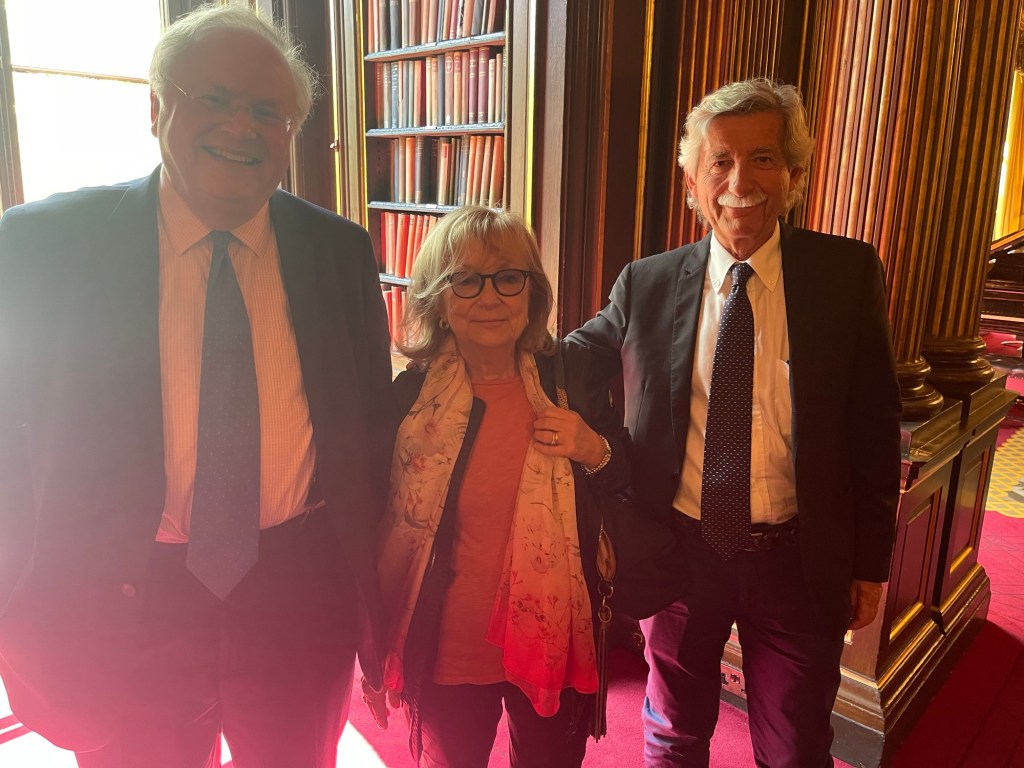
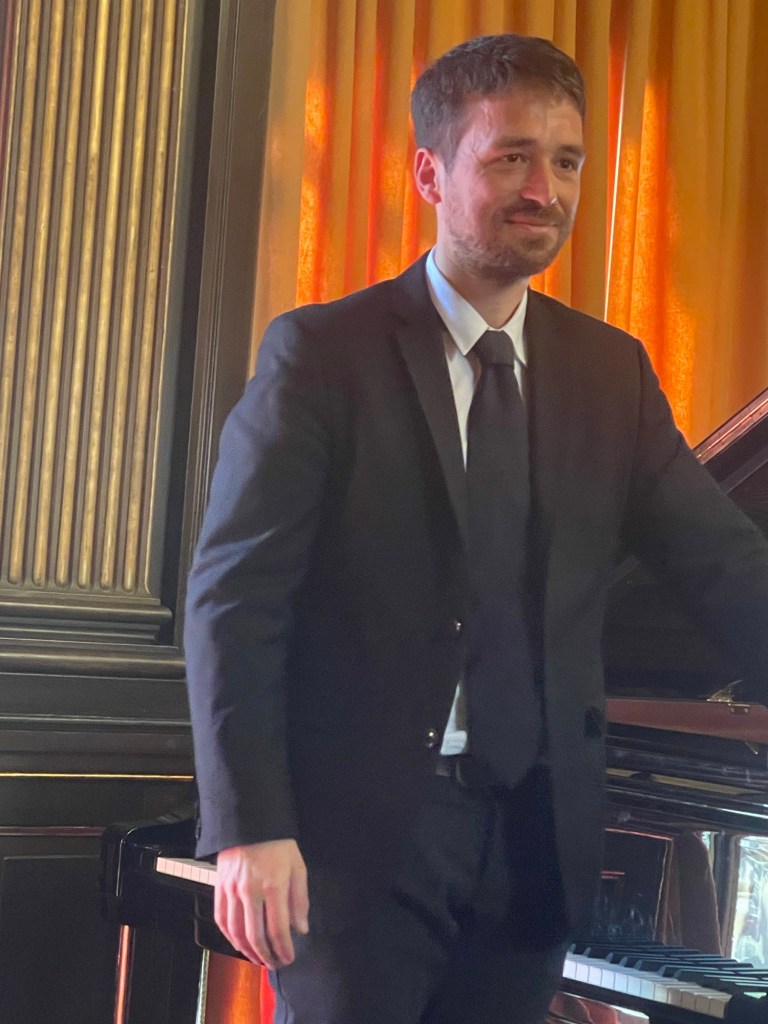
Simone Tavoni had told me of a brief tour with a young cellist who had also played in his bi- annual festival in Spain. Simone’s parents, both distinguished doctors in Tuscany and his fiancée from Budapest had flown in especially for this week of sumptuous music making
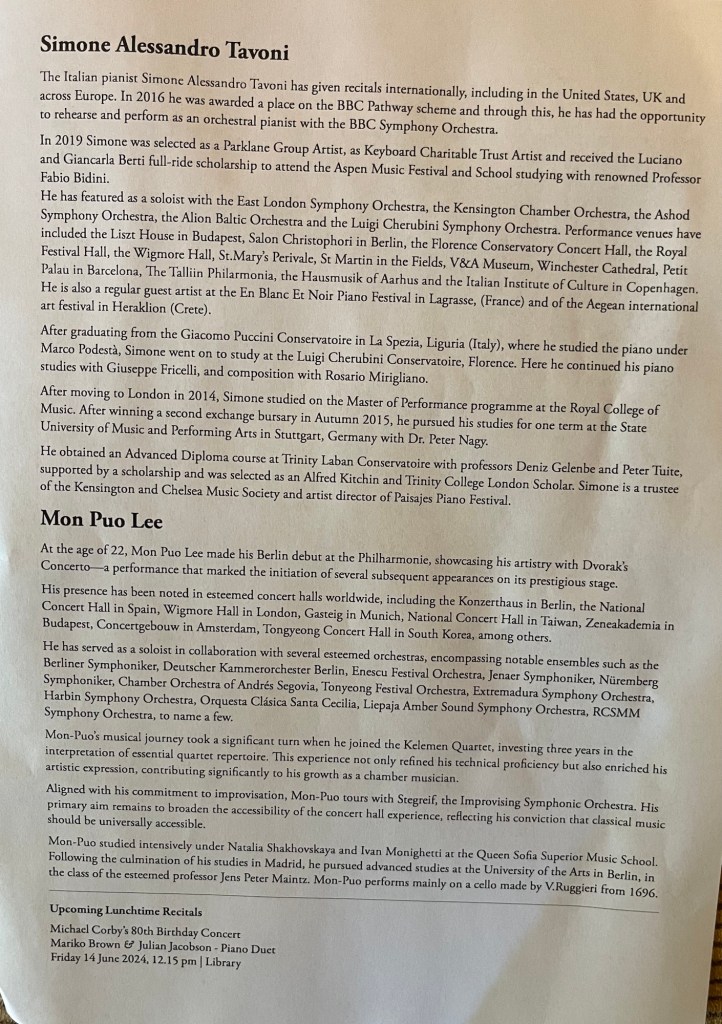
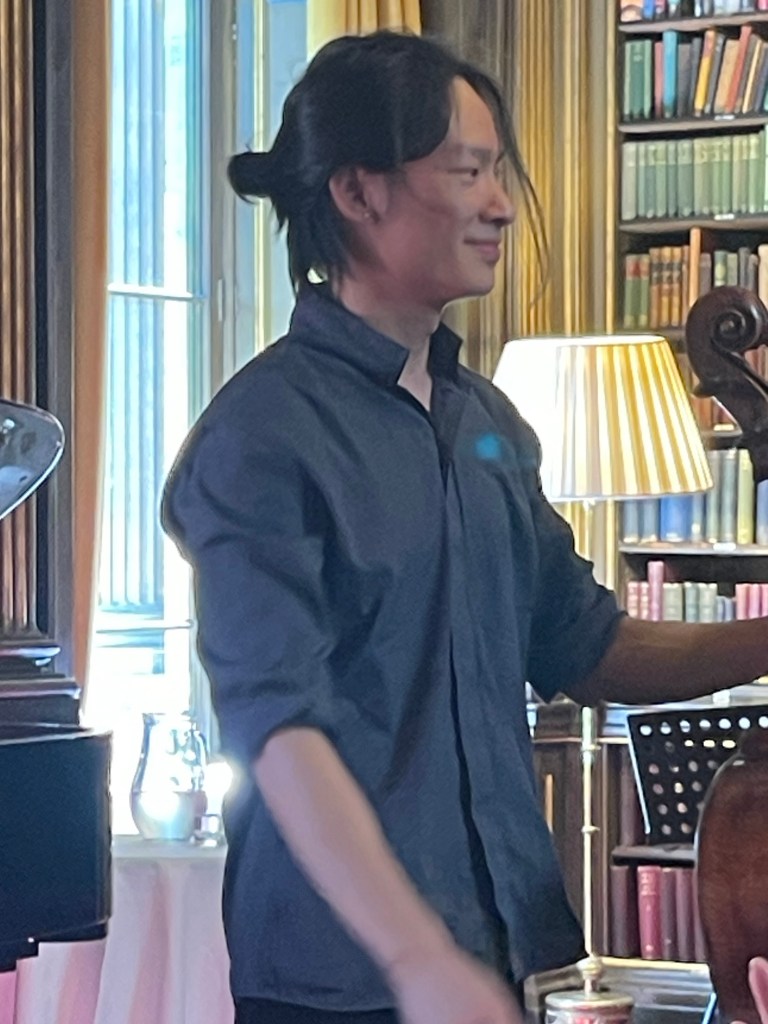
Simone had told me Mon- Puo Lee was good but he did not tell me how good!
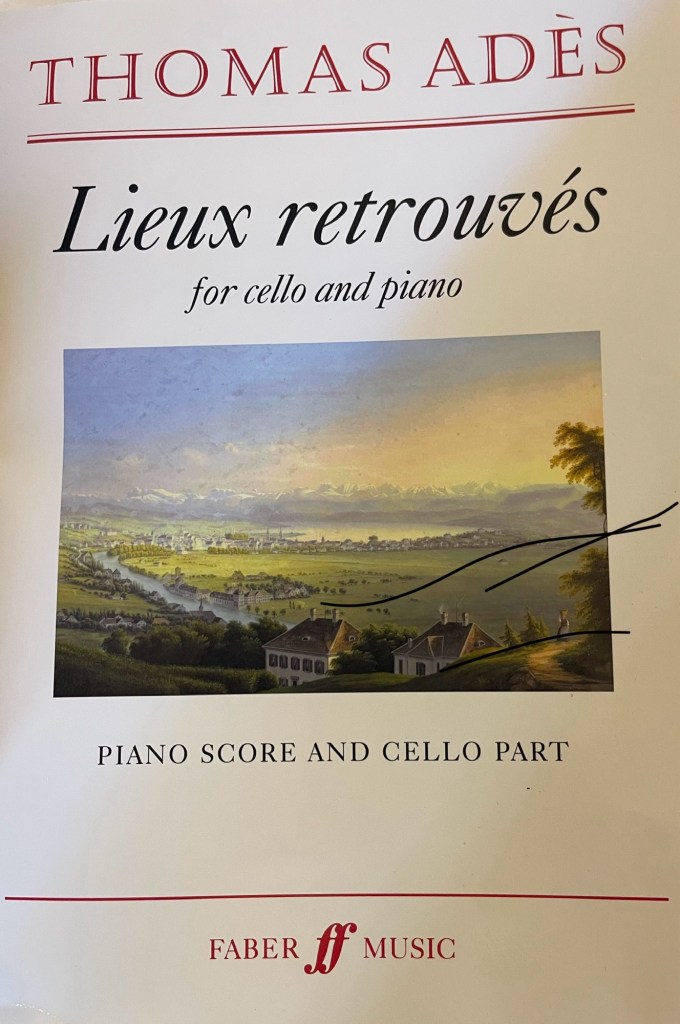
There was magic from the first ethereal sounds from the extraordinary world that Ades inhabits.
‘Les champs’ is the third of four movements of Thomas Adès ‘Lieux Retrouvés’ and is an atmospheric piece of whispered sounds. Deep bass notes from the piano just create even more mystery for a piece searching its way ever more secretly as it reaches for the infinite ,and probably the highest register the cello has ever been asked to reach ………finally silence with our ears now ready to listen as sounds were not projected out but it was we that were enticed in to this magic world of Adès. An extraordinary tour de force to open a programme with such stillness and intensity that requires a transcendental technique from the cellist to be able to sustain and maintain such sounds without ever risking a split or misplaced note.
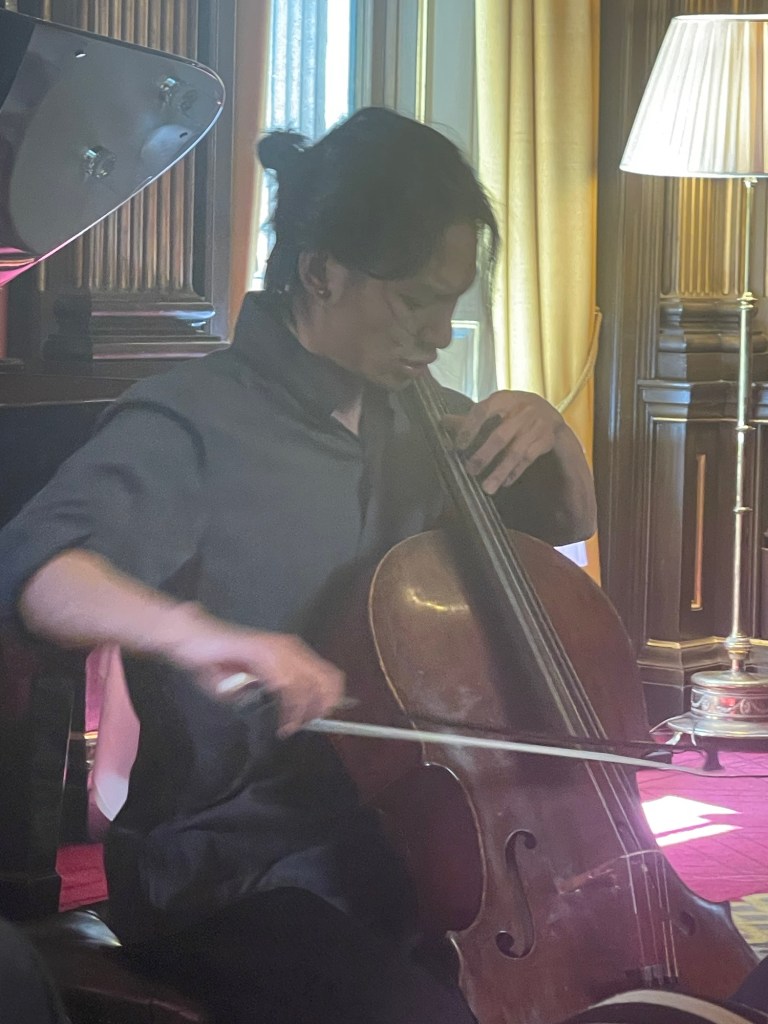
An intensity that is rarely encountered and Mon-Puo like a cat about to pounce listening and watching to see which way he could jump.
A cat on a hot tin roof but a cat that is above all one of the finest young cellists of his generation.

I have only seen this recently with Peter Frankl and the Kelemen Quartet in the Liszt Academy in Budapest.
Peter the Great- Peter Frankl with the Kelemen Quartet in Budapest
It is a burning intensity that is hypnotic as it casts a spell where a voyage of discovery is a journey together into a world of dreams.I was fascinated to read in the CV after making what turned out to be a prophetic comment : ‘Mon-Puo’s musical journey took a significant turn when he joined the Kelemen Quartet, investing three years in the interpretation of essential quartet repertoire. This experience not only refined his technical proficiency but also enriched his artistic expression, contributing significantly to his growth as a chamber musician.’!!!!
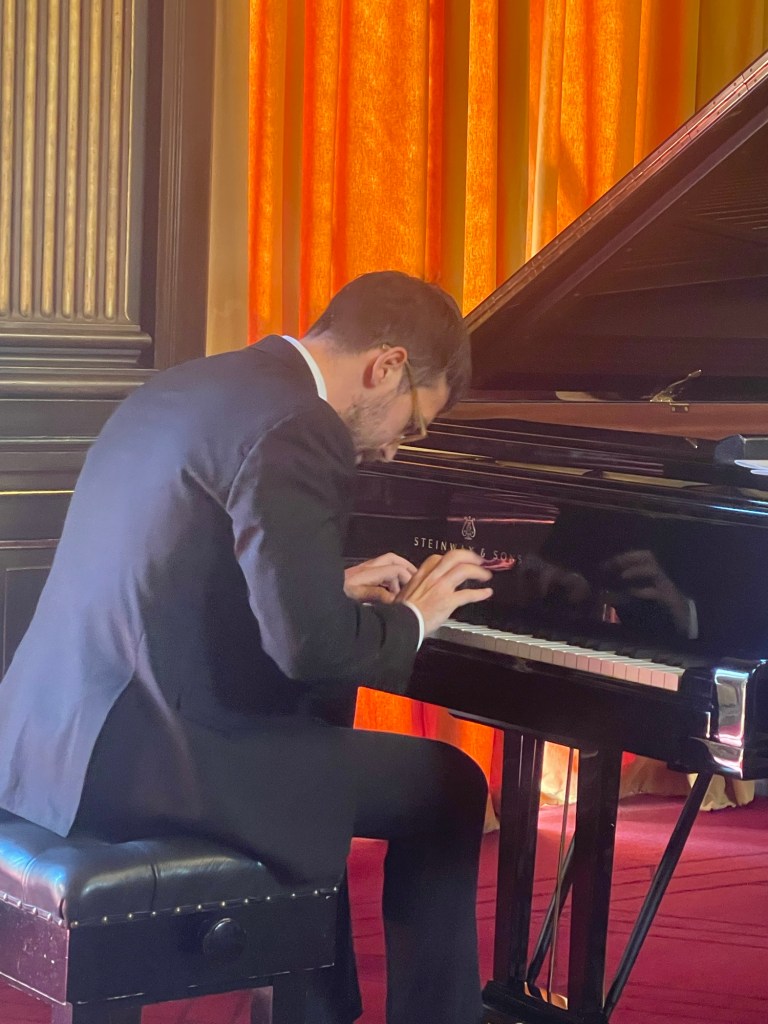
There was scintillating brilliance from Simone with four Scarlatti sonatas of radiance and sparkling vitality. A rhythmic drive and clarity to the first but also delicacy with ornaments that sparkled like jewels on this superb Steinway.The second was of a brilliance as one hand was answered by the other in a scintillating cascade of notes of great character. There were beautiful harmonic sequences where notes became but moving living sounds of colour.The third was of ravishing beauty with a melodic line of beseeching cries of gentle insinuation and a continual outpouring of secret sounds of pregnant beauty. A Spanish dance erupted with the fourth sonata with its riveting animal drive and clashing dissonances all played with scintillating drive and electric energy.
Mon-Puo Lee played the third movement, ‘Allegro Molto vivace’ ,from Kodaly’s monumental solo Sonata op 8 of 1915 ,with a kaleidoscope of sounds of breathtaking audacity. A dynamic drive with the folkloristic idioms of a hundred different voices. A deep and passionate bass melodic line of searing intensity and a driving forward force of great virtuosity and tonal mastery
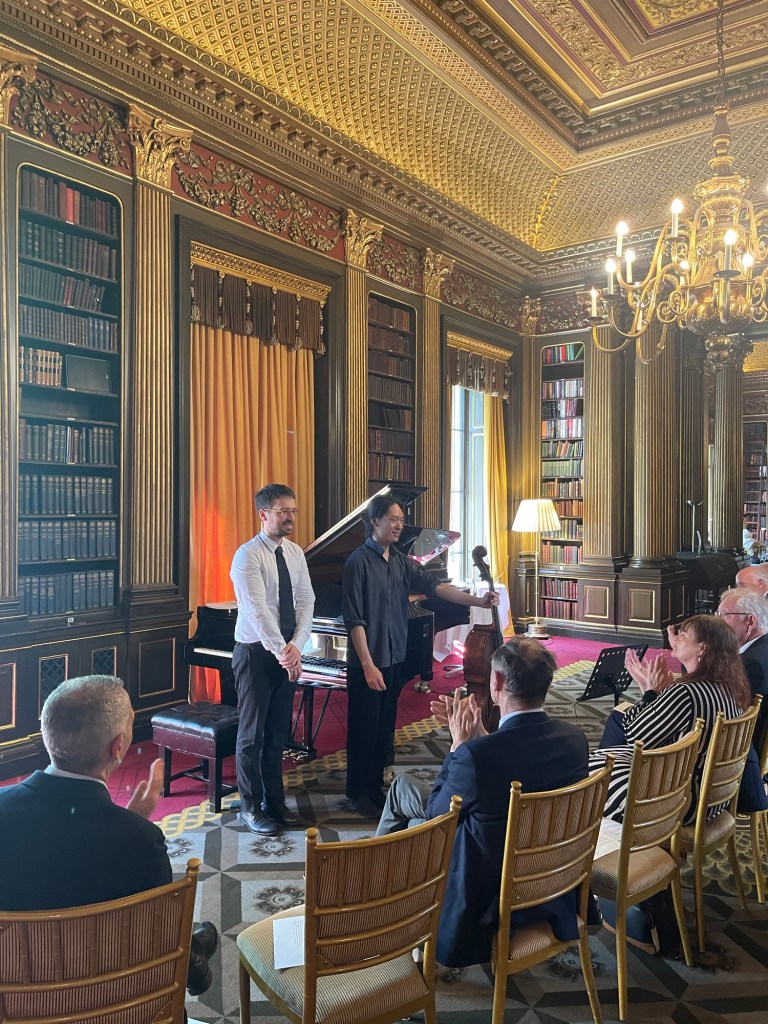
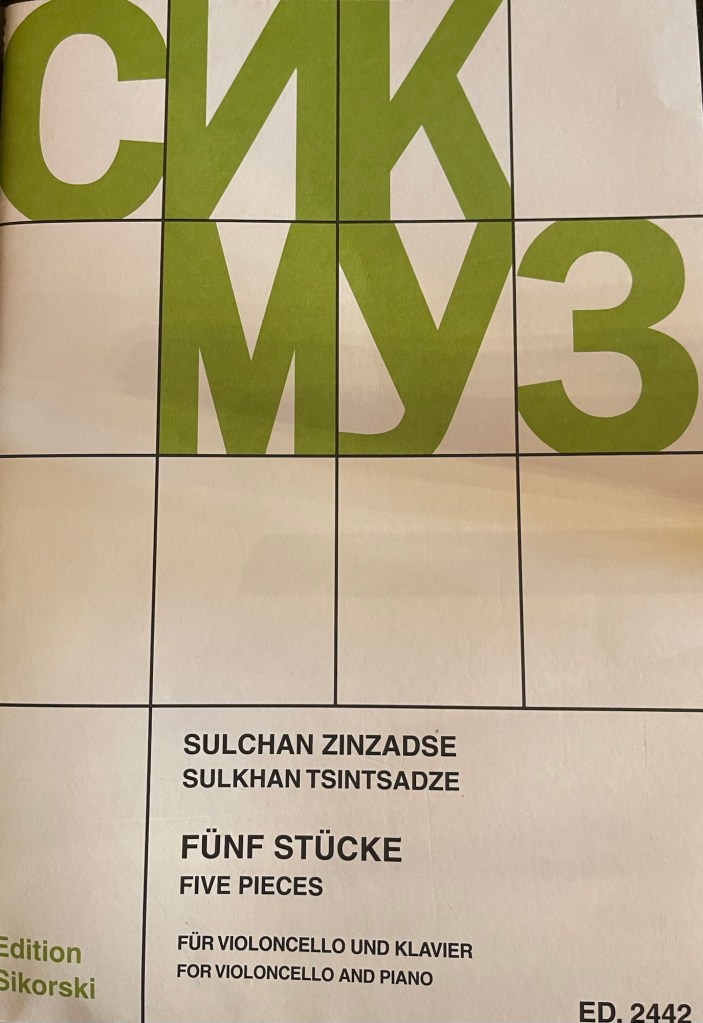
Sulkhan Tsintasadze’s Five Pieces on Folk Themes written in 1950 was the ideal way to lead us back to the duo before the final grandiose Brahms Sonata.A fine ensemble in pieces that are intricately spun by this Georgian composer – 1925-1991
1. Villain’s Song on a Carriage
2. Tchonguri (Chonguri)
3. Sachidao
4. Nana
5. Dance Tune
The first was an emotional outpouring of passionate significance.The second was a dance of beguiling drive for pizzicato cello solo.The third was teasingly dissonant with evident folk influence before breaking into a rumbustuous gypsy dance with a unexpectedly quixotic ending. Gentle flowing sounds on the piano open the fourth and creates the scene for a disarmingly simple folk melody on the ‘cello. Ending with high spirits of the fifth where the piano has much to say as they both dance to the end.
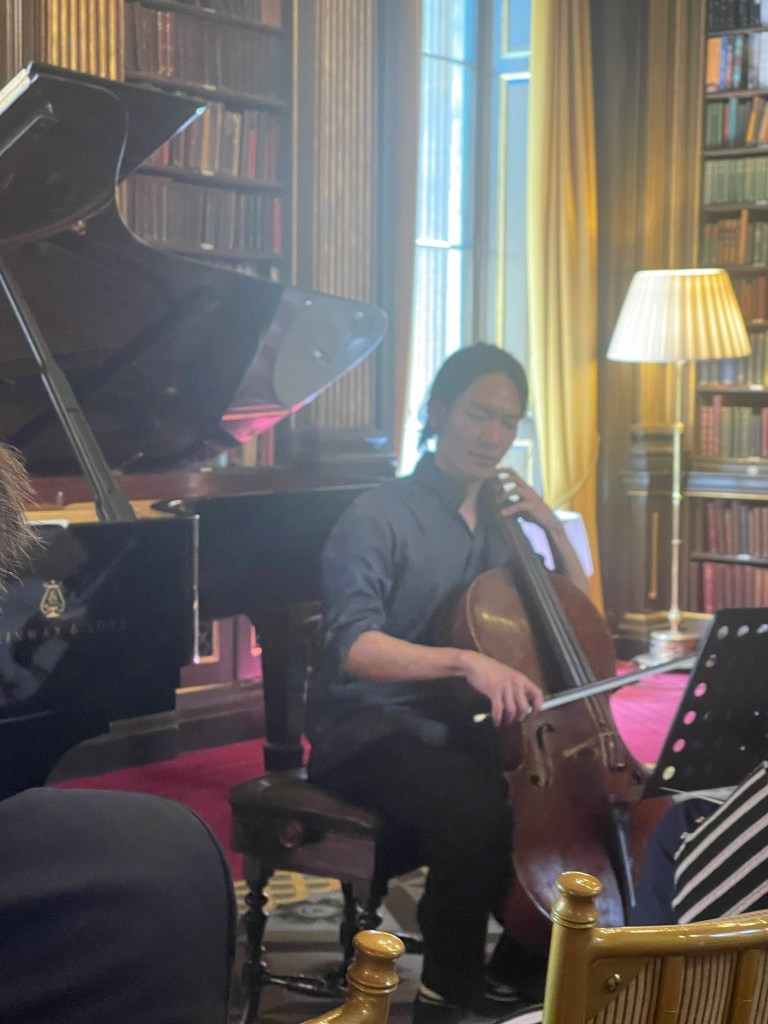
But it was in the Brahms F major Sonata that the two combined to produce a passionate and intense outpouring of orchestral sounds .A real dialogue between ‘cello and piano .Simone never overpowering even with the piano lid fully opened, and as Graham Johnson once quipped, it works because he knows how to drive! The cellist was enjoying too the open lid that could amalgamate and reflect their masterly playing into one unified whole directed at us the lucky recipients of such a feast.There was passion with the opening but also moments of sublime beauty and stillness as piano chords are placed over a mysterious vibrating bass creating an etherial world before unleashing the opening passion once more.There was an intensity and poignant beauty in the ‘Adagio affettuoso’ as the music was allowed to unfold with disarming simplicity in a dialogue between these two sensitive artists.Simone had his work cut out on the ‘Allegro passionato’ and rose heroically to the challenge as the music gathered ever more momentum only to expand into the trio of gloriously rich full sounds.There was a beautiful pastoral simplicity to the ‘ Allegro molto’ finale with its continual stream of notes passing so naturally from the ‘cello to the piano in a true dialogue between two such extraordinary artists.With the smell of the sumptuous cuisine from the restaurant wafting up to the library and was the sign to finish this ‘lunchtime’ concert with no time left for more on this occasion.
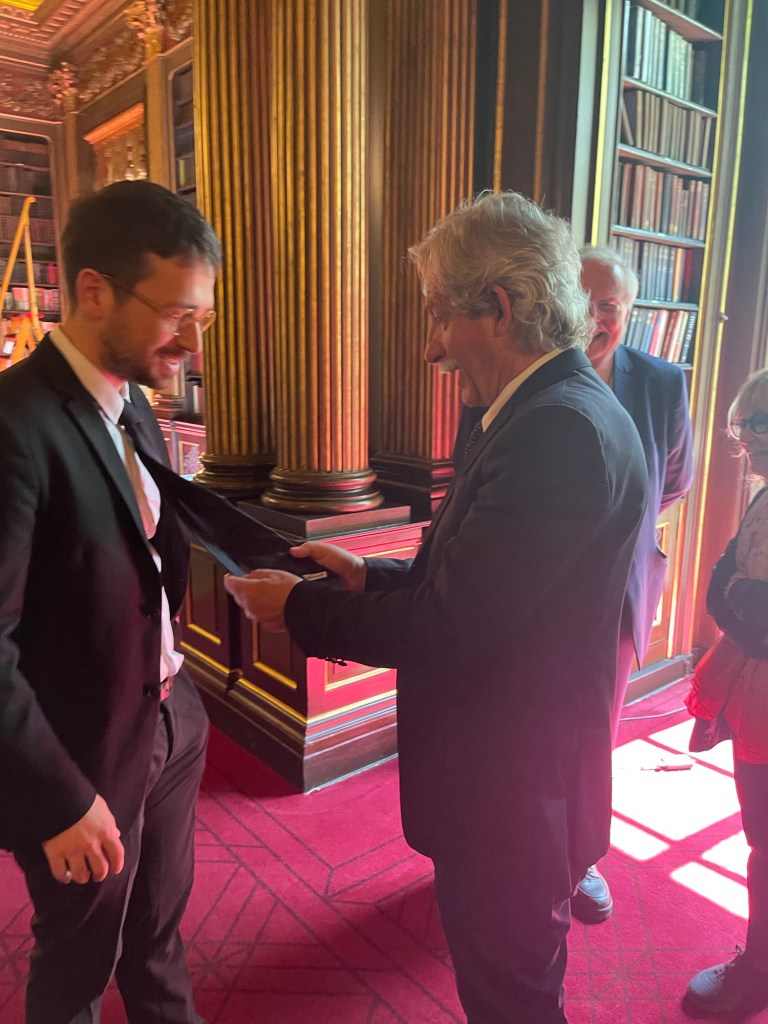
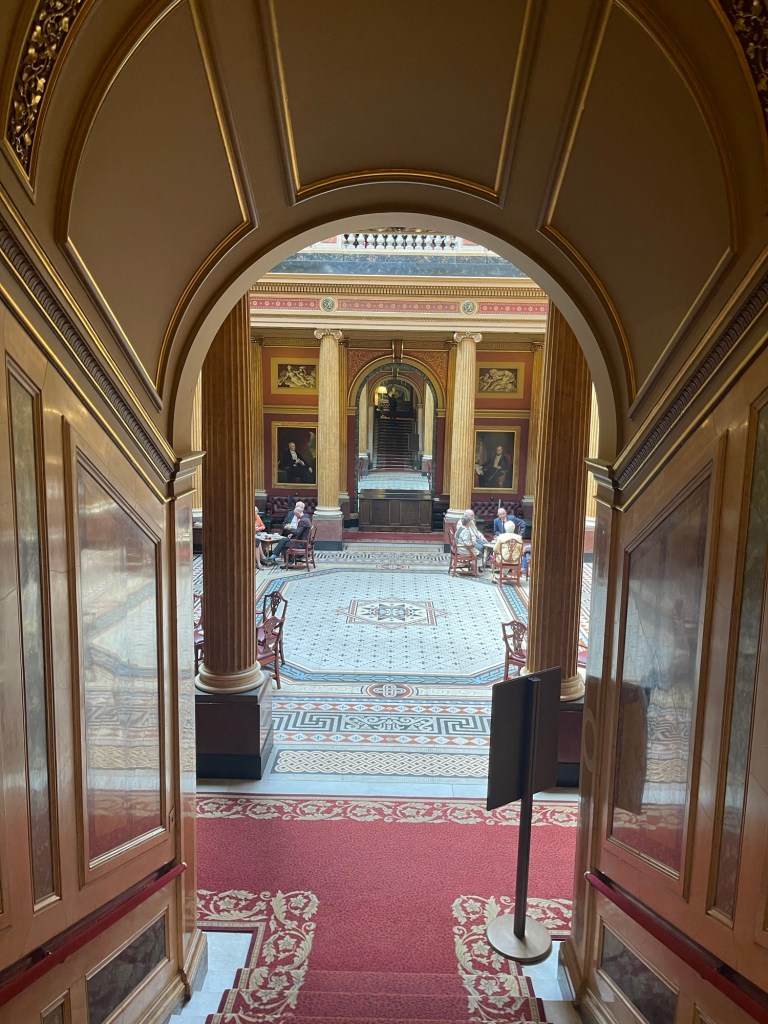
Extraordinary unexpected oasis of great music making in one of the most noble of clubs and where before the midday concert we exchanged views on designer ties as this is one of the last bastions insisting on a dress code .
Noblesse oblige if that is the key to paradise!

 ChristopherAxworthy-MusicCommentary