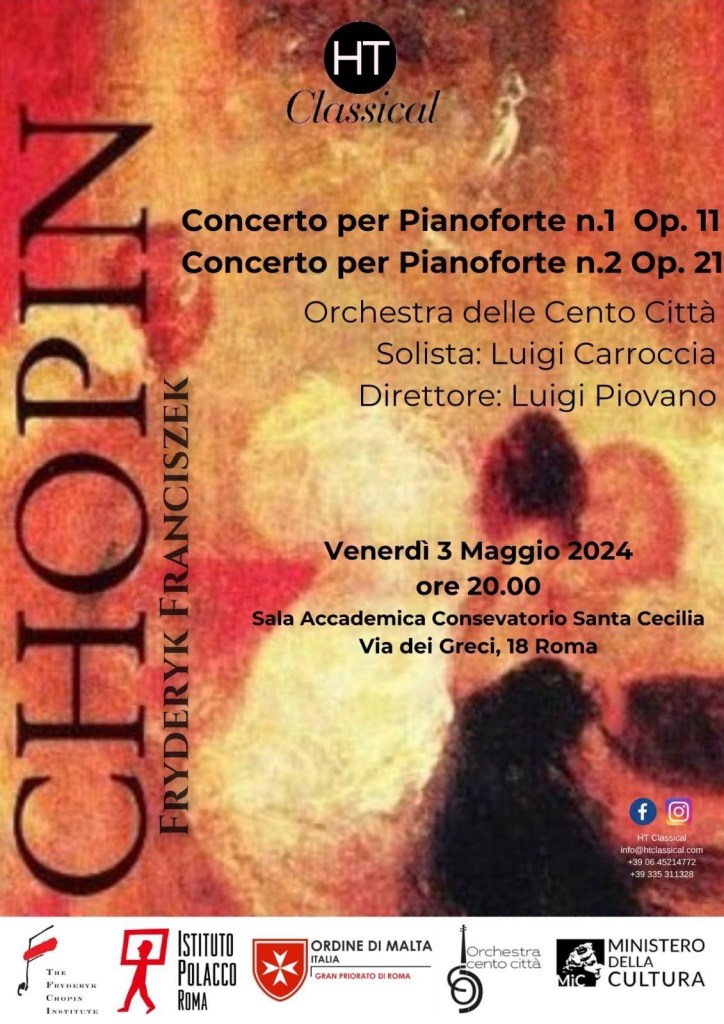
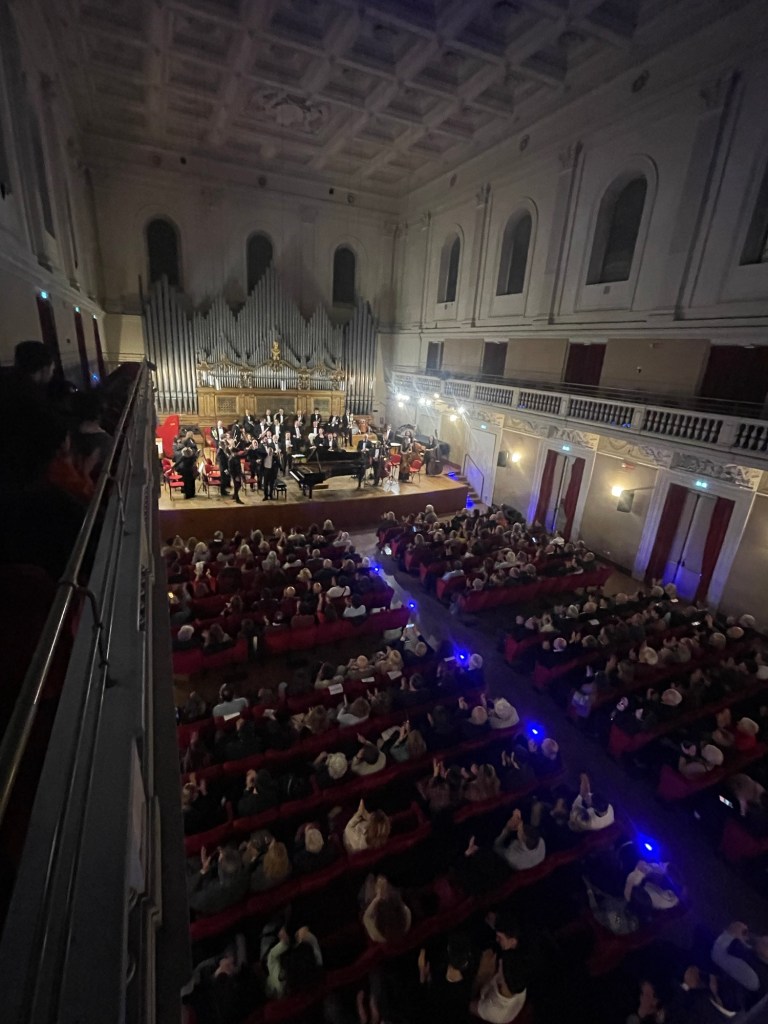
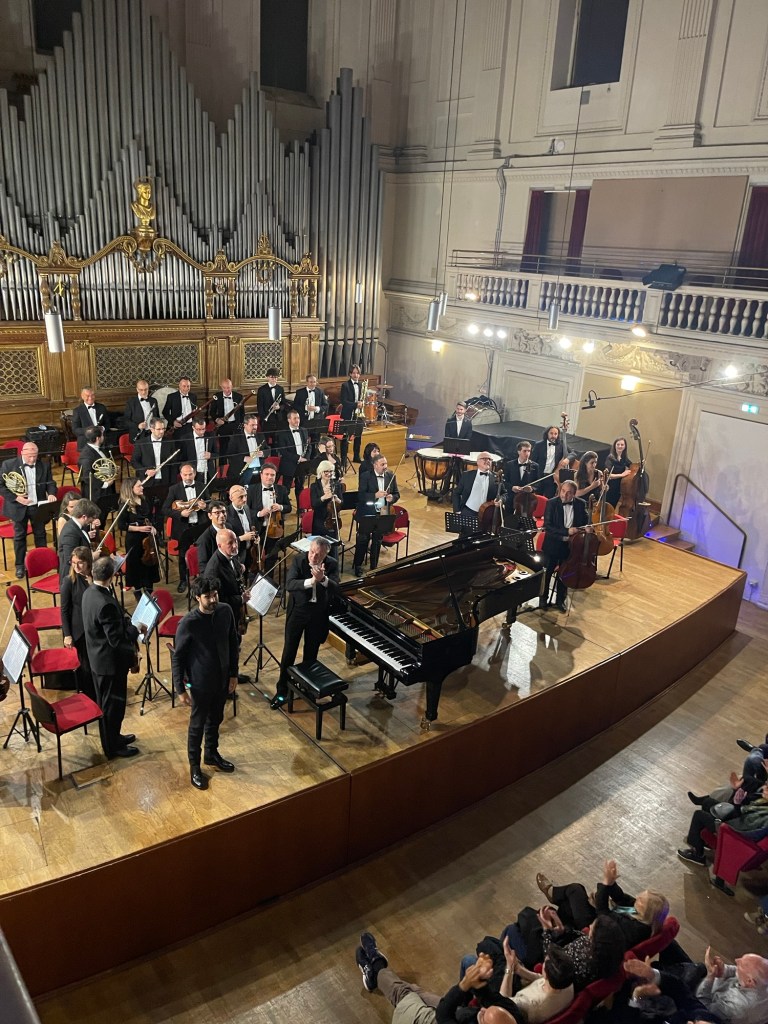
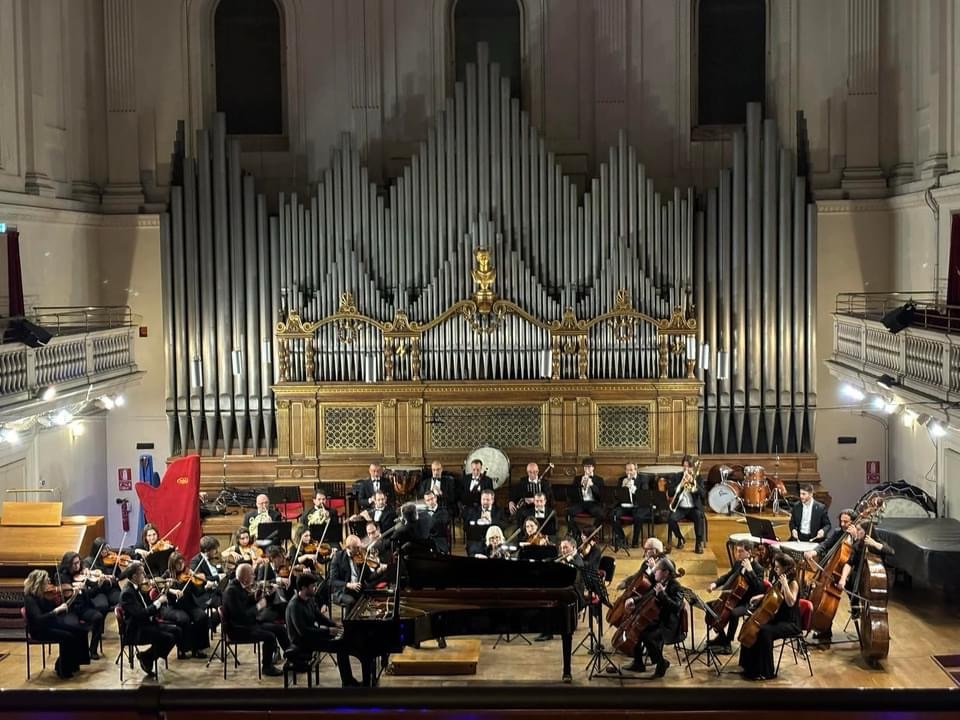
A poet of the keyboard with Luigi Carrochia showing us what it means to bring the Bel Canto back to this magnificent historic hall.
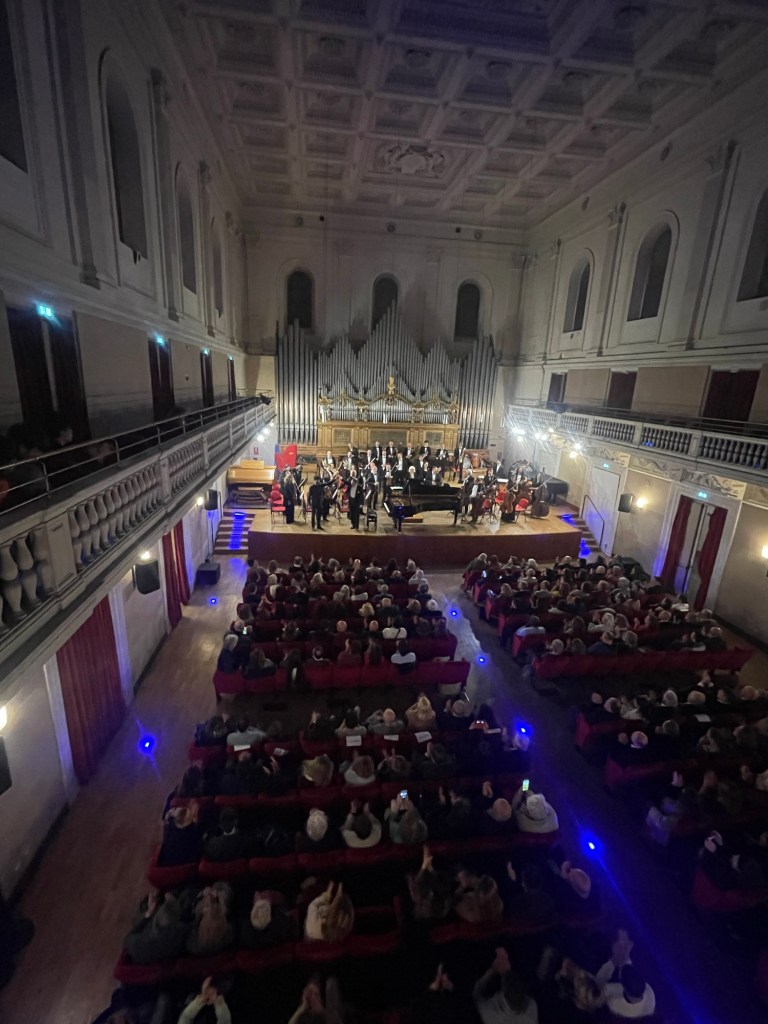
A scintillating display of brilliance and poetry where notes became streams of gold and Chopin’s glorious mellifluous outpourings became heart rending love letters shared with us with simplicity and refined aristocratic style .
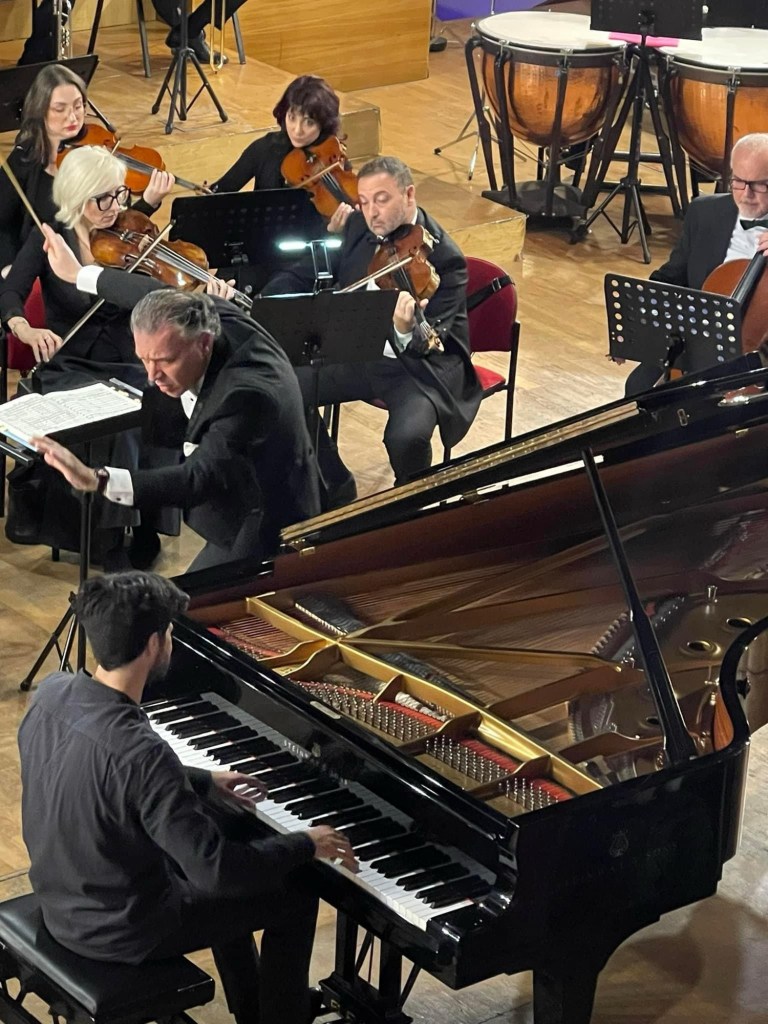
Luigi Piovano hovering like a golden eagle ready to pounce as he followed his fellow Luigi’s every move .
An orchestra inspired by such selfless music making made Chopin’s oft criticised orchestration a subtle blend of dynamic drive as well as creating a sumptuous velvet carpet on which the Luigi’s could place their glistening jewels .
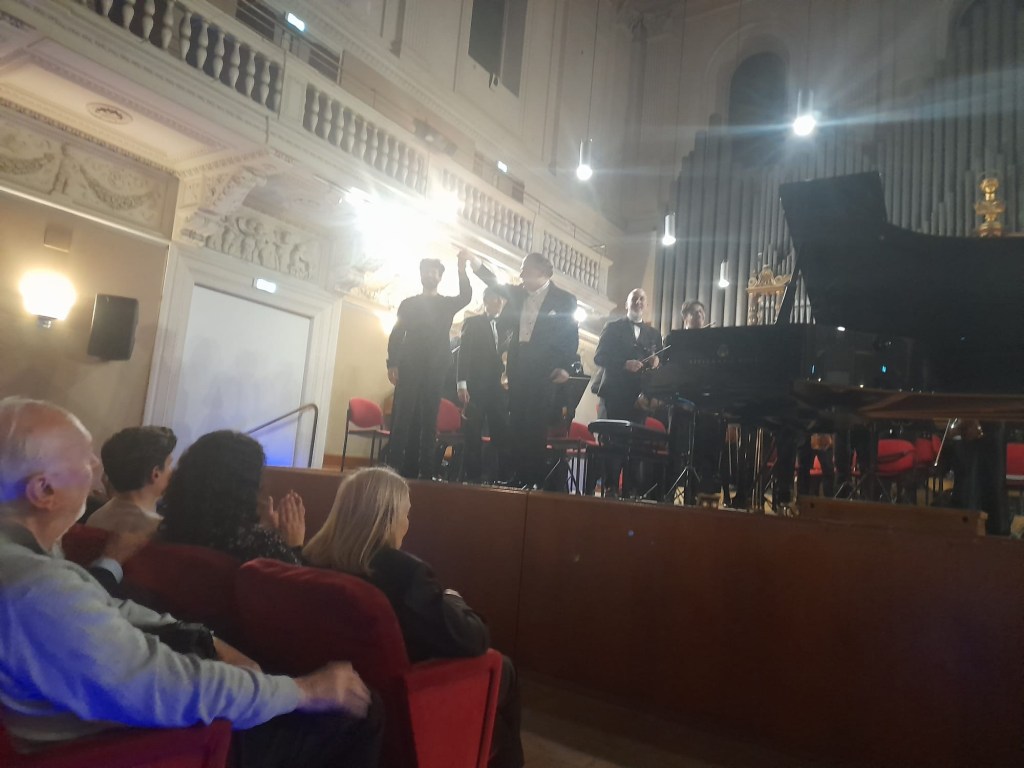
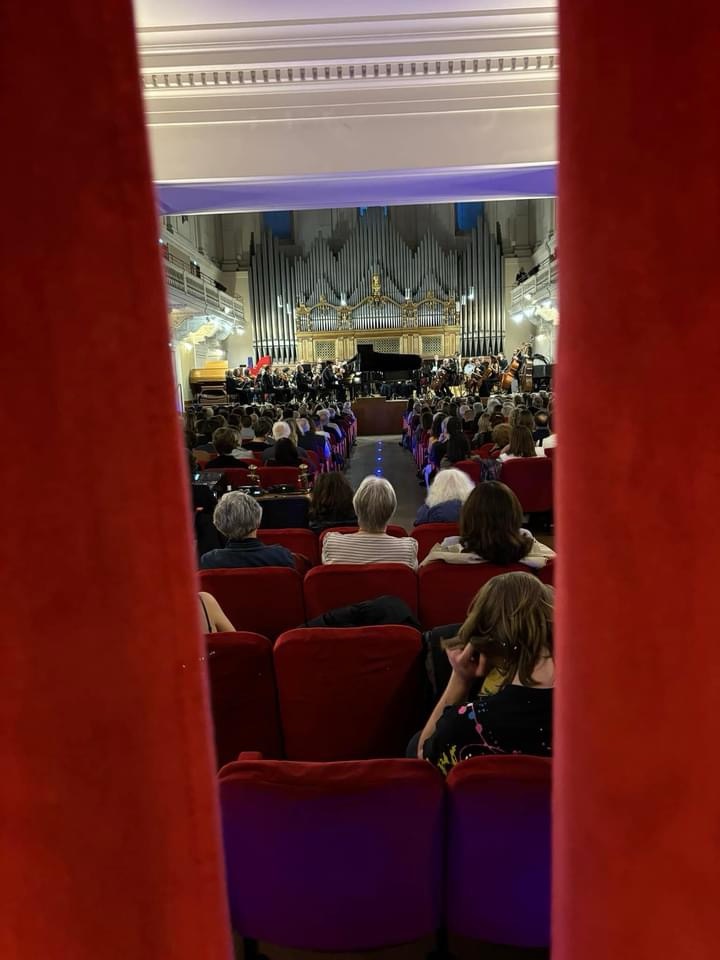
A hall full to the rafters with many illustrious guests not least Louis Lortie flown in especially from Berlin to cheer a musician he has helped to grow and mature into an artist who he is proud to call a colleague .
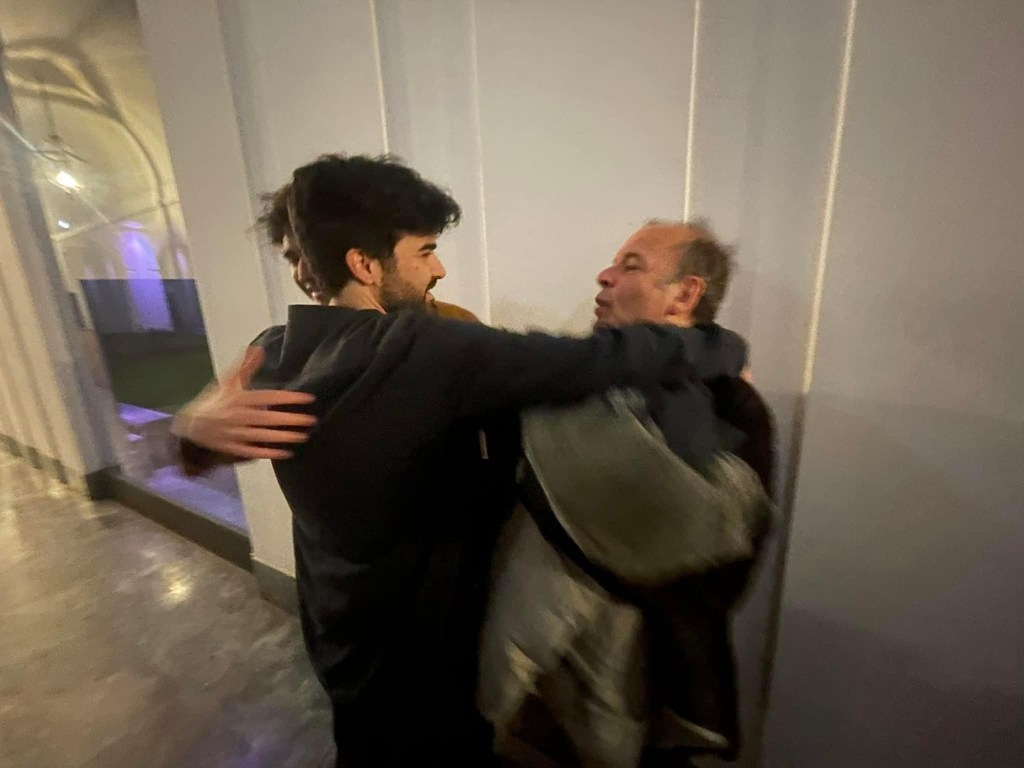
After two Chopin concertos with the public hungry for more Luigi was happy to be able to play just one more time the ravishing opening of the second movement of the second concerto.
What more could one add?
If music be the food of love please oh please play on !
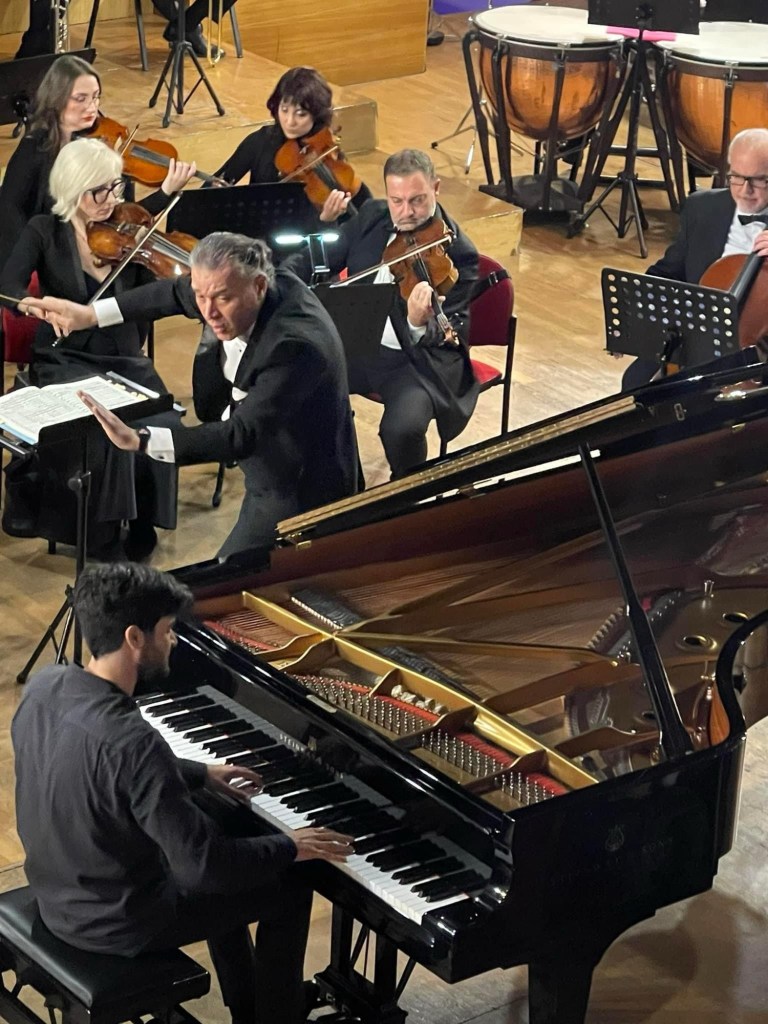
Beginning with the last of the two concertos number one in E minor is certainly the longest and most overtly brilliant of the two.
Playing from Carroccia of aristocratic style of refined good taste and poetry. His solo entry immediately established the presence of a poet of the piano.There had been dynamic drive with rich sumptuous sounds that the celebrated cellist and elected kapellmeister of this very fine Orchestra delle Cento Città conducted with the conviction of his great artistry that he has demonstrated for years with Pappano at S.Cecilia.
Carroccia found some exquisite left hand colours that illuminated the streams of notes that were pouring from his agile hands as the beauty of his jeux perlé was as exhilarating as it was ravishing.
If he sometimes missed the weight and incisive rhythmic drive it was always because he was searching for the true poetic meaning behind Chopin’s stream of silver sounds.
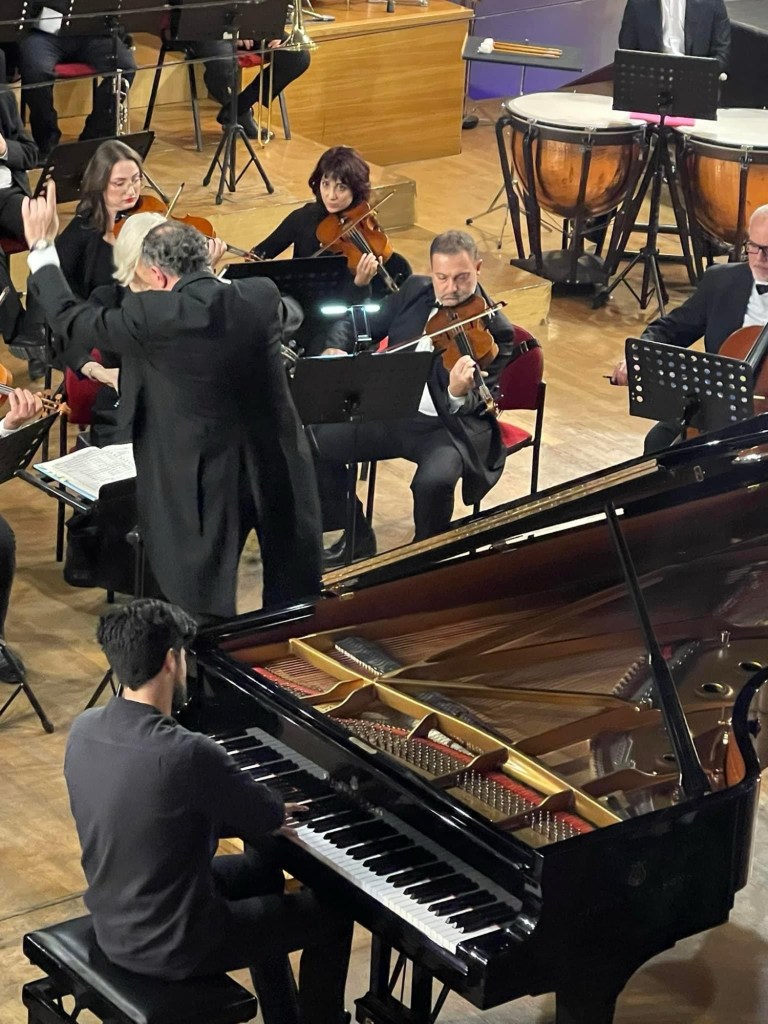
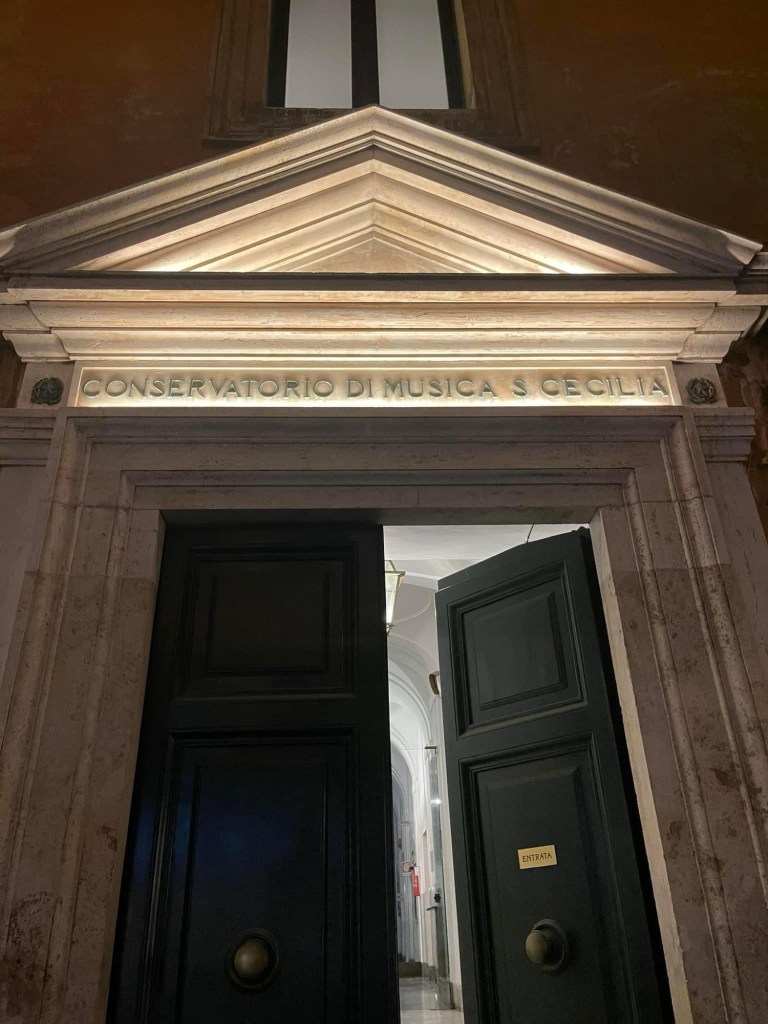
Towards the end of the first movement there was a sudden change of gear as the musicians had realised what a joy it was to make such rarified music together in a hall that has seen in the past the greatest musicians of our times . The hall that was used by Visconti for his magical ‘Death in Venice’ ,with the ‘Adagietto’ from Mahler’s Fifth directed by the never forgotten Franco Ferrara.I remember too,as a student in Rome of Mozzato and Agosti, sitting on this stage and being entranced by Elisabeth Schwarzkopf and later seated in the hall for Pina Carmirelli playing the Brahms violin sonatas with a very young Murray Perahia standing in for an indisposed Rudolf Serkin! More recently I heard one of the last recitals of Aldo Ciccolini that he dedicated to the Neopolitan family who had befriended him in his hour of need.
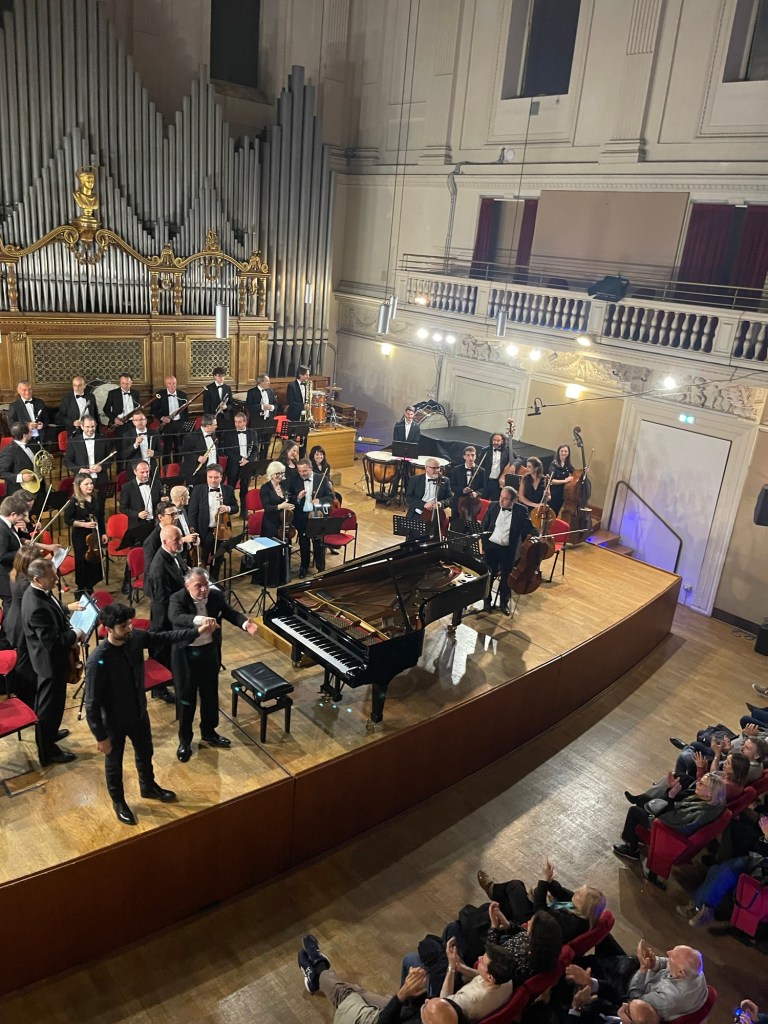
Piovano provided a wonderfully atmospheric opening to the slow movement which allowed Carroccia to float the beautiful bel canto melodic line with fluidity and a glowing sense of projection.The streams of arabesques that he wove over the orchestras seemless melodic outpouring was a wonder of sensitivity of chamber music proportions.We and the orchestra had been captivated by the spell that this young musician had created where we all followed every note in one of those magic moments that can sometimes happen with live performance.The spell was broken with a joyful last movement egged on by Piovano who shared his evident ‘joie de vivre’ with the orchestra and pianist.The lyrical central episode was an exquisite oasis before the explosive brilliance of the youthful virtuoso Chopin.
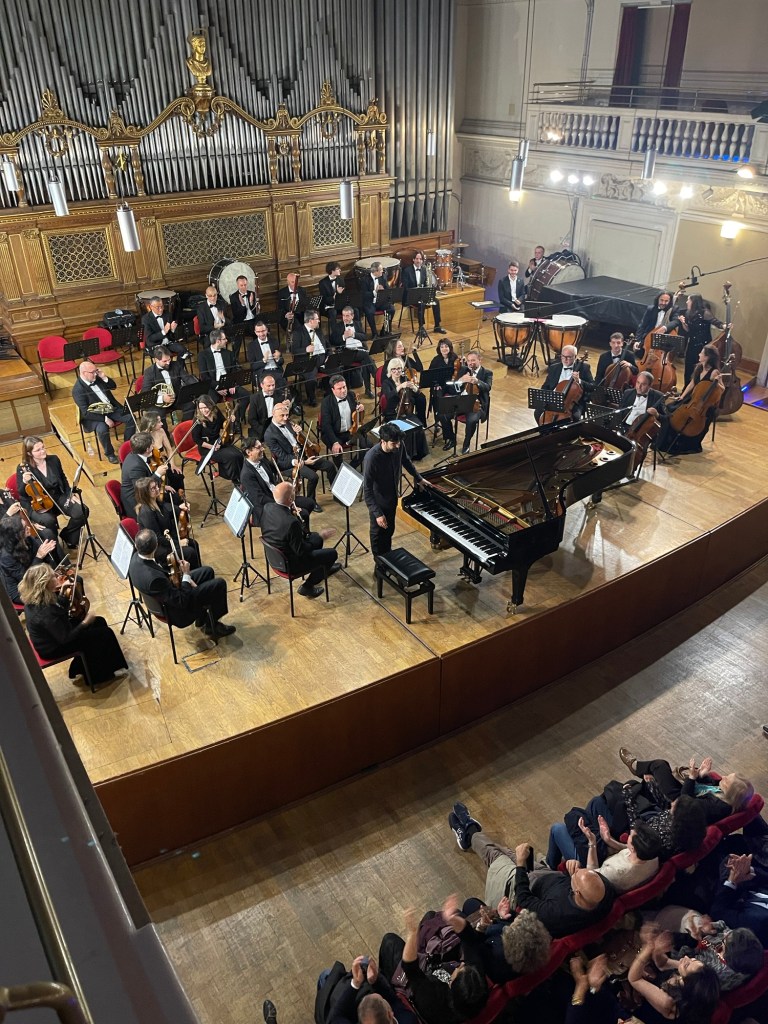
After a brief interval there followed the Second Concerto that was infact written before the first. It is shorter and much less openly brilliant than the first op 11, as every note has a poignant meaning of youthful yearning and simplicity. The orchestra here sounded rather breathless as the opening of this concerto is more a fantasy than the march like opening of op 11. However it took our poet of the piano only a few notes to take us into a world of poignant youthful hope and beauty. Poetic rather than heroic and a continuous outpouring of song as Chopin was to show us later,in the last of his all too short 39 years on this earth ,with the Barcarolle op 60. Carroccia revealed the beauty and innocence of this haunting work with ravishing playing where every note was projected with glowing sounds of poetic poignancy.
Embellishments that unwound so naturally and were simply part of the melodic line – here was the Caballé of the piano. And it was the exquisite beauty of the slow movement (that obviously had remained in Caroccia’s heart as he played it again as an encore – a solo musing of past beauty). Piovano too was under his spell as he hovered over the keyboard ready to capture those magic moments together and transmit them to their noble accomplices. A final slow flourish which I remember from Rubinstein’s hands was played with the same timeless beauty but ready to float into the beautifully simple final movement without breaking the spell. A final movement that was was of delicacy and charm but also of the scintillating brilliance of a poet of the piano.
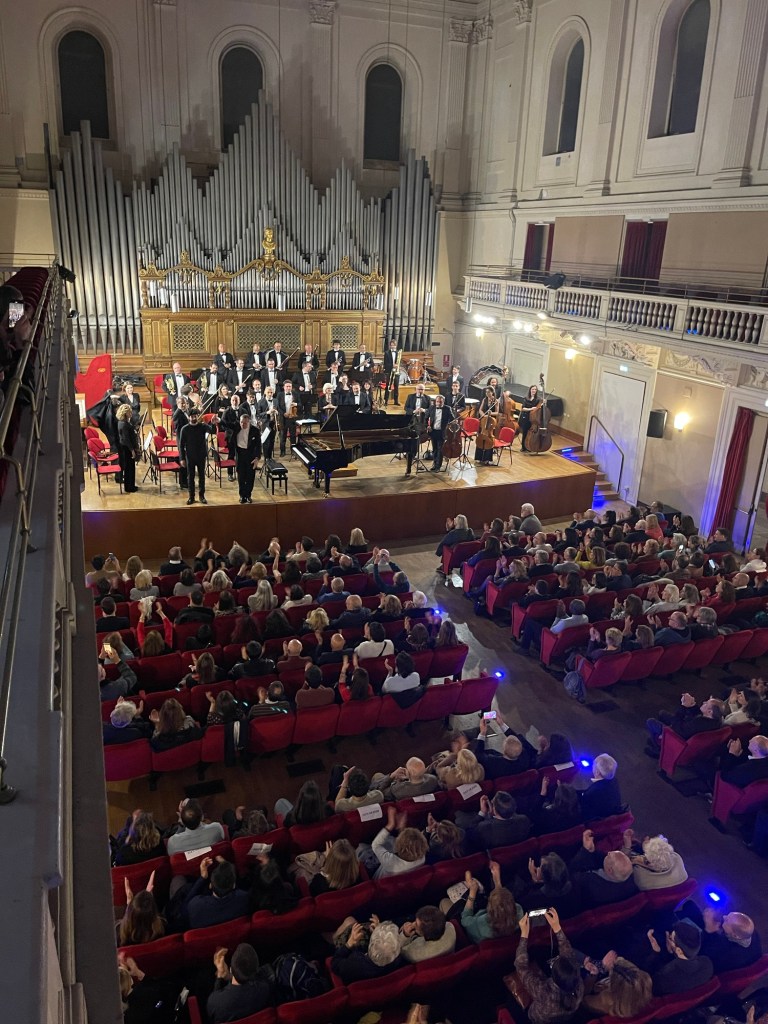
An ovation for this young pianist who had had the courage to play these two concertos together in the same programme when still only a few years older than the composer who had written them as a visiting card for himself as an aspiring young virtuoso. I remember the excitement that Kissin and Mehta brought to the same ‘tour de force’ especially as Kissin was only 11 at the time!!!!

https://instytutpolski.pl/roma/2024/04/14/chopin/
Giovedì 16 maggio 2024
Sala dei Giganti al Liviano, Padova • ore 20.15
JULIAN KAINRATH (violino)
LUIGI CARROCCIA (pianoforte)
Debussy: Sonata
Mozart: Sonata K 304
Beethoven: Sonata op. 47 “a Kreutzer”

Fryderyk Franciszek Chopin 1 March 1810 Zelazowa Wola Poland
17 October 1849 (aged 39) Paris, France
I concerti combinano due elementi diversi, per non dire – opposti: un puro suonare e una poeticità fortemente espressiva; il virtuosismo e la romanticità. Sono stati composti secondo il modello preso da Hummel, ma proveniente da Mozart. In essi il compositore porta la brillantezza pianistica elaborata con i brani scritti in precedenza, nello stile brillant, all’apice e allo stesso tempo le dice addio. È diventata un mezzo di espressione, non un fine in sé. Metaforicamente parlando – nella musica dei concerti è apparso il volto di Chopin, fino a quel momento velato con una convenzione stilistica. Ambedue i concerti esprimono in modo diretto la personalità del compositore la quale per la prima volta si manifesta con una grande forza e si concretizza in un insieme di caratteristiche che formano l’inconfondibile idioma stilistico particolare di Chopin, facilmente riconoscibile. Il tratto dominante è la “romanticità”: nei concerti, soprattutto nelle parti centrali, cioè nei due Larghetto, essa appare in forma di “poeticità” del primo romanticismo.
(Mieczysław Tomaszewski, “Chopin. Człowiek, dzieło, rezonans”)
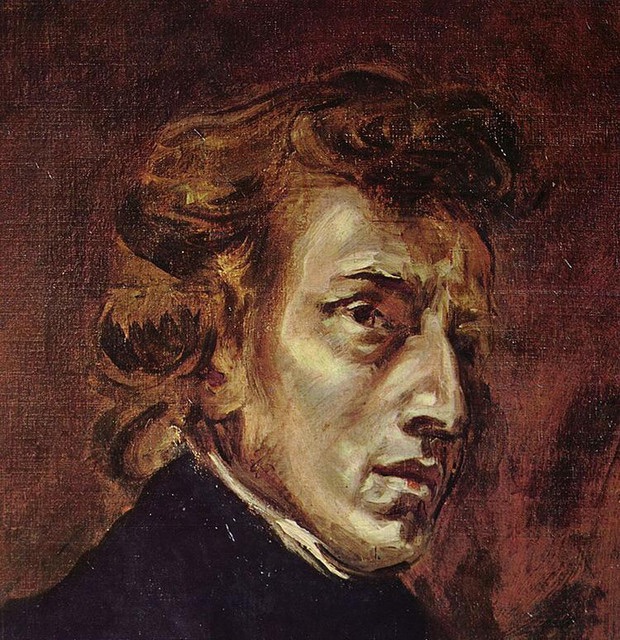
Chopin at 28, from Delacroix’s joint portrait of Chopin and Georges Sand 1838
Chopin’s compositions for piano and orchestra originated from the late 1820s to the early 1830s, and comprise three concert pieces he composed 1827–1828, while a student at the Central School of Music in Warsaw ,two piano concertos , completed and premièred between finishing his studies (mid 1829) and leaving Poland (late 1830),and later drafts, resulting in two more published works.Among these, and the other works in the brilliant style which Chopin composed in this period, the concertos are the most accomplished ones.Chopin’s compositions for piano and orchestra belong to a group of compositions in brilliant style, no longer confined by the tenets of the Classical period which were written for the concert stage in the late 1820s to early 1830s. In September 1828, while a student of Josef Elsner at Warsaw’s Central School of Music, Chopin visited Berlin and having graduated in July 1829 the next month, he visited Vienna , where he successfully presented the Variations on ‘Là ci darem la mano’ and the Rondo à la Krakowiak in concert.
Chronologically the works for piano and orchestra are :
Variations on ‘Là ci darem la mano in B♭ major (1827), Op. 2.
- Fantasy on Polish Airs in A major (1828), Op. 13.
- Rondo à la Krakowiak, in F major (1828), Op. 14.
- Piano Concerto n. 2 in F minor (1829–1830), Op. 21.
- Piano Concerto n. 1 in E minor (1830), Op. 11.
- Grande polonaise brillante (1830–1831), in 1834 expanded with an introductory Andante spianato for solo piano, and a fanfare-like transition to the earlier composition, together published as op. 22
- Drafts for more concertos, ultimately resulting in the Allegro de Concert for solo piano (1832–41), Op. 46.

Luigi Carroccia was born into a musical family and his first piano teachers were his father and grandfather. His studies continued at the Claudio Monteverdi Conservatory in Bolzano, where he earned his Bachelor’s and Master’s Degrees with honors and at the Royal Birmingham Conservatoire where he attended a Psp in Piano.During these years Luigi has been appreciated for his sensitivity and unique personality, and has won prizes in many competitions, such as the Maria Herrero International Competition in Granada, the National Piano Competition “Città di Magliano Sabina”, “Giulio Rospigiosi”,”Città di Albenga”, “Città di Oleggio”, “Città di Filadelfia”, and the Premio Abbado, organized by the Italian Ministry of Culture in memory of Claudio Abbado. He distinguished himself at the Ferruccio Busoni International Piano Competition 2015, the 17° International Fryderyk Chopin Competition in Warsaw, and the 15th Van Cliburn International Piano Competition in Fort Worth.
Luigi was invited to record a program entirely dedicated to F. Chopin’s music for Radio Classica and he was awarded a medal for his performances of works by A. Scriabin during the “IV Mejdunaroden Festival” in Kjustendil, Bulgaria. He has regularly performed in Italy, Poland, Turkey, United States, England, Bulgaria, Germany and Japan.
Since September 2018, Luigi has been an artist in residence of the Queen Elisabeth Music Chapel, under the guidance of Louis Lortie and Avedis Kouyoumdjian.
Descritto dal Fort Worth Star-Telegram come un “aristocratico del pianoforte”, Luigi Carroccia è riconosciuto come uno dei pianisti italiani più promettenti della sua generazione e le sue interpretazioni, caratterizzate da uno spiccato lirismo e una grande comunicatività, hanno suscitato grande interesse nel panorama pianistico internazionale.
Luigi ha vinto numerosi premi in Concorsi nazionali ed internazionali, tra i quali il “Virtuoso Prize” del Vendome Piano Prize svolto durante il Festival di Verbier e il “Premio Abbado” indetto dal MIUR in memoria di Claudio Abbado. Ha riscosso inoltre grandi consensi nei Concorsi “Van Cliburn” di Fort Worth, “F. Busoni” di Bolzano e “Fryderyk Chopin” di Varsavia dove ha ricevuto grandi apprezzamenti da musicisti quali K. Zimerman e M. Argerich.
La sua attività concertistica lo ha visto regolarmente impegnato in Italia e all’estero per Festival come il Duszniki International Chopin Piano Festival, il Miami International Piano Festival, il Dresdner Musikfestspiele e in sale come l’Ishibashi Memorial Hall dell’Università di Tokyo, Flagey di Bruxelles, la Symphony Hall di Birmingham, le sale Apollinee del Teatro La Fenice di Venezia e la Salle Bourgie di Montreal.
Luigi ha intrapreso i suoi studi musicali sotto la guida del padre e del nonno, entrambi musicisti. La sua maturazione artistica è poi proseguita presso il Conservatorio “C. Monteverdi” di Bolzano, dove ha ottenuto il Diploma Vecchio ordinamento in Pianoforte con il massimo dei voti e lode e il Diploma Accademico di II livello in Pianoforte solistico con 110, lode e menzione d’onore.
Nel 2016 è stato ammesso con Full Merit Scholarship e Junior Fellowship al Royal Birmingham Conservatoire dove ha frequentato un Post-graduate PSP in Piano performance.
Dal 2018 al 2022 Luigi è stato Artist in Residence presso la Queen Elisabeth Music Chapel di Waterloo sotto la guida di Louis Lortie.
https://christopheraxworthymusiccommentary.com/2024/03/20/christopher-axworthy-dip-ram-aram/
 ChristopherAxworthy-MusicCommentary