
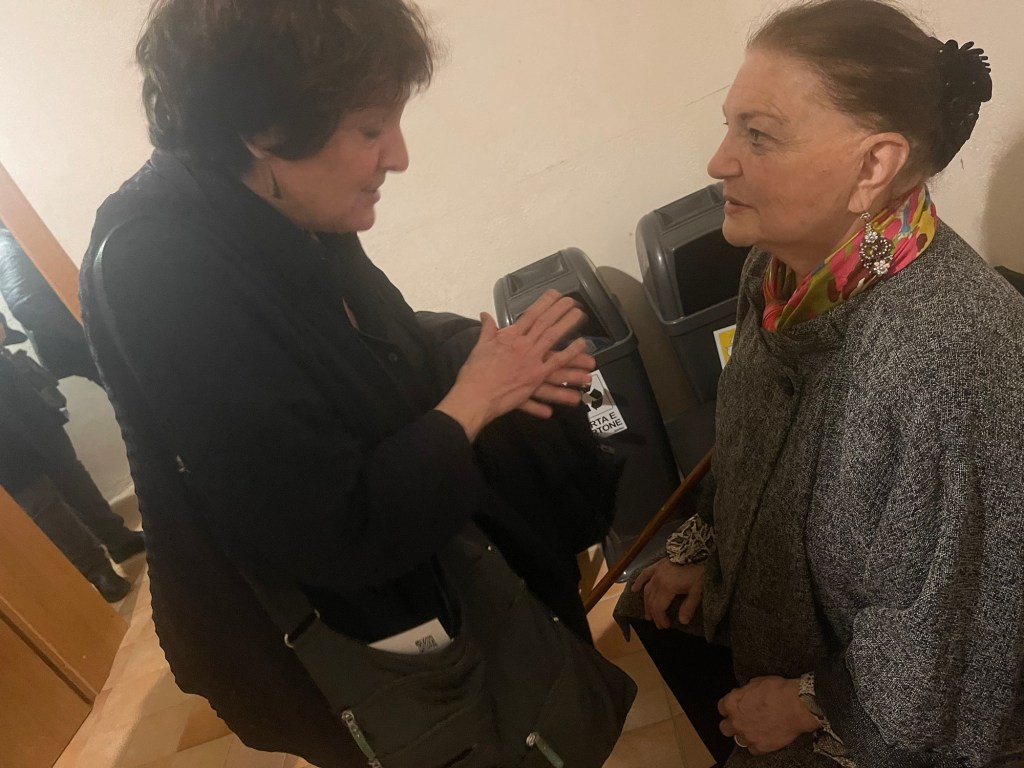
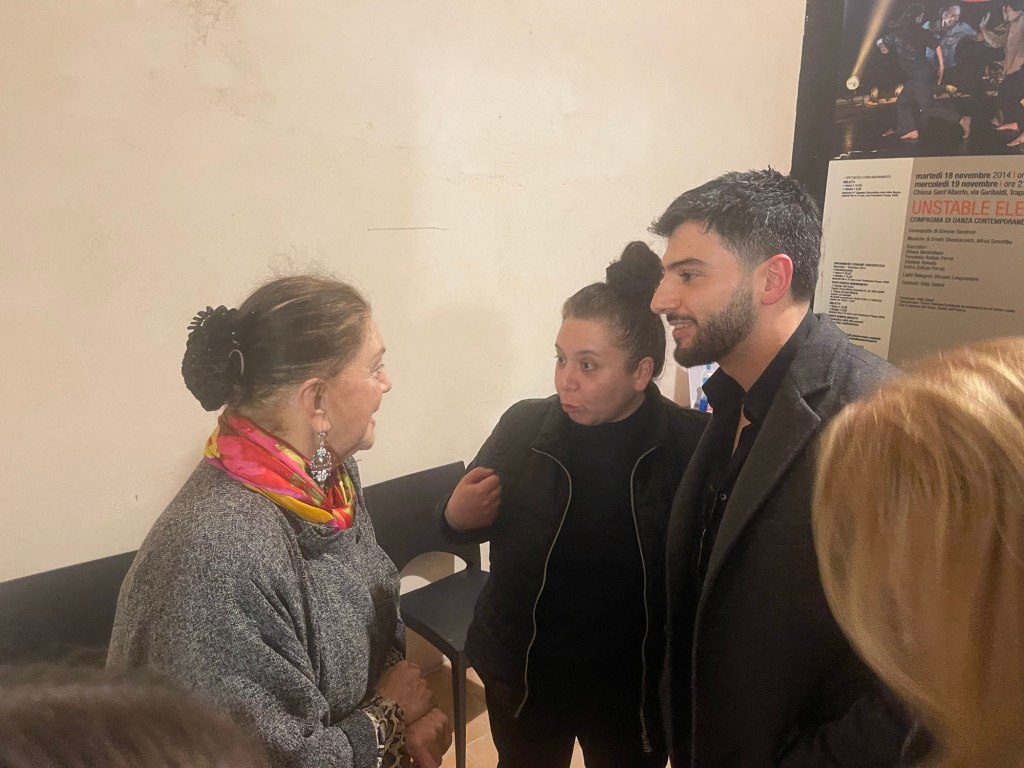
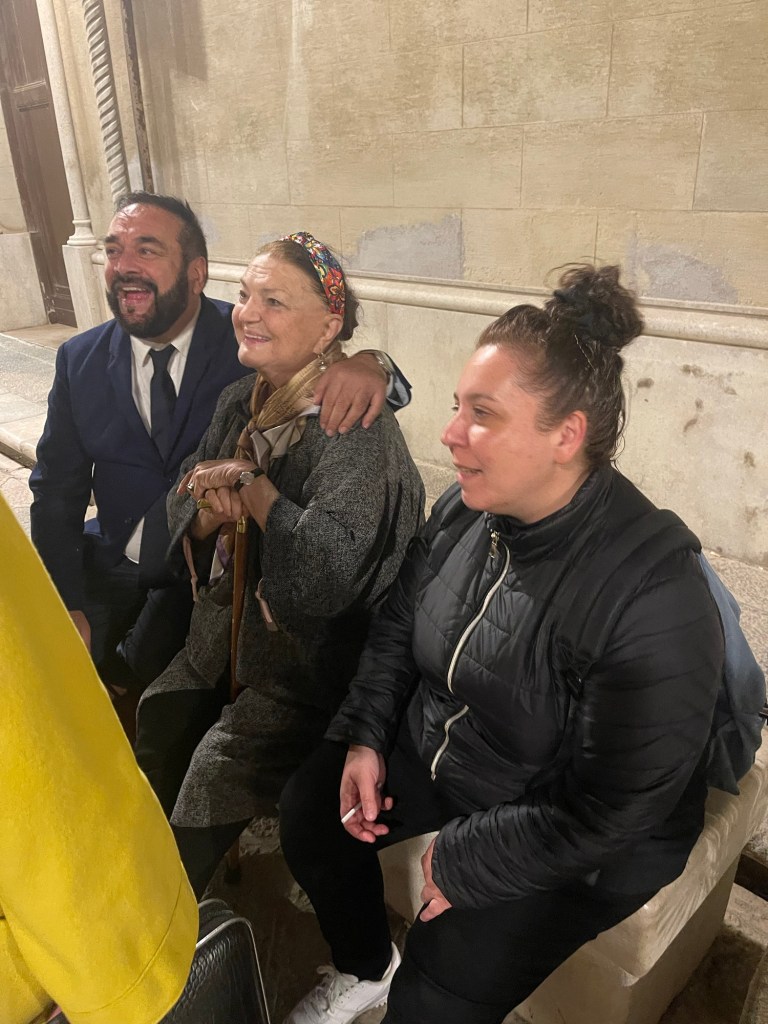
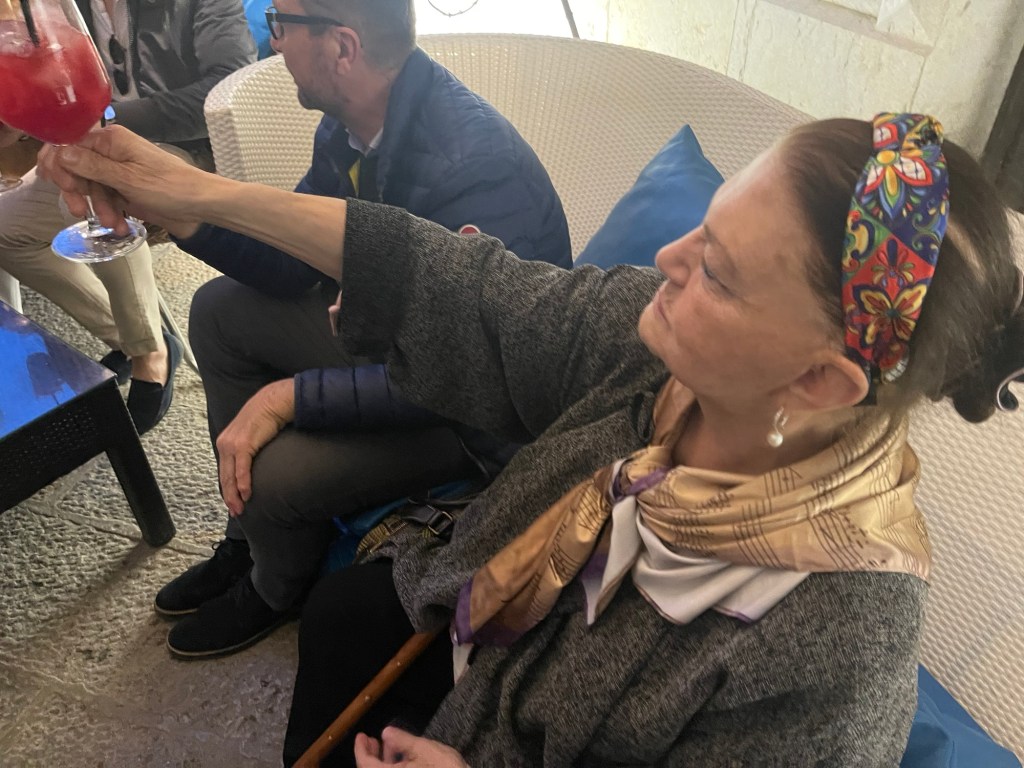
Lost for words for such a warm heartfelt welcome from one of the truly great artists of our time.
This regal artist here in Sicily dedicating her time and energy to helping and encouraging young musicians as she has always done in a long and distinguished career.
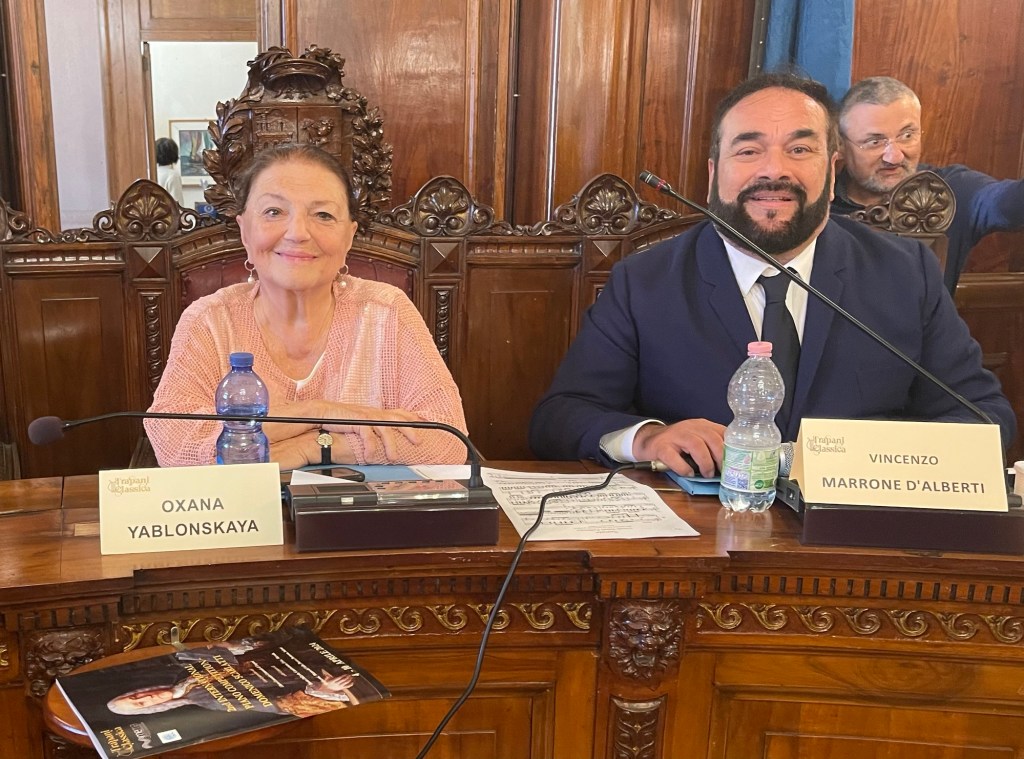
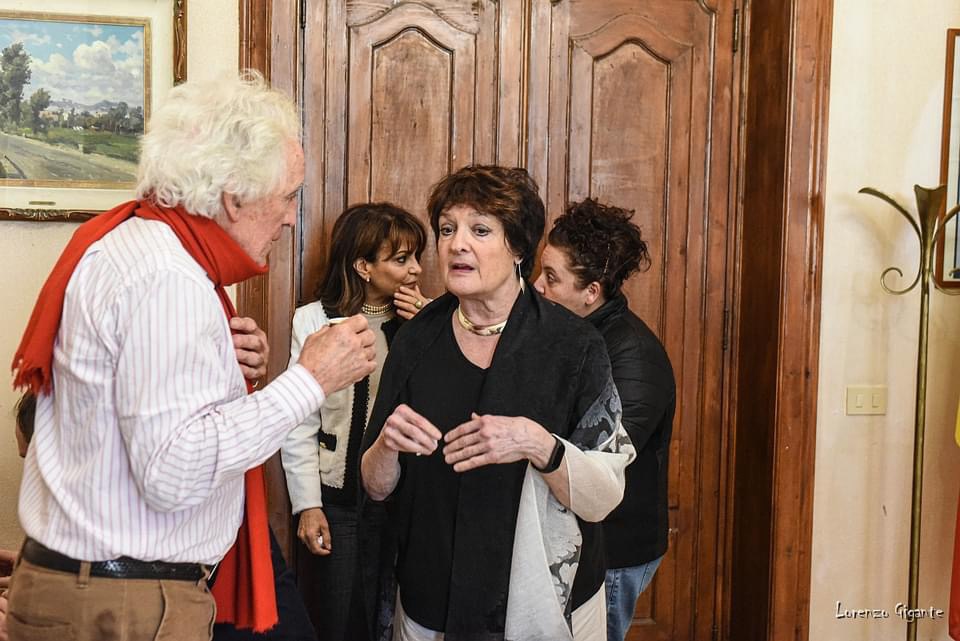
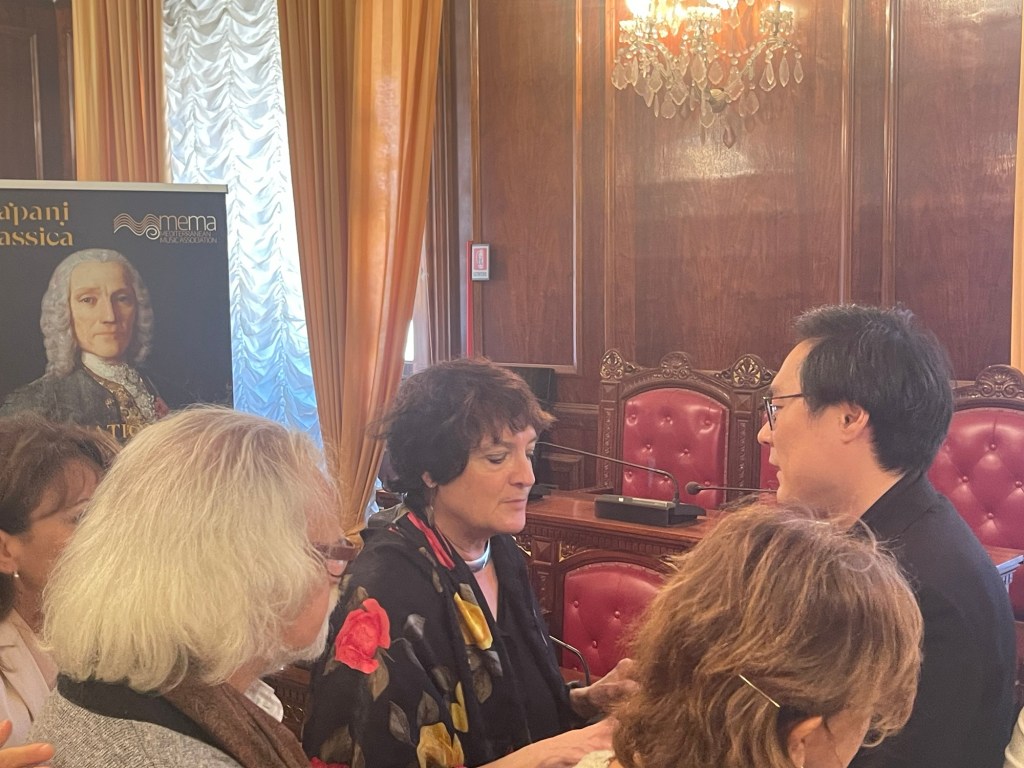
Oxana Yablonskaya,in Trapani as presidente of a jury that includes many distinguished colleagues all united for their friend Vincenzo Marrone d’Alberti in his wish to launch his home town of Trapani as a centre of cultural excellence on the world stage.
Oxana now in her 85th year has come from Jerusalem where she lives and teaches to listen to young musicians gathered from around the world whose only wish is to be able to dedicate their lives to sharing their art.
We hear everyday about war and greed but there is also another world that is not spoken about which is our only hope for a better future.
Young musicians dedicating their youth to their art and despite differences and worldly grievances searching for the same Eutopia that we are all in the end striving for .
I have never forgotten Oxana’s Prokofiev third sonata ,that she played for Bruno Nicolai’s Edipan in Rome forty years ago,in the theatre that my wife and I had built and run just next door to St.Peter’s Square.
And only twenty years ago playing again in Rome a magnificent Rachmaninov Third Concerto where her regal presence and command allowed her to take over from a conductor overcome by emotion.
She not only played magnificently but also conducted the performance from the keyboard!
It is we that should thank you dear Oxana for the honour of wanting still to share with aspiring young artists your vast experience and legendary musicianship with such humility and humanity.
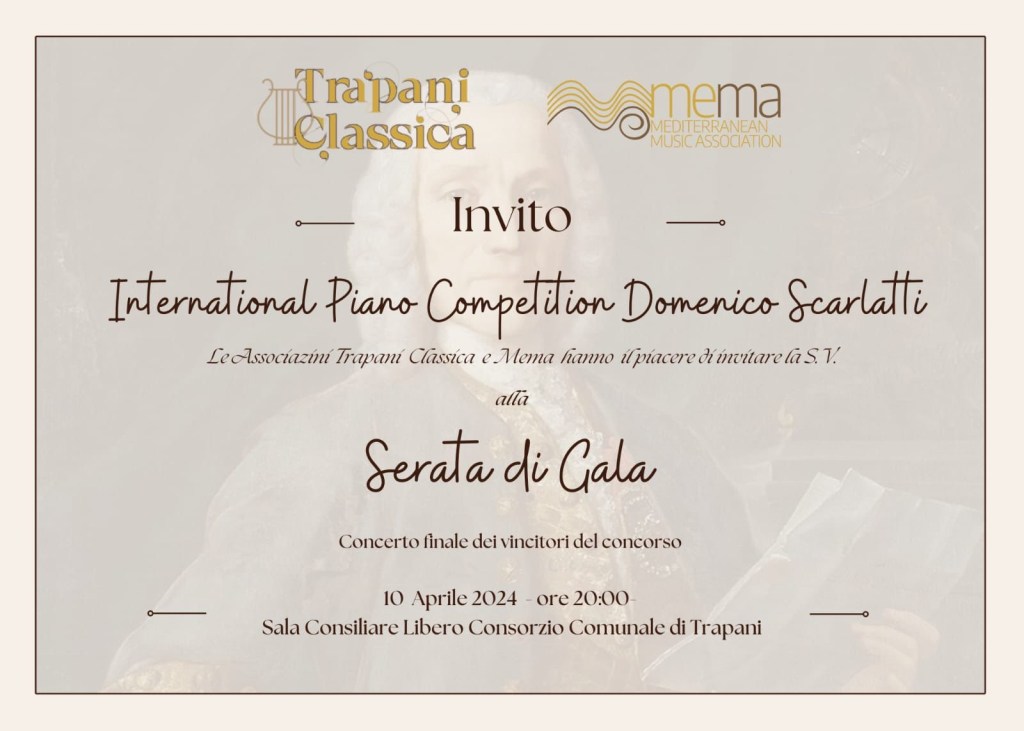
First day for me of the 2nd International piano competition Domenico Scarlatti

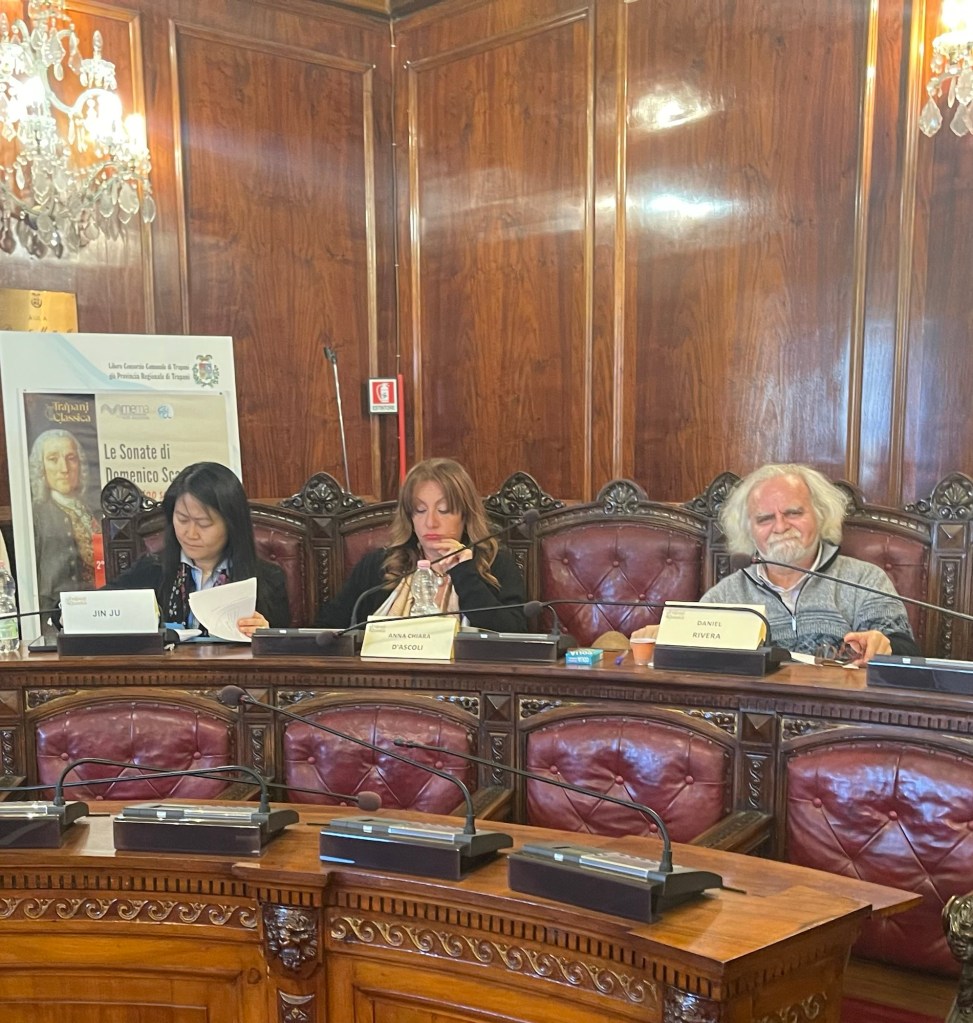
https://www.scarlattipianocompetition.it

Some superb playing from Ekaterina Chebotareva where she was able to bring the same extraordinary clarity to Ravel’s La Valse as she had done to Scarlatti K 47 or Rachmaninov op 33 etude tableaux in D minor .
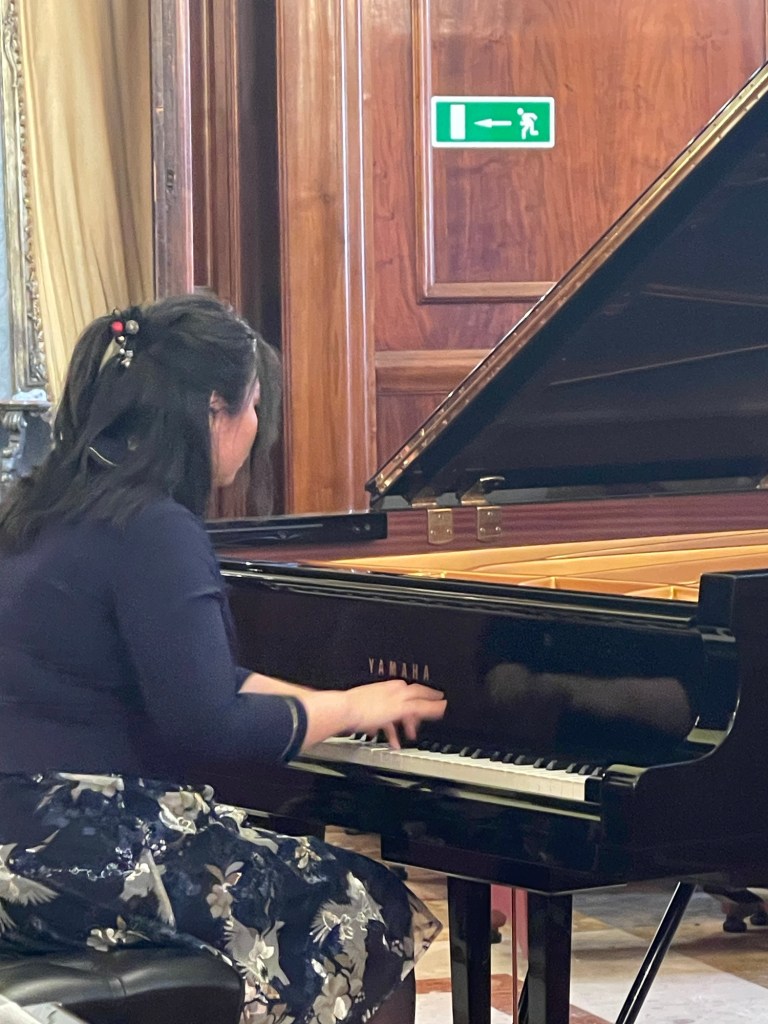
Playing of extraordinary involvement and conviction from Rongrong Guo brought vividly to life a really sizzling Scarlatti K 24 and a deeply felt Scriabin with the passionate outpouring of this most romantic of studies op 42.
Her 12th Hungarian Rhapsody would have got an ovation in the concert hall for its theatrical vividness and conviction.What she missed in detail was made up for with passionate involvement .
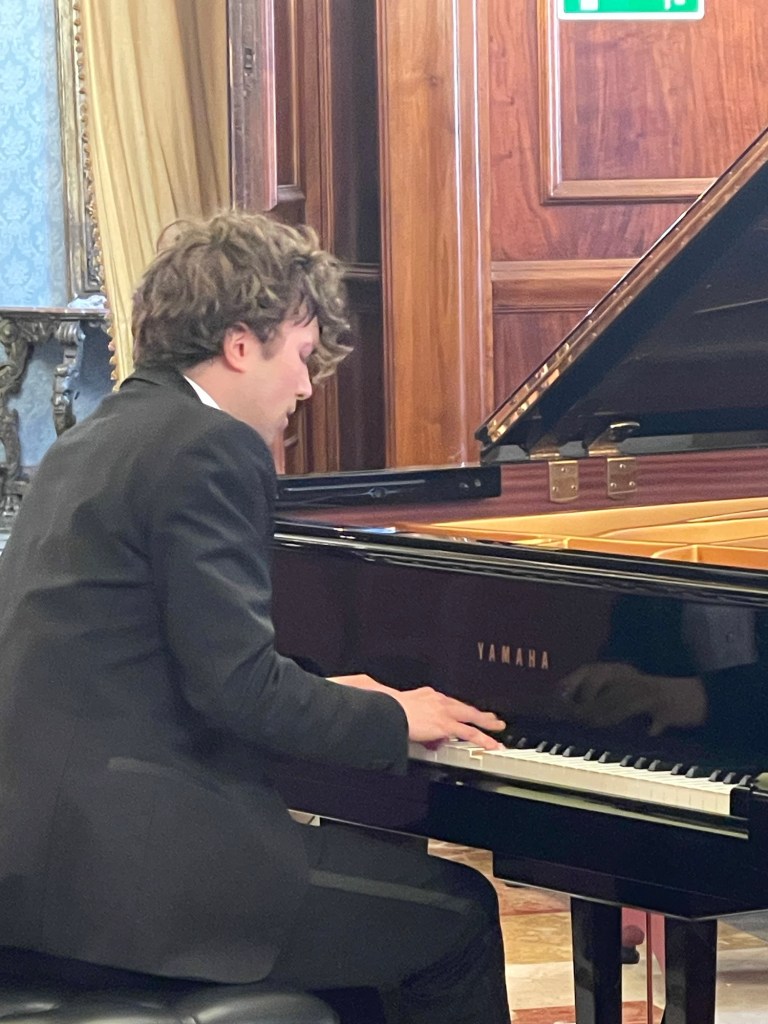
The surprise was the young Russian in refuge in Weimar like Liszt .Mikhail Kambarov ignited and illuminated this Yamaha concert grand with the ravishing colours that only a born artist could discover .A Scarlatti Sonata K 87 that owed more to Chopin than Scarlatti but was imbued with ravishing subtlety.Colours that were strangely missing from Chopin’ s own double third study where his technical command and ingenious fingering brought a smile even to Oxana’s up until now rather serious demeanour. Scriabin fifth that was just the ideal piece for a passionate young artist of his calibre.
I missed seven earlier candidates but this jury of serious distinguished musicians had decided to allow all ten competitors to return to the second round where they will give an hour long recital including a classical sonata which will certainly demonstrate their artistry and musicianship to the full .
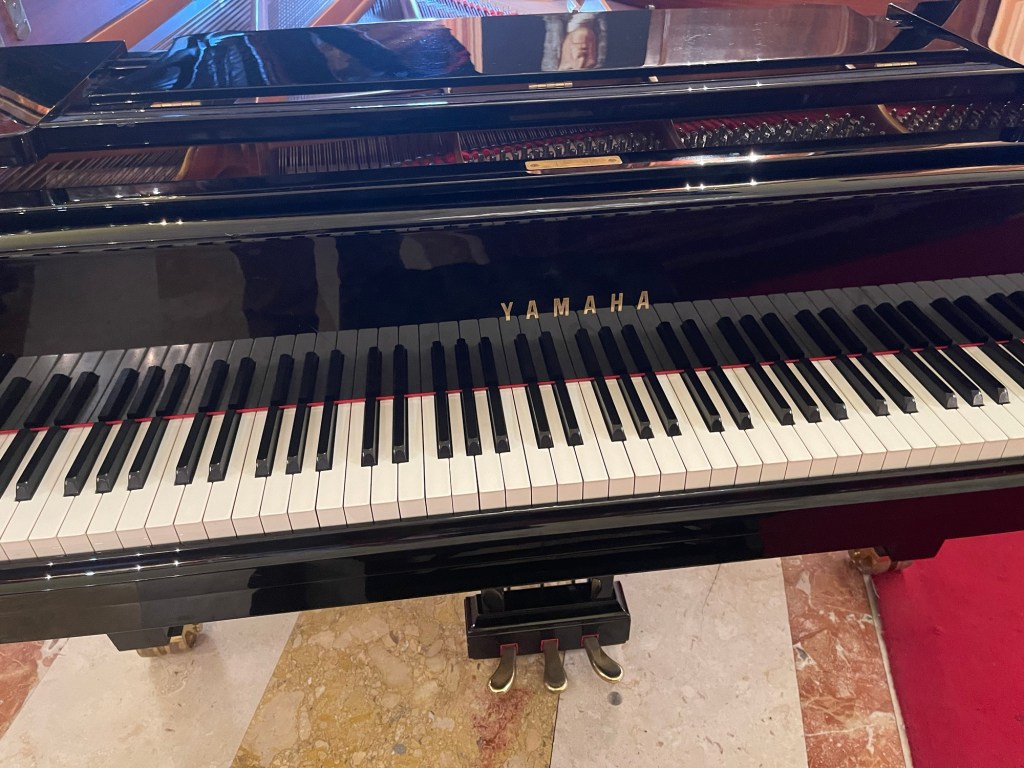
The second day for me in Trapani and what a surprise it has been.The day started with a student of the artistic director Vincenzo Marrone d’Alberti taking advantage of this magnificent CF 3 Yamaha whilst awaiting the arrival of the candidates and the jury.
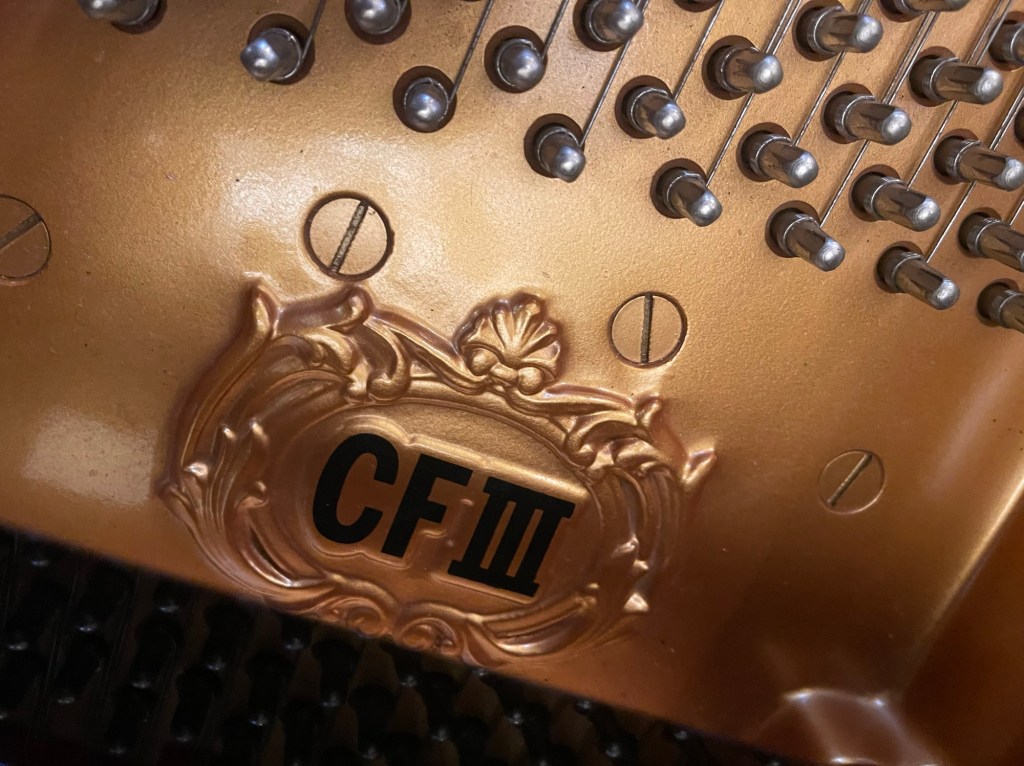
Matteo Pierro just turned twenty gave a performance of Scriabin’s 9th Sonata that would have won him a top prize in the competition if a conflict had not stopped him from entering into the circus arena.

Vincenzo’s staunch advocacy of the Tobias Matthay school allows for a range of sounds that most pianists today do know exist! This young artist was humbly placed at the service of the distinguished jury and just managed to snatch a few minutes to indulge in the sumptuous sounds that lay within this instrument that have mostly remained undiscovered.
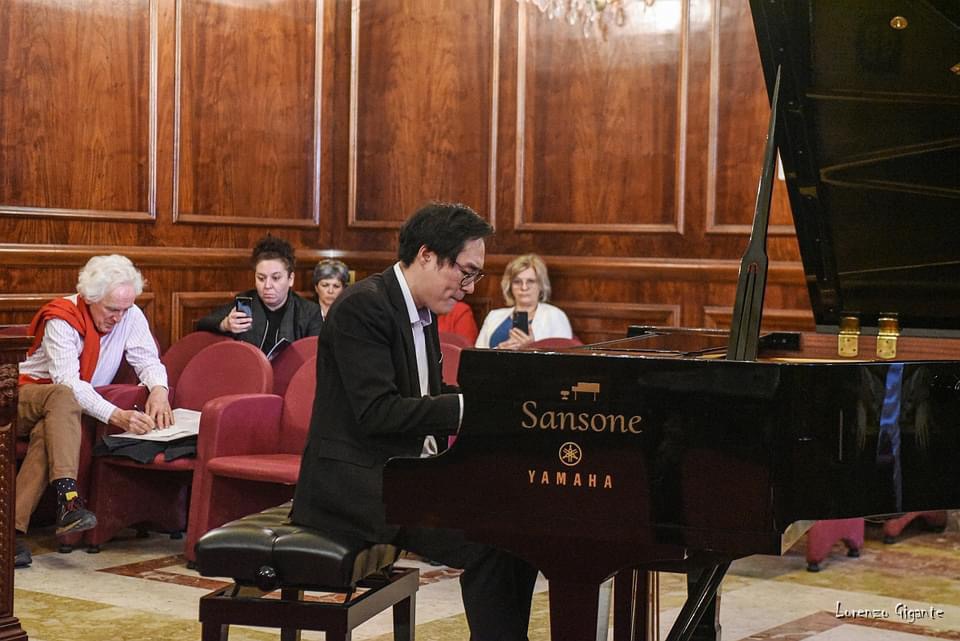
It was one of those mornings because the jury was seated now and Jeongro Park took his place at the piano and proceeded to give a series of performances of such mastery and conviction that time stood still as he kept us in his spell for over an hour.
His Davidsbundler reminded me of Murray Perahia playing it in the Leeds competition and reducing the jury to tears.As if that was not enough after the desolate final waltz he played his own transcription of the fourth movement of the Resurrection Symphony .The organisers had put this before the Davidsbundler but a great artist is known by his programmes and this young man knew exactly where it should be placed.With baited breath we were now treated to an astonishingly masterly display of fireworks in a performance of Liszt’s diabolical Totentanz that I have never heard played with such total mastery even from Arrau.
Follow that !

It was the young Italian pianist Federica Reale who treated us to a musicianly performances of five Scarlatti’s Sonatas ,Clementi’s Sonata op 26 n.2 and the Eight pieces that make up Brahms op 76.This certainly calmed the air as we listened to the refined and intelligent performances that were played with beauty and colour as she shaped the music with such loving care and restrained passion.
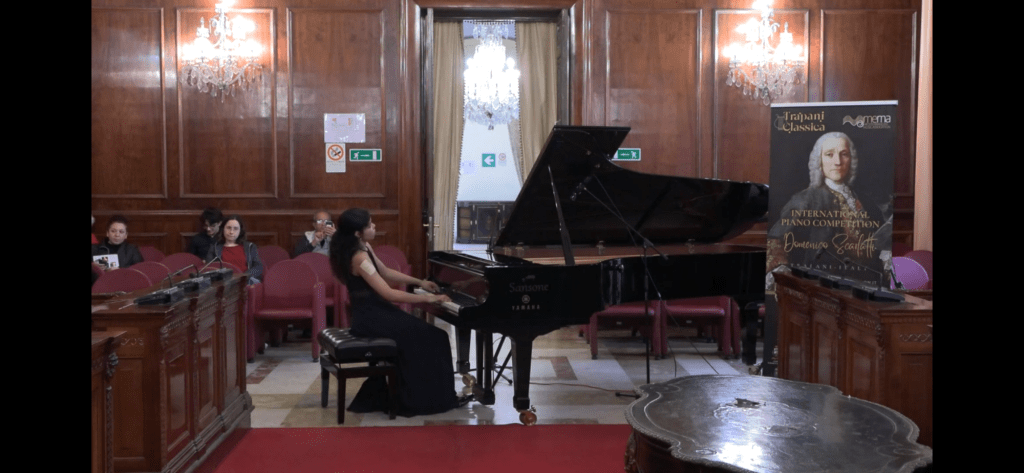
The final pianist before the lunch break was the Japanese pianist Kiana Reid.Stylish playing of sonatas by Scarlatti K.450 and Haydn Hob VI .23 both played with great character and clarity.But it was the Schumann Fantasie op 17 that showed off her true musicianship and considerable artistry.An architectural shape to the great outpouring of love for the composer’s future wife Clara.Fussy meticulous indications by the composer can be distracting for lesser musicians but Kiana was able to steer her way through the beautiful trees to show us the power and sweep of the entire wood.If the second movement was a little overpowering at the beginning ,as it is marked only mezzo forte ,she managed even here to give a coherent shape to Schumann’s rather tiresome dotted rhythms as she built up the tension to the final coda .Many lesser pianist can fall at this last notorious hurdle but Kiana played with controlled passion where maturity and mastery can allow youthful exuberance to be always kept under control.The last movement was played with ravishing beauty and delicacy and the final pages were played with aristocratic authority following impeccably the composers wishes to allow the work to come to rest only on the final three consiliatry chords.
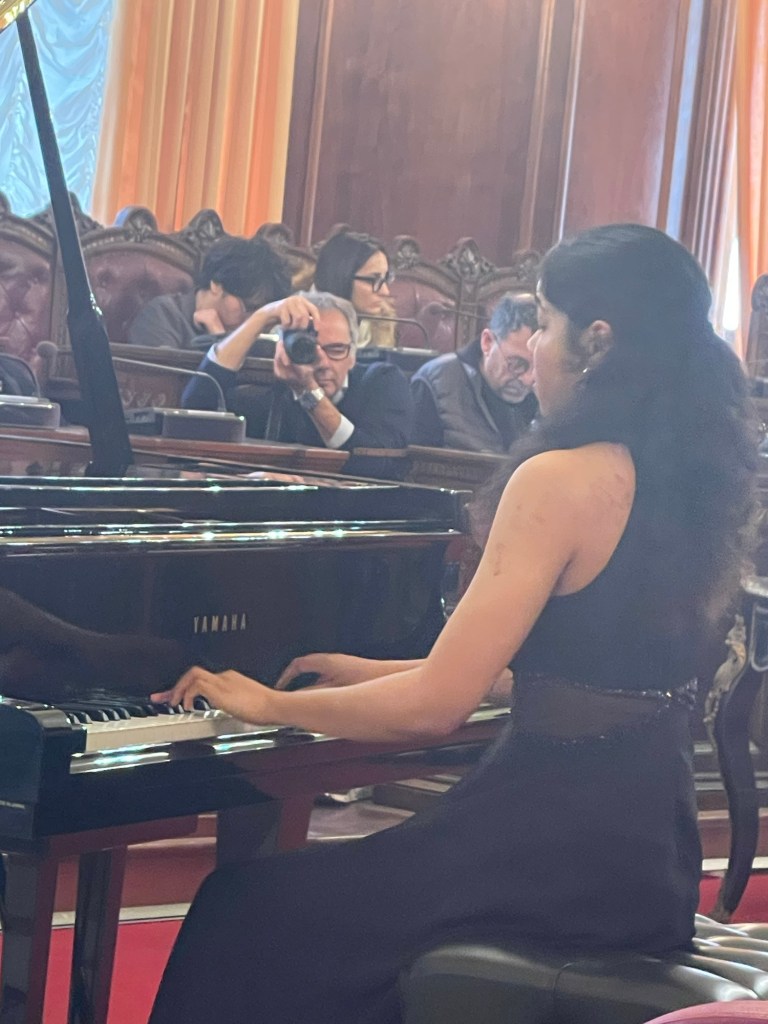
A remarkable performance especially coming after the Davidsbundler where these two more mature contestants could show us how maturity can tame youthful passion.And like her colleague she finished with the pianistic fireworks of the Tarantella from Liszt’s Venezia e Napoli. A breathtaking performance but one that should be linked to the previous ‘Canzone’ as Liszt very clearly indicated.His very precise pedal indications make his wishes quite clear but that almost no one observes thinking of Liszt as merely a juggler of notes rather than the most visionary composer and precise editor of his own and his colleagues scores .
As Nadia Boulanger was fond of quoting from Shakespeare 12th Night :’words without thought no more to heaven go’.
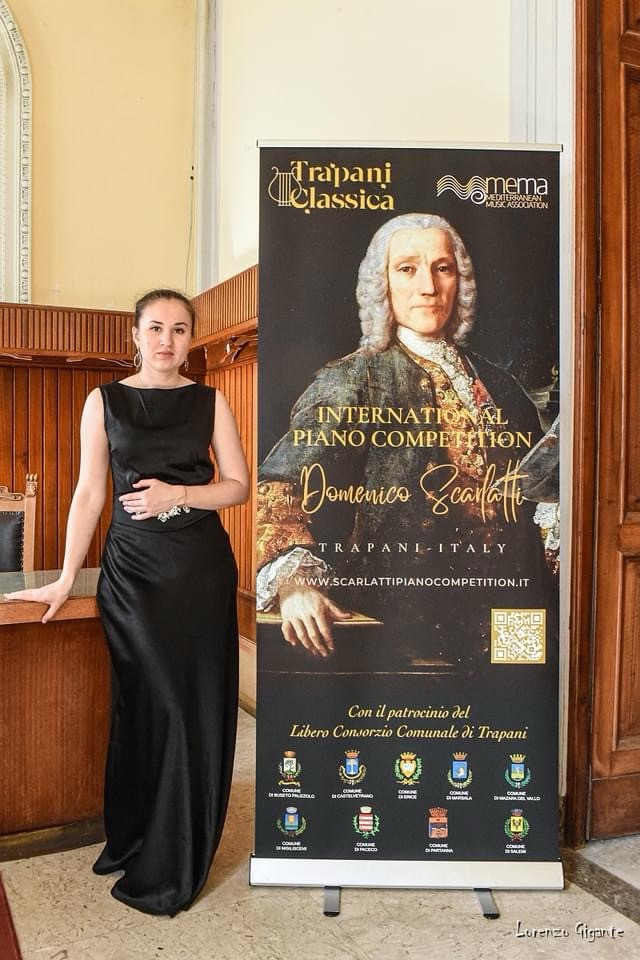
After the lunch break Zukhra Sharpova gave very crisp and clear performances of Scarlatti and Beethoven Sonatas.One or two mishaps very professionally disguised obviously made her feel very uncomfortable but she went on to give a musicianly performance of another Schumann masterwork op 22.She was obviously not happy with her performances and this was a disappointing off day for a very fine pianist.
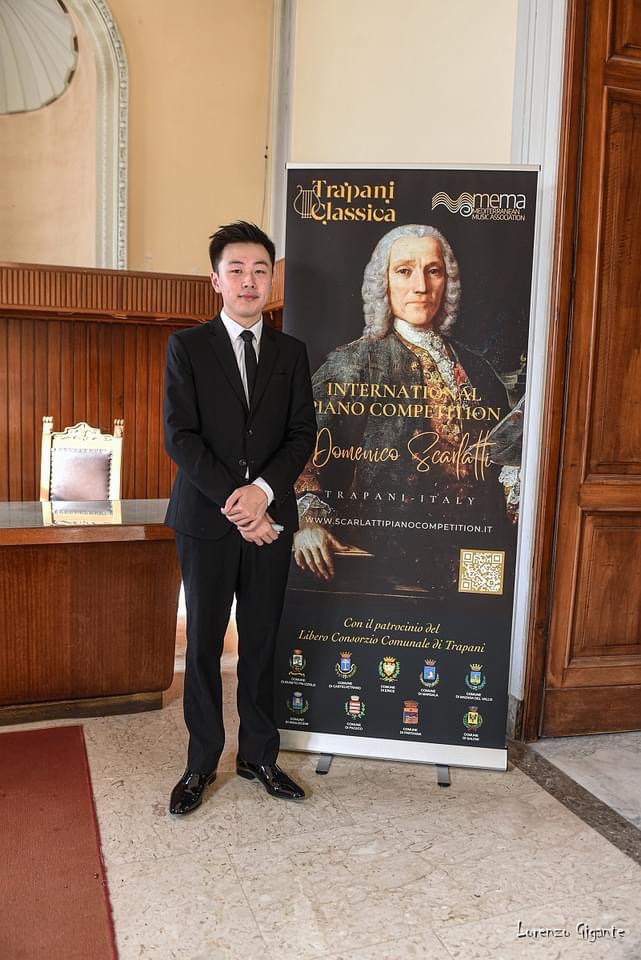
The final contestant was Changyu Yin,a 23 year old pianist from China.He was down to play the ‘Hammerklavier’ but it had been changed to yet another master work of Schumann with the Etudes Symphoniques op 13.
Beginning with two Sonatas by Scarlatti and Haydn that were played with clarity and precision but just missing a natural sense of style.
The Schumann showed off impeccable preparation and musicianship but whereas Schumann himself had described Chopin ‘s Mazurkas as ‘canons covered in flowers’,these are studies that should also blossom and we should not be aware of the considerable technical hurdles that are being attempted.
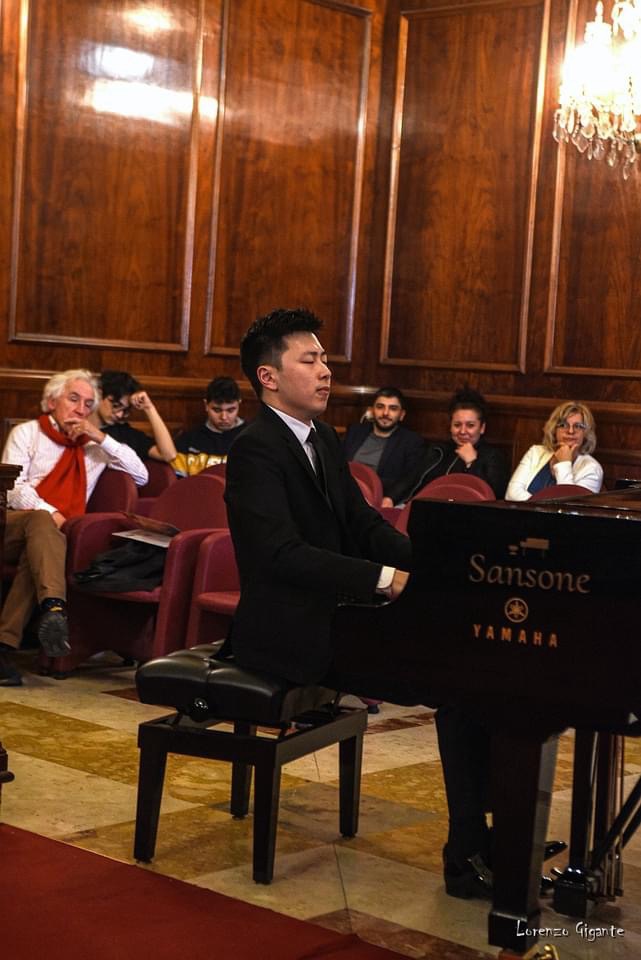
It was in the five posthumous studies (published by Brahms after Schumann’s untimely death) that Changyu allowed the music to bloom with great style and beauty.The finale can seem very repetitive and some pianists like Changyu today look maybe unnecessarily to the first edition to bring a little variety to what can seem monotony to less imaginative hands.
A fine well prepared performance but missing the natural artistry that had taken us so by surprise this morning.
And so another five pianists to hear tomorrow but not before two jury members give a concert together tonight.
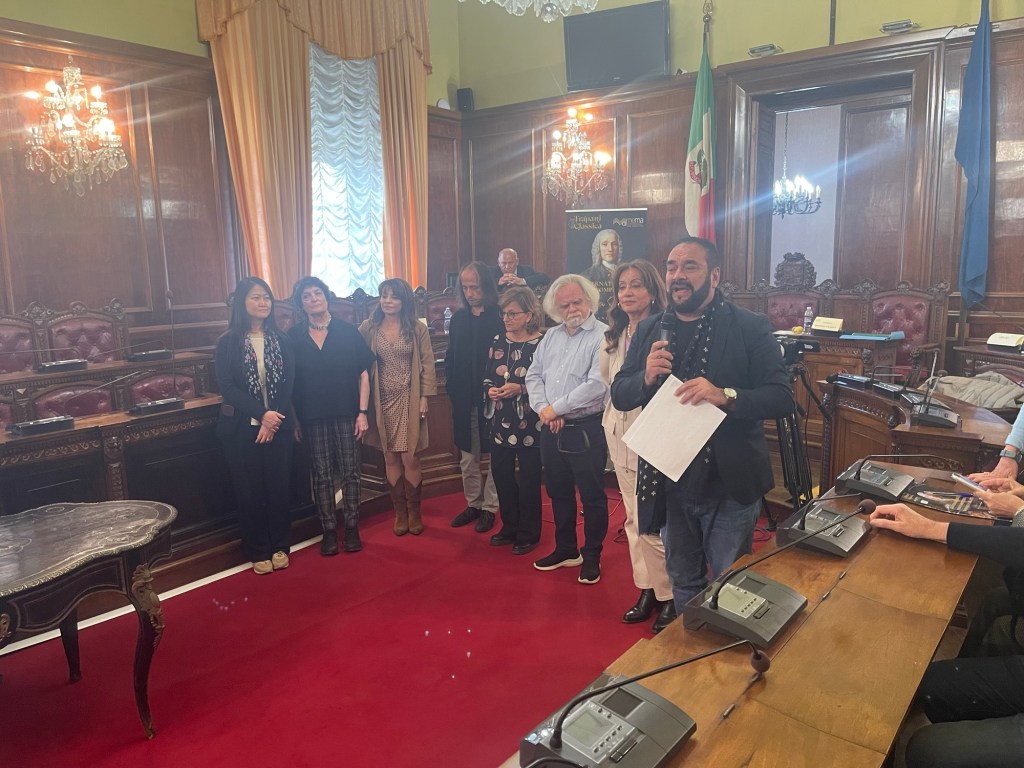
The end of the semifinal as we wait for the result to see which out of the ten contestants will take part in the final tomorrow morning
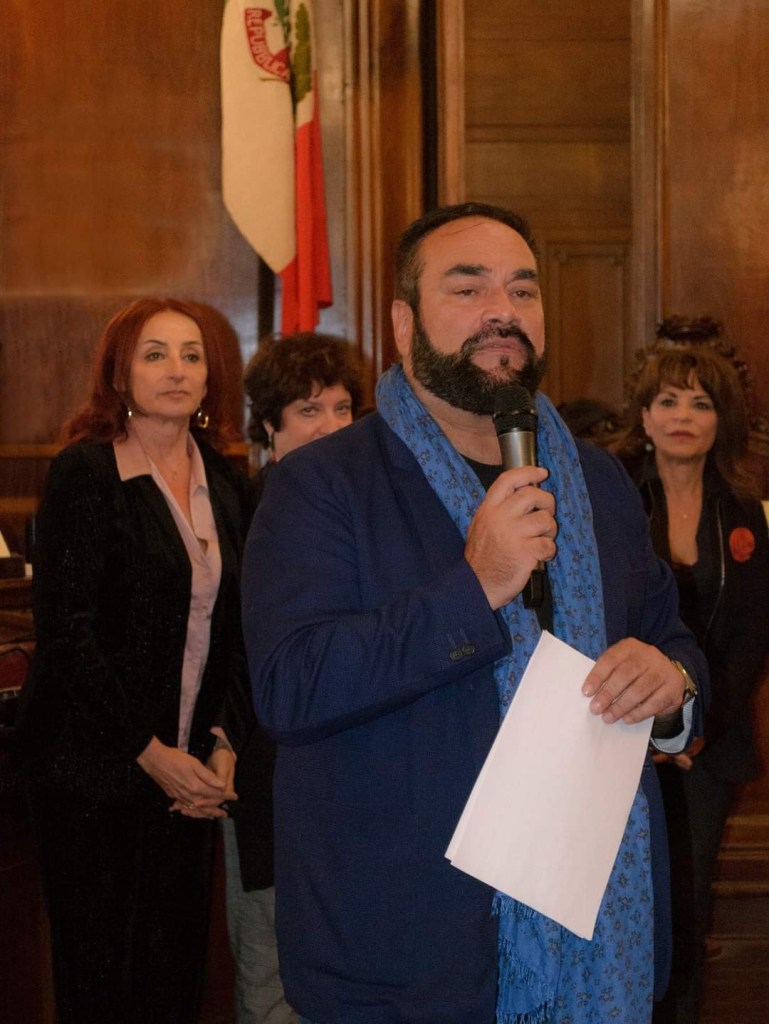

In the meantime tonight a much awaited recital by Oxana Yablonskaya
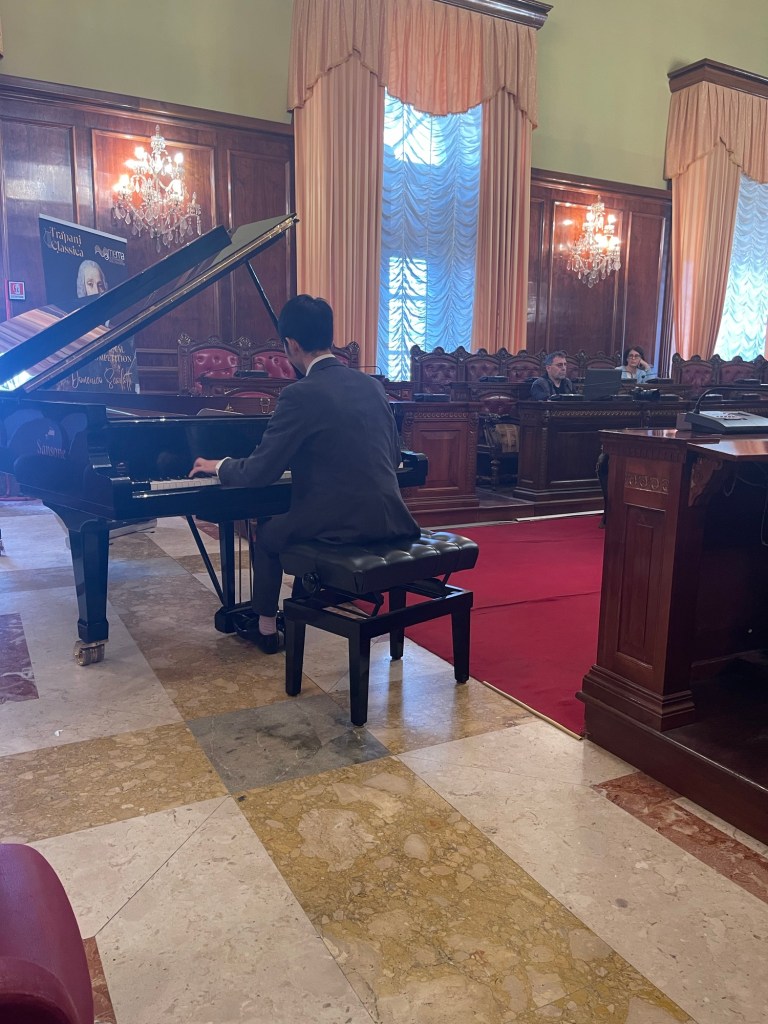
The day started with the Japanese pianist Kazumitsu Ujisawa with the Scarlatti Sonata K.101 played with sparkling brilliance and clarity.This was followed by Beethoven’s penultimate Sonata op 110 that we were to hear three times today.An intelligent musician and there were moments of great beauty but I did not really feel he penetrated the deep inner meaning of one of Beethoven’s most poignant compositions.There was an unexpected change of programme as instead of the Schumann Fantasie we suddenly heard a sublime performance of Chopin’s F sharp major Nocture op 15 n.2.A refined performance that will long be remembered for it’s delicacy and aristocratic poise.This was followed by the Andante spianato op 22 that we were also to hear three times today.A beautiful performances of refined delicacy ,brilliance and style.
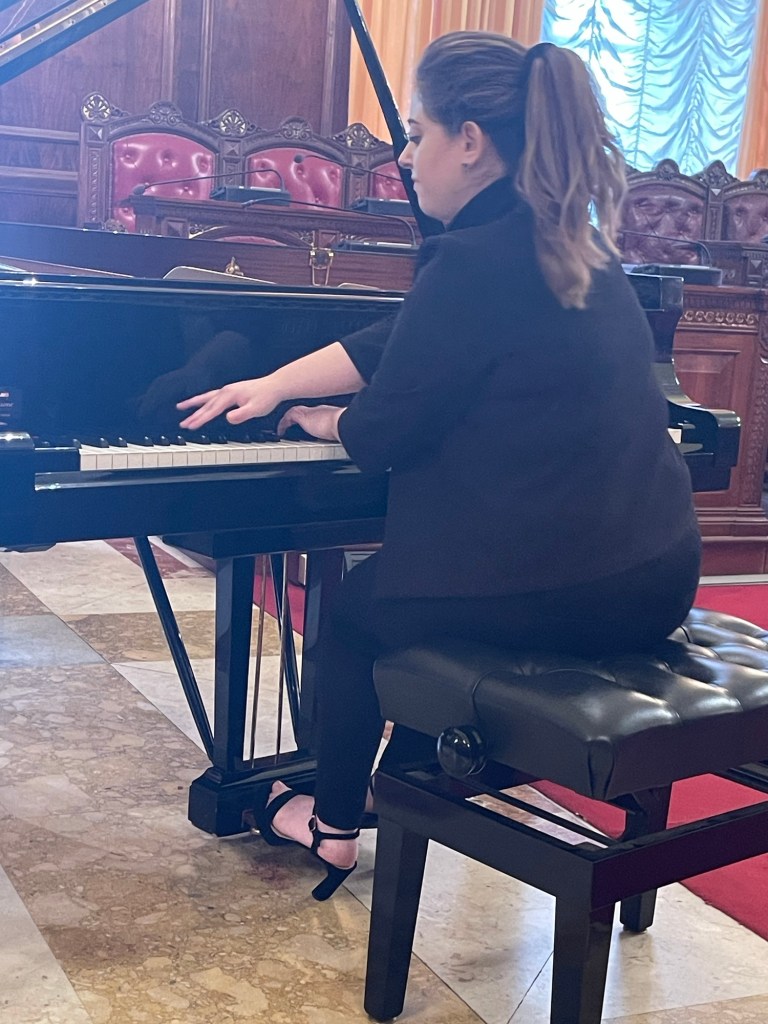
Maria Efenesia Baffa,a doctor from Florence ,started her recital with Beethoven’s last Sonata op 111. With tiny hands but such a passionate heart she played with the temperament and drive of someone who is in love with music.I remember when I was teaching at the Royal Academy in London ,next door to Harley Street,a doctor came asking for lessons.I was the youngest teacher then and was sent to a sumptuous studio with a grand piano that would have been the envy of many professional musicians.This charming overworked doctor admitted after an hour of talking but not actually performaing music that it was me or the psychiatrist and I was a bit cheaper !
It is this love for music that came across so vividly today and if there were blemishes in the longer works by Beethoven and Chopin due obviously to having to divide her time between her passion for medicine and music it was in the shorter Scarlatti Sonatas that her temperament and agile fingers brought the music vividly to life.
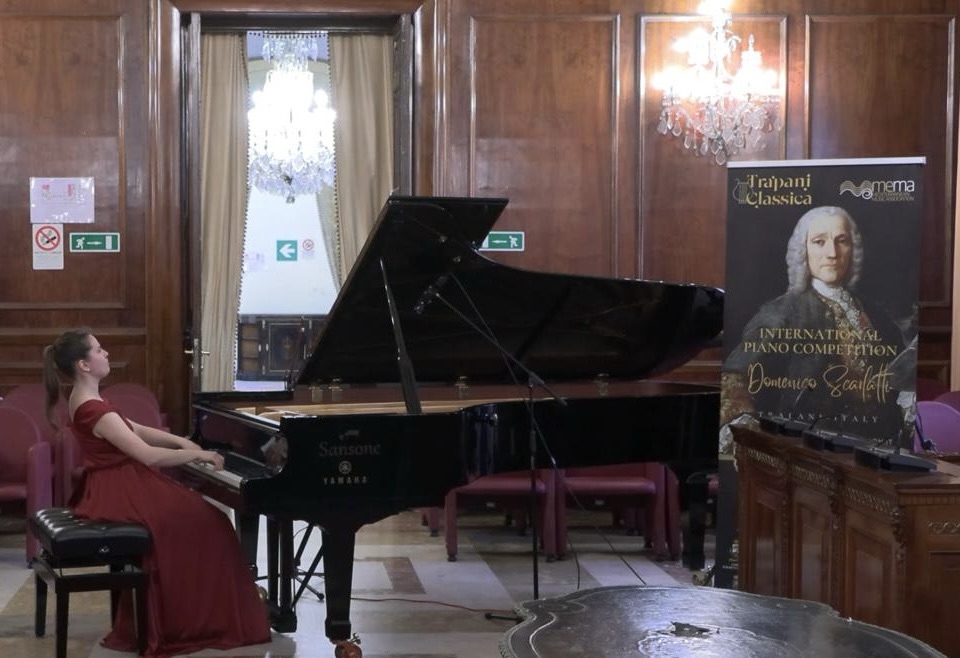
Ekaterina Chebotareva I had already heard and admired in the first round,in particular playing a crystal clear ‘La Valse’.Today she showed much more authority and character and it was this that came across in theatrical performances of Scarlatti and Haydn Sonatas.There was scintillating brilliance to the second movement of the Haydn Sonata in G that she played with crystalline clarity.Brahms’s 8 pieces op 76 were played with fluidity and luminosity that she combined with mastery and musicianship.
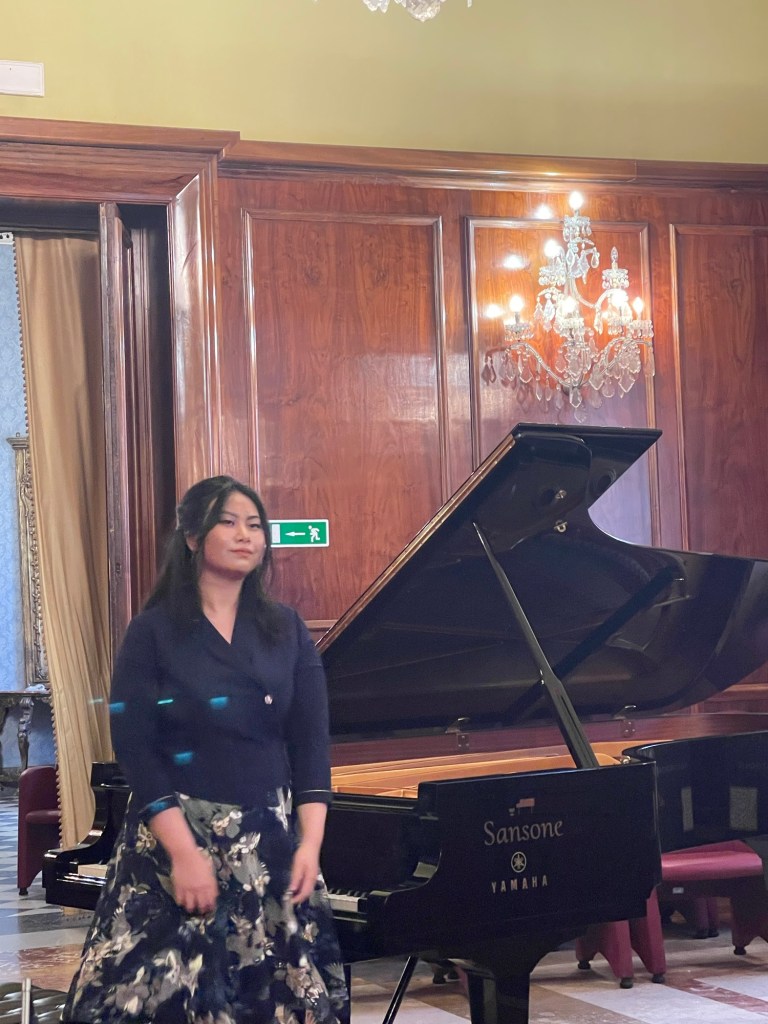
Rongrong Guo I had heard too in the first round when her performances were more of a good impression than perfect in detail.So it came as a surprise to hear such a fine performance of Scarlatti with well controlled and detailed playing with a natural musicality of someone who loves the music that is pouring from her agile fingers.Beethoven’s op 110 was given a very well prepared and controlled performance only getting slightly out of hand as she lost her head allowing her heart full reign for the passionate finale outpouring.However an impressive performance that I was not expecting from someone with a natural but sometimes untamed temperament.There were many beautiful things in her Carnaval even though this was more a good impression than a detailed interpretation.She feels the music so intensely and it is this love which she communicates with such immediacy to the public.

Having lifted an eyebrow at Mikhail Kambarov’s Scarlatti in the first round I was bowled over by his superb performance of the two Scarlatti Sonatas that opened today’s programme.K8 was dynamic,rhythmic but above all refined and scintillating.The Sonata K 487 was played with such fantasy that he revealed the genius of this little Sonata which was a true tone poem in his refined poetic hands.There was beauty from the very first note of Beethoven’s op 110 where there was weight mixed with gossamer lightness.A sound world of whispered confessions of ravishing beauty and showed a sensitivity to sound that I remember startled us in the west on the first visits from Richter.One critic of his performance of Beethoven’s op 22 Sonata said that the slow movement had been in existent such were its secrets revealed in whispered undertones by a Master. There were so many beautiful things today too and a Scherzo that was shaped as a real musician with scrupulous attention to Beethoven’s detailed indications.The sublime Adagio was allowed to gradually grow in intensity until the final passionate explosion of triumph as Beethoven ,like Scriabin a century later ,had envisaged his star.
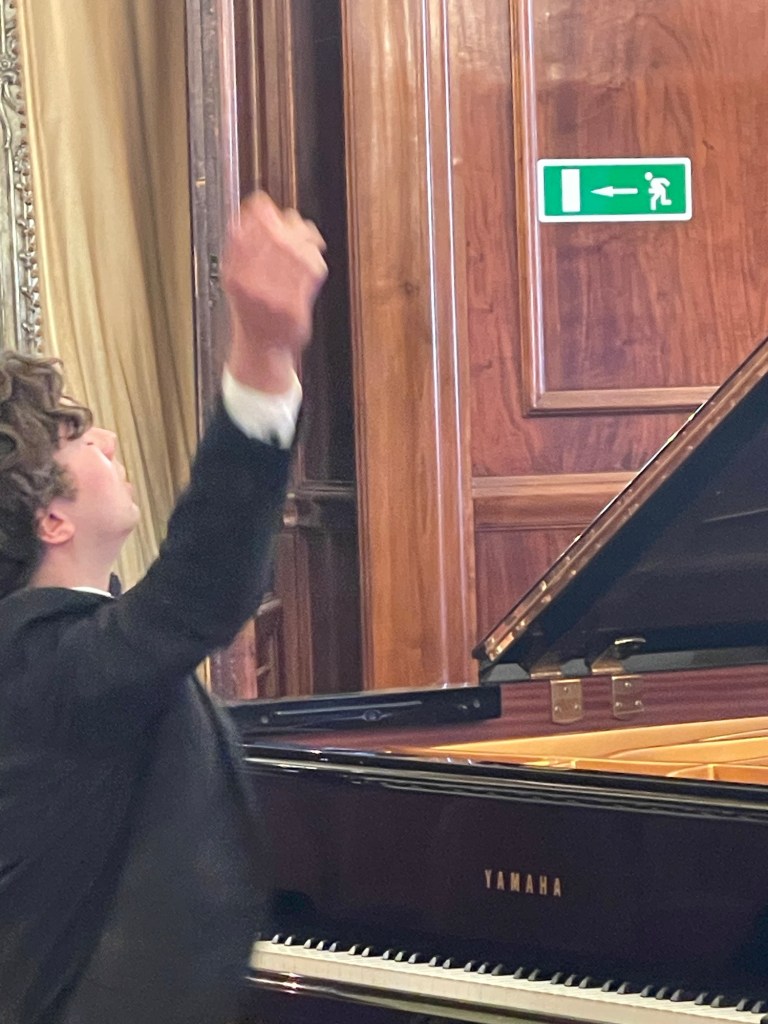
Chopin too was elegant and refined maybe trying a little too hard to ‘do things’ instead of letting the music speak simply and eloquently for itself but it was of such ravishing beauty with the scintillating beguiling jeux perlé of another age.
Ten exceptional performances over two days but the circus aspect of a competition is the decision now to choose only four to take part in the final tomorrow morning.
After an hour long deliberation the four chosen to go ahead are Jeongro Park,Kiana Reid,Ekaterina Chebotareva and Mikhail Kambarov.
Mikhail,this poet of the piano was awarded unanimously the Scarlatti Prize today too.
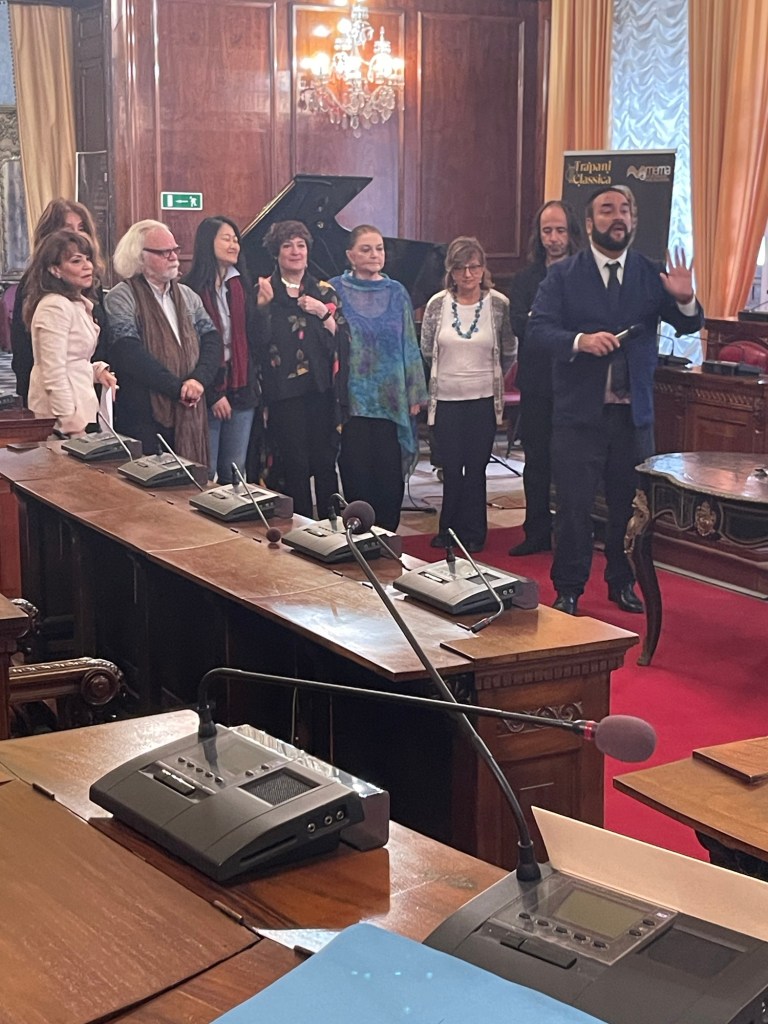
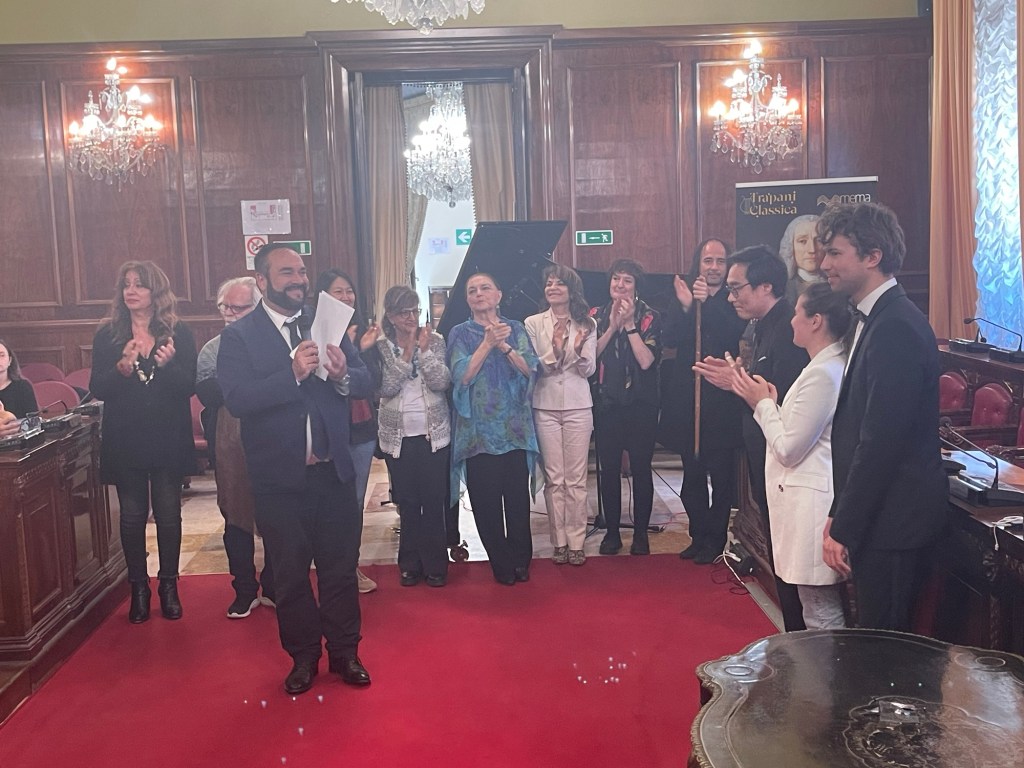
And today was the final round of the International Piano Competition in Trapani .Four pianists had been chosen for this final round and it was a morning of sumptuous music and scintillating piano playing.Such was the high standard that the distinguished jury could do no better than award two tied prizes.
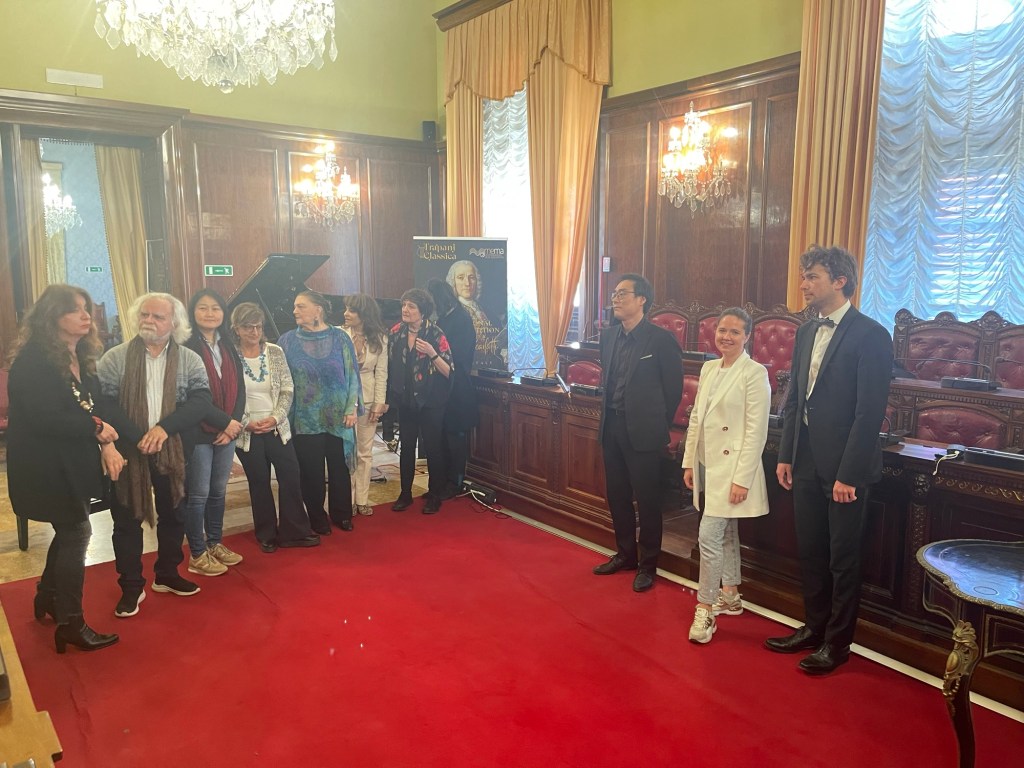
First Prize was awarded to Jeongro Park and Mikhail Kambarov and Second Prize to Ekaterina Chebotareva and Kiana Reid.A happier result could not have been bettered from the sumptuous music making that all four had offered us today.
It had all been streamed live at http://www.memassociation.org
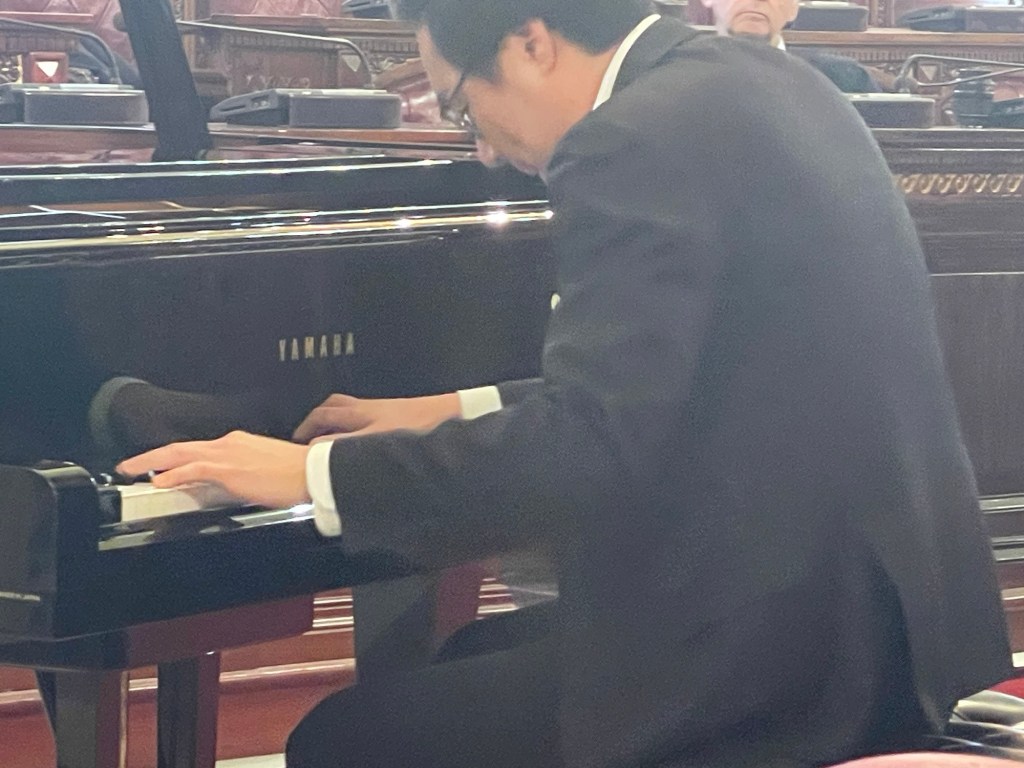
Jeongro Park had opened today’s final round with a scintillating account of the Scarlatti Sonata K.20 that he played with an infectious rhythmic drive that did not exclude refined phrasing of delicacy and style.A kaleidoscope of sounds and colours was opened up in the magic box that is Kurtag’s Homage to Scarlatti .Jeongro showed us his mastery of sound from the whispered barely audible to the rich full sounds that this wonderful instrument can reveal .There was never any hardness but always with full sounds of seemingly infinite reverberations.A truly masterly performance of Schubert’s Drei Klavierstucke revealed an intelligent musicianship allied to a poetic fantasy always at the scrupulous service of the composer.There was a wonderful sense of balance that allowed the melodic line to sing without any forcing but also to be sustained by Schubert’s miraculous harmonic invention.
Rachmaninov’s Chopin variations have long been neglected because thought of as overlong and drawn out.This was not the case today in Jeongo’s masterly hands where his sense of colour and transcendental piano playing showed a work of great invention and variety .Chopin’s C minor prelude was subjected to Rachmaninov’s fantasy world of scintillating pianistic invention from the hands of a master who could show us so clearly the musical line in a work where there are so many notes that it takes a real musician to sort out the wood from the trees.
Jeongro’s own trascription of Dreams ,one of Rachmaninov’s six romances op 38 , was a masterly reworking of a rarely heard song.

The second to play in this final round was the Japanese pianist Kiana Reid whose beautifully florid C sharp major prelude lead so beautifully into the opening of Beethoven’s Sonata op 109. Playing where beauty and intelligence combined as Beethoven’s first of his final trilogy was given the space and freedom as meticulously noted in the score.There was dynamic drive to the Prestissimo second movement where the melodic line was finely drawn also here.The final theme and variations were played with great weight and authority as the quartet quality of the theme was gradually transformed into ever more vigorous variations until the return of the theme and Beethoven’s miraculous use of seemless trills on which his vision of Eutopia is revealed as the theme is allowed to float on this wonderful stream of sounds.This was playing of remarkable technical control but also of poetic understanding and intelligence.
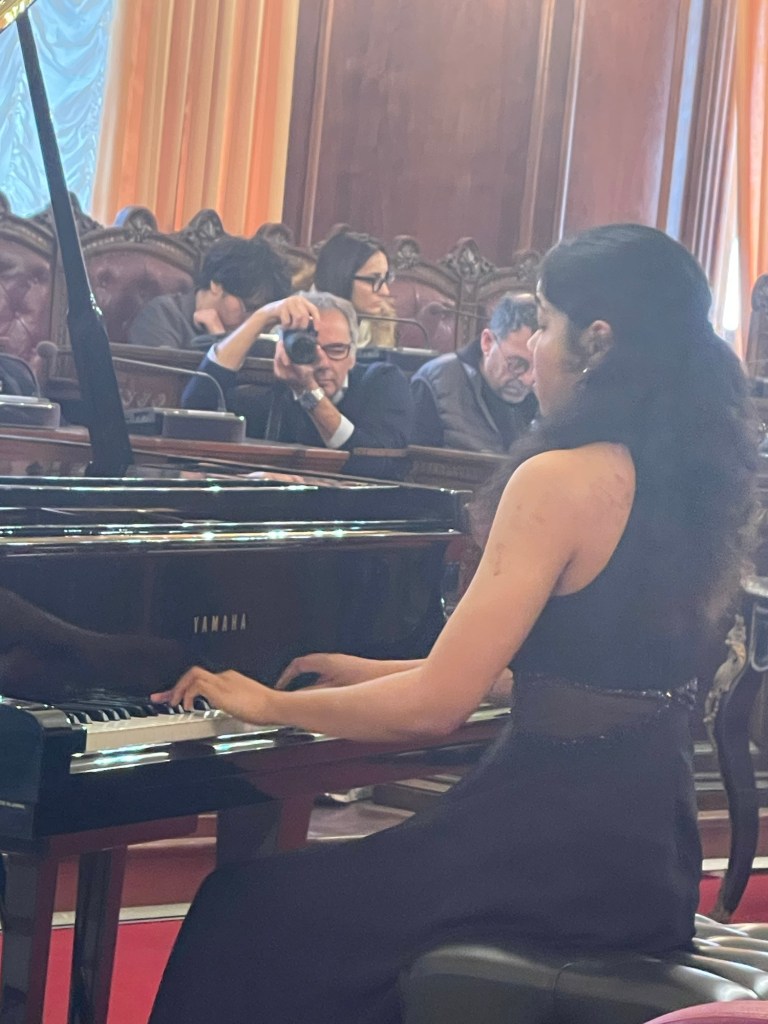
It was the same intelligence combined with breathtaking virtuosity that made for overwhelming performances of Rachmaninov’s Second Sonata and Ravel’s own transcription of “La Valse’. There was a sense of colour and transcendental virtuosity that was a continual outpouring of sumptuous beauty and overwhelming power.
The range of colour that she found in La Valse was quite remarkable and her glissandi in both hands were just streams of gleaming sounds that shone in this rather sultry atmosphere with a build up in tension that was hypnotic and breathtaking in it’s mastery of control and daring.
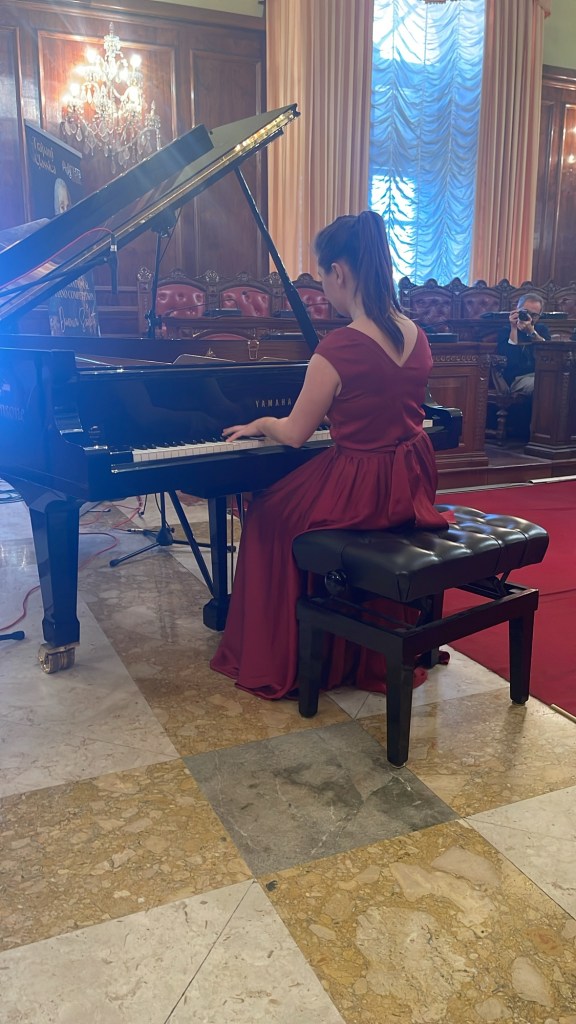
The third of our quartet of finalists was Ekaterina Chebotareva who saved her finest performances for today’s final round. Playing of intelligence and authority with a poetic understanding that could bring Schubert’s three movement Sonata in A minor D.537 vividly to life .It is a sonata that can seem rather disjointed in lesser hands but Ekaterina made the music speak eloquently and with such subtle colouring .The seemingly ungrateful rather heavy handed chords were given a new life and meaning that I have rarely heard from others. She had started with Soirée de Vienne n 6 by Schubert in Liszt’s teasingly tantalising transcription and she played it with subtle charm and a lightweight jeux perlé of great character and style.A Scarlatti Sonata K.82 was played with a scintillating lightness and clarity before Puccini’s ‘Crisantemus’.
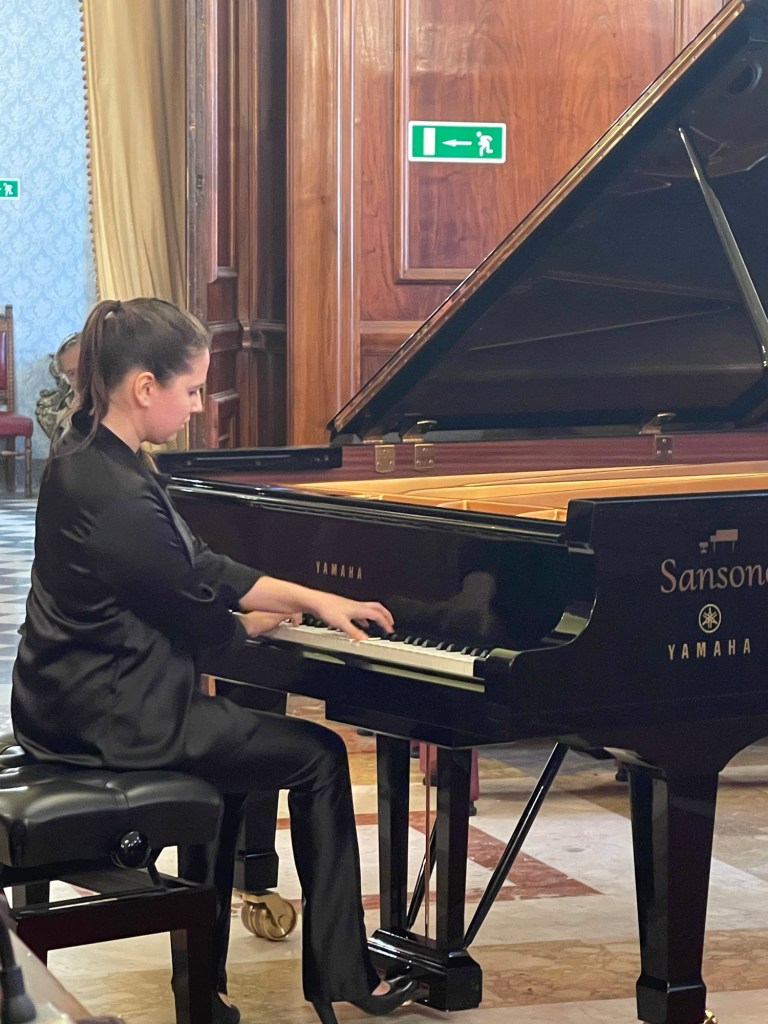
A work I have never heard in concert before and it was a real curiosity inserted in a programme by this discerning young artist.It was a sumptuous interlude before Agosti’s famous transcription of Stravinsky’s ‘Firebird’.Her transcendental technique and musicianship brought this famous transcription vividly to life.After the extraordinary gymnastics of the opening there were moments of purity and beauty before the magic entry of the Firebird and the tumultuous build up to the final breathtaking ending.Some remarkable playing for it’s intelligence and musicianship allied to a clarity and technical mastery.
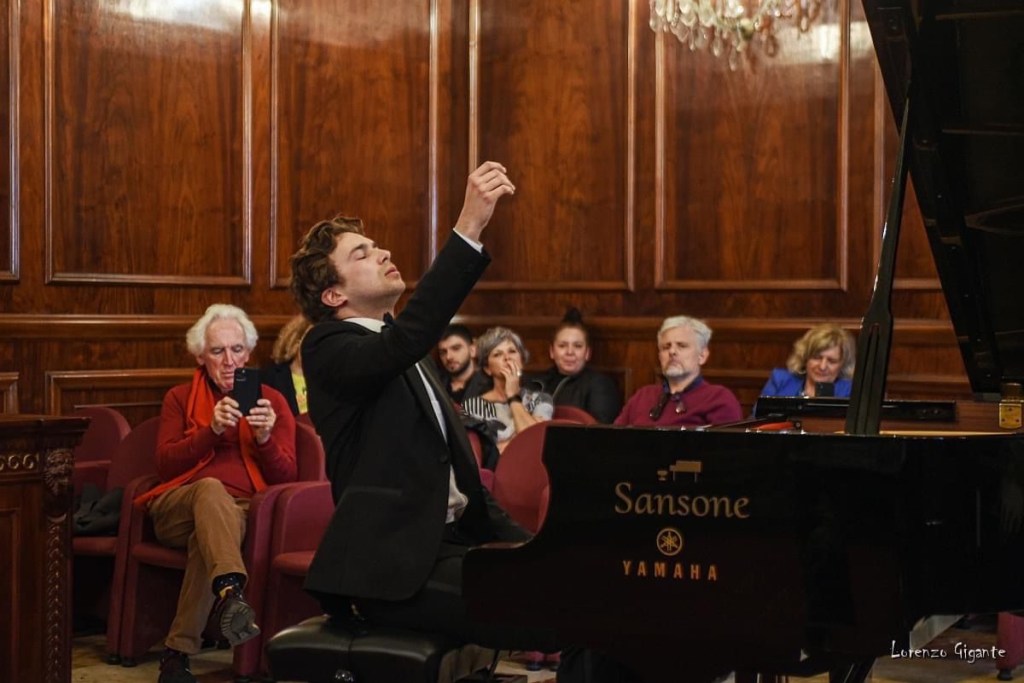
The fourth of the pianists today was another Russian pianist this time transferred to Weimar and was the youngest of the four competitors .Mikhail Kambarov’s performance today was for me the highlight of a very special morning of music making.
Everything he played was so convincing and full of temperament as he lived every moment of the works he played.I was brought up on the Bach of Rosalyn Tureck and would often stick the pages on the aide memoire that she would use in her old age when she was no longer the High Priestess that had reigned in the world’s great concert halls for generations.But Mikhail played a different type of Bach ,more streamlined and certainly faster but it had the same unrelenting pulse that Rosalyn would bring to all she did.Mikhail today brought a sense of colour to his Bach that showed a phenomenal technical control allied to an intelligence and a personality that were for me totally convincing.The range of sounds that he brought to the slow movement were quite remarkable where legato and staccato somehow in his hands could live together without any smudging from the pedal.
It was Anton Rubinstein who said that the pedal was the soul of the piano and Mikhail certainly realised that.He had a total mastery of them which just gave him the same range of sounds of the different manuals that Bach would have had.But Mikhail also had the modern piano with it’s range of sounds and possibilities that Bach could never have imagined!
The Messiaen brought tears to my eyes as the stillness and whispered sounds of heart rending significance struck deep and the pungent harmonies ,sometimes like broken glass,were of searing intensity.
Rameau’s ‘La Poule’ was played with the same amazing dexterity and clarity as Sokolov and it was a lesson in refined playing of great artistry.
The control of sound in Scriabin’s Prelude for the left hand was nothing short of miraculous.I have never heard it played with such golden luminosity and delicacy but there was also an unbridled passion as this little prelude was monumental in the way that Mikhail managed to tell a story in sound that was really quite remarkable for its control and poetic understanding.
There was a magical luminosity and purity to the ‘Follia’ that Rachmaninov chose for his variations.Even a very subtle addition of ornaments ,as he had done in the Bach Italian Concert too , brought a smile to my face at the cheek of daring to hint at such a thing!
But this was a true artist where one felt anything was possible on a true voyage of discovery.The sounds and colours that he found together with the sudden rhythmic impulse that he would add to some of the variations were astonishing in their daring and total conviction.Using his whole body to obtain a rhythmic energy where his devil may care daring was totally at the service of the music ,as he plunged into the octaves or the menacing chords that fill many of the final variations.Like Alfred Cortot the poetic content and musical meaning made any little technical slips on the way completely irrelevant in performances of such overwhelming authority and vision.The searing intensity of the coda and the final return of the theme was one of those magic moments that will remain in my memory for long to come.
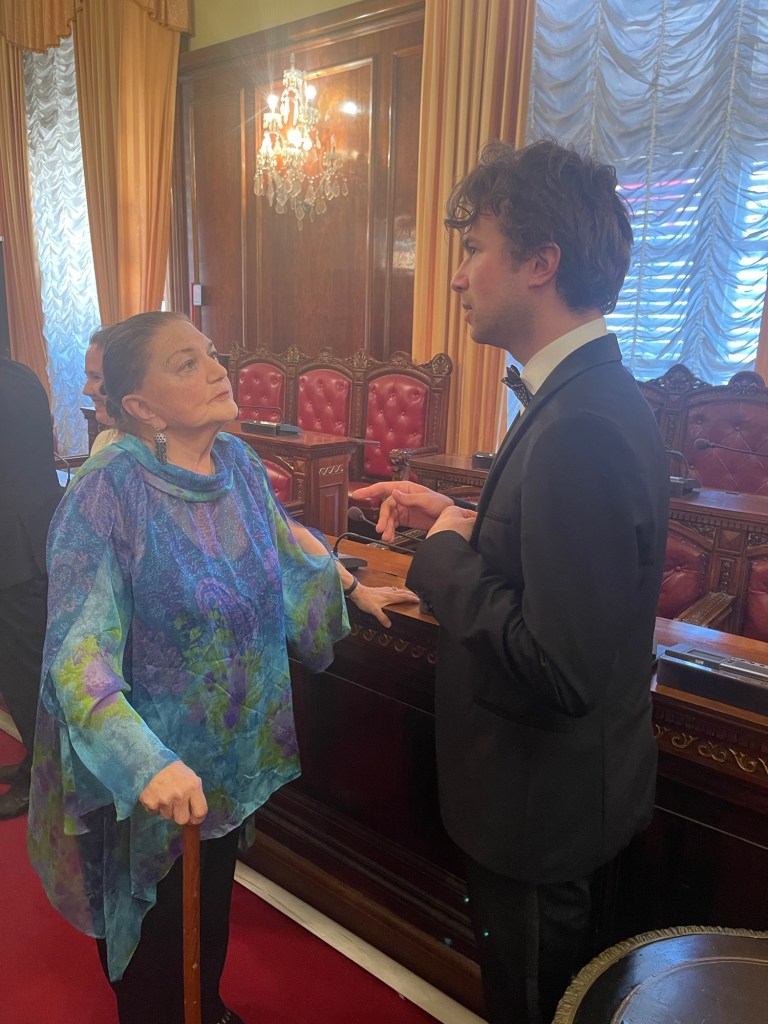
At 23 this is an artist to watch and the Jury quite rightly awarded him first prize together with the more mature mastery of Jeongro Park who is though more than ten years his elder.
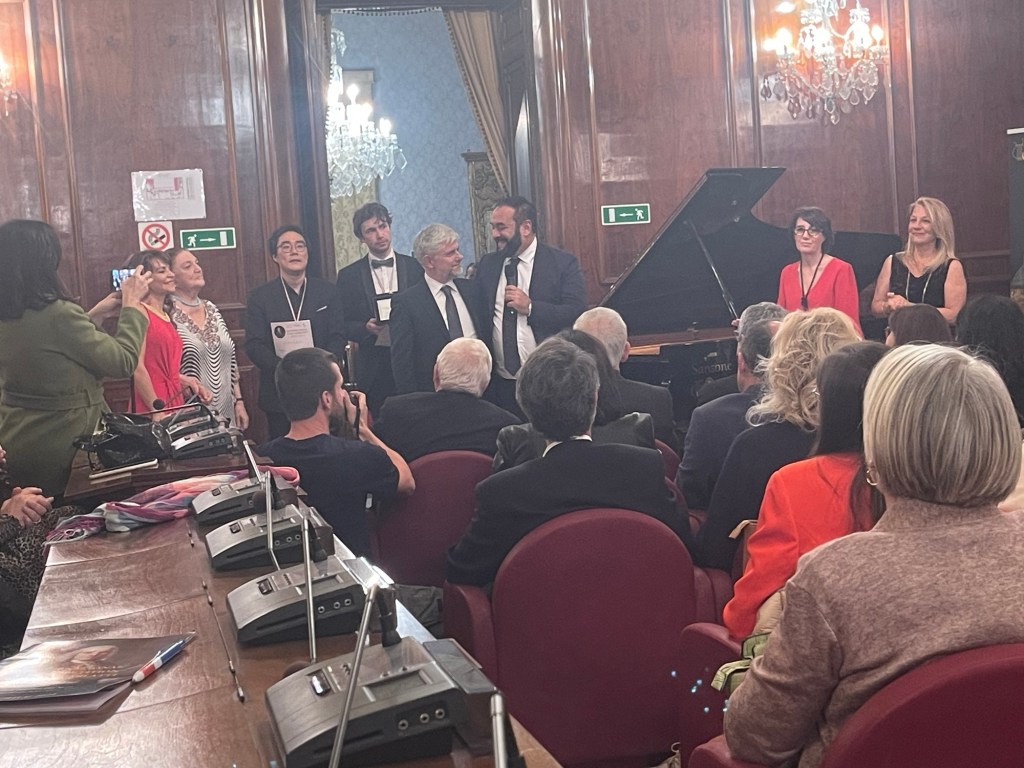
The final concert and prize giving was for me an occasion to hear a remarkable pianist from Palestine who had been having lessons from Oxana Yablonskaya on line as travelling to her home in Jerusalem was not possible.Mohammed Alshaikh aged 21 was awarded the young Emerging Pianist Category Prize and I was astounded by his performance at the concert tonight of the Danse Macabre by Saint Saens in the diabolical transcription of Vladimir Horowitz .
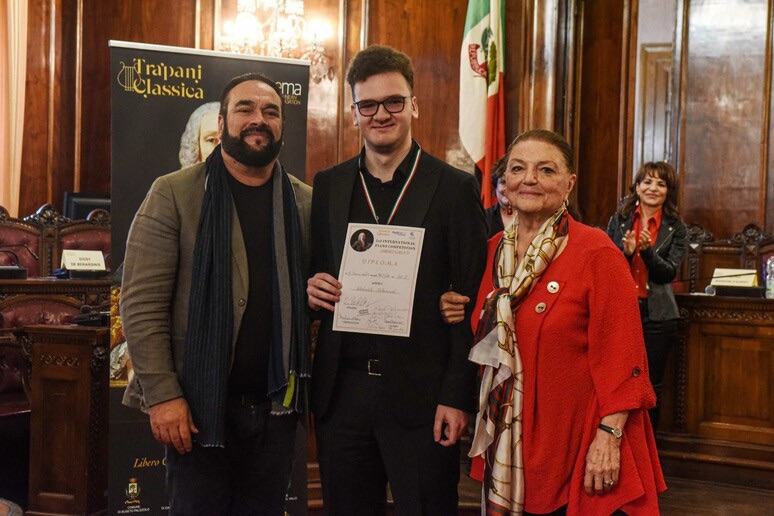
My wish to hear a young man who I was told had taken the competition by storm,had come true .But then Trapani is that sort of place where dreams can become reality thanks to the vision and hard work of Vincenzo Marrone d’Alberti and his team intent on bringing,to the world’s attention, culture in their beloved city of Trapani


 ChristopherAxworthy-MusicCommentary
2 risposte a "Trapani the jewel of Sicily where dreams can become reality – The International Piano Competition – Domenico Scarlatti"