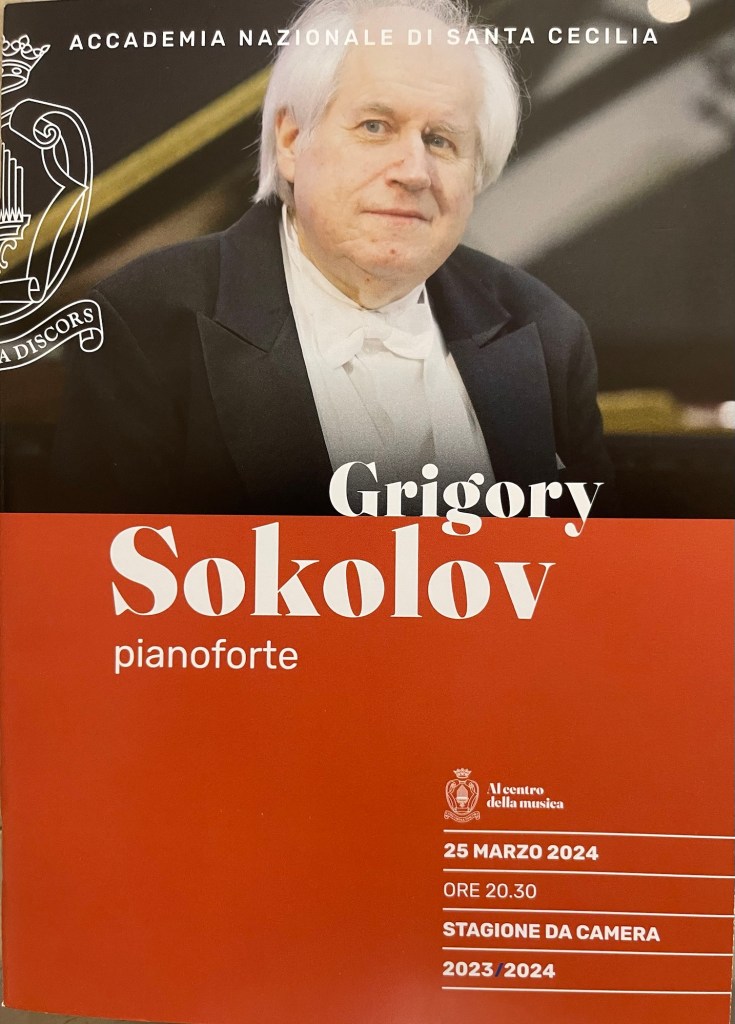
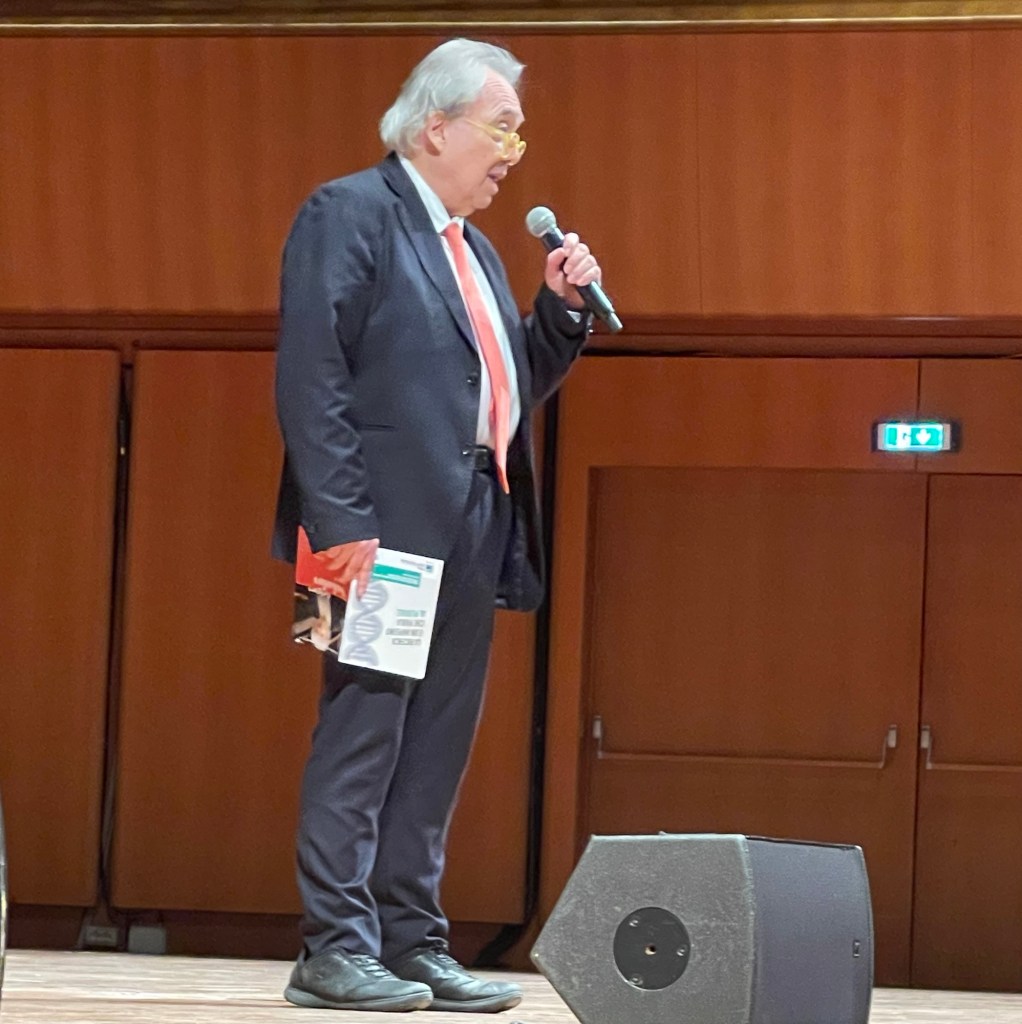
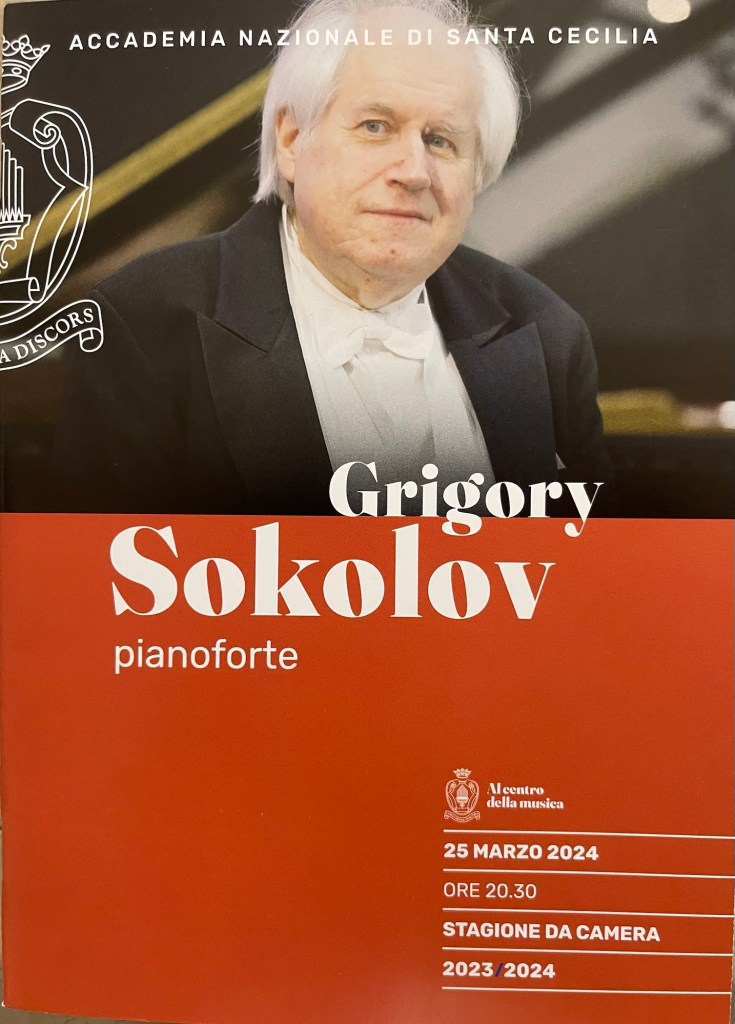
A full hall for the annual recital by Sokolov at the Academy of Santa Cecilia.Today with Maurizio Pollini being honoured by La Scala with his 169th appearance on that hallowed stage. The President and Artistic Director of the Accademia Nazionale di Santa Cecilia,Michele dall’Ongaro, offered his heartfelt condolences from the stage where our beloved living legend had performed for a lifetime but will now no longer appear in his much anticipated annual performances.
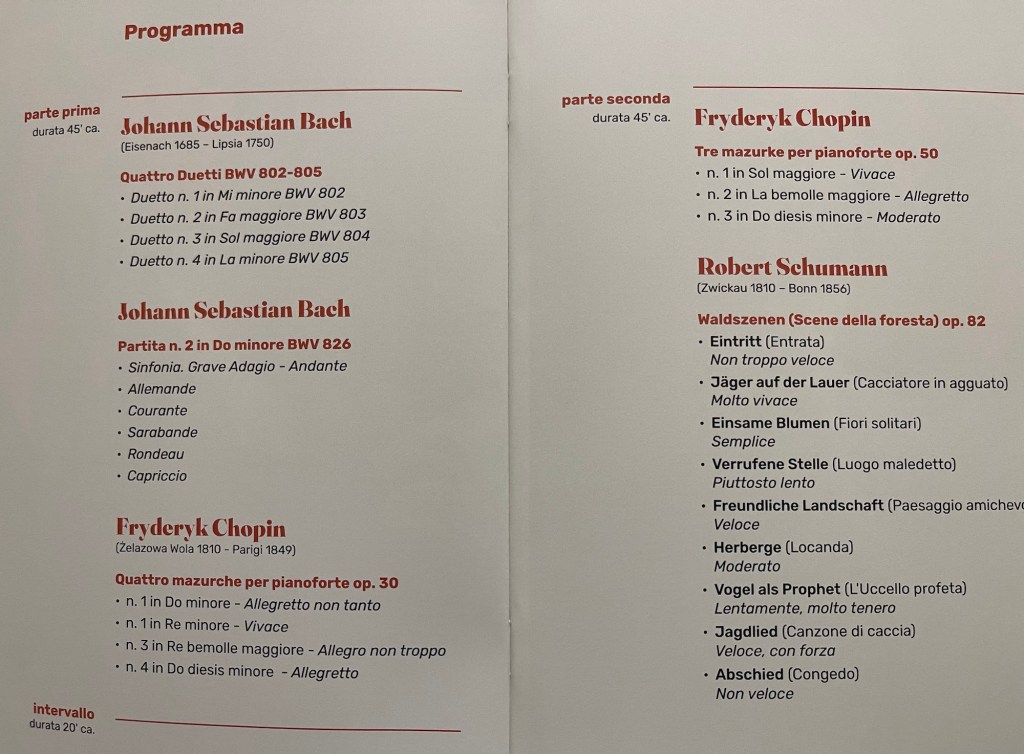
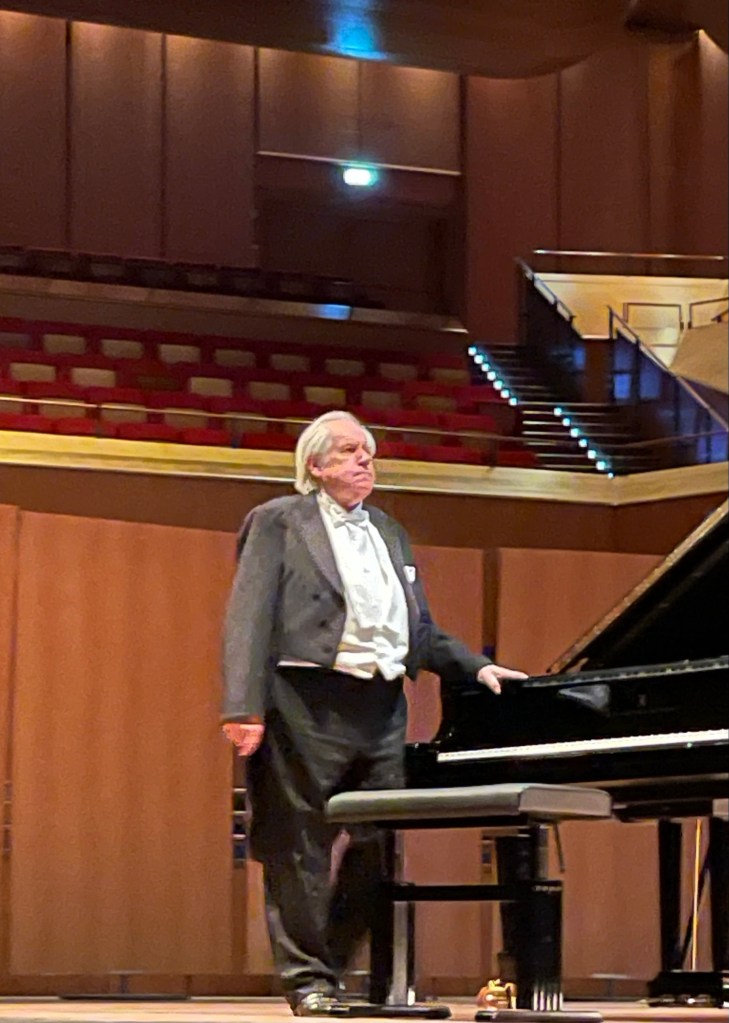
But what a wonderful tribute to a master to hear Bach played with the same crystalline simplicity from Sokolov today with Bach’s Four Duets and his Second Partita.
The music just seemed to flow so naturally from Sokolov’s hands with a beauty and clarity of art that conceals art as he seems to do nothing but manages to recount a universe.
There is such subtle control of sound that Sokolov can pin point certain details in Bach’s knotty twine without ever disturbing the pulse or even the dynamic range.Even the majestic opening of the Second Partita was imperious without ever stepping out of the dimension of sound that he had established with the opening four duets .The first duet sounded in this way so modern with its daring clashing counterpoints .There was featherlight passage work in the second with delicacy,beauty and clarity .The gentle meandering of the third was followed by the whispered entry in the bass of the fourth.
Even the second partita was played in a contemplative mood where the Allemande was allowed to flow so beautifully with the Courante slightly more robust as though he had only moved to a different register .He returned though to the gently chiselled sounds of the Sarabande before the rhythmic vitality of the Rondeau and the decisive almost imperious Capriccio.The Grave adagio of the opening was played with absolute clarity with dynamic energy driven by the rests in between such noble statements.The Andante emerged from this imperious opening statement and was barely whispered as it flowed like a great singer sotto voce with the gentle rise and fall of the phrases that were allowed to breathe and flow so naturally.Bursting unexpectedly into life after the long beautiful ornaments of Bach’s aristocratic Bel Canto.A remarkable conversation was started between the parts as the chattering phrases were imperceptibly highlighted with technical masterly control always guided by the mind of a master musician.
Seven Chopin Mazurkas where whispered confessions of ravishing beauty showed us that these were ‘canons covered in flowers ‘ as they were the true Poland that had remained in Chopin’s heart during a lifetime of exile from his homeland.
The four op 30 began with Allegretto but as Chopin asks ‘non tanto’ as there are the yearning phrases in Sokolov’s hands played with disarming simplicity before almost taking flight but ‘con anima’ always as it unwinds it’s way so subtly to the yearning of the opening.A slightly more robust dance with it’s question and answer was greeted by the tolling of the bell of A flat that heralds this more rumbustous third Mazurka.Leading by way of a magical cascade of etherial notes to a mysteriously driven sotto voce that seems to burn itself out with the gentle beat of the drum in the left hand played with such delicate staccato that it was no more than a mere suggestion before taking flight again.The last of this set and the longest is a real tone poem where a story is being told.There was magic in the air as Sokolov just barely reached for the golden high notes.Leading to a majestic climax only to dissolve to what was for me the most magical sound of the whole evening: the final E that shone like gold in the magical descent to complete the home key of C sharp minor.
The three mazurkas op 50 sprang to life with the ‘vivace’ of this rousing first dance.There was aristocratic beauty in the second of the set with its almost military style central episode.The last of this set is one of the longest and the most poignantly beautiful.I remember Perlemuter playing it with great depth of sound or weight where his fingers like Sokolov’s today seemed almost glued to the keys like limpets as they extracted the very essence of sound from each note.This is indeed a jewel amongst gems and Sokolov played it with disarming beauty with the quixotic changes of character passing almost unnoticed as the great architectural line was maintained with mastery and great artistry.And mastery there was too even with the way he just placed to perfection the final C sharp .The slam of the door but not Beethovenian but with the aristocratic respect of Chopin!
Schumann too was present with one of his most contemplative works where a poet is saying goodbye to the world. A whispered haunting opening was greeted by ‘Lonely Flowers’ entwined in a duet of delicacy and poignant beauty with a transcendental control of sound .A wistful ‘Prophet Bird’ with its almost too serious central chorale hymn to life before taking flight again with etherial lightness and whimsical improvisation.Drawing to a close but not before a gentle reminder of the ‘Hunter in the Woods’ played with almost Mussorgskian terror mixed with joy.Secrets shared of a ‘Haunted place’ where Schumann’s dotted rhythms in Sokolov’s hands became a lazy question and answer of great effect. A ‘Friendly Place’ that just flowed like water from Sokolov’s hands with a fluidity and buoyancy that was like a breath of fresh air blowing over the keys.A rumbustuous rhythmically driven ‘Hunting Song’ was played with joy and playfulness .There was great nostalgia in the beautiful outpouring of song that describes so well the relief to find the ‘Wayside Inn’ before saying a heartfelt Farewell.’Abschied’ is one of Schumann’s most poignant utterings that was played with golden sounds and a ravishing sense of balance as befits this moving ‘song without words’. All played with perfection by Sokolov with the same superhuman control of sound that we have only ever experienced from Richter.
Even the five encores that were demanded by an insistent public were played with subdued contemplative whispered beauty.The Mazurka in F minor op 63 n.2 opened Sokolov’s traditional succession of encores.A mere whisper that Chopin like Schumann was yearning for a past with searing nostalgic intensity.Sokolov’s Rameau has passed into legend for the incredibly crisp and clear ornaments and the hypnotic rhythmic drive combined with delicacy and sense of style that on a modern day piano is something quite miraculous.His’ Raindrop’ Prelude is exquisite and at times overpowering as so many emotions can be experienced in just a few pages of music – a true miniature tone poem.I think,though, the only sound we heard this evening over forte was in the last encore : the C minor Prelude op 28 n. 20.
https://youtu.be/ly4tsSZpzkE?feature=shared
https://youtu.be/gBaq0d1I96I?feature=shared
https://youtu.be/XEcedNpqlxE?feature=shared
https://youtu.be/dZz_OcJNFuc?feature=shared
https://youtu.be/1chVdUgTJS8?feature=shared
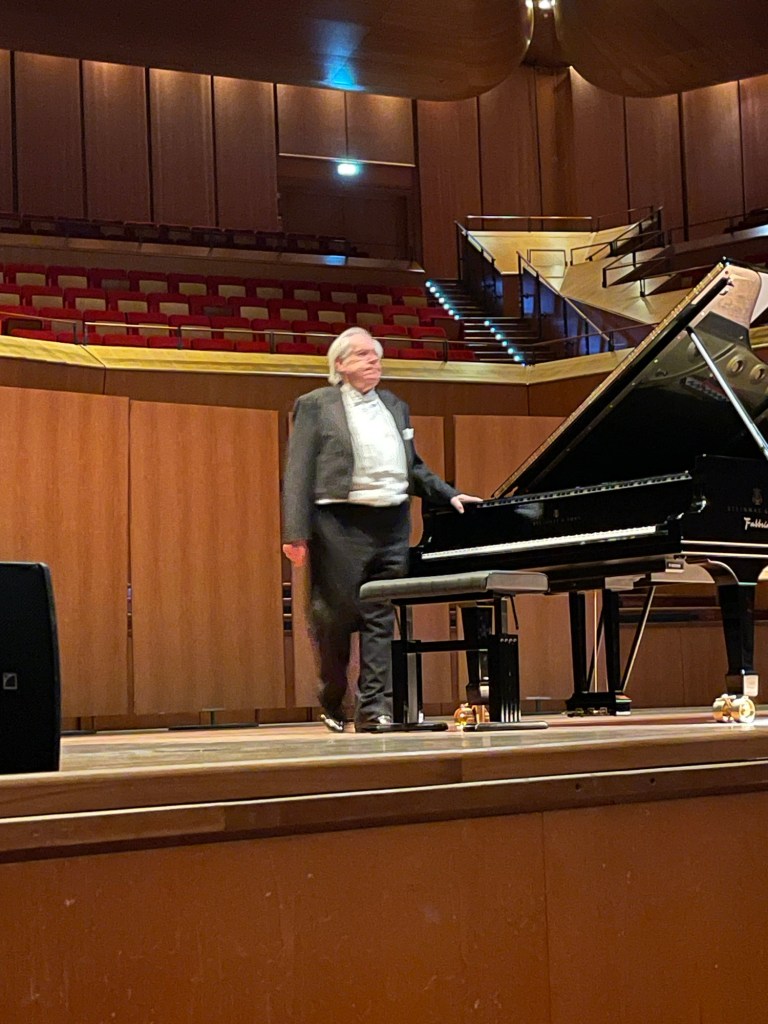
Sokolov is a master musician and pianist and in the past few years I have been astonished how a whole concert with Haydn ,Byrd ,Purcell or lesser know masterpieces by Schumann could hold us in his spell as much as his ‘Hammerklavier’ could ever do.
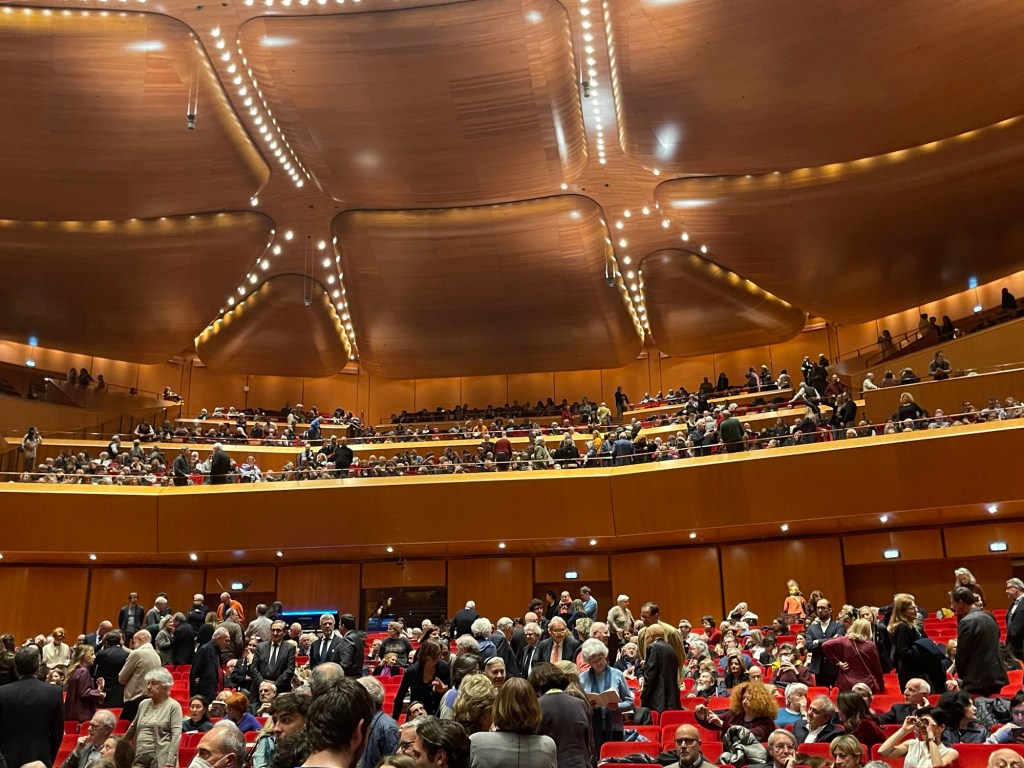
Today though his contemplative mood did not touch me as it always does.Could it be the programme ? Is the master feeling the strain of choosing to play the same programme for an entire season? Was it just me after being blown away the other day by the young Kantorow or bewitched by the supreme style of Lugansky .
I felt tonight for the first time that a ritual was being repeated rather than recreated .Maybe we were all just in a melancholy mood thinking of the loss just three days ago of a much loved legend ?
Sokolov casts his spell over the Eternal City https://christopheraxworthymusiccommentary.com/2023/04/04/sokolov-casts-his-spell-over-the-eternal-city/
Sokolov in Todi……..”…..the greatest pianist alive or dead?”https://christopheraxworthymusiccommentary.com/2020/02/17/sokolov-in-todi-the-greatest-pianist-alive-or-dead/
The Sublime Perfection of Sokolov https://christopheraxworthymusiccommentary.com/2018/03/15/the-sublime-perfection-of-sokolov/
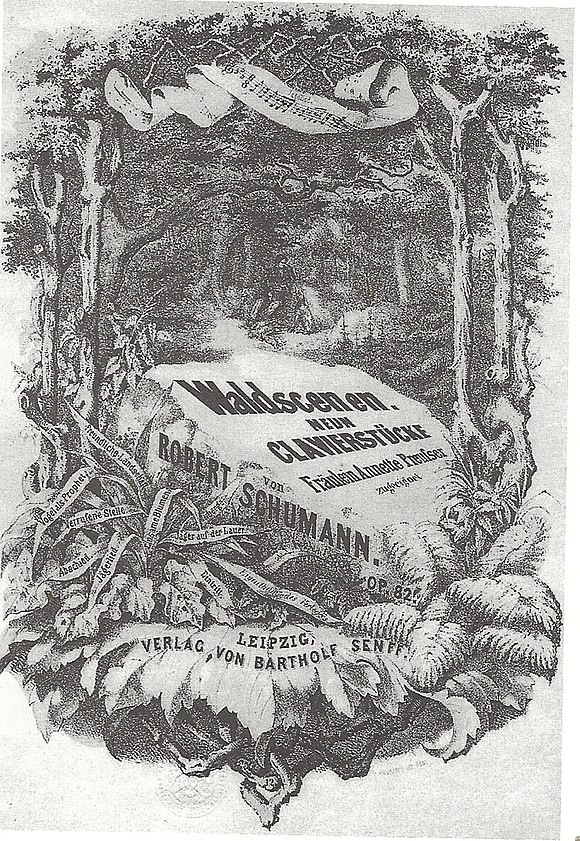
Waldszenen (Forest Scenes), Op.82, is a set of nine short solo piano pieces composed by Robert Schumann in 1848–1849, first published in 1850–1851 in Leipzig
- Eintritt (Entrata) – Nicht zu schnell (si bemolle maggiore)
- Jager auf der Lauer (Cacciatore in agguato) – Hochst lebhaft (re minore)
- Einsame Blumen (Fiori solitari) – Einfach (si bemolle maggiore)
- Verrufene Stelle (Luogo maledetto) – Ziemlich langsam (re minore)
- Freudliche Landschaft (Paesaggio gioioso) – Schnell (si bemolle maggiore)
- Herberge (Osteria) – Massig (mi bemolle maggiore)
- Vogel als Prophet (Uccello profeta) – Langsam, sehr zart (sol minore)
- Jagdlied (Canzone di caccia) – Rasch, kraftig (mi bemolle maggiore)
- Abschied (Addio) – Nicht schnell (si bemolle maggiore)
It is tragic to note that a late work of Schumann, such as Waldszenen (Forest Scenes), is the effort of a man not yet 40. After a life of severe mental instability, Schumann committed himself to an asylum in Endenich in 1854 and would be dead within two years at the age of 46. Still, in the short time allotted to his professional career, he was able to distinguish himself both as a composer and musical journalist.Battling against cycles of debilitating depression, Schumann completed his Waldszenen in 1848 and early 1849. Clara Schumann found some of the individual scenes upsetting and chose not to play them.Schumann wrote: “The titles for pieces of music, since they again have come into favour in our day, have been censured here and there, and it has been said that ‘good music needs no sign-post.’ Certainly not, but neither does a title rob it of its value; and the composer, by adding one, at least prevents a complete misunderstanding of the character of his music. What is important is that such a verbal heading should be significant and apt. It may be considered the test of the general level of the composer’s education.”With Waldszenen, it had been the composer’s intention to head five of the cycle’s nine episodes with fragments of poetry in addition to their descriptive and sometimes enigmatic titles. In the event, he removed all but one of these fragments before publication, recognizing that one can be too specific and limiting in an intentionally evocative musical excursion. Schumann’s regard for Waldszenen is documented in a letter to his publisher in which he refers to the piece as one which “I have greatly cherished for a long time.”
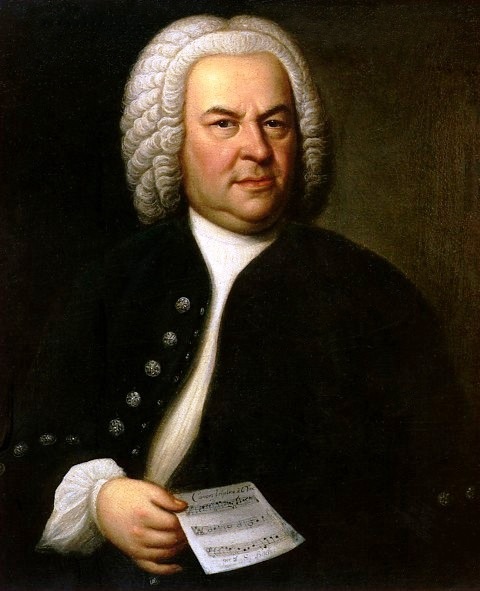
The Partita for keyboard No. 2 in C minor, BWV 826, is a SUITE of six movements written for the harpsichord.It was announced in 1727,issued individually, and then published as Bach’s Clavier-Ubung in 1731.
The six movements are
- Sinfonia
- Allemande
- Courante
- Sarabande
- Rondeau
- Capriccio

 ChristopherAxworthy-MusicCommentary