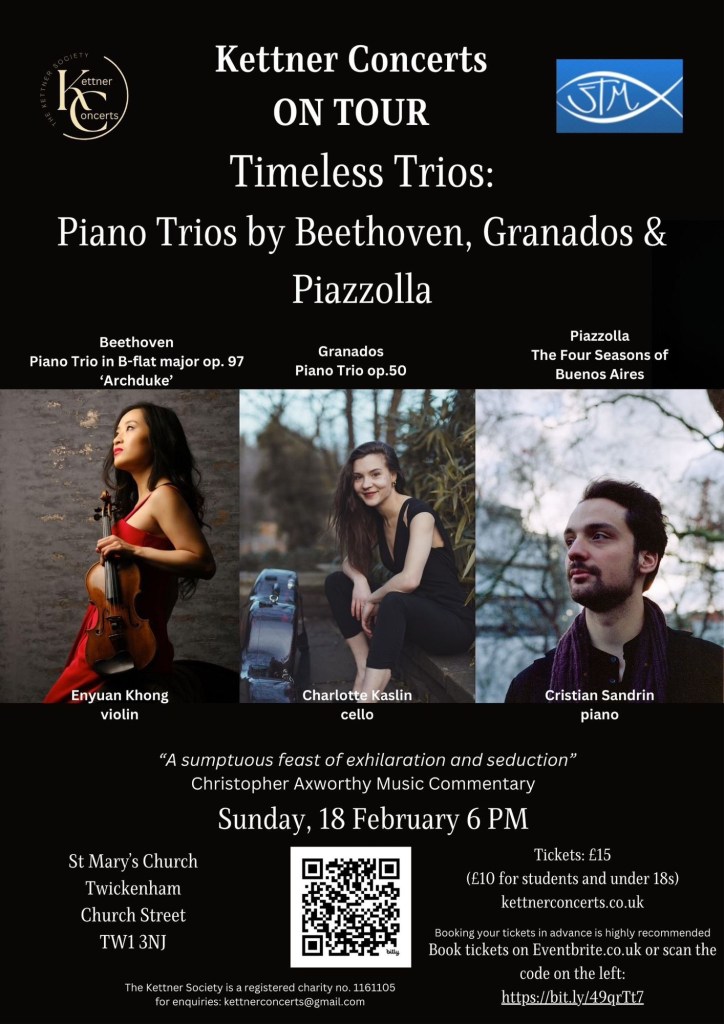
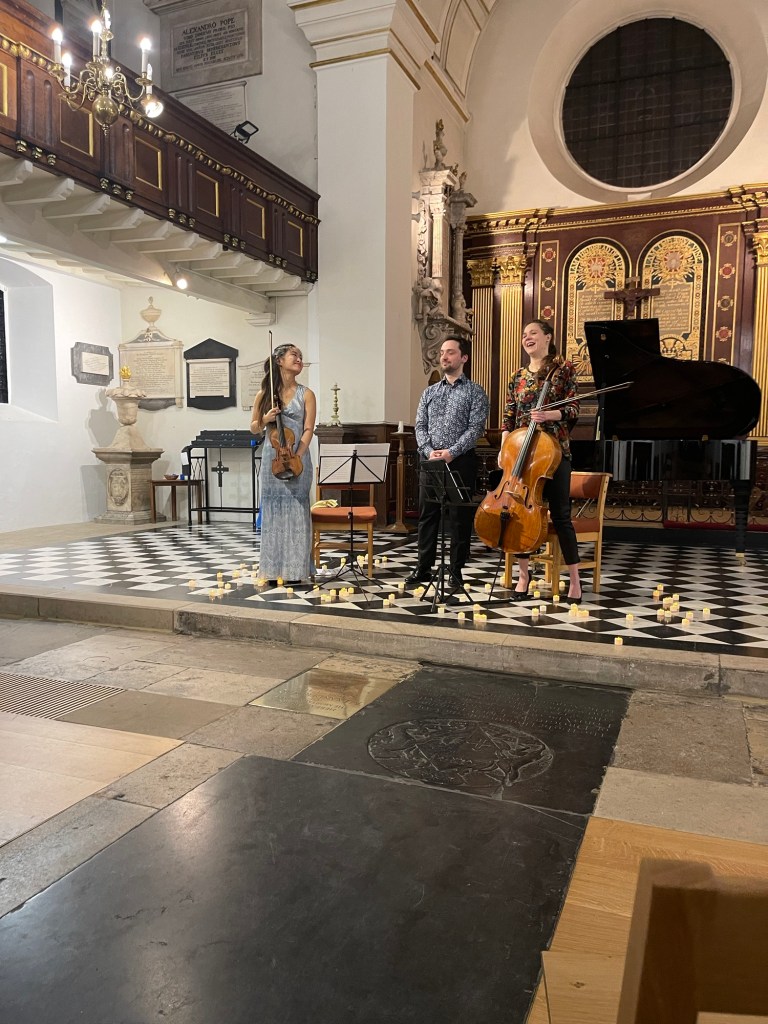
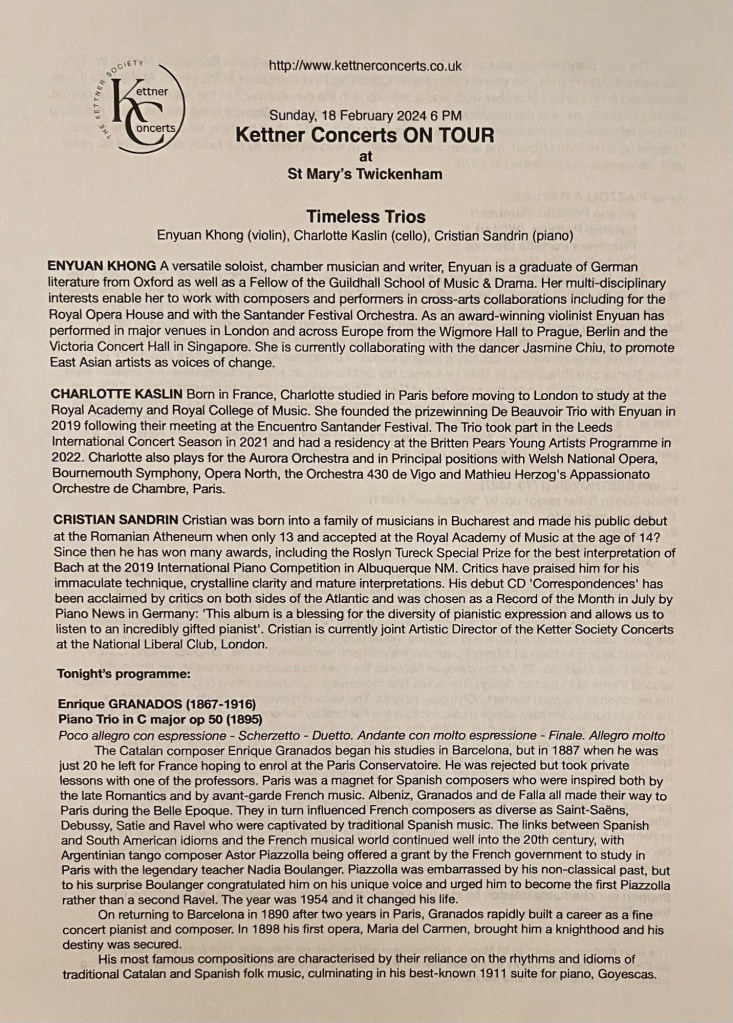
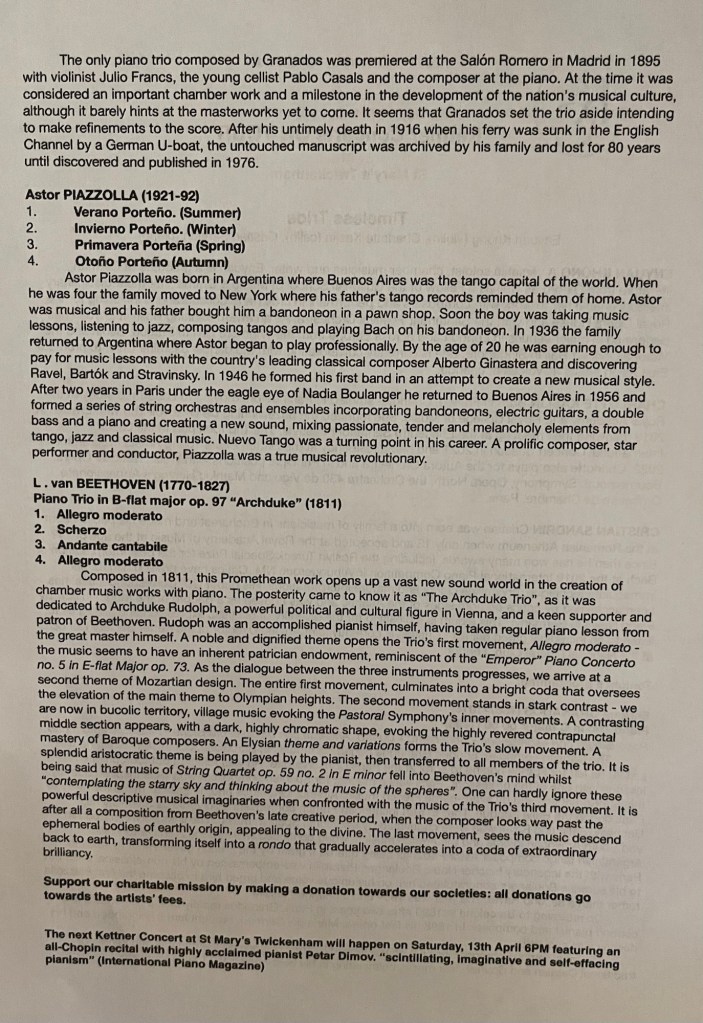
Refined elegance and intelligence was the hallmark of a beautiful performance of one of the greatest works for piano trio.It was also a first performance of the ‘Archduke’ for this trio. I had heard them recently play the Granados and Piazzola which I am quoted as saying was a ‘sumptuous feast of exhilaration and seduction’ . Alexander Pope would have relished that indeed!
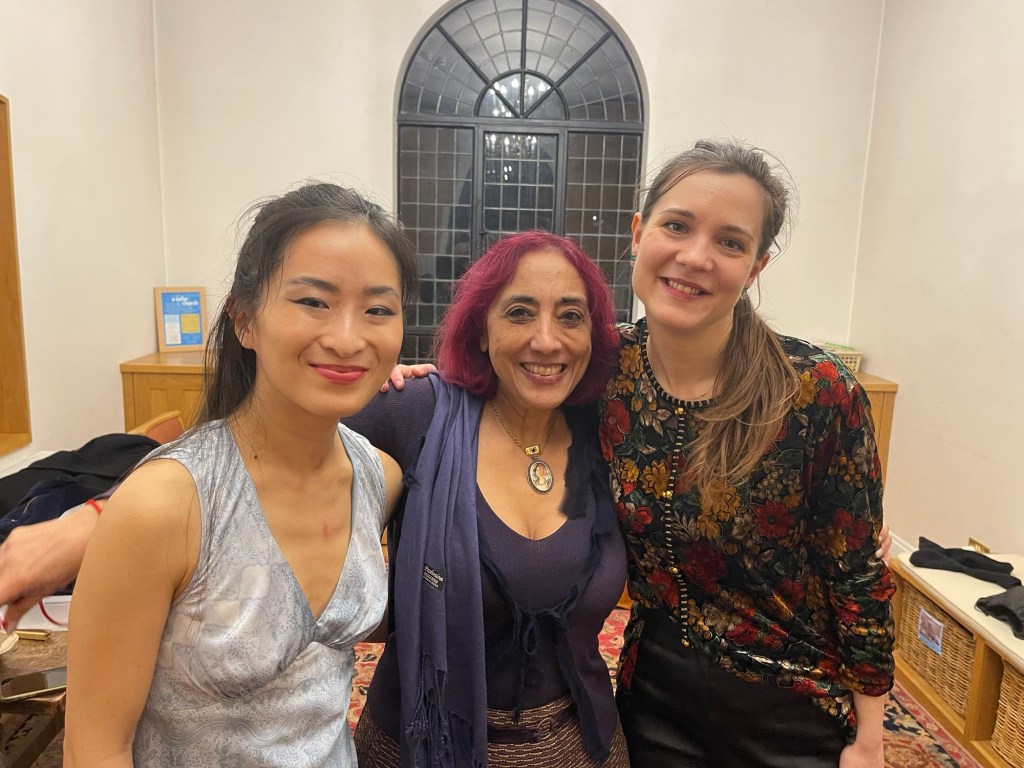
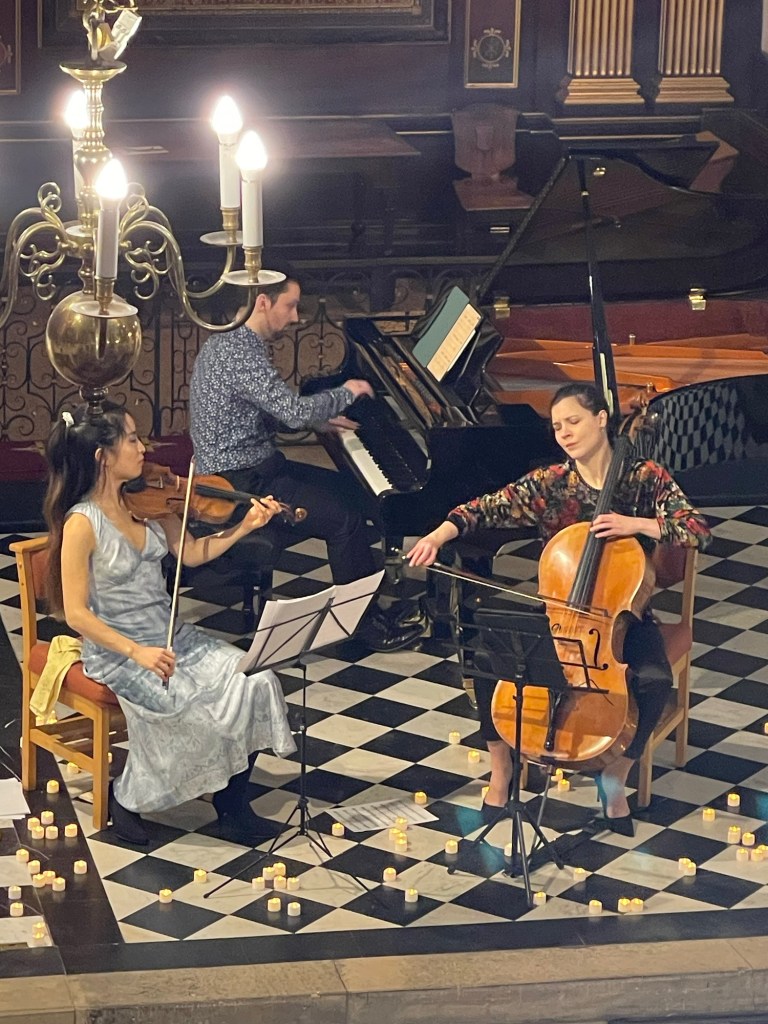
Trio :Cristian Sandrin -Enyuan Khong – Charlotte Kaslin ‘A feast of exhilaration and seduction for Mary Orr’ for the Matthiesen Foundation at the Matthiesen Gallery
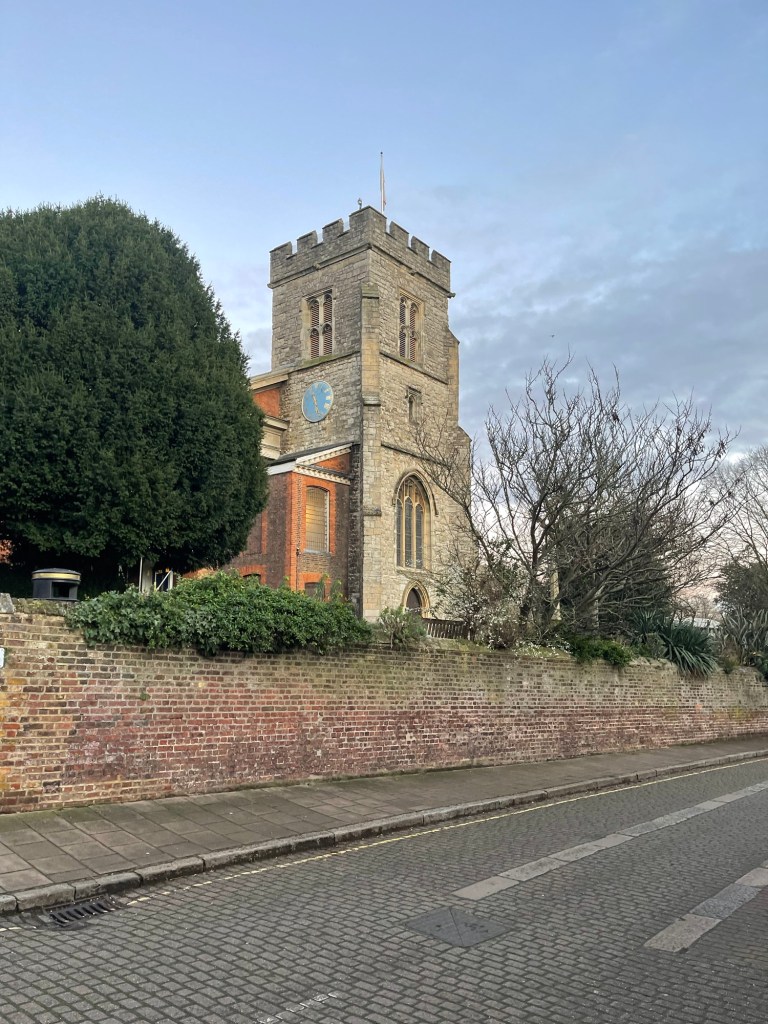
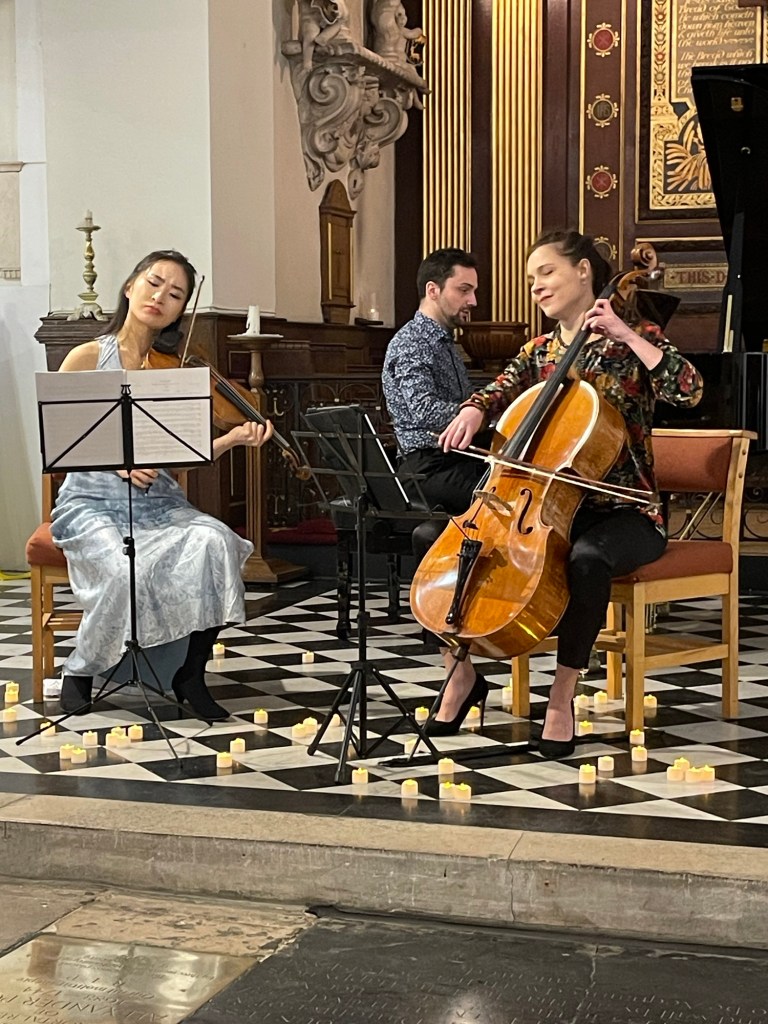
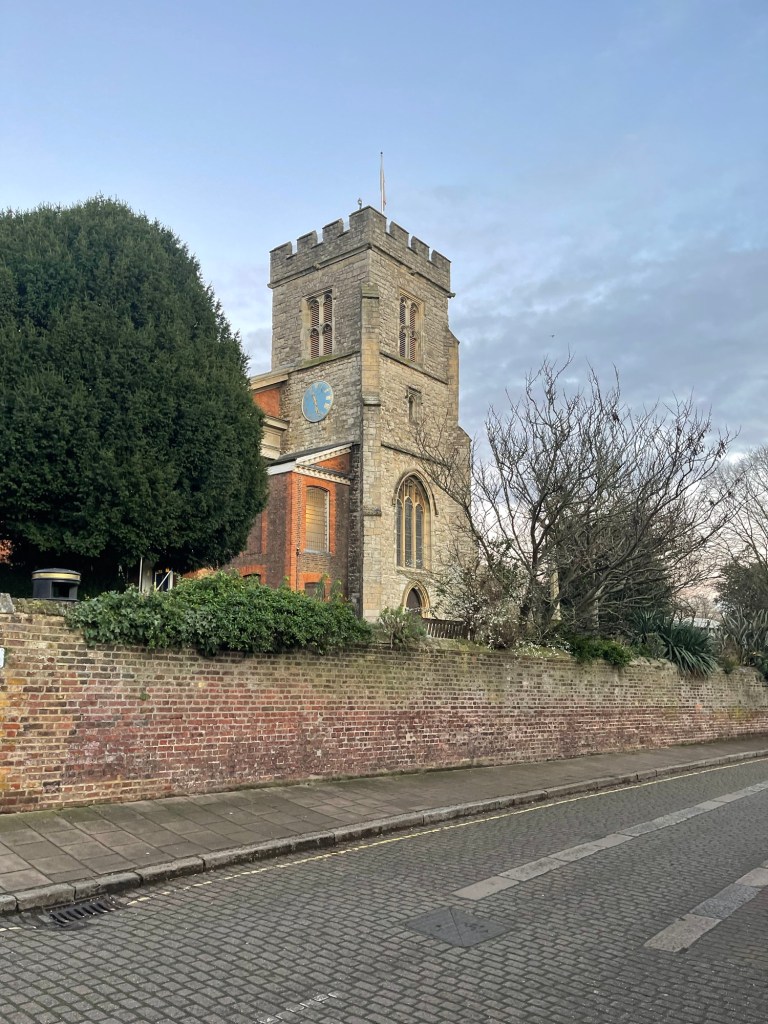
I can only confirm that it was even better and more seductive tonight for the atmosphere that the ‘impresario’ Cristian Sandrin had created with the magical lighting not only around the piano but in the suggestive garden overlooking the Thames in which this beautiful church stands.Missing only the candelabra on the piano which brought to mind a rather cruel but apposite comment from a distinguished New York critic friend.He had penned about a rather scantily clad lady pianist playing to the gallery recently that she made Liberace look like Schnabel ! This was not the case tonight because although Liberace was actually a fine pianist who had become an iconic entertainer ( a bit like Lang Lang ) Cristian is a serious artist who allows the music to speak for itself without any superfluous titivation or tinsel.I am glad that the order of programme was changed to allow the ‘Archduke’ to fill the entire first half with refined beauty and nobility before letting their hair down with the exhilarating seductive sounds that had been promised !It is interesting to note that Pablo Casals was the cellist in the first performance of the Granados together with the composer at the piano ( before Granados and his wife were blown to pieces by a submarine in the English Channel ).It is Casals who is the cellist in the historic formation of Thibaud- Cortot – Casals whose performance of the Archduke has gone down in history and was indeed the first performance I had ever heard of this work on a scratchy 78 rpm recording.
The ravishing beauty of the opening opens the window to the world of Beethoven that was calming his impossible irascible temper as he imagined the sounds only in his head when total deafness was cruelly only just around the corner.The searing intensity of the ‘cellist visibly transformed by the sublime opening as the violinist too was under Beethoven’s spell from the very opening sublimely simple notes of ravishing beauty from Cristian’s very sensitive hands.A continuous stream of wonderment was interrupted only by the rhythmic drive and impish good humour of the scherzo.There was again the beauty of the solo piano in the opening of the Andante cantabile where the religious stillness of the late quartets was foreseen here as the violin and cello took up and varied the poignant melody with elegance and refined mutual anticipation.The Allegro moderato opening with a subtle call to arms was where Beethoven could finally let his hair down with dynamic drive and brilliance not as successfully as Cristian today if we are to believe the reports from two distinguished musicians of Beethoven’s day!
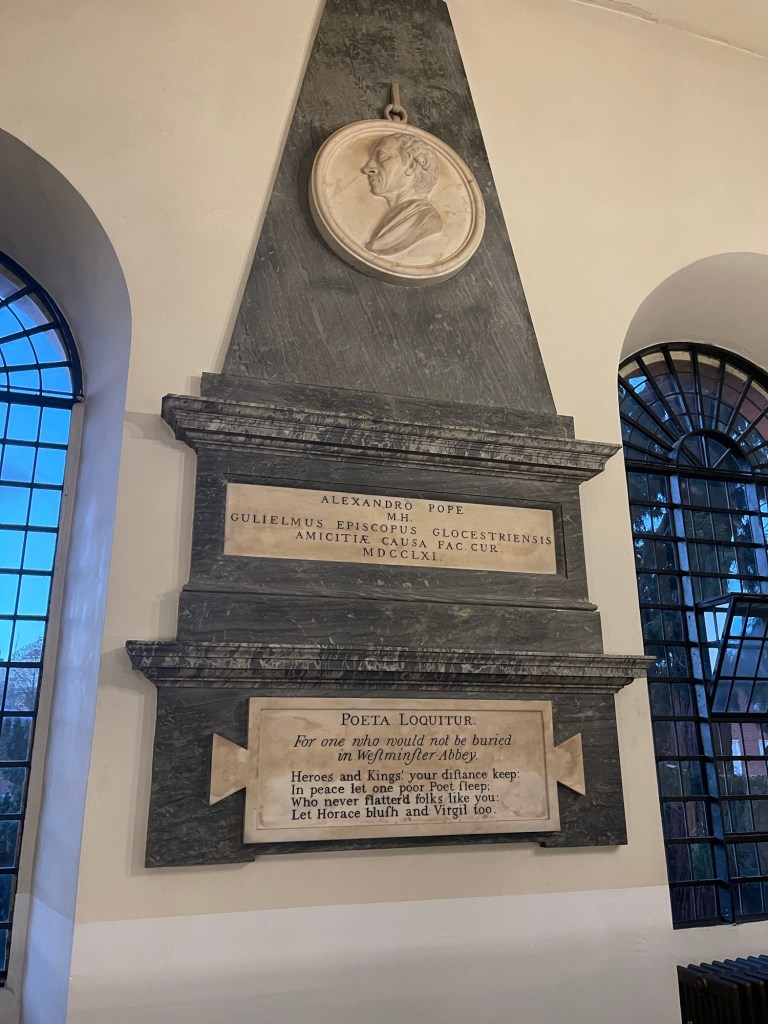
The money made from his translation of Homer allowed Pope to move in 1719 to a villa in Twickenham , where he created his now-famous grotto and gardens. The serendipitous discovery of a spring during the excavation of the subterranean retreat enabled it to be filled with the relaxing sound of trickling water, which would quietly echo around the chambers. Pope was said to have remarked, “Were it to have nymphs as well – it would be complete in everything.” Although the house and gardens have long since been demolished, much of the grotto survives beneath Radnor House Independent Co-educational School.The grotto restored is open to the public for 30 weekends a year from 2023 .Pope’s most famous poem is The rape of the Lock , first published in 1712, and satirises a high-society quarrel between Arabella Fermor (the “Belinda” of the poem) and Lord Petre , who had snipped a lock of hair from her head without permission. The satirical style is tempered, however, by a genuine, almost voyeuristic interest in the “beau-monde” of 18th-century society with the onset of acquisitive individualism and a society of conspicuous consumers. In the poem, purchased artefacts displace human agency and “trivial things” come to dominate..
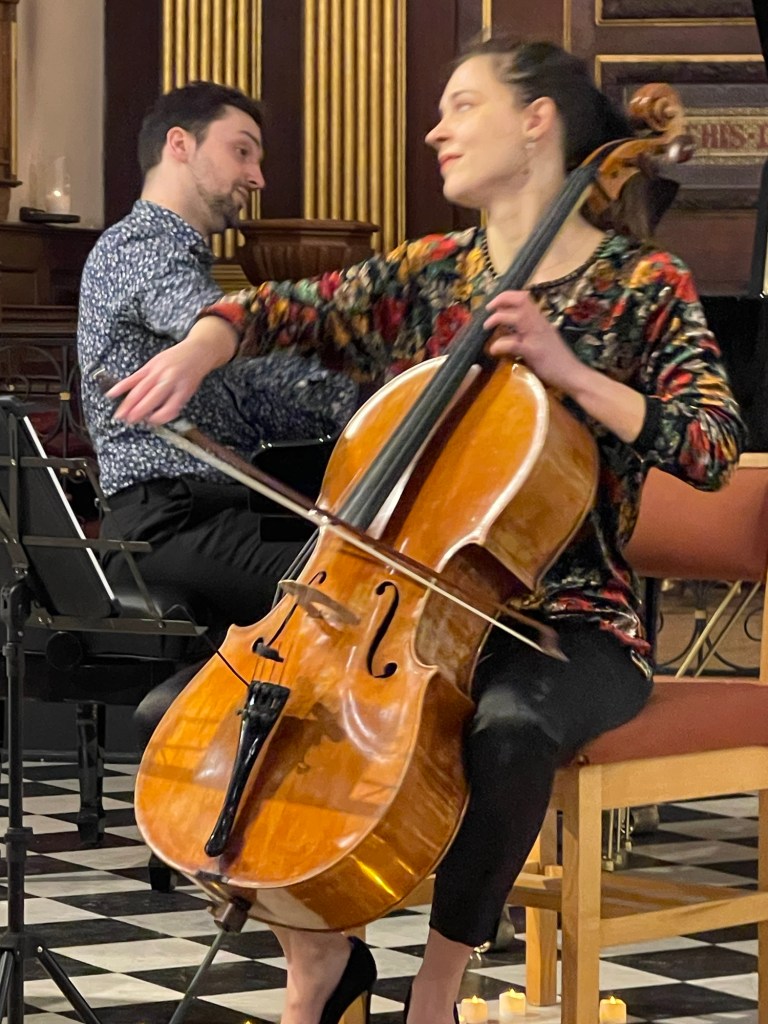

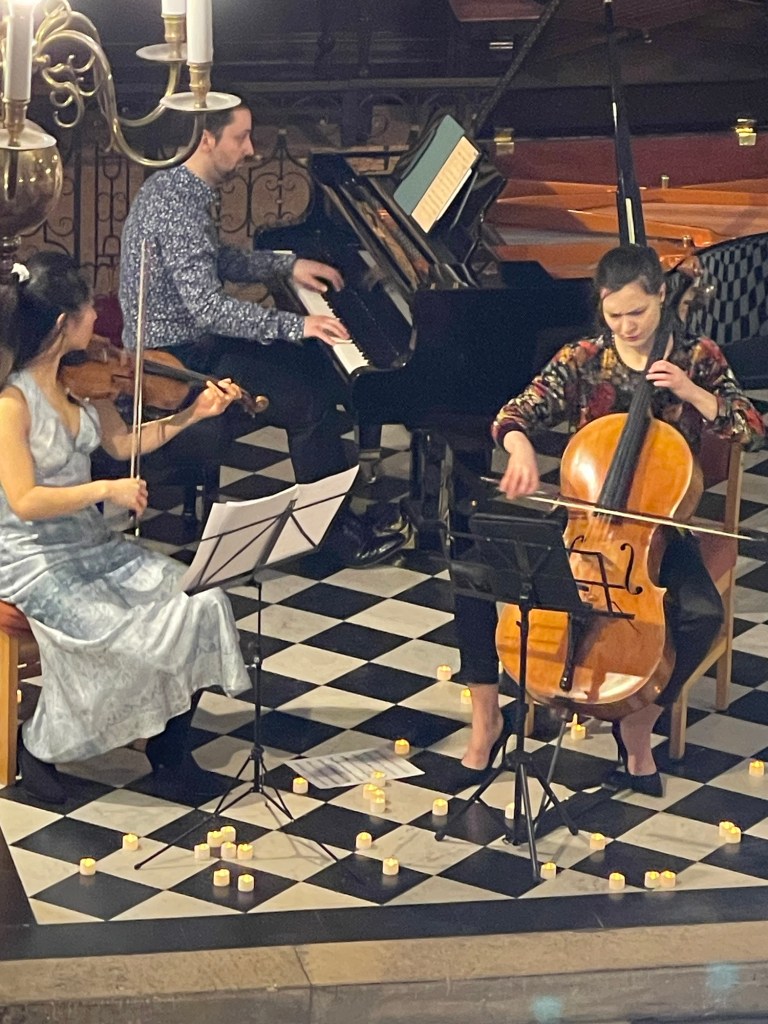

The Archduke Trio op. 97, was completed in 1811, late in Beethoven’s so-called “middle period”. and was dedicated to Archduke Rudolph of Austria. The youngest of twelve children of Leopold II ,Holy Roman Emperor and was an amateur pianist and a patron, friend, and composition student of Beethoven who dedicated about a dozen compositions to .Beethoven also wrote personally to the Archduke with the newly composed trio to have it copied within the archduke’s palace out of fear that it would be stolen.This was a frequent transaction between the two and resulted in the archduke establishing a library of all of Beethoven’s compositions with manuscript copies for preservation.Two days after completion in 1811, Beethoven played the Archduke Trio in an informal setting at the Baron Neuworth’s residency with no known performance after until 1814.The first public performance was given by Beethoven himself, at the Viennese hotel Zum römischen Kaiser on April 11, 1814. At the time, Beethoven’s deafness compromised his ability as a performer, and after a repeat performance a few weeks later, Beethoven never appeared again in public as a pianist.
The violinist and composer Louis Spohr witnessed a rehearsal of the work, and wrote, “on account of his deafness there was scarcely anything left of the virtuosity of the artist which had formerly been so greatly admired. In forte passages the poor deaf man pounded on the keys until the strings jangled, and in piano he played so softly that whole groups of notes were omitted, so that the music was unintelligible unless one could look into the pianoforte part. I was deeply saddened at so hard a fate.”
The pianist and composer Ignaz Moscheles attended the premiere, and wrote about the work, “in the case of how many compositions is the word ‘new’ misapplied! But never in Beethoven’s, and least of all in this, which again is full of originality. His playing, aside from its intellectual element, satisfied me less, being wanting in clarity and precision; but I observed many traces of the grand style of playing which I had long recognized in his compositions.”

 ChristopherAxworthy-MusicCommentary