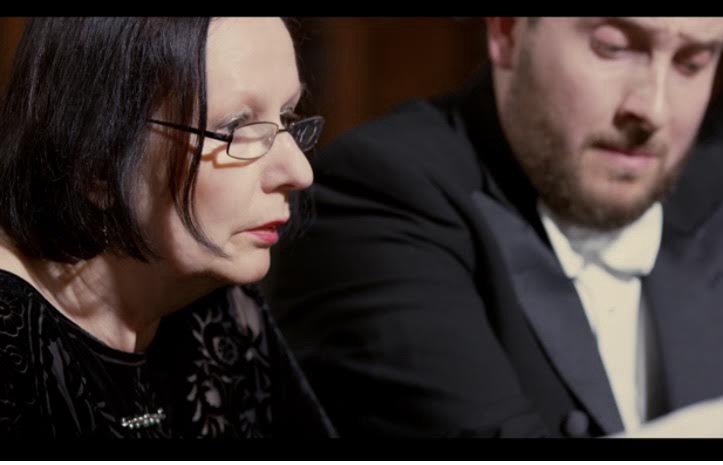
Beethoven: Symphony no 9 in D minor Op 125
transcribed for Piano Duet by Scharwenka (1850-1924)
1. Adagio – Allegro 2. Adagio 3. Allegro 4. Allegro
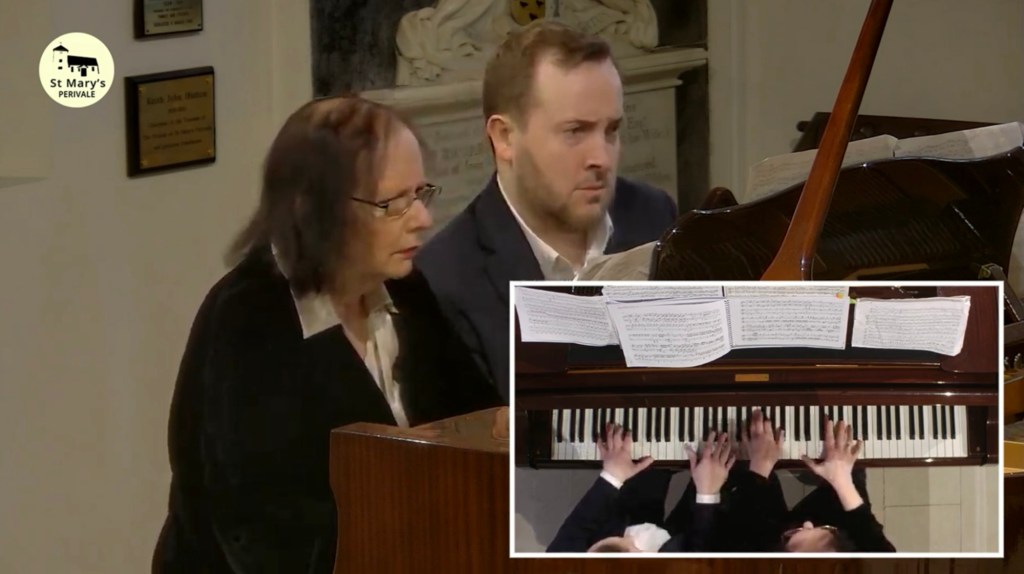
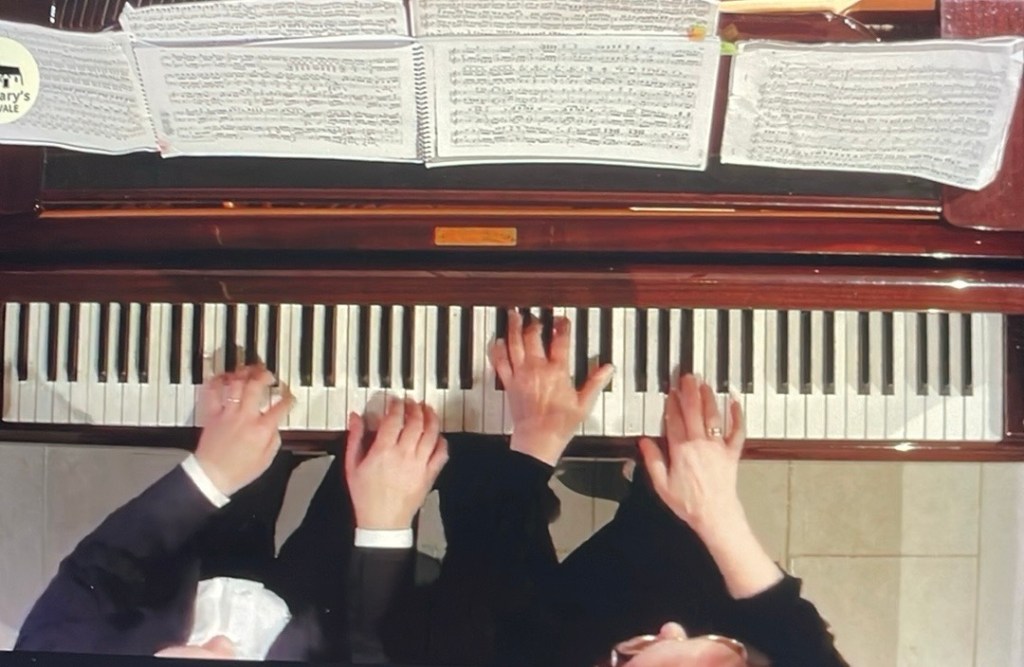
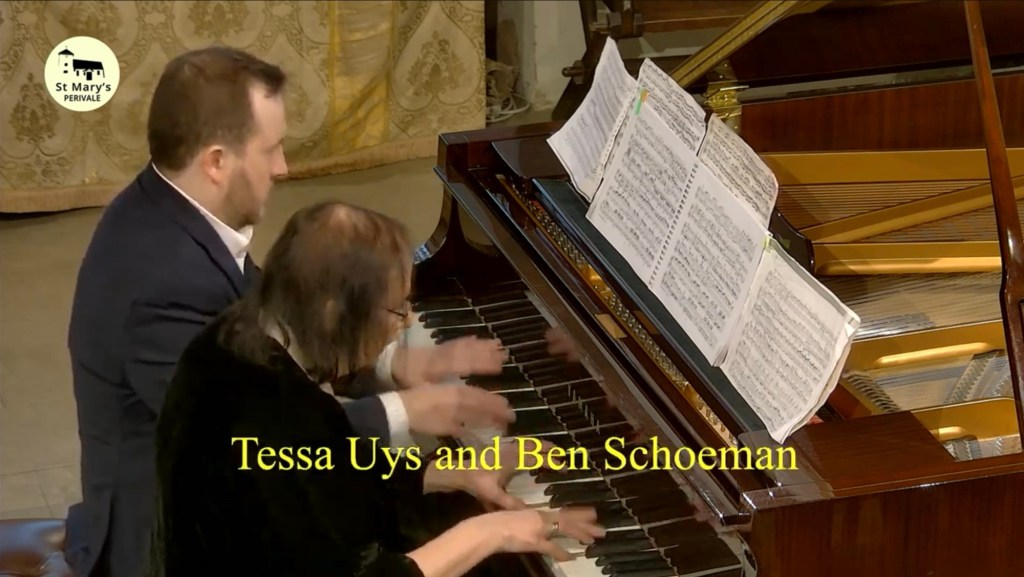
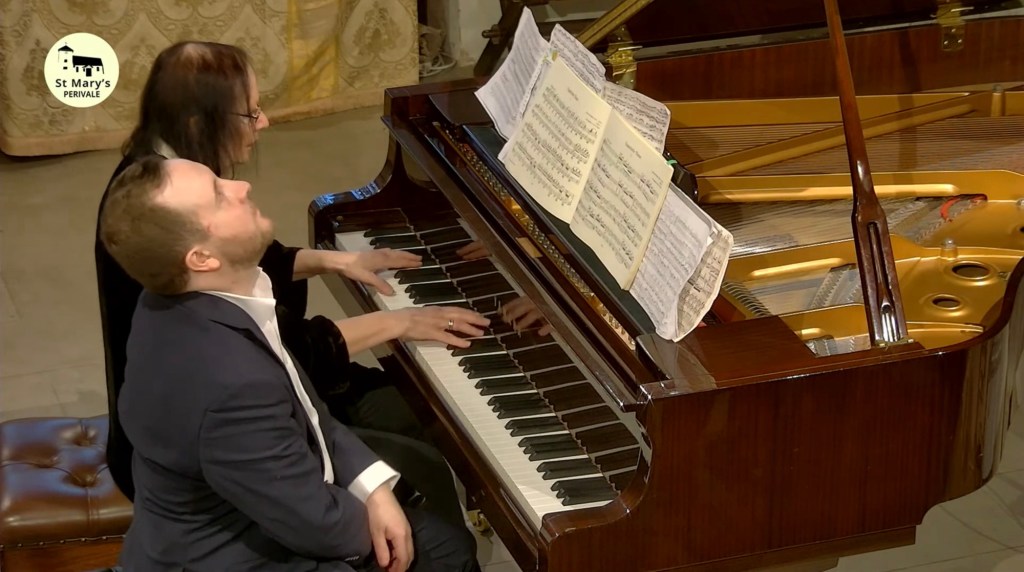
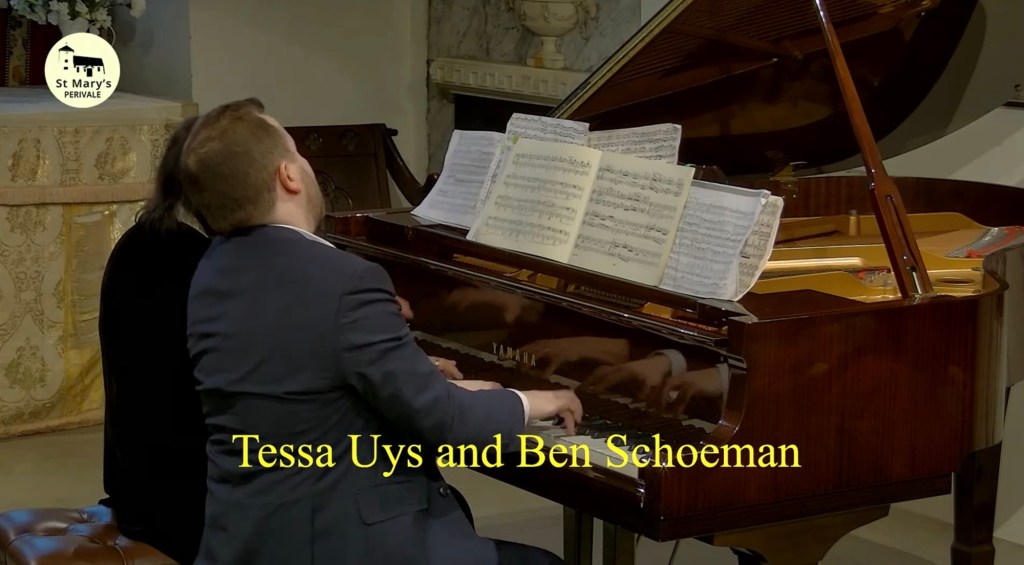
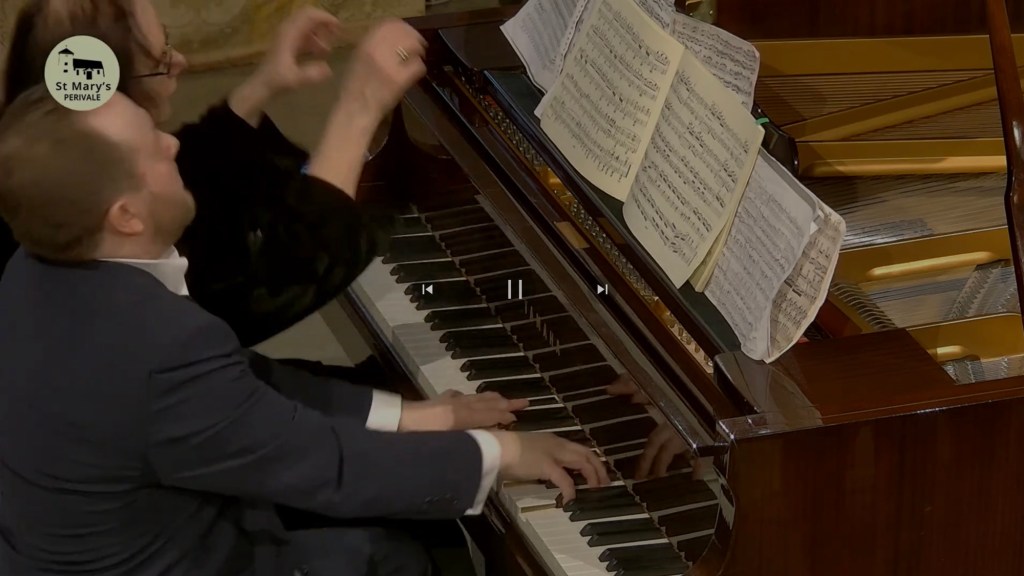
A spontaneous standing ovation greeted the end of a monumental performance of Beethoven 9th from the four hands of these two South African artists.I have followed the extraordinary concert seasons at Perivale for some years but I have never seen such a display at the end of a performance before.The energy and exhilaration that Tessa and Ben gave to the final bars of this monumental work was truly worthy of the great performances of Toscanini or Furtwangler that have passed into legend .As Hugh Mather said the art of playing duets is an art indeed when played like this where two artists on the same instrument can play as one.
A single mind – servants of the same Master .
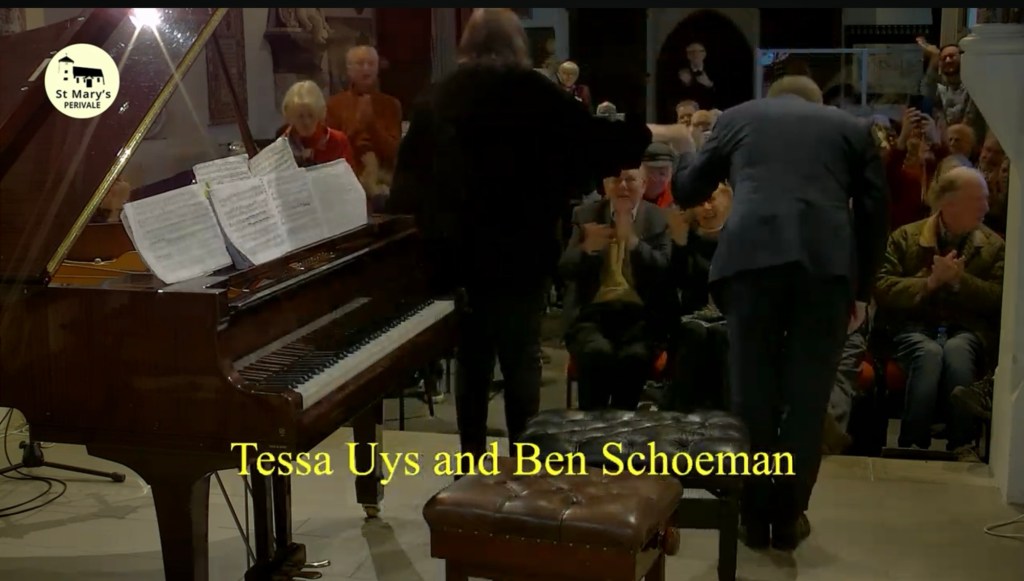
I think this is the second or third time In have heard them play this and other symphonies and it has been a long gestation period to arrive at a performance of such intensity as yesterday in Perivale .
Tessa Uys Part 2 at St Lawrence Jewry and at St Michaels’ Highgate with Ben Schoeman in Beethoven 5th and 9th.
Tessa Uys and Ben Schoeman piano duo : In 2010, Tessa Uys and Ben Schoeman established a duo partnership after being invited to give a two-piano recital at the Royal Over-Seas League in London. Ever since, they have performed regularly at music societies, festivals and at the BBC and in 2015, they embarked on their journey with the nine Scharwenka/Beethoven Symphonies transcriptions.
Happy 249th The fifth and ninth Symphonies at St Lawrence and St Martins

Tessa and I were near contemporaries at the Royal Academy in the class of Gordon Green .I was the new boy having studied as a schoolboy with Sidney Harrison and then three years with him as the Liszt Scholar.I found myself though never having had any training in public performance .Private lessons can be very isolating and not the training for a playing career.I had heard about Gordon Green from Sidney who said he was the Professor who he was most attuned to . I had heard too from his students that every friday there was a class where his they would perform as if in a public concert. He would listen and only afterwards make comments from his copious notes.
I went to Gordon in desperation but that was not a word that he recognised because he was calm, reassuring ,very thorough and we all adored him.Even affectionately nudge each other as his eyes would gently close around 3 in the afternoon!I was the new boy and was not asked to play immediately as his other students all had performances that they needed to try out.Philip Fowke,John Blakely,Ann Shasby,Richard McMahon ,Peter Bithell and of course Tessa.I remember many memorable performances from Tessa and will never forget her Schumann Humoresque or the Mozart Concerto K 271 .Memorable too was her duo performance of Cesar Franck with the star violinist of the RAM Josef Frohlich.I even went with them to Harry Blech’s house when they were invited to audition for his London Mozart Players.
Tessa won the Macfarren Gold Medal the top award for pianists and I won it,thanks to Gordon, two years later.Tessa many years later came to play in my concert series in Rome and found immediately in my wife a kindred spirit with their love for cats and much else besides.
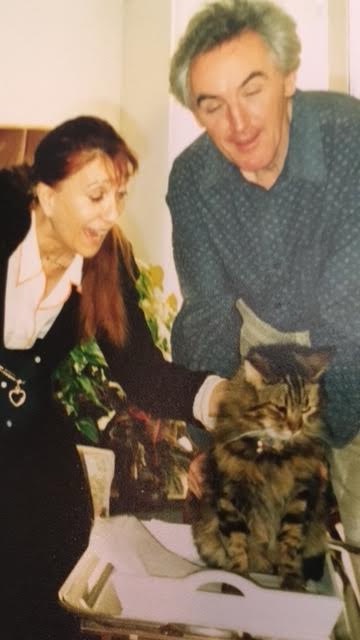
There was also another bond that I have only recently realised they shared and was the reason why they immediately understood each other.Tragedy leaves its mark ,even if not spoken about can unknowingly unite kindred spirits.
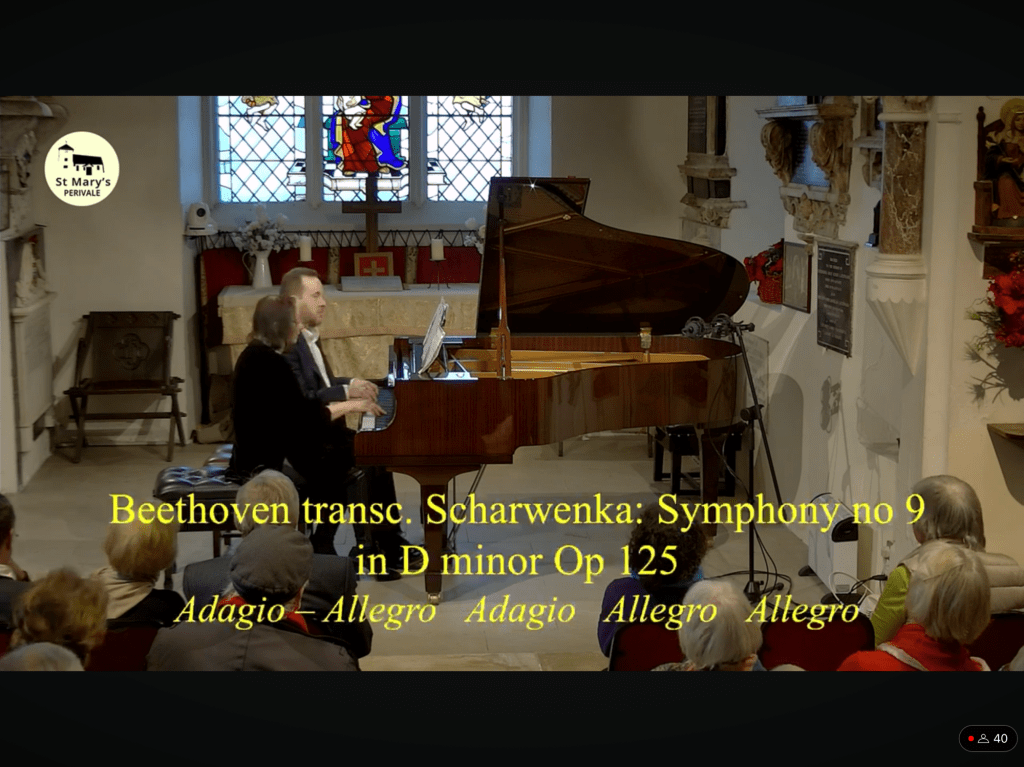
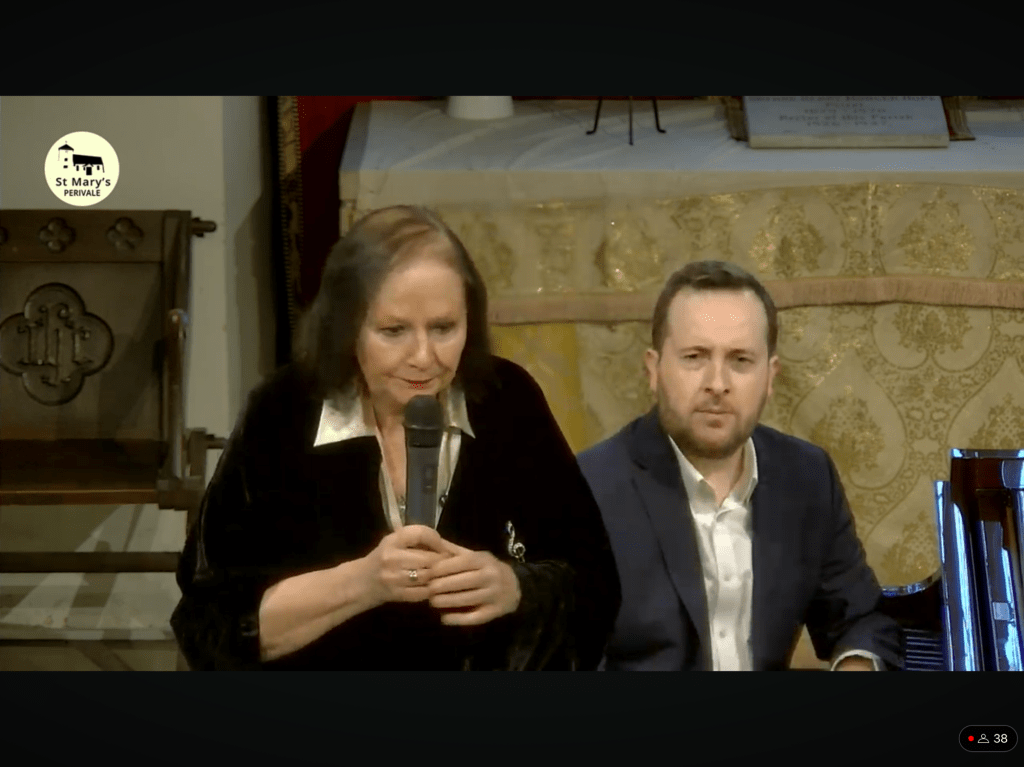
Tessa Uys was born in Cape Town, and was first taught by her mother, Helga Bassel, herself a noted concert pianist. At 16, she won a Royal Schools Associated Board Scholarship and continued her studies at the Royal Academy of Music in London where she studied with Gordon Green. In her final year she was awarded the MacFarren Medal. Further studies followed in London with Maria Curcio, and in Siena with Guido Agosti. Shortly after this Tessa Uys won the Royal Over-Seas League Competition and was elected an Associate of the Royal Academy of Music. During the past decades, Tessa Uys has established for herself an impressive reputation, both as concert performer, and as a broadcasting artiste, performing at many concert venues throughout the world and with such distinguished conductors as Sir Neville Marriner, Walter Susskind, Louis Frémaux and Nicholas Kraemer.
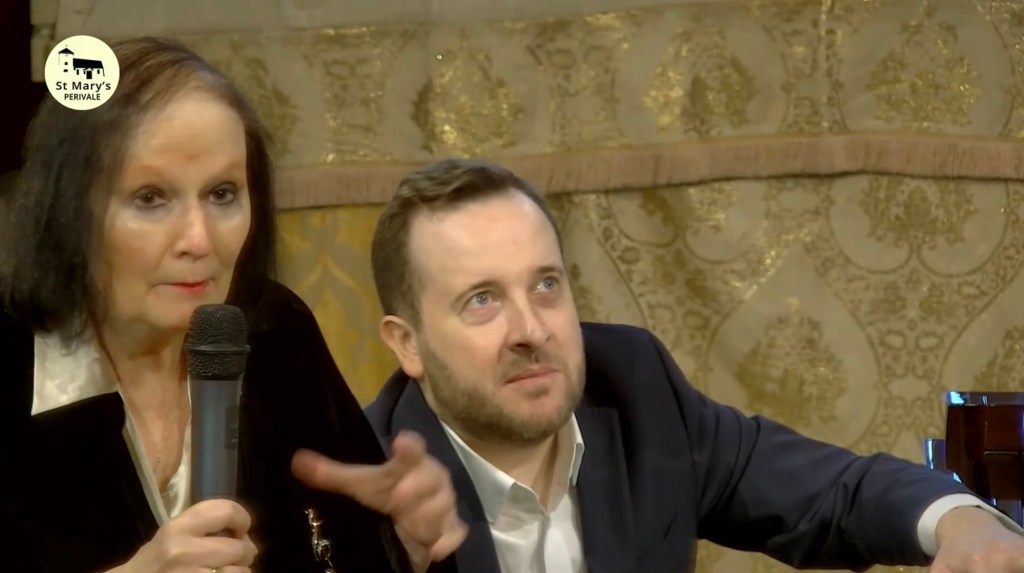
Ben Schoeman was also born in South Africa, He studied piano with Joseph Stanford at the University of Pretoria and then received post-graduate tuition from Boris Petrushansky, Louis Lortie, Michel Dalberto, Ronan O’Hora and Eliso Virsaladze in Fiesole, Imola and London. He obtained a doctorate from City, University of London and the Guildhall School of Music and Drama. He won 1st Prize in the 11 th UNISA International Piano Competition, the Gold Medal in the Royal Over-Seas League Competition, the contemporary music prize at the Cleveland International Piano Competition, and the Huberte Rupert Prize from the South African Academy for Science and Art. He has performed at Wigmore Hall, the Barbican Centre and Queen Elizabeth Halls in London, Carnegie Hall in New York, the Konzerthaus in Berlin, the Gulbenkian Auditorium in Lisbon, and the Enescu Festival in Bucharest. Ben Schoeman is a Steinway Artist and a senior lecturer in piano and musicology at the University of Pretoria.
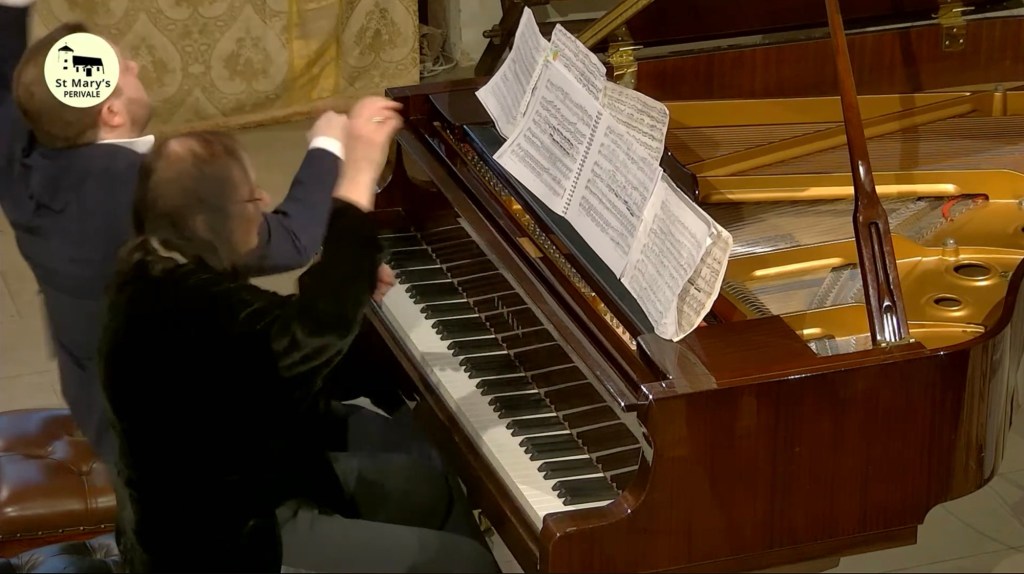
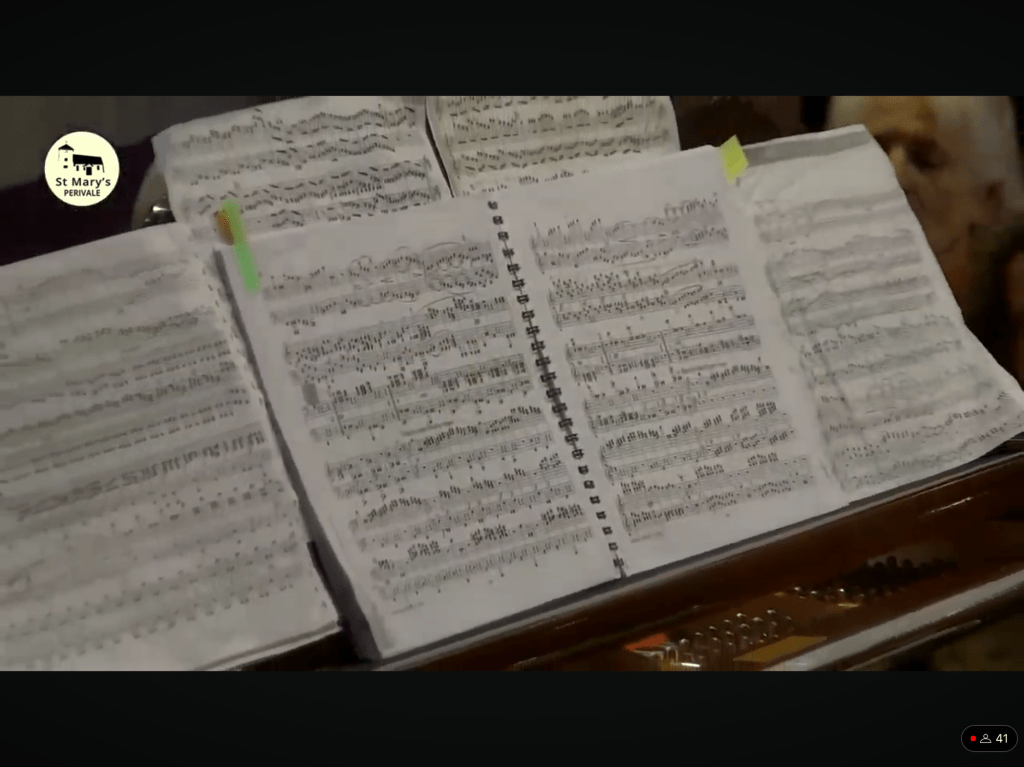
Beethoven’s Symphony no 9 in D minor, Op 125, is his final complete symphony composed between 1822 and 1824. Famously commissioned by the Royal Philharmonic Society, it was first performed in Vienna on 7 May 1824, so this year we celebrate the bicentenary of its premiere. The symphony is regarded by many as a masterpiece of Western classical music and one of the supreme achievements in the entire history of music.
If there is one work for which Beethoven is best known, it must surely be his monumental ninth symphony, arguably the most profound and moving of his symphonies. Although its revolutionary form and extreme technical difficulties meant that full appreciation of this iconic work was slow to form, by the 19 th century, the symphony was fully established and many of the great composers considered it to be the central inspiration for their creative voices. Its influence continues unabated today; when the Berlin wall fell in 1989, Leonard Bernstein conducted a legendary performance with a composite cast of musicians from all over the world. There are several anecdotes about the premier, some suggesting that it was under-rehearsed and rather ragged in execution, others reporting that it was a huge success. Now almost completely deaf, though Beethoven was billed as the conductor and did indeed appear to beat time, the players had been cautioned to pay no attention to him and to follow the reliable beat of the concertmaster. In one of the most famous accounts, the audience burst into applause at the end, but Beethoven couldn’t hear the ovation. Only when the contralto soloist Carolyn Unger touched him on the shoulder and turned him around to see his public applauding wildly, did he realise the enormous ovation his masterpiece had produced.
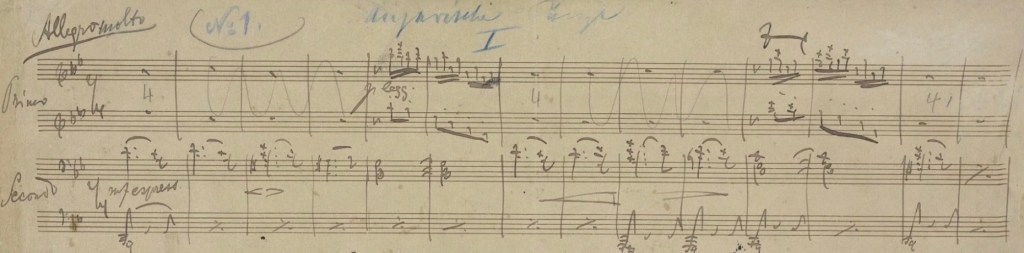
Franz Xaver Scharwenka was born in 1850 near Posen East Prussia and died in Berlin in 1924. Although he began learning the piano by ear when he was three, he did not start formal music studies until he was 15, when his family moved to Berlin when he enrolled at The Akademie of Tonkunst. He travelled widely as a piano virtuoso and scored a considerable success in England both as pianist and composer. He was an exceedingly fine pianist, praised for his beauty of tone and for his interpretations of the music of Fréderic Chopin. He was also an inspiring teacher and composer of symphonies, piano concerti and an opera which was performed in New York as well as much piano and the famous Beethoven symphonic transcriptions.
Historic background In the years before recordings when CDs, iPods, Spotify, and YouTube were unknown and live concerts the prerogative of the wealthy, piano transcriptions were widely admired, making such music as tonight’s symphony and other orchestral masterworks available to a generation of listeners who might not otherwise have come to know them. Amongst the most illustrious of such transcriptions were those by Franz Liszt and tonight’s composer, the German/Polish Franz Xaver Scharwenka. Initially Liszt balked at what he deemed was ‘the impossibility of arranging the 9 th Symphony for two hands.” But Scharwenka’s transcription for four hands to be played on one rather than two pianos, works better, as well as enabling more people to perform and hear the music, as few households owned two pianos.
Tessa Uys has a very personal connection with the music, as her concert pianist mother, Helga Bassel was from Berlin, the city where Scharwenka lived. In the 1930’s along with thousands of Jews she fled the city seeking refuge in Cape Town where her daughter was born.
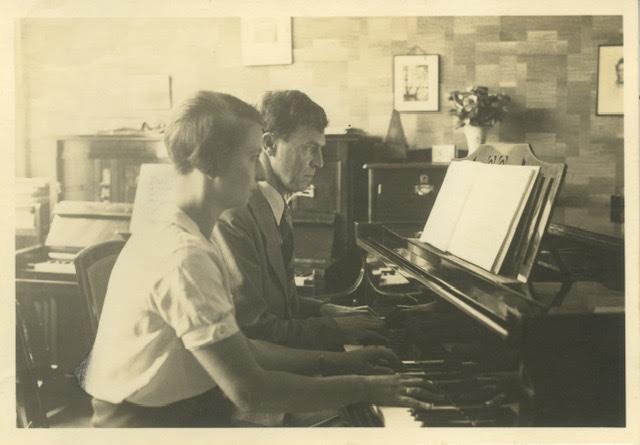
By a stroke of good fortune, she had been able to take not only her beloved Bluthner piano with her but also her collection of piano music including the Scharwenka transcriptions, which were eventually bequeathed to Tessa. In 2004 the piano was returned to the Blüthner factory in Leipzig for restoration and finally gifted to the Jewish Museum in Berlin, thus completing a journey from Nazi Germany and Apartheid South Africa to a new era back in Germany. The complete cycle of Beethoven’s symphonies has never been presented in this format and leading publications such as BBC Music magazine, Gramophone, International Piano Magazine and The Sunday Times have unanimously praised Uys and Schoeman for their “enthralling” and “ground-breaking” recordings of these beloved works. This piano duo is currently touring countrywide performing the 9 th and all the other Symphonies by Beethoven, and promoting their new album and the complete six-CD box set.
Happy Birthday Beethoven – Uys/Schoeman at St Lawrence Jewry
 ChristopherAxworthy-MusicCommentary