PIANO
Mozart
Adagio in B Minor, K 540
Schubert
Piano Sonata in B-flat, D 960
Molto moderato – Andante sostenuto – Scherzo : Allegro vivace con delicatezza – Trio – Allegro ma non troppo
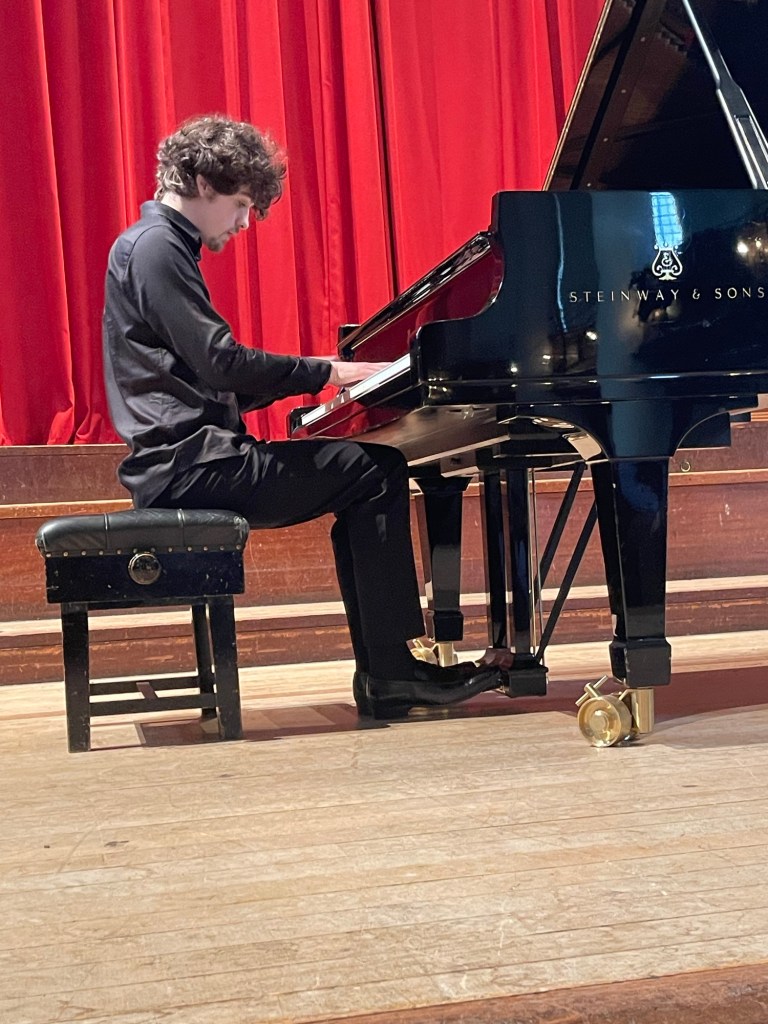
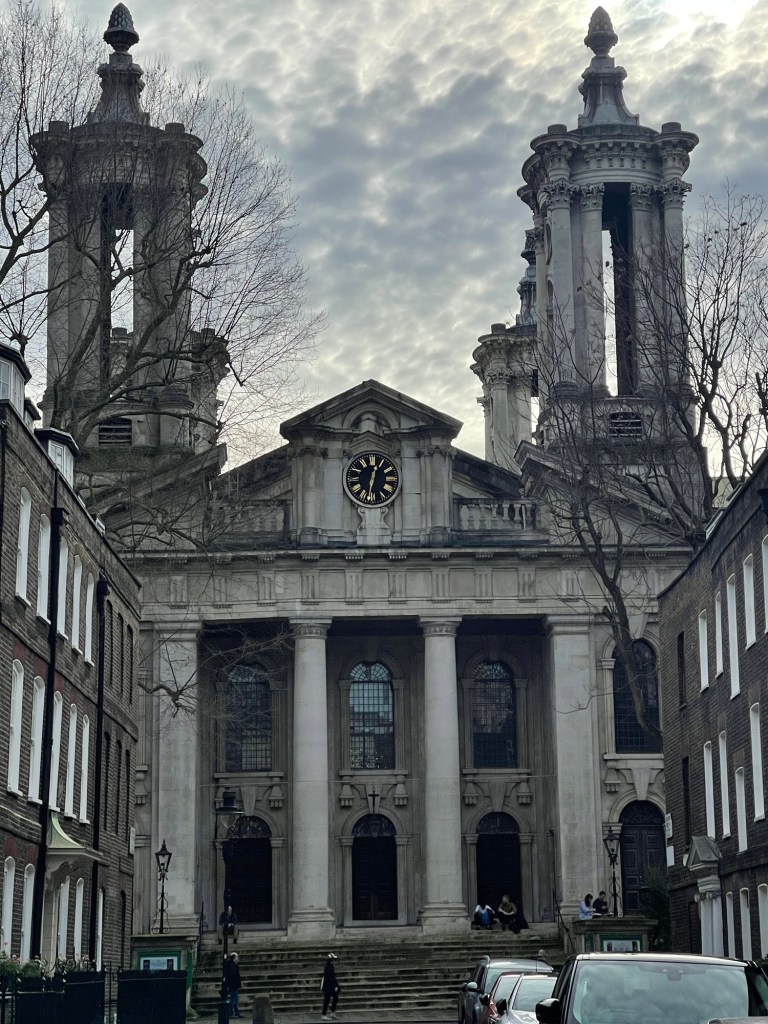
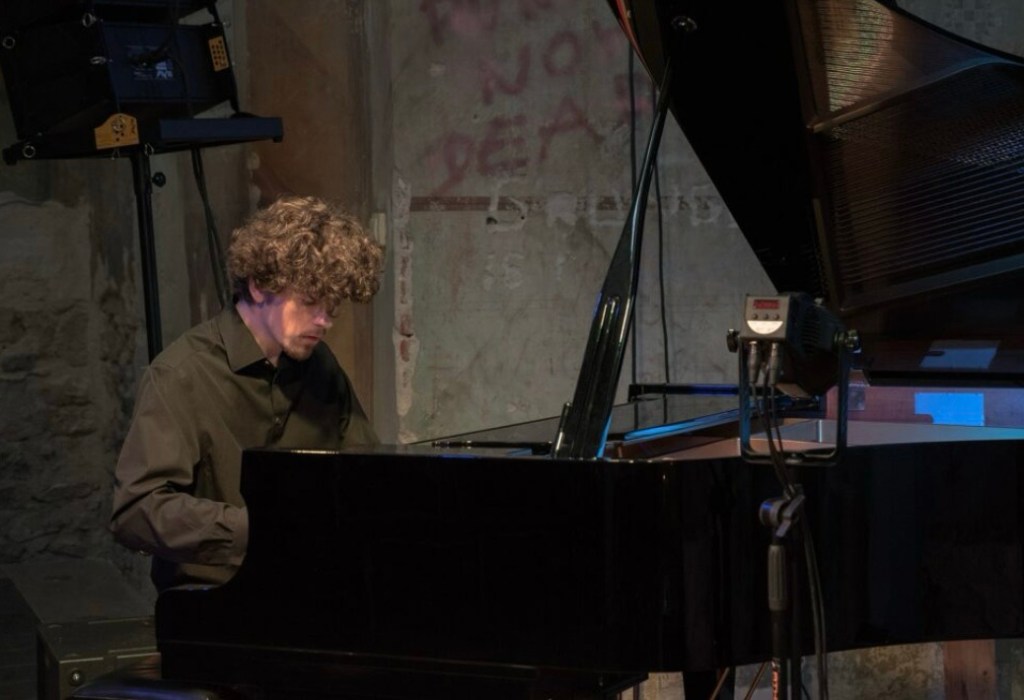
Kyle Hutchings at St John’s Smith Square with just two works both born of tragedy :The Mozart B minor Adagio written as a moment of respite from Don Giovanni having just heard of the death of his estranged father .And Schubert’s last Sonata written only months before the composers untimely death when a final outpouring of masterpieces were his way of preparing for his imminent last journey.
From the very first note it was clear that we were in for a journey from the hands of a true poet .
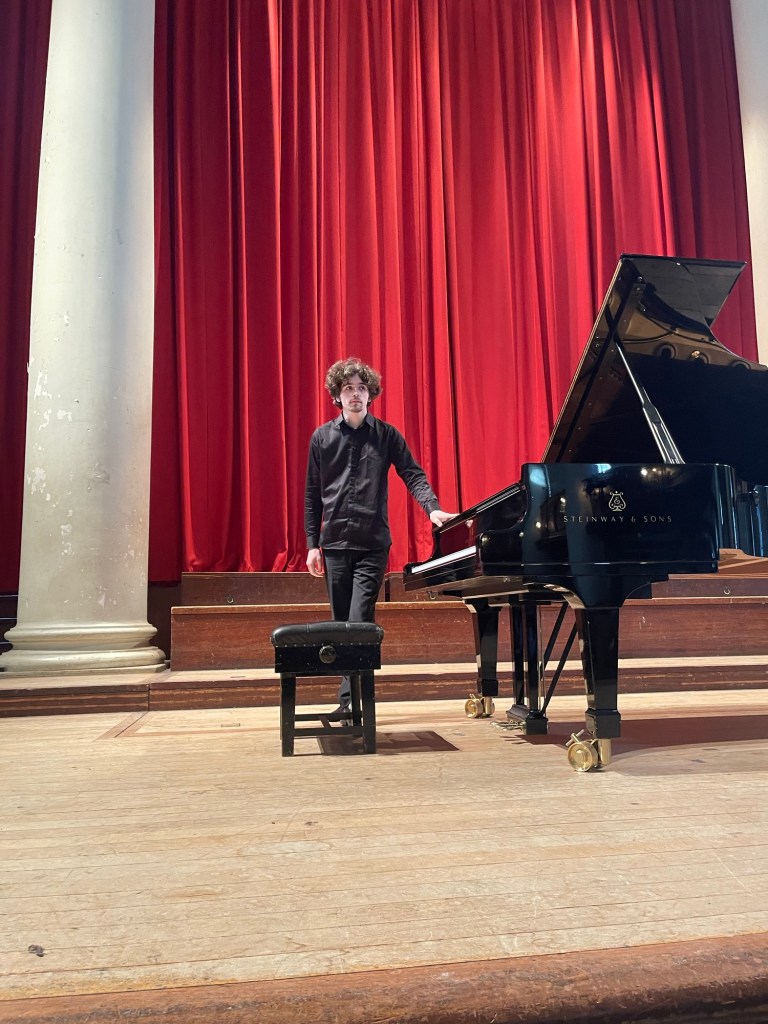
A timeless beauty where the music was not projected but was played with a whispered concentration that drew us in to this young man’s magic world of sounds .A chiselled beauty to the cascading ornaments that just unfolded so naturally with a subtle kaleidoscope of sounds where each note spoke with poignant eloquence.An aristocratic control of great maturity where every note was given time to speak with seemingly no extraneous intervention from the pianist .This was truly an artist in deep concentration as the music passed from the page through this medium to the public who were caught in a spell where we dared not breathe.
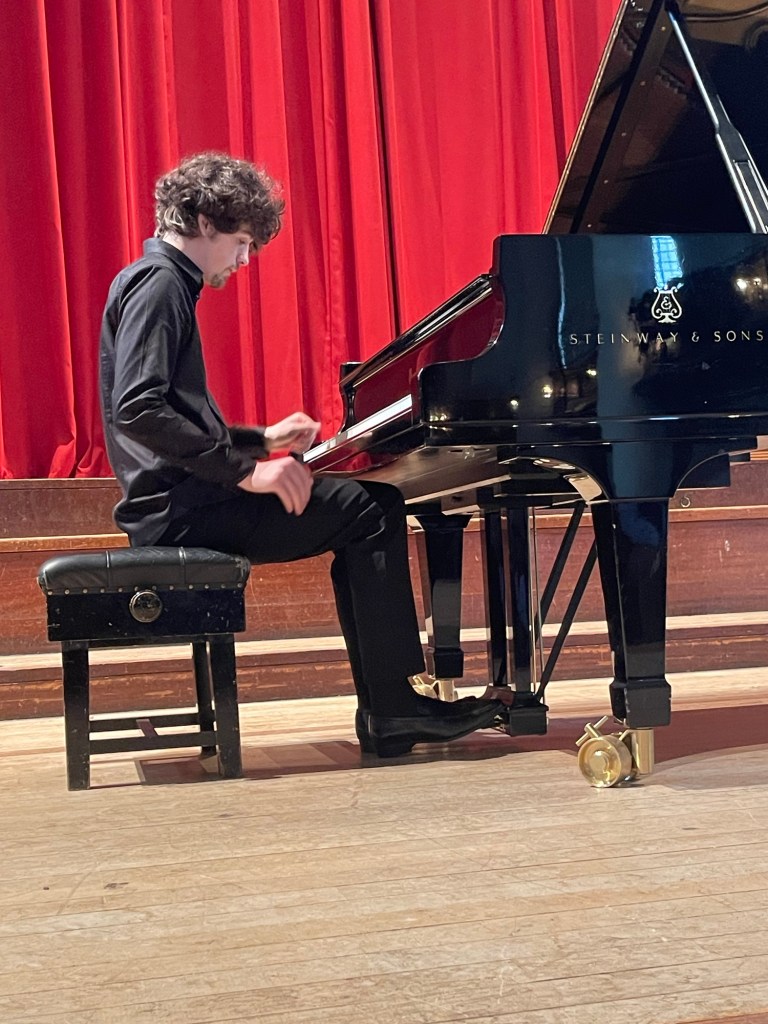
The silences were even more poignant than the notes .The time he took before caressing the opening notes of this last sublime creation of Schubert filled us with the anticipation of the start of a voyage of discovery with this extraordinarily sensitive young poet of the keyboard.Even the deep bass trill was a mere glow of sound less of foreboding but more of hope. There was a luscious sheen to the sound that followed where the seemless melodic invention just seemed to appear by magic.A stillness to the duet between tenor and soprano played with the sensitivity of a true poet.The whispered modulation into the development was breathtaking and as he did not play the repeat we were immediately into the development where there was always a sense of proportion even in the strenuous climaxes.This was a performance whispered rather than shouted -Beethoven was nowhere to be seen in Kyles’s magic landscape .There was a supreme control of sound that I have not heard since Richter’s first appearances in the west.An extraordinary control of tempi too and the rest before the recapitulation was truly earth shattering in its emotional impact.
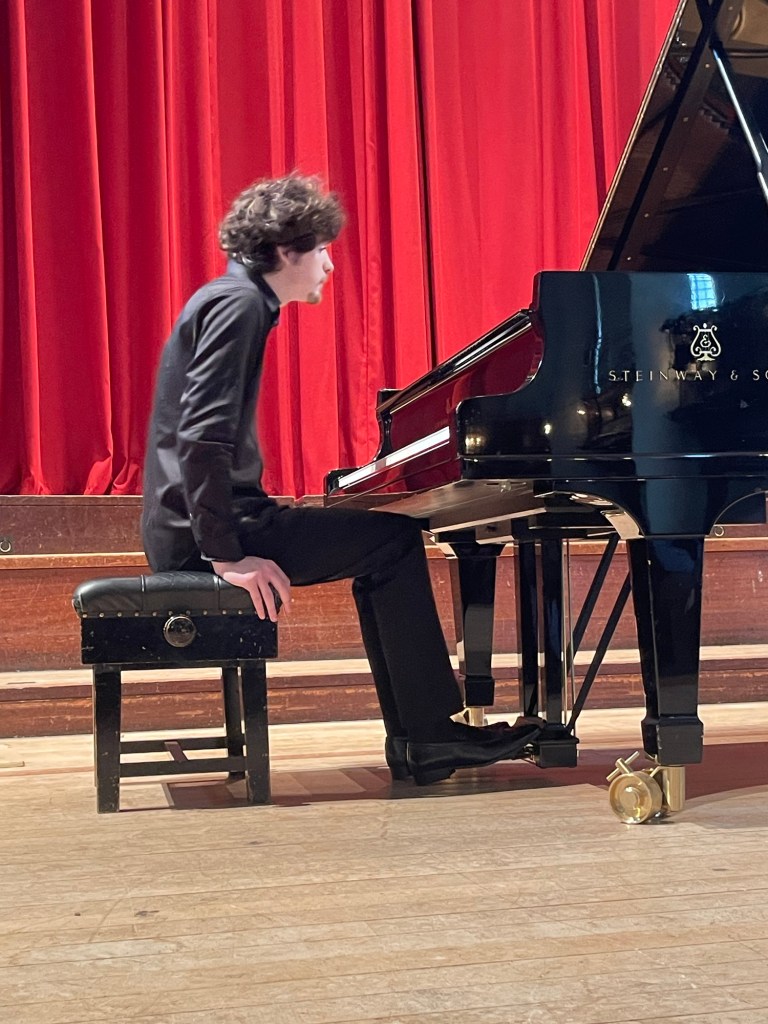
Kyle hardly moving with head down as he listened to the exquisite sounds his hands were carving with such delicacy from the black and white keys laid out before him.A remarkable tour de force not only technically but above all poetically.I have not experienced this since listening to Murray Perahia with playing of such selfless intelligence and poetic significance as he drew the audience in to his secret world of sounds. Silences that spoke louder than the notes and created an electric atmosphere where people unknown to each other found themselves united as they listened collectively hardly daring to breathe .

A slow movement of such searing and heart rending poignancy with the glorious Brahmsian central section with its richness of sound that glowed like pure gold with the unbearable intensity of sublime simple beauty as the harmonies became ever more succulent.The return of the opening suddenly took on an unearthly significance with the deep whispered bass comments adding another voice of such hope just like the opening trills.The sudden change of harmony was barely whispered but became even more intense for its surprising beauty.
The Scherzo was beautifully controlled with elegance and impish charm with a constant pulse of civilised elegance.What fun he had with one voice answering another with such high spirits.The accents in the Trio were merely pointed out as they accompanied the long right hand melodic line.
There was the sedate outpouring of the last movement with the gentle insistence of the G’s a mere calling of attention as the musical chairs changed place.In the violent interruption ,the climax of the Sonata, it was the bass that Kyle made so important so the sounds never got hard or ungrateful but remained under the same sublime cloud that had hovered so magically above St John’s today in this young man’s sensitive hands .
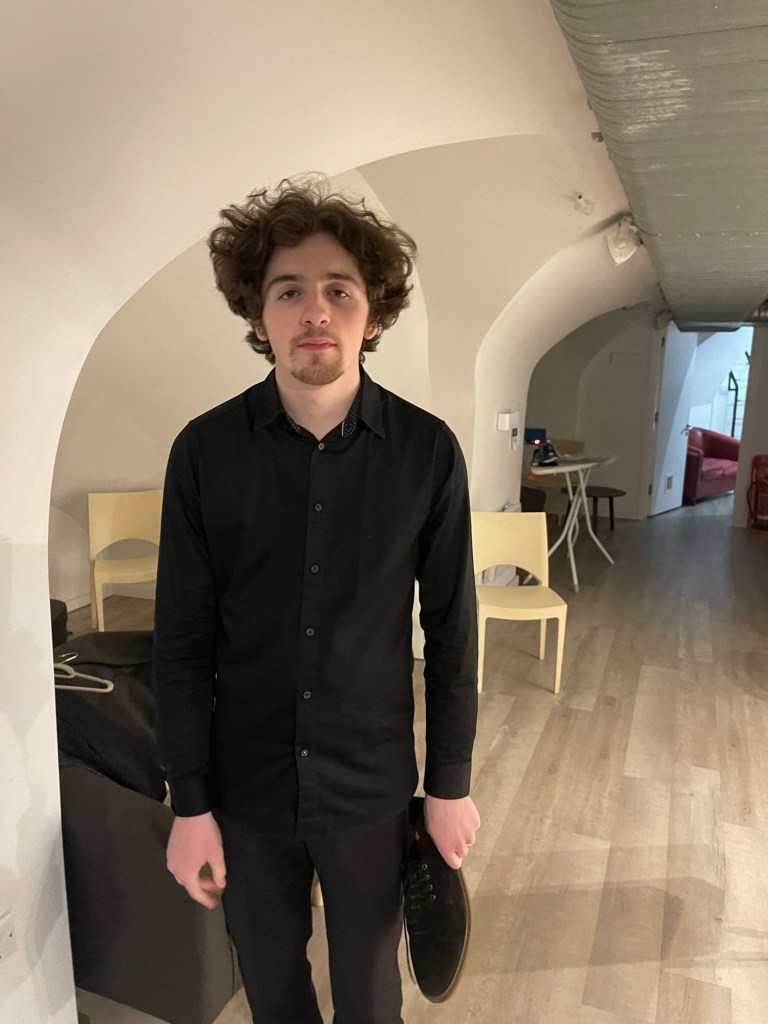
Kyle Hutchings is a British pianist who, after just twelve months of self-taught playing, won a scholarship to study in London with internationally acclaimed pianist Richard Meyrick on the Pianoman Scholarships Scheme supported by Sir and Lady Harvey McGrath. Subsequently, he made his London debut with the Arch Sinfonia playing Beethoven’s Second Piano Concerto.
Acclaimed for the deep understanding and soulful artistry he brings to his performances, he has performed in venues such as London’s prestigious Kings Place, London’s BT Tower, The Lansdowne Club in Mayfair, as part of the Blüthner Recital Series, St James’s Piccadilly and many others up and down the country. In addition to this, he maintains an active presence on the international concert scene.
During his studies at Trinity Laban, supported by a scholarship from Trinity College, he received the Nancy Thomas Prize for Piano as well as the Director’s Prize for Excellence; he was also nominated for the conservatoire’s coveted Gold Medal. Kyle is supported by The Keyboard Charitable Trust and has received support from The Robert Turnbull Piano Foundation as well as The Zetland Foundation.
Notable highlights of his 2022/2023 season have included a debut performance at London’s Kings Place, as well as appearances in Italy and Poland.
Mozart’s haunting Adagio in B minor is paired with Schubert’s final completed work, his great Sonata in B-flat.

Franz Schubert’s last three sonatas D 958, 959 and 960, are his last major compositions for solo piano. They were written during the last months of his life, between the spring and autumn of 1828, but were not published until about ten years after his death, in 1838–39.[1] Like the rest of Schubert’s piano sonatas, they were mostly neglected in the 19th century.By the late 20th century, however, public and critical opinion had changed, and these sonatas are now considered among the most important of the composer’s mature masterpieces.The last year of Schubert’s life was marked by growing public acclaim for the composer’s works, but also by the gradual deterioration of his health. On March 26, 1828, together with other musicians in Vienna Schubert gave a public concert of his own works, which was a great success and earned him a considerable profit. In addition, two new German publishers took an interest in his works, leading to a short period of financial well-being. However, by the time the summer months arrived, Schubert was again short of money and had to cancel some journeys he had previously planned.Schubert had been struggling with syphilis since 1822–23, and suffered from weakness, headaches and dizziness. However, he seems to have led a relatively normal life until September 1828, when new symptoms such as effusions of blood appeared. At this stage he moved from the Vienna home of his friend Franz von Schober to his brother Ferdinand’s house in the suburbs, following the advice of his doctor; unfortunately, this may have actually worsened his condition. However, up until the last weeks of his life in November 1828, he continued to compose an extraordinary amount of music, including such masterpieces as the three last sonatas.
The final sonata was completed on September 26, and two days later, Schubert played from the sonata trilogy at an evening gathering in Vienna.In a letter to Probst (one of his publishers), dated October 2, 1828, Schubert mentioned the sonatas amongst other works he had recently completed and wished to publish.However, Probst was not interested in the sonatas,[15] and by November 19, Schubert was dead.
In the following year, Schubert’s brother Ferdinand sold the sonatas’ autographs to another publisher, Anton Diabelli who would only publish them about ten years later, in 1838 or 1839.[16] Schubert had intended the sonatas to be dedicated to Johann Nepomuk Hummel , whom he greatly admired. Hummel was a leading pianist, a pupil of Mozart , and a pioneering composer of the Romantic style Romantic (like Schubert himself).However, by the time the sonatas were published in 1839, Hummel was dead, and Diabelli, the new publisher, decided to dedicate them instead to composer Robert Schumann who had praised many of Schubert’s works in his critical writings.
Autumn Piano Festival Saturday 30th September Sunday 1st October 2003
Mozart composed his Adagio in b minor K. 540 at a time when his financial situation was steadily deteriorating. The war against the Turks was constraining the Viennese people’s interest in music – works were not commissioned and concerts did not take place. It was of no matter that Mozart had shortly before (in 1787) been appointed a salaried k.k. Kammer-Kompositeur. Nevertheless in this year he composed several of his most important works: the “Coronation Concerto” K. 537, the three late symphonies as well as several piano trios. And he also composed this tender Adagio in b minor with its captivating expressiveness
Ariel Lanyi writes :
How significant is the tonality of a work of music to our perception of it as performers or listeners? Could a work in D minor have been written in B-flat minor, or is there a sort of nomenclature to keys? The treatises on key characteristics attest to the latter rather than the former, and when we look at the frequency of some keys in the outputs of various great composers, we see that the choice of keys can be greatly significant to the character of a work.
Of the many hundreds of adagios that Mozart wrote, K. 540 is the only complete one in B minor (other than the second movement of the D major flute quartet). This already makes it a bit of an “outlier” among Mozart’s works, but when we consider how rarely it is played in comparison to, for example, the A minor Rondo, K. 511, we begin to see that it has other characteristics that put it at odds with what performers and audiences usually experience from the composer.
For listeners and performers alike, Mozart is most commonly associated with opera. In his instrumental music, the melodies often evoke vocal music in their contour, rhythmic structure and variety. A Mozart melody is an organic unit in itself, which often evokes an unsung line of words. Most of his most commonly played works have such melodies. The B minor Adagio, however, is somewhat different. Here, we don’t get the continuous line of melodic inspiration that we hear in the G minor symphony or in the A major piano concerto, K. 488. Instead, we are confronted by a stark diminished chord in the first bar, which effectively truncates the flow of the melody. After two bars of a jagged melody, rather than have the mellifluous development we expect to hear in Mozart, we hear sharp dynamic changes, rhetorical pauses, and a string of “sigh” motifs. The music makes statements of the most powerful kind, but unlike in other instrumental works of Mozart, underlying are not unsung words, but rather un-acted gestures. Were we to connect these gestures to other works of Mozart, we would probably need to look to his vast string chamber music output (the string quintets in particular) rather than the operas. One indication of that is the unusual use of dynamics in this piece. Mozart’s dynamic markings weren’t as detailed as Beethoven’s. Mozart, of course, did not live long enough to see the many developments of the piano that Beethoven saw in his lifetime, which preoccupied him greatly when he was writing his piano works. Many Mozart concerti, even late ones, are almost devoid of dynamic markings in the piano part, leaving us pianists to rely solely on the orchestral parts and on our musical intuition. The B minor Adagio, however, is marked in great detail. Mozart took great pains to highlight the jaggedness and drama that need to be conveyed. These markings, which wouldn’t make sense in an operatic context, would make perfect sense in a string quintet. One can almost imagine the motion of the bows when the first sforzando strikes on the diminished chord of the first bar. Besides its un-operatic nature, there are other characteristics that distinguish this work from the rest of Mozart’s output. Not many works of Mozart are so centered around diminished chords, but this one is, in an almost Beethovian manner. In the short development section, the diminished chord is definitely the one that sticks out the most, as it has a disorientating effect on the listener, who meanwhile tries to locate a tonal center to “hang on” to. And does all of this resolve itself? Mozart does reach the much-desired B major at the very end of the work, but its comforting qualities are ambiguous. It comes after a somewhat torrential passage of broken octaves (also not too common for Mozart, at least not in the form heard in this work), and is by nature quite “developmental,” as it has significant dramatic motion in the inner voices. The minor-ness of the Adagio and the abundance of diminished chords may have been resolved, but not in a soothing manner. And as for the ending, the music disappears into the depths of the piano’s range, and Mozart made sure to remind us of the rhetorical pauses of the opening, which perhaps adds even more to the ambiguity of the work.
So is the choice of key for this work coincidental, or is it in fact intertwined with both the work’s rather odd characteristics and our reception of the work? Although I don’t believe that the two are entirely linked, I do think that the choice of key cannot be coincidental. This work, on many levels, is not the Mozart we know—from its most basic features down to the smallest details.

 ChristopherAxworthy-MusicCommentary