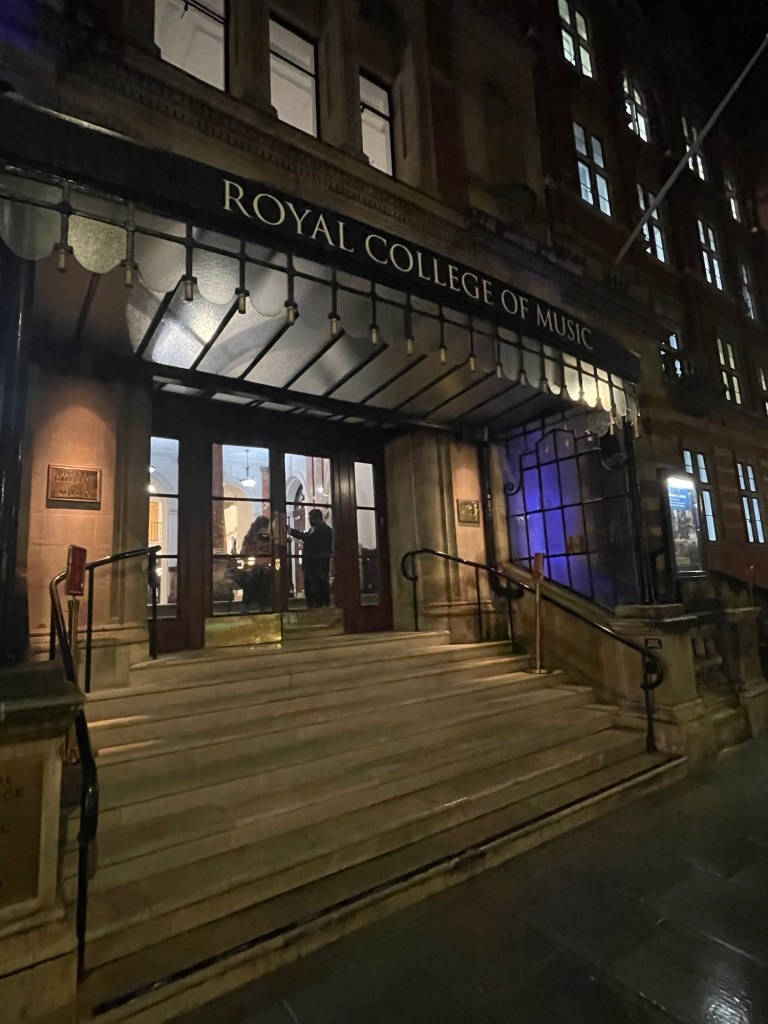

What a lot of pictures were on show tonight at the RCM !
Paul Mnatsakanov is a very young looking pianist who claims that music should always ‘ speak and convey something about the audience to the listener’.
Rushing to another concert in Milton Court I just had time to thank his teacher Vanessa Latarche.’He is a good boy ‘ she very modestly told me ……….in my opinion dear Vanessa he is a great artist and this was the finest most monumental performance that I have ever heard.
Here is the link to the performance :

The people flocking to hear the orchestral version under Hakan Hardenberger tonight will never begin to realise what they have missed.
An hors d’oeuvre that was a sumptuous dish fit for our King -who is patron of the RCM.
An extraordinary control with phrasing that did infact bring each of the pictures vividly to life.Silences that became so pregnant with meaning as they acted as a bridge between the chameleonic changes of character.What was so remarkable was the clarity not only of playing the notes but above all an architectural vision of the entire work.Rests that were scrupulously noted and gave such strength to what came before and after.Have Goldenberg or Baba Yaga ever been so terrifying as this ? The rest after the opening two notes was like a gun shot in its impact. A scrupulous attention to the pedal …..and not! The central section of Baba- Yaga – Andante mosso – I have never heard played with such clockwork precision.Above all without pedal that gave it an orchestral colour rather than pianistic mush as is so often the case.The charm and clarity he brought to the unhatched chicks was played with that tantalising charm that was Cherkassky’s ( worth remembering his performance at the Proms where he pushed so hard on the pedals that the soft pedal started to play one and a half strings with a nasal twang that Cherkassky was to blame the piano tuner for .It was broadcast live and Shura was furious with the piano tuner!) That is just to say that the pedal is the ‘soul’ of the piano – Perlemuter would often play loudly with the soft pedal down to get that extra ‘French’ colour that he was seeking.Paul today was a master of pedal because it was so unobtrusive and was used as in the Great Gate just to add to the sonority but not to cover up pianistic imperfections.
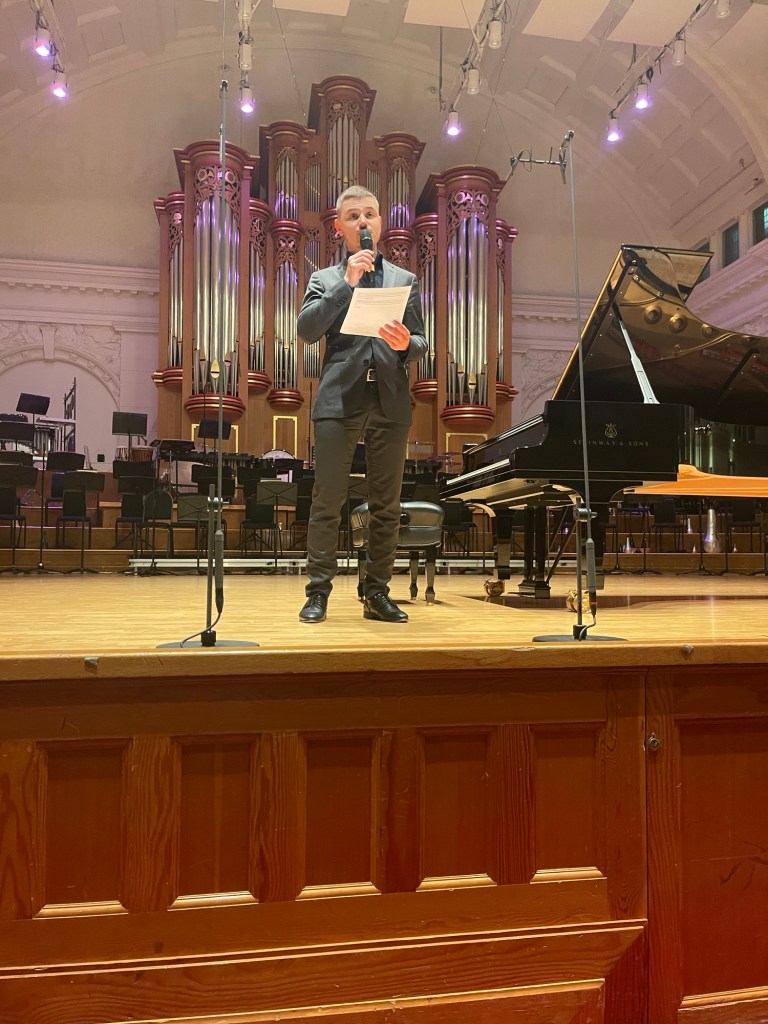
The Promenade between the lumbering fatigue of Bydlo and the charm of the chicks was played with subtle whispered sounds but always of great clarity and rhythmic precision even in pianissimo.Was it not how quietly Richter could play and project when he made his first appearances in the West – just next door actually at the RAH .It was not just the uncontrollable temperament of a Serkin but the projection of a music line at such slow tempi and quiet dynamics The ease with which Paul judged the last G sharps of the ‘old castle ‘ was of a musician who was listening to himself with artistic sensibility .The trills in ‘Gnomus’ too were enough to send a shiver down your spine and helped by the pedal they were still of remarkable clarity and never lost their rhythmic impulse at the expense of creating an atmosphere.Here of course we touch the subject of the song and the dance.Like Angela Hewitt had pointed out to Paul in his sterling account of the Bach Italian Concerto there must always be this undercurrent that carries the music forward on its long journey .
Angela’s generosity and infectious Song and dance inspires her illustrious students.
There are moments on the way where you can look and wonder without ever disturbing the essential pulse .Paul showed us today that although shaping each of the pictures with remarkable sensibility and style he never allowed this undercurrent to stop from its inevitable final goal.The cascades of notes all bathed in pedal that took us to the final monumental vision of the Great Gate was truly masterly.His control of sound where there was a sumptuous fullness but never hardness .Holding back with masterly maturity so the final ‘Grave sempre allargando’ could reverberate around the hall with the monumental grandeur and significance that this edifice still holds for us today .

Gnomus was terrifying with its sudden outbursts and the Old Castle just appeared from afar in a subtle mist of whispered sounds.The chattering children in the ‘Tuileries ‘ have never sounded so rhythmically vivid or the lumbering ‘Bydlo’ so overweighted as it lumbered into view.What character he gave the ‘unhatched chicks’ as they scampered around with such beguiling coquettish meanderings. The pause after the first appearance of ‘Goldenberg’ I had never been aware of until tonight and it just gave such overwhelming authority contrasting with the beseeching whimpering of ‘Schmuyle’ The reverberations in ‘Catacombs’ were truly monumental as we listened together with baited breath and the ‘Cum mortuis’ entered on high with delicacy and a remarkable rhythmic precision that gave a sense of infinite space.
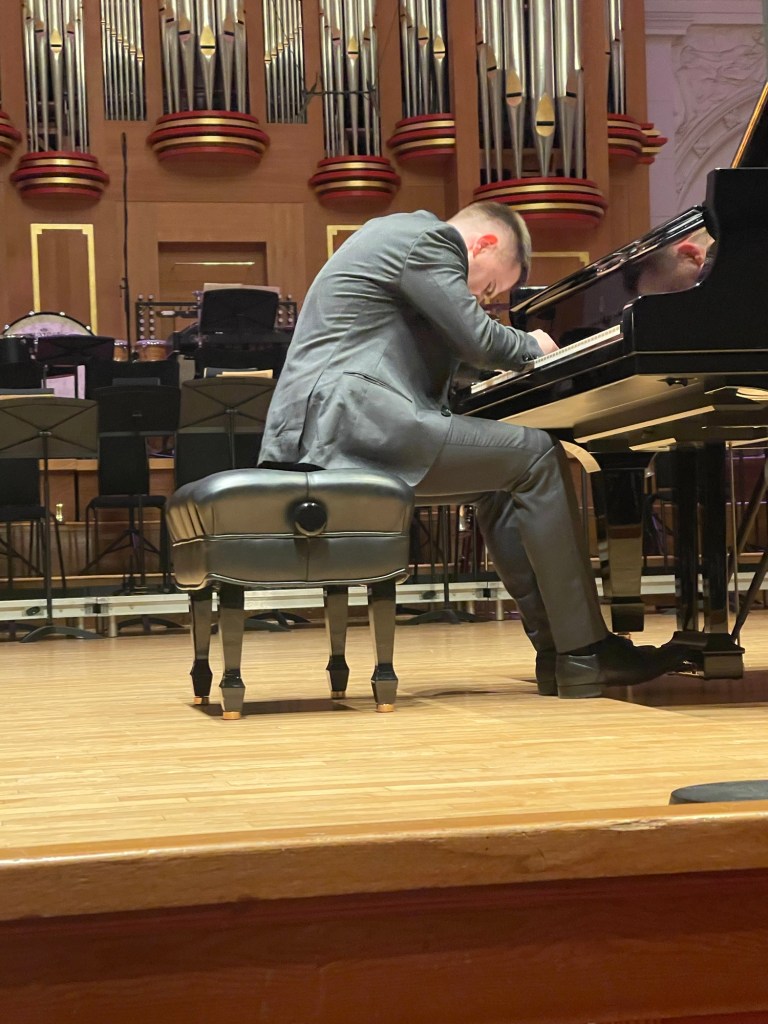
Baba Yaga was played like a man possessed and contrasted with the middle episode so rightly played without pedal.
The Great Gate was indeed monumental and the way he built up the enormous sonorities and controlled the emergence of bells that appeared over the entire keyboard was truly masterly.
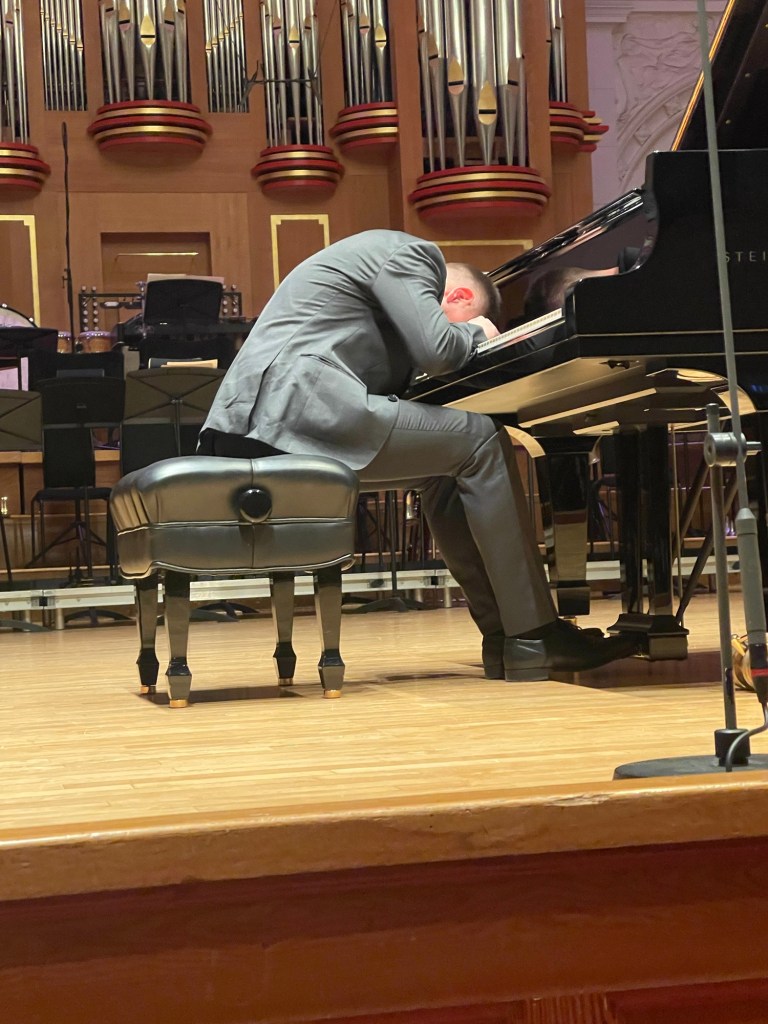
The final declaration of intent with sounds reverberating around this vast hall left our valiant guide exhausted and spent as indeed were the audience . Ready though to cheer this great young artist to the rafters for such a monumental performance ….over to you Maestro Hardenberger and Co!
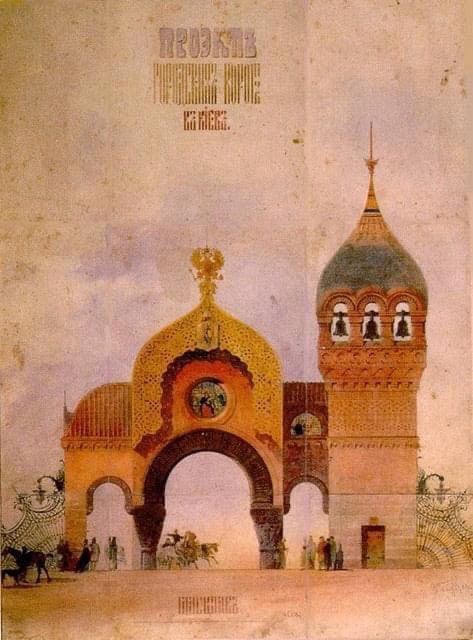
Pictures at an Exhibition is based on pictures by the artist, architect, and designer Viktor Hartmann. It was probably in 1868 that Mussorgsky first met Hartmann, not long after the latter’s return to Russia from abroad. Both men were devoted to the cause of an intrinsically Russian art and quickly became friends. They met in the home of the influential critic Vladimir Stasov, who followed both of their careers with interest. According to Stasov’s testimony, in 1868, Hartmann gave Mussorgsky two of the pictures that later formed the basis of Pictures at an Exhibition.
PICTURES AT AN EXHIBITION Promenade l
The Gnomes
Promenade ll
The Old Castle
Promenade lll
The Tuileries: Children’s dispute
after play
Bydlo
Promenade IV
Ballet of the unhatched chicks
Two Polish Jews: Rich and poor
Promenade V
The market at Limoges
Roman Catacombs – With the dead
in a dead language
Baba Yaga: The Witch
The Heroes Gate at Kiev
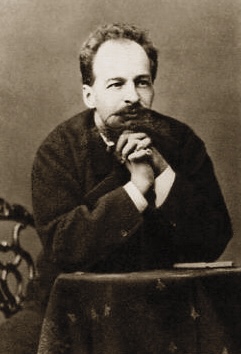
Hartmann’s sudden death on 4 August 1873 from an aneurysm shook Mussorgsky along with others in Russia’s art world. The loss of the artist, aged only 39, plunged the composer into deep despair. Stasov helped to organize a memorial exhibition of over 400 Hartmann works in the Imperial Academy of Arts in Saint Petersburg in February and March 1874. Mussorgsky lent the exhibition the two pictures Hartmann had given him, and viewed the show in person, inspired to compose Pictures at an Exhibition, quickly completing the score in three weeks (2–22 June 1874).Five days after finishing the composition, he wrote on the title page of the manuscript a tribute to Vladimir Stasov, to whom the work is dedicated.The music depicts his tour of the exhibition, with each of the ten numbers of the suite serving as a musical illustration of an individual work by Hartmann.Although composed very rapidly, during June 1874, the work did not appear in print until 1886, five years after the composer’s death, when a not very accurate edition by the composer’s friend and colleague Nikolai Rimsky-Korsakov was published.
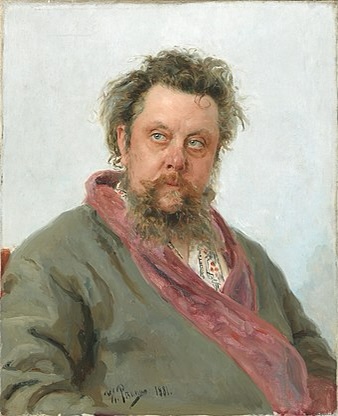
Mussorgsky suffered personally from alcoholism, it was also a behavior pattern considered typical for those of Mussorgsky’s generation who wanted to oppose the establishment and protest through extreme forms of behavior.One contemporary notes, “an intense worship of Bacchus was considered to be almost obligatory for a writer of that period.”Mussorgsky spent day and night in a Saint Petersburg tavern of low repute, the Maly Yaroslavets, accompanied by other bohemian dropouts. He and his fellow drinkers idealized their alcoholism, perhaps seeing it as ethical and aesthetic opposition. This bravado, however, led to little more than isolation and eventual self-destruction.

Angela Hewitt at the RCM a light of radiance and simplicity

 ChristopherAxworthy-MusicCommentary
Una risposta a "Paul Mnatsakanov ‘s monumental Mussorgsky ‘Pictures’"