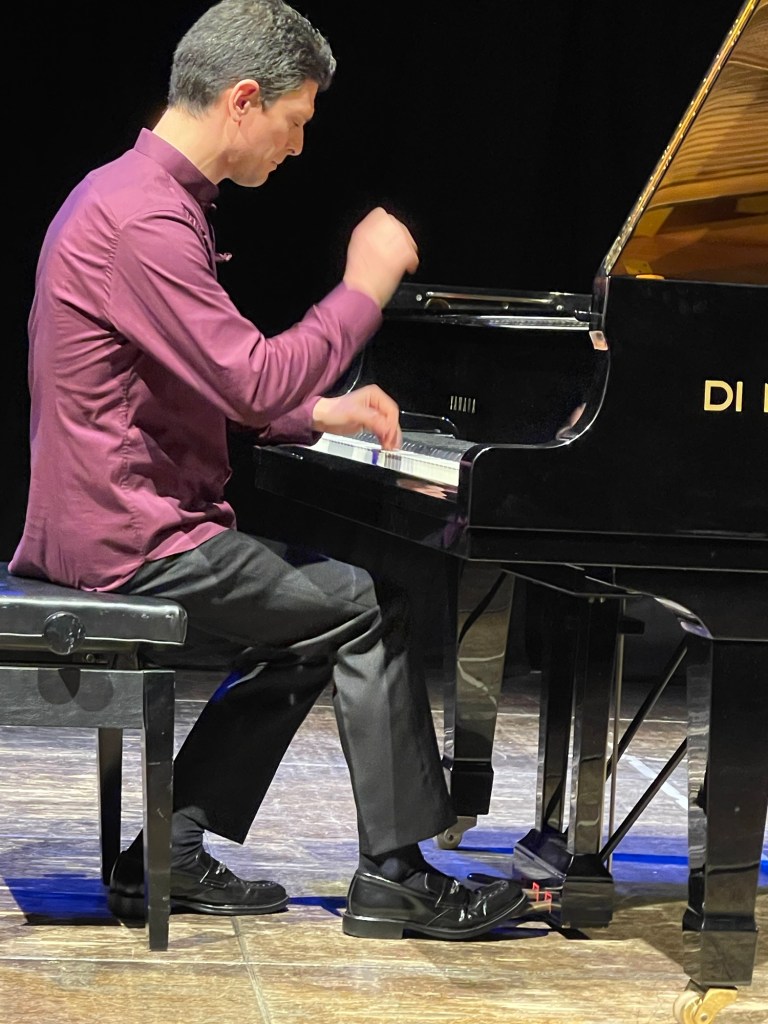
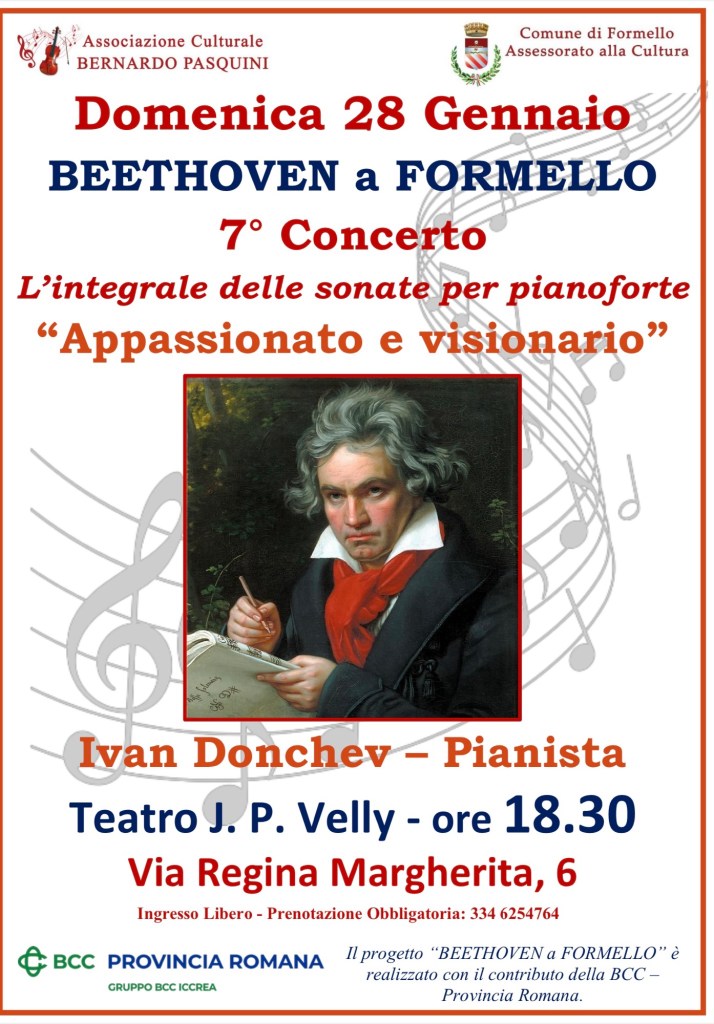
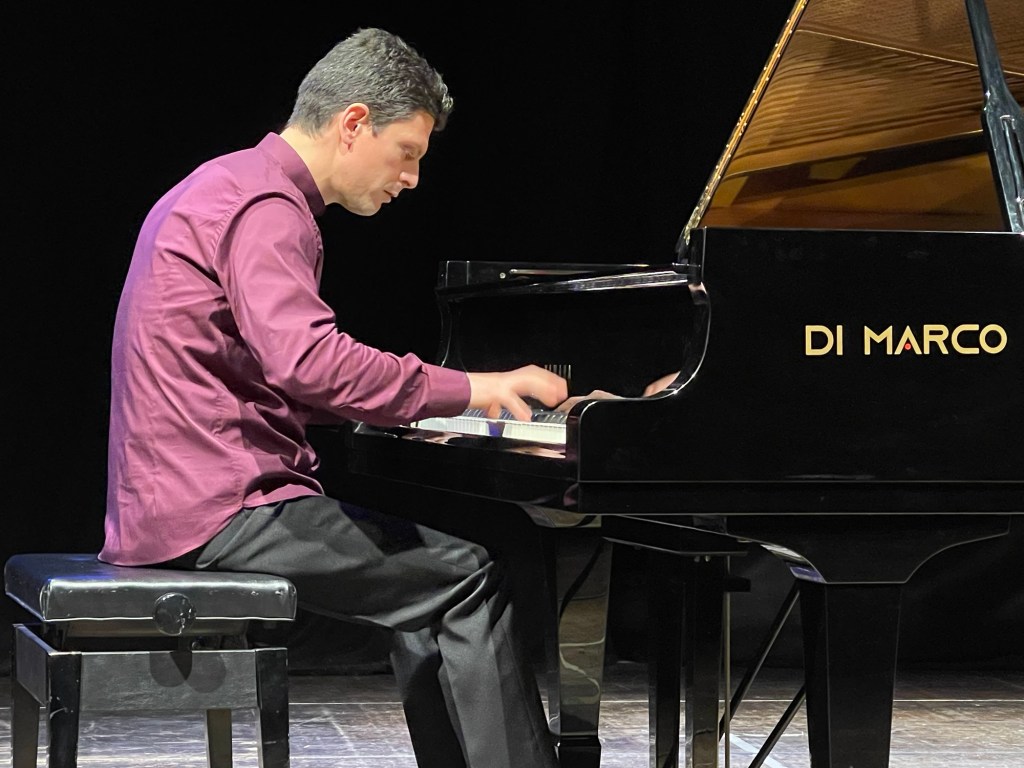
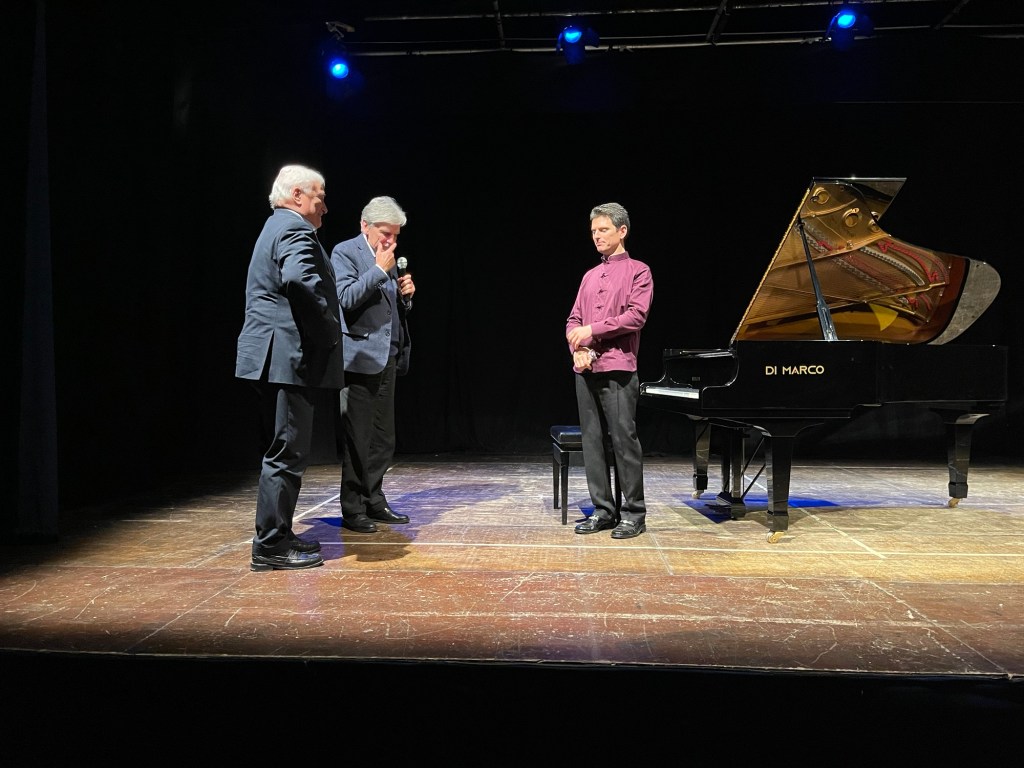
The seventh of eleven recitals in Formello by Ivan Donchev in his Beethoven Cycle that Formello is bravely championing and which are eagerly followed by a large and appreciate audience.
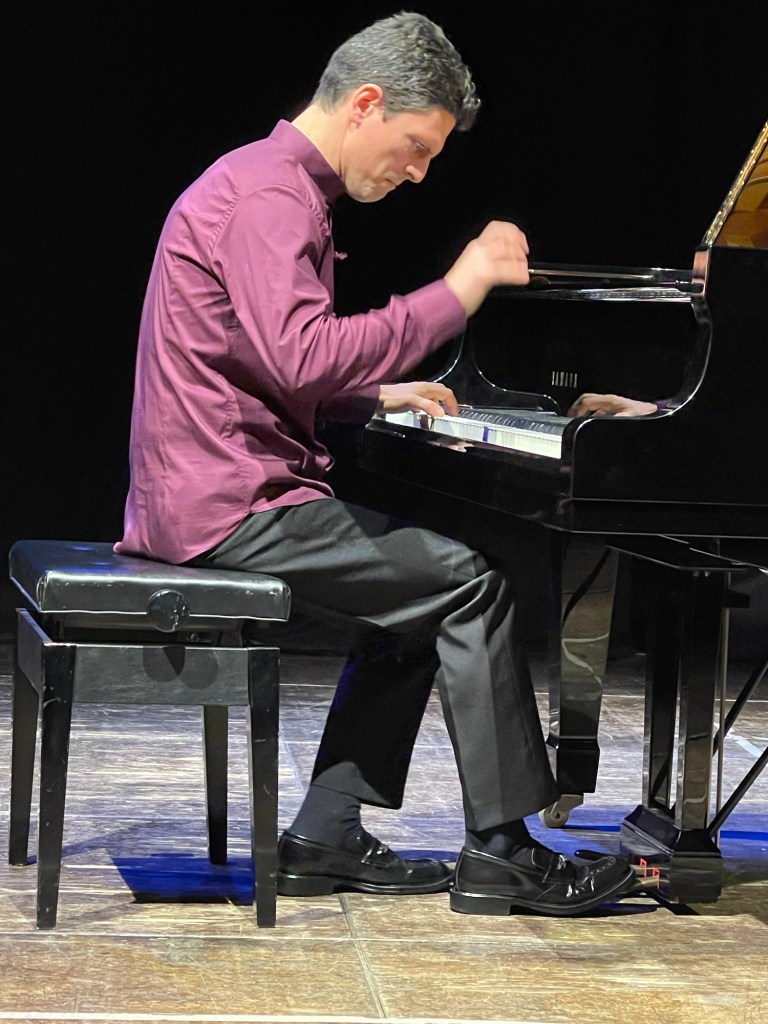
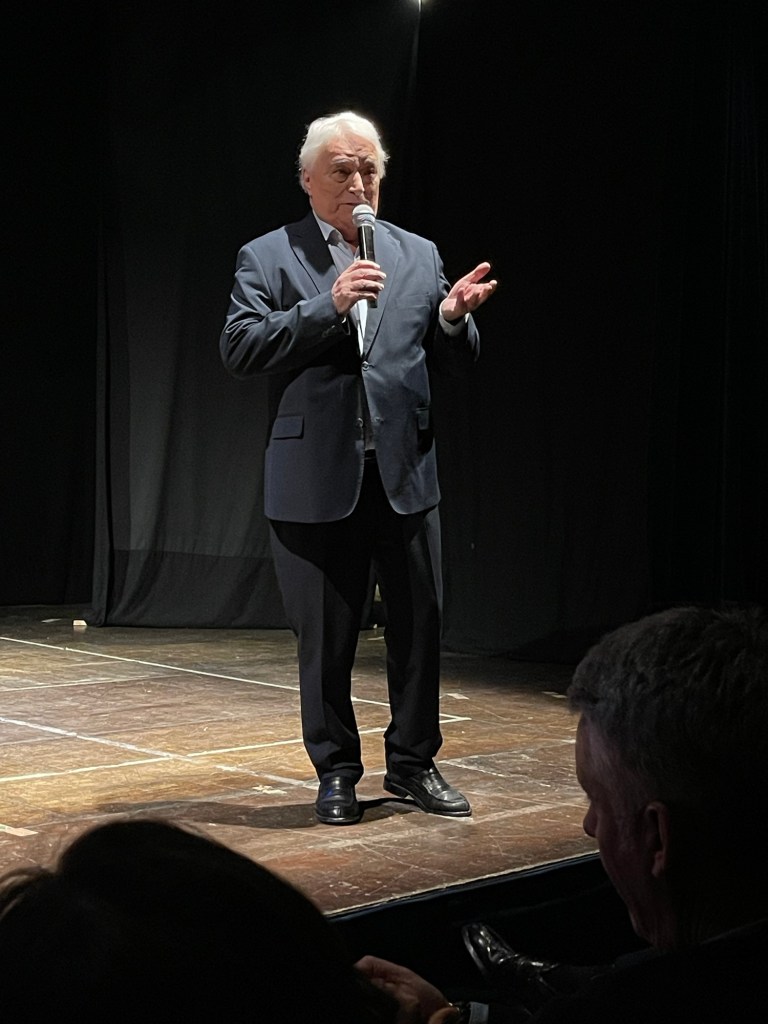
Ivan ,like his beloved mentor Aldo Ciccolini is a stylist but with a classical background that allows him to smooth out some of the more irascible sharper edges of Beethoven with his real searching musicianship which as the title to this recital announces is both of passion and vision.ivan is a thinking musician with a heart of gold and before the concert I could see him referring to the Arrau edition of the sonatas which as he says is an urtext that refers also to many other editions.It is as near a complete guide to Beethoven’s world as one could hope for and despite a rather muffled piano Ivan was able to transmit the very essence of the well known ‘Waldstein’ and ‘Appassionata’ sonatas with simplicity and integrity.
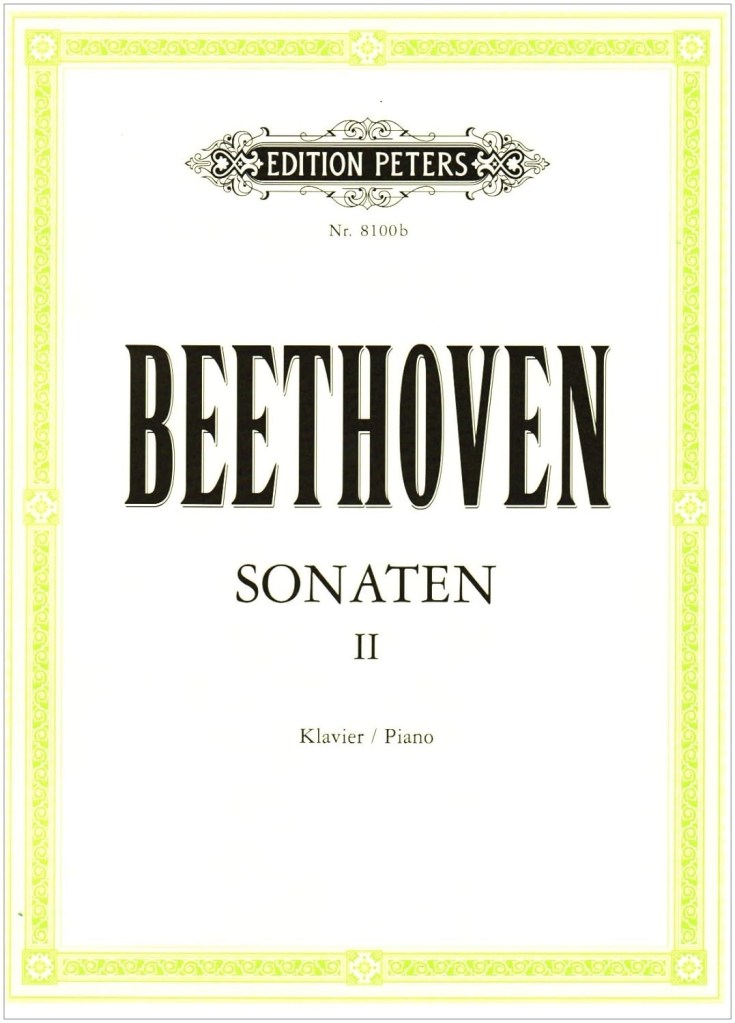
Claudio Leon Arrau & Lothar Hoffman- Erbrech
Contains the following pieces: Piano Sonata No. 16 in G Major, Op. 31, No. 1 ; Piano Sonata No. 17 in D Minor (“Tempest”), Op. 31, No. 2 ; Piano Sonata No. 18 in E-flat Major (“Hunting”), Op. 31, No. 3 ; Piano Sonata No. 19 in G Minor, Op. 49, No. 1 ; Piano Sonata No. 20 in G Major, Op. 49, No. 2 ; Piano Sonata No. 21 in C Major (“Waldstein”), Op. 53 ; Piano Sonata No. 22 in F Major, Op. 54 ; Piano Sonata No. 23 in F Minor (“Appassionata”), Op. 57 ; Piano Sonata No. 24 in F-sharp Major (“A Thérèse”), Op. 78 ; Piano Sonata No. 25 in G Major, Op. 79 ; Piano Sonata No. 26 in E-flat Major (“Les adieux”), Op. 81a ; Piano Sonata No. 27 in E Minor, Op. 90 ; Piano Sonata No. 28 in A Major, Op. 101 ; Piano Sonata No. 29 in B-flat Major (“Hammerklavier”), Op. 106 ; Piano Sonata No. 30 in E Major, Op. 109 ; Piano Sonata No. 31 in A-flat Major, Op. 110 ; Piano Sonata No. 32 in C Minor, Op. 111 Publisher ID: EP8100B
He even surprised us with a remarkably clear performance of the Sonata op 54 ,that rather neglected partner in this trio of Sonatas from this crucial middle period of a Beethoven’s creative life.
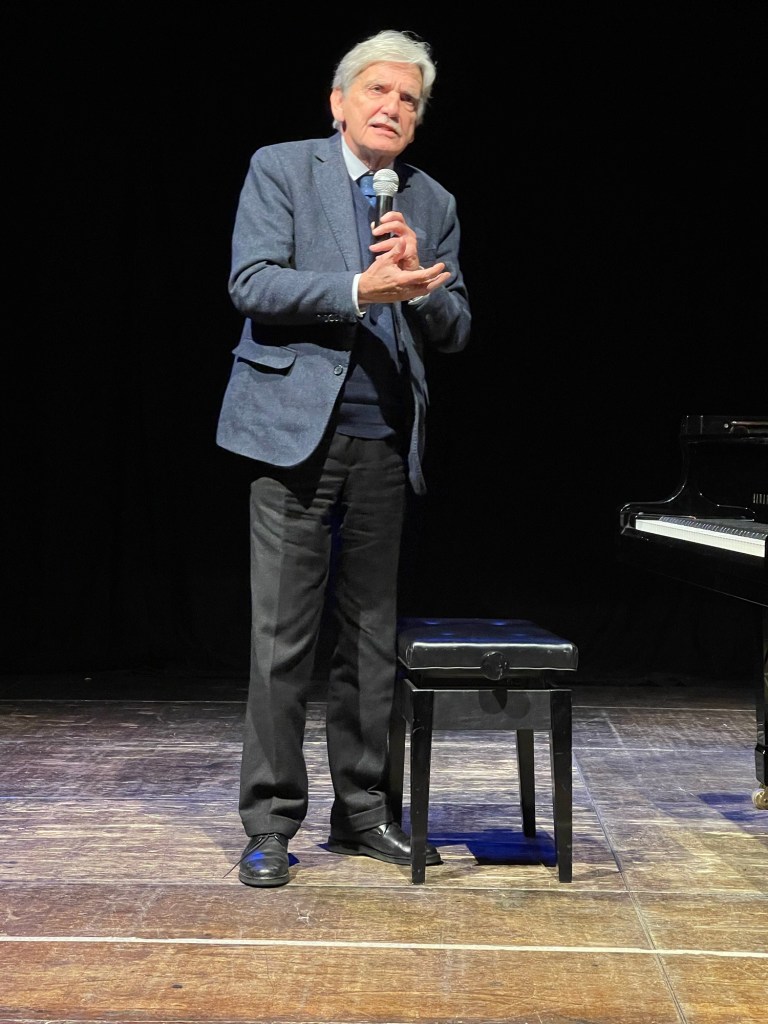
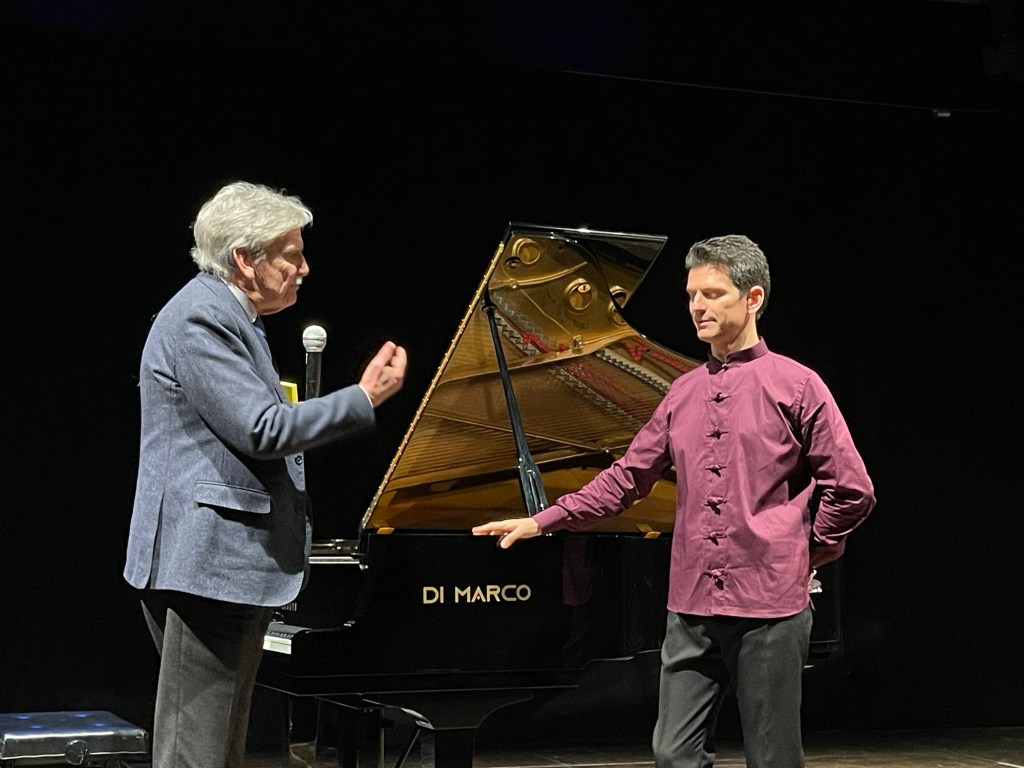
‘Without Mozart Beethoven would probably not have existed’ quite rightly declared Ivan at the end of this Beethoven marathon.Announcing an encore that he wanted to dedicate to Mozart on this weekend that would celebrate his birth on the 27th January 1756.
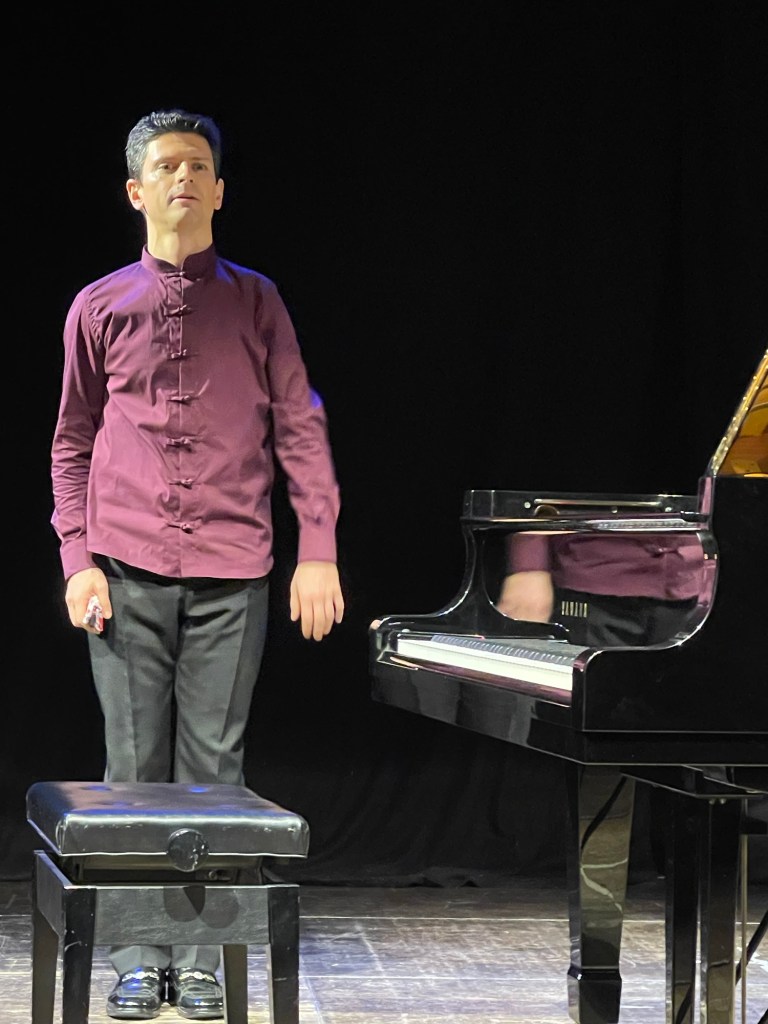
The Adagio from the sonata in F K.332 was played with disarming purity and simplicity where finally after the ‘sturm und drang’ of the highly tempered Beethoven the disarming simplicity of Ivan’s playing was of etched gold as he allowed the music to unfold with such naturalness.Almost without pedal Ivan had found the soul of this troublesome piano and after three very fine performances of Beethoven where Ivan like Beethoven battled with adversity he had now found a world where the music could unfold with the simplicity of a child but with the wisdom of a mature musician.Allowing the sounds to unfold with the same flexibility of a bel canto singer I was indeed reminded of the aristocratic musicianship of Aldo Ciccolini where warmth,humanity and musicianship were combined with elegance and style…………………
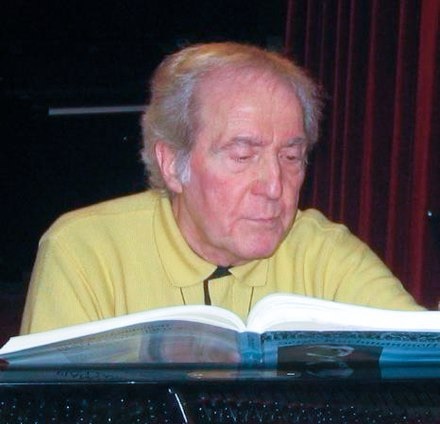
He began his performing career playing at the Teatro San Carlo at the age of 16. However, by 1946 he was forced to play in bars to support his family. In 1949, he won, ex-aequo (tied) with Ventsislav Yankov , the Marguerite Long- Jacques Thibault Competition in Paris (among the other prizewinners were Badura-Skoda and Barbizet). He became a French citizen in 1971[and taught at the Conservatoire de Paris from 1970 to 1988, where his students included Akiko E-bikes,Jean- Yves Thibaudet,Artur Pizarro ,Gerry Moutier , Nicholas Angelich, André Sayasov and Jean-Luc Kandyoti.Other students included Francesco Libetta,Antonio Pompa-Baldi ,Jean-Marc Savelli and Ivan Donchev
The Waldstein sonata has always been the one that closest resembles Delius’s rather rude remark that Beethoven is all scales and arpeggios!An element of truth of course can be found in the Waldstein sonata op 53 as indeed it can with the Emperor Concerto op 73 written just five years later during the period where Beethoven had interrupted his chronicle of Sonatas .
His trilogy that Ivan presented today was to lead to op 78 and 81a that in turn was to be the gateway to the miraculous last period when Beethoven’s turbulent life had been tampered by the loss of his hearing.He could envisage the paradise that was awaiting and was miraculously able to described in music and bequeathed to postering with his final trilogy op 109,110 and 111.
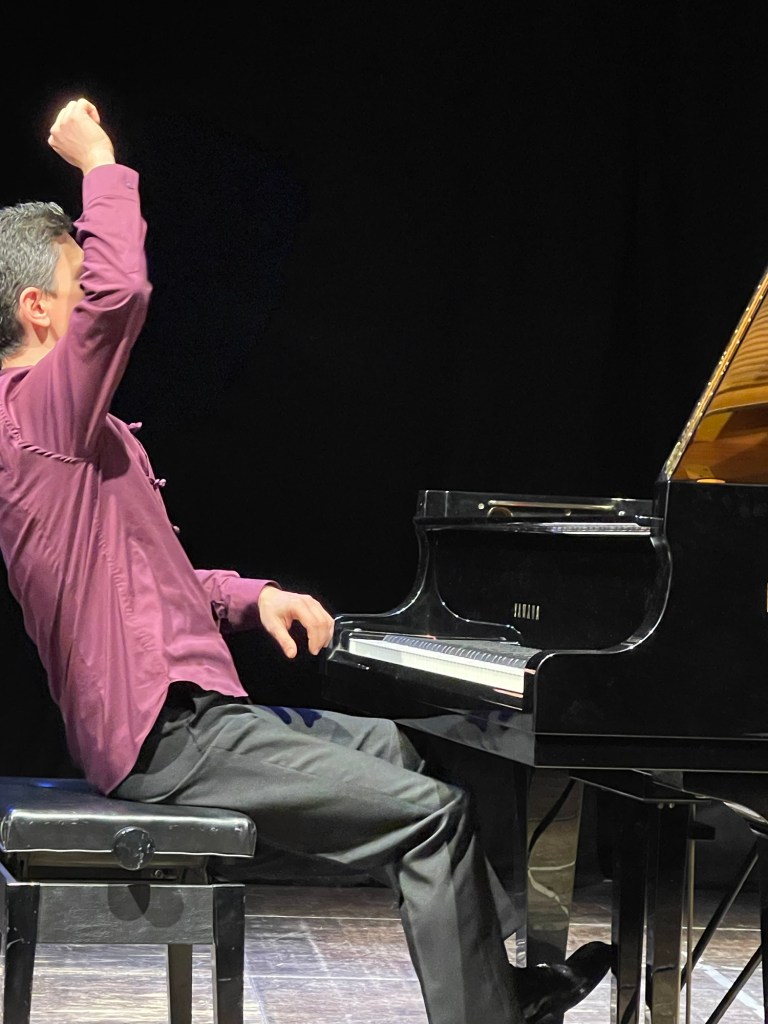
This rather muffled instrument did not allow Ivan the absolute clarity of Beethoven writing where a precision and rhythmic drive are the characteristics of the Allegro con brio.With his fine musicianship and sense of style he managed to shape the music into an architectural whole even though he was forced to find some rather unusual counterpoints in the second subject ornamentation that were a musicians answer to resolving a problematic instrument and making musical sense in a stylistic way.It was a very interesting voyage of discovery of a true musician that at all costs could make the music speak where the composers intrinsic message was of paramount importance.The all too short Adagio introduction to the Rondo was played with a flowing tempo that quite rightly was looking forward to the long bell of G that would toll and be miraculously transformed by the Genius that was Beethoven into the mellifluous outpouring of Schubertian beauty bathed in pedal ( that Beethoven specially indicates and that Ivan scrupulously noted ).The contrasting episodes ever more technically challenging were played with dynamic energy but Ivan had to add more pedal than necessary to give the architectural shape and harmonic meaning to an instrument that he had not yet completely conquered.The coda prestissimo was the contrast that Beethoven intended and opened like the true music box that Beethoven’s teacher Haydn had indicated in his C major Sonata many years before.That great much missed musicologist Piero Rattalino had discussed with Ivan the famous glissandi octaves that appear before Beethoven waves his magic wand and where trills are transformed into magic cloud on which Beethoven’s vision of paradise could ride unimpeded by the mere ‘scales and arpeggios’ so rudely dismissed by a less universal genius.Should one attempt the alternating glissandi and rely on a good instrument and strong fingers ( lubricated in Serkin’s case with a very deft lick before taking the plunge) .Or like Kissin with an equally deft jump with both hands and play them like scales.Ivan has taken Rattalino’s advice in choosing a tempo in which they can be played as very lightweight octaves .It was this that had decided the tempo not only of the prestissimo coda but also of the tempo of the Allegretto Grazioso Rondo and in turn the Adagio molto introduction.For a thinking musician these are all considerations that must be taken into account with the humility and integrity of a performer at the service of the composer.
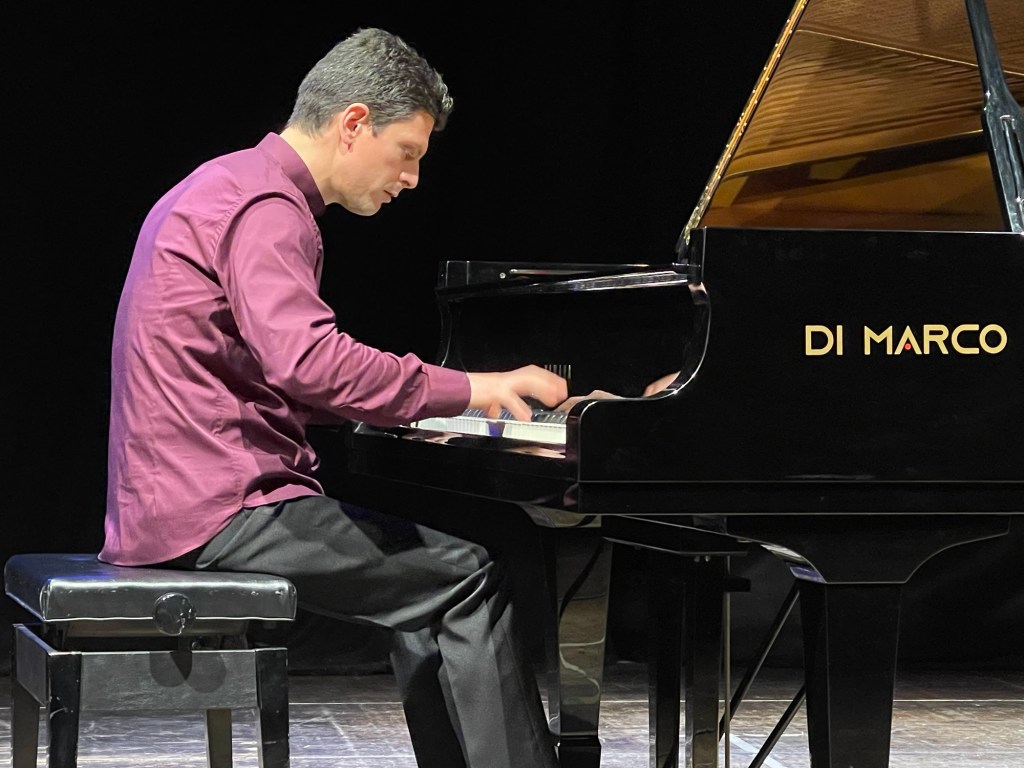
Ivan rose to the challenge and had now conquered the piano and discovered the secrets that all pianos have hidden away in this black box of hammers and strings.Beethoven would indeed take a hammer to some instruments in frustration of the inadequate instruments of his time where his Genius could already foresee the possibilities of the instruments that were still to be perfected.
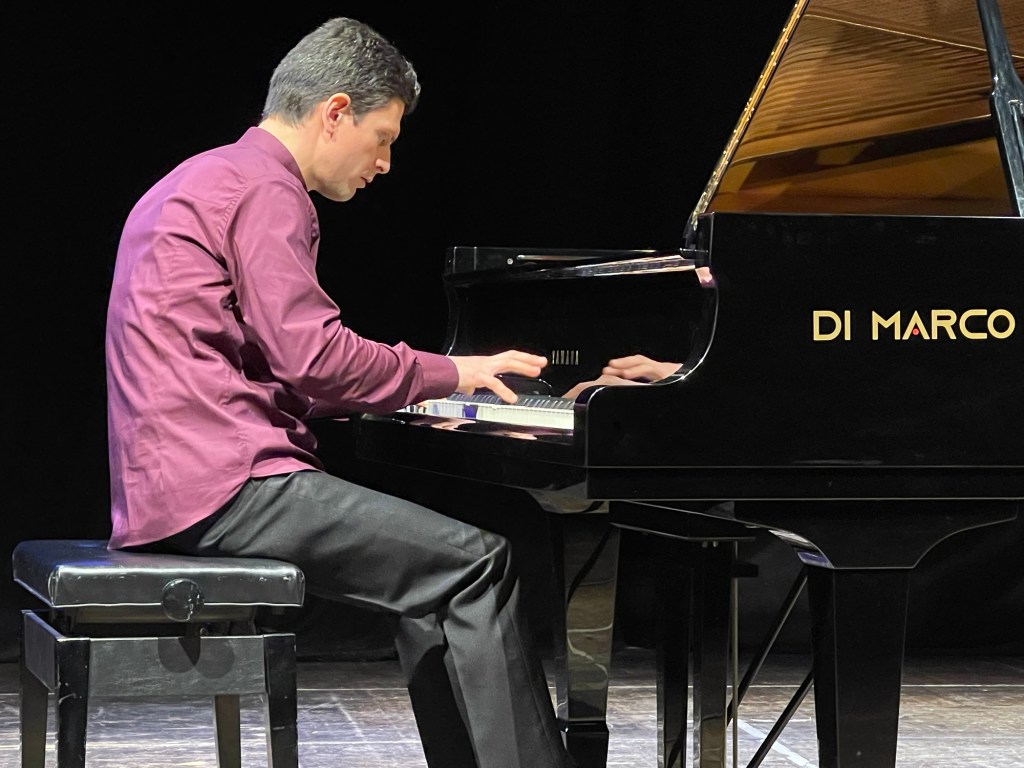
The Sonata op 54,the so called poor member of this trilogy,suddenly in Ivan’s hands became the masterpiece that it truly is.Ivan had found more incisive rhythmic bite and the contrast in the first movement between the gracious minuet of ‘mutual anticipation’ (as Menuhin was wont to describe the English character) contrasting with the tumultuous irascible outbursts of completely different character.This was indeed Floristan rudely interrupting Eusebius and was one of the finest and most persuasive performance I have heard.The perpetuum mobile of the second movement of great difficulty was give a musicianly shape and indeed was a true Allegretto .Like the opening of the Waldstein this was more of a stylistic solution as absolute precision and clarity were not possible.It was shaped with the same intrinsic character but clarity and the all important silences were not always possible without interrupting the unending flow of notes that poured from Ivan’s finely trained fingers.
A superb performance of the ‘Appassionata’ in which Beethoven’s very precise indications were scrupulously noted. The long held pedal in the first movement before the coda was a moment of real rest before the storm and on this instrument was particularly poignant.Unfortunately an instrument where the dynamic energy within the rests are of such searing importance as Ivan did play the opening trill followed by a rest exactly as written but the electric shock of silence was weakened by the rather muffled sound .Certain passages in the first movement he had to give more rounded edges making music as a supreme stylist rather than an intellectual perfectionist.One must admire Ivan too for not playing safe as he played Beethoven’s vast arpeggios with one hand rather than dividing them as lesser mortals ( pianists!) do .If you want to play safe don’t play Beethoven say I and more importantly so does Arrau!The second subject was particularly beautiful on this instrument but the blurring at the end of the long desolate scale to Beethoven’s rumbustuous outburst of dynamic drive was weakened by having to add pedal and slow it down rather than being rudely interrupted as Beethoven’s irascible temperament caused him to shut and open doors with an abruptness that was not of his age.
A beautiful Andante con moto anticipates the string quartet writing of the last movement of op 109.It was played with intelligence and beauty as the variations flowed so easily from one to the other before the ‘bump in the night’ shock of an interruption and the gust of wind as Beethoven joined this slow movement to the final Allegro ma non troppo.Here again the control and technical ease with which Ivan played this perpetuum mobile was remarkable for the shape and style that he could add without ever altering the intrinsic pulse .Of course for a true musician like Ivan the ritornelli by the composers are not just suggestions but demands for a repeat usually with more intensity.The accelerando into the presto coda was exciting because the Allegro had indeed been ‘non troppo’ so Ivan was able to play the coda with a precision and indeed now remarkable clarity.He should actually have kept the pedal on to the end as Beethoven asks which paradoxically the piano would have accommodated happily this time.I think an artist of Ivan’s stature can and should be allowed some artistic license after such an exemplary display of respect for the composer he is the humble servant of.
I look forward now to Ivan’s performance of the Sonatas op 27 and 28 in nearby Velletri on the 25th February on the 1876 Pleyel piano beautifully restored by its proud owner Ing Giancarlo Tammaro who was present tonight to applaud this very fine artist and maybe check that he would not break his much loved period instrument!No fear of that with a musician who listens to what he is playing with intelligence,humility and mastery and it is sure to be an exhilarating voyage of discovery!
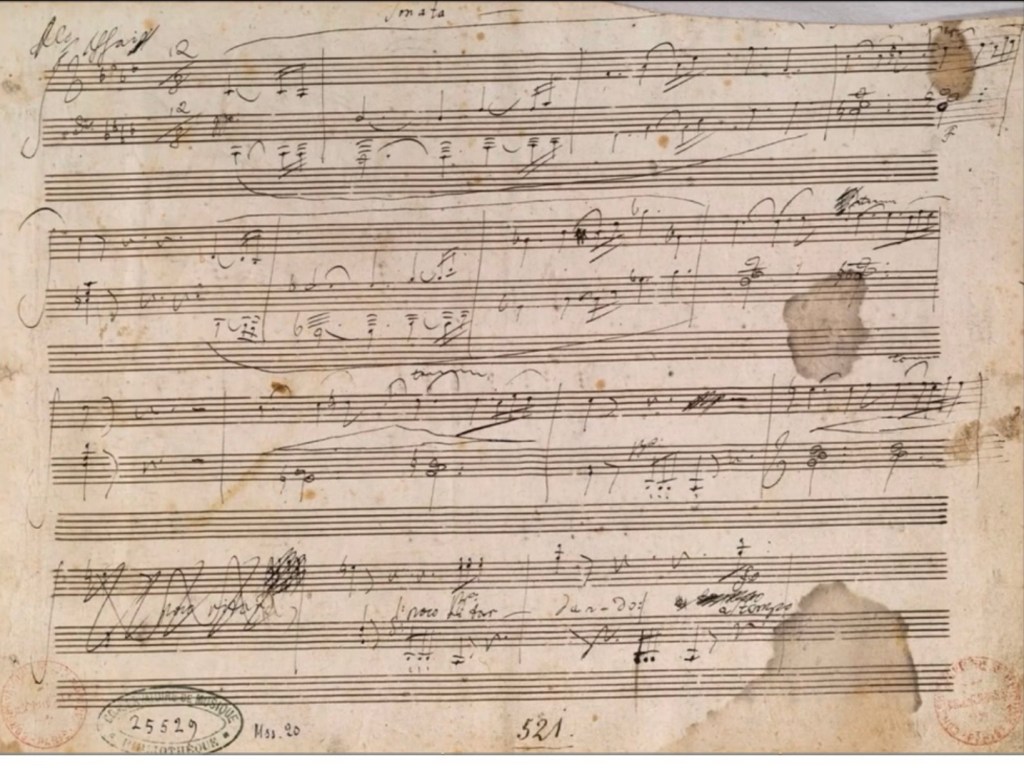
Beethoven’s Piano Sonata No. 21 in C major, Op. 53, known as the Waldstein, is one of the three most notable sonatas of his middle period (the other two being the Appasionata op.57and Les Adieux op 81a ) Completed in summer 1804 and surpassing Beethoven’s previous piano sonatas in its scope, the Waldstein is a key early work of Beethoven’s “Heroic” decade (1803–1812) and set a standard for piano composition in the grand manner.
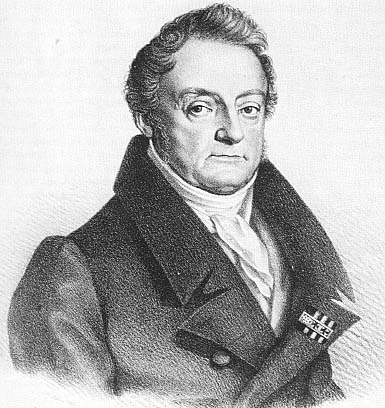
The sonata’s name derives from Beethoven’s dedication to his close friend and patron Count Ferdinand Ernst Gabriel von Waldstein , member of Bohemian noble Waldstein family (Valdštejn). It is the only work that Beethoven dedicated to him.It is also known as L’Aurora (The Dawn) in Italian, for the sonority of the opening chords of the third movement, thought to conjure an image of daybreak.
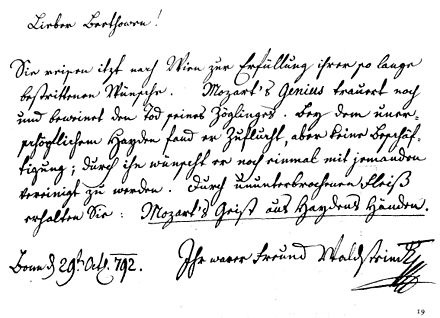
Dear Beethoven! You go to realise a long-desired wish: the genius of Mozart is still in mourning and weeps for the death of its disciple. (…) By incessant application, receive Mozart’s spirit from Haydn’s hands.
In 1804 Beethoven dedicated his Sonata Op. 53, known as the Waldstein, to him.However, it seems that both men hardly had contact with one another at that time. Beethoven dedicated no other work to Waldstein.
The Waldstein has three movements:
- Allegro con brio
- Introduzione: Adagio molto The Introduzione is a short Adagio that serves as an introduction to the third movement. This replaced an earlier, longer middle movement, later published as the Andante favori ,Wo0 57.
- Rondo -Allegretto moderato
The Piano Sonata No. 22 in F major, op .54, was written in 1804 It is contemporary to the first sketches of the fifth Symphony and is one of Beethoven’s lesser known sonatas, overshadowed by its widely known neighbours
“the whole work is profoundly humorous, with a humour that lies with the composer rather than with the childlike character portrayed by the music. No biographical details are known as to whether Beethoven thought of any person or household divinity in connection with this sonata; but its material is childlike, or even dog-like, and those who best understand children and dogs have the best chance of enjoying an adequate reading of this music; laughing with, but not at its animal spirits; following in strenuous earnest its indefatigable pursuit of its game whether that be its own tail or something more remote and elusive; and worthily requiting the wistful affection that is shown so insistently in the first movement and even in one long backward glance during the perpetuum mobile of the finale.” Donald Tovey
Beethoven’s Piano Sonata No. 23 in F minor, op57Appassionata, was composed during 1804 and 1805, and perhaps 1806, and was dedicated to Count Franz von Brunswick. The first edition was published in February 1807 in Vienna .It was not named during the composer’s lifetime, but was labelled in 1838 by the publisher of a four-hand arrangement of the work. Instead, Beethoven’s autograph manuscript of the sonata has “La Passionata” written on the cover, in Beethoven’s hand.
It has three movements:
- Allegro assai
- Andante con moto
- Allegro ma non troppo – Presto
Ivan Donchev’s extraordinary recreation of Beethoven’s Pastoral Symphony at Villa Torlonia
 ChristopherAxworthy-MusicCommentary