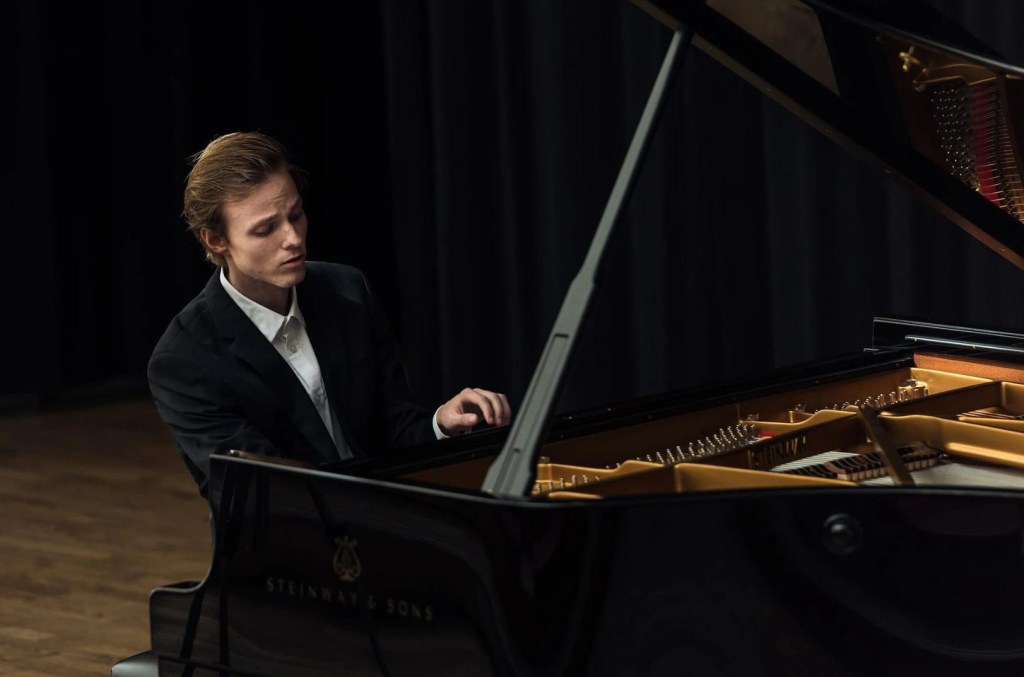
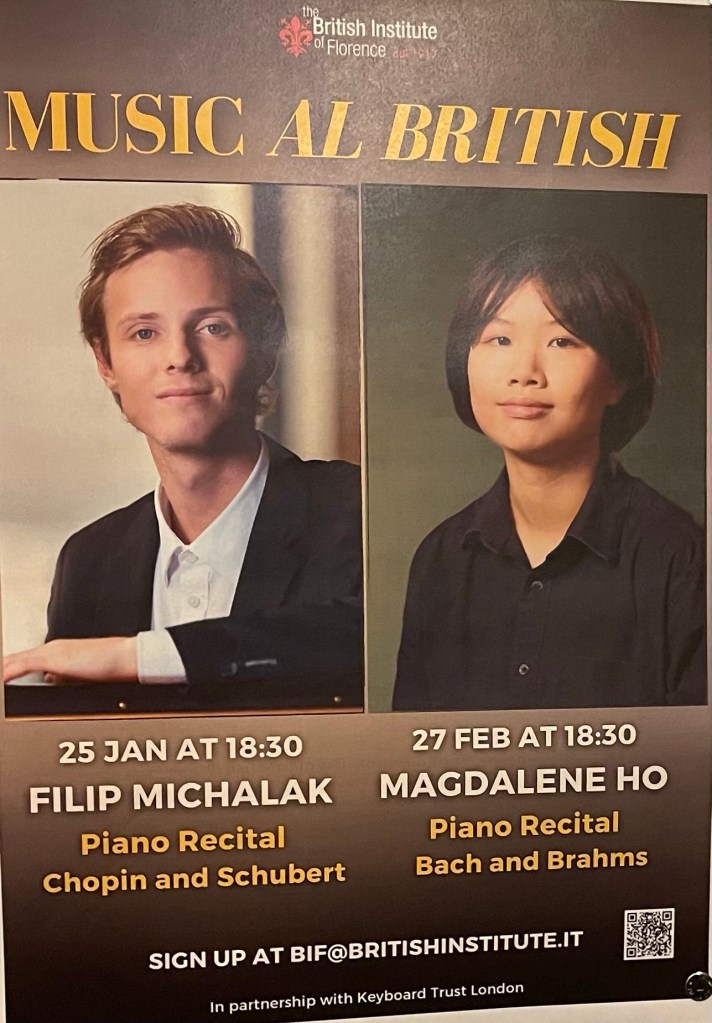
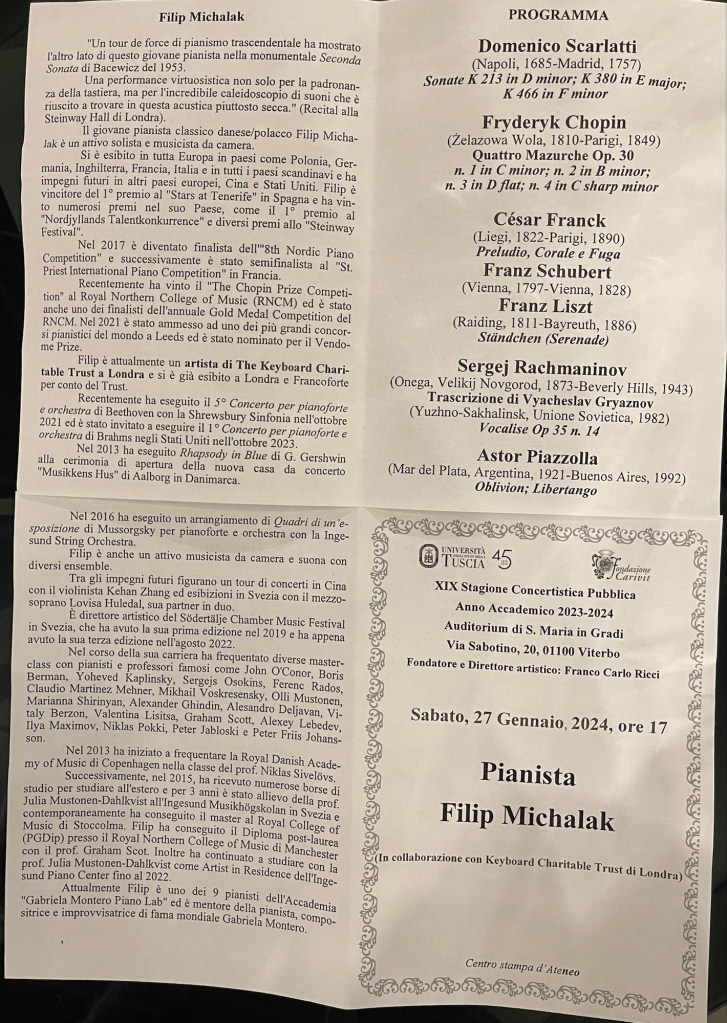
In our latest collaboration with theKeyboard Trust (UK), we are thrilled to present the brilliant young Danish/Polish pianist Filip Michalak in concert in the Library, with a delightfully diverse repertoire:
Filip Michalak at St Mary’s ‘something old but oh so new in a great artists hands’
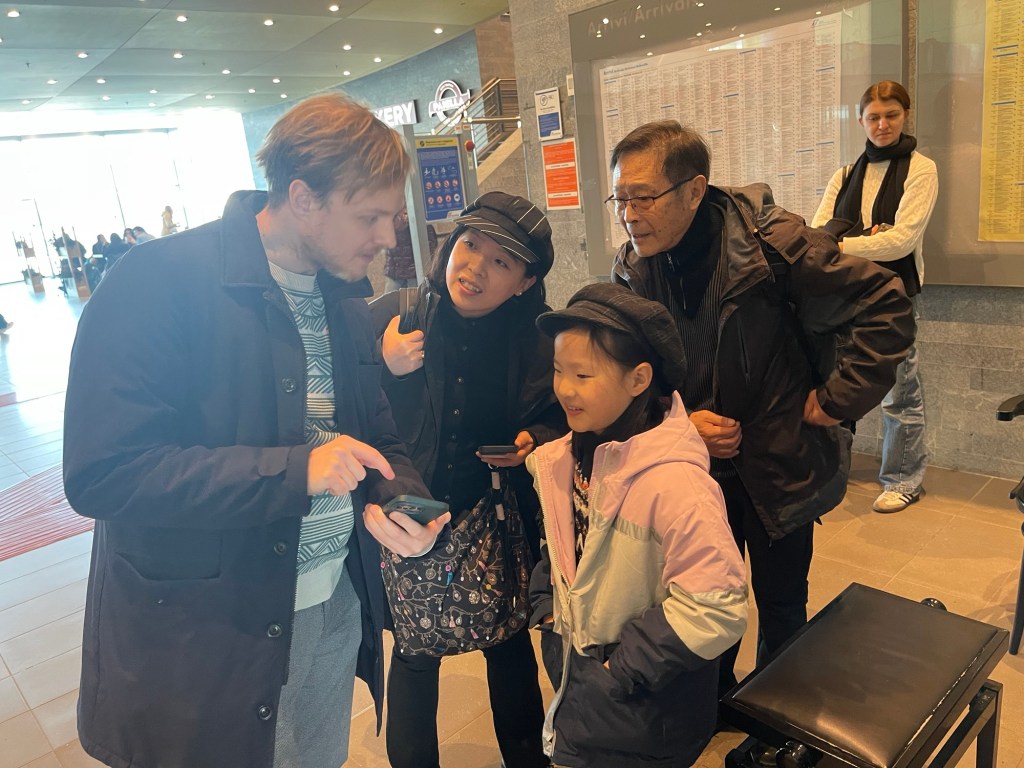
Filip Michalak in London for The Keyboard Charitable Trust
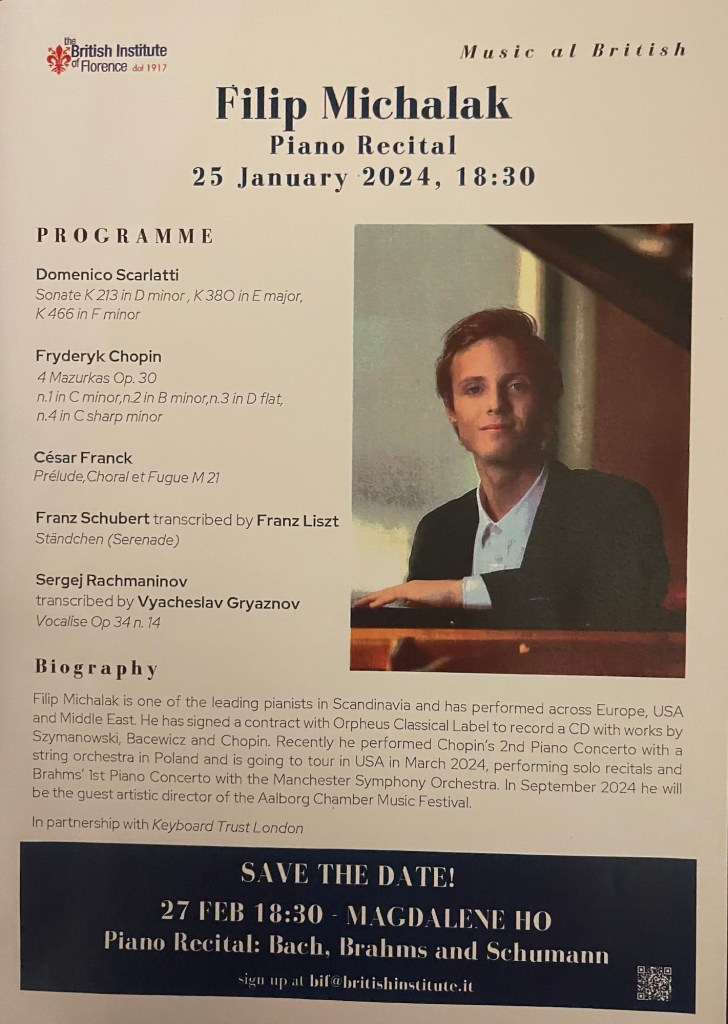
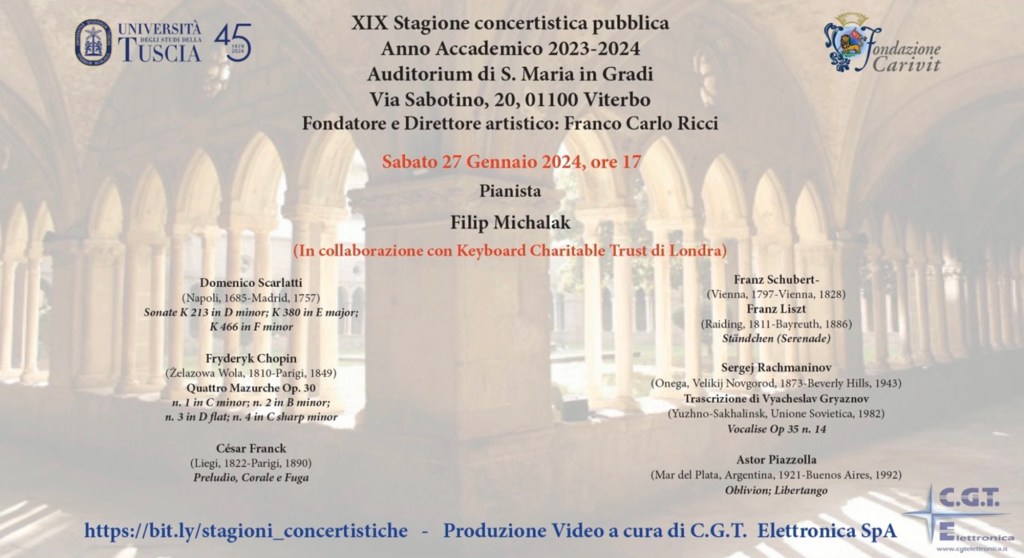
PROGRAMME:
Domenico Scarlatti (Napoli, 1685-Madrid, 1757):
Sonate K 213 in D minor , K 38O in E major, K 466 in F minor
Fryderyk Chopin (Żelazowa Wola, 1810-Paris, 1849):
4 Mazurkas Op. 30
n.1 in C minor,n.2 in B minor,n.3 in D flat ,n.4 in C sharp minor
César Franck (Liegi, 1822-Paris, 1890):
Prélude,Choral et Fugue M 21
Franz Schubert (Vienna, 1797-Vienna, 1828) transcribed by Franz Liszt (Raiding, 1811-Bayreuth, 1886)
Ständchen (Serenade)
Sergej Rachmaninov (Onega, Velikij Novgorod, 1873-Beverly Hills, 1943) transcribed by Vyacheslav Gryaznov (Yuzhno-Sakhalinsk, Unione Sovietica, 1982)
Vocalise Op 34 n. 14
Astor Piazzolla (Mar del Plata, 1921-Buenos Aires, 1992): Oblivion
Libertango.
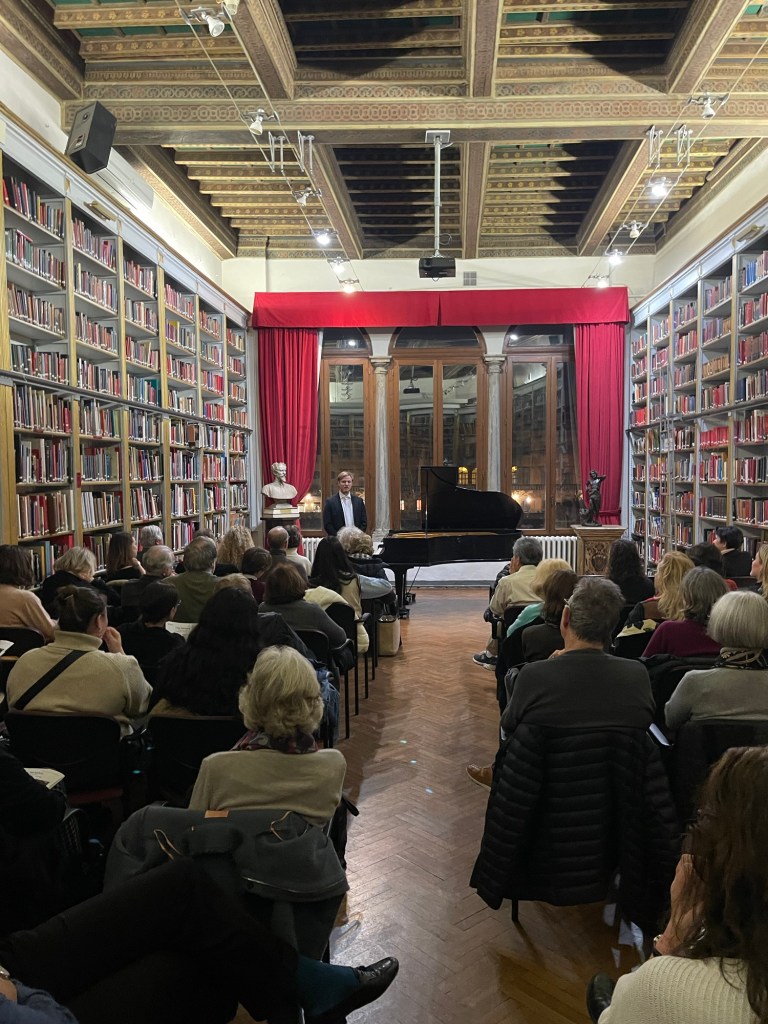
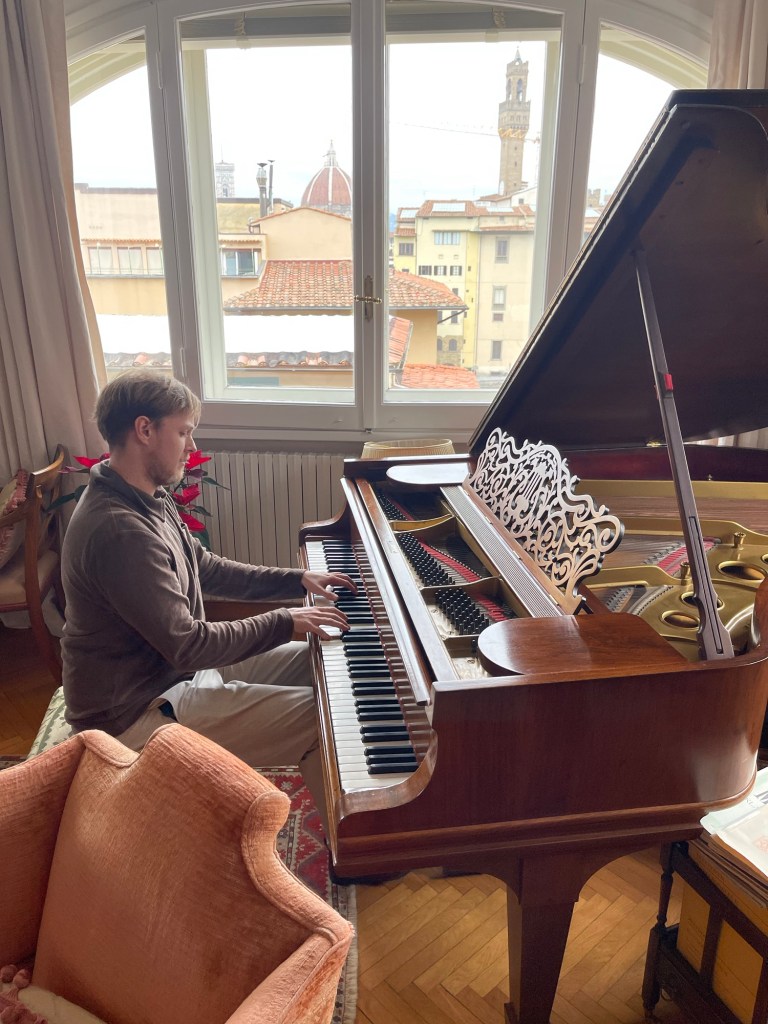
Fascinating recital by the young Danish pianist Filip Michalak who certainly had a tale to tell. In the series of star pianists from the Keyboard Trust in collaboration with the British Institute in Florence he presented a programme originally conceived as a panorama of styles and emotions from the baroque to the present day .
In reviewing it in London a year ago I had given it the title of ‘Something Old -Something New ‘
https://christopheraxworthymusiccommentary.com/2023/04/26/filip-michalak-at-st-marys-something-old-but-oh-so-new-in-a-great-artists-hands/
A slightly modified programme today as this young man had fallen in love with Franck’s Prelude Choral and Fugue which was now the centre piece of his panorama.
Fascinating stories on and off stage as this is a young man with something to say.
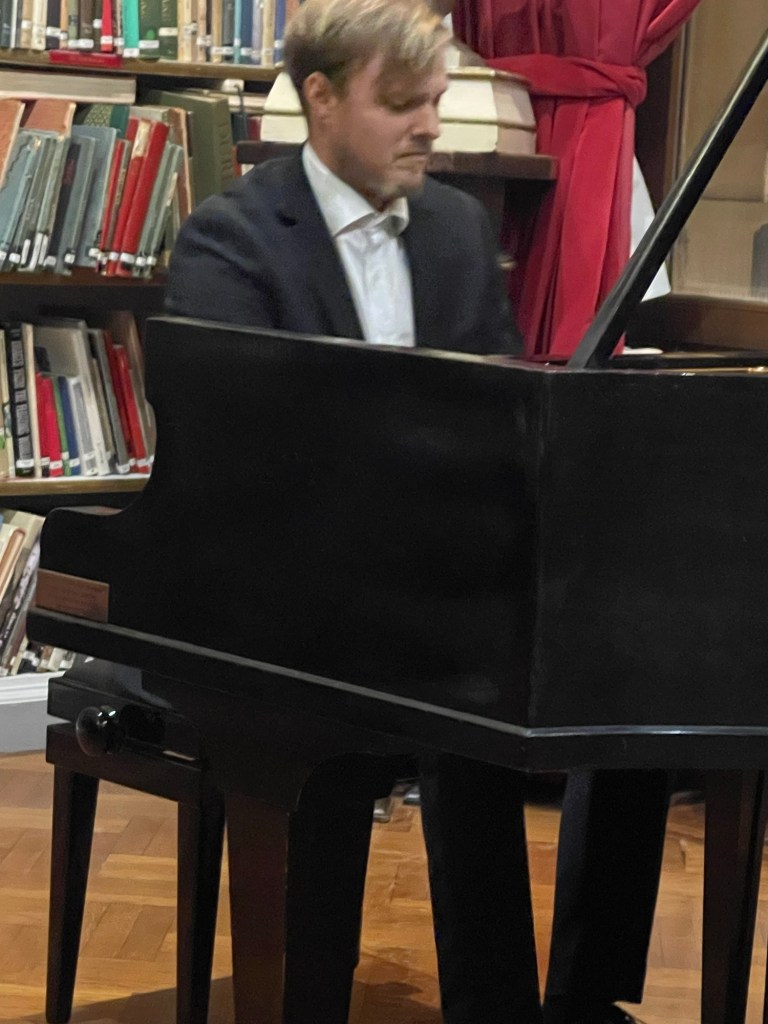
A Polish father who had fallen in love with Denmark and transferred his life there .A young singer with a visiting Polish choir had caught his eye and they decided to live happily every after together in Denmark.Filip appeared on the scene shortly after and of course was brought up bathed in Polish culture together with that of Denmark.
It was this mixture that was immediately evident in his performance of the four Chopin Mazukas op 30. Chopin too had been an exile but had never lost his nostalgic yearning for the traditional music of his homeland.Filip played them with the sense of improvised freedom of fantasy,delicacy and above all an insinuating rhythmic flexibility that is inborn and cannot be just learnt.The great bell like toll of the third mazurka was played with such commanding authority as it burst into infectious dance with its quixotic changes of character as he reached out to the deeply brooding fantasy of the fourth. The rhythmic drive of the second was played always with the beguiling style as to the manner born.
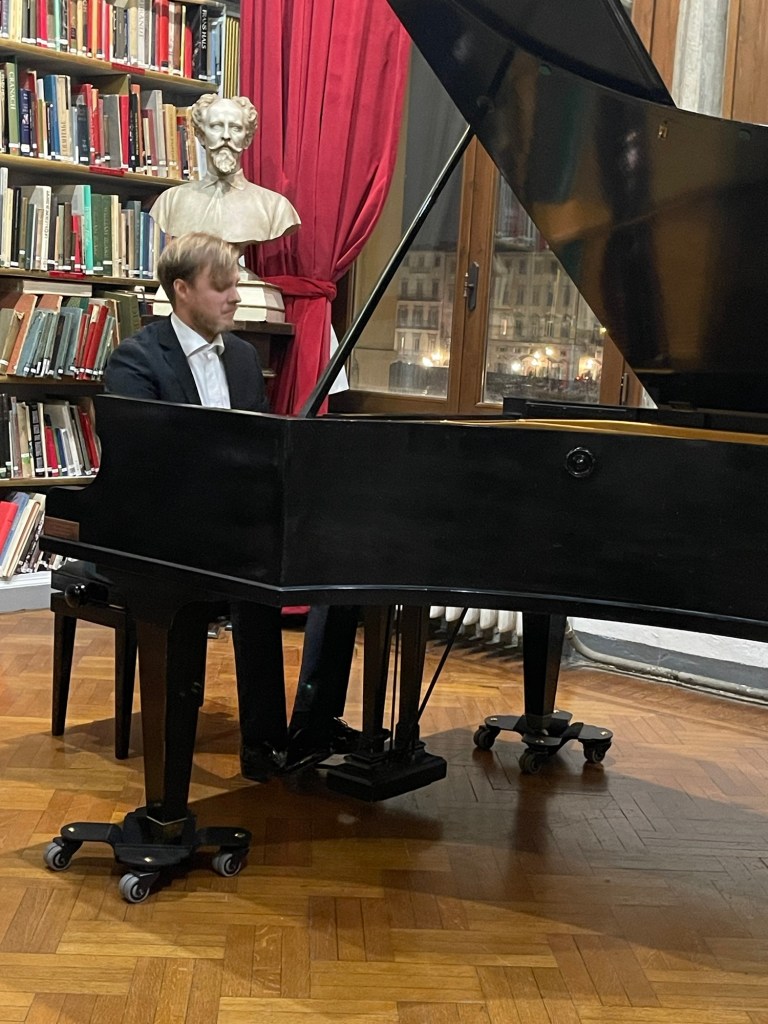
Polish pianists always assume that only they can understand the nostalgic world of the mazurka.So it came as a great shock and indeed a great lesson when the Chinese pianist Fou Ts’ong was awarded the Mazurka prize in the Chopin competition in Warsaw in the early ‘60’s.As T’song explained this anomaly later saying that it was because a soul is universal and does not know borders.The soul that is found in Chinese poetry ( of which his father was a renowned expert who had committed suicide together with his wife during the cultural revolution ) is the same soul that inspired Chopin in his early lifelong exile from his homeland.
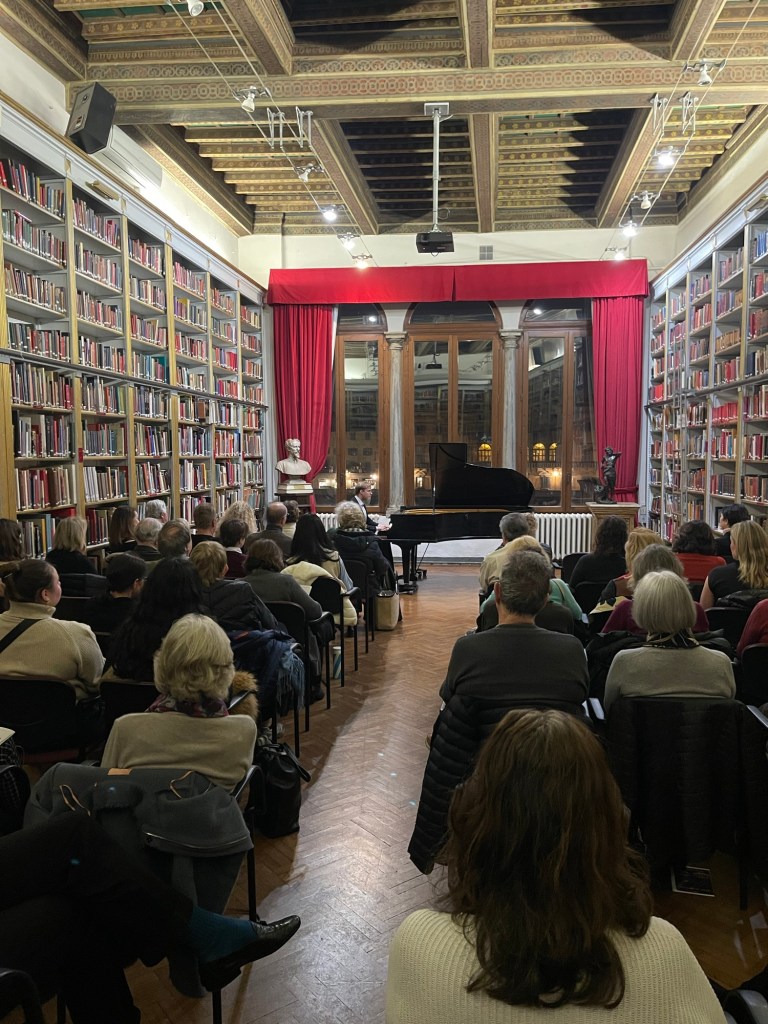
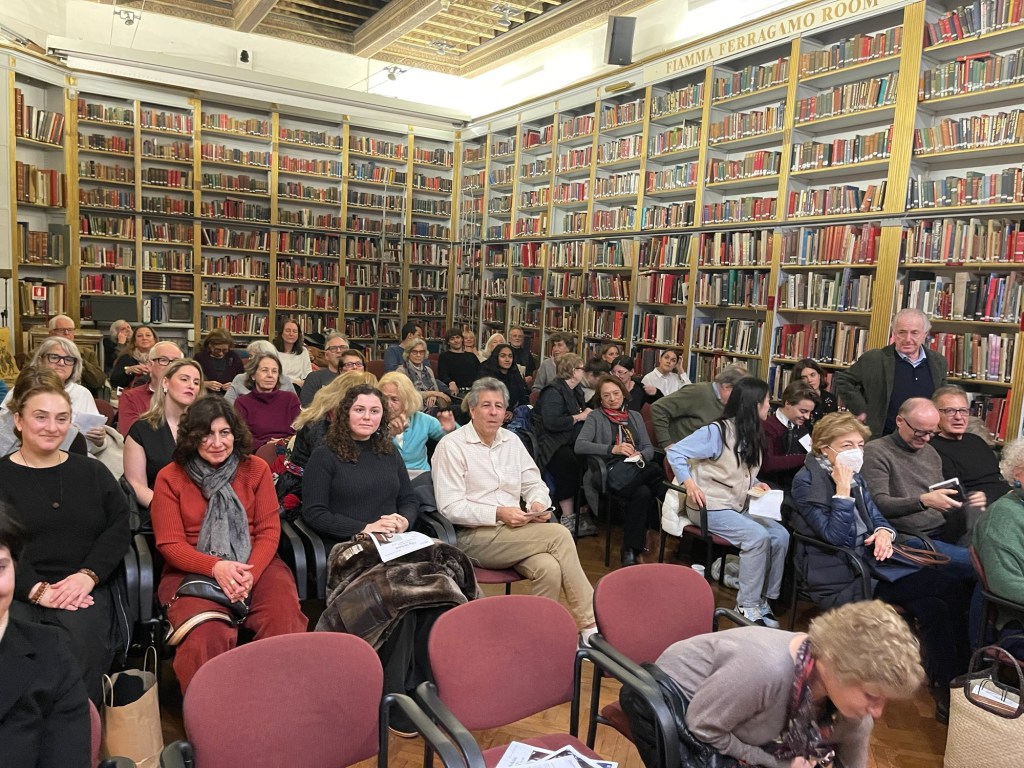
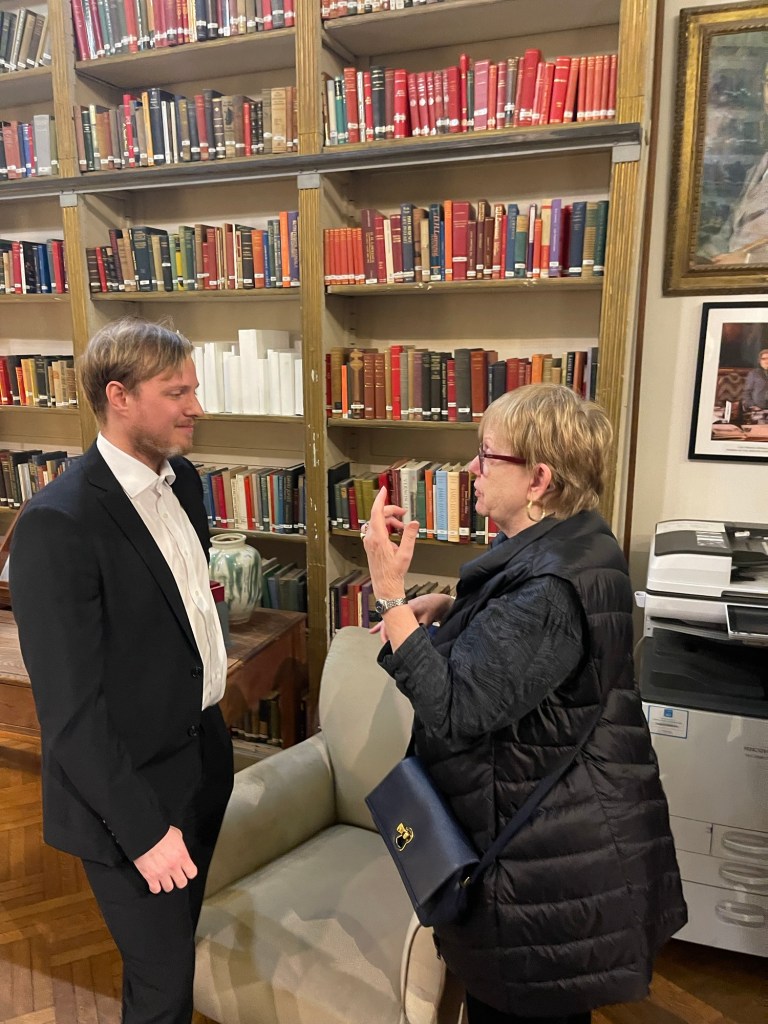
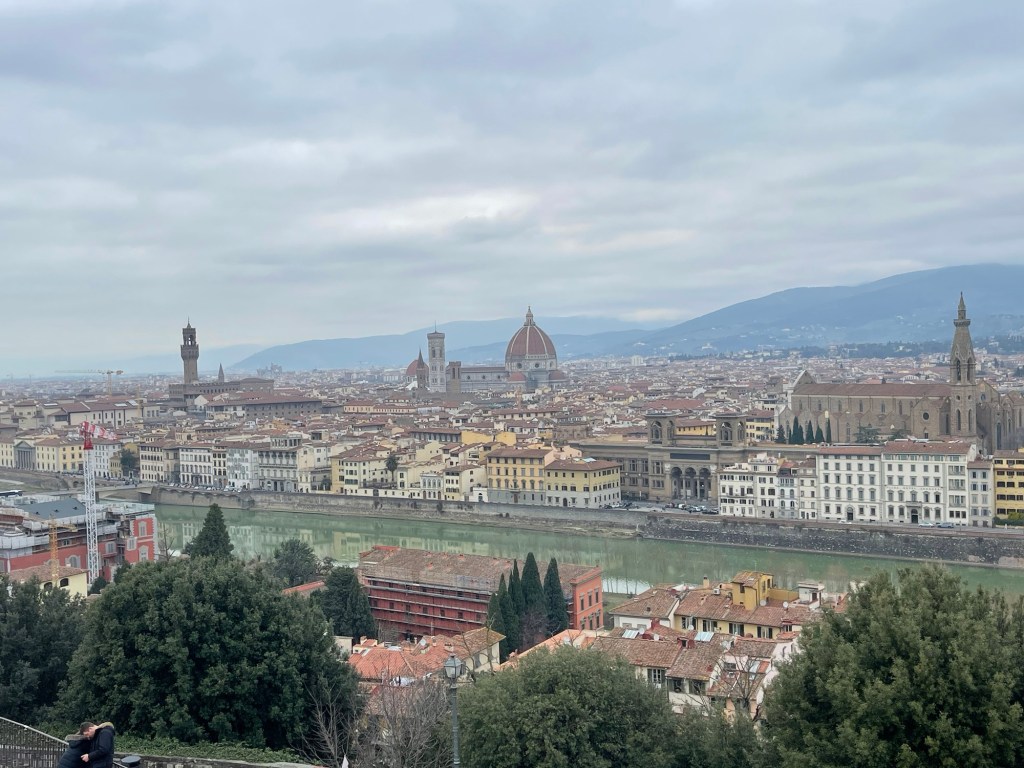
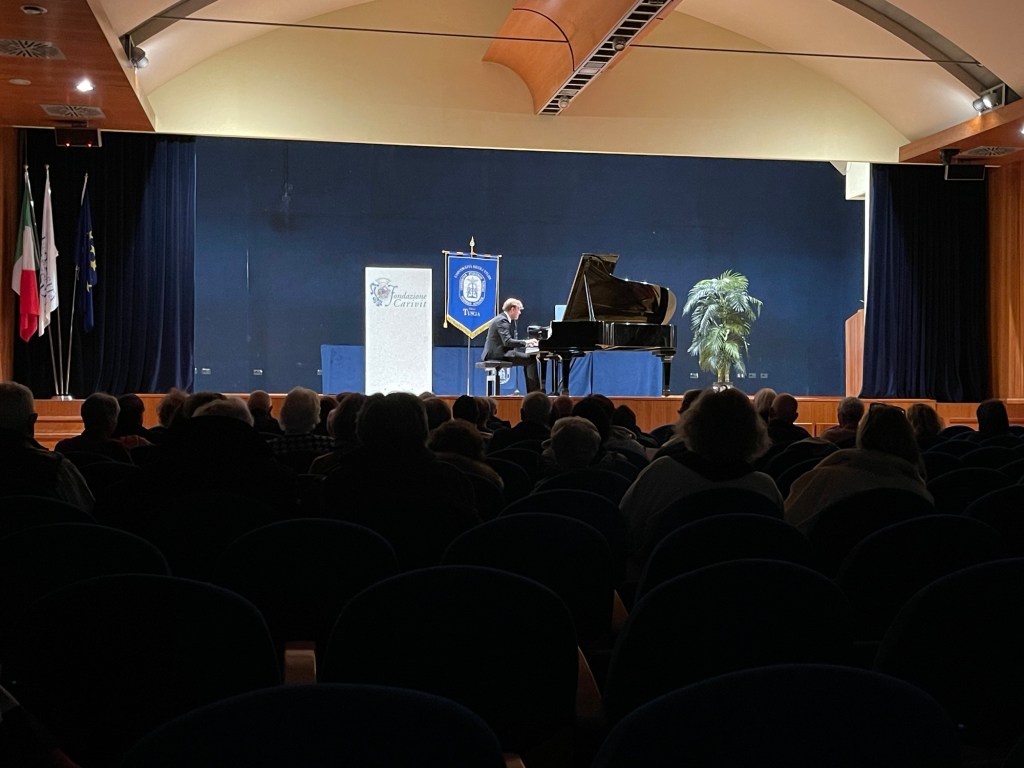
Filip Michalak had opened his programme with three Scarlatti Sonatas in this beautiful room with a view.Surrounded by the books in the ‘Harold Acton Library’ that the great aesthete had bequeathed to the British Institute,he opened with the whispered delicacy of the Sonata in D minor.It immediately demonstrated his artistic sensibility drawing us in to eavesdrop in this intimate atmosphere rather than projecting out to the audience that had filled the hall.Magical sounds poured from this matured Bechstein piano of 1890 ,that like the wonderful Riserva Chianti that we were offered by the sponsor afterwards,had matured well and there was a knowingly warm glow to the sound of a wondrous music box.This contrasted immediately with the sparkling brilliance of the well known Sonata in E.With its horn calls of gentle rhythmic insistence it was played with the same elasticity that Filip was to bring to the Mazurkas that followed.It was Chopin who had described to his noble women students who flocked to him for lessons ,that ‘rubato’ ,that very elusive elasticity of tempo,was like a tree with the roots firmly placed in the ground but with the branches free to sway and move with the breeze that passes through them above.
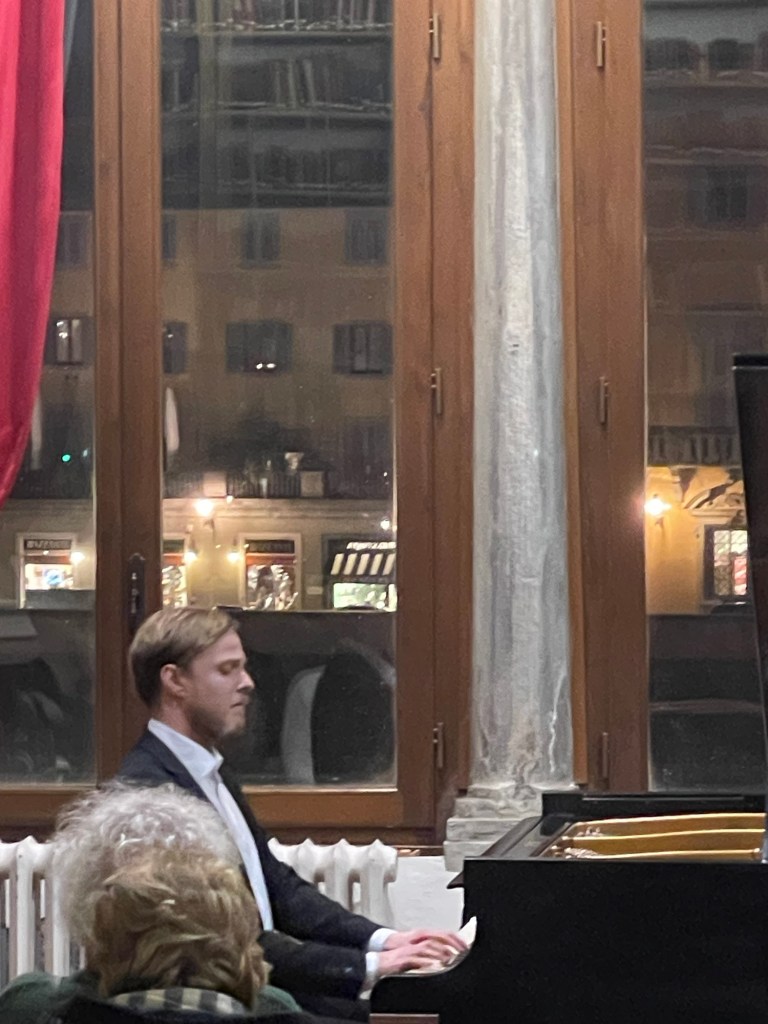
It was exactly this that this young artist demonstrated with the Sonata in F minor that followed.Etherial arpeggios were gently transformed into a beguiling melody of great yearning.These too were a great lesson of a stylist who could see that the simple notes of Scarlatti although limited to the plucked instruments of his time were conceived (like with Bach) with the human voice in mind where the song and the dance were the very basis of the fantasy of a Genius.A genius who could pen over five hundred sonatas each with their individual character and architectural shape.There are of course two schools of thought :those that conceive these works as monumental that should be played with reverence and respect for the performance practices of the inferior instruments of their age.There are those ,like our young poet today,who believe that Scarlatti like Bach had a heart and soul that beats with the same human sensibility in every age and where customs and performance practices should be known and respected but not at the expense of the inner meaning – or dare I say soul – in the moment of creation.Food for thought maybe but was left behind with the magisterial performance of Cesar Franck’s Prelude Choral and Fugue that followed.
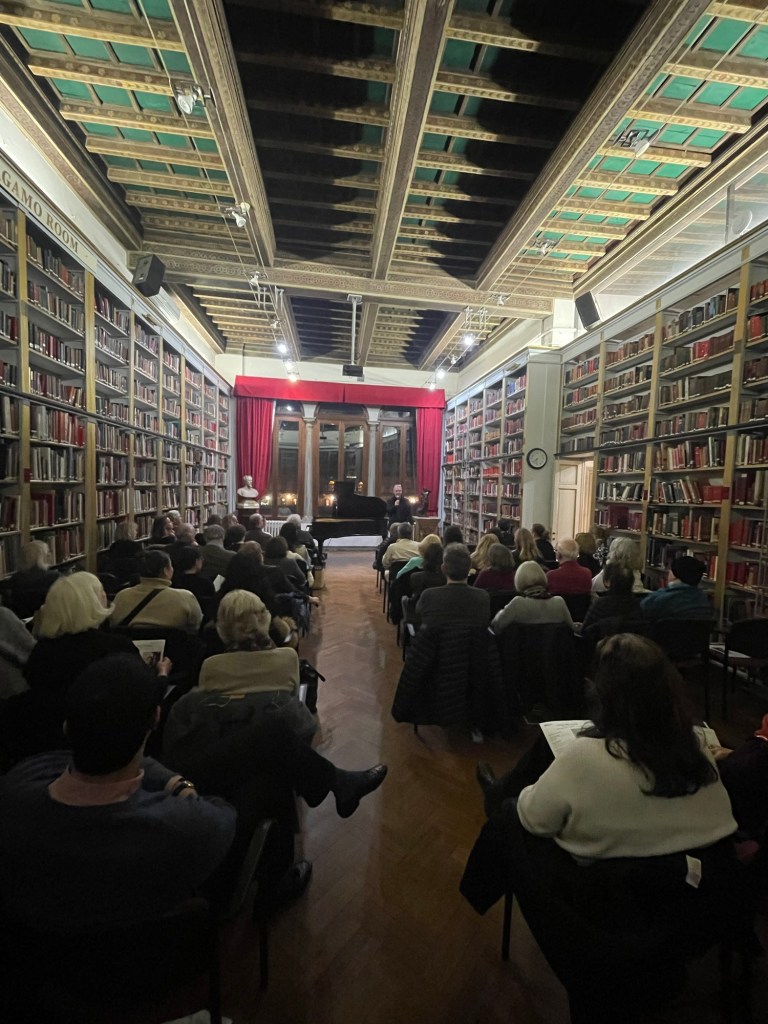
This was now the centre piece of Filip’s rich panorama that he shared with us.This was the sumptuous outpouring of a true believer that was conceived in one long arch culminating in the fugue where the contrapuntal genius of Franck allowed him to combine the three themes that had been transformed from the opening declamation.He was able to join them together at the very climax of this work with exultation and exhilaration to the glory of our maker!This was after the return of the etherial opening with the theme magically floated on a wave of moving sounds becoming ever more intense until bursting into the climax.It requires a transcendental technique too because Franck had a hand span that was much larger than the norm – which was confirmed by Filip who was eavesdropping at the door during my short introduction to his recital! Filip managed to keep the rhythmic energy at boiling point despite all these difficulties maintaining a remarkable sense of line with the swirling mass of notes out of which the themes emerge.Before this tumultuous final fugue there had been the choral of disarming simplicity as the opening theme was revealed at the end of long arpeggiated chords like bells shining brightly at the end of each glissando like chord.The final page of the fugue was played with burning excitement and transcendental control and the two final chords aristocratically placed with the same nobility of the organist of Sainte Clotilde in Paris.
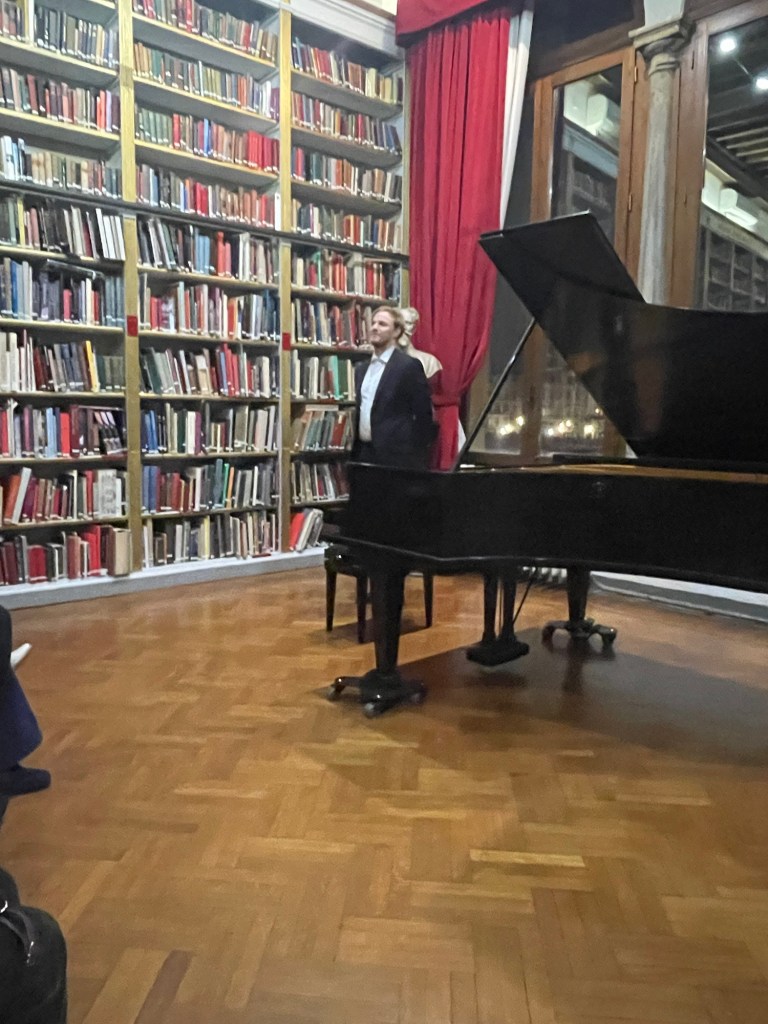
After the exhilaration and virtuosity of Franck it was as though Filip was now liberated of his new passion and was free to return to his panoramic story of ‘Something Old and Something New’.Two songs by Schubert and Rachmaninov transcribed for the piano were played with a golden etched sound that held the audience spell bound.The genius of Liszt combined with Schubert created a magic atmosphere as the melodic line was mirrored with exquisite sensibility on a wave of gently moving harmonies.Rachmaninov’s ‘Vocalise’ was even in the original a ‘song without words’ and this transcription by Gryaznov took me by surprise not only for the sublime beauty of the opening but also for the unexpected passionately contrapuntal orchestral climax that then just dissolved to a whisper leaving a trail of magic silence that was ‘golden’ indeed.Now our young Danish Prince could let his hair down with the ravishing,enticing and hypnotic sounds of the Nuevo Tango of Piazzola.
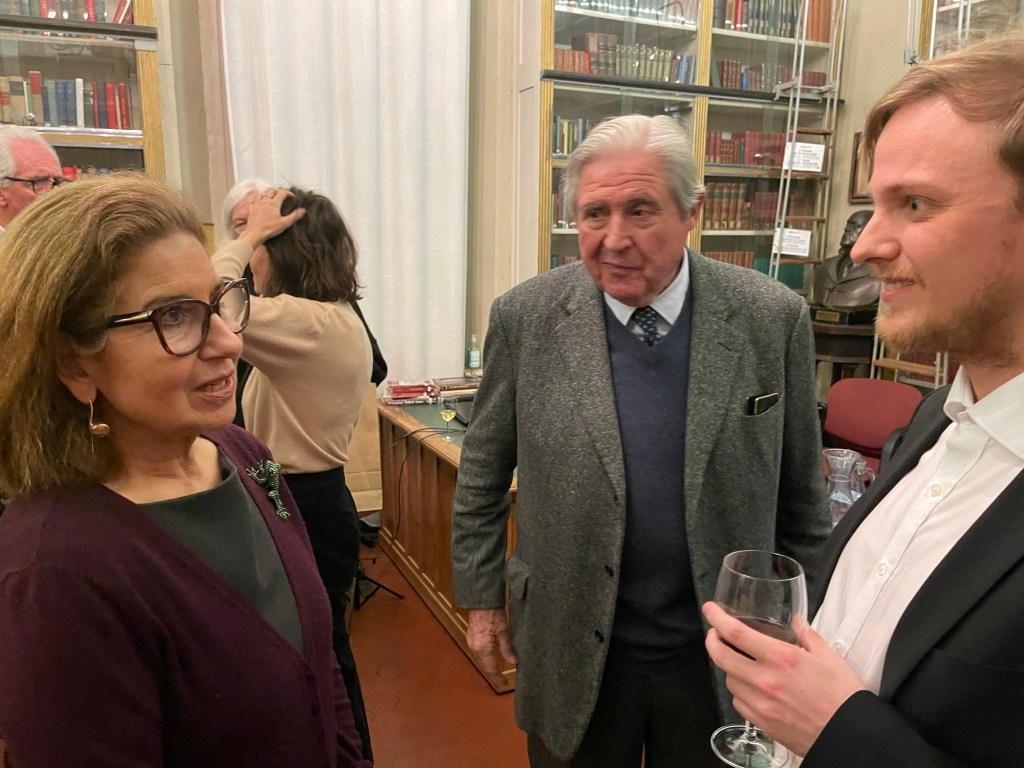
‘Oblivion’ just filled the silence created by the ‘Vocalise’ where the language changed but the intense sentiment was the same until the piano just burst into flames with the driving hysterical rhythmic energy of Libertango.A ‘tour de force’ of stamina and technical mastery built to fever pitch until a red hot glissando shot from one end of the piano to the other and had him and many members of the public on their feet in astonished enthusiasm.
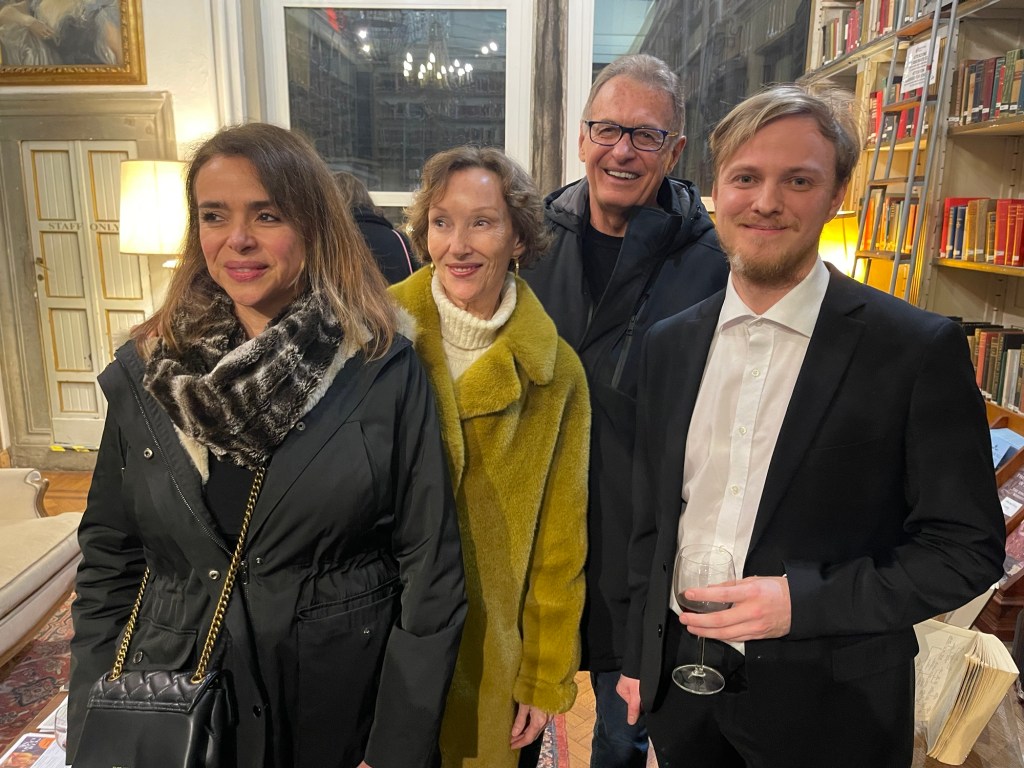
By great demand Filip was happy to take us to calmer pastures where Brahms’ sheep were safely left to graze.The beautiful waltz in A flat op 39 n. 15 just confirmed that a thing of beauty is a joy for ever.A work like Liebestraum or Fur Elise that was heard in every parlour where there once stood proudly a piano but whose place has now been taken over by a giant TV screen!
What a coincidence that only two days ago Evgeny Kissin had chosen this same beautiful waltz like today as a farewell gift to a doting audience in Rome.
Kissin in Rome ‘Mastery and mystery of a great artist’
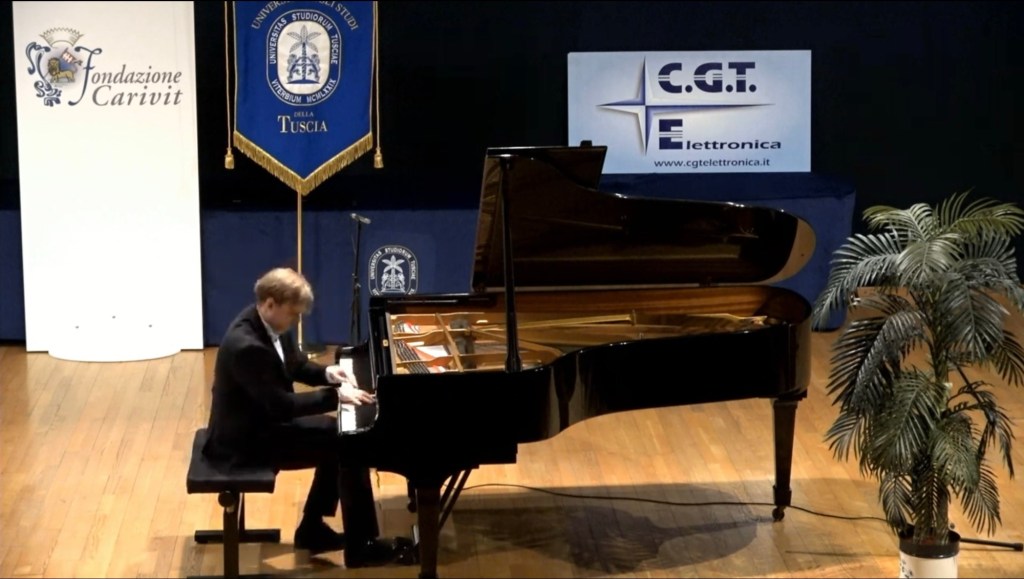
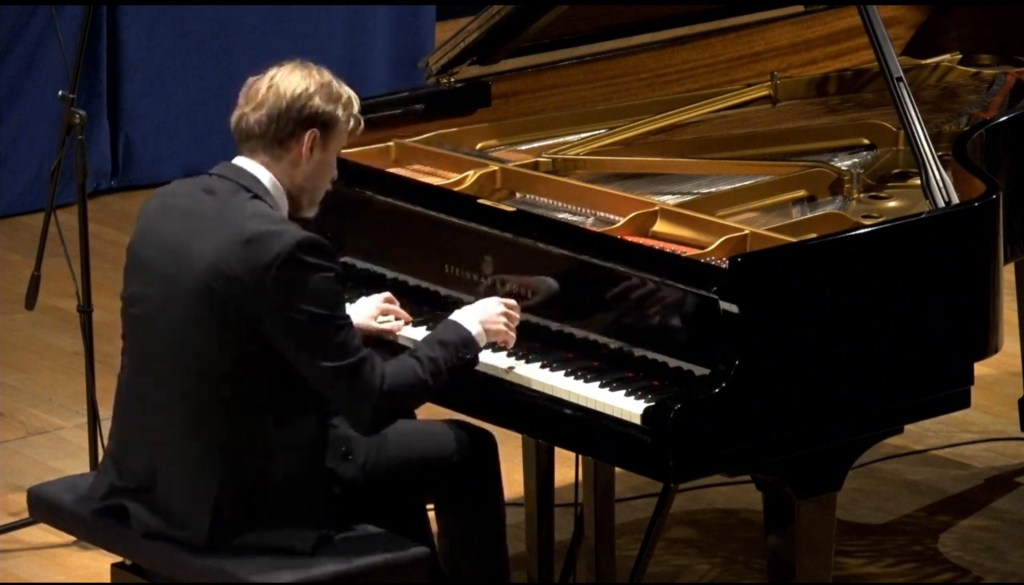
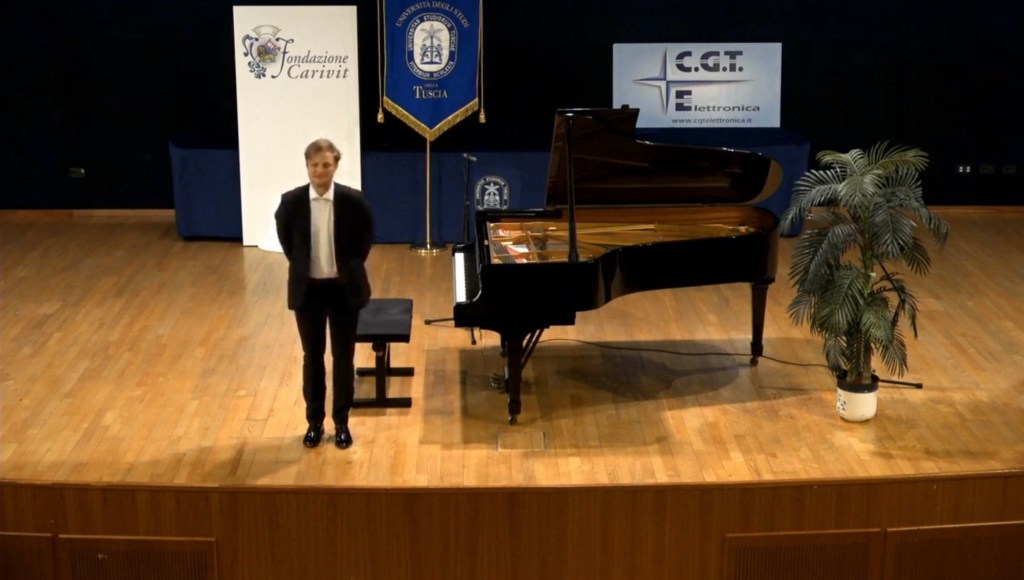
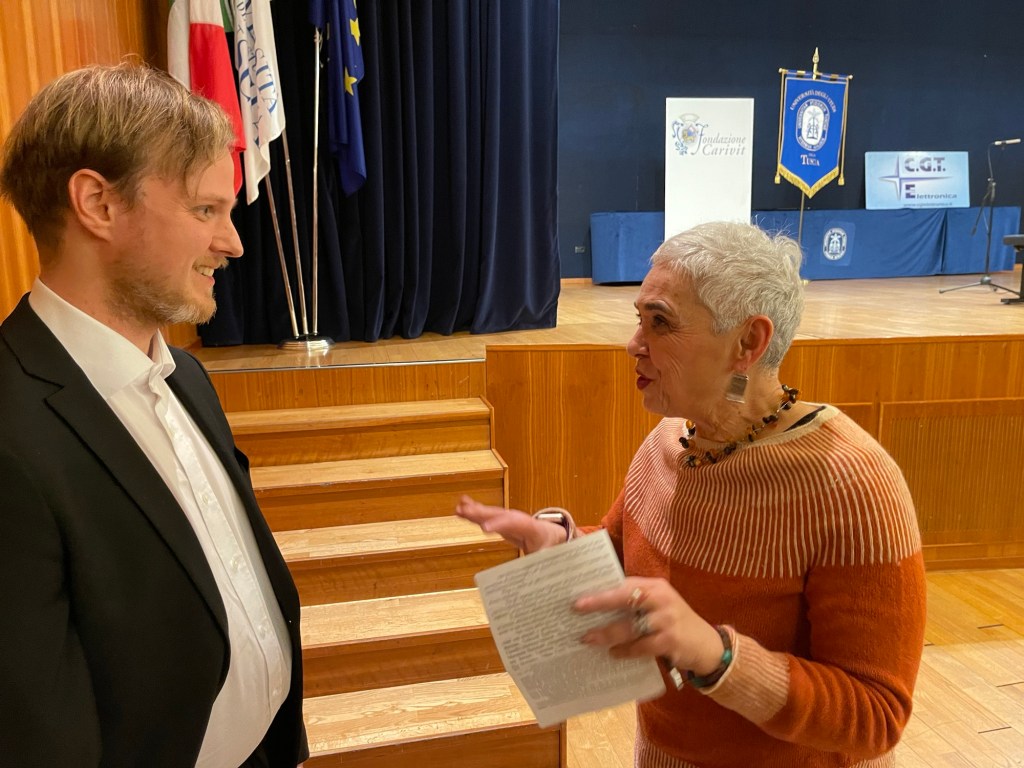
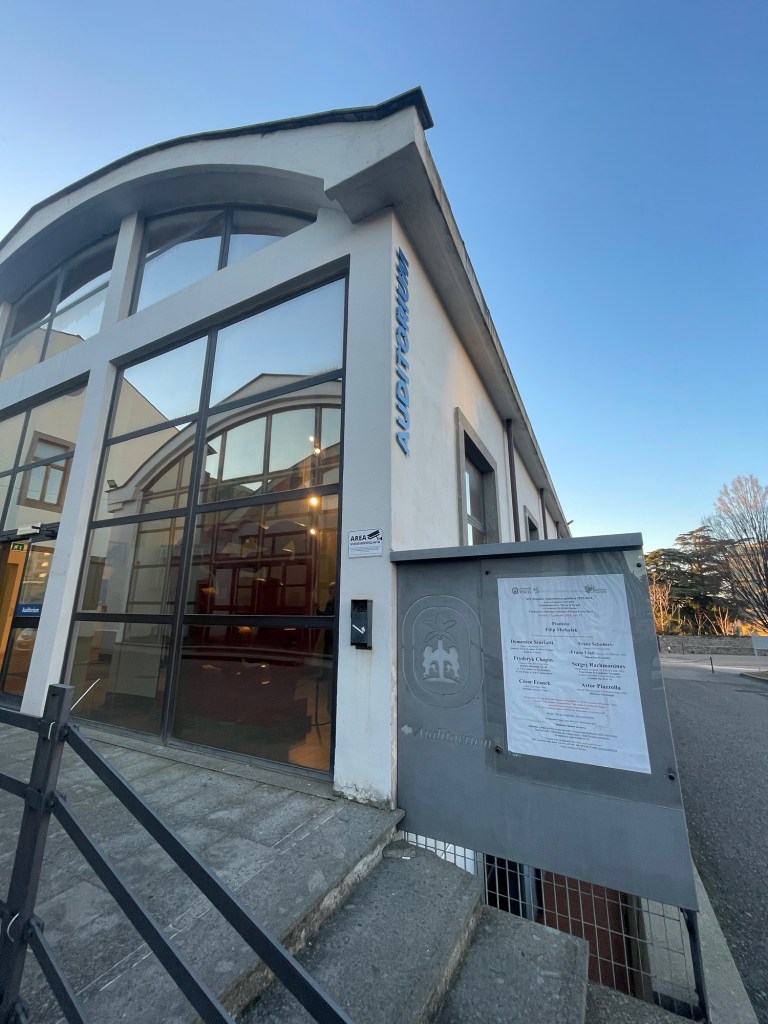
Kissin had moved on to Paris and London and our young poet will move tomorrow to the Tuscia University in Viterbo .The concert will be streamed live and will conclude this short tour that the KT is proud to have shared with such a talented young artist at the start of his career.
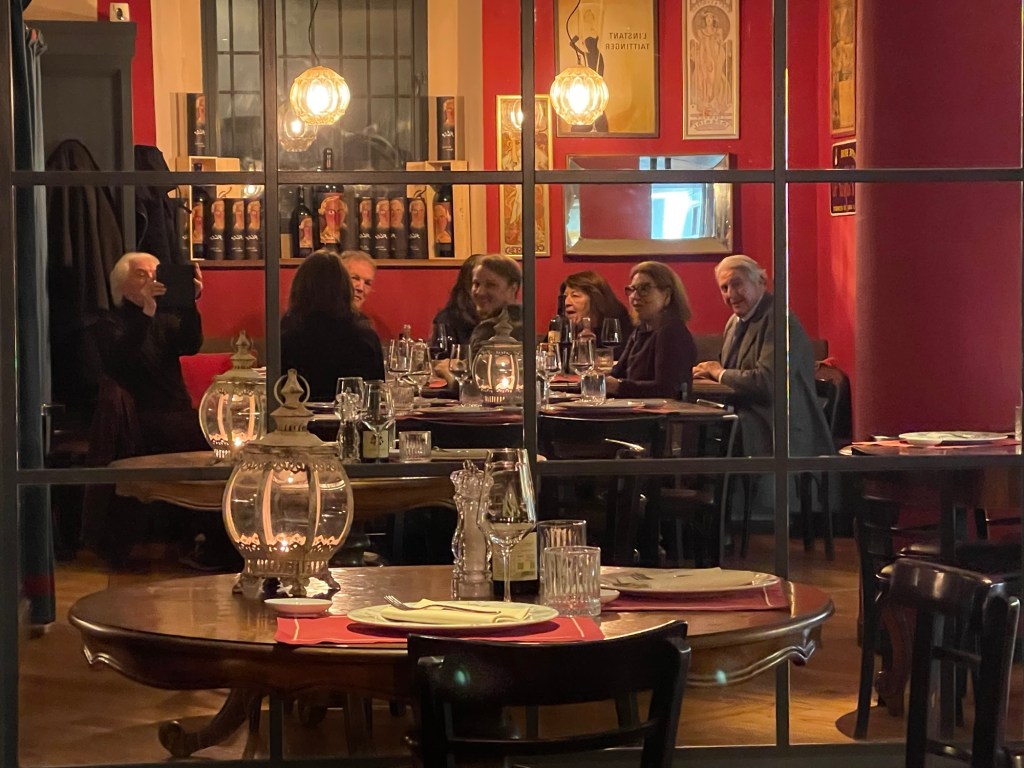

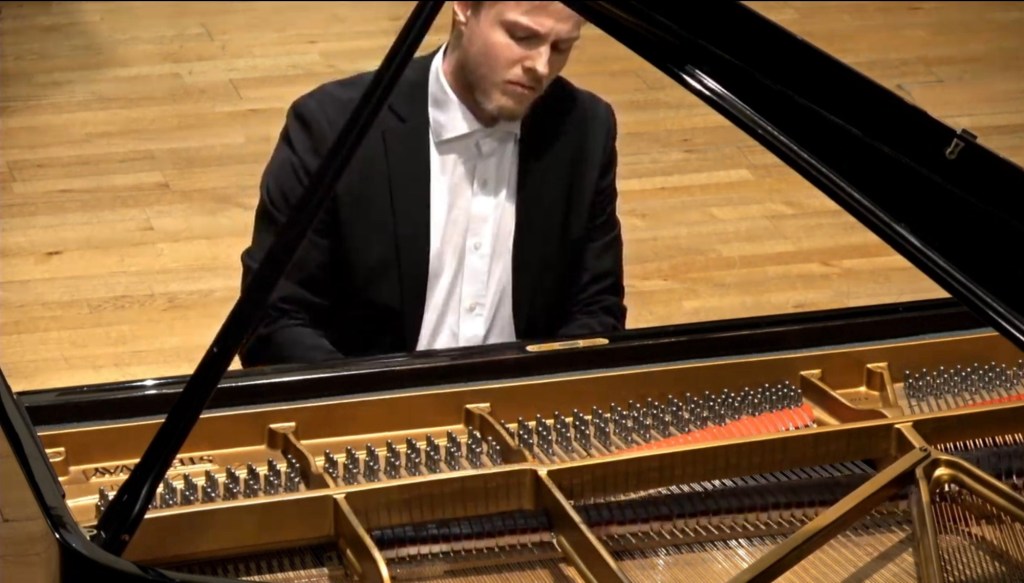
Filip was able to take more time and give more space to many of the smaller works on the programme.
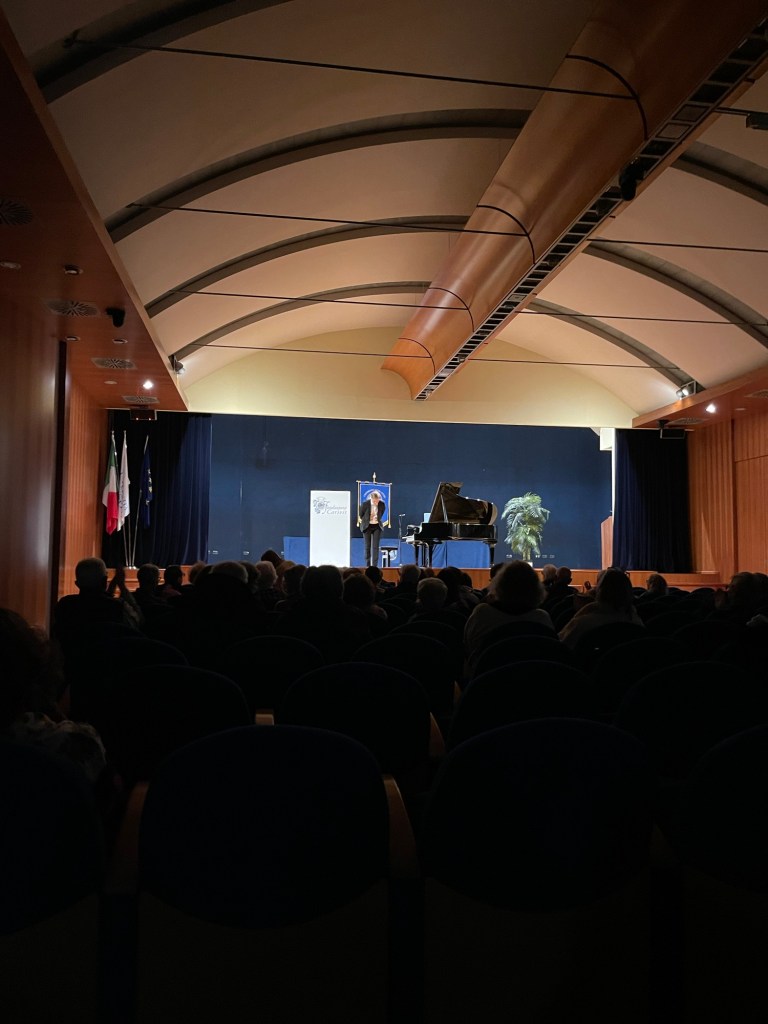
The Scarlatti in particular was barely whispered but the sounds just flew out of the piano and reverberate so magically around a hall that I have rarely seen so full.
Chopin Mazurkas that in Florence had seemed a little too rustic were turned into the ‘canons covered in flowers’ that they truly are.A nostalgic yearning for the homeland that was Chopin’s birthright but seen through the eyes of an aristocratic poet from the distant salons in Paris.
A Franck where Filip was able to scale the heights that culminated in a contrapuntal explosion of a true believer.
Of course the two songs truly penetrated the soul with the lilting beauty of Schubert followed by the chiselled ravishment of Rachmaninov’s sumptuous Vocalise.
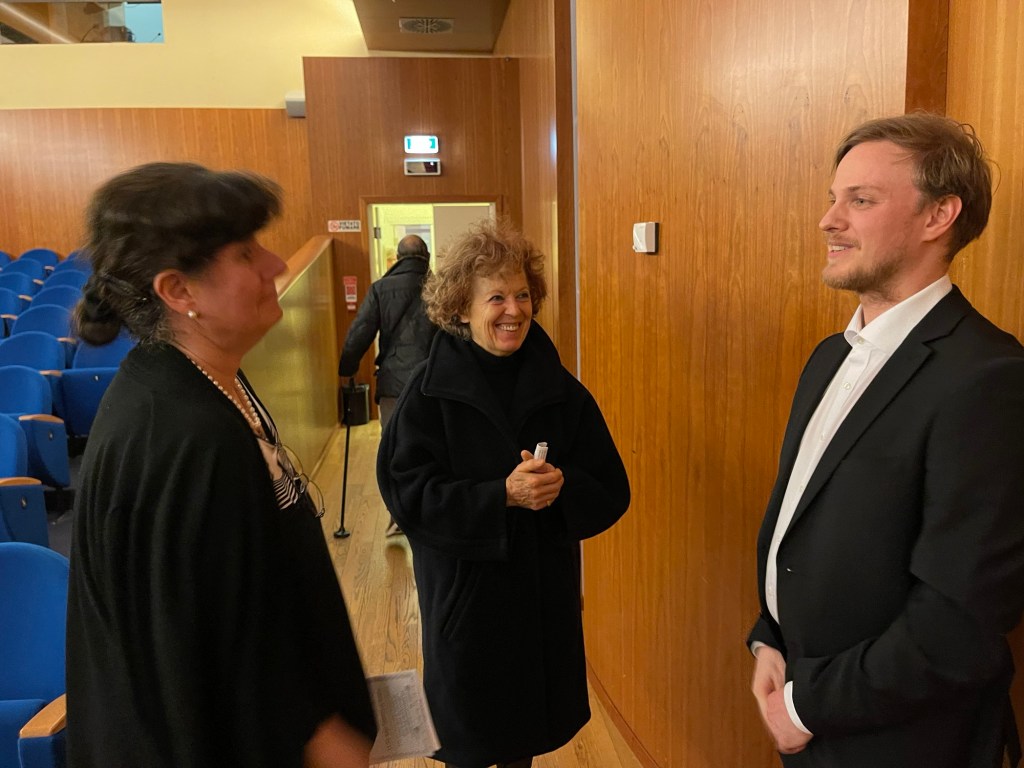
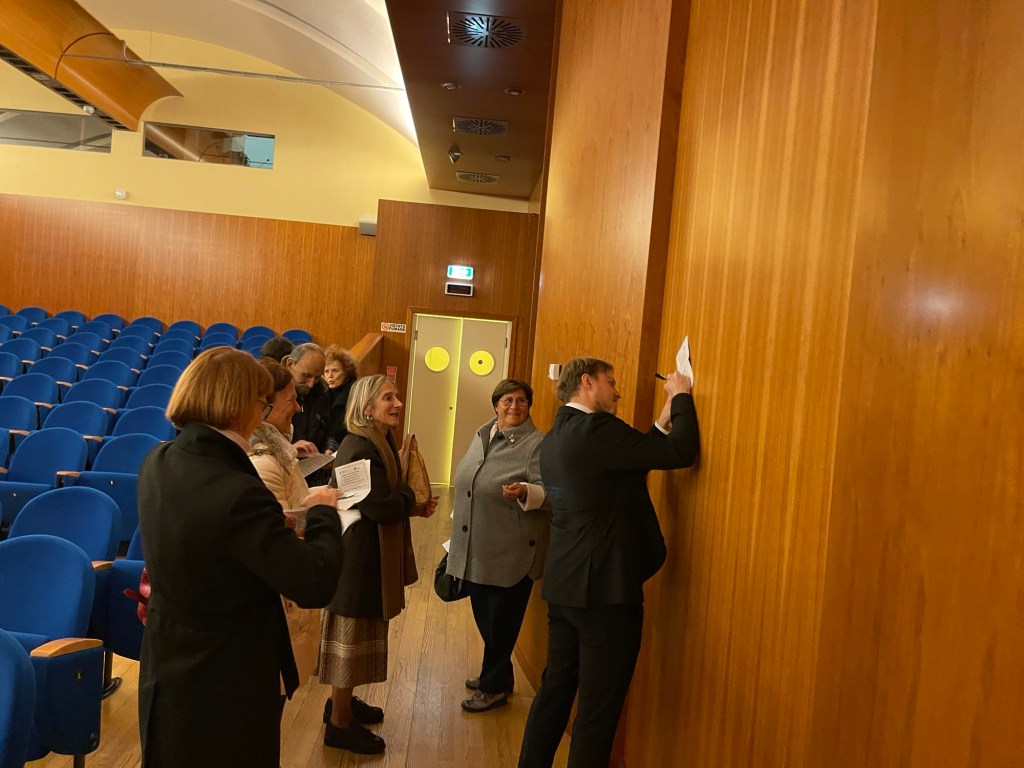
After the exhilaration and sleezy insinuating excitement of Piazzola Filip had to play two encores and was besieged by autograph hunters at the end too.
The Brahms Waltz in A flat was even more beautiful than in Florence and a Chopin Waltz op 64 n.2 that just flew from the fingers of a pianist who was now on the crest of a wave.
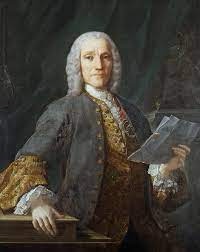
Napoli 26 October 1685 – Madrid 23 July 1757.
Italian composer Domenico Scarlatti (1685–1757) wrote 555 solo keyboard sonatas throughout his career. Circulated irregularly in his lifetime,these are now recognized as a significant contribution which pushed the musical and technical standards of keyboard music.These sonatas for solo keyboard were originally intended for harpsichord,clavichord or fortepiano and there are four sets of catalogue numbers:
- K: Ralph Kirkpatrick (1953; sometimes Kk. or Kp.)
- L: Alessandro Longo (1906)
- P: Giorgio Pestelli (1967)
- CZ: Carl Czerny
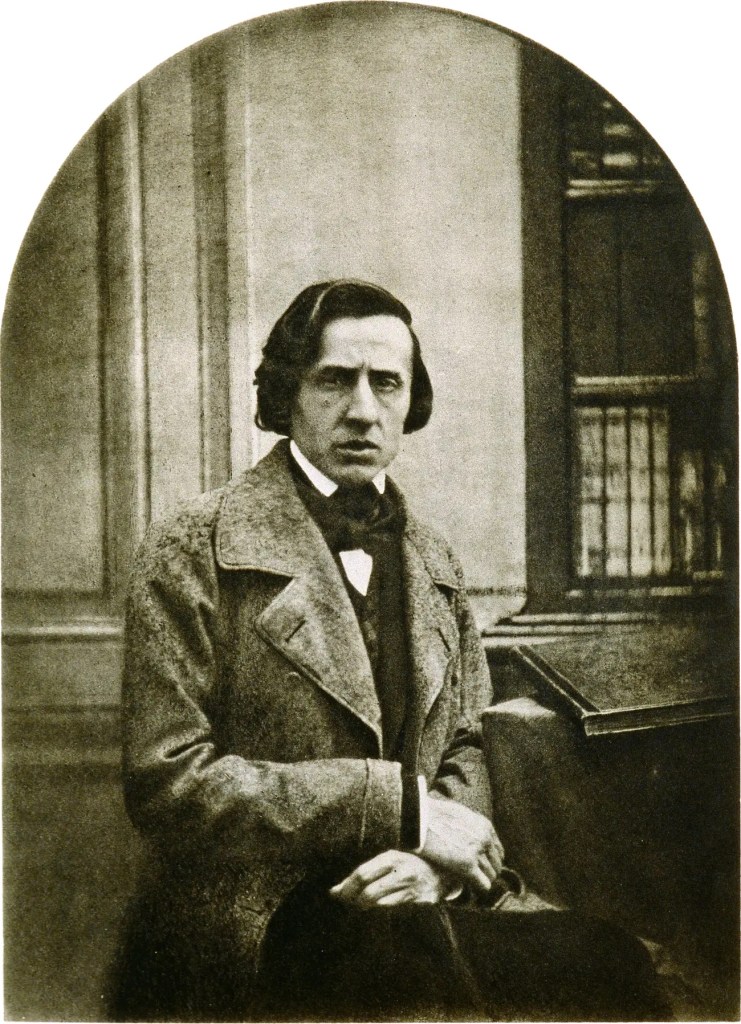
picture was taken in 1849 by Louis-Auguste Bisson, a few months before Chopin died of what doctors thought was tuberculosis.
- Chopin based his mazurkas on the traditional polish folk dance also called the mazurka (or “mazur” in Polish). However, while he used the traditional mazurka as his model, he was able to transform his mazurkas into an entirely new genre, one that became known as a “Chopin genre”He started composing his mazurkas in 1825, and continued composing them until 1849, the year of his death. The number of mazurkas composed in each year varies, but he was steadily writing them throughout this time period.Over the years 1825–1849, wrote at least 59 compositions for piano called Mazurkas. Mazurka refers to one of the traditional Polish dances.There’s also a great deal of passion in the mazurkas; some of them are as demanding, physically and intellectually, as Chopin’s longer ballades or scherzos. Robert Schumann immediately grasped the embedded nationalism, characterising the Polish dance rhythms, modes and bagpipes as a rebuke to Russia: ‘If the mighty autocrat of the north knew what a dangerous enemy threatened him in the simple tunes of Chopin’s mazurkas,’ he wrote, ‘he would forbid this music. Chopin’s works are canons buried in flowers.’
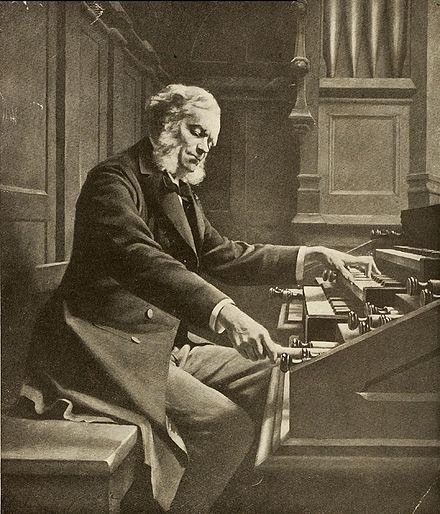
Born: December 10, 1822, Liege ,Belgium
Died: November 8, 1890,
Prélude, Choral et Fugue, FWV 21 was written in 1884 by César Franck with his distinctive use of cyclic form.Franck had huge hands ,wide like the span of emotions he conveys,capable of spanning the interval of a 12th on the keyboard.This allowed him unusual flexibility in voice-leading between internal parts in fugal composition, and in the wide chords and stretches featured in much of his keyboard music.Of the famous Violin Sonata’s writing it has been said: “Franck, blissfully apt to forget that not every musician’s hands were as enormous as his own, littered the piano part (the last movement in particular) with major-tenth chords… most pianistic mortals ever since have been obliged to spread them in order to play them at all.”The key to his music may be found in his personality. His friends record that he was “a man of utmost humility, simplicity, reverence and industry.” Louis Vierne a pupil and later organist titulaire of Notre-Dame, wrote in his memoirs that Franck showed a “constant concern for the dignity of his art, for the nobility of his mission, and for the fervent sincerity of his sermon in sound… Joyous or melancholy, solemn or mystic, powerful or ethereal: Franck was all those at Sainte-Clotilde.”In his search to master new organ-playing techniques he was both challenged and stimulated by his third and last change in organ posts. On 22 January 1858, he became organist and maître de chapelle at the newly consecrated Sainte Clotilde (from 1896 the Basilique-Sainte-Clotilde), where he remained until his death. Eleven months later, the parish installed a new three-manual Cavaillé-Coll instrument,whereupon he was made titulaire.The impact of this organ on Franck’s performance and composition cannot be overestimated; together with his early pianistic experience it shaped his music-making for the remainder of his life.Many of Franck’s works employ “cyclic form”, a method aspiring to achieve unity across multiple movements. This may be achieved by reminiscence, or recall, of an earlier thematic material into a later movement, or as in Franck’s output where all of the principal themes of the work are generated from a germinal motif. The main melodic subjects, thus interrelated, are then recapitulated in the final movement.
His music is often contrapuntally complex, using a harmonic language that is prototypically late Romantic , showing a great deal of influence from Franz Liszt and Richard Wagner . In his compositions, Franck showed a talent and a penchant for frequent modulatory sequences, achieved through a pivot chord or through inflection of a melodic phrase, arrive at harmonically remote keys. Indeed, Franck’s students reported that his most frequent admonition was to always “modulate, modulate.” Franck’s modulatory style and his idiomatic method of inflecting melodic phrases are among his most recognizable traits.
Franck had huge hands (evinced by the famous photo of him at the Ste-Clotilde organ), capable of spanning the interval of a 12th on the keyboard.This allowed him unusual flexibility in voice-leading between internal parts in fugal composition , and in the wide chords and stretches featured in much of his keyboard music (e.g., his Prière and Troisième Choral for organ). Of the Violin Sonata’s writing it has been said: “Franck, blissfully apt to forget that not every musician’s hands were as enormous as his own, littered the piano part (the last movement in particular) with major-tenth chords… most mere pianistic mortals ever since have been obligated to spread them in order to play them at all.”
The key to his music may be found in his personality. His friends record that he was “a man of utmost humility, simplicity, reverence and industry.” Louis Vierne, a pupil and later organist titulaire of Notre-Dame, wrote in his memoirs that Franck showed a “constant concern for the dignity of his art, for the nobility of his mission, and for the fervent sincerity of his sermon in sound… Joyous or melancholy, solemn or mystic, powerful or ethereal: Franck was all those at Sainte-Clotilde.”Unusually for a composer of such importance and reputation, Franck’s fame rests largely on a small number of compositions written in his later years.
Vocalise” is a song by Sergei Rachmaninov , composed and published in 1915 as the last of his 14 Songs or 14 Romances, op.34.Written for high voice (soprano or tenor) it contains no words, but is sung using only one vowel of the singer’s choosing . It was dedicated to soprano singer Antonina Nezhdanova but is performed in various instrumental arrangements more frequently than in the original vocal version.
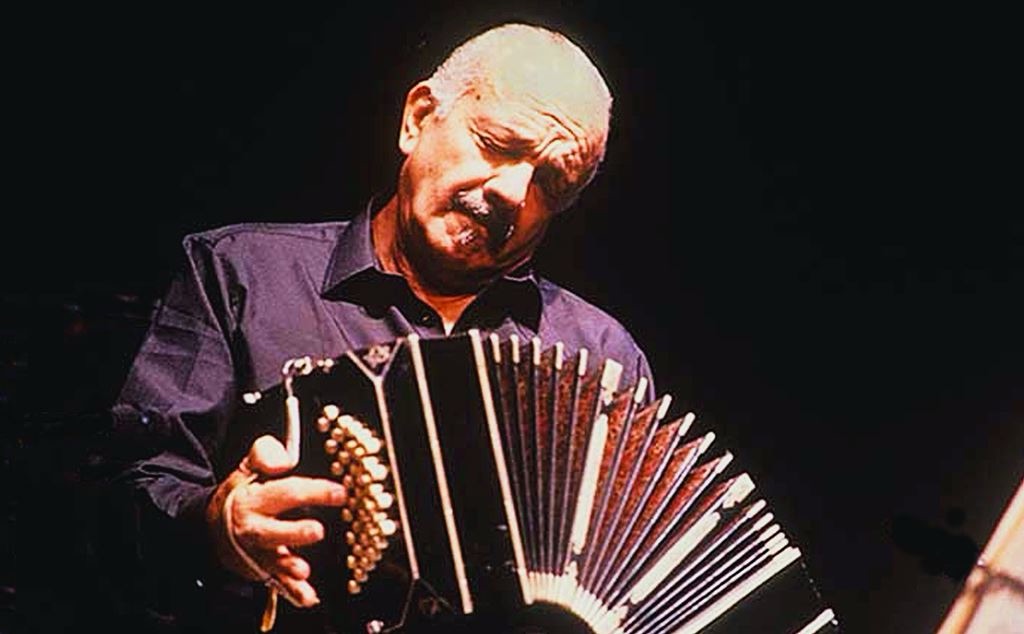
In 1954 he and his wife left their two children (Diana aged 11 and Daniel aged 10) with Piazzolla’s parents and travelled to Paris. Piazzolla was tired of tango and tried to hide his tango and bandoneon compositions from Boulanger, thinking that his destiny lay in classical music. Introducing his work, Piazzolla played her a number of his classically inspired compositions, but it was not until he played his tango Triunfal that she congratulated him and encouraged him to pursue his career in tango, recognising that this was where his talent lay. This was to prove a historic encounter and a crossroads in Piazzolla’s career.
With Boulanger he studied classical composition, including counterpoint , which was to play an important role in his later tango compositions.
Oblivion is an instrumental work by Astor Piazzolla. Composed in 1982, it was originally arranged for bandonéon, piano and bass, but its growing success over the years inspired many reprises for piano solo, clarinet, orchestra, and even a spoken version, all of which you can find in our catalog! The piece was commissioned and featured in the 1984 film Enrico IV (“Henry IV”) by Marco Bellocchio. Adapted from the eponymous theatrical piece by Luigi Pirandello, the plot tells the story of a man who, after losing conscience, thinks he is the famous king. The piece became popular from the film and lives to this day through concert performances. Piazzola elicits an atmospheric and haunting ambience in his composition, evoking the image of oblivion.Libertango was recorded and published in 1974 in Milan.The title is a portmanteau merging “Liebertad” (Spanish for “liberty”) and “tango”, symbolizing Piazzolla’s break from classical tango to tango nuevo.
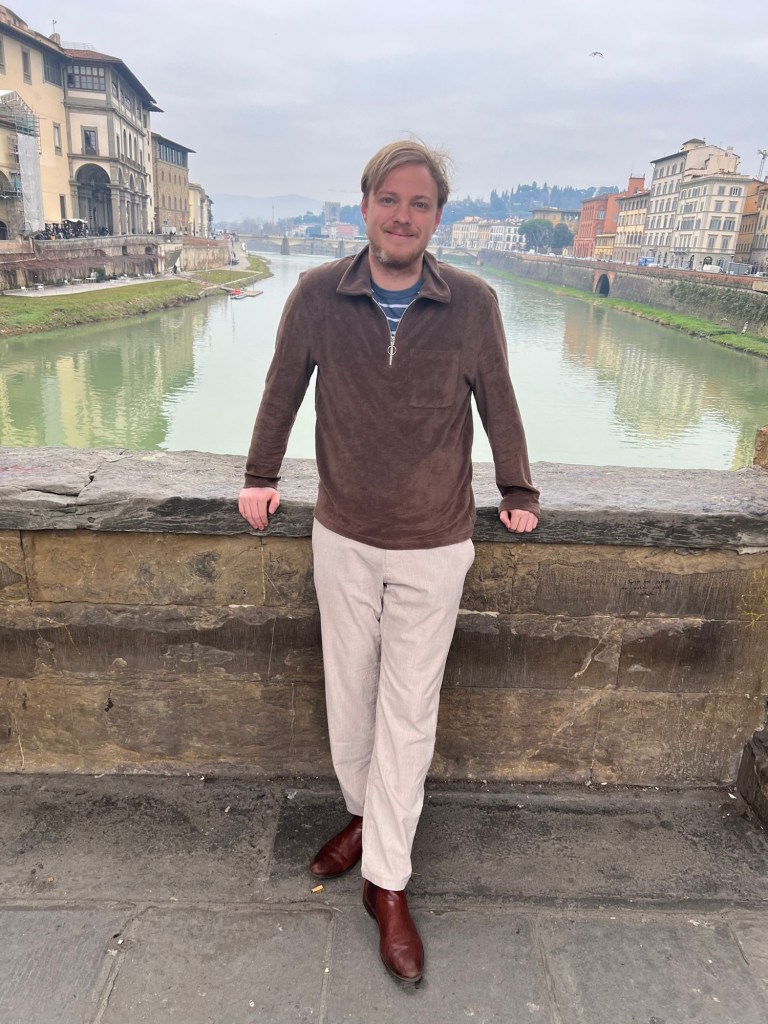
A tour de force of transcendental pianism showed the other side of this young pianist in Bacewicz’s monumental 2nd Sonata of 1953.
A virtuoso performance not only for the keyboard command but for the amazing kaleidoscope of sounds that he could find in this rather dry acoustic.” (Recital at Steinway Hall in London)
The young danish/polish classical pianist, Filip Michalak is an active soloist and chamber musician. He has performed across Europe in countries such as Poland, Germany, England, France, Italy and all Scandinavian countries and has future engagements in more European countries, China and Middle East. Filip is a 1st prize winner at “Stars at Tenerife” in Spain and has won numerous prizes in his home country, such as 1st prize in the “Nordjyllands Talentkonkurrence” and several prizes in the “Steinway Festival”. In 2017 he became a finalist of the “8th Nordic Piano Competition” and was later that year a semi-finalist in “St. Priest International Piano Competition” in France.
He recently won “The Chopin Prize Competition” at Royal Northern College of Music (RNCM) and was also one finalists of the annual Gold Medal Competition at RNCM. In 2021 he was accepted to one of the biggest piano competition in the world in Leeds and was nominated for the Vendome Prize.
Filip is currently an artist in The Keyboard Charitable Trust in London and has already performed in venues in London and Frankfurt for the Trust.
He recently performed Beethoven’s 5th Piano Concerto with Shrewsbury Sinfonia in October 2021.
In 2013 he performed “Rhapsody in Blue” by G. Gershwin at the opening ceremony of the new concert house “Musikkens Hus” in Aalborg in Denmark. In 2016 he performed an arrangement of Mussorgsky’s “Pictures at an Exhibition” for piano and orchestra with Ingesund String Orchestra.
Filip is also an active chamber musician playing with all different ensembles. Future engagements include a concert tour in China with violinist Kehan Zhang and performances with his duo partner mezzo-soprano Lovisa Huledal in Sweden. He is the Artistic Director of Södertälje Chamber Music Festival in Sweden which had its first edition in 2019 and has just had its 3rd edition in August 2022.
During his career, he has attended several masterclasses with well-known pianist and professors as John O’Conor, Boris Berman, Yoheved Kaplinsky, Sergejs Osokins, Ferenc Rados, Claudio Martinez Mehner, Mikhail Voskresensky, Olli Mustonen, Marianna Shirinyan, Alexander Ghindin, Alesandro Deljavan, Vitaly Berzon, Valentina Lisitsa, Graham Scott, Alexey Lebedev, Ilya Maximov, Niklas Pokki, Peter Jabloski and Peter Friis Johansson.
In 2013 he started at The Royal Danish Academy of Music in Copenhagen in prof. Niklas Sivelövs class. Later on in 2015 he received many scholarships to study abroad and for 3 years he was a student of prof. Julia Mustonen-Dahlkvist at Ingesund Musikhögskolan in Sweden and simultaneously he was pursuing his master-degree at Royal College of Music in Stockholm. Filip has finished his Post Graduate Diploma (PGDip) at Royal Northern College of Music in Manchester with prof. Graham Scot. Furthermore he continued studying with prof. Julia Mustonen-Dahlkvist as an Artist in Residence of the Ingesund Piano Center until 2022.
Currently Filip is one of 9 pianist in the “Gabriela Montero Piano Lab” Academy and is mentored by the world famous pianist, composer and improviser Gabriela Montero.

 ChristopherAxworthy-MusicCommentary
Una risposta a "Filip Michalak triumphs in Florence and so on to the live stream of Tuscia University in Viterbo with reviews of both performances"