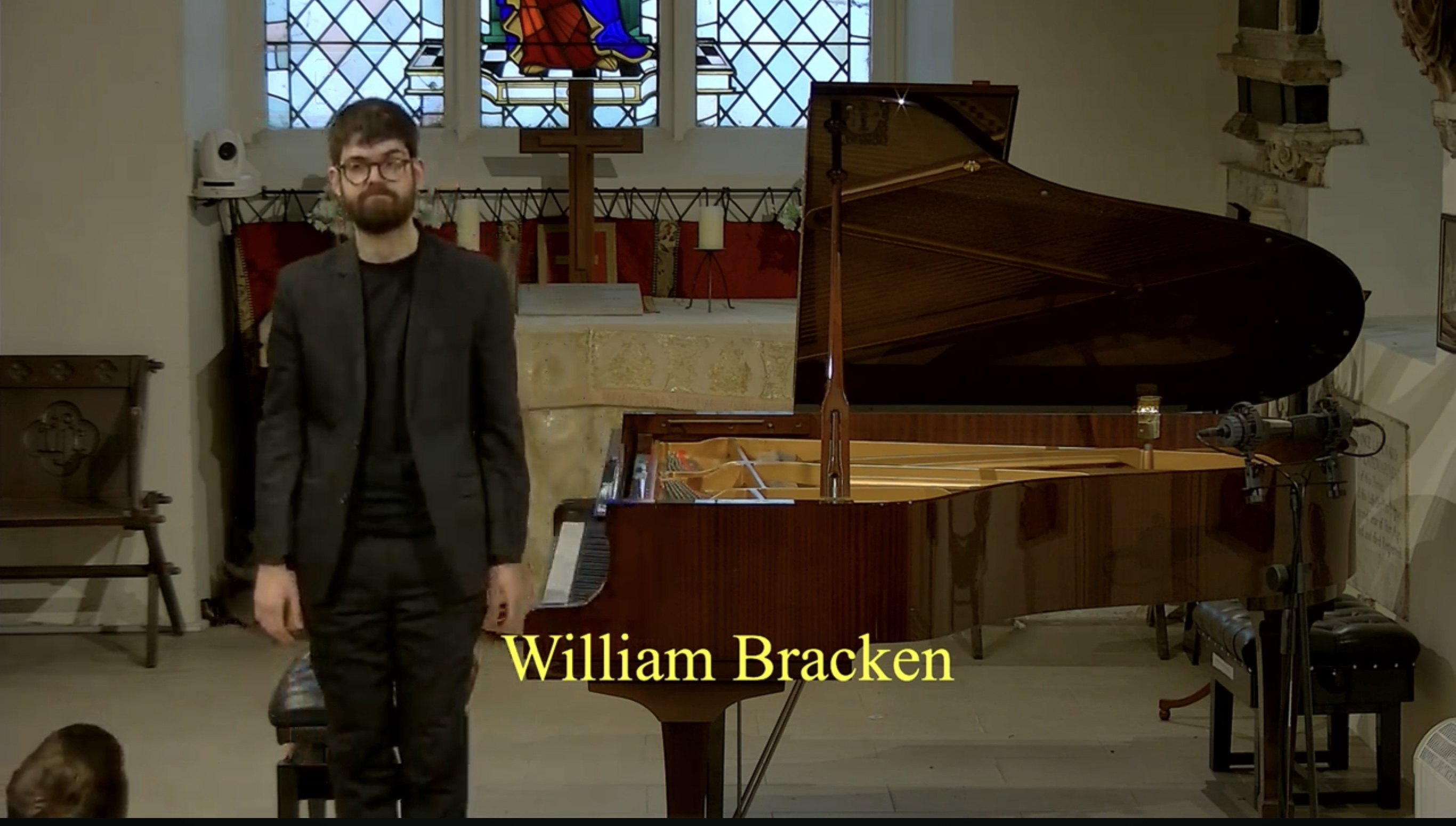
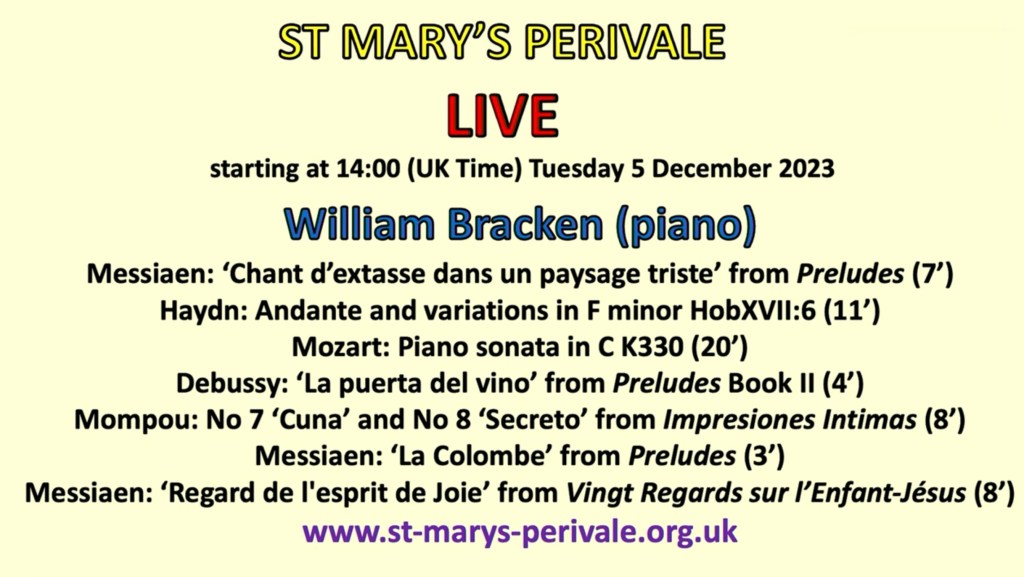
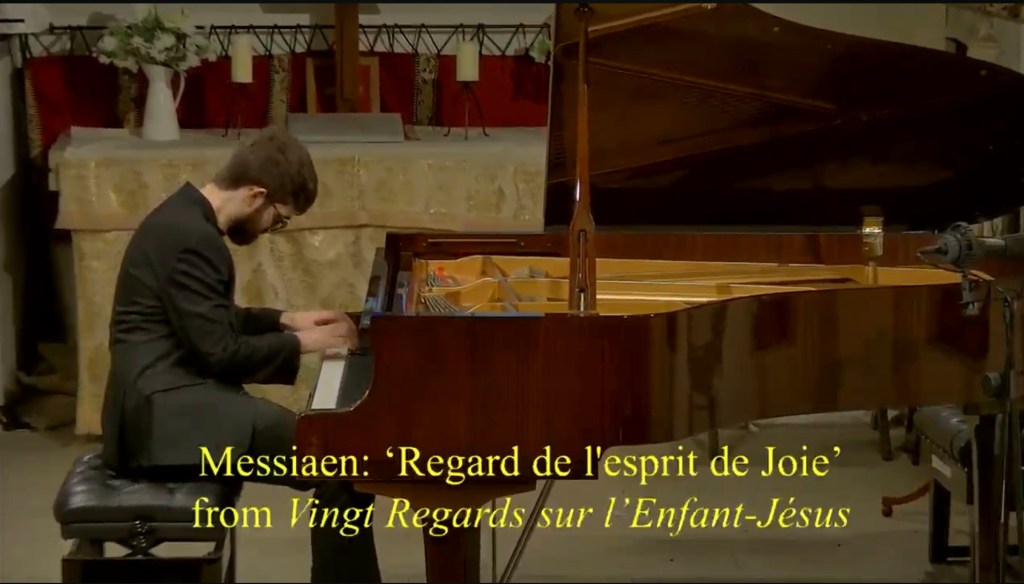
Some more remarkable playing from this young musician who I had heard in the early stages of his student career at the Guildhall.It was a Beethoven competition streamed during the pandemic where he played very musically and diligently and did in fact win the competition.I would never have imagined though that he would mature ,even under such superb musical guidance from Martin Roscoe and Ronan o ‘Hora,into the artist that we have now witnessed twice at St Mary’s within the last ten days.His performance for the Liszt Society as winner of their previous competition revealed an artist who had grown in stature since the previous years victory.Now again after only ten days I am astonished by his even more mature mastery of style and pianistic colour allied to a security both technical and musical.Not only giving note perfect ( in every sense) performances but being able to share his obvious love and passion for music with such eloquent and intelligent words.The exquisite sounds of chiselled beauty are those that only a true believer like Messiaen would dare write with such fervent devotion.Deep mediative sounds combined with a very devout atmosphere where layers of chiselled sounds would be thrown on top with heart rending meaning and untamed devotion.The performances of two of the Preludes showed a kaleidoscopic sense of colour allied to a musicianship that could guide us so directly to the very core of the creation where William had told us that so few notes could mean so much.The number of notes was to increase quite considerably as Messiaen matured and his devotion became ever more intense.The ‘Regard de l’Esprit de Joie’ is a well known tour de force for any pianist.It was Jean- Rodolphe Kars who brought it to our attention in the rounds of the first Leeds Competition over 50 years ago.Substituting for Michelangeli at the last minute too at the Royal Festival Hall we had a chance again to hear this clean clear brilliance that allowed the music of Messiaen to hypnotise us with his religious and his ornithologic obsession.Kars became a Trappist Monk as he obviously felt the music in the same way as Messiaen!William played it with the same clarity and ‘Aimard’ type brilliance and precision that was quite remarkable for a live performance from memory .Anyone who has seen the score of Messiaen’s works will appreciate what a tour de force that truly is.To all this was added the ‘Spanish’ part of the recital with insinuatingly tantalising performances of Debussy in Spanish mood( how right William was to note that it takes French composers to write convincing Spanish music!) .A Mompou that can be better appreciated in this context and in smaller quantities than we are being exposed to these days.
There was a simple beauty and a gracious sense of style that he showed in the Haydn Variations that he brought vividly to life with each variation given its own character but within a framework that was masterly held together.Even the slight addition of ornaments was done with subtle good taste that just added to the refined beauty of these variations.Mozart too and even the appoggiatura played as acciaccatura in the last movement was the choice of a thinking musician who could bring Mozart’s characters centre stage with such evident bucolic enjoyment and joie de vivre.The Andante too was played with profound simplicity and a wondrous range of sounds but always with the sense of style and graciousness that were of their time.No encore was possible after the tumultuous ending created by his Messiaen but it would not have surprised me if he,like Serkin,would have sat down and played the Aria from the Goldberg Variations ………followed by their thirty or so off spring!Chapeau indeed dear William onwards and upwards!
Messiaen: ‘La Colombe’ from Preludes
William Bracken is in high demand as a recitalist, concerto soloist, chamber musician and teacher. The Wirral-born pianist has won numerous awards including 1st prize at the 2022 Liszt Society International Piano Competition and 1st prize, press prize and audience prize at the 2023 Euregio Piano Award international piano competition. He is currently continuing studies at the Guildhall School of Music and Drama in London where he also holds a position as assistant professor of classical improvisation. Concert highlights include several concerto performances at The Barbican, Liverpool Philharmonic Hall, St. John’s Smith Square and recitals at Chipping Campden Festival, LSO St. Luke’s and most recently Wigmore Hall, where he was praised by the Telegraph for his “courage and stamina and musicality in abundance” and “an ability to hold an audience in the palm of his hand”.
William has worked with many of today’s leading musicians including Stephen Hough, Richard Goode, Simon Trpceski and Paul Lewis. In 2022 William was made a scholar of the Imogen Cooper music trust which involved participating in a week of intensive study in the south of France with renowned pianist Dame Imogen Cooper – that summer he also won a full scholarship to attend the Aspen Music Festival and Summer School in Colorado U.S.A, studying with Hung-Kuan Chen and Fabio Bidini. William performs a large and diverse range of repertoire and also has a keen interest in jazz and improvisational elements of performing classical music. He is supported in his postgraduate studies with profs. Martin Roscoe and Ronan O’Hora by the GSMD.
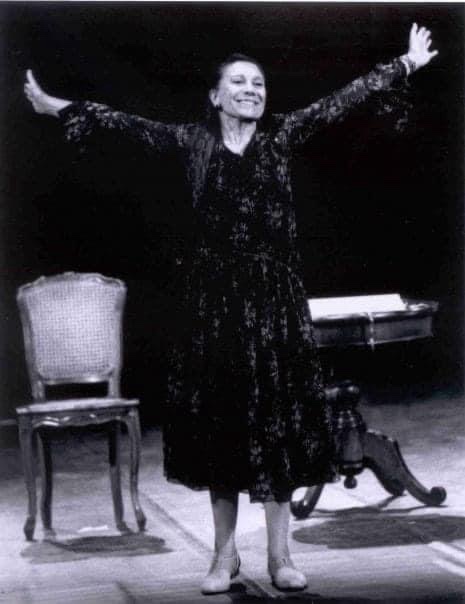
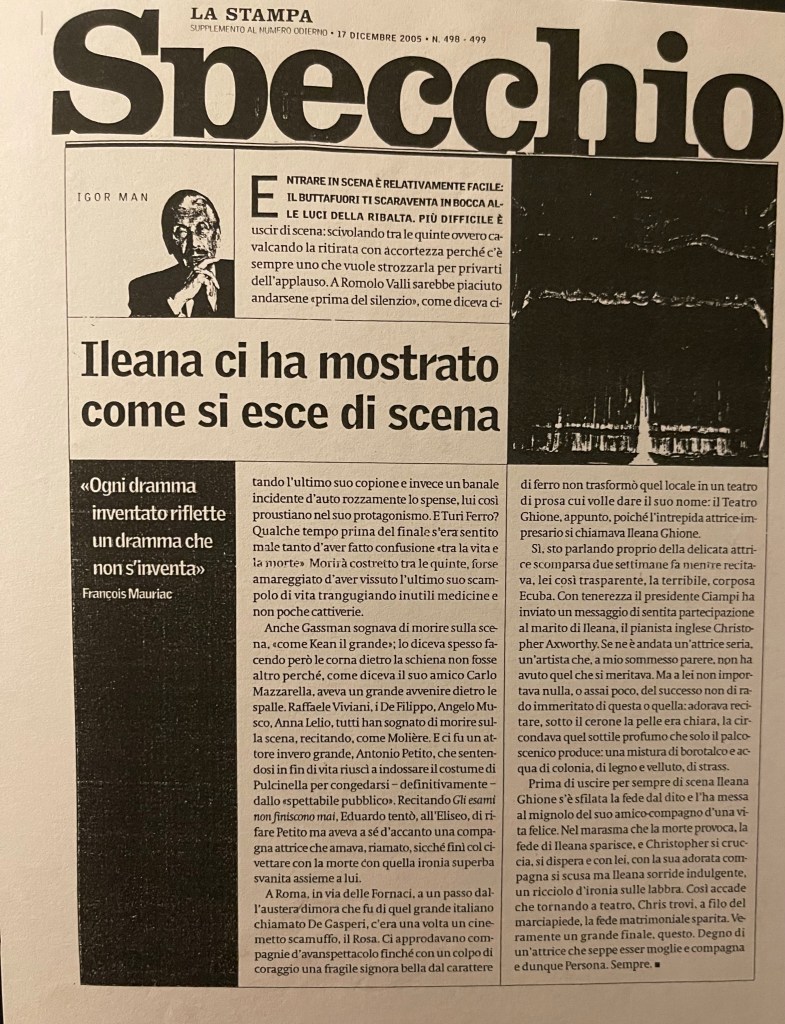
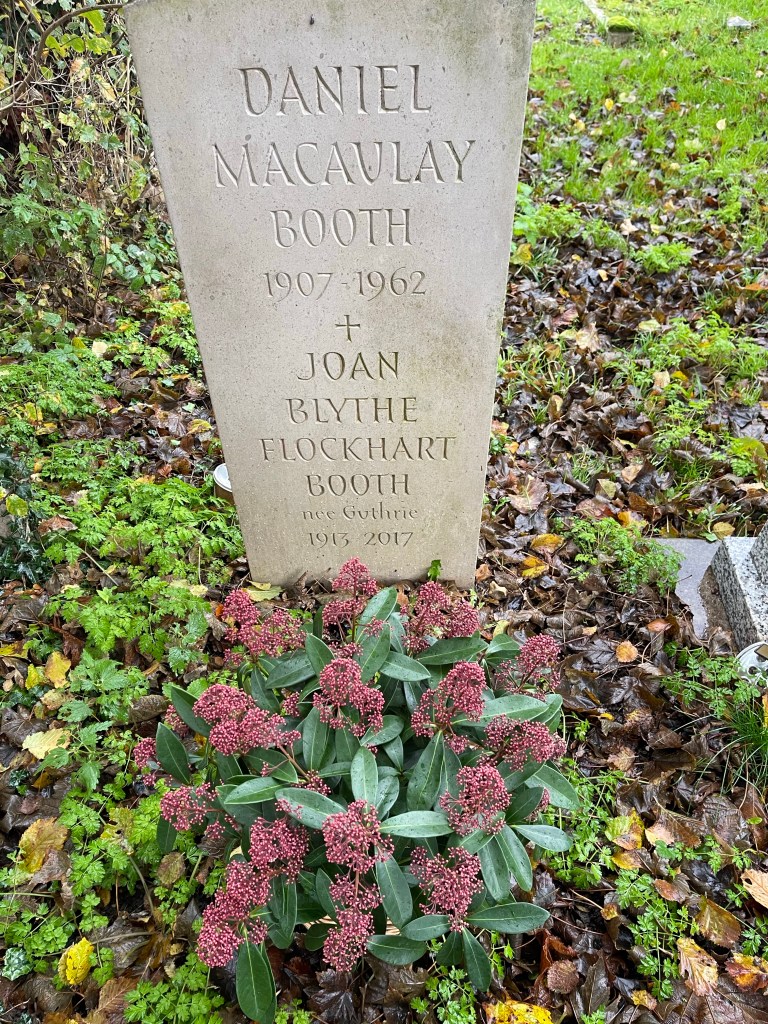
Ileana Ghione 3rd December 2005. Joan Booth 3rd December 2017
“She passed away the same day as my wife (12 years previously) in the light of the Super Moon and I like to think that Ileana opened her arms to light the way for my dearest friend.”
It was just a year since Ileana had died and I decided to dedicate a mass to her in the Cathedral of her home town of Asti.She felt her roots very deeply and we wouid often come to Asti to see her mothers sister and grand children who we were glad to have helped when their father died and they were still teenagers. Massimo Scaglione,her lifelong friend and distinguished television and stage director, would often invite Ileana to performances in Asti -The photo is from an evening he dedicated to Ileana a few years before. I came back now a year later which was just enough time to be abandoned by ‘our’ family who we had shared everything with so generously over our thirty years together with esteem and love and much else besides. Parassitic greed meant that I now arrived in ‘our’ city alone with terrible rumours spread by Ileanas brother and sister of my evil machinations and intentions Milena Vukotic and Renzo Rosso two such warm faithful friends spurred me on to commemorate my adored wife who had left me alone too soon. The cathedral was full to the rafters and I decided ,spurred on by Milena to talk about Ileana and our love story of thirty years. No sign of our ‘cousins ‘ or close family was very hurtful but there are so many things that are revealed when a close family member dies. The next morning in the hotel in the main square that we had always stayed in together I was having breakfast feeling very alone when the waiter asked if he could talk to me.A friendly respectful voice ‘Of course’……’I just wanted to tell you how moved we all were when you spoke about your love for Ileana ….we come to church so often and hear about people in distress or disasters but we never could have imagined a love that you described to us last night ‘. The next year Eugenio Guglielminetti the great set designer and artist ,also from Asti ,designed a garden in the centre of the city to be dedicated to their illustrious citizen Ileana . Eugenio who had advised and designed Ileanas homes,theatre and stage sets died before the opening ceremony but we went ahead dedicating the garden to them both.
Ileanas brother and sister ,cousins and family members were nowhere to be seen and after their evil machinations have joined Ileana in the family tomb that I care for.There are the lemons that I went to our home to collect in Sabaudia to make the tomb more beautiful . Ileanas mother had built it much to our amusement at the time .It now needed to be cared for and a beautiful garden created to house our beloved Ileana who after all had also paid for it and given the world so much of herself.
Eighteen years on the Foundation that we both wanted to create has been abandoned . It was created immediately after her death so our thirty years dedication of bringing culture to the Eternal City could continue and flourish long after we were no longer on this earth and above all give a much needed platform to aspiring young actors and musicians . This ,after years of wrangling with a legal system that is so slow and unjust,has not been possible.A system where you are guilty and have to prove your innocence becomes fodder for professionals with enormous fees .Guilty or innocent depending on which way the wind blows over a fifteen year period as fees reach sky high proportions without any guarantee of success.The vultures were all around waiting to zoom in for the kill knowing how to take advantage of a legal system that does not protect the innocent or the accused . But thanks to my adopted family of Roberta Blasi Ercole Palmieri Luca Palmieri ,Matteo Palmieri Francesca Langella and Ilaria Gregori the Teatro Ghione is going from strength to strength and hopefully our wishes will be respected despite such unexpectedly despicable opposition from within. I can now begin to mourn in peace knowing that I have completed our mission the best I could!
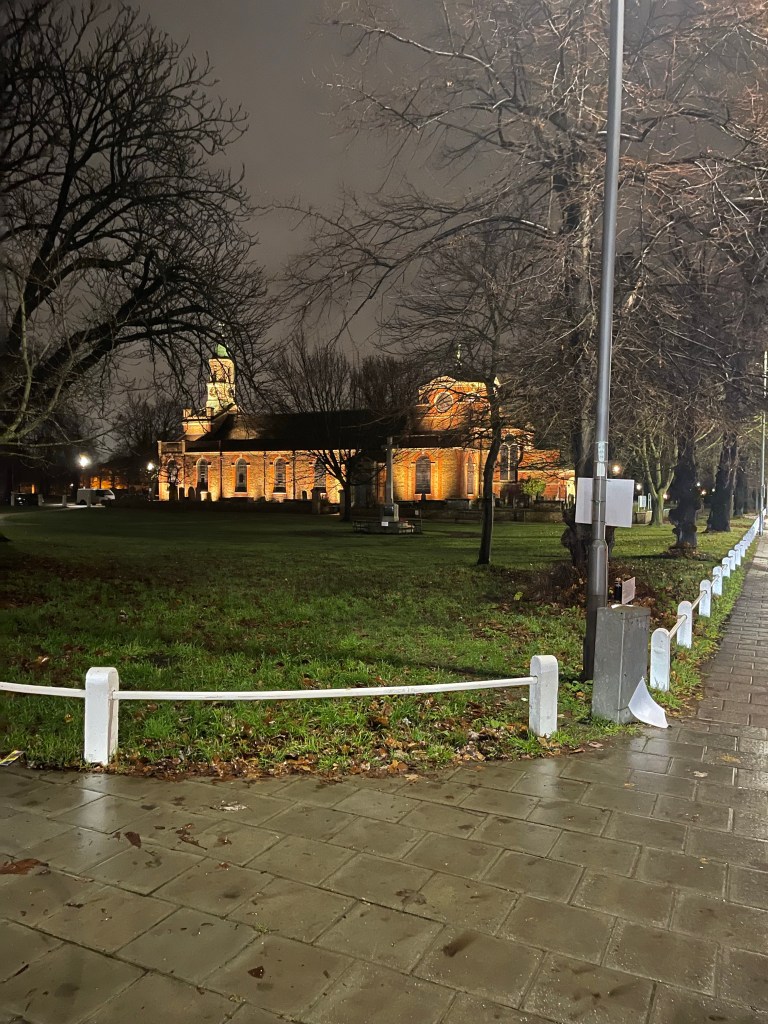
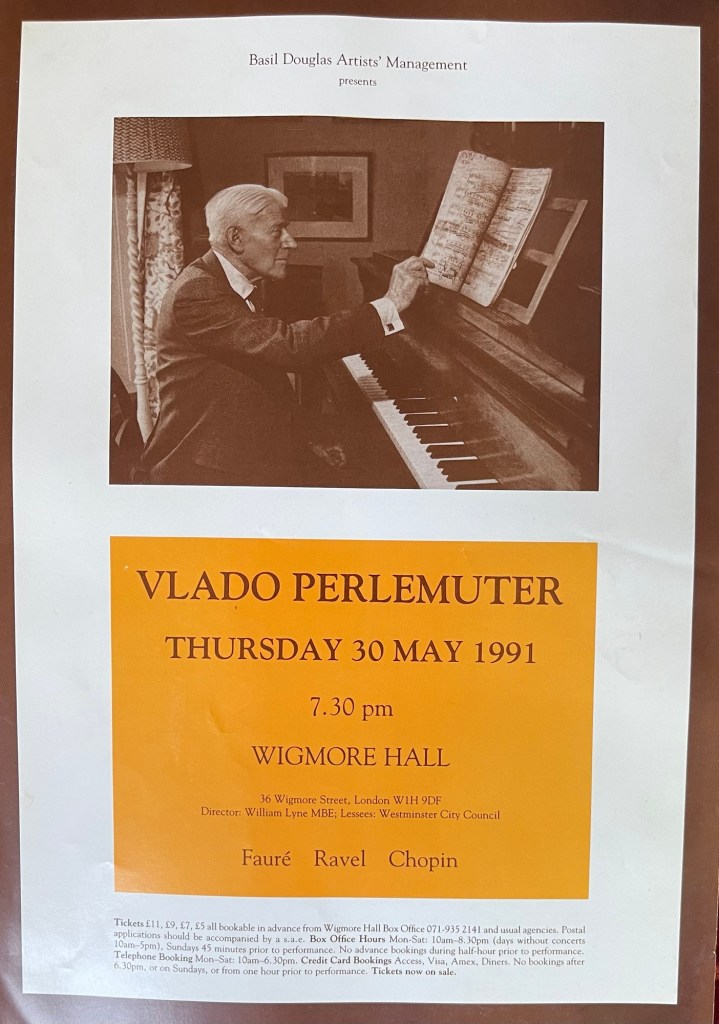
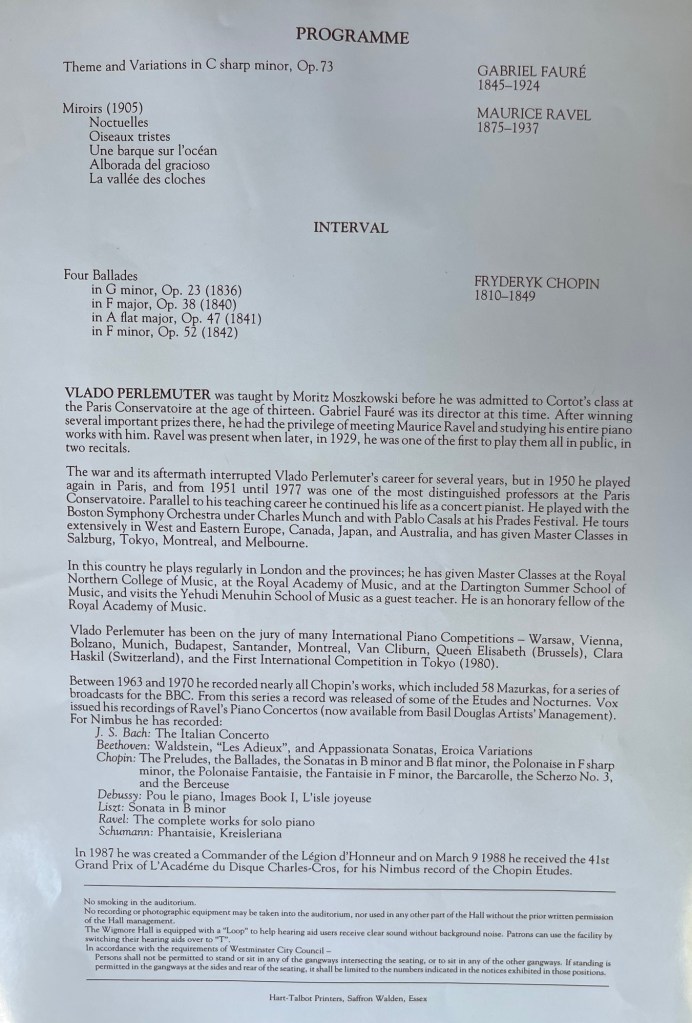
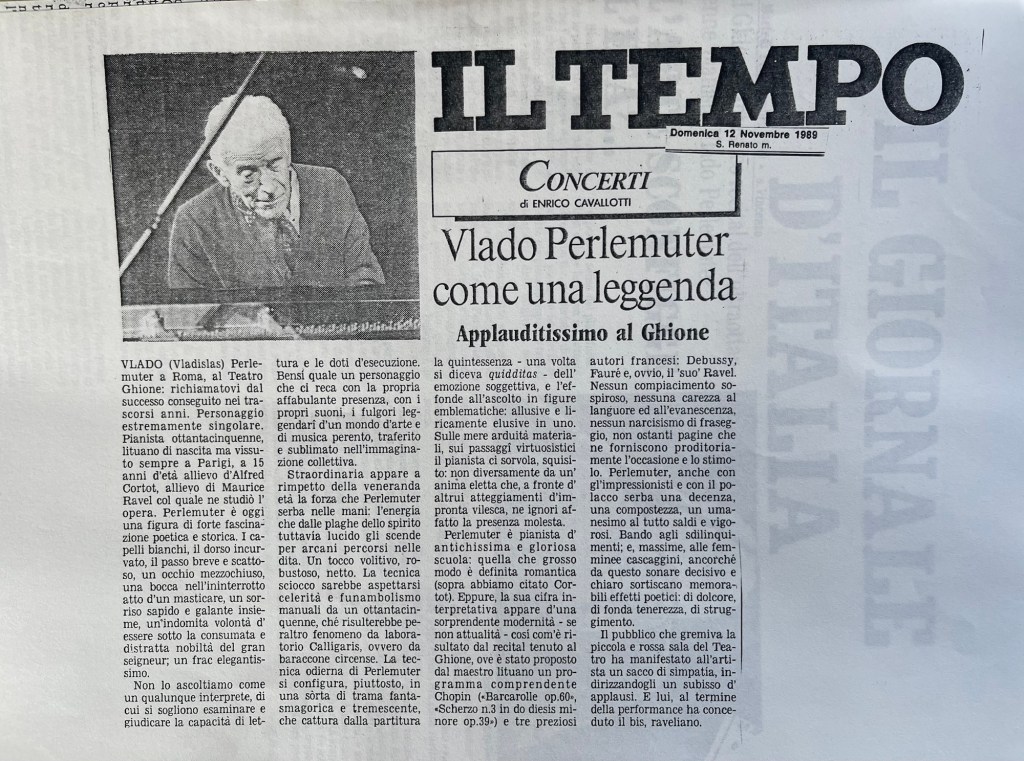
Today I lay a wreath on the grave of Joan in Ewelme deep in the heart of Oxfordshire ……..Ileana knew and loved Vlado and Joan and their idyllic love nest in Ewelme that we visited so often.
They will both be looking on today with a knowing smile as I await to join them
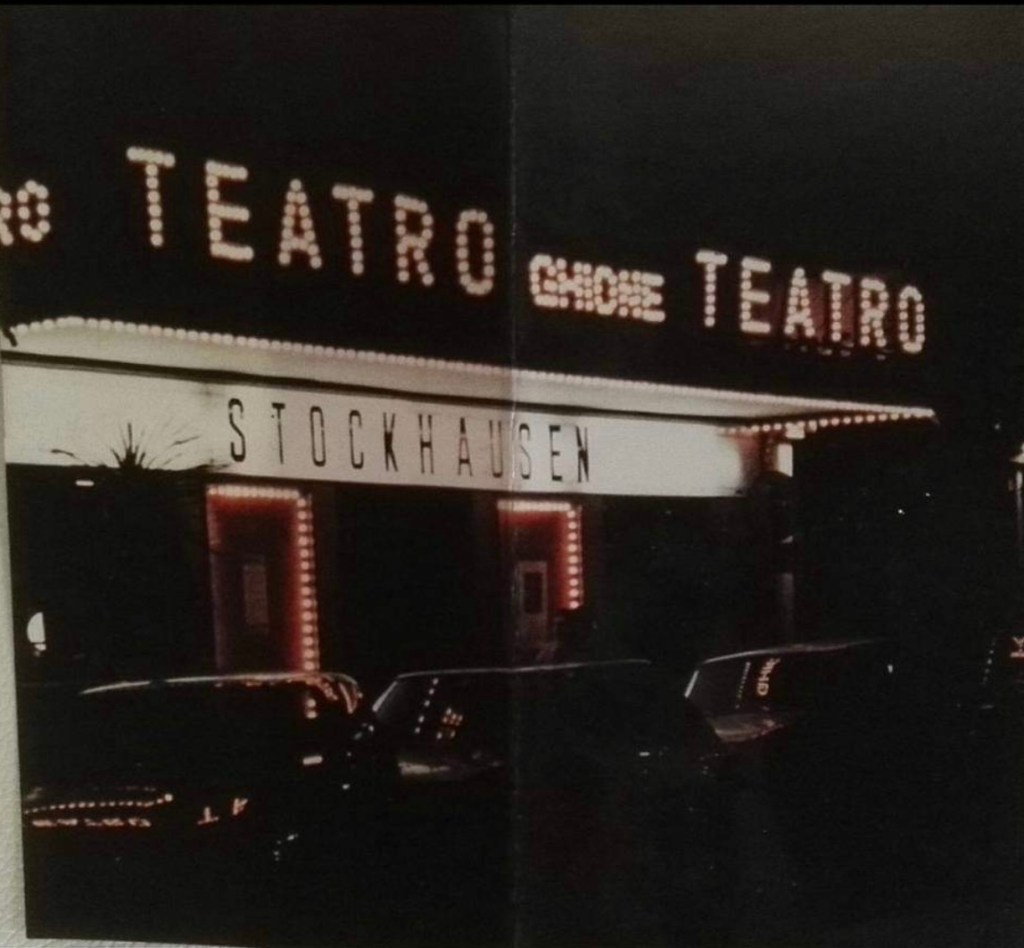
Ewelme church where Joan was celebrated in 2017St Anne’s Kew Green where Ileana and I were married on 28th July 1984Photo taken by Bianca Galvan a friend of Ileana who had persuaded her to go to Siena together in 1978 for the course of Lydia Agosti ‘Da Schoenberg ad oggi’ .That is where we met and our life became entwined forever more Our ‘ baby’ that we created together with love and devotion .A cultural centre of excellence for Rome , providing a much needed recital hall for many musicians just searching for a space where to perform in the Eternal City
Life is indeed a mystery as the waiter asked me what dessert I would like and then coming back again he said we have banana split today . Little could he have known the significance of the very first thing that united Ileana and I 45 years ago . It came the day after Ileana’s birthday . We were travelling down to Siena together Ileana driving the young repetiteur flown in from London to help his old teachers wife Lydia Stix Agosti with her inexplicably named course for actors :From Schoenberg to today’. Driving her own car and singing operatic arias on the way we stopped for a snack and she had a banana split that she said was her favourite desert. In the Campo later that evening we were having a welcome drink with the class and I ordered a banana split for Ileana . She was so moved that I had remembered that this was the first seed of a love that was to last almost thirty years. Ileana had suffered as only those that have had a loved one commit suicide can understand .Her beloved husband Ezio Gagliardo had suffered from depression and had decided to take this drastic step leaving Ileana shocked distraught and mistrusting.The idea that someone could have remembered something so trivial as a love for banana split was the first step in eventually being reborn and able to live and to love life again. The waiter today could never have known why a banana split should have brought tears to my eyes !
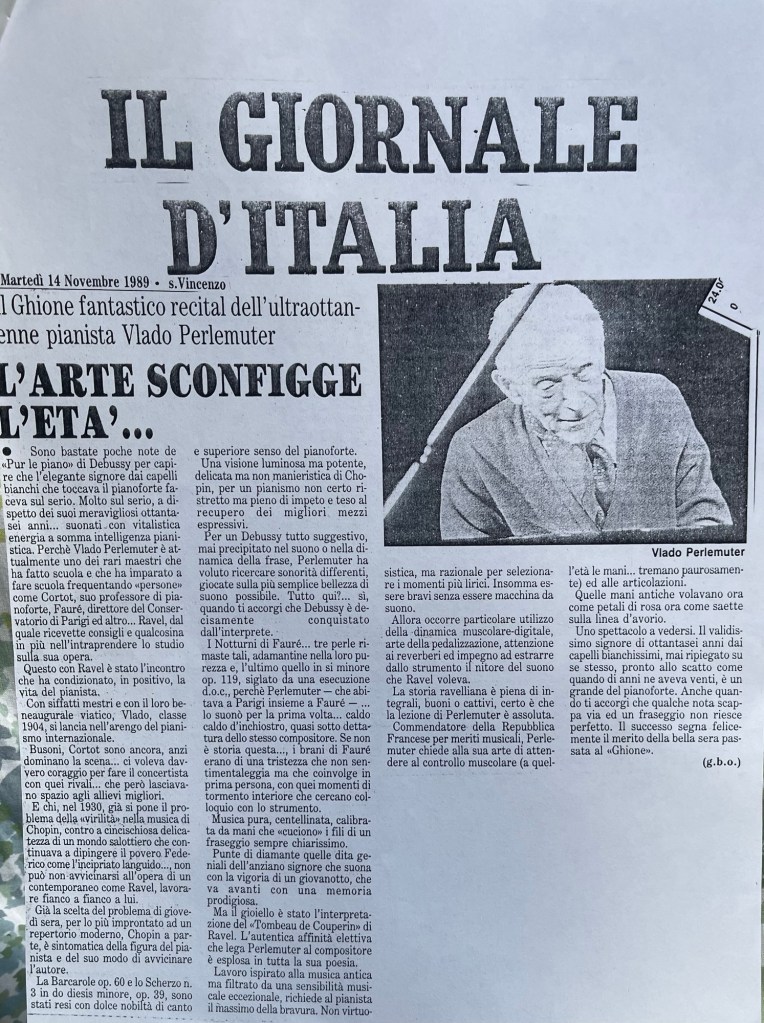
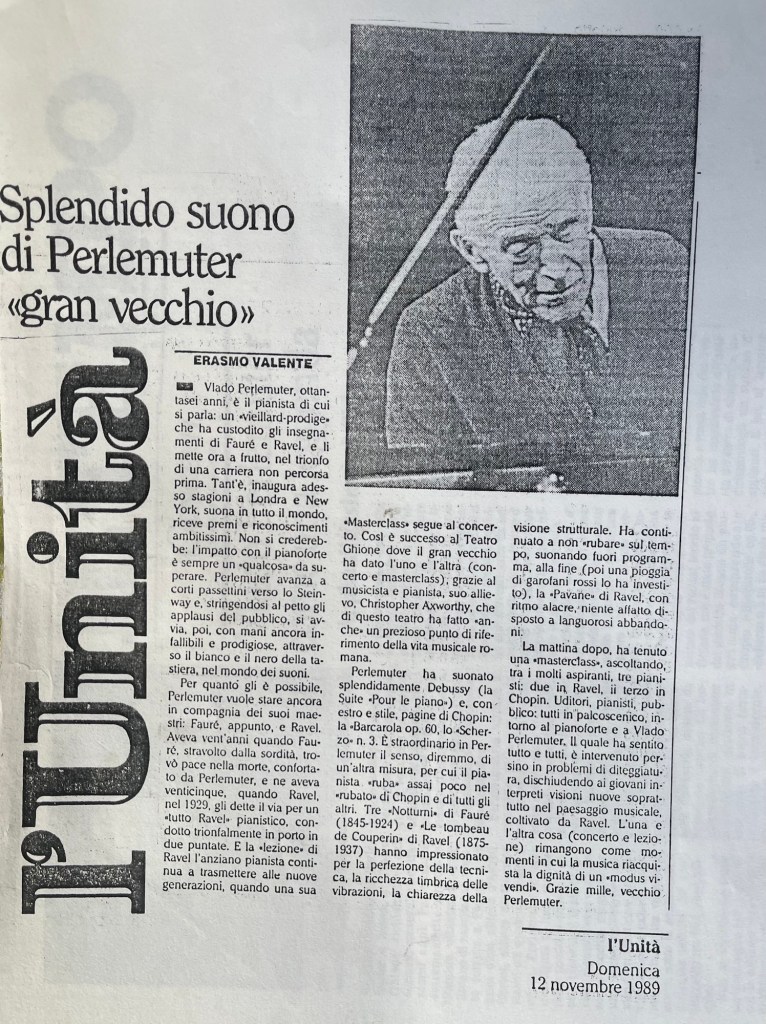
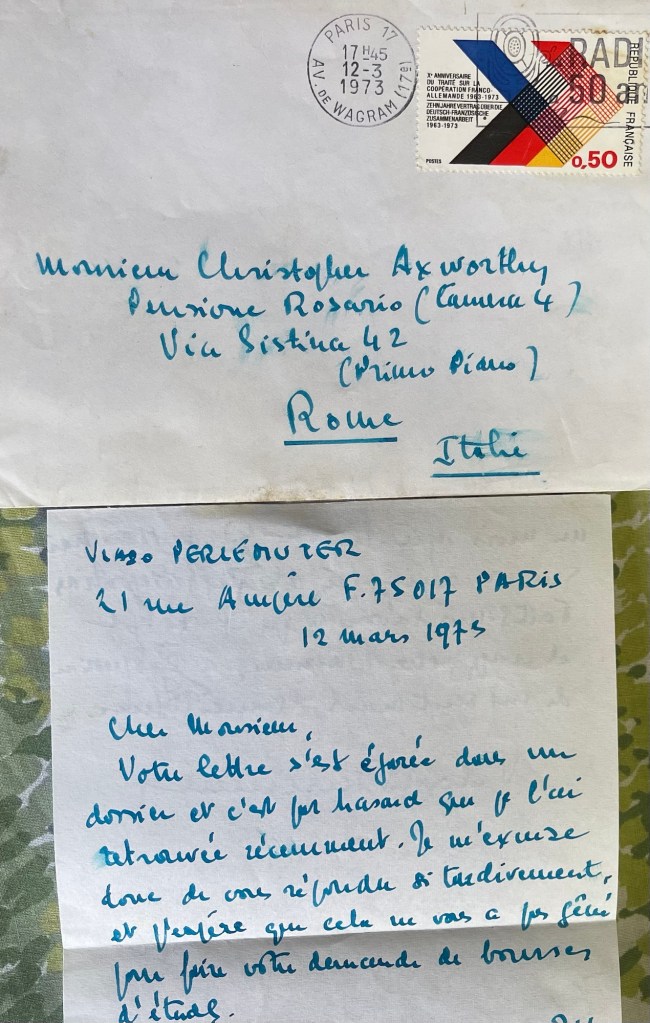
Banana Split at the Ritz Abano Terme Vlado’ s last concert where I was backstage with Joan – Ileana in the audience A letter from Vlado before he became our great friend
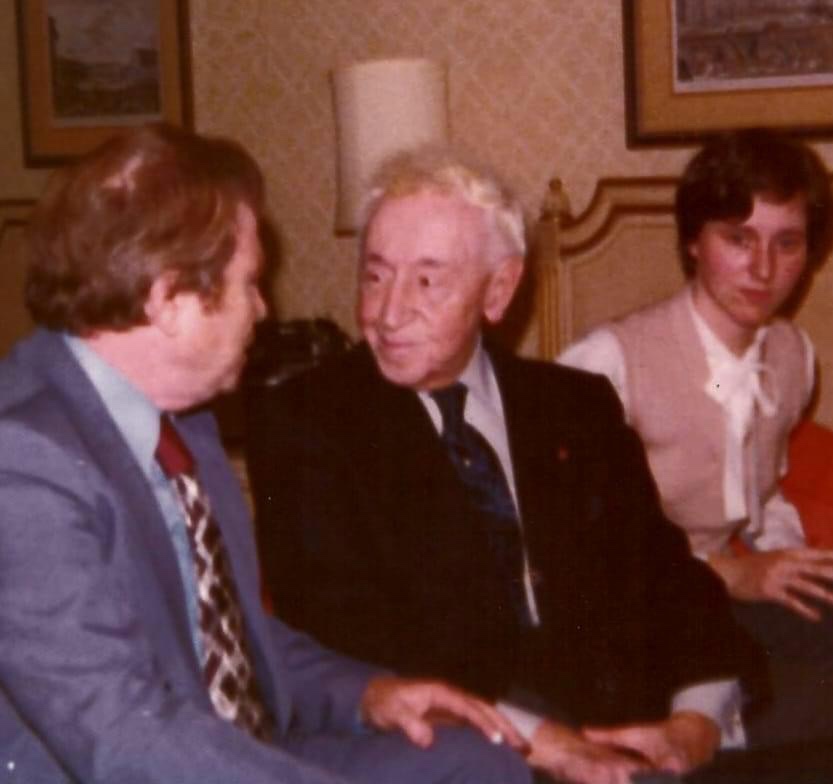
Unforgettable try through recital on Perlemuter`s piano with the amazing 104 year old companion for so many years of Vlado . And the astonishing Mark Viner . Wonderful,sounds.Wonderful music.Wonderful company.Thank you to all .February 2017
Oggi 18 anni senza Achille Millo, pseudonimo di Achille Scognamillo (Napoli, 25 novembre 1921 – Roma, 18 ottobre 2006) Image of Ileana Ghione and Achille Millo in Dress the Unknown
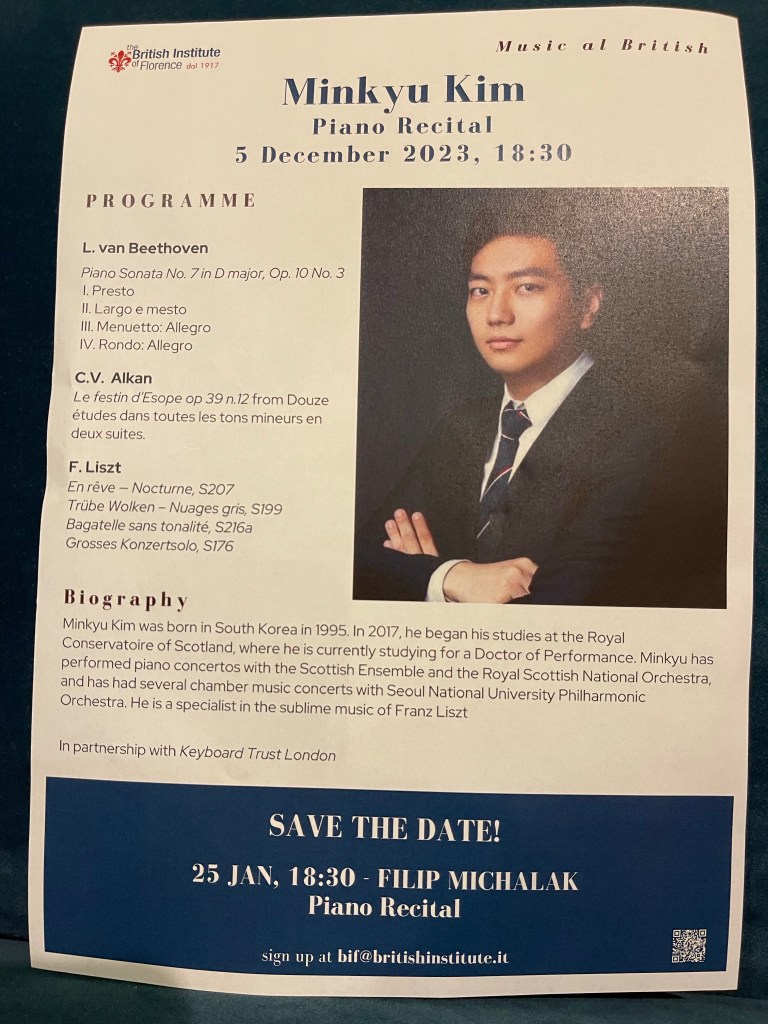
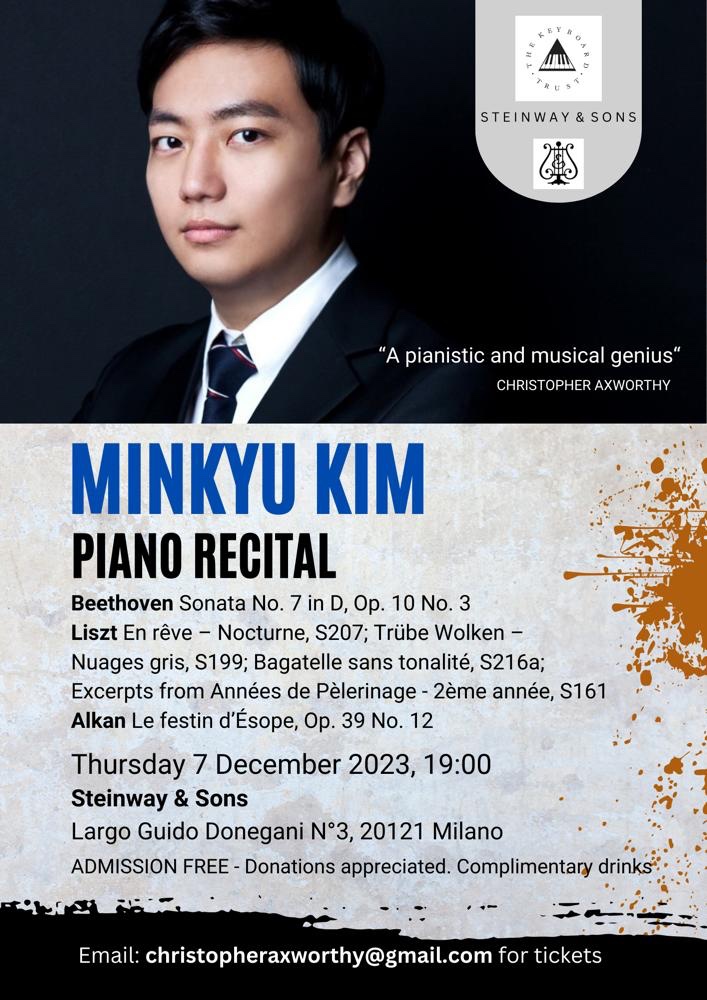
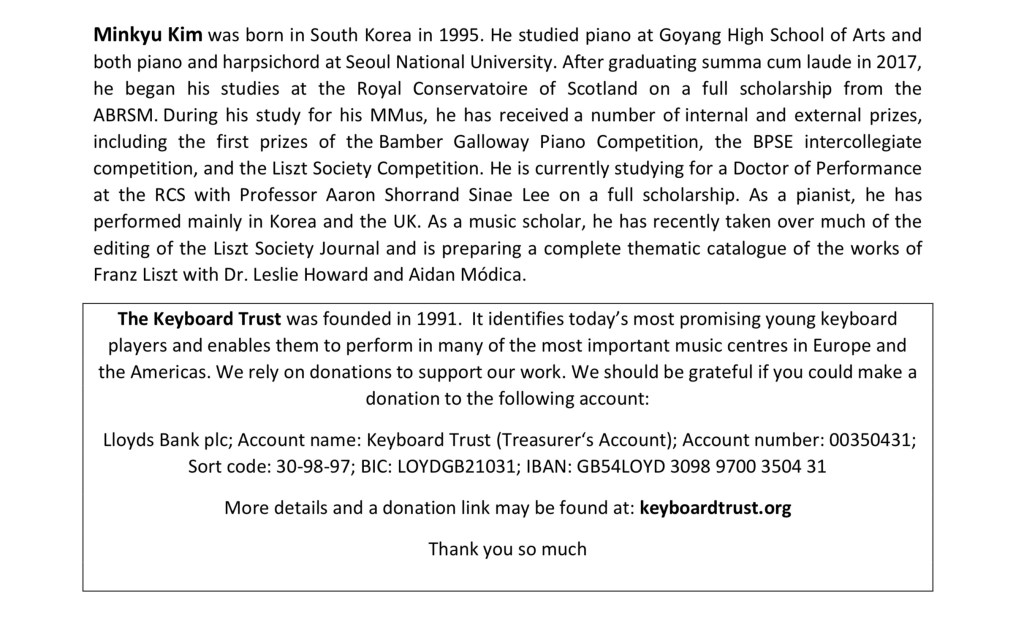
Minkyu Kim was born in South Korea in 1995. In 2017, he began his studies at the Royal Conservatoire of Scotland, where he is currently studying for a Doctor of Performance. Minkyu has performed piano concertos with the Scottish Ensemble and the Royal Scottish National Orchestra, and has had several chamber music concerts with Seoul National University Philharmonic Orchestra. He is a specialist in the sublime music of Franz Liszt
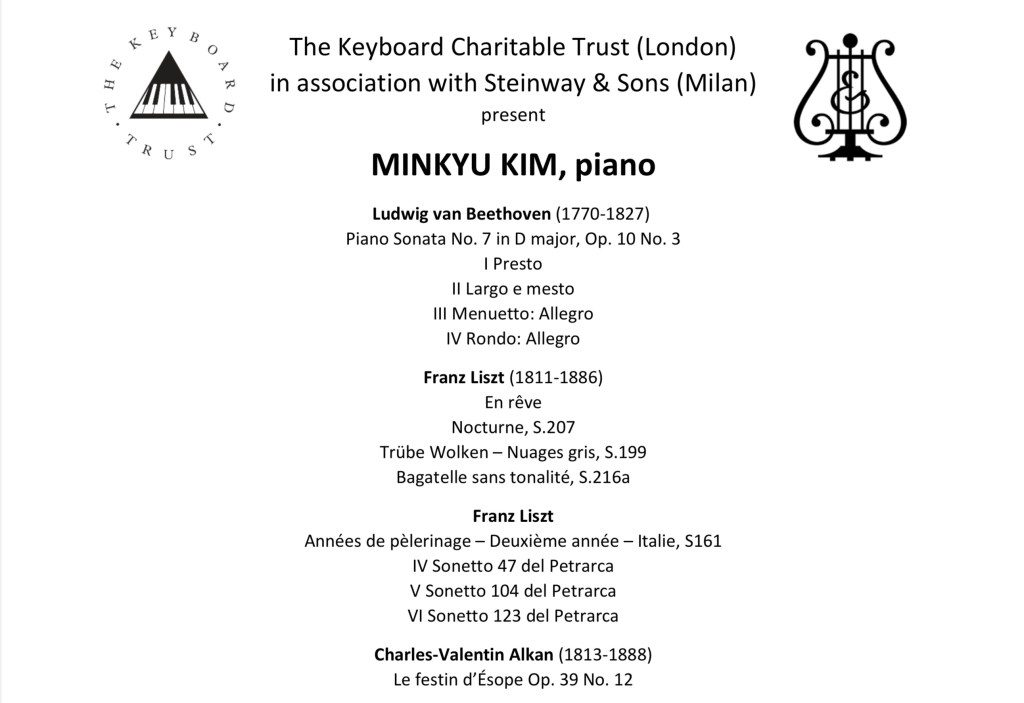
Beethoven: Piano Sonata No. 7 in D major, Op. 10 No. 3
I. Presto II. Largo e mesto
III. Menuetto: Allegro
IV. Rondo: Allegro
Alkan: Le festin d’Esope op 39 n.12 from Douze études dans toutes les tons mineurs en deux suites.
Liszt:
En rêve — Nocturne, S207
Trübe Wolken – Nuages gris, S199
Bagatelle sans tonalité, S216a
Grosses Konzertsolo, S176.
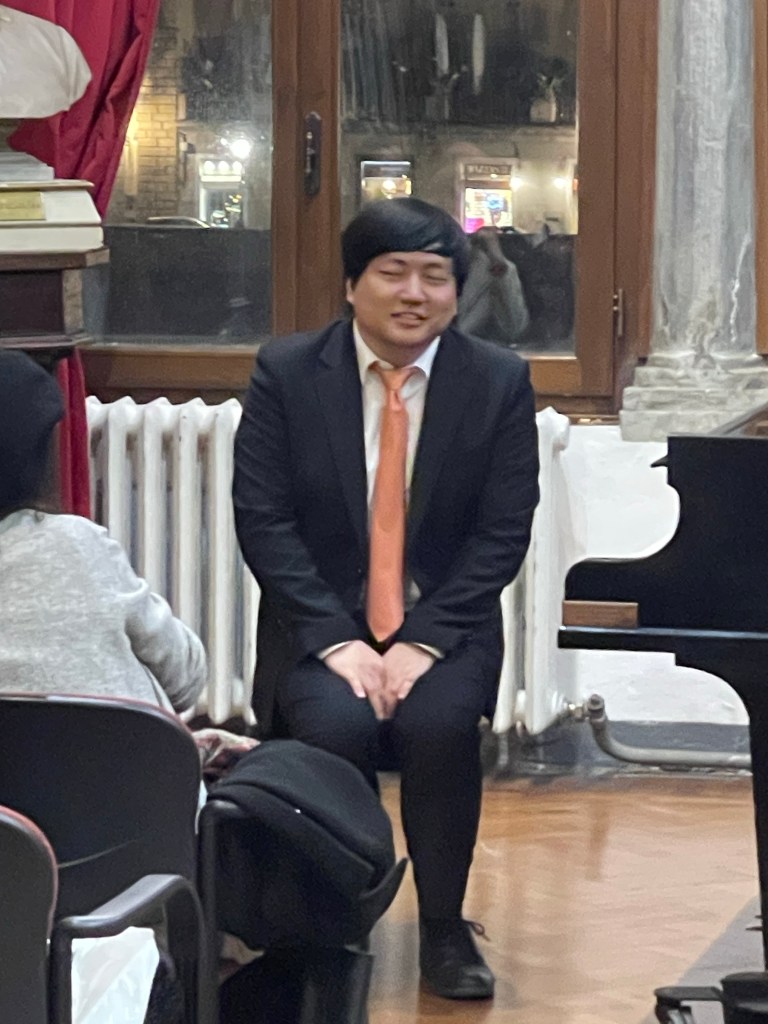
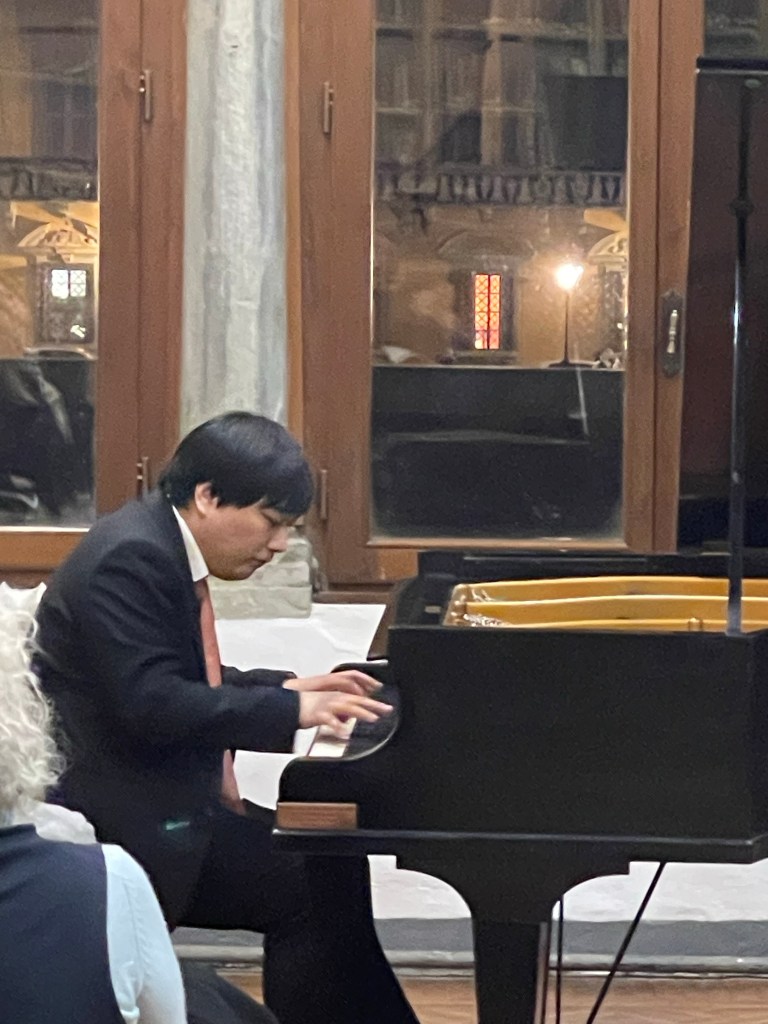
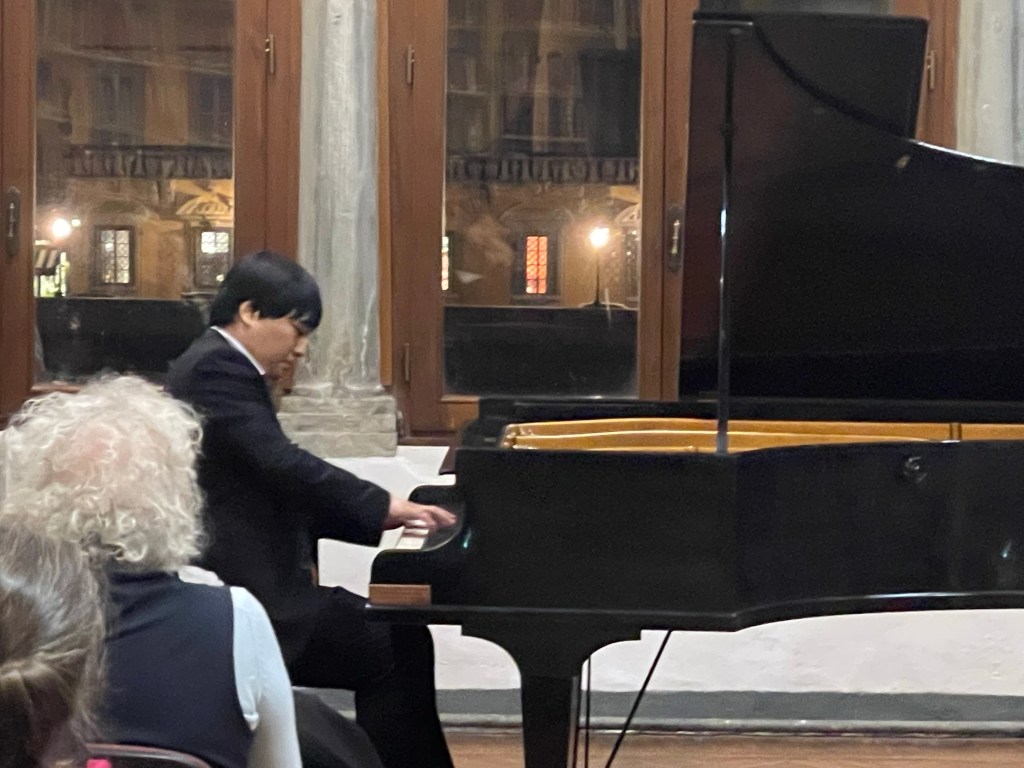
An unexpected improvised introduction to the Beethoven Sonata op 10.n.3 that Minkyu was later to talk about .He explained about concert practices in the eighteenth century when it was the norm to add an improvised ‘prelude’ to link the keys of the works together in order to prepare and accustom the ear when appropriate.There was a dynamic drive to the Beethoven with a great sense of character and startling contrasts in a work that was already revealing the genius and originality of Beethoven.It was the profoundly moving Largo e mesto that Minkyu played with a sense of line allowing the music to flow so naturally with its quartet like strands of harmonies interwoven with such poignant beauty.The entry of the Menuetto was like a breath of fresh air and was played with a simplicity and ravishing beauty that contrasted so well with the bucolic good humoured Trio .There was a sense of question and answer in the Rondo with ever more a feeling of improvised freedom.Minkyu’s wonderfully fluid fingers just adding a glow to the streams of golden sounds that accompany the opening theme as is disappears into the depths of the keyboard with a refined ending that even now can take the audience by surprise as it did indeed on this occasion!
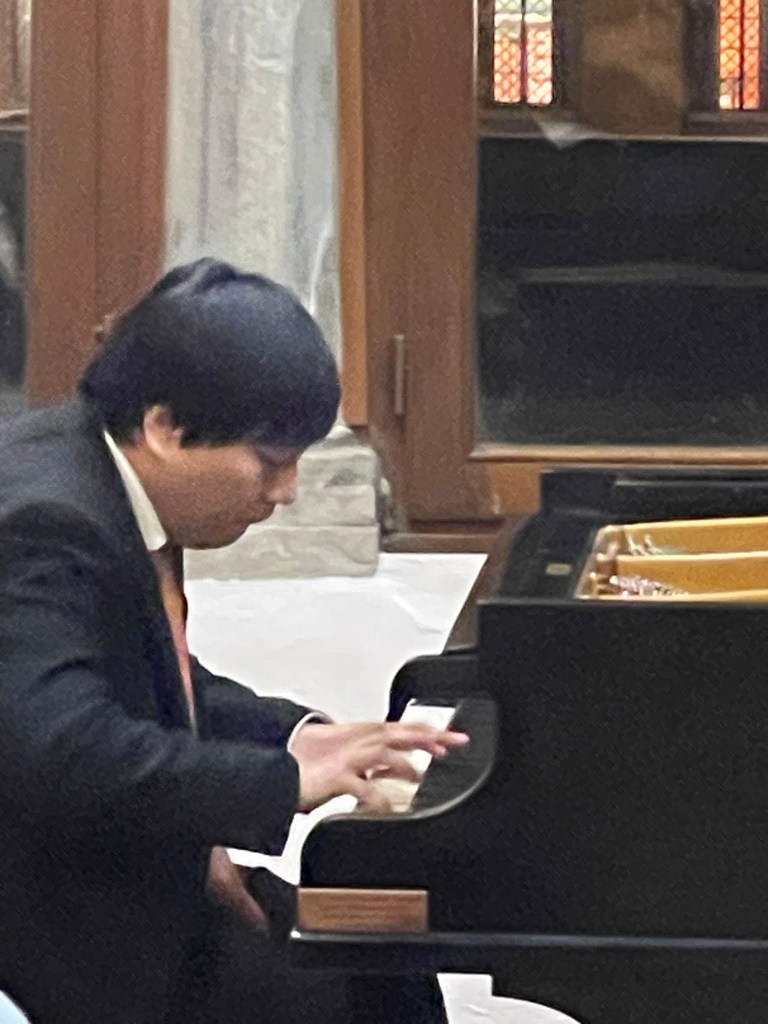
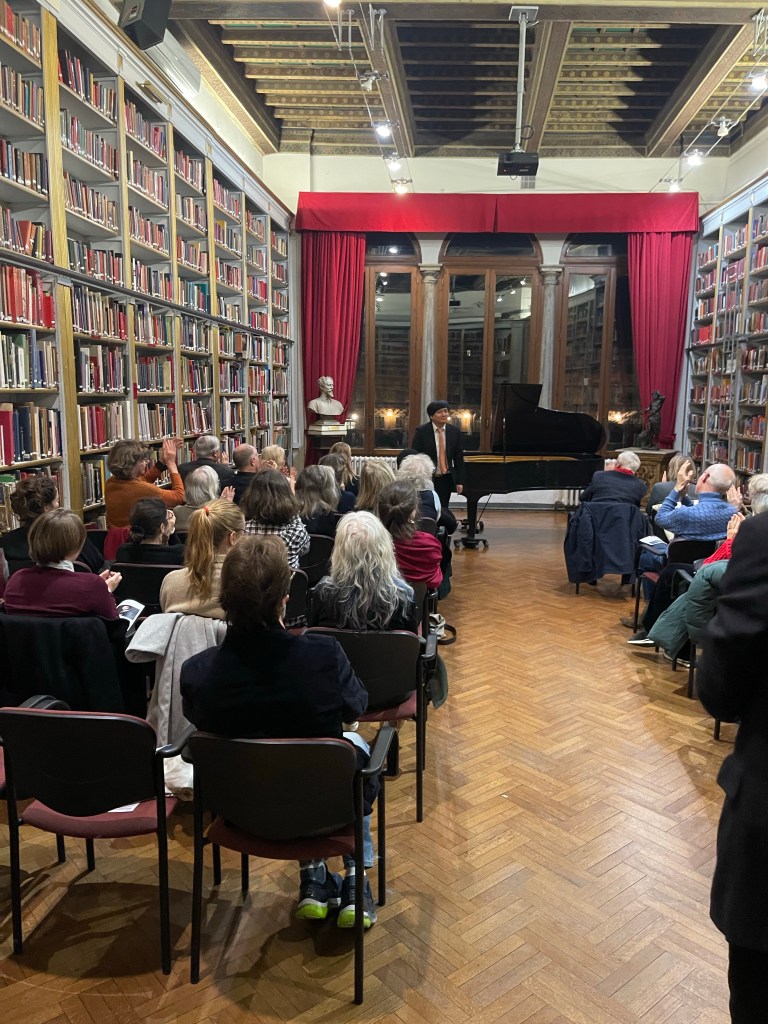
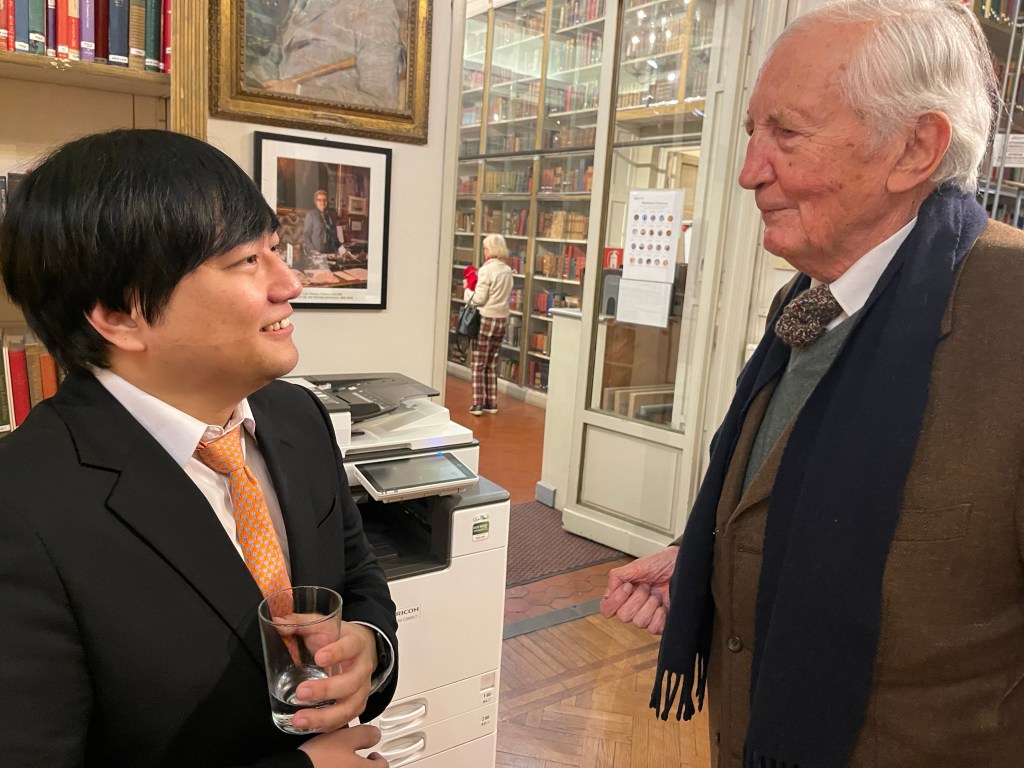
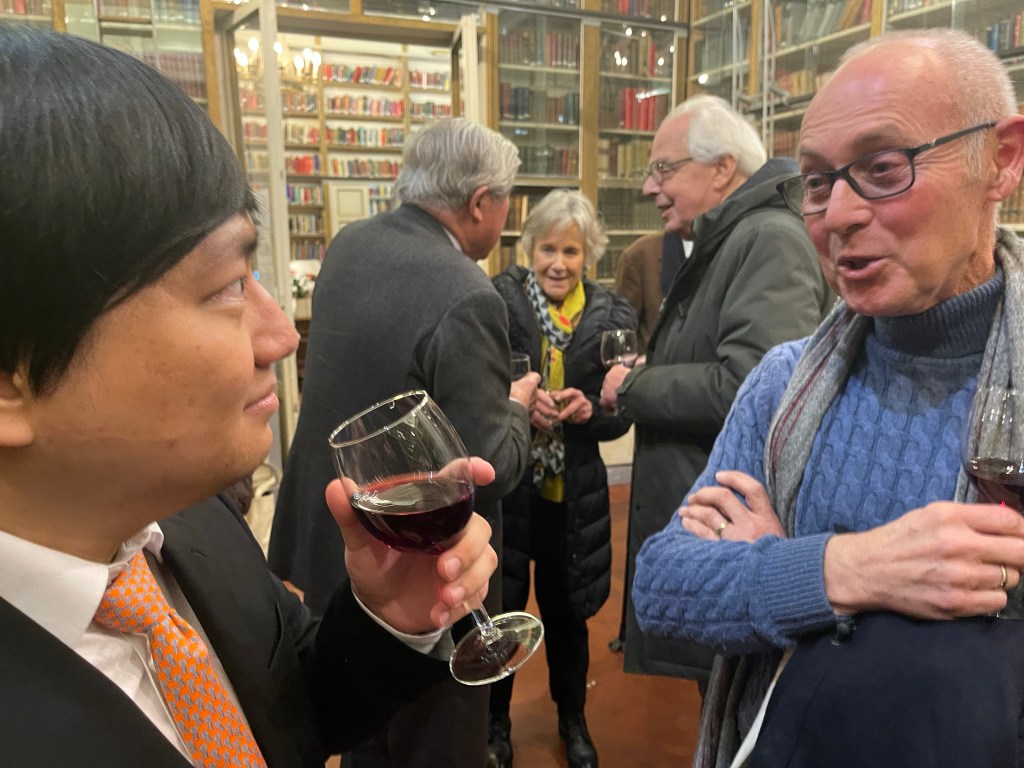
An extraordinary recital by Minkyu Kim in Florence An eclectic programme played with the simplicity and humility of a great musician with a voracious appetite for many neglected masterpieces.With a transcendental technical commmand he thrilled the audience in the library of the celebrated aesthete Harold Acton with Beethoven’s early Sonata op 10 n. 3 where his genius was already beginning to manifest itself with its profound and intense slow movement.Alkan’s pianistic genius was revealed with astonishing brilliance as his animals were let out of their cage and allowed to sprawl all over this 1876 Bechstein.
‘Le festin d’Esope’ by Alkan is one of the composers most played works (even if all too rarely) from an enormous range of compositions that are still being discovered.It is a work that needs a sense of imagination and above all a virtuoso technique to be able to cope with the composers original demands.And astonishing demands they are too in this 12th and last of his studies op 39 that includes a Symphony,Concerto and Overure for solo piano. Such was the startling originality of Alkan that we see the score scattered with unconventional but very apposite indications for performance.Written in not perfect Italian but their meaning is clear and nowhere more so than in Minkyu’s transcendental performance. The theme to be played ‘without any license whatever’.’Marziale- Scampanatino (tinkling),Trombato,Leggiermentebut then leggierissimamente’ meaning ever more scintillating as we would have noticed from Minkyu’s well oiled and delicate fingers.’Lamentevole’ as octave’s are played in gasps leading to simple fortississimi chords ‘impavidé?!’ ‘Senza arpeggiare aleuramente’And then on to the ‘caccia’ played with stirling precision and rhythmic drive by Minkyu before the startling ‘Abbajante” (barking) .Leading to ‘tempestoso’ and ‘Tronfalmente’ in a finale of astonishing chordal demands on poor Minkyu who showed no signs of tiring,quite the contrary as he built the excitement to fever pitch with the control and musicianship of a true showman. This was a quite remarkable ‘tour de force’ of virtuosity in the hands of superb intelligent musicianship.
But it was the Genius of Liszt that Minkyu was to demonstrate to us with the ‘Grosses Konzertsolo’,the much neglected monumental forerunner of the B minor Sonata .He played it with towering committed artistry that will surely astonish the Professors of the Royal Scottish Academy where he is about to complete his doctorate before embarking on an obligatory military career in the Korean army!
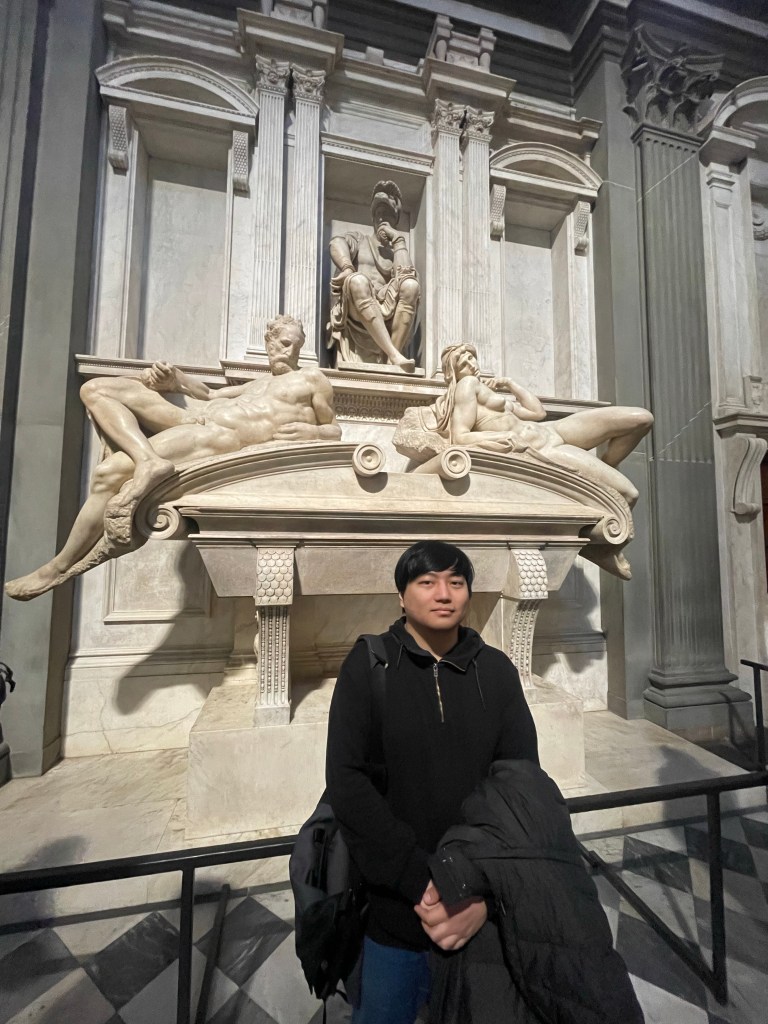
There was no prelude to link Alkan to Liszt as Minkyu wanted to talk about the Genius of Liszt and in particular about the three visionary pieces he was about to perform before the final Konzertsolo. Liszt was always looking to the future and nowhere more than in his later pieces when his youthful showmanship was transformed into penitence and devotion and he was able to anticipate the direction in which music was moving developing ,leading eventually to the twelve tone music of Schoenberg etc.A world where there is no formal or tonal centre but sounds that create a form in themselves.Nowhere is this transition more clear than in the three late pieces that Minkyu offered today. ‘En rève’ is a beautiful nocturne played by Minkyu with ravishing glowing sounds of delicacy but it is a nocturne,barely a page long,that has no ending as it finishes with a question mark. As does the extraordinary ‘Nuages Gris’ with its strange meandering phrases of such desolation with glimpses of melody that shone like stars sparkling in the mist. The opening dissonance of what was to be the Fourth Mephisto Waltz is nothing like the famous First Mephisto Waltz that we are used to hearing from the hands of dashing virtuosi.There is a tantalising jeux perlé of dancing notes but short lived as this work too ends in suspense with Liszt opening a door to who knows what is to come next. The ‘Grosses Konzertsolo’ is a fairly early work in comparison and is Liszt trying ,thanks to Schubert’s Wanderer Fantasy, to find a less formal form than the standard ‘Sonata’.A form where the themes represent an image or personality and are part of a story that are then in themselves transformed as the story progresses – the so called Leit motif . It was to open the door for Liszt’s son in law Richard Wagner just a few years later.A performance where the leit motif was so clearly outlined in Minkyu’s very intelligent hands that we could appreciate the final extraordinary pages where the motif becomes heartrendingly exhausted after its long journey.I hope one day Minkyu will record the performance and place it where it belongs side by side with its monumental twin the B minor Sonata.Only now recognised as a masterpiece even though Clara Schumann on receiving it ( it was dedicated to her husband who was already institutionalised ) described it as a horrible noise.Brahms famously fell asleep listening to it .It is now considered together with the Schumann Fantasie a pinnacle of the romantic piano repertoire.Minkyu introducing his choice of Liszt ‘Il Penseroso’ for his Florentine recital In 1520, the Medici came back to Michelangelo with another grand proposal, this time for a family funerary chapel in the Basilica of San Lorenzo.For posterity, this project, occupying the artist for much of the 1520s and 1530s, was more fully realised. Michelangelo used his own discretion to create the composition of the Medici Chapel which houses the large tombs of two of the younger members of the Medici family, Giuliano,Duke of Nemours, and Lorenzo, his nephew. It also serves to commemorate their more famous predecessors, Lorenzo the Magnificent and his brother Giuliano, who are buried nearby. The tombs display statues of the two Medici and allegorical figures representing Night and Day ,and Dusk and Dawn .The chapel also contains Michelangelo’s Medici Madonna.In 1976, a concealed corridor was discovered with drawings on the walls that related to the chapel itself.Minkyu in front of the tomb of Lorenzo de’Medici with ‘Il penseroso’ at the centre
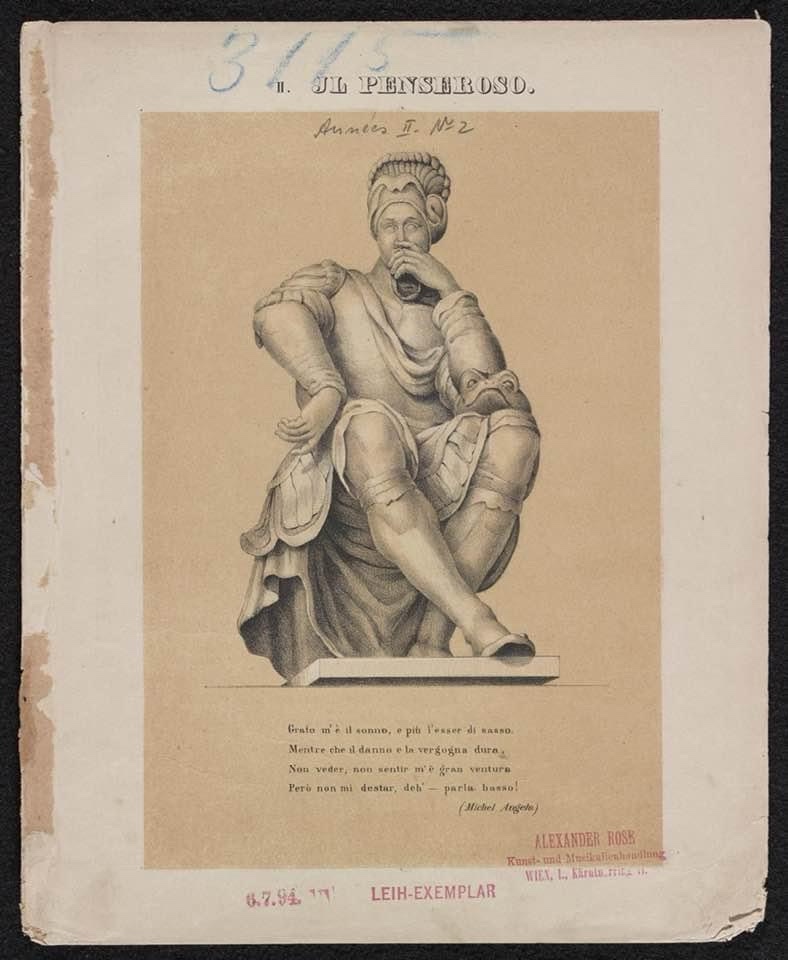
“Il penseroso” a poem and sculpture by Michelangelo that sits in the Medici Chapel that had inspired Liszt to write a piece for his ‘Years of Travel’ when he visited the city in 1838 .Minkyu had learnt it especially as a homage to Liszt and to Florence on this occasion …..an encore from an eclectic thinking musician and superb virtuoso pianist.It was fascinating to hear him explain the ‘preludes’ he had improvised between pieces as was the practice in the 18th Century to prepare the public for the next piece.And to know that the ‘prelude’ to the Grosses Konzertsolo was from the orchestral introduction of it that Liszt had insisted be played before his orchestral version (left unfinished by Liszt but completed and recorded by Leslie Howard )
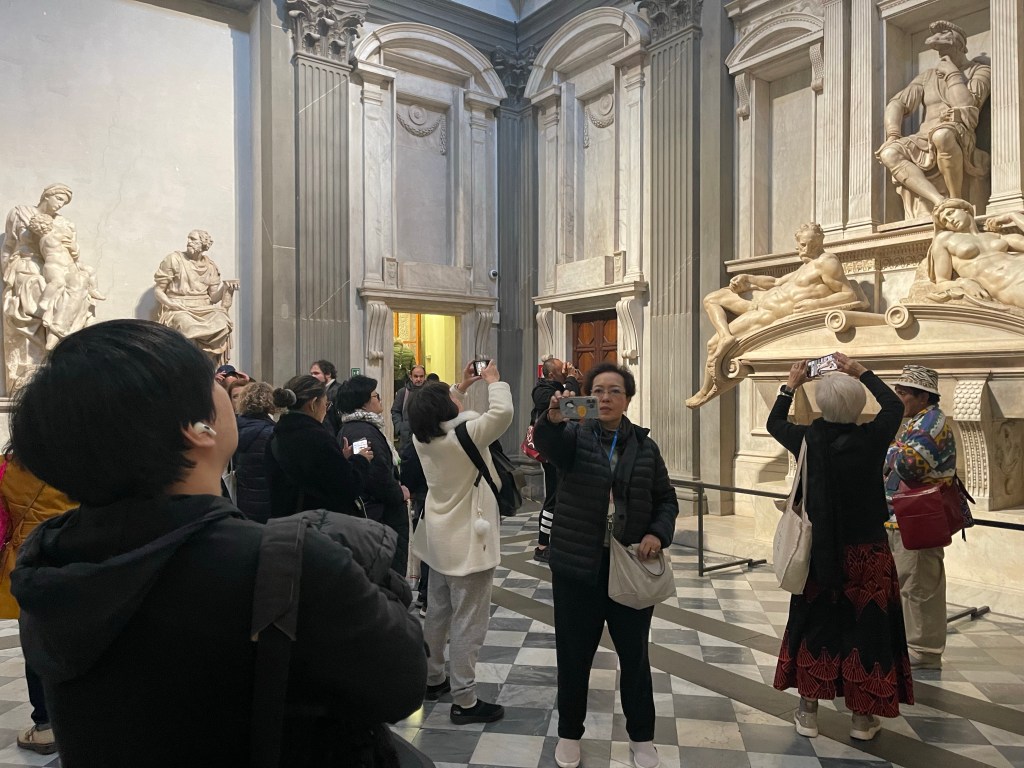
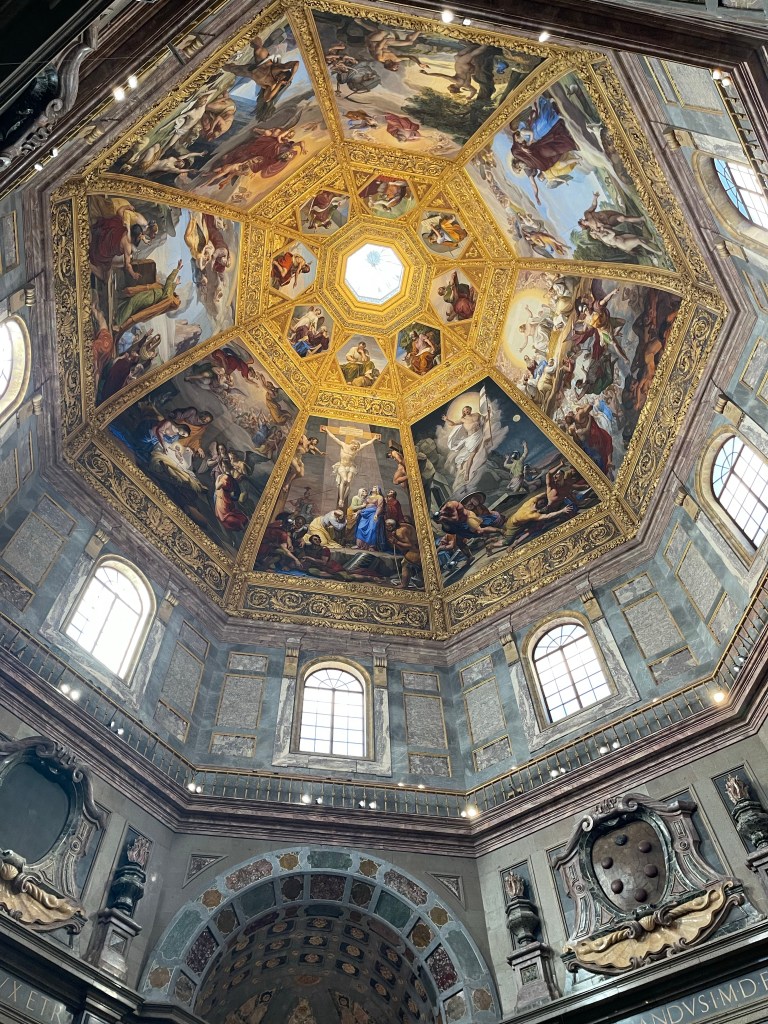
Minkyu admiring the statue whilst listening to Leslie Howard’s recording The Medici Chapel Cupola From the first edition of Liszt ‘Il Penseroso’ that was inspired by Michelangelo’s sculpture of the same name. There is also the poem by Michelangelo on the front page of the first edition The statue is actually part of a tombstone made for the Lorenzo de Medici, Duke of Urbino. Michelangelo shows Lorenzo as a man deep in thought. Liszt must have interpreted these thoughts as a dark place, as if he were receding into the shadows. Matching this depiction, Il penseroso is a very dark piece. There is not much movement, and it is confined to the the lower registers of the piano, with many slow chords.
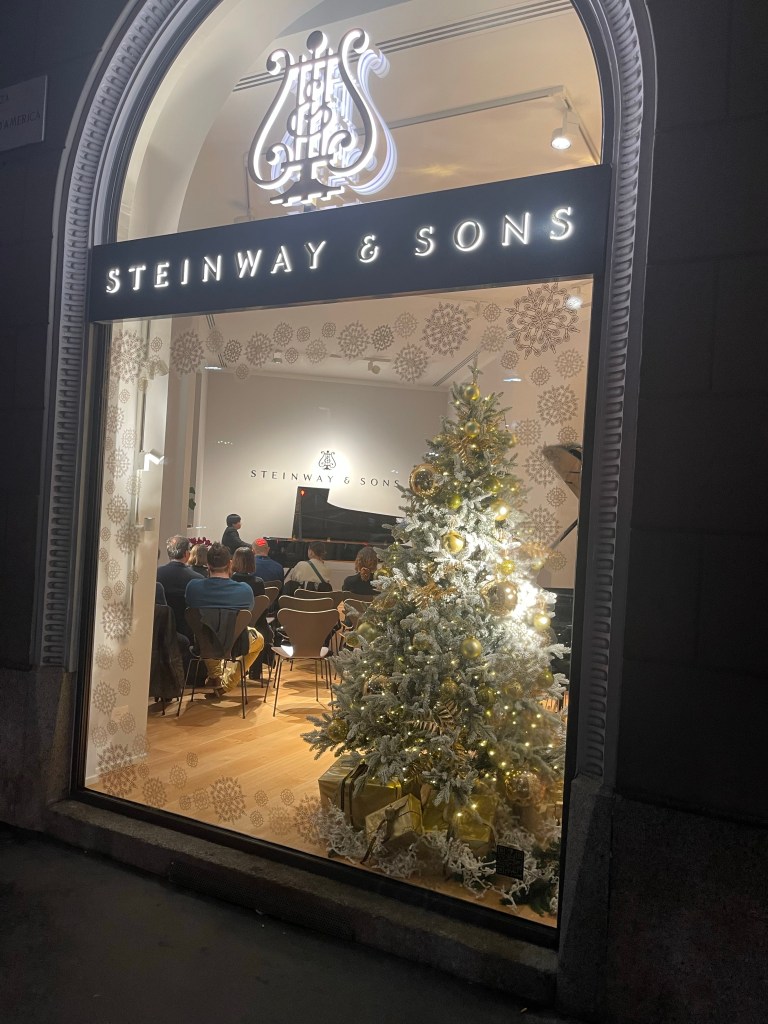
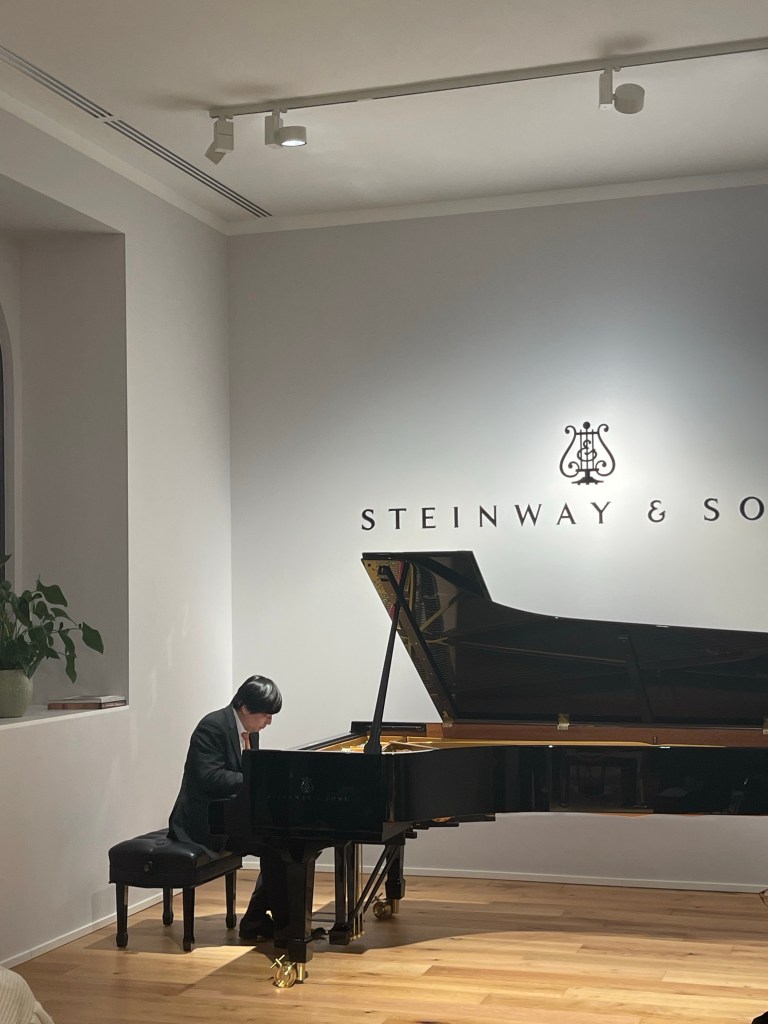
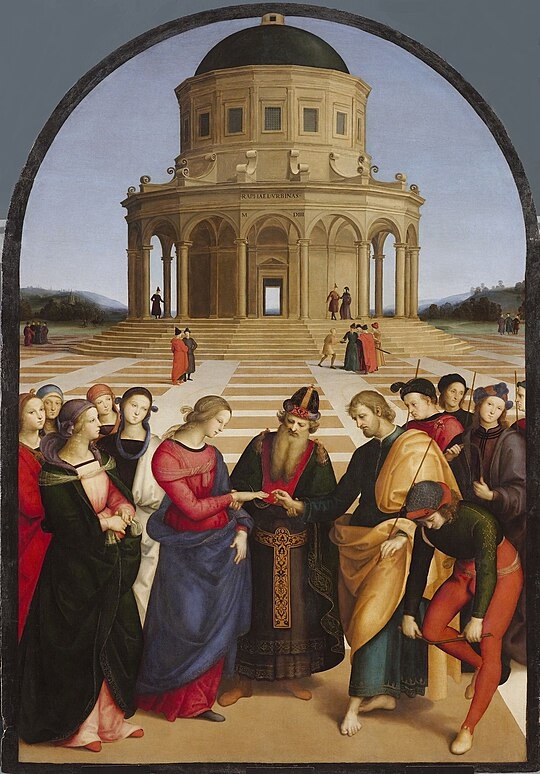
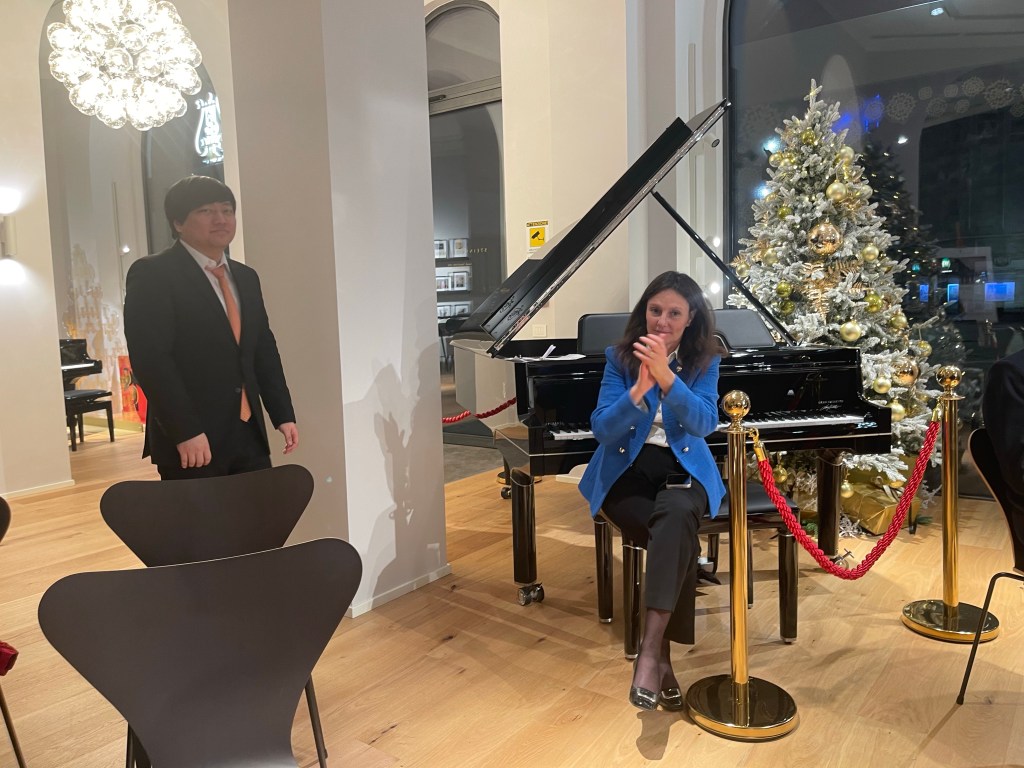
With Sir David Scholey a great admirer and follower of the Keyboard Trust pianists.The unbounded enthusiasm of Michael Griffiths OBEA very warm welcome from an admiring public A sumptuous after concert feast hosted by the ever generous Sir David with on his left Jennifer Gammell Simon Gammell OBE director of the British Institute with his daughter on a surprise visit from Tel Aviv The programme in Milan included Liszt’s three Petrarch Sonnets in place of the Grosses Konzertsolo .They were played with sumptuous sounds from whispered asides to passionate outpourings .A technical brilliance of embellishments always incorporated into the overall shape of Liszt’s extraordinarily evocative melodic and poetic outpourings.Minkyu presenting his encore of Liszt’s ‘Sposalizio ‘ which was inspired after seeing the painting by Raphael in Milan .It was played with ravishing sounds and passionate conviction The Marriage of the Virgin, also known as Lo Sposalizio, by Raphael was completed in 1504 for the San Francesco church in Città downtown Castello it depicts a marriage ceremony between Mary and Joseph and since 1806 it is housed in the Pinacoteca di Brera in Milan Sposalizio is the title of the first piece in Liszt’s Deuxième Annie de Pèlerinage :Italie (Second Year of Pilgrimage: Italy), published in 1858. The composition starts out with a simple pentatonic melody, described as a “bell-like motif”,turning into a complex musical architecture. The melody then changes to a type of wedding march, continually embellished leading to the grand climax before ending quietly.Minkyu had found time on his way to the airport to visit the Brera Gallery and see the original Maura Romano ,director of Steinway Milano ,far right with her assistant Alessandro Livi far left and guests Alberto and Ioana Chines,Minkyu Kim and two guests from the perfume shop opposite By great demand Minkyu played a second encore and this time in the spirit of S.Ambrogio with an improvised version of ‘Jingle Bells’ with flashes of astonishing technical brilliance.It brought this last recital on Minkyu’s short Italian tour to a festive ending on the feast of the patron saint of Milan when preparations begin in earnest for the Christmas festivities and by tradition La Scala Opera House opens it’s new season .Maura Romano with the famous ‘Do di petto’ cakes inspired by Katia Ricciarelli An after dinner treat for Minkyu.Beethoven in 1796; designed by G. Stainhauser; engraving by Johann Josef Neidl, executed for the publisher Artaria (Haydn published more than 300 works through Artaria. The value of Haydn’s works helped push Artaria to the top of the music publishing world in the late 18th century. This important relationship helped Artaria secure the rights to the works of other important classical composers such as Luigi Boccherini and, most notably, Wolfgang Amadeus Mozart. During his lifetime, Artaria was Mozart’s principal publisher and starting in 1793, Artaria published several early works of Beethoven until a bitter dispute over the publishing rights of Beethoven’s String Quartet op 29 which culminated in a court case from 1803 until 1805.Yet, Artaria also published Beethoven’s Hammerklavier Sonata in 1819. The dispute with Beethoven highlights the role the company played in helping determine early copyright laws. Artaria continued to be a leading publisher through the 19th century, until it finally ceased its music publication business in the twentieth century. Artaria publishing house was dissolved in 1932. The art dealership closed in 2012.
Beethoven’s Piano Sonata No. 7 in D major, Op. 10, No. 3, was dedicated to the Countess Anne Margarete von Browne, and written in 1798. This makes it contemporary with his three string trios op 9 , his three Op. 12 violin sonatas, and the violin and orchestra romance that became his op 50 when later published. The year also saw the premiere of a revised version of his second piano concerto whose original form had been written and heard in 1795.The three Op. 10 sonatas are usually described as angular or experimental, as Beethoven began moving further and further away from his earlier models. This third sonata of the set is the longest and is the only one of the Op. 10 sonatas that has four movements and Beethoven’s pupil the teacher of Franz Liszt described it as ‘grand and significant’
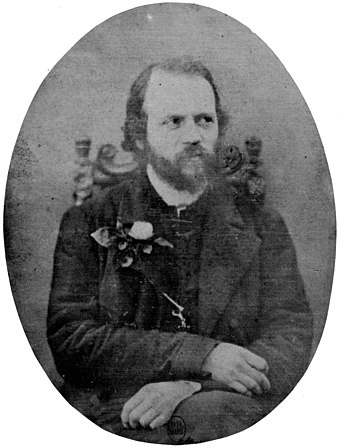
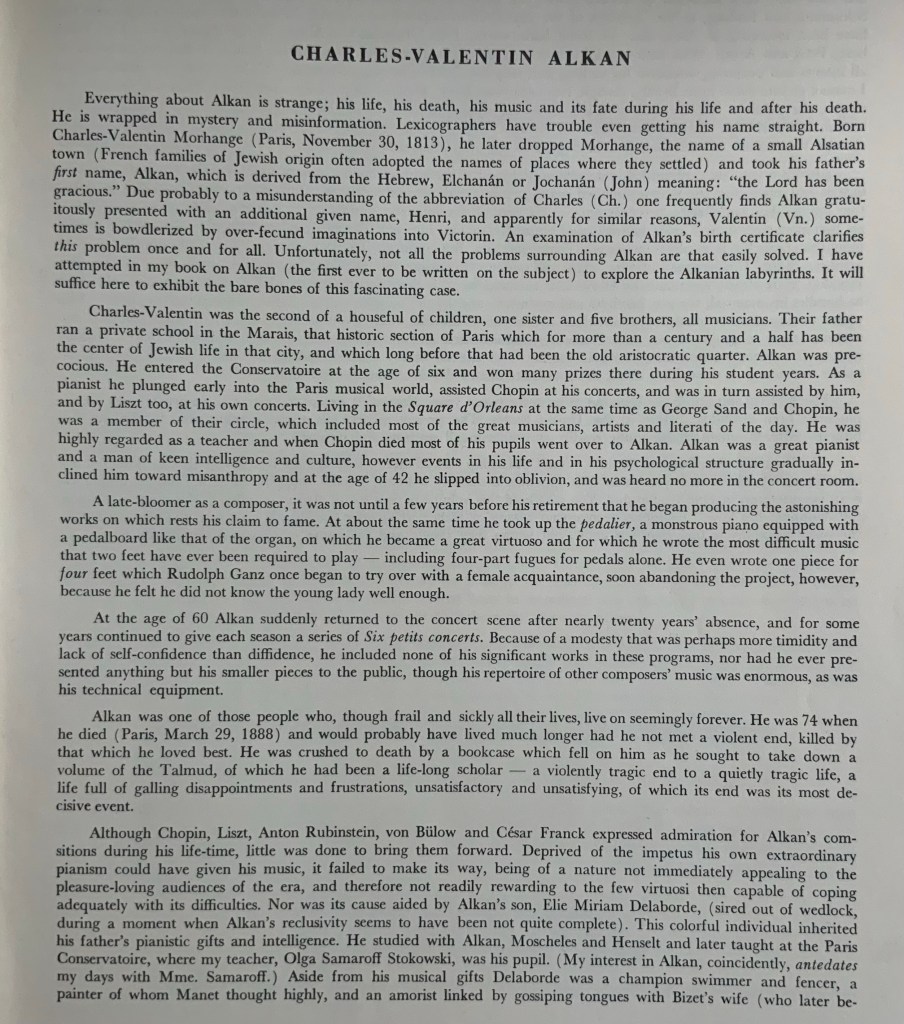
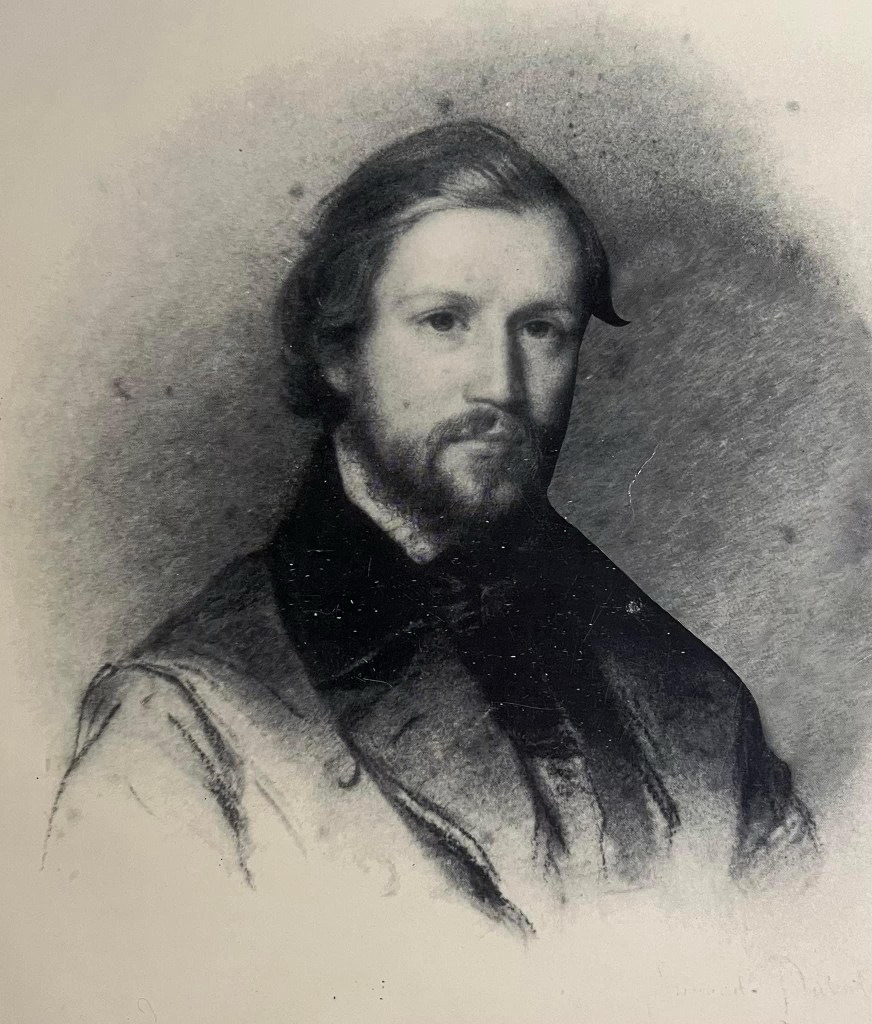
First edition of op 10 Sonatas Facsimile of the sonata op 28 Charles -Valentin Alkan ( 30 November 1813 – 29 March 1888) was a French composer and virtuoso pianist. At the height of his fame in the 1830s and 1840s he was, alongside his friends and colleagues Chopin and Liszt among the leading pianists in Paris, a city in which he spent virtually his entire life. In 1848 Alkan was bitterly disappointed when the head of the Conservatoire,Auber,replaced his teacher the retiring Zimmerman with the mediocre Antoine Marmontel as head of the Conservatoire piano department, a position which Alkan had eagerly anticipated, and for which he had strongly lobbied with the support of Sand, Dumas, and many other leading figures.A disgusted Alkan described the appointment in a letter to Sand as “the most incredible, the most shameful nomination”;and Delacroix noted in his journal: “By his confrontation with Auber, [Alkan] has been very put out and will doubtless continue to be so.”The upset arising from this incident may account for Alkan’s reluctance to perform in public in the ensuing period. His withdrawal was also influenced by the death of Chopin; in 1850 he wrote to Masarnau “I have lost the strength to be of any economic or political use”, and lamented “the death of poor Chopin, another blow which I felt deeply.”Chopin, on his deathbed in 1849, had indicated his respect for Alkan by bequeathing him his unfinished work on a piano method, intending him to complete it , and after Chopin’s death a number of his students transferred to Alkan.After giving two concerts in 1853, Alkan withdrew, in spite of his fame and technical accomplishment, into virtual seclusion for some twenty years.For many years it was believed that Alkan met his death when a bookcase toppled over and fell on him as he reached for a volume of the Talmud from a high shelf.The story of the bookcase may have its roots in a legend told of Aryeh Leib ben Asher , rabbi of Metz,the town from which Alkan’s family originated.
Le festin d’Ésope (Aesop’s Feast), op .39 No. 12, is the final étude in the set Douze études dans tours le tons miners (Twelve studies in all minor keys), Op. 39, published in 1857 (although it may have been written during the previous decade). It is a work of twenty-five variations based on an original theme and is in E minor. The technical skills required in the variations are a summation of the preceding études.
The work requires exceptional virtuosic skills, with extremely fast overlapping octaves, fast scales with left accompaniments, enormous leaps, rapid octave chords, tremolos, double octaves and trills. A typical performance of this piece lasts 10 minutes.
Introduction to the Piano Music of Alkan by Raymond Lewenthal who was the first in modern times to present Alkan in public recitals in London.At the Wigmore Hall together with Liszt , three recitals completely sold out with queues all around the hall when rumour spread that there was something very special going on.On this success he later gave a recital in the Royal Albert Hall (that his agent Wilfred Van Wyck – also Rubinstein’s agent- advised against) A strange affair where Lewenthal presented himself alone with a cloak and top hat on the vast stage with just a lamp standard like in a living room or 18th century salon .He played the Liszt Hexameron and before the interval Chopin First Ballade and Moonlight Sonata trying to emulate a scene from the previous century – Van Wyck was proven to be right !A portrait of Alkan for the 110th anniversary of the birth published by Mark Viner ,an emeritus KT artist and expert on Alkan.
At a later stage in his life Liszt experimented with “forbidden” things such as parallel 5ths in the “Csárdás macabre”and atonality in the Bagatelle sans tonality (“Bagatelle without Tonality”). Pieces like the “2nd Mephisto-Waltz” are unconventional because of their numerous repetitions of short motives. Also showing experimental characteristics are the Via crucis of 1878, as well as Unstern!, Nuages Gris and the two works entitled La lugubre gondola of the 1880s.
En rève (‘Dreaming’) was composed in 1885 and unlike in many of the works from the last years of Liszt’s life, nothing disillusioned or bleak, but rather a note of acceptance and reconciliation.
Nuages gris or Trübe Wolken,was composed on August 24, 1881. It is one of Liszt’s most haunting and at the same time one of his most experimental works, representing , “a high point in the experimental idiom with respect to expressive compositional procedure.” Yet it was only in the second half of the twentieth century that the significance of Liszt’s late experimental works began to be appreciated. “Arguably, Liszt was the first composer to establish the augmented triad as a truly independent sonority, to consider its implications for modern dissonance treatment, and to ponder its meaning for the future course of tonality. Liszt’s accomplishments were summarised in Busoni’s phrase, as the ‘master of freedom’.Debussy probably had Nuages gris in mind when he composed his own Nuages .On a more mundane note it was used in the shocking scene at the morgue in Stanley Kubrick’s last film Eyes Wide Shut.
Bagatelle sans tonalité was written by in 1885. The manuscript bears the title “Fourth Mephisto Waltz”and may have been intended to replace the piece now known as the Fourth Mephisto Waltz when it appeared Liszt would not be able to finish it; the phrase Bagatelle ohne Tonart actually appears as a subtitle on the front page of the manuscript.
While it is not especially dissonant, it is extremely chromatic becoming what Liszt’s contemporary Fétis called “omnitonic”in that it lacks any definite feeling for a tonal center.Like the Fourth Mephisto Waltz, however, it was not published until 1955.
Années de pèlerinage S.160-161-162-163is a set of three suites for solo piano by . Much of it derives from his earlier work, Album d’un voyageur, his first major published piano cycle, which was composed between 1835 and 1838 and published in 1842.Années de pèlerinage is widely considered as the masterwork and summation of Liszt’s musical style. The third volume is notable as an example of his later style Composed well after the first two volumes, it displays less virtuosity and more harmonic experimentation.
The title Années de pèlerinage refers to Goethe’s famous novel of self-realization, whose original title Wilhelm Meisters Wanderjahre meant Years of Wandering or Years of Pilgrimage, the latter being used for its first French translation.Liszt clearly places these compositions in line with the Romantic literature of his time, prefacing most pieces with a literary passage from writers such as Schiller, Byron or Senancour, and, in an introduction to the entire work, writing:
“Having recently travelled to many new countries, through different settings and places consecrated by history and poetry; having felt that the phenomena of nature and their attendant sights did not pass before my eyes as pointless images but stirred deep emotions in my soul, and that between us a vague but immediate relationship had established itself, an undefined but real rapport, an inexplicable but undeniable communication, I have tried to portray in music a few of my strongest sensations and most lively impressions.”
Deuxième année: Italie” (“Second Year: Italy”), S.161, was composed between 1837 and 1849 and published in 1858 by Schott. Nos. 4 to 6 are revisions of Tre sonetti del Petrarca which was composed around 1839–1846 and published in 1846.All three are based on Sonnets, or Canzone, by the Italian Renaissance poet Francesco Petrarca (1304-1374). They are meditations on love, specifically the poet’s passionate love for Laura de Noves. In the first, Benedetto sia ‘L giorno -Blessed be the day…., Canzone LXI, sometimes erroneously noted as Sonnet 104), he prays for divine blessing on the joys and sufferings of love. The second, Pace non trovo – I find no peace….. Canzone CXXXIV; sometimes erroneously noted as Sonnet 47is more agitated. In it, the poet ponders the confused state love has put him in. Enthralled to his lady, he feels imprisoned yet free, he burns with love, yet feels he is made of ice: in modern psychological parlance, a true state of ‘limerence’. The third, lividi in terra angelici costumi – I Beheld on Earth Angelic Grace…., Canzone CLVI; sometimes incorrectly listed as Sonnet 123, is an ardent love poem in which the poet describes the perfect beauty and purity of his love and its effect on all of Heaven and Nature.
In 1851 Breitkopf & Härtel published the solo piano work Grosses Konzertsolo S.176. Though not as popular as the later Sonata in B minor the work achieves significance by the fact that it anticipates the Sonata as a large-scale nonprogrammatic work. It shows structural similarities to the Sonata and obvious thematic relationship to both the Sonata and the Faust Symphony.
One unpublished earlier version of the work exists, titled in French in the manuscript Grand Solo de concert (S.175a). This version differs structurally from the published Grosses Concert-Solo, thus revealing the existence of interesting material for a study on the genesis of Liszt’s gradual innovations in constructing a large-scale musical organism, which were to come to full fruition in the Sonata.
In 1866 a two-piano version was published under the title Concerto pathétique (S.258/2) which, though not differing structurally from the Grosses Concert-Solo, introduces a more effective layout of the musical thoughts, mainly due to an innovative concerto-like treatments of the two piano version.The fact that the solo Grosses Concert-Solo has been overshadowed by the later two-piano version has obscured the importance of the former as one of Liszt’s largest and most ambitious original works for the instrument. The Grosses Concert-Solo anticipates several of the most salient features of Liszt’s undisputed masterwork, the Sonata in B minor , namely the nonprogrammatic “four-movements-in-one” form.The piece was written between 1849 and 1850, and dedicated to Adolf Henselt who professed himself unable to play it, even though Liszt had intended it as a competition piece for the Paris Conservatoire.
Leslie Howard the noted Liszt expert having recorded all the works of Liszt on over 100 CD’s .He is an Artistic Director of the Keyboard Trust and is president of the Liszt Society in London and is seen here talking about and playing the Grosses Konzertsolo :
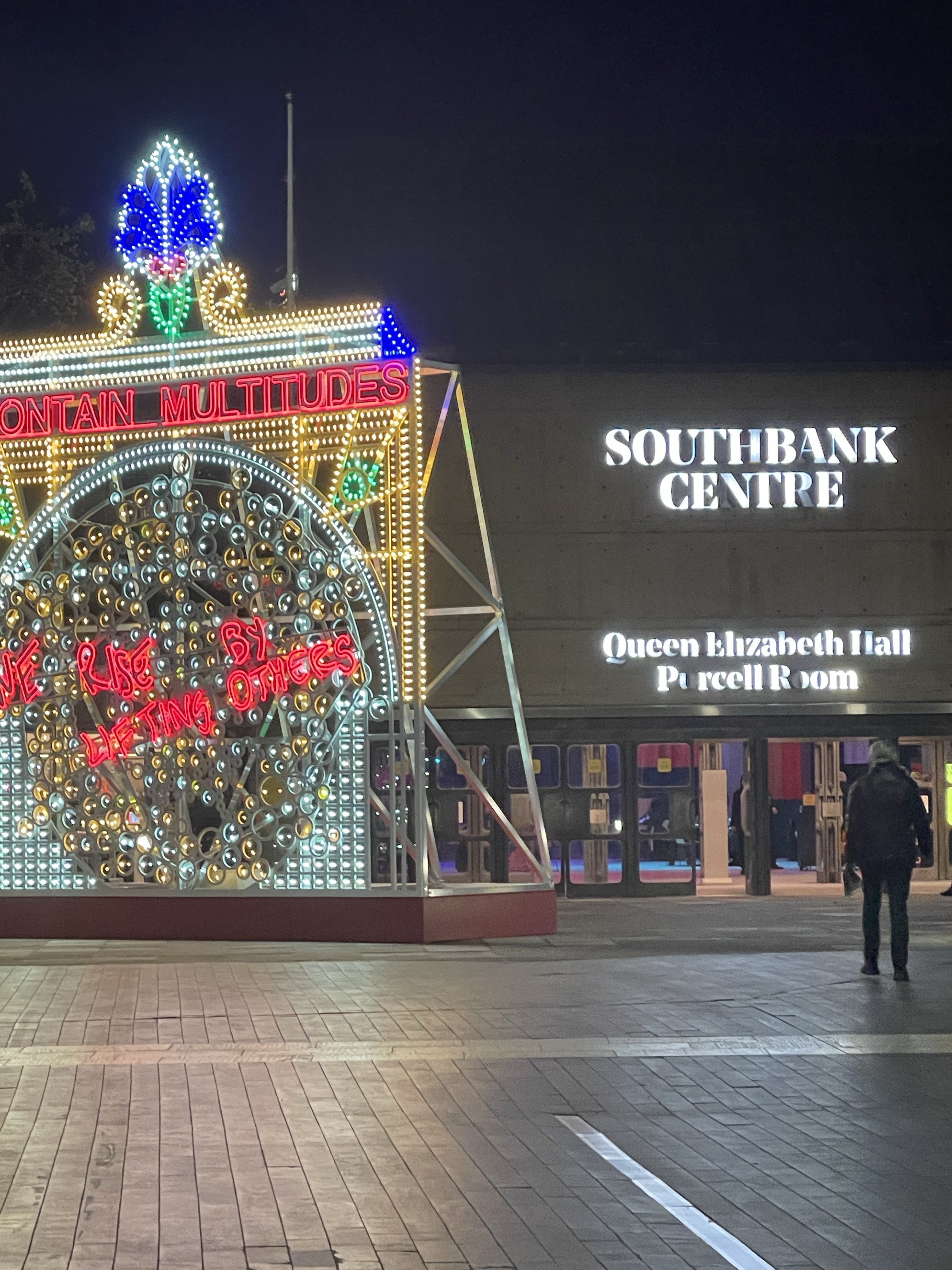
The South Bank with the Festival Hall far right and National Theatre illuminated in red !!!!
Bartók 14 Bagatelles, Op.6
Liszt Bagatelle without tonality, S.216a
Beethoven 15 Variations and Fugue on an original theme in E flat (Eroica), Op.35
Interval
Bach Chorale-prelude, Nun freut euch, lieben Christen gmein, BWV.734 arr. Kempff Bach Chorale-prelude, Nun komm’ der Heiden Heiland, BWV.659 arr. Busoni
Dowland In darkness let me dwell (a recording for voice & lute)
Thomas Adès Darknesse visible
Beethoven Sonata in A flat, Op.110
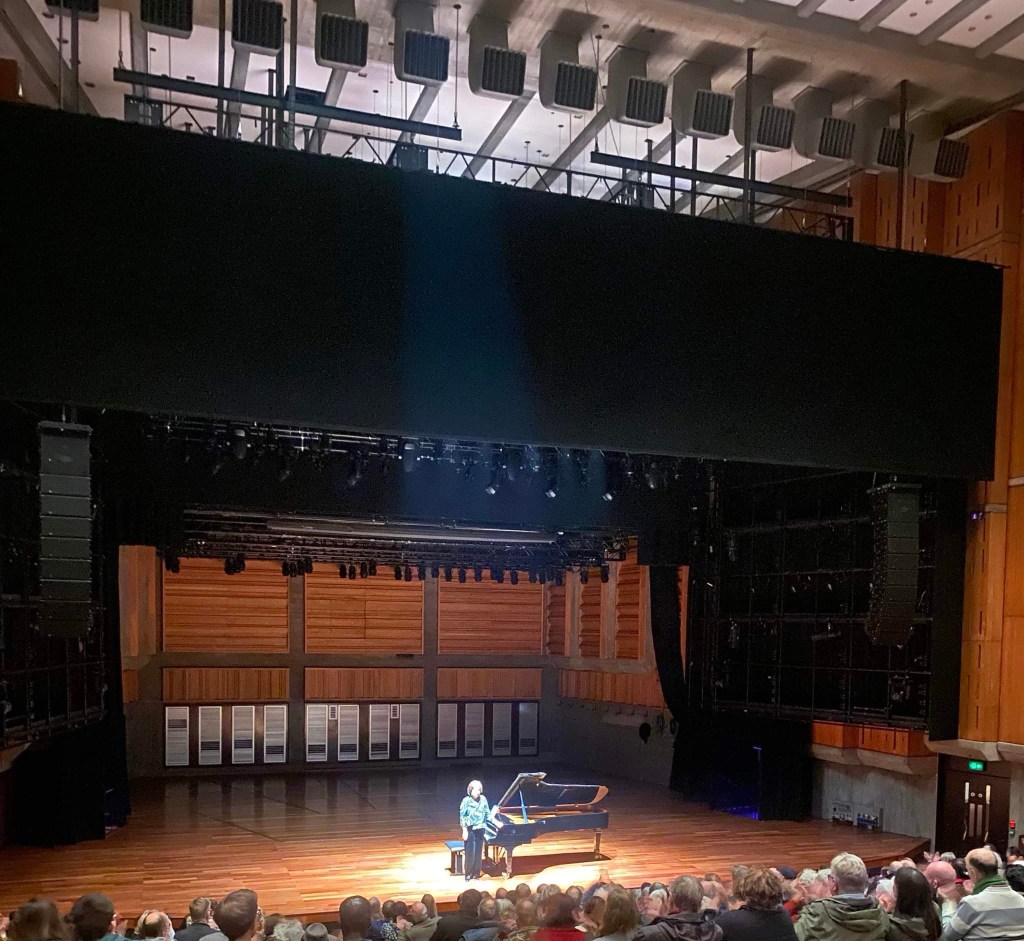
It was a sign of the esteem that Imogen Cooper has earned over her long career ,in which musical standards have reigned sovereign over the transcendental pianism that has taken centre stage over the past forty years ,to see so many illustrious musicians in the audience on this particularly cold last month of the year. In the audience was Alfred Brendel who with great difficulty negotiated the freezing temperatures and endless steps to salute one of his greatest protégées.Dame Janet Baker ,Dame Jane Glover ,Gyorgy Pauk and many young musicians from the Imogen Cooper Music Trust ,including the now distinguished pianist Cristian Sandrin,that she has so generously helped to advance in their musical understanding.
The long hike to the Green Room
It was Imogen who after her much criticised studies in Paris as her father ,Martin Cooper,the great musicologist and critic advocated the great British Musical Institutions for study rather than the almost obligatory period ‘abroad’. He had sent his daughter to study with Yvonne Lefebure ,though,in Paris .On her return after hearing Brendel play she told him that she would commit suicide if he would not become her mentor. In the very first lesson twenty minutes were spent on perfecting just one chord ! I remember Imogen who had just returned from Paris and delighted Vlado Perlemuter in his Dartington Masterclass in 1967 not only with her superb playing of Ravel ‘Valses’ but also on her perfect French. In the audience tonight there were also many young pianists including the winners of the Leeds ,Alim Beisembayev and Ariel Lanyi , where Imogen has taken over the reigns from that other great Dame: Fanny Waterman. At the end of the recital it was Lady Weidenfeld who exclaimed to me what marvels had been heard and she should know having known two of the greatest musicians of our time .She has for long been associated with the Rubinstein Competition of which Janina Fialkowska had been a top prize winner in the very first edition.
Emil Gilels and Artur Rubinstein with Janina Fialkowska in 1977 in New York
Rubinstein himself had supervised a career that she was not expecting.She just wanted to meet her idol before taking up a career in law but had studied in Paris too with the remarkable Yvonne Lefebure and she and Imogen became lifelong friends. They both have something in common ,that Rubinstein and Brendel had noted: they think more of music than themselves. A humility and integrity and above all their artistry is placed at the service of the composer.’Je sens ,je joue je trasmets.’ It was this that came across today and left the many musicians present moved to crowd to the green room to thank our adored Dame for her unflinching dedication to values that are fast evaporating .Quantity rather than quality is the name of the game these days.Instant communications where a photo on a mobile device can be seen instantly the other side of the globe and where a recording of a performance can be kept forever.It was Gilels who said that the difference between a recorded performance and a live one was the difference between fresh or canned food.Mitsuko Uchida refused (gracefully) an enthusiastic fan who wanted her to pose for a ‘selfie’ and exclaimed so astutely that it is the memory of a performance or an encounter that is so much more important than having a printed copy of it.
The most remarkable parts of the recital for me were those that are not really associated with Imogen.Dame Imogen has long been associated ,as one would expect from the class of Brendel ,with Schubert and Beethoven.So it came as a surprise to hear Bartok with a kaleidoscopic range of sounds and a chameleonic sense of character.There was the precision of Webern with the feeling that every one of the notes had a fundamental part to play in a musical discourse.They were reminiscent of Prokofiev’s early Vision Fugitives or dare I say Beethoven Bagatelles, largely written towards the end of his life, where so little can say so much.Imogen had distilled the very essence from each of these fourteen miniature jewels that kept her audience in rapt silence of wonderment.The Liszt Bagatelle just entered on the trail of the Bartok which was immediately apparent by the sudden jeux perlé brilliance and scintillating sense of dance of what was the originally projected Fourth Mephisto waltz.
Plunged into pitch darkness as we listened with baited breath to Dowland’s ‘In Darkness let me dwell’ in a recording of voice and lute.The curtain was gradually raised to the pungent multicoloured sounds of Thomas Adès’s atmospheric ‘Darknesse visible’.Here again Dame Imogen had a range of colours helped by a masterly use of the pedals that made the music speak just as eloquently as her Beethoven.And it was Beethoven this time that crept in on these magic sounds and they gave a golden glow to the opening of a work that Dame Imogen has made very much her own over the years.There was a warmth to the sound of the whole Sonata that seemed to be sheltered under a dome that contained within its walls a world of intimate beauty and as Dame Imogen so eloquently said in words and even more in music ‘affirms the return to life that gives us hope and strength to go forward’.It was the same sound world that the Eroica variations had inhabited where even the more strenuous variations were incorporated into an architectural sound world and not played as gymnastic exercises. If she missed the ravishing sense of elegance and sheer physical exhilaration that Curzon brought to the variations – that he too played from the score as time and tide wait for no man in long and illustrious careers – It was though the beauty of the sound that was so convincing as Imogen ,like her illustrious predecessors Dame Myra and Dame Moura both from the class of Uncle Tobbs,has like those of the Matthay school an infinite variety of sounds in every note that can make the music speak with such eloquence.The two chorale preludes by Bach -Kempff and Busoni I well remember Kempff playing in this very hall fifty years or more ago……Busoni unfortunately I never heard live but I have heard his recording and quite frankly what we heard tonight was even more enlightened as I am reminded of what Dame Mitsuko said about printed photos!Moved by the audience reaction and overwhelming ovation Dame Imogen gave an even more convincing performance of Bartok with his Durge op 9 n. 1.
There is obviously nothing like a Dame !
Dame Imogen writes:
“The construction of this programme has two strands to it, clearly in each half. The Bartók /Liszt group is a little teaser around tonality; the Liszt Bagatelle sans tonalité is a fantastic piece but difficult to programme as very short and not really belonging anywhere. After choosing the Bartók Bagatelles Op.6 – a masterpiece so rarely heard – it occurred to me that Bartók too was playful with tonalities and keys – the first bagatelle is written with the right hand in C sharp minor and the left hand in C minor (fairly novel for 1908) and in the successive bagatelles, he hardly stays in the keys he initially chooses. It seemed the obvious work into which to insert the Liszt, not least as, surprisingly, there were only around 25 years between the two compositions – and both composers were of course from Hungary. I like the idea of a certain aspect of destabilisation when listening, and my insertion of the Liszt in the body of the Bartók work is randomly placed in the sequence. I hope that this does justice to the wit and originality of both composers. It certainly makes the return to full tonality in the Beethoven Eroica Variations all the more startling, with the call to arms of the opening E flat major chord. There is wit aplenty in this work too, as so often in this particular form of Beethovenian composition – a certain wild energy too, and little melancholy. In the second half of the recital, I have an image of a descent from joyfulness into dark depths followed by a kind of triumphal resurrection. The first of the Bach chorales is ebullient and optimistic, the second reflective and sombre. Dowland then takes us into real blackness with his extraordinary poem, from which Adès’ glittering rejoinder emerges, with its final two lines a direct quote of Dowland’s music. Somehow the only exit from there has struck me as being Beethoven’s Op.110 Sonata, which comes as balm to the soul as it starts on its own journey, not without profound grief in the two great Ariosi, but terminating in an affirmative return to life that gives us hope and strength to go forward.”
Béla Bartók (1881–1945) 14 Bagatelles, Op.6 i Molto sostenuto ii Allegro giocoso iii Andante iv Grave v Vivo vi Lento vii Allegretto molto capriccioso viii Andante sostenuto xi Allegretto grazioso x Allegro xi Allegretto molto rubato xii Rubato xiii Elle est morte. Lento funebre viv Valse: Ma mie qui danse. Presto.
Béla Bartók was 27 when he composed his Op.6 Bagatelles in 1908, and reeling from romantic rejection by violinist Stefi Geyer, who’d infatuated him for quite some time. He vents his despair and anger in the last two of the 14 pieces: No.13 is a sinister funeral march named ‘Elle est morte’, while the final bagatelle, ‘Valse (ma mie qui danse)’ is a bitter, grotesque waltz. The rest of the set of pithy miniatures, however, are similarly forward- looking, and daringly experimental, from the pianist’s hands playing in two unrelated keys in No.1 to the bracing folk tunes of Nos.4 and 5, from the bare unisons of No.9 to the driving rhythms of No.10.
Franz Liszt (1811–86) Bagatelle without tonality, S.261a
At a later stage in his life Liszt experimented with “forbidden” things such as parallel 5ths in the “Csárdás macabre”and atonality in the Bagatelle sans tonality (“Bagatelle without Tonality”). Pieces like the “2nd Mephisto-Waltz” are unconventional because of their numerous repetitions of short motives. Also showing experimental characteristics are the Via crucis of 1878, as well as Unstern!, Nuages Gris and the two works entitled La lugubre gondola of the 1880s.
Bagatelle sans tonalité was written by in 1885. The manuscript bears the title “Fourth Mephisto Waltz”and may have been intended to replace the piece now known as the Fourth Mephisto Waltz when it appeared Liszt would not be able to finish it; the phrase Bagatelle ohne Tonart actually appears as a subtitle on the front page of the manuscript.
While it is not especially dissonant, it is extremely chromatic becoming what Liszt’s contemporary Fétis called “omnitonic”in that it lacks any definite feeling for a tonal center.Like the Fourth Mephisto Waltz, however, it was not published until 1955.
Ludwig van Beethoven (1770–1827) 15 Variations and Fugue on an original theme in E flat (Eroica), Op.35 From supposedly lightweight bagatelles to something far weighter, and more heroic. Beethoven clearly loved the theme he used as the basis for his 1802 Op.35 Variations: it began life entertaining Viennese dancers as one of the 12 Contredanses he composed in 1801 for the Austrian capital’s ballrooms, and he went on to use it in his ballet score The Creatures of Prometheus, and, most famously, in the finale of his Eroica Symphony (the piece that gives today’s piano work its nickname). Perhaps it’s the tune’s very simplicity that inspired him, or the way he could explode it and explore its potential across a whole range of moods and settings – something he did in the Symphony, and something he similarly does in tonight’s Variations. Beethoven opens with just the theme’s bassline, offering three variations, before moving on to 15 contrasting settings of the tune as a whole, ending with a richly decorated slow section, a mind-bending fugue, and a dazzling conclusion. With hand- crossings, athletic runs across the length of the keyboard, and free-flowing cadenzas, it’s a piece that’s clearly designed to show off the skills of its performer.
Johann Sebastian Bach (1685–1750) Chorale-prelude, Nun freut euch, lieben Christen gmein, BWV.734 arr. Kempff Chorale-prelude, Nun komm’ der Heiden Heiland, BWV.659 arr. Busoni After pioneering bagatelles and virtuosic variations, there’s a slightly more sober, even spiritual mood to the concert’s second half. JS Bach wrote no fewer than 46 chorale preludes for organ, works that take well-known hymn tunes and elaborate them with rippling accompaniments, unusual harmonies and more – often to prepare a congregation to sing the hymn in question itself. A tradition of reworking these organ pieces for piano has continued since the 19th century, bringing Bach’s creations out of the church and into concert halls and even private homes. Pianist and composer Wilhelm Kempff made his piano version of Bach’s ‘Nun freut euch, lieben Christen gmein’ (Now rejoice, dear Christians) in 1926, reimagining the original organ piece from Bach’s Weimar years between 1708 and 1717 as a brisk and joyful piano creation. Italian composer Ferruccio Busoni – a devoted admirer of Bach – saw transcribing, adapting and freely composing as part of the same musical continuum, and one that Bach himself had also explored. The original Chorale Prelude ‘Nun komm’ der Heiden Heiland’ (Come, saviour of the nations) weaves a web of sometimes anguished lines around its 1524 hymn tune, with words by Martin Luther. Busoni’s piano version maintains the original’s poignant interplay of melody and accompaniment voices in music that’s sometimes dramatic and despairing, other times moving and meditative.
John Dowland (1562/3–1626) In darkness let me dwell (a recording for voice & lute) Composer, lutenist and singer John Dowland was a musical superstar in the 16th and 17th centuries, with an output of often deeply troubled, melancholic lute songs that charmed and captivated admirers across a growing English middle class, who’d even take up the instrument to emulate him (Henry VIII, for example, insisted that his three children – who’d become Edward VI, ‘Bloody’ Mary and Elizabeth I – each learned the lute). Published in 1610, ‘In darkness let me dwell’ is one of Dowland’s most bleakly beautiful creations, a setting of an anonymous poem (see below), included in the 1606 Funeral Teares collection by John Coprario, whose writer abandons light, music, or any sense of consolation, preferring the peace of the grave. The song’s grinding dissonances, halting structure and apparently premature, cut-off ending only serve to emphasise its overall despair and resignation.
In darkness let me dwell In darknesse let mee dwell the ground shall sorrow be, The roofe Dispaire to barre all cheerfull light from mee, The wals of marble black that moistened still shall weepe, My musicke, hellish, jarring sounds to banish friendly sleepe. Thus wedded to my woes, and bedded to my Tombe, O let me living die, till death doe come.
Thomas Adès (b.1971) Darknesse visible
Thomas Adès is one of the world’s most celebrated musicians. A composer, pianist, and conductor, Adès’s comfort in thinking through his works both structurally and pragmatically (though his personal virtuosity often begets scores with an unforgiving level of difficulty) yields music that is not only smart but incredibly moving and communicative. While he is definitely a British composer, Adès has spent a great deal of time on both coasts of the United States, both in his ad- opted second hometown of Los Angeles and in Massachusetts, where he serves as the Boston Symphony Orchestra’s artistic partner as well as director of the Tanglewood Music Center’s Festival of Contemporary Music. Darknesse Visible is Adès’s “explosion” of a lute song by the composer John Dowland, “In Darknesse Let Mee Dwell,” composed in 1610. Adès writes: No notes have been added; indeed, some have been removed. Patterns latent in the original have been isolated and regrouped, with the aim of illuminating the song from within, as if during the course of a performance. In darknesse let mee dwell, the ground shall sorrow be, The roofe Dispaire to barre all cheerful light from mee, The wals of marble blacke that moistned still shall weepe, My musicke hellish jarring sounds to banish friendly sleepe. Thus wedded to my woes, and bedded to my Tombe, O let me living die till death doe come. Dowland ends the song with a restate- ment of the opening line.
His austerely powerful work is a far more radical transformation than Kempff and Busoni’s piano reimaginings of Bach, though its piercing accents, its wavering tremolos and its ghostly, blurred harmonies provide a compelling contemporary perspective on Dowland’s deep melancholy.The World premiere: October 1992 at the Franz Liszt House, Budapest, Hungary, with the composer as piano soloist
Ludwig van Beethoven (1770–1827) Piano Sonata in A flat, Op.110 Moderato cantabile molto espressivo Allegro molto Adagio ma non troppo – Fuga allegro ma non troppo From darkness and death to spiritual transcendence. Beethoven the young pioneer, out to demonstrate his compositional and pianist prowess in the earlier Eroica Variations, had become a very different composer two decades later, when he came to write his final trilogy of piano sonatas: more contemplative, philosophical, even otherworldly. Op.110 is the middle sonata in the trilogy, composed in 1821 and published the following year, and it packs a huge amount of drama, insight and innovation into its relatively brief 20-minute span. A prayer-like theme (marked ‘amiable’) opens its tender first movement, whose ethereal beauty is quickly dispelled by the boisterous, earthy second movement, based on two German folksongs. To end, Beethoven effectively combines two separate movements: first a tragic, song-like lament (you might even hear certain resonances from Dowland), and second a vigorous, life-affirming fugue that builds to a shattering climax. The lamenting song returns, exhausted, only for the music to gather confidence (Beethoven indicates ‘little by little gaining new life’) as it heads towards its joyful, transcendent climax.
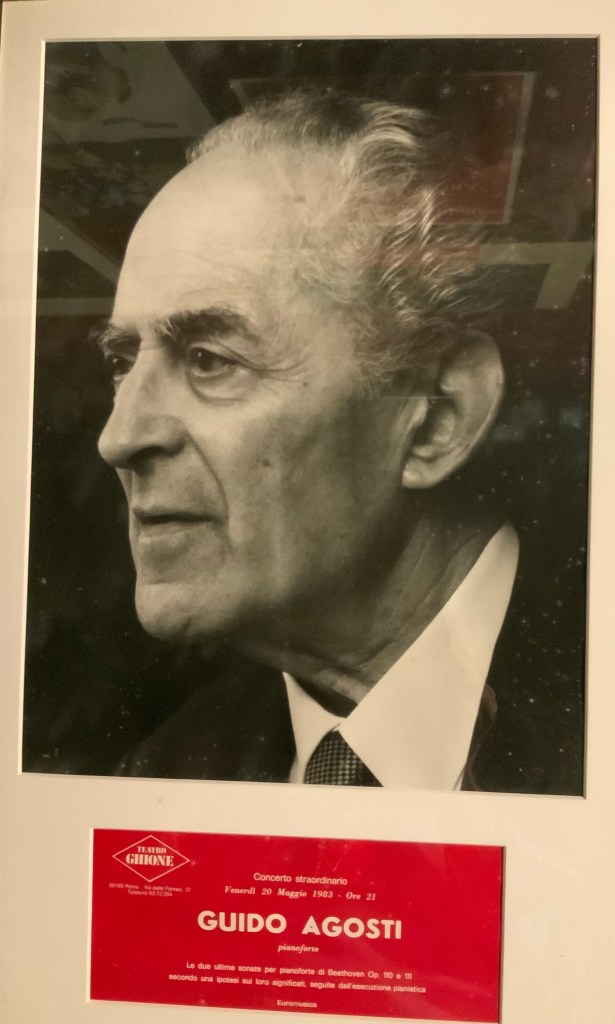
The legendary Guido Agosti held summer masterclasses in Siena for over thirty years.All the major pianists and musicians of the time would flock to learn from a master,a student of Busoni,where sounds heard in that studio have never been forgotten.He was persuaded by us in 1983 to give a public performance of the last two Beethoven Sonatas.The recording of op 110 from this concert is a testament,and one of the very few CD’s ever made,of this great musician .
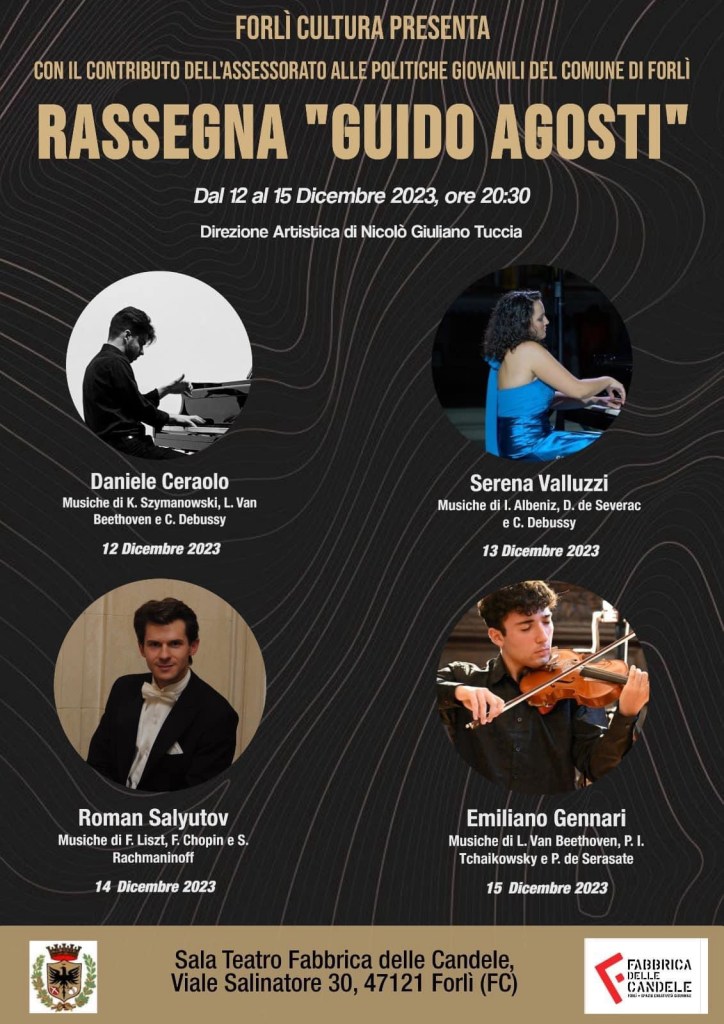
A new concert series to commemorate Guido Agosti in his home town where he was born and is buried – ‘Guido Agosti musicista’ is the simple inscription for one of the greatest musicians of his age
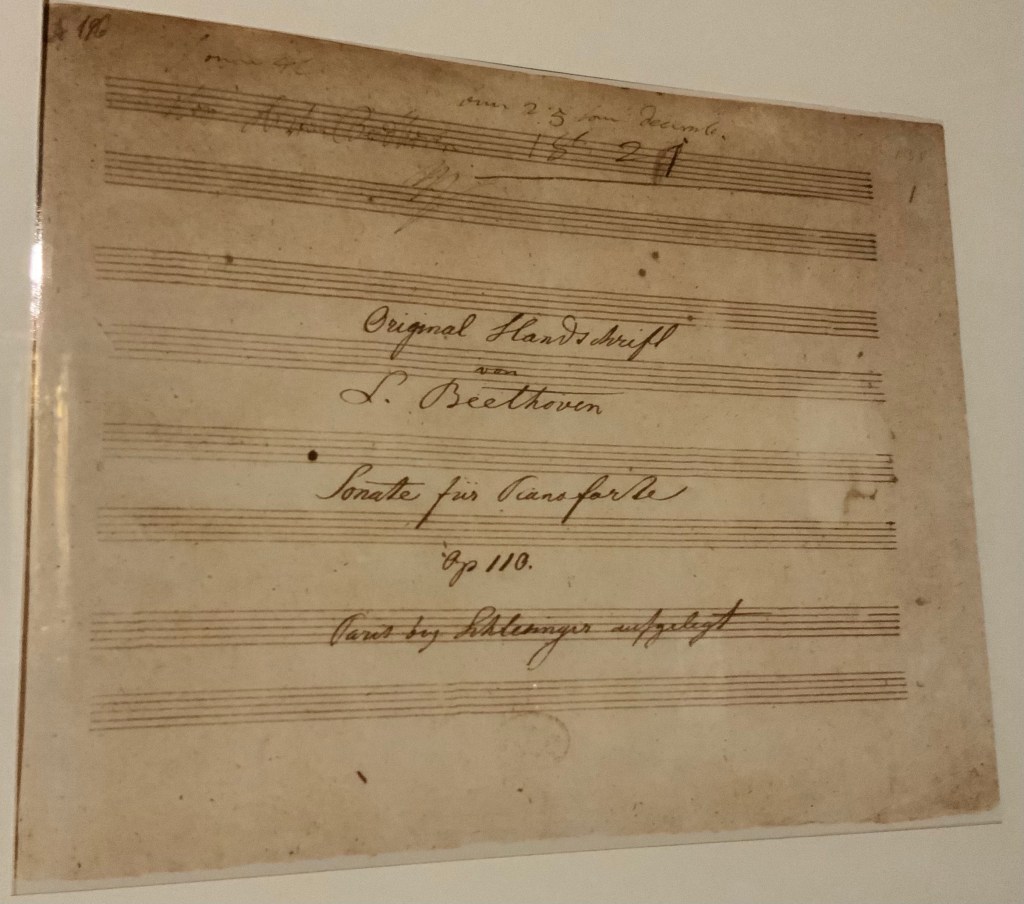
In the summer of 1819, Adolf Martin Schlesinger from the Schlesinger firm of music publishers based in Berlin sent his son Maurice to meet Beethoven to form business relations with the composer.The two met in Modling,where Maurice left a favourable impression on the composer.After some negotiation by letter, the elder Schlesinger offered to purchase three piano sonatas for 90 ducats in April 1820, though Beethoven had originally asked for 120 ducats. In May 1820, Beethoven agreed, and he undertook to deliver the sonatas within three months. These three sonatas are the ones now known as Op. 109,110, and 111 the last of Beethoven’s piano sonatas.
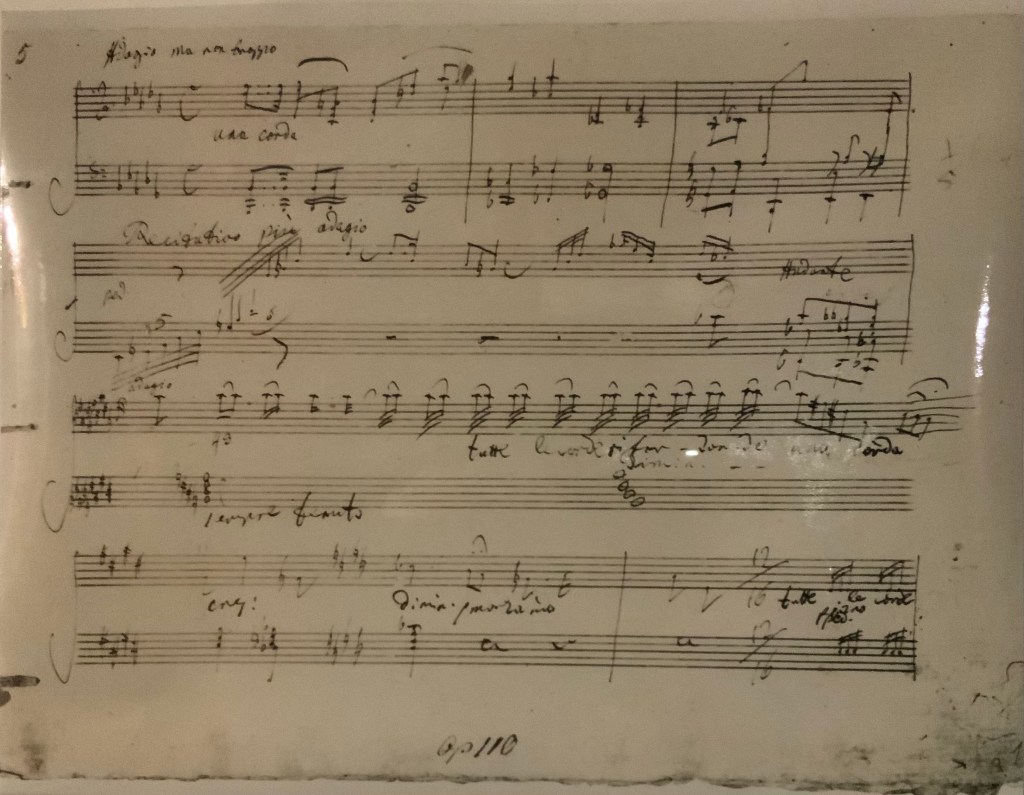
Beethoven’s own markings with the ‘bebung‘ or vibrated notes in the Adagio of op.110
The composer was prevented from completing the promised sonatas on schedule by several factors, including his work on the Missa solemnis (Op. 123),rheumatic attacks in the winter of 1820, and a bout of jaundice in the summer of 1821.Op. 110 “did not begin to take shape” until the latter half of 1821.Although Op. 109 was published by Schlesinger in November 1821, correspondence shows that Op. 110 was still not ready by the middle of December 1821. The sonata’s completed autograph score bears the date 25 December 1821, but Beethoven continued to revise the last movement and did not finish until early 1822.The copyist’s score was presumably delivered to Schlesinger around this time, since Beethoven received a payment of 30 ducats for the sonata in January
Some of the young musicians who have been so generously helped by The Imogen Cooper Music Trust :







































 ChristopherAxworthy-MusicCommentary